Trending News

Chennai Metro: Panasonic-Pioneer JV Bags PSD Contract of Line 3 & 5

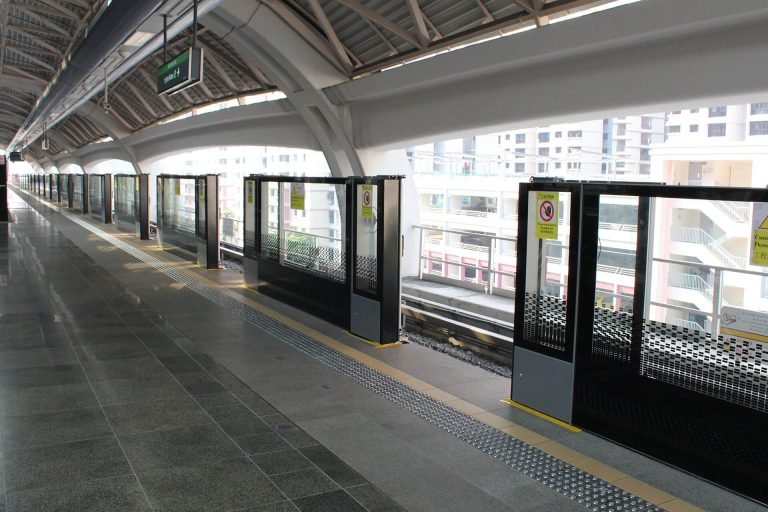
Chennai (Metro Rail News): The joint venture between Panasonic Manufacturing (Beijing) Co. Ltd. and  Pioneer Fil-Med  Pvt. Ltd. has secured a 146.95 crore contract from Chennai Metro. The contract involves supplying and installing Platform Screen Doors for Chennai Metro’s Line 3 and Line 5.

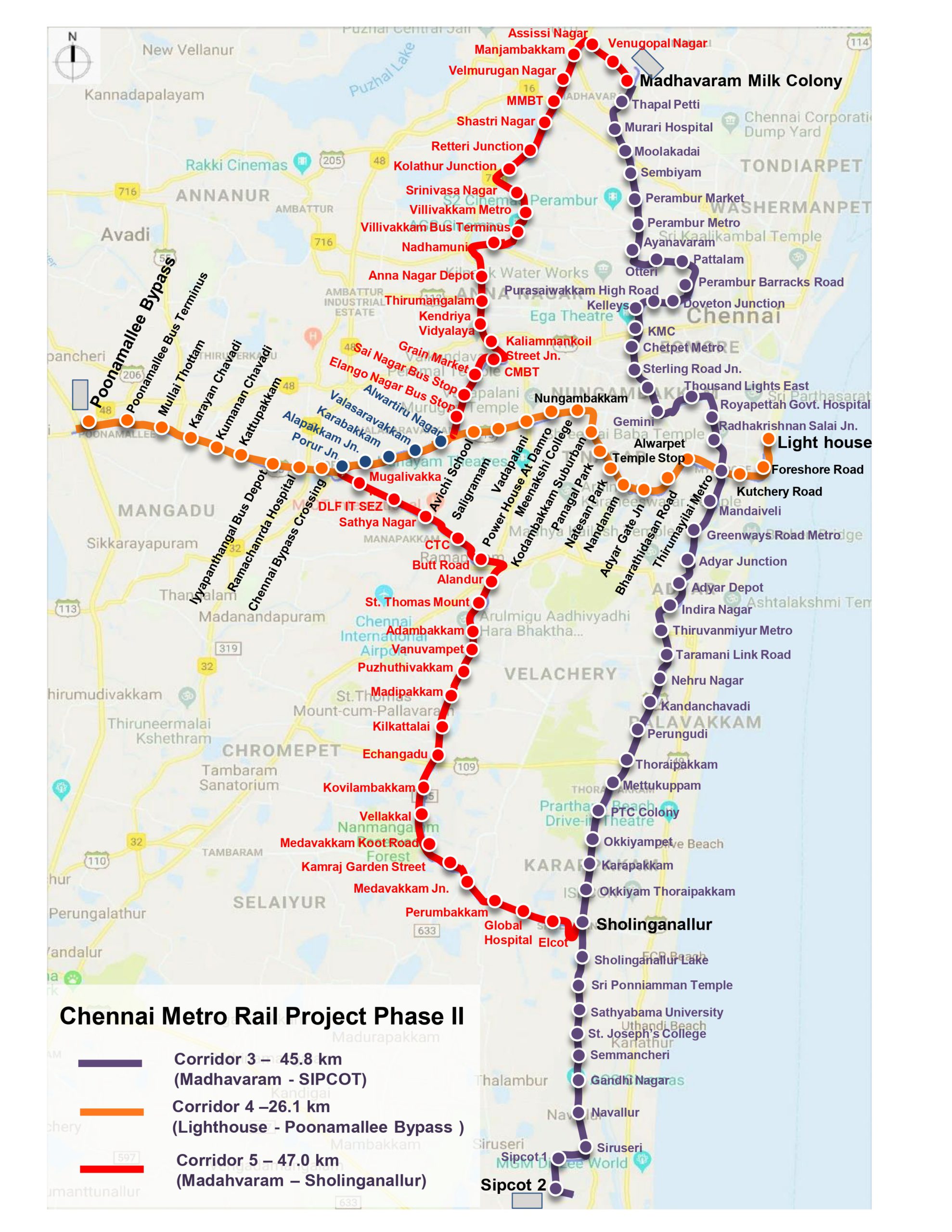
Chennai Metro Phase 2 Map

Line -3 and Line-5 of Chennai Metro will operate in a North-South orientation to link Madhavaram – SIPCOT (45.4 km Line-3) and Madhavaram – Sholinganallur (44.6 km Line-5), Respectively, through both elevated and underground stations. 

The contract’s scope includes the design, manufacture, supply, installation, testing, and commissioning of Platform Screen Doors. 

In Corridor-3, the contractor will install PSDs at 29 underground stations between Madhavaram Depot Station and Tharamani Station.

In Corridor 5, PSDs will be installed at 5 underground stations falling between Kolathur Junction Station and Nathamuni Station.

Final Contract Value: INR 85,36,03,003 + USD 7,392,013 (approx. INR 146,95,66,140.67 or 146.95 crore)

Deadline for the contract: 1465 Days ( approximately four years )

Other contracts for Platform Screen Doors

Another 2 packages by CMRL for installing platform screen doors:

Package ASA12A: In November 2023,  ST Engineering Urban Solutions Ltd. secured this package. Under this contract, ST Engineering is responsible for installing Platform Screen Doors at 10 elevated stations of Line 3 (Sholinganallur Lake – SIPCOT 2). Additionally, they will install PSDs at 29 stations of Line 5 (Grain Market – Elcot).

Package ASA09: The work under this package includes the PSDs at 10 elevated stations of Line-3 (Nehru Nagar – Sholinganallur) and 10 elevated stations of Line-5 (Assissi Nagar – Koyambedu). Currently, the bids are under technical evaluation for this package.

Ongoing development On Line 3 & 5 of Chennai Metro

Line-3’s 29 stations are under construction by DRA – Soma JV Tata Projects Ltd. and Rail Vikas Nigam Ltd. 

Line-5’s five underground stations are under construction by Tata Projects Ltd. 

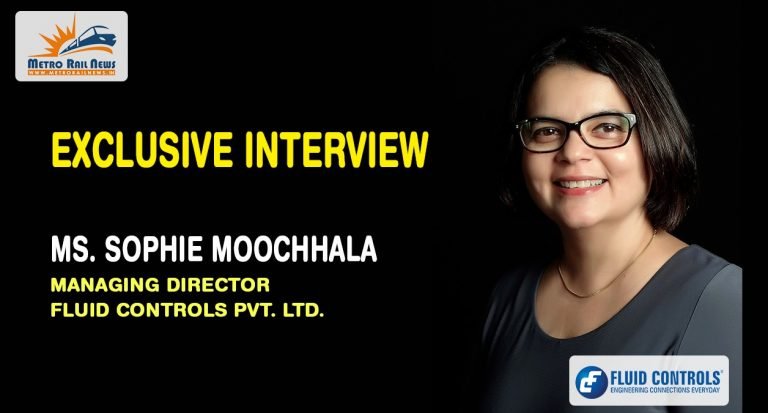
Exclusive interview of Sophie Moochhala on the occasion of International Women’s Day

To celebrate International Women’s Day, our Managing Editor Mr. Narendra Shah had a conversation with Ms Sophie Moochhala – Managing Director – Fluid Controls Private Limited. In which she speaks about the Company business strategy, Atmanirbhar Bharat Policy and Growth in a Post-COVID Situation.

Tell our readers about various innovative products recently developed for Metro & Railway Industries?
Fluid Controls Private Limited was established in 1974 by Dr. Y.E. Moochhala, a Ph.D. from Northwestern University, the USA with a vision to deliver high quality & high-performance products which delight customers. Fluid Controls offers customers comprehensive end-to-end “Make in India” solutions for Rail & Metro brake piping arrangements – from design & engineering services to supply of high-performance products and installation services. From its inception in 1974, Fluid Controls has engaged in original R&D and also has had an ethos of developing indigenous replacements for imported products. Our founder, Dr. Y E Moochhala, after a successful career in the USA decided to return to India because he was a strong believer in a self-reliant India. His idea was to develop high quality, high-performance products to suit local prototype climatic and performance expectations. Today, Fluid Controls is approved as an “In-House R&D unit” by the Department of Scientific & Industrial Research (DSIR), Government of India. Since 2011, we have developed more than 25 new products, which is very much in line with the Fluid Controls vision statement. Adding to our strength in innovating, Fluid Controls has filed its first Global Patent and
is in the process of filing two more patents. Particularly for the Rail & Metro Industry Fluid Controls has developed Across Frame Connectors for connection of pipelines between the shell and bogie for high-speed electric locomotives. These connectors eliminate welding processes and allow for seamless connection of pipes between the shell and bogie. Across Frame connectors also, reduce component parts required to be purchased as they are integrated fitting assemblies. Fluid Controls has also developed an entire range of FlexiGripTM connectors to provide zero-leakage and vibration resistant connections Here are the excerpts from the
interview:- “Success is a multi-faceted word! Professionally, for me, success is to build a brand which is trusted by customers
and which delights customers.” Sophie Moochhala Managing Director Fluid Controls Pvt. Ltd. between misaligned pipes or between pipes of different materials. The triple sealing action of the split ring, washer and O ring provides for a completely leak-proof connection. The split ring also provides superior vibration resistance by ensuring the joint remains in a springing condition. As an ongoing part of product development, Fluid Controls also customizes standard products to suit specific customer requirements.

How do you see the Govt of India’s Atmanirbhar Bharat policy?
Fluid Controls is a “Vocal for Local” MSME organization and we whole-heartedly support the Atmanirbhar Bharat initiative. Domestic manufacturers have the capability – be it in manufacturing, quality, or R&D – to cater to domestic requirements across sectors. In the past, legacy international vendors and lack of firm procurement policies constrained the effective implementation of “Make in India”. Atmanirbhar Bharat, which clearly outlines procurement policies, will go a long way to boost domestic manufacturers, especially in the MSME sector. With our manufacturing and R&D capabilities, Fluid Controls can contribute immensely to provide high quality, high-performance products to all sectors in the move to localize supplies.

Please share some of your value-added, problem-solving product and services offered by Fluid Controls?
A good example of a product we developed is the Fluid Controls Hydraulic Swaging Unit (HSU), which is a tool to ensure that twin ferrule connectors are installed correctly at the site. The unique feature of our HSU is that there is no need for manual intervention in the process. We also offer design and engineering services and have completed conversion projects (from one connector system to another) for several customers.

How Covid-19 outburst the Fluid Control’ business and the step you have taken to overcome it?
During the onset of the Pandemic COVID-19, our primary focus was to ensure the health and safety of our employees, their families, our customers and our business partners. And we had changed the way we approach every task and every activity. We had to adapt our model of operation since face-to-face meetings and interaction were not possible for some months (and we are still work-from-home at our Mumbai office!). We have invested in ERP and Microsoft Teams software to ensure the ease of teamwork and connectivity. To ensure seamless day-to-day operation, each department head would hold a daily telephonic meeting to discuss tasks and the way ahead. We also had to change the way we conducted our external business. During the lockdown period, Fluid Controls engaged with customers via video conferencing and calls. And, to ensure the least disruption in schedules, we have provided regular updates on our business status and order status to them. As many of our customers still do not allow business visits, we continue to have a virtual engagement with them. Once our plant became operational in May 2020, we provided our employees with a safe working environment. Whilst a major part of our staff is still working from home, “Operational Safety” being the primary parameter for the health and safety of people at work in the plant, we have planned our manufacturing with a system and process-focused approach. At Fluid Controls, we “Engineer Connections every day”. And in the time of the COVID-19 pandemic, we learnt how to “Adapt Everyday”!

What is your view on Business Growth in a Post COVID Situation?
I am very optimistic about the post-COVID growth situation and increased Union Budget allocations this year for railways will definitely lead to more business for companies such as ours. In addition, we are very positive that the focus on freight, Metros and RRTS/LRTS networks will result in an increasing demand
for rolling stock.


What are the Metro Projects in which Fluid Controls currently associated?
We are currently associated with projects for Mumbai Metro, Pune Metro, Delhi Metro and Chennai Metro. BEML suppled the First Driverless Metro Train developed in India form Mumbai Metro Line 2A.

What is the role of fluid Controls in the development of this true Atma Nirbhar product?
We are very happy to have been associated with BEML for Mumbai Metro. The Metro cars supplied by BEML have Fluid Controls DIN Single Ferrule connectors installed in the brake piping system. This is a very big achievement for Fluid Controls and we are very proud to have been approved by BEML for this project. Coming from a non-technical background,

how do you manage the most senior management position of an innovative product engineering company?
“Success” is a multi-faceted word! Professionally, for me, success is to build a brand that is trusted by customers and delights customers. At an organizational level, it is to build a team that is motivated, innovative and performs to high expectations. In this context, my having or not having an engineering background doesn’t really matter as I am supported by a team that has stellar engineering credentials.

What are the company’s business strategy and future expansion plan concerning the Metro & Railway market?
Over the years, Fluid Controls has developed comprehensive expertise for manufacturing, by identifying the right materials and ensuring “fit and forget” assembly. For Rail & Metro applications, we offer complete fitment of brake piping components, engineering and site installation services, pre-piped assemblies for easy site fitment, double ferrule fittings, DIN single ferrule fittings, threaded adaptors, Across Frame connectors, FlexiGripTM connectors, quick release connectors, isolation valves and clamps. A key part of our future plans is to tap into the brake piping business for the emerging high-speed train operations and to offer integrated solutions and hose assemblies to our current customer base. We are also focusing on global supplies to Europe, North America and SE Asia


Indian Railways Enhances Freight Wagon Operations with AI to Strengthen Safety

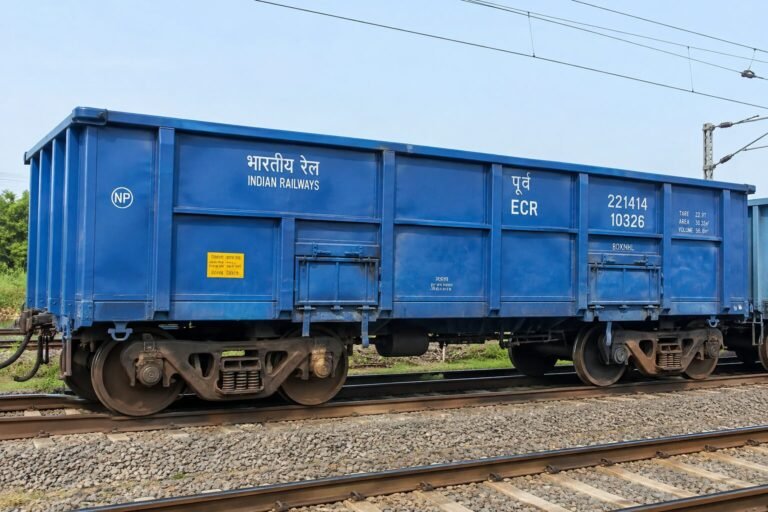
DELHI (Metro Rail News): Freight Wagon operations modernised by Indian Railways as they plan to adopt artificial intelligence based defect detection, proactive maintenance and in time sensors, to enhance reliability and safety.

“This plan emphasises on improving wagon reliability, maintenance quality and freight speeds” The official said, he also mentioned that a field test of an AI based system to examine wagon defects across selected areas will commence shortly. The AI system would examine the pictures and look for any kinds of damaged, missing or hanging components on moving wagons. 

Separate portal devoted to freight grievance

A new portal ‘Madad’ which is specially dedicated to grievances and complaints related to freight, electronic brake power certificates, refrigerated-container wagons, and a universal wagon for steel products are also being planned. The portal is going to be the medium through which wagon users and loading or unloading parties express their complaints would go into the maintenance system and timely reforms will take place.

This way it will be ensured that concerns and remarks of freight customers are addressed on time. Through all these new additions of reforms, the main goal is to make railways a more economically viable and competitive mode of transport.

Modernization of Indian Railways

Along with addressing these commercial concerns, the railways are also attempting to boost the railway operations through predictive maintenance. They are aiming to find the emerging defects before the possibility of that component failing. Data gathered from sensors and inspections helps railway personnel to identify irregularities in temperature, impact, load and wear patterns. 

Similarly, on the separate Freight Corridors a machine-vision system has been used, They use line scan and area scan cameras to record undercarriage flaws while trains are moving. This system has generated 5,248 confirmed alerts out of 115,654 wagons inspected according to the official reports.

An official said, a map based system also tracks rakes that are due for routine overhaul, this application is known as “The Rake Lens” and it provides a single-screen view of rakes, dues, alerts and other unusual abnormalities to the examiners. 

Also Read: Indian Railways Sanctions Rs 122 Cr to Add Second Track on Barbil-Bolanikhadan Section

North Central Railway Exceeds the Average Freight Growth of Railways by 8.1%

DELHI (Metro Rail News): In the first half (April-September) of the financial year 2026-’27, North Central Railway (NCR) recorded a total of 10.84 million tonnes of freight loading, which marks 8.1% higher than before. During the first half of the financial year 2025-’26, NCR contributed towards 10.03 million tonnes in the freight sector.

Indian Railways (IR) had calculated a growth rate of 4.1% in freight loading during the first half of the financial year 2025-’26. Thus, the recent numbers highlight the consistent efforts put forward  by NCR towards growing beyond the average growth rate of IR alone. 

North Central Railway’s rise at various directions

NCR successfully assumes fresh freight traffic recently to grow business and generate novel sources of revenue.  The following new numbers were achieved in freight sector:

  • 0.11 million tonnes was achieved by loading 28 rakes of dolomite from Maharaja Chhatrasal Station Chhatarpur (MCSC).
  • 0.05 million tonnes was achieved by loading 12 rakes of iron ore from Biora station.

There was an increase in the loading percentage of several commodities as well: foodgrains grew by 51.7%, ballast rose to 19.6%, container loading increased to 11.9%, cement loading by 6.9% and fly ash loading by 5.2% respectively.

Prayagraj’s consistent steps towards NCR’s success

The highest achiever stood out in notice as the Prayagraj Division that marked a 28.7% growth in freight transport during the period of April-August, thus surpassing the original average success. 

The freight revenue between April-August registered as Rs. 1003.74 crores that highlights the rapid achievement of 5.7% as compared with the past year’s performance of Rs. 949.53 crore earned by NCR in the same timeline.

Also Read: North Central Railway Generates ₹285 Cr From Scrap Disposal in Six Months

Bengaluru Metro Pink Line: CMRS Completes 3-Day Inspection of Kalena Agrahara-Tavarekere Section 

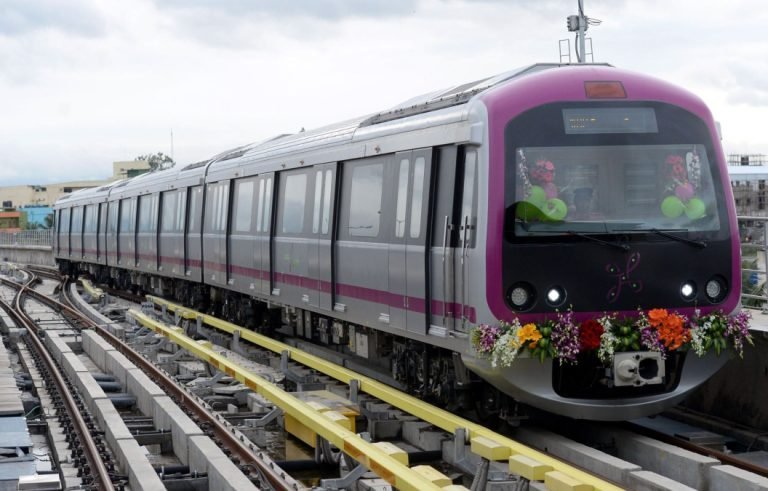
BENGALURU (Metro Rail News):  Bengaluru Metro’s 7.5-km elevated Pink Line section has cleared a three-day statutory safety inspection, bringing the Kalena Agrahara-Tavarekere stretch closer to passenger operations. However, BMRCL must meet the conditions set by the safety commissioner before it can receive authorization to open the line.

The Commissioner of Metro Railway Safety (CMRS), Southern Circle, V. Venkatasubramanian, completed the inspection on October 8. The exercise covered the elevated alignment, stations, depot facilities, train trials and the Operations Control Centre (OCC).

Bengaluru Metro inspection covers 6 stations and depot 

The statutory inspection took place from October 6 to 8, covering the full 7.5-km elevated section along Bannerghatta Road. The inspection schedule included:

  • 6 October: Motor trolley inspection of the mainline and associated infrastructure.
  • 7 October: Further inspection of the line, checks at Kothanur Depot, and train trials and testing.
  • 8 October: Inspection of the Operations Control Centre at Baiyappanahalli.

The section has six stations: Kalena Agrahara, Hulimavu, IIM Bangalore, JP Nagar 4th Phase, Jayadeva Hospital and Tavarekere. Jayadeva Hospital will serve as an interchange with the existing Metro network.

Bengaluru Metro secured several approvals before safety inspection

Bengaluru Metro Rail Corporation Limited (BMRCL) had completed several technical and regulatory steps before the CMRS inspection. The Research Designs and Standards Organisation (RDSO) issued the speed certificate in August 2026. The Railway Board subsequently granted provisional sanction for the rolling stock, while the signalling system received certification from the Independent Safety Assessor (ISA).

The CMRS inspection was the next statutory step before the section can open for public service. The inspection’s completion does not automatically mean the line is cleared for passengers. The safety commissioner will issue authorisation subject to BMRCL complying with the observations and conditions recorded during the inspection.

Bengaluru Metro network to cross 100 km

The elevated Pink Line section will extend Bengaluru Metro’s operational network from 96.10 km to 103.60 km once it opens. The corridor will improve Metro access along Bannerghatta Road and adjoining neighbourhoods. It will also provide an interchange at Jayadeva Hospital, strengthening connections with the existing network.

Also Read: Bengaluru Metro Pink Line: CMRS Begins 3-Day Safety Inspection of 7.5-km Elevated Stretch

UPMRC Identifies Afcons as L1 Bidder for ₹1,383 Cr Lucknow Metro Phase 1B Contract

LUCKNOW (Metro Rail News): The Uttar Pradesh Metro Rail Corporation (UPMRC) has identified Afcons Infrastructure Limited as the lowest bidder for a ₹1,383.30 crore contract for the underground section of Lucknow Metro Phase 1B. The package covers a 6.70-km underground section between Charbagh and Chowk, along with seven underground stations and associated civil works.

Contract details

InformationDetails
ProjectLucknow Metro Phase 1B 
Contract Amount₹1,383.30 crore
L1 BidderAfcons Infrastructure Limited
ContractLKCC (02)-03 
StatusPotential AOC

Bidder details 

Bidder Bid ValueStatus
Afcons infrastructure limited ₹ 1383.3 Cr (L1)Potential-aoc 
Cemindia projects limited ₹ 1470.7 Cr (L2) Accepted-financial 
Larsen and toubro limited ₹ 1558 Cr (L3) Accepted-financial 
Hindustan construction co ltd ₹ 1634.5 Cr (L4) Accepted-financial 
Tata projects limited ₹ 1778.3 Cr (L5) Accepted-financial 

Scope of work

Design and Construction of Underground Section from Charbagh Metro Station (UG) to Ramp after Chowk Metro Station (Approx. 6.52 km including station lengths), including Construction of Ramp to connect Underground Section to Viaduct Section, and Construction of 07 (Seven) Underground Metro Stations, namely Charbagh, Gautam Buddha Marg, Aminabad, Pandeyganj, Lucknow City, Medical Chauraha and Chowk Chauraha, including Civil Works, Associated and Ancillary Structures, PEB Structures, Architectural Works, Water Supply, Sanitary Installation, Drainage, External Development, Property Development, Fire Fighting Arrangements for Phase-1B of Lucknow Metro Rail Project at Lucknow, Uttar Pradesh, India, under Uttar Pradesh Metro Rail Corporation. 

About Lucknow Metro Phase 1B

The Union Cabinet has approved Phase-1B of the Lucknow Metro Rail Project with a total corridor length of 11.165 km and 12 stations. The phase comprises:

  • 7 underground stations
  • 5 elevated stations
  • 11.165-km corridor

The East-West Corridor is planned to be completed by June 2027, with an estimated project cost of ₹5,801.05 crore. Once Lucknow Metro Phase-1B becomes operational, Lucknow is expected to have around 34 km of active metro rail network.

The Charbagh-Chowk underground package will form a key section of the East-West corridor, taking the metro deeper into central Lucknow and providing underground connectivity through one of the city’s important urban areas.

Also Read: Lucknow Metro: UPMRC floats Rs 1,877 cr tender for Phase-1B underground corridor and 7 stations

Mumbai-Ahmedabad Bullet Train: 480-metre Sabarmati River Bridge Completed in Ahmedabad

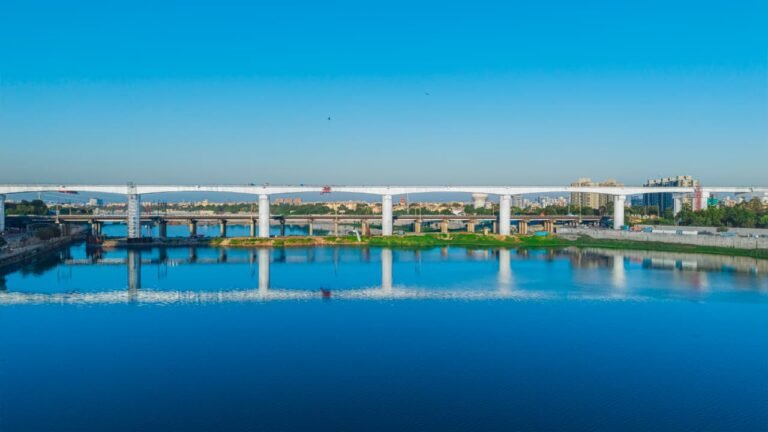
AHMEDABAD (Metro Rail News): The 480-metre Sabarmati River bridge for the Mumbai-Ahmedabad Bullet Train corridor has been completed in Ahmedabad. The structure stands about 36 metres high and crosses the river between the Sabarmati and Ahmedabad bullet train stations.

The bridge is among the key structures on the Ahmedabad section, where the high-speed rail alignment crosses existing railway lines, roads, flyovers and Metro infrastructure.

Rise of the Bullet Train Bridge at Ahmedabad

The height of bullet train bridge is noted to be around 36 metres which is equivalent to a 12-storey building. The tall bridge of 118 feet is one of the major structures of the Bullet Train corridor in Ahmedabad. The architecture of the flyover is located next to the Western Railway’s Ahmedabad-Delhi main line which sits about 14.8 metres above ground level.

The height of the bullet train bridge was influenced by the need to maintain the required clearance over existing infrastructure along the alignment. The bridge lies:

  • About 1 km from Sabarmati Bullet Train Station
  • About 4 km from Ahmedabad Bullet Train Station

Architectural features of the Sabarmati Bullet Train Bridge

The foundation of the flyover is laid with  08 strong circular piers of diameters ranging from 6 to 6.5 metres. Of which, 04 piers are submerged under the Sabarmati River, 02 are constructed at the banks of the river. With 01 piers each located on either side of the river, 02 of them are built away from the riverbanks. 

Shorter spans of about 40 metres have been covered on the majority of river bridges of the Mumbai-Ahmedabad Bullet Train corridor. But, Sabarmati River bridge has longer spans that fall between 50 to 76 metres, hence limiting the number of piers necessary for construction under the riverbed.

It incorporates a total of seven spans, with 5 spans of 76 metres long and 2 spans of about 50 metres length. Every span has 23 segments, which were cast in-situ at the construction site. Each of these segments were carefully laid down, which involved acute planning, directed construction and daily reviews, to give the bridge a solid structure.

Built using Balanced Cantilever Method

The bridge deck was constructed using the Balanced Cantilever Method, which is suited to long spans over rivers and other areas where conventional scaffolding below the deck is difficult. Under this method, segments are built out from the piers on both sides in a balanced sequence. The segments are then joined and secured using post-tensioning to form the continuous deck.

Each span consists of 23 segments. These segments were cast at the construction site, with quality checks carried out during the construction process. The method also avoided the need for conventional temporary support structures across the river beneath the bridge.

18 of 21 Gujarat river bridges completed

The Sabarmati structure adds to the progress of river bridge construction on the Mumbai-Ahmedabad High-Speed Rail corridor. The corridor includes 25 river bridges in total:

  • 21 in Gujarat
  • 4 in Maharashtra

Of the 21 river bridges planned in Gujarat, 18 have now been completed.

Also Read: Mumbai-Ahmedabad Bullet Train : First Steel Bridge Launched in Thane

South Coast Railway Floats ₹599.33 Cr EPC Tender for New BG Line in Andhra Pradesh

ANDHRA PRADESH (Metro Rail News): South Coast Railway (SCR) calls for tenders for the construction of a 28.35-km new broad-gauge (BG) line between Vaddamanu and Namburu stations in Andhra Pradesh. The estimated value of the EPC contract is ₹5,993.35 crore, with the project covering civil, electrical, signalling and Kavach works.

Tender Information

InformationDetails
Tender No.EPC-03-CAO-C-SCOR-2026
Bidding TypeEPC – Single Stage 
Estimated Cost₹599.33 crore 
Earnest Money Deposit₹11.99 Crore
Completion Period30 Months
Tender Submission Deadline23rd November 2026
Pre Bid Meeting15th October 2026

Scope of Work

Construction of New BG line between Vaddamanu (Incl.) and Namburu (Incl.) stations from Km.29.75 to Km.58.102 (28.352 Km) including Civil, Electrical (OHE & GE) & Signalling works with Kavach in connection with New BG line between Errupalem – Namburu.

About Amaravati Railway Line

The Errupalem-Namburu-Amaravati is an under-construction 57-km broad-gauge rail project which is sanctioned at approximately Rs 2,047 crore, designed to connect Andhra Pradesh’s capital region, Amaravati, to the national railway network. This route will connect Errupalem (on the Kazipet-Vijayawada section in Telangana/AP) to Namburu (on the Guntur-Krishna Canal section in Andhra Pradesh) via Amaravati. New stations are being added along this alignment.

Also Read: Gangtok Moves Closer to First Railway Link as ₹9,000 Cr Project Gets Priority 

Bengaluru Metro Pink Line: CMRS Begins 3-Day Safety Inspection of 7.5-km Elevated Stretch

BENGALURU (Metro Rail News): The Commissioner of Metro Railway Safety (CMRS) began a 3-day safety inspection of Bengaluru Metro’s 7.5 km Pink Line elevated section on October 6. It will bring the  Kalena Agrahara-Tavarekere stretch closer to passenger operations. 

The section along Bannerghatta Road has six stations, but commercial services will begin only after safety authorisation and the required government approval. 

Bengaluru Metro Pink Line CMRS Inspection Begins

V Venkatasubramanian, Commissioner of Metro Railway Safety, Southern Circle, Bengaluru, is conducting the inspection from October 6 to 8 following an application submitted by Bengaluru Metro Rail Corporation Limited (BMRCL) on September 18.

The inspection began with a motor trolley survey of the elevated alignment from Kalena Agrahara to Jayadeva Hospital. The CMRS also visited five stations on the stretch:

  • Kalena Agrahara
  • Hulimavu
  • JP Nagar 4th Phase
  • IIM Bengaluru
  • Jayadeva Hospital

The remaining Jayadeva Hospital–Tavarekere section is scheduled for inspection on Wednesday. The itinerary also includes a visit to Kothanur depot and an inspection of the Operational Control Centre (OCC) at Baiyappanahalli on Thursday. The OCC inspection follows speed trials on the line.

Six stations on the Bannerghatta Road stretch

The elevated section runs for about 7.5 km from Kalena Agrahara to Tavarekere and forms part of the Pink Line under Phase 2 of the Bengaluru Metro project. Jayadeva Hospital station will provide an interchange with the existing Metro network, adding another transfer point for commuters.

The CMRS inspection is a statutory requirement before BMRCL can operate the Bengaluru Metro Pink line for passengers. It covers the infrastructure and operational readiness of the section before the safety regulator issues its authorisation.

Safety clearance is not the final step

Even after the inspection, the line may need to meet conditions specified by the CMRS. BMRCL must submit a compliance report before proceeding with the remaining approvals. The process is expected to involve the following steps:

1. CMRS completes the statutory inspection and issues its report.

2. BMRCL fulfils any conditions and submits a compliance report.

3. BMRCL informs the Karnataka government.

4. The state government approaches the Centre for formal approval to open the section for passenger services.

The compliance process can take at least a week, depending on the conditions imposed and the time needed to meet them. BMRCL has not yet received final clearance to begin commercial operations on this stretch. Once the section opens, BMRCL plans to deploy six trains on the elevated corridor.

Also Read: Bengaluru Advances Multilevel Rail Infrastructure With Shared Metro-Suburban Rail Corridor

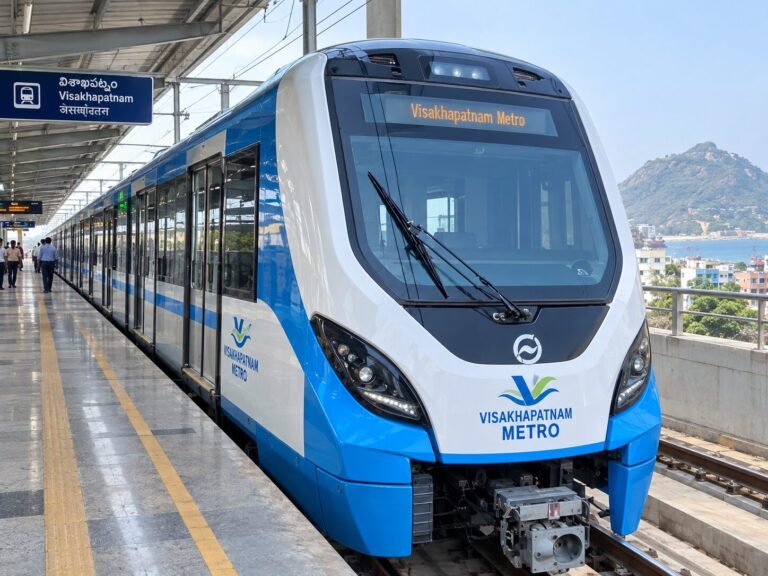
Vizag Metro Rail Project Under Process, Awaits Final Centre Approval

VISAKHAPATNAM (Metro Rail News): The long-awaited Vizag Metro Rail project has taken a major step forward. State transit authorities are now waiting for the final statutory and financial clearances from the central government in New Delhi. 

This major rapid transit system is designed to reduce traffic congestion and modernise everyday travel across the port city, and it is currently undergoing key administrative reviews at the national level.

Speaking on 30 September, Andhra Pradesh Metro Rail Corporation (APMRC) Managing Director N.P. Ramakrishna Reddy confirmed that the project is currently being processed by the Centre. 

Planned Outline & Expected Goals of the Vizag Metro

The detailed plan features multi-tier metro corridors built to connect key industrial areas, business districts, and residential neighborhoods. To prepare for this, state planners have updated the Detailed Project Report (DPR) of Vizag Metro to match national transit standards and ongoing highway expansions. This smart adjustment aims to use as little private land as possible while helping the maximum number of commuters.

A large portion of the land needed for the first phase belongs to the government, which will make construction much smoother and faster once the final approvals are granted. The funding will be shared through a joint model involving equity from both the central and state governments, alongside external financial assistance. 

Once the Union government gives the official green light, the State will fast-track the next steps, including finalising the routes, acquiring the remaining land, and inviting global bids (tenders) for civil construction and electrical systems.

Local residents and commuters are watching the updates closely, looking forward to a modern transport system that will support the city’s future economic growth. 

The updated plan for Phase-I is estimated to cost ₹11,498 crore and will cover 46.23 kilometres with 43 modern stations strategically linking busy residential hubs and commercial zones. 

To finance this, talks are underway with international lenders like the Asian Infrastructure Investment Bank (AIIB) to fund about 60% of the project, with the remaining balance covered by the central and state governments.

Also Read: Vizag and Vijayawada Metro Projects Move to Tendering Stage

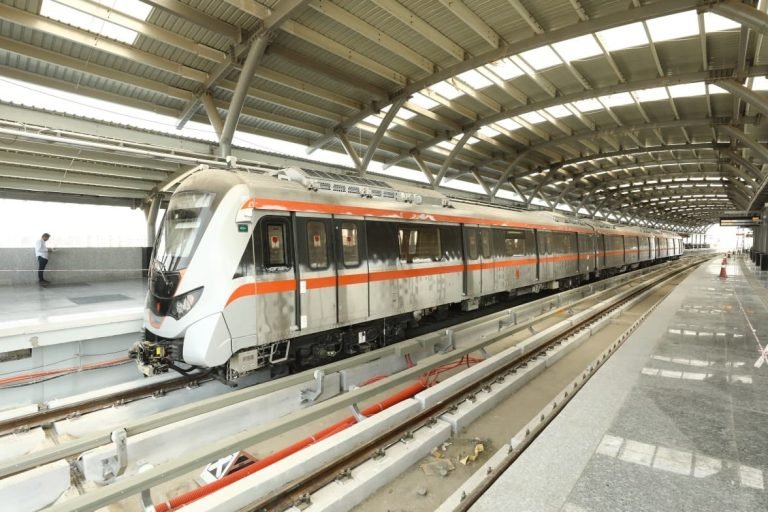
Ahmedabad Metro: GMRC Invites Bids for 10.26 km Elevated Thaltej-Godhavi Corridor 

AHMEDABAD (Metro Rail News): The Gujarat Metro Rail Corporation (GMRC) has invited bids for the construction of a 10.26 km elevated metro corridor from Thaltej to Godhavi in Ahmedabad. It includes 8 Nos. Elevated Stations, E&M Works for Ahmedabad Metro Rail Project. The estimated cost of the project is  ₹860.01 Crore.

Tender details

Information Details 
Authority Gujarat Metro Rail Corporation (GMRC)
Tender Number GMRC/CONS/STNS+VDCT – 1/2026 
Estimated Cost₹860.01 Crore 
Tender Security ₹8.60 Crore
Completion Period 32 Months 
Pre-Bid meeting12 October 2026 at 11:30 hrs. 
Bid submission deadline 16 November 2026 at 15:00 hrs. 
Tender validity180 days

Scope of work 

The scope of work includes construction of a 10.26 km Elevated Viaduct from Thaltej Gam Dead End to Godhavi Dead End, including 8 Nos. Elevated Stations, E&M Works for Ahmedabad Metro Rail Project.

About the project

The city is set to expand its network over existing corridors of Ahmedabad Metro; the upcoming project will help to bring connectivity with residentials, commercial, and other urban areas by the routes in phase 3. 

On, Thaltej to Godhavi route there will be 9 metro stations and 3 main junctions with an elevated line of 10.8 km. Main junctions are Thaltej Village, Canal Road and South West Ahmedabad Sports Arena (SWASA) Stadium in Godhavi. In Phase 3, the 10.8 km long corridor will divide in two parts and both corridors will meet at Canal Road Station. 

  • In Part 1, 7.50 km long route is going to be on Godhavi to Canal Road Section, with this distance there will be 6 elevated stations. This segment represents a key connection, establishing essential connectivity to the proposed Sports Arena. 
  • In Part 2, there will be a 3.31 km long corridor at Thaltej village to Canal Road section with 3 elevated stations. This section will link the current Blue Line and the newly constructed track.

Also Read: Ahmedabad Metro: GMRC Floats ₹879.27 Civil Tender For Phase-2A

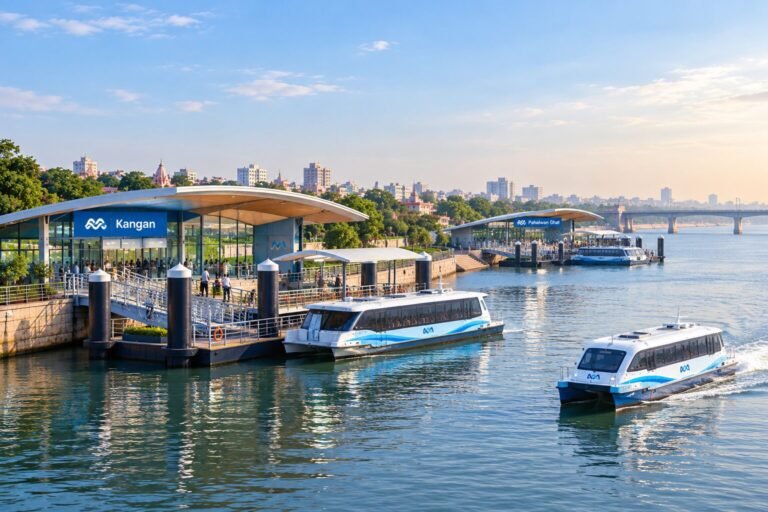
Patna Water Metro Plan Extends: 2 More Cruise Terminals Planned at Kangan and Pahalwan Ghat

PATNA (Metro Rail News): According to the Union Government, Patna is chosen under the National Water Metro plan that seeks to provide environment-friendly transport along the waterways in the city. Electric hybrid ships shall be used in order to meet this objective. 

Patna’s proposed Ganga water metro project is moving forward with rapid pace, and is expected to witness growth in transportation, tourism and employment. 

Two acres of land have been allotted by the State Government at both ghats to Inland Waterways Authority of India (IWAI) for implementing the plan. Full-pledged operation of this project will be connected to National Waterway -1 and the cost of its execution is supposed to be around Rs. 1200 crores. 

Extended Water Metro Plan Extended to Kangan and Pahalwan Ghat

The first phase of the plan involves setting up of the world-class river cruise terminals at Kangan Ghat and Pahalwan Ghat. The river cruise terminal at Kangan Ghat will be linked to the pontoon on Ganga through a gangway which will pass below J P Ganga Path. The pontoon is expected to be around 150 metres long and will have the capacity to berth four boats at once. 

The scope of work includes the installation of a dedicated power bunkering and auxiliary supply system to ensure operational energy management for all rolling stock operating within the terminal limits.

The upcoming water metro hubs will feature modern terminal buildings and smooth passenger walkways to make switching between road transport and boats effortless. At Pahalwan Ghat, commuters will use a uniquely designed elevated pathway, while the surrounding riverbanks will undergo stone pitching for added safety and strength.

The water metro’s reach extends far beyond Kangan and Pahalwan ghats. The Inland Waterways Authority of India (IWAI) has already spotted several promising spots for new terminals along both the Ganga and Gandak rivers. This network will build on the success of the existing IWAI terminal at Gaighat on National Waterway-1, turning these new passenger hubs into a world-class upgrade for local commuters.

Also Read: MoPSW Draws Up National Water Metro Guidelines: 18 Locations Identified Across Country

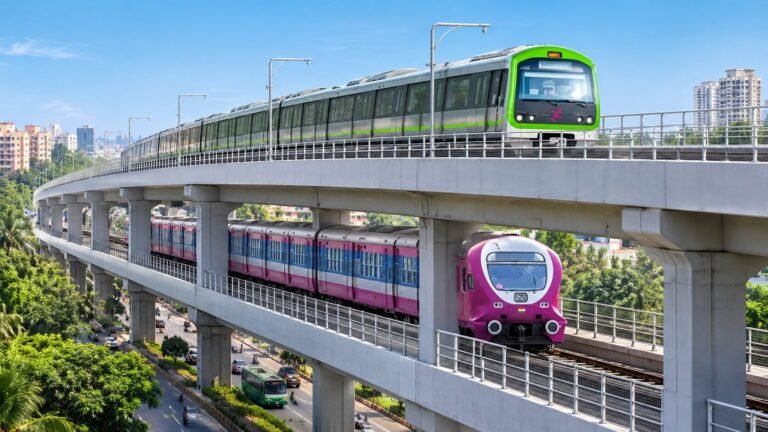
Bengaluru Advances Multilevel Rail Infrastructure With Shared Metro-Suburban Rail Corridor

BENGALURU (Metro Rail News): Bengaluru is trying to build its transport infrastructure upwards instead of taking land for every new construction, with roads, suburban trains and Metro trains will share the same corridor at different levels. A 500 meter alignment will be shared near Benniganahalli between Bengaluru Metro & the Bengaluru Suburban Rail (BMRCL) to avoid acquisition of 1.3 acres of residential land. 

In Bengaluru, double-decker flyovers are present, one level carries the Metro and another is used for vehicular traffic.  As per BMRCL, a shared alignment has been adopted by Bengaluru Suburban Rail Project so both the rail systems use the same space. 

Reason behind building a double-decker metro in Bangaluru

The main reason for building a double-decker Metro corridor in Bengaluru is to use limited space more efficiently, because Bengaluru is a crowded place and the city is growing rapidly. By building every transport structure at different places, required more land and also, demolish homes intentionally and take citizens property. 

A double-decker corridor will help to allow different public transport at same time and location, allowing passengers to travel easily. 1.3 acres residential land will be untouched under this project, adopted in Benniganahali.

Kanaka Line suburban railway corridor in Bengaluru

Suburban railway corridor in Bengaluru named as Kanaka Line, part of the city. For daily commuters it provides a fast and frequent service for people who travel between Bengaluru and its surrounding areas on a daily basis. 

The viaduct K-RIDE’s Kanaka Line will connect Heelalige and Rajankunte, going to pass through Benniganahali area which will share a transport corridor with the Bengaluru Metro blue Line.

The railway will be placed on elevated level instead of building separately, it will save land, reduce property acquisition and create a convenient connection between different forms of public transports. 

Major role of Benniganahali in the project

Benniganahali plays a crucial role as a transport hub, bringing different public transport systems together while making proper use of limited land. The Metro and Suburban railway infrastructure is going to meet at Benniganahali, which makes it an important junction.

This common corridor of Bengaluru Metro Blue Line and the Suburban railway will allow two systems to run at different levels while using the same urban space. This will make Benniganahali an important multimodal transport interchange, helping commuters to connect between different transport services. 

Also Read: Bengaluru Suburban Rail Project: Cemindia Projects Emerges as L1 for ₹665.61 Cr Mathikere Project 

Gurugram Metro’s Sector 9-Cyber City Stretch Moves Ahead with ₹1,662 Cr Tender 

GURUGRAM (Metro Rail News): Gurugram Metro Rail Limited (GMRL) has invited bids for the construction of a viaduct and elevated stations between Sector 9 and Cyber City on the Gurugram Metro corridor. The estimated cost of the package is ₹1,662.53 crore, including GST, with a completion period of 30 months.

Tender information

Information Details 
Tender Number GMRL/PROJ/2026/AC-03
Estimated Cost ₹1,662.53 crore (including GST)
Completion Period 30 months
Tender Security ₹16.63 crore / USD 1.75 million
Pre-Bid Meeting21 October 2026, 11:00 hrs
Tender Submission Deadline18 November 2026, 15:30 hrs

Scope of work

The scope of work includes construction of viaduct and elevated stations from Sector 9 Metro Station (exclusive) to Cyber City Metro Station (inclusive) of Gurugram Metro Corridor between Millennium City Centre and Cyber City, Gurugram, India. 

About Gurugram Metro Project

The Gurugram Metro project is planned as a 14.2-km corridor with 13 stations connecting Millennium City Centre with Cyber City. The project has an estimated cost of around ₹1,662 crore and will include double-decker flyovers at Bajghera and Old Delhi Road.

The 13 proposed stations are Sector 7, Sector 4, Sector 5, Ashok Vihar, Sector 3, Bajghera Road, Palam Vihar Extension, Palam Vihar, Sector 23A, Sector 22, Udyog Vihar Phase 4, Udyog Vihar Phase 5 and Cyber City. The project is planned to be financed by the World Bank. The platforms will be designed to accommodate six-car metro trains.

Also Read: Gurugram Metro Phase II Gains Momentum as Haryana Government Clears Rs 1,662 Cr Civil Works Package

North Central Railway Generates ₹285 Cr From Scrap Disposal in Six Months 

DELHI (Metro Rail News): North Central Railway (NCR) has surpassed its annual junk disposal target for 2026-27 in just six months generating Rs 286.79 Cr against the fixed amount of Rs 285 crore. The amount which was fixed for the entire financial year was achieved during the first half of 2026-27, earning 1.74 crore more than the targeted amount. This development signals a faster pace in the disposal of obsolete and unused railway materials. 

This accomplishment reflects the efforts of NCR General Manager Naresh Pal Singh and Principal Chief Materials Manager SP Diwedi, who supervised the planning and monitoring for this project. Officials and staff involved in identifying, sorting, separating and disposing of the scrap and unused materials were also credited for the achievement for completing this project sooner than it was expected.

This initiative has made additional revenue from scrap disposal more accessible to NCR while simultaneously also helping railway premises be clear of scrap and unused material.

Systematic scrap disposal improves cleanliness and safety in railways 

According to TOI, officials have said the systematic removal of scrap has helped create cleaner and safer railway stations. The clearing of old rails, machinery, equipment and other unused materials helps clear railway premises and create a cleaner, safer workplace. Disposal of unused railway material can help reduce the amount of space required for storing scrap across railway facilities. However this process is not only limited to revenue generation but also it can contribute to better utilisation of railway space and resources. 

The early achievement also gives NCR an opportunity to go beyond its original annual target. With several months still remaining in the financial year, continued disposal of identified scrap could generate additional revenue while reducing the accumulation of obsolete material across railway facilities.

Also Read: Railways Approve ₹166.5 Cr Four-Lane RoB to Replace Vadodara’s Alkapuri Underpass

South Western Railway Records 5.9% Growth in Freight Loading in September 2026

DELHI (Metro Rail News): The South Western Railway (SWR) recorded its highest freight loading in September, 2026. It handled 4.41 million tonnes during the month, marking an increased growth of 5.9% as compared to the numbers that reached 4.17 million tonnes in September, 2025. 

The first half of the financial year reflect robust growth across traffic and revenue, which is highlighted as follows: 

  • Total Freight Loading: Reached 26.1 million tonnes, reflecting a 5.8% growth over the same period in 2025.
  • Gross Revenue: Totaled ₹4,730 crore, showing a 4.91% increase from the previous year.
  • Total Passengers: Carried 9.2 crore passengers, registering a 4.78% increase.

South Western Railway records Strong Revenue and Freight Growth 

During the month of September, 2026, the gross revenue reached ₹870 crore that highlights a 15.91% increase over September last year. The passenger revenue rose by 26.87% to ₹357.5 crore.  The passenger traffic increased by 6.83% to carry 1.5 crore passengers, while the freight revenue stood ₹465 crore, a rise of 8.72% year-over-year.

In the first half of the financial year, cargo loading was dominated by iron ore at 10.17 million tonnes. Pig iron and finished steel followed at 5.95 million tonnes, while coal accounted for 5.36 million tonnes. 

In September alone, iron ore led freight loading at 1.7 million tonnes, followed by pig iron and finished steel at 1.127 million tonnes, and coal at 0.9 million tonnes. Mineral oil and container traffic rounded out the period at 0.217 million tonnes and 0.105 million tonnes, respectively. 

P. Ananth, the General Manager of South Western Railway, praised railway employees for their consistent efforts in elevating performance to such a satisfactory level.

Also Read: Indian Railways Sanctions Rs 122 Cr to Add Second Track on Barbil-Bolanikhadan Section