Ahmedabad Metro Rail project Phase 2A gets Union Cabinet’s approval

NEW DELHI (Metro Rail News): The Union Cabinet has approved Phase 2(A) of the Ahmedabad Metro Rail Project. This metro corridor will consist of 05 stations (04 elevated and 1 underground) and is expected to be completed over a period of the next 4 years. The estimated cost of this project is Rs 2,169.04 crore. This approved extension is a 6.032 km stretch from Koteshwar Road to the Sardar Vallabhbhai Patel International Airport. 

The names of stations approved for Phase 2(A) Corridor are:

  • Ashram Road
  • Koteshwar Prachin Mandir
  • Sabarmati River
  • Sardar Nagar
  • Airport
image

Once Phase 2 (A) is operationalized, the Ahmedabad-Gandhinagar will expand its network to 77.63 Km. 

This extension will link key zones, including residential & commercial areas, with the existing Ahmedabad-Gandhinagar corridor, including Sardar Nagar, Indiranagar Society, and the Sardar Patel Sports Enclave. 

Phase 2(A) will enhance connectivity between Ahmedabad, Gandhinagar, GIFT City, and the international airport. Union Minister Ashwini Vaishnaw also said that this corridor will provide better access to railways, bus terminals, and other transport networks.

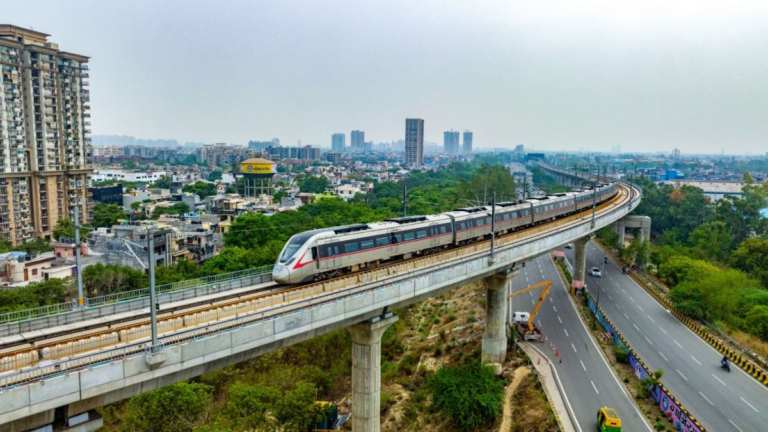
Corridor II of Ahmedabad Metro Phase 2 is an extension of Phase I, which provides better connectivity to the twin cities of Ahmedabad and Gandhinagar. The two corridors of Phase II span over a length of 28.2 km and include 22 stations. The final section of Corridor II was inaugurated by Prime Minister Modi on 11th Jan, 2026. Connecting with Phase 2 (A), these metro corridors are expected to enhance public transportation and boost urban mobility. 

Chennai Metro invites bids for restoration work at Phase 1 and Phase 1 extension 

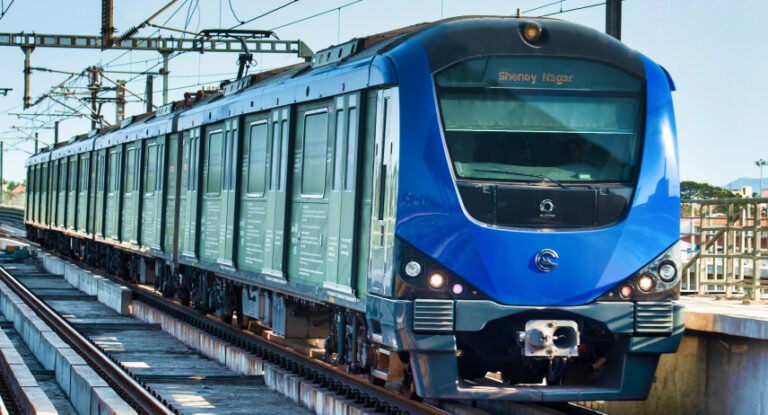
CHENNAI (Metro Rail News): Chennai Metro Rail Limited (CMRL) has floated a tender for civil maintenance work at Phase 1 and  Phase 1 extension metro stations of Chennai Metro. The estimated cost of the tender is Rs 2.84 crore. 

Tender Information

Information Details  
Tender Number CMRL/O&M/Civil Maintenance/RW-02/2026 
Bid System Single Stage Two Envelope 
Tender Cost  Rs 2.84 crore
EMD Amount Rs 2.84 lakh
Bid submission FeeRs 16,000
Pre-Bidding Meeting 17 June 2026, (11:00 hrs)
Bid-Submission Deadline09 July 2026 up to (11:00 hrs) 
Technical Bid Opening09 July 2026 up to (15:00 hrs)
Duration of Contract200 days from LOA + DLP of 365 Days. 

Scope of Work

The scope of work includes restoration of existing architectural finishes at Phase 1 and Phase 1 extension metro stations of Chennai Metro Rail Limited (CMRL) in Chennai, Tamil Nadu. The contractor will complete the work within 200 days and provide a defect liability period of 365 days.

About the Project 

Chennai Metro Phase 1 network is a 45.05 km long stretch featuring two corridors: the Blue Line and the Green Line. Phase 1 extension also adds around a 9.05 km stretch to the Blue Line. It connects several commercial, residential and transport hubs. Through this restoration project, Chennai Metro is aiming to maintain station infrastructure quality across the network.  The work will help ensure that stations remain clean, safe and visually appealing for passengers in the years ahead. 

Centre approves Jammu–Srinagar Vande Bharat Express to halt at Anantnag

SRINAGAR (Metro Rail News): To further boost connectivity in South Kashmir, the Union Minister of Railways, Ashwini Vaishnaw, has announced that the Jammu-Srinagar Vande Bharat Express will get a new halt station at Anantnag.

On 10th June, 2026, the Railway Minister Shri Ashwini Vaishnaw met Kashmir Chief Minister Mr. Omar Abdullah and reviewed various ongoing railway projects and discussed issues related to the expansion of rail services in Jammu & Kashmir. During the meeting the chief minister appreciated the quality of service and punctuality of the Jammu-Srinagar Vande Bharat Express and requested the union minister to connect the train services to Anantnag Railway Station. 

This new halt is expected to benefit commuters, tourists and traders, offering a faster and more reliable transport link to one of Kashmir’s key economic and cultural hubs.

The train initially began operations between Katra and Srinagar on 6 June 2025. The extended direct route starting from Jammu Tawi was launched in April 2026, and to meet the rising passenger demand the number of coaches was increased from 8 to 20.  At present, the Jammu–Srinagar Vande Bharat Express runs a total of 4 services (two pairs) (26401/26402 and 26404/26403) in the Kashmir Valley. Railway Minister Ashwini Vaishnaw flagged off the service on April 30, 2026. Regular commercial operations commenced on 2 May 2026, reducing the travel time to 4 hours 50 minutes. 

Also Read: Karnataka CM seeks Center’s approval for Namma Metro Phase 3 Double-Decker corridor

Delhi-Ghaziabad-Meerut RRTS registered over 1.25 lakh daily commuters

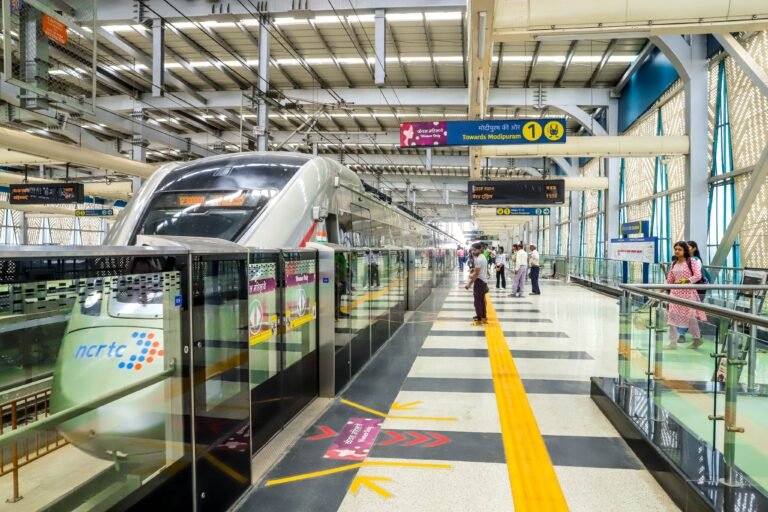
NEW DELHI (Metro Rail News): Delhi-Ghaziabad-Meerut Regional Rapid Transit System (RRTS) reached its highest daily ridership on Monday (8th June), with almost 1,25,550 passengers travelling on the corridor in a single day. On average, around 1 lakh commuters are using the Namo Trains for daily commuting. In the month of May, the average daily ridership was around 93,877 as per the information on the Namo Bharat website. 

The NCRTC posted on their X (formerly twitter) account on Tuesday that, “In response to growing passenger demand, NCRTC has recently introduced 18 additional Namo Bharat train trips during peak hours on the Delhi-Ghaziabad-Meerut corridor.” These trains are running between 7 AM to 11:30 AM in the morning and 5 PM to 8:30 PM in the evening.

A major reason for the growing ridership of the Namo Bharat trains is the substantially fast service that it offers and thereby reducing the travel time significantly. NCRTC’s officials informed that the trains are increasingly chosen by daily office goers, students and other daily commuters, for whom punctuality is important. At the time of heat-waves in Delhi NCR, the Namo Bharat offers a fully air-conditioned, comfortable and safe mobility option.

The Delhi-Ghaziabad-Meerut RRTS corridor, also known as the Namo Bharat corridor is India’s first semi-high-speed rail regional transit corridor with a length of 82.15 km. The train covers the distance between Sarai Kale Khan in Delhi to Modipuram in Meerut in less than 60 minutes.

Patna Metro Blue Line achieves 7th TBM breakthrough 

PATNA (Metro Rail News): The Patna Metro project hit another achievement, as TBM-04 completed the tunnel from Moin-ul-Haq Stadium Metro Station to Rajendra Nagar Metro Station. This signals the 7th tunnel breakthrough on Line 2 of the Patna Metro project.

TBM-04 successfully completed the excavation of approximately 681 metres of downline tunnel between Moin-ul-Haq Stadium Metro Station and Rajendra Nagar Metro Station. This progress was described as one of the most technically challenging components of the project by the officials.

The construction on the downline tunnel by TBM-04 is a part of the 6 underground stations planned for corridor II of the Patna metro project. It was reported that this section will be connected to Malahi Pakri metro station through a ramp of approximately 750 metres connecting the elevated section to the underground alignment.

Alongside this development, TBM-03 is moving at a steady pace in parallel, constructing the upline tunnel. The TBM is working on the remaining section of the tunnel and can reach Rajendra Nagar Metro Station by the end of June 2026.

The event was witnessed by Shri Sandeep Kumar R. Pudkalkatti, IAS (Secretary, UDHD-cum-Managing Director, Patna Metro Rail Corporation), along with several senior officials associated with the project.

Patna Metro Blue Line consists of 12 stations, featuring 6 underground and 6 elevated stations, spanning 16.2 km from Patna Junction to Patliputra Bus Terminal (New ISBT). Currently a 3.45 km elevated stretch between Pataliputra Bus Terminal and Bhootnath station on the North-South corridor is operational and approval to run metro services up to Malahi Pakri was recently given after safety inspections on this route. 

image

Detailed Review Meeting

On 8th June, 2026, a detailed review meeting was chaired by Shri Sandeep Kumar R. Pudakalkatti, IAS ( Secretary, UDHD-cum-MD, PMRCL). Senior officials from PMRCL, DMRC, and concerned agencies participated in the review. Construction progress across various project corridors was assessed, and all critical bottlenecks were discussed in the meeting. Clear directions were issued to accelerate pending works, strengthen coordination, and ensure adherence to project timelines.

This accomplishment strengthens the underground connectivity of the corridor and brings Patna Metro closer to operational readiness. Metro Officials said that the work on the underground section of Patna Metro Blue Line is expected to be completed by the end of this year. 

Indian Railways Approves Electric Traction Upgrade on Telangana Rail Route

TELANGANA (Metro Rail News): Indian Railways has approved the upgrade of the electric traction system on the Mahbubnagar–Secunderabad–Medchal section of South Central Railway. This section is a part of India’s important High-Density Network (HDN) routes. The project will cover approximately 141 route-kilometres of this rail corridor and will be implemented at a cost of ₹285.01 crore. 

Under the project, the existing 1×25 kV electric traction system will be upgraded to a modern 2×25 kV electric traction system. This move is expected to provide a more stable and efficient power supply for train operations, making rail services smoother, safer and more reliable.

Mahbubnagar–Secunderabad–Medchal Rail Route lies in the state of Telangana and falls on the Dharmavaram-Dhone-Mahbubnagar-Secunderabad-Medchal-Mudkhed-Indore-Ajmer rail corridor, which carries substantial passenger and freight traffic.

Once completed, this project will improve train operations on the route. Freight movement is expected to become more efficient, enhancing both the speed and capacity of goods transportation. The project will also support trade, industry and economic activity across the region.

The initiative will strengthen Indian Railways’ commitment to developing a modern, future-ready rail network and will benefit both passengers and industry through improved rail infrastructure and operational efficiency.

Pune Metro Line 3 to enter operations in July

PUNE (Metro Rail News): The highly anticipated Pune Metro Line 3 is expected to be launched on 15th July 2026 (as reported by the Indian Express) following the mandatory safety inspections and approvals. According to officials over 90% of the line 3 work has been executed.

Pune Metropolitan Region Development Authority (PMRDA) Commissioner Abhijit Chaudhari said, “ The final inspection is expected between June 15 and June 20. If no major issues are identified during the inspection, we should be in a position to start operations from July 15,” 

Currently, Pune Metropolitan Region Development Authority (PMRDA) is targeting 15th July, 2026 to commence services on the first phase covering  12 stations between Maan and Ramnagar of Hinjawadi–Shivajinagar Metro corridor. The remaining section, which will feature 11 stations between High street and Shivaji Nagar is scheduled to begin operations by October 2026, as reported by PMRDA.

Pune Metro Line 3 is 23.203 km long corridor with 23 total stations and is expected to decongest traffic during peak hours on weekdays in Pune’s Rajiv Gandhi IT Park, Hinjawadi, and reduce time travel to approximately 30 to 45 minutes. 

 In a meeting held on 4th June, 2026, Maharashtra Chief Minister Devendra Fadnavis instructed PMRDA to start operations on the first 12 stations by July 15, 2026. He also stated that, “Under no circumstances should infrastructure projects take more than three to three-and-a-half years to complete. Delays cause huge financial losses to the country and the state. Slackness in work will not be tolerated,”

Pune Metro Line 3, also known as the Puneri Metro or the Pink Line, is being developed under a public-private partnership model executed by Pune IT City Metro Rail Limited, a joint venture between the Tata Group and Siemens. When the agreement was first signed by the TATA-Siemens consortium, the project was originally targeted for completion by March 2023. After the construction officially began in November 2021, the scheduled construction date was set for March 2025. After the final inspection that is set to be conducted between June 15 and June 20 if no issues are identified, the Pune Metro line will be operational from 15th July 2026.

Also Read: Indian Railways Approves Electric Traction Upgrade on Telangana Rail Route

Bengaluru-Tumkur rail section gets major electric traction upgrade

BENGALURU (Metro Rail News): To further enhance efficiency of rail operations on Karnataka’s busiest rail route the Indian Railways has sanctioned the upgradation of the existing 1×25 kV electric traction system to a modern 2×25 kV electric traction system.

The project will be implemented over an area of ​​120 track kilometres (TKM) and is approved at a cost of ₹162.57 crore. The Bengaluru–Tumkur section is part of the important Highly Utilised Network (HUN) Route-10, connecting major industrial and economic centres like Pune, Hubballi, Chikkajajur, Birur, Tumkur, Bengaluru, Salem and Kanyakumari.

The implementation of the 2×25 kV traction system is expected to further strengthen the power supply system for trains. This will enable the growing rail traffic on this section to be handled more efficiently. It will also facilitate the operation of heavy freight trains and long-distance passenger trains and increase the reliability of the electric traction infrastructure.

This upgrade will help increase capacity on this rail route serving Bengaluru and surrounding areas, and will also facilitate passenger and freight transport within Karnataka and South India.

This project will further strengthen Indian Railways’ efforts to modernise its electrical infrastructure, enhance network capacity and ensure smoother operations on busy rail corridors.

Shri Prem Sagar Gupta takes charge as new General Manager of Kolkata Metro

KOLKATA (Metro Rail News): The Railway Ministry has appointed Shri Prem Sagar Gupta as the new General Manager of Kolkata Metro. The Railway Ministry announced the appointment of Shri Prem Sagar Gupta on June 5 2026. 

Before taking the new role, Gupta has also served as Principal Chief Engineer of Northern Railway. Gupta also has an excellent academic record in civil engineering.

  • Gold Medal in Civil Engineering from Delhi College of Engineering
  • M.Tech from IIT Delhi, where he secured the top position
  • M.Phil from the National Defence College (NDC)

Throughout his career, he has handled several important assignments within Indian Railways and the Railway Board.

Experience in key Railway positions

Gupta has worked in senior leadership roles at the Ministry of Railways and Railway Board, including,

  • Principal Executive Director and Chief Engineer (Planning)
  • Executive Director (Corporate Coordination)

One of the notable projects associated with Gupta’s career is the Udhampur-Srinagar-Baramulla Rail Link (USBRL) project in Jammu and Kashmir. As Chief Engineer (Design), he contributed to engineering solutions for structural challenges linked to the Chenab Bridge, one of the most significant railway bridge projects in the country. 

Also Read: West Bengal CM announces Kolkata Water Metro Project

Southern Railway invites bids for 5th and 6th Railway line between Villivakkam and Ambattur in Chennai

CHENNAI (Metro Rail News): Southern Railway has invited bids for the construction of 5th and 6th railway Broad Gough Lines between Villivakkam and Ambattur in Chennai. The project cost around Rs 129 crore. It will increase line capacity on one of the busiest suburban rail sections in the city and support future growth in passenger and freight traffic.  

Tender Information 

InformationDetails
Tender Number CAO-CN-MS-EPCMT-02-2026 
Tender TypeOpen Tender
Bidding Type EPC (Single Stage)
Bidding SystemTwo Packet System
Approximate CostRs 129 crore
EMDRs 2.58 crore
Bidding Start Date 16 July 2026 
Tender Closing Time30 July 2026, (17:30) 
Pre-Bid Conference 30 June 2026 11:00 
Completion Period730 Days

Scope of Work

The contractor will construct the 5th and 6th Railway BG line between Villivakkam and Ambattur Stations for Civil Engineering, Signalling & Telecommunication, Electrical General & OHE Electrification works including utility shifting on EPC MODE. 

About the Project

The Villivakkam-Ambattur section forms part of Chennai’s busy suburban railway network. It carries a large number of passenger and freight trains every day. The existing tracks handle heavy traffic, which often limits operational flexibility. The construction of the 5th and 6th railway lines will increase corridor capacity, improve train movement, and support future growth in rail services.

Also Read: Chennai Metro Phase 2: Final U-Girder cast for Line 5 Elevated Section

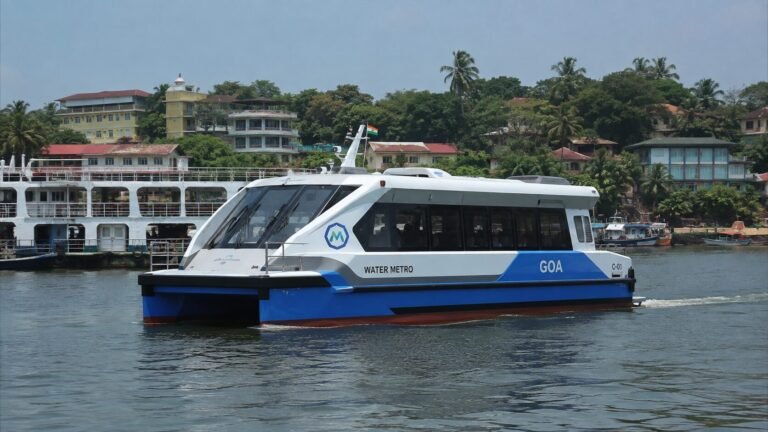
West Bengal CM announces Kolkata Water Metro Project

KOLKATA (Metro Rail News): West Bengal CM Suvendu Adhikari announced that Kolkata will join the water metro network in a press conference held at the state secretariat on 4th June, 2026. The press conference was followed by a meeting attended by the Union Minister for Ports, Shipping and Waterways, Sarbananda Sonowal, and the Chief Minister of West Bengal to discuss the possibility of making West Bengal the maritime hub of eastern India.

He also said that the Kolkata Water Metro will be developed under the Sagarmala 2.0 initiative and will involve large-scale jetty development. The project proposals worth Rs 22,700 crore are also under preparation for implementation over the next 5 years. These projects will majorly focus on coastal fishing infrastructure, island development, and other maritime initiatives. 

According to sources, the Kolkata Water Metro system will likely replace the existing ferries that operate between jetties in Kolkata and Howrah. A Detailed Project Report on the Kolkata Metro Project is set to be commissioned soon.

West Bengal Chief Minister Suvendu Adhikari said, “Kolkata will now be connected to the water metro system, making it the 18th city in the country to adopt this mode of transport.” 

Also Read: Chennai Metro Phase 2: Final U-Girder cast for Line 5 Elevated Section

Chennai Metro Phase 2: Final U-Girder cast for Line 5 Elevated Section

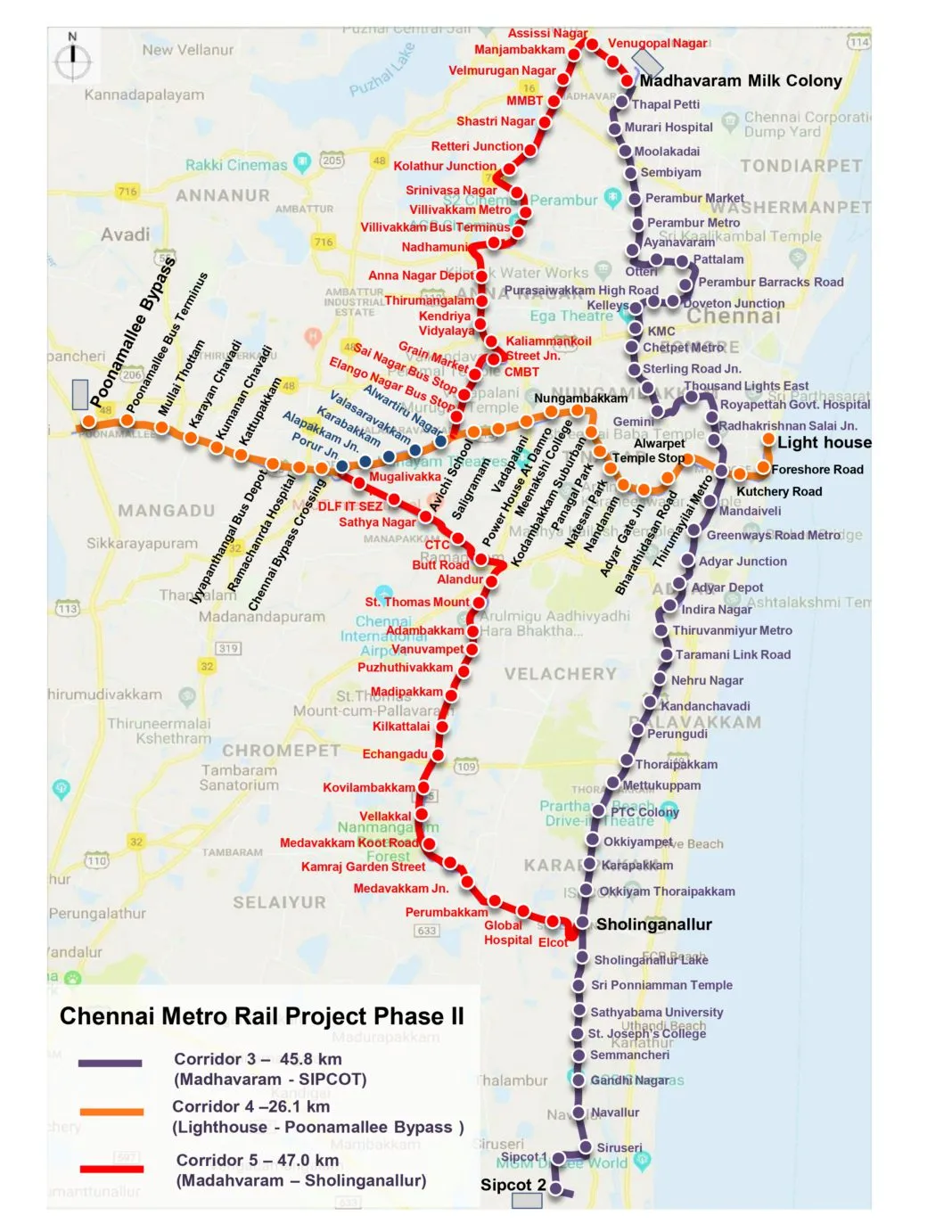
Chennai (Metro Rail News): In a recent development, Chennai Metro Rail Limited has completed the casting of the final U-girder required for the elevated section of Corridor 5. A total of 824 U-Girders were used for the construction of this elevated section. The final U-girder, measuring 19.5 metres in length, was cast at the C5 ECV-02 Casting Yard. This signals the completion of a massive production scope, one of the largest ever undertaken across Chennai Metro Rail projects. 

As reported, the 43-acre casting yard has stood as one of the most productive and dynamic precast facilities under the CMRL Phase 2 project. Strategically divided into six dedicated production bays, the yard specialised in manufacturing a massive array of precast components required for the construction of the 13.1 km elevated viaduct and associated stations of Corridor 5.

According to an official statement, the project envisages the casting of 5,836 precast elements, involving approximately 1.2 lakh cubic metres of concrete and weighing nearly 3 lakh metric tonnes. The components include: 

• 302 Pier Caps

• 1465 Pier Arms

• 824 U-Girders

• 2055 I-girders (Post-Tensioned & Pre-Tensioned)

• 194 T-girders

• 68 Portal U shells & 1079 parapets

All these elements are being transported from the casting yard to the project alignment located approximately 18 kms away, demonstrating the scale and complexity of this operation.

The project also encompasses casting of the smallest U-Girder of 8.9 m to India’s longest U-girder (33.3 m) weighing 225 MT, which demonstrated the team’s engineering expertise, design capability, and operational agility in executing highly complex precast operations. The casting was carried out successfully without any operational issues, setting a new benchmark in metro rail infrastructure construction.

Senior officials and staff from CMRL and L&T, such as ​Thiru. T.Archunan, Director Projects, CMRL, along with AGM-EC Thiru. C. Murali Manoharan, Thiru. Vinod – RE/GC, Thiru. Parthiban – SDRE, Thiru. K. Krishna Prabhakar – Project Incharge /L&T, Thiru. Elango – Project Manager/L&T, Thiru. Upendar, Casting Yard Manager/L&T were present during the occasion. 

Also Read: Pune Metro Line 3 to enter operations in July

Vadodara’s Pratapnagar Railway Station gets redeveloped under Amrit Bharat Scheme

VADODARA (Metro Rail News): Pratapnagar Railway Station is Vadodara’s one of the oldest railway stations. It has received a major upgrade under the Amrit Bharat Scheme. Indian Railways spent Rs 71.58 crore on the project to improve passenger facilities while retaining the station’s historic image.  

The redevelopment aims to make Pratapnagar a key satellite station for Vadodara Junction. The upgraded station will also help in reducing congestion at Vadodara Junction and support train operations in the years ahead.

Pratapnagar Railway Station enters a new Phase

Pratapnagar station handled passengers from 1880 and played an important role in the region’s narrow-gauge railway network. It is also home to a railway workshop that started operations in 1922. Railway officials now want the station to handle a bigger share of passenger and train operations. The station is also expected to support passengers travelling to the Statue of Unity. Vadodara Divisional Railway Manager (DRM) Raju Bhadke said, “Pratapnagar Railway Station holds immense historical significance for Vadodara and Indian Railways. Through this redevelopment, we have created modern passenger facilities while preserving its heritage value.”

New facilities added across the station

Indian Railways upgraded passenger facilities on Platforms 1, 2 and 3. It has built a new Platform 4 as part of the project. Some of the major improvements include,

  • Extended and resurfaced high-level platforms
  • New platform shelters
  • Better seating arrangements
  • Additional toilets
  • Improved signage
  • New administrative building
  • Accessible ticket counters for persons with disabilities
  • Two new lifts

Indian Railways also developed a new station building at the second entrance and created a commercial area around it.

Better access and passenger moment

Officials redesigned the second-entry side of the station to make movement easier for passengers and vehicles. The upgraded area now includes:

  • Organised traffic circulation
  • Dedicated parking facilities
  • Clearly marked entry and exit routes
  • Other supporting infrastructure

The station concourse has also received new flooring, wall cladding, improved lighting and murals that showcase the station’s railway history.

Focus on accessibility

Accessibility remained a key part of the redevelopment. Indian Railways installed accessible booking counters and connected lifts to the foot overbridge to make travel easier for senior citizens, persons with disabilities and passengers carrying luggage. One of the biggest additions is a 12-metre-wide foot overbridge, which connects all station platforms and links both sides of the city. The bridge includes ramps and lift access to ensure smooth movement across the station.

Vadodara Division Public Relations Officer Anubhav Saxena said, “A major highlight of the redevelopment is the construction of a 12-metre-wide foot overbridge connecting both sides of the city and all station platforms. Ramps and lift connectivity have been provided to ensure smooth barrier-free access for passengers.” He also mentioned that, “The redevelopment was designed to transform Pratapnagar into  a modern, passenger-centric railway facility while strengthening its role in the region’s transport network.”

Read More: Bengaluru Metro: BEML delivers first driverless train for Blue Line

Bengaluru Metro: BEML delivers first driverless train for Blue Line

BENGALURU (Metro Rail News): Bengaluru Earth Movers Limited (BEML) delivered a six coach driverless train for Bengaluru Metro’s Blue Line corridor on Thursday. It is a major corridor that will connect the city’s busy Outer Ring Road (ORR). The company transported the train from its manufacturing facility in CV Raman Nagar to Byappanahalli depot using trailers. 

Currently, the Blue Line depot is still under construction. According to Bengaluru Metro Rail Corporation Limited (BMRCL) officials, they are going to keep the train at the Bay Line and start depot level testing. Once the work on the depot and corridor will get done, Officials will shift the train to its designated location. The Blue Line runs along the Outer Ring Road. It is one of Bengaluru’s busiest stretches, where several IT companies and business parks operate. 

Five months of testing ahead

BMRCL will carry out detailed testing for at least 5 months before carrying the passengers. The trains comes with several new features including, 

  • LCD based animated route map displays
  • Driverless operation capability 
  • Improved safety systems

BMRCL is also planning to install luggage racks in all Blue Line trains, but the first train does not include them. Officials have asked BEML to improve the rack design before installation in future train sets.

Work on Blue Line continues

Construction work on Bengaluru Metro’s Blue Line is still going on. The 18 km elevated section between Central Silk Board and KR Pura is expected to finish by December 2026. The corridor will serve one of Bengaluru’s most crowded traffic routes. It could help in reducing the travel time of  thousands of daily commuters.

Pink Line moves closer to launch

BEML has also supplied six train sets for the Pink Line as well. BMRCL is planning to start services on the 7.5 km elevated section between Kalena Agrahara and Tavarekere by August 15. At the same time, construction teams are still working on the remaining 13.7 km underground section between Dairy Circle and Nagawara. Officials are expecting to complete that section by December 2026. 

The Blue and Pink lines will use the Communications Based Train Control (CBTC) signalling system just like the Yellow Line, which runs between RV Road and Bommasandra. This technology allows trains to operate with a high level of automation. BMRCL is planning to introduce fully automated driverless operations on both corridors at the later stage. It is known as Grade of Automation 4 (GoA-4).Even after driverless services begin, train operators will initially remain onboard. Metro officials said that they want to ensure the system performs reliably and give passengers time to become comfortable with driverless travel. The arrival of the first Blue Line train shows that Bengaluru Metro is moving closer to its next phase of expansion.

Also Read: Southern Railway invites bids for 5th and 6th Railway line between Villivakkam and Ambattur in Chennai