




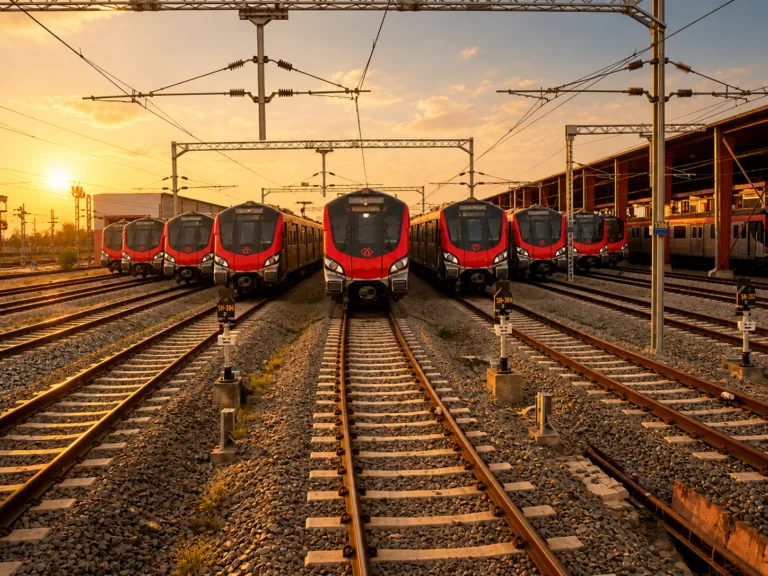
Bringing metro systems to Tier 2 cities has long been debated, primarily due to concerns around financial sustainability, especially when even larger networks in Tier 1 cities struggle to meet operational costs and projected ridership. Against this backdrop, Lucknow, the capital of Uttar Pradesh, stands out as an exception, having outperformed several other Tier 2 metro systems in terms of ridership, operational efficiency, and overall viability.
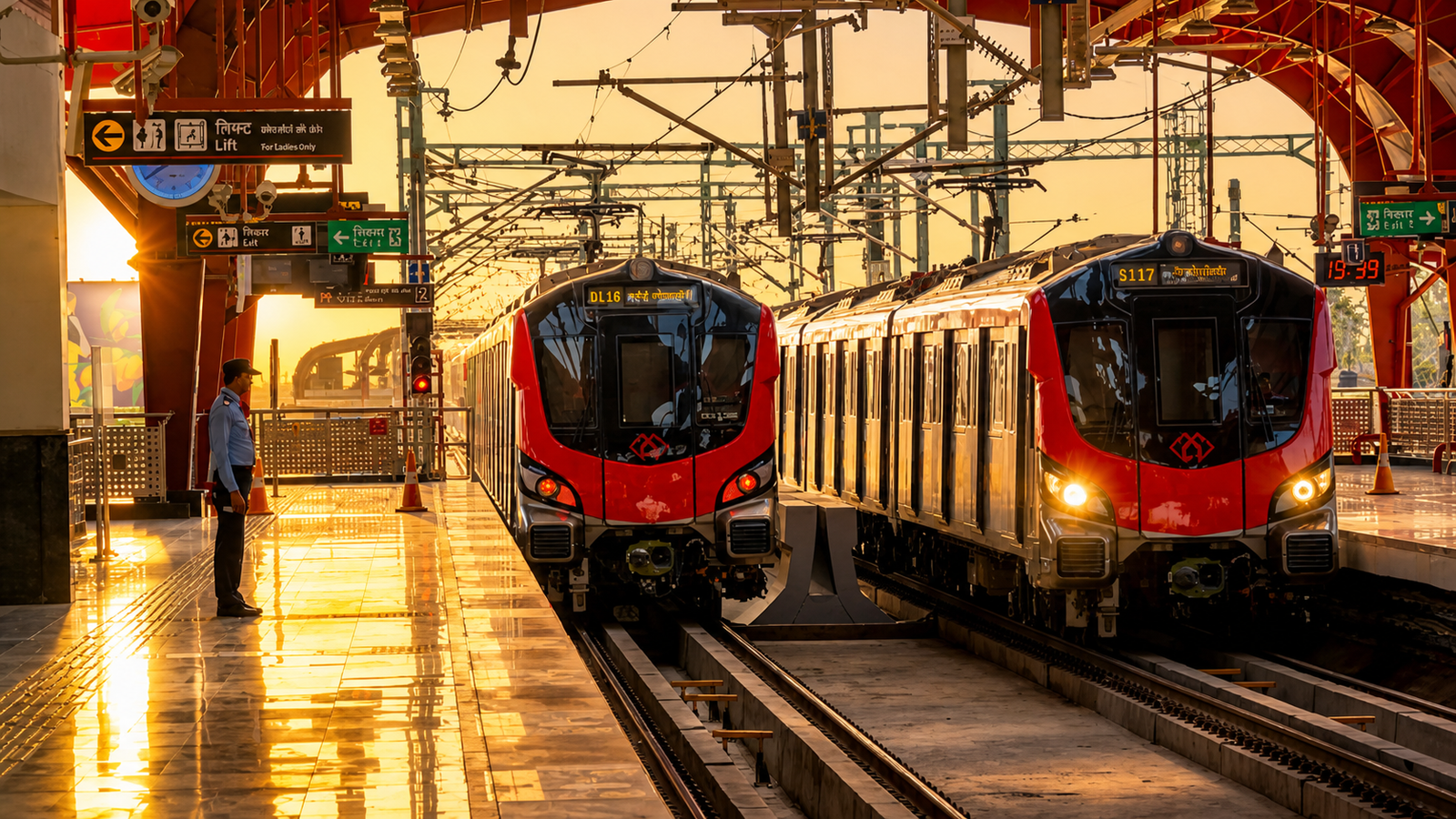
When Prime Minister Narendra Modi inaugurated Lucknow Metro’s Priority Corridor on September 5, 2017, it became more than a milestone; it was a statement of what India’s tier-II cities could achieve when institutional support, engineering talent, and adequate funding are provided. The 8.5-kilometre stretch from Transport Nagar to Charbagh had been built in less than three years, a record, at the time, for metro construction speed in India. Lucknow became a city with a metro before many larger cities had moved beyond the planning stage.
Eight years on, the Lucknow Metro has expanded into a 22.88-kilometre network, carrying approximately 67,000 passengers daily, modest by the standards of Delhi or Mumbai, but steady and growing.
Yet, the Lucknow Metro’s story is not simply one of linear progress. It is also a story of the tensions that define urban rail in India’s growing cities between the ambition of a world-class network and the reality of a ridership base that is still developing; between the speed of construction and the pace of urban behavioural change; between the financial model that built the system and the financial sustainability that must now sustain it.
Get the Daily Metro & Rail Brief
Join 125,000+ metro and rail professionals. Project updates, new tenders and contract awards from across India, in your inbox every day.
A Closer Look at Lucknow’s Demographics & Transport Landscape
Planning Concerns Around Metro Alignment
There has been criticism that the metro network in Lucknow was not aligned with the city’s highest-demand corridors in its initial phase. As a result, some key residential and commercial areas remain underserved, affecting overall ridership and network efficiency.
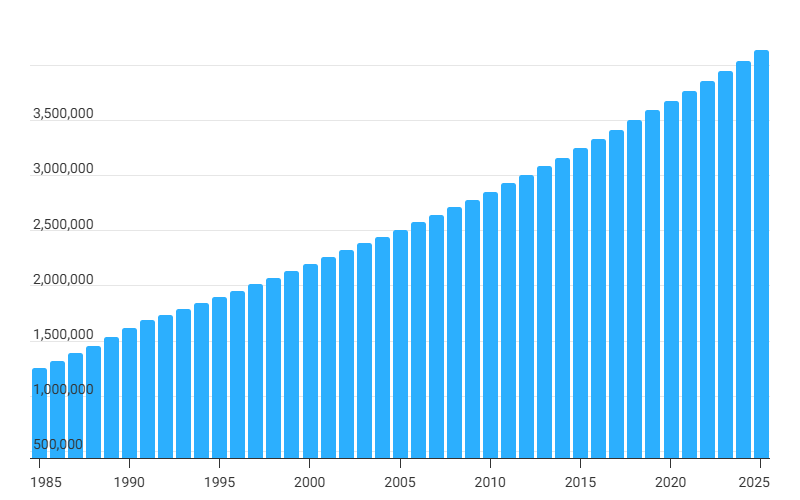
Increasing Population
The current metro area population of Lucknow in 2026 is 4,229,000, a 2.32% increase from 2025. The population of Lucknow is increasing at a rate of over 2% every year. This influx has created intense pressure on the the city’s transport infrastructure, making it inadequate to meet the commuters expectations.
Rapid Growth in Vehicle Population
Lucknow’s mobility landscape is dominated by a sharp rise in private vehicles. As per VAHAN data, the city has over 3.17 million registered vehicles. Two-wheelers (around 2.16 million) and four-wheelers (about 0.78 million) form the majority, indicating a strong dependence on personal transport. In addition, there are over 107,000 three-wheelers, along with freight vehicles, tractors, ambulances, and other categories.
Rise of E-Rickshaws and Informal Transport
Public transport growth has remained limited, but intermediate public transport, especially e-rickshaws and e-autos, has expanded rapidly. These modes are increasingly filling first- and last-mile connectivity gaps, often operating in areas not covered effectively by formal systems like buses or metro.
Uttar Pradesh Leading in EV Adoption
Uttar Pradesh has the highest number of electric vehicles in India, with over 414,000 EVs, ahead of Delhi and Maharashtra. This growth is reflected in Lucknow as well, where electric three-wheelers and small EVs are becoming a common part of daily commuting.
Infrastructure Growth vs Vehicle Growth
The number of vehicles in Lucknow is increasing at an estimated rate of 10-12% annually, which is faster than the expansion of transport infrastructure. Municipal road length has increased from about 520 km to over 1,545 km, while Public Works Department roads have grown from around 6,200 km in 2021 to 8,700 km in 2024. Despite this, infrastructure development is still lagging behind the pace of motorisation.
Severe Parking Deficit
One of the most critical gaps is parking infrastructure. With more than 3.1 million vehicles in the city, the available parking capacity is less than 3,900 spaces. This mismatch highlights significant challenges in urban planning, congestion management, and land use
Project at a Glance
Lucknow Metro at a Glance
Entire Red Line: 8 Mar 2019
Financial Performance
Routes of Lucknow Metro
Lucknow Metro Operational Line (Phase 1A)
Line-1: CCS Airport – Munshi Pulia (22.878 km)
- Length: 22.878 km
- Type: Elevated (19.438 km with 19 stations) and Underground (4 km with 4 stations)
- Depot: Transport Nagar
- Number of Stations: 23
- Station Names: CCS Airport (underground), Amausi, Transport Nagar, Krishna Nagar, Singar Nagar, Alambagh, Alambagh Bus Station, Mawaiya, Durgapuri, Charbagh Railway Station, Hussain Ganj (underground), Sachivalaya (underground), Hazrat Ganj (underground), K.D. Singh Stadium, Vishwavidyalaya, IT Chauraha, Badshahbagh, Badshah Nagar, Lekhraj Market, Ramsagar Mishra Nagar, Indira Nagar & Munshi Pulia
Lucknow Metro Proposed Line (Phase 1B)
Line-2: Lucknow Railway Station (Charbagh) – Vasant Kunj
- Length: 11.098 km
- Status: Approved by India’s Central Government in August 2025
- Estimated Daily Ridership: 60,000/day
- Elevated: 4.548 km with 5 stations (GB Marg – Thakurganj)
- Underground: 6.55 km with 7 stations (Thakurganj – Vasant Kunj)
- Number of Stations: 12
- Station Names: Gautam Buddha Marg, Aminabad, Pandeyganj, City Railway Station, Medical College Chauraha, Nawazganj, Thakurganj, Balaganj, Sarfrazganj, Musabagh, Vasant Kunj
- Note: Phase 1B entered the tendering stage in February 2026, when AYESA Ingenieria Arquitectura SAU and AYESA India Pvt Ltd entered into a joint venture to carry out the Detailed Design Consultancy work of the project
Lucknow Metro Phase 2 Routes (Proposed)
This phase, designed by DMRC & UPMRCL, includes 3 corridors and involves the construction of 1 new line and 2 line extensions.
- Extn of Line-1: Munshi Pulia – Jankipuram
- Extn of Line-2: Charbagh – SGPGI (Sanjay Gandhi Postgraduate Institute of Medical Sciences)
- New Line-3: IIM Lucknow – Rajajipuram
Built at Record Speed: The Construction Achievement
The Lucknow Metro’s most appreciated achievement is not its technology or its ridership; it is the speed at which it was built. The Priority Corridor from Transport Nagar to Charbagh, spanning 8.5 kilometres, was completed and made operational in 2 years and 9 months from the date of construction commencement in September 2014. This was the fastest metro construction timeline in India at that point, and it earned the Lucknow Metro Rail Corporation the Dun & Bradstreet Infra Award in 2017 in the Metro Rail category.
The engineering challenge of building underground metro infrastructure in Lucknow’s high water table and culturally sensitive urban fabric was critical, and its completion without major disruption was a genuine operational achievement.
UPMRC, the joint venture between the Government of India and the Government of Uttar Pradesh, drew on its institutional learning from this project to subsequently take on the Kanpur Metro and Agra Metro, both of which are now in advanced stages of construction.
Urban Impact: What the Metro Has Changed
Improvement in Travel Time and Connectivity
The Lucknow Metro’s impact on the city’s urban fabric is measurable across several dimensions. The most immediate is mobility: a commute from the airport to Charbagh railway station that once took 45-60 minutes by road, depending on traffic, can now be completed in under 35 minutes by metro, at a fraction of the cost of a cab or auto-rickshaw. The Red Line connects the city’s two major transport terminals, the airport and the railway station, with its commercial core at Hazratganj and key residential and institutional nodes along the north-south axis.
Surge in Commercial Activity
The metro has also stimulated commercial activity along its corridor. Station areas, particularly Hazratganj, Charbagh, and Gomti Nagar, have seen increased retail footfall and a rise in commercial property interest. The presence of metro connectivity has become a standard parameter in residential real estate marketing in Lucknow. This transit-oriented development effect, while not yet as pronounced as in Delhi or Bengaluru, is real and growing.
Improved Safety and Mobility for Women
From a gender and safety perspective, the metro has meaningfully expanded mobility options for women in a city where the safety of public transport has historically been a concern. Dedicated women’s coaches, well-lit and CCTV-monitored stations, and predictable timings have made the metro a preferred choice for female commuters, a demographic that private vehicles and informal transport modes frequently fail to serve.
Environmental Benefits and Energy Efficiency: Annually Reducing 6,700 tonnes of CO₂
Lucknow Metro has built a measurable case around energy efficiency and emissions reduction through the use of regenerative braking and solar power. For every 100 units of electricity consumed in operations, around 45 units are recovered and fed back into the system for reuse. This lowers overall energy demand and contributes to a reduction in the system’s carbon footprint.
On a typical day, the metro runs about 190 trips. Each trip requires roughly 250 units of electricity, taking the total daily energy consumption to nearly 47,000 units. Through regenerative braking, about 45% of these, around 20,000 units, are recovered and reused. This translates into a daily reduction of approximately 18.4 tonnes of CO₂ emissions, or about 6,700 tonnes annually. Over six years, this has helped prevent roughly 32,000 tonnes of CO₂ emissions.
In cumulative terms, regenerative braking alone has enabled savings of around 4.3 crore units of electricity over six years. In addition, solar power generation has contributed another 80 lakh units during the same period. These measures together have resulted in annual cost savings of about ₹5 crore, while total carbon emission reductions have crossed 40,000 tonnes.
Only about 40 % of Lucknow Metro’s total income comes from fares; the remaining 60 % is generated through advertising, commercial activities, and other services, offering a model for financial diversification that other cities are studying.
The Revenue Model: A Diversified but Pressured Balance Sheet
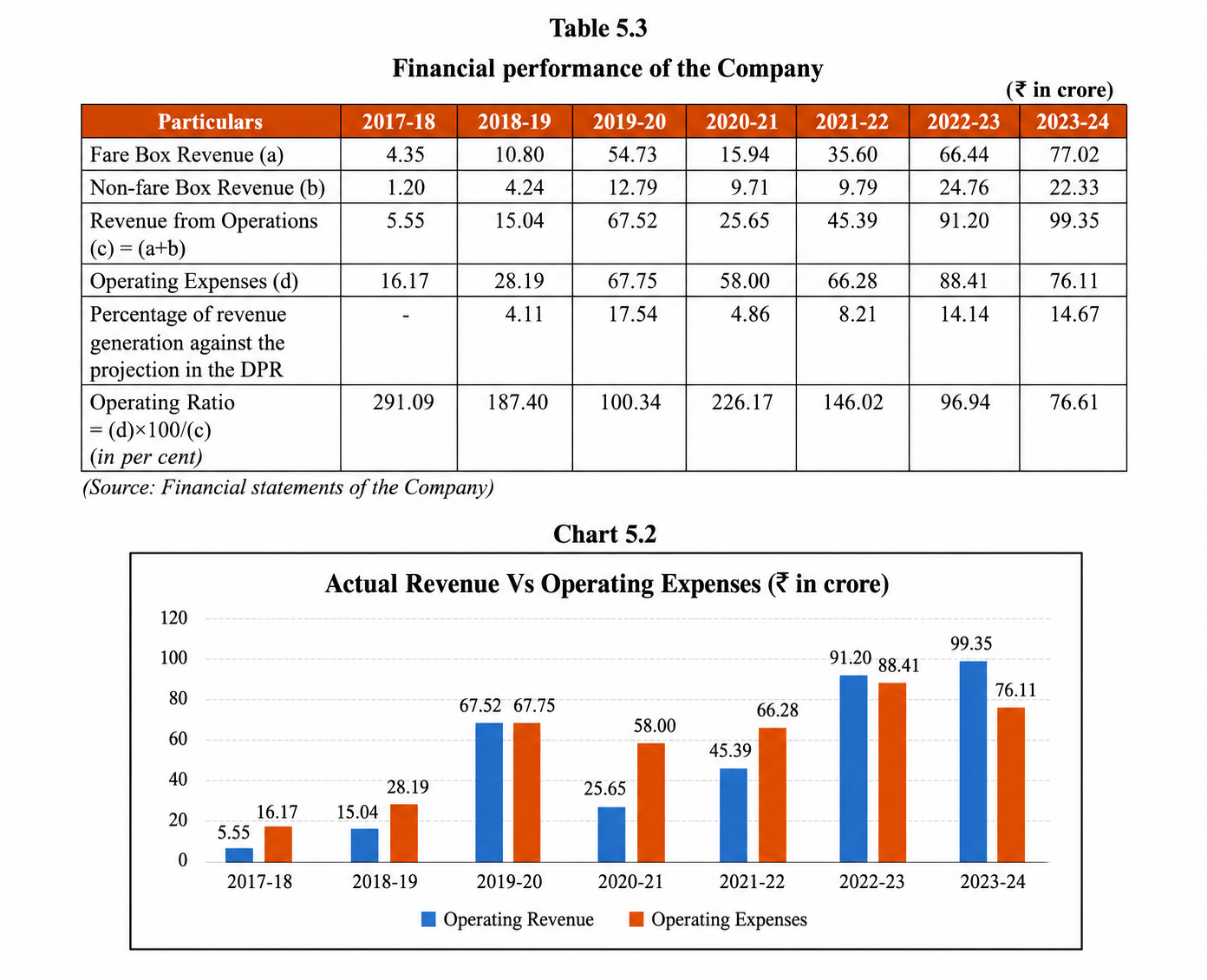
Lucknow Metro’s financial architecture offers one of the more instructive case studies in how Indian metro systems can attempt to build sustainability beyond the fare box. As per a report of First India, approximately 40 % of UPMRC’s total income is derived from passenger fares, while the remaining 60% comes from advertising revenues, commercial space leasing at stations, cultural events, exhibitions, and other non-fare services. UPMRC’s total revenue for FY2025 stood at Rs 383 crore, reflecting a compounded annual growth rate of 23 %, indicating that the revenue base, while not yet sufficient to cover total costs, is growing at a healthy pace.
Source: Comptroller and Auditor General of India
This diversified model is a departure from the fare-centric approach that has left many Indian metro systems financially exposed. By treating stations as commercial assets rather than merely transit nodes, UPMRC has developed revenue streams that are not entirely dependent on passenger volumes. Advertising panels, retail concessions, and cultural programming generate income even on days when ridership is below projections.
However, the broader financial picture is more challenging. UPMRC reported a net loss of Rs 17 billion for FY2023, a figure that reflects the structural reality common to most Indian metro projects: the gap between capital costs, interest burdens on project debt, and operational revenues is large and persistent.
This challenge is not unique to Lucknow. A Parliamentary Standing Committee report in 2022 found that virtually all metro networks in India are running at an operational loss, with fare revenues insufficient to cover even day-to-day operational expenses in many cases.
Shortcomings of Lucknow Metro: Where the Gaps Remain
Ridership Below Potential
Source: Comptroller and Auditor General of India
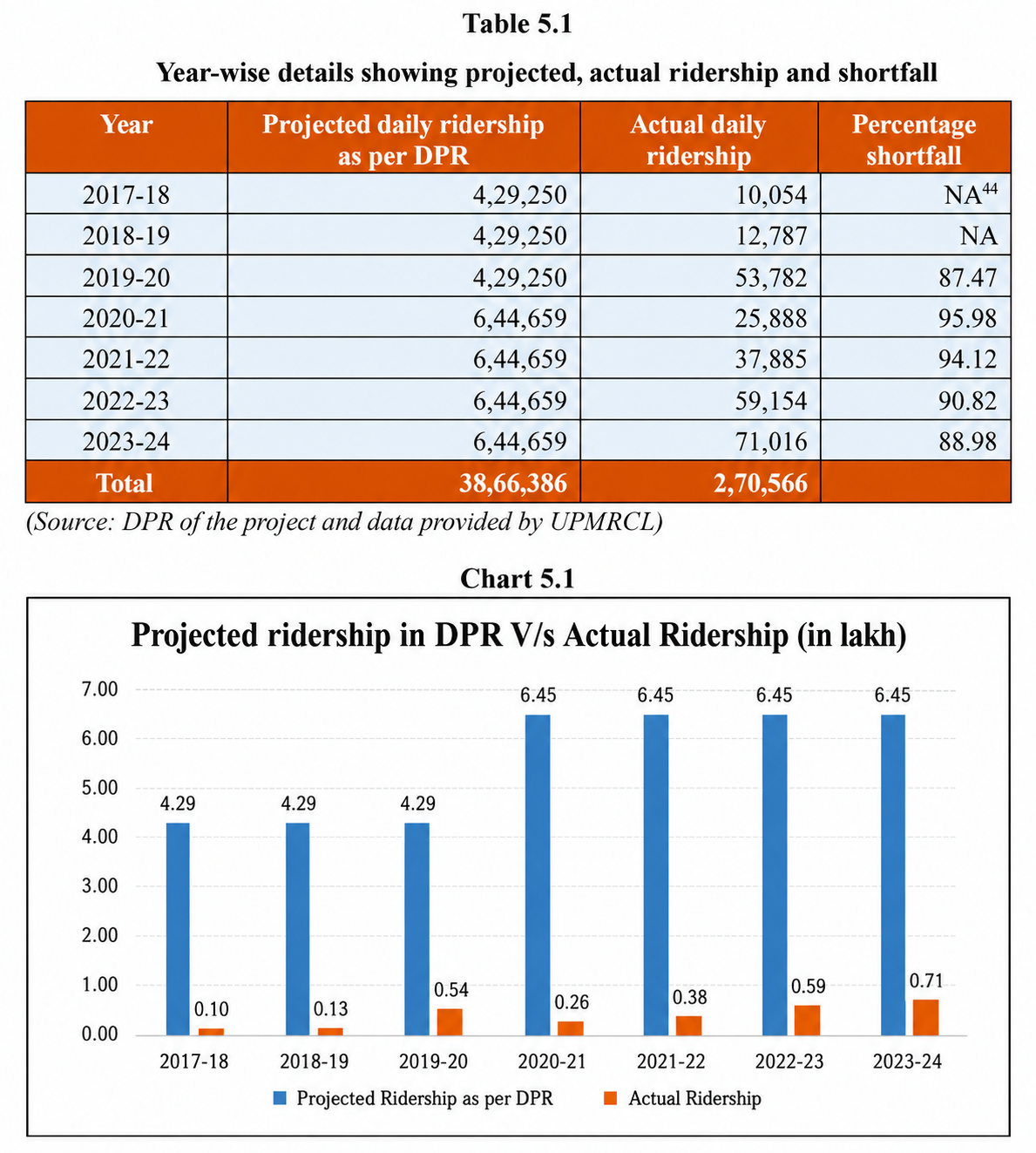
At approximately 78,000-80,000 passengers per day, Lucknow Metro’s average ridership remains below the projections made in its Detailed Project Report and below the threshold typically considered necessary for operational cost recovery. The city’s population of approximately 35 lakh, combined with an urban structure that is less dense and more auto-dependent than metro-friendly cities like Delhi or Mumbai, limits the natural catchment for each station. The Red Line’s north-south orientation serves the city’s main commercial and institutional spine well, but large residential areas to the east and west remain unconnected, limiting the metro’s reach into the bulk of the city’s commuter base.
Last-Mile Connectivity
The single most frequently cited barrier to higher ridership is the absence of reliable last-mile connectivity. Lucknow’s auto-rickshaw and e-rickshaw network around metro stations is informal, unregulated, and inconsistent in availability and pricing. Feeder bus services, while planned, have not been implemented at the scale or reliability required to convert potential metro users into actual ones. Until a commuter can reliably get from their home to a metro station and from a metro station to their destination without uncertainty about cost, availability, or safety, the metro will continue to serve a narrower segment of the population than its infrastructure is capable of serving.
Single Line Dependency
As of now, the Red Line is only operational; the Lucknow Metro functions as a single corridor rather than a network. The value of a metro system increases non-linearly as coverage expands. A two-line network with an interchange is more useful than two single lines in isolation. Until Phase 1B opens and the Blue Line creates a genuine interchange at Charbagh, Lucknow Metro will continue to serve a limited set of origin-destination pairs rather than the city as a whole.
Debt and Financial Overhang
The Rs. 17 billion loss reported in FY2023 reflects the structural financial overhang that comes with a capital-intensive project funded largely through debt. Unless ridership grows substantially or Phase 2 expansion creates the network density needed to drive much higher daily passenger volumes, UPMRC will continue to rely on government equity infusions to remain solvent. This is not an immediate crisis, but it is a long-term sustainability risk that the organisation must address through both revenue growth and cost discipline.
The Sustainability Question: Can Lucknow Metro Build a Viable Future?
Financial sustainability for urban metro systems in India is not achieved through fare revenue alone and it is arguably never achieved through fare revenue alone anywhere in the world. The question for Lucknow Metro is whether it can build the combination of ridership scale, non-fare revenue, transit-oriented development, and network density that makes long-term viability possible.
The Hong Kong MTR model, the global benchmark for financially sustainable metro operations, combines fare revenues with a Rail plus Property development model, where the metro operator develops commercial and residential real estate above and around its stations. The property development revenues fund the gap between operational costs and fare income, creating a self-sustaining financial cycle. UPMRC has not yet adopted this model in a meaningful way; station-adjacent commercial development remains limited relative to the potential that high-footfall metro stations in a growing city like Lucknow represent.
The transit-oriented development policy in Uttar Pradesh is still nascent. While the Lucknow Development Authority has acknowledged the metro’s role in shaping the city’s growth, the regulatory and financial frameworks needed to capture land value uplift along metro corridors through value capture financing, TOD zoning, and developer contribution mechanisms have not been implemented at the scale that would make a material difference to UPMRC’s balance sheet.
Energy efficiency is one area where Lucknow Metro is already delivering tangible financial benefits. The 40 % energy recovery through regenerative braking translates directly into lower power bills, which are among the largest operational cost items for any metro system.
Ultimately, the sustainability of Lucknow Metro depends on the same thing that determines the sustainability of every mid-size city metro in India: whether the city grows into its metro, or whether the metro is forced to wait indefinitely for the city to catch up. Lucknow is growing, its population is increasing, its economy is expanding, and its real estate market is active. The conditions for a self-reinforcing cycle of metro growth exist. Whether UPMRC can execute Phase 1B on time, build the last-mile connectivity ecosystem that converts potential riders into daily commuters, and develop the commercial assets along its corridors with the discipline of a property developer rather than a public sector utility these are the variables that will determine whether Lucknow Metro becomes a model for sustainable urban rail in India’s growing state capitals, or remains a well-built but financially stressed infrastructure asset waiting for the city to arrive.
Conclusion
Lucknow Metro is, by almost any measure of construction achievement and operational quality, a success. The metro is built faster than any comparable metro in India’s history, serving a city of 4 million people with reliable, safe, and clean rapid transit.
The harder question is whether success in construction and operations can be translated into financial sustainability and transformative urban impact. Lucknow Metro is serving a fraction of its potential ridership. It is consuming public resources at a scale that requires justification through consistent, growing social and economic returns. Phase 1B, when it opens, will be the most important test of the system’s potential adding the network density, the interchange connectivity, and the coverage that could meaningfully accelerate ridership growth.
The Lucknow Metro’s story is still being written. The infrastructure is in place. The revenue model, more diversified than most Indian peers, is a foundation to build on. What it needs now is the scale that comes with network expansion, the last-mile ecosystem that converts proximity into usage, and the urban policy environment that allows the metro to become not just a transport service but a driver of the city’s economic and spatial future.
Also Read: Delhi Metro’s Inderlok-Indraprastha Corridor enters construction phase
Project Overview