



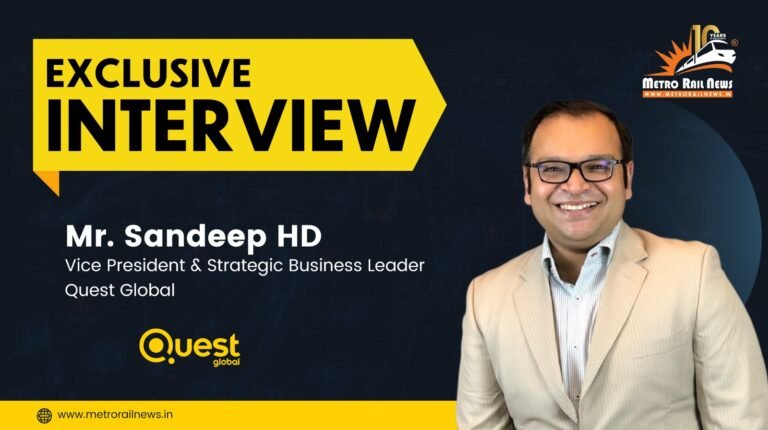
DELHI(Metro Rail News): Metro Rail News conducted an exclusive interview with Mr. Sandeep HD, Vice President and Strategic Business Leader, Transportation, Quest Global. During the conversation, Mr. Sandeep discussed Quest Global’s approach to addressing the evolving requirements of the rail industry through end-to-end engineering capabilities, digital transformation, signaling modernisation, and lifecycle management. He also elaborated on the company’s role in helping rail operators and industry stakeholders address aging infrastructure, sustainability, changing passenger expectations, and the growing demand for advanced engineering talent. The conversation further covered Quest Global’s global-local delivery model, the future of intelligent and connected rail networks, and how the company is evolving its capabilities to support the sector’s transition towards safer, smarter, more sustainable and technologically advanced rail systems. Here are the edited excerpts:
1. Could you walk us through your professional journey, which spans over 20 years? What are some of the major challenges that you have overcome?
Over the last two decades, my career has centered on engineering-led transformation across transportation industries. I have had the opportunity to work closely with global OEMs and operators, helping them solve complex engineering challenges across product development, digital transformation, operational excellence, and business growth.
Today, as Vice President and Strategic Business Leader for Transportation at Quest Global, I oversee business growth and customer engagement across Automotive, Rail, and EPCM. One of the most rewarding parts of my journey has been helping organizations navigate rapid technological change while holding on to engineering quality, safety, and execution excellence.
The weekly brief metro & rail professionals read.
Among the major challenges I have encountered are managing large-scale engineering programs across multiple geographies, addressing skills shortages in emerging technology domains, and helping customers accelerate digital transformation without compromising reliability or safety. The transportation sector is undergoing significant disruption driven by electrification, automation, connectivity, sustainability, and AI. Successfully balancing innovation with operational realities has been a recurring challenge and an important learning throughout my career.
2. As the Strategic Business Leader overseeing Automotive, Rail, and EPCM at Quest Global, how do you balance the distinct demands of each vertical while maintaining a unified strategic direction?
Automotive, Rail, and EPCM each have their own market dynamics, but they share a common need for engineering excellence, digital innovation, sustainability, and operational efficiency.
Our approach is to build deep domain expertise within each business while leveraging common capabilities like software engineering, digital engineering, embedded systems, AI, data analytics, PLM, and systems engineering. That lets us cross-pollinate ideas and best practices across industries. For example, lessons learned in automotive software-defined architectures can help accelerate innovation in rail digitization. Similarly, systems engineering and lifecycle management expertise developed in rail programs can benefit large infrastructure and EPCM projects.
The shared objective across all three sectors is simple: help customers solve their hardest engineering problems while accelerating innovation, improving efficiency, and advancing sustainability goals.
3. Quest Global’s rail offerings span rolling stock engineering, signaling, digital solutions, and PLM. How does this end-to-end breadth translate into a competitive advantage for you?
Quest Global’s strength lies in its ability to integrate rolling stock engineering, signaling, digital engineering, and PLM capabilities to address challenges throughout the entire rail asset lifecycle. Rather than solving problems in isolated domains, we take a systems-level approach that helps customers improve performance, reliability, safety, and operational efficiency.
This breadth enables us to serve as a single strategic engineering partner, supporting customers from concept development and design through integration, validation, modernization, and lifecycle support. By reducing the need to coordinate across multiple vendors, customers benefit from faster decision-making, lower program complexity, and reduced execution risk.
Additionally, our global delivery model and deep rail domain expertise enable us to combine best practices from across markets and accelerate digital transformation initiatives. This helps rail OEMs, operators, and infrastructure providers modernize their networks, optimize asset performance, and meet evolving passenger, regulatory, and sustainability expectations with greater confidence.
4. The rail industry is grappling with aging infrastructure, shifting passenger expectations, and mounting pressure to decarbonize. How can Quest Global help the rail operators in dealing with these challenges?
The rail industry is navigating three major priorities simultaneously: modernizing aging infrastructure, enhancing the passenger experience and advancing sustainability goals. Quest Global helps operators address these challenges through a combination of domain expertise, digital engineering, signaling modernization, and lifecycle management solutions.
For aging infrastructure, we help operators modernize legacy systems through digital signaling upgrades, ERTMS/ETCS migration support, infrastructure integration, verification and validation, and predictive maintenance solutions. We also leverage digital twins, AI-driven asset monitoring, and analytics to identify failures before they occur, extend asset life, improve network reliability, and reduce maintenance costs.
To meet evolving passenger expectations, Quest Global supports the development of intelligent rail systems that improve service reliability, operational efficiency, and passenger connectivity. Examples include digital asset management platforms, real-time operational analytics, and advanced Train Control and Monitoring Systems (TCMS), and data-driven solutions that help operators improve on-time performance, safety, and overall journey experience.
For decarbonization, we help customers optimize rolling stock performance, improve energy efficiency, reduce operational waste, and maximize asset utilization through predictive maintenance and data-driven operations. By enabling smarter track management, condition-based maintenance, and modernized rail systems, we support operators in achieving both operational and sustainability goals objectives while continuing to provide safe, reliable, and efficient transportation.
5. The talent challenge in rail is real, as new technologies are outpacing the available skilled workforce. How does Quest Global address this gap internally?
The rail industry is going through a significant skills transition as technologies like AI, advanced signaling, software-defined systems, cybersecurity, cloud platforms, and digital twins become more important.
We address this through continuous learning, structured capability development, domain-specific training programs, and global knowledge-sharing networks. We invest in building multidisciplinary teams that combine deep rail expertise with emerging digital skills.
Our global engineering network also enables us to access diverse talent pools across regions while ensuring knowledge transfers across programs and geographies. That’s how we stay responsive to rapidly evolving customer requirements while maintaining our engineering quality and safety standards.
6. Digitizing rail signaling, moving from legacy systems to standards like ERTMS, is central to modernizing rail infrastructure. How is Quest Global approaching this transition with its clients?
The transition from legacy signaling systems to modern standards like ERTMS is one of the most significant transformations happening in rail today. Quest Global supports customers across the full signaling lifecycle, including system engineering, software development, verification and validation, safety compliance, SIL-4 systems, integration, testing, and certification support.
We also recognize that modernization can’t just be a technology upgrade. It calls for careful integration with existing infrastructure, regulatory requirements, operational processes, and workforce readiness.
Our approach combines deep signaling expertise with advanced digital technologies to help operators improve capacity, safety, reliability, and interoperability while minimizing operational disruption. Looking ahead, we see signaling combining ERTMS, AI, predictive analytics, cloud connectivity, and real-time operational intelligence to enable safer, smarter rail networks.
7. With your global-local delivery model, how do you ensure consistency in quality across diverse geographies and rail standards?
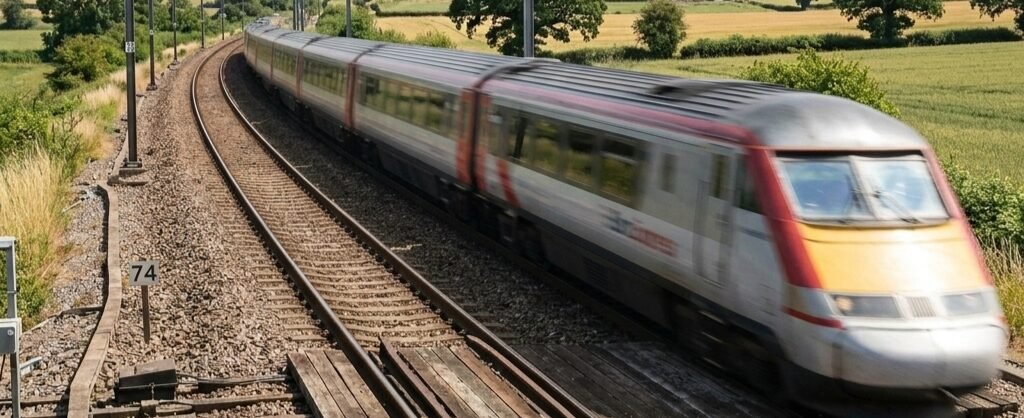
Rail is a highly regulated industry where consistency and safety are non-negotiable. Quest Global leverages a global engineering delivery model supported by standardized engineering processes, quality frameworks, governance mechanisms, and domain-specific best practices. This enables us to deliver consistently, whether we are working on projects in Europe, North America, Asia-Pacific, or other regions.
At the same time, local expertise remains critical because rail standards, regulations, and operational requirements vary considerably across geographies. Our model combines global engineering scale with local market knowledge, allowing us to meet regional requirements while maintaining common quality and delivery standards.

8. How do you envision the rail network of 2035 from an engineering and passenger experience standpoint? What would it look like, and what would it have taken to get there?
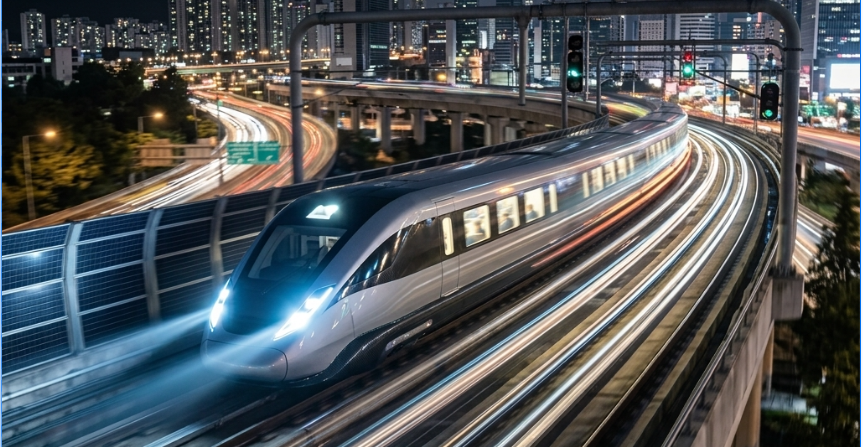
By 2035, I believe rail networks will be significantly more connected, autonomous, intelligent, and sustainable. From an engineering perspective, we will see widespread use of AI-driven asset management, predictive maintenance, advanced signaling architectures, digital twins, real-time operational analytics, and highly integrated control systems. These technologies will help maximize network utilization while improving safety and reliability.
For passengers, the experience will become increasingly seamless. Journey planning, ticketing, onboard connectivity, accessibility features, and multimodal integration will all be digitally enabled. Rail travel will be safer, more personalized, more reliable, and more sustainable.
Achieving this vision will require sustained investment in digitization, infrastructure modernization, interoperable standards, workforce development, and collaborative innovation across the rail ecosystem.
9. How is Quest Global evolving to meet the future demands of the rail sector?
Quest Global is continuously expanding its capabilities in digital engineering, AI, data analytics, software engineering, signaling modernization, lifecycle management, and sustainable mobility solutions.
Our focus is on helping customers navigate increasing system complexity while accelerating innovation. We continue to invest in capabilities that support digital rail transformation, intelligent infrastructure, modern signaling platforms, predictive maintenance, connected rolling stock, and operational optimization. As the rail sector evolves, our goal stays the same: to be the most trusted engineering partner for customers facing their most complex engineering challenges.
10. What message would you like to convey to the readers of Metro Rail News?
Rail transportation is entering one of the most exciting periods in its history. Urbanization, sustainability goals, digital technologies, and changing passenger expectations are reshaping how rail systems are designed, operated, and maintained. This transformation creates tremendous opportunities for collaboration across the ecosystem.
At Quest Global, we believe engineering has a unique role to play in creating safer, greener, smarter, and more connected transportation systems. By combining domain expertise with digital innovation, the industry can build rail networks that serve future generations while addressing today’s operational and environmental challenges.
We look forward to working alongside rail operators, manufacturers, infrastructure providers, and technology partners to help shape the future of mobility.
Also Read Our Exclusive Interview With Dr Vikas Kumar, Managing Director, DMRC: Dr. Vikas Kumar on Delhi Metro’s Expansion, Financial Sustainability and Global Ambitions