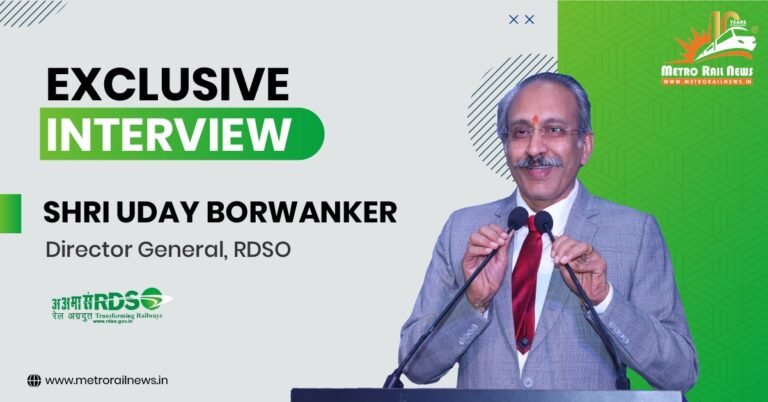
Building Safer Railways: An Insightful Discussion with Shri Uday Borwanker, DG, RDSO 

Metro Rail News conducted an email interview with Shri Uday Borwanker, Director General of the Research Designs and Standards Organization (RDSO). The interview focuses on RDSO’s role in metro and railway projects across India. Shri Borwanker also elaborated on RDSO’s critical contributions to the development and deployment of the indigenous Automatic Train Protection (ATP) system known as Kavach. Shri Borwanker explains measures to ensure passenger safety and comfort, challenges in project implementation and efforts to improve passenger safety and comfort. The interview reflects RDSO’s vital role in driving innovation, setting standards, and strengthening continuous improvement in India’s rail transport sector. Here are the edited excerpts

Q1.What are RDSO’s Primary responsibilities in the development and regulation of metro and railway projects in India?

Ans: The Research Designs and Standards Organization (RDSO) under the Ministry of Railways is the sole agency of Indian Railways for taking up Research & Development for various activities of Indian Railways and functions as the technical advisor to the Railway Board, Zonal Railways and Production Units. RDSO is fully involved in the development, adoption and absorption of new technologies, the development of new and improved designs of equipment and systems and setting standards for adoption on Indian Railways. RDSO is also involved in technical reviews, specification development as per the latest technology and updates and refinements of the specification to help drive continuous improvement in the product or service, statutory clearances and testing (including Metro Systems), apart from giving technical guidance to Zonal Railways. Vendor development with approval and inspection of safety and critical items are the other important mandates of RDSO. It plays a significant role in the development, regulation, and standardization of metro and railway projects across the country.

In the Metro Act 2009 “Central Government” has been defined as the “Ministry of Govt. of India dealing with Railways” which has been entrusted for the “Technical Planning and the Safety of Train Running in the Metro Railways”. RDSO being the “Technical Advisor to the Ministry of Railways” has been assigned the responsibility to assist the “Ministry of Railways” to accord “In Principle approvals of broad technology as chosen and proposed by Metro Rail Administration.

Q2. RDSO recently conducted Oscillation and emergency braking distance trials for the Indore Metro Project. Could you summarise the findings from these trials?

Ans: RDSO recently conducted Oscillation and emergency braking distance trials for the Indore Metro Project from 09.11.2024 to 17.11.2024. Trials have been completed and Rolling stock exhibited satisfactory performance in terms of riding behaviour and emergency braking at design speed.

Q3. How does RDSO ensure safety standards are met during the testing phases of metro rail systems?

Ans: As told earlier RDSO scrutinizes various technical documents like – Schedule of Dimension (SOD), Design Basis Report (DBR), Track Structure, and Technology for Signalling and Traction. Before conducting Oscillation Trial, Metro Rail has to certify that it has completed all necessary works and achieved the relevant standards/technologies as approved by “Ministry of Railways”.

Q4. How does RDSO collaborate with Metro rail Corporations and private organisations to improve railway infrastructure?

Ans: RDSO works in close collaboration with various Metro rail Corporations for safety certification. For this online portal has been developed, where Metro Rail can upload their proposals. Various sections/departments of RDSO examine and give their comments/recommendations swiftly, using this online portal. The certification process is transparent and can be observed by the Metro authority as well as the rail authority. Further, RDSO consults with Metro organisations and private organisations for improvement in existing technologies/standards/specifications and to infuse new technology to improve railway Infrastructure.

Q5.What is RDSO ‘s role in upcoming projects, including Metro, RRTS and High-Speed Rail System?

Ans: RDSO, being a technical arm of Indian Railway, scrutinises the technical documents and accords in-principle approval to upcoming projects as specified in „Procedure for safety Certification and Technical Clearance of Metro System‟.

RDSO assists in the designing of various components of RRTS, and HSR systems. This includes specifying technical parameters for trains, stations, tracks, signalling, and stations that align with global best practices while accounting for Indian conditions. The organization is responsible for setting the technical standards, ensuring the safety and efficiency of operations, testing and certifying designs, collaborating with international and domestic partners, and guiding the infrastructure and technology development to meet India’s evolving transportation needs.

Q6.What measures does RDSO take to ensure passenger comfort and safety in train operations?

Ans: The Research Designs and Standards Organization (RDSO) play a pivotal role in ensuring the comfort and safety of passengers in Indian train operations. Here are some of the key measures RDSO takes to ensure passenger comfort and safety:

  • Passenger Coaches Design and Improvement: RDSO is involved in the design of passenger coaches to ensure comfort. This includes ensuring the appropriate interior layouts, seating arrangements, air-conditioning systems, and the use of modern materials that contribute to passenger comfort.
  • Safety Features in Coaches: RDSO incorporates features like fire-resistant materials, emergency windows, and escape routes in the design of coaches. The organization also works on improving coach stability and reducing the risk of accidents like derailments or collisions.
  • Train Safety Systems: RDSO continuously engages in the development of the latest technology for train safety. Train Collision Avoidance System (KAVACH) which helps prevent train collisions by providing signals when two trains are on a collision course. RDSO has developed and deployed various anti-collision technologies such as the Train Protection and Warning System (TPWS) and the Automatic Train Protection (ATP) system to prevent accidents and improve safety. Development of Specification for Indigenous WILD System used to identify the wheels with potential tread defects such as flat spots, out-of-rounds, built-up treads, Shell tread as well as defects in suspension, Development of Specification Wheel Profile Measurement System (WPMS), prepared to upgrade safety standards and precise measurement of wheel parameters at maintenance depot by studying available systems and incorporating state of art features. RDSO promotes the use of advanced braking systems (e.g., air brakes, disc brakes) to reduce stopping distances and ensure efficient braking during emergencies, contributing to passenger safety.
  • Infrastructure Safety and Maintenance Standards: RDSO ensures the quality of tracks by developing standards for track maintenance, which helps prevent accidents caused by track failure. Development of R350HT Rail to permit 100kmph speed for 25t axle load– R350HT rails developed by IR 25/22.9 ton axle load @ 100kmph: Fit for Tangent and curve both.
  • Inspection and Testing: RDSO regularly inspects and tests critical infrastructure, including overhead electrification, signal systems, and track integrity, ensuring that these meet safety standards.
  • For comfort in Passenger Amenities RDSO has worked on developing and improving toilet systems in coaches, such as bio-toilets, Waterless Urinal for Electric Locomotives to ensure a clean and comfortable environment for passengers.
  • Wi-Fi and Entertainment: In recent years, RDSO has facilitated the installation of Wi-Fi and entertainment systems in premium trains, enhancing passenger experience during their journey.
  • Improved Lighting and Ventilation: RDSO oversees the design of energy-efficient, comfortable lighting systems, and ventilation to improve the travel experience inside the coaches.
  • Train Operation and Speed Safety: RDSO oversees the implementation of speed monitoring systems and guidelines to ensure that trains run within safe limits, reducing the risk of accidents due to overspeeding.
  • Train Signal and Communication Systems: RDSO also develops and refines signalling systems that enable better coordination and communication between train operators and control centres, reducing operational risks.

Q7. How is RDSO involved in the certification process for railway tracks?

Ans: RDSO is involved for Procedure for speed clearance of rolling stocks from „Track‟ point of view. For clearance of rolling stocks on IR, various field trials are required and are carried out by Testing Directorate such as:

  • Detailed Oscillation Trials and COCR.
  • Emergency Braking Distance & Coupler Force measurement.
  • Rating & Performance and Signal Interference trials

Scrutiny of Detailed oscillation trials and COCR report carried out w.r.t “Third Report of the Standing Criteria Committee” by “Track” and other concerned directorates. Emergency Braking Distance & Coupler Force measurement and Rating & Performance and Signal interference trials are scrutinized by concerned directorates of RDSO.

Final Speed Certificate for operation is processed by respective rolling stock directorates as per provisions of “Policy Circular No. 6, 2023”, based on trial results and rolling stock being found satisfactory. Speed certificate is examined by “Track directorate” considering the Minimum Track structure, Provisions of IRPWM regarding Track geometry standards, speed on curves, fish plated and welded rail joints and Provisions of USFD Manual.

Condonation of infringements to IRSOD (BG) revised 2022, if any, is processed by the Rolling Stock directorate through ED (Track) for approval of the Railway Board.

Q8. What are some of the challenges RDSO faces in implementing metro and railway projects?

Ans: The Railway Design and Standards Organisation (RDSO) develop specifications/standards for railway and metro projects. However, the implementation of these projects often presents several challenges for RDSO. Some of these challenges include:

  • The complexity of Design and Technology: Railway and metro projects, especially those involving metro rail, require the integration of advanced technologies like signalling systems, automated train control, and high-speed trains. Developing and implementing these technologies according to Indian conditions and standards can be complex.
  • There are international standards for metro and railway systems, but the unique geographical, environmental, and socio-economic conditions in India often necessitate customized solutions. This requires extensive research and testing. An example of such a harsh environment is the Chenab Bridge construction
  • Regulatory and Safety Standards: Ensuring the safety of passengers is paramount, and RDSO must ensure that all systems, whether new or adapted, comply with stringent safety norms. Balancing the introduction of modern systems with safety concerns often leads to delays.
  • Regulatory hurdles: Different states and regions may have their own regulatory frameworks, which could conflict with central standards set by RDSO, making uniform implementation is difficult.
  • Collaboration with various agencies:  RDSO  must collaborate with multiple stakeholders, including state governments, contractors, suppliers, and consultants. Misalignment in priorities, delays in decision-making, and lack of proper coordination can hinder project progress.
  • Land acquisition: Coordinating the acquisition of land for projects, especially metro rail, is often a significant challenge. Delays in land acquisition can lead to project delays, as RDSO is often required to adapt designs based on available space.
  • Urban infrastructure: In metro projects, particularly those in densely populated cities, the existing infrastructure and underground utilities often create design challenges. Modifying or diverting existing infrastructure to accommodate rail systems without disrupting daily life is a complex task.
  • Environmental concerns: Metro and railway projects often require environmental clearances. Balancing the need for infrastructure development with environmental protection, including wildlife conservation and air quality, is a constant challenge.
  • Cost overruns: Railway and metro projects tend to be capital-intensive, and delays in implementation often lead to increased costs. RDSO must work within budgetary constraints while ensuring that the quality of the design and implementation does not suffer.
  • Unforeseen risks: Natural disasters, economic downturns, and other unforeseen risks can disrupt timelines and project implementation. RDSO needs to incorporate risk management practices to handle such contingencies.

Q9. How does RDSO incorporate feedback from the public and stakeholders into its planning and operations?

Ans: The Research Designs and Standards Organization (RDSO) is a vital body within Indian Railways, primarily responsible for formulating standards for the design and manufacturing of railway components, rolling stock, and systems. RDSO incorporates feedback from the public and stakeholders into its planning and operations through several methods such as:

  • Public Consultations and Stakeholder Engagement: RDSO regularly organizes meetings, workshops, and seminars with various stakeholders, including railway operators, manufacturers, and other concerned bodies. These forums allow for direct feedback on ongoing projects and future plans.
  • Stakeholder Involvement in Standards Development: When new standards or specifications are being developed, RDSO actively seeks input from various stakeholders, such as industry experts, equipment suppliers, and railway staff. This ensures the standards are aligned with real-world requirements and technological advancements.
  • Collaboration with Industry Experts: RDSO works closely with both domestic and international experts to stay updated with the latest trends in railway technology. This collaboration helps RDSO incorporate cutting-edge solutions that are based on global best practices while considering the needs of the Indian context.
  • RDSO has an advisory group from different IITs, CSIR and Research Institute to collect feedback and consultation.
  • Collaboration with Indian Railways Zones and Divisions: RDSO receives practical feedback from different railway zones and divisions regarding the performance of equipment, systems, and new technologies. These insights are crucial for refining designs, operational protocols, and ensuring the functionality of innovations. Feedback from training sessions and safety audits across the railway network is incorporated into RDSO‟s recommendations and operational guidelines.
  • Online Platforms and Social Media: RDSO maintains an online presence, allowing stakeholders, including the general public, to submit feedback and suggestions. These online platforms serve as accessible and convenient avenues for feedback submission. RDSO also uses social media channels to engage with the public, addressing their concerns and responding to queries. This helps in building a transparent and responsive relationship with the stakeholders.
  • RDSO continuously reviews its operational standards, procedures, and technologies. This review is often influenced by the feedback received from public interactions, technological advancements, safety improvements, and stakeholder consultations. The process ensures that RDSO remains responsive to evolving needs.

Q10. How is RDSO preparing to support future advancements in the rail transportation sector?

Ans: The Research Designs and Standards Organisation (RDSO) play a critical role in shaping the future of rail transportation in India, ensuring that the industry stays innovative, safe, and efficient. To support future advancements in the railway sector, RDSO is focusing on several key areas:

  • In Technological Innovations RDSO is involved in the Electrification and Automation of railway track for improving operational efficiency and safety and Smart Stations by modernization, including smart platforms, automated ticketing systems, and integrated passenger information systems, which will enhance the travel experience.
  • In High-Speed Rail Systems RDSO is actively engaged in the development of high- speed rail technology in India. It is working with international experts to introduce high-speed trains, with ongoing projects such as the Mumbai-Ahmedabad corridor. This includes researching new train designs, materials, and safety features specific to high-speed travel.
  • In Environmentally Sustainable Practices by focusing on energy-efficient systems to reduce the carbon footprint of the rail sector, including the development of regenerative braking systems and eco-friendly train designs. In this Hydrogen Fuel cell is a milestone for Indian Railways. By using Green Technologies Indian Railway making Initiatives for sustainable infrastructure, such as solar-powered stations and energy-efficient trains are being explored.
  • In Safety Enhancements RDSO has developed Train Collision Avoidance Systems (TCAS) also named as KAVACH systems to prevent train collisions and SigDATE (Signalling Design Automation Tool for EI). This includes the development and implementation of advanced signalling systems and safety measures to prevent accidents. For Continuous monitoring of tracks using drones, sensors, and AI is being developed to detect faults early, improving safety and reducing maintenance costs.
  • Digitalization and Data Analytics of big size data by using Internet of Things (IoT) technology and big data, RDSO is developing solutions for real-time tracking of trains, predictive maintenance, and improving the operational efficiency of the entire network. By using AI and Machine Learning solutions for train scheduling, maintenance prediction, and performance analytics are being integrated to enhance decision-making and optimize operations.
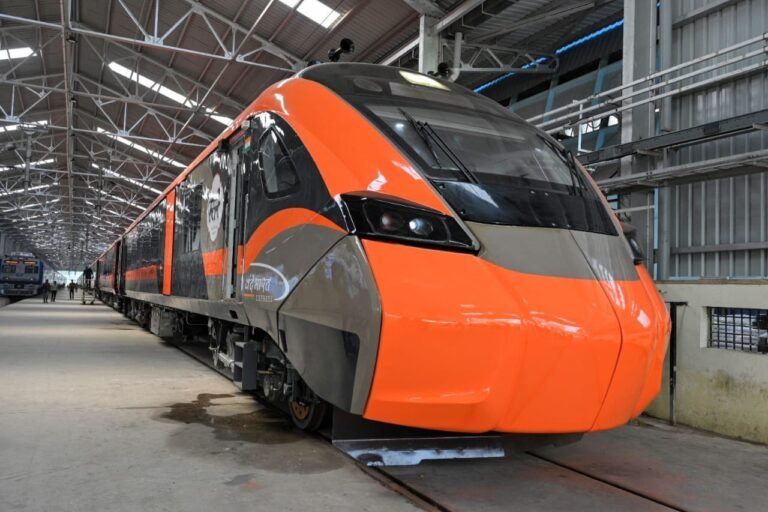
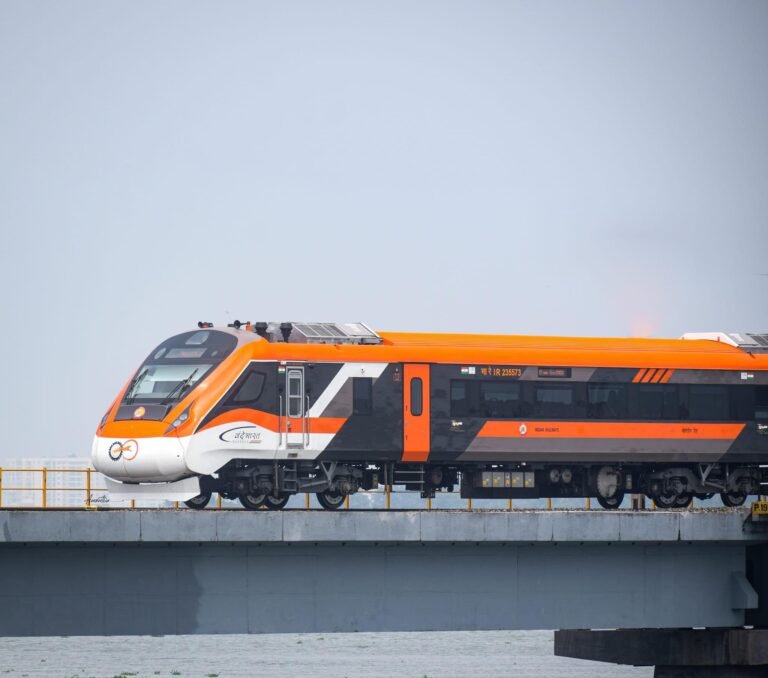
  • RDSO is working on modernizing the design and manufacturing standards for rolling stock such as Vande Bharat, Vande Bharat Sleeper, Vande Metro, Vista Dome, 9000 HP (EF9K), WAG12-B Locomotive & Amrit Bharat 2.0 .RDSO includes the introduction of more comfortable, faster, and safer train designs for both passengers and freight services. New technologies like lightweight materials and advanced braking systems are being explored to enhance train performance.
  • RDSO is also Collaborating with International Agencies for knowledge sharing, particularly on projects like bullet trains and advanced signalling systems. This global perspective helps integrate the latest technologies into the Indian railway.
Transport Corporation of India Ltd. Announces Strong Q3/9M FY2025 Financial Results

Transport Corporation of India Ltd. (TCI), a leading provider of supply chain and logistics solutions in India, has announced its financial results for the third quarter that ended on December 31, 2024.

TCI Green WH

Financial Highlights for Q3 FY2025:

Revenue: TCI reported a consolidated revenue of ₹ 11,539 Mn, marking a growth of 14.1%  compared to ₹ 10,115 Mn in the same period last year.

EBITDA: The company’s Earnings Before Interest, Taxes, Depreciation, and Amortization (EBITDA) stood at ₹ 1,478 Mn, a 15.8% increase from ₹ 1,276 Mn in Q3/FY2024.

Profit After Tax (PAT): PAT rose by 27.3% to ₹ 1,021 Mn, compared to ₹ 802 Mn in the corresponding quarter of the previous year. Consolidated

AD 4nXdEnaCfDIifL i ST4OlECzQizN6Ki5nHvRDkWI4Iiu7CoiAang6KuwHC0LNEXC3e3syZpNoAh19hogKICoRu7T9gU864SNyaPEl8jtnE7qbLd9MSlqHwR4yiCBJq qRC20COfu0A?key=NEtlEgQS9AO34bGbpu5zA6QP
TCI SCS AFTO Train

Management Commentary:

Annotating the financial results of this quarter, Mr. Vineet Agarwal, MD – TCI, said, “This robust performance has been achieved through balanced growth across all our product lines. Our innovative solutions and customer-centric approach have strengthened our market position and delivered value to our stakeholders.

We have seen a surge in demand for warehousing and temperature-controlled, 3PL green multimodal solutions from sectors such as FMCG & retail, agri++, automotive, engineering equipment and EPR. Additionally, our diversified offerings for emerging sectors like renewables, chemicals, quick-commerce and consumer electronics have expanded in response to growing market opportunities.

While TCI has received the ‘ESG Registered’ badge from Dun & Bradstreet (D&B), we are equally honoured by India’s first ISO 14083:2023 certificate being awarded to the Transport Emission Measurement Tool (TEMT) developed by the TCI-IIMB Supply Chain Sustainability Lab at IIM Bangalore. We remain steadfast in our commitment to on-ground actions that elevate sustainability standards within the transport and logistics sector.

TCI WH Image

With the resumption of infrastructure spending and economic activity bolstered by private consumption in the rural economy, we anticipate a robust order pipeline in the coming quarters. To sustain our momentum and drive future growth, we are strategically investing in technology, talent, and specialized logistics assets, including warehousing, automation, rail, containers, and ships. We are dedicated to expanding our network and enhancing our capabilities to offer cutting-edge, tailor-made solutions for the evolving needs of an aspirational India.”

About TCI Group: TCI Group, with revenues of over Rs. 7000 Cr is India’s leading integrated supply chain and logistics solutions provider. TCI group with expertise developed over 6 decades has an extensive network of company owned offices, 15+ Mn. sq. ft. of warehousing space and a strong team of trained employees. With its customer-centric approach, world class resources, state-of-the-art technology and professional management, the group follows strong corporate governance and is committed to value creation for its stakeholders and social responsibilities. TCI was the first to launch several solutions in the logistics field. Its product offering includes:

TCI Freight: India’s Leading surface transport entity. This division is fully equipped to provide total transport solutions for cargo of any dimension or product segment. It transports cargo on FTL (Full truck load)/ LTL (Less than truckload )/ Small packages and consignments/ Over Dimensional cargo.

TCI Seaways: TCI Seaways is well equipped with six ships in its fleet and caters to the coastal cargo requirements for transporting containers and bulk cargo. Being the pioneers in multimodal coastal shipping and container cargo movement and transportation services, TCI Seaways connects India with its western, eastern, and southern ports.

TCI Supply Chain Solutions: TCI SCS is a single window enabler of integrated supply chain solutions right from conceptualization and designing the logistics network to actual implementation. The core service offerings are Supply Chain Consultancy, Inbound Logistics, Warehousing / Distribution Centre Management & Outbound Logistics.

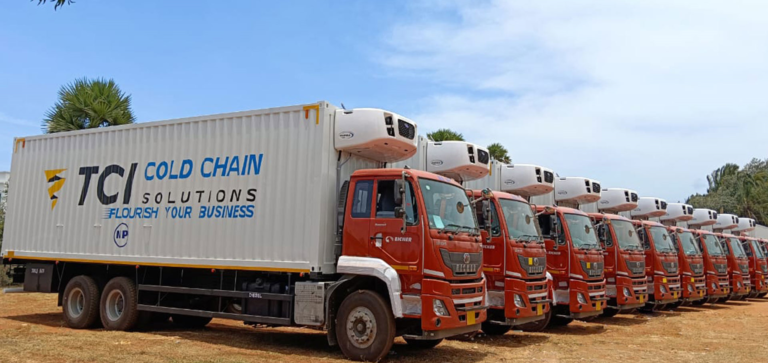
TCI Cold Chain Solutions Ltd.: Integrated cold chain service provider to meet the needs of temperature- controlled warehousing and distribution services. The facility caters to the needs of various industries such as agriculture products, processed foods, life sciences, healthcare and specialty chemicals, among others.

TCI CONCOR Multimodal Solutions Pvt. Ltd.: An end-to-end multimodal logistics solutions provider, it is a joint venture between TCI and Concor. This segment synergises the strengths, infrastructure and capabilities of TCI Group with rail infrastructure of Concor. It establishes a cost-effective integrated rail-road service.

Transystem: Transystem Logistics International Pvt Ltd., (TLI) a JV between TCI and Mitsui & Co., carved its niche by offering high quality integrated logistics solutions to Japanese Automotive Manufacturers and Suppliers in India. TLI offers a wide range of services like IBL for Production Parts (Just-In-Time basis) OBL, Warehousing, Spare Parts delivery (After Sales Service), CKD container transportation etc.

TCI Express Ltd: A leading express distribution specialist that offers a single window door-to-door & time definite solution for customers’ express requirements

TCI Developers Ltd: It undertakes development of large modern Warehouses, Logistics Parks etc.

TCI Foundation: TCI Foundation, the social arm of Transport Corporation of India Limited (TCI), endeavours to support & assist lesser privileged communities in India by facilitating Health Services, Education, Community and Sports Development. TCI Foundation is associated with Government of India, State Governments, International Organizations, Public Sector Undertakings and Corporates of repute to deliver the quality controlled CSR activities in India.

3 Firms Submitted Bids for the Chennai Metro Rolling Stock Contract  ARE04A 

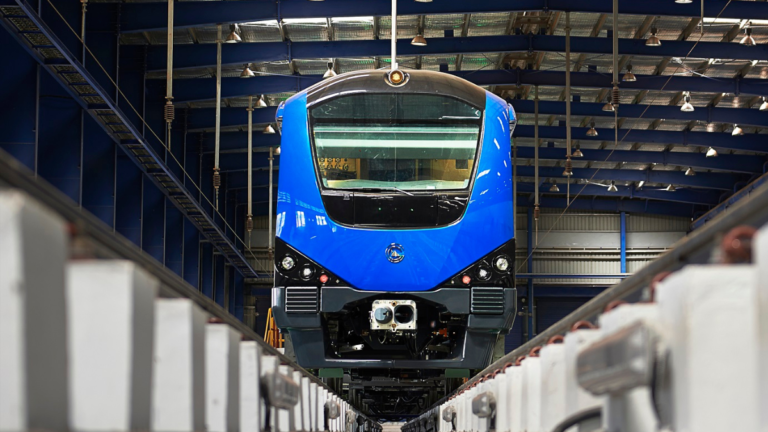
Chennai (Metro Rail News): The Chennai Metro project has advanced as Alstom Transport India, BEML, and Titagarh Rail Systems have submitted bids for Phase 2’s rolling stock package, ARE04A.  

Bidding Process 

Initial Contract: In  November 2021, CMRL issued a tender for the rolling stock contract ARE04A. The goal was to operate 12 trains, each with 3 coaches, on Lines 3 and 5 for 39 years. Only Titagarh Wagons submitted a bid for this contract, but their bid was rejected because it did not meet the contract requirements.

In response to this, the CMRL suspended the tender and decided to switch towards a procurement model. 

Later in February 2024, CMRL re-invited the bids for the package ARE04A and Alstom, BEML and Titagarh bid for the contract. 

Chennai Metro’s Rolling Stock Package ARE04A 

The Chennai Metro’s rolling stock Package ARE04A includes the design, manufacturing and supplying of 32 new train sets for Phase 2. 

CMRL’s Brief Scope: Design, Manufacture, Supply, Testing, Commissioning, Training of Personnel and Comprehensive Maintenance Contract for Fifteen (15) years of Standard Gauge Metro Rolling Stock (Electric Multiple Units). 

Contract Requirements 

As per the tender document, the awarded contractor must deliver the specific no of trains as per the deadline mentioned in the contract. 

Train Delivery ScheduleNumber of TrainsDelivery Deadline from Commencement DateTime Period
Prototype Train1 (3-coach)630 days1.7 years
Next Batch6 trains840 days2.3 years
The following Batch6 trains900 days2.5 years
Third Batch6 trains960 days2.6 years
Fourth Batch6 trains1020 days2.8 years
Final Batch7 trains1090 days3 years

Train Specification 

SpecificationDetails
Operating Speed80 km/h
Design Speed90 km/h
Train Length (3-coach)22,600 mm (22.6 m)
Train Width2,900 mm (2.9 m)
Passenger Capacity (3-coach train)980 passengers

Chennai Metro Rail Ltd. (CMRL) on standard gauge tracks as 32 train-sets of 3 cars with a configuration: DMC+TC+DMC. 

  • DMC = Driving Motor Car 
  • TC = Trailer Car.

The trains will be stabled and maintained either at Madhavaram Depot (lines 3 & 5), Semmancheri Depot (Line 3) or Poonamallee Depot (Line 4). However, CMRL has not decided yet on which Line they are going to operate 32 trains specifically.  

The Process Ahead

The bids submitted by Alstom, BEML and Titagarh have now been sent for technical evaluation. After the completion of the technical evaluation, the financial bids will be opened for the technically qualified bidder to reveal the lowest bidder for the contract. 

TBM Gomati achieves 1st breakthrough for Kanpur Metro Line-2 

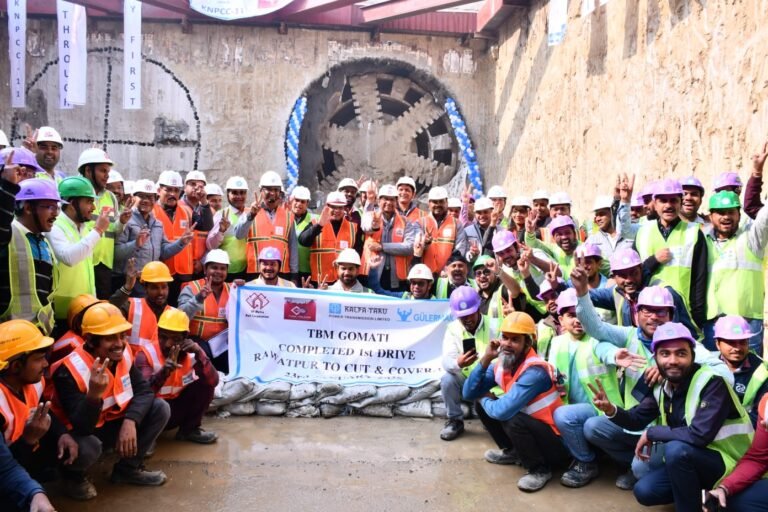
Kanpur (Metro Rail News): The Kanpur Metro project achieved another milestone as Kalpataru Projects International Ltd. (KPIL) – Gulermak JV’s TBM Gomati recorded the first breakthrough near Agriculture University station of Line 2 spanning 8.38 km between Agriculture University and Barra-8.

Gh nv7faoAAVFOY
Image Credit: UPMRC
Gh nv RbwAAuZbK
Image Credit: UPMRC

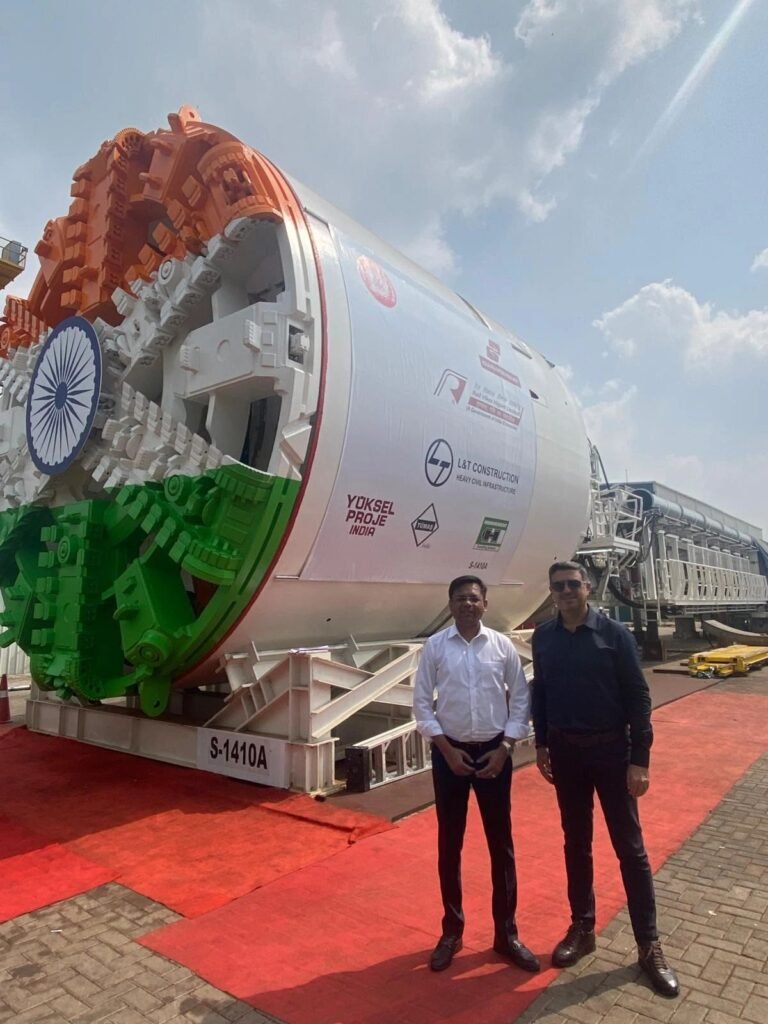
 About TBM Gomati (S-1408A)

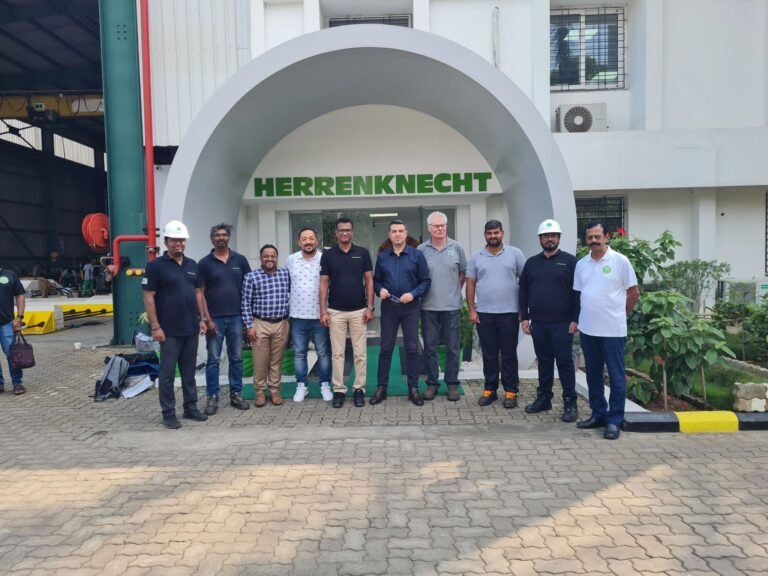
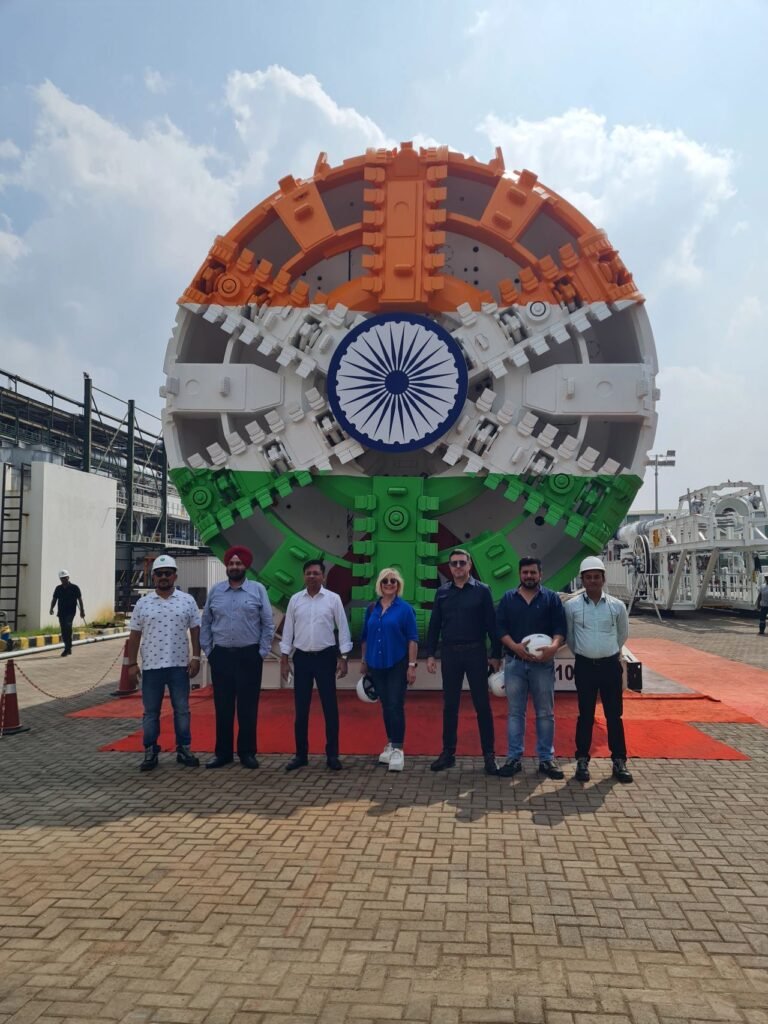
TBM S-1408A, nicknamed TBM Gomati is a Ø6.6m Herrenknecht Earth Pressure Balance (EPB) machine deployed by (KPIL) – Gulermak JV. TBM Gomati is the fifth TBM deployed for the construction of twin tunnels for Kanpur Metro Phase 1. 

TBM Gomati is the first of two TBM machines deployed for the underground package KNPCC-11 which covers a total distance of 4.08km from Agriculture Depot to Double Pullia Ramp on Line 2.

For its first assignment, TBM Gomati was deployed in October 2024 and constructed a 622 m tunnel from Rawatpur station to the ramp at Agricultural University. 

Kanpur Metro’s Package KNPCC-11 

In December 2023, Uttar Pradesh Metro Rail Corporation (UPMRC) awarded Package KNPCC-11 of Kanpur Metro Line 2 at Rs. 762.50 crores with a 30-month deadline.

The scope of work under this package includes the construction of twin tunnels from the Agriculture Depot to the Double Pullia Ramp consisting of 3 underground stations.

Stations: 

  • Rawatpur
  • Kakadeo 
  • Double Pullia

Progress Ahead

For its second assignment, TBm Gomati will be deployed again from Rawatpur station towards Kakadeo Station to construct a 722 meter tunnel. 

NHSRCL Initiates Electrification on Mumbai Ahmedabad Bullet Train Corridor 

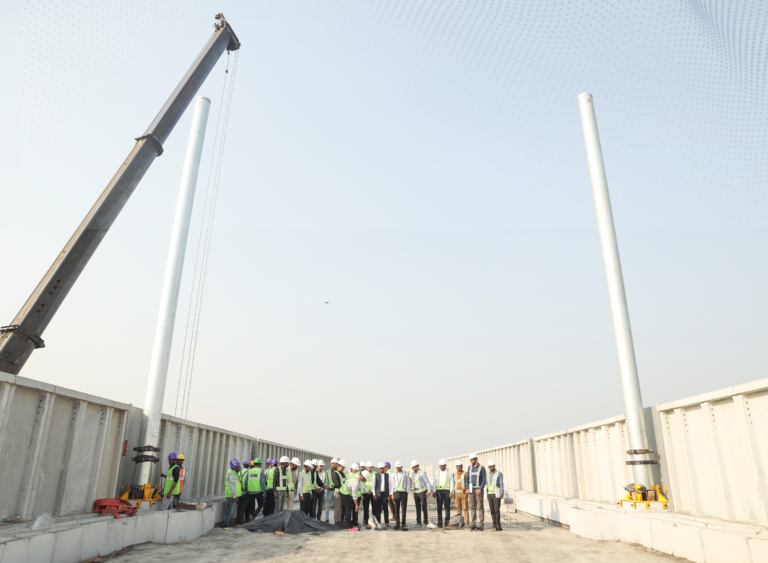
(Metro Rail News): The electrification work for the Mumbai-Ahmedabad High-Speed Rail (MAHSR) corridor has officially commenced. The first two steel masts have been erected on the viaduct between Surat and Bilimora stations in Gujarat which stand 14 meters above ground level.

Electrification work Begins on Mumbai Ahmedabad Bullet Train Corridor 2
Image Credit: NHSRCL
Electrification work begin for Mumbai-Ahmedabad Bullet Train Project
Image Credit: NHSRCL

Scope of Work

A total of over 20,000 steel masts, ranging from 9.5 to 14.5 meters in height, are planned to be installed along the corridor. These masts will form the backbone of the Overhead Equipment (OHE) system, which includes:

  • Overhead wires
  • Earthing systems
  • Fittings

The complete OHE system will operate on a 2×25 kV overhead traction configuration. The system is designed to support the operation of high-speed trains along the corridor.

Manufacturing and Compliance

In line with the “Make in India” initiative, the OHE masts are being manufactured domestically. These Mast adhere to Japanese standard designs and specifications to ensure compatibility with high-speed rail requirements.

Bullet Train Project: Full Span Girder Box Cast For Maharashtra Section 

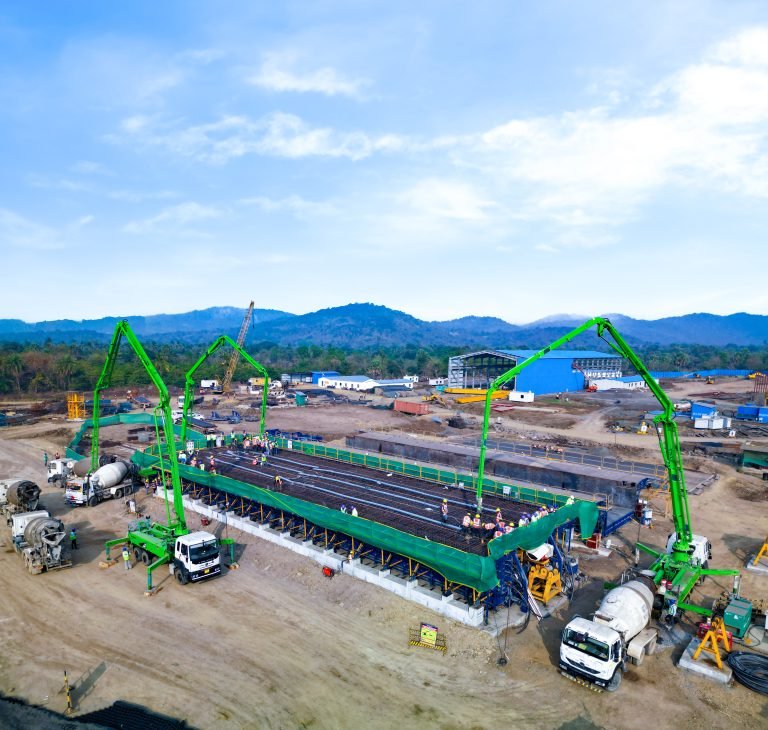
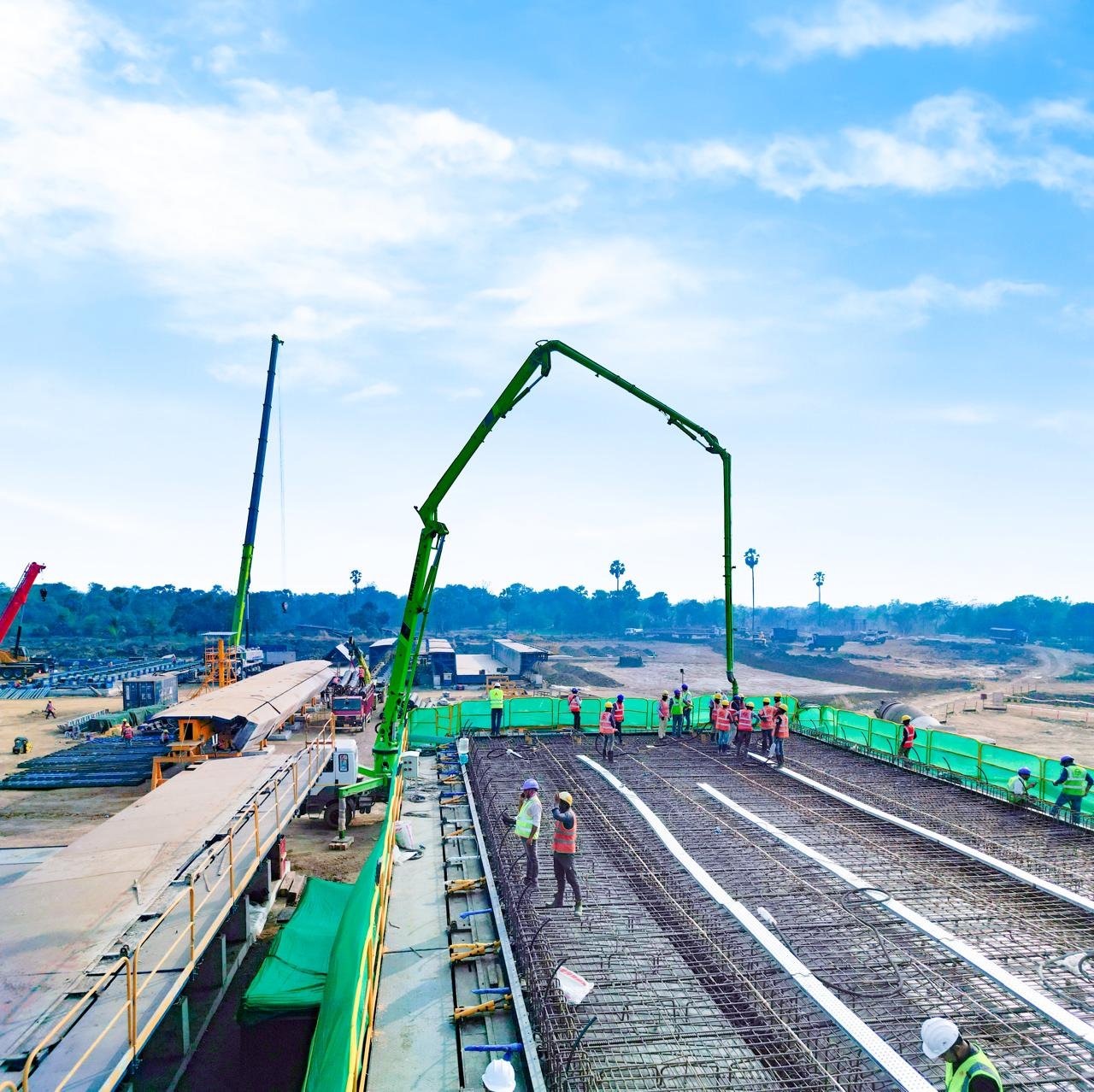
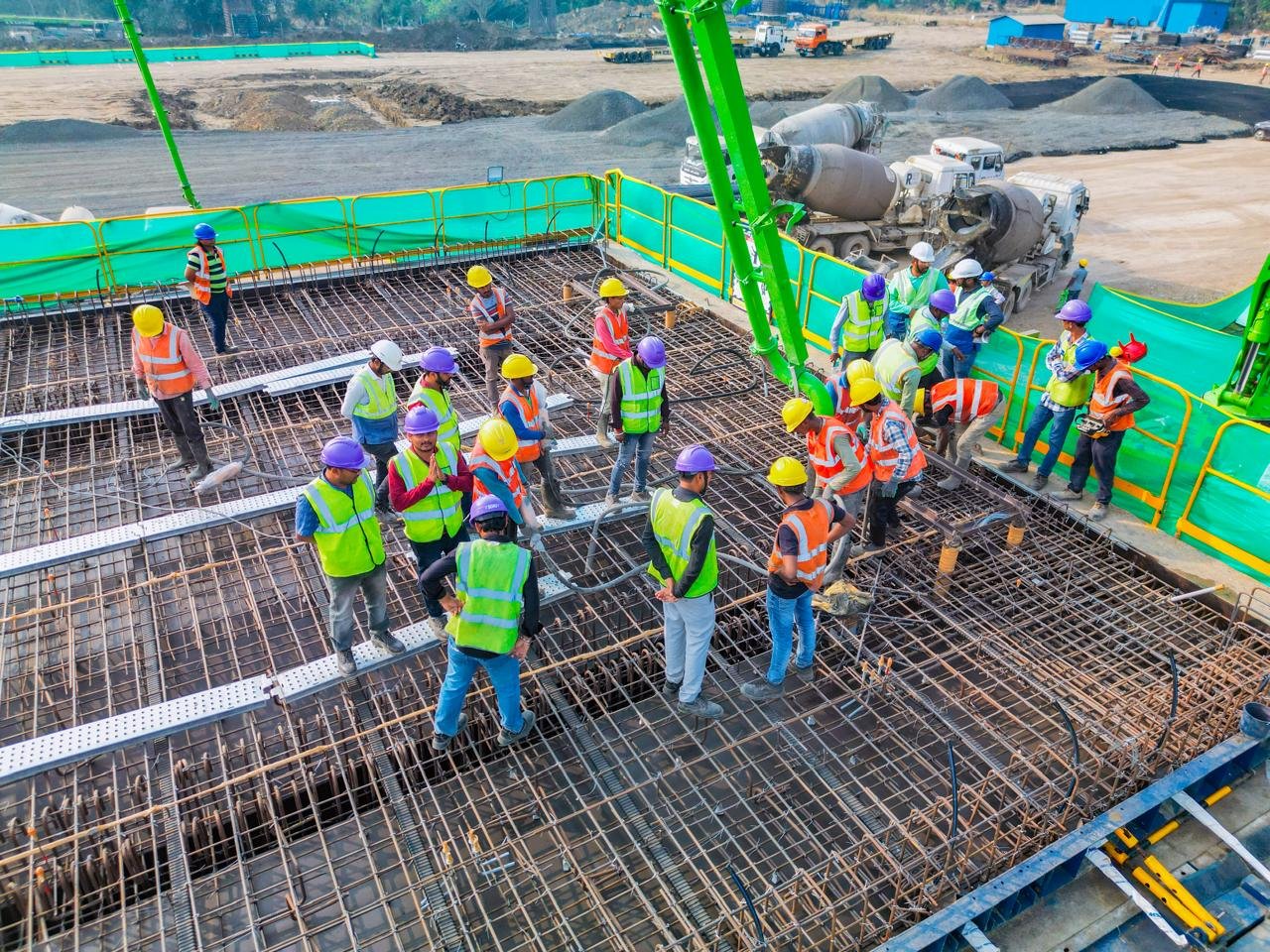
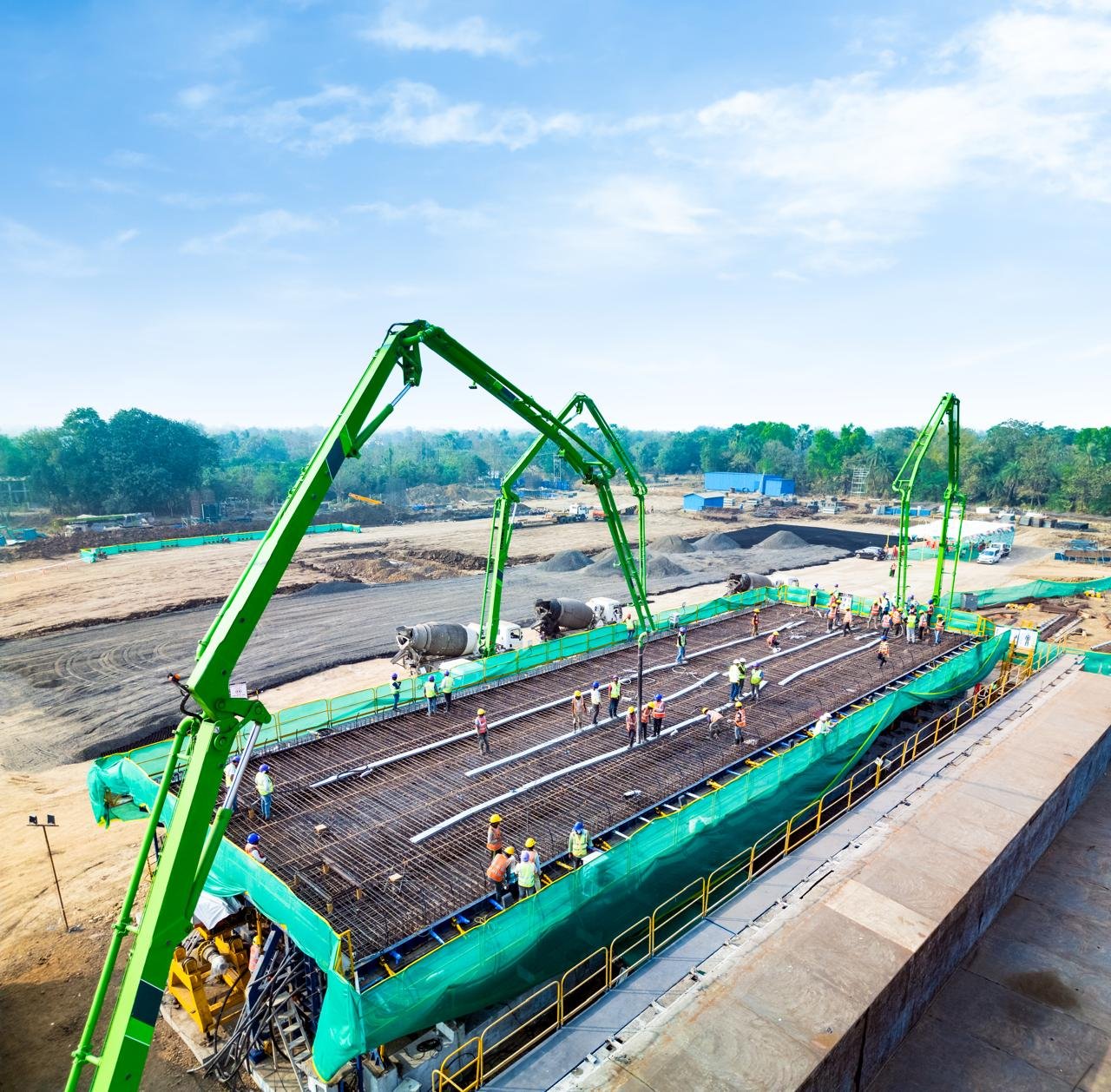
(Metro Rail News): Mumbai-Ahmedabad Bullet Train Project (MAHSR) advanced as National High-Speed Rail Corporation Ltd (NHSRCL) cast the first full-span Pre-Stressed Concrete (PSC) Box Girder for the Maharashtra section of the alignment.

First 40 m full span girder successfully cast in Maharashtra for Mumbai Ahmedabad Bullet Train Project 3
Image Credit: NHSRCL
First 40 m full span girder successfully cast in Maharashtra for Mumbai Ahmedabad Bullet Train Project 4
Image Credit: NHSRCL

Salient Features of PSC Box Girder 

ParameterDetails
Span of PSC Box Girder (Maharashtra section)40 m
Weight of Girder970 MT (Heaviest girder in India’s construction industry)
Concrete Volume390 cum
Steel Usage42 MT
Casting MethodCast as a single piece without any construction joint
First 40 m full span girder successfully cast in Maharashtra for Mumbai Ahmedabad Bullet Train Project 2
Image Credit: NHSRCL
First 40 m full span girder successfully cast in Maharashtra for Mumbai Ahmedabad Bullet Train Project
Image Credit: NHSRCL

Full-span pre-cast box girders will be launched using heavy machinery, including:

  • Straddle Carrier
  • Bridge Launching Gantry
  • Girder Transporter
  • Launching Gantry

 About Casting Yards developed for the MAHSR Project 

To ensure the uninterrupted supply of girders for the viaduct, 13 casting yards have been developed along the alignment in Maharashtra between Shilphata and the Gujarat-Maharashtra border. 

Out of 13 casting yards, 3 casting yards have become operational. 

  • The 2 casting yards have been developed for segment casting and the other one for full-span box girders. 

Updates on the Gujarat section 

The Gujarat section’s viaduct construction has been completed 255 km so far. The viaduct has been constructed using the same technology since April 2021. 

Maharashtra Section Details 

ParameterDetails
Total Length of Elevated Section135 km
Major River Bridges4 (Ulhas, Vaitarna, Jagani, Kharbao)
Special Bridges/Crossings11 (over National Highways, DFCC, and Indian Railway lines)
Bullet Train Stations3 (Thane, Virar, Boisar)
Mountain Tunnels7

Further Information 

The construction of the substructure and superstructure, including piles, pile caps, piers, and pier caps, is advancing rapidly to facilitate the construction of the viaduct. Simultaneously, dedicated casting yards have been established along the alignment to produce full-span and segmental girders. 

Pune Metro: 2 New Stations Proposed on Swargate- Katraj Extension 

Pune (Metro Rail News): The Pune Metro project advanced as the Maharashtra Urban Affairs Minister Madhuri Misal proposed two new stations on the Purple Line’s extension from Swargate to Katraj spanning 5.464 km through 3 stations. 

The primary reason behind the proposal of two new stations between the Swargate to Katraj extension is to resolve the issue of traffic in Pune. 

Maharashtra Metro Rail Corporation Limited. has even approved one of the stations named Balajinagar out of the 2 stations proposed by Madhuri Misal.

route map english1


About Pune Metro’s Purple Line 

Operational route: Currently, the Purple Line is operational from PCMC to Civil Court spanning 16.6 km via 13 stations.

  • The Purple Line’s 3.3 km extension between Civil Court and Swargate became operational in September 2024. This section features 3 new stations.
  • The extension from Swargate to Katraj spans 5.464 km featuring 3 stations. 
  • Purple Line’s northern extension from Pimpri Chinchwad Municipal Corporation (PCMC) to Bhakti Shakti (under construction) covers 4.519 km with 5 stations.

Further Information 

Maharashtra Urban Affairs Minister Madhuri Misal mentioned that the metro route extension from Vanaz to Chandni Chowk spanning 1 km and  Ramwadi to Vithalwadi spanning 17 km is currently at the last stage of approval. 

The routes from SNDT to Manikbaug and Khadakwasla to Kharadi were undergoing preliminary review by the Union Government.

Bullet Train Project: Bids Invited for Signaling Contract S1

(Metro Rail News): Mumbai–Ahmedabad High Speed Rail (MAHSR) project advanced as National High Speed Rail Corporation Ltd. (NHSRCL) invited bids for the S-1 Package which includes design, installation and commissioning of the signaling and telecommunication (S&T) system on 18 January 2025.

The Mumbai – Ahmedabad High Speed rail corridor will be equipped with the European Train Control System (ETCS) Level 2 signaling system. The Delhi-Meerut RRTS is the only project in India which features the ETCS signaling system so far.

Tender Details 

Completion Date 7 Years ( 2555 Days ) 
Pre- Bidding Meeting 18 February 2025 
Submission of Tender 26 March 2025
Opening of Tender 27 March 2025 

IFB Number: Package No. MAHSR – S-1

Brief Scope: Design, Manufacture, Supply, Installation, Overall Integration, Testing Commissioning, and Comprehensive Maintenance, of Signalling & Train Control System, Telecommunication System, and Operation Control Center System on Mumbai Ahmedabad High-Speed Rail Project, India.

Rolling Stock for Bullet Train Project  

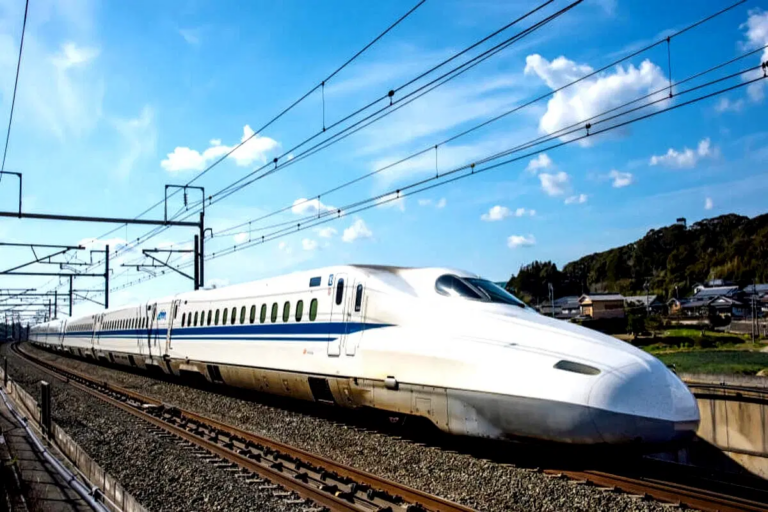
BEML was awarded a rolling stock in October 2024 to supply 2 prototype trains for the Bullet Train Project. These trains will be designed to run at maximum speed of 250 kmph. 

As per the railway minister’s statement, the first section of Bullet train is expected to become operational by August 2026.

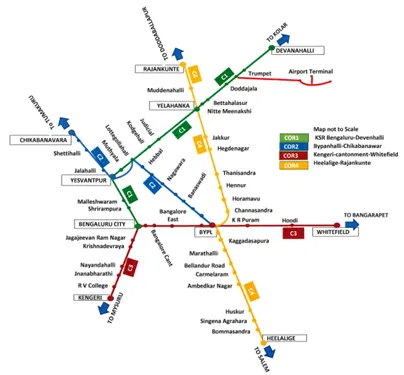
Bengaluru Suburban Rail: KPC Secures Soladevanahalli Depot’s Contract

Bengaluru (Metro Rail News): Bengaluru Suburban Rail Project (BSRP) progressed as Karnataka’s Rail Infrastructure Development Company (K-RIDE) announced KPC Project Ltd. as the lowest bidder for the construction contract of Soladevanahalli Depot.

Bengaluru suburban rail

In September 2024, K-Ride floated a tender for the Soladevanahalli Depot construction contract at Rs. 170.93 crore estimate and a 2-year (24-month) deadline. Furthermore, In December 2024, technical bids were opened to reveal the 2 bidders. 

Financial Bid Values 

FirmBids 
KPC Projects Ltd. and209.72 crores 
URC Construction Pvt. Ltd.213.41 crores 

Tender No: K-RIDE/BSRP/DEPOT/SDHL/2024

Scope Of Work 

The scope of work under this contract includes the construction of Soladevanahalli Depot of 

Bengaluru Suburban Rail Project (BSRP). Additionally, the contract also includes the construction of an at-grade section spanning 1 km from Chikkabanavara Station to Soladevanahalli Depot.

KRIDE’s Brief Scope: Construction of Bangalore Suburban Railway Project (BSRP) Rolling Stock / Train Maintenance Depot with Administration & Workshop Buildings At Soladevanahalli (Chikkabanawara) including Civil, MEP, Roofing, Signage, Architectural Finishes, STP, External Drainage, Internal Roads, Boundary Wall, construction of At-Grade Formation of Length 1.00 Km (Approximately) and other Associated Works between Chikkabanavara Station to Soladevanahalli Depot of Bangalore Suburban Railway Project (BSRP)

About Soladevanahalli Depot

The Soladevanahalli Depot will be utilised for the maintenance of trains which operate on Corridor 2 (Mallige Line) of the Bengaluru Suburban Rail Project. This line spans 24.866 km between Baiyyappanahalli Terminal and Chikkabanavara through 14 stations.

All the 51 trains (306 coaches) of the Bengaluru Suburban Rail Project will be stabled and maintained at the Soladevanahalli Depot along with another depot located at Akkupet (Devanahalli).   

Sparsh CCTV Collaborates with Indian Railways to Secure Jammu Railway Division and Prayagraj’s Maha Kumbh Railway Stations 

New Delhi (Metro Rail News):Sparsh CCTV, a pioneer in electronic surveillance, has partnered with Indian Railways to enhance security and operational efficiency for the newly inaugurated Jammu Railway Division. This collaboration coincides with the inauguration of three new trains and marks a historic milestone in enhancing connectivity between Kashmir and the rest of India. Additionally, Sparsh CCTV played a key role in ensuring comprehensive security during the Maha Kumbh at Prayagraj, safeguarding millions of pilgrims.

1 1

Sparsh’s comprehensive solutions have been integral to ensuring the success of the Udhampur-Srinagar-Baramulla Rail Link (USBRL), a project of immense strategic and economic significance for India. By enabling seamless rail connectivity in this sensitive region, USBRL underscores the Government of India’s commitment to infrastructure growth and national security.

Kumbh Picture 1

Also, during the Maha Kumbh, Sparsh CCTV ensured comprehensive security for millions of pilgrims arriving at Prayagraj’s railway stations. Key highlights include cyber-secured STQC-certified cameras installed across all major stations, end-to- end video management systems for real-time monitoring and efficient crowd control, 360-degree security coverage at Prayagraj (PRYJ), Prayagraj Junction (PYGS), Phaphamau Junction (PFM), and Rambag (PRRB), and crowd management analytics deployed at major locations, ensuring seamless handling of large gatherings. Sparsh’s integrated CCTV and video management solutions established a control room to oversee operations, providing a secure and seamless experience for pilgrims.

Mr. Sanjeev Sehgal, Founder & CEO of Sparsh CCTV, stated, “We are immensely proud to contribute to both the USBRL project and the Maha Kumbh, two monumental initiatives that reflect India’s spirit of progress and unity. By delivering innovative, 100% Made in India solutions, we have reinforced our commitment to safety, quality, and the vision of Atmanirbhar Bharat.”

The USBRL project, hailed as one of the most challenging railway undertakings in post-independence India, features engineering marvels such as 38 state-of-the-art tunnels spanning 119 kilometers, 927 bridges covering 13 kilometers, and the iconic Chenab Bridge—the world’s highest arch railway bridge, standing at 359 meters above the riverbed. Sparsh CCTV has ensured the safety and operational efficiency of this project by deploying advanced surveillance technologies, including fire and smoke detection, abandoned object monitoring, face recognition, and train speed analytics. An integrated Command and Control Center, equipped with advanced AI, SCADA systems, and an Emergency Calling System, facilitates real-time monitoring of train movements and signaling, ensuring improved safety, efficiency, and operational management.

USBRL Picture 1

Security has been a paramount concern in the Kashmir region, and the USBRL project sets a benchmark for integrating cutting-edge surveillance and operational systems in such a sensitive area. For the first time in India, an entire railway surveillance system has been executed by a single company. Sparsh has deployed a range of solutions, including explosion-proof cameras, stainless steel cameras, advanced video management software, and servers, all designed and manufactured in India. This achievement highlights the country’s capability to address complex challenges with indigenous technology.

The implementation of this surveillance infrastructure has been managed in collaboration with key stakeholders such as RailTel, Konkan Railways, and renowned integrators like L&T, TATA, and Siemens, PSJV ensuring a world-class safety framework for the project. Sparsh’s solutions have been pivotal in addressing critical challenges, including monitoring overhead cable operations, detecting track obstructions, and integrating advanced LiDAR 3D technology to enhance operational efficiency, enabling seamless functioning even in the region’s rugged and unpredictable terrain.

With the inauguration of the Jammu Railway Division, the operational readiness of the Vande Bharat Express between Katra and Srinagar signifies the completion of the Kashmir-to-Kanyakumari rail link. This rail journey offers passengers a unique and extraordinary experience, crossing engineering marvels like the Chenab Bridge and the Anji Khad cable-stayed bridge. The successful execution of this monumental project not only strengthens national unity but also ensures a robust security framework in one of India’s most sensitive regions, thanks to Sparsh CCTV’s advanced surveillance systems.

About Sparsh CCTV

Sparsh CCTV logo

Established in 2002, Sparsh CCTV is a homegrown leader in electronic surveillance, embodying the Atmanirbhar Bharat vision. With in-house manufacturing units and a cutting-edge R&D center, Sparsh delivers innovative and secure solutions to meet India’s growing safety needs. The company’s STQC-certified products stand as a testament to its commitment to cybersecurity and technological excellence.

Railways Deploys Electronic Interlocking at Shakurbasti 

(Metro Rail News): Indian Railways has taken a major step toward streamlining the safety of passengers and operations by upgrading the signalling system at Shakurbasti.

Indian Railways recently commissioned electronic interlocking at Shakurbasti in New Delhi. This system replaced one of India’s oldest mechanical interlocking yards. The new system, equipped with a Visual Display Unit (VDU)- based interface, controls 493 routes and improves the safety, efficiency, and reliability of train operations.

indian railways upgrades signall

Reduction in Train Accidents Across Railways

Union Minister for Railways Ashwini Vaishnaw, in a written reply to the Lok Sabha in November, reported a decrease in train accidents from 135 in 2014-15 to 40 in 2023-24. This decline reflects the impact of safety measures implemented over the past decade.

Comparative Accident Data

AD 4nXcUNPe9tiaCgG1FwOjh6yOF2rCbLBr793jPz5EVFWpGz5kXNEeIO4FbVd7d6 Bvs35 ESuq5AEhQzlvhzTTMWM bWhmJpVD61L6QigWv
PeriodTotal AccidentsAverage Accidents per Year
2004-20141,711171
2014-202467868

Improvement in Safety Index

The Accidents per Million Train Kilometers (APMTKM), a key metric for assessing safety performance, reduced from 0.11 in 2014-15 to 0.03 in 2023-24, an improvement of approximately 73% over the period.

Union Minister for Railways Ashwini Vaishnaw, in his response to the Lok Sabha, highlighted upgrades in railway signalling and safety systems:

  • Installation of Electrical/Electronic Interlocking Systems:
    As of October 31, 2024, a total of 6,608 stations are equipped with electrical/electronic interlocking systems.
  • Interlocking of Level Crossing (LC) Gates:
    To enhance safety at level crossings, 11,053 level crossing gates have been interlocked by the same date

These advancements outline the Railways’ efforts towards its commitment to provide efficient and safe travel to passengers.

Year-End Review: Analysing The Growth of the Rail Transportation Sector in FY 2024

Abstract

The year 2024 has been quite a great year for India’s mobility sector, which has delivered a remarkable performance in rail transport and urban mobility. Right from engineering marvels to massive network expansions and eco-friendly metro projects, the nation has taken some vital steps to modernize its infrastructure.

Among the outstanding achievements, the expansion of 5,100 kilometers of railway tracks is a major step toward enhancing connectivity and strengthening the economic frameworks of the country. The launch of new metro projects, like the Thane Metro and Bhubaneswar Metro, made urban transportation progress.

This article discusses the highlights of 2024. The research delves into the budgetary provisions, strategic plans, and policies that spurred the development of Indian rail and metro infrastructure.

Indian Railways in 2024: Progress Toward Vikasit Bharat 2047

Indian Railways continued its modernization and growth journey into 2024, in passenger experience improvement, enhancing freight efficiency, and harnessing advanced technologies. Improvements in stations, the launch of new train services, and safety systems introduced at various levels indicate how the rail network is evolving further. Indian Railways, with over 68,584 route km and 12.54 lakh employees stands as the fourth largest network in the world under single management. In the year 2024, Indian Railways’ growth has been substantial. Here’s a brief overview of the critical aspects of railways that contributed to its growth.

  • The Hike in Capital Expenditure:  In the Union Budget 2024-25, presented by Union Minister for Finance and Corporate Affairs Smt. Nirmala Sitharaman on July 23, 2024, Indian Railways saw a record capital expenditure (Capex) allocation of ₹2,62,200 crores. This marks a 77% increase compared to the previous five years. Additionally, the Gross Budgetary Support (GBS) for the year is set at ₹2,52,200 crores. This reflects a rise from ₹2,40,200 crores in 2023-24 and a substantial increase from ₹28,174 crores in 2013-14.
  • Revenue: The Railways achieved a total revenue of ₹2.56 lakh crore (US$ 30.76 billion) by the end of 2024. 

Enhancing Rail Track Infrastructure & Speed

Track Renewal Works:

  • 6200 Track km rails have been renewed with new rails.
  • Complete track renewal for 6450 track km has been done.
  • Through Turnout Renewal of 8550 sets have been done.
WhatsApp Image 2024 12 30 at 13.28.20 f2ad5beb

Raising of sectional speed:

  • The sectional speed on over 2000 track kilometres, including segments of the Golden Quadrilateral, Diagonal routes, and other B routes, has been upgraded to 130 km/h.
  • Raising of sectional speed to 110 kmph has been done over 7200 track km.

Infrastructure Development and Gati Shakti Initiatives in 2024

Indian Railways has made steady progress in infrastructure development during 2024. 

Elimination of Manned Level Crossings and Bridge Construction

  1. Level Crossings:
    • 718 manned level crossings have been eliminated, improving safety and minimising delays.
  2. ROBs and RUBs:
    • A total of 1,024 Road Over Bridges (ROBs) and Road Under Bridges (RUBs) have been constructed.
Gati Shakti Multi-Modal Cargo Terminals (GCTs)

The Gati Shakti initiative aims to enhance logistics infrastructure and promote industrial investment through strategically located cargo terminals:

  • Identified Locations:
    • 354 locations have been identified for GCT development, with 327 on non-railway land and 27 on railway land.
  • Operational Terminals:
    • By the end of October 2024, 91 GCTs had been commissioned.

Sanction of Three Economic Corridors

Indian Railways has sanctioned the development of three key economic corridors in 2024, targeting critical sectors and high-demand routes. Under the ambitious infrastructure plan for 2024, Indian Railways has outlined 434 projects across three major economic corridors. Of these, 58 projects were sanctioned during 2024, with a combined track length of approximately 4,107 kilometres and an estimated completion cost of ₹88,875 crore. 

Energy, Mineral, and Cement Corridors

  • Projects: 51
  • Track Length: 2,911 kilometres
  • Completion Cost: ₹57,313 crore
  • Focus: Facilitating the transportation of energy resources, minerals, and cement.

High Traffic Density Routes

  • Projects: 5
  • Track Length: 830 kilometers
  • Completion Cost: ₹11,280 crore
  • Focus: Decongesting busy rail corridors and enhancing operational efficiency.

Port Connectivity Corridors (Rail Sagar)

  • Projects: 2
  • Track Length: 366 kilometers
  • Completion Cost: ₹20,282 crore
  • Focus: Expanding rail connectivity in coastal regions.

Commissioning of projects in 2024 

Plan HeadCommissioning (Km)
New Line1158
Gauge Conversion259
Doubling2016
Total3433

Electrification Drive in 2024

Indian Railways continued its electrification momentum in 2024 to enhance its eco-friendly operations and efficiency:

  • Achieved Milestone: A total of 3,210 route kilometres (RKM) were electrified in the calendar year 2024, extending electrification to approximately 97% of the Broad Gauge (BG) network.
  • Decade of Progress: Since 2014-15, approximately 45,200 RKM of BG lines have been electrified.
  • Accelerated Pace: The pace of electrification surged from 1.42 km/day (2004-14) to 19.7 km/day during 2023-24.
  • Budgetary Support: For the fiscal year 2024-25, ₹8,070 crore has been allocated to further advance electrification projects.

Station Redevelopment Initiative

Indian Railways is striving to upgrade its infrastructure under the Amrit Bharat Station Scheme:

WhatsApp Image 2024 12 30 at 13.28.20 5be757ec 1
  • Scope:
    A total of 1,337 railway stations have been identified for redevelopment to improve passenger amenities and station facilities.
  • Progress:
    • Tenders and Implementation: Redevelopment work has started at 1,198 stations, with the remaining stations in various stages of tendering and planning.
  • Completed Projects:
    Several stations have been redeveloped and are now operational, including:
    • Rani Kamlapati Station (West Central Railway)
    • Gandhinagar Capital Station (Western Railway)
    • Sir M. Visvesvaraya Terminal Station (South Western Railway)
    • The first phase of Gomti Nagar Station (North Eastern Railway)
    • Ayodhya Railway Station (Northern Railway)
    • Cuttack Railway Station (East Coast Railway)

Telecom Developments in Indian Railways During 2024

1. Elephant Intrusion Detection System (EIDS)

  • Purpose: Commissioned at critical locations in the Northeast Frontier Railway (NFR) to prevent accidents involving elephants.
  • Sanctioned Works: The project covers multiple railway zones, including NFR, ECoR, SR, NR, SER, NER, and WR, with a total cost of ₹208.02 crore.
  • Progress:
    • Awarded Works: 582.25 Route Kilometers (RKms)
      • NFR: 141 RKms
      • ECoR: 349.4 RKms
      • SR: 55.85 RKms
      • NER: 36 RKms
    • Commissioned: 141 RKms so far.

2. Application for Coach Guidance System (CGS) and Train Indicator Boards (TIB)

  • Integrated with the National Train Enquiry System (NTES) as per RDSO specifications (Revision-4).
  • Developed by CRIS for monitoring the integration of IPIS with NTES using API-based interfaces.

3. Centralised Public Address System

  • This system has been implemented in the Bhopal Division (WCR) and Deen Dayal Upadhyaya (DDU) Division (ECR).

4. Digital VHF Walkie-Talkies

  • The Railway Board has mandated the procurement of Digital 5W Walkie-Talkie sets for better communication between locomotive pilots and guards.

5. Optical Fiber Cable (OFC) and Quad Cable Installation

  • FY 2023-24 Progress:
    • OFC: 1,411 RKms installed, bringing the cumulative total to approximately 66,588 RKms.
    • Quad Cable: 801 RKms installed, with a cumulative total of approximately 66,271 RKms.

7. Wi-Fi Facility at Stations

  • Wi-Fi is now available at 6,112 stations across the Indian Railways network.

8. CCTV Cameras at Stations

  • Indian Railways has sanctioned the installation of CCTV cameras at all stations (except halt stations).
  • Current Status: Installed at 1,051 stations to date.

Indian Railways’ Increasing Steps Towards Net-Zero by 2030

  • Renewable Energy Commissioned (as of November 2024):
    • Solar Power: Approximately 487 MW of solar plants this includes rooftop and ground-mounted systems.
    • Wind Power: Around 103 MW of wind power plants.
  • Renewable Energy – Round the Clock (RE-RTC): 100 MW of RE-RTC has begun supplying energy.
  • Total Renewable Capacity Tied Up: About 2,014 MW of renewable energy capacity has been secured

Indian Railways Expands Modern Train Services in 2024

Gakp9Mga0AAL Ou 1
  • Vande Bharat: As of December 26, 2024, Indian Railways is operating a total of 136 Vande Bharat train services across its network. In 2024, 62 new Vande Bharat services were introduced.
  • Namo Bharat Rapid Rail: The first Namo Bharat Rapid Rail service between Ahmedabad and Bhuj was launched on September 17, 2024.
GH6CphNWIAAUMyp
  • Amrit Bharat Train Services: Amrit Bharat services, which consist of fully non-AC trains with 12 Sleeper Class coaches and 8 General Class coaches, are providing quality services to passengers. In 2024, two Amrit Bharat Express services—Darbhanga–Anand Vihar (T) Express and Malda Town–SMVT Bengaluru Express—were introduced, with plans for more services in the future.
GXNeo9xbgAQxu64

Train Augmentation and Modernization Initiatives in 2024

  • Expansion of Coach Composition: In line with existing policies, Mail/Express trains now feature 12 General and Sleeper Class non-AC coaches, along with 8 AC coaches, totalling 22 coaches for passenger convenience.
  • General Class Coach Addition: Over 950 General Class coaches were added to Mail/Express trains operating with LHB coaches in 2024 to cater to unreserved passengers.
  • Permanent Coach Augmentation: More than 875 coaches have been permanently deployed for the augmentation of train services.
  • Transition to Modern LHB Coaches: Since April 2018, Indian Railways has transitioned to LHB coaches for all new train production. Additionally, over 75 pairs of trains have been converted to LHB coaches by November 2024.

Implementation of the Kavach System Across Railways

The Kavach system, an indigenously developed Automatic Train Protection (ATP) system, is designed to enhance train safety on Indian Railways. It requires stringent safety certification (SIL-4), which reflects its high technological standards.

WhatsApp Image 2024 12 30 at 13.28.20 4c44baba

Progress Update:

  • A project to equip 10,000 locomotives with Kavach has been finalized.
  • 69 loco sheds are being prepared to support the Kavach installation.
  • Bids have been invited for trackside works, covering approximately 15,000 RKM across all major railway zones, including GQ, GD, HDN, and identified sections.
  • Three OEMs have been approved for the supply of Kavach systems, with trials and approvals for additional OEMs underway.
  • Over 9,000 technicians, operators, and engineers have been trained in Kavach technology through courses developed in collaboration with IRISET.
S.N.ItemsProgress
1Laying of Optical Fibre Cable5,133 Km
2Installation of Telecom Towers540 Nos.
3Provision of Kavach at Stations523 Nos.
4Provision of Kavach in Loco707 Locos
5Installation of Track Side Equipment3,434 Rkm

Investments and Contracts

  • Major Contract: ₹2,041.04 crore awarded to Kernex Micro Systems for 2,500 on-board Kavach systems.
  • Funds Utilised: ₹1,547 crore to date; ₹1,112.57 crore allocated for FY 2024-25.

2024 Milestones in Freight Services of Indian Railways

  • Record Freight Loading on Indian Railways: From January 2024 to November 2024, Indian Railways achieved 1473.05 million tonnes (MT) in revenue-earning freight loading, reflecting a 3.86% increase compared to the same period in the previous year.
CorridorsNo. of Train RunsGross Ton Kilometer (GTKM)
(Millions)
Average Speed
October 2024Cumulative Runs (2024-25)October 2024Cumulative Runs (2024-25)
EDFC5,91541,05411,08873,02244.6
WDFC5,10931,5635,64333,25551.3
Total11,02472,61716,7311,06,277

Digital Initiatives Enhancing Passenger Convenience on Indian Railways

  • E-ticketing Growth: E-ticketing has reached 86% in the reserved sector, while in the unreserved sector, it has increased from 28% at the start of the financial year to approximately 33% by October 2024.
  • Streamlined Refund Process: Indian Railways has streamlined the refund process to ensure refunds are processed within 24 hours in 98% of eligible cases.
  • QR Code Payments: Dynamic QR code-based payments have been introduced at all counters on Indian Railways. This payment method is being expanded to include parcel offices, to cover all parcel offices by the end of the current financial year.

Health and Cleanliness Initiatives on Indian Railways

  • Eat Right Certification: Under the “Eat Right India” initiative by the Food Safety and Standards Authority of India (FSSAI), 182 stations have received the Eat Right certification, ensuring food safety and quality for passengers.
  • Namaste Health App: Launched on 16th December 2024, the Namaste Health App provides emergency healthcare services to Western Railway suburban commuters in critical situations.
  • Special Campaign 4.0:
    • Indian Railways conducted a total of 56,168 cleanliness drives, to improve workplace hygiene and maintain cleanliness at railway stations.
    • The campaign resulted in freeing up 12.15 lakh square feet of space and generating Rs. 452.40 crores in revenue.

Reduction in Train Accidents on Indian Railways

  • The number of consequential train accidents on Indian Railways has decreased over the years. During the period 2004-2014, there were 1,711 accidents (averaging 171 per year), which reduced to 678 accidents during 2014-2024 (averaging 68 per year)
AD 4nXeMS x6L7h8uwcEIuna 85tlc2eeVVwVbzIKP2HbGrQkYKHJgds9zFE3oq1uV92CnTu3AzXRRr9rksoZP5wWBlXc pIJW0 sfLVmU2MoJsoSaqLV hzYbaV

Project Engineering and Management: A Step Towards Efficiency

In 2024 Indian Railways has introduced several key measures to streamline project execution and engineering management, ensuring faster completion and better oversight:

  1. Resolution of Contractual Disputes
    • All pending cases within the Engineering Department across zonal railways have been resolved under the “Vivad Se Vishwas II (Contractual Disputes)” scheme, paving the way for smoother operations.
  2. Enhanced EPC Framework
    • To mitigate uncertainties in the Engineering Procurement and Construction (EPC) tendering process, a new “Schedule G-1” has been incorporated, providing separate Bills of Quantities (BoQ) for itemized works.
  3. Dispute Redressal Mechanism
    • A master policy has been issued for the appointment of Conciliators, Dispute Adjudication Board (DAB) members, Standing Arbitration Tribunal (SAT) members, and Arbitrators, with a clear framework for determining their fees.
  4. Improved Contract Oversight
    • Comprehensive procedure orders have been introduced for Project Management Services (PMS) and Project Supervision Services Agency (PSSA) contracts, covering areas like measurement protocols, material testing, and payment processes.
  5. Delegation of Powers
    • Powers of Acceptance for works tenders have been enhanced, granting Chief Administrative Officers (Construction) full authority over all work contracts, including EPC tenders. Additional powers have been delegated under Modal SOP-2018 to field units for expedited project implementation.
  6. Flexible Tendering Options
    • Electronic Reverse Auction (e-RA) for works tenders has been made optional, offering greater flexibility in procurement.
  7. Digital Advancements
    • Four new web-based modules have been developed under the CRS Sanction Monitoring System to manage:
      • Opening of additional or deviation railway lines (New Lines, Gauge Conversion, Doubling).
      • Rebuilding and modification of major bridges.
      • Minor works such as upgrading level crossings and yard remodelling.
      • Manning and interlocking of level crossings.
  8. Updated Norms for Track Maintenance
    • The Modified Manpower and Cost Norms for Track Maintainers (MCNTM-2024) have been issued to standardise track maintenance protocols.
    • A new budget category, “PU-49,” has been introduced for outsourcing manpower and activities related to track maintenance.

Progress of Bullet Train Project in 2024

AreaProgress Details
Viaduct ConstructionOver 243 km completed
Pier and Foundation Work352 km of pier work and 362 km of pier foundation completed.
Bridge Construction13 rivers crossed; 5 steel bridges and 2 PSC bridges were constructed.
Track Construction (Gujarat)RC Track Bed construction in Anand, Vadodara, Surat, and Navsari districts; 71 track km completed.
Track WeldingWelding of rails commenced on the viaduct in Gujarat
Mumbai Bullet Train Station (Maharashtra)First concrete base-slab cast at 32 meters depth (equivalent to a 10-storey building)
BKC-Shilphata Tunnel (Maharashtra)21 km tunnel construction underway; Intermediate Tunnel (ADIT) of 394 meters completed
Mountain Tunnels (Maharashtra)Seven tunnels are under construction using New Austrian Tunnelling Method (NATM) in Palghar district
Mountain Tunnel (Gujarat)One mountain tunnel completed

Indian Railway Beyond 2024: Future Prospects

India’s railway sector is set for significant growth, driven by several key initiatives that focus on improving connectivity, sustainability, and operational efficiency.

  1. Hydrogen-Powered Trains: Indian Railways plans to introduce hydrogen-powered trains on environmentally sensitive routes, with 35 trains set to operate across 8 heritage routes.
  2. Super App for Railways: Indian Railways is preparing to launch a comprehensive ‘super app’ to integrate various railway-related services. The app will streamline ticket booking, cancellations, live train tracking, and onboard services like food ordering, improving overall convenience for passengers.
  3. High-Speed Rail Initiatives: Feasibility studies are underway for high-speed rail corridors along key routes, including the Golden Quadrilateral routes: Delhi-Kolkata, Delhi-Mumbai, and Mumbai-Chennai.

Increasing Metro Rail Footprints in India: 

Annual Growth 2024

The Metro Rail sector in India has witnessed unprecedented growth during 2024. Till May 2014, about 248 km of metro rail lines were operational in the country. In the fiscal year 2024-25, the Indian Government allocated Rs 24,931.98 for MRTS projects. In 10 years this figure has increased by  943.61 km. Further, about 1080 km of metro rail projects are under construction in various cities across India namely, Delhi, Bangalore, Kolkata, Chennai, Kochi, Mumbai, Nagpur, Ahmedabad, Pune, Kanpur, Agra, Bhopal, Indore, Patna, Surat and Meerut.

Major Accomplishments In Metro Systems Across India

Ahmedabad Metro:

  • Inauguration of Phase II: On September 16, 2024, Prime Minister Narendra Modi inaugurated a 20.8 km section of the 28.25 km Ahmedabad Metro Phase II project. This new line connects Motera to Sector-1 and includes a spur line to GIFT City.
WhatsApp Image 2024 12 24 at 10.20.17 6acb7fbd

Bengaluru Metro: 

  • Completion of Tunnelling Work: BMRCL achieved 100% Tunneling for the entire Bangalore Metro Phase 2 On October 28, 2024.
  • Central’s Nod for Phase 3: On 16 August 2024, the Central Government gave clearance for 44.65 km Bangalore Metro Phase 3 at Rs 15,611 crore.
  • State Approval for Phase 3A: On 6 December GOK approved Bangalore Metro’s 35 km long Red Line (Phase 3A) at Rs 28,405.

Delhi Metro: 

  • Record Ridership: DMRC achieved its highest single-day ridership of 78.67 lakh journeys on November 18.
  • Phase-IV Developments: 
    • On  4 March 2024, central approved two new corridors:
      • Inderlok-Indraprastha (12.377 km) and 
      • Lajpat Nagar-Saket G Block (8.385 km).
    • Completion of an 865-meter underground tunnel on August 21.
    • The first twin tunnel breakthrough was on September 18.
    • Completion of the longest underground tunnel of 2.65 km on December 4.
    • On September 23, 2024, Alstom delivered the first train set for Phase IV.
  • Technological Innovations: Introduction of AI-powered crowd management and a QR-based ticketing system.

Kolkata Metro:

  • Opening of India’s First Underwater Metro Stretch: On 6 March 2024 PM Narendra Modi Launched the Esplanade-Howrah Maidan section of the East-West Corridor (Green Line) This section runs below the Hooghly River through the country’s first underwater transportation tunnel.
  • 40 Years of Journey: On 24 October 2024 Metro Railway, Kolkata Celebrated 40 years of operations.

Meerut Metro

  • First Trainset Arrival: On 27th February, the first trainset for Meerut Metro arrived at NCRTC’s Duhai Depot. A total of seven trainsets have now arrived at the depot in Delhi.
  • Current Status: Train testing and trials are currently underway as preparations for Meerut Metro operations continue.

Mumbai Metro

  • Operations on Aqua Line: On 7 October 2024, Mumbai’s fully underground metro Line 3 (Aqua Line) became operational from Aarey to BKC.
Untitled design 4

Nagpur Metro

  • On 20 December 2024, Indora Square Station on the Orange Line became operational marking the completion of Phase 1 of the Nagpur Metro project.

Current status of Metro Project in Across India

Metro SystemOperational NetworkUnder Construction New Routes
Agra Metro5.2 km6.70 km
Ahmedabad Metro60.06 km7.45 km
Bangalore Metro75.20 km94.81 km
Bhubaneswar metro0 km 0 km
Bhopal Metro0 km6.22 km
Chennai Metro54.1 km116.1 km
Delhi Metro351.28 km65.1 km
Gurgaon Rapid Metro12.1 km0 km
Hyderabad Metro67 km0 km
Indore Metro0 km16.23 km
Jaipur Metro11.98 km0 km
Kanpur Metro8.73 km19.36 km
Kochi Metro27.96 km11.2 km
Kolkata Metro58.68 km41.94 km
Lucknow Metro22.90 km0 km
Meerut Metro0 km20 km
Mumbai Metro59.19 km143.65 km
Nagpur Metro38.22 km0 km
Navi Mumbai Metro11.10 km0 km
Noida Metro29.70 km0 km
Patna Metro0 km22.1 km
Pune Metro31.25 km27.85 km
Surat Metro0 km41.93 km

Celebrating the Progress and Achievements of 

India’s First RRTS Corridor

Namo Bharat Service Expansion in 2024

In 2024, the Delhi-Meerut RRTS Corridor witnessed substantial growth in its expansion:

  • Operational Progress:
    • A total of 25 km of the corridor became operational this year, extending the operational RRTS network to 42 km.
    • An additional 13 km stretch in the Delhi section is ready to become operational, further increasing the corridor to 55 km, with 11 stations.
GCkd8xzbMAAZbT 1
  • Key Sections Opened in 2024:
    • 6th March 2024: A 17 km section from Duhai to Modi Nagar North was opened for commercial use.
    • 18th August 2024: The corridor was extended by 8 km to Meerut South station.
Gakp9Mga0AAL Ou

50 Lakh Commuters on Namo Bharat

  • The Namo Bharat services have gained popularity for their speed, reliability, and comfort. To date, over 50 lakh commuters have travelled on Namo Bharat trains,
WhatsApp Image 2024 02 16 at 17.46.25 e9a6444c

Construction Progress

The construction of the remaining sections of the Delhi-Meerut RRTS Corridor is advancing steadily:

  • New Ashok Nagar to Sarai Kale Khan (5 km): Civil work is nearing completion.
  • Meerut South to Modipuram (23 km): Civil work is also in its final stages.
  • Current Activities: Track laying and Overhead Equipment (OHE) installation are underway on both stretches.

NCRTC’s Initiatives Toward Improving Passenger Convenience

  1. Namo Bharat NCMC Card

To streamline the digital ticketing experience, NCRTC has partnered with Airtel Payments Bank to introduce the Namo Bharat NCMC Card. This card offers the following:

  • Smooth Travel: This card is valid across all transport modes across India.
  • Versatile Use: This card functions as a travel card, debit card, and prepaid card for payments, including shopping and other services.
  1. NCRTC Signed MoUs with DMRC and IRCTC

NCRTC has signed agreements to improve ticketing convenience for Namo Bharat passengers:

  • Integrated QR-Ticketing with DMRC:
    • This allows simultaneous bookings for Namo Bharat and Delhi Metro through their respective apps.
  • Ticket Booking with IRCTC:
    • This enables passengers to add Namo Bharat tickets while purchasing Indian Railways tickets on the IRCTC platform.
  1. 10% Discount on Journeys via Namo Bharat App

The Namo Bharat App (formerly RRTS Connect App) is attracting Namo Bharat commuters with its salient features.

  • New Features:
    • Live train tracking.
    • Real-time parking availability.
    • Last-mile connectivity options.
    • Station facilities and navigation.
    • Lost-and-found service.

NCRTC’s Momentum Toward Sustainability Goals 

Solar Power Installation:

  • NCRTC is installing solar plants across RRTS stations, depots, and buildings.
  • So far NCRTC has achieved 4 MW of the targeted 11 MW renewable energy production.

Partnership with PTC:

  • NCRTC has also partnered with Power Trading Corporation (PTC) India to secure low-cost energy for the Namo Bharat Corridor.

Net Zero Stations: A Landmark Achievement 

NCRTC’s efforts toward sustainability earned recognition at the Green Building Congress 2024, organized by the Indian Green Building Council (IGBC) in Bangalore:

  • Historic Recognition:
    • Sahibabad and Guldhar stations became the first in India to receive the IGBC Net-Zero Energy (Operations) rating.
    • Both stations are also IGBC Platinum-rated.
  • Solar Capacity and Environmental Impact:
    • Each station has a solar capacity of 729 kW
  • Financial Savings:
    • Annual savings of ₹33 lakhs per station.
    • Over a 25-year lifespan, the savings are estimated at ₹8.3 crore per station

Conclusion

The year 2024 has been instrumental for India’s rail transportation sector, with substantial growth in all verticals, including Metro, Railway, RRTS, and High-Speed Rail, in terms of infrastructure expansion and technological integration. The length of operational metro systems in India increased to 943.61 km. With the introduction of Amrit Bharat Trains, Namo Bharat Rapid Rail, and the new Vande Bharat Trains, Indian Railways reaffirmed its commitment to cater to all the diverse socio-economic demographics of India efficiently. Similarly, the Amrit Bharat Station Redevelopment scheme is strengthening and modernizing railway infrastructure. India’s first bullet train project has also kept pace with this growth, moving steadily toward its first operations, expected to start in August 2026. Meanwhile, NCRTC has shown its dedication to making the Delhi-Meerut RRTS a reality. The project is on track to meet its deadline for operationalisation by June 2025 while fulfilling all sustainability goals. All current trends indicate that the heightened growth of the rail transportation sector will continue to rise in 2025, generating opportunities for stakeholders. These developments are set to push India closer to its vision of becoming a developed nation by 2047.

Experts’ Expectations from Union Budget 2025-26: Railways & Metro in Focus

New Delhi (Metro Rail News): Finance Minister Smt. Nirmala Sitharaman will unveil the Union Budget 2025 on February 1.

Expected Growth for Railways

The upcoming Union Budget is anticipated to increase capital expenditure for Indian Railways by 15-20% for FY26, prioritising the efficient utilisation of this year’s allocations. This boost could push the total capital outlay beyond ₹3 lakh crore, surpassing the ₹2.65 lakh crore allocated in the current fiscal year.

Key priorities for the next fiscal year will include commissioning upgraded railway stations, introducing modern train services, and expanding capacity to decongest the track network.


The Union Budget 2025 is anticipated to revolve around the central themes of ‘Amrit Kaal’ and ‘Viksit Bharat’.

Pre-Budget Quote by – Mr. Hari Somalraju ( MD & CEO , SYSTRA INDIA)

“Currently, India is in a transitional phase in the urban transportation segment, and the Union Budget 2025 would go a long way in defining its future. India currently has the third largest metro network in the world with over 1,000 kilometers of network across 23 cities and it aims to be the second largest network with another 1,000 km in pipeline. It is crucial to implement transit-oriented development, which allows the reduction of traffic congestion by 30% and the increase in property values near transit stations by 20%. Delhi-Ghaziabad-Meerut Corridor as well as expansions like Delhi Metro Phase IV demonstrate the government’s commitment to effective urbanisation and mobility solutions.

In the railway infrastructure, there are expected plans and investments in high speed rails, new types of freight transport, renewable energy project plans and modernization of stations. Implementing the Kavach anti-collision system and using AI and IoT on expanding them will improve safety and functionality. Furthermore, capacity building initiatives for PPP and terminal redevelopment by private players will complement the ecosystem.

The next budget is set to be a historical one for the metro and railway sectors particularly focusing on safety, technology, and sustainability. At SYSTRA India, we stand ready to support these initiatives to enable the paradigm shift in India’s transport system for the better to meet the requirements of the future”.

We anticipate that the forthcoming budget will hold great potential and present opportunities for the growth and development of rail infrastructure. It is expected to align with India’s vision of becoming a Developed Nation (Viksit Bharat) by 2047. We encourage industry leaders and stakeholders to share their insights and expectations for the upcoming budget, focusing on key areas such as:

  • Rail Infrastructure Expansion
  • Integration of Advanced Technologies
  • Private sector participation and PPP models 

Pre-Budget Quote by – Mr. Vivek Lohia ( MD, Jupiter Wagons Limited )

“As we look ahead to the Union Budget 2025-26, it is imperative that the Ministry of Railways adopts a multi-pronged approach to strengthen freight operations. Accelerating the expansion of Dedicated Freight Corridors (DFCs), including the newly introduced ‘Central India to Coast via DFC,’ will ensure faster, cost-efficient, and reliable freight movement, significantly enhancing the global competitiveness of Indian industries. Increasing the average speed of freight trains to 50 KMPH, deploying advanced 12,000 HP electric locomotives, and increasing the length of freight trains will be pivotal in accelerating freight loading. A strategic focus on railway geography assessments for sectors such as mining, NTPC, petrochemicals, cement, steel, FCI, dry ports, fertilizers, and textiles will ensure that freight operations align with India’s industrial needs.

Mr Vivek Lohia Director Jupiter Wagons Ltd
Vivek Lohia, Director, Jupiter Wagons Ltd
Photo by Indranil Bhoumik @indralense

Simultaneously, capital expenditure must prioritize modernizing infrastructure, urban rail projects, and innovative strategies such as the real-time information system (RTIS) and the separation of parcel traffic from passenger operations to minimize delays and improve overall efficiency. Dedicated Kisan Rails for perishables will further support agricultural supply chains.

Equally vital are policies that incentivize domestic manufacturing under the ‘Make in India’ initiative. Expanding PLI schemes to include components such as rail wheels, axles, advanced bogies, and high-speed passenger coach components, alongside export incentives, will drive innovation and boost the railways’ global footprint. Additionally, the government should encourage public-private partnerships and provide financing for capacity expansion, fostering long-term growth. Bridging the talent gap in heavy engineering and R&D-focused companies through skill development and training programs will further strengthen the sector.

As Indian Railways progresses toward Net Zero Carbon status, this budget can be a transformative step in driving economic growth and sustainability.”

Pre-Budget Quote by –  Mr. Olivier Loison ( MD, Alstom )

“In the last decade, the Government of India has passionately accelerated the nation’s infrastructure development, placing rail at the very heart of its vision. The Prime Minister’s recent, inspiring address, which highlighted the development of modern rail, overall infrastructure, and crucial upgrades in rail safety, fills us with immense hope for the future. This steadfast commitment to strategic investments promises long-term economic growth and unparalleled public service benefits.

Olivier Loison MD Alstom India 1

As we stand on the cusp of building on the Government’s Viksit Bharat vision, the modernization of urban and mainline rail for both passenger and freight transportation is poised to be a transformative catalyst. We eagerly anticipate new initiatives that champion rail transportation, regional and high-speed trains, and urban mobility solutions. Robust government support for mobility infrastructure, stronger incentives for the Make in India initiative, and opportunities to implement cutting-edge public transport solutions are considerations that will mobilize world-class technology and product creation in India for India and for the world. Alstom’s large workforce, extensive manufacturing and engineering presence, and almost a century of heritage in India empower us to bring global, yet deeply local solutions that resonate with Bharat’s aspirations. We are guided by a sense of purpose and excitement as we look forward to contributing to this grand endeavour.”

Your valuable insights will play a pivotal role in shaping the conversation on the future of rail transportation in India. We eagerly anticipate your perspectives, ideas, and recommendations Share your pre-budget quote to editor@metrorailnews.in.

Kolkata Metro: TBM S-1410A Passes Factory Acceptance Test For Purple Line 

Kolkata (Metro Rail News): Herrenknecht AG, a prominent tunnel boring machine (TBM) manufacturer, successfully completed the factory acceptance test (FAT) for TBM S-1410A in Alinjivakkam, Tamil Nadu, last week. 

1736337838553 1
Image Credit: Ali Aslanbas

The TBM will be deployed by Larsen & Toubro ( L&T) for 5.05 km underground  Package UG1 of Purple Line ( Line 3) spanning 15.215 km from Joka to Esplanade through 12 stations.

1736337833271 1
Image Credit: Ali Aslanbas
1736337824286
Image Credit: Ali Aslanbas

Package UG1 of Kolkata Metro’s Purple Line

Larsen & Toubro (L&T) secured the civil construction contract for Package UG1 of the Kolkata Metro Line-3, with a contract value of ₹2,447 crore. RVNL appointed  Yuksel Proje–Tumas JV as the project’s General Consultant (GC) in 2021.

The scope of work under this package includes the twin tunnels between Mominpur and Esplanade running through 4 undergrounds of Kolkata Metro’s Purple line. 

Stations

  • Kidderpore
  • Victoria Memorial
  •  Park Street
  •   Esplanade

L&T officially began construction work on Package UG1 of Kolkata Metro Line-3 in May 2024, with initial activities starting at the Victoria Memorial Station site located in Maidan.

In July 2024, L&T initiated the production of tunnel ring segments at its casting yard in the Sarkarpool area of Maheshtala, which is close to Majerhat Station on Kolkata Metro Line-3.

This TBM will likely be deployed from a launch shaft situated at St. Thomas School. From this point, they will advance northward toward Victoria.