Trending News

Chennai Metro: Panasonic-Pioneer JV Bags PSD Contract of Line 3 & 5

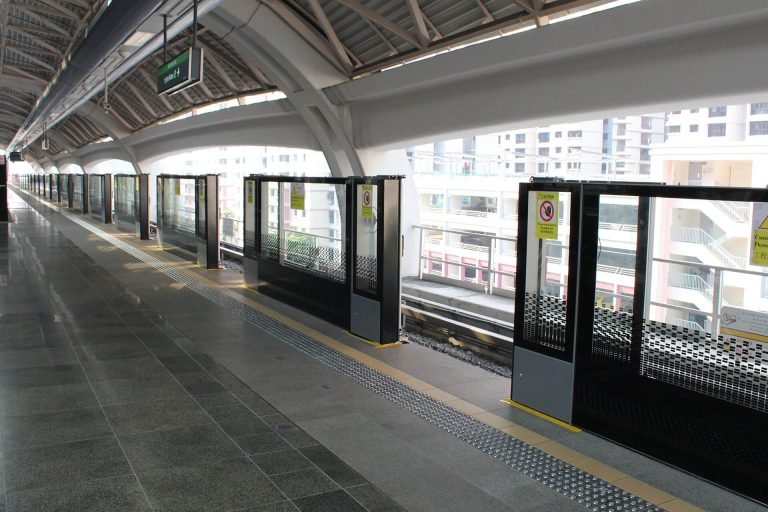
Chennai (Metro Rail News): The joint venture between Panasonic Manufacturing (Beijing) Co. Ltd. and  Pioneer Fil-Med  Pvt. Ltd. has secured a 146.95 crore contract from Chennai Metro. The contract involves supplying and installing Platform Screen Doors for Chennai Metro’s Line 3 and Line 5.

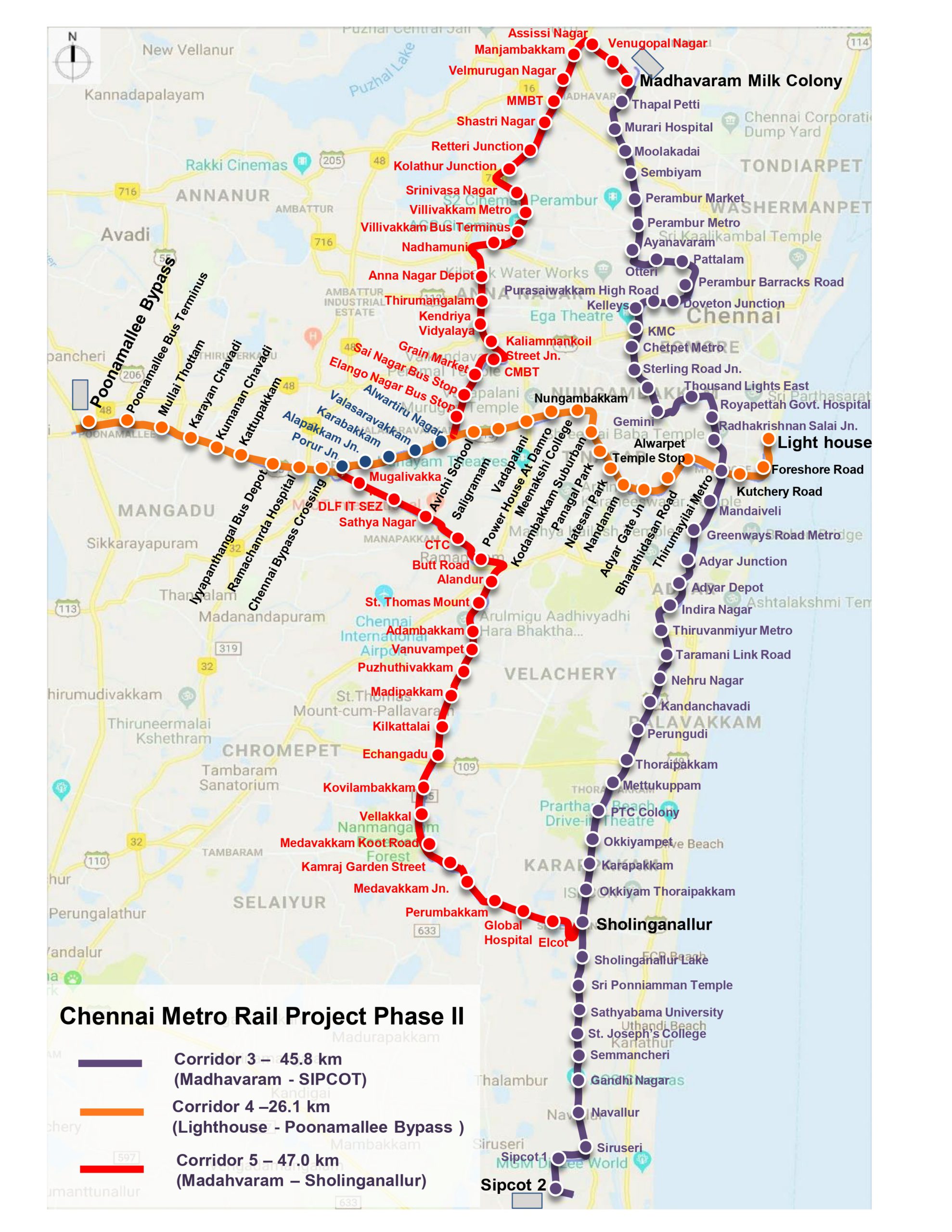
Chennai Metro Phase 2 Map

Line -3 and Line-5 of Chennai Metro will operate in a North-South orientation to link Madhavaram – SIPCOT (45.4 km Line-3) and Madhavaram – Sholinganallur (44.6 km Line-5), Respectively, through both elevated and underground stations. 

The contract’s scope includes the design, manufacture, supply, installation, testing, and commissioning of Platform Screen Doors. 

In Corridor-3, the contractor will install PSDs at 29 underground stations between Madhavaram Depot Station and Tharamani Station.

In Corridor 5, PSDs will be installed at 5 underground stations falling between Kolathur Junction Station and Nathamuni Station.

Final Contract Value: INR 85,36,03,003 + USD 7,392,013 (approx. INR 146,95,66,140.67 or 146.95 crore)

Deadline for the contract: 1465 Days ( approximately four years )

Other contracts for Platform Screen Doors

Another 2 packages by CMRL for installing platform screen doors:

Package ASA12A: In November 2023,  ST Engineering Urban Solutions Ltd. secured this package. Under this contract, ST Engineering is responsible for installing Platform Screen Doors at 10 elevated stations of Line 3 (Sholinganallur Lake – SIPCOT 2). Additionally, they will install PSDs at 29 stations of Line 5 (Grain Market – Elcot).

Package ASA09: The work under this package includes the PSDs at 10 elevated stations of Line-3 (Nehru Nagar – Sholinganallur) and 10 elevated stations of Line-5 (Assissi Nagar – Koyambedu). Currently, the bids are under technical evaluation for this package.

Ongoing development On Line 3 & 5 of Chennai Metro

Line-3’s 29 stations are under construction by DRA – Soma JV Tata Projects Ltd. and Rail Vikas Nigam Ltd. 

Line-5’s five underground stations are under construction by Tata Projects Ltd. 

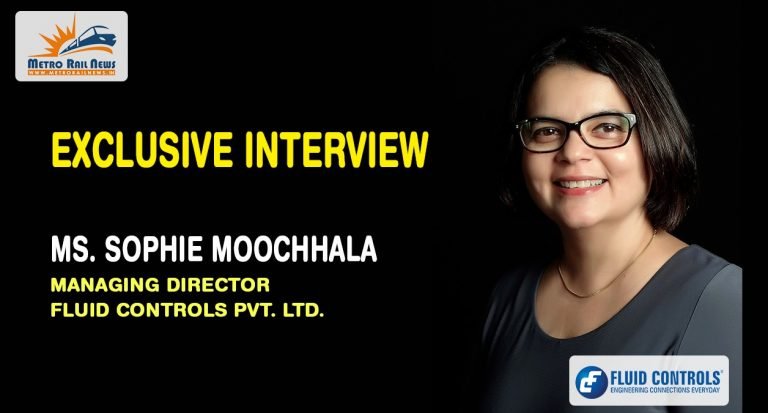
Exclusive interview of Sophie Moochhala on the occasion of International Women’s Day

To celebrate International Women’s Day, our Managing Editor Mr. Narendra Shah had a conversation with Ms Sophie Moochhala – Managing Director – Fluid Controls Private Limited. In which she speaks about the Company business strategy, Atmanirbhar Bharat Policy and Growth in a Post-COVID Situation.

Tell our readers about various innovative products recently developed for Metro & Railway Industries?
Fluid Controls Private Limited was established in 1974 by Dr. Y.E. Moochhala, a Ph.D. from Northwestern University, the USA with a vision to deliver high quality & high-performance products which delight customers. Fluid Controls offers customers comprehensive end-to-end “Make in India” solutions for Rail & Metro brake piping arrangements – from design & engineering services to supply of high-performance products and installation services. From its inception in 1974, Fluid Controls has engaged in original R&D and also has had an ethos of developing indigenous replacements for imported products. Our founder, Dr. Y E Moochhala, after a successful career in the USA decided to return to India because he was a strong believer in a self-reliant India. His idea was to develop high quality, high-performance products to suit local prototype climatic and performance expectations. Today, Fluid Controls is approved as an “In-House R&D unit” by the Department of Scientific & Industrial Research (DSIR), Government of India. Since 2011, we have developed more than 25 new products, which is very much in line with the Fluid Controls vision statement. Adding to our strength in innovating, Fluid Controls has filed its first Global Patent and
is in the process of filing two more patents. Particularly for the Rail & Metro Industry Fluid Controls has developed Across Frame Connectors for connection of pipelines between the shell and bogie for high-speed electric locomotives. These connectors eliminate welding processes and allow for seamless connection of pipes between the shell and bogie. Across Frame connectors also, reduce component parts required to be purchased as they are integrated fitting assemblies. Fluid Controls has also developed an entire range of FlexiGripTM connectors to provide zero-leakage and vibration resistant connections Here are the excerpts from the
interview:- “Success is a multi-faceted word! Professionally, for me, success is to build a brand which is trusted by customers
and which delights customers.” Sophie Moochhala Managing Director Fluid Controls Pvt. Ltd. between misaligned pipes or between pipes of different materials. The triple sealing action of the split ring, washer and O ring provides for a completely leak-proof connection. The split ring also provides superior vibration resistance by ensuring the joint remains in a springing condition. As an ongoing part of product development, Fluid Controls also customizes standard products to suit specific customer requirements.

How do you see the Govt of India’s Atmanirbhar Bharat policy?
Fluid Controls is a “Vocal for Local” MSME organization and we whole-heartedly support the Atmanirbhar Bharat initiative. Domestic manufacturers have the capability – be it in manufacturing, quality, or R&D – to cater to domestic requirements across sectors. In the past, legacy international vendors and lack of firm procurement policies constrained the effective implementation of “Make in India”. Atmanirbhar Bharat, which clearly outlines procurement policies, will go a long way to boost domestic manufacturers, especially in the MSME sector. With our manufacturing and R&D capabilities, Fluid Controls can contribute immensely to provide high quality, high-performance products to all sectors in the move to localize supplies.

Please share some of your value-added, problem-solving product and services offered by Fluid Controls?
A good example of a product we developed is the Fluid Controls Hydraulic Swaging Unit (HSU), which is a tool to ensure that twin ferrule connectors are installed correctly at the site. The unique feature of our HSU is that there is no need for manual intervention in the process. We also offer design and engineering services and have completed conversion projects (from one connector system to another) for several customers.

How Covid-19 outburst the Fluid Control’ business and the step you have taken to overcome it?
During the onset of the Pandemic COVID-19, our primary focus was to ensure the health and safety of our employees, their families, our customers and our business partners. And we had changed the way we approach every task and every activity. We had to adapt our model of operation since face-to-face meetings and interaction were not possible for some months (and we are still work-from-home at our Mumbai office!). We have invested in ERP and Microsoft Teams software to ensure the ease of teamwork and connectivity. To ensure seamless day-to-day operation, each department head would hold a daily telephonic meeting to discuss tasks and the way ahead. We also had to change the way we conducted our external business. During the lockdown period, Fluid Controls engaged with customers via video conferencing and calls. And, to ensure the least disruption in schedules, we have provided regular updates on our business status and order status to them. As many of our customers still do not allow business visits, we continue to have a virtual engagement with them. Once our plant became operational in May 2020, we provided our employees with a safe working environment. Whilst a major part of our staff is still working from home, “Operational Safety” being the primary parameter for the health and safety of people at work in the plant, we have planned our manufacturing with a system and process-focused approach. At Fluid Controls, we “Engineer Connections every day”. And in the time of the COVID-19 pandemic, we learnt how to “Adapt Everyday”!

What is your view on Business Growth in a Post COVID Situation?
I am very optimistic about the post-COVID growth situation and increased Union Budget allocations this year for railways will definitely lead to more business for companies such as ours. In addition, we are very positive that the focus on freight, Metros and RRTS/LRTS networks will result in an increasing demand
for rolling stock.


What are the Metro Projects in which Fluid Controls currently associated?
We are currently associated with projects for Mumbai Metro, Pune Metro, Delhi Metro and Chennai Metro. BEML suppled the First Driverless Metro Train developed in India form Mumbai Metro Line 2A.

What is the role of fluid Controls in the development of this true Atma Nirbhar product?
We are very happy to have been associated with BEML for Mumbai Metro. The Metro cars supplied by BEML have Fluid Controls DIN Single Ferrule connectors installed in the brake piping system. This is a very big achievement for Fluid Controls and we are very proud to have been approved by BEML for this project. Coming from a non-technical background,

how do you manage the most senior management position of an innovative product engineering company?
“Success” is a multi-faceted word! Professionally, for me, success is to build a brand that is trusted by customers and delights customers. At an organizational level, it is to build a team that is motivated, innovative and performs to high expectations. In this context, my having or not having an engineering background doesn’t really matter as I am supported by a team that has stellar engineering credentials.

What are the company’s business strategy and future expansion plan concerning the Metro & Railway market?
Over the years, Fluid Controls has developed comprehensive expertise for manufacturing, by identifying the right materials and ensuring “fit and forget” assembly. For Rail & Metro applications, we offer complete fitment of brake piping components, engineering and site installation services, pre-piped assemblies for easy site fitment, double ferrule fittings, DIN single ferrule fittings, threaded adaptors, Across Frame connectors, FlexiGripTM connectors, quick release connectors, isolation valves and clamps. A key part of our future plans is to tap into the brake piping business for the emerging high-speed train operations and to offer integrated solutions and hose assemblies to our current customer base. We are also focusing on global supplies to Europe, North America and SE Asia


UPMRC floats rolling stock tender for Lucknow Metro Phase 1B

LUCKNOW (Metro Rail News): Uttar Pradesh Metro Rail Corporation Limited has invited a tender for the procurement of 45 standard-gauge metro cars and signalling systems for the Lucknow Metro Phase 1B project. The move marks progress in the development of the upcoming east-west metro corridor in Lucknow city.

Tender Information

Details Information
Tender IDLKRS-02
Tender TypeInternational Competitive Bidding (ICB
Bid SystemSingle Stage Two Envelope (Technical & Financial) 
Tender Fee₹23,600 / – (inclusive of GST) 
Pre-Bidding Meeting20 May 2026 at 15:00 hrs
Bid Submission Window16 June 2026 at 15:00 hrs
Technical Bid Opening17 June 2026 at 15:00 hrs
Completion Period45 months

Scope of work

The contract includes the design, manufacture, and supply of 45 standard-gauge metro cars. It also covers signalling and train control systems for operations. The scope involves testing and commissioning of rolling stock and systems. Training for operations and maintenance staff is also part of the contract. 

Lucknow Metro Phase 1B

The Lucknow Metro Phase 1B project is part of the city’s expansion of east-west corridor (Line 2). It will connect Charbagh Railway Station to Vasant Kunj.

Project Overview

ProjectDetails
Project NameLucknow Metro Phase 1B (Line 2)
CorridorCharbagh Railway Station to Vasant Kunj
Total Length11.165 km
Elevated Section5
Underground Section7
Total Stations12
Underground Stations6.879 km
Elevated Stations4.286 km

Also Read: 2 New Amrit Bharat Express trains launched between Maharashtra and U.P.


Discover how AI is bringing the next phase of sustainable urban rail mobility for Viksit Bharat at InnoMetro 2026, India’s prime exhibition and conference for metro & railways, which is going to be held on 21-22 May 2026 at Bharat Mandapam, New Delhi.

Register Now: https://zma.page/ek9

BAHNVERBAND e. V. Joins InnoMetro 2026 as Official Supporting Association 

DELHI (Metro Rail News): InnoMetro is pleased to announce BAHNVERBAND e. V. has confirmed its participation as an Official Supporting Association for the 6th edition of InnoMetro-Asia’s Leading Expo for Metro & Railways, scheduled to take place on 21-22 May 2026, Bharat Mandapam, Hall no. 4, New Delhi, India.

BAHNVERBAND e. V. is an interdisciplinary professional association that represents the railway and transport industry across Germany, Austria, and Switzerland. The association connects key stakeholders spanning railway technology, transport operations, and transport policy. The association has built a strong network of suppliers and customers across Germany and the wider European market.

The confirmation of support from BAHNVERBAND e. V. signals increasing global recognition of InnoMetro as a credible platform for industry dialogue and engagement. It also highlights the event’s role in facilitating cross-border exchange at a time when India’s metro and regional rail sectors are undergoing rapid expansion.

Official Backing from Indian Railways & Ministry of MSME

Through successive editions, InnoMetro has expanded in scale and institutional participation and established itself as the most credible platform to present innovations for the rail transport industry. The 6th edition has received backing from Indian Railways and the Ministry of Railways, Government of India. The event is also approved under the Procurement and Marketing Support (PMS) Scheme of the Ministry of Micro, Small and Medium Enterprises, which further strengthens InnoMetro’s vision to promote domestic manufacturers and suppliers.

 In addition to this, the leading government organisations comprising  MMRDA, Kochi Metro Rail Limited, Metro Railway, Kolkata, and Mumbai Metro Rail Corporation have confirmed their participation at InnoMetro 2026, which clearly signals the magnitude of the credibility that InnoMetro has earned over the years. 

The 6th edition of InnoMetro is expected to bring together a diverse group of domestic and international participants, who will focus on the emerging technologies, policies, and partnerships that shape the future of urban rail transport.

Noida Metro floats Rs 75.56 cr tender for general consultant for Aqua Line extension

NOIDA (Metro Rail News): Noida Metro Rail Corporation (NMRC) has invited bids for the appointment of a General Consultant (GC) for the elevated sections of the Aqua Line extension projects in Noida and Greater Noida. The estimated cost of the contract is around Rs 75.56 crore. The move indicates progress on the planned expansion of the Aqua Line network. 

Tender Details

InformationDetails
Tender NumberNMRC\Project\NGNEGC\2026\454
Tender TypeSingle Stage Two Packets
Approximate Contract ValueRs 75.56 crore
EMD\Tender Security Rs 75,56,000 
Pre Bidding Meeting12 May 2026, 11:30 AM
Bid Submission Window21 May 2026 (10:00 hrs)  to 28 May 2026 (17:00 HRS)
Technical Bid Opening28 May 2026, 17:30 hrs
Completion Period4 Years

Scope of Work

The General Consultant will give overall consultation for the elevated section of Aqua Lines extensions. The scope includes planning, preliminary tender designs, proof checking of detailed design, procurement, system integration, contract administration, project management, approval of horizontal and vertical alignment, assistance in construction, testing and commissioning of the two extension corridors of Aqua Line. 

About the Aqua Line extension

The extension will cover around 15.133 km of the Aqua Line through 2 corridors. 

  • The first extension of the Aqua Line from Sector 142 to Botanical Garden will be 12.513 km long with 8 stations. 
  • The second extension will cover approximately 2.6 km from Depot Station to Boraki MHT with 2 stations. 

Apart from this, a proposed corridor from Sector 51 to Char Murti Chowk is also under consideration. It will cover around 8 km of elevated sections with 5 stations. 

Also Read: 2 New Amrit Bharat Express trains launched between Maharashtra and U.P.


Discover how AI is bringing the next phase of sustainable urban rail mobility for Viksit Bharat at InnoMetro 2026, India’s prime exhibition and conference for metro & railways, which is going to be held on 21-22 May 2026 at Bharat Mandapam, New Delhi.

Register Now: https://zma.page/ek9

2 New Amrit Bharat Express trains launched between Maharashtra and U.P.

DELHI(Metro Rail News): Two new budget-friendly Amrit Bharat trains were flagged off by PM Modi on April 28, 2026. These new trains are expected to ease commuting for daily passengers, migrant labourers, and pilgrims, enhancing connectivity for both states.

These newly launched trains connect Varanasi to Pune (Hadapsar) and Ayodhya to Mumbai (Lokmanya Tilak Terminus), making it a significant development as Ayodhya and Varanasi are major spiritual destinations and would greatly improve tourism in Maharashtra and attract millions of devotees.   

Banaras-Hadapsar (Pune) Amrit Bharat Express 

Train Numbers:22589 (Banaras-Hadapsar), 22590 (Hadapsar-Banaras)
Time:Approximately 30 hours
Stops20
Launch Date:Regular services started from Banaras on May 2, 2026, and from Hadapsar on May 4, 2026.
Frequency:Daily

Ayodhya-Lokmanya Tilak Terminus (Mumbai) Amrit Bharat Express:

Train Numbers:22111 (Ayodhya-LTT), 22112 (LTT-Ayodhya)
Time:Approximately 26 hours
Stops12
Launch Date:The first regular weekly service from LTT on 5th May, 2026, and from Ayodhya Cantt on May 6, 2026.
Frequency:Operates on a weekly basis, departing from Ayodhya Cantt every Wednesday and LTT every Tuesday.

Features of New Amrit Bharat Express Train:

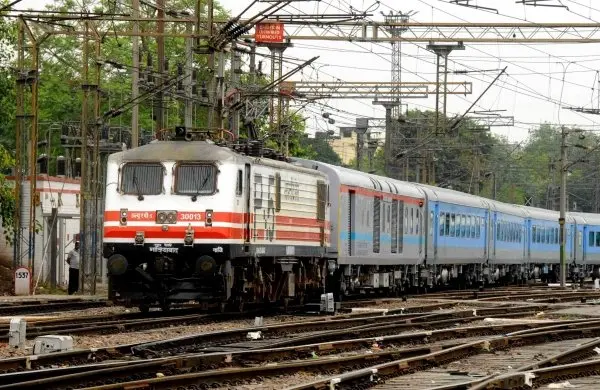
Push-Pull Technology: The train features two aerodynamically designed WAP-5 locomotives (6,000 HP each) at both ends. This configuration provides faster acceleration and deceleration, reducing overall travel time, particularly on curved or speed-restricted sections.

Maximum Speed: It has a design speed potential of 160 kmph, though it typically operates at a maximum permissible speed of 130 kmph.

Jerk-Free Travel: Equipped with semi-permanent/semi-automatic couplers, the train ensures smooth starts and stops, eliminating the jerks commonly experienced in older coaches.

Advanced Safety: Includes the KAVACH automatic train protection system, CCTV surveillance in all coaches, and aerosol-based fire suppression systems in toilets and electrical areas.

Also Read: Pune Metro Line 3 to enter operations in June: PMRDA Commissioner urges to expedite work


Discover how AI is bringing the next phase of sustainable urban rail mobility for Viksit Bharat at InnoMetro 2026, India’s prime exhibition and conference for metro & railways, which is going to be held on 21-22 May 2026 at Bharat Mandapam, New Delhi.

Register Now: https://zma.page/ek9

Jammu to Srinagar in 4:50 hrs, Vande Bharat brings faster travel from May 2

JAMMU (Metro Rail News): A direct Vande Bharat service will now link Jammu Tawi railway station and Srinagar railway station. The train cuts travel time to under 5 hrs across a key mountain corridor. Railway Minister Ashwini Vaishnaw flagged off the service on April 30, 2026. The commercial run is going to begin on 2 May (Today) under Northern Railway. 

Route, distance and travel time

The train will cover about 270 km between Jammu Tawi and Srinagar. The journey will take around 4 hours and 50 minutes. Ashwini Vaishnaw described the service as the first ever for such high altitudes. He expects faster and more reliable travel across the region. 

Services and train numbers

A total of 4 services (two pairs) will run on the route, and this will ensure multiple daily options for passengers.

  • 26401 – 26402
  • 26404 – 26403

Timings

  • 26401 (Jammu Tawi to Srinagar): It will depart at 6:20 AM and arrive at 11:10 AM
  • 26402 (Srinagar to Jammu Tawi): It will depart at 2:00 PM and arrive at 6:50 PM
  • 26404 (Srinagar to Jammu Tawi): It will depart at 8:00 AM and arrive at 12:40 PM
  • 26403 (Jammu Tawi to Srinagar): It will depart at 1:20 PM and arrive at 6:00 PM

Stops on the route

The train will halt at 3 stations

  • Shri Mata Vaishno Devi Katra railway station
  • Reasi railway station 
  • Banihal railway station

Frequency and coaches

The train will have 20 coaches. It includes an AC chair car and an Executive Chair Car.

  • 26401 and 26402 will run daily except on Tuesday
  • 26404 and 26403 will also run daily except on Wednesday

The service earlier ran between Katra and Srinagar. The new extension now connects Jammu city directly with Srinagar. This new link will also reduce travel time and improve connectivity across Jammu and Kashmir. It will offer a faster option for both daily travel and tourism.

Hydrogen train trial completed on Jind-Sonipat route, rollout step closer

HARYANA(Metro Rail News): The first hydrogen-powered train trial on the Jind-Sonipat route in Haryana has been completed successfully. The trial marks a key step as Indian Railways moves towards cleaner transport options. The train runs without emitting smoke or carbon. It positions India as a small group of countries using hydrogen-based rail technology. 

The new train runs on hydrogen fuel instead of diesel or electricity from fossil sources. It produces zero carbon emissions during operation. This makes it one of the cleanest transport options in the rail sector today.

Project overview 

Detailsinformation
RouteJind to Sonipat in Haryana
Developed byIntegral Coach Factory 
Technology Hydrogen powered, Zero-emission system
StatusTrial run completed successfully 

With this development, India moves closer to countries like China, Germany, Sweden and  Japan, where hydrogen trains are already in use.

Why it matters

Indian Railway is one of the largest transport networks in India. Shifting to hydrogen can reduce pollution and cut dependence on fossil fuels. This trail also shows that Indian manufacturers can develop advanced and clean technologies. If this works on a larger scale, it can slowly replace diesel trains on some routes. That means less pollution and a quieter journey for passengers as well.

Also Read: Pune Metro Line 3 to enter operations in June: PMRDA Commissioner urges to expedite work


Discover how AI is bringing the next phase of sustainable urban rail mobility for Viksit Bharat at InnoMetro 2026, India’s prime exhibition and conference for metro & railways, which is going to be held on 21-22 May 2026 at Bharat Mandapam, New Delhi.

Register Now: https://zma.page/ek9

Pune Metro Line 3 to enter operations in June: PMRDA Commissioner urges to expedite work

PUNE(Metro Rail News): In the wake of mounting delays, the Pune Metropolitan Region Development Authority Commissioner, K. Manjulakshmi, conducted a comprehensive inspection of crucial construction sites along the Pune Metro Line 3. The primary objective of this visit was to take stock of on-ground progress and highlight the bottlenecks that have continued to impede the project’s commissioning deadline. 

He urged the contractors to complete the work as soon as possible, without compromising on quality and following safety guidelines. Officials were also asked to remove hurdles and speed up the execution of this project. 

Pune Metro Line 3, also known as the Puneri Metro or the Pink Line, is being developed under a public-private partnership model executed by Pune IT City Metro Rail Limited, a joint venture between the Tata Group and Siemens. When the agreement was first signed by the TATA-Siemens consortium, the project was originally targeted for completion by March 2023. After the construction officially began in November 2021, the scheduled construction date was set for March 2025. Due to large initial setbacks such as land handover process, technical engineering hurdles, and logistical challenges, the launch date has now been pushed to June 15, 2026. This date was recently revised from an earlier target of May 31.

As per IAS Abhijeet Choudhary, the project will open in two phases. Initially, the authorities plan to commission 12 stations in June, followed by rigorous testing. The remaining 11 stations will be put in commercial use by October 2026.

The corridor will use high-tech Alstom Metropolis train sets, which are designed for efficiency in high-density urban environments. Each train consists of 3 coaches with a total passenger capacity of approximately 1,000 people. Once functional, the Metro Line 3 is set to enhance travel reliability for daily commuters and improve urban transportation throughout the city.

Also Read: Delhi Metro orders 90 metro cars for Inderlok-Indraprastha corridor

Also Read: Delhi Metro Phase 5A enters construction phase: DMRC awards ₹1,024 Cr Central Vista Contract to Cemindia


Discover how AI is bringing the next phase of sustainable urban rail mobility for Viksit Bharat at InnoMetro 2026, India’s prime exhibition and conference for metro & railways, which is going to be held on 21-22 May 2026 at Bharat Mandapam, New Delhi.

Register Now: https://zma.page/ek9

Delhi Metro’s Inderlok-Indraprastha line moves ahead: Kalpataru-SOMA JV bags civil contract

DELHI (Metro Rail News): Delhi Metro Rail Corporation (DMRC) has issued the Letter of Acceptance (LOA) to M/s Kalpataru-SOMA Joint Venture for Contract D2C-06, the design and construction of twin tunnels and four underground stations on the Inderlok–Indraprastha Corridor (Magenta Line Extension) of Delhi Metro Phase IV. Earlier, this corridor was proposed to be built as the Green Line extension, but later it was decided to be constructed as an extension of the Magenta Line.

Scope of work: Design and Construction of Twin Tunnel by Shield TBM & by Method other than TBM, Four Underground Stations namely, Dayabasti, Sarai Rohilla, Ajmal Khan Park, Jhandewalan Mandir and Balance Works for Nabi Karim Station with Entry/Exits including Retrieval/Launching Shafts, Architectural Finishing, Water Supply, Sanitary Installation & Drainage Works from Chainage (Down Line) Ch:614.483 mt. To Ch: 7629.531 mt of Inderlok-Indraprastha Corridor of Delhi MRTS Project of Phase-IV. 

Contract at a Glance

Accepted Contract Value
₹1,522 crore
Contract Number
D2C-06 (DMRC/20/IV-140/2025)
Contractor
Kalpataru-SOMA JV
Completion Period
42 months from NTP
Engineer for Contract
CPM-1, DMRC
Tunnel Chainage (Down Line)
Ch: 614.483 m → Ch: 7629.531 m

What Is Being Built: Tunnels Beneath a Living City

Contract D2C-06 is, by any measure, the most complex civil package on the Inderlok–Indraprastha corridor. It spans over 7 km of underground alignment from just north of the Inderlok end through the densely populated precincts of Dayabasti, Sarai Rohilla, the Ajmal Khan Park area, and Jhandewalan before reaching the balance works zone at Nabi Karim.

Delhi Metro Phase 4 – Corridor Overview

Janakpuri West → RK Ashram (Magenta Ext.)
28.92 km | 21 stations
● Under Construction
Aerocity → Tughlakabad (Golden Line)
23.62 km | 16 stations
● Under Construction
Maujpur → Majlis Park (Pink Line Ext.)
12.55 km | 10 stations
● Under Construction
Inderlok → Indraprastha (Magenta Ext.)
12.38 km | —
● Under Construction
Lajpat Nagar → Saket G Block (Golden)
8.39 km | 8 stations
● Under Construction
Rithala → Narela → Kundli (Red Ext.)
26.46 km | 19 stations
● Tendering Stage

Contract D2C-06 is part of the broader Delhi Metro Phase IV programme, approved at a total project cost of ₹46,845 crore. Phase IV’s original three priority corridors (65 km) were joined in March 2024 by the Inderlok–Indraprastha and Lajpat Nagar–Saket G Block corridors, taking the total to 85.86 km. The December 2024 addition of the Rithala–Narela–Kundli corridor (26.46 km) extended Phase IV’s scope further to 112.32 km.

Also Read: Delhi Metro orders 90 metro cars for Inderlok-Indraprastha corridor

Also Read: Delhi Metro Phase 5A enters construction phase: DMRC awards ₹1,024 Cr Central Vista Contract to Cemindia


Discover how AI is bringing the next phase of sustainable urban rail mobility for Viksit Bharat at InnoMetro 2026, India’s prime exhibition and conference for metro & railways, which is going to be held on 21-22 May 2026 at Bharat Mandapam, New Delhi.

Register Now: https://zma.page/ek9

Shri Shalabh Goel takes charge as full- time NCRTC MD after exiting railways

DELHI (Metro Rail News): The central government has cleared the permanent appointment of Shri Shalabh Goel as Managing Director of the National Capital Region Transport Corporation (NCRTC). The decision gives the organisation a full-time leader as it expands rapid rail projects across NCR. The government accepted Goel’s technical resignation from the Ministry of Railways. The order came into effect on April 24, 2026. From the same day, he is treated as retired from railway service. Goel is an officer of the Indian Railway Service of Electrical Engineers (IRSEE). He had been associated with NCRTC earlier, but this decision now places him in a full-time role. His exit from Railways allows him to take up the NCRTC role without holding dual responsibilities. 

The appointment follows a communication from the Ministry of Housing and Urban Affairs. The step signals a clear push to strengthen leadership at NCRTC. Officials believe stable leadership will help the organisation handle multiple projects at once. NCRTC is building and operating regional rapid transit systems across the National Capital Region. Work is ongoing on several corridors, while some sections have already opened for passengers. With Goel now in a permanent role, the focus will remain on execution, coordination, and faster decision-making. 

Ghaziabad eyes 16km metro link to Delhi via Hindon Airport, DPR in progress

DELHI(Metro Rail News): A new metro corridor could soon connect Ghaziabad directly to northeast Delhi. It will improve access to Hindon Civil Terminal. The move targets better last-mile connectivity for lakhs of daily commuters. The Ghaziabad Development Authority (GDA) has formally asked DMRC to prepare a detailed project report (DPR) for the corridor. Officials expect the DPR in the next few months, as reported by The Times of India. 

Project Overview

DetailsInformation
ProjectVaishali – Gokulpuri Metro Corridor
Length16 km
Total stations7
Key routeVaishali – Sahibabad – Mohan Nagar – Pasunda – Hindon Civil terminal – Gagan Vihar – Gokulpuri
AgencyDelhi Metro Rail Corporation (DMRC)
StatusDPR requested

The plan expands on DMRC’s Phase 5 proposal, which earlier proposed a shorter 12-13 km route between Gokulpuri and Arthana. Now, GDA wants to extend it up to Vaishali. This extension will directly connect dense residential areas like Indirapuram, Vasundhara and Vaishali. Officials are saying that more than 5 lakh commuters will benefit. 

Significance of this Corridor

Right now, Hindon Civil Terminal does not have direct metro access. The nearest stations are Dilshad Garden and Major Mohit Sharma Rajindar Nagar (Red Line), which are about 5km away. Passengers are depending on the auto and cabs to reach the airport. Even though Sahibabad RRTS station offers a faster option, reaching it is still a challenge due to poor last – mile connectivity.. So, this new metro line could fix this gap and make travel smoother. 

Other metro plans in Ghaziabad

Ghaziabad Development Authority (GDA) has also pushed  two more corridors, 

  • A 3km extension from Shaheed Sthal New Bus Adda to Ghaziabad Railway Station.
  • The second is the Noida Electronic City to Sahibabad corridor. This 5 km line will cover areas like Indirapuram, Shakti Khand and Vasundhara Sector 5. 

Together, these three projects will add around 25 km to the metro network. The total cost is estimated at about Rs 7,500 crore. It is based on a Rs 300 crore per km cost.

Funding issues and progress

The  Noida Electronic City to Sahibabad project has been delayed since 2018 due to a lack of funds. Its DPR, worth Rs 1,873 crore, is already ready. GDA had earlier asked for Rs 2,441 crore under the 16th Finance Commission. Officials are now saying that things may move forward after the housing ministry agencies prepare DPRs. This could help in getting funds from both the central and state governments. 

If approved, this new metro line could make travel easier in Ghaziabad and give direct metro access to Hindon airport for the first time.

Also Read: Delhi Metro Phase 5A enters construction phase: DMRC awards ₹1,024 Cr Central Vista Contract to Cemindia


Discover how AI is bringing the next phase of sustainable urban rail mobility for Viksit Bharat at InnoMetro 2026, India’s prime exhibition and conference for metro & railways, which is going to be held on 21-22 May 2026 at Bharat Mandapam, New Delhi.

Register Now: https://zma.page/ek9

Delhi Metro Phase 5A enters construction phase: DMRC awards ₹1,024 Cr Central Vista Contract to Cemindia

NEW DELHI (Metro Rail News): Delhi Metro Rail Corporation (DMRC) has formally issued the Letter of Acceptance (LOA) to Cemindia Projects Limited (formerly ITD Cementation India Limited) for Contract EC-03, which involves the design and construction of twin tunnels and two underground stations for the Central Vista Corridor of Delhi Metro Phase V(A). 

The contract covers the construction of twin tunnels (Up and Down Line) by Shield TBM from Shivaji Stadium station to Central Secretariat station, Cut & Cover tunnel between Central Secretariat and Kartavya Bhawan, and two fully underground station Central Secretariat and Kartavya Bhawan, along with entry/exits and connecting subways. The tunnelling section runs from Chainage 31373.276 m to 34216.169 m, passing beneath some of the most sensitive real estate in the country: India Gate, the Supreme Court, Kartavya Path, and ministerial offices in the New Delhi precinct.

The work must be completed within 33 months from the date of Notice to Proceed. PD/Central Vista will serve as the Engineer for the contract.

Contract at a Glance

Accepted Contract Value
₹1,023.82 crore
Contract Number
EC-03 (DMRC/20/V-002/2026)
Contractor
Cemindia Projects Limited
LOA Date
2 April 2026
Completion Period
33 months from NTP
Bid Date
16 March 2026
Bid vs Estimate
₹1,024.80 crore bid vs ₹1,281 crore estimate (~20% lower)

The alignment passes through the very precinct that was recently transformed under the Central Vista Redevelopment Project, Kartavya Path (the rebuilt ceremonial axis), the new Parliament House, and the constellation of ministry buildings collectively known as Kartavya Bhawan. The metro corridor will, for the first time, give office-goers, daily visitors, and tourists direct underground access to these landmarks without surface disruption.

At 2.84 km (Chainage 31373 m to 34216 m), this is a compact but extraordinarily sensitive stretch requiring millimetre-precision TBM navigation past heritage structures and critical government buildings. DMRC notes a specific exclusion zone at Yuge Yugeen Bharat station between chainages 32334.986 m to 32539.986 m, reflecting the complexity of interfacing with parallel construction already underway on the corridor.

The Bigger Picture: Delhi Metro Phase V(A) and the ₹12,014 Crore Expansion

Contract EC-03 is the centrepiece of Delhi Metro Phase V(A), approved by the Delhi Cabinet on 11 February 2026 at an estimated total cost of ₹12,014.91 crore. Phase V(A) adds 16.076 km across three new corridors and 13 stations, 10 underground and 3 elevated.

Corridor Overview

RK Ashram Marg → Indraprastha
9.913 km
Length
8 stations
Stations
Fully Underground
Aerocity → IGI Terminal 1
2.263 km
Length
1 station
Stations
Underground
Tughlakabad → Kalindi Kunj
4.0 km
Length
4 stations
Stations
Elevated

The RK Ashram Marg-Indraprastha corridor, of which Contract EC-03 forms the critical mid-section, will extend the existing Magenta Line (Line 8) deeper into Central Delhi. When Phase IV and Phase V(A) are complete, the Magenta Line will stretch approximately 89 km from Botanical Garden to Inderlok, the longest corridor in the entire Delhi Metro network, with 21 interchange stations and 40 underground stations out of 65 total. The entire Magenta Line is planned to operate as a driverless corridor.

Central Secretariat will become a triple-interchange station, one of only four in the entire network connecting the Yellow Line (Samaypur Badli–HUDA City Centre), the existing Violet Line extension, and the new Phase V(A) Central Vista corridor. For daily commuters and government employees, this station will be transformational.

Also Read: Bengaluru Metro’s non-fare income climbs sharply, touches Rs 145 crore mark


Discover how AI is bringing the next phase of sustainable urban rail mobility for Viksit Bharat at InnoMetro 2026, India’s prime exhibition and conference for metro & railways, which is going to be held on 21-22 May 2026 at Bharat Mandapam, New Delhi.

Register Now: https://zma.page/ek9

Bengaluru Metro’s non-fare income climbs sharply, touches Rs 145 crore mark

BENGALURU(Metro Rail News): Bengaluru Metro Rail Corporation Limited has sharply increased its non-fare revenue. Its Earnings rose from Rs 54 crore in 2024-25 to Rs 145 crore in 2025-26. This strong jump shows how the metro is building income beyond ticket sales. While talking to The Hindu, a senior official said that the growth came from better use of stations, trains and metro spaces for commercial activities. 

How the revenue grew

BMRCL started earning non-fare revenue back in 2012-13. And in recent years, the scale has expanded a lot. Today, income comes from many sources,

  • Shops and kiosks inside stations
  • Advertisement inside and outside the metro premises
  • Branding on trains
  • Parking facilities
  • EV charging and battery swapping stations

Public spaces like Rangoli Metro Art Centre and Bengaluru Santhe have also increased footfall. This has added indirect revenue. Officials say that property development along metro corridors is also bringing in money. 

Advertising emerges as a key factor

Advertising played a huge role in this revenue. It accounts for about 13% to 14% revenue. The ad network now covers most of the metro system:

  • Purple Line: 37 stations and 33 trains carry interior ads. Among these 33 trains, 10 trains have full wraps for advertising.
  • Green Line: 32 stations and 24 trains carry interior ads while 10 trains have full wrap for ads. 

Overall, 68 stations and 57 trains display ads inside. Around 20 trains carry full body advertisements. In June 2025, BMRCL introduced full train wraps for the first time. It signed two long-term deals worth Rs 1.26 crore and Rs 81.49 lakh.

Push for financial stability

The focus on non-fare revenue follows advice from the Fare Fixation Committee (FFC). The panel said metro systems need higher non-ticket income in its 2025 report. In 2023-24, BMRCL earned Rs 573.91 crore from ticket sales. But income from property was only Rs 50.05 crore, which is just about 8.72% of its ticket earnings. 

Higher non-fare revenue gives BMRCL more financial strength. It reduces pressure on ticket prices and supports future expansion. As non-ticket income grows, Bengaluru Metro is moving towards a more stable and self-sustaining model. 


Discover how AI is bringing the next phase of sustainable urban rail mobility for Viksit Bharat at InnoMetro 2026, India’s prime exhibition and conference for metro & railways, which is going to be held on 21-22 May 2026 at Bharat Mandapam, New Delhi.

Register Now: https://zma.page/ek9

Mumbai Metro Line 5 gets state approval: Project cost surges to Rs 18,131 crore

MUMBAI (Metro Rail News): The Maharashtra government has approved a revised plan for Mumbai Metro Line 5 and its extension. The combined 34.2 km network will improve connectivity across Thane, Bhinwandi, Kalyan, and Ulhasnagar. The project cost has now increased to Rs 18,131 crore.

Project Overview

Line
Metro Line 5 & 5A (Extension)
Total Cost
₹18,131 crore (approx)
Total Length
34.2 km metro network
Stations
19
Areas Covered
Thane, Bhiwandi, Kalyan, Ulhasnagar
Authority
MMRDA

The project was first approved in 2017 as a 24.9 km fully elevated corridor with 17 stations. It aimed to connect Thane, Bhiwandi and Kalyan at a cost of Rs 8,416.51 crore. But land and rehabilitation issues, especially in Bhiwandi and Kalyan, forced multiple changes. In 2023, officials decided to shift a key stretch between Dugadi and Kalyan underground, increasing the cost by Rs 1,427crore. In 2025, a review meeting led by the Chief Minister led to another revision. The plan added an underground stretch between Dhamankar Naka and Temghar to reduce disruption. After these changes, the cost of this phase rose to Rs 7,326.13 crore.

Current progress and changes

  • Phase 1 (Thane to Bhiwadi, 11.9 km): It is about to be completed, and there are going to be 6 stations in this phase
  • Phase 2 (Bhiwadi to Durgadi, 10.475 km): With 6 stations, this phase is under planning with mixed alignment. Also, a part of this phase between Dhamankar Naka and Temghar will go underground to avoid congestion.
  • A double-decker structure is planned between Ranjoli Junction and Durgadi (metro and flyover).

Metro Line 5A extension plan

The earlier proposal to extend the line to Kalyan APMC has been dropped. It has been replaced with a new extension, which will come up as a Mumbai Metro Line 5A. The new route will start from Durgadi. It will act as a key interchange point. From here, it will move through growing residential areas such as Asdharwadi and Khadakpada, before reaching Kalyan. The corridor will then extend further towards Ulhasnagar.

Project Snapshot

11.83 km
Total Length
Durgudi → Kalyan → Ulhasnagar
Route
7
Stations
₹4,063 Cr
Total Cost

The change is expected to improve access to fast-growing residential areas.

Local representatives said the project will offer a better travel option for daily commuters who currently depend on congested roads and indirect rail routes. The double-decker flyover design has also been welcomed, as it is expected to ease traffic while making better use of space. Once completed, the corridor is expected to improve connectivity in the region and offer a faster, more reliable alternative to road travel. 

Also Read: Milestone in High Speed Rail Manufacturing: Railway Minister Inaugurates ‘Aditya’ Complex at BEML, Bengaluru


Discover how AI is bringing the next phase of sustainable urban rail mobility for Viksit Bharat at InnoMetro 2026, India’s prime exhibition and conference for metro & railways, which is going to be held on 21-22 May 2026 at Bharat Mandapam, New Delhi.

Register Now: https://zma.page/ek9

Milestone in High Speed Rail Manufacturing: Railway Minister Inaugurates ‘Aditya’ Complex at BEML, Bengaluru

BENGALURU (Metro Rail News): Shri Ashwini Vaishnaw, Hon’ble Union Minister for Railways, Information & Broadcasting, and Electronics & Information Technology, visited the BEML Tippasandra Campus in Bengaluru to inaugurate Aditya, a specialised complex dedicated to the manufacturing of high-speed rail. During the visit, the Minister emphasised that high-speed rail technology is incredibly complex and intricate, noting that its development within our country marks a significant milestone for indigenous engineering.

WhatsAppImage2026 04 25at16.58.53BWTK

The newly inaugurated Aditya complex is currently designed for the development of B-28 coaches. The Minister highlighted the transformative power of high-speed rail, stating that the advent of these trains will cause major cities to be seen as extensions of one another. He cited the example of the travel time between Chennai and Bengaluru which is expected to drop to just 73 minutes, effectively making the two cities part of a single integrated hub.

New Rail Services to Start Soon

Mumbai and Bengaluru: The Minister said that connectivity will be enhanced by the introduction of two new services. A new Mail Express featuring LHB coaches will be introduced via Hubli, and a Vande Bharat Sleeper Express is scheduled to commence operations soon. 

Addressing regional connectivity, the Minister confirmed that the Vande Bharat service between Mangaluru and Bengaluru will be launched very soon He emphasised that the planning for this service has duly taken into consideration the linking of Madgaon and other coastal cities of Karnataka prior to implementation. Technical hurdles have been cleared, including the completion of electrification on the Hassan-Mangaluru section and the integration of Automated Emergency Braking (AEB) systems for safety on steep coastal gradients.

The Minister concluded the visit by praising the engineering talent at the Tippasandra facility, stating that their work on the next generation of rolling stock is central to the vision of a Developed India. He reaffirmed the government’s commitment to balancing massive infrastructure growth with environmental sustainability and public awareness.

Source: PIB Press Release


Discover how AI is bringing the next phase of sustainable urban rail mobility for Viksit Bharat at InnoMetro 2026, India’s prime exhibition and conference for metro & railways, which is going to be held on 21-22 May 2026 at Bharat Mandapam, New Delhi.

Register Now: https://zma.page/ek9