



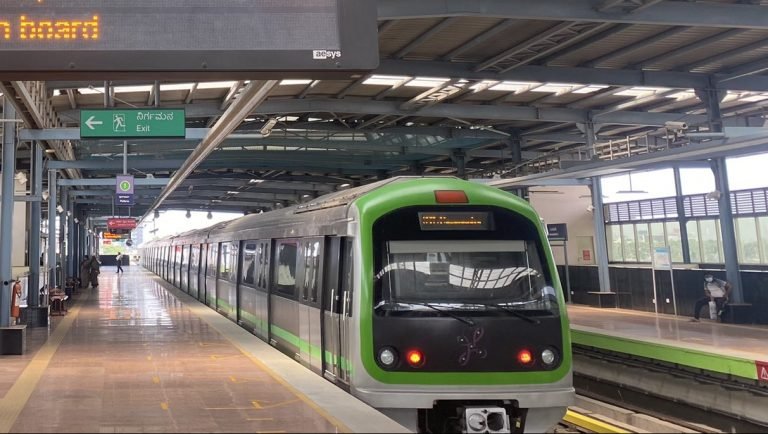
Bangalore (Metro Rail News): Bangalore Metro Phase 2 is set to introduce fully driverless operations under Grade of Automation 4 (GoA4) on the Pink and Blue Lines, marking a major leap in the city’s public transport.
To make train-to-train communication stronger and more reliable, Alstom is integrating advanced AI into its CBTC signalling system. The stronger the communication, the faster and smoother the service becomes. This AI-powered upgrade will support completely unattended train operations while adding predictive maintenance and real-time asset monitoring, making the network safer, more efficient and ready for higher capacity.
Alstom’s Digital Experience Centre in Bangalore has emerged as the company’s primary global base for designing and developing AI-integrated Communications-Based Train Control (CBTC) and signalling solutions. Driverless metro operations are in a trial stage in Delhi Metro Phase IV and several other networks around the world.
Initially, staff may still be present on trains and at stations to ensure smooth operations. The signalling system can technically support 90-second headways on straight sections of track. However, civil infrastructure, operational requirements, land availability and the level of service planned by the operator also influence what is practical.
Get the Daily Metro & Rail Brief
Join 125,000+ metro and rail professionals. Project updates, new tenders and contract awards from across India, in your inbox every day.
Alstom is handling the complete end-to-end signalling engineering work for Bangalore Metro. The train-to-train communication technology being used in Bangalore is already in commercial operation in France and China, said Puneet Srivastava, Alstom India’s Managing Director for Signalling and Infrastructure, in an interview with Deccan Herald.
AI will help train operators decide the right speed, manage services and quickly respond to changing conditions by analysing large amounts of real-time data. It will also allow passengers to spot and choose less crowded coaches.
Non-safety AI tools for predictive maintenance, dynamic speed profiling and passenger crowd forecasting are added through the Mastria platform. These features improve efficiency without interfering with the core safety systems that prevent collisions and handle emergency braking.
AI provides operators with a clear real-time view of the entire network, allowing trains to be dispatched automatically and delays to be reduced. Predictive systems monitor equipment health around the clock so that maintenance teams can fix potential problems before they disrupt services. Automation also helps minimise human error in setting routes, applying emergency brakes and operating platform screen doors.
Alstom’s Urbalis CBTC technology already powers large driverless networks such as the Riyadh Metro and is now being rolled out across Bangalore Metro Phase 2. The Bangalore centre employs a major share of the nearly 4,000 signalling engineers based in India, strengthening the city’s position as a key technology development hub for the company.
Project Overview