



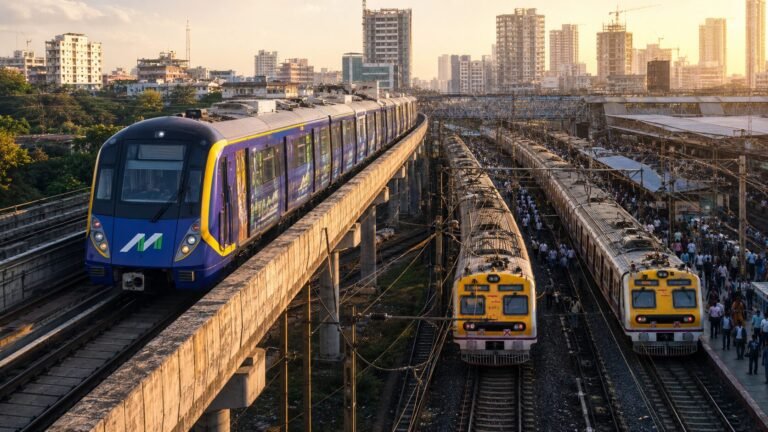
MUMBAI (Metro Rail News): Mumbai’s suburban railway fleet is about to undergo a significant change, with 238 metro-like trains expected to start service in 2027. Chief Minister Devendra Fadnavis announced that the entire suburban fleet will shift to the new format by March 2030. The new trains will include features like automatic doors, air-conditioning, improved cleanliness, and better passenger amenities for Mumbai’s busy local train network.
238 Metro-like trains to enter service from 2027
Fadnavis stated that the Centre has approved producing suburban trains using the design and features of Metro trains. These trains will be made at facilities that also produce modern rolling stock, including Vande Bharat trains. The first 238 metro-like suburban trains should be introduced in 2027. The government aims to convert the entire suburban fleet by March 2030.
This announcement came during the launch of several MMRDA infrastructure projects in Mumbai, which included opening of the Chembur Metro Station on Mumbai Metro Line 2B.
Get the Daily Metro & Rail Brief
Join 125,000+ metro and rail professionals. Project updates, new tenders and contract awards from across India, in your inbox every day.
The positive case: Why this could be a game changer
Mumbai’s suburban railway currently serves millions of passengers each day. According to the Indian Express report, nearly 127 million passengers travelled on Mumbai Suburban Rail in January 2026. Upgrading the trains could significantly enhance the daily travel experience for many commuters.
- Metro-style comfort without changing travel habits: Passengers wouldn’t need to change their usual travel habits to take advantage of this upgrade. Features like air-conditioning, automatic doors, and improved interiors could provide a Metro-like experience to the suburban network while keeping the same routes and reach of local trains.
- Higher value from existing infrastructure: The plan also allows Mumbai to enhance its current railway system instead of solely depending on new Metro infrastructure to meet growing travel demand. With the railway already covering a vast network, modern trains could increase the value of that system.
The negative case: Could this impact Metro ridership?
Mumbai has invested heavily in expanding its Metro network. New corridors are gradually attracting passengers and providing alternative routes to the suburban railway. However, the Metro will face competition from a suburban system that already offers extensive coverage and a large daily user base.
- Why switch if locals become Metro-like? : If local trains provide air-conditioning, automatic doors, and enhanced passenger facilities, some commuters might find fewer reasons to switch to Metro services, especially when both networks cover similar areas. This issue could be more relevant on routes where Metro and suburban railway stations are close together or serve overlapping travel markets.
Mumbai’s challenge will be to ensure that its suburban railway and metro system compliment each other instead of competing unnecessarily. The two system serve different purposes, but their passenger areas can overlap. Interchange facilities, coordinated planning, and clear route specialization could help both networks attract and distribute passengers more effectively.
Also Read: Mumbai Metro: CM Devendra Fadnavis to inaugurate Chembur Metro Station on Line 2B
Project Overview