Trending News

Chennai Metro: Panasonic-Pioneer JV Bags PSD Contract of Line 3 & 5

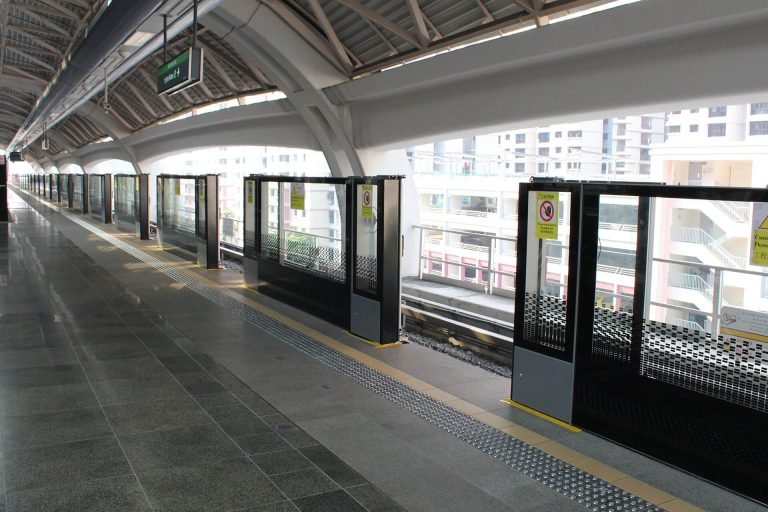
Chennai (Metro Rail News): The joint venture between Panasonic Manufacturing (Beijing) Co. Ltd. and  Pioneer Fil-Med  Pvt. Ltd. has secured a 146.95 crore contract from Chennai Metro. The contract involves supplying and installing Platform Screen Doors for Chennai Metro’s Line 3 and Line 5.

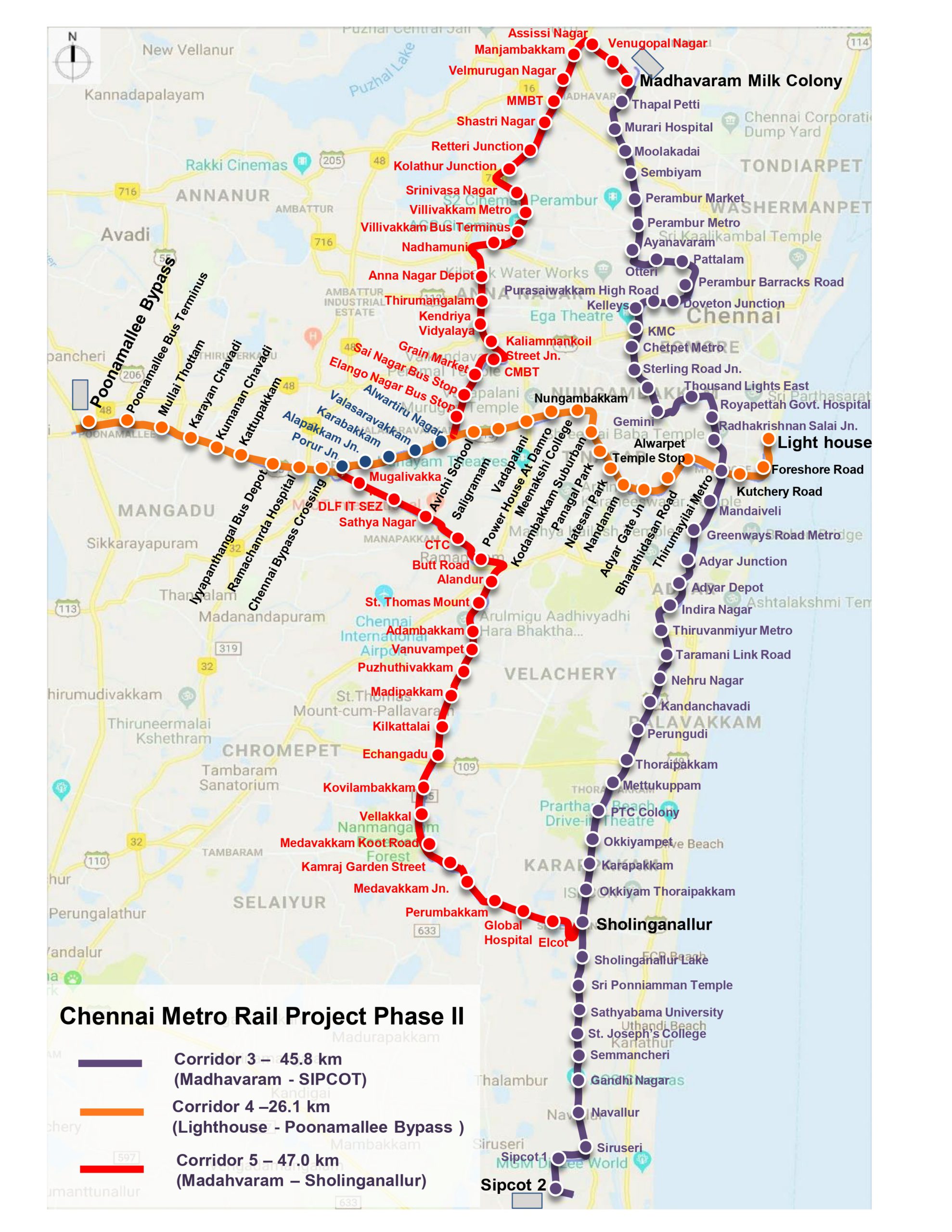
Chennai Metro Phase 2 Map

Line -3 and Line-5 of Chennai Metro will operate in a North-South orientation to link Madhavaram – SIPCOT (45.4 km Line-3) and Madhavaram – Sholinganallur (44.6 km Line-5), Respectively, through both elevated and underground stations. 

The contract’s scope includes the design, manufacture, supply, installation, testing, and commissioning of Platform Screen Doors. 

In Corridor-3, the contractor will install PSDs at 29 underground stations between Madhavaram Depot Station and Tharamani Station.

In Corridor 5, PSDs will be installed at 5 underground stations falling between Kolathur Junction Station and Nathamuni Station.

Final Contract Value: INR 85,36,03,003 + USD 7,392,013 (approx. INR 146,95,66,140.67 or 146.95 crore)

Deadline for the contract: 1465 Days ( approximately four years )

Other contracts for Platform Screen Doors

Another 2 packages by CMRL for installing platform screen doors:

Package ASA12A: In November 2023,  ST Engineering Urban Solutions Ltd. secured this package. Under this contract, ST Engineering is responsible for installing Platform Screen Doors at 10 elevated stations of Line 3 (Sholinganallur Lake – SIPCOT 2). Additionally, they will install PSDs at 29 stations of Line 5 (Grain Market – Elcot).

Package ASA09: The work under this package includes the PSDs at 10 elevated stations of Line-3 (Nehru Nagar – Sholinganallur) and 10 elevated stations of Line-5 (Assissi Nagar – Koyambedu). Currently, the bids are under technical evaluation for this package.

Ongoing development On Line 3 & 5 of Chennai Metro

Line-3’s 29 stations are under construction by DRA – Soma JV Tata Projects Ltd. and Rail Vikas Nigam Ltd. 

Line-5’s five underground stations are under construction by Tata Projects Ltd. 

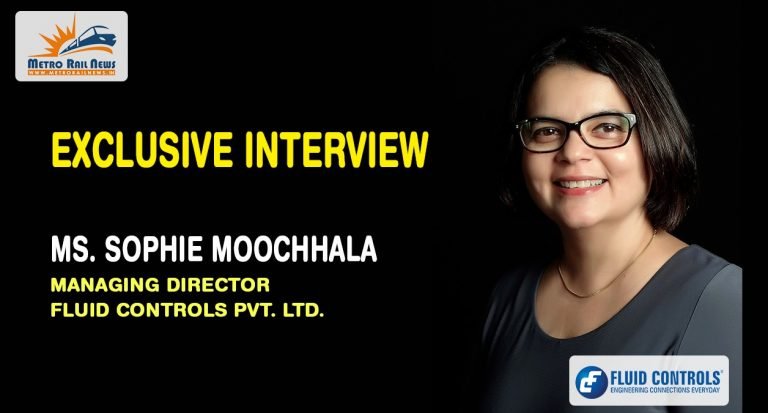
Exclusive interview of Sophie Moochhala on the occasion of International Women’s Day

To celebrate International Women’s Day, our Managing Editor Mr. Narendra Shah had a conversation with Ms Sophie Moochhala – Managing Director – Fluid Controls Private Limited. In which she speaks about the Company business strategy, Atmanirbhar Bharat Policy and Growth in a Post-COVID Situation.

Tell our readers about various innovative products recently developed for Metro & Railway Industries?
Fluid Controls Private Limited was established in 1974 by Dr. Y.E. Moochhala, a Ph.D. from Northwestern University, the USA with a vision to deliver high quality & high-performance products which delight customers. Fluid Controls offers customers comprehensive end-to-end “Make in India” solutions for Rail & Metro brake piping arrangements – from design & engineering services to supply of high-performance products and installation services. From its inception in 1974, Fluid Controls has engaged in original R&D and also has had an ethos of developing indigenous replacements for imported products. Our founder, Dr. Y E Moochhala, after a successful career in the USA decided to return to India because he was a strong believer in a self-reliant India. His idea was to develop high quality, high-performance products to suit local prototype climatic and performance expectations. Today, Fluid Controls is approved as an “In-House R&D unit” by the Department of Scientific & Industrial Research (DSIR), Government of India. Since 2011, we have developed more than 25 new products, which is very much in line with the Fluid Controls vision statement. Adding to our strength in innovating, Fluid Controls has filed its first Global Patent and
is in the process of filing two more patents. Particularly for the Rail & Metro Industry Fluid Controls has developed Across Frame Connectors for connection of pipelines between the shell and bogie for high-speed electric locomotives. These connectors eliminate welding processes and allow for seamless connection of pipes between the shell and bogie. Across Frame connectors also, reduce component parts required to be purchased as they are integrated fitting assemblies. Fluid Controls has also developed an entire range of FlexiGripTM connectors to provide zero-leakage and vibration resistant connections Here are the excerpts from the
interview:- “Success is a multi-faceted word! Professionally, for me, success is to build a brand which is trusted by customers
and which delights customers.” Sophie Moochhala Managing Director Fluid Controls Pvt. Ltd. between misaligned pipes or between pipes of different materials. The triple sealing action of the split ring, washer and O ring provides for a completely leak-proof connection. The split ring also provides superior vibration resistance by ensuring the joint remains in a springing condition. As an ongoing part of product development, Fluid Controls also customizes standard products to suit specific customer requirements.

How do you see the Govt of India’s Atmanirbhar Bharat policy?
Fluid Controls is a “Vocal for Local” MSME organization and we whole-heartedly support the Atmanirbhar Bharat initiative. Domestic manufacturers have the capability – be it in manufacturing, quality, or R&D – to cater to domestic requirements across sectors. In the past, legacy international vendors and lack of firm procurement policies constrained the effective implementation of “Make in India”. Atmanirbhar Bharat, which clearly outlines procurement policies, will go a long way to boost domestic manufacturers, especially in the MSME sector. With our manufacturing and R&D capabilities, Fluid Controls can contribute immensely to provide high quality, high-performance products to all sectors in the move to localize supplies.

Please share some of your value-added, problem-solving product and services offered by Fluid Controls?
A good example of a product we developed is the Fluid Controls Hydraulic Swaging Unit (HSU), which is a tool to ensure that twin ferrule connectors are installed correctly at the site. The unique feature of our HSU is that there is no need for manual intervention in the process. We also offer design and engineering services and have completed conversion projects (from one connector system to another) for several customers.

How Covid-19 outburst the Fluid Control’ business and the step you have taken to overcome it?
During the onset of the Pandemic COVID-19, our primary focus was to ensure the health and safety of our employees, their families, our customers and our business partners. And we had changed the way we approach every task and every activity. We had to adapt our model of operation since face-to-face meetings and interaction were not possible for some months (and we are still work-from-home at our Mumbai office!). We have invested in ERP and Microsoft Teams software to ensure the ease of teamwork and connectivity. To ensure seamless day-to-day operation, each department head would hold a daily telephonic meeting to discuss tasks and the way ahead. We also had to change the way we conducted our external business. During the lockdown period, Fluid Controls engaged with customers via video conferencing and calls. And, to ensure the least disruption in schedules, we have provided regular updates on our business status and order status to them. As many of our customers still do not allow business visits, we continue to have a virtual engagement with them. Once our plant became operational in May 2020, we provided our employees with a safe working environment. Whilst a major part of our staff is still working from home, “Operational Safety” being the primary parameter for the health and safety of people at work in the plant, we have planned our manufacturing with a system and process-focused approach. At Fluid Controls, we “Engineer Connections every day”. And in the time of the COVID-19 pandemic, we learnt how to “Adapt Everyday”!

What is your view on Business Growth in a Post COVID Situation?
I am very optimistic about the post-COVID growth situation and increased Union Budget allocations this year for railways will definitely lead to more business for companies such as ours. In addition, we are very positive that the focus on freight, Metros and RRTS/LRTS networks will result in an increasing demand
for rolling stock.


What are the Metro Projects in which Fluid Controls currently associated?
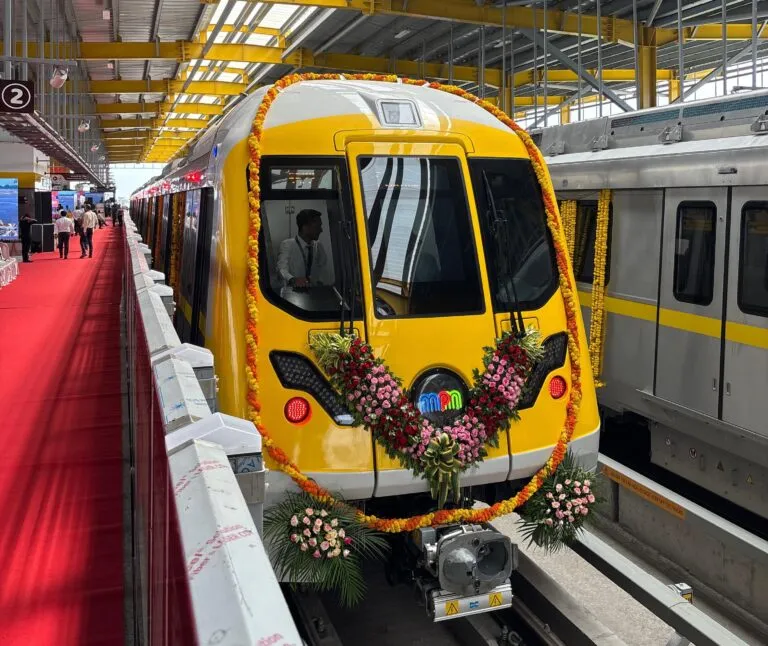
We are currently associated with projects for Mumbai Metro, Pune Metro, Delhi Metro and Chennai Metro. BEML suppled the First Driverless Metro Train developed in India form Mumbai Metro Line 2A.

What is the role of fluid Controls in the development of this true Atma Nirbhar product?
We are very happy to have been associated with BEML for Mumbai Metro. The Metro cars supplied by BEML have Fluid Controls DIN Single Ferrule connectors installed in the brake piping system. This is a very big achievement for Fluid Controls and we are very proud to have been approved by BEML for this project. Coming from a non-technical background,

how do you manage the most senior management position of an innovative product engineering company?
“Success” is a multi-faceted word! Professionally, for me, success is to build a brand that is trusted by customers and delights customers. At an organizational level, it is to build a team that is motivated, innovative and performs to high expectations. In this context, my having or not having an engineering background doesn’t really matter as I am supported by a team that has stellar engineering credentials.

What are the company’s business strategy and future expansion plan concerning the Metro & Railway market?
Over the years, Fluid Controls has developed comprehensive expertise for manufacturing, by identifying the right materials and ensuring “fit and forget” assembly. For Rail & Metro applications, we offer complete fitment of brake piping components, engineering and site installation services, pre-piped assemblies for easy site fitment, double ferrule fittings, DIN single ferrule fittings, threaded adaptors, Across Frame connectors, FlexiGripTM connectors, quick release connectors, isolation valves and clamps. A key part of our future plans is to tap into the brake piping business for the emerging high-speed train operations and to offer integrated solutions and hose assemblies to our current customer base. We are also focusing on global supplies to Europe, North America and SE Asia


Kolkata Metro eyes 130 km network as ridership and revenue continue to rise 

KOLKATA (Metro Rail News): Kolkata Metro is preparing for a significant expansion. The network is expected to reach around 130 km in the coming years. Metro Railway General Manager Prem Sagar Gupta noted the increase in passenger numbers and earnings as the system grows.  

Gupta shared the expansion plans during his Independence Day speech at Metro Rail Bhavan. He also reviewed the Kolkata Metro’s recent operational and financial performance.  

Kolkata Metro network expansion planned 

The Kolkata Metro currently operates across various corridors. Several new sections are under construction or in development. Gupta mentioned that the network should expand to about 130 km soon. This expansion will extend Metro services throughout Kolkata and neighboring areas.

Several projects are already underway. The Joka to Esplanade corridor, part of the Purple Line, and the Orange Line linking New Garia to the airport are among them. The expansion will provide more options for travel on the road and suburban rail, especially as demand in the city increases.  

Kolkata Metro carried 23.60 cr passengers in 2025-26 

Passenger numbers remain strong. According to Gupta, Kolkata Metro transported 23.60 crore passengers during the 2025-26 period. This statistic shows the rising dependence on Metro services for daily commutes in the city.  

The network is also experiencing increased revenue. Metro Railway earned ₹166 crore between April and July 2026. Gupta stated this amount is 34% higher than the revenue from the same period the previous year.  

Digital ticketing gains ground  

The Kolkata Metro is also seeing a rise in the use of digital payment and ticketing options. Passengers can use digital platforms to:  

  • Purchase tokens and smart cards  
  • Buy QR-based tickets  
  • Recharge smart cards  
  • Access Metro ticketing services through the Aamar Kolkata Metro app  

The app is available on both the Google Play Store and Apple’s App Store. This shift toward digital ticketing is expected to lessen reliance on physical counters and make ticket purchases easier during busy times.  

Along with the network expansion, Gupta mentioned that Metro Railway is working to improve operational safety, passenger amenities, and service reliability. This focus will be important as the network grows and serves more passengers.

Also Read: Kolkata Metro Orange Line clears 6 year Chingrighata delay

Two Foot Overbridges near Gurugram Sector 9 &10 to be dismantled for Metro corridor

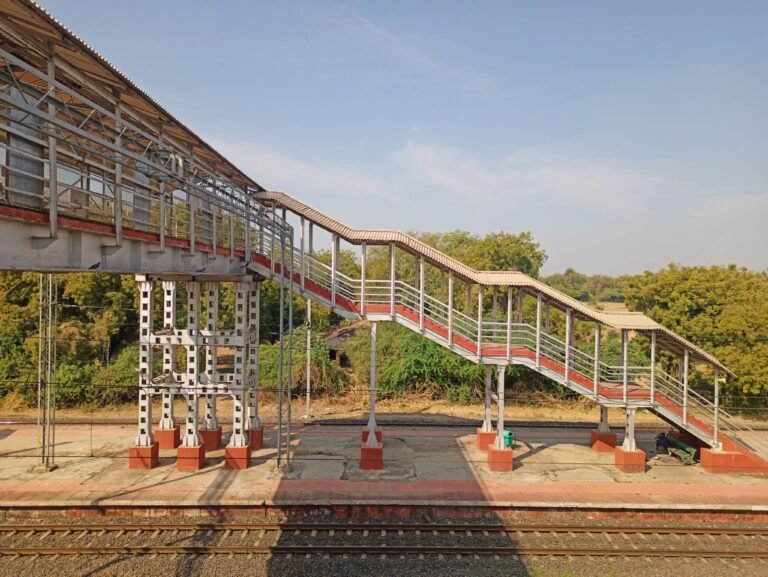
GURUGRAM (Metro Rail News): The Gurugram Metropolitan Development Authority (GMDA) has given formal permission to Gurugram Metro Rail Limited (GMRL) to dismantle two foot overbridges (FOBs) that stand in the way of the upcoming metro line.

GMRL had requested the removal in June 2026, saying the structures were blocking the metro alignment and could delay construction. GMDA granted the approval on August 12, 2026.

One foot overbridge is near Alpine Public School in Sector 9, and the other is near Greenwood Public School in Sector 10, close to Basai Pond. Both bridges lie on the stretch between Umang Bhardwaj Chowk and Basai Flyover, where a metro station is also planned.

These FOBs were built only three years ago, in 2023, as part of a larger ₹114-crore road project. That package included road widening between Umang Bhardwaj Chowk and the Dwarka Expressway and some other projects. The removal will temporarily affect pedestrians, especially students and residents of Sectors 9, 9A, 10, 37C, and 37D who currently use these bridges for safe road crossing.

GMRL will bear the full cost of dismantling the existing FOBs. The metro agency is also responsible for storing and transporting the materials, with no financial burden on GMDA.

In return, GMRL is required to build and commission two new replacement FOBs along the same metro corridor. The exact locations of the new bridges must be approved by GMDA to ensure continuous and safe pedestrian access.

The Gurugram Metro will run about 28.5 km from Millennium City Centre to Cyber City and is being built in two phases. The World Bank recently approved a ₹1,409 crore loan for Phase II of the project. This step clears the path for metro construction while ensuring pedestrian facilities are restored in the same area.

Also Read: Flying Train: China’s Ultra-High Speed Train reaches 800 kmph in 5.3 seconds

Flying Train: China’s Ultra-High Speed Train reaches 800 kmph in 5.3 seconds

Metro Rail News: An Ultra-High Speed Train made using ‘Maglev’ technology has recorded the fastest speed during a trial run in China. It reached a record speed of 800 kmph in just 5.3 seconds breaking its own previous record. This feat was achieved on a one kilometre test track at Donghu Laboratory of China’s Hubei province. The Maglev train uses magnetic levitation technology to slightly lift the train above ground level and thereby removing friction from the wheels.

The train accelerated to the speed of 800 kmph in 5.3 seconds and then successfully came to halt over the next 200 meters, demonstrating a highly impressive braking system. 

This was the third time in the last six months that this train broke the world record. In the first test in June 2025, it reached the speed of 650 kmph in 7 seconds. In the subsequent trials it reached 700 kmph and 798 kmph respectively while decreasing the acceleration time.

Ultra-High Speed ‘Maglev’ Trains

The conventional high-speed trains could not accelerate beyond a certain speed due to friction created by wheel and track contact and the air resistance. This backdrop paved the way for Maglev trains, the world’s fastest trains. 

Magnetic Levitation or ‘Maglev’ is a technology that uses magnetic forces to lift the train at slightly above the ground level. This eliminates the physical contact between the train and the track. The technology enables the train to travel at a much higher speed than the conventional high-speed trains. 

At present, these Maglev trains are running successfully across three countries, China, Japan and South Korea. The first commercial high-speed maglev train was launched in Shanghai, China in 2003.

Read more about Maglev Trains in this article: Evolving High Speed Rail: The Maglev and Hyperloop Era

Major boost for India’s logistics: First Vande Bharat freight train completes its  trial run at 130 km/h

NEW DELHI (Metro Rail News): India’s first Vande Bharat freight train has successfully completed a high-speed trial at 130 km/h. The test took place on the Kota-Rohal Khurd section of the West Central Railway.

Technical teams from the Integral Coach Factory (ICF) in Chennai and the Research Designs and Standards Organisation (RDSO) supervised the run.

Unlike traditional freight trains that use a separate locomotive pulling wagons, this Vande Bharat freight version uses a distributed-power trainset design, the same modern platform seen in passenger Vande Bharat trains. Power is spread across the coaches, allowing smoother and more efficient performance.

Under loaded conditions, engineers evaluated electrical performance and traction, braking system and jerk levels, regenerative braking and thermal capacity. They also evaluated other

dynamics such as suspension, acceleration, and while carrying heavy cargo.

Vande Bharat Freight Train: a new corridor for Indian Railways and Logistics

This train is built for express freight and time-sensitive cargo such as parcels, e-commerce goods, and perishables. It offers a faster, more reliable, and greener option compared to long-haul trucks by using India’s existing electrified railway network. By delivering goods more quickly and efficiently, the Vande Bharat freight train can help Indian Railways gain a bigger share of the fast-moving logistics market.

The 130 km/h run was a technical evaluation test only. The train has not been launched for commercial service yet. Further technical checks and safety certifications are required before it can start regular operations.

This successful trial marks an important step toward modern, high-speed freight movement on Indian Railways.

Also Read: Kolkata Metro Orange Line clears 6 year Chingrighata delay

Kolkata Metro Orange Line clears 6 year Chingrighata delay

KOLKATA (Metro Rail News): Kolkata Metro Orange Line has overcome a major construction challenge at Chingrighata after more than six years of delays. Completing the 366-meter viaduct gap could now allow Metro services between New Garia and Sector V. 

Rail Vikas Nigam Ltd (RVNL) is handling the 32-kilometer New Garia-Airport corridor. On Sunday, they placed the final 31-meter concrete deck slab at Chingrighata. This viaduct work closes a long-standing gap at one of the busiest intersections on the route.

Chingrighata work completed in 90 days

The construction team finished launching the girder at the intersection in about 90 days. The new viaduct rises around 12 meters above the road. RVNL hoisted the national flag on the newly completed viaduct on Saturday to celebrate this construction milestone. Finishing this section is significant because Chingrighata was one of the biggest obstacles to the Kolkata Metro’s Orange Line progress.

New Garia-Sector V services could start by December

General Manager of Kolkata Metro, Prem Sagar Gupta recently mentioned that the organization is working toward a December 31 deadline to open the Beleghata (Metropolitan), IT Centre (Sector V) section. Once this section opens, commuters could travel from New Garia to Sector V in about 30 minutes. The Orange Line is part of the larger 32-kilometer New Garia-Airport Metro corridor, which RVNL is implementing.

How the Chingrighata bottleneck was resolved 

Construction at the intersection faced several technical and administrative challenges. The main issue focused on Pier 318, which was planned near the center of the Chingrighata crossing. The timeline shows the prolonged delays:

  • 2020: Construction work at Chingrighata faced difficulties.  
  • August 2020: IIT Kharagpur approved the design for the proposed Pier 318.  
  • May 2023: The state government issued the NOC for constructing the pier.  
  • December 2024: RVNL completed a new road that helped divert traffic during construction.  
  • February 2, 2025: RVNL awaited a traffic block to carry out the needed work.  
  • Mid-May 2026: Concrete girders were erected across the crossing over two weekends.  
  • August 2026: The final deck slab was placed, completing the 366-meter viaduct gap.

Police clearance was another hurdle

Even with technical approvals and the state NOC, RVNL could not immediately continue with construction. Traffic clearance from Kolkata Police was delayed for about 15 months. This matter also arose before the Calcutta High Court, which frequently sought updates on the situation. The eventual traffic arrangements enabled RVNL to carry out the girder launching and finish the remaining viaduct work.

Clearing the Chingrighata bottleneck removes one of the longest-running construction challenges for the Orange Line. If the remaining work and approvals stay on schedule, the New Garia, Sector V section could offer a much quicker connection between south Kolkata and the city’s eastern IT and business hub.

Also Read: Big Breakthrough for Kolkata Metro’s Purple Line as TBM Divya Reaches Victoria Metro Station 

Chicken’s Neck corridor to get 4th railway line on Malda-New Jalpaiguri section

NEW DELHI (Metro Rail News): The Central Government has approved the construction of a fourth railway line through the strategically critical Siliguri Corridor , which is also known as Chicken’s Neck corridor.

The fourth line was approved in Malda – New Jalpaiguri section. The project was initially proposed as a third rail line, but the Ministry of Railways’ approval has been granted for the fourth line as well to significantly boost carrying capacity for both passenger and freight traffic. 

The Chicken’s neck corridor is a 20-22 km narrow strip of land in West Bengal . It is the sole land corridor connecting the eight Northeastern states with the rest of mainland India. Expanding rail infrastructure here enhances national security, logistical resilience, and regional trade. 

The plans for underground rail line stretch were started in February onwards. Railway Minister Shri Ashwini Vaishnav said about the special plans for Chicken’s Neck corridor connectivity while outlining the railway ministry’s budget allocations for FY 2026-2027.

Also Read: Bangalore Metro Pink Line misses 15th Aug deadline despite RDSO’s approval for rolling stock

Bangalore Metro Pink Line misses 15th Aug deadline despite RDSO’s approval for rolling stock

BANGALORE (Metro Rail News): Bangalore Metro Rail Corporation Limited (BMRCL) has received the interim speed certificate from Research, Design and Standards Organisation (RDSO) for the rolling stock of the upcoming Pink Line. This certification came after the successful execution of the necessary trials on the Pink Line from Kalena Agrahara to Tavarekere on Wednesday (12th August). Despite this the Pink Line has missed the deadline for 15th August. The project is now expected to open soon after the CMRS inspection.

The Chief Public Relation Officer (CPRO) of BMRCL informed on Thursday (13th August) that the new rolling stock of the pink line has gone through the Oscillation and Emergency Brake Distance Trial. The trials were successfully conducted and the RDSO granted the interim speed certification for the rolling stock.

As per an earlier confirmation, BMRCL has received eight trainsets for the pink line from BEML. They have planned to start operations with 3-4 trains in the beginning and gradually add more rolling stock.

This certification has paved the way for receiving the railway board sanction for the new rolling stock supplied by BEML. After the issue of certification, the Commissioner of Metro Rail Safety (CMRS) will inspect the rolling stocks and the overall safety standards, following which it will authorize the opening of the elevated pink line for passengers.

Bangalore Metro’s Pink line is under the Namma Metro phase II project. The pink line will connect Kalena Agrahara to Nagwara. At present, the elevated stretch of the line from Kalena Agrahara to Tavarekere is expected to open soon while the underground stretch from Dairy Circle to Nagwara is under construction. 

Also ReadBangalore Metro Pink & Blue Lines Receive Fresh Deadlines under New Leadership 

World Bank approves ₹1,409 crore loan for Gurugram Metro Phase 2, & Tenders are under evaluation

NEW DELHI (Metro Rail News): The World Bank has approved a ₹1,409 crore loan for the second phase of the Gurugram Metro, which will cover a distance of about 13km from Sector 9 to Cyber Hub. The total estimated cost of the Phase 2 project is ₹2,700 crore.

The Gurugram Metro extension project will cover a 28.5 km route from Millennium City Centre to Cyber City, and it is being executed in 2 separate phases. Phase 1 of the Gurugram Metro project involves a 15.22-km elevated corridor with 14 stations running from Millennium City Centre to Sector 9/Sector 101, including a 1.85-km spur to the Dwarka Expressway 

Work on both Phase 1 and Phase 2 will be carried out simultaneously to help the authorities complete the projects faster.

The loan proposal was submitted to the World Bank in June. The tender for the project is currently under evaluation by senior officials of Gurugram Metro Rail Limited (GMRL) and Haryana Mass Rapid Transport Corporation (HMRTC).Once the tender is approved , the process will be initiated for major civil works such as track laying, section construction and double-decker sections , The Hindustan Times reported on Tuesday ,12 Aug, 2026.

Stations and Route of the New Corridor

image 7

The proposed 13 km Sector 9 to Cyber Hub corridor will have 14 stations.These include Sector 7, Sector 4, Sector 5, Ashok Vihar, Sector 3, Bajghera Road, Palam Vihar Extension, Palam Vihar, Sector 23A, Sector 22, Udyog Vihar Phase 4, Udyog Vihar Phase 5 and Cyber City. A spur towards Gurugram Railway Station is also planned.

The new line will provide interchange facilities with the existing Rapid Metro as well as the Namo Bharat corridor, improving overall connectivity across Gurugram.

Current progress on Gurugram Metro Phase 1

Work on the first phase of the Gurugram Metro is progressing rapidly along the Millennium City Centre–Sector 9 corridor, with three pier caps laid and 28-metre U-shaped girders set to launch on August 28 near Sector 40.

The tender for the metro depot is under evaluation and expected to be awarded within a month. Meanwhile, land acquisition near Islampur and Basai for the depot and station is being expedited. GMRL Managing Director Mr. Chander Shekhar Khare confirmed the high-priority project remains on track, with a review meeting scheduled in Chandigarh this week.

Also Read: 238 Metro-Like Trains Announced for Mumbai – A Game Changer for Mumbaikars or a Challenge for Mumbai Metro? 

238 Metro-Like Trains Announced for Mumbai – A Game Changer for Mumbaikars or a Challenge for Mumbai Metro? 

MUMBAI (Metro Rail News): Mumbai’s suburban railway fleet is about to undergo a significant change, with 238 metro-like trains expected to start service in 2027. Chief Minister Devendra Fadnavis announced that the entire suburban fleet will shift to the new format by March 2030. The new trains will include features like automatic doors, air-conditioning, improved cleanliness, and better passenger amenities for Mumbai’s busy local train network. 

238 Metro-like trains to enter service from 2027

Fadnavis stated that the Centre has approved producing suburban trains using the design and features of Metro trains. These trains will be made at facilities that also produce modern rolling stock, including Vande Bharat trains. The first 238 metro-like suburban trains should be introduced in 2027. The government aims to convert the entire suburban fleet by March 2030. 

This announcement came during the launch of several MMRDA infrastructure projects in Mumbai, which included opening of the Chembur Metro Station on Mumbai Metro Line 2B.

The positive case: Why this could be a game changer

Mumbai’s suburban railway currently serves millions of passengers each day. According to the Indian Express report, nearly 127 million passengers travelled on Mumbai Suburban Rail in January 2026. Upgrading the trains could significantly enhance the daily travel experience for many commuters. 

  • Metro-style comfort without changing travel habits: Passengers wouldn’t need to change their usual travel habits to take advantage of this upgrade. Features like air-conditioning, automatic doors, and improved interiors could provide a Metro-like experience to the suburban network while keeping the same routes and reach of local trains. 
  • Higher value from existing infrastructure: The plan also allows Mumbai to enhance its current railway system instead of solely depending on new Metro infrastructure to meet growing travel demand. With the railway already covering a vast network, modern trains could increase the value of that system.

The negative case: Could this impact Metro ridership? 

Mumbai has invested heavily in expanding its Metro network. New corridors are gradually attracting passengers and providing alternative routes to the suburban railway.  However, the Metro will face competition from a suburban system that already offers extensive coverage and a large daily user base. 

  • Why switch if locals become Metro-like? : If local trains provide air-conditioning, automatic doors, and enhanced passenger facilities, some commuters might find fewer reasons to switch to Metro services, especially when both networks cover similar areas. This issue could be more relevant on routes where Metro and suburban railway stations are close together or serve overlapping travel markets. 

Mumbai’s challenge will be to ensure that its suburban railway and metro system compliment each other instead of competing unnecessarily. The two system serve different purposes, but their passenger areas can overlap. Interchange facilities, coordinated planning, and clear route specialization could help both networks attract and distribute passengers more effectively.

Also Read: Mumbai Metro: CM Devendra Fadnavis to inaugurate Chembur Metro Station on Line 2B

Patna Metro project obtains ₹628.32 Cr. from central govt. SASCI funds

PATNA (Metro Rail News): Patna metro project has obtained ₹628.32 crores fund allocation under Central Government’s Special Assistance Scheme for Capital Investment (SASCI) for the financial year 2026-27. This allocation has been made by the Government of Bihar from the overall approved allocation of ₹2,925 crore under the scheme. This new allocation is expected to expedite the work of Patna metro.

The central government sanctioned ₹2,628.32 crore to Bihar under the SASCI scheme on 23rd July. The state allocated ₹628.32 crore for the Patna metro project. It is expected that more funds will be allocated for the project. The funding mechanism of this project involves 20% of the overall cost from the state, 20% from the centre and the rest 60% from loans including that from Japan International Cooperation Agency (JICA).

According to a report of the Ministry of Housing and Urban Affairs (MoHUA), the physical progress of the 32.5 km Patna Metro Phase-I has reached 53% as of June, 2026. On the 2nd of July, 2026, the metro expanded its network to Malahi Pakri station extending metro connectivity to the busy Kankarbagh area of the city. After this extension, the metro’s operational length surpassed 6 km with five stations. 

About Patna Metro Project

The Patna Metro project Phase-I is a major developmental project in the capital of Bihar. The 32.5 km project has two corridors. Line 1 (red line) connects Danapur Cantonment to Khemmi Chak and line 2 (blue line) connects New ISBT to Patna Junction. There are two interchange stations planned at Khemmi Chak and Patna Junction. At present, the metro is operational along line 2 covering five stations from New ISBT to Malahi Pakri.

Also Read: Patna Metro Corridor-1:DMRC floats ₹10.86 Cr tender for track fastening system

Bengaluru Metro to connect Tamil Nadu Border: BMRCL plans 9 new stations 

BENGALURU (Metro Rail News): Bengaluru Metro is set to extend the Yellow Line from Bommasandra to Attibele, moving the corridor closer to the Tamil Nadu border. This proposed 10.5 km extension could enhance metro access along the rapidly developing Hosur Road corridor while Karnataka and Tamil Nadu are still deciding how to connect their metro systems.

image 7

Bengaluru Metro to move closer to Tamil Nadu border

The Bangalore Metro Rail Corporation Limited (BMRCL) has finished a feasibility study for extending the Yellow Line beyond its current Bommasandra terminal. The planned elevated route will cover about 10.5 km up to Attibele and will include 9 stations. The state government has approved the proposal to move forward. BMRCL is expected to invite tenders for creating the Detailed Project Report (DPR).

The extension will be built along the right side of Hosur Road (NH 44) and will serve several rapidly growing residential, industrial, and commercial areas between Bommasandra and Attibele.

Proposed stations

The nine-station alignment will include:

  1. Narayana Institute of Cardiac Sciences
  2. Chandapura Circle
  3. Hale (Old) Chandapura
  4. Thirumagondanahalli
  5. Balagaranahalli
  6. Attibele Industrial Area
  7. Yadavanahalli
  8. Attibele
  9. Attibele Terminal

The first station at Narayana Institute of Cardiac Sciences will be approximately 1.5 km from the existing Bommasandra terminal. Chandapura Circle will be about 1.8 km further along the proposed route. Several stations are expected to serve nearby areas. Thirumagondanahalli and Balagaranahalli will provide access to localities like Neralur, Chandapura, Masrur, and Suryanagar. Yadavanahalli station will also serve Jigala, Giddenahalli, and Krishnasagara. BMRCL plans to connect the stations with nearby neighborhoods through foot overbridges and subways where needed.

Separate plans for Bengaluru-Hosur metro link

This development occurs as Karnataka and Tamil Nadu continue to discuss a metro connection between Bengaluru and Hosur. Tamil Nadu has proposed a 23 km metro corridor between Hosur and Bommasandra, which includes 12 stations. About 12 km of the proposed route will be in Karnataka, while the remaining 11 km will be in Tamil Nadu. However, this proposed cross-border connection faces technical and administrative challenges. BMRCL has found several differences between the two states’ metro systems:

  • Traction: Bengaluru Metro uses 750V DC third-rail traction, while Tamil Nadu has proposed 25kV AC overhead electrification.
  • Train configuration: Bengaluru Metro operates six-coach trains, while Tamil Nadu has suggested three-coach trainsets.
  • Land acquisition: There is currently no clear process for acquiring land for the interstate project.
  • Revenue sharing: The agreement on sharing fare revenue between Karnataka and Tamil Nadu is not finalised.

These differences complicate direct integration of the two systems.

Attibele to come up as interchange point

Instead of merging the two metro systems directly, BMRCL has proposed an alternative approach. In this plan, Karnataka and Tamil Nadu could each build their metro lines up to their respective sides of the state border. The systems could connect through a 90-metre foot overbridge between the stations at Attibele. This would allow passengers to switch between the two metro networks without the trains needing to cross the state line.

Also Read: Lucknow Metro launches ‘Anjaneya’, electric-feeders for Last-Mile connectivity

Lucknow Metro launches ‘Anjaneya’, electric-feeders for Last-Mile connectivity

LUCKNOW (Metro Rail Corporation): Lucknow Metro has launched an electric feeder vehicle service to provide safe, affordable and convenient last-mile connectivity for passengers. Officially named ‘Anjaneya’, the service started operations on Wednesday, 12 August 2026, from Amausi Metro station.

In the initial phase, the service will cover four routes and operate daily from 6:00 am to 10:30 pm. Fares will range between ₹15 and ₹50, making it an economical option for daily commuters. Each vehicle is equipped with SOS emergency buttons, CCTV cameras and GPS tracking to ensure passenger safety and real-time monitoring.

Routes of Feeder Service

RouteMetro StationStops
BR-03Amausi Metro Station Nadarganj Chauraha, Haidari Chauraha, Gwari, Sarojini Nagar,Scooter India Chauraha Banthra. 
BR-04Indira Nagar Metro Station Polytechnic Chauraha, Awadh Bus Stand, Husariya, Ekana Stadium, Ahmamau, LuLu Mall, Utretia 
BR-08Indira Nagar Metro Station Polytechnic Chauraha, Kamta, Chinhat Tiraha, Matiyari Chauraha, BBD, Tiwariiganj, Anora Kala Underpass 
R-18Indira Nagar Metro Station Polytechnic Chauraha, Wave Mall,RML, IGP, Kathauta Chauraha, Takwa Chauraha, Divine Hospital, Dayal, Gomti Nagar Railway Station, Mantri Awas Marg, Lohia Path, HAL

The new feeder service will help passengers easily travel between metro stations and nearby neighbourhoods, reducing dependence on auto-rickshaws or private vehicles for short distances. It is expected to benefit office-goers, students, senior citizens and families who often face difficulty in reaching metro stations comfortably.

By combining safety features, affordable fares and reliable connectivity, the service aims to make metro travel more complete and passenger-friendly across Lucknow.

Also Read: New Amrit Bharat Express to Connect Jharkhand, Madhya Pradesh, Maharashtra, Telangana, Andhra Pradesh & Tamil Nadu

New Amrit Bharat Express to Connect Jharkhand, Madhya Pradesh, Maharashtra, Telangana, Andhra Pradesh & Tamil Nadu

NEW DELHI (Metro Rail News): In a major step to make long-distance travel easier and more convenient, Indian Railways is introducing the new Amrit Bharat Express between Dhanbad and Coimbatore. The service will connect Jharkhand, Madhya Pradesh, Maharashtra, Telangana, Andhra Pradesh and Tamil Nadu and cover 39 major stations along the route.

Two trains will operate on this corridor. The Dhanbad-Coimbatore Amrit Bharat Express will start its journey on Saturdays, while the Coimbatore-Dhanbad Amrit Bharat Express will begin operations on Tuesdays.

https://twitter.com/GMSRailway/status/2087451432819798518

Details of the Trains

Dhanbad -Coimbatore Amrit Bharat Express (22363),Saturdays
Dhanbad Jn
|
Balharshah
|
Renigunta
|
Coimbatore
4.10 pm (Sat)

9.10/9.15 pm 

10.40/10.50 am (Sun)

6.30 pm (Mon)
Coimbatore-Dhanbad Amrit Bharat Express(22364),Tuesdays
Coimbatore
|
Renigunta
|
Balharshah
|
Dhanbad Jn
7.50 am (Tue)

4.35/4.45 pm

7.00/7.05 am (Wen)

1.00 pm (Thu)

Currently, the main direct trains between Dhanbad and Coimbatore are the Dhanbad-Alappuzha Express and its return service. These trains often run fully booked, especially during peak vacation periods, leaving many passengers without comfortable options.The service will also ease pressure on existing trains and make travel easier for families, students and working professionals, enhancing overall connectivity, comfort and convenience on this important route.

The new Amrit Bharat Express will strengthen east-south connectivity and offer a more reliable alternative. Designed for comfort, the trains will provide better seating, improved onboard facilities and a smoother journey for long-distance travellers.

Also Read: Rail Coach Factory rolls out first batch of 19 LHB coaches for Bangladesh Railway

Mumbai Metro: CM Devendra Fadnavis to inaugurate Chembur Metro Station on Line 2B

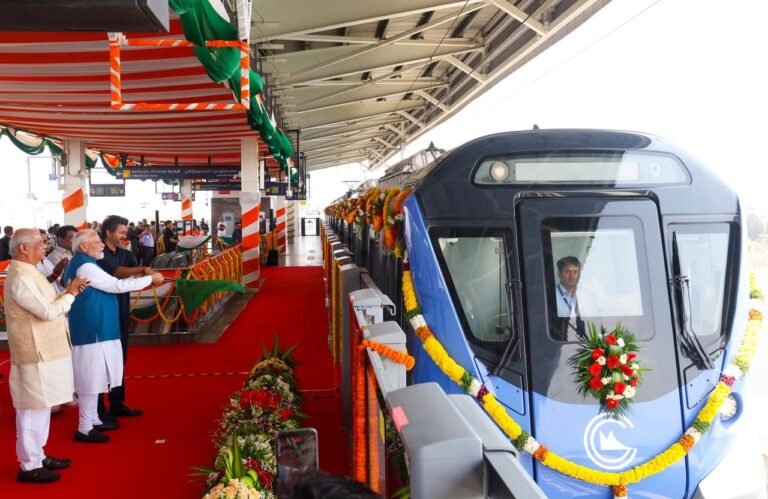
MUMBAI (Metro Rail News): The Mumbai Metropolitan Region Development Authority (MMRDA) will open the Chembur Metro station on Metro Line 2B on August 13 (Today). This extends the operational section of the corridor by one station. The new station will connect the Metro, suburban railway, and Monorail, making it a key interchange for commuters in eastern Mumbai.

The Chembur station received approval from the Commissioner of Metro Railway Safety (CMRS) in June. This approval cleared the last regulatory requirement for passenger operations. Chief Minister Devendra Fadnavis will inaugurate the station today. He will be joined by Deputy Chief Minister and MMRDA Chairman Eknath Shinde and Deputy Chief Minister Sunetra Pawar. The station is part of a larger program. The MMRDA will also inaugurate four major projects today, including:

  • Chembur Metro station on Line 2B
  • Phase II of the Santacruz-Chembur Link Road
  • TBM Arjuna for the Thane-Borivali Twin Tunnel Project
  • Renaming of the BKC Connector after former Chief Minister Dr. Babasaheb Bhosale

Three transport modes within walking distance

The importance of the Chambur Metro Station largely comes from its location. The metro station is about 200 meters from Chambur Railway Station and around 100 meters from the V N Purav Marg Monorail station. This will bring three public transport systems closer together- Metro Line 2B, Suburban Railway and Mumbai Monorail.

For passengers arriving at Chembur by suburban train, the Metro will provide another option to travel towards areas connected by Line 2B. Similarly, commuters from the eastern suburbs will be able to switch between Metro and suburban rail instead of relying solely on road transport.

Mumbai Metro Line 2B gets 6th operational station

Phase I of Mumbai Metro Line 2B currently covers a 5.4 km stretch between Diamond Garden and Mandale, with five stations:

  • Diamond Garden
  • Shivaji Chowk
  • BSNL Metro
  • Mankhurd
  • Mandale

With the addition of Chembur, the operational eastern section will now have six stations. The first phase of this section began passenger operations in April. The inclusion of Chembur gives this relatively short operational corridor a direct tie to Mumbai’s established suburban rail and Monorail networks.

Also Read: Mumbai Metro: MMRDA awards ₹29.63 cr contract for Signage Works on Line 6 & 7A