Trending News

Chennai Metro: Panasonic-Pioneer JV Bags PSD Contract of Line 3 & 5

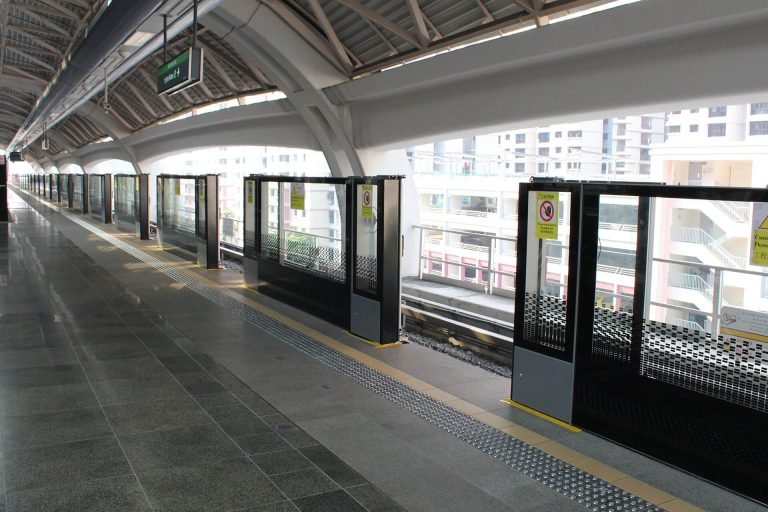
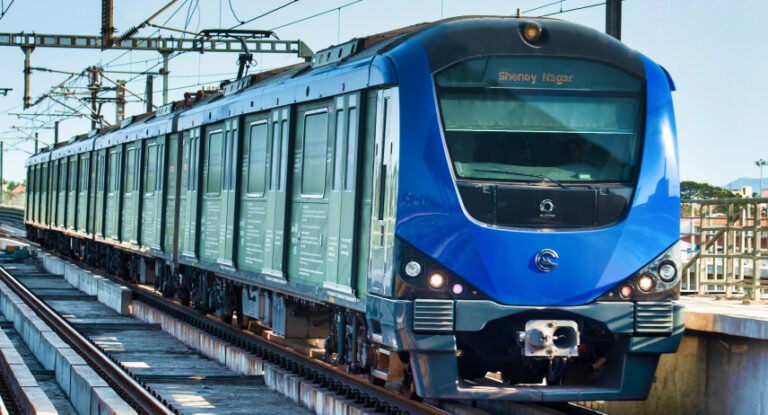
Chennai (Metro Rail News): The joint venture between Panasonic Manufacturing (Beijing) Co. Ltd. and  Pioneer Fil-Med  Pvt. Ltd. has secured a 146.95 crore contract from Chennai Metro. The contract involves supplying and installing Platform Screen Doors for Chennai Metro’s Line 3 and Line 5.

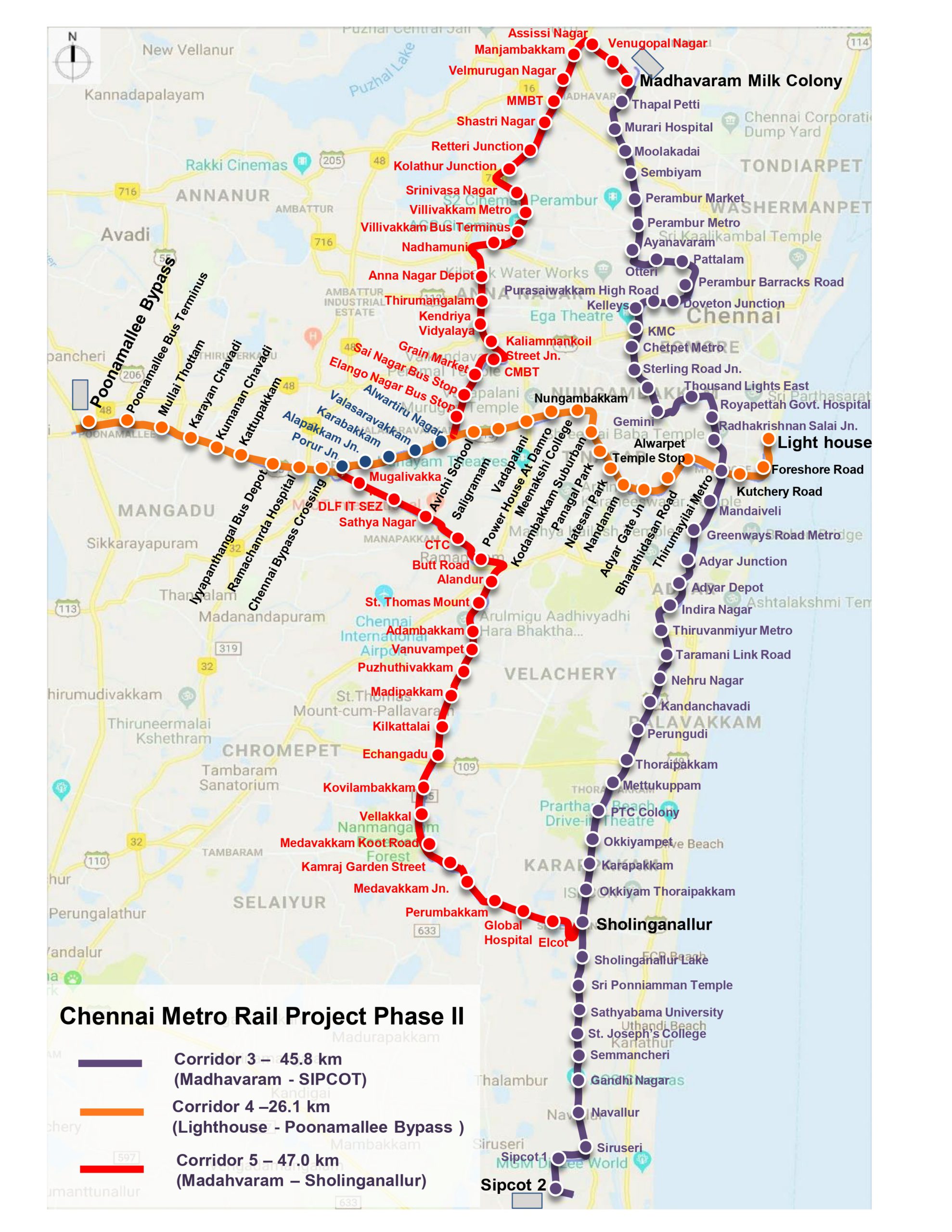
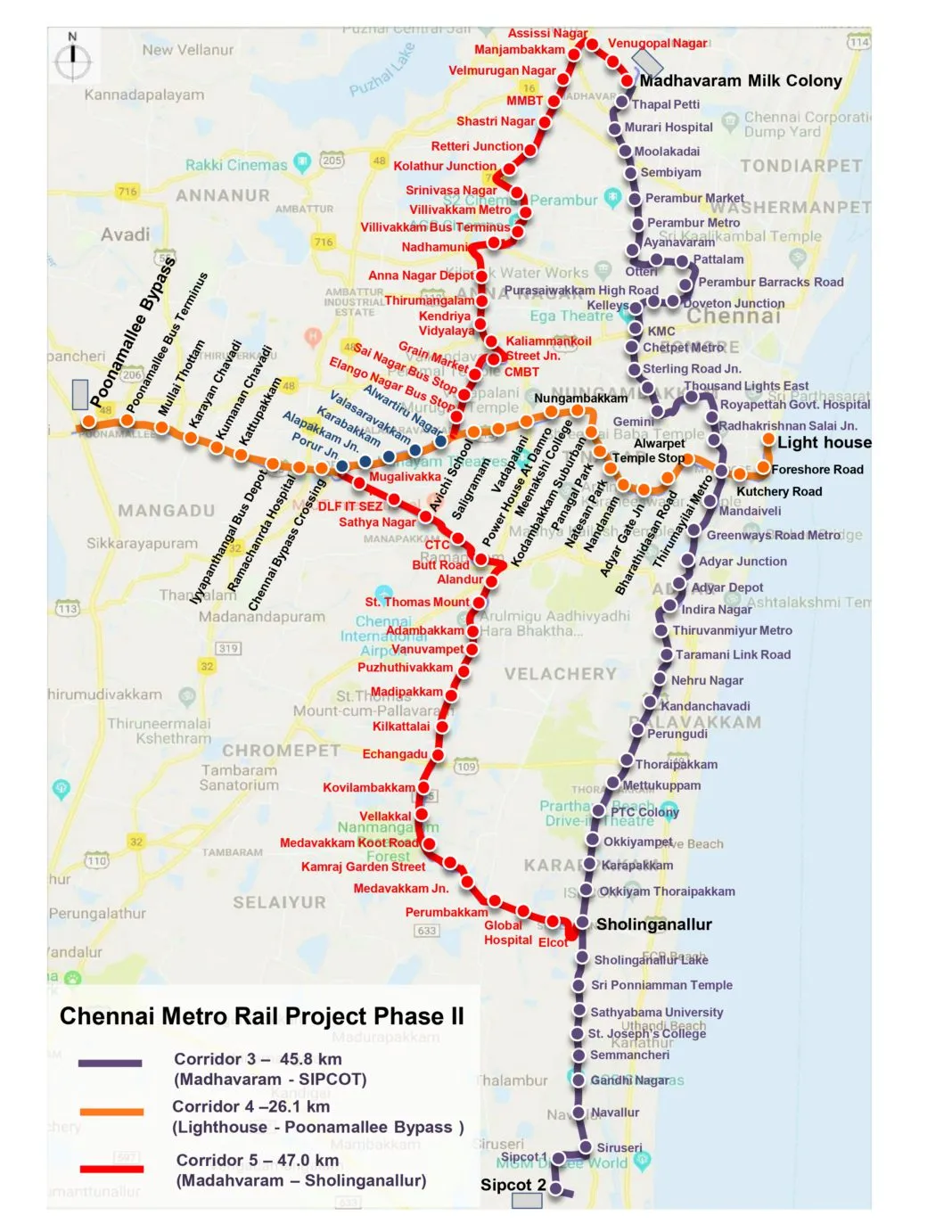
Chennai Metro Phase 2 Map

Line -3 and Line-5 of Chennai Metro will operate in a North-South orientation to link Madhavaram – SIPCOT (45.4 km Line-3) and Madhavaram – Sholinganallur (44.6 km Line-5), Respectively, through both elevated and underground stations. 

The contract’s scope includes the design, manufacture, supply, installation, testing, and commissioning of Platform Screen Doors. 

In Corridor-3, the contractor will install PSDs at 29 underground stations between Madhavaram Depot Station and Tharamani Station.

In Corridor 5, PSDs will be installed at 5 underground stations falling between Kolathur Junction Station and Nathamuni Station.

Final Contract Value: INR 85,36,03,003 + USD 7,392,013 (approx. INR 146,95,66,140.67 or 146.95 crore)

Deadline for the contract: 1465 Days ( approximately four years )

Other contracts for Platform Screen Doors

Another 2 packages by CMRL for installing platform screen doors:

Package ASA12A: In November 2023,  ST Engineering Urban Solutions Ltd. secured this package. Under this contract, ST Engineering is responsible for installing Platform Screen Doors at 10 elevated stations of Line 3 (Sholinganallur Lake – SIPCOT 2). Additionally, they will install PSDs at 29 stations of Line 5 (Grain Market – Elcot).

Package ASA09: The work under this package includes the PSDs at 10 elevated stations of Line-3 (Nehru Nagar – Sholinganallur) and 10 elevated stations of Line-5 (Assissi Nagar – Koyambedu). Currently, the bids are under technical evaluation for this package.

Ongoing development On Line 3 & 5 of Chennai Metro

Line-3’s 29 stations are under construction by DRA – Soma JV Tata Projects Ltd. and Rail Vikas Nigam Ltd. 

Line-5’s five underground stations are under construction by Tata Projects Ltd. 

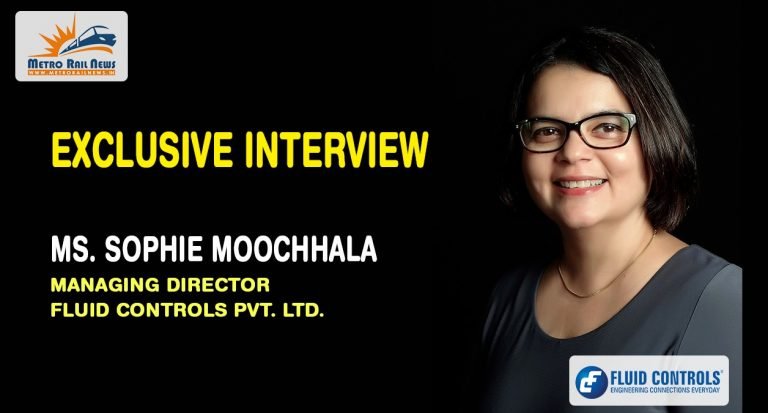
Exclusive interview of Sophie Moochhala on the occasion of International Women’s Day

To celebrate International Women’s Day, our Managing Editor Mr. Narendra Shah had a conversation with Ms Sophie Moochhala – Managing Director – Fluid Controls Private Limited. In which she speaks about the Company business strategy, Atmanirbhar Bharat Policy and Growth in a Post-COVID Situation.

Tell our readers about various innovative products recently developed for Metro & Railway Industries?
Fluid Controls Private Limited was established in 1974 by Dr. Y.E. Moochhala, a Ph.D. from Northwestern University, the USA with a vision to deliver high quality & high-performance products which delight customers. Fluid Controls offers customers comprehensive end-to-end “Make in India” solutions for Rail & Metro brake piping arrangements – from design & engineering services to supply of high-performance products and installation services. From its inception in 1974, Fluid Controls has engaged in original R&D and also has had an ethos of developing indigenous replacements for imported products. Our founder, Dr. Y E Moochhala, after a successful career in the USA decided to return to India because he was a strong believer in a self-reliant India. His idea was to develop high quality, high-performance products to suit local prototype climatic and performance expectations. Today, Fluid Controls is approved as an “In-House R&D unit” by the Department of Scientific & Industrial Research (DSIR), Government of India. Since 2011, we have developed more than 25 new products, which is very much in line with the Fluid Controls vision statement. Adding to our strength in innovating, Fluid Controls has filed its first Global Patent and
is in the process of filing two more patents. Particularly for the Rail & Metro Industry Fluid Controls has developed Across Frame Connectors for connection of pipelines between the shell and bogie for high-speed electric locomotives. These connectors eliminate welding processes and allow for seamless connection of pipes between the shell and bogie. Across Frame connectors also, reduce component parts required to be purchased as they are integrated fitting assemblies. Fluid Controls has also developed an entire range of FlexiGripTM connectors to provide zero-leakage and vibration resistant connections Here are the excerpts from the
interview:- “Success is a multi-faceted word! Professionally, for me, success is to build a brand which is trusted by customers
and which delights customers.” Sophie Moochhala Managing Director Fluid Controls Pvt. Ltd. between misaligned pipes or between pipes of different materials. The triple sealing action of the split ring, washer and O ring provides for a completely leak-proof connection. The split ring also provides superior vibration resistance by ensuring the joint remains in a springing condition. As an ongoing part of product development, Fluid Controls also customizes standard products to suit specific customer requirements.

How do you see the Govt of India’s Atmanirbhar Bharat policy?
Fluid Controls is a “Vocal for Local” MSME organization and we whole-heartedly support the Atmanirbhar Bharat initiative. Domestic manufacturers have the capability – be it in manufacturing, quality, or R&D – to cater to domestic requirements across sectors. In the past, legacy international vendors and lack of firm procurement policies constrained the effective implementation of “Make in India”. Atmanirbhar Bharat, which clearly outlines procurement policies, will go a long way to boost domestic manufacturers, especially in the MSME sector. With our manufacturing and R&D capabilities, Fluid Controls can contribute immensely to provide high quality, high-performance products to all sectors in the move to localize supplies.

Please share some of your value-added, problem-solving product and services offered by Fluid Controls?
A good example of a product we developed is the Fluid Controls Hydraulic Swaging Unit (HSU), which is a tool to ensure that twin ferrule connectors are installed correctly at the site. The unique feature of our HSU is that there is no need for manual intervention in the process. We also offer design and engineering services and have completed conversion projects (from one connector system to another) for several customers.

How Covid-19 outburst the Fluid Control’ business and the step you have taken to overcome it?
During the onset of the Pandemic COVID-19, our primary focus was to ensure the health and safety of our employees, their families, our customers and our business partners. And we had changed the way we approach every task and every activity. We had to adapt our model of operation since face-to-face meetings and interaction were not possible for some months (and we are still work-from-home at our Mumbai office!). We have invested in ERP and Microsoft Teams software to ensure the ease of teamwork and connectivity. To ensure seamless day-to-day operation, each department head would hold a daily telephonic meeting to discuss tasks and the way ahead. We also had to change the way we conducted our external business. During the lockdown period, Fluid Controls engaged with customers via video conferencing and calls. And, to ensure the least disruption in schedules, we have provided regular updates on our business status and order status to them. As many of our customers still do not allow business visits, we continue to have a virtual engagement with them. Once our plant became operational in May 2020, we provided our employees with a safe working environment. Whilst a major part of our staff is still working from home, “Operational Safety” being the primary parameter for the health and safety of people at work in the plant, we have planned our manufacturing with a system and process-focused approach. At Fluid Controls, we “Engineer Connections every day”. And in the time of the COVID-19 pandemic, we learnt how to “Adapt Everyday”!

What is your view on Business Growth in a Post COVID Situation?
I am very optimistic about the post-COVID growth situation and increased Union Budget allocations this year for railways will definitely lead to more business for companies such as ours. In addition, we are very positive that the focus on freight, Metros and RRTS/LRTS networks will result in an increasing demand
for rolling stock.


What are the Metro Projects in which Fluid Controls currently associated?
We are currently associated with projects for Mumbai Metro, Pune Metro, Delhi Metro and Chennai Metro. BEML suppled the First Driverless Metro Train developed in India form Mumbai Metro Line 2A.

What is the role of fluid Controls in the development of this true Atma Nirbhar product?
We are very happy to have been associated with BEML for Mumbai Metro. The Metro cars supplied by BEML have Fluid Controls DIN Single Ferrule connectors installed in the brake piping system. This is a very big achievement for Fluid Controls and we are very proud to have been approved by BEML for this project. Coming from a non-technical background,

how do you manage the most senior management position of an innovative product engineering company?
“Success” is a multi-faceted word! Professionally, for me, success is to build a brand that is trusted by customers and delights customers. At an organizational level, it is to build a team that is motivated, innovative and performs to high expectations. In this context, my having or not having an engineering background doesn’t really matter as I am supported by a team that has stellar engineering credentials.

What are the company’s business strategy and future expansion plan concerning the Metro & Railway market?
Over the years, Fluid Controls has developed comprehensive expertise for manufacturing, by identifying the right materials and ensuring “fit and forget” assembly. For Rail & Metro applications, we offer complete fitment of brake piping components, engineering and site installation services, pre-piped assemblies for easy site fitment, double ferrule fittings, DIN single ferrule fittings, threaded adaptors, Across Frame connectors, FlexiGripTM connectors, quick release connectors, isolation valves and clamps. A key part of our future plans is to tap into the brake piping business for the emerging high-speed train operations and to offer integrated solutions and hose assemblies to our current customer base. We are also focusing on global supplies to Europe, North America and SE Asia


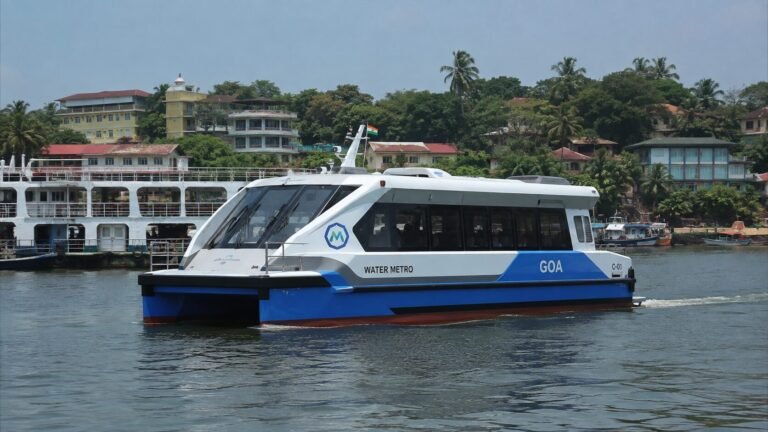
Goa Water Metro Project Moves Ahead as State Cabinet Approves SPV for Namo Tarang

GOA (Metro Rail News): The Goa Cabinet has approved the formation of a special purpose vehicle (SPV) to develop and operate the proposed Namo Tarang – Goa Water Metro. The move comes as Kochi Metro Rail Limited (KMRL), which is preparing the project’s DPR, is expected to complete the report by October, while funding from the Centre is yet to be formally confirmed.

The SPV will be responsible for implementing, financing, operating and maintaining the water metro once it becomes operational.

River Navigation Department to set up SPV

The government has designated the River Navigation Department (RND) as the nodal agency for incorporating the SPV under the Companies Act, 2013. RND will work with the state Finance and Law department to finalize the companies:

  • Memorandum and Articles of Association
  • Staffing structure
  • Governance agreement
  • Other incorporation requirements

The project SPV will also act as the main agency for coordinating with the center and its departments during project execution.

KMRL DPR expected by October

KMRL was appointed to prepare the Detailed Project Report (DPR) for the Goa Water Metro. According to the state government, nearly half of the DPR work has been completed. The report is expected to be submitted by October. 

The DPR will form the basis for assessing the project’s technical requirements, cost, implementation plan and funding needs. The Goa government had also requested the Centre to provide ₹10 crore towards the cost of preparing the DPR.

Central funding remains pending

While the state has moved ahead with the institutional structure, the project’s funding plan is not yet settled. Chief Minister Pramod Sawant has sought full funding from the Union Ministry of Ports, Shipping and Waterways. 

The Union ministry has given an in-principle indication that it could consider the project for central funding. However, the state has not yet received a formal written confirmation. This leaves the funding arrangement as one of the key issues to be settled after the DPR is completed.

SPV to handle implementation and operations

The proposed company will have a role beyond construction. Its responsibilities will include:

  • Coordinating with the Central government and its agencies
  • Securing financial support
  • Implementing the project
  • Managing project execution
  • Operating the water metro
  • Maintaining the system after commissioning

The creation of the SPV is therefore intended to establish a dedicated institutional structure before the project moves into the execution stage.

Also Read: Goa Water Metro DPR Under Preparation as Feasibility Study Is Completed

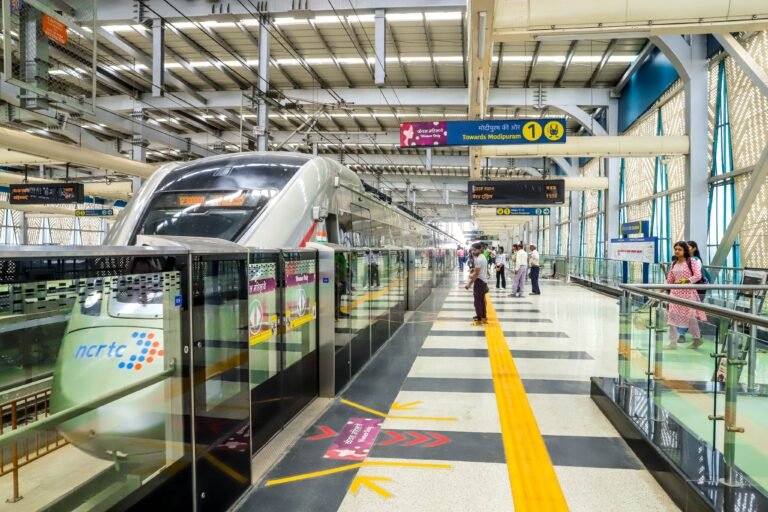
Namo Bharat Travel Gets Easier as NCRTC Introduces Trip Pass for NCMC Users 

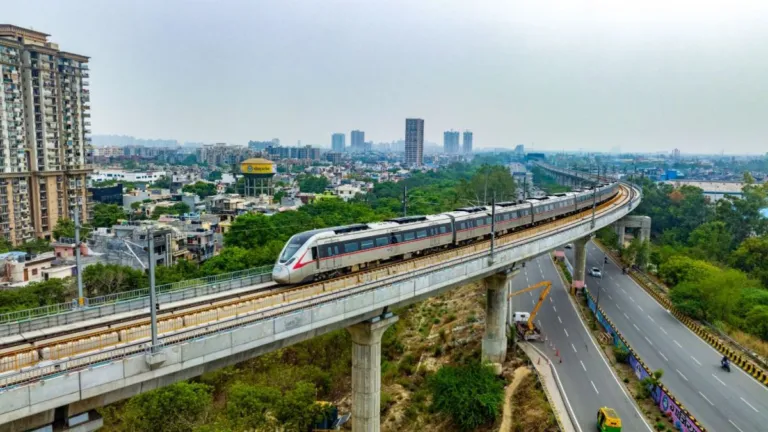
DELHI (Metro Rail News): For thousands of commuters who travel regularly on Namo Bharat, everyday journeys are set to become more convenient. NCRTC has introduced a Trip Pass facility on Namo Bharat for NCMC users, offering a convenient way for regular travellers to plan and pay for their journeys in advance while saving significant time during their daily commute.

Namo Bharat is currently serving over 1.1 lakh commuters on a daily basis. Of these a large number of commuters travel between a definite Point A and B. This new facility is a welcome step for these commuters who travel frequently between the same two stations. Instead of purchasing a ticket for every journey or repeatedly recharging their NCMC cards, commuters can now purchase a Trip Pass for multiple trips in advance. This reduces the need for repeated transactions and saves valuable time that would otherwise be spent purchasing tickets or topping up their cards, making the overall journey faster and more seamless.

The Trip Pass is designed for commuters who regularly travel between the same Point A (origin) and Point B (destination). Once a Trip Pass is loaded on the NCMC card, the applicable trip is automatically deducted when the commuter travels between these points. For example, a commuter regularly travelling from A (Sarai Kale Khan) to B (Modipuram) can purchase the required number of trips in advance and use the pass for these journeys. The pass can also be used multiple times in a day, provided the commuter travels between the same designated stations for which the pass has been purchased.

A journey from Sarai Kale Khan to Modipuram costs ₹210 in Standard Coach and ₹250 in Premium Coach. While ₹2,000 is the maximum limit for NCMC card wallet recharge, for a commuter travelling to and fro regularly between these two stations, this amount can be used up in just four days, or even less than a week. With a Trip Pass, commuters can plan and pay for multiple journeys in advance, reducing the need for frequent wallet recharges and the time spent on these transactions.

The Trip Pass is valid only for the pre-selected source and destination stations for which it is purchased. If a commuter travels between different stations, the regular fare for that journey will be deducted from the balance available in the NCMC card’s Global Wallet.

For instance, if a commuter has a Trip Pass for Sarai Kale Khan to Begumpul but travels only up to a station before Begumpul , the lower applicable fare will be charged from the Global Wallet, provided sufficient balance is available. Similarly, if the commuter travels beyond Begumpul and the Global Wallet does not have sufficient balance to cover the additional fare, the commuter will need to recharge the wallet before exiting at the destination.

In other words, the Trip Pass covers the journey between the specific source and destination stations selected at the time of purchase. For journeys outside that selected route, the trip pass shall not be applied and fare will be deducted from the global wallet. Namo Bharat commuters can also avail a 10% discount on every journey. Under the loyalty programme, commuters earn one point for every rupee spent on a journey aboard Namo Bharat trains using NCMC cards. Each Loyalty Point is worth ₹0.10, and 300 Loyalty Points can be redeemed for a free trip.

Commuters can choose from different Trip Pass options based on their travel frequency. The Trip Passes are available for both Standard and Premium coaches, with options ranging from 1 to 40 trips. The number of trips can be selected based on how frequently a commuter travels between the same two stations. 

S. No.Trip PassValidity (in days)Refund
1115Non-refundable
2230Non-refundable
3530Non-refundable
41030Non-refundable
51560Fixed deduction of an admin fee of ₹200
62060Fixed deduction of an admin fee of ₹200
74090Fixed deduction of an admin fee of ₹200

Trip Passes can be purchased from the counter commonly located near the AFC gates. Further top-ups of the Trip Pass can be done at EFOs or Ticket Vending Machines (TVMs) at Namo Bharat stations. By completing these transactions in advance, regular commuters can spend less time at ticket counters or vending machines during their everyday journeys.

NCRTC has been consistently working towards making the Namo Bharat travel experience more convenient, comfortable and commuter-friendly. With the introduction of the Trip Pass, NCRTC has added another layer of convenience for its regular commuters, particularly school and college students, working professionals, businessmen and other regular travellers using Namo Bharat for their daily commute.

The facility is designed to make everyday travel on Namo Bharat simpler, smoother and more convenient, giving regular commuters greater control over their travel while reducing the time and effort spent on routine transactions.

Also Read: Delhi-Karnal & Delhi-Bawal Namo Bharat Corridors Near Cabinet Approval

Mumbai-Ahmedabad Bullet Train : First Steel Bridge Launched in Thane

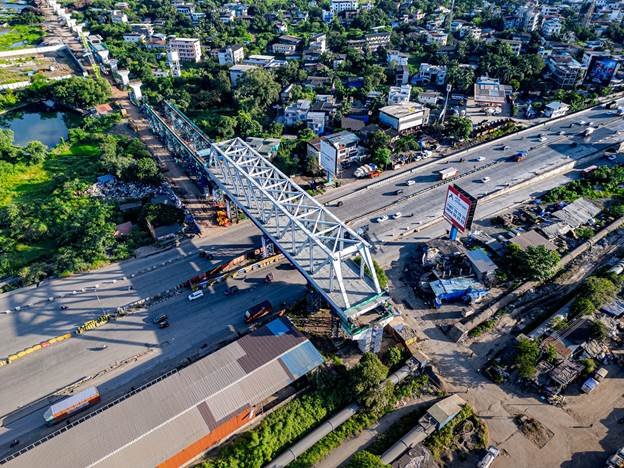
MAHARASHTRA (Metro Rail News): On, 28th September the first steel bridge for the Mumbai-Ahmedabad bullet train was successfully launched over Nashik highway at Dive-Anjur village in Bhiwandi, Thane district. The 100 meter long steel bridge weighing 1,405 MT was fabricated nearly 1300 km away in Tiruchirappalli, Tamil Nadu, before being transported to Maharashtra.

Bullet Train project boosts indigenous fabrication at site

A key moment about the Mumbai-Ahmedabad bullet train project is that the steel structure was fabricated nearly 1300 KM away from the installation site at a workshop in Trichy, Tamil Nadu. The structure was transported to Maharashtra and then assembled at site for the launch.

This demonstrates the growing capability of Indian Industry to successfully handle the fabrication, transportation, assembling and delivery of complex infrastructure for the country’s most advanced technological project. The manufacturing included precise cutting,drilling,welding and painting carried out as per designs and specifications. Every production batch of steel was tested through Ultrasonic Testing (UT). Welders and supervisors were certified by International Welding professionals. 

The project demonstrates India’s own indigenous capabilities in engineering, manufacturing, technology, and material development, aligning with the objectives of the Make in India initiative. 

Installation of the steel bridge for the bullet train project

The 100 meter bridge was assembled on temporary trestles which were approximately 17.5 metres above the ground. This was made possible with the help of 22 skid arrangements and 54,076 Tor-Shear Type High Strength Bolts.

The assembled bridge was then pulled into position with the help of an automatic mechanism which had two hollow jacks, each with a capacity of 150 MT, along with pre-tensioned, Macalloy Bars. height is 14 metres and almost 15 metres in width.

Bridges made of steel are particularly more suited for crossing highways, expressways, major rivers and railway lines, where longer durability is required. Out of the 28 steel bridges planned for Mumbai-Ahmedabad Bullet train corridor, 16 have already been completed.

Also Read: Mumbai-Ahmedabad Bullet Train Corridor to Use Movable Crossings for 320 km/h Operation

Kolkata Metro Orange Line: Trial Run to Sector V From October 10, RVNL Targets Christmas Operations 

KOLKATA (Metro Rail News): Trial runs on the Belaghata Sector-V section of Kolkata Metro’s Orange Line are scheduled to begin from 10th October, with RVNL targeting commercial operations by Christmas. The planned extension would take the operational length of the New Garia-Airport corridor beyond 14 km and connect metro services directly with Kolkata’s major IT and business hub.

A Rail Vikas Nigam Limited (RVNL) official told TOI that trials could continue for a month or longer as teams completed software alignment, systems synchronization and other checks. Passengers services will begin only after the requirement clearance. 

Kolkata Metro Orange Line Moves Closer to Sector V 

On September 17 a ‘push trolley’ inspection was completed in the IT section on Belghata. Recently between Chingrighata and Sukantanagar a huge 366 metre gap on the elevated corridor was bridged with RVNL launching girders, erecting the viaducts and laying on the tracks.

Kolkata Metro’s Orange line covering the 9KM stretch between Kavi Subhas and Belgata station is now operational and as soon as the trains start running till Sector V, Orange line will be operational, stretching over 14 KM.

3 new stations to join Kolkata Metro’s Orange Line

The sector V extension will add 3 stations to the operational network. 

  1. Gour Kishore Ghosh
  2. Nalban 
  3. Sector V

The extension to sector V is the third phase and the entire corridor will be completed in two more phases. As per the Rail Vikas Nigam Limited (RVNL) official, the authorities are also currently planning to start phase IV to connect sector V and City Centre II till 27 June and the last phase which will connect it to the Airport is scheduled to be completed by the end of 2027.

60 New generation metro rakes planned

Shri Ashwani Vaishnaw the Union Minister for Railways announced that 60 new generation metro rakes will be inducted into the Kolkata metro network over the next five years. The announcement noted that 45 km of metro lines were added to the network over the last 11 years, compared with 27 km added in the preceding 40 years.

Kolkata Metro’s Growth

Digital ticketing has also taken a significant place in the Kolkata metro. The Aamar Kolkata Metro application enables passengers to purchase tickets online, including QR-based tickets, and supports digital payment facilities. Metro Railway has also promoted digital purchase of tokens and Smart Cards and Smart Card recharges through the app.  Kolkata metro has expanded significantly over the last decade, between 1972 to 2014, 28 KM of metro was commissioned and from 2014 to 2025 almost 45 KM of metro has been commissioned. 

Also Read: Kolkata Metro Orange Line: Beleghata-IT Centre Stretch Cleared for Electrical Works After Track Inspection

Delhi Metro Phase-V(A): DMRC Floats ₹21.50 Cr Tender for Central Vista Corridor’s Twin Tunnels and Stations

DELHI (Metro Rail News): The Delhi Metro Rail Corporation (DMRC) has invited bids for the design and construction of twin tunnels and four underground stations under the Central Vista Corridor of the Delhi MRTS Phase-V(A) project. 

The EC-04 package covers the underground section from Kartavya Bhawan station to Indraprastha station and has a completion period of 42 months. The estimated cost of the project is ₹214.98 million (₹21.50 crore).

Tender details 

InformationDetails
Tender Number Contract EC-04 
ProjectDelhi MRTS Phase-V(A)
Bid security₹214.98 million (₹21.50 crore)
Completion period42 months
Pre-bid meeting7 October 2026, 11:00 AM
Bid submission2 November 2026 to 9 November 2026

Scope of work

The EC-04 package covers the design and construction of Twin Tunnel (Up & Down Lines) by shield TBM (From Chainage 34262.985 m to 39203.341 m) from Kartavya Bhawan station (Excl.) to Indraprastha station (Excl.), along with Four Underground Stations, namely India Gate, War Memorial-High Court, Baroda House and Bharat Mandapam, including their connecting subways, associated entry/exits, etc., for the Central Vista Corridor under Phase-V(A) Project of Delhi MRTS. 

About Central Vista Corridor

The Central Vista Corridor is a 9.913-km underground metro stretch being developed under Delhi Metro Phase-V(A) of the Delhi MRTS. It will connect RK Ashram Marg with Indraprastha and will have 9 stations. 

  • Station names: Shivaji Stadium, Kartavya Bhawan, Yuge Yugeen Bharat, India Gate, Baroda House, Bharat Mandapam, War Memorial, High Court, and Indraprastha. 

The corridor forms an underground extension of the Magenta Line between RK Ashram Marg and Indraprastha. Central Secretariat will become a triple interchange station connecting the Magenta, Yellow and Violet lines. The corridor will serve important government, institutional and high-traffic areas in central Delhi. The project is also planned to improve interchange connectivity with the existing Delhi Metro network.

Also Read: Delhi Metro Phase-4: DMRC Floats Signalling Tender for Lajpat Nagar-Saket G Block Corridor

Kavach Commissioned on Agra-Dholpur Section by Indian Railways

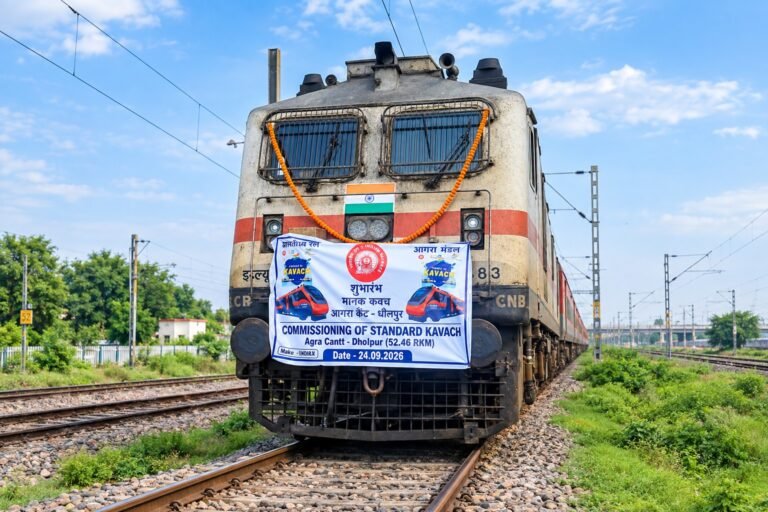
DELHI (Metro Rail News): The Indian Railways has commissioned Kavach safety system on the 52.5 km Agra Cantt-Dholpur section, extending the automatic train protection system along the high-density Delhi-Bhopal-Mumbai route. 

The system is also a key requirement for raising train speed on the Delhi-Agra Corridor from 130 kmph to 160 kmph. Although Delhi-Palwal section is still awaiting kavach commissioning. The latest section was commissioned on Thursday, months after kavach  became operational between Mathura and Agra Cantt.

https://twitter.com/DRM_Agra/status/2103113511832535359

Agra division PRO Sanjay Gautam said, “Railways has been implementing Kawach across its network as part of efforts to strengthen train protection through indigenous safety technology.” 

Kavach system to enable higher train speed 

This system is planned to increase the maximum speed of trains on the Delhi-Agra route, from 130 kmph to 160 kmph.  Based on the reports last year, trains such as Gatiman Express and Vande Bharat which are capable of going at 160kmph are running at 130kmph in that section from the past two years, as per the directions of railway board which had made the maximum speed reduced to 130 kmph from 160 kmph until the Kavach system was made operational. 

720 radio frequency identification tags have been installed as part of the Agra Dholpur effect to provide train location and operational information. This commissioning was overseen by the Agra division DRM Gagan Goyal.

What Is Kavach?

Kawach is an automatic safety system designed to assist loco pilots and enhance railway safety by monitoring train movements and helping prevent collisions, overspeeding, and signal-related accidents.

Also Read: North Central Railway Strengthens Safety With Kavach on Gwalior-Jhansi Route  

India Gets New Central Asia Connectivity as Iran Completes 730 km Chabahar-Zahedan Rail link

DELHI (Metro Rail News): Recently, Iran has announced the completion of the 730 km Chabahar-Zahedan railway line. A 730 km rail link is expected to provide India with easier access to Afghanistan, Central Asia and parts of Eastern Russia as reported by The Economic Times. The railway link was under construction for several years, and is expected to be fully operational in 3-4 months.

Chabahar-Zahedan Rail line moves towards operations 

The project includes substantial civil and railway infrastructure along the route. Key features include:

  • 730 km of railway, as reported for the project including associated links
  • 33 stations
  • 39 tunnels
  • 201 bridges and major crossing structures
  • final preparations and safety checks before the commercial operations 

The Iranian authorities have started final preparations to begin full operations. However, the train will not be able to carry passengers until the required tests are completed, as finishing the track work alone is not enough to start services.

Why the railway link matters to India

The strategic importance of the line is closely linked to Chabahar port, where India has invested in developing and operating in Shahid Beheshti terminal. The rail connectivity can strengthen the port’s role as a gateway for cargo moving between the Indian Ocean and landlocked markets in Afghanistan and Central Asia.

It could also support India’s wider efforts to develop trade links with Central Asia. The route’s longer-term value will depend on how efficiently rail connectivity beyond Zahedan is integrated with networks serving Afghanistan and Central Asian countries.

Chabahar Port rights remain a key issue

As India and Iran continue discussion over New Delhi’s involvement in Chabahar port which comes under development. The matter was raised when Iranian President Masoud Pezeshkian met Prime Minister Narendra Modi in New Delhi for the BRICS Summit which was held this month. On September 11 Modi and Pezeshkian met to discuss bilateral ties and developments in West Asia. 

India is also discussing an arrangement under which a local Iranian ports authority could manage Chabahar, with legal provisions for operational rights to return to India if US sanctions are lifted, according to earlier reporting cited by ET.  In May 2024, India Ports Global Limited and Iran’s Ports and Maritime Organisation signed a 10-year agreement. Agreement was signed for the development and operation of the Shahid Beheshti terminal at Chabahar.

Full operations expected in coming months

Although Iran has announced completion of the rail link, the project is not yet at the stage of full-scale operations. Authorities are currently carrying out final safety inspections and other preparations. Full operations are expected within three to four months, according to the Economic Times report.

The development therefore marks an important infrastructure milestone, but its impact on India-Central Asia trade will depend on the start of regular services and the availability of efficient onward rail and port connections.

Also Read: Indian Railways Approves Four Projects Worth ₹736 Crore Across Four States 

Amit Shah Flags Off India’s First LNG Train and Inaugurates Rs 1,472 Cr Railway Project in Ahmedabad

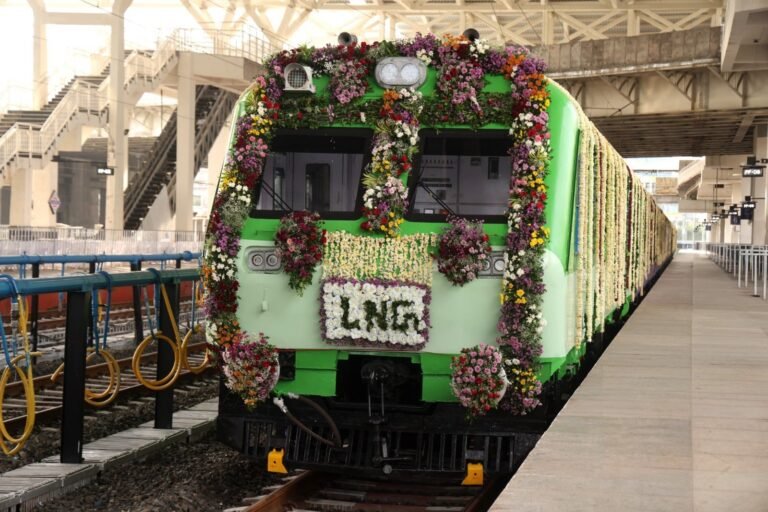
AHMEDABAD (Metro Rail News): Union Home Minister Amit Shah on Sunday flagged off India’s first LNG-powered train from Sabarmati Railway Station in Ahmedabad and inaugurated railway development works worth ₹1,472 crore.

The projects include a ₹700-crore WAG-12 locomotive maintenance shed and the commissioning of Kavach on the Sabarmati-Kalol-Sabarmati section. Gujarat Chief Minister Bhupendra Patel and other officials attended the event.

Indian Railways first LNG train flagged off

The event also marked the flag-off of the country’s first LNG-powered train from Sabarmati. The move is part of efforts to reduce dependence on diesel in railway operations and explore alternative fuels for rail transport.

Amit Shah said the LNG-powered train could contribute to reducing the environmental impact of railway operations in the coming years.

Diesel use in railways falls sharply

Shah cited a significant reduction in railway diesel consumption over the past decade. According to the figures presented at the event, Indian Railways consumed around 293 crore litres of diesel in 2015-16. This fell to 108 crore litres in 2024-25. He linked the reduction to the expansion of electric traction across the railway network.

Railway electrification has also accelerated sharply. Shah said only 75 km of railway routes were electrified during 2010-11, while 7,188 km were electrified in 2023-24. He said 99.6% of the railway network is now electrified, leaving about 0.4% still to be covered.

₹700 crore WAG-12 maintenance shed inaugurated

The new WAG-12 maintenance shed at Sabarmati has been built at a cost of ₹700 crore. It will support maintenance of high-capacity electric freight locomotives. 

Shah also highlighted the capabilities of the WAG-12 locomotive during the programme. The 12,000-horsepower twin-section locomotive can haul a freight load comparable to what around 600 trucks can carry, according to the minister.

The locomotive can perform the work that earlier required two locomotives, improving hauling capacity on heavy freight routes.

Kavach commissioned on Sabarmati-Kalol railway section

The Kavach automatic train protection system has been commissioned on the Sabarmati-Kalol-Sabarmati rail section at a cost of ₹48 crore. Work has also started on extending Kavach to other important sections in Gujarat, including:

  • Ahmedabad-Palanpur
  • Ahmedabad-Samakhiali

Work has also begun on doubling the Sabarmati-Sarkhej railway line. These projects are aimed at improving rail capacity while strengthening safety and operational reliability on the routes.

Gujarat gets multiple rail capacity and safety works

The projects inaugurated or launched in Ahmedabad form part of a wider push to increase freight capacity and improve railway safety in Gujarat.

The WAG-12 shed will support maintenance of high-power freight locomotives, while Kavach deployment and the Sabarmati-Sarkhej doubling project address safety and route capacity.

The LNG-powered train adds another element to the programme by testing an alternative fuel option for railway operations.

Also Read: Keralam’s Railway Funding Sees Sharp Rise to ₹3,795 Cr in FY 2026-27, says Ashwini Vaishnaw

Maha Metro Selects L1 Bidder for ₹40.59 Cr Nagpur Metro Rolling Stock AMC

NAGPUR (Metro Rail News): The Maharashtra Metro Rail Corporation Limited (Maha Metro) has identified Asa Bhanu Technical Services Limited as the lowest bidder for the five-year annual maintenance of CRRC-make metro rolling stock for Nagpur Metro Phase 1. The estimated cost of the contract is ₹40.59 crore and it also includes intermediate overhauling of the metro trains.

Contract details 

InformationDetails
Contract Amount₹40.59 crore
Contract Period 5 years
Lowest BidderAsa Bhanu Technical Services Limited 
Status Potential AOC

Bidding details 

Bidder Bid Value Status
Asa Bhanu Technical Services Limited₹40.5 crore (L1)Potential AOC
BEML Limited₹82.2 crore (L2)Accepted Financial
United Rail Road Consultants Pvt. Ltd.–Rejected Technical

Scope of work

The scope of work includes five-year Annual Maintenance Contract of CRRC make Metro Rolling Stock including intermediate Overhauling for Nagpur Metro Rail Project Phase-l of Maha Metro.

The proposed maintenance contract will cover rolling stock across the Phase-I network for five years. The inclusion of intermediate overhauling makes the package part of the long-term maintenance requirements for Nagpur Metro’s CRRC fleet.

Maha Metro’s estimated completion cost for the Nagpur Metro Phase-I project, including taxes, is ₹9,279 crore, according to the project details provided.

About Nagpur Metro Phase 1

Nagpur Metro Phase-I is a 40.02 km operational rapid transit network developed by Maha Metro. It consists of two main corridors.

1. Orange Line

2. Aqua Line

  • Orange Line – North-South Corridor: The Orange Line runs from Automotive Square to Khapri and covers 19.658 km with 18 stations. It includes key stations such as Kasturchand Park, Zero Mile Freedom Park, Sitabuldi, Ajni Square, Airport and New Airport. Sitabuldi serves as an interchange with the Aqua Line.
  • Aqua Line – East-West Corridor: The Aqua Line connects Prajapati Nagar and Lokmanya Nagar, covering 18.557 km with 20 stations. The corridor includes Nagpur Railway Station and Sitabuldi, along with stations such as Cotton Market, Jhansi Rani Square, Dharampeth College and Subhash Nagar.

Also Read: Bids Invited for Rolling Stock Maintenance Contract of Nagpur Metro

Rail Line Reaches Rowghat For The First Time, Tadoki-Rowghat section Clears Final Safety Trials

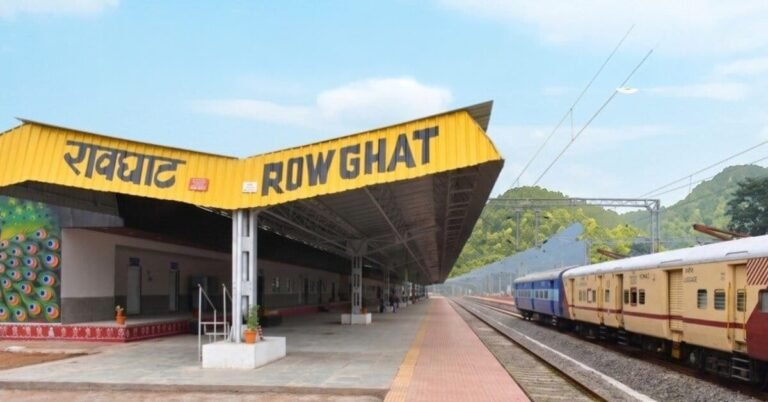
CHHATTISGARH (Metro Rail News): Indian Railway has reached a significant milestone on the Dallirajhara-Rowghat New Rail Line Project, with the 17.5 km in Tadoki-Rowghat section. The final section of the 95 km line’s speed trials was inspected yesterday by the Commission of Railway Safety (CRS). The development marks a major step toward strengthening rail connectivity in one of Chhattisgarh’s most remote and underserved regions. 

The Dallirajhara-Rowghat line falls under the Raipur Division of South East Central Railway. The Tadoki-Rowghat section is a single-line, electrified, broad-gauge stretch. Its CRS inspection involved a detailed examination of track infrastructure, bridges, culverts, electrification and signalling systems, along with tests of operational capacity and safety standards. This process is an important step before a new line can be opened for regular train operations. 

The full corridor spans 95 km of Dallirajhara-Rowghat, connecting remote parts of south Chhattisgarh with the existing railway network. On Dallirajhara-Tadoki stretch the passenger train services are already running. The Tadoki-Rowghat section now has completed its safety inspection and speed trials. The project has reached an advanced stage, paving the way for full commissioning of the line.

Boost to regional rail connectivity

The completion of this final section is expected to significantly improve transport access for communities in areas that have historically had limited rail infrastructure. The new section will offer residents more convenient and reliable travel options while linking the region more closely with the state capital, Raipur and with Bhilai, which serves as an educational hub for Chhattisgarh. 

Better connectivity to these urban centers is expected to widen access to education, healthcare, employment and trade opportunities for people living in the surrounding rural and tribal belts. Areas that have traditionally been isolated from the wider rail network.

Significance of the rail line for goods transport

Beyond passenger movement, the line carries considerable importance for goods transportation. It is expected to facilitate the movement of iron ore to the Bhilai Steel Plant, supporting the steel industry and related industrial activity in the region. The route is also set to assist in transporting agricultural produce and local commercial goods, helping integrated remote production areas with broader trade networks and markets.

A milestone in Chhattisgarh rail growth

The near-completion of the Dallirajhara-Rowghat New Rail Line, anchored by the newly inspected Tadoki-Rowghat section, represents a meaningful step in extending rail infrastructure into some of Chhattisgarh’s most remote areas. 

Once it’s fully commissioned, the line is expected to improve passenger mobility, support iron ore and goods transportation. It will strengthen the region’s ties to major urban and industrial centers, marking incremental but tangible progress in the state’s rail development.

Also Read: North Central Railway Strengthens Safety With Kavach on Gwalior-Jhansi Route  

NCRTC Awards ₹28.02 Cr Contract for Anand Vihar Multimodal Hub Skywalk 

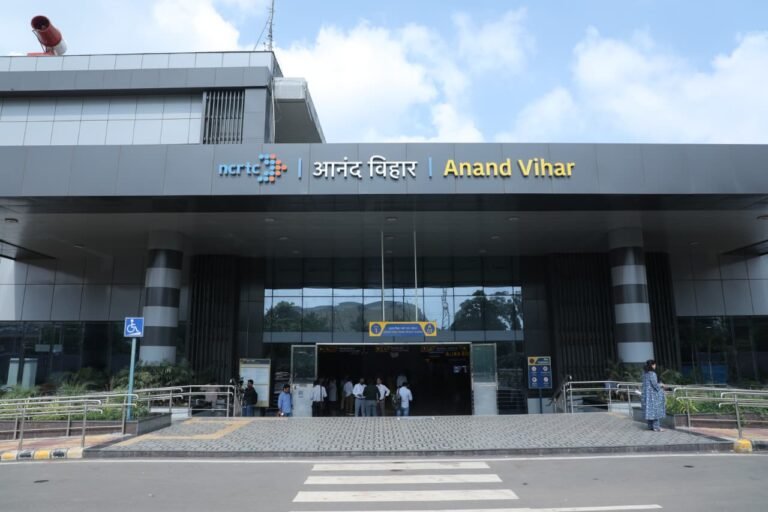
ANAND VIHAR (Metro Rail News): The National Capital Region Transport Corporation (NCRTC) has awarded  ₹28.02 crore contract to Ghaziabad Mechfab Pvt. Ltd. for constructing the Skywalk with travelators at Anand Vihar multimodal hub. The will provide seamless connectivity between Anand Vihar Railway Station and ISBT Kaushambi, while integrating access to Namo Bharat and Delhi Metro services.

Contract details

Information Details 
Contract NumberDM/MS/CPM-GZ/312
Awarding AuthorityNCRTC
Contract Value₹28.02 Cr
ContractorGhaziabad Mechfab Pvt. Ltd.
Contract Period450 Days

Scope of work

Construction of Skywalk with travelators at Anand Vihar multimodal hub for seamless connectivity between Anand Vihar Railway Station to ISBT, Kuashambi.

About the project

The proposed skywalk and travelators system will provide integrated pedestrian access to key transport facilities at Anand Vihar, including:

  • Delhi-Ghaziabad-Meerut corridor Namo Bharat RRTS
  • Delhi Metro (Blue and Pink Lines)
  • Anand Vihar Railway Station
  • Anand Vihar ISBT (Delhi)
  • Kaushambi Bus Stand (UP)

The project forms part of the broader multimodal connectivity infrastructure planned at Anand Vihar. The area serves as a major transport hub connecting railway, metro, bus, and regional rail services. 

Read More : Namo Bharat RRTS Expansion: NCRTC submitted DPRs of 4 corridors 

Kolkata RRTS: Rajya Sabha MP Pushes Centre for West Bengal Regional Rapid Transit System

KOLKATA (Metro Rail News): A proposal to develop a Regional Rapid Transit System (RRTS) network across South Bengal has been placed before the Centre, with plans to connect Kolkata with key urban, industrial, port and tourism centres.

Rajya Sabha MP Shri. Samik Bhattacharya has urged Union Housing and Urban Affairs Minister Manohar Lal Khattar to examine a preliminary feasibility proposal for a West Bengal Regional Rapid Transit System (WB-RRTS).

The proposed network would follow the broad model of the Namo Bharat RRTS corridors developed by the National Capital Region Transport Corporation (NCRTC). The plan aims to provide faster regional connections between Kolkata and cities that currently rely mainly on conventional rail and road networks.

Four RRTS corridors proposed

In his letter he proposes four RRTS corridors radiating from the Central hub at Maidan, Kolkata.

Corridors Length
Kalyani-Krishnanagar-Mayapur135 km
Bardhaman-Durgapur-Asansol232 km (With integrated Asansol Metro)
Falta-Diamond Harbour-Haldia102 km (With integrated Maidan to Budge Budge Metro) 
Santragachi-Kolaghat-Medinipur135 km

In the letter he requested for Regional Rapid Transit System (RRTS) for South Bengal, connecting Kolkata with Kalyani, Krishnanagar,Mayapur,Durgapur, Asansol,Diamond Harbour,Haldia,Kharagpur and Medinipur.

According to Bhattacharya’s proposal, Kolkata remains the principal urban centre, while cities such as Kalyani, Krishnanagar, Burdwan, Durgapur, Asansol, Haldia, Kharagpur and Medinipur have developed exponentially into important industrial, educational, commercial, port and tourism centres. 

The proposal argues that connections between these centres currently depend heavily on conventional railways and highways, which can face congestion and are not designed for high frequency commuter travel. 

WBRTC proposed as dedicated agency

The proposal also recommends setting up a West Bengal Rapid Transit corporation (WBRTC) as a Special Purpose Vehicle (SPV). The proposed alignment will follow the institutional structure of NCRTC, with participation from both the Government of India and Government of West Bengal. 

The proposal aims to provide faster regional passenger connectivity, improve links between Kolkata and regional economic centres, and support commuting, industrial activity and multimodal transport integration.

Read More : Assam Explores Delhi-Meerut-Style RRTS as Himanta Sarma Says ADB Talks Begin

Chennai Metro Phase II: PM Modi Likely to Inaugurate Poonamallee-Vadapalani Stretch on Oct 11

CHENNAI (Metro rail News): The first operational section of Chennai Metro Phase II could open on October 11. Prime Minister Narendra Modi may inaugurate the 14.6-km corridor during his proposed visit to Tamil Nadu. The Poonamallee Bypass-Vadapalani section will give commuters a Metro option for travelling through Chennai’s western suburbs, where roads often face heavy traffic. 

Chennai Metro Rail sources said the Prime Minister’s Office has conveyed October 11 as the inauguration date to Chennai Metro Rail Limited (CMRL). Prime Minister Narendra Modi is expected to inaugurate the corridor during his one-day visit to Tamil Nadu. The section forms part of Corridor-4, also known as the Yellow Line, under Chennai Metro’s Phase II expansion. It runs between Poonamallee Bypass and Vadapalani and has become the first Phase II section to receive clearance for commercial operations. 

image 6

According to the New Indian Express report, The Commissioner of Metro Railway Safety (CMRS) cleared the section for operations in February. CMRL has since been working on the preparations required before opening the line to passengers.

Chennai Metro’s first Phase II stretch to enter service

The 14.6-km corridor will connect Poonamallee with Vadapalani and provide a direct Metro option for commuters travelling between the western suburbs and central parts of Chennai. The opening is particularly significant for commuters who currently depend heavily on roads such as Arcot Road, where traffic congestion can lead to long travel times. 

At Vadapalani, the new alignment will connect with the existing Metro station through a skywalk. Work on the entry and exit facilities at the interchange is still in progress. The operational section is expected to strengthen connectivity with Chennai’s existing Metro network while the remaining parts of Corridor-4 are completed.

Stations between Alapakkam and Saligramam remain a concern

Despite the proposed opening, construction work continues at several stations between Alapakkam and Saligramam, which lie between Porur and Vadapalani. CMRL has not yet clarified the status or opening timeline for these stations. The ongoing work has raised questions among commuters about the delay in opening the Poonamallee-Vadapalani stretch, even though the corridor received safety clearance earlier this year. 

For passengers, the October launch would mark the beginning of Phase II operations, but the full benefits of the corridor will depend on the completion and opening of the remaining stations and facilities. The party is expected to receive the Prime Minister when he arrives in Chennai. However, no official party programme has been scheduled so far.

Chennai Metro Phase II at a glance

InformationDetails 
CorridorCorridor-4 / Yellow Line
Operational stretchPoonamallee Bypass-Vadapalani
Length14.6 km
Likely inaugurationOctober 11, 2026
InterchangeVadapalani
ConnectivityWestern suburbs with Chennai’s existing Metro network

The expected inauguration is also likely to coincide with Modi’s visit to Tamil Nadu. State BJP sources have indicated that the Prime Minister may also inaugurate Vellore airport during the visit, although the wider programme was not officially confirmed at the time of the report.

Also Read: Chennai Metro Awards ₹143.60 Cr AMC Contract for Lifts and Escalators to Johnson Lifts

West Central Railway Floats ₹389.74 Cr Tender For Project Management Services

DELHI (Metro Rail News): West Central Railway (WCR) has invited bids for Project General Management Services (PGMS-1) for projects being handled by its construction organization under the chief administrative officer (construction). The estimated cost of the tender is  around ₹389.74 crore and a contract period of 60 Months.

Tender details

Information Details 
Tender NumberCPC-WCR-PGIMS-06
Estimated Coast₹389.74 crore
EMD (Earnest Money Deposit)₹77.94 crore
Completion Period60 Months
Pre-Bid Meeting15 October 2026 15:30
Bid Validity120
Tender Closing Date30 October 2026 15:00

Scope of work

Project General Management Service (PGMS-1) for Projects in Construction Organization under CAO/Const of West Central Railway.

About the project

West Central Railway’s Construction Organisation is responsible for executing multiple railway infrastructure projects across its jurisdiction, spanning Madhya Pradesh and parts of neighbouring states. The West Central Railway has three headquarters at Jabalpur comprising Jabalpur and Bhopal divisions of former Central Railway and Kota division of former Western Railway. 

On a daily basis the West Central Railway network handles a substantial volume of passenger movement. They schedule over 466 trains on an average day. By operating 466 scheduled trains per day WCR ensures that the passenger transportation is seamless and the network is connected across the Indian Railway system.

Also Read: North Central Railway Strengthens Safety With Kavach on Gwalior-Jhansi Route