Trending News

Chennai Metro: Panasonic-Pioneer JV Bags PSD Contract of Line 3 & 5

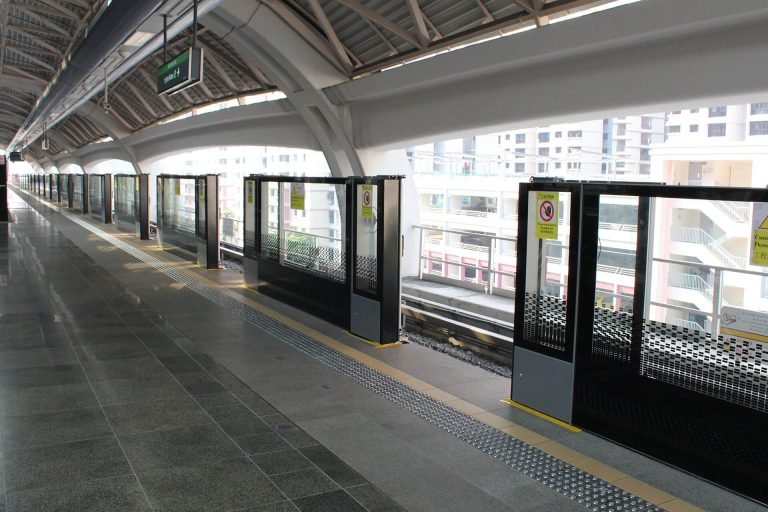
Chennai (Metro Rail News): The joint venture between Panasonic Manufacturing (Beijing) Co. Ltd. and  Pioneer Fil-Med  Pvt. Ltd. has secured a 146.95 crore contract from Chennai Metro. The contract involves supplying and installing Platform Screen Doors for Chennai Metro’s Line 3 and Line 5.

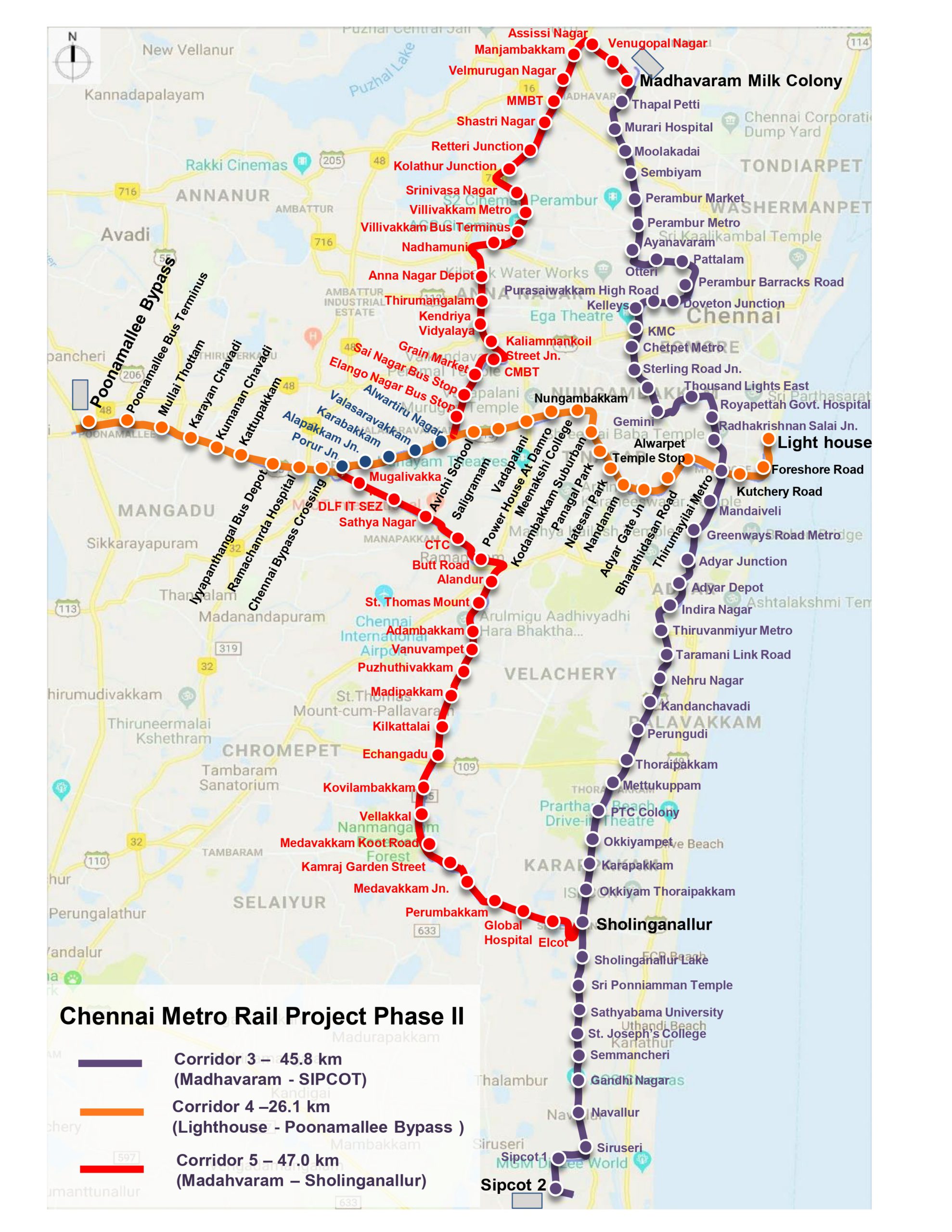
Chennai Metro Phase 2 Map

Line -3 and Line-5 of Chennai Metro will operate in a North-South orientation to link Madhavaram – SIPCOT (45.4 km Line-3) and Madhavaram – Sholinganallur (44.6 km Line-5), Respectively, through both elevated and underground stations. 

The contract’s scope includes the design, manufacture, supply, installation, testing, and commissioning of Platform Screen Doors. 

In Corridor-3, the contractor will install PSDs at 29 underground stations between Madhavaram Depot Station and Tharamani Station.

In Corridor 5, PSDs will be installed at 5 underground stations falling between Kolathur Junction Station and Nathamuni Station.

Final Contract Value: INR 85,36,03,003 + USD 7,392,013 (approx. INR 146,95,66,140.67 or 146.95 crore)

Deadline for the contract: 1465 Days ( approximately four years )

Other contracts for Platform Screen Doors

Another 2 packages by CMRL for installing platform screen doors:

Package ASA12A: In November 2023,  ST Engineering Urban Solutions Ltd. secured this package. Under this contract, ST Engineering is responsible for installing Platform Screen Doors at 10 elevated stations of Line 3 (Sholinganallur Lake – SIPCOT 2). Additionally, they will install PSDs at 29 stations of Line 5 (Grain Market – Elcot).

Package ASA09: The work under this package includes the PSDs at 10 elevated stations of Line-3 (Nehru Nagar – Sholinganallur) and 10 elevated stations of Line-5 (Assissi Nagar – Koyambedu). Currently, the bids are under technical evaluation for this package.

Ongoing development On Line 3 & 5 of Chennai Metro

Line-3’s 29 stations are under construction by DRA – Soma JV Tata Projects Ltd. and Rail Vikas Nigam Ltd. 

Line-5’s five underground stations are under construction by Tata Projects Ltd. 

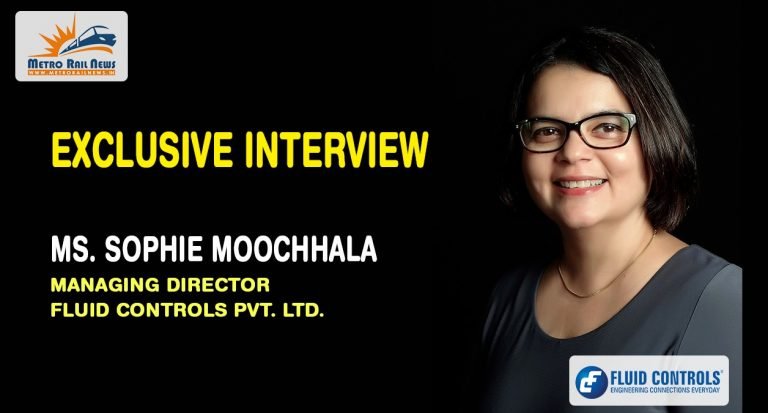
Exclusive interview of Sophie Moochhala on the occasion of International Women’s Day

To celebrate International Women’s Day, our Managing Editor Mr. Narendra Shah had a conversation with Ms Sophie Moochhala – Managing Director – Fluid Controls Private Limited. In which she speaks about the Company business strategy, Atmanirbhar Bharat Policy and Growth in a Post-COVID Situation.

Tell our readers about various innovative products recently developed for Metro & Railway Industries?
Fluid Controls Private Limited was established in 1974 by Dr. Y.E. Moochhala, a Ph.D. from Northwestern University, the USA with a vision to deliver high quality & high-performance products which delight customers. Fluid Controls offers customers comprehensive end-to-end “Make in India” solutions for Rail & Metro brake piping arrangements – from design & engineering services to supply of high-performance products and installation services. From its inception in 1974, Fluid Controls has engaged in original R&D and also has had an ethos of developing indigenous replacements for imported products. Our founder, Dr. Y E Moochhala, after a successful career in the USA decided to return to India because he was a strong believer in a self-reliant India. His idea was to develop high quality, high-performance products to suit local prototype climatic and performance expectations. Today, Fluid Controls is approved as an “In-House R&D unit” by the Department of Scientific & Industrial Research (DSIR), Government of India. Since 2011, we have developed more than 25 new products, which is very much in line with the Fluid Controls vision statement. Adding to our strength in innovating, Fluid Controls has filed its first Global Patent and
is in the process of filing two more patents. Particularly for the Rail & Metro Industry Fluid Controls has developed Across Frame Connectors for connection of pipelines between the shell and bogie for high-speed electric locomotives. These connectors eliminate welding processes and allow for seamless connection of pipes between the shell and bogie. Across Frame connectors also, reduce component parts required to be purchased as they are integrated fitting assemblies. Fluid Controls has also developed an entire range of FlexiGripTM connectors to provide zero-leakage and vibration resistant connections Here are the excerpts from the
interview:- “Success is a multi-faceted word! Professionally, for me, success is to build a brand which is trusted by customers
and which delights customers.” Sophie Moochhala Managing Director Fluid Controls Pvt. Ltd. between misaligned pipes or between pipes of different materials. The triple sealing action of the split ring, washer and O ring provides for a completely leak-proof connection. The split ring also provides superior vibration resistance by ensuring the joint remains in a springing condition. As an ongoing part of product development, Fluid Controls also customizes standard products to suit specific customer requirements.

How do you see the Govt of India’s Atmanirbhar Bharat policy?
Fluid Controls is a “Vocal for Local” MSME organization and we whole-heartedly support the Atmanirbhar Bharat initiative. Domestic manufacturers have the capability – be it in manufacturing, quality, or R&D – to cater to domestic requirements across sectors. In the past, legacy international vendors and lack of firm procurement policies constrained the effective implementation of “Make in India”. Atmanirbhar Bharat, which clearly outlines procurement policies, will go a long way to boost domestic manufacturers, especially in the MSME sector. With our manufacturing and R&D capabilities, Fluid Controls can contribute immensely to provide high quality, high-performance products to all sectors in the move to localize supplies.

Please share some of your value-added, problem-solving product and services offered by Fluid Controls?
A good example of a product we developed is the Fluid Controls Hydraulic Swaging Unit (HSU), which is a tool to ensure that twin ferrule connectors are installed correctly at the site. The unique feature of our HSU is that there is no need for manual intervention in the process. We also offer design and engineering services and have completed conversion projects (from one connector system to another) for several customers.

How Covid-19 outburst the Fluid Control’ business and the step you have taken to overcome it?
During the onset of the Pandemic COVID-19, our primary focus was to ensure the health and safety of our employees, their families, our customers and our business partners. And we had changed the way we approach every task and every activity. We had to adapt our model of operation since face-to-face meetings and interaction were not possible for some months (and we are still work-from-home at our Mumbai office!). We have invested in ERP and Microsoft Teams software to ensure the ease of teamwork and connectivity. To ensure seamless day-to-day operation, each department head would hold a daily telephonic meeting to discuss tasks and the way ahead. We also had to change the way we conducted our external business. During the lockdown period, Fluid Controls engaged with customers via video conferencing and calls. And, to ensure the least disruption in schedules, we have provided regular updates on our business status and order status to them. As many of our customers still do not allow business visits, we continue to have a virtual engagement with them. Once our plant became operational in May 2020, we provided our employees with a safe working environment. Whilst a major part of our staff is still working from home, “Operational Safety” being the primary parameter for the health and safety of people at work in the plant, we have planned our manufacturing with a system and process-focused approach. At Fluid Controls, we “Engineer Connections every day”. And in the time of the COVID-19 pandemic, we learnt how to “Adapt Everyday”!

What is your view on Business Growth in a Post COVID Situation?
I am very optimistic about the post-COVID growth situation and increased Union Budget allocations this year for railways will definitely lead to more business for companies such as ours. In addition, we are very positive that the focus on freight, Metros and RRTS/LRTS networks will result in an increasing demand
for rolling stock.


What are the Metro Projects in which Fluid Controls currently associated?
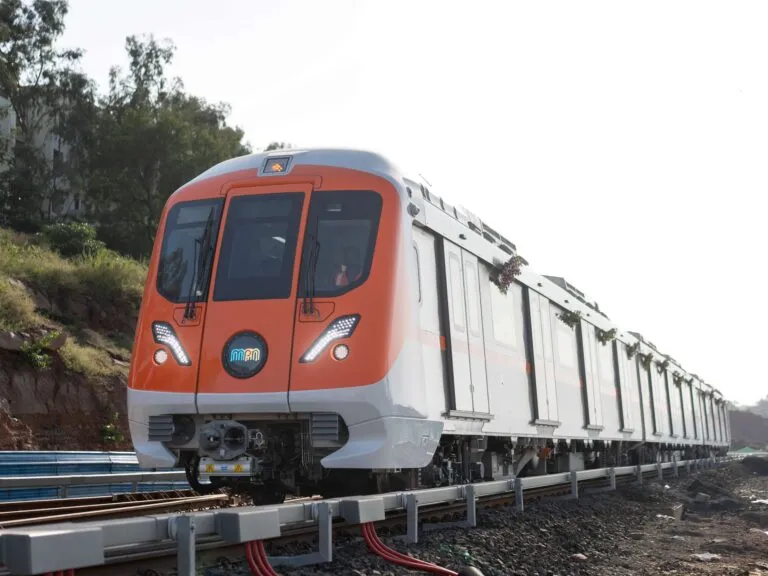
We are currently associated with projects for Mumbai Metro, Pune Metro, Delhi Metro and Chennai Metro. BEML suppled the First Driverless Metro Train developed in India form Mumbai Metro Line 2A.

What is the role of fluid Controls in the development of this true Atma Nirbhar product?
We are very happy to have been associated with BEML for Mumbai Metro. The Metro cars supplied by BEML have Fluid Controls DIN Single Ferrule connectors installed in the brake piping system. This is a very big achievement for Fluid Controls and we are very proud to have been approved by BEML for this project. Coming from a non-technical background,

how do you manage the most senior management position of an innovative product engineering company?
“Success” is a multi-faceted word! Professionally, for me, success is to build a brand that is trusted by customers and delights customers. At an organizational level, it is to build a team that is motivated, innovative and performs to high expectations. In this context, my having or not having an engineering background doesn’t really matter as I am supported by a team that has stellar engineering credentials.

What are the company’s business strategy and future expansion plan concerning the Metro & Railway market?
Over the years, Fluid Controls has developed comprehensive expertise for manufacturing, by identifying the right materials and ensuring “fit and forget” assembly. For Rail & Metro applications, we offer complete fitment of brake piping components, engineering and site installation services, pre-piped assemblies for easy site fitment, double ferrule fittings, DIN single ferrule fittings, threaded adaptors, Across Frame connectors, FlexiGripTM connectors, quick release connectors, isolation valves and clamps. A key part of our future plans is to tap into the brake piping business for the emerging high-speed train operations and to offer integrated solutions and hose assemblies to our current customer base. We are also focusing on global supplies to Europe, North America and SE Asia


As Bhopal Metro Work Advances, Traffic Pressure Mounts on Jawahar Chowk-New Market Road 

BHOPAL (Metro Rail news): Bhopal Metro’s Bhadbhada-New Market corridor is facing a difficult traffic situation as Blue Line’s metro construction moves ahead and the festive season brings more vehicles to the area.

The problem is not only the metro work. E-rickshaws, roadside parking and encroachments are also taking up valuable road space on a stretch that already sees heavy traffic.

Bhopal Metro stretch faces traffic pressure 

The traffic situation is particularly difficult between Jawahar Chowk and New Market. Private vehicles already create regular traffic jams on this road. The large number of e-rickshaws parked along the stretch is making things worse. At different points, nearly 100 e-rickshaws can be seen parked or waiting on the road.

When these vehicles stop along busy roads, they leave less space for other vehicles to move. During peak hours, even a small reduction in road space can slow traffic across the area. An urban development expert said the e-rickshaw issue needs to form part of the wider traffic plan for the Bhopal Metro work. The expert said the number of e-rickshaws is high enough to need proper planning. Their movement and roadside stopping can further slow traffic, the expert added.

Metro agency and traffic police have different roles

The question now is who should deal with the problem. MPMRCL officials said the metro contractor must take the required permissions before starting construction and follow the conditions attached to those permissions. However, traffic control is the responsibility of the traffic police, according to MPMRCL officials.

This creates a problem when several issues come together on the same road. Metro work reduces the space available for vehicles. E-rickshaws occupy more of that space. Encroachments reduce it further. Traffic police then have to manage the vehicles that remain on the road. For commuters, these are not separate problems. They all contribute to the same traffic jam.

E-rickshaw restrictions need stronger enforcement

The traffic police have recently banned e-rickshaw movement on 12 routes. The restricted routes include the Katju Hospital-Rangmahal route and Roshanpura. The move shows that the traffic police have identified e-rickshaws as a problem on busy roads. But simply announcing restrictions will not solve the issue.

Officials also need to ensure that e-rickshaws follow these rules on the ground. If drivers continue to enter restricted roads or park at busy points, the restrictions will have limited effect. Bhopal Metro’s Jawahar Chowk-New Market stretch will be an important test of how well these rules work during the festive rush.

Encroachments add another problem

Roadside encroachments are also taking away space from traffic. A BMC official said the civic body carries out removal drives from time to time. Last week, BMC removed some street vendors from Boulevard Street. But some vendors returned soon after the drive. This raises a simple question: what is the point of removing encroachments if the same problem returns within days?

The situation around the Rang Mahal intersection is also a concern, where no similar action has been clearly visible. The problem becomes more serious when road space is already limited because of metro construction.

Authorities need one traffic plan

The biggest weakness here is the lack of a visible joint approach. MPMRCL, the traffic police and BMC each have different responsibilities. But the road does not work in separate parts.

A metro barricade, an illegally parked e-rickshaw and a roadside stall all create the same problem for a driver, less space to move. That’s why authorities need to work from one common traffic plan.

What should be done?

The steps do not need to be complicated:

  • Keep metro work areas as small as possible: Contractors should use only the road space they actually need.
  • Create proper e-rickshaw stands: Drivers should have fixed places to pick up and drop off passengers.
  • Keep busy junctions clear: E-rickshaws, cars and vendors should not be allowed to occupy key turning points.
  • Increase traffic police presence: Officers should focus on the busiest points during morning and evening peak hours.
  • Stop encroachments from returning: BMC should monitor cleared areas instead of relying only on occasional drives.
  • Plan construction work around peak traffic: Activities that block more road space should happen during less busy hours wherever possible.
  • Give commuters clear information: Authorities should clearly mark diversions and changes in traffic movement.

This problem is common during metro construction

Bhopal is not the only city facing this issue. Metro projects across India often have to use existing roads while construction continues. This can reduce road space for several months or even years. The same pattern can be seen in many cities. Roads already face heavy traffic, metro work takes away some space, and then parking, e-rickshaws and roadside businesses use more of the remaining space.

This does not mean metro construction should stop. Cities need public transport and large projects will always cause some temporary disruption. But authorities need to plan for that disruption before construction begins. A proper traffic plan should come with every major metro project. Authorities should identify busy roads, alternate routes, parking areas, e-rickshaw stands and pedestrian paths before putting up barricades.

They should also review the plan regularly as construction moves from one section to another. Most importantly, the metro agency, traffic police and municipal body should not wait for traffic jams to become a daily problem before acting.

The festive season will be the real test

Bhopal Metro’s Bhadbhada-New Market stretch is now heading into a period when traffic will naturally increase. That makes the current situation more important. If authorities cannot control roadside parking, e-rickshaw movement and encroachments now, congestion could become much worse during the festive rush. Metro construction will continue, but the traffic problems around it do not have to become unmanageable.

Also Read: Bhopal Metro gains traction as Afcons erected Blue Line’s first segment

Pune Metro Line 3 Launch Delayed: Safety Clearance Required for Additional 5 Stations

PUNE (Metro rail News): The long-delayed Pune Metro Line 3 is now chasing a fresh deadline even after getting clearance from CMRS. The Hinjewadi-Shivajinagar Metro corridor was expected to enter service earlier this year, but the launch kept moving. 

PMRDA first worked towards a June-end opening for the initial 12 stations. That deadline passed. In August, officials indicated that Prime Minister Narendra Modi could inaugurate the first stretch in early September. That window has also passed without a confirmed launch date. 

The latest target is now September-end. Prime Minister Narendra Modi is expected to inaugurate the line virtually, but his schedule has also not been finalised yet. The inauguration date will therefore depend on both the completion of CMRS inspection and the availability of the Prime Minister.

Pune Metro Line 3 launch awaits clearances for 5 more stations

The Commissioner of Metro Railway Safety (CMRS) has already cleared the first 12 stations of the 23.23-km Hinjewadi-Shivajinagar corridor of Pune Metro Line 3. However, PMRDA now wants to start operations with 17 stations instead of the earlier plan for 12 stations. The additional five stations need to undergo the required safety inspection before they can be included in passenger operations. According to PMRDA Metropolitan Commissioner Abhijit Chaudhari, the CMRS is expected to inspect these stations next week.

PMRDA can start services only after it receives the necessary safety clearances from CMRS. Abhijit Chaudhari has indicated that the launch date of Pune Metro Line 3 could be confirmed within a couple of days, but the September-end timeline remains dependent on these approvals. This means the corridor is still not at the stage where a firm opening date can be announced.

Six stations will remain closed initially

Under the revised opening plan, passenger services will begin without six stations. These stations are:

  • Laxmi Nagar
  • Balewadi Phata
  • Baner Gaon
  • Baner
  • Reserve Bank of India
  • Shivajinagar

PMRDA can start metro services with 17 stations without waiting for the entire corridor to become ready. It will continue work and pursue safety clearances for the remaining stations separately. The first phase will cover only 17 of the 23 stations on Line 3. This means passengers will not get a full Hinjewadi-to-Shivajinagar journey when services will start. 

A 23.23-km link between Hinjewadi and central Pune

Pune Metro Line 3 is being developed as a 23.23-km corridor connecting Hinjewadi with Shivajinagar. The elevated line passes through key areas, which include Wakad, Balewadi and Baner before reaching central Pune. Its primary goal is to provide a mass-transit alternative to the heavily congested road network between Hinjewadi’s IT hub and central Pune. The corridor is expected to serve a large number of employees and residents who are travelling between Hinjewadi and areas such as Baner, Balewadi and Shivajinagar. 

Pune Metro Line 3 launch still hangs on clearances 

The repeated changes in the opening timeline have made the safety clearance the biggest hurdle for Line 3. The first 12 stations have already received CMRS clearance, but PMRDA’s decision to expand the initial operating stretch to 17 stations has created another clearance requirement before those additional stations can open.

That makes the next few weeks critical. If the five-station inspection proceeds as planned and the required approvals arrive on time, PMRDA could still start services by the end of September. If the process takes longer, the latest deadline could slip again.

As of now, Pune Metro Line 3 has a target, but not a confirmed launch date. The corridor’s first passenger service will depend on what happens with the remaining safety inspections and the final inauguration schedule.

Also Read: IT companies step in to build direct footbridges to Pune Metro Line 3 stations

Assam Achieved 100% Railway Electrification on BG Network in Just 12 Years

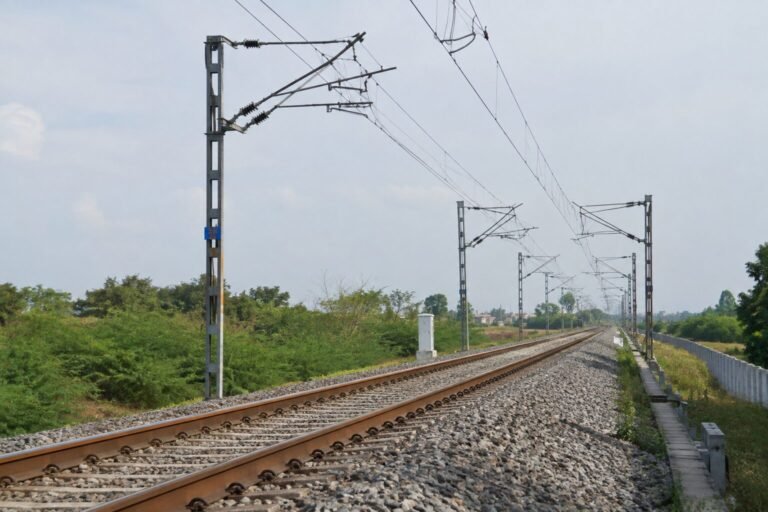
ASSAM (Metro Rail News): Assam has achieved 100% electrification of its entire Broad Gauge (BG) railway network, covering around 2,589 route km. The final major stretch to be electrified was the 169-km Lumding–Badarpur Hill section, completing Assam’s transition to an entirely electric BG railway network.

The railway projects in Assam come under the Northeast Frontier Railway (NFR) zone.This milestone was achieved in just 12 years, in a State where much of the railway network was not even Broad Gauge before 2014.

As per Ministry of Railways press release in July 2026,Indian Railways has achieved 99.6% electrification of its Broad Gauge network, placing India ahead of China, Japan and the UK in railway electrification. The progress has reduced diesel consumption by 185 crore litres, while the remaining sections are being electrified to achieve the 100% target.

Lumding–Badarpur Hill section in Assam was one of the most challenging sections to electrify because it passes through the hilly terrain of Assam. In June 2026, when a 132 kV transmission line connecting Haflong Grid Sub-Station to the New Haflong Traction Sub-Station was energised. This helped provide the traction-power infrastructure required for electric train operations on the hill section.

Electrification helps trains operating across the zone can use electric traction without requiring a traction change within the electrified network. Complete electrification will enhance operational flexibility, improve locomotive utilisation and contribute to more reliable and efficient train services. 

Complete electric traction coverage across the network will reduce the dependence on fossil fuels. The 100% electrification milestone supports Southern Railway’s transition towards a cleaner and more sustainable railway system and forms part of the zone’s modernisation efforts.

Assam is an important railway gateway to the Northeastern region,under Northeast Frontier Railway (NFR) .Completing electrification across its entire BG network creates a continuous electric-traction network within the state and strengthens railway operations in the region. 

Read more: Indian Railways leads network electrification list ahead of China, Japan & UK 

Patna Metro Route Realignment to Bypass Statutory Approval Hurdles

PATNA(Metro Rail News): The Patna Metro project encountered a minor tweak in the route alignment. The existing underground route of the Patna Metro passes beneath the Zoo Area, which would require a lengthy procedure to obtain approvals and NOC from the organisations concerned. Bringing this issue to the centre, Sandeep Kumar R

Pudkalkatti, Managing Director, Patna Metro Rail Corporation, had a discussion with officials on the design and construction of the underground route near the zoo area, as reported by ETInfra.

To materialise this move, the Delhi Metro Rail Corporation, which is serving as the nodal agency of the Patna Metro project, has been tasked with incorporating the revised changes in the construction plan.

The decision was taken to avoid delays in project implementation. The revised alignment will be designed in a way that the zoo boundary remains untouched by the metro alignment.  Four Tunnel Boring Machines are expected to start the excavation in the aforesaid area by November. The two TBMs will move toward Patna Metro Junction; meanwhile, the remaining two will be moved toward Rukanpura Station. 

Patna Metro Network

As of now, 2 corridors are planned to connect all the major regions of Patna city. One of the two corridors will run  17.93km via both elevated and underground sections. The first underground stretch will connect Patna Junction and Rukanpura. 

Line 2 will span 14.55 km and feature a 7.8 km underground section. As of now, commercial operations are underway between ISBT and Malahi Pakri.The underground section is currently under construction, and it will cover Rajendra Nagar, Moin-ul-Haq Stadium, Patna University, PMCH, Gandhi Maidan, Akashvani and Patna Junction.

Kolkata Metro Stations Renaming: Netaji Bhavan,Uttam Kumar stations on Panel’s List

KOLKATA (Metro Rail News): The West Bengal government’s committee examining proposals to rename roads, bridges and other public places is now planning to examine Kolkata Metro stations as well.

Netaji Bhavan Metro Station is one of the stations being considered. Netaji Bhavan has not been officially renamed. The station’s name is only under consideration by the committee at this stage. They are also considering the renaming of Mahanayak Uttam Kumar Station.

Both stations are located on the Blue Line of Kolkata Metro and are located in the Bhawanipore area (Netaji Bhavan) and Tollygunge ( Mahanayak Uttam Kumar Station).

Netaji Bhavan, originally known as Bhawanipore, was later renamed ‘‘Netaji Bhavan’’, reflecting its proximity to Netaji Subhas Chandra Bose’s ancestral home and memorial. 

Tollygunge is closely associated with Bengali cinema and is home to several film studios. The station was renamed Mahanayak Uttam Kumar in honour of the legendary Bengali actor Shri Uttam Kumar, who is widely known as the ‘Mahanayak’ of Bengali cinema.

According to the report of Times of India, Senior BJP functionary and member of the panel Shri Tathagata Roy said, ” He would propose that metro stations named after famous persons be renamed based on their locations to avoid confusion among commuters. He wants Netaji Bhavan and Mahanayak UttaKumar stations to be reverted to their original names, Bhowanipore and Tollygunge, respectively. 

Shri.Roy argued that Netaji Bhavan station is not located close to Netaji Subhas Chandra Bose’s ancestral residence on Elgin Road and that using the locality name Bhowanipore could make the station easier for commuters to identify.

He also proposed the renaming of Hemanta Mukhopadhyay (Ruby Crossing),Jyotirindra Nandy(Mukundapur Crossing),Swapno Bhor(New Town). All three are on the Kolkata Metro Orange Line, which is planned to connect New Garia with the airport once the line is completed. 

Shri. Roy also raised an issue with the name of Beleghata Metro Station on the Orange Line. He said that Beleghata station is actually located around Metropolitan on EM Bypass, away from the main Beleghata area. 

Renaming Committee Chairperson Shri Swami Pradiptananda mentioned that the proposed changes were intended to address commuter difficulties, not for political reasons. 

These are proposals by a member of the renaming panel, not approved station-name changes. The 10-member committee is expected to begin its formal work after Durga Puja, with road renaming proposals reportedly being taken up first. 

Read more : Kolkata Metro Orange Line clears 6 year Chingrighata delay

Delhi-Karnal & Delhi-Bawal Namo Bharat Corridors Near Cabinet Approval

NEW DELHI (Metro Rail News): Two new Namo Bharat corridors connecting Delhi with Panipat-Karnal and Gurugram-Bawal are moving closer to approval. The Union Cabinet could clear the projects soon. The proposed corridors could reduce travel time from Delhi to Karnal to around 90 minutes and from Delhi to Bawal to about 67 minutes.

The National Capital Region Transport Corporation (NCRTC) has already started preparatory work on both corridors while waiting for the Centre’s approval.

Delhi-Karnal Namo Bharat Corridor: Travel Time Could Reduce by Half

The proposed Delhi-Panipat-Karnal Namo Bharat corridor is expected to bring the journey between Delhi and Karnal down to around 90 minutes. At present, the journey can take nearly three hours. 

NCRTC Managing Director Shalabh Goel told Financial Express Digital that the corridor is expected to reduce the travel time by about half. The route will connect several major urban, industrial and educational locations, including:

  • Education City at Kundli in Sonipat
  • Barhi Industrial Area
  • Panipat
  • IOCL refinery
  • Karnal

The corridor could therefore serve a mix of students, industrial workers and daily commuters travelling between these centres and Delhi.

Delhi-Bawal Namo Bharat Corridor: Journey Targeted at 67 Minutes

The second proposed corridor, Delhi-Gurugram-Bawal, is expected to cut travel time between Delhi and Bawal from around 180 minutes to approximately 67 minutes. The route will connect major employment and industrial centres such as:

  • Gurugram
  • Manesar
  • Manesar-Bawal Investment Region (MBIR)
  • Bawal

The corridor is also expected to connect with the Namo Bharat network serving Delhi Airport, improving access between the airport, Gurugram and the industrial belt towards Bawal.

Cabinet approval awaited

Both corridors are at an advanced stage of the approval process, according to NCRTC. While the Centre’s Cabinet approval is awaited, NCRTC has started preparatory activities at proposed project locations. These include:

  • Geotechnical investigations
  • Utility mapping
  • Identification and shifting of utilities
  • Modification of extra-high-tension (EHT) power lines
  • Shifting or modification of water pipelines

Starting these activities before the final approval could help reduce the time needed to begin major construction once the projects receive the go-ahead.

Proposed Namo Bharat corridors

CorridorsKey ConnectionsProposed Travel Time
Delhi-Panipat-KarnalDelhi-Karnal90 minutes
Delhi-Gurugram-BawalDelhi-Bawal60 minutes

The projects are being planned as part of regional NCR’s wider regional rapid transit network. The first Namo Bharat corridor between Delhi, Ghaziabad and Meerut has already established the model for faster regional journeys.

Focus on regional growth

NCRTC sees the proposed corridors as more than faster transport links. The organisation expects improved regional connectivity to spread economic activity beyond Delhi and support the growth of emerging urban centres.

Transit-Oriented Development (TOD) around Namo Bharat stations could also encourage mixed-use development close to transit nodes. This could bring housing, offices, commercial activity and other services closer to stations. The projects are also expected to generate employment during construction and later during operations and maintenance.

Also Read: Namo Bharat Corridor Sets New Ridership Record with Over 1.6 Lakh Passengers

South Western Railway Floats ₹426.22 Cr Tender for Project General Management Services

NEW DELHI (Metro rail News): South Western Railway (SWR) has invited bids for Project General Management Services (PGMS) for its Construction Organisation. The estimated cost of the contract is around ₹426.22 crore.

South Western Railway has set a 48-month period for the project and will follow a two-packet bidding system for the tender.

Tender Details 

InformationDetails
Tender Number PGMS-CN-SWR 
Estimated Cost₹426.22 crore
Earnest Money Deposit (EMD)₹8.52 crore
Completion period48 months
Pre-bid conference12 October 2026, 11:00 AM
Bid Submission Deadline8 January 2027, 3:00 PM

Scope of Work

The work includes Request for Proposal (RFP) for Providing Project General Management Services for construction organization, South Western Railway. 

About South Western Railway

South Western Railway is one of the 19 operational zones of Indian Railways. It has its headquarters at Rail Soudha in Hubballi, Karnataka. The zone covers mainly Karnataka, which makes up around 84% of its network. Its network also extends into parts of Goa, Andhra Pradesh, Tamil Nadu and Maharashtra. South Western Railway plays an important role in connecting Karnataka with neighbouring regions. It manages passenger and freight routes and also works on several infrastructure development projects.

South Western Railway has been working to increase track capacity and expand the use of green energy. The zone has commissioned more than 83 km of new double and extended tracks to improve network capacity. It has also increased its renewable-energy capacity to 8.4 MWp through solar power projects. South Western Railway has also reported zero consequential train accidents, showing its focus on safety along with infrastructure development.

Also Read: Southern Railway Achieves 100% Electrification: A 95-Year Journey from 1931 to 2026

Tambaram Railway Station to Get More Tracks and Better Passenger Facilities

CHENNAI (Metro Rail News): Southern Railway has proposed increasing the number of tracks at Tambaram Railway Station from 10 to 15 to handle more long-distance trains. The expansion could strengthen Tambaram’s role as Chennai’s third railway terminal and help reduce pressure on Chennai Egmore. Track and platform extension works are already underway and are expected to be completed by March 2027 .

Why does Tambaram Railway Station need more tracks and a ₹19 cr upgrade ?

Tambaram handles more than 3.5 crore passengers every year and is expected to take on a larger role in long-distance train operations. The additional tracks would provide more space to operate trains towards southern Tamil Nadu and northern parts of the country, while giving Southern Railway greater flexibility in managing services.

Further, Egmore is undergoing redevelopment Shifting or expanding some train operations at Tambaram could provide Southern Railway with greater flexibility in allocating trains and platforms. Egmore handles a large number of long-distance services, particularly towards southern Tamil Nadu.  

Along with the track expansion, passenger facilities are being improved at a cost of around ₹19 crore. A new Foot Over Bridge (FOB) is being built on the northern side, with a waiting hall and elevated ticketing facility. The station will also get 9 lifts and 10 escalators, connecting the platforms and making movement easier for senior citizens and passengers carrying luggage.

Many long-distance trains use Platforms 7 and 8, which are relatively narrow. This can make it difficult for passengers, especially senior citizens and those carrying heavy luggage, to reach the platforms. The new FOB, lifts and escalators are intended to provide easier and more convenient access without relying mainly on stairs.

Also Read: Southern Railway Achieves 100% Electrification: A 95-Year Journey from 1931 to 2026

Indian Railways Freight Loading Grows 5.4% to 137.9 MT in August 2026 as 5 New Gati Shakti Terminals Open

NEW DELHI (Metro Rail News): Indian Railways recorded a 5.4% year-on-year increase in freight loading in August 2026. The railway loaded 137.9 million tonnes of freight during the month, up from 130.9 million tonnes in August 2025. Freight revenue also rose 6.27% in August. The growth shows that Indian Railways continues to expand its freight business.

The increase came alongside the commissioning of five new Gati Shakti Cargo Terminals (GCTs), taking the total number of operational terminals to 149 as of August 31.

Indian Railways freight loading crosses 137 million tonnes

Indian Railways loaded 137.9 million tonnes of freight in August 2026, up from 130.9 million tonnes in August 2025. The growth was supported by higher movement of several major commodities:

CommodityGrowth in loading
Iron ore12.1%
Clinker10.4%
Domestic containers9.2%
Coal6.0%
Finished steel4.9%
Mineral oil3.1%
Fertilizers1.6%
Other goods8.2%

Iron ore recorded the highest growth among the listed commodities at 12.1%, while coal loading rose 6%. Container traffic also grew 9.2%, which indicates higher movement of a wider range of goods through the rail network.

Freight revenue rises 6.27%

Freight revenue increased 6.27% year-on-year in August. The rise in both loading and revenue comes as railways continue to handle large volumes of industrial raw materials and finished products. Coal, iron ore, steel and fertilisers remain important components of the freight basket. 

Higher rail movement also supports supply chains by moving bulk commodities between production centres, industrial clusters and consumption markets.

Indian Railways opened 5 new Gati Shakti Cargo Terminals 

Indian Railways commissioned five Gati Shakti Cargo Terminals during August. This took the cumulative number of commissioned GCTs to 149 by August 31, 2026. The new terminals are located at:

  • Shivlakha, Gujarat
  • Nalli, Tamil Nadu
  • Shaktinagar, Uttar Pradesh
  • Deoragram, Madhya Pradesh
  • Brajrajnagar, Odisha

The GCT network is intended to bring dedicated freight-handling infrastructure closer to industrial and commercial centres. By providing additional loading and unloading points, these terminals can reduce the need for longer road-based first- and last-mile movements. They can also help speed up freight evacuation from production and consumption locations.

Railway freight network expands beyond bulk commodities

The August figures show that growth was not limited to traditional bulk freight. Domestic container loading increased 9.2%, while other goods registered an 8.2% rise. This wider commodity mix is important for Indian Railways as it seeks to increase its share of the country’s overall freight market. Better terminal connectivity can make railway a more practical option for industries that move smaller or more diverse consignments.

The expansion of GCTs is also aimed at linking rail freight more closely with the country’s broader logistics network.

Also Read: Indian Railways Launches 1st Direct Freight Train to Nepal, Boosting Cross-Border Trade

Delhi Metro Golden Line’s Tughlaqabad-Sangam Vihar Stretch Targeted for December 2026 Opening 

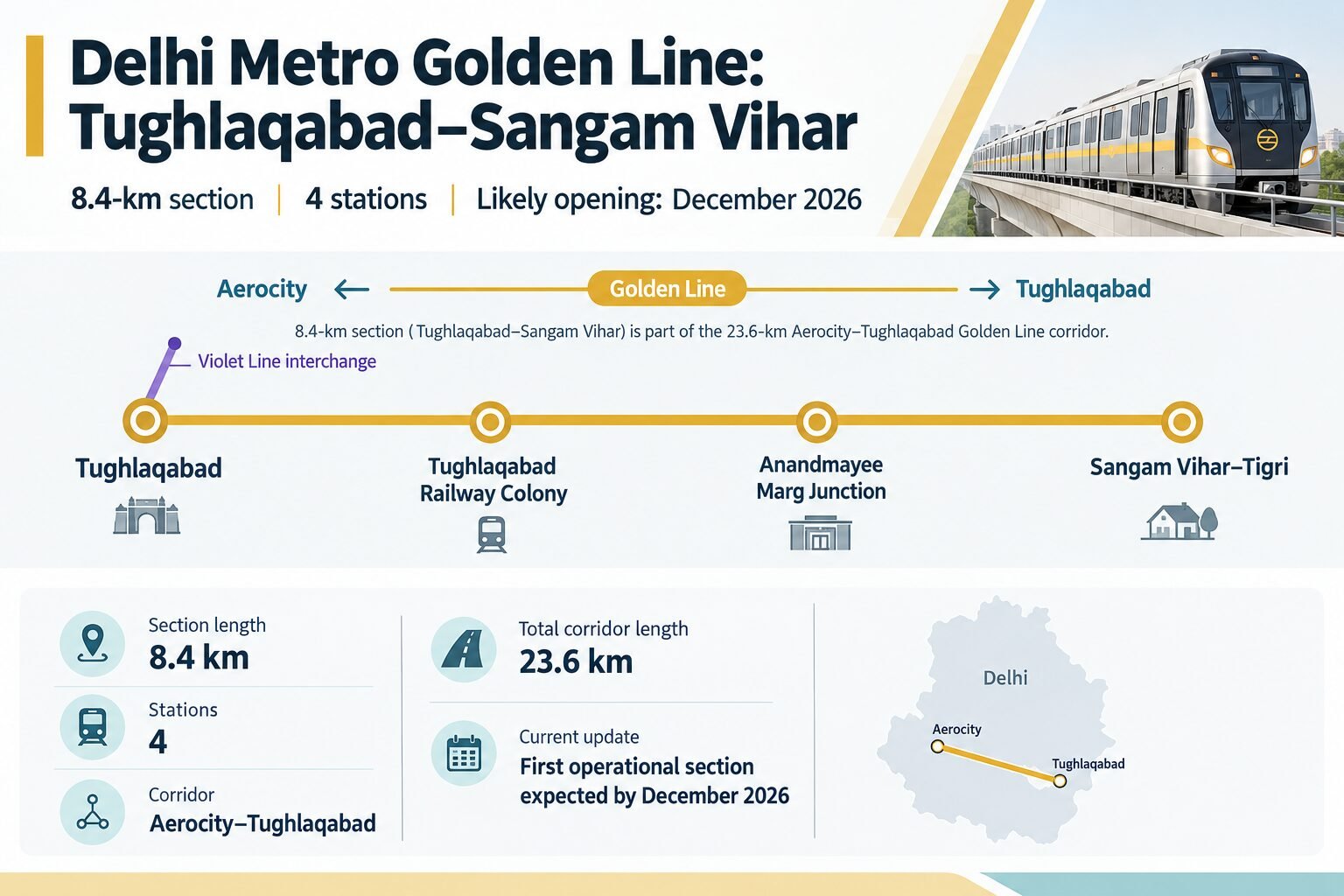
NEW DELHI (Metro Rail News): Delhi Metro’s Golden Line could see its first trains running between Tughlaqabad and Sangam Vihar by December 2026. The 8.4-km stretch is expected to become the first operational section of the 23.6-km Aerocity-Tughlaqabad corridor.

More than 83% of the civil work on the Golden Line has been completed, according to the Delhi Metro Rail Corporation (DMRC). The Tughlaqabad-Sangam Vihar section is being targeted for completion by December, with the remaining corridor planned to open in phases.

Four stations set to open on Delhi Metro’s Golden Line stretch 

The 8.4-km section will have four stations:

  • Tughlaqabad
  • Tughlaqabad Railway Colony
  • Anandmayee Marg Junction
  • Sangam Vihar
image 2

Three stations – Tughlaqabad, Tughlaqabad Railway Colony and Anandmayee Marg Junction – will be underground. Sangam Vihar will be an elevated station. Tughlaqabad will also provide an interchange with the existing Violet Line, giving passengers a direct connection to the wider Delhi Metro network.

Anuj Dayal, Principal Executive Director, Corporate Communications, DMRC, said the section is expected to open by December, while the remaining parts of the corridor will become operational in subsequent phases.

Delhi Metro’s Golden Line to connect Aerocity with Tughlaqabad

The main Golden Line corridor will run 23.6 km between Aerocity and Tughlaqabad, with 15 stations. One of its more distinctive structures is a 2.4-km double-decker section between Sangam Vihar and Ambedkar Nagar. Metro trains will run on the upper deck, while road traffic will use the lower level.

The corridor is being developed as part of Delhi Metro’s Phase IV expansion. Once fully operational, it will strengthen east-west connectivity across south Delhi and provide another metro link towards the airport.

Three extensions will expand Golden Line to 38.2 km

DMRC is also developing three extensions that will take the Golden Line network beyond the Aerocity-Tughlaqabad corridor. With these projects, the combined Golden Line network is planned to reach 38.2 km.

ExtensionLength Phase
Lajpat Nagar-Saket G Block8.3 kmPhase 4
Aerocity-IGI Terminal 12.2 kmPhase 5(A)
Kalindi Kun-Tughlaqabad|3.9 kmPhase 5(A)

The Lajpat Nagar-Saket G Block extension will have a different operating approach. DMRC plans to run three-coach trains on the corridor, which will be India’s first metro corridor specifically planned around three-coach train operations. The shorter trains are intended for relatively short urban trips and will connect residential and commercial areas in south Delhi.

Airport connectivity gets another boost

The proposed Aerocity-IGI Terminal 1 extension will add another interchange at Terminal 1. The Terminal 1 station will connect with the Magenta Line, allowing passengers to transfer between the two corridors without relying on shuttle buses for movement between different parts of the airport. Aerocity will also emerge as a larger interchange point, linking the Airport Express Line, Golden Line and the proposed Delhi-SNB-Alwar RRTS corridor.

Kalindi Kunj-Tughlaqabad to link three cities

The 3.9-km Kalindi Kunj-Tughlaqabad extension will provide a direct connection between the Magenta and Violet lines. The link is expected to improve connectivity between Noida, Delhi and Faridabad, particularly for passengers travelling across the southern edge of the National Capital Region.

The immediate priority is the Tughlaqabad-Sangam Vihar section. With civil work on the overall Golden Line crossing 83%, DMRC is now working towards bringing the first stretch into service by December. The rest of the Aerocity-Tughlaqabad corridor will follow in phases, subject to completion of construction, systems work and mandatory safety clearances.

Also Read: Delhi Metro Phase-4: DMRC Floats Signalling Tender for Lajpat Nagar-Saket G Block Corridor

Texmaco Rail Bags ₹27.82 Cr Order from Hindalco for BTAP Rake & Brake Van

NEW DELHI (Metro Rail News): Texmaco Rail & Engineering Limited has secured a ₹27.82 crore order from Hindalco Industries Limited for the supply of one BTAP rake and one brake van for the Aditya Expansion Project. The domestic order is expected to be executed within eight months from the date of the purchase order (PO).

As per the company’s disclosure under Regulation 30 of the SEBI (Listing Obligations and Disclosure Requirements) Regulations, 2015, Hindalco Industries has awarded the order to Texmaco Rail.

Order Details

Information Details
Awarding AuthorityHindalco Industries Limited
SupplierTexmaco Rail & Engineering Limited 
Order value₹27.82 crore, including taxes
ScopeSupply of 1 BTAP rake and 1 brake van
ProjectAditya Expansion Project
Execution periodWithin 8 months from the date of PO

The order covers the supply of one BTAP rake along with one brake van for Hindalco’s Aditya Expansion Project. The company has not disclosed further technical specifications or the detailed delivery schedule in the order disclosure.

Boost for Texmaco Rail’s Freight Rolling Stock Business

The order adds to Texmaco Rail‘s portfolio of freight rolling stock supplies for industrial customers. The company manufactures and supplies railway freight wagons and related rolling stock for various applications. 

For Hindalco, the supply will support the requirements of its Aditya Expansion Project, while for Texmaco Rail, the order strengthens its order book in the industrial freight segment. The latest order highlights continued demand for specialised freight rolling stock from large industrial customers.

Also Read: Texmaco Rail Q1 FY27 : Net Profit jumps 67% to ₹50 Cr despite revenue drop to 16.9%

Delhi Metro Phase-4: DMRC Floats Signalling Tender for Lajpat Nagar-Saket G Block Corridor

NEW DELHI (Metro Rail News): Delhi Metro Rail Corporation (DMRC) has invited bids for a ₹78.65 crore signalling package for the Lajpat Nagar-Saket G Block corridor of Delhi Metro Phase-4. The contract will cover the design, installation, testing and commissioning of an interoperable signalling system for the new corridor.

Tender Details 

InformationDetails 
Tender NumberD2S06
Estimated Cost₹78.65 crore
Tender Security₹39.32 lakh
Completion Period30 months from NTP
Pre-bid Meeting17 September 2026, 11:00 hrs
Bid Submission Deadline12 October 2026, (11:00 am)  to 19 October 2026, (03:00 pm)

Scope of work

The contract includes design, supply, installation, testing & commissioning of Interoperable Signalling System for Lajpat Nagar – Saket GBlock Corridor (Line-11) of Delhi Metro Phase-4 MRTS.

About Delhi Metro Phase-4

The 8.385-km Lajpat Nagar-Saket G Block corridor is part of Delhi Metro Phase-4. The elevated corridor will have eight stations:

  1. Lajpat Nagar
  2. Andrews Ganj
  3. GK-1
  4. Chirag Delhi
  5. Pushpa Bhawan
  6. Saket District Centre
  7. Pushp Vihar
  8. Saket G Block

The corridor is planned as part of the Golden Line, which will strengthen metro connectivity across South Delhi. The corridor will provide interchange opportunities with existing Delhi Metro lines at key locations.

At Chirag Delhi, the new corridor will connect with the Magenta Line, while Lajpat Nagar will provide interchange with the Violet and Pink Lines. This will strengthen Lajpat Nagar’s role as a major interchange point, allowing passengers to transfer between three metro corridors.

Also Read: Delhi Metro: DMRC Awards ₹138.70 Cr Sanoth Depot Contract on Rithala-Kundli Corridor

Southern Railway Achieves 100% Electrification: A 95-Year Journey from 1931 to 2026

NEW DELHI (Metro Rail News): Southern Railway has achieved 100% electrification of its entire 5,068 route-kilometre Broad Gauge (BG) network.The milestone was achieved after electrification of the final 71-km Pattukkottai–Karaikkudi section in Tamil Nadu. The statutory inspection of this final section was completed on September 9, 2026, by Southern Railway Principal Chief Electrical Engineer Shri.Ganesh.

Southern Railway’s electric-traction journey dates back to May 11, 1931, when electric traction was introduced in the Madras region. Over the decades, the railway steadily expanded electrification across its network, marking a major shift from conventional diesel traction towards cleaner and more efficient electric operations.After a 95-year journey, Southern Railway has now achieved 100% electrification of its 5,068-km Broad Gauge network in 2026, marking a major milestone in its transition to complete electric traction.

https://twitter.com/RailMinIndia/status/2098290867979391145

Electrification helps trains operating across the zone can use electric traction without requiring a traction change within the electrified network. Complete electrification will enhance operational flexibility, improve locomotive utilisation and contribute to more reliable and efficient train services. 

Why Is Railway Electrification Important for Train Operations? 

Previously, where electrification was incomplete, trains could require a traction change when moving between electrified and non-electrified sections. For example an electric locomotive needs electricity from the overhead OHE (Overhead Equipment). If the next section does not have electrification, the electric locomotive cannot continue powering the train there. So the railway may have to replace it with a diesel locomotive.

A traction change takes additional operational time and requires crew coordination. Complete electric traction coverage across the network will reduce the dependence on fossil fuels. The 100% electrification milestone supports Southern Railway’s transition towards a cleaner and more sustainable railway system and forms part of the zone’s modernisation efforts.

Read more: Indian Railways leads network electrification list ahead of China, Japan & UK 

Vadodara Bullet Train Station to Feature 534-metre FOB With Travelators, 3 Bridges for Seamless Connectivity

VADODARA (Metro Rail News): A 534-metre-long Foot Over Bridge will be constructed at Vadodara Railway Station for the Mumbai-Ahmedabad Bullet Train project. The bridge will connect the Vadodara railway station and the GSRTC (Gujarat State Road Transport Corporation) central bus depot. It will be equipped with walkways (travellators) to make it easier for passengers to move between railways and bus services.

Two more FOBs linking Alkapuri and the station’s parking area

Another FOB of length 90 metres will connect the new bullet train station to Alkapuri, aiding passengers to pass over the tracks. Meanwhile, a 51-metre-long bridge will be constructed linking the station with the parking spaces and station plaza. 

Station to feature lifts, escalators, parking facilities alongside direct railway connectivity 

Facilities such as lifts and escalators will be installed for passengers’ convenience, so that they can move around freely between different levels of the station, said NHSRCL. The station will have comfortable waiting rooms, parking spaces, rest rooms, shops and separate pick-up and drop-off points for passengers. Meanwhile, the parking spaces will be accessible for cars, buses and auto-rickshaws. The bullet train station is being constructed in close proximity to the Vadodara railway station and Pandya bridge, and directly above Platform No. 7 of the railway station.

According to a National High Speed Rail Corporation Limited (NHSRCL) press release, the integration is aimed at providing hassle-free connectivity between the bullet train station and the existing railway station. In a post on X,  the NHSRCL highlighted the key stations and the bullet train’s potential to improve access to education, employment, research, entrepreneurship and professional opportunities.

 “With faster connectivity to Amdavad, Surat and Mumbai, the Vadodara Bullet Train Station will strengthen mobility and expand access to education, employment, research, entrepreneurship and professional opportunities,” NHRCL wrote. 

The ₹1.08 lakh crore Bullet Train project, spanning 508 km between Mumbai and Ahmedabad, will have its first section open from Surat to Bilimora from 15th August 2027.

Also Read: Parliamentary Panel pushes for Indigenous Bullet Trains and clearances before new corridors