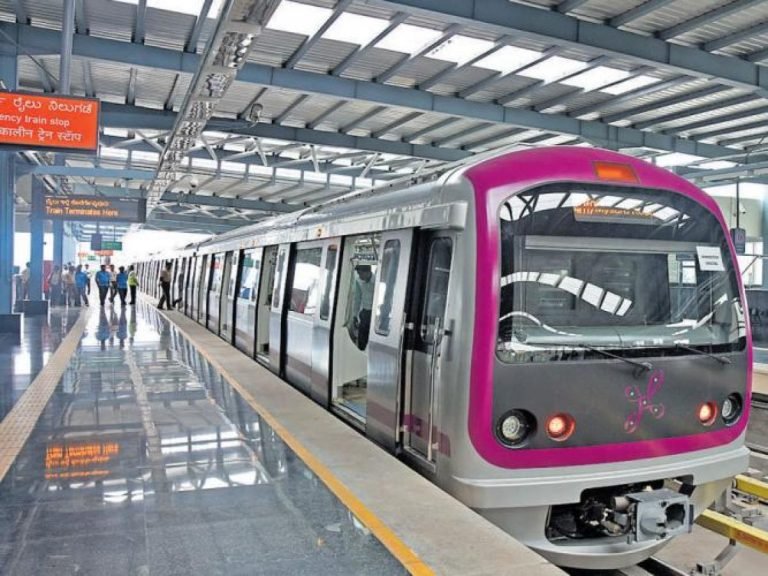
New Delhi: Prime Minister Narendra Modi has flagged-off the Delhi-Faridabad Metro Line that would allow hassle free travel for around two lakh daily commuters between the national capital and the industrial hub in Haryana.The extension of the Delhi Metro connects Badarpur to Escorts Mujesar in Faridabad.The total cost of the project from Badarpur to Escorts Mujesar is nearly Rs. 2,500 crore. Out of this, Rs. 1,557 crore was borne by the Haryana Government, the Centre contributed Rs. 537 crore, while the Delhi Metro provided Rs. 400 crore.The nine stations in this section include, Sarai, NHPC Chowk, Mewala Maharajpur, Sector 28, Badkal Mor, Old Faridabad, Neelam Chowk Ajronda, Bata Chowk and Escorts Mujesar. buy kamagra polo online https://lasernailtherapy.com/wp-content/themes/twentytwentytwo/inc/patterns/en/kamagra-polo.html no prescription
All these are elevated and located on either side of the Delhi-Mathura Road (NH-2).“The nine-station metro corridor which was 95 per cent indigenously built will provide people a safe, affordable, quick, comfortable, reliable, environment-friendly and sustainable transport facility,” a Haryana government spokesperson said.Haryana Chief Minister ML Khattar, addressing a press conference on Saturday, had thanked the Prime Minister for “gifting” the Metro service which would take the city to “another level of progress” with better connectivity with other NCR towns.He had also said that the Prime Minister would be announcing the go-ahead for connecting Gurgaon with Faridabad by Metro.
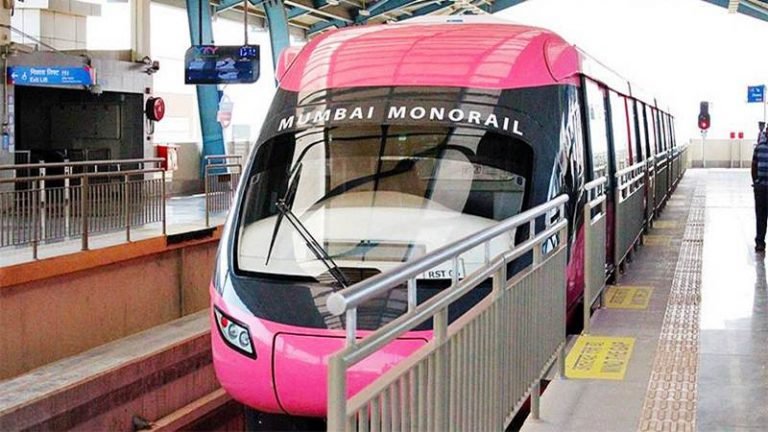
MUMBAI (Metro Rail News): The Mumbai Metropolitan Region Development Authority (MMRDA) on Friday terminated its Mumbai Monorail Operation contract with LTSE. A joint venture between Larsen and Toubro Limited and Scomi Engineering BHD that was tasked with operating the Monorail corridor. buy stendra online https://www.ecladent.co.uk/wp-content/themes/twentyseventeen/inc/en/stendra.html no prescription
MMRDA took the decision after the company “failed to perform and fulfill contractual obligations” and “failed to maintain the quality of Monorail services”. MMRDA Commissioner R A Rajeev said that the MMRDA had to take this unfortunate decision to terminate the contract that was entered into in 2008 when the first 9-km-long phase of the Monorail from Chembur to Wadala was opened for public.”
“The MMRDA gave LTSE a long rope to enable it to recover. However, the LTSE failed to supply the rolling stock trains (RST) and also operate and maintain the system on the entire corridor. Further, it failed to rectify defects as per the contractual clauses,” he added.
“This also resulted in inordinate delay in starting Monorail phase 2 from Wadala to S G Chowk. The LTSE failed to maintain the quality of Monorail services,” said Rajeev.
“they will encash the bank guarantee of Rs 200 crore given by LTSE since the contractor failed to respond to legal notices issued by MMRDA” Said Officials
MMRDA said in a statement that for the operation and maintenance of the Monorail, an external agency will be hired, but for now, MMRDA staff will look after the work. The Monorail service, the statement added, will run uninterrupted.
New Delhi, Metro Rail News: To encourage all small and medium businessmen and entrepreneurs, Piyush Goyal-led Ministry of Railways has taken an innovative business decision to give a discount of 25% on extant haulage rate per Twenty Feet Equivalent Unit (TEU) on transport of empty containers as well empty flat container wagons in order to facilitate movement of containers by rail towards ports, thereby leading to higher loading by rail from ports. It is expected to enhance the efficient handling of traffic at ports and attract a larger share of container traffic to Rail.The move is to meet the demand for container train operators (CTOs) and is expected to give a boost to container business both in export, import and domestic. This move is likely to give the desired boost to rail container segment and be a profitable proposition to Indian Railway. By reduction of the rate by 25%, Railways expect to get more traffic by reducing rate. It will help to load more commodity at the economical rate which will result in low price in the market giving benefit to the common man. Also, smooth movement of rakes which will result in less detention time and products will reach the destination in time. Presently 18 private container train operator(CTO)and CONCOR are operating this container service.Expansion of freight basket has been a priority agenda for Indian Railway. Indian Railways have recognized the need to diversify and expand its freight basket. buy lexapro online https://www.facebeautyscience.com/wp-content/themes/twentyseventeen/inc/en/lexapro.html no prescription
The objective is to capture traffic of new commodities, which, hitherto, have been moving from the road or other modes of transport. Container transportation is one such high priority segment that IR has focused on in its bid for the expansion of freight basket. Containerisation of goods offers an excellent transportation solution which is efficient and cost-effective for the economy as well as helps Railway in attracting non-conventional or non-bulk traffic to rail.According to the Railway Board, these above-mentioned instructions will come into force with effect from 1 January 2019 and will remain valid for one whole year, that is up to 31 December 2019. Also, it has been stated that a review meeting will be conducted by the railways after 30 June 2019. Therefore, all the zones of Indian Railways’ network have been asked to continuously assess the impact of discount granted on the extant haulage rate per TEU for the movement of empty containers as well as empty flat wagons and submit their feedback to the Railway Board
Hyderabad, Metro Rail News: The construction work related to metro rail project is probably to start in Old City. Greater Hyderabad Municipal Corporation (GHMC) has identified the properties which are likely to be affected in the areas of Darulshifa, Mir Alam Mandi, Alijah Kotla, Moghalpura and Sultan Shahi.Metro rail project construction work was held up due to the mourning days of Muharram and election process. In the month of Muharram, the road from Darulshifa to Sultan Shahi remains busy. Now that Muharram and the elections are over, it is likely that metro rail work will start without any further delay.The plan to acquire properties has already been finalized by Greater Hyderabad Municipal Corporation GHMC and Hyderabad Metro Rail.L&T is the agency which is taking up this work. It is waiting for the approval of the Govt. to start the work.
New Delhi, Metro Rail News: Before the end of this year, the National Capital Region (NCR) people will get three new metro route. The Delhi Metro Rail Corporation (DMRC) is preparing to open three more new sub-sections in December 2018. Out of these two sections are in NCR which will improve the connectivity of the metro between Delhi-NCR. After the opening of these sections, only 10 km of Delhi Metro Phase-3 will be left which will be the opened after January.After the opening of new corridors of 50 km Delhi metro will finally mark the completion of Delhi Metro’s Phase III project. The three new corridors set to be opened are the 9.7-km stretch connecting Lajpat Nagar to Mayur Vihar Pocket 1 on the Pink Line, the 9.4-km stretch from Dilshad Garden to New Bus Adda extension of the Red Line and the 29.7-km long Aqua Line of Noida Metro Rail Corporation (NMRC).
Better Metro Connectivity between Delhi-NCR
Delhi Metro Rail Corporation (DMRC) started trial runs on Lajpat Nagar and Mayur Vihar Pocket-I, Dilshad Garden to Ghaziabad Bus Adda and Escorts Mujesar to Ballabgarh. these section of Delhi Metro will be expected to be operational by the end of this year.
First Section: Lajpat Nagar to Mayur Vihar Pocket-1
This 9.7 km-stretch, an extension of the currently operational Majlis Park Lajpat Nagar section, will be a major boon for commuters of prominent areas such as Ashram, Vinoba Puri, Mayur Vihar, etc. The stretch will also put Hazrat Nizamuddin railway station on the metro map for the first time. Hazrat Nizamuddin metro station will also be connected with the ISBT at Sarai Kale Khan.The Lajpat Nagar-Mayur Vihar Pocket-I stretch will also see Delhi Metro cross the Yamuna for the fourth time. The other three corridors that bridge the Yamuna are the Red, Blue and Magenta Lines.
Second Section: Dilshad Garden to Ghaziabad Bus Adda
This 9.41 km stretch, an extension that will connect the Rithala-Dilshad Garden (Line 1) to Ghaziabad’s New Bus Stand via a fully elevated corridor.The second section is on the extension of the Redline of Delhi Metro, under which the Red Line will be extended from Dilshad Garden to Ghaziabad’s New Bus Stand. The project cost is pegged at ₹2,210 crore as per the revised detailed project report; the Metro is most likely to initiate services by the end of 2018. The corridor has eight stations at Shaheed Nagar, Raj Bagh, Rajendra Nagar, Shyam Park, Mohan Nagar, Arthala, river Hindon and New Bus Stand.The Red Line presently operates on a 25.09km route and the new extension in Ghaziabad will increase the entire route to a length of 34.5km.
Third Section: Escorts Mujesar-Ballabgarh
The 3.2 km-long Escorts Mujesar-Ballabgarh section of Delhi Metro’s Violet Line is now ready for passenger operations, the DMRC said Today. The section will be flagged off by Prime Minister Narendra Modi on Monday through remote control.Ballabhgarh will become the fourth city in Haryana to get metro connectivity after Gurgaon, Faridabad and Bahadurgarh.After the opening of this extension, the entire Kashmere Gate – Raja Nahar Singh Metro corridor will become 46.6 km-long.“Currently, 25.8 km of metro lines are operational across Haryana. After the opening of this section, the total length of metro kilometers in Haryana will become 29 km. All trains running on this section are manufactured in India,” the Delhi Metro Rail Corporation (DMRC) said in a statement.“The Escorts Mujesar–Raja Nahar Sigh (Ballabhgarh) section will be extremely crucial from the point of view of connectivity for the city of Ballabhgarh, Faridabad, South-East Delhi, and Central Delhi areas. buy augmentin online https://www.parkviewortho.com/wp-content/languages/new/prescription/augmentin.html no prescription
“Ballabhgarh is an upcoming urban settlement which is an industrial city. Large numbers of people travel every day for their professional requirements from Ballabhgarh to Delhi and vice-versa,” the DMRC added.The Raja Nahar Singh Metro station of this section will be integrated with the Ballabhgarh Railway station and the interstate bus terminal of Ballabhgarh directly with a foot over-bridge, which is currently under construction.“A peak hour frequency of six minutes and 48 seconds will be maintained on this section between Badarpur and Raja Nahar Singh on weekdays,” the DMRC said.All trains, which till now were operating till Escorts Mujesar, will go up to Raja Nahar Singh. A total of 40 trains will be operational on the entire Kashmere Gate – Raja Nahar Singh corridor, it said.
New Delhi, Metro Rail News: The Delhi Metro Rank seventh busiest metro network in the world according to the number of passengers. The latest report from the Union Internationale des Transports Publics (UITP) shows that 178.9 million people traveled through Delhi Metro in 2017 and so that it rank the seventh busiest metro rail network in the world.According to the report of the year 2015, the name of the Delhi Metro was not listed in the top 10. Although, according to the data of the Delhi Metro Rail Corporation (DMRC) website, it was ranked 10th in the world on the basis of statistics of March 2017. According to UITP statistics, 7 out of the top 10 busiest metro networks are in Asia.With 346.3 million passengers Tokyo Metro is ranked first, With 236.9 million Moscow Metro is ranked second and with 204.4 million passengers Shanghai Metro is ranked third. Beijing Metro is ahead of India with 198.8 million, Seoul Metro 188.5 million and New York City Metro 180.6 million passengers.Guangzhou Metro, Mexico City Metro, and Hong Kong Metro are also in the top ten. It has been said in the report that due to the rapid expansion of the metro network in China and India in the recent decade, unprecedented expansion has been observed in the processing of transport. Expansion work in these two countries continues.Since the UITP 2015 report, the Delhi Metro has made its space in top 10 metros by removing the Paris Metro. Moscow has risen above the metro ranking while Beijing, Shanghai, Seoul, Guangzhou, and Mexico dropped below. buy xifaxan online https://www.parkviewortho.com/wp-content/languages/new/prescription/xifaxan.html no prescription
According to the length of the metro rail network, Delhi Metro was at 15th rank by the end of last year.the Delhi Metro has come up further in this list With the introduction of services on some new lines this year. The report also said that it is expected to join its top 10 in the year 2018.
New Delhi, Metro Rail News: Following to New Circular issued to Integral coach factory (ICF) for manufacturing 10 more train of train 18 series, Indian Railways is finalizing the routes for starting the operation of India’s first engine-less Train-18 on the track.According to Indian railways statement “the Indian Railways is considering the ten new proposed routes to start the operational run of the Train-18 by 2020”. buy clomid online https://www.facebeautyscience.com/wp-content/themes/twentyseventeen/inc/en/clomid.html no prescription
In the recent Railway Board meeting chaired by Union Railway Minister Shri Piyush Goyal, the following new routes were finalized-Route No. 1: New Delhi – Bhopal HabibganjNew Delhi – Mathura – Agra Cantt. – Gwalior – JhansiRoute No. 2: New Delhi – VaranasiNew Delhi – Ghaziabad – Moradabad – Bareilly – Sultanpur – Jaunpur City – VaranasiRoute No. 3: New Delhi – KalkaNew Delhi – Ambala Cantt. – Chandigarh – KalkaRoute No. 4: New Delhi – DehradunNew Delhi – Ghaziabad – Meerut – Muzaffar Nagar – Deoband – Saharanpur – DehradunRoute No. 5: New Delhi – MumbaiNew Delhi – Mathura – Bharatpur – Sawai Madhopur – Kota – Ratlam – Vadodara – Surat – MumbaiRoute No. 6: New Delhi – MoradabadNew Delhi – Ghaziabad – Hapur – Garhmukteshwar – Gajraula – Amroha – MoradabadRoute No. 7: New Delhi – PrayagrajNew Delhi – Ghaziabad – Aligarh – Tundla – Etawah – Kanpur – PrayagrajRoute No. 8: New Delhi – AmritsarNew Delhi – Ambala Cantt. – Ludhiana – Jalandhar City – Beas – AmritsarRoute No. 9: New Delhi – HowrahNew Delhi – Ghaziabad – Kanpur Central – Prayagraj – Pt. Deen Dayal Upadhyaya – Gaya – Dhanbad – Asansol – HowrahRoute No. 10: New Delhi – JhansiHazarat Nizamuddin – Mathura – Agra Cantt. – Gwalior – JhansiThe first route of Train-18 will be New Delhi – Bhopal (Habibganj). The first route train 18 will likely to inaugurate On December 25 to mark the birthday of former Prime Minister Late Shri Atal Bihari VajpayeeIn response to recent Railway circular issued to Integral Coach Factory (ICF) Chennai, GM Sudhanshu Mani said “ICF will develop two new Train-18 sets in next year by March 2019. so that two new routes will be open after April 2019. ICF To Work More Hard And Fast As Deadline Is 2020. The Indian Railways has set a deadline to open all 10 routes by the end of 2020.“We expect Train 18 to commence its commercial run from January 2019. Normally, the trials take three months, but now it is happening faster than expected,” Sudhanshu Mani, GM ICF Chennai said while responding on the question related to starting of operation of Train 18.“Christmas Day also happens to be the birthday of late Prime Minister Atal Bihari Vajpayee and it would be a tribute to the great statesman if we manage to launch the next-generation train on that day,” a senior railway official said.
New Delhi, Metro Rail News: With the successful trials of “Train 18” the first engine-less train for long-distance travel, Piyush Goyal-led Railway Ministry has asked integral coach factory (ICF), Chennai to expedite manufacturing of more such train sets.As per the circular issued by the Railway Board to ICF, the coach factory has to now manufacture more Train 18 sets in the current production year. Prior to this, ICF had the mandate to manufacture just one more Train 18 rake by March 2019. according to the new circular, in a recent meeting of the Railway Board, led by Railway Minister Shri Piyush Goyal it was decided that “necessary action should be taken” for manufacturing four more Train 18 rakes in the current year.
In Recent Railway Board meeting, the Railway Board appreciated the success of “new indigenous train set (T-18)”. The circular adds that necessary changes in the production programme (of ICF) will be communicated shortly. In the meantime, ICF has been asked to start procuring material and also schedule the production activities to achieve the revised target.
Talking about the Railway Board’s direction, ICF GM Sudhanshu Mani told: “ICF will try to make two more (Train 18 sets) in this financial year and up to 8 in the next financial year depending upon the allotment from Railway Board.” That takes the total number of Train 18 sets slated for production to 10.Indian Railway planning, Train 18 is an all air-conditioned chair car that was envisioned to replace Shatabdi Express trains. The first prototype was rolled out by ICF, Chennai in end-October and since then the train has been undergoing extensive speed trials by RDSO. Recently, Train 18 became the fastest Indian Railways train, hitting speeds of over 180 kmph during its trials on a section of the Delhi-Mumbai Rajdhani route. It surpassed the record of Gatimaan Express which operates at 160Train 18 was Manufactured under the ‘Make in India’ initiative, It is a self-propelled train set with all its equipment underslung. The semi-high speed train makes use of regenerative braking, hence saving energy. With faster acceleration and deceleration and lesser turnaround time, Train 18 will ensure faster travel and more efficient use of rolling stock. According to Sudhanshu Mani, Train 18 has been manufactured at Rs 100 crore, but the cost will come down as more rakes are made and economies of scale kick in.
Centre revokes condition that makes ‘Made in India’ trains mandatory
As the Ministry of Urban Development (MoUD) said on Monday that ‘Made in India’ trains will not be mandatory, The decks have been cleared for the Chennai Metro phase II.According to source “the loan with the Japan International Cooperation Agency (JICA) for the phase II project demands that major components should come only from Japan, the MoUD has given a go-ahead for this expansion project.Source: The Hindu
Rider attached
Earlier, the MoUD had communicated to the State government that the phase II project of Chennai Metro Rail should have trains made in India. But the JICA loan came with the condition that 30 % The decks have been cleared for the phase II project of Chennai Metrocentre of the components, including the trains and signalling system, should come from Japan only. Owing to this, the phase II project had hit a roadblock. But on Monday, the condition was revoked, sources said. “We received a communication that [this condition] can be done away with. We have already had discussions with JICA and everything has been finalised; now, it is just a formality to get their sanction. buy vilitra online pridedentaloffice.com/wp-content/languages/en/vilitra.html no prescription
It will be over in no time,” a source added.The phase II project estimated to be built with about ₹80,000 crore will sprawl over 108 km of the city with 116 stations. At first, nearly 50 km of the 108 km will be constructed and this will cost Chennai Metro Rail ₹44,000 crore. JICA will extend a significant portion of this amount as a loan with an extremely low-interest rate and a long payback period as well, sources added.The 50-km route, which will be built first includes Madhavaram to CMBT and Madhavaram to Shollinganallur having 58 stations. Both these stretches will be partially elevated and underground.The land acquisition process has ready begun and CMRL plans to acquire nearly 800 properties across the city for constructing the whole project. Also, they are been carrying out soil tests in many parts of the city such as Nungambakkam, Ayanavaram, Thirumangalam, OMR and Cathedral Road.Minister for Industries M.C. Sampath reviewed the progress of work from AG-DMS to Washermanpet, which will be opened in January.
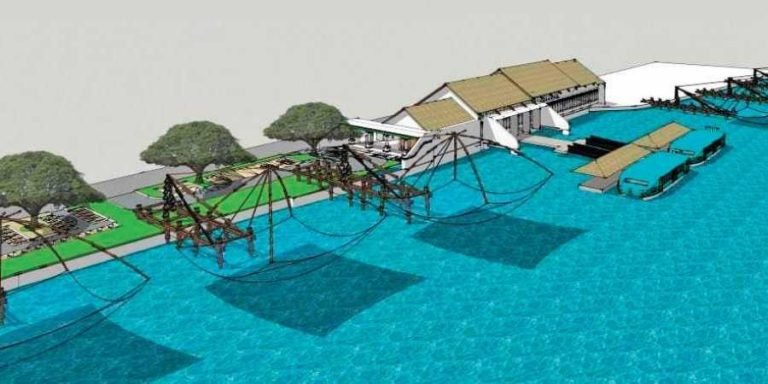
Kochi, Metro Rail News: The Kochi Water Metro, which missed several deadlines for launching commercial operation of boat services gears up to operate its first boat service in December 2019.Kochi Metro Rail Ltd (KMRL) had earlier planned to introduce the Water Metro services in April 2019, and later the date was pushed to October 2019. KMRL managing director A P M Mohammed Hanish said that the tender for the boats would be awarded in January 2019 and for the terminals on December 23, 2018. He said this after holding talks with German ambassador Martin Ney on the sidelines of the launch of Kochi Smart City Innovation Lab (KSCIL) in Kochi on Monday.The Metro agency is implementing the integrated water transport project at a cost of Rs 819 crore. The German funding agency, KfW, provides Rs 582 crore for the Water Metro project.“The German Ambassador is satisfied with the progress of the project,” said Hanish.
Briefing the progress of the project, he said the tendering process of floating jetties is on and land acquisition works are fast progressing. “Now, our focus is on the development of roads leading to the jetties. At present, most of the roads adjacent to the jetties are small
and in a dilapidated condition. We are planning to promote the livelihood of inhabitants of the islands by helping them set up kiosks or shops,” he added.More than 100,000 islanders are expected to benefit from the Water Metro. While land owned by various government agencies would be transferred, that which is held by individuals and private agencies would be acquired for implementing the Water Metro, said Hanish. As many as 8.67 hectares will be acquired for the project, of which 5.3 hectares is owned by government departments and 3.37 hectares by private parties. Currently, the plan is to introduce two types of boats. There will be 23 boats having a seating capacity for 100 people, and the other set of 55 boats will have a seating capacity for 50 people. The boat service will be available in 15 different routes covering 76km. The Water Metro connects 10 islands along the route.“The hull of all these boats will be in aluminium and the deck will be built of fibre reinforced plastic (FRP). The German ambassador is happy that we are adopting battery-driven boats, which is considered as the most innovative and eco-friendly method,” said Hanish.
KMRL has shortlisted four companies for manufacturing boats — Cochin Shipyard, L&T, UAE-based Grand Weld and Netherlands-based Damen. The tenders will be awarded in two months, he added.Aecom Consortium (a joint venture of Aecom India Pvt Ltd, Urban Mass Transit Company Ltd, and Zebec Marine Consultants Service Pvt Ltd) has been appointed as the general consultant for the project.
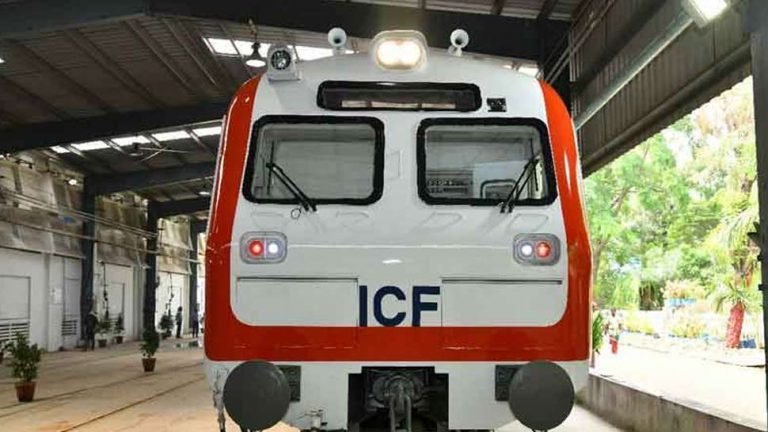
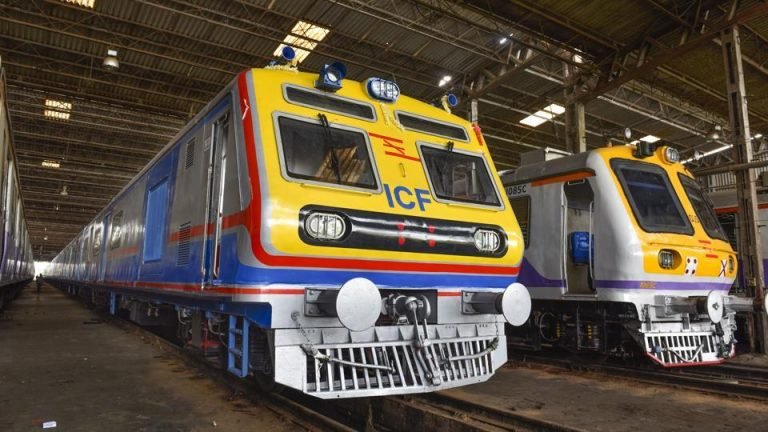
Chennai, Metro Rail News: ICF is now manufacturing coaches for the new generation Main Line Electric Multiple Unit (MEMU) with many features from India’s first Semi High-Speed Train Set, the Train 18. The Integral Coach Factory (ICF) has now come out with a new Electrical Multiple Unit (EMU), commonly known as an electric train, with a higher passenger capacity, said a top official. The official said that the new EMU is designed on the same principle as that of the Train 18, India’s first locomotive less train, that is fixing all the electrical items powering the train under the compartment. This, in turn, increases the passenger carrying capacity and also the passenger comfort.“The new train could be said as the little sister for Train 18 or that is now undergoing trials,” S. Mani, General Manager, ICF. The new EMUs also known as Mainline EMU in the railways parlance will cater to short distance intercity day travel. Currently, the EMUs are propelled by conventional direct current (DC) traction system and mounted on board in the driving motor coaches, Mani said.ICF started making the new EMUs from 2018 which is more modern, maintenance friendly and energy efficient. The electric train can touch a maximum speed of 130 kmph, he said. The prototype of underslung EMU has been manufactured by ICF at a cost of Rs 26 crore slightly higher than the conventional train. ICF has recently rolled Train 18, India’s first modern semi-high speed trainset. The ICF has now taken up the task of introducing this underslung technology to other electric trains. Modern bogies of Train 18 are adopted for improved performance.
ICF develops new high capacity EMU train
1 of 4
New Indian Mainline EMU train with advanced features from train 18
The brake system contains wheel mounted disc brakes and regeneration brakes for effective and quicker braking, Mani said.
Salient Features:
Regenerative braking saves about 35 per cent energy.
Stainless steel coach body.
Aerodynamically shaped stainless steel driving end nose.
Air-conditioned driver cabs and ergonomic driver desk.
Screw-less interior panels
Best in class cushion seats
Two toilets in passenger coaches and one toilet in Driving Motor Coach
CCTV surveillance system
GPS based passenger information/ announcement system
Capable of operating 130 KMPH with better travelling comfort for passengers
Talk Back system to enable passengers to talk to the driver in case of emergency The MEMUs currently in service have a carrying capacity of 2,402 passengers; that will be augmented by 9 percent now, enabling carrying of 2,618 passengers on board. Mani said the new design under-slung EMU rake would be ready for the flag off and subsequent tests and trials by December 15. He added that the ICF had requested Railway Board to allot this rake to Southern Railway which would enable easier monitoring performance.
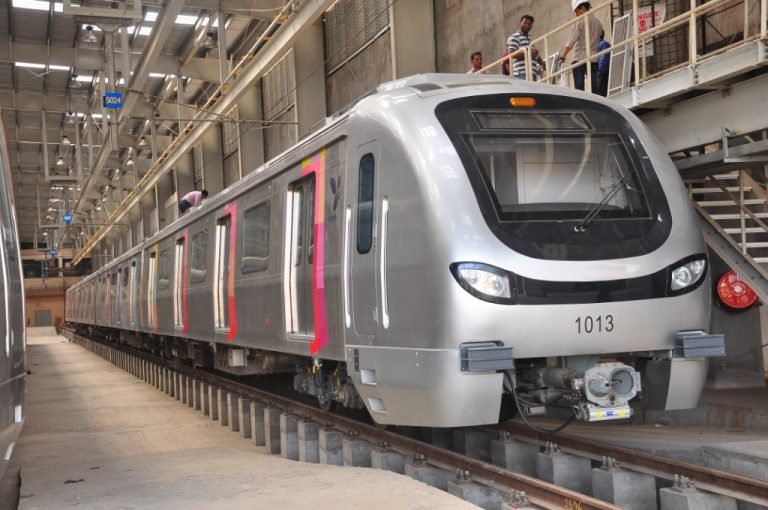
Mumbai, Metro Rail News: Alstom has been awarded a contract by Mumbai Metro Rail Corporation (MMRCL) to supply CBTC signaling systems for line 3 of Mumbai Metro. The contract, which builds on rolling stock and Power supply contacts won earlier this year for the same line, is worth over euro 100 million.Alstom will equip Line 3 with Urbalis 400, its latest generation of CBTC signalling technology. The scope of the contract includes unmanned train operation (UTO), computer-based interlocking and centralized train supervision, platform screen doors, as well as the electrical and mechanical supervisory control and data acquisition system (E&M SCADA).
“Alstom is extremely proud to have won three big contracts for Line 3 of Mumbai Metro, emerging as the partner of choice for this prestigious project. This major signalling contract confirms the trust our customer MMRCL has in us. This is an excellent opportunity for Alstom to showcase its breadth of expertise and reinforce our goal of being the preferred partner of cities, countries and operators as they face the rapidly evolving challenges of urban mobility,” said Alain Spohr, Alstom Managing Director India and South Asia.Urbalis 400 is an advanced communication-based train control signalling system that will help ease Mumbai’s commuter congestion. Urbalis 400 boasts a proven service record in over 30 cities across the world. Constantly upgraded, the solutionaids urban operators in maximizing their performance and capacity while requiring standard interlocking for their operational needs. Designed specifically for heavy ridership metros, the system offers a considerable range of functions that improve headway and average speed performance.Alstom’s Urbalis radio CBTC track record spans more than 15 years, 96 urban rail lines (over 55 are in service), 1900 track miles, 1100 stations, 1800 trains and 24 countries worldwide. Over 25% of the world’s radio CBTC systems are operated with Alstom’s Urbalis solutions. In India, Alstom has pioneered the introduction of CBTC by deploying Urbalis in the Kochi and Lucknow metros.Earlier this year, Alstom won two contracts for power supply and the provision of 248 metro cars for Mumbai Metro Line 3.The contract was signed by Alain Spohr, Managing Director, Alstom Transport India & South Asia on 7th December 2018 in presence of Ms. Ashwini Bhide, Managing Director of Mumbai Metro Rail Corporation and other officials.
The Mumbai Metro Line 3 is a 33.5-km long underground stretch connecting the busiest and congested regions in Mumbai – one of the fastest growing cities in India. The metro line will connect Cuffe Parade business district in the extreme south of the city to SEEPZ in the north-central with 26 underground and one street-level station. Line 3 will be the first underground metro line in Mumbai and will be one of the biggest underground continuous stretches in India.
New Delhi, Metro Rail News: Once Delhi government and the central government approve Delhi Metro Phase IV, it will take 5 years to complete 104 km of tracks of Delhi Metro Phase IV. Metro connectivity will reach the far-flung areas of Delhi and reduce journey time across the city. With the new interchange points, the urban rail network will give commuters more options to avoid lengthy detours.For the moment, Delhi government has asked Delhi Metro Rail Corporation (DMRC) to have a relook at the project costs and seek its re-approval it is placed before the cabinet. The DMRC board is expected to meet next week.Delhi Metro Phase IV Route MapAmong the 6 new corridors to come up, the proposed 23-km Janakpuri West to R K Ashram Marg line, the longest in Phase IV, will connect west, northwest and north Delhi. The corridor with 25 stations and will start from the existing Janakpuri West station, which is an interchange station for the Blue Line (Dwarka-Vaishali/Noida City Centre) and Magenta Line (Janakpuri West-Botanical Garden).The corridor will cross the Green Line (Inderlok-City Park) at Peeragarhi and will the Pink Line twice at Majlis Park and Azadpur. It also crosses the Red (Dilshad Garden-Rithala) and Yellow Lines (HUDA City Centre-Samaypur Badli) twice at Pitampura and Pul Bangash and before terminating at R K Ashram Marg station on Blue Line.The shorter 12.5-km Majlis Park-Maujpur corridor will have six stations with both the terminal stations serving as interchange stations and will be a vital link between north and northeast Delhi. The similarly short Inderlok-Indraprastha line (12.6 km) will have 10 stations with both terminal stations being interchanges and in addition crossing the Yellow and Violet (Kashmere Gate-Raja Nahar Singh station) lines at New Delhi and Delhi Gate, respectively. It will link north Delhi with central parts of the city. The proposed Nabi Karim station on this line will be an additional interchange between the new Janakpuri West-RK Ashram Marg and Inderlok-Indraprastha corridors.The 20-km Tughlakabad-Delhi Aerocity line will provide connectivity between south Delhi and Indira Gandhi International Airport. This corridor will have 15 stations and interchanges with the Violet and Airport Express lines. A third interchange point will come up at the proposed Saket G Block station.The Lajpat Nagar-Saket G Block corridor, the shortest corridor in Phase IV at 8 km, will have seven stations. The terminal stations will be interchanges and another with the Magenta Line at Chirag Delhi. This corridor will link the existing Magenta and Pink (Majlis Park-Shiv Vihar) corridors and the proposed Tughlakabad-Delhi Aerocity corridor.The only corridor in Phase IV without an interchange point is the 21.7-km Rithala-Narela line, which is an extension of the existing Red Line. This corridor will have 16 stations and will provide metro connectivity to Narela sub city, which has failed to develop due to the lack of connectivity with the city center.“The corridors proposed in Phase IV are likely to have 19 interchange points, of which five are already operational, these being Janakpuri West, Azadpur, New Delhi, Inderlok and,” a DMRC spokesperson said.He added, “From the engineering standpoint, this phase is going to involve intricate engineering challenges because the interchanges have to be built and planned in such a manner that existing operations are not disturbed while integrating them at minimum distances for travelers to cover when changing lines.” The Janakpuri West-R K Ashram corridor, with its nine interchange stations across four lines, is expected to be particularly challenging.
Ahmedabad, Metro Rail News: After much speculation and delay, Ahmedabad is all set to get its first ever metro rail next year. According to reports, the first three rake coaches, meant for a test run of the Ahmedabad-Gandhinagar Metro Rail project, have been shipped out of South Korea and are expected to arrive in Ahmedabad on 2 January. A test run is expected later in the same month.“The first train will reach the Apparel Park depot by 2 January, 2019. We will take about 10 days to assemble it and conduct some tests. It will be ready for a trial run before or during the Vibrant Gujarat summit,” Said IP Gautam, MD of MEGA (Metro-Link Express for Gandhinagar and Ahmedabad Company Ltd).A South Korean firm that won the Rs 1,025-crore contract will supply a total of 32 trains (36 coaches) for phase-I of the project. The trial run for the project will take place in the first six kilometers of the 40-kilometer-long phase-1 of the project, extending from Vastral Gam to Apparel Park on the East-West Corridor in Ahmedabad.
Earlier, there were speculations of delay in the project after IL&FS Engineering, a subsidiary executing a stretch of the Metro rail corridor, had stopped work since its parent company’s financial woes became public.
The Phase-I of Ahmedabad Metro was sanctioned by the Central government in 2014 and spans a length of over 39 kilometers. Of the 39.2 kilometers stretch, 6.335 kilometers will be underground, while the rest will be elevated. The Ahmedabad Metro aims to connect the four corners of the city with two corridors — North-South and East-West. In all, there will be 32 stations.
Prime Minister Narendra Modi’s ambitious project for his home state, also ran into some controversy after media reports revealed that the government has spent a whopping Rs 3,116 crore in the last four years on the project. The project is being made by part funding from the Central government, state government and a soft loan from the Japan International Cooperation Agency (JICA).
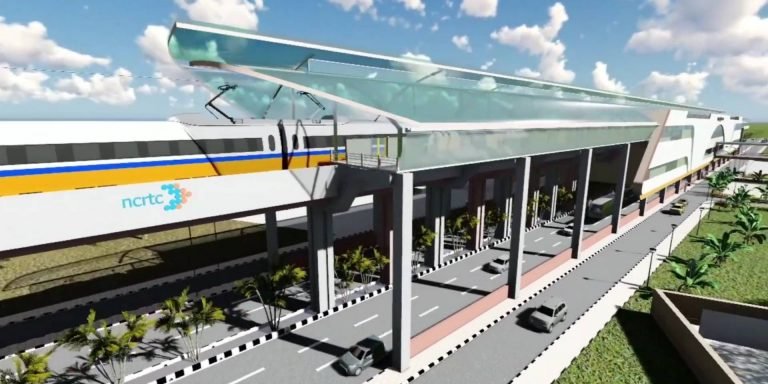
New Delhi, Metro Rail News: NCRTC Board, chaired by Secretary, Ministry of Housing & Urban Affairs(MHoU), in its meeting held on 6th December 2018, has approved the DPR (Detailed Project Report) of Delhi-Gurugram-SNB (Shahjahanpur-Neemrana-Behror Urban Complex) RRTS corridor.
Delhi Alwar RRTS with station list
One of the three RRTS corridors prioritized for implementation, Delhi-Gurugram-Alwar is planned to be implemented in three stages. In stage I, Delhi – Gurugram – Rewari – SNB Urban Complex will be constructed. In Stage II, it will be extended from SNB Urban Complex to Sotanala and in Stage III, SNB Urban Complex to Alwar will be constructed.
The 106 km long, Delhi-Gurugram-SNB corridor will be elevated for about 71 km (11 stations), the remaining 35 km (5 stations) will be constructed underground, mostly in Delhi & Gurugram. This corridor will converge with other RRTS corridors in Sarai Kale Khan and will be interoperable, facilitating commuters’ movement from one corridor to another without the hassle of changing trains.
Similarly, with an intent to incentivise the use of Public Transport, Delhi-Gurugram-SNB corridor will be seamlessly integrated with other modes of transport in NCR:
RRTS station
Mode of transport with which integration provided
Sarai Kale Khan
Line-7 of DMRC at Sarai Kale Khan, Hazrat Nizamuddin Railway station and ISBT Sarai Kale Khan.
Jor Bagh
Line-2 of DMRC at Jor bagh station
Munirka
Line-8 of DMRC at Munirka station
Aerocity
Airport, DMRC- At Aerocity- Airport Express Line & proposed Phase-IV Line
RRTS trains with design speed of 180kmph, operation speed of 160kmph and average speed of 100kmph will be available at a frequency of every 5-10 minutes. The infrastructure is being designed for up to 9 coaches train. These trains will be air-conditioned with transverse seating and overhead luggage space for commuter comfort. There would be priority seating arrangements for people with special needs, an exclusive coach for women travelers and a business class coach in every train to encourage people to leave their cars for public transport.
This RRTS smart line will pass through the urbanized and industrialized areas of Haryana and connect Delhi airport with the RRTS network, increasing the overall productivity of NCR. The corridor will strengthen the regional transport infrastructure by providing a fast, safe, comfortable and reliable mobility option to the residents of Delhi, Gurugram, Rewari, Manesar, Daruheda, Bawal and nearby areas. The fast commuting connecting Delhi to nearby regions will be immensely beneficial in decongesting Delhi and its roads, providing citizens the choice to live & work in different regional nodes to lead a better quality of life.
Once constructed, the corridor is expected to bring down the travel time between SKK-SNB in less than 70 minutes (106 km). The daily ridership on this corridor is estimated to be 8.5 Lakhs in 2025. This high-speed, high-frequency, high-capacity RRTS corridor will not only offer mass transit benefits but also bring in wide range of economic benefits to the society including effectively curbing pollution, improving safety & reliability of commute and creating employment as well as new economic opportunities. Apart from unlocking economic development potential of the region, such high-speed commute will bring people and places closer enabling polycentric growth in NCR.
The corridor is planned to be constructed in about 5 years’ time excluding 1 year of pre-construction activities at a base construction cost of INR 24,975 crore, funded by Government of India (20%), concerned State Governments (20%) and bilateral/multilateral funding agencies (60%).
NCRTC is a joint venture of the Government of India (50%) and State Governments of Haryana (12.5%), NCT Delhi (12.5%), Uttar Pradesh (12.5%) and Rajasthan (12.5%). It is mandated to design, construct, finance, operate and maintain RRTS in NCR and works under the administrative control of Ministry of Housing & Urban Affairs, GOI.
Out of the 8 identified corridors to connect various NCR towns with high-speed rail commute under the Functional Plan on Transport for NCR-2032, three have been prioritized for implementation in Phase-1 by the Planning Commission appointed Task Force, these are Delhi-Ghaziabad-Meerut, Delhi-Gurugram-Alwar and Delhi-Sonipat-Panipat. This is the 2nd RRTS corridor, which has been approved by NCRTC Board after Delhi-Ghaziabad-Meerut.