In last eight months, 1.91 crore passengers traveled in Chennai metro trains

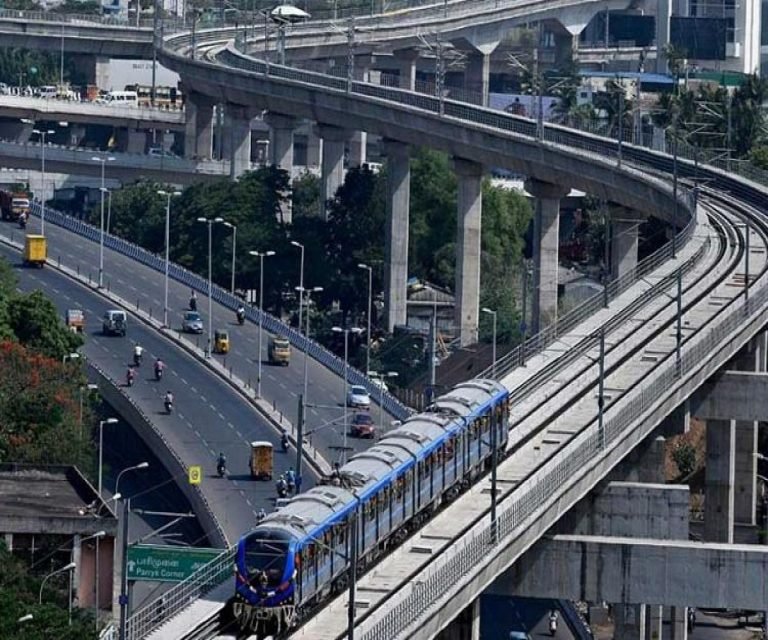
CHENNAI (Metro Rail News): In the last eight months more than 1.91 crore passengers have used metro rail services in Chennai. Chennai Metro Rail (CMRL) officials said the introduction of feeder services like share auto, share a taxi, MTC small buses, rental bikes, car and cycle, and airconditioned van services to IT corridors, for last-mile connectivity, had helped increase patronage.

In August, around 29.65 lakh passengers used metro rail services. According to CMRL, the daily patronage crossed one lakh on 19 days in August with the maximum at 1.3 lakh passengers on August 30. Officials said the daily ridership crossed more than one lakh during the weekdays while it touched 90,000 during weekends. However, the estimated daily ridership for the 45km phase-1 is 7.75lakh.

Compared to 19.37 lakhs passengers in the month of January, the monthly patronage shot up to 23.62 lakh in February after the last leg of 45km phase-1 between Washermenpet and AG-DMS opened in February.

The monthly ridership gradually increased to 28.17 lakh in July and 29.65 lakh in August. CMRL recently increased train frequency between Washermenpet and Airport during peak hours to five minutes.

MMRDA Recruitment 2019: Apply Online for Mumbai Metro Jobs

MMRDA Recruitment 2019:  The Mumbai Metropolitan Region Development Authority (MMRDA) has invited eligible candidates to fill 25 Executive and 1,053 non-executive posts across various sections in Maha Mumbai Metro Operation Corporation Ltd (MMMOCL).Those who are interested can check the MMRDA recruitment notification, which is available on the authority’s official website; mmrda.maharashtra.gov.in. According to the notice, the online application process will begin from September 16 and continue until October 7, 2019. The salary package for the available positions will be based on the 7th Pay Commission

MMRDA Recruitment 2019Total number of vacancies: 1,078

The category-wise break-up of vacancies is given below:

Executive Category Posts – 25 Posts

  1. Dy. General Manager (Operation) – 1 post
  2. Dy. General Manager (Rolling Stock) – 1 post
  3. Dy. General Manager (PST) – 1 post
  4. Dy. General Manager (Electrical & Maintenance) – 1 post
  5. Dy. General Manager (S & T) – 1 post
  6. Dy. General Manager (Civil ) – 1 post
  7. Manager (Commercial) – 1 post
  8. Manager (Security) – 1 post
  9. Manager (Safety) – 1 post
  10. Manager (Stores) – 1 post
  11. Manager (HR) – 1 post
  12. Asst. Manager (Station Operation) – 2 posts
  13. Asst. Manager (OCC) – 1 post
  14. Asst. Manager (Rolling Stock) – 2 posts
  15. Asst. Manager (PST) – 2 posts
  16. Asst. Manager (Electrical & Maintenance) – 2 posts
  17. Asst. Manager (S&T) – 3 posts
  18. Asst. Manager (P/Way) – 2 posts

Non-Executive Category Posts – 1,053 Posts

  1. Station Manager – 18 posts
  2. Station Controller – 120 posts
  3. Section Engineer – 136 posts
  4. Jr. Engineer – 30 posts
  5. Train Operator (Shunting) – 12 posts
  6. Chief Traffic Controller – 6 posts
  7. Traffic Controller – 8 posts
  8. Jr. Engineer (S&T) – 4 posts
  9. Safety Supervisor I – 1 post
  10. Safety Supervisor II – 4 posts
  11. Senior Section Engineer – 30 posts
  12. Technician I – 75 posts
  13. Technician II – 287 posts
  14. Sr. Section Engineer (Civil) – 7 posts
  15. Section Engineer(Civil) – 16 posts
  16. Technician (Civil) I – 9 posts
  17. Technician (Civil) II – 26 posts
  18. Sr. Section Engineer (E&M) – 3 posts
  19. Section Engineer(E&M) – 6 posts
  20. Technician (E&M) I –  5 posts
  21. Technician (E&M) II – 11 posts
  22. Helper – 13 posts
  23. Sr. Section Engineer(S&T) – 18 posts
  24. Section Engineer(S&T) – 36 posts
  25. Technician (S&T) I – 42 posts
  26. Technician (S&T) II – 97 posts
  27. Security Supervisor – 4 posts
  28. Finance Assistant – 2 posts
  29. Supervisor (Customer Relation) – 8 posts
  30. Commercial Assistant – 4 posts
  31. Store Supervisor – 2 posts
  32. Jr. Engineer (Stores) – 8 posts
  33. HR Assistant I – 1 post
  34. HR Assistant II – 4 posts

MMRDA Recruitment 2019Eligibility Criteria

  1. Dy. General Manager (Operations), Asst. Manager (Station Operation), Asst. Manager (OCC): Degree in Electrical/Electronics/Electronics & Telecommunication Engineering from a Govt. recognized Institute.
  2. Dy. General Manager/Manager/Assistant Manager (Rolling Stock/PST/Electrical Maintenance): Degree in Electrical Engineering from a Govt. recognized Institute.
  3. Dy. General Manager/Assistant Manager (S&T): Degree in Electronics/Electronics & Telecommunication Engineering from a Govt. recognized Institute.
  4. Dy. General Manager (Civil)/Asst. Manager (P/Way): Degree in Civil Engineering from a Govt. recognized Institute.
  5. Manager (Commercial/Security): Bachelor degree in any discipline from a Govt. recognized Institute.
  6. Manager (Safety/Stores): Degree in Electrical /Electronics/Mechanical/Civil/ Engineering from a Govt. recognized Institute.
  7. Manager (HR), HR Assistant: Bachelor degree in any discipline with MMS (HR)/MBA (HR), PGDM (HR) from a Govt. recognized University.
  8. Station Manager, Station Controller, Sr. Section Engineer, Section Engineer, Junior Engineer, Chief Traffic Controller, Traffic Controller, Safety Supervisor, Store Supervisor: Degree or Diploma in Engineering in Electrical/Electronics/Electronics & Telecommunication from a government recognized University/Institute.
  9. Technician, Helper: ITI/NCVT/SCVT from a government recognized Institute.
  10. Security Supervisor, Supervisor (Customer Relation), Commercial Assistant: Bachelor degree in any discipline from a government recognized University/Institute.
  11. Finance Assistant: Degree in MBA, MMS/PGDBM in Finance from a government recognized University/Institute.

As per the official notification, if suitable candidates are not found for a post then the same will be filled up in lower scale by suitable candidates.

MMRDA Recruitment 2019Age Limit

  1. Manager (HR): 48 years
  2. Dy. General Managers: 45 years
  3. Managers/Assistant Managers, Senior Section Engineer, HR Assistant I: 43 years
  4. Station Manager, Section Engineer, Chief Traffic Controller, Safety Supervisor I, Supervisor (Customer Relation), Store Supervisor: 40 years
  5. Station Controller, Jr. Engineers, Train Operator (Shunting), Traffic Controller, Safety Supervisor II, Finance Assistant, Commercial Assistant, Technician I & II, HR Assistant II, Helper: 38 years

MMRDA Recruitment 2019Pay Scales

  1. Dy. General Manager: Rs.78,800-2,09,200
  2. Manager: Rs.67,700-2,08,700
  3. Asst. Manager: Rs.56,100-1,77,500
  4. Senior Section Engineer, HR Assistant I: Rs.47,600-1,51,100
  5. Station Manager, Section Engineer, Chief Traffic Controller, Safety Supervisor I, Supervisor (Customer Relation), Store Supervisor: Rs.41800-132300
  6. Station Controller, Jr. Engineers, Train Operator (Shunting), Traffic Controller, Safety Supervisor II, Finance Assistant, Commercial Assistant: Rs.38600-122800
  7. Technician I, HR Assistant II: Rs.25,500-81,100:
  8. Technician II: Rs.19,900-63,200
  9. Helper: Rs.15,000-47,600

MMRDA Recruitment 2019Important Dates

  • Date of Notification: September 9, 2019
  • Start date of submitting online application form: September 16, 2019
  • Last date submitting online application form: October 7, 2019

MMRDA Recruitment 2019Application Fee

To apply for the posts in MMRDA, a general candidate have to pay Rs.300/-, whereas reserved candidate have to pay Rs.150/- as Online Examination Fee.

MMRDA Recruitment 2019Mode of Selection

The mode of selection will include a written examination. Candidates who qualify in written exam will be called for Document Verification and then will have to appear for an Interview. Details of the exam and syllabus for the exam will be released later.

MMRDA Recruitment Important Links

MMRDA Official Notification PDF Download Click Here
MMRDA Official Website LinkClick Here

Follow the steps below to apply for the Mumbai Metro recruitment 2019:

Step 1: Candidates need to visit the official site of MMRDA at mmrda.maharashtra.gov.in.

Step 2:  Click on the login link on the right-hand side of the page.

Step 3: Enter login id and password.

Step 4: Fill the application form and make the payment.

Step 4: Click ‘submit’.

Step 5: Take a printout of the confirmation form for future reference.

Candidates should be well versed in Marathi and need to submit their SSC Examination certificate. If not fluent in Marathi, candidates need to pass Marathi examination as per instructions from the Maharashtra government. The online examination fee for general candidates is Rs 300 and fee for reserved candidates is Rs 150.

Eligible candidates will have to sit for a competitive exam. Shortlisted candidates will have to submit their educational documents. Aspirants should check the MMRDA official website for further details.

IL&FS to run Gurgaon Metro till September 17

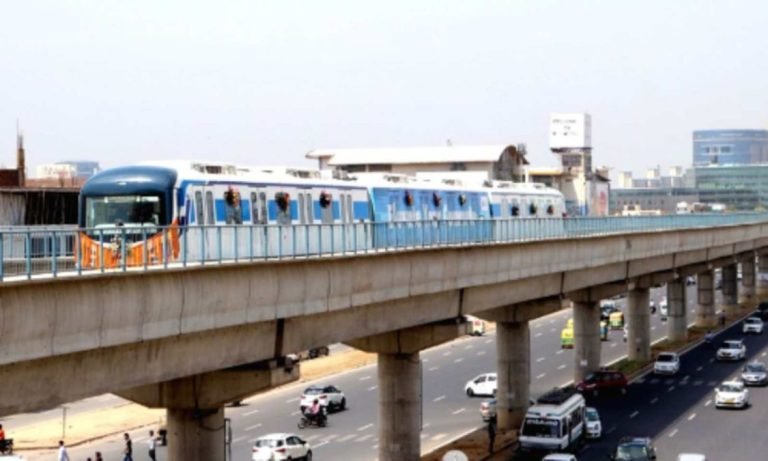
GURGAON (Metro Rail News): The Gurgaon Metro will be operated and maintained by IL&FS till September 17 midnight as a licensee while its operational cost will be borne by the Haryana Urban Development Authority, the Punjab and Haryana High Court ruled on Monday.

The court also set September 17 as the next date of hearing of a petition by HUDA seeking termination of a service contract between it and the Rapid Metro Rail Gurgaon Limited (RMGL) and Rapid Metro Rail Gurgaon South Limited (RMGSL), the two special purposes vehicles (SPVs) floated by IL&FS.

The Gurgaon Metro is the country’s first privately-developed project which was built by the Infrastructure Leasing & Financial Services (IL&FS). IL&FS is now facing bankruptcy proceedings in the NCLAT, putting the rail service at risk of closure.

The high court said in its order “Till the next date of hearing September 17, the respondent (RMGL) shall operate and manage the Rapid Metro Rail at Gurgaon on both the lines but subject to reimbursement of the insurance and operation and maintenance cost by the petitioners (HUDA) of this period.

The court also stated that RMGL would not act as a concessionaire and rather would act as an agent, even as the counsel for HUDA submitted that the respondent can act as a licensee.

Mumbai metro body assures to plant more trees

MUMBAI (Metro Rail News): In a bid to tackle the ongoing social media campaigns and criticism against the proposed Metro crashed inside Aarey Milk Colony, chief of Mumbai Metro Rail Corporation (MMRC) Ashwini Bhide has been actively engaging in the microblogging site- Twitter, defending the project and emphasizing the need of Metro in a city like Mumbai.  

Bhide, as well as the Mumbai Metro 3– the official Twitter handle of MMRC has been regularly tweeting information, graphics as well as clarifications about everything related to Metro including court cases and accusations made by several environmentalists under #AareyAikaNa, which has now almost snowballed into an online campaign.

“There are total 3,691 trees in Metro-3 depot land. We will retain 1,045 trees. As per Tree Authority, approval 461 trees are to be transplanted and 2,185 are to be cut. Six times more trees mean 13110 trees to be newly planted. Please join us in planting them. #AareyAikaNa,” Bhide tweeted on September 8.

She even clarified that the plea to declare Aarey land as forest before Bombay High Court was dismissed on October 26, 2018, and special leave petition for the relocation of crashed to alternate locations including Kanjurmarg was dismissed by Supreme Court on April 15, 2019.

In another tweet she mentioned, “Some say that objection is to Metro crashed, NOT to Metro. The answer is that the Metro line cannot function without a crashed which is an integral part of the system.”

Using #AareyAikaNa, she even raised the issue of how the Mumbai city desperately needs enhancement of its rail-based public transport network. “Suburban railways carry 80 lakh passengers per day. Once Metro network is commissioned it would carry about 45 lakh people by 2031 and 1 crore people by 2041 as per MMRDA CTS,” was one of her tweets.

Taking on the environmentalists she even tweeted that ‘MCGM, Tree Authority has given the approval to cut 24472 trees from 2013 to 2017. 10074 trees among them to be cut and 14398 trees to be transplanted. What is their status? Has anyone heard any noise against it? Why now? Why so much?.”

As per Tree Authority, 461 trees are to be transplanted and 2,185 are to be felled Using #AareyAikaNa, the issue of how the city desperately needs enhancement of its rail-based public transport network was raised

No more manufacturing of Vande Bharat rakes this year

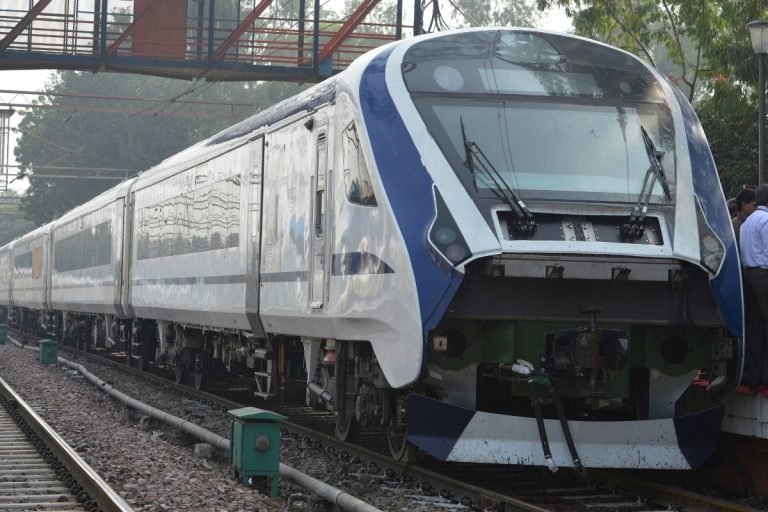
NEW DELHI (Metro Rail News): On Monday Railway Board Chairman Vinod Yadav said that Indian Railways have decided not to manufacture any more Vande Bharat Express rakes in the current financial year.

He added, “The energy consumption of the train was much more than the world standards. We realized that when we do mass production, we cannot have such high energy consumption. So we decided to review the specifications that they become energy efficient. We will not be able to make any more Vande Bharat Express in 2019-20, but will produce 15 between 2020 and 2021, and 25 in 2021-2022″.

He further added that the issues with the train have been addressed and 40 more such trains will be produced till March 2022.

The production of this self-propelled engine-less train sets was stopped over allegations of favoritism and lack of transparency earlier this year. In July, Railway Minister Piyush Goyal met representatives of manufacturers and promised a transparent level-playing field to all of them.

Indian railways will put in place a regulator as and when private operators take over to run trains. The regulator will look into various issues such as fares, the routes such trains can run on, along with the crucial aspect of safety, Railway Board Chairman Vinod Yadav said on Monday.

Yadav said “We are studying all the issues related to pricing, with respect to private train operators. Private train operators will not come immediately but we will have to prepare for it from now. Whenever a private player comes in, a regulator will also come, adding that no decision on this regard will be taken without consulting all stakeholders.

This comes at the backdrop of the Indian railways allowing its tourism and catering subsidiary IRCTC to run Tejas trains, which is touted to be a train that will be run by an entity other than the national transporter. Handing over these two trains to IRCTC is expected to help the national transporter consider the option of roping in private players to run trains, which will cater to the larger idea of providing world-class service to passengers.

The train service has gained traction amongst rail travelers and is hailed as a game-changer akin to what a Rajdhani or Shatabdi did for the people’s mover. IRCTC will run Tejas trains on two routes—Delhi-Lucknow and, Ahmedabad-Mumbai Central, with the latter expected to begin operations around December.

IL&FS Engineering announces the revival of the contract with Gujarat Metro Rail Corporation

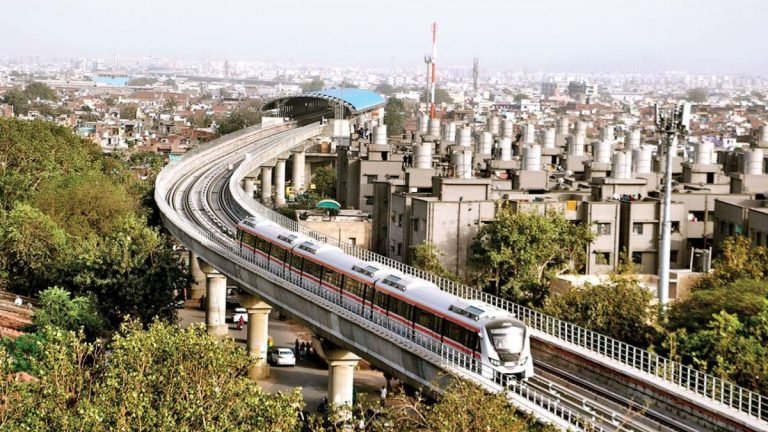
HYDERABAD (Metro Rail News): On Monday, IL&FS Engineering and Construction Company Ltd (IECCL) said that it has received approval from Gujarat Metro Rail Corporation (GMRC) for the revival of the contract in respect of the construction of viaduct corridor from interface point with Gyaspur depot.

This involves abutment of the depot to APMC metro station to Shreyas metro rail station to all-inclusive of the elevated portion from chainage minus 1374.50 to plus 3246.50 meters and four elevated metro stations — APMC, Jivraj, Rajiv Nagar and Shreyas — for package one of the north-south corridor for Ahmedabad metro project phase 1.

By 12th September the contract will start and will be completed within 15 months without any change in financial terms of the original contract. The contract value is Rs 382.22 crore, works done Rs 213.24 crore and value of balance work Rs 168.98 crore.

The GMRC terminated this contract on January 19. According to an official statement now IECCL and GMRC have agreed to revive the contract and treat the intervening period from the date of termination as suspension of work without any extra claims except payment under price variation.

After HC order Kolkata Metro construction stopped

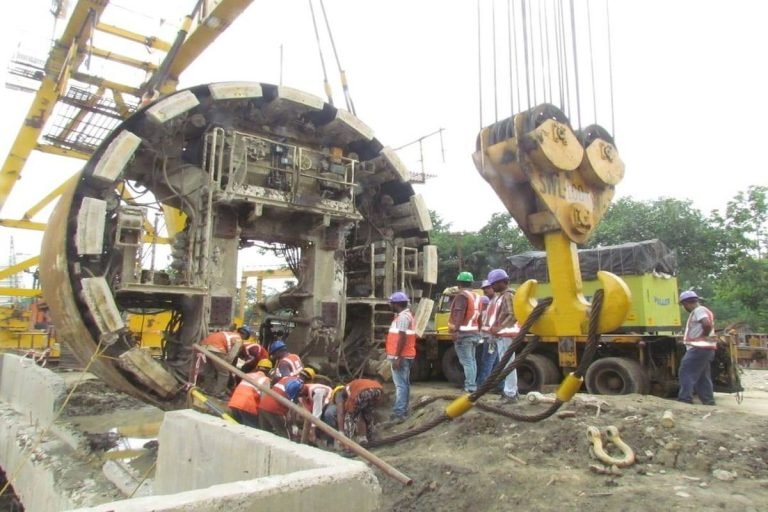
KOLKATA (Metro Rail News): On Tuesday, The Kolkata Metro Railway Corporation (KMRC) informed the Calcutta high court that it had stopped underground construction on the East-West Metro corridor, following Sunday’s damage to several houses in the central parts of the city during a tunnel-boring work.

Admitting that at least five houses had collapsed owing to ground settlement from seepage after a tunnel-boring machine hit a water table, the KMRC counsel told a division bench presided by Chief Justice TBN Radhakrishnan that work will start only after getting the court’s nod.

Several buildings in the congested Bowbazar area have developed cracks, leaving hundreds homeless.

Hearing public interest litigation seeking termination of underground drilling for metro tunnels in congested areas, the division bench directed the KMRC to apprise it of the developments in arresting further ground settlement and damage to buildings by September 16.

The court also asked the advocate general to make sure that the state government and the city civic authorities extend all cooperation in dealing with the situation and ensuring that the affected people are taken care of.

The bench will hear the PIL, which has also challenged the provisions of Metro Railway (Construction of Works) Act, 1978, again on September 16.

Delhi’s Chief Ministers says Plan to offer free rides for women on Metro ‘taking time’

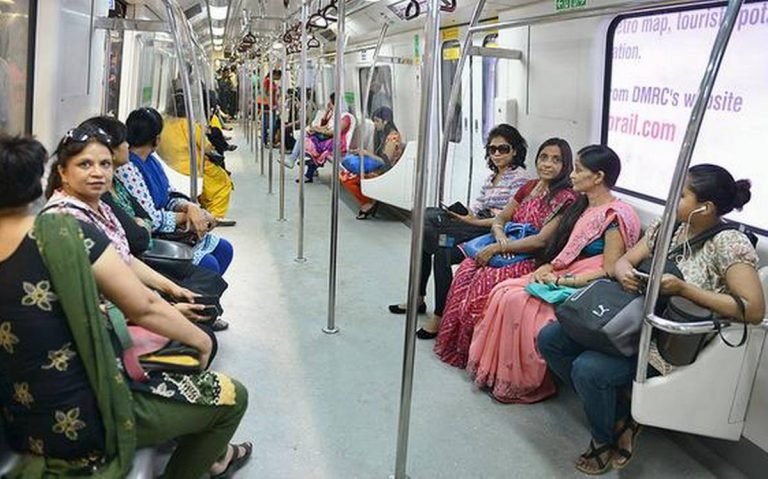
NEW DELHI (Metro Rail News): On Sunday Chief minister Arvind Kejriwal said that the plan to offer free Metro rides to women is “taking time”.

Speaking on the sidelines of a press conference, Kejriwal said that the proposal is still on the cards, but rolling it out will take a while.

The chief minister’s comment came two days after the Supreme Court observed that the Aam Aadmi Party (AAP) government in Delhi should refrain from giving “freebies” from “public money”, referring to its free Metro ride proposal, as such initiatives did not go hand-in-glove with claims of the network potentially suffering losses.

When asked about the SC’s observation, Kejriwal on Sunday, he said, “I will have to read the order. We will have to examine the order. I will be able to comment only after that.

On the proposal to offer free Metro rides to women, the chief minister said the Delhi government is still working on it.

Kejriwal said that It is taking time and I have already announced that free rides in buses will be rolled out from October 28. As for the Metro, we will update you all as and when there is any progress.

The proposal was stuck because the Delhi Metro Rail Corporation (DMRC) was yet to appoint the directors nominated by the Delhi government to its board. “We are awaiting a board meeting with the DMRC on the issue at the earliest. But for that, there has to be a clear decision on the board members first. Once that happens, the agenda on free rides for women in the Metro will be tabled, transport minister Kailash Gahlot said on Saturday.

The proposal for free rides for women, announced by Delhi chief minister Arvind Kejriwal in June, has also been halted.

Senior officials in the DMRC said they had raised several red flags and are awaiting another report from the government, following which the proposal is likely to be sent to a fare fixation committee.

In the Delhi Assembly last month, the government had allocated ₹150 crore for the scheme. The government argued that if the scheme gets clearance before the end of the financial year, its implementation should not be delayed for lack of funds.

The scheme on free rides for women in Delhi buses is set to take off from October 29 this year.

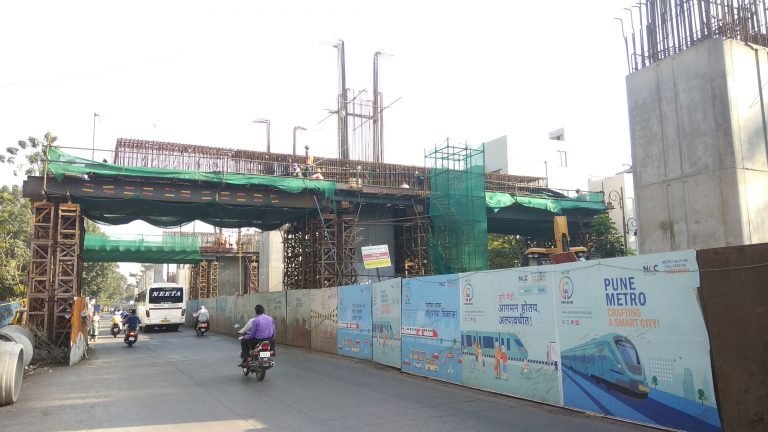
Pune metro to start its underground tunnel work from November

PUNE (Metro Rail News):  In November, the Maharashtra Metro Rail Corporation Limited (Maha-Metro), will begin digging tunnels, for the Range Hill to Swargate metro corridor which has a 5km underground stretch.

According to Maha-Metro officials, a successful trial of the tunnel-boring machines has already been conducted and the final work of digging the tunnel will begin in November.

Maha-Metro is committed to undertaking the underground work as per schedule and inspection and passing of the tunnel-boring machine is a milestone in our preparedness and execution of underground tunneling work, Brijesh Dixit, managing director of Maha-Metro, said.

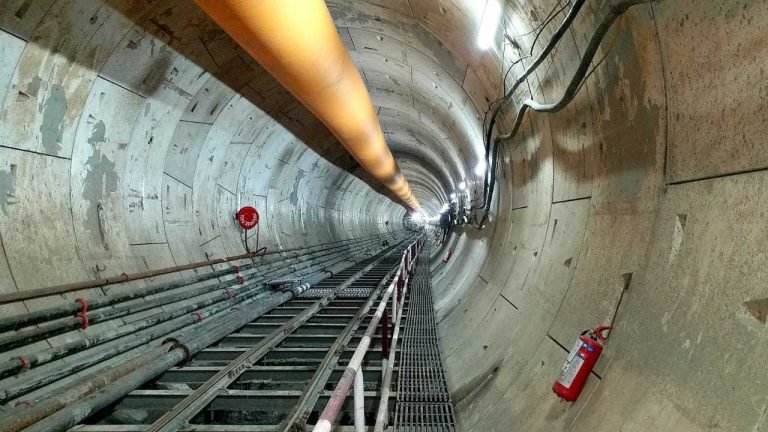
The Maha-Metro has employed a tunnel-boring machine to dig the twin tunnel in the underground stretch. A tunnel-boring machine is a computer-controlled machine that bores the tunnel and also places the precast concrete ring segments to clad the tunnel from the inside.

According to officials, these machines dig the tunnels which are then used for laying tracks and installing signal systems and electrical overhead conductors. A total of 6,054 rings are required for the 5-km stretch, according to officials. 

Maha-Metro officials said, currently, 200 rings are made in the Maha-Metro Deccan college casting yard. The diameter of each ring is 6.4 meter. The tunnel-boring machines will be dispatched by September-end and will reach Pune via Mumbai Port by the end of October.

Mumbai should not give up on its monorail project

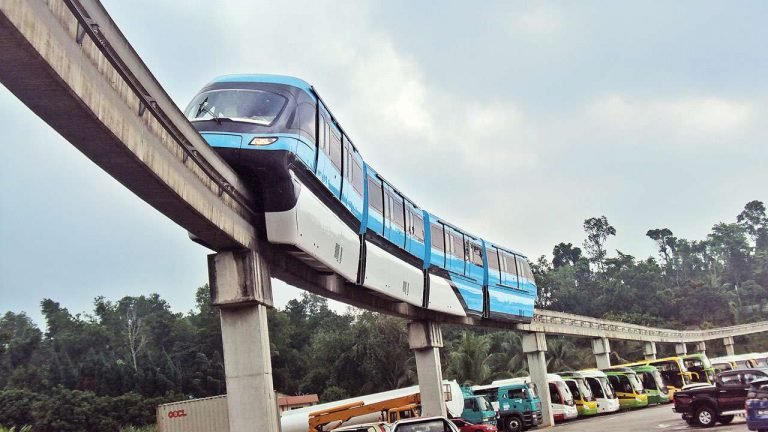
MUMBAI (Metro Rail News): When one of the highest rains for a September day paralyzed Mumbai’s roads and suburban trains, the monorail between Chembur and Mahalaxmi trudged on, providing relief for commuters stuck in the floods on Wednesday. The 20-km-long service, which is otherwise underutilized, was packed, with reports about long queues at ticket counters.

The monorail the first phase of the eight-km-long route which was inaugurated on February 2014, the second section in March cost over ₹3,000 crore. Monorail differs from elevated Metro, as the train moves on a single rail, beam, or tube, with the coaches using rubber tires for support and movement guidance.

The Mumbai Metropolitan Region Development Authority (MMRDA), which built the line with private companies, had big hopes for it. The agency had predicted that the system will carry 7,500 commuters per hour in each direction, with a daily ridership of 1.5 to 2 lakh commuters. The MMRDA had said that the route linked parts of the city that are not connected by suburban rail or the under-construction Metro network.

A study published in the International Research Journal of Engineering and Technology (IRJET) that primarily looked at the reasons for the delay in construction of the Mumbai Monorail, said that the system had several advantages. The study said that the system was ideal as a feeder for a Mass Rapid Transit System (MRTS) like the Metro and suburban railway. There are other advantages like lower maintenance cost as the infrastructure is not heavy like other MRTS (Mumbai local trains) and Metros (underground and over-ground).

But Mumbai’s monorail has been labeled a “white elephant” – a vanity project built without foresight. The service has received bad reviews for most categories that public transport are gauged for – planning, route, and infrastructure quality.

The system has seen frequent breakdowns and in December, MMRDA terminated its contract with a two-company consortium appointed to run the railway. A fire in an empty monorail coach had led to the network being shut for nearly nine months. Daily ridership, after the second section was inaugurated, is reported to be around 10,000 – less than a tenth of the planned footfalls.

Trains, which were planned at intervals of nine to 10 minutes, are running at gaps of over 20 minutes. Unlike the Metro, which is now planned to have more than a dozen routes, there are no plans to extend the monorail. In fact, there are predictions that the line will be pulled down.

MMRDA said that on Wednesday, the system carried 15,000 passengers – 50% more than its daily average. Urban transport experts still have hopes for the monorail; some have suggested extending it to connect suburban railway and Metro stations.

Ashok Datar of Mumbai Environmental Social Network, which specializes in public transport “Having more coaches I don’t know why the coaches are so expensive and increasing capacity and safety can increase ridership. Extending the line by 1.5 km to Ghatkopar from Chembur will link its other networks.

Datar added, after taking over the monorail’s operations from the private consortium, MMRDA has said it has reduced daily losses from ₹1.8 crore to ₹1 crore. “Considering that so much money has been spent increasing volume is the only way to make it popular.

UAE Celebrates 10 Years of Dubai Metro operations

DUBAI (Metro Rail News): UAE celebrates 10 years of smooth journeys and happy memories created. From people of all ages and all nationalities UAE’s most ambitious project, the Dubai Metro, turns 10 on Monday.

Launch of Dubai Metro Operation

The first decade of Dubai Metro operation, launched on September 9, 2009 (9.9.9), has been marked by fabulous successes reflected by a massive number of more than 650,000 commuters currently using the service every day. In total, more than 1.5 billion riders have used the metro over the last 10 years.

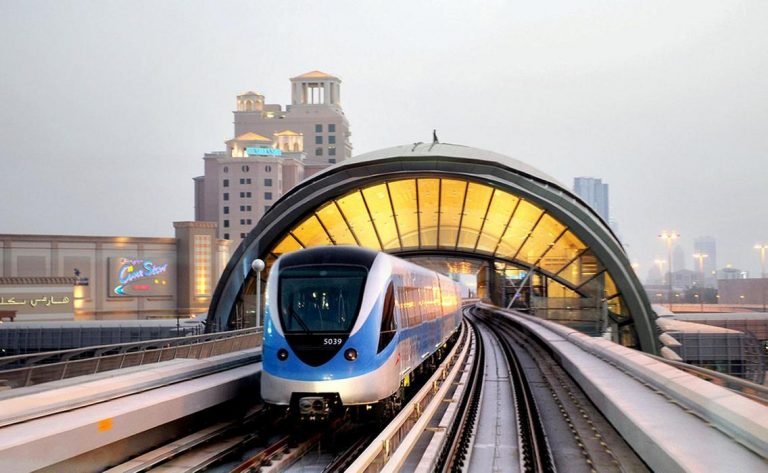
Roads and Transport Authority (RTA) of Dubai launched the metro journey at 09:09:09 pm on a Wednesday, the 09.09.2009. His Highness Sheikh Mohammed Bin Rashid Al Maktoum, Vice-President and Prime Minister of the UAE and Ruler of Dubai, inaugurated the Red Line of Metro spanning 52km and comprising of 29 stations (4 underground, 24 elevated and one at-grade). The red line runs between Jebel Ali and Rashidiya.

Dubai Roads and Transport Authority (RTA) launched the metro journey at 09:09:09 pm on a Wednesday, the 09.09.2009. His Highness Sheikh Mohammed Bin Rashid Al Maktoum, Vice-President and Prime Minister of the UAE and Ruler of Dubai, inaugurated the Red Line of Metro spanning 52 km and comprising of 29 stations (4 underground, 24 elevated and one at-grade). The red line runs between Jebel Ali and Rashidiya.

Exactly two years later, on 09.09.2011, Sheikh Mohammed launched the Green Line, extending 23km and comprising 18 stations (6 underground and 12 elevated). The Green Line runs between Etisalat Station in Al Qusais and Al Jaddaf near Business Bay Crossing.

The two lines intersect at the Union and Burjuman stations. It is the world’s largest automated driverless system. And a bona fide tourist attraction.

“Dubai Metro is a brainchild of Sheikh Mohammed as it reflects his prudent vision for developing world-class infrastructure capable of symbolising Dubai as a global hub for finance and business,” said Mattar Al Tayer, Director-General and Chairman of the Board of Executive Directors of Roads and Transport Authority (RTA).

In an exclusive interview with Gulf News, Al Tayer said that Dubai Metro’s concept was driven by Sheikh Mohammed’s vision for the the urban development of the emirate.

“Sheikh Mohammed projected the metro system as the backbone of a transit system that connects hotspots in the emirate, providing safe and smooth mobility for all. To match that supreme vision, Sheikh Mohammed directed to construct metro facilities par excellence,” recalled Al Tayer.

Stand-out project

Al Tayer noted that the news of the Metro’s success have travelled far beyond the emirate.

“The metro has embellished the global profile of Dubai as a splendid metropolis, business hub, and a destination for a fancy living environment.

“The metro is a gorgeous addition to Dubai’s iconic landmarks and uses state-of-the-art technology of the rail industry. Also, it has carved a niche for itself as the world’s longest driverless metro network,” said Al Tayer.

Ridership on the go

RTA’s Director General was impressed by the growing metro ridership, which reveals that RTA’s plan for increasing the share of public transport riders is heading in the right direction.

“The growing number of metro users reflects the evolution in the culture of using mass transport means in the community. People started grasping the benefits of using public transport such as the peace of mind, physical relief, smooth mobility and reduced outlay on fuel and maintenance of vehicles,” he noted.

Massive increase in ridership

From the start of operations on 09.09.2009 until the end of August this year, Dubai Metro was used by about 1.5 billion riders.

The number of metro riders soared from about 39 million in 2010 to as much as 69 million the following year. With the launch of the Green Line in September 2011, the number of Metro riders rocketed to 109 million in 2012.

The ridership continued to grow and in 2015, it reached 179 million; by the end of 2018, it broke the two-hundred-million barrier; clocking 204 million riders.

“Currently, Dubai Metro serves about 650,000 commuters daily; a record that significantly surpasses the number forecasted in studies commissioned at the design phase of the project,” confirmed Al Tayer.

Benefits from Metro

The successful operation of Dubai Metro resonates with RTA’s strategic objective of raising the share of public transport used in intra-emirate travel to 26 per cent by 2030.

Public transport shares started to make incremental growth starting at 6 per cent in 2006 and going up to 17.5 per cent in 2018, recording a cumulative growth rate of about 9.3 per cent per annum.

“The massive investments of Dubai Government in the public transport infrastructure proved a hit,” said Al Tayer, the man behind realising the dream of mass transit system in Dubai.

“It supported the flourishing development witnessed by the Emirate and provided a stimulant for business and tourism.

“Public transport contributed to the safe and smooth mobility, improved business climate and enhanced the competitive edge of Dubai in hosting mega-events. Expo 2020 is an example.

“The indirect benefits of public transport includes conserving the environment, and cutting financial losses of traffic bottlenecks through deflecting the demand from private vehicles to public transit means,” Al Tayer explained.

Team effort

Al Tayer did not let the occasion of the Metro’s 10th anniversary go without commending the efforts of RTA’s strategic partners and their contribution to the successful operation of Dubai Metro.

“Above all comes Dubai Police, and Serco, the operator of the metro network,” he said.

He also thanked commuters who made the metro their ideal mobility choice and praised their compliance with the rules governing metro operation and facilities.

No vandalism

Al Tayer said that it is amazing to note that in the past ten years, no act of vandalism that targeted metro facilities was reported.

Performance indicators of the Dubai Metro over the past decade reveal very high operational standards. The on-time departures of the metro service, from inception until August 2019, clocked in at 99.7 per cent.

Metro completes 81 million km

The metro completed 2.348 million journeys and covered about 81.133 million km in the first 10 years.

Through the metro service, RTA aims to improve mobility within Dubai, especially in tourist areas and central business districts. It also seeks to enhance the integration of mass transit modes in the emirate, provide a safe and smooth transit alternative, reduce carbon emissions and improve the living experience of people.

Six billion transactions

From the start of the metro operation in September 2009 to the end of August 2019, about 6.298 billion transactions have been made using Nol cards.

Transactions covered entry/exit from metro stations, buses, taxis and marine transport as well as payment of parking fees, and card top-ups. The daily use of Nol cards is on the rise and has grown to 2.511 million transactions.

The total number of Nol cards and tickets amounted to 75.588 million.

What is an automated fare system?

RTA’s automated fare collection system, comprising of Nol cards and e-purse, is a key smart payment platform. It supports the government’s efforts to transform Dubai into the smartest and happiest city in the world. Nol card boasts of high safety features, thanks to the sophisticated technologies in use. It has scooped several awards including the best-prepaid card in the Middle East.

The e-purse is a prepaid online account for prepayment of RTA’s services. Companies can make deposits to the e-purse account instead of using cash or credit cards. About 1,700 processed through the purse are worth about Dh1.136 billion.

Metro extension: Route 2020

On June 29, 2016, Sheikh Mohammed okayed awarding the contract of the Route 2020 Project, for extending the Dubai Metro Red Line from Nakheel Harbour and Tower Station to the site of Expo 2020. The contract was awarded to Expolink Consortium comprising French, Spanish and Turkish companies at a cost of Dh10.6 billion.

On September 5 of the same year, Shaikh Hamdan Bin Mohammed Bin Rashid Al Maktoum, Dubai Crown Prince and Chairman of the Executive Council, laid the cornerstone of Route 2020 Project signalling the start of construction works in the project.

Route 2020 extends 15km (11.8km viaduct, and 3.2km underground). It has seven stations including a transfer station with the Red Line, a station at Expo site, three elevated stations and two underground stations.

It serves densely populated areas providing homes to more than 270 thousand residents such as The Gardens, Discovery Gardens, Al Furjan, Jumeirah Golf Estates and the Dubai Investment Park.

The transit time from Dubai Marina Station to Expo Station is expected to be only 16 minutes. The capacity of Route 2020 is estimated as 46,000 riders per hour in both directions (23,000 riders per hour per direction).

According to RTA’s studies, the ridership of Route 2020 is expected to reach 125,000 per day in 2020; and the number is set to rise to 275,000 riders per day by 2030. Studies also anticipated that about 35,000 riders would use the Expo Station per day during weekdays, and that number is poised to rise to 47,000 riders per day during weekends. This number accounts for about 20 per cent of the projected total number of daily visitors to Expo.

Quick facts

  • · Dubai Metro extends 75 km: 52km on the Green Line and 23km on the Green Line.
  • The metro route is partly underground (downtown areas), and the rest is an elevated track. A limited sector of the Red Line (about 3.3 km) runs above-ground.
  • Each metro train comprises of five fully air-conditioned cabins with a total capacity of 650 riders. All trains are driverless.
  • There are 79 trains available for the metro service in total. Trains in service include 51 on the Red Line and 16 on the Green Line.
  • The design capacity of the metro network is 26,000 riders per hour per direction in both the Red and Green Lines. By 2020, the Dubai Metro is anticipated to serve about 700,000 riders per day and 255 million riders per annum.
  • Three multi-level Park-N-Ride terminals have been constructed with a capacity of 8,000 parking slots.
  • The interior design of the metro stations on both the Red and Green Lines as well as Route 2020 features six symbolic design themes:

Heritage: Culture and history of the UAE

Earth: Durability of nature

Air: Elation and continuity of life

Fire: Source of energy and strength

Water: Source of life and inspiration

Future Dubai symbolised in Expo Station

October 24, 2005:
Construction work on Dubai Metro Project starts at Al Ittihad Park in Deira.

November 2005:
Shaikh Maktoum Bin Rashid Al Maktoum issued a decree setting up Dubai Roads and Transport Authority, which have direct jurisdictions and responsibilities over Dubai Metro sector

March 21, 2006:
His Highness Shaikh Mohammad Bin Rashid Al Maktoum, launched the construction work of Dubai Metro in an official event held at Madinat Jumeirah, Dubai.

July 29, 2006:
The first concrete pillar of the Dubai Metro viaduct, between the sixth and seventh interchanges on Shaikh Zayed Road, is cast.

January 10, 2007:
His Highness Shaikh Mohammad launches the drilling of Dubai Metro tunnels by pressing the operation button of the giant Tunnel Boring Machine, Al Wugeisha, at the site of the Union Station in the direction of Burjuman Station.

March 7, 2008:
The first batch of Dubai Metro carriages (10 trains) arrives at Jebel Ali Port.

Sept 20, 2008:
Shaikh Mohammad launches the technical trial run of Dubai Metro on the test track.

Sept 9, 2009:
Shaikh Mohammad launches the commercial operation of the Red Line starting with ten stations.

Sept 9, 2011:
Shaikh Mohammad launches the commercial operation of the Green Line of Dubai Metro.

November 7, 2011:
Dubai Metro surpasses the milestone as more than 100 million passengers use the service since its launch on September 9, 2009.

June 13, 2015:
The RTA unveils plans to extend the Metro tracks to 110km by 2020 and to 421km by 2030.

September 09, 2017:
Dubai Metro crosses a billion-rider mark.

CSL Bags Construction Of 23 Metro Boats

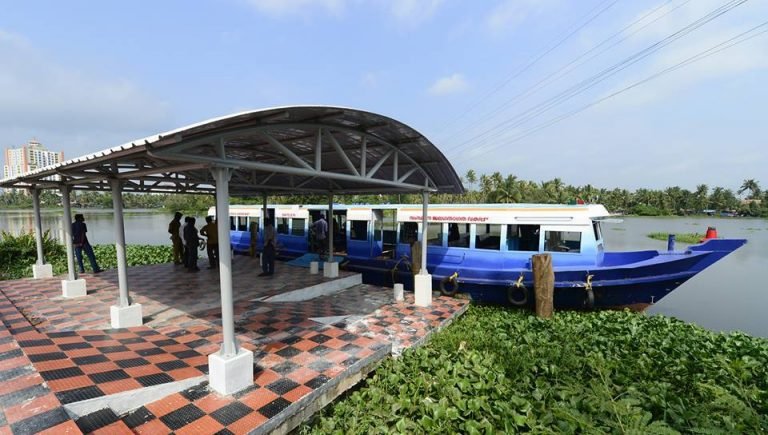
KOCHI (Metro Rail News): Cochin Shipyard has received a Letter of Acceptance (LOA) from Kochi Metro Rail Corporation Limited (KMRL) for building 23 No boats for the Kochi Water.

These boats are to be built by Cochin Shipyard Limited. These boats will provide inland transportation using electric/ hybrid technology. On the whole Kochi Metro has a requirement of around 78 high-quality boats of international standards. Out of this 25 boats having a capacity of 1OO pax was tendered by KMRL in which CSL also participated.

These boats offered by CSL are designed with in house expertise. These boats with a capacity of 100 pax would be around 24 Mtr long and will be powered using electric propulsion system equipped with high quality lithium Titanium Oxide battery to run for one hour and then can be charged at the charging stations at various jetties using fast-changing technology within 15 minutes thus providing uninterrupted service to the customers. For emergency purpose aid for achieving top 5peed, the propulsion system of boats shall also be connected through a hybrid system using power from diesel generators.

This project is an initiative that will bring about a revolutionary change in the water transportation segment in India, with significant impact in our country’s effort in a reduction in emissions and carbon footprint. Considering that the primary source of power for charging these boats is planned from solar PV installations, it will further augment the benefits in terms of environment and sustainability.

Once this project is successfully implemented by KMRL, it will not only catapult India into one of the select nations in the field of electric water mobility on the global front, but it will also open up a very large potential for emulating this model of environment-friendly and technologically advanced inland water vessels in various other cities in India.

This, in turn, will be a huge boost for the GOI’s initiatives in opening up Inland Water transport system in the country and with respect to the green initiatives of the GOI to reduce emissions and bring down carbon footprint.
Source: Cochin Shipyard

Delhi Govt to go ahead with free metro rides for women

DELHI (Metro Rail News): The Delhi government will go ahead with its proposal to make Metro rides free for women in the national capital and they are awaiting a meeting with the Delhi Metro body on the issue at the earliest, transport minister Kailash Gahlot said on Saturday.

The Supreme Court had observed that the Aam Aadmi Party (AAP) government in Delhi should refrain from giving “freebies” from “public money”, referring to its free-Metro ride proposal, as such initiatives do not go hand-in-gloves with claims of the network potentially suffering losses.

“We have learnt about the Supreme Court observations through the media. We cannot comment on that,” said Gahlot. He further said, “But the entire expense incurred for free rides for women in Delhi Metro will be borne by the Delhi government [through a proposed subsidy scheme] and not the Delhi Metro Rail Corporation (DMRC).”

When asked about the present status of the proposal, he said, “We are awaiting a board meeting with the DMRC on the issue at the earliest. But for that, there has to be clear decision on the board members first. Once that happens, the agenda on free rides for women in the Metro will be tabled,” Gahlot said.

The DMRC has a 17-member board. The Delhi and central governments nominate five members each, while the rest are officials from within the Metro body, and experts appointed by the DMRC.

In July, the Delhi government ran into a stand-off with the Centre after the former nominated members of the ruling AAP as directors in the Delhi Metro’s board, instead of bureaucrats. While the Centre objected to the nomination of political members in the board, the Delhi government maintains that it is allowed under the rules. The matter is yet to be settled.

The proposal for free rides for women, announced by Delhi chief minister Arvind Kejriwal in June, has also been halted. Senior officials in the DMRC said they had raised several red flags and are awaiting another report from the government, following which the proposal is likely to be sent to a fare fixation committee.

In the Delhi Assembly last month, the government had allocated ₹150 crore for the scheme. The government argued that if the scheme gets clearance before the end of the financial year, its implementation should not be delayed for lack of funds.

A similar scheme on free rides for women in Delhi buses is set to take off from October 29 this year.

Chennai Metro phase II gets nod from NITI Aayog for bank loan

CHENNAI (Metro Rail News): The policy thinktank of the Central government NITI Aayog has finally given its nod for Chennai Metro Rail Limited (CMRL) to take loans from various international banks for its phase II project.

CMRL had received approval for the phase II project a few days ago. The Department of Economic Affairs (DEA) had also given its consent.

Chennai Metro’s phase II, which aims to cover 118.9 km at an estimated cost of ₹69,180 crore, will require loans from various agencies.

State government would pitch in with ₹13,723 crore initially, the rest, ₹55,457 crore, would be split between the State (20%), Centre (20%) and banks (60%). CMRL has taken a loan of ₹20,196 crore from the Japan International Co-operation Agency (JICA) for building 52 km of the project, the agreement for which has already been signed. For the remaining stretches, CMRL needs more loans and has sought funding from the Asian Development Bank (ADB), Asian Infrastructure Investment Bank (AIIB), New Development Bank (NDB) and the World Bank.

CMRL had to get the approval of NITI Aayog and DEA. It is mandatory that they give their acceptance. Sometime back, they raised queries on the enormity of the loan amount and whether the State government would be able to repay the same, along with the interest rate and various such issues.

This is not the first time that questions have been raised over the cost involved in phase II of the Chennai Metro. The Ministry of Urban Development had asked the CMRL on three occasions about ways to reduce cost.