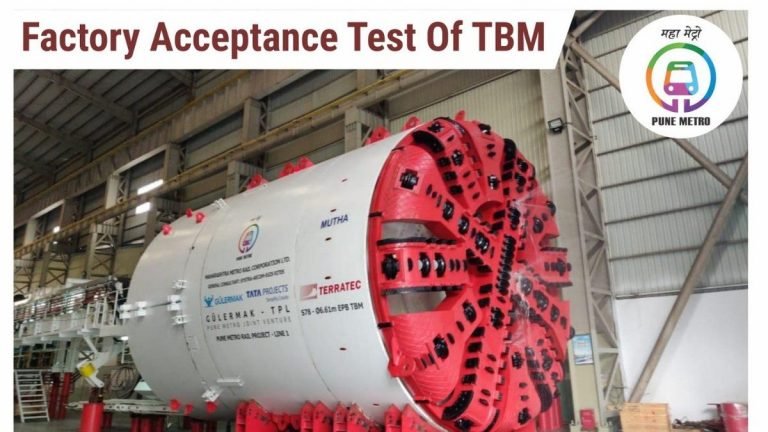
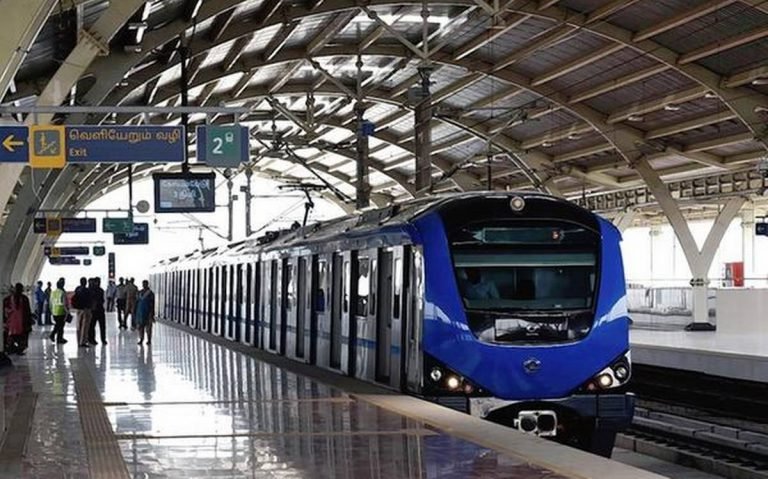
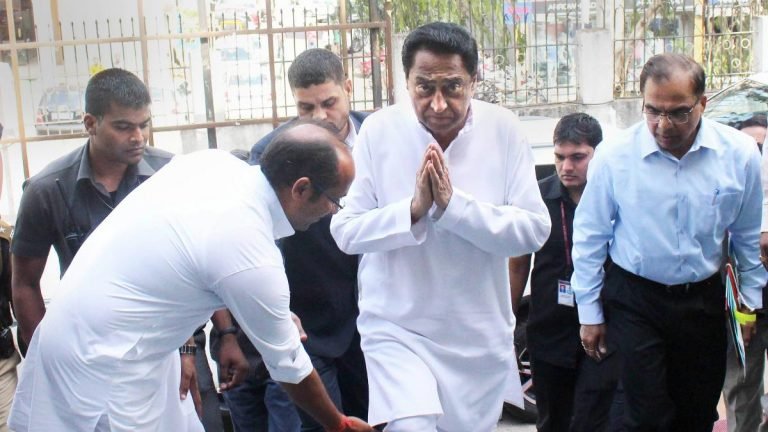
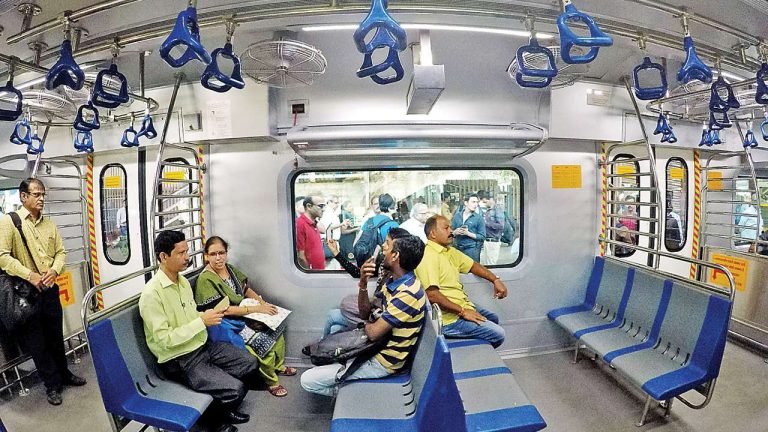
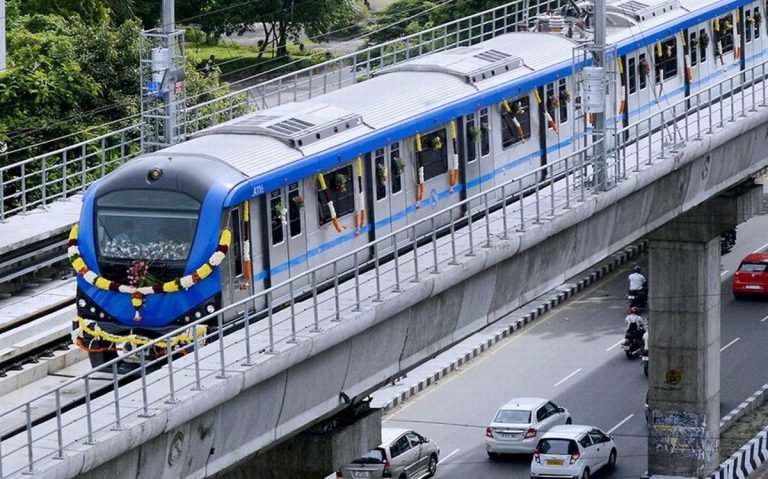
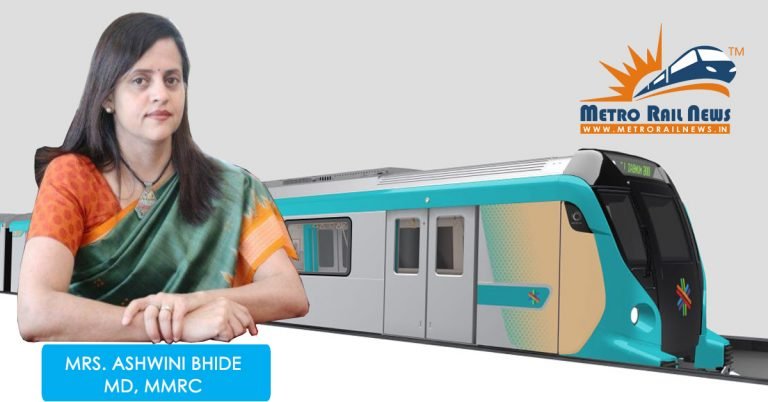
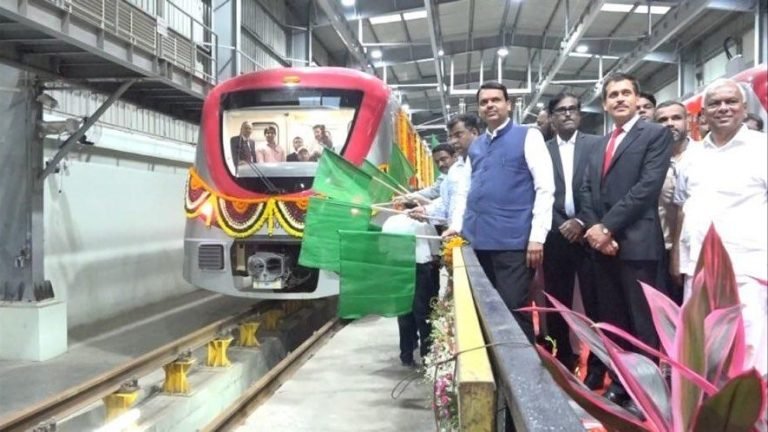
Mrs. Ashwini Bhide, Managing Director of Mumbai Metro Rail Corporation (MMRC), Who has the responsibility of constructing Mumbai’s first underground Metro rail network of 33.5 KMs long Colaba-Bandra-Seepz, also known as Mumbai Metro 3.
She talks
about dealing with different perceptions and objections while trying to
preserve the character of the city’s infrastructure, its outdoor and green
spaces. She is not only dealing with the engineering challenges posed by this
humongous multi-crore project but also the hubbub of acquiring Aarey Colony
land and chopping almost 2,700 trees for the metro car depot for the 33-km
long Colaba-Bandra-SEEPZ (Mumbai Metro 3) line.
How does it feel to be part of the first
underground mass transit project? What has been the experience till now?
Mrs. Ashwini Bhide: As far as my
personal involvement is concerned, its a matter of privilege to lead this very,
very challenging project. It has been considered as India’s most-challenging
project by Metroman Dr. E. Shreedharan himself. I joined the (Mumbai Metro 3)
project in 2015 when the Mumbai Metro Rail Corporation Limited (MMRC) was
separated from the Mumbai Metropolitan Region Development Authority (MMRDA).
We have
had to execute this mass transit project in an overcrowded city like Mumbai,
where you find old dilapidated buildings and heritage structures on one side
and high rises on the other, without disturbing the city life, while
controlling cost and time. There are engineering obstacles, social and environmental
ones and those related to perception. Handling all of these is the opportunity
of a lifetime for me and my team. It is a difficult but important task to make
people comprehend the enormity of this project. Resolving issues such as
rehabilitation, acquiring land, obtaining permission from Forests department;
CRZ and other clearances become a big part of the exercise. The last four years
have been like a rollercoaster ride but we always found a way. There is a sense
of achievement.
Have there been any studies done on the change
of transportation patterns as this is the only Metro line that will cut across
both western and central railways on a parallel route? How much of a drop-in
commuter would the suburban system witness? Or do you think only vehicle-users
will use the Metro?
Mrs. Ashwini Bhide: This study was done in DPR of Mumbai Metro 3 where we worked out the Internal Rate of Returns (IRR) on investment which is divided into financial and economic IRR. The financial IRR sees how much money is invested and how much is earned as farebox collection. Economic IRR studies damages such as displacement of people, social impact and environmental impact such as chopping of trees. This project’s economic IRR is almost 18%. Location of business districts, housing, and residential patterns, commuting patterns are considered while planning the project. There is no direct connectivity to areas such as Fort, Colaba, Worli, BKC, Marol. The Mumbai Metro 3 corridor will ensure a major shift from vehicular traffic as it is not parallel to the suburban system. Whereas, Metro lines 2 and 7 would run parallel to the suburban corridor, so the excess crowd will get divided. As far as line 3 is concerned, the nodal shift would be around 15-20%.
There is a lot of confusion about how much
Aarey Colony land will be taken up for the Metro project.
Mrs. Ashwini Bhide: We are in
possession of 30 hectares of land at Aarey for the Metro car depot. This land
is not in its entirety occupied by trees. There are around 3,000 trees but they
are scattered only on 17% of the land. We were asked by the Tree Authority to
retain a large chunk of trees, which is concentrated on one particular piece in
the middle. So we have decided to retain that green cover in a five-hectare
area. So the metro car depot will come up in the 25-hectare area. It was a
major challenge for us to design a metro car depot for 31 metro trains with
eight coaches each in just 25 hectares, but we decided to curtail some of the
stabling lines and created additional space elsewhere near the station. Two
trains each can be stabled in the facility created at BKC and Cuffe Parade.
Why can’t the Metro car depot be shifted to
Kanjurmarg as per the larger public demand?
Mrs. Ashwini Bhide: The land at
Kanjurmarg was not available even in December 2016, while we had been trying to
acquire it since September 2015. By then, tenders had been awarded so we had to
finalise a place for the depot before going ahead with the work and making any
investment. In December 2016, the Government gave us permission to start the
depot work at Aarey and now that 50% of our work has been done, there is again
a demand to shift the carshed to Kanjurmarg. Is the land available at
Kanjurmarg? No. And if at all it were available, it would take three years to
just develop it as some of it is marshy. How can we wait when huge investments
have already been made and we have to commission Metro 3 by December 2021?
Was the feasibility of having a Metro car depot examined at other sites too?
Mrs. Ashwini Bhide: The metro
car depot is not just a parking area like the ones you have for buses or like
the stabling lines you have for local trains. This is where all maintenance
work will take place. All the recommended locations including Kalina
university, BKC, Mahalaxmi racecourse were studied and were found unsuitable
due to various reasons. Kalina was inadequate and even the University had
future expansion plans. A detailed study was done for the racecourse to see if
an underground depot was possible but then we would have had to keep it
airconditioned round the clock, which would have a huge environmental impact.
The plot at Aarey is best-suited as it has access from three sides and is
easily accessible from JVLR.
Another major concern
raised by environmentalists is also the flooding that can occur in neighbouring
areas due to concretisation. What is your take on this?
Mrs. Ashwini Bhide: On what
basis are people raising these questions? It’s nothing but misinformation to
mislead people. Only a seven-hectare area of the metro car depot will be
concretized and 75% of the land will remain unpaved. The said area is not the
Mithi River’s floodplain but the catchment area from where the water goes to
Mithi. Plus there is a huge gradient so water does not spread but goes down. In
addition, there is already the presence of natural channels that have old
stormwater drains (SWD). As part of the land development, we have already
shifted some of the old SWDs outside the boundary by a proper drain as per
BRIMSTOWAD requirement and this has been approved by the BMC.
What would be your message to Mumbaikars who are confused about this project?
Mrs. Ashwini Bhide: The Mumbai
Metro 3 project only means to improve the city’s environment, reduce
pollution, improve connectivity and commutability. We have to save lives which
are being lost on railway tracks, we have to improve the quality of travel on
the suburban rail network and on the roads, save time and make the city more
sustainable. The environmental benefits of this project are far richer and
wider than the temporary environment damages, so every citizen must support it
and own it.
What about the allegations of commercial use of Aarey?
Mrs. Ashwini Bhide: There were claims that funds were going to be raised through the commercialisation of the Aarey land, when in fact the government is funding it. Had they studied the financial structuring of the project, which was available online, only Rs 1,000 crore, of the project cost is to be raised through our resources, while the rest is to be provided by the government. The Mumbai Metro Rail Corporation (MMRC) is a new company (formed to implement the Mumbai Metro 3) the Metro is yet to begin operations. We don’t have separate resources of our own yet. Hence, when we got cabinet approvals for this 30-hectare plot. They also gave us another 3.5-hectare plot next to JVLR. This land is already being used commercially for RMC plants.
What fare structure has the MMRC decided on?
Mrs. Ashwini Bhide: There won’t be any difference in the fare structure for different Metros, whether they are underground or elevated. A common fare policy of the government will be adopted by Mumbai Metro 3 because they don’t expect to recover the capital investment through farebox collection. Whatever we would like to get from farebox collection is basically the operation and maintenance cost.
Union Road Transport & Highway Minister Nitin Gadkari commented that protests against projects raise the project cost and cause delays. With the ongoing fight for Aarey Colony, how will these two factors be affected?
Mrs. Ashwini Bhide: When the
tenders were received, we had to factor in the market-appreciated cost. The
cost-escalation from 2011 to 2021, or beyond, will also be another burden to
consider.
Apart from what Mr Gadkari said, which is absolutely right if the Mumbai Metro 3 project is not completed on time, Mumbaikars will be deprived of a much-needed facility which was thought of all the way back in the 1961 Development Plan. The 15% decongestion of trains won’t happen without it. In addition, without this project, the chance to have a healthier and smoother commute will be gone too.
For Mumbaikars, public transport is second nature. Do you think this can make public transport attractive for Mumbaikars?
Mrs. Ashwini Bhide: Some people use roadways due to lack of connectivity, some ditch trains as they are overcrowded. In some cases, both factors play out together. According to MMRDA’s comprehensive transport study this year, the 350-km network will be used by around 45 lakh people. By, 2041 when the Metro network reaches a mature stage, over one crore passengers will use it. While the suburban rail network will still exist, the vehicular traffic will remain static. Parking restrictions and other regulations will make it better. This will also give the railway network some breathing space to improve. Mumbai’s advantage is that it is public transport friendly. People here like using public transport and hence, it won’t struggle like other cities.
In terms of deadline, how is the work progressing?
Mrs. Ashwini Bhide: Work on all
stations, including Girgaon-Kalbadevi, has started. Their progression is varied
depending on when land became available. Overall, we have completed almost 48%
of the work, around 34 km of tunneling out of the 56 km is completed. By the
end of this year, we intend to complete almost 70 to 80% of our tunneling work.
We intend to commission this project in two phases — Aarey to BKC and from BKC
to Cuffe Parade. Phase 1 has reached a much-advanced stage with 90% of
tunneling done and 60% work on stations done. As far as timelines are
concerned, if the Aarey Metro car depot issue is resolved soon, we are pretty
sure that we will complete in time. We cannot move the trains without the metro
car depot.
The 26/7 floods lead to over 1,000 deaths. Despite you citing the need for the project, how can you assure that the project will not have any environmental impacts?
Mrs. Ashwini Bhide: Why should
there be any environmental impacts? A public transport project has the capacity
to take so many vehicles off the road and most importantly move people from one
area to another with ease. Should this be environmentally dangerous? Open
spaces that we have covered during construction are very limited. As far as
open spaces are concerned, this project temporarily needs 76 hectares of land.
The requirement of permanent land is 4-5 hectare scattered all over the 33-km
alignment. Secondly, we have a lot of roadside trees in Mumbai, unlike many
cities in Europe and America. Around 65% of the 3,000 trees that were disturbed
have been transplanted.
For those that didn’t survive, we
compensated by planting three times more trees. We have also given an
undertaking to Tree Authority to plant more trees once the project is
completed. Three nurseries are engaged in that project. In addition, we are
also planting 21,000 trees in degraded forest lands of Sanjay Gandhi National
park. Out of the 2,659 trees that will make way for the Aarey carshed, around
450 will be replanted in the vicinity of Aarey. We are looking for more spaces
and may collaborate with the BMC to compensate for the rest.
On the other hand, the underground Metro (Mumbai Metro 3), both tunnel and stations, are made watertight. There is a national building code. We follow NMP 130,131 which are the US building guidelines. Even in our National building code, there are certain stringent norms included. Mitigation plans for flood and fire are all in place. When tunnel-boring machines drill tunnels and immediately cover them with a concrete lining, no scope is left for the rock to get exposed. If the rock is exposed, then groundwater will seep in. Besides the concrete lining, there are rubber gaskets and grouting. Today, there is no water in the 34-km tunnel that we have built. This shows that the tunnel itself is watertight. Similarly, we have elevated the entries and exits of the station to prevent flooding.
The Metro car depot issue has seen a Twitter war like never before. On one side are environmentalists and on the other is the government machinery. How successful have you been in convincing people?
Mrs. Ashwini Bhide: There are
two kinds of levels in this. One is the battle which takes place in the
administrative and judicial sphere, where it is fought with reason, facts, and
legal documents. There we have been fighting for the past four years and the
same issue is being challenged again and again in different courts under
different disguises. But all those cases we have won on the basis of facts
presented in the court. Now we are facing court cases on the same issues that
were settled in court before.
It is relatively easy to go back to
court, show the earlier verdicts and win the case. The only issue is, how much
time will it take? As far as the perception war in the social media sphere is concerned, it works
both ways. If you want to counter the flurry of misinformation every time, I am
myself not very sure about it. Because whatever you say, that is countered. At
the same time, those who support the project, they are not a cohesive group but
huge in number.
They want us to present facts on
social media so that they can understand them too and are not influenced by
misinformation or propaganda. And for their sake, we keep sharing the facts.
So, it may look like a war or a battle, but the whole point is that because the
wrong information is being spread as real information, with authority, it is
necessary to counter that.
Policy decisions cannot be taken
on Twitter or on the basis of the
opinion of 80,000 people. Because it is the opinion of only this group, while
we do not know the say of lakhs of other Mumbaikars, who may or may not be on
social media. Even if you want a referendum, there is a need for a mechanism
for that, which is not available.
We had a mechanism for suggestions,
objections, public hearing. For the tree-cutting issue, we did that. Twice,
even when it was not required, the matter was kept open for suggestions and
objections. Eighty thousand suggestions and objections were raised but for
hearing there were only 300-400 people. Who are those 80,000 people? So these
300-400 people got the replies to their objections. We made our factual
position clear.
The government has to see long-term
benefits and then take holistic decisions. The government cannot get swayed or
influenced by certain flared emotions. So when you approach an institutional
mechanism to raise issues, you get a fair hearing and committees are appointed
to investigate. In 2015 it was possible for us to think about the land in
Kanjurmarg but today it is not. Suppose it takes 10 years to get the Kanjurmarg
land, would it be prudent for the government to let go of the investment made?
We cannot get emotional. Those with a grouse approached the court and the court
has already given its verdict.
This is the first time when a government body and an officer have been so outspoken on Twitter. What is your take on this?
Mrs. Ashwini Bhide: We have always
been active on Twitter. This project has a long gestation period and plus it is
an underground project. In an elevated project, you can see the piers and
girders coming up, but in an underground project, you cannot take people down
there to show the work. How do you show them then that things are moving? Which
is why as part of our PR strategy, we present everything on social media. When
people criticize us or raise queries, we answer those.
Do you personally handle your Twitter account?
Mrs. Ashwini Bhide: Yes,
I personally handle
it. I don’t have someone else doing it on my behalf.
When it comes to development and
infra projects, it is argued that open spaces are readily grabbed as opposed to
built-up spaces. Is there going to be a comprehensive policy to utilize
built-up spaces instead?
Mrs. Ashwini Bhide: It does not work that way. In fact, we have utilized built-up spaces. In Girgaon-Kalbadevi, we have acquired 30 buildings. But sometimes the alignment requires that you take that space. In fact, if you take the example of Metro Metro 3, why it is underground? Because there is no open space. You cannot touch some old or heritage buildings and that is why it had to go underground. So as a policy, yes, one would go for easily-available government lands. Because they are relatively easily available for construction.
This interview to be covered in our October issue
(This article first
appeared in DNA Newsmaker)