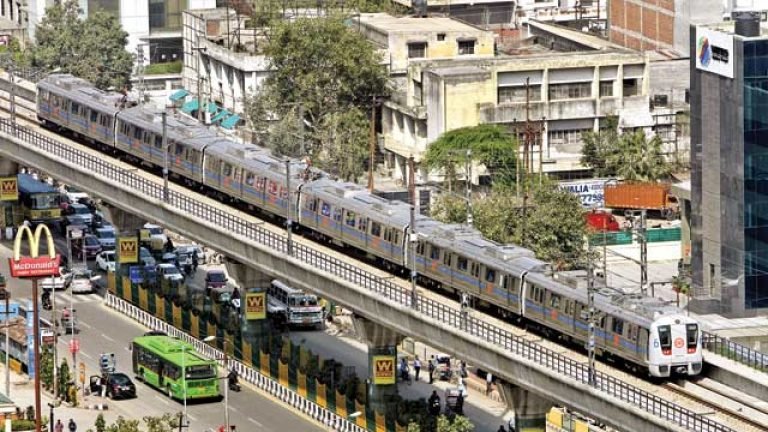
New Delhi: Prime Minister Narendra Modi has flagged-off the Delhi-Faridabad Metro Line that would allow hassle free travel for around two lakh daily commuters between the national capital and the industrial hub in Haryana.The extension of the Delhi Metro connects Badarpur to Escorts Mujesar in Faridabad.The total cost of the project from Badarpur to Escorts Mujesar is nearly Rs. 2,500 crore. Out of this, Rs. 1,557 crore was borne by the Haryana Government, the Centre contributed Rs. 537 crore, while the Delhi Metro provided Rs. 400 crore.The nine stations in this section include, Sarai, NHPC Chowk, Mewala Maharajpur, Sector 28, Badkal Mor, Old Faridabad, Neelam Chowk Ajronda, Bata Chowk and Escorts Mujesar. buy kamagra polo online https://lasernailtherapy.com/wp-content/themes/twentytwentytwo/inc/patterns/en/kamagra-polo.html no prescription
All these are elevated and located on either side of the Delhi-Mathura Road (NH-2).“The nine-station metro corridor which was 95 per cent indigenously built will provide people a safe, affordable, quick, comfortable, reliable, environment-friendly and sustainable transport facility,” a Haryana government spokesperson said.Haryana Chief Minister ML Khattar, addressing a press conference on Saturday, had thanked the Prime Minister for “gifting” the Metro service which would take the city to “another level of progress” with better connectivity with other NCR towns.He had also said that the Prime Minister would be announcing the go-ahead for connecting Gurgaon with Faridabad by Metro.
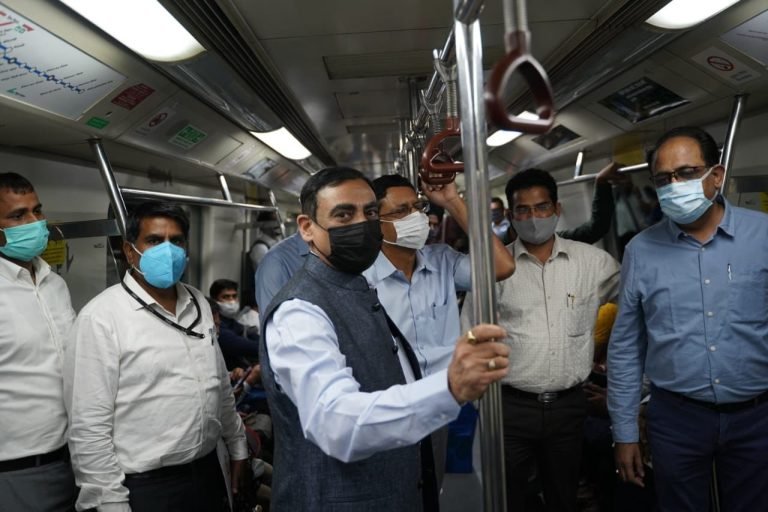
NEW DELHI (MetroRail News):DMRC Managing Director Vikas Kumar on 27th April, Wednesday travelled on the Blue Line of Delhi Metro to take stock of overall compliance of Covid-appropriate behaviour by passengers while travelling.
Masks were made mandatory again in Delhi on 22nd April after observing a rise in covid cases in the capital and a fine of Rs 500 was imposed on the violations.
He travelled from Barakhamba to R K Ashram and got down at all stations, an official said.
Blue Line is a stretch that connects Dwarka Sector 21 in Delhi and Electronic City in Noida.
“Shri Vikas Kumar, MD/DMRC today travelled on the Blue Line to take stock of the overall compliance to Covid appropriate behaviour by passengers while travelling. He also inspected stations including Rajiv Chowk interchange. Covid protocols were being followed by the passengers,” the Delhi Metro Rail Corporation (DMRC) tweeted.
NEW DELHI (Metro Rail News): The Delhi Metro Rail Corporation (DMRC) has commenced work on a fifth bridge over the Yamuna river that will connect the Soorghat Metro station and the Sonia Vihar Metro station. It is the part of phase four expansion of the Pink Line, which will see the corridor extending from Majlis Park to Maujpur, officials said on Tuesday. The bridge is being built between two existing bridges that are Wazirabad bridge and Signature bridge.
“The total length of the bridge is 560 metres… Pile foundation work is near completion and approximately 50% of sub-structure has been completed. The construction of superstructure by balanced cantilever technique has also been started,” said Anuj Dayal, principal executive director, corporate communications, DMRC.
The Delhi Metro has already constructed four bridges across the Yamuna in the first three phases which include the Yamuna Bank Bridge on the Blue Line, a bridge at Nizamuddin for the Pink Line, a bridge at Kalindi Kunj for the Magenta Line and one at Shastri Park for the Red Line. The new bridge will cross the Yamuna at around 385 metres downstream of the old Wazirabad Bridge and 213 metres upstream of the existing Signature Bridge.
This bridge will be the first to be built using the cantilever construction method, the officials informed.
“A cantilever is a rigid structural element which extends horizontally and is supported at only one end. Cantilever construction allows construction of overhanging structures without additional support structures. Employment of this technology will make the bridge aesthetically better,” said Dayal. “A 3D design of the bridge was also finalised using Building Information Modelling (BIM) technology'” he added.
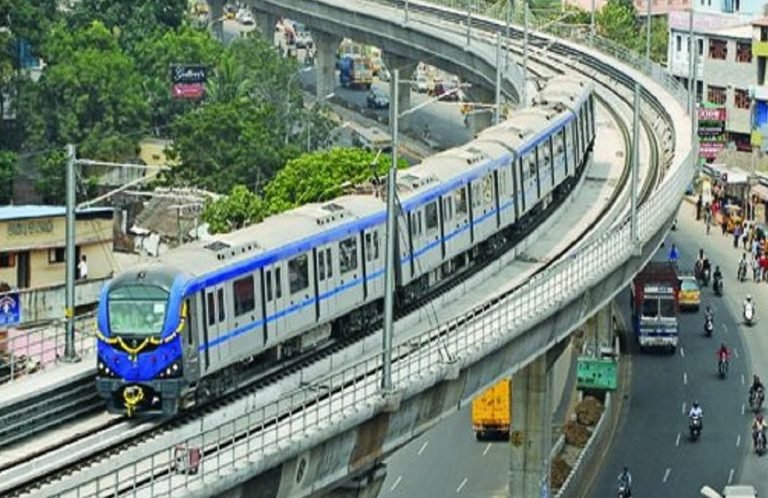
CHENNAI (Metro Rail News):Chennai Metro Rail Limited (CMRL) has planned to bring in external experts to service the Chennai metros, for which they have floated tenders to outsource the work.
The overhauling will be executed which is done after a train completes six years in operation or covers four lakh kilometres in operation. This is done to avoid any accidents and breakdowns during the daily operations. The overhauling process involves the removal of bogies from the car body, replacing all worn out components and updating the train software. The CMRL has 52 trains in total, and the services began in June 2015.
As per the tender, the CMRL has planned to service 45 four-car trains between 2022 and 2027 – at least nine trains every year. The overhauling which is to be carried out at CMRL’s depot in Koyambedu should be complete within 35 days for each train. Last year, an in-house team of the CMRL overhauled seven trainsets – at a cost of 1.77 crore for each train, a metro rail official informed.
“When we overhauled the trains, we understood that we needed certain resources like manpower and material for certain works, the cost for which was high. We then decided to outsource the work where everything will be handled by an external team. We will also get the work done at a better cost,” a CMRL official said, TOI reported. buy amoxil online https://myhst.com/wp-content/themes/twentytwentytwo/inc/patterns/en/amoxil.html no prescription
The CMRL procured 42 four-car trains for the 45 km phase-1 and another 10 trains for the 9km phase-l extension line.
After the overhauling activities are completed a fitness certificate will be issued and the entire process will be documented. Problems in the train control and monitoring system software, which is also an interface connecting all subsystems in the train, will also be identified and the software will be updated “All our trains have a life of 30 years after which they will be refurbished,” the official added.
HYDERABAD (Metro Rail News):SugarBox Networks has partnered with L&T Metro Rail Hyderabad (LTMRHL). This partnership will provide various digital facilities to the metro commuters such as internet connectivity, entertainment, etc.
Hyderabad Metro Rail will provide its passengers with the option to download or stream online content for free, even in the absence of an active cellular network, the company informed. This partnership between SugarBox Networks and L&T Metro Rail Hyderabad (LTMRHL) happened in December 2019.
The company uses world’s first patented cloud fragment technology to power in-transit connectivity across all trains on the metro network, including the high-footfall stations. As a part of this, SugarBox zones were set up in all trains and 10 major metro stations across the city, where commuters could sign into the service and consume content across various categories such as entertainment, education, e-commerce and fintech too.
Aligned with the ‘Digital India’ mission, SugarBox is also present across several touch points including Chennai metro, Central Railway (Suburban Mumbai) and has partnered with CSC e-governance, to provide digital access to the unserved, remote villages in the country. The company aims to revolutionize India’s Internet ecosystem with its hyperlocal technology and is on its way to impact over 350 mn Indians by 2024.
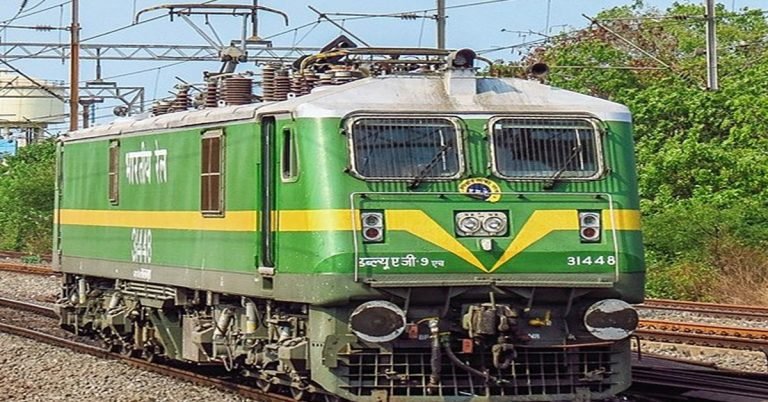
NEW DELHI (Metro Rail News): Bharat Heavy Electricals Limited (BHEL) has won its first order from National Thermal Power Corporation (NTPC) Limited. BHEL will deliver 6,000 HP electric locomotives to the corporation for use at material handling operations in Lara thermal power project site. buy tadalafil online https://www.adentalcare.com/wp-content/themes/medicare/editor-buttons/images/en/tadalafil.html no prescription
This order has enabled BHEL to expand its services in the rolling stock business to new market segments such as power, steel, and cement, in addition to Indian Railways. BHEL will manufacture these locomotives at its Jhansi facility in the state of Uttar Pradesh that will feature modern IGBT-based propulsion equipment, which is developed and delivered by the firm’s Bengaluru unit.
BHEL’s Bhopal facility will supply the traction motors for the locomotives. The eco-friendly electric locomotives offered by the firm will help replace diesel-electric locomotives, which will help in reducing emissions.
BHEL has informed that ‘it has so far supplied more than 450 electric locomotives of various ratings to Indian Railways which are running successfully’.
In 2013, Indian Railways signed a memorandum of understanding (MoU) with BHEL to establish a mainline electric multiple unit (MEMU) coach factory at Bhilwara, Rajasthan. The coach factory, which is being built to meet the demand for faster local and suburban trains in the country, will have the ability to manufacture 400 coaches a year.
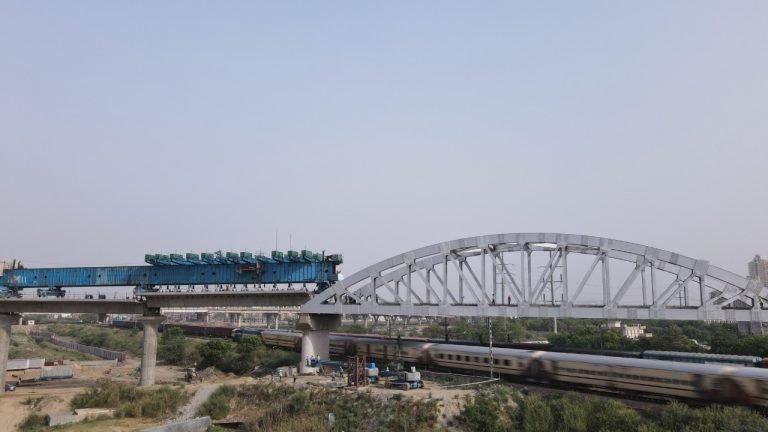
GHAZIABAD (Metro Rail News): The launch of the last span of Package 1 on the 17 km long priority section between Sahibabad to Duhai of RRTS has completed today on 26th April. It is installed near the Special Steel Span of RRTS constructed for crossing railway lines at Ghaziabad. The last segment of the girder was lifted by the launching gantry (Tarini) and fitted and thus the viaduct is completed from Sahibabad to Duhai on the priority section. This is a giant step in the direction of the implementation of Regional Rail. buy cytotec online www.parkviewortho.com/wp-content/languages/new/cytotec.html no prescription
After the project sanction, the civil work of the Priority Section was started in June 2019 and despite two waves of COVID 19, the civil construction work is nearing completion within just three years. The construction work in this 17-km stretch is being carried out in two packages – Package 1 between Sahibabad to Ghaziabad and Package 2 between Ghaziabad and Duhai. The construction of the entire span in package 1 is now complete. After this progress in civil construction work, the pace of installation of signalling and telecom systems in both these packages will be accelerated.
This 17 km long priority section will have a total of 5 stations, Sahibabad, Ghaziabad, Guldhar, Duhai and Duhai Depot, and their construction work is in progress. The road ahead for the implementation of Over Head Electrical wires is now clear and the track laying work is being carried out within its stipulated time frame.
The construction work of Stabilizing and Inspection Lines and Rolling Stock Maintenance Yard for maintenance of RRTS trains at Duhai Depot is also on track. The construction of the administrative building of RRTS equipped with various labs, simulation rooms and different types of classrooms being built for training is also going on. At present, the track laying work near the depot is also being carried out at pace. This depot is taking shape rapidly, where the first RRTS train set is expected to arrive from Savli, Gujarat by next month.
At present 23 launching gantries (Tarini) have been installed on the 82 km long Delhi-Ghaziabad-Meerut corridor and the speed with which this project is being carried out is exemplary for the construction of any urban transport infrastructure project in the country.
NCRTC aims to commence the trial run on the priority section by the end of this year, and engineers, officers and staff associated with this project are working day and night to make it come true. Due to its tireless and continuous efforts, NCRTC is not only nearing the completion of this project within its stipulated time frame but ahead of time.
NCRTC, while maintaining the pace of construction, is also taking various measures to control pollution in and around construction sites. A dedicated team of experts is also regularly monitoring the effectiveness of these measures and intensifying the activities wherever necessary. The construction work is being done in the barricading zones of sufficient height and special attention is being paid to the cleanliness at these sites. Anti-smog guns and water sprinklers have been installed for the disposal of construction dust. All the raw materials and debris are kept covered at their sites.
NCRTC is also conscious of the safety in and around construction sites and is ensuring the safety of not only the personnel at the construction site but the passengers passing by in its vicinity. It is an accident-prone area due to the machines, equipment, and works operating at the construction site, hence, NCRTC is taking every possible security measure.
NCRTC is planning to commence the operation on the priority section by next year and commission the entire corridor by 2025.
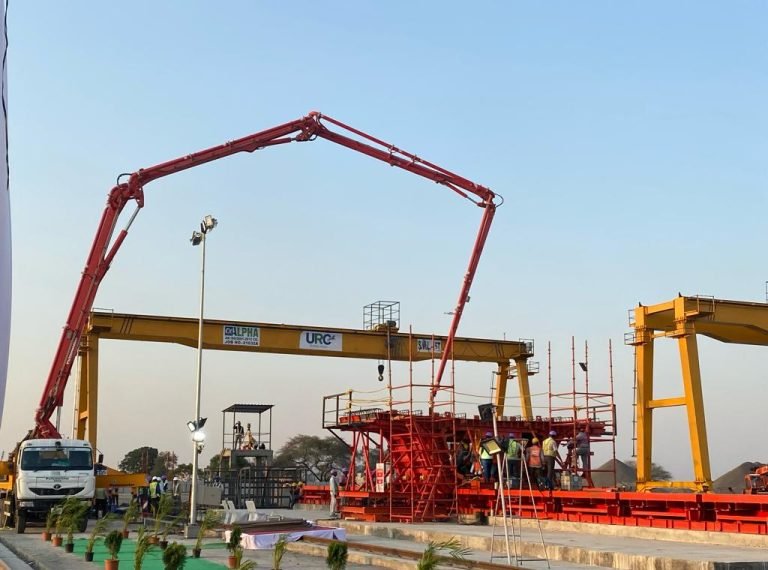
INDORE (Metro Rail News): The Rail Vikas Nigam Ltd. (RVNL) engineers on Monday, 25th April, have begun pouring concrete to cast segments for Indore Metro Yellow Line‘s 10.927 km MR10 Road – Gandhi Nagar section (Package IN-03).
RVNL was awarded the 33.53 km Indore Metro Phase 1′s project contract worth Rs. 1034 crore in September 2021 with a deadline of 2.32 years. 8.5m wide segments cast at their yard, spread across 15 hectares, near TCS Chauraha will be launched to form the line’s viaduct.
Besides a 575m depot-line, RVNL will also construct 9 elevated stations at Gandhi Nagar, Super Corridor 6, Super Corridor 5, Super Corridor 4, Super Corridor 3, Super Corridor 2 and Super Corridor 1, Bhawarsala Square and MR 10 Road.
माननीय आवासन और शहरी कार्य राज्य मंत्री श्री कौशल किशोर जी से Symbroj Media, Group के निदेशक एवं मैनेजिंग एडिटर श्री नरेन्द्र शाह के साथ आयोजित एक्सक्लूसिव वन-टू-वन इंटरेक्शन में राज्य मंत्री ने मेक इन इंडिया, आत्मनिर्भर भारत, पीएम गति शक्ति योजना सहित कई मुद्दों पर खुलकर बातचीत की |मंत्रीजी के विशेष अनुरोध पर मेट्रो रेल न्यूज़ के इस अंक में राजभाषा में आयोजित इंटरव्यू हिंदी में ही प्रकाशित किया जा रहा है | इंटरव्यू के समापन पे माननीय राज्य मंत्री ने Symbroj Media से हिंदी में भी पत्रिका प्रकाशित करने की बात कही जोकि Symbroj Media के लिए अत्यधिक प्रेरणास्पद और उत्साहवर्धक शब्द है, जिसके लिए मीडिया ग्रुप मंत्रीजी का आभारी है | हम आशा करते है कि आने वाले दिनों में भी ग्रुप द्वारा इस प्रकार के इवेंट और कार्यक्रम किये जाते रहेंगे जिसे हम अपनी पत्रिका और वेबसाइट के माध्यम से वर्त्तमान व्यवस्था के तहत नए कलेवर में प्रस्तुत कर सकेंगें | हम आशा करते है कि आने वाले समय में हम बाज़ार मांग के अनुरूप अपने हिंदी भाषी पाठकों के हितों का भी ध्यान रख सकेंगें |
बातचीत के प्रमुख अंश …
अत्यधिक भीड़-भाड़, व्यक्तित्व अप्रतीति वर्त्तमान में भारतीय समाज की अन्य सामान्य परेशानियों के अतिरिक्त महत्वपूर्ण समस्याएं है | आपके अनुसार इन परिस्थितियों का सर्वश्रेष्ठ उपाय क्या है | सरकार किस प्रकार इन समस्याओं का सामना कर रही है ?
(Crowding and depersonalisation is one of the crucial problems faced by urban society in India today apart from other common concerns. What in your opinion can be the best solution to the issue. How is the government tackling the situation?)
बहुत सी भीड़ होगी तो आवागमन में भी प्रॉब्लम होगी | इन्हीं सभी बातों को ध्यान में रखते हुए प्रधानमंत्री ग्राम सड़क योजना लागू की गयी है, जिससे प्रत्येक गाँव से सड़क की कनेक्टिविटी हो जाए। वर्त्तमान में देश में कनेक्टिविटी की आवश्यकता को ध्यान में रखते हुए कई रिंग रोड, हाईवे का निर्माण किया जा रहा है जिससे शहरों को जाम से मुक्ति मिलेगी | रिंग रोड के निर्माण से लोगों को स्टेट मूवमेंट के लिए शहरों में प्रवेश नहीं करना पड़ेगा जिससे शहरी यातायात सुगम होगा | लगभग सभी महत्वपूर्ण शहरों में मेट्रो प्रस्तावित है | जिससे यातायात में बहुत परिवर्तन होगा | लोग कम पैसे में अधिक दूरी तथा तीव्र गति से सफ़र कर सकेंगें | मेट्रो के परिचालन से निश्चित ही भीड़ को नियंत्रित किया जा सकेगा |
हाल ही मैं मल्टी-मोडल कनेक्टिविटी को ध्यान में रखते हुए प्रधानमंत्री गति शक्ति योजना लागू की गयी है | योजना से परिवहन क्षेत्र के कुछ प्रमुख उपलब्धियों के अतिरिक्त आधारभूत संरचनात्मक परिदृश्य में किस प्रकार के परिवर्तनों की संभावना है ?
(PM Gati Shakti Yojna has been launched recently with a focus on multi-modal connectivity. How is the scheme going to change the infrastructural landscape including some of the major developments of transport sector?)
गति शक्ति योजना वर्त्तमान सरकार की एक महत्वकांक्षी परियोजना है जिससे देश के इंफ्रास्ट्रक्चर विकास के साथ सभी क्षेत्रों में अच्छे परिणाम देखने को मिलेंगे | योजना के क्रियान्वयन से रोजगार को बढ़ावा मिलेगा, विकास को नई गति मिल सकेगी | लॉजिस्टिक इत्यादि पार्कों का निर्माण होगा | जिससे माल-ढुलाई इत्यादि में क्रांतिकारी परिवर्तन होंगें | सेमी स्पीड और हाई स्पीड ट्रेनों के परिचालन से लोग आसानी से एक स्थान से दूसरी जगह आना जाना कर सकेंगें | मल्टी मोडल कनेक्टिविटी के तहत कई विभाग मिलकर काम करेंगें जिससे आत्मनिर्भर और मजबूत भारत का सपना साकार किया जा सकेगा | मेक इन इंडिया का कार्य किया जा सकेगा |
विश्व की चौथी सबसे बड़ी परिवहन व्यवस्था, भारतीय परिवहन उद्योग पिछले कुछ वर्षों में औसतन पंद्रह प्रतिशत सलाना से अधिक की विकास दर के साथ बढ़ रहा है | परिवहन उद्योग के इस विकास दर को आप किस प्रकार देखते है | आवासन और शहरी कार्य में इसके महत्वपूर्ण प्रभावों को देखते हुए आपके अनुसार इस क्षेत्र के आदर्श विकास की स्थिति क्या हो सकती है ?
(The Indian automotive industry, 4th largest in the world is witnessing an average growth of more than fifteen percent annually for last few years in specific. How do you see the growth trend? What in your opinion should be an ideal growth pattern for the sector seeing its intrinsic impact on most of the other sector including urban housing and affairs?)
देखिये सामान्य सी बात है | किसी भी देश की परिवहन व्यवस्था अच्छी होगी, सड़कें बेहतर होंगी तो देश उन्नति करेगा | उदाहरण के तौर अमेरिका अमीर है इसलिए वहां की सडकें बेहतर नहीं है | अमेरिका की सड़कें बेहतर है इसलिए वो अमीर है | जिस देश की आवागमन व्यवस्था अच्छी होती है, लोग आसानी से दूर-दराज के क्षेत्रों से या दूर-दराज के क्षेत्रों में सरलता एवं सुगमता पूर्वक आजीविका या जीविकोपार्जन के अवसरों के तालाश के लिए आ जा सकेंगें वहां विकास की संभावनाएं होती है | कम समय में मूवमेंट, सुविधाओं की उपलब्धता, ये सभी तीव्र विकास सुनिश्चित करते है | भारत में परिवहन विभाग एक अच्छा काम कर रहा है | हमारा लक्ष्य है कि देश के सभी इलाकों सड़कों से अच्छी कनेक्टिविटी हो, उन्हें सड़कों से जोड़ दिया जाये | हमारी सरकार का इस पर प्रयास जारी है और पूर्व की अपेक्षा हम एक बेहतर दिशा में आगे बढ़ रहे हैं |
न्यू इंडिया, मेक इन इंडिया, आत्मनिर्भर भारत के प्रयासों के मध्य सरकार की सामूहिकयातायात और अपशिष्ट प्रबंधन जैसे विषयों में भविष्य की चुनौतियों को लेकर क्या योजना है ?
(Amidst efforts for New India, Make in India, Atmnirbhar Bharat, how is the government preparing itself for mass transit and waste management which appears to be sector of greater concern and priority?)
सामूहिक यातायात और अपशिष्ट प्रबंधन आत्मनिर्भर भारत की प्रमुख चुनौतियों में एक है, वर्त्तमान में ये चुनौतियाँ बड़ी है और आत्मनिर्भर भारत के जरिये इसका समाधान किया जा सकेगा | आत्मनिर्भर भारत जिसपर तत्कालीन सरकारों को बहुत समय पहले ही गंभीर प्रयास शुरू कर देना चाहिए था | आज भारत सरकार की प्राथमिकता है | सरकार हर क्षेत्र में मुद्रा लोन और अन्य वित्तीय प्रावधानों के जरिये छोटे-छोटे इकाइयों, मैन्युफैक्चरिंग यूनिटों इत्यादि को प्रोत्साहित कर रही है, जिससे ज्यादा से ज्यादा लोगों को रोजगार के साधन उपलब्ध हो सकें | सामूहिक यातायात और अपशिष्ट प्रबंधन के लिए सामूहिक प्रयास जरुरी है | लोगों का अनुशासित होना और मिल-जुलकर प्रयास करना जरुरी है | सरकार भी इसके लिए कई स्तरों पर प्रयास कर रही है |
दुनिया के कुछ सर्वाधिक अवांछनीय स्लम अभी भी भारतीय उप-महाद्वीप का हिस्सा है | क्या वर्त्तमान सरकार द्वारा दशकों से उपेक्षित इन झुग्गियों एवं बस्तियों के पुनरुद्वार की कोई योजना है?
(Some of the most infamous slums around the globe continue to be a part of Indian sub-continent. Is there any strategy present government is working upon to improve the condition which unfortunately has been unanswered last many decades and years?)
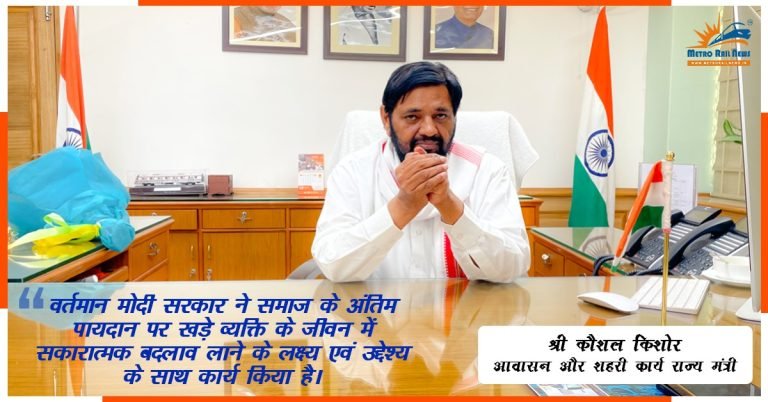
वर्त्तमान मोदी सरकार ने समाज के अंतिम पायदान पर खड़े व्यक्ति के जीवन में सकारात्मक बदलाव लाने के लक्ष्य एवं उद्देश्य के साथ कार्य किया है | सबके पास एक आवास हो जिसमें सुबह-शाम चूल्हा जलता हो अर्थात रोजगार एवं आजीविका के साधन हो | बिजली का बल्ब हो जो चौबीसों घंटे जलता हो, नल हो जिसमें पानी आता हो |अर्थात समाज के अंतिम पायदान पर खड़े व्यक्ति की रोटी, कपड़ा और मकान की प्रारंभिक जरूरतें पूरी हो सकें | इसी कड़ी में प्रधानमंत्री शहरी और ग्रामीण आवास योजना की शुरुआत की गयी है जिसके तहत सभी योग्य लाभार्थियों को आवास उपलब्ध कराये जायेंगे जिससे उन्हें झुग्गे और झोपड़ियों में न रहने पड़े | सरकार इसके लगातार प्रयास कर रही है और आशा है हम इसमें सफल होंगें |
आपके अनुसार देश में एक आदर्श शहर की स्थिति क्या होनी चाहिए | क्या कोई विशिष्ट परिवर्तन या विशेषीकृत मॉडल है जिसे सरकार इस क्षेत्र में किये जा रहे प्रयासों में समाहित करना चाहती है ?
(What in your opinion an ideal city in the country be like? Is there any specific change or standardised model you are focussing at that needs to be incorporated with present efforts being done for the same?)
सरकार द्वारा 2030 तक सौ स्मार्ट सिटी के विकास का लक्ष्य रखा गया है | बेहतर शहरों के निर्माण के लिए हर संभव प्रयास किये जा रहे है | SBM 2.0 के तहत कचरा मुक्त शहरों का लक्ष्य रखा गया है, जिसमें डोर-टू-डोर कचरा उठाव, सीवरेज ट्रीटमेंट इत्यादि के प्रावधान किये गए हैं | बेहतर जल निकासी, ड्रेनेज सिस्टम का विकास इत्यादि भी इसके महत्वपूर्ण प्रावधान है | हम स्वच्छ जल, जमीन एवं वायु पर काम कर रहे है | सरकार का इस दिशा में निरंतर और प्रयास जारी है |
क्या देश के सभी मेट्रोमें यातायात सुगमीकरण के लिए मंथली पास की व्यवस्था की जा सकती है?
(Can monthly passes be introduced across metro services in the country for transport facilitation?)
उत्तर : देखिये ये एक अच्छी व्यवस्था हो सकती है | चूँकि ये एक नीतिगत प्रश्न है, अतः इसके सभी पक्षों पर विचार करके इस पर किसी प्रकार का निर्णय लिया जा सकता है | आवश्यकता पड़ने पर इस पर विचार किए जा सकता है और सरकार इस पर विचार करने का काम करेगी |
मेट्रो रेल न्यूज़ के बारे में आपके क्या विचार है | पाठकों के लिए कोई संदेश ?
(Please share your views about metro rail news. Any message to our readers?)
उत्तर : एक अच्छी पत्रिका है | इसे आप हिंदी में भी छापिये जिससे ज्यादा से ज्यादा लोग लाभान्वित हो सकें | आप एक अच्छी मैगज़ीन का प्रकाशन कर रहे है जिसके लिए हमारी शुभकामनाएं है | आपके मैगज़ीन के जरिये मैं यही सन्देश देना चाहूँगा की सभी लोग राष्ट्र को सर्वोपरि रख सर्वप्रथम राष्ट्र के बारे में सोचें | सफल, सुदृढ़, साफ़-स्वच्छ एवं आत्मनिर्भर बनाने के बारे में सोंचें | हम सभी के सामूहिक प्रयास से राष्ट्र सशक्त होगा और उन्नति के शिखर पर पहुंचेगा |
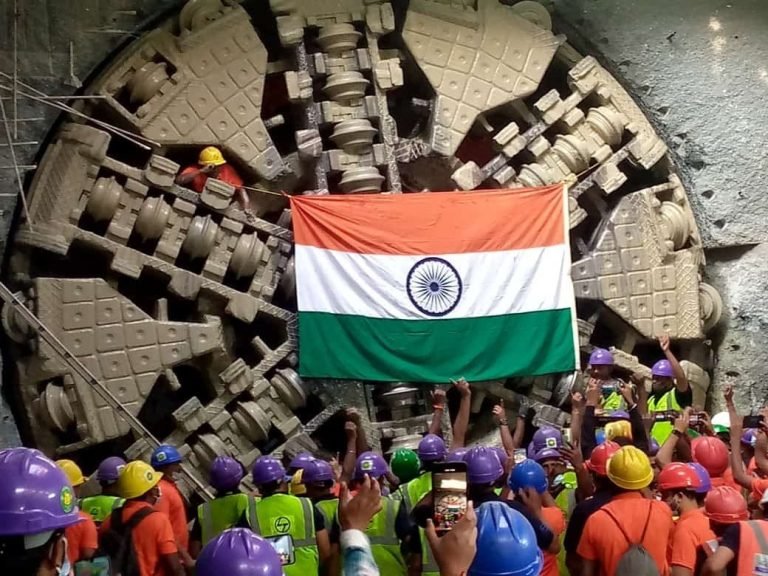
BENGALURU (Metro Rail News): Larsen & Toubro’s (L&T) Tunnel Boring Machine Lavi (DZ672) recorded its first breakthrough on 15th April at the underground MG Road Station for Bangalore Metro’s 21.386 km Pink Line.
This China Railway Construction Heavy Industry (CRCHI) slurry machine was commissioned from Shivajinagar Station in February 2021 to build the 1076m down-line tunnel for the 73.92 km Bangalore Metro Phase 2 project’s 2.755 km Package RT-02.
“The biggest issue faced when carrying out work using any TBM is the damage to the discs on the cutter head. In the case of Lavi, the discs were damaged more than that encountered with any TBM before. For every six metres drilled, four discs get damaged for any machine when passing through regular granite. But since it had to pass through a long stretch of Dolerite Zone, more discs got damaged. This forced us to stop, repair the discs and start again,” a BMRCL official said, TNIE reported.
“This happened nearly 200 times during the course of the drilling the 1076-metre stretch it completed. After some rings are laid, the machine comes face to face with a very hard surface at the core. This causes numerous damages'” he added.
From here on, TBM Lavi will now be dragged through MG Road’s station box for its final assignment to build the 1098m down-line tunnel towards Vellara Junction (National Military School). L&T hopes to complete that job in 331 days.
MUMBAI (Metro Rail News):J Kumar Infraprojects’ engineers has launched a 48 meter special steel girder last week for the 15.18 km Mumbai Metro Line-6 (Pink Line) project. This line will connect Swami Samarth Nagar – Vikhroli via 13 elevated stations.
The girder over Line-2A’s viaduct on Link Road was placed near Infinity Mall for Package BC-03 of the project. DMRC awarded this Rs. 867.75 crore contract to J Kumar – CRTG JV in August 2018.
The scope of this contract includes the construction of a 6. buy zovirax online gaetzpharmacy.com/zovirax.html no prescription
079 km viaduct from chainage – 822.508m to 5257.400m and five stations at Swami Samarth Nagar (Lokhandwala), Adarsh Nagar, Jogeshwari (W), JVLR and Shyam Nagar.
Bidding for Line-6’s key systems (rolling stock, signaling, telecom etc.) has still not started yet.
MMRDA has recently updated its website with key civil construction status data till March 21 which is as follows:
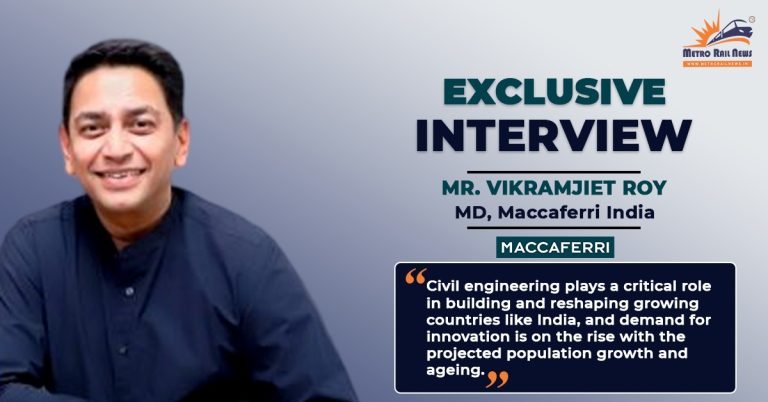
Metro Rail News conducted an email interview with Mr. Vikramjiet Roy, MD, Maccaferri India. In the interview Mr. Roy talked about civil engineering ecosystem of India.
Mr. Vikramjiet Roy, the Managing Director of Maccaferri Environmental Solutions Pvt. Ltd (MESPL) in India and the Regional CEO of the ISEAP Region (India, South-East Asia & Pacific) of the Officine Maccaferri group, is a first-generation entrepreneur and has close to three decades of experience in businesses – ranging from Industrial Products & Civil Engineering Solutions to Core Infrastructure & Environment Solutions. Having graduated in commerce from St. Xavier’s College, Kolkata and an associate member of ICWA, Mr. Roy possesses an experience of over 27 years.
Here are the edited excerpts: –
How do you plan to change the civil engineering ecosystem of India which is considered to add to carbon footprints every year to a significant level?
Civil engineering plays a critical role in building and reshaping growing countries like India, and demand for innovation is on the rise with the projected population growth and ageing. In infrastructural developments, use of conventional materials such as concrete, steel, lumber, clay, or gravel contribute significantly to the embodied carbon of every building project. The construction sector in India emits about 22% of the total annual emission of CO2.
India requires long-term solutions that are more environmentally friendly than conventional solutions. India needs to build a green economy with sustainability at the core of its developmental plan.By eliminating or decreasing the use of these materials and replacing them with a comparable geosynthetic material, these projects’ inherent embodied carbon will be reduced. When compared to conventional structures, the use of mechanically woven Double Twisted wire mesh solutions, particularly Reno Mattresses and Gabions filled with locally accessible stones, can result in reducing CO2 emissions savings of up to 70%. When it comes to construction, long-term sustainability should be a primary priority and reducing the carbon footprint may be the fastest method of reaching net zero carbon emissions. Solutions should be developed with the intent of improving quality of life while also preserving the environment.
We at Maccaferri invented Gabions (typically used to form flexible, permeable and monolithic structures) and dramatically changed civil engineering’s landscape. These are widely used in highways, hilly terrains, railways and mining. We are focused ondeveloping sustainable solutions in geotechnical and environmental construction markets.
It’s been more than two decades, since Maccaferri has been working in India. What has been your evaluation so far regarding Indian efforts to reduce carbon emission towards global goal of clean & safe energy. Do you find the efforts on a serious node?
Rising emissions in construction sector emphasize the urgent need for a strategy to implement alternative construction material that reduce lifecycle carbon emissions. Ramping up fight against climate change and global warming, the country has committed several short and long term targets. India’s overall carbon intensity reduction goal from 33 percent to 45 percent by 2030, despite the country’s economic and population growth, is a commendable step.
The construction industry, by its nature, is one of the top users of natural resources. With the growing concern of finite natural resources and climate change, there is increasing pressure in the construction industry to minimize its environmental impact. The infrastructure developments should have a conceptual framework for implementing sustainability principles and strategies from a life-cycle perspective to contribute to sustainable development.
We all know gabion walls are primarily used to control land sliding on road sides, erosion and scouring on the river banks during flood and high velocity river streams etc. Yourself being a pioneer in gabion technology and having worked on more than thousand projects in India, what has been your major achievements in country in those areas which country frequently suffers?
Gabions have a rich history world-wide for their use in retaining walls, river bank protection, landscaping, toe walls, fish passes. Moreover, rock filled gabion units are also popular as cladding on structures, to provide a natural looking aesthetic statement.
Maccaferri gabion structure are cages which are engineered from double twisted hexagonal woven steel wire mesh which is coated with special polymeric coating. In addition to this, delivered flat-packed, our gabions are assembled and then filled with stones at the project site. There are numerous uses for these modular units and are typically used to form flexible, permeable and monolithic structures such as retaining gabion wall, channel linings, hydraulic control structures and erosion protection. They are increasingly being used in architectural applications as well. We especially have
Maccaferri gabion baskets which are made from heavily galvanised high quality steel wire and coated with special polymeric coating Polimac® to provide long term corrosion protection enabling for use in more aggressive environments.
Hilly regions are more vulnerable to natural disasters causing landslides, debris falls, and other rock fall events, and hence, becomes critical for infrastructure. Maccaferri successfully completed landslide mitigation in the hilly terrains of Lambagarh, Uttarakhand located at NH-58. For this site, Maccaferri constructed a reinforced soil wall (with a maximum height of 44 metres) with Terramesh system which is made up of gabions with integrated secondary reinforcement and high strength geogrid for reinforcement across a 500-meter stretch of land.
The Smriti Van Earthquake Memorial, project conceived by then Chief Minister now Prime Minister Shri Narendra Modi. Gabion structures with Macline Geosynthetic Clay Line (GCL) were chosen for their lower carbon emission, flexibility, durability and aesthetic appeal as the structure lies in Seismic Zone V i.e., prone to earthquakes.
Maccaferri is a global organisation with a company history of nearly 140 years. How do you see the progress of the company in terms of its long existence?
Maccaferri is strongly committed to solving clients’ problems by continuously providing better solutions through active listening, innovation and collaboration. With the mission of becoming a leading global provider of advanced solutions to the civil, geotechnical and environmental construction markets, we work every day, with 140 years of our history, to find better solutions for our clients at every degree of latitude and longitude. We don’t just sell products at Maccaferri; we provide superior solutions by identifying, solving, and responding to each client’s unique needs. Gabions, geosynthetics, rockfall and avalanche protection systems, green solutions, specialty steel wire products, and much more are all part of our extensive offering. Maccaferri is a partner who works with clients from the start of a project until it is completed successfully, maximising value for money through technical competence and a diverse product selection.
What has been your CSR activities? Is there any major accomplishment on a global scale? Please tell us something about the CSR policy of the organisation.
Far from being a mandatory, giving back to society has been ingrained in the Maccaferri culture since inception. Maccaferri works as a solution supplier for enterprises as well as companies operating under the CSR domain for environmental preservation. We are among few technological companies delivering environmental solutions with the ability to make a significant effect in the environmental protection domain under CSR.
In India, the pandemic provided an opportunity for the country to unite in order to defeat Covid 19. Maccaferri as a socially responsible company stood committed and firmly with the country against this COVID-19 fight. Humanity, adaptability to the new normal, and contributions to overcome this pandemic time have all been established by resilient leadership headed by compassion. The company’s commitment to the cause has been unwavering and Maccaferri launched multiple internal and external initiatives (under Count on Us) to support the country’s healthcare system’s needs, as well as the frontline workers who worked tirelessly to combat the virus’s threat and impact. Our ‘Breath Easy’ campaign was launched in 2021 to extend help to society by providing oxygen concentrators to patients who were in need. We carried out multiple vaccination drives for our employees and their families. Also, we have been organising regular blood donation drives since 2009.
How do you see the functioning of Indian civil engineering giants like NBCC, RITES, IRCON etc. which have been able to leave a reasonable grade of impression in last few years on a global platform?
The infrastructure sector is a crucial driver for the Indian economy. The industry is highly responsible for propelling India’s overall development and enjoys intense focus from the Government for initiating policies that would ensure the country’s time-bound creation of world-class infrastructure. Organisations like NBCC, RITES, IRCON etc. are playing an important role in pushing infrastructure projects and bringing them to reality. It includes developing of bridges, dams, roads, and other urban infrastructure development. Maccaferri works as a partner alongside these organizations from the start of the project till its successful completion, maximising value for money through technical expertise and an extensive portfolio of quality products and solutions.
Our solutions begin with the project’s design phase, with the basic goal of solving a problem. Then, we proceed through all the stages of development; manufacturing, designing, and installing solutions. As part of our service, we provide technical assistance to organisations for installation of our advanced solutions. We have a specialised construction company (Maccaferri Infrastructure Private Limited) in India that takes on turnkey projects which are complex and strategic projects, not very common in the industry.
Government in India is increasingly focusing on Make in India, Atmirbhar Bharat with sustainability at utmost. How are you advocating and contributing to government’s effort on these endeavours?
The government’s economic packages are playing a significant role in making India “self-sufficient.” Infrastructure being one of the pillars of ‘Atmanirbhar Bharat’, various initiatives, such as the Bharatmala Project, the Paravatmala Project, and the Setu Bharatam Project are on the go. We are inevitably advocates of use of alternative construction materials in ongoing and upcoming infrastructure development. We enable use of local material with low overall and transportation cost, eventually reducing the carbon footprints.
What are your future goals and plans seeing your long and successful career?
We recognise the vitality of the Indian infrastructure market and are working to provide better, more cost-effective solutions and technology that are best suited for the Indian environment. For the next decade, India’s infrastructure growth projections are predicted to increase year on year. There are currently few long-term choices for building physical infrastructure at a rapid, efficient, and large scale. Our goal is to be a trusted partner to stakeholders, fostering creativity, innovation, and adoption of alternative solutions to challenging civil engineering problems with sustainability at core.
Engineering is an increasingly popular option amongst youth in India. What would be your message to the aspiring youth in this regard. Is civil engineering presently the best option amongst all engineering streams?
Engineering skills and expertise are essential for driving long-term economic growth and addressing societal concerns via technology innovation and development. As a result, understanding and continually adapting and improving the educational and professional paths of engineers is critical for ensuring national competitiveness and quality of life. Infrastructure is critical for the economic success of a growing country like India. With India’s GDP rising, skilled professionals are in high demand to maintain growth. Government and educational institutions are investing billions in building engineering infrastructure to equip students with the latest technology. However, engineering involves experiential learning.
The skills inculcated must enable students to tackle challenges during their careers. Engineers must generate well-defined solutions that can avoid loss of time or excessive spending.
Country needs a steady supply of qualified engineers, with the necessary skillset, to boost local economies, create new jobs, facilitate sustainable development and meet Government ambitions.
Please share your views about Metro Rail News. Any message for our readers?
Metro Rail News is a remarkable and one-of-a-kind portal committed to depicting urban mobility solutions in India with important and up-to-date information regarding infrastructure and growth. On behalf of Maccaferri, I would like to encourage Metro Rail News readers to continue reading one of the few media houses dedicated to in depth infrastructure stories, solutions happenings and challenges.
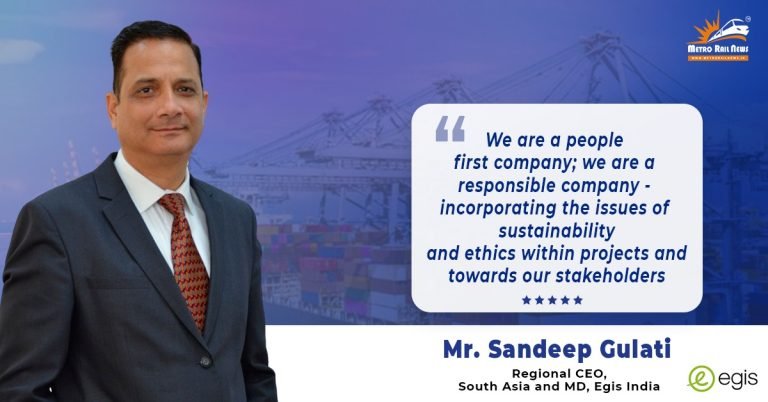
Metro Rail News conducted an email interview with Mr. Sandeep Gulati, Regional CEO, South Asiaand MD, Egis India. Mr. Gulati talked about his new position and company’s contribution to the global efforts for developing a smarter, greener world.
Mr. Gulati joined Egis India in November 2017 as the CFO – India and South Asia. In December 2018, he was appointed as the Managing Director of the company to spearhead the future growth of the Egis Group in India. He is a senior business leader with over 24 years’ experience. In his current role as MD of Egis India (Paris-headquartered global engineering company), he is driving multi-dimensional transformation of Indian Operations.
Here are the edited excerpts: –
Many congratulations for being appointed as Regional CEO, South Asia. What does the new position mean to you? How are you setting your priorities?
Thanks. My priorities are multifold starting from taking Egis in India to be in the number one position in the industry by 2023. We are already in top three and want to achieve a turnover of 75 million euros in India by 2027, registering a growth rate of 13% CAGR. We already have more than 120 projects active at this point in time across the country and with pipelines worth more than Rs 850 crore and spread across many years.
Egis in India is fastest growing in the market, we have bagged 65 projects amidst COVID 19. These include metro rail projects, water projects, urban projects, smart cities, highways, ports etc. Some of the key wins include Surat Metro Project, PMC for various National Highways, Faridabad and Jaipur smart cities, Prestigious Green highway project and various Rural Water Supply Projects especially in North East India, marking the company’s expansion into that geography as well as in Bangladesh and Nepal.
What is the motto and tagline of egis?
We are a people first company; we are a responsible company – incorporating the issues of sustainability and ethics within projects and towards our stakeholders and we are a creative company – taking a proactive stance on innovation to meet tomorrow’s challenges.
Our taglines #ExecuteWithExcellence and #ImpactTheFuture emphasize on excellence in work and our ambition is to become one of the global top 10 construction engineering firms by harnessing our technical excellence for the benefit of a transition to a low carbon future. This is the aim of our new strategic plan, ‘Impact the Future’.
How are you contributing to the global efforts of developing a smarter, greener world and creating a sustainable future of communities everywhere?
Climate emergency is our absolute priority. A wide range of engineering services and operational solutions to fight against climate change and biodiversity erosion. The use of low-carbon alternatives with equivalent timeframes and costs on operations and projects entrusted to us. During the Covid-19 crisis, Egis Group drew up 21 low-carbon proposals for the economic recovery. In all our fields of work, our engineers develop innovative operational solutions to address specific environmental issues: care for biodiversity, energy efficiency, material recycling, etc. In all engineering services, deployment of eco-design practices. More than 70 solutions for environmental performance are available today, and several have become acknowledged trademarks such as Cycle Up and SeaBoost.
Q.4. What are the strategic challenges you envision for fighting climatic changes, the digital transition and meeting the needs of growing population globally?
Challenges are many but we believe in providing solutions to all challenges. Our main sectors of activity are cities, buildings and transport which account for more than 50% of global greenhouse gas emissions. We therefore have a crucial role to play in this fight against climate change, towards our clients, and to national and local governments. We take this responsibility to heart and offer our contribution to environmental protection. To structure its contribution to global net-zero carbon with ambition and transparency, Egis has selected actions falling within Carbone 4’s “Net Zero Initiative” guidelines.
With climate emergency and loss of biodiversity becoming ever more pressing issues now, Egis is making five pledges to take tangible and daily action in favour of the environment. These commitments are part of Egis’ corporate project “Impact the Future”, which pursues the ambition of developing the firm into a leading player in the fight against climate change. The multi-disciplinary nature of the group enables it to offer a full range of levers and innovative and effective solutions along the entire lifecycle of physical assets and on all scales of regions and communities, with a resolutely systemic approach.
Kindly outline the statement of the organisation regarding presently being the only engineering firm to offer truly integrated services across all major engineering disciplines and every aspect of the built environment? What are your plans for growth in this regard for Indian market?
Egis India is one of the top three providers of comprehensive solutions for infrastructure engineering and project management in the country and we aim to be in the number one position in the industry by 2023. We had a strong 2021 witnessing YOY 108 % Growth. We are looking at organic growth in India too.
Egis declares extensive expertise in delivering major infrastructure development across India. Please state about few major accomplishments done.
Since 1995, we’ve worked closely with government and private operators to support India’s continued development. Together we’ve delivered over 90 successful projects, winning multiple awards. We are one of the only engineering firms to offer truly integrated services across all major engineering disciplines and every aspect of the built environment – from road to water to energy, rail and beyond. This means you can access all the expertise you need for your project, all in one place.
We were associated with multiple prestigious projects like Mass Rapid Transit System (Metro) and Semi-High Speed Regional Rail Transit System around Delhi, sustainable development of smart cities, Atal Mission for Rejuvenation of Urban Transformation (AMRUT) and Housing for All PMAY projects in Madhya Pradesh; specialized high rise structures like Statue of Unity in Gujarat and Chhatrapati Shivaji Memorial Statue, National Waterway and Jawaharlal Nehru Port Trust; many expressways, Mumbai Coastal Roads, national highways, state highways, rural roads partnering 29 Indian States in various geographical areas; airports and dam rehabilitation and Improvement Project (DRIP) of around 250 dams.
How are you contributing to smart mobility in public transport systems? What major development and innovation is there for Indian market?
Egis enjoys the reputation of being one of the key players in developing Urban Mass Rapid Transit Systems as well as long distance high-speed rail in India. The Company has partnered with public clients, railway operators and PPP developers with international and local funding in developing world-class rail transport systems in the country. The Company has been an important stakeholder in the development of Metro Rail services in key Indian cities. Besides the normal repertoire of capabilities in conducting feasibility studies and detailed project reports, preliminary engineering or detailed design, Egis in India is involved in pre-bid and post-bid services for most core rail activities.
Please state about the CSR policy of the organisation. What are the major contributions?
Our key objective is to place the environment challenges of the 21st century at the center of our business activities and development strategy. The fight against climate change has been a key strategic priority since 2019. Egis has committed to contributing to global carbon neutrality by 2050 and all employees are involved in these commitments.
What are your views about Metro Rail News? Any message to our readers?
It provides in-depth analysis and information around the industry.
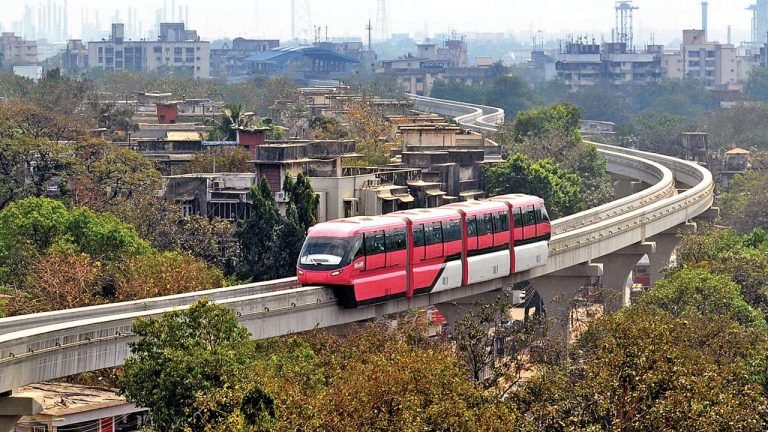
KUALA LUMPUR (Metro Rail News): SMH Rail has been awarded a contract to supply 40 monorail cars to Mumbai in a project worth US $85 million. The Mumbai monorail, which partially opened in 2014, is the first monorail in India. It is implemented and operated by MMRDA.
The contract commissioning for the additional 10 sets of four cars each includes design, manufacture, supply and testing, with expected completion within the next two years.
In a statement on Friday, the Rawang-based SMH Rail Sdn Bhd said it got the contract from the Mumbai Metropolitan Region Development Authority (MMRDA) to supply the monorail rolling stock together with its Indian partner, the Hyderabad-based Medha Servo Drives Pvt. Ltd.
The procurement of the additional cars from SMH Rail is expected to improve the frequency of its monorail services and increase ridership by allowing the possibility of shortening intervals to as low as five minutes between each train.
According to SMH Rail, various refinements had been introduced to make the new cars lighter, thus decreasing the load on the guideway and piers, while being able to carry 10% more passengers.
Datuk PK Nara, chairman and managing director of SMH Rail, said, “The Mumbai monorail project demonstrates the successful implementation of the ICP that provided leverage for SMH Rail to expand its capability for export by offering a level playing field in the rapidly growing global rail transport market.”
The government’s procurement policy had allowed Malaysia to establish a strong foundation to achieve competency in design, engineering and manufacturing of electric trains and locomotives in the region, he added.
“With over 20 years of industry experience, we are focused on continuously delivering solutions for our global railway partners to ensure commuters in Mumbai can enjoy a more comfortable and faster travel experience,” he added.
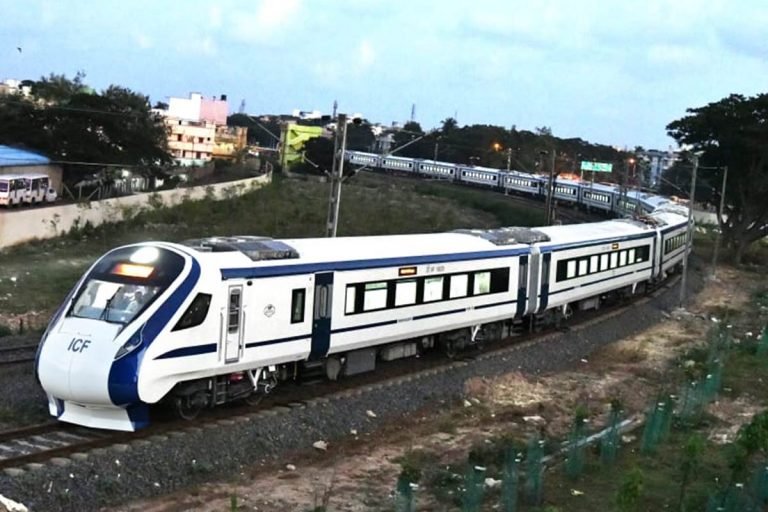
NEW DELHI (Metro Rail News): 128 Wheels of Vande Bharat trains which were manufactured in Ukraine but were stuck there to the war have reached Romania and will be airlifted to India soon.
According to sources, the wheels will be airlifted by the railways for trials next month. The sources also informed that to meet its target of launching 75 semi-high speed trains on prominent routes across the country by the end of this year, India has now placed orders for wheels with Czech Republic, Poland and US. buy lexapro UK mannadew.co.uk/wp-content/languages/new/uk/lexapro.html no prescription
The sources also said that India may consider China too as the country supplies wheels.
The Ukrainian firm, which is one of the world’s largest suppliers of such wheels, had stopped the production due to staffers joining the war. The railways had given order for 36,000 wheels at a cost of $16 million to the firm. The wheels were previously planned to be shipped from the Ukrainian Black Sea Port to Maharashtra’s Jawaharlal Nehru Port Trust (JNPT) which could not happen as the war broke out.
The 128 wheels which are currently in Romania are required for the trial of two Vande Bharat trains. Those wheels were sent to Romania by road from the wheel factory in Dniepropetrovsk, Ukraine, whereas the axles needed for the wheels have been manufactured at the Railway Wheel Factory in Bengaluru.