2nd Edition of InnoMetro to be held at The LaLit Hotel, New Delhi on 23-24 May 2022

NEW DELHI (Metro Rail News): InnoMetro is a global event to showcase Innovation & Technology for the Metro, Railway, RRTS, High-Speed Rail & Allied Industries being organized by Metro Rail News. The event is going to take place in the LaLit Hotel, New Delhi on 23rd and 24th May 2022.

It aims to bring experts from the industry in line to witness the latest advancements in a three-day insightful conference & expo. With a vision to maximize penetration into the key trends affecting the urban mobility sector, the event serves as a global platform for ideation, discussion and presentation of the most innovative ideas and concepts giving a new dimension to the Rail and Metro Industry.

The event serves as a one-stop destination for leading brands to showcase their products, for experts to speak their minds and for delegates to experience the latest trends and technologies in the industry.

Many delegates from corners of the world will be gracing the event and will be speaking on topics such as:

• Realisation of Atmanirbhar Bharat
• Make in India: Make for World
• New modes of Transportation: Metro Neo, Metro Lite
• Workforce diversity & Technical Skill Gaps in Metro & Railway
• Covid Protocol & Difficulties in Rail Transport
• Ticketing and Payment Innovations
• Automated Train Examination System: ATES
• Asset Maintenance and Predictive Analysis
• Transport Infra Financing: Public-Private Partnership (PPP)
• Indigenous exports of Rolling Stock
• Advancements in Artificial Intelligence for Metro & Railway
• Increased revenue systems and cost-cutting measures
• Sustainable & Green Mobility
• Improving Passenger Experience on ‘Moving Wheels’
• Metro railways: Promoting Low carbon Transportation in India
• Data-driven Mobility System
• MaaS- Increasing the sustainability of Transport System

Speakers

The esteemed speakers from the metro and rail industry who will be speaking on important topics in the event are:

  • Shri. R A Rajeev: IAS: Ex-Metropolitan Commisioner, MMRDA
  • Thiruman Archunan: Director (Projects), Chennai Metro Rail Ltd.
  • Shri. Daljeet Singh: Director (Works), Delhi Metro Rail Corporation Ltd.
  • Shri. A.K. Singh: Presiding Arbitrator, Indian Railways
  • Shri. Rajesh Prasad: Director (Operations), RVNL
  • Shri. Shantanu Roy: Executive Director, BEML
  • Shri. Jugal Kishore Bhatti: Additional General Manager, RITES Ltd.
  • Shri. H.K. Raghu: Executive Director, RDSO
  • Mr. Karan Sethi: Assistant Vice President, Invest India
  • Shri. Akshay Sharma: Director (Project), Pune IT City Metro Rail Ltd.
  • Shri. Abhijit Malankar: CIM-GIZ RE -Sustainable Solutions & Test Project Lead, ITC – Pune
  • Shri. Gaurav Agarwal: Chief Mechanical Engineer, COFMOW
  • Mr. Nikhil Swami: Head- Academy | Training, Frauscher Sensor Technology India

For sponsorship opportunities at InnoMetro 2022, register now on: https://www.innometro.com/exhibitor-registration/

For enlisting as a speaker at InnoMetro 2022, register now on: https://www.innometro.com/speaker/

Mumbai-Ahmedabad bullet train to be operational in 2027

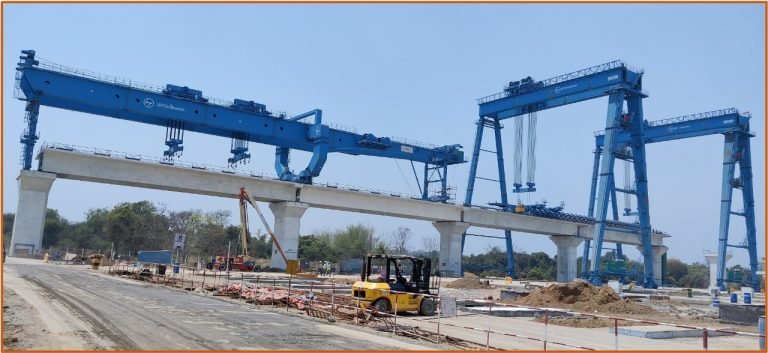
NEW DELHI (Metro Rail News): Mr. Satish Agnihotri, chairman and managing director, National High Speed Rail Corridor (NHSRCL) on Tuesday said that India’s first bullet train will be operational in 2027 for which trials will begin in 2026. He also said that India’s first bullet train station in Surat will be inaugurated by 2023.

“Though the trial between Surat and Bilimora will be conducted in 2026, we will commence bullet train operations in between these two stations from 2027,” he said. “Surat station is expected to be ready for operations by September 2023”, he added.

NHSRCL officials informed that the civil work is at four stations that are Vapi, Bilimora, Surat and Bharuch of the total 12 stations will be ready by December 2024 as the construction is being carried out at an escalated pace. Officials also said that apart from the construction of these four stations, a viaduct of 237 km will also be constructed.

Japan Ambassador, Satoshi Suzuki told the media, “Our priority is to complete and start the bullet train operations on this route. Maintenance and provision of updated technology is a commitment from Japan,”

“Our latest technology is the E5 Shinkansen however, we are providing an upgraded version of this technology keeping in mind India’s weather conditions and pollution. The coaches of the bullet train will be antiseismic,” he added while talking about the bullet train project.

“For the first bullet train, some train coaches will be shipped as complete coaches while some will be assembled in India and the technology is based on a crash avoidance system which includes the latest signalling and coach designs that make the train accident-free,” Agnihotri said.

He also informed that around one lakh people will be employed when the civil work progresses to its peak, which is expected to reach by June. “The project currently has generated around 20,000 employments,” he added.

The total length of this bullet train route is 508.17km and the maximum operational speed is 320 kmph. The whole route of Ahmedabad- Mumbai bullet train will have 12 stations- eight in Gujarat and four in Maharashtra. Stations in Maharashtra include Mumbai (BKC), Thane, Virar and Boisar.

Delhi Metro helped passengers save 269 million hrs of travel time in 2021

NEW DELHI (Metro Rail News): In the year 2021 the passengers saved “mammoth 269 million hours of travel time” by using Delhi Metro services, the DMRC stated on Tuesday.

As per a study conducted by The Energy Research Institute (TERI), the annual time saved by passengers would be “more than double to 572.5 million hours in 2031”, the Delhi Metro Rail Corporation (DMRC) informed.

https://twitter.com/OfficialDMRC/status/1513889509414424583

In addition, DMRC helped remove over 5 lakh vehicles from the streets of the national capital daily in 2021. This figure has also increased from about 4.74 lakhs in 2019.

These benefits of Delhi Metro are further augmented by the fact that it also helps remove about seven lakh tonnes of pollutants from the atmosphere as a number of passengers use the Metro keeping their private vehicles at home which run on fossil fuels.

L&T emerged as lowest bidder for Chennai Metro Line-3’s Elevated package

CHENNAI (Metro Rail News): Larsen & Toubro has won the construction work for Chennai Metro Line-3’s first 10 km elevated package between Nehru Nagar – Sholinganallur on 12th April after the Chennai Metro Rail Ltd (CMRL) opened financial bids for the package C3-CP08-EV-01/RT-01. The scope of this corridor includes an approximately 10 km viaduct starting from a ramp south of Taramani Link Road Station with 10 stations on Old Mahabalipuram Road (OMR).

This tender was issued again for the 118.9 km Chennai Metro Phase 2‘s Package CP08-EV-01 which received 3 bids in July 2021 but it was cancelled in December 2021 due to a major redesign of the line from a double-decker viaduct for vehicles and metro trains to separate parallel structures.

CMRL re-invited bids for the corridor’s construction which is financed by Japan International Cooperation Agency (JICA) in December 2021. The deadline for this package is 36 month and the estimate is unknown. Technical bids were opened in February to reveal 6 bidders and their bids which are as follows:

FirmBid (Rs. Crore)
L&T1143.52
GR Infraprojects1211.59
JMC Projects India1252.47
NCC1285.60
HCC – KEC JV1288.54
DRA Infracon1592.08

Tender No.: CMRL/CON/PHASE-II/CORRIDOR3/C3-CP08-EV-01/RT-01/2021

The scope for this tender includes the construction of an elevated viaduct (approximate length-10 km) including elevated ramp and ten (10) elevated metro stations at Nehru Nagar, Kandanchavadi Perungudi, Thoraipakkam, Mettukuppam, PTC Colony, Okkiyampet, Karapakkam, Okkiyam Thoraipakkam and Shalinganagallur.

European Investment Bank team visits Kanpur Metro

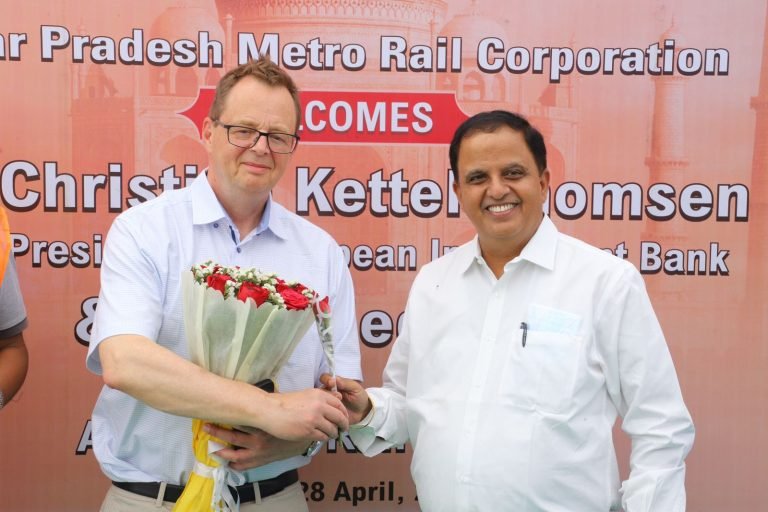
KANPUR (Metro Rail News): Uttar Pradesh Metro Rail Corporation Limited (UPMRC) is executing metro projects in Lucknow, Kanpur, and Agra which are partly funded by European Investment Bank (EIB). A seven-member delegation from the agency visited Kanpur Metro Rail Project on Tuesday (12.04.2022) and reviewed several environmental and economic aspects of the project. They also studied and analyzed several social changes and impact which has been caused by Metro. The team praised the efforts of the Kanpur Metro team and appreciated the measures adopted in the project on every level.

The team reached IIT Metro Station at 12 noon and inspected various parts of the station including the Ticket Counter, Station Control Room, Security Check Point, and AFC Gates. They also inspected and acknowledged the provisions made inside the station for Divyang persons, senior citizens, women, and children. They were told about the provisions and facilities in detail. The team also admired the artworks at the Metro Stations of the Priority Section (IIT-Motijheel). The EIB delegation travelled from IIT Metro Station to Motijheel Metro Station.

The EIB team also inaugurated a Rapido bike service kiosk at Motijheel Metro Station. This will improve the last mile connectivity to and from Metro Stations.
buy Bactroban generic andnewonlineblo.com over the counter
These kiosks are available at all the 9 Metro Stations of the Priority Section. Commuters may book their Rapid from Metro Stations and with this they will get a discount of 30% on their bike ride.

After this, the team visited Kanpur Metro Depot at Gurudev Chauraha and inspected the OCC (Operations Control Centre). The team discussed future implications and prospects of the Kanpur Metro Project in detail with Senior Officials of UPMRC. The team also inspected the underground section-I (Chunniganj to Nayaganj) of the first corridor of the Kanpur Metro Project, before heading to Lucknow.

The EIB team is on an inspection visit since April 9, 2022. The team visited Agra Metro Rail Project from 9th April 2022 to 11th April 2022, then to Kanpur Metro on 12th and tomorrow the EIB team will be in Lucknow.

EIB team inspects Agra Metro Rail Project

AGRA (Metro Rail News): A six-member team from European Investment Bank (EIB) which is partly funding the Agra Metro Rail Project visited the project site on Monday and inspected various feasibility features of the project. The EIB team reviewed the complete alignment of both corridor 1 and corridor 2 of the Agra Metro Project.

The EIB team inspected the elevated section of the priority corridor which comprises three metro stations namely Taj East Gate, Basai and Fatehabad Road during their 3 day visit and then headed to Agra Metro Depot (15th Battalion PAC) for further inspections.

The team reviewed the project execution and discussed its impact on various other aspects and expressed their satisfaction over the pace of the execution of the project. On Sunday, the team enjoyed the heritage and architecture of this city and visited the Taj Mahal and Agra Fort.

The EIB team got engaged in a detailed discussion with the Kumar Keshav, managing director (MD) Uttar Pradesh Metro Rail Corporation (UPMRC) as well as the director finance, and other senior officials of the organisation. The team reviewed the complete alignment of both corridor 1 and corridor 2 of the Agra Metro Project on their visit’s last day on April 11.

Construction on Chennai Metro phase 2’s elevated line from Poonamallee to Porur speeds up

CHENNAI (Metro Rail News): In Chennai Metro’s phase 2 project, the construction work on the elevated line of the Poonamallee-Lighthouse corridor between Poonamallee and Power House at Kodambakkam has been speeding up with the first pair of U-girders placed on the pillars near Sri Ramachandra Hospital.

A source from CMRL said that the contractor has constructed pillars on the central median of Mount-Poonamallee Road from Porur Lake to Iyyappanthangal for about 3 km. The source added that in the 45-km phase-1 corridor, the CMRL used box girders made of multiple precast segments, which used to take 4-5 days to assemble between two pillars that were 20-25 metres apart. “In case of a U-girder, it can be assembled in a day between two pillars,” an official said.

In the phase-1 extension line, CMRL used the U-girders on the elevated section. As per the DPR for phase-2, the girders have different structural elements. They can hold coaches on the bridge in case of an accident which can cause the metro to come off track. It has a maintenance and evacuation path on both sides of the track with cable support and a sound barrier.

The deadline to complete this line is June 2025. Meanwhile, no traffic rerouting was done for the elevated stretch between Poonamallee and Porur but the police have diverted traffic along Arcot Road for the construction of the line from Porur to Power House.

FOB to link Sarai Kale Khan RRTS Station with Hazarat Nizamuddin Railway Station

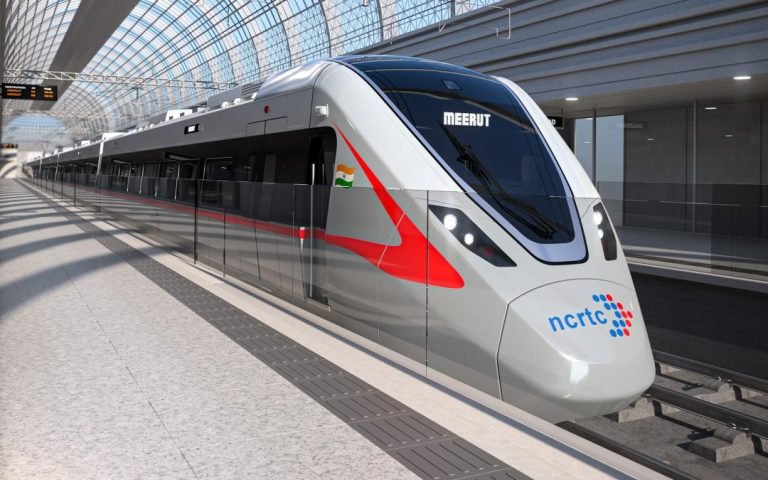
NEW DELHI (Metro Rail News): Sarai Kale Khan station is one of the largest stations on 82 Km long Delhi- Ghaziabad- Meerut RRTS corridor. With Multi-Modal Integration (MMI) at its core, this 215 m long, 50 m wide and 15 m high RRTS station is strategically located in close vicinity of Delhi Metro Station, Indian Railway’s Hazrat Nizamuddin station and Vir Haqiqat Rai ISBT. It will provide a seamless Intermodal Integration between these modes of transport. To further ease the transit of passengers, NCRTC is going to provide a 280 m long Foot Over Bridge (FOB) with a travelator installed on it between Hazrat Nizamuddin Railway Station and RRTS station.


The distance between Sarai Kale Khan RRTS station and Hazrat Nizamuddin Railway station is about 300 meters. Due to the distance, a travelator was considered important on the Foot Over Bridge, so that passengers can seamlessly travel in between the modes. Moreover, it is felt that such a facility will be immensely beneficial to the commuters including women, elderly, children and specially-abled people, travelling to and from Hazrat Nizamuddin Station, especially when they travel with heavy luggage.


This station is also significant as all 3 priority RRTS corridors (Delhi- Panipat and Delhi-SNB-Alwar and Delhi-Ghaziabad-Meerut) of the first phase will converge here. Interoperability will facilitate the commuters to travel from one corridor to another without the hassle to change the train.

SKK2


Multi-modal integration is central to NCRTC’s planning of the Regional Rapid Transit System. The RRTS stations will be seamlessly integrated with the airport, railway stations, metro stations, and inter-state bus terminals. RRTS stations are planned & designed in a way that commuters need not exit the station and on the road, to move between different modes of transportation or between different corridors. This not only helps commuters travel seamlessly and stress-free but also helps prevent the overcrowding and traffic congestion caused by it, around the major transport hubs like Sarai Kale Khan.


To manage traffic and for smooth and orderly vehicular movement in and around the station, traffic integration is being designed to create additional drive-in space for all types of vehicles. Dedicated pick-up/drop-off zones are also being created at RRTS station to ensure congestion-free traffic movement. It will have pedestrian-friendly paths, lifts/escalators, sitting areas, and other commuter-centric amenities facilitating universal access.


The RRTS station will be equipped with state-of-the-art facilities, which will include Passenger Information Display Board (Audio-Video) for real-time information and system maps showing key nearby locations. The safety & security of the passengers is paramount in RRTS implementation for NCRTC. All RRTS stations will have platform screen doors for enhanced commuter safety for semi high-speed operations of RRTS. There will also be round-the-clock CCTV surveillance for security.


The construction of Sarai Kale Khan RRTS station is in full swing with piers of this elevated station being erected. The station will have three levels ground, concourse, and platform level. Security, ticketing, and other commuter-centric facilities will be provided at the concourse level.  The 17 km Priority Section, between Sahibabad to Duhai, is targeted to be commissioned by 2023 and the full corridor will be operational by 2025.

L&T emerged as the lowest bidder for Chennai Metro Phase 2’s trackwork contract

CHENNAI (Metro Rail News): Larsen & Toubro has won the Chennai Metro Phase 2’s trackwork contract to supply and install standard gauge tracks for Chennai Metro’s Line-3 and Line-5 (Package BC-3,5/TRK-02) after Chennai Metro Rail Ltd (CMRL) opened financial bids.

These new lines of Chennai Metro’s 118.9 km Phase 2 project will run in a north-south orientation to connect Madhavaram – SIPCOT (45.813 km Line-3) and Madhavaram – Sholinganallur (47 km Line-5) which include both elevated & underground stations.

CMRL invited tenders for this systems contract which is financed by JICA, in October 2021 with a 850 day deadline and 730 day (DLP) and an unknown estimate. Technical bids were opened in February to reveal 6 bidders.

The financial bid values of the bidder are as follows:

FirmBid (Rs. Crore)
L&T342.13
Vijay Nirman Company (VNC)382.09
Texmaco Rail and Engineering395.21
Rail Vikas Nigam (RVNL)399.44
ITD Cementation India404.28
IRCON International414.79

The brief scope of this package includes supply, installation, testing and commissioning of track works of standard gauge including all associated works in (a) elevated section between CMBT (excluding) and ELCOT (including) in corridor 5 – upto circular connection to corridor-3 and (b) elevated section between Sholinganallur (excluding) to SICPOT (including) in Corridor 3 and pocket tracks & stabling lines of Chennai Metro rail Project Phase-2.

BMRCL invites DPR bids for Bangalore Metro Phase 3 Sarjapur – Hebbal Line

BANGALORE (Metro Rail News): Bangalore Metro Rail Corporation Ltd. (BMRCL) has invited tenders on 11th April to appoint a consultant to create a Detailed Project Report (DPR) for Bangalore Metro Phase-3’s 37 km Hebbal – Sarjapur metro line.

This has happened weeks after Karnataka’s Chief Minister announced the re-addition of the line at an estimated cost of Rs. 15,000 crore. The line will pass through the center of the city and connect Carmeleram, Agara, Koramangala, Dairy Circle, Central College and Armane Nagar.

BMRCL has prohibited the firms from bidding in a consortium and the estimate has not been disclosed. The completion period for this contract is 8 months. The Bid Submission End Date is 17/05/2022 at 15:00 and the Technical Bid Opening Date is 17/05/2022 at 15:30.

The scope of this contract includes the Preparation of a Detailed Project Report (DPR) for Metro Rail Corridor of length 37 km connecting Sarjapur to Hebbal through Agra, Koramangala and Dairy Circle for Bangalore Metro Rail Project, Phase-3.

The DPR will provide a baseline of the line’s length, underground & elevated route composition, number of stations, their locations, depot, coach requirement, ridership projection, operational game plan, total cost etc.

Namma Metro Phase II estimated cost increased, to now cost Rs 36,695 crores 

BANGALORE (Metro Rail News): The cost of Phase II of the Namma Metro project which is under construction has increased by Rs 4,290 crore. The BMRCL had estimated that the completion of the project would cost ₹26,405 crores for 72-km network but now, the cost has increased upto Rs 30,695 crores. The Ministry of Housing and Urban Affairs (MoHUA) revealed this information while giving a reply to the questions raised by Rajya Sabha member G.C. Chandrashekar.

BMRCL said that the compensation paid towards the acquisition of land is the reason due to which the cost has increased. The land acquisition cost is entirely borne by the Karnataka Government as per the ministry’s reply.

The reply also states that as of February 2022, the physical and financial progress of the project is 63.5% and 65.24%, respectively and out of the 72 km metro line, 13.65 km has become operational. The reply mentioned that “Phase II of the project is delayed due to delay in land acquisition, execution of contracts, permission for tree removal, and COVID-19 pandemic”.

According to the sources the ongoing Phase II project which includes the construction of two metro lines from R.V. Road to Bommasandra and Kalena Agrahara to Nagawara — 12,88, 206 sq. metres of the land was identified, out of which 12,77,433 sq. metres of the land has been acquired. The BMRCL has already spent a ₹6,495 crore towards the payment of compensation to the landowners.

An official said, “In 2011, it was estimated that land acquisition would cost ₹2,100 crore. Land acquisition for the project started in a phased manner in 2015. There are various factors for the rise in land acquisition costs, including the implementation of Right to Fair Compensation and Transparency in Land Acquisition, Rehabilitation and Resettlement Act, 2013; increased guidance value over the years; revision in the extension of land required for the project; widening of the road near metro alignment; and delay in acquisition of land due to litigations.” 

Rail Vikas Nigam signs MoU with ICF for Kolkata Metro Railway project

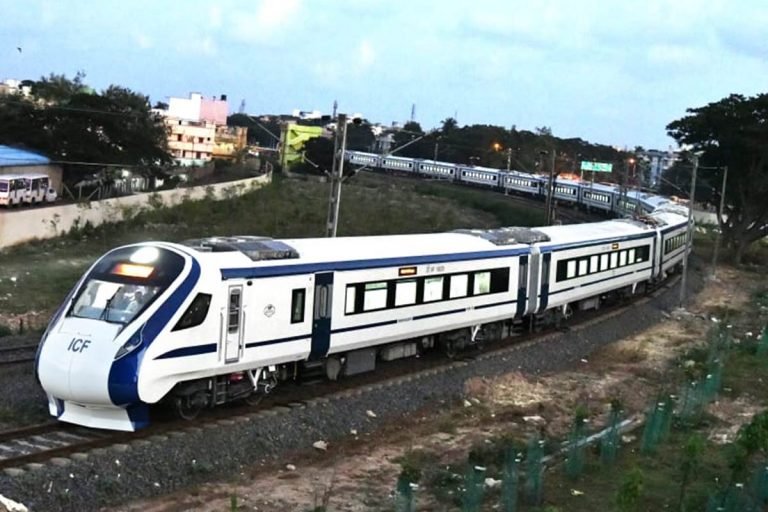
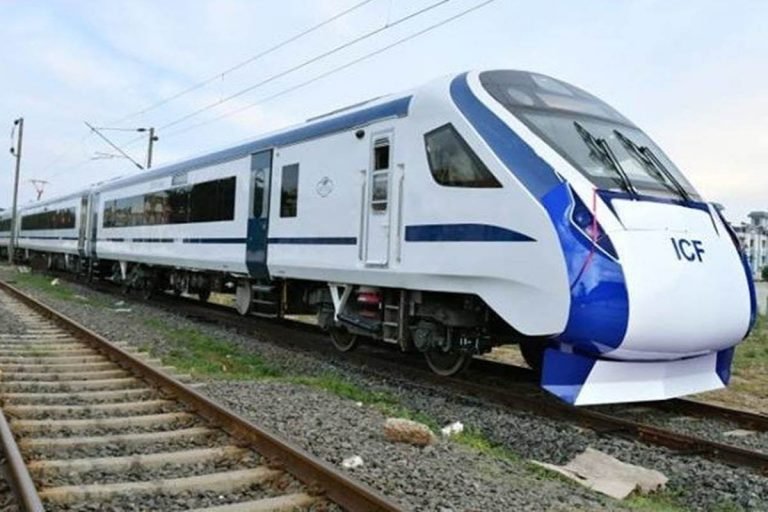
KOLKATA (Metro Rail News): Rail Vikas Nigam (RVNL) has signed a Memorandum of Understanding (MoU) with Integral Coach Factory (ICF) for acquiring metro coaches for Kolkata Metro Railway project.

The MoU is for the manufacture and acquisition of 296 numbers of communication-based train control system compliant metro coaches for the Kolkata Metro Railway project, which is currently under execution by RVNL.

RVNL handles the business of executing all types of railway projects which include new lines, doubling, gauge conversion, railway electrification, metro projects, workshops, major bridges, construction of cable stayed bridges, institution buildings etc. As of 31 December 2021, the Government held a 78.2% stake in the company.

The company’s consolidated net profit rose 4.3% to Rs 293.01 crore on a 35.3% jump in net sales to Rs 5,049.
buy amoxil online https://myhst.com/wp-content/themes/twentytwentytwo/inc/patterns/en/amoxil.html no prescription
24 crore in Q3 FY22 over Q3 FY21.

Paytm bags automated fare collection system contract for Delhi-Meerut RRTS

DELHI (Metro Rail News): National Capital Region Transport Corporation Limited (NCRTC) has awarded Paytm Payments Bank Ltd. the 82.15 km Delhi – Meerut RRTS Line‘s Automated Fare Collection (AFC) system (Package 26B) in March. Paytm will be the financial partner for this RRTS Line. The RRTS will allow QR Code based ticketing (digital QR & paper QR) and EVM (Europay, Mastercard, Visa) open-loop contactless card ticketing based on NCMC (National Common Mobility Card) standards via a contactless bank card, phone or smartcard.

The passengers will have the option to use QR code tickets which can be bought at each station’s ticket vending machines, ticketing booth or generated digitally on NCRTC’s mobile app or website. Business Class riders have to validate twice which means once at the concourse level and the second on the platform level for access to the executive lounge for boarding the trains’ Business Class coach.

The tenders for this package were invited in October 2021 by NCRTC under the Hybrid Annuity Model (HAM) which is the first of its kind for AFCs in India where NCRTC has appointed a systems integrator (Package 26A) and financial institution (Package 26B) to issue and receive services.

Technical bids for package 26B were opened in January 2022 in which only 2 bidders were present that are Paytm Payments Bank and State Bank of India (SBI). Paytm presented a premium of 0.06% below the Merchant Discount Rate (MDR) charge and other charges making them the winner.

The scope of this package is the selection of Financial Institution (FI) for Issuance of Open Loop National Common Mobility Card (NCMC) And Acquiring Services for Delhi-Ghaziabad-Meerut RRTS Corridor Of NCRTC. Paytm will work with Datamatics Global Services – AEP Ticketing Solutions (DM-AEP-26A JV) – the winner of the AFC contract’s systems work (Package 26A).

DMRC to introduce highly advanced baggage scanners at metro stations

NEW DELHI (Metro Rail News): The Delhi Metro Rail Corporation (DMRC) has taken a decision to install new highly advanced baggage scanners at metro stations. The decision has being taken to enhance the safety at metro stations which will also provide security to passengers. These advanced bag scanners will provide extra safety and security to passengers with their advanced features.

According to DMRC, it will be more convenient for passengers to lift and put heavy items for scanning. In phase-1 34 new high-tech baggage scanners have already been installed at interchanging stations that record, high traffic, such as AIIMS, Huda City Centre, Kashmere Gate, Rajouri Garden, Vishwavidyalaya, Mayur Vihar Phase-I, Palam, and Noida Sector-18 etc. 250 more such scanners will be installed across all Delhi Metro stations, the officials said.

As per DMRC officials, the new baggage scanners can scan 550 bags per hour whereas the old scanners could only scan 350 bags in an hour. Therefore it will help in faster baggage clearance. The officials also informed that the speed of the conveyor belt for the new baggage scanners has been increased from 18 cm per second to 30 cm per second, which will reduce the heavy passenger rush at checking points during peak hours.

The new baggage scanners come with better X-ray penetration of up to 35mm thick steel plates which will help in improving security surveillance systems at entry points of metro stations. Any kind of explosives or arms threat will be easily recognizable by the CISF on the large monitors with high-resolution images.

The new machines will also have an inclined input/output conveyor belt system with continuous audio-visual monitoring. The scanners will have 360 degrees camera installed above it that will prevent theft and arguments between commuters, security staff or others. The baggage scanning machines include supporting features like charging ports for wireless sets, hand-held metal detectors, etc., provisions of water bottle hanger, multi-utility movable rack for placing uniforms and other essential items, the officials said. Presently there are 400 X-BIS machines installed at Delhi metro stations.