Home Blog Page 795

Mumbai Metro | MMRC seeking permission to work at night to complete work

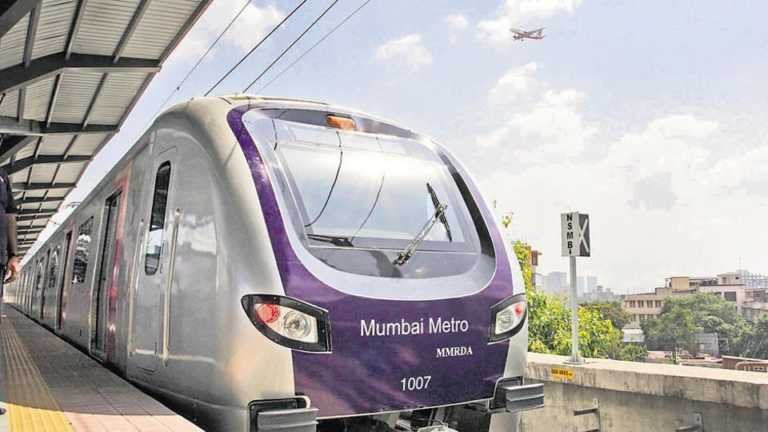
In order to complete construction work in the Cuffe Parade area for the Metro III line, the Mumbai Metro Rail Corporation (MMRC) has approached a High Court-appointed committee seeking urgent permission. MMRC wants to carry out construction work round-the-clock on this line.

It was in last December that the Bombay High Court had restricted the MMRC from carrying out construction work. The restriction was imposed as the work was causing high level of noise pollution in the area and causing inconvenience to residents. The court was hearing PILs that aimed at raising issue of noise pollution caused due to construction work for setting by metro rail. Another issue that was brought under notice was felling of trees to make way for Mumbai metro.

The court had instituted a committee comprising of justices B R Gavai and S M Kemkar to hear matters associated with noise pollution caused by the ongoing construction work of the Metro III (Colaba to Seepz) line. The MMRC has filed a request before the committee, which sits in the high court.

In the application filed by MMRC, the officials have stated that the tunnel-boring work in south Mumbai, Chuffe Parade area can only be done during minimal traffic. It is only during the night that the traffic is less and work can be carried out hassle-free. As per the metro authorities the application states that work will go on till July end and might result in minimal noise pollution.

Amicus Curie (appointed to help the court) Zal Andhyarujina and advocate Robin Jaisinghani, one of the petitioners and a resident of the area, opposed the application.

If the court was going to give consent, then the MMRC should be asked to employ noise-suppressing barriers, they said. The committee noted that it was empowered to give such permissions. It would listen to the parties involved and communicate its judgment and suggestions to the high court bench, which is hearing the main petition, it said. The committee would carry on to hear the arguments on the application on June 7.


Mumbai Metro One completes 4 successful years of seamless travel

Mumbai: Reliance Infrastructure promoted Mumbai Metro One Private Limited (MMOPL), the lifeline between Mumbai’s Western and Eastern suburbs, today completed four successful years of seamless and comfortable travel for over 400 million passengers.

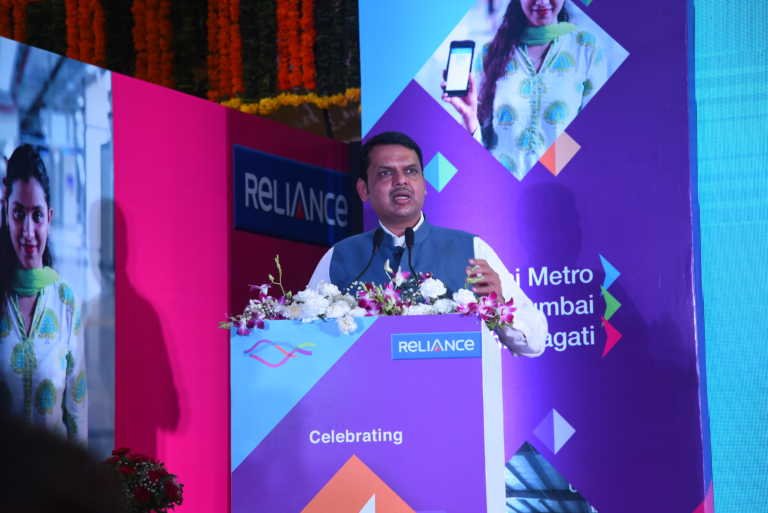
To mark the completion of the coveted landmark in Mumbai’s transportation history, Chief Minister Mr. Devendra Fadnavis launched several initiatives at Versova Metro Station. Mr. Fadnavis inaugurated the “Majhi Metro Art” train of award-winning paintings, poems and photographs at the festival held earlier in the year.

In a unique initiative in the country, the Chief Minister launched the mobile metro ticketing product “Skiiip Q” where Metro commuters need no longer stand in queues for a ticket which can be generated by a QR code on the mobile phone.

He also released a Coffee Table book showcasing the four year journey of Mumbai Metro on the occasion.

Congratulating Mumbai Metro One on the occasion, Chief Minister Mr. Devendra Fadnavis said “Mumbai Metro One has changed the face of mobility in the Mumbai city. With the use of Metro, you don’t need a secondary transport system as it takes you closer to your destination. Mumbai Metro One has completely changed the space of Mass Rapid Transport in Mumbai and is the pioneer of the metro movement. The system planning and execution of Mumbai Metro One will help in shaping up upcoming Metro projects in the city”

“The Mumbai Metro is very efficient, clean, fast and green. In Mumbai suburban trains, the distance between two stations is usually two to three kilometers but in the metro, the distance between two stations is just a kilometer. The metro has helped in bringing down pollution, which is equal to planting 3 crore trees”, the Chief Minister added.

“The last four years have been very exciting and we are happy to make the commuter experience seamless and comfortable. Over the years, we have involved our commuters across various areas be it art and culture, technology or with various offerings which have helped in increase the ridership. We have also laid emphasis of commuter safety with series of stringent measures. We hope to continue adding more value to our esteemed commuters’ lives.” Mumbai Metro One spokesperson said.

The year saw Mumbai Metro One effectively amalgamating art, culture and technology with a series of initiatives to add seamless and exciting travel for the commuters.

The Majhi Metro Art festival kicked off before the formal launch of the Metro. This year’s festival was one of the novel community art projects where volunteers painted a wall outside the Metro Depot. The wall measuring at 378x15ft serves as a canvas to create India’s largest crowd sourced mural and bring art back into the people’s lives. The wall will depicted a version of Majhi Metro Art Train communicating this year’s theme “Art in Motion”. More than 3000 participants exhibited their poems, paintings and photographs with the award winning entries displayed in the Majhi Metro Art Train. This year the festival saw a few innovations to add to the vibes of this month long festival. Right from community wall art project to an art café at Andheri Metro station, to a poetry tree, light box and photography exhibition or simply unwinding at art café and trying their imagination on a blank canvas.

From art to technology, Mumbai Metro One is a step ahead of its counterparts. The Skiip Q facility in the mobile phone will mark a paradigm shift in terms of the way commuters travel. To make the product a success, Mumbai Metro One has joined hands with Paytm as the official ticketing partner. Gone are the days when the commuter had to stand in a queue to buy single or return journey tokens or to top up their trip or store value passes at ticketing counters and customer care centers of Mumbai Metro One. Instead of using tokens or smart cards, they can travel using QR code generated by mobile app on automated fare collection (AFC) gates of Mumbai Metro One. ‘Skiiip Q’ facility will help commuters to book their journey tickets at their own convenience even from outside the Metro stations. The facility is available on the Paytm App and app of technology partner Ridlr and will soon be introduced even in the Mumbai Metro App.

 The four-year journey of Mumbai Metro has been creatively embossed in a coffee table book. Since its launch, Mumbai Metro One has strongly aligned with its vision to be the most admired and trusted metro company in the world, delivering safe, reliable and sustainable mode of travel to its customers at competitive costs with international standards of customer care, thereby creating superior value for all stakeholders.

The 11.4 km long Versova-Andheri-Ghatkopar (VAG) line over the past four years is the preferred choice of daily commute for Mumbaikars. Every increase in ridership of Mumbai Metro One by 100 million is significant as the number of days it takes to reach the next landmark is decreasing. Mumbai Metro One took 398 days to carry its first 100 million commuters, 388 days to add another 100 million, while its third 100 million mark was achieved in just 337 days. The fourth 100 million commuters was added in only 300 days.

Mumbai Metro One operates 378 to 382 daily trips on weekdays. The year also marked high performance levels in punctuality and availability of trains. It operated 1,25,894 train trips in 2017-‘18 with punctuality performance of 99.9%.Operational excellence is benchmarked also in Peak Hour Peak Direction Traffic (PHPDT) which is approximately 29,000 commuters.

The impressive growth in the number of commuters is also attributed to the persistent efforts by Mumbai Metro One to provide value-added services, safety, cleanliness, and comfort that the commuters have come to expect from it.


Lucknow Metro | LMRC now reconstituted as UP Metro Rail Corporation

The Lucknow Metro Rail Corporation Limited has been reconstituted as Uttar Pradesh Metro Rail Corporation (UPMRC) Limited. The decision came after a meeting of board of directors of LMRCL, under the chairmanship of Durga Shanker Mishra, secretary of Union ministry of housing and urban affairs (MoHUA) approved its reconstitution. This step has been taken for quicker execution of Metro rail projects in different cities of Uttar Pradesh through one special purpose vehicle (SPV).

The board of UPMRC will remain same as that of LMRCL, consisting of 13 directors – five nominated by the state government, five representing the Centre while three whole-time directors of finance, works and rolling stock departments. The SPV will be headed by the chairman nominated by the Centre – secretary of Union housing and urban ministry while the managing director will be state’s head of SPV.

With this reconstitution, the newly formed SPV has approved the detailed project report (DPR) of Lucknow’s second phase Metro Route – East-West Corridor. The board has also given its approval for creating new posts and selection of Director (Operations) to facilitate smooth and efficient operations of the Lucknow Metro system.

The appointment of a director for operations post was immediately required as Lucknow Metro is scheduled to commission the entire 23 km of Phase I Corridor by April 2019. The stretch starts from Chaudhary Charan Singh Airport to Munshipulia.

The metro officials shared that with this reconstitution, it would be easier to expedite work on metro projects across UP. Instead of different SPVs for different project, now a single SPV will monitor all the metro projects going on in UP. This will help in improving pace of work and timely completion of projects.

There are many advantages of this reconstitution as metro officials will now be able to save time and cost. With this development work will be done efficiently and ensure faster implementation of metro projects launched across the state.

Mumbai Metro | Soil testing initiated by MMRDA for Metro 4 corridor

Work has begun in full swing for the metro corridor connecting Wadala-Ghatkopar-Thane-Kasarvadavali. The Mumbai Metropolitan Region Development Authority (MMRDA) has started soil testing work  near Bhakti Park at Wadala. The metro officials are also planning traffic diversion running along the metro corridor route. The Mumbai Metro 4 corridor work is a huge project and will be constructed concurrently in five packages. Contractors for the project have already been appointed in March by the authorities.

As per the MMRDA officials soil testing is conducted to estimate the condition of the soil before the construction work begins. This process is initiated before the piles are erected for the construction of the corridor. Once this process is done, the next step will be to identify utilities underneath the soil.

The official added that gas lines and electricity lines run underground and these will have be identified via manual excavation. This is done to avoid any mishap during the metro construction work.

Once the soil testing work in completed, barricading work will start along the 32-km long corridor earmarked for metro work.  As per the MMRDA officials barricading work will start from Lal Bahadur Shastri Marg (LBS) Marg in Thane and it will end at Gaimukh near Thane. In order to steer clear of traffic congestion along the route of metro construction, the metro officials have coordinated with traffic police to make way for traffic diversions.

Rajendra Madne, the deputy commissioner of transport, (Enforcement), has stated that vehicles parked illegally will be towed on LBS Marg. This is to make sure there is no obstruction to the construction work going for setting up metro lines. To assist commuters, 280 traffic wardens will be stationed on the route to help them navigate through the area.

As per the arrangements traffic on the LBS Marg is expected to be diverted to Eastern Express Highway (EEH) or Kurla road throughout the construction work. Officials will urge commuters to use public transport if they are travelling on EEH. This will help in easing the traffic woes.

Metro 4 Corridor work at a glance

  • Mumbai Metro line 4 corridor around 32-kilometre-long and comprises of 32 stations.
  • Two consortiums — Reliance Infrastructure Limited and ASTALDI, Tata Project Limited and China Harbour Engineering Company are the contractors for the project.
  • The metro corridor is set to offer inter-connectivity among the existing Eastern Express Roadway, Central Railway, monorail, Metro Line 2B (DN Nagar to Mandale Depot), and the proposed Metro Line 5 (Thane to Kalyan), Metro Line 6 (Swami Samarth Nagar to Vikhroli and Metro Line 8 (Wadala to General Post Office).
  • It will also offer access to rail network to the commercial, government bodies and geographical landmarks in Mumbai.

Delhi Metro | Mandi House Metro station showcasing photo exhibition

New Delhi: If you happen to land at Mandi House Metro station of Delhi Metro Rail Corporation, do not forget to view an interesting photo exhibition depicting Life of Waste Workers across the Globe. The photographs are clicked by six French photographers depicting life of waste workers. There are a total of forty-two photographs on display at Mandi House Metro Station.

Photo Exhibition Gallery at Mandi House Metro Station (Photo: DMRC)

The show titled as “The City of Waste” is part of a larger project “Urban Societies and Waste” is aimed at educating passengers of capital city Delhi. The venue was selected as Mandi House Metro is one of the most crowded stations in Delhi Metro.

Photo Exhibition Gallery at Mandi House Metro Station
Photo Exhibition Gallery at Mandi House Metro Station (Photo: DMRC)

The entire photography exhibition is conceptualised and organised by Rémi de Bercegol and Christine Ithurbide. The show also displays photographs taken by Pascal Garret , Benedicte Florin, Adeline Pierrat and Melanie Rateau. The aim of the exhibition is to be aware of the role of waste workers in societies across the world.

From Paris to Cairo and Mexico to Delhi, the photographs on exhibit chronicle the surroundings of waste workers live and work in public spaces, open landfills to waste containers from where these workers collect garbage as well as waste. The photographs also covered spaces like factories, recycling workshops, and places where garbage is turned into recycled products.

Through the photographs, the photographers also capture the working techniques and processes employed by these workers.

Rémi de Bercegol shared that in today’s world, waste management is one of the biggest challenges. He added that the waste we generate shows the un-sustainable ways people live and contaminate the surroundings.

The photographers through the photos want to help lift the stigma attached to the waste workers. The exhibition portrays the waste workers in different perspective.

The first exhibition was showcased at Paris as of the as part of the “La mise en image du rebut” (The Image of Waste) exhibition that afterwards travelled to various cities. “The City of Waste” is an adaptation of this display that is showcased for the first time in India. The project is a component of Habitat Photosphere, India Habitat Centre’s year-long photography festival on sustainable development, that is curated by well-known curator Alka Pande.

For updates on Delhi Metro Rail Project, please click here.

Pune Metro | Maha Metro plans to maximise use of daylight and natural ventilation

Pune: The Maharashtra Metro Rail Corporation (Maha-Metro) is extremely sensitive to environmental issues at every stage of the project. Maha Metro is planning to maximise use of daylight and natural ventilation.

Tree Plantation initiative by Maha Metro
Maha Metro MD Dr. Brijesh Dixit participating in tree plantation initiative on World Environment Day (Photo: Maha Metro)

Under the Green Initiative use of solar panels on depots and elevated stations will provide 17 MW which would cater to 65% of our power requirement. Rain water harvesting on the stations will result in 27,500 cubic meters of water being recharged. We have used bio digestors for recycling and reuse of water of water in Nagpur. We are in the process of examining wet land treatment for sewage treatment which should result in adequate flushing water for public toilets. Our efforts on rain water harvesting will result in recharge of 27,500 cubic meters of water per year.

Maha Metro stations at Nagpur have qualified for the IGBC platinum rating and in Pune we intend to maintain or better the same.

While monitoring construction activity in terms of noise, vibration, air quality ,water and noise is routine our Pune Metro execution also involved challenges of working on the river bed and tunnelling operations which are being undertaken to minimize displacement of people in congested areas.

“We have ensured several measures to ensure that animals ,birds ,butterflies or other flora and fauna are not affected during the work. Construction is undertaken from inside out . Billboards instructing no hunting or poaching are on display at the river front . Excavated top soil is stored separately and will be used for gardening while the temporary stacks will be used for back filling after construction. We continue to monitor noise and air quality at the river front on a fortnightly basis and the results are well within permissible limits. All equipment used comply with PUC requirements”, said in a press statement.

The Construction activity on the Mutha river bed has been undertaken with due consideration and this has been ratified by the validation of our technical reports by NEERI, National Green Tribunal (NGT) Experts and Pune University. Construction on the river bed will have an insignificant impact and no rare ,endangered or threatened species was found in the Project area.

“We have ensured several measures to ensure that animals, birds, butterflies or other flora and fauna are not affected during the work.

Construction is undertaken from inside out . Billboards instructing no hunting or poaching are on display at the river front. Excavated top soil is stored separately and will be used for gardening while the temporary stacks will be used for back filling after construction. We continue to monitor noise and air quality at the river front on a fortnightly basis and the results are well within permissible limits. All equipment used comply with PUC requirements”, said in a press statement.

Most of the metro construction is on the road median and trained traffic marshals will be available for guiding traffic in an appropriate manner Centre For Road Research Institute are our partners for vibration studies to ensure that the tunnelling operations can be undertaken smoothly. All sensitive receptors like hospitals, educational institutes, residential units will be provided adequate sound and vibration barriers.

The Maha Metro team have planted 3165 trees and 195 have been successfully transplanted and the plantation drive is only in its second year.

Multi-Model Integration Plan now ready to connect Railway and Metro stations

New Delhi: Good news for commuters who are directly catch metro rail after coming out from Indian Railways. Those rail passengers who want to take the service of Metro trains at their destination without going through auto-taxi or bus, they will not have to work much harder for this. Under multi-model integration plan, DMRC and Indian Railways planning to connect major railways and metro stations through Skywalk. The Delhi Metro Rail Corporation (DMRC) and Indian Railways have approved the construction of such Skywalks, which will provide rail passengers directly to the metro station as soon as they come out of the platform.

Skywalk connecting two terminals for easy commuting (representative image)

By making them passengers will not have to use the road to get out of one station and reach another station. In this way, they will get rid of traffic problems, as well as save time. Preparations are on to begin work on two major railway stations, New Delhi and old Delhi stations.

The Indian Railways will give land to the Skywalk at New Delhi station, while the DMRC will bear the expenses incurred. Skywalk will be built on both stations to reduce traffic and make the journey easier in view of the safety of millions of passengers at Delhi’s major railway stations i.e. New Delhi and old Delhi station. The benefit will be that the passengers will be able to come straight off from the metro or railway.

Delhi Division’s ADRM (Civil) Dhankad said that the construction of the nearly 300 meter long Skywalk, which has been attached to the metro station from New Delhi station, has been approved. Skywalk will be connect from platform no.

2 of New Delhi Railway Station at Ajmeri Gate side. Besides this, Delhi Metro and Airport Metro will also be connected. For this arrangement, Indian Railways will provide land and DMRC will fund about eight crore rupees for construction and finishing works. He told that competing companies have been invited across the country for the better look and design of this Skywalk.

Apart from this, Skywalk will be constructed to connect the old Delhi station to the Dangal Ground. It will be constructed by PWD while the land of its share will provide the railway. Bus stops and parking will also be built at this place.

Pre-planned scheme of traffic on stations

Currently, more than 300 trains are operated daily on New Delhi Railway Station. While this station attracts nearly five lakh passengers every day. Apart from this, 250 trains run at old Delhi Railway station, whereas there are three lakh passengers. There are frequent traffic jams and security related complaints due to not being prepared for any long-term plans at these stations made earlier in the years. While there are movement of millions of passengers daily from both metro stations.

Chennai Metro | CMRL to issue bids for last mile connectivity via Auto for metro stations

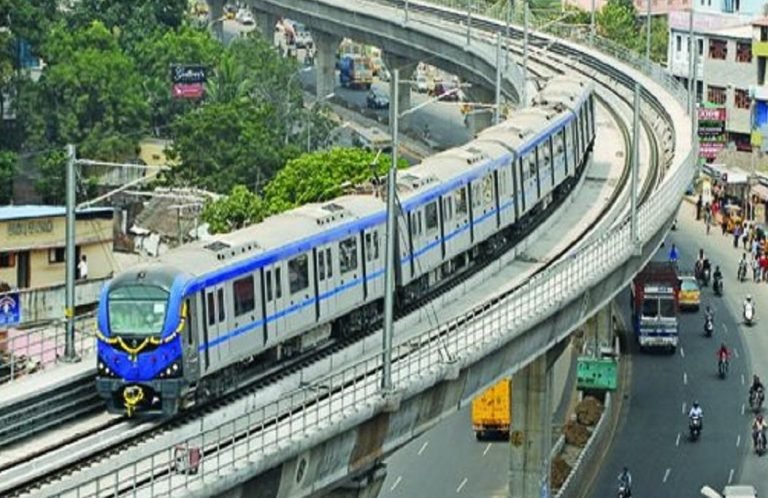
Chennai: To make travelling via metro easier and hassle-free, Chennai Metro Rail will run share autos along its metro network stations for commuters. This is part of the plan to offer last mile connectivity to those travelling via metro. Chennai Metro officials are going to invite tenders for the project soon.

As per the plan, commuter will get a chance to the closest destination at a fee and take an auto to reach the destination. As per officials at Chennai Metro Rail Limited (CMRL), tenders for the project will be invited soon.

The CMRL officials shared that the lowest bidder will get the contract and get a chance to ply share autos along with elevated and underground stretches. Most probably Tata Magic vans would be operated throughout their metro rail network.

Currently small buses were run at few Chennai Metro stations. Commuters were not very happy as the buses were less and the frequency was low. Most commuters felt that the bus facility should be provided at other stretches too.

A decision has to be arrived at on whether shared auto will run on the same routes where buses are currently operating. It is expected that the small buses will cover more areas in the months to come.

Many experts have given thumbs up for the share auto plan, but feel this project will have to be regulated. Safety of the passenger is important and the bidding company will have to assure that.

Krishnamoorthy, former joint director of the Institute of Road Transport has expressed his concern over shared auto drive. He said that many shared autos are running illegally in the city and CMRL should ensure that the auto service provider have necessary license.

Aswathy Dilip of the Institute of Transportation and Development Policy states that last mile connectivity is very crucial for making any mass transit rapid system successful. Giving example of Kochi Metro Rail Limited, Aswathy stated that the Kochi Metro officials are making a cooperative society for the autos plying in the city. The aim is provide seamless transport for all commuters.

Starting shared autos will need to be regulated via GPS tracking as well introduction of smart ticketing would be needed. This will make the shared auto concept concrete and feasible.


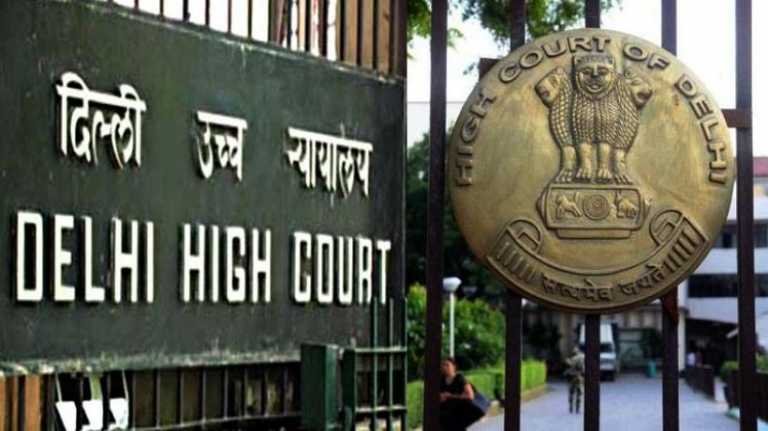
Delhi Metro | High Court of Delhi refuses to hear the metro train strike matter in vacation bench

New Delhi: The case of assault on DMRC station manager and CISF sub-inspector on Dwarka Sector-21 Metro station on May 31 reached the Delhi High Court. After the assault, the Metro staff stopped the Metro train 2 times for more than one hour. Advocate Abhishek Kumar Chaudhary has filed a PIL in this regard, referring to the problems faced by metro commuters and the damage to the Metro Rail authority.

In PIL appropriate action appealed against the responsible metro staff after the investigation of the incident. The PIL was file before Satish Kaushik, the registrar general of the High Court of Delhi on Saturday. The case has been fixed for hearing on June 4 before the double bench on the matter.

The petitioner says that generally 15 days of CCTV footage of metro stations is kept safe, the Court may direct DMRC to keep it safe. The commuters suffered a lot of problems due to Metro shutdown and the financial loss also suffered by the Delhi Metro. The damages should be taken from the responsible Metro staff and action should also be taken against them.

It was also argued that such an attitude on the small issues of the metro employees is extremely objectionable. In such a situation, they will take possession of metro stations and shut them down on their demands. It is alleged that on the day of the incident, the Metro staff had also cut electricity in many places. It has been stated in the petition that on the day of the incident, SI of CISF has parked his bike in the staff parking lot. There was a debate between the two sides, and then came to the battlefield. Later the Metro was stopped by the metro employees. Cross FIR has been registered against both parties and CISF has initiated departmental inquiry against their Staff. Two SIs are suspended with immediate effect but no action was taken by DMRC till date.

After hearing the matter on June 4, the Court refused to hear the matter in vacation bench and further listed the case on July 5 for hearing before the double bench of Acting Chief Justice.

Coimbatore Metro | CMRL expects DPR report of metro rail project in mid of next year

Coimbatore: The Institute of Urban Transport (India) has recently organised a study tour which was facilitated by the Union Ministry of Housing and Urban Affairs (MoHUA) to conduct study on feasibility of Light Metro Rail Systems in Tire II & Tire III cities in India. Pankaj Kumar Bansal, Managing Director of Chennai Metro Rail Ltd (CMRL) has been nominated for the study tour for Coimbatore Metro Rail Project.

In July last year Chief Minister of Tamilnadu Government Edappadi K. Palaniswami had announced that implementation of Metro Rail System in Coimbatore is in active consideration of the Government. Thereafter, CMRL has invited Expression of Interest (EOI) / Project Qualification (PQ) from the reputed consultancy firms. The proposed study is being funded by the German Development Bank, KfW.

Reply received from Chennai Metro Rail Ltd against a Petition
Reply received from Chennai Metro Rail Ltd against a Petition filed by T. Sudandhira

It has been reiterated from a reply received from Chennai Metro Rail Corporation (CMRL) against a petition filed by T. Sudandhira, a resident of Coimbatore Distt, that the consultancy firm has been shortlisted and the feasibility cum detailed project report (DPR) is expected to be completed by mid of the next year i.e. 2019.