Home Blog

Chennai Metro: Panasonic-Pioneer JV Bags PSD Contract of Line 3 & 5

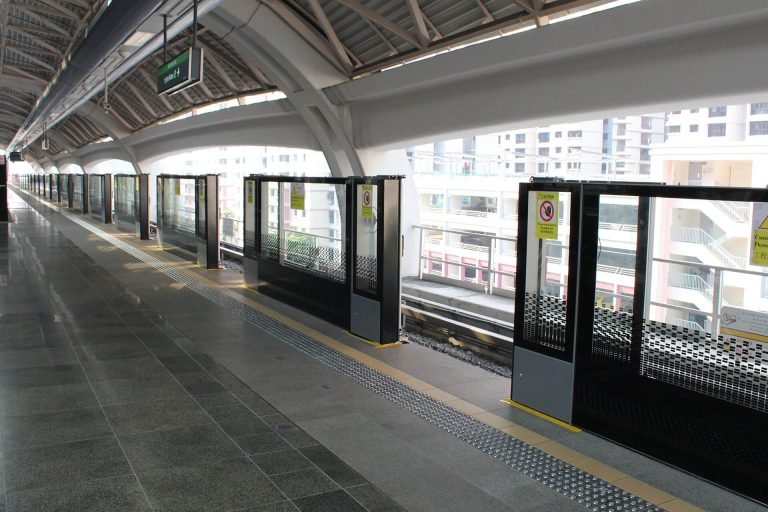
Chennai (Metro Rail News): The joint venture between Panasonic Manufacturing (Beijing) Co. Ltd. and  Pioneer Fil-Med  Pvt. Ltd. has secured a 146.95 crore contract from Chennai Metro. The contract involves supplying and installing Platform Screen Doors for Chennai Metro’s Line 3 and Line 5.

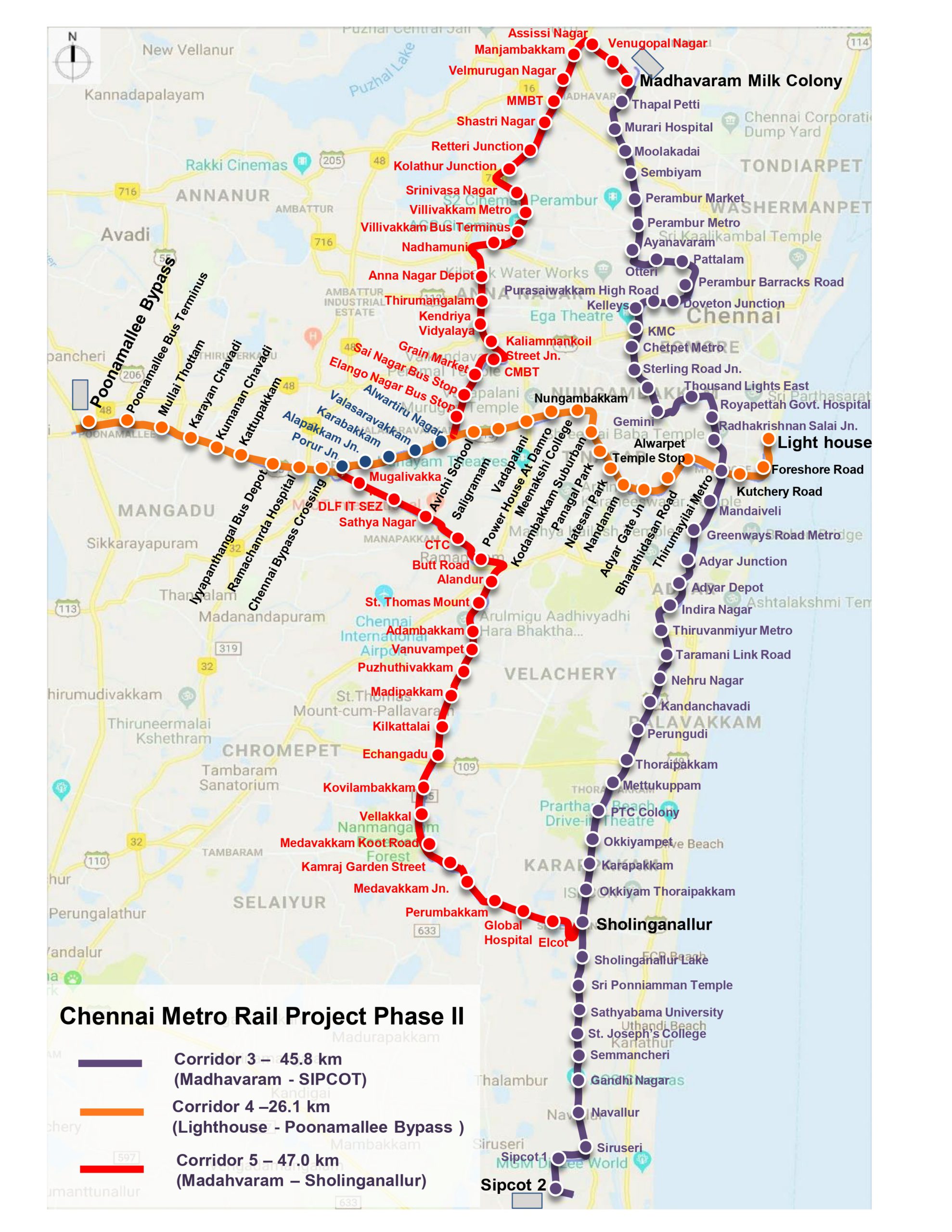
Chennai Metro Phase 2 Map

Line -3 and Line-5 of Chennai Metro will operate in a North-South orientation to link Madhavaram – SIPCOT (45.4 km Line-3) and Madhavaram – Sholinganallur (44.6 km Line-5), Respectively, through both elevated and underground stations. 

The contract’s scope includes the design, manufacture, supply, installation, testing, and commissioning of Platform Screen Doors. 

In Corridor-3, the contractor will install PSDs at 29 underground stations between Madhavaram Depot Station and Tharamani Station.

In Corridor 5, PSDs will be installed at 5 underground stations falling between Kolathur Junction Station and Nathamuni Station.

Final Contract Value: INR 85,36,03,003 + USD 7,392,013 (approx. INR 146,95,66,140.67 or 146.95 crore)

Deadline for the contract: 1465 Days ( approximately four years )

Other contracts for Platform Screen Doors

Another 2 packages by CMRL for installing platform screen doors:

Package ASA12A: In November 2023,  ST Engineering Urban Solutions Ltd. secured this package. Under this contract, ST Engineering is responsible for installing Platform Screen Doors at 10 elevated stations of Line 3 (Sholinganallur Lake – SIPCOT 2). Additionally, they will install PSDs at 29 stations of Line 5 (Grain Market – Elcot).

Package ASA09: The work under this package includes the PSDs at 10 elevated stations of Line-3 (Nehru Nagar – Sholinganallur) and 10 elevated stations of Line-5 (Assissi Nagar – Koyambedu). Currently, the bids are under technical evaluation for this package.

Ongoing development On Line 3 & 5 of Chennai Metro

Line-3’s 29 stations are under construction by DRA – Soma JV Tata Projects Ltd. and Rail Vikas Nigam Ltd. 

Line-5’s five underground stations are under construction by Tata Projects Ltd. 

Exclusive interview of Sophie Moochhala on the occasion of International Women’s Day

To celebrate International Women’s Day, our Managing Editor Mr. Narendra Shah had a conversation with Ms Sophie Moochhala – Managing Director – Fluid Controls Private Limited. In which she speaks about the Company business strategy, Atmanirbhar Bharat Policy and Growth in a Post-COVID Situation.

Tell our readers about various innovative products recently developed for Metro & Railway Industries?
Fluid Controls Private Limited was established in 1974 by Dr. Y.E. Moochhala, a Ph.D. from Northwestern University, the USA with a vision to deliver high quality & high-performance products which delight customers. Fluid Controls offers customers comprehensive end-to-end “Make in India” solutions for Rail & Metro brake piping arrangements – from design & engineering services to supply of high-performance products and installation services. From its inception in 1974, Fluid Controls has engaged in original R&D and also has had an ethos of developing indigenous replacements for imported products. Our founder, Dr. Y E Moochhala, after a successful career in the USA decided to return to India because he was a strong believer in a self-reliant India. His idea was to develop high quality, high-performance products to suit local prototype climatic and performance expectations. Today, Fluid Controls is approved as an “In-House R&D unit” by the Department of Scientific & Industrial Research (DSIR), Government of India. Since 2011, we have developed more than 25 new products, which is very much in line with the Fluid Controls vision statement. Adding to our strength in innovating, Fluid Controls has filed its first Global Patent and
is in the process of filing two more patents. Particularly for the Rail & Metro Industry Fluid Controls has developed Across Frame Connectors for connection of pipelines between the shell and bogie for high-speed electric locomotives. These connectors eliminate welding processes and allow for seamless connection of pipes between the shell and bogie. Across Frame connectors also, reduce component parts required to be purchased as they are integrated fitting assemblies. Fluid Controls has also developed an entire range of FlexiGripTM connectors to provide zero-leakage and vibration resistant connections Here are the excerpts from the
interview:- “Success is a multi-faceted word! Professionally, for me, success is to build a brand which is trusted by customers
and which delights customers.” Sophie Moochhala Managing Director Fluid Controls Pvt. Ltd. between misaligned pipes or between pipes of different materials. The triple sealing action of the split ring, washer and O ring provides for a completely leak-proof connection. The split ring also provides superior vibration resistance by ensuring the joint remains in a springing condition. As an ongoing part of product development, Fluid Controls also customizes standard products to suit specific customer requirements.

How do you see the Govt of India’s Atmanirbhar Bharat policy?
Fluid Controls is a “Vocal for Local” MSME organization and we whole-heartedly support the Atmanirbhar Bharat initiative. Domestic manufacturers have the capability – be it in manufacturing, quality, or R&D – to cater to domestic requirements across sectors. In the past, legacy international vendors and lack of firm procurement policies constrained the effective implementation of “Make in India”. Atmanirbhar Bharat, which clearly outlines procurement policies, will go a long way to boost domestic manufacturers, especially in the MSME sector. With our manufacturing and R&D capabilities, Fluid Controls can contribute immensely to provide high quality, high-performance products to all sectors in the move to localize supplies.

Please share some of your value-added, problem-solving product and services offered by Fluid Controls?
A good example of a product we developed is the Fluid Controls Hydraulic Swaging Unit (HSU), which is a tool to ensure that twin ferrule connectors are installed correctly at the site. The unique feature of our HSU is that there is no need for manual intervention in the process. We also offer design and engineering services and have completed conversion projects (from one connector system to another) for several customers.

How Covid-19 outburst the Fluid Control’ business and the step you have taken to overcome it?
During the onset of the Pandemic COVID-19, our primary focus was to ensure the health and safety of our employees, their families, our customers and our business partners. And we had changed the way we approach every task and every activity. We had to adapt our model of operation since face-to-face meetings and interaction were not possible for some months (and we are still work-from-home at our Mumbai office!). We have invested in ERP and Microsoft Teams software to ensure the ease of teamwork and connectivity. To ensure seamless day-to-day operation, each department head would hold a daily telephonic meeting to discuss tasks and the way ahead. We also had to change the way we conducted our external business. During the lockdown period, Fluid Controls engaged with customers via video conferencing and calls. And, to ensure the least disruption in schedules, we have provided regular updates on our business status and order status to them. As many of our customers still do not allow business visits, we continue to have a virtual engagement with them. Once our plant became operational in May 2020, we provided our employees with a safe working environment. Whilst a major part of our staff is still working from home, “Operational Safety” being the primary parameter for the health and safety of people at work in the plant, we have planned our manufacturing with a system and process-focused approach. At Fluid Controls, we “Engineer Connections every day”. And in the time of the COVID-19 pandemic, we learnt how to “Adapt Everyday”!

What is your view on Business Growth in a Post COVID Situation?
I am very optimistic about the post-COVID growth situation and increased Union Budget allocations this year for railways will definitely lead to more business for companies such as ours. In addition, we are very positive that the focus on freight, Metros and RRTS/LRTS networks will result in an increasing demand
for rolling stock.


What are the Metro Projects in which Fluid Controls currently associated?
We are currently associated with projects for Mumbai Metro, Pune Metro, Delhi Metro and Chennai Metro. BEML suppled the First Driverless Metro Train developed in India form Mumbai Metro Line 2A.

What is the role of fluid Controls in the development of this true Atma Nirbhar product?
We are very happy to have been associated with BEML for Mumbai Metro. The Metro cars supplied by BEML have Fluid Controls DIN Single Ferrule connectors installed in the brake piping system. This is a very big achievement for Fluid Controls and we are very proud to have been approved by BEML for this project. Coming from a non-technical background,

how do you manage the most senior management position of an innovative product engineering company?
“Success” is a multi-faceted word! Professionally, for me, success is to build a brand that is trusted by customers and delights customers. At an organizational level, it is to build a team that is motivated, innovative and performs to high expectations. In this context, my having or not having an engineering background doesn’t really matter as I am supported by a team that has stellar engineering credentials.

What are the company’s business strategy and future expansion plan concerning the Metro & Railway market?
Over the years, Fluid Controls has developed comprehensive expertise for manufacturing, by identifying the right materials and ensuring “fit and forget” assembly. For Rail & Metro applications, we offer complete fitment of brake piping components, engineering and site installation services, pre-piped assemblies for easy site fitment, double ferrule fittings, DIN single ferrule fittings, threaded adaptors, Across Frame connectors, FlexiGripTM connectors, quick release connectors, isolation valves and clamps. A key part of our future plans is to tap into the brake piping business for the emerging high-speed train operations and to offer integrated solutions and hose assemblies to our current customer base. We are also focusing on global supplies to Europe, North America and SE Asia


Indian Railways approves Rs 238 crore safety works on Jammu – Katra route

DELHI (Metro Rail News): Indian Railways has approved Rs 238 crore worth of safety and protection works on Jammu – Shri Mata Vaishno Devi Katra rail section. The project will strengthen tunnels, bridges and hill slopes along this important railway route. The Jammu – Katra section passes through difficult hilly terrain and often faces problems due to bad weather and geological conditions. Indian Railways officials said the new works will improve safety and make train operations more reliable. 

Project Snapshot

Details Information
Project Safety and protection works on  Jammu – Katra section
Cost Rs 238 crore
Railway ZoneNorthern Railway
Key worksTunnel repair, slope protection, bridge safety works

The approved project includes several safety and rehabilitation works across vulnerable locations on the route. These include: 

  • Slope stabilisation works
  • Tunnel rehabilitation 
  • Treatment of water seepage inside tunnels
  • Other safety measures along the rail corridor

Railway officials carried out detailed inspections of tunnels, bridges and hill cuttings before approving the project. 

Route faces tough terrain challenges

The Jammu – Shri Mata Vaishno Devi Katra route runs through mountains and difficult terrain. Heavy rainfall, unstable slopes and extreme weather conditions often create operational challenges. Despite these conditions, Indian Railways has continued improving infrastructure on the route through regular upgrades and maintenance. Railway Minister Ashwini Vaishnaw said that the project reflects the government’s focus on safe and dependable railway connectivity in challenging regions. 

Important route for pilgrims

The Jammu – Katra rail section serves lakhs of passengers travelling to the Shri Mata Vaishno Devi shrine every year. The route also plays an important role in regional connectivity. Indian Railways officials said that the new protection works will strengthen the line and reduce risks in vulnerable areas.  

Also Read: Indian Railways approves Rs 993 cr Arakkonam – Chengalpattu rail project to boost Chennai Suburban network


Discover how AI is bringing the next phase of sustainable urban rail mobility for Viksit Bharat at InnoMetro 2026, India’s prime exhibition and conference for metro & railways, which is going to be held on 21-22 May 2026 at Bharat Mandapam, New Delhi.

Register Now: https://zma.page/e

Indian Railways approves Rs 993 cr Arakkonam – Chengalpattu rail project to boost Chennai Suburban network

CHENNAI (Metro Rail News): Indian Railways has approved the Rs 993 crore Arakkonam – Chengalpattu doubling project in Tamilnadu. The 68 km project will strengthen Chennai’s suburban rail network and improve train movement on one of the city’s busiest corridors. The route forms part of Chennai’s circular suburban rail network connecting Chennai Beach, Tambaram, Chengalpattu and Arakkonam. Railway officials said that the project will reduce congestion and improve punctuality as train traffic continues  to rise. 

Project Overview

DetailsInformation 
Project Arakkonam – Chengalpattu Doubling
Length68 km
CostRs 993 crore
Zone Southern Railway
PurposeImprove suburban and freight train movement

The existing double-line section already handles heavy traffic every day. Indian Railways is expecting the demand to grow further in the coming years. The new doubling work will reduce train delays, improve punctuality, increase suburban train frequency and improve operational efficiency. Railways Minister Ashwini Vaishnaw said that the project will ease pressure on the Chennai suburban network and improve both passenger and freight movement. 

Key industrial area to benefit

The corridor connects several major industrial and manufacturing hubs, including:

  • Mahindra World City
  • Sriperumbudur
  • Oragadam
  • Irungattukottal 

The route will also support movement of cement, automobiles, food grains and iron and steel. Officials said the upcoming Parandur Airport project near Kancheepuram also increases the  importance of the rail corridor. 

Part of bigger Chennai Rail expansion

According to Indian Railways, the project forms part of a larger infrastructure plan to expand Chennai’s suburban rail network by adding more  tracks on busy commuter routes. Indian Railways is expecting that additional tracks will support faster and smoother train operations across the region.

Also Read: Namo Bharat expansion to connect Rajasthan with Delhi 


Discover how AI is bringing the next phase of sustainable urban rail mobility for Viksit Bharat at InnoMetro 2026, India’s prime exhibition and conference for metro & railways, which is going to be held on 21-22 May 2026 at Bharat Mandapam, New Delhi.

Register Now: https://zma.page/ek

Namo Bharat expansion to connect Rajasthan with Delhi 

DELHI (Metro Rail News): Rajasthan is set to become part of the Namo Bharat network as work moves ahead on the Delhi-Gurugram–SNB-Alwar RRTS corridor. The semi high-speed rail line will connect Alwar with New Delhi through a modern regional transit system. The project moved forward after Rajasthan and Haryana agreed on the corridor plan. Once ready, Namo Bharat trains will run between Delhi and Alwar, giving faster and smoother travel across the NCR region. 

Project Snapshot

Details Information
ProjectDelhi-Gurugram-SNB-Alwar RRTS Corridor
NetworkNamo Bharat
Total LengthAround 196 km
Rajasthan Stretch91 km
Stations in Rajasthan6
Top Speed160 kmph
Main HubSarai Kale Khan, Delhi

The corridor will begin from Sarai Kale Khan in Delhi and pass through Munirka, Aerocity, Gurugram, Bawal, SNB, Khairthal, and Alwar. Another section from SNB will extend towards  Sotanalat through Neemrana and Behror. The corridor is going to improve travel between Delhi and major industrial towns in Rajasthan and Haryana. 

Big relief for daily travel

The new RRTS line will give faster travel between Delhi and Rajasthan. Trains will run on the dedicated elevated tracks, so passengers will avoid road traffic and long highway delays. The corridor will also improve travel for people working in industrial areas like Bhiwadi, Neemrana and Behror. It is also expected that the project could support new industries, jobs and business growth in the region. 

The Delhi-Alwar corridor forms part of the larger Namo Bharat network planned for the National Capital Region. The first phase includes three corridors,

  • Delhi – Ghaziabad – Meerut
  • Delhi – Gurugram – SNB – Alwar
  • Delhi – Panipat – Karnal

Namo Bharat trains on this route will run at speeds up to 160 kmph. Officials said that trains  can travel nearly three times faster than normal metro services. 

Strong multimodal connectivity planned

Sarai Kale Khan will work as the main  interchange station for all Namo Bharat corridors. Passengers will get direct connectivity with Delhi Metro, Railway station, Airports and Inter-state bus terminals. The network will also allow smooth movement between different RRTS corridors without changing systems.

Also Read: Rs 962 crore Kiul – Jhajha 3rd rail line approved by Indian Railways on busy Howrah –  Delhi route


Discover how AI is bringing the next phase of sustainable urban rail mobility for Viksit Bharat at InnoMetro 2026, India’s prime exhibition and conference for metro & railways, which is going to be held on 21-22 May 2026 at Bharat Mandapam, New Delhi.

Register Now: https://zma.page/ek

Rs 962 crore Kiul – Jhajha 3rd rail line approved by Indian Railways on busy Howrah –  Delhi route

DELHI (Metro Rail News): Indian Railways has approved a new third railway line between Kiul and Jhajha in Bihar. The 54 km project will cost around Rs 962 crore and increase train capacity on the busy Howrah – Delhi route. The project will improve train movement on a section that already handles heavy passenger and freight traffic everyday. Indian Railways expects the new line to reduce congestion and improve punctually. 

Project overview

DetailsInformation
ProjectKiul – Jhajha 3rd Line
Length54 km
CostRs 962 crore
StateBihar
RouteHowrah – Delhi High Density Corridor
ProposeIncrease capacity and reduce congestion

The current double line section between Kiul and Jhajha handles more traffic than its ideal capacity. Indian Railways officials said that train movement on this route will continue to increase in the coming years. The third line will create extra space for both passenger and freight trains. This will make train operations smoother and reduce delays. The project will also improve connectivity between Patna and Kolkata. 

Ashwini Vaishnaw calls it important for rail growth

According to the PIB release, Indian Railways Minister Ashwini Vaishnaw said the project will improve operational flexibility and support smoother movement of trains on the Howrah – Delhi Corridor. He said the new line will strengthen trade links and support industrial growth in the region. 

The Kiul – Jhajha section connects several important industrial and logistics hubs. The route supports freight movement linked to, 

  • Kolkata and Haldia ports
  • Raxaul and Nepal border trade
  • Barh Super thermal Power Project 
  • Jawahar STPP
  • Birganj Inland Container Depot

Indian Railways has included this section under its high traffic density network because of the large number of trains running on it daily. 

How the project will help

Indian Railways officials said that the additional line will improve train punctuality and reduce congestion. It will increase carrying capacity and support faster freight movement. They further said that the line will also improve reliability of rail services. The project will also strengthen passenger movement between eastern and northern India. 

Indian Railways continues to upgrade high density routes across the country as passenger and freight demand rises. Officials believe the Kiul – Jhajha line will provide long term support for smoother train operations and better logistics movement  on one of India’s busiest rail corridors.

Also Read: Centre plans Water Metro services in 18 cities, draft policy sent for review


Discover how AI is bringing the next phase of sustainable urban rail mobility for Viksit Bharat at InnoMetro 2026, India’s prime exhibition and conference for metro & railways, which is going to be held on 21-22 May 2026 at Bharat Mandapam, New Delhi.

Register Now: https://zma.page/ek

Centre plans Water Metro services in 18 cities, draft policy sent for review

DELHI (Metro Rail News): The central government has started planning Water Metro Services in 18 cities across the country. Union Minister Sarbananda Sonowal said Guwahati will be part of the first phase along with Srinagar, Patna, Varanasi, Ayodhya and Prayagraj. The Ministry of Ports, Shipping and Waterways has also circulated the Draft National Water Metro Policy 2026 for consultation with different ministries and state governments. 

Project Snapshot

Details Information
Project National Water Metro Programme
Cities Planned18
Phase 1 CitiesGuwahati, Srinagar, Patna, Varanasi, Ayodhya, Prayagraj
Assam Cities in Phase 1Tezpur and Dibrugarh
Current StatusDraft policy circulated
ModelBased on Kochi Water Metro

The central government now wants to expand the success of Kochi Water Metro to other parts of the country. The project plans to use rivers and waterways for public transport in cities. Officials believe this can  reduce traffic on roads and offer a cleaner and cheaper travel option.

Sarbananda Sonowal said Water Metro projects cost less compared to many large transport systems because they use existing waterways. He said that electric and hybrid terries can reduce fuel costs and pollution while giving passengers a smooth travel experience. The minister also asked the government to study and draft policy and share their suggestions. 

What the policy will include

The proposed Water Metro systems will work for both daily commuters and tourists. The project will include,

  • Electric and hybrid terries
  • Jatties and floating pontoons
  • Passenger terminals
  • Charging stations
  • Navigation systems
  • Integration with metro, rail and bus networks

Officials are also planning to standardise vessel design and safety systems across all cities. 

How cities will be selected

According to the ministry, priority will go to cities with, 

  • Proper waterways
  • High population
  • Strong travel demand
  • Tourist movement

The government may also relax conditions for cities where the project can reduce road congestion or improve connectivity in remote areas. 

Reports are ready for most cities

The Inland Waterways Authority of India (IWAI) asked Kochi Metro Rail Limited (KMRL) to conduct feasibility studies for 18 cities in February 2015. Officials have already completed site visits in all locations. Draft reports are ready for 17 cities. The Lakshadweep report is still pending. The ministry has already accepted reports for Srinagar, Patna, Guwahati, Varanasi, and Ayodhya. 

The government is also discussing several funding models, including,

  • Joint funding by Centre and States
  • Fully state funded projects
  • Public Private Partnership (PPP) projects
  • Fully Centre funded projects

Officials also want to keep long term operating costs low through better planning and efficient fleet management. 

Focus on local culture and green transport

Sonowal mentioned that terminals and other infrastructure should reflect local culture and architecture. He also said that authorities should involve students and local communities to spread awareness about water transport. The ministry is planning to highlight fuel savings and environmental benefits as major advantages of the project. If the project moves forward as planned, Water Metro services could change urban travel in many Indian cities by offering cleaner, faster and less crowded transport options.

Also Read: KRCL floats Rs 913.77 crore tender for Vizhinjam Port rail connectivity project


Discover how AI is bringing the next phase of sustainable urban rail mobility for Viksit Bharat at InnoMetro 2026, India’s prime exhibition and conference for metro & railways, which is going to be held on 21-22 May 2026 at Bharat Mandapam, New Delhi.

Register Now: https://zma.page/ek

KRCL floats Rs 913.77 crore tender for Vizhinjam Port rail connectivity project

DELHI (Metro Rail News): Konkan Railway Corporation Limited has invited bids for the construction of a broad-gauge rail link. It will connect Balaramapuram Railway Station to the Vizhinjam International Seaport in Kerala. The estimated cost of the project is around Rs 913.77 crore. The tender marks a major step toward providing direct railway connectivity to the upcoming deep-water port. 

Tender Information

Information Details
Tender No.CO-PD-I-NP-VISL-Tender-01 
Tender TypeOpen tender
Bidding SystemTwo Packet System 
Estimated Cost913.77 crore
Completion Period36 months
Earnest Money Deposit Rs 2 crore
Bid Validity180 days
Pre Bidding Meeting08 June 2026, 15:00 PM
Bidding Start Date27 July 2026 
Tender Submission Deadline10 August 2026

Scope of Work

The contract includes design & Construction of Broad-Gauge Single Line Railway Siding between Balaramapuram Railway Station on Southern Railway to Vizhinjam International Seaport, including Civil Engineering Works comprising a 9 km long tunnel, 0.43 km long adit tunnel. The scope also covers earthwork, bridges, ballastless track, and permanent way works. Overhead electrification, power supply, signalling, and telecom systems are included in the package. Integrated tunnel communication, PA systems will also be installed. The entire project will be executed on an Engineering, Procurement and Construction basis. 

The proposed rail rail corridor will span around 9.5 km. It is aimed at improving cargo movement between the seaport and the Indian Railways network. 

Also Read: Ashwini Vaishnaw launches new Bengaluru – Mumbai express, Vande Bharat Sleeper on the way


Discover how AI is bringing the next phase of sustainable urban rail mobility for Viksit Bharat at InnoMetro 2026, India’s prime exhibition and conference for metro & railways, which is going to be held on 21-22 May 2026 at Bharat Mandapam, New Delhi.

Register Now: https://zma.page/ek

Ashwini Vaishnaw launches new Bengaluru – Mumbai express, Vande Bharat Sleeper on the way

DELHI (Metro Rail News): On May 17, Union Minister Ashwini Vaishnaw virtually flagged off a new express train between Bengaluru and Mumbai. During the event, Vaishnaw also announced that the much awaited Vande Bharat Sleeper service between Bengaluru and Mumbai is also expected to start soon.

The new service train nm. 16553/54 SMVT Bengaluru –  Lokmanya Tilak Terminus Express will improve connectivity between the two major cities. Union Minister of State for Railways V. Somanna said the train would benefit passengers travelling on one of the county’s busiest rail routes and support Karnataka’s growth. 

Vande Bharat Sleeper on the way

Vaishnaw said Karnataka currently operates 12 pairs of Vande Bharat trains. He added that testing on the Bengaluru – Mangaluru route is underway and services could soon extend up to Madgaon. It will improve coastal connectivity. The Railway Minister also mentioned that Indian Railways plans to start the Bengaluru – Mumbai Vande Bharat Sleeper service soon. 

Big railway projects underway in Karnataka

According to the Railway Minister,

  • Karnataka has received a railway budget allocation of Rs 7,748 crore
  • Around 1,750 km of new railway lines have been constructed since 2014
  • Nearly 3,742 km of railway lines have been electrified
  • The state is now close to 100% railway electrification

Officials also completed electrification work on the Hassan – Mangaluru section and testing is currently underway. 

Station redevelopment projects

Under the Amrit Bharat Station Scheme, Indian Railways is redeveloping 61 stations in Karnataka at a cost of Rs 2,160 crore. So far nine stations have been completed. Major projects include,

  • Bengaluru Cantonment Railway Station redevelopment at Rs 485 crore
  • Yashwantpur Railway Station redevelopment at Rs 367 crore

Suburban Rail Project progress

The Railway Minister also mentioned that work is progressing in all four corridors of the Bengaluru Suburban Railway Project. Key updates includes, 

  • Land acquisition completed for Baiyappanahalli – Chikkabanavara corridor
  • Land acquisition completed for Heelalige – Rakanukunte corridor 
  • Station construction work currently underway  
  • KSR Bengaluru – Devanahalli alignment approved jointly by the state government and railways
  • Geotechnical survey completed for the Devanahalli route
  • Kengeri – Whitefield alignment recently approved
  • Survey work on the corridor to begin soon

Officials said that the suburban rail network will connect major areas including the airport, Electronic City, Marathahalli and Hebbal. 

More rail expansion around Bengaluru

Indian Railways is also working on several line expansion projects, including:

  • Baiyappanahalli –  Hosur doubling project worth Rs 1,116 crore
  • Bettahalasuru – Rajanukunte doubling project worth  Rs 248 crore
  • Quadrupling work around Bengaluru worth Rs 1,347 crore

V. Somanna also said that Indian Railways will build, 

  • A Vande Bharat sleeper maintenance depot at Thanisandra worth Rs  270 crore
  • A chair car maintenance facility at SMVT Bengaluru worth Rs 52.73 crore

Indian Railways is also introducing automatic signaling systems across several major sections including Yesvantpur, KSR Bengaluru, Lottengollahalli, Baiyappanahalli, Penukonda, Mysuru, Jolarpettai. The total cost of these signaling works stands at  Rs 6,396 crore.

Somanna also mentioned that the number of ROBs and RUBs in Karnataka has increased from around 150 before 2014 to 707 now. Indian Railways is planning to complete 1146 more within the next year and remove all level crossings over the next 3 years. 

Bullet Trains corridor also approves 

Railway Minister Ashwini Vaishnaw said that the central government has approved bullet train corridors connecting Bengaluru to Hyderabad and Chennai. He added that the long term plan includes expanding the high-speed rail network to nearly 7,000 km and linking major cities such as Mumbai and Bengaluru. 

Also Read: Amritsar-New Jalpaiguri Amrit Bharat Express flagged off by the Union Minister


Discover how AI is bringing the next phase of sustainable urban rail mobility for Viksit Bharat at InnoMetro 2026, India’s prime exhibition and conference for metro & railways, which is going to be held on 21-22 May 2026 at Bharat Mandapam, New Delhi.

Register Now: https://zma.page/ek

Amritsar-New Jalpaiguri Amrit Bharat Express flagged off by the Union Minister

DELHI (Metro Rail News): In a significant move to enhance and boost connectivity between Punjab and West Bengal, Union Minister of State Railway & Food Processing Industries, Ravneet Singh Bittu flagged off the Amritsar-New Jalpaiguri Amrit Bharat Express on 14 May, 2026. 

This new Amrit Bharat Express is developed by ICF, a Chennai based production unit under Ministry of Railways and is designed to provide comfortable and affordable travel for passengers. 

It was officially stated that this service will run once a week and will cover a total of 35 intermediate stations across Punjab, Haryana, Uttar Pradesh, Bihar and West Bengal strengthening connectivity and flexibility to travel across these states. 

Amritsar-New Jalpaiguri Amrit Bharat Express is running under train numbers 14664/14663. The train number 14644 departs from Amritsar every Thursday at 12:45 hours and reaches New Jalpaiguri on Saturday at  04:15 hours. It covers a distance of around 1830 km in approximately 39 hours. The return journey of train number 14663 begins from New Jalpaiguri every Saturday at 08:00 hrs and arrives in Amritsar on Monday at 02:20 hrs.

Key Highlights of the New Amrit Bharaat Express —

Train Numbers 14664/14663
Frequency Weekly- departs Amritsar: Thursday, departs New Jalpaiguri: Saturday
Total Stations 35
Total Distance Approximately 1830 km
Manufactured by ICF (Integral Coach Factory)

The 35 halting stations of Amritsar-New Jalpaiguri Amrit Bharat Express are –  Jalandhar City, Ludhiana, Ambala Cantt, Saharanpur, Moradabad, Bareilly, Shahjahanpur, Sitapur, Gonda, Balrampur, Barhni, Siddharth Nagar, Anand Nagar, Gorakhpur, Kaptanganj, Siswa Bazar, Narkatiaganj, Sikta, Raxaul, Bairgania, Sitamarhi, Janakpur Road, Kamtaul, Shisho, Sakri, Jhanjharpur, Nirmali, Saraygarh, Raghopur, Narpatganj, Forbesganj, Arariya, Thakurganj, Bagdogra and Siliguri.

Amrit Bharat Express Trains are a modern, non-AC long-distance sleeper class train service introduced by Indian Railways to provide reliable, affordable, and comfortable travel.

Also Read: Hyderabad – Mumbai Bullet Train DPR ready, Telangana begins planning for land acquisition


Discover how AI is bringing the next phase of sustainable urban rail mobility for Viksit Bharat at InnoMetro 2026, India’s prime exhibition and conference for metro & railways, which is going to be held on 21-22 May 2026 at Bharat Mandapam, New Delhi.

Register Now: https://zma.page/ek

Hyderabad – Mumbai Bullet Train DPR ready, Telangana begins planning for land acquisition

DELHI (Metro Rail News): The proposed Hyderabad to Mumbai high-speed rail corridor has moved a step forward after railway officials completed the Detailed Project Report (DPR) for the 671 km route. Officials shared the update during a review meeting chaired by Chief Secretary K. Ramakrishna Rao on Friday. The meeting focused on the three high-speed rail corridors announced in the Union Budget 2026-2027. It will connect Hyderabad with Mumbai, Chennai and Bengaluru. 

Project Snapshot

Details Information
ProjectHyderabad – Pune – Mumbai High-Speed Rail Corridor
Total Length671 km
Current StatusDPR completed
Landed Needed in TelenganaAround 93 km
Other Proposed CorridorHyderabad to Bengaluru andHyderabad to Chennai

Chief Secretary Ramakrishna Rao asked Officials from different departments to work together on these things,

  • Land acquisition 
  • Connectivity Planning
  • Basic infrastructure work

Indian Railways officials told the state government that the Hyderabad – Mumbai corridor would need land acquisition across nearly 93 km in Telangana. Officials also said the Hyderabad – Chennai corridors would require land in different parts of the state.

Land needed in Kokapet and Shamshabad

Officials informed in the meeting that the project would need additional land at Kokapet and Shamshabad. Authorities are planning to use these locations for rail depots and maintenance facilities.

Ramakrishna Rao also mentioned that the high-speed rail project could turn Telangana into a major economic growth corridor. According to the officials, faster rail links between Hyderabad, Mumbai, Chennai and Bengaluru could support:

  • IT industry growth
  • Industrial development
  • Tourism
  • Future transport needs

The project could also make long distance travel faster and more convenient. 

Early coordination work begins

The central government announced the 3 high-speed rail corridors in the Union Budget 2026-27. Following the DPR submission, state departments and railway officials have started early planning work so the project can move ahead smoothly in the next phase. If the project moves forward as planned, the new high-speed rail corridors could change intercity travel for Telangana.

Also Read: Kolkata Metro: Work begins on the Orange Line’s Chingrighata section


Discover how AI is bringing the next phase of sustainable urban rail mobility for Viksit Bharat at InnoMetro 2026, India’s prime exhibition and conference for metro & railways, which is going to be held on 21-22 May 2026 at Bharat Mandapam, New Delhi.

Register Now: https://zma.page/ek

Kolkata Metro: Work begins on the Orange Line’s Chingrighata section

KOLKATA (Metro Rail News): After Long delays due to lack of coordination between the state Government and the Central Government, the work on the Chingrighata section of the Orange Line officially begins on 15 May, 2026. It was reported that the launch of segments of piers P-317, P-318 and P-319 will be carried out on two consecutive weekends in the month of May, 2026. 

The Eastern Metropolitan Bypass (one of the city’s busiest arterial roads) will undergo extended traffic restrictions for the construction and the City Traffic Police has notified commuters about the traffic diversions for the two weekends. 

The first 60-hour continuous closure for the launch of segments between piers P-317 and P-318 was implemented at 20:00 hrs on May 15, 2026 to 8:00 hrs on May 18, 2026, covering the Western Flank of the EM Bypass. 

The second 60-hour continuous closure is set to be carried out at 20:00 hrs on May 22, 2026 to 8:00 hrs on May 25, 2026, for the launch of segments between P-318 and P-319 covering the Eastern Flank. 

Rail Vikas Nigam Limited (RVNL) is responsible for the implementation of this project and is managing the launch of these segments over EM Bypass for the elevated viaduct construction between Kavi Subhas and the airport. 

The Orange Line is a critical part of Kolkata metro Infrastructure as it directly connects South Kolkata to Netaji Subhas Chandra Bose Airport. The Chingrighata stretch is a significant element in the New Garia-Airport corridor. Once this gap is filled, the operational connectivity of the corridor is expected to progress rapidly. 

Also Read: Delhi-Karnal Namo Bharat Corridor Moves with General Consultant Contract


Discover how AI is bringing the next phase of sustainable urban rail mobility for Viksit Bharat at InnoMetro 2026, India’s prime exhibition and conference for metro & railways, which is going to be held on 21-22 May 2026 at Bharat Mandapam, New Delhi.

Register Now: https://zma.page/ek9