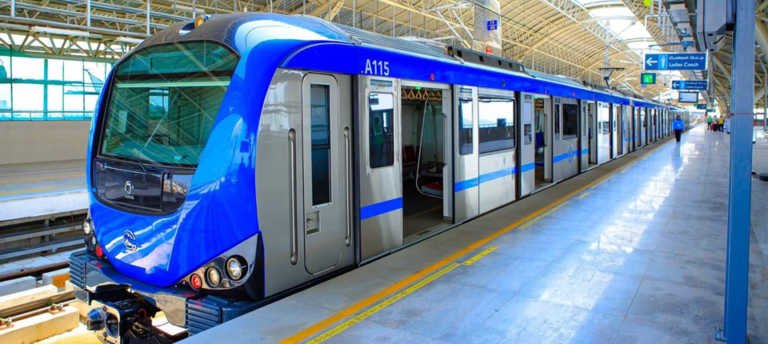
Nagpur: In order to fasten up work for various metro projects, the board of Maharashtra Metro Rail Corporation (Maha Metro) has cleared proposal to prepare a detailed project report (DPR) for coach assembly plant Butibori. The estimate cost of setting up the plan is approximately Rs 350 crore. The actual cost will be based on the DPR.
The board meeting for the same was held in Chennai to set the ball rolling for the project. As per the preliminary information, the Maha Metro is planning to bring together broad gauge as well as standard gauge coaches in the plant.
The standard gauge coaches will be for the Pune Metro. On the other hand, broad gauge coaches will for metro trains to Katol, Ramtek, Wardha and Bhandara.
Talking about future possibilities, if Maha Metro gets orders from other Metros then it will set up a full scale coach manufacturing capacity making a sizable investment of hundreds of crores. With this the Maha Metro will be offering wide range of employment opportunities to thousands of people.
After clearing the proposal for DPR, MahaMetro is eying to complete the assembly plan in a year’s time. The authorities want to speed up work as it does not want to Given the pace of work, the officials feel that one year’s time will be enough to make the plant operational.
On the other hand, the authorities informed that for Nagpur Metro, China Railway Rolling Stock Corporation (CRRC) will supply coaches.
On a larger canvas, Maha Metro is hoping that central and state government will chip in funds in the projects. The authorities will also look to partner with private partners to invest funds in metro projects as well as running them seamlessly. Maha Metro would then be a supervisory body, ensuring all work is carried out as per plan and processes.
Jaipur: Pink City Jaipur has been included in the list of polluted cities in the country. Now there is a need for how to curb rising pollution in Jaipur. In this regard, if the railway administration wishes, it can play an important role. If the expansion of Phase 2 of the Metro is done correctly, then the pollution in Jaipur can be greatly reduced in the future after the operation of the Metro Rail.
It has come out in the report of a survey done by French company EGIS Rail SA for the Jaipur Metro recently. The report recommends making Metro route under Phase-II on Tonk Road, the busiest route in Jaipur city. Along with this, the proposed Jaipur Metro Stage-II has been extended to about 8 km. According to this proposal, the total length of the new route is stated to be 31 km.
The length of the present root is 23 km
The length of the Metro route in the existing Detailed Project Report (DPR) is 23 km (Ambadhi to Sitapura). Given the increasing traffic on this route, the survey of France’s company has been proposed to increase the length of the metro route.
According to a senior UDH official, they are working to prepare a master plan of the Jaipur Metro. If its construction is done in the phases then it will be beneficial for the future.
Starting of new DPR
Given the suggestions that came after the French company survey, the new DPR of Metro Phase II has been started. New suggestions are being included in this. After the DPR is formed, the government will be able to proceed for approval formalities. The Jaipur Metro Rail Corporation (JMRC) had prepared its first DPR in 2011 during the tenure of the Congress government in the phase II of Metro project. After that, the Delhi Metro Rail Corporation (DMRC) prepared the revised DPR in 2014 and proposed an underground metro station at the airport near Terminal-2. It was mentioned in the proposal that the metro train would be underground till Jawahar Circle. After that, elevated tracks will be made till the Sindhi camp bus stand.
40% increase in cost
Now in the new study, it has been proposed to increase the length of the route to 31 km and the number of stations on the route from 20 to 24. If the recommendation of the French company is considered in the new DPR, the cost of the project is likely to increase by 40 percent. In the past, the cost of Metro phase II was estimated at Rs. 10,000 crores.
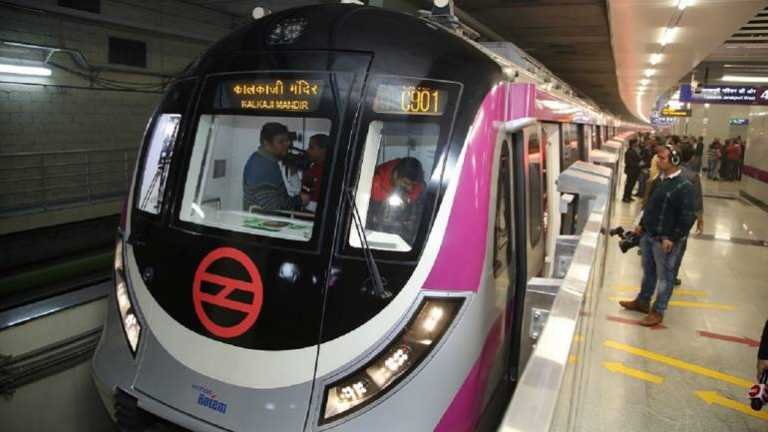
New Delhi: The introduction of GST has made difficulty for the Delhi government to buy new metro coaches as it will have to shell out more money as compared to the centre.
Delhi metro proposed to procure 582 coaches with Delhi government for 17 months but now they have piped down it’s demand for 164 coaches. So now the Delhi Metro Rail Corporation (DMRC) has sent the fresh proposal to the Delhi and the state government as both the government’s are the equal shareholders in the corporation.
The Delhi Metro Rail Corporation (DMRC) director SD Sharma says wrote to the city’s transport department on June 9 that “metro will incur the costs of procurement on it’s own through ‘external borrowings’ and ‘internal accurals’.
Metro originally proposed for 582 coaches to Delhi government on January 11, 2017. But after the launch of magenta line and the rise in commuters it led to more coaches. Due to the delay on the part of the city government metro pitched for 200 coaches which eventually brought down demand to 164 and state that the other 36 will be bought through a separate bidding process.
Approval of DPR (detailed project report) for the procurement of 582 cars was taking time which led to rise of traffic on the section constructed in phase I and phase II due to the commissions of phase III sectors. A proposal was submitted to Delhi government as well as ministry of housing and urban affairs for their approval for the 200 cars as variation to phase II project. Sharma wrote “The funding has been proposed from external borrowing and internal accruals of Delhi Metro Rail Corporation (DMRC) with no financial burden on either Delhi government or Ministry of Housing and Urban Affairs. With the above background , it is requested that approval of Delhi government for procurement of additional 164 coaches as variation to Phase III project may please be communicated to this office”.
“The funding has been proposed from external borrowing and internal accruals of Delhi Metro Rail Corporation (DMRC) with no financial burden on either Delhi government or Ministry of Housing and Urban Affairs. With the above background , it is requested that approval of Delhi government for procurement of additional 164 coaches as variation to Phase III project may please be communicated to this office”, Sharat Sharma (then Director/Operations of DMRC) written to the Delhi government.
As the GST is making difficult to buy the new coaches but however chief minister Arvind Kejriwal and transport minister Kailash Gahlot says that the clearance will be given soon.
The total number of coaches being used are 1,654. According to Delhi Metro Rail Corporation (DMRC) data 244 trains currently operate on it’s 277 km network. The traffic will be increased on the lines built under the phase I and phase II projects after the completion of phase III.
To press more coaches into service Delhi Metro Rail Corporation (DMRC) says “It is under consideration of the government. But as this is a dynamic process, necessary action is being taken as per the requirements”. The proposal to buy 582 was arrived at the following revisions.
On 23rd October 2010 the proposal was submitted to Delhi and centre government that the Delhi Metro Rail Corporation (DMRC) board has approved a proposal to procure 916 coaches. However, the 334 coaches were under the DPR ( detail project report) of the proposed phase IV project, a decision was taken to go for 582 coaches.
New Delhi: It is not a good news for Delhi Metro commuters as the metro services can be stopped at any time by the dissatisfied Delhi Metro employees at large due to failure of Delhi Metro Rail authority in implementing the issued raised and agreed jointly in a high level meeting held on 22nd & 23rd July 2017 between Management and Staff Council of DMRC after consultation with Ministry of Housing and Urban Affairs, Government of NCT of Delhi and Principal Advisor Dr. E. Sreedharan. The meeting was chaired by Mangu Singh, Managing Director and most of Directors were also participated after starting “chakka jam and tool down” strike by all non-executives of the Delhi Metro Rail Corporation (DMRC) due to illegal removal of a best performer metro employee served DMRC over 13 years on the post of RTI Supervisor.
Secretary Staff Council wrote letter to Managing Director of Delhi Metro alleging autocratic act by the Management
Ravi Bhardwaz, Secretary Staff Council written an e-mail to the Managing Director of Delhi Metro Rail Corporation and alleging autocratic behavior by the Management towards the non-executives of the DMRC. In his e-mail, he stated that the Management is failed to comply / implement agenda items of meeting held on 22-23 July 2017 and the MD office is refusing to set meeting with the Managing Director despite of several requests made in this regard. He alleged that CGM/HR R.D. Chaudhury intentionally misleading staff council and staff at large, trying to defame the staff council among the staffs. CGM/HR is also trying to keep the staff council and staff at large in dark for such a long time and not giving the legitimate solution on such crucial issues like Pay Scale and is cheating with the staffs, working 24×7 for the betterment of the organisation. He further alleged that HR and other officers working below the Managing Director are consistently playing delay tactics with staff council and causing financial crisis for the non-executive staffs of Delhi Metro Rail Corporation (DMRC).
He further stated that any delay in implementing agreed agenda items may cause huge unrest and use of democratic means by the staffs at large in declared and undeclared means, and the staff council is bound to obey the same.
Lucknow: The Lucknow Metro Rail Corporation (LMRC) on behalf of Agra Metro Cell invites open tenders on competitive basis from eligible applicants from all countries and all areas, who fulfills qualification criteria as stipulated in Notice Inviting Tenders (NIT) for engagement of Detailed Design Consultant (DDC) for proposed metro rail corridor 1 between Sinkandra to Taj East Gate of Agra Metro Rail Project and construction of train depot.
Contract AGDD-01: Engagement of Detailed Design Consultant (DDC) for Civil, Architectural and E&M Works for Sikandra to Taj East Gate Corridor-1 of Proposed Agra Metro Project, Agra, Uttar Pradesh, India; Consisting of 6.35 Km Elevated Section with 07 Elevated Stations, Ramps, 7.65 Km Underground Section with 08 Underground Stations and Car Maintenance Depot.
and
AGCC-01: Construction of Boundary Wall and Land Development of Depot at PAC Depot for Sikandara to Taj East Gate Corridor of proposed Agra Metro Rail Project at Agra, Uttar Pradesh, India.
The Chief Engineer/Contract, Lucknow Metro Rail Corporation Limited (LMRC) on behalf of Agra Metro Cell called open tenders from the agencies for Detailed Design Consultancy of above work and expressed willingness to submit Tenders for two separate contracts (Contract No. AGDD-01 and AGCC-01), for the detailed design services and construction of depot yard for proposed Agra Metro Rail Project.
Key Details for Contract No. AGDD-01
Scope of Work: Engagement of Detailed Design Consultant (DDC) for Civil, Architectural and E&M Works for Sikandra to Taj East Gate Corridor-1 of Proposed Agra Metro Project, Agra, Uttar Pradesh, India; Consisting of 6.35 Km Elevated Section with 07 Elevated Stations, Ramps, 7.65 Km Underground Section with 08 Underground Stations and Car Maintenance Depot
Completion period of the Work: 4 years (48 months)
Tender documents on sale: From 28.05.2018 to 25.06.2018 (between 09:30 Hrs to 17:30 Hrs) on working days
Tender document cost: INR 23600/- (inclusive of 18% GST)
Last date of seeking clarification: 29.06.2018
Pre-bid Meeting: 04.07.2018 at 1100 hrs
Last date for submission of tender document: 31.07.2018 up to 15.00 hrs
Tender opening date & time: 31.07.2018 at 15.30 hrs
Key Details for Contract No. AGCC-01
Scope of Work: Construction of Boundary Wall and Land Development of Depot at PAC Depot for Sikandara to Taj East Gate Corridor of proposed Agra Metro Rail Project at Agra, Uttar Pradesh, India.
Approximate cost of work: INR 17.00 Crore
Tender Security amount: INR 17.00 Lakh
Completion period of the Work: 1.5 years (18 months)
Tender documents on sale: From 28.05.2018 to 25.06.2018 (between 09:30 Hrs to 17:30 Hrs) on working days
Tender document cost: INR 23600/- (inclusive of 18% GST)
Last date for submission of tender document: 04.07.2018 up to 15.00 hrs
Tender opening date & time: 04.07.2018 at 15.05 hrs
Both tender documents can be purchased from and submitted to the office of: Chief Engineer/Contract, Lucknow Metro Rail Corporation,
Administrative Building, Vipin Khand,
Gomti Nagar, Lucknow-226010, Uttar Pradesh, India
(E-mail: cecontractlmrc@gmail.com)
Proposed Route Map
Proposed route map for Agra Metro Rail Project
The proposed Agra Metro Rail Project consists two corridors. Corridor 1 consists with total 15 metro stations. Out of which 7 stations will be elevated and rest 8 stations will be built underground.
Click the below links to download and read complete notice inviting tenders:
Mumbai: Reliance Infrastructure promotedMumbai Metro One Private Limited (MMOPL), the lifeline between Mumbai’s Western and Eastern suburbs, had recently completed four successful years of seamless and comfortable travel for over 400 million passengers.
To mark the completion of the coveted landmark in Mumbai’s transportation history, Chief Minister Mr. Devendra Fadnavis had launched several initiatives at Versova Metro Station. Mr. Fadnavis inaugurated the “Majhi Metro Art” train of award-winning paintings, poems and photographs at the festival held earlier in the year.
In a unique initiative in the country, the Chief Minister launched the mobile metro ticketing product “Skiiip Q” where Mumbai Metro commuters need no longer stand in queues for a ticket which can be generated by a QR code on the mobile phone.
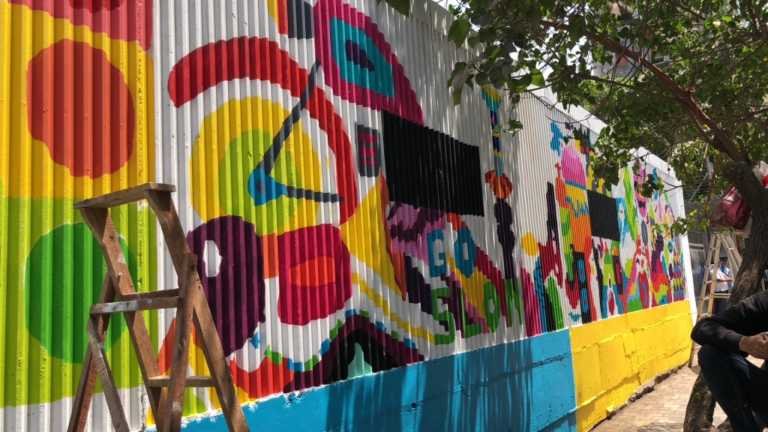
Taking the celebration ahead, today Nearly 3000, Mumbaikars created probably the longest art wall to mark the completion of Mumbai Metro’s four year of completion.
Art work on completions of 4 years services of Mumbai Metro
1 of 7
one of the largest wall art created by Mumbaikars on account of Mumbai Metro's four year completion.
Metro stations in Hyderabad will soon double up as charging stations for electric vehicles. As per latest development the first electric vehicle (EV) charging station will come up at Miyapur Metro Rail station. The facility is likely to be set up within two weeks and similar services will be started across all Hyderabad Metro stations.
The development is part of the tripartite agreement signed between L&T, Power Grid and HMRL for setting up EV charging facilities across all the metros in Hyderabad. The Miyapur Metro EV charging station will be the first ever in the country.
As per initial information, a car will take around 45 minutes to charge. A scooter on the other hand will take up to three hours or more to charge. In the initial stages the metro station will offer three charging points. The cost to avail the service is worked out and will soon be shared. On technical terms, the time taken for charging a vehicle will depend upon the ‘C’ rating of the vehicle.
N.V.S. Reddy, managing director of HMRL shared that this is the first such initiative in India. He further added that the cost of charging will be lesser compared to refuelling petrol or diesel. As part of the agreement, HMRL is offering land for setting up EV charging station and Powergrid is setting up the entire facility.
Powergrid will be bearing the cost of setting up EV charging facilities. It would over a period of time recover the cost. The officials at Powergrid are also in talks with Delhi Metro and Chennai Metro officials to set up similar facilities at their metro stations as well.
In order to ensure smooth functioning, Reddy shared that they will work on having Smart Parking station partner. As per the plan, EV charging will be connected to Smart Parking lots and commuters can book the charging slot via app. The user can book a slot using the app. The parking too will be integrated with command control centre as well police control too.
To help commuters save time, HMRL is mulling on offering battery swapping facility. People will not have to leave their vehicle on charging points, instead swap batteries and move on.
Reddy also informed that Hyderabad Metro service from Ameerpet to LB Nagar will commence in August and on the Ameerpet-Hitec City leg in October. Currently the test run is on for Ameerpet to LB Nagar and is likely to get over by July end. He said that exclusive numbers are being given to Hyderabad Metro Rail pillars and Corridors 1, 2, 3 will be given A,B,C numbers correspondingly.
Within two weeks of opening the two crucial underground metro stretches, Chennai Metro officials have seen a huge increase in ridership. As per officials the number of daily commuters has increased by 45,000 in a short span of time. The most popular stretch among the two stretches is the Chennai Airport metro that commuters are frequently using.
With this overwhelming response, Chennai Metro has witnessed an unexpected rise in ridership by 17,000. As per recent data average of about 4,380 travellers a day use Chennai Airport Metro station. This is followed by Thirumangalam where an average commuter rate is 4,040 with 3,534 people taking the Metro at CMBT. Vadapalani and Chennai Central see an average of 3,369 and 3,239 riders, correspondingly.
As per official estimate the increase in ridership is due to the fact that passengers are now opting to ride in a metro to reach airport over other transport. Another reason is that the Chennai Airport Metro offers connectivity to both international and national terminals which makes it suitable for air passengers to travel via metro.
The reason for Thirumangalam Metro station receives decent ridership as it caters to commuters heading to Padi, Mogappair and Maduravoyal.
Another surprising data is that of Egmore Station which is used by just 1,000 commuters despite of it being closer to Egmore Railway Station that connects both suburbs and southern districts. The officials did not have any reason on the low traffic turnout at this metro station.
The two ambitious stretches that were made operational on May 25 by Chennai Metro Rail were in limelight owing to its airport and railway connectivity. The stretches were a 4-km stretch from AG-DMS to Chennai airport and a 2.7-km stretch from Nehru Park to Chennai Central. These two stretches became important as it connected four important transport hubs – Chennai Egmore, Chennai Central, Chennai Airport and CMBT. As per the records till the opening of these two stretches, the average number of commuters using the system was approximately 27,000-28,000 daily. Currently the ridership has gone up to 45,000.
At the moment during peak hours there is a metro train at every five minutes. Once new stretches will be added the number of commuters is expected to increase further shared the officials. In future Chennai Metro officials might run a train in every 2.5 minutes to accommodate the rise in traffic.
New Delhi: The district administration has taken action against the Delhi Metro Rail Corporation (DMRC). Nine million 70 lakh 98 thousand 398 rupees, after sending outstanding notice due to payment of outstanding notice, action was taken? DMRC bank accounts are frozen. The district administration of Gautam Buddh Nagar has taken action DMRC and frozen the bank accounts. Deputy District Magistrate, Dadri Anjani Kumar Singh has confirmed about freezing the bank account of DMRC.
In order to deposit the electricity bill, the district administration had also made a proclamation in addition to sending notices to DMRC due to the outstanding dues of Rs.9,77,98,398/-. This action has been taken due to non-deposit of outstanding electricity bills and arrears. A bank account of DMRC located in Delhi has been sealed.
The amount of total amount in the account is being received from the bank. According to the information, the bank account has lesser amount in comparison to the outstanding electricity bill. The amount of money in the account will be collected as electricity bill. After this, the process of collecting the remaining amount will be processed. Deputy District Magistrate Dadri Anjani Kumar Singh said that even after sending several notices, the DMRC did not make payment of the electricity bill.
Bengaluru: Offering better connectivity with other modes of public transport at Majestic, Bangalore Metro Rail Corporation (Namma Metro) will soon be connected with two Foot Overbridges (FOB). As per the plan two long FOBs are finally taking shape and they will be linking BMTC and KSRTC bus stations with Kempegowda Majestic Bangalore Metro station.
The FOBs are waiting to be open to public post a formal inauguration. This will be a crucial move as it will be connecting the City Railway Metro station and KSR city railway station this is on the verge of completion. This will boost integration with Bangalore Metro with other modes of transportation in the city.
With these projects becoming functional, commuters will greatly benefit from these facilities. Many commuters who have to switch several modes of transport will be able to travel hassle-free. It will be easier for passengers to alight from metro and catch other transport medium in short time.
As per Bangalore Metro Rail Corporation Limited (BMRCL) officials within few days the FOBs connecting the metro interchange station with the bus stands will be open for public. On the other hand the second FOB connecting the railway station with metro station would take couple of weeks before it is open for public.
BMRCL has said that they have finished their end of work and are awaiting South Western Railway (SWR) work to be completed. SWR on the other hand has assured that they will wrap work by the end of June. Once this work is completed, commuters are going to travel with ease.
Urban transport expert, Sanjeev Dyamannavar, explained that the two project with offer safer access to all the passengers. Dyamannavar stated that the FOB connecting Kempegowda Majestic Metro Interchange Station with bus station should have been completed long back. The project got delayed owing to several reasons.
Dyamannavar added that FOBs will facilitate passengers reach the Metro station from the bus terminus in within few minutes. It will also give safe entrance to passengers in comparison to the disappointingly maintained subway.
Talking about the second FOB connecting the railway with Bangalore Metro, Dyamannavar said that currently passengers have to go through an ordeal to reach platform 10 of the railway station. Passengers have to wade through garbage filled and badly lit MG Railway Colony Road. Once the FOB is open public, commuters will not have to face this problem.