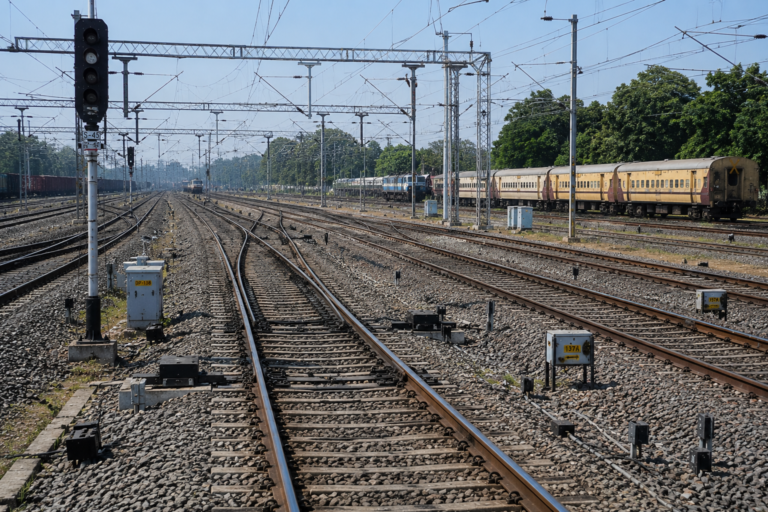
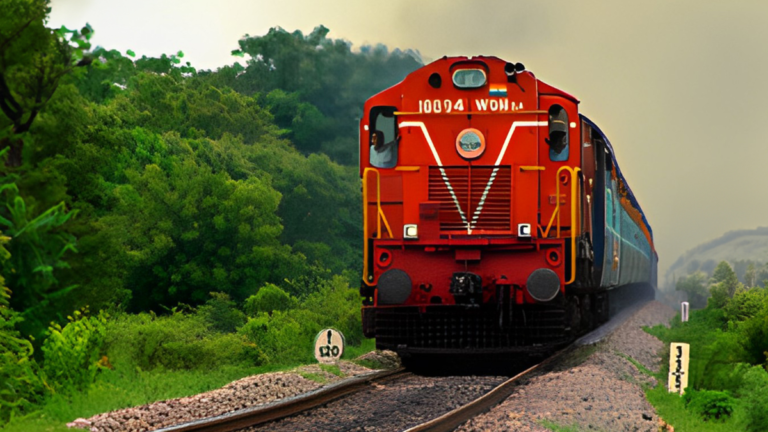
BIHAR (Metro Rail News):Indian Railways has given the green light to a ₹976 crore multitracking project on the 29 km Danapur-Fatuha section in Bihar. The work falls under the East Central Railway and aims to ease congestion while improving the flow of both passenger and freight trains on the busy Patna rail corridor.
The project includes the 3rd and 4th line between Danapur and Patna , a 3rd line between Rajendra Nagar and Patna Saheb ,and 3rd and 4th line between Patna Saheb and Fatuha.
This stretch belongs to the important Delhi–Deen Dayal Upadhyaya Junction,Patna, Kiul, Bhagalpur, Khana, Howrah route. Indian Railways has marked this corridor as its energy, mineral and cement corridor. The main goal of the new lines is to boost freight movement for key industrial areas.
Once ready, the upgraded section will allow 22 extra passenger trains and 18 extra freight trains to run in the first year itself. It is also expected to handle 5.2 million tonnes of freight every year.
The project will support the upcoming 2,120 MW thermal power plant at Chausa in Buxar district by making it easier to move bulk raw materials and other inputs by rail.
This approval continues Indian Railways’ push to expand capacity on high-density routes. It will strengthen logistics for the energy and industrial sectors and help the socio-economic growth of Bihar.
MUMBAI (Metro Rail News): The Ministry of Railways is working hard to improve train connectivity across Maharashtra. The focus is on building new lines, doubling existing tracks, and increasing overall capacity.
For the year 2026-27, the government has set aside ₹23,926 crore for railway infrastructure and safety works in the state. This amount is more than 20 times the average yearly spending between 2009 and 2014, mentioned in the official press release of PIB Mumbai, released on 29 July 2026.
Current progress
As of 1 April 2026, 52 railway projects have been approved in Maharashtra. These include 13 new lines, 2 gauge conversion projects, and 37 doubling or multi-tracking works. Together they cover 5,956 km and cost an estimated ₹1,42,635 crore.So far, 1,598 km has been completed till March 2026, with ₹34,782 crore already spent.
Important projects advancing fast in Mumbai
The Daund–Manmad doubling project has recently been completed. It will improve train services in the Shirdi region and nearby areas.
On the Ahilyanagar–Beed–Parli Vaijnath new line, the 201-km stretch from Ahilyanagar to Beed–Badwani is already open. Work continues on the remaining portion.
Rahuri–Shani Shingnapur new line and Puntamba–Sainagar Shirdi doubling have been given Special Railway Project status to speed up land acquisition.
Detailed Project Reports are being prepared for several new routes, including Nashik Road–Sainagar Shirdi,Pune–Ahilyanagar,Dharashiv–Beed–Chhatrapati Sambhajinagar, and Chhatrapati Sambhajinagar–Ahilyanagar.
Work is in progress on many important lines such as Ahilyanagar–Parli Vaijnath new line,Wardha–Nande new line,Indore–Manmad new line,Jalna–Jalgaon new line,Solapur–Tuljapur–Osmanabad new line,Panvel–Chowk double line, and Kasara–Manmad third and fourth lines.
The Minister stated that Projects are approved only after talks with the state government and other stakeholders, and followed by the requisite statutory and financial approvals.Construction happens in stages, depending on land availability and official permissions.
Once finished, the new and upgraded lines will connect regions better, make train operations smoother, help move more goods, and support the economic growth of Maharashtra.
NEW DELHI (Metro Rail News): India is taking a big step toward building its own high-speed rail future. After deciding to manufacture indigenous bullet trains for the Mumbai-Ahmedabad corridor, the country is now developing its own signalling system called the Bharat Train Control System (BTCS).
This system is being designed for nearly 7,000 km of upcoming bullet train corridors across India. The goal is to cut long-term reliance on foreign signalling technology.
What makes BTCS special?
BTCS is built specifically for Indian conditions. It is planned as an open-source, modular, and cost-effective system.
This approach will help create a strong domestic industry boosting Indian railway design firms, system integrators, and telecom and component makers.
Once mature, the system could even be exported to other countries looking for affordable high-speed rail solutions.
Complete Control, Zero Dependence in High-Speed Ecosystem through BTCS
India is pairing BTCS with other homegrown efforts. The Integral Coach Factory (ICF) is making indigenous trainsets for high-speed trains, while BEML is producing the coaches. Together with BTCS, this gives India full technological control over both the trains and the systems that run them.
Creating a national open-source signalling protocol will cause a domestic industrial boost for Indian railway design firms, system integrators, and telecom/component manufacturers .
The current signalling systems on India’s fastest corridors
Right now, the Mumbai-Ahmedabad High Speed Rail corridor uses ETCS Level 2, a European system. In June last year, a ₹4,100 crore contract went to Infracon Pvt Ltd (an Indian company) and Siemens (a German firm) for this work.
ETCS Level 2 supports speeds up to 350 km/h with continuous wireless communication and central traffic control. The same system is also used on the Delhi-Meerut Rapid Rail Corridor, currently home to India’s fastest trains.
EETCS Level 2 is serving as the practical reference point while India develops BTCS,as per Times of India reported.
There has also been discussion around Japan’s Digital Automatic Train Control (D-ATC). A former Japanese minister raised concerns about India not using it exclusively for MAHSR (Mumbai–Ahmedabad High-Speed Rail corridor),. Indian officials responded that Japan’s Hitachi trainsets work with ETCS, and India remains open to Japanese protocols if the right proposals come forward.
Big shift toward self-reliance
BTCS marks a clear change. Instead of importing complete high-speed signalling packages, India is using lessons from the ETCS Level 2 experience on the Mumbai-Ahmedabad route to build a lower-cost, scalable system of its own.
This supports the larger Make in India vision-creating technology that India owns, controls, and can grow with.
AHMEDABAD (Metro Rail News): Western Railway has invited bids for building the Sarkhej-Dholera Semi High-Speed Double Rail Line. This marks a significant step in developing India’s first semi high-speed railway corridor. The EPC contract is valued at approximately ₹18,901.68 crore and includes civil works, track, electrification, signaling, telecommunications, testing, and commissioning. .
The project will connect Ahmedabad (Sarkhej) with Dholera, while also providing spur lines to the Lothal National Maritime Heritage Complex (NMHC) and the upcoming Dholera Airport.
Tender details
Information
Details
Tender Number
CPMSHSRADIWRSEJDSIREPC01
Project
Sarkhej-Dholera Semi High-Speed Double Railway Line
Estimated Cost
₹18,901.68 crore
Earnest Money Deposit (EMD)
₹378.03 crore
Completion Period
42 months
First Pre-bid Meeting
7 September 2026 (11:30 AM)
Second Pre-bid Meeting
25 September 2026 (11:30 AM)
Bid Validity
180 days
Scope of work
The selected contractor will Construct the Sarkhej-Dholera Semi High-Speed Double Railway Line, including Spur lines to Lothal NMHC and Dholera Airport Terminal; comprising civil works, which includes Formation & Viaduct, Bridges, Station buildings, & associated works; Track System (Ballasted & BLT), Overhead Traction System including Electrical General Services; Signalling & Telecommunication System, Operating Control Centre, integration of all systems Complete in all respect including Testing & Commissioning and all appurtenant works under jurisdiction of Western Railway.
About the project
The Ahmedabad (Sarkhej) -Dholera Semi High-Speed Double Line is a flagship project of the Ministry of Railways with an estimated overall cost of around ₹20,667 crore. It is planned as Indian Railways’ first semi high-speed rail project using indigenously developed technology.
The corridor will provide faster rail connectivity between Ahmedabad, Dholera Special Investment Region (SIR), the upcoming Dholera International Airport, and the Lothal National Maritime Heritage Complex (NMHC).
The improved connectivity will significantly reduce travel time, making daily commuting and same-day return trips more convenient. The project has been planned under the PM Gati Shakti National Master Plan to strengthen multimodal connectivity and improve logistics efficiency through integrated infrastructure planning. Once completed, the corridor will support regional economic growth, improve passenger mobility and enhance connectivity across Gujarat.
GURUGRAM ( Metro Rail News): Gurugram is set to get much better public transport connectivity. The integration plan for the new Gurugram Metro line with Delhi Metro’s Yellow Line has been finalized.
The 28.5 km long metro corridor will run from Millennium City Centre to Cyber City. It will have 27 stations and is planned to connect smoothly with Delhi Metro, Rapid Metro, RRTS, railway network, and city buses, for seamless multi modal connectivity. This will make travel easier and more convenient for daily commuters.
Proposed seamless integration with other Transport Systems
Once operational, the Gurugram Metro will offer excellent multi-modal connectivity:
Millennium City Centre – Interchange with Delhi Metro Yellow Line
Hero Honda Chowk – Interchange with Delhi-SNB RRTS Corridor
Cyber City -Interchange with Delhi-Gurgaon-Bawal RRTS Corridor
Sector 10- Integrated Bus Terminal
Sector 5 -Gurugram Railway Station
Subhash Chowk – Proposed Bhondsi line from
There are plans ongoing about a direct Metro link to Dwarka Expressway via a two-station spur line from Basai Village to Sector 101. Future integration planned with other corridors including Bhondsi line may cover approximately 20 km between Bhondsi village and Gurugram Railway Station.
GMRL is also studying the possibility of double-decker stations at Bajghera Road and Sector 21 for better connectivity. GMRL Managing Director Mr. Chander Shekhar Khare reviewed the updated design and inspected the proposed stations. He also visited the ongoing Phase 1 corridor for evaluating construction works such as piling and pier erection .
The first package worth ₹1,503 crore (15.2 km stretch) is currently under execution. Casting yards are operational and major civil works are progressing between GMDA office and Hero Honda Chowk.
Target Completion: Millennium City Centre to Sector 9 corridor is expected to be ready by August 2028. As of July 2026, the overall project has achieved around 11% physical progress.
This new metro line will greatly improve connectivity in densely populated areas like Sectors 3, 4, 5, 7, 9, Basai, and Palam Vihar, while boosting access to the growing Dwarka Expressway corridor.
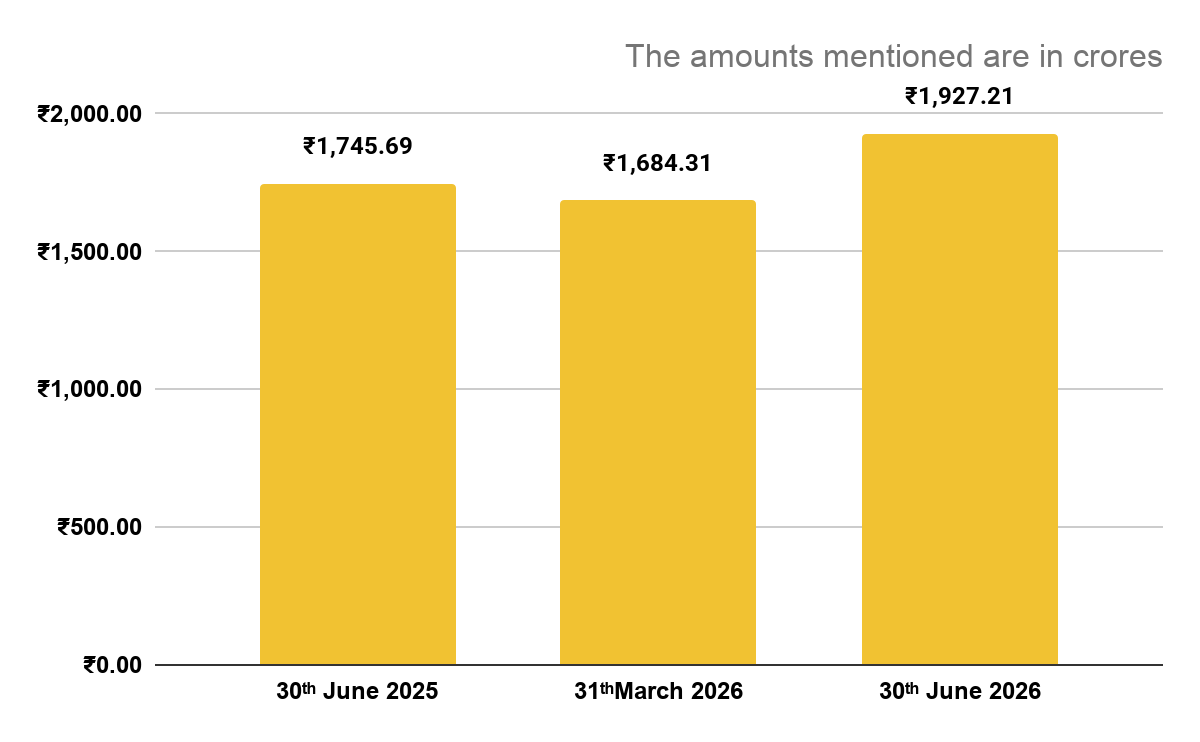
NEW DELHI (Metro Rail News): Indian Railway Finance Corporation Limited (IRFC) has reported its quarterly net profit ₹1,927.21 crore for quarter end of current financial year (Q1 FY27, 30th June 2026) .
This represents a 10.4% profit after tax rising year on year. Last year the net profit was ₹1745.69 Crore.
IRFC’s total net worth rose to ₹58,791.95 crore, on 30th June, 2026 from ₹56,748.76 crore on 31st March, 2026. This shows a significant increase from last year which recorded net worth of Indian Railway at ₹54,423.96 crore (June 2025).
IRFC’s Net Profit for the Period after Tax (as on the date of the end of quarter)
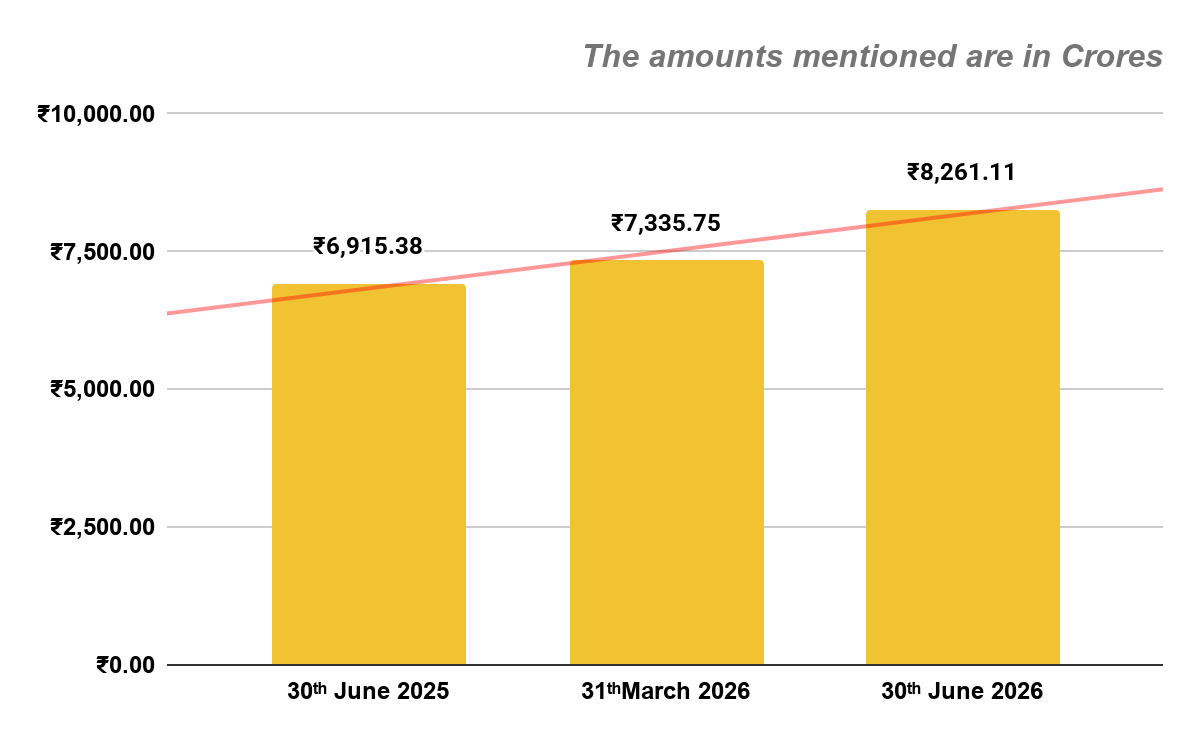
IRFC’s Revenue from operations (as on the date of the end of quarter)
On a quarter-on-quarter basis, operating revenue also grew by 12.61% over the ₹7,335.75 crore recorded in the preceding quarter ended March 31, 2026. Total income for the quarter stood at ₹8,391.34 crore during June 30 2026, reflecting a 21.29% growth over the ₹6,918.24 crore reported in the same period last year.
A strong start to FY 2026–27.
"Q1 FY 2026–27 marks a strong start, with record quarterly revenue, net worth and profitability. These results underscore the success of IRFC 2.0, our zero-NPA asset quality, and our commitment to expanding across mobility and allied sectors." ~… pic.twitter.com/mTxtfNpeXM
— Indian Railway Finance Corporation Limited (@IRFC_1986) July 31, 2026
IRFC reported an annualized Net Interest Margin (NIM) of 1.48% for the quarter. Its Assets Under Management (AUM) stood at ₹4.79 lakh crore during the same period.
The company also maintained its zero Non-Performing Assets (NPA) status, highlighting the high quality of its loan book. IRFC continues to diversify its financing activities beyond railways, strengthening its overall portfolio.
This financial stability provides a solid foundation for IRFC to continue diversifying its lending model into broader transport, logistics, and renewable energy sectors.
‘’Q1 FY27 has been a strong start to the financial year. The Corporation achieved its highest-ever quarterly revenue, net worth, and profitability. These impressive results validate the success of IRFC’s diversification strategy under IRFC 2.0 and the company’s strict discipline in maintaining a zero-NPA, high-quality asset book.’’ said Manoj Kumar Dubey, Chairman and Managing Director of IRFC.
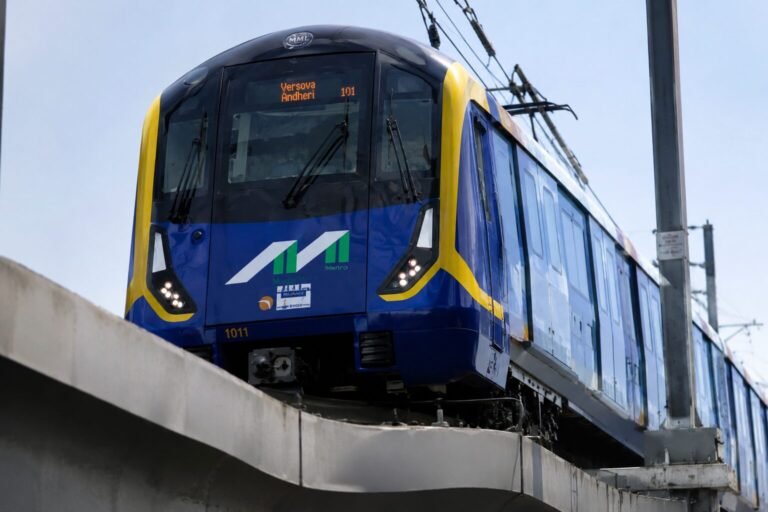
MUMBAI (Metro Rail News): Aurionpro Solutions has secured a new order worth around Rs 50 crore from the Mumbai Metropolitan Regional Development Authority (MMRDA) to expand its Automated Fare Collection (AFC) system on Metro Metro Line 5. This contract strengths the company’s role in Mumbai’s growing metro network and aims to improve the ticketing experience for commuters.
Aurionpro expands Mumbai Metro partnership
Aurionpro Solutions has announced that it has received a new mandate from MMRDA under its transit and smart Mobility business. The company will implement its complete Automated Fare Collection (AFC) solution at six new stations on Mumbai Metro Line 5 – Phase I. This latest order, valued at approximatelyRs 50 crore, builds on Aurionpro’s previous contract for Mumbai Metro Lines 4 and 4A, which the company secured last year. The expanded deployment will help create a more efficient ticketing system across the network.
Scope of work
Under the new order, Aurionpro will provide:
Complete Automated Fare Collection (AFC) solution
Modern ticketing and fare management system
Implementation across six new stations on Mumbai Metro Line 5 – Phase I
Technology designed to improve commuter convenience and operational efficiency
Company statement
Commenting on the order, Sanjay Bali, President of the Technology Innovation Group at Aurionpro Solutions, mentioned that metro networks are expanding rapidly in India and abroad, creating new opportunities for mobility technologies. He added that the company continues to strengthen its position as a preferred technology partner for mass transit operators and is well-positioned to grow in both domestic and international markets with its next-generation mobility solutions.
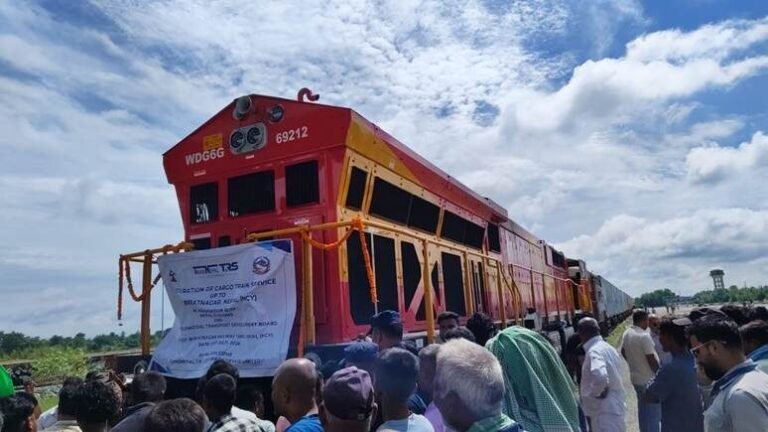
NEW DELHI (Metro Rail News): Indian Railways has achieved a landmark moment in South Asian trade connectivity, successfully running the first-ever direct commercial container freight train from Kolkata Port to Biratnagar Customs Yard in Nepal.
The maiden freight train to Biratnagar carried canola oil loaded across 40 wagons, officially writing a new chapter in India’s cross-border rail freight story.
This historic freight train runs on the broad-gauge rail link connecting Jogbani (India) and Biratnagar (Nepal), which was inaugurated back in June 2023.
The real breakthrough, however, came later. After India and Nepal signed a revised Letter of Exchange (LoE) in November 2025, direct commercial rail movement to Biratnagar finally became a reality unlocking fresh possibilities for trade and economic partnership between the two neighbours.
Why does this launch matter?
This new freight corridor isn’t just symbolic; it brings real, practical benefits to trade between the two nations.
The service is set to speed up the transport of both import and export cargo, offering a mode of transportation that’s quicker, more cost-effective, and better for the environment. By cutting out multiple handling points along the route, the new system will noticeably improve overall supply chain efficiency.
Exporters, importers, logistics companies, and industries involved in cross-border commerce all stand to gain from this streamlined new route.
Beyond India-Nepal ties, this launch reflects a broader push positioning India as a growing player in international rail-based trade connectivity.
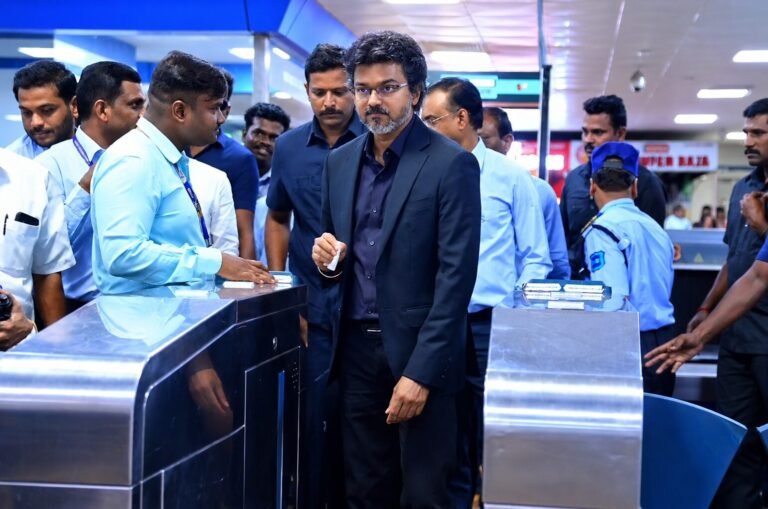
CHENNAI (Metro Rail News): Tamil Nadu Chief Minister Mr. C. Joseph Vijay visited the under-construction Chennai Metro Phase 2 site at Kathipara Junction on July 29, 2026. He even climbed all the way up to inspect the elevated viaduct standing 101 feet tall being built over the busy clover-leaf interchange. The Kathipara Metro Junction in Guindy will also feature the tallest pillar on the entire Chennai Metro network, standing at about 108 m.
Chennai Metro Phase 2 is a big leap towards true multi-modal connectivity, once operational.The project will link up with other public transport systems, including Suburban Rail, MRTS, and City Bus services, at 21 different locations, making commuting across the city far smoother and more convenient.
Key Features of Chennai Metro Phase 2
The Double-Decker Corridor: Road and Metro, together
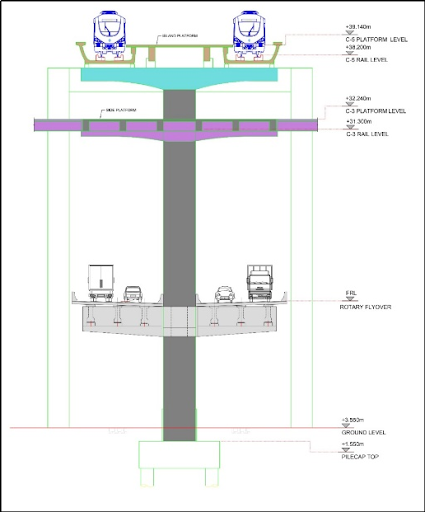
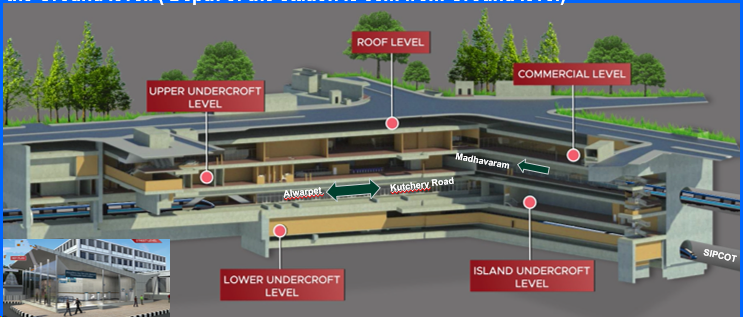
A standout feature of Phase II is a double-decker line and station design, where both levels stand on a single pillar for a stretch of about 4 km. This double-decker stretch includes four stations Alwarthirunagar, Valasaravakkam, Karambakkam, and Alapakkam.
Rather than constructing entirely separate structures, the metro corridor shares space directly with State Highway flyovers. This smart integration shows up at several key locations Kattupakkam, MIOT, Thoraipakkam, and Sholinganallur where the metro line runs above or alongside the highway instead of needing its own dedicated corridor.
This design helps save precious space and cuts down on the need for extra land in already congested urban stretches.
Going Underground: Tunnels, Tight Spaces, and a River Crossing
Underground sections were planned because in some locations the width of the roads is as narrow as 10m.
Underground sections will be featured in Pattalam, Thirumayilai, Kutchery, Alwarpet,Kilpauk, Thousand Lights, and Nandanam and Bharathidasan Road .
Among these, the Thirumayilai interchange station stands out as the deepest, plunging nearly 39 m below street level.
At Kilpauk, Thousand Lights, and Nandanam, the new Phase II tunnels have to pass right below the older Phase I tunnels that are already running trains with just a safety gap separating the two.
Diving 15 m below the riverbed level beneath the Adyar River
Near Adyar Junction, Corridor 3 crosses the Adyar River underground. The crown of the tunnel here sits 15 m below the riverbed level .
With its double-decker corridors, deep underground tunnels, and river-crossing engineering, Chennai Metro Phase 2 stands out as one of India’s most ambitious and technically advanced urban transit projects.
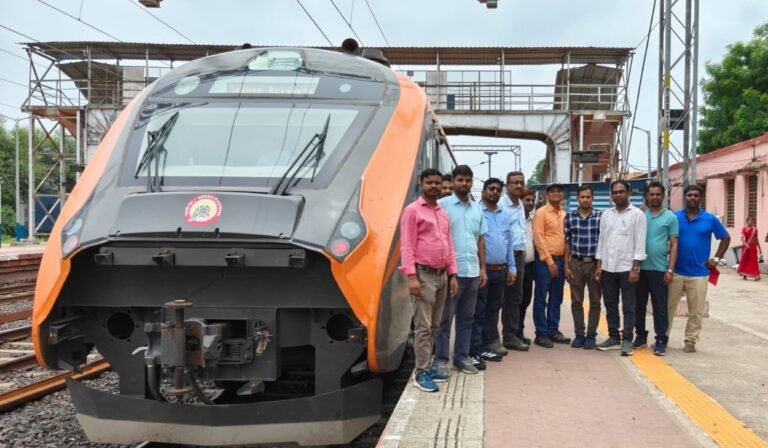
KOTA (Metro Rail News): Trials of India’s first Vande Bharat Freight EMU prototype officially started on Wednesday, 29 July 2026.
The 16-coach electric freight train, developed by the Integral Coach Factory (ICF), Chennai, is now undergoing nearly a month of intensive testing on the Kota-Nagda-Sawai Madhopur high-speed corridor. The tests are being conducted by the Research Designs and Standards Organisation (RDSO).
During the trials, the train successfully touched a top speed of 145 km/h. A minimum of two round trips will be conducted every day to evaluate its real-world performance.
A New Era of High-Speed Freight Begins!
The future of freight transportation in Indian Railways has taken a major leap forward as the country's first Vande Bharat platform-based Freight EMU begins its technical trials in West Central Railway's Kota Division.
The Vande Bharat Freight EMU consists of 16 coaches in total, including 2 Driving Trailer Coaches (DTC), 2 Non-Driving Trailer Coaches, and 12 parcel coaches.
Designed for heavy cargo movement, it offers an axle payload capacity of over 20 tonnes and a total payload capacity of 397 tonnes.
The train is equipped with modern features such as refrigerated parcel facilities, forced ventilation, pneumatic retractable roller flooring, and an advanced propulsion system.
Compared to conventional cargo trains that typically run at 60-70 km/h, this Vande Bharat Freight EMU aims for a much higher average operating speed of 80-90 km/h.
Safety features-
From a safety point of view, all doors automatically lock when the train’s speed exceeds 5 km/h. Additionally, the rake cannot be operated unless all doors are fully closed.
The train is also equipped with Indian Railways’ indigenous Kavach anti-collision system.
Details of Testing & Safety Trials
The tests include, oscillation and speed trials at speeds of 120,130,140 and 145km/h will be carried out in loaded and inflated conditions.
Other tests are Emergency Braking Distance (EBD),Coupler force trials, curve performance test,traction,breaking and jerk test, regenerative energy and PAPIS tests, signal and telecom interference test, door operations and other safety test, static test related to interior system such as CCTV, lighting, onboard electrical systems and short circuit.
If the current tests become successful, the Vande Bharat Freight EMU could transform India’s cargo transportation with faster, safer, more reliable, and eco-friendly freight services.
PATNA (Metro Rail News): Delhi Metro Rail Corporation (DMRC) has invited bids for Patna Metro Phase 1 Project. The tender work includes Pre-Engineering Building (PEB) works at seven elevated stations and architectural finishing of three stations including Mithapur, Ramkrishna Nagar and Jaganpura. The cost of work is estimated at ₹52.02 Cr.
Tender Information
Information
Details
Tender No.
PC-04AR
Approximate Cost of Work
₹52.02 Cr
Completion Period
18 Months
Pre-Bid Meeting
August 06, 2026 (11:00 hrs.)
Bid Submission Opening
August 20, 2026 (09:00 hrs.)
Bid Submission Deadline
August 27, 2026 (15:00 hrs.)
Scope of Work
The scope of work of the contract include design, fabrication, supply, erection & roof sheeting of Pre-Engineered Building (PEB) structures at seven (07) elevated stations namely Danapur, Saguna Mor, RPS Mor, Patliputra, Mithapur, Ramkrishna Nagar and Jaganpura and Architectural Finishing Works including water supply, sanitary installation, drainage, site development works at three (03) elevated stations namely Mithapur, Ramkrishna Nagar and Jaganpura of corridor-1 of Patna MRTS Phase-I Project.
Stations for PEB Structure work:
Danapur
Saguna Mor
RPS Mor
Patliputra
Mithapur
Ramkrishna Nagar
Jaganpura
Stations for Architectural Finishing Work:
Mithapur
Ramkrishna Nagar
Jaganpura
About Patna Metro
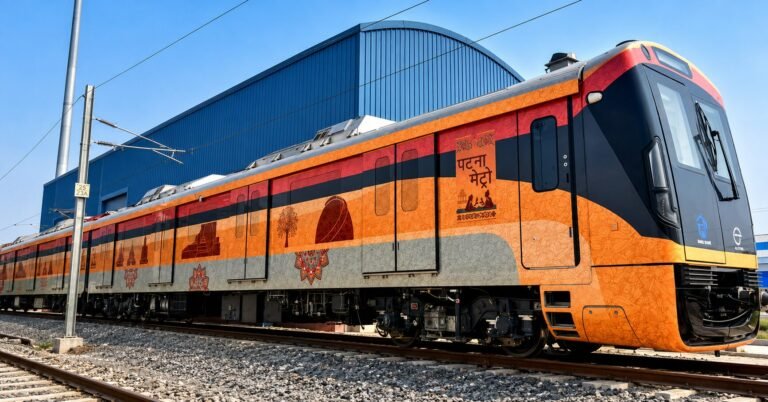
Patna Metro project is a mass rapid transit system expected to foster connectivity in Patna, the capital of Bihar. The project is currently operational in a priority corridor. The full proposed network is projected to expand the metro system to 32.5 km, with 24 stations.
NEW DELHI (Metro Rail News): Indian Railways has approved a ₹163-crore project to modernise the electric traction system on the Parbhani-Mudkhed double-line section in the Nanded Division of South Central Railway.
The project involves upgrading the existing 1×25 kV traction system to the more efficient 2×25 kV system across 164 track kilometres.
The Parbhani-Mudkhed section is part of the highly important Highly Utilised Network (HUN) Route-9, which connects major cities including Ajmer, Indore, Khandwa, Akola, Purna, Mudkhed, Secunderabad, Mahbubnagar, and Dhone.
This upgrade is expected to significantly boost the section’s power supply, improve operational efficiency, and increase carrying capacity. It will play a key role in Indian Railways’ target of achieving 3,000 million tonnes of freight loading by 2029-30.
The enhanced traction system will also support smoother operations of high-speed trains like the Vande Bharat Express on this busy corridor.
This strategic development marks a major step towards strengthening one of India’s high-density freight routes and improving overall network capacity.
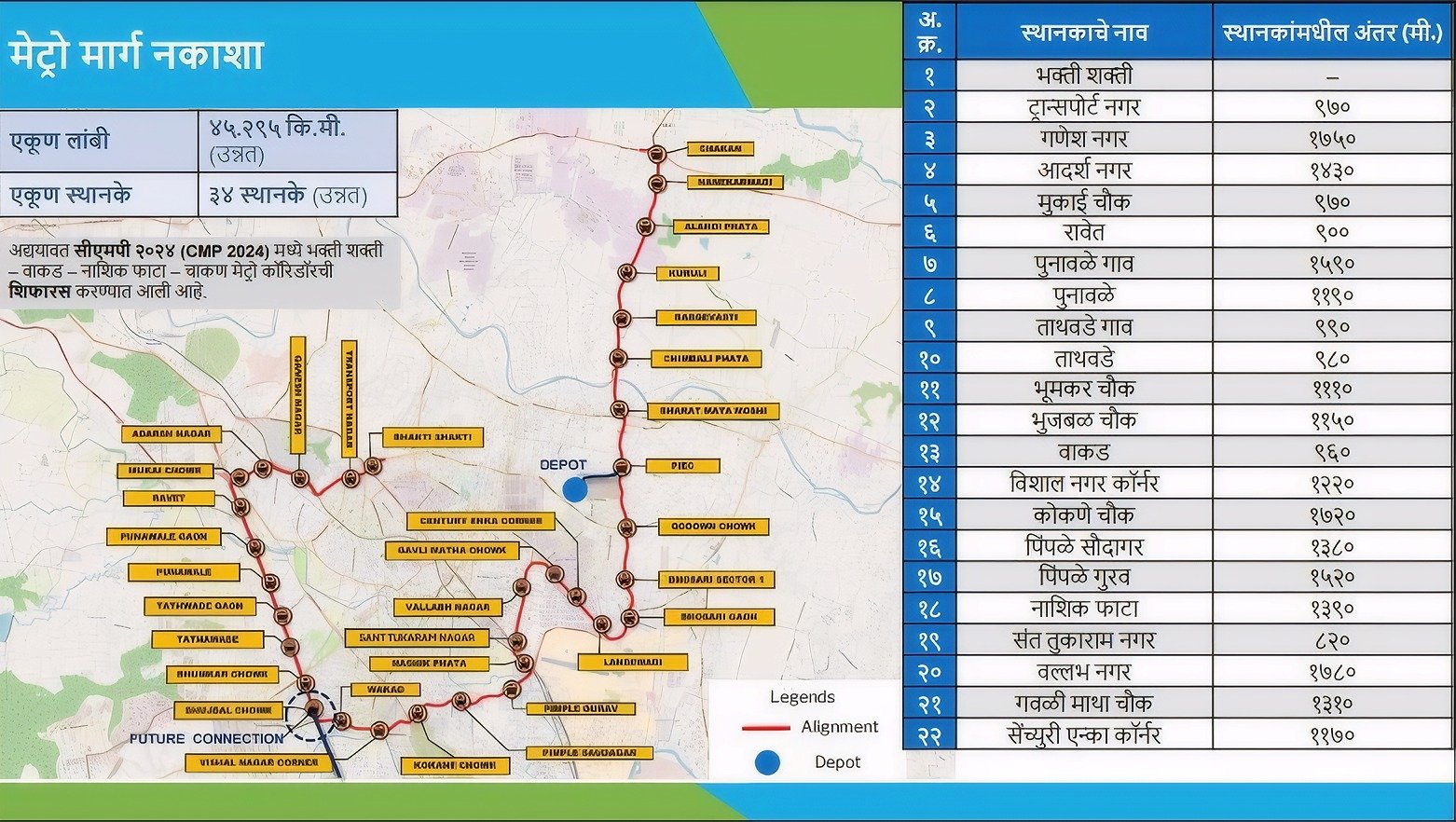
PUNE (Metro Rail News): Maharashtra Metro Rail Corporation Limited has submitted the revised Detailed Project Report (DPR) of the Bhakti Shakti–Wakad–Nashik Phata–Chakan Metro Corridor under Pune Metro Phase 2 for the approval of Pimpri Chinchwad Municipal Corporation (PCMC).
The ambitious project is estimated to cost ₹12,937.23 crore. The DPR has now been placed before the Pimpri Chinchwad Municipal Corporation (PCMC) for approval. The discussions on the corridor started nearly 2 years ago; the long wait for the corridor is finally over.
Spanning 45.295 km with 34 stations, this corridor is designed to efficiently meet the growing mobility needs of Pimpri-Chinchwad and surrounding areas. This new metro line is expected to provide much-needed connectivity and boost urban development in the region.
(Map of new Metro Corridor from official linkedin post of Mahesh Landge, MLA of Pimpri Chinchwad )
Integration of New Metro Corridor with Existing & Upcoming Lines
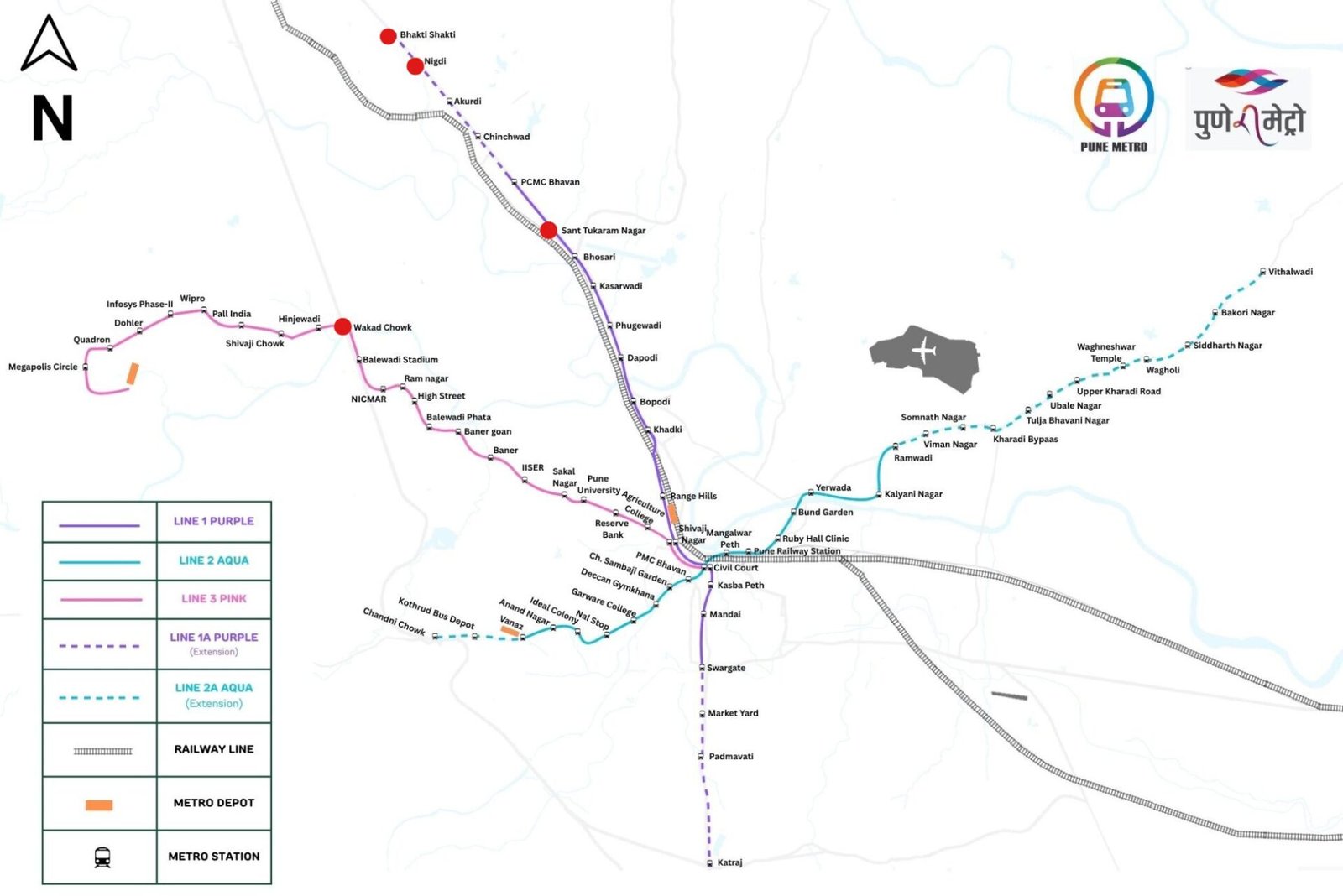
The new Bhakti Shakti–Wakad–Nashik Phata–Chakan Metro Corridor (Pune Metro Phase 2) will create three strategic integrations with existing and upcoming lines. This will ensure seamless connectivity between IT parks, industrial zones, and residential hubs across Pimpri-Chinchwad and Pune.
(Red points represent all points of Integration of the new Metro Corridor with Existing & Upcoming Lines )
Key Integration Points with Purple Line (Line 1)
1) Bhakti Shakti, Nigdi in Metro Line 1 (Purple Line)(Under construction)
Bhakti Shakti stations on the Purple Line (Line 1) will serve as major interchange points. These stations, currently under construction, will act as the northern terminals of Pune Metro. Located along the Old Mumbai-Pune Highway, they are vital gateways to the PCMC industrial belt. This strategic connection will greatly enhance accessibility for the new Phase 2 corridor.
2) Sant Tukaram Nagar in Metro Line 1(Purple Line)
Sant Tukaram Nagar Metro Station on the Purple Line will function as a primary multimodal transit hub. Situated on the Old Mumbai-Pune Highway, it will seamlessly link intercity transport hubs, large industrial zones, densely populated residential areas, and academic institutions.
These smart integrations will deliver smooth last-mile connectivity, reduce travel time, and support efficient movement between industrial zones, transport hubs, residential colonies, and academic areas in the region.
Key Integration Point with Pink Line (Line 3)(Awaiting inaguration)
Wakad Chowk in Metro line 3 (Pink line)
Wakad Chowk is a key elevated station on Pune Metro Line 3 (Pink Line), providing direct connectivity between Hinjewadi and Civil Court.It serves as a major multimodal junction along the Mumbai-Bengaluru Highway (NH-48) and offers excellent access to Rajiv Gandhi Infotech Park in Hinjewadi.
This integration point will be strategically important for the new Bhakti Shakti–Wakad–Nashik Phata–Chakan Corridor, enabling seamless travel between the IT hub of Hinjewadi, industrial areas, and other parts of the city.
This well-planned network is set to transform daily commuting and boost economic growth in Pimpri-Chinchwad and Pune.
The revised Detailed Project Report (DPR) must first be approved by the PCMC General Body Meeting. Then it will be forwarded for clearance from the Maharashtra State Government and the Central Government.
KOLKATA (Metro Rail News): Rail Vikas Nigam Limited (RVNL) has invited e-tenders for the construction of 10 elevated metro stations and an elevated viaduct for the Baranagar-Barrackpore Metro Corridor in Kolkata, West Bengal. The estimated cost of the contract is Rs 1,587.39 crore and it marks a major step in the expansion of the Kolkata Metro network.
Tender details
Information
Details
Tender Number
RVNL_KOL_METRO_BBVS
Estimated Cost
Rs 1,587.39 crore
Tender Closing Date
29 September 2026, 11:00 AM
Pre-bid Meeting
25 August 2026, 11:30 AM
Earnest Money Deposit (EMD)
Rs 2 crore
Completion Period
42 months
Bid Validity
120 days
Scope of work
The selected contractor will construct 10 NOS. elevated metro stations and viaduct from Baranagar Metro Station (Excluding) to Mangal Pandey Metro Station (CH: 4.68 km to CH: 16.98 km approx.) in connection with Baranagar-Barrackpore Metro Corridor of Kolkata Metro Railway Line, West Bengal, India.
About the project
The Baranagar-Barrackpore Metro Corridor, also known as Kolkata Metro Pink Line (Line 5), is a major metro project designed to connect the northern suburbs directly with the core Kolkata Metro network. The corridor will extend metro services beyond Baranagar and improve connectivity to key residential and commercial areas, including Barrackpore. The Package BBVS covers the stretch from Baranagar Metro Station (excluding) to Mangal Pandey Metro Station, where RVNL plans to construct 10 elevated metro stations along with an elevated viaduct.