New Metro Rail Policy can transform mass rapid transit system in India

When Prime Minister Narendra Modi inaugurated the Kochi Metro in mid-June, he said that 50 other cities are interested in similar rail systems. This is good news as public transportation is more sustainable than personal cars or motorbikes. It uses up less road space, consumes less fuel, emits fewer pollutants and causes fewer road fatalities. It is for this reason that the National Urban Transport Policy, adopted in 2006, recommended investments in public transport rather than in transport policies that promote greater personal vehicle use.

There is a range of public transport options available, including standard metro rail systems and buses, and newer variants such as light rail, bus rapid transit and trams. Each has pros and cons in terms of costs, passenger load, environmental degradation and the ease of making route and scheduling changes in response to demand.

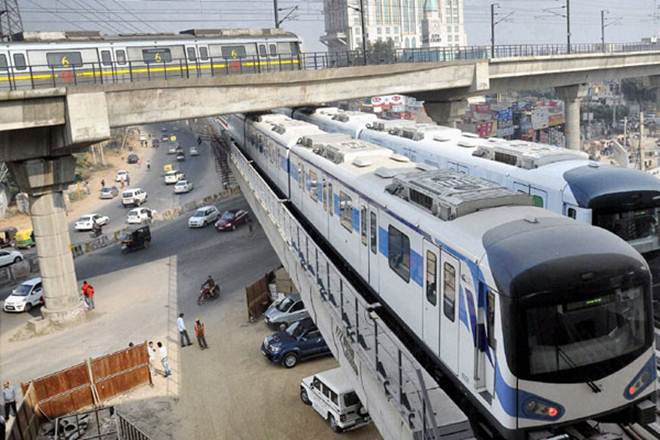
City planners should assess the number of passengers who would need to be transported before deciding on the most expensive system. If ridership levels could be accommodated perfectly well by bus rapid transport, why opt for the far more expensive metro rail? Experience from around the world has shown that many metro rail systems are carrying far fewer passengers than they are able to.Metro rail systems are by far the most expensive, costing around Rs 250-300 crores per kilometre if they are elevated and more than Rs 500 crores per kilometre if they are underground. But they can transport up to 80,000 people per hour in one direction. In comparison, bus-based systems such as Bus Rapid Transport can be built at 10 percent of the cost of metro rail systems but can carry only 20 percent of what a metro rail system can.

The key to success with metro rail lies in designing cities that grow around the system rather than expanding peripherally, leading to urban sprawl. A metro integrated with city life would attract more passengers and make the investment worthwhile.

Studies have shown that people do not like to walk more than half a kilometre to access mass transit systems. They also want safe and convenient access. The threshold of half a kilometre may increase or decrease depending on the weather and the convenience of the walking environment. These findings should be considered when designing cities to attract more people to the metro.

Cities globally have enabled higher passenger ridership by setting up buses, shared taxis and feeder systems to bring people to the stations. Parking facilities allow passengers to park their motorbikes at the station and take the train. Some have opted for high-density residential and commercial developments near stations to make the system more accessible. In Singapore, many large residential areas and shopping malls are located right on top of a metro station so patrons can access the system without exiting the complex. The World Trade Center in Manhattan has a metro station below it.

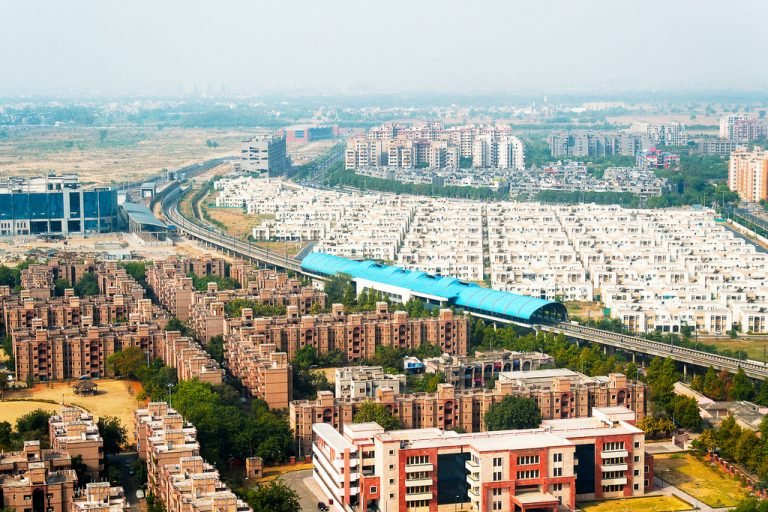
In India, we have a unique situation where only about a quarter of our population presently is urban and this number is expected to double in the next 30 years. This presents an opportunity to plan where people will live and work. If they could be channelled into neighbourhoods around metro rail systems, they would likely become users of mass transit. But if the newcomers choose to live in the expanding periphery of cities they would likely be too far away from the metro system and not be able to use it.

City planners need to think of metro systems comprehensively. It is important to build high densities around stations so that residents become habitual public transit users. Planners should improve access to the system by putting in place a range of feeder transit: buses, shared taxis, convenient walkways, cycle tracks and park-and-ride facilities. Without these features, a metro rail system might not be worth its high building cost.

Metro should be conceived as a key component of compact, low-carbon cities. They could help India achieve its laudable climate change commitments under the Paris Agreement. So, planners should conceptualise such systems as a mode of urban transformation rather than just as urban transport. The new Metro Rail Policy being drafted by the government should encourage such thinking.

Delhi University students demands Student Metro Pass ahead of DUSU election

New Delhi: Ahead of Delhi University Student Union (DUSU) election, scores of members of the Left-affiliate All India Students Association (AISA) took out a rally titled “DU demands” in the University’s North Campus on Tuesday.

Demanding a violence free campus, hostel facility and metro concessional passes, the students submitted a memorandum under their campaign “Hinsa Nahi Hostel Chahiye, Fare Hike Nahi Metro Pass Chahiye.” The memorandum had 20,000 signatures of students across colleges and was presented to the Vice Chancellor.

Kawalpreet Kaur, President of DU AISA said, “In a country where more than 80% belong to the lower income group, quality and affordable education to all has to be the biggest priority for any model of development. But other than constructing more universities on those lines we must also focus on DU. On the one hand, DU is being made unaffordable to common students, and on the other, it is becoming a hub of hooliganism.”

The students also approached the Dean of Students Welfare raising concerns over special buses for them. “He promised us six University Special Buses for the time being which will be later increased,” Kaur said.

Another major concern of students was lack of hostel facilities at the campus. “I study in an outer campus college and I stay in Noida because of the unavailability of hostels in my college. Things would have been better if the university would have provided hostels to us Also, I spent more than Rs 100 everyday on metro,” said Shreya Kapoor, from the Indraprastha College for Women.

With DUSU elections to be held on September 12, campaigning is on in full swing here across the campus. And it remains to be seen if students’ concerns do get addressed.

Mumbai Metro | MMRC washes hands of probable mishaps during Metro tunnelling

Mumbai: While Mumbai Metro Rail Corporation (MMRC) has said that the tunneling work for Colaba-Bandra-Seepz Metro-3 will commence in October, it has now washed its hands of, saying MMRC won’t be responsible for any collapse of old dilapidated buildings that may occur during the tunneling work and the contractors would be solely responsible for the same.

However, MMRC has said that the contractor is conducting a pre-construction survey of all the structures in the influence zone of Metro-3 alignment and during the tunneling all these structures will be monitored to avoid any untoward incident or accident.

Ashwini Bhide, Managing Director, MMRC, said, “We are using the latest technology when it comes to tunneling, which is very safe. There should be no scope for any structure collapsing or loss of life due to tunneling. However, in case of a collapse, it is the contractor who is responsible for the same and not MMRC.”

Bhide added, “The residents of those structures that are weak might be asked to shift for a week when tunneling is being carried out, if found necessary. The contractors would bear the expense for the same. While we also carried out a survey previously, even the contractors are carrying out the same preconstruction survey. If after all these studies too, there is any collapse, the contractors would be responsible.

There are a total of 1,435 buildings on the whole alignment where the MMRC had prepared a report named Building Condition Survey prior to 2015. The report concluded with there being 16 buildings on the whole alignment where tunneling would be carried out in very severe category, 247 buildings in severe category, 405 in moderate category, 469 in slight category, 184 in very slight and 11 buildings in negligible category.

However, the contractors of MMRC are currently redoing the exercise named Pre-construction Condition Survey of these buildings. Homa Pouredehi, resident of JSS Road at Girgaum said, “My building is in habitable condition at present and we will continue to stay for many more years. But MMRC declared our building as “structurally unsatisfactory. We have not been taken into confidence. MMRC has not given any written commitment about structurally strengthening and making the building safe before and during tunnelling. MMRC has not clarified what happens if our building collapses during tunneling.”

Meanwhile, MMRC has already placed orders worth approximately Rs 2,200 crore for purchasing 17 tunnel boring machines (TBMs) required to excavate the city’s first underground corridor between Colaba and Seepz, have been placed by MMRC’s contractors.

Hyderabad Metro | HMRL all sets to open the metro services in November 2017

Hyderabad: Work on the ₹14,132-crore Hyderabad metro rail project has gathered pace with the Telangana government keen on commissioning one of the longest networks, a stretch of 30 km, at one go during Prime Minister Narendra Modi’s visit to Hyderabad in November.

While couple of stretches of 8 km and another one of 11 km are ready for commissioning and had secured various approvals, including rail safety, the State Government has decided to launch the project connecting two completed stretches across two lines running to a total distance of 30 km.

Chief Minister K Chandrasekhar Rao has requested Prime Minister to launch the project when he visits Hyderabad to take part in a Global Entrepreneurship Summit to be held here in November.

The concessionaire, construction major L&T, has been implementing the project, a 72-km long elevated metro corridor, connecting three dense stretches, under the public private partnership mode.

While the project was to be completed by July 2017, it faced several hurdles, including land acquisition in some segments and right of way in certain places. L&T has been given one year extension to complete the project.

Some of the crucial and complex rail over bridge links, interconnect stations, and smaller links are now being executed.

NVS Reddy, Managing Director of Hyderabad Metro Rail Ltd, said, “With the Chief Minister directing completion of the 13-km stretch between Miyapur and Ameerpet on Corridor I and Nagole to Ameerpet, a stretch of 17-km on Corridor III by November, the focus is on these stretches.”

Sources executing the project, requesting anonymity, stated that it is a race against time as the deadline is stiff given the critical links on railway lines, and some interconnect stations are in the process of being completed. Two such installations are now under execution at the Secunderabad junction, where a massive rail over-bridge is being installed and another at an interconnect where two rail lines meet at Ameerpet.

L&T has also simultaneously taken up transit oriented development at several locations. These are at advanced stage of completion.

To ensure the project gets ready for commissioning by November 2017, KT Rama Rao, Municipal Administration and Urban Development Minister, is monitoring the progress.The PMO team that tracks major projects in the country is also keeping an eye.

Kochi Metro | KMRL begins construction work on third reach from Maharajas College to Thykoodam

Kochi: The Kochi Metro construction in the third reach from Maharajas College to Thykoodam has commenced with the new contractor Cherian Varkey Construction Company and Vijay Nirman Constructions (CVCC & VNC) planning to carry out the activities from both ends.

“The construction activities are planned at both ends – Jos Junction and Thykoodam. A test pile has been done at Jos junction and soon the full scale construction by erecting barricades will start. The land in the Thykoodam-Pettah stretch is yet to be handed over,” metro sources said.

The Rs 300 crore project will include construction of elevated viaduct besides that of three metro stations – Ernakulam South, Thaikoodam and Petta, in the nine-km long section from Maharajas College to South station and from Kunnara Park to Pettah.

The construction work till Thykoodam is aimed to be completed in 20 months by March 2019, sources said.

The metro authorities are also planning to complete construction of the 90-metre long balanced cantilever concrete span diagonally over the railway lines at the South station by December.

Meanwhile, the metro authorities will hold the signaling trial in the five km section from Palarivattom to Maharajas College later this week. “We’ve started the preliminary works such as ‘Migration Planning’ – incorporating changes in the signaling and communication software to control the train operations from the Muttom Operation Control Centre,” they said.

Nine cities to get 313 km of metro rail connectivity by March 2019

New Delhi: Nine cities will get an additional 313 km of Metro rail connectivity by March 2019, almost double the current 370-km operational length in eight cities since the first metro rail service in 1984. The cities include Lucknow, Nagpur, Kochi, Hyderabad, Delhi, Noida, Chennai and Bengaluru.

According to a media report, close to 537 km of metro tracks are under construction at present.

Aside from the Nagpur, Ahmedabad and Lucknow, projects approved by the current National Democratic Alliance (NDA) government, the rest were given the go-ahead by the previous United Progressive Alliance (UPA) government.

With respect to funding, the Central and the state governments follow a 50-50 equity venture model. The Centre gives assistance of up to 20 percent of a project’s costs, excluding land costs. It provides 14 percent equity and the subordinate debt accounting for about six percent. The remaining contributions are taken up by the state government in the form of loans.

An official of the housing urban affairs ministry told the media that the budgetary allocations for metro lines have increased to Rs 42,696 crore in the 2015-18 period. This is a 258 percent increase from the previous Rs 16,565 crore from the 2012-15 period.

The latest cities to join the metro rail club are Lucknow, Ahmedabad, Hyderabad and Nagpur, expanding the number to 12 cities with metro rails.

Of these four budding metro rail cities, Lucknow will be the first city to open its 8.5 km rail to the public in a fortnight.

Mumbai Metro | Environment report misleading on Metro-3 car shed’s proposed

Mumbai: Yuva Sena chief Aditya Thackeray today alleged that the environment assessment report provides misleading information about Aarey milk colony, where a car shed of the city’s Metro-3 project is proposed to be set up.

The construction of the car shed at the Aarey colony in suburban Goregaon would pose a threat to the area’s biodiversity, he further said.

A car depot of the Metro-3 Colaba-Bandra-SEEPZ corridor is proposed at the Aarey milk colony.

The Shiv Sena had earlier objected to the hacking of 2,298 trees in Aarey colony to make way for the car shed for the Metro line.

“We are not against the Metro (project) as I personally travel by it at times. But, officers have mislead the chief minister by stating that only mice are found in the area of Aarey milk colony,” Thackeray alleged.

“The environment impact assessment report has mentioned that only mice are found in this identified area.

The fact is that other animals, including leopards, are found over there. Hence, we are objecting to the location of the (proposed) car shed site here as it would end in large scale tree cutting and threat to the biodiversity,” Thackeray said.

He was speaking after attending a tree plantation drive today at the Aarey milk colony.

“The BMC has also omitted the car shed from its development plan, which was recently finalised and now the proposal is with the chief minister. Even other parties have opposed it,” Thackeray said.

(This article has not been edited by Metro Rail News’s editorial team and is auto-generated from an agency feed.)

Delhi Metro | DMRC contract workers go on strike due to non-payment of salary

New Delhi: Metro travellers who use the Metro to commute to work will have to face a tough time as the contract workers of Delhi Metro Rail Corporation’s (DMRC) resorting to protests once again. The contract workers have been protesting since August 17 demanding pending payments since nine months from DMRC and FEMC Pratibha.

Apart from sending half of his monthly income home to his mother and three siblings in Katihar, Bihar, 19-year-old Anzar Alam saves a tiny sum every month for emergencies. But now that his village has been hit by a flood, he feels helpless. “I haven’t been paid in the last two months, so I have spent my savings on rent and food…I need money urgently so my family in Katihar can survive,” said Alam, one of the 1,600 labourers with the Delhi Metro Rail Corporation (DMRC) protesting at Jantar Mantar since August 17.

Along with the labourers, contractors too have taken to the streets demanding “pending payments of nine months from DMRC and FEMC Pratibha,” which, according to labour contractor Ashish Dwivedi, amounts to “Rs 25 crore”. “We are paid by FEMC Pratibha but nine months ago when we stopped work, DMRC intervened and assured us that they will pay us… since then, partial payments have been made over a month or two,” said Dwivedi, who has 300 labourers under him.

“A section of workers hired by one of DMRC’s contractors, M/s FEMC Pratibha have been agitating over alleged non-payment of dues for the last few days.

DMRC would like to clarify that these workers have not been directly recruited or hired by Delhi Metro.”, said Anuj Dayal, DMRC Spokesperson.

DMRC also does not pay the salaries directly to these workers. The contractor has been directed to clear all dues and DMRC is also closely monitoring the situation. A Metro spokesperson added, “If labourer makes any complaint to DMRC regarding non-payment of wages, DMRC takes appropriate steps. In this case, no individual labourer has made complaints. This is the matter of dues between sub-contractor and the main contractor.”

Even as the rain brought the city to a standstill on Saturday, hundreds continued to sit on a dharna at Jantar Mantar, along with 25 labour contractors. “I have paid salaries of the 250 labourers under me for seven months by taking loans…I am in debt now, no longer capable of paying them, which is why we are protesting,” said contractor Babloo Tripathi.

The labourers and contractors also revealed that work on Delhi Metro phase III is on hold due to the protest. “At the moment, no work is happening at the nine Metro stations of phase III, which is already delayed by many months…if they don’t meet our demand, we will also put functioning metro service on hold, and lie down on the tracks in protest,” said Tripathi.

It is worth mentioning here that due to non-fulfillment of salary revision agreement, corruption in recruitment and illegal termination of a metro employee who was working as RTI Supervisor in Metro Bhawan over 9000 Delhi Metro employees were on protest in last month and the protest was stopped after a series of high level meeting in presence of Urban Development Secretary D.S. Mishra, Chief Secretary Govt. of Delhi M.M. Kutty, Principal Advisor Dr. E. Sreedharan and DMRC, MD Mangu Singh with Staff Council members after giving written assurance by the Delhi Metro administration. However, sources said that DMRC management still not fulfilled their demands as promised in the meeting.  The terminated RTI Supervisor not yet received his reinstatement letter from the DMRC.

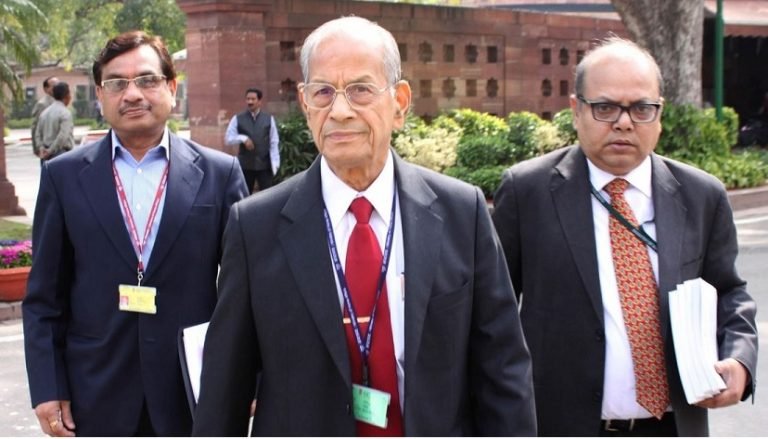
E. Sreedharan is not in favour of PPP model in metro rail projects

New Delhi: E Sreedharan, famously known as the Metro Man, has always been a vocal critic of PPP (public-private-partnership). Therefore, his reluctance in executing urban rail projects on PPP mode is not new and if facts are to be believed the 85-year-old’s fear is not misplaced either.
Sreedharan in the past had said the construction of Airport Express Metro would have incurred 20 per cent less expenditure had Delhi Metro built it. In the case of Airport Express, the entire civil structure was done by Delhi Metro Rail Corporation (DMRC), accounting for 60 per cent of the cost. He had said the other 40 per cent could also have been done by DMRC with the help of a loan from Japan.
The project got delayed on several accounts and was finally salvaged by Sreedharan and launched in February 2011. In the airport line, DMRC invested 55 per cent of the cost (50 per cent of which was borrowed from Japan). Reliance Infrastructure, which was the only private player to come forward, invested in the rolling stock, electrification, and signaling.
According to latest media reports, the Metro Man has once again questioned the feasibility of PPP projects. PPP in India was tried out in Mumbai, Hyderabad, and the Airport line of Delhi, but the experience has not been good.
In Mumbai Metro Line 1, Reliance Infrastructure took almost seven years to complete 11 km of the relatively easier elevated line and they now claim to be losing Rs 50 lakh per day in revenue everyday despite the very high fares they are charging. In Chennai, the state and central governments invested all the money with borrowing from Japan.

The Union Cabinet on Wednesday cleared a new metro policy under which the future metro projects will now be tendered after evaluating their social and economic impact in addition to considering financial returns.

Taking note of the substantial social, economic and environmental gains from Metro projects, the policy stipulated a shift from the present ‘Financial Internal Rate of Return of 8%’ to ‘Economic Internal Rate of Return of 14%’ for approving Metro projects, in line with global practices.

The policy opens a big window for private investments, making the PPP component mandatory. “Private participation either for complete provisioning of Metro rail or for some unbundled components (like automatic fare collection, operation and maintenance of services, etc) will form an essential requirement for all Metro rail projects seeking Central financial assistance,” the new policy said.

The new policy provides for a rigorous assessment of new proposals and also proposes an independent third-party assessment by government-identified agencies.

Sreedharan has even said that no private company will come forward for construction of Metro rail as it is not a profitable investment. This could also be true since the metro projects are left to be taken up in tier II cities where the traffic volumes may not be as high as in Delhi and Mumbai.

Source: BS

Delhi Metro | DMRC Phase-III have 18 more interchanging stations

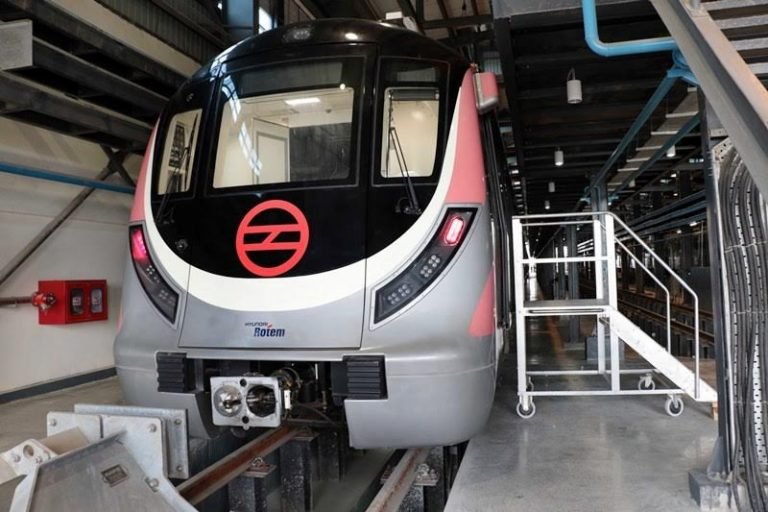
New Delhi: With the completion of Phase III of the Delhi Metro, the city will have as many as 27 interchanging stations, three times the existing number of 9. The new Pink line, which is expected to be fully operational by March 2018, will also increase the total distance covered by the Metro to 348 km.

The Pink Line, that will run from Majlis Park to Shiv Vihar and cover 38 stations, will have Azadpur, Netaji Subhash Place, and South Campus as interchanging stations. Commuters on the Orange Line (Airport Express) travelling from New Delhi Railway Station to Dwarka 21 will be able to interchange at INA and Lajpat Nagar. Similarly, for the Magenta Line between Janakpuri (West) and Botancial Garden, apart from these two terminating points, Hauz Khas and Kalkaji Mandir will also facilitate changing of trains for different lines. Mayur Vihar, Phase 1, Anand Vihar, Karkardooma and Welcome will serve as interchanging stations for the Violet Line. The total number of stations after Phase III starts running will reach 253.

Sources inform us that to ease the facilitation of utilising new stations and to avoid confusion, Delhi Metro Rail Corporation will use the colour corresponding to the line at the interchange terminals. It would also connect two stations with a foot overbridge, which will also be coloured as per the line they are connecting. For instance, Botanical Garden, a station for the Blue Line as well as the upcoming Magenta Line, the connecting foot overbridge will be painted in both blue and magenta. Currently, commuters are aided by floor stickers and arrow heads directing them to the correct interchanging station.

Mumbai Metro-3 | Project affected residents plan to approach Bombay High Court

Mumbai: Affected by the construction of the Colaba-Bandra-Seepz Metro-3 underground corridor, residents of South Mumbai have said that they plan to approach the Bombay High Court. Their contention is that the Mumbai Metro Rail Corporation Ltd (MMRCL) is allegedly risking peoples’ lives by going ahead with the construction the said underground corridor.

They claim that the detailed project report (DPR) of the Mumbai Metropolitan Region Development Authority (MMRDA) for several elevated Metro projects has stated that underground stations are more prone to terrorist attacks, whereas elevated stations are not.

They claim that by going underground, MMRCL is allegedly undermining the safety of citizens.

Jamshed Sukhadwalla, a resident of Marine Lines and a structural engineer, said, “If what is mentioned in the report of the Delhi Metro Rail Corporation (DMRC) for MMRDA on Metro-2B is true, then it will also be applicable to the Metro-3 underground corridor. This means that by constructing the underground corridor, MMRCL is risking the lives of not only commuters, but also of people residing along the corridor.”

“We may have to take legal aid if the MMRCL puts our lives and property at risk,” Sukhadwalla added.

DNA had, on August 11, reported that K Vijaya Lakshmi, the chief of the transport and communication division at MMRDA, in a communication to a Vile Parle-based educational trust, had attached a DMRC report citing that the underground corridor for DN Nagar Mandale Metro-2B is not feasible.

One of the reasons for this was a security threat.

However, the MMRCL has not commented on the issue yet.

MMRDA’s detailed project report on Metro projects had stated that underground Metro stations are more prone to terrorist attacks, whereas elevated stations are less prone to the same.

Kochi Metro | KMRL to enter into realty sector to build European styled apartments

Kochi: If all goes as planned the Kochi Metro Rail Ltd (KMRL) will soon enter the city’s realty sector. The Metro agency’s entry into real estate targeting middle class home buyers is expected to redefine the sector.

In a recent talk delivered by KMRL managing director Elias George, he firmly stated the Metro agency’s readiness to plunge into the sector. “We are going to do real estate business,” he said, adding, “We are confident that we can give the best possible fittings and flats.”

KMRL expects to generate revenue of approximately Rs 1,000 crore through the sale of these apartments.

Kerala government has provided 18 acres of land to KMRL at Kakkanad, where old NGO quarters are located, and the flats will come up here.

The Metro agency intends to develop European-styled apartments which are of 1,000-1,200 square feet. These apartments would cost less than what the front runners in the sector are selling now, he said.

The KMRL managing director said there is going to be a huge demand for it. “We are clean dealers and we got the KMRL brand equity. We can give a young couple say for Rs 30 lakh a level of sophistication in our flats, which only the best guys in Kerala can provide,” said George. This indicates that the Metro agency will be able to sell flats at the rate of Rs 2,500 per sq feet.

Though CREDAI representatives view such challenges positively. However, they cautioned that it would be tough task for KMRL to sell apartments at such low rates. “As the land is provided by the government the land cost might not be a major factor for KMRL. Moreover, they will be able to get tax exemption, and also there is a possibility of government intervention to facilitate pre-contracted rate system. These factors are expected to help KMRL in offering apartments at lesser rates,” said a Credai representative.

It is pointed out that prominent builders offer premium apartments in Kakkanad at a rate of Rs 5,000 per sq feet. The construction cost of these are between Rs 2,750 to Rs 3,000 per sq feet. Apart from this there is land cost which is between Rs 1,000-Rs 1,250. Then there are other costs which is involved in getting approvals and funding. This will take the cost to Rs 4,000 per sq feet. According to builders while it is almost impossible to bring down the cost involved in the construction of the structure, there is a possibility to reduce the cost involved in executing works involved in the final stages like bathroom fittings, flooring, fire and safety and landscaping.

“The builders normally charge a margin of 10 % -15 %. When we take into account all these factors mentioned above it will be a real challenge to sell apartments below the rate of Rs 3,750 per sq feet,” said the Credai representative.

Source: TNN

Govt. of India approves new Metro Rail Policy 2017

New Delhi: The government today approved a new metro rail policy for expanding the metro network across various cities in the country, officials said.

The new policy was approved by the Union Cabinet chaired by Prime Minister Narendra Modi.

The metro policy will talk about standardising norms and developing a procurement mechanism for implementation of the projects. It will also talk about funding and financing, officials said.

Delhi Metro recently raised the price of its ticket by up to 50 per cent for an average ride of 15 to 24 kilometres effectively taking the fare out reach for poorer income groups. The rationale offered by the Corporation is that it is necessary to keep it profitable. In the process, the benefit of the Metro to provide long-distance travel to low-income groups has gone for a toss. It is an example of tunnel-vision based accounting that the financial rate of return imposes on broad spectrum infrastructure projects.

The alternative floated by the central government on Wednesday requiring a higher than before commitment from states and public-private partnership (PPP), in terms of land clearances and funding obligations is more practical. The policy stipulates a shift from the present ‘Financial Internal Rate of Return of eight per cent’ to ‘Economic Internal Rate of Return of 14 per cent’ “in line with global best practices”  The new policy aims to encourage private investments across a range of metro operations through a PPP route for availing of central assistance for new projects. Private investment and other innovative forms of financing have been made compulsory to meet the huge resource demand for these capital-intensive schemes.

It is rarely possible for an urban transport project to be profitable. Yet for high-density populated cities infrastructure projects need to be constructed, says Shailesh Pathak, chief executive-deisgnate of L&T IDPL —the company executing the Hyderabad metro project. “The returns from these projects have to be assessed taking into account environmental costs, equity costs and so on”. For example, the Shanghai metro charges 3 and 4 yuan for journeys upto 16 kilometres, effectively encouraging all income segments to board. The costs that are saved are in terms of people opting for public transport  instead of taxis, bus et al. Writing sometime ago in Business Standard, Dinesh Mohan, one of India’s veteran commentator on transport economics, noted “One could demand lower fares if the Delhi metro operated as a service for the public good. But, in truth, the Delhi Metro has never presented itself as a public service, but more as a prestige project”.

Once those costs are built into the project instead of limiting the costs to only traditional ones, it is easy to understand why projects like city metros cannot be financed only through government handouts.  As a top former urban development department official said in the new policy a metro can be built as a joint venture between state and central government or it can rope in a private sector company.

Dinesh Mohan suggests those using cars should be taxed more to pay for the Metro subsidy. Metro man E Sreedharan thinks it is the government (state or central) which will have to foot the unlimited liability of building and running metros. He told Indian Express, “Nowhere in the world has the construction and maintenance model of PPP in Metro rail completely succeeded”.

There is certainly no doubt the track record of Reliance Infra with Delhi’s airport line or Mumbai Metro does not inspire confidence.There is also little reason to believe that any other private sector company will be more socially attuned at the cost of its profit.

Yet is it fair to expect a government to choose between running hospitals and that of a metro within a limited budget, though the vocal public will make it choose the latter! At the end of the day bringing in an outside entity allows for more realistic recognition of the actual cost of such projects. This is vitally necessary to ensure these projects are built on tight deadlines and cost control. No government department can ensure that. As of now of the eight metro projects running in Delhi (217 kms), Bengaluru (42.30  kms), Kolkata (27.39 kms), Chennai (27.36 kms), Kochi (13.30 kms), Mumbai (Metro Line 1-11.40 km, Mono Rail Phase 1-9.0 km), Jaipur (9.00 kms) and Gurugram (Rapid Metro-1.60 km) has only two private sector players. The rest are joint ventures between the centre and the state governments. There are 13 more cities planning metros. Given the state finances it is impossible to expect that scarce public resources acutely needed for health care and education can be diverted to build these instead.

At present, metro projects with a total length of more than 370 km are operational in eight cities – Delhi, Bengaluru, Kolkata, Chennai, Kochi, Mumbai, Jaipur and Gurugram.

Metro projects are also under way in Hyderabad, Nagpur, Ahmedabad, Pune and Lucknow.

To read more about the salient features and insights of new Metro Rail Policy, kindly subscribe Metro Rail News Magazine today.

Click here to subscribe now


Amadeus research reveals astounding diversity amongst Asia Pacific travellers

Singapore: Asia Pacific today sits at the heart of the global travel industry. It’s already the world’s largest travel market, even though the vast majority of its population have never crossed their country’s borders. Consider that in China, the world’s leading outbound market, less than 9% of its population owns a passport[1].

This makes the Asia Pacific traveller a force to be reckoned with – one that presents the greatest opportunity for the travel industry, but also many challenges.

According to Albert Pozo, President of Amadeus Asia Pacific, “Travellers are the bedrock of travel, and there is no traveller today quite as important as the Asia Pacific traveller. Yet the irony is that even as we talk about the ‘Asia Pacific traveller’ – it doesn’t exist. The diversity we see across nationalities, gender and generation in this region is astounding. More than that, our research has showed us that the preferences, behaviours and demands of travellers vary enormously from one country to another. The industry must come to grips with this. The one-size-fits-all approach is a thing of the past.”

Amadeus today publishes a new Asia Pacific traveller study, “Journey of Me Insights: What Asia Pacific travellers want” that will move the industry towards a closer understanding of travellers in the region. From when and how travellers plan and book their trips, to how and why they want to stay connected while travelling, to how frequently they use sharing economy services, and the types of new technologies they would be most interested in, the study takes a multi-faceted look at what Asia Pacific travellers want. The findings unveiled four themes for travel providers to focus on:

The personalisation-privacy paradox – 64% of Asia Pacific travellers interviewed are open to sharing personal data for more relevant offers and personalised experiences. But anomalies exist. While Indonesians (80%) and Taiwanese (78%) are largely open to sharing their personal information, Japanese travellers are not – with 69% of them indicating they were not open to sharing their data with travel providers. The mandate for travel providers is clear – personalisation must be carefully balanced against rising privacy concerns. Some boundaries must be maintained and at all times travel providers must respect and protect personal data and the need for privacy. And above and beyond adhering to legislation, travel players must be able to articulate ‘what’s the value?’ to get travellers to share their data.

Get real: Recommendations they can trust – Travellers take their lead from other travellers. Inspiration is the doorway to opportunity for travel providers, but authenticity is the key to unlocking it. Rather than the glossy pictures of travel brochures or the carefully curated Instagram feeds of celebrities, Asia Pacific travellers seek what’s genuine, and turn to their fellow travellers for inspiration. The research found that online booking sites, travel review sites, along with word of mouth, have the largest influence on Asia Pacific travellers’ trip planning. These were also ranked as the top three sources from which Asia Pacific travellers have received relevant travel recommendations.

The right content, through the right channel, at the right time – In the world of travel, every engagement point matters. Beyond personalisation, connecting with travellers in a timely and intuitive manner is equally important. The good news is that the vast majority of travellers would be interested in receiving travel recommendations from the moment they consider a trip all the way up to while they are on the trip. But what recommendations they want, and how they want to receive it varies by country. Recommendations that help them save money was the top choice for Malaysian travellers, while Vietnamese travellers prefer recommendations that help ensure their safety. In terms of channels, 62% and 70% of Australian and New Zealand travellers respectively prefer to receive updates and recommendations about their trip through e-mail, while Chinese travellers on the other hand, are most likely to prefer to be contacted via messaging services like WeChat (41%). Interestingly, almost half of all Thai travellers would want to be contacted through social media.

There are many Asias within Asia – The most dominant observation from the study is that there is no consistent profile for the Asia Pacific traveller. Stark contrasts in behaviours, needs and preferences were observed across all geographic and demographic lines. For example, while 70% of Japanese travellers have never used a sharing economy service for trip accommodation, almost half of all Indian travellers say they do so ‘often’ and ‘very often’. Separately, while 84% of Singaporean travellers think it’s important to find service staff at the destination that speak a language they understand, only 4% of Hong Kong travellers think the same.

Pozo added, “At Amadeus we believe that the travel industry can only thrive if we put the traveller at the centre of everything we do. The first step to doing so is to better understand who our travellers are, and what they want.

This is no mean feat. Traveller expectations are a moving target, and we must keep pace. That’s why we continue to invest in research like theAmadeus Journey of Me Insights, so that we can help our customers and partners shape a future of travel that travellers want.”

Journey of Me Insights: What Asia Pacific travellers want was conducted in collaboration with YouGov across 14 markets in Asia Pacific including Australia, China, Hong Kong, India, Indonesia, Japan, Korea, Malaysia, New Zealand, Philippines, Singapore, Taiwan, Thailand and Vietnam.

All figures, unless otherwise stated, were provided by YouGov.  Total sample size was 6,870 adults across Asia Pacific who have travelled internationally in the last 12 months. Fieldwork was undertaken between 8th and 17th May 2017.  The survey was carried out online.