Delhi Metro | DMRC conducts test trial run on Botanical Garden – Janakpuri West line

New Delhi: The Delhi Metro Rail Corporation (DMRC) conducted trial runs on a 13.5 km stretch between Kalindi Kunj Depot and Botanical Garden, Noida. Earlier in August, trial runs were held on the Kalkaji Mandir-Kalindi Kunj stretch on the same corridor. This corridor is also known as Magenta Line.

Read also: DMRC extends trial runs of driverless metro between Kalindi Kunj and Kalkaji Mandir Metro Station

Trials also will be held of new UTO (Unattended Train Operations)-enabled trains which will be test run on these tracks to check their performance and mechanism. These driverless trains will increase the frequency of trains to every 90 seconds.

The Magenta Line will have 23 stations out of these 15 are underground and eight are elevated which covers across its 34.273 km length.

The stretch where the trials were done  Botanical Garden and Kalkaji Mandir consists of nine stations – Botanical Garden, Okhla Bird Sanctuary, Kalindi Kunj, Jasola Vihar, Shaheen Bagh, Okhla Vihar, Jamia Milia Islamia, Sukhdev Vihar, Okhla NSIC and Kalkaji Mandir.

Botanical Garden station in Noida will be the first interchange station in NCR (National Capital Region) and will allow passengers to connect with Blue Line (Noida City Centre-Dwarka).

Delhi Metro is gradually progressing towards the completion of civil work on all its corridors. Trial runs were commenced on the ITO-Kashmere Gate section of Delhi Metro’s Purple Line in August this year.

Source//DMRC

Water Metro | KMRL shortlists consultants for Kochi Water Metro project

Kochi: The Kochi Metro Rail Ltd (KMRL) has completed short-listing general consultants for implementation of the Rs.740-crore integrated water transport project (Water Metro).Three consortiums of agencies have been short-listed from among the 15 bidders responded to the expression of interest (EoI) floated by the KMRl earlier this year.After technical evaluation, the short-listed firms will be asked to submit the request for proposal (RFP) within 45 days. The consortium of agencies are the ‘AECOM Consortium’ (Aecom India Pvt Ltd, Urban Mass Transit Company Ltd and Zebec Marine Consultants & Services Pvt Ltd); Egis Consortium (Egis India Consulting Engineers Pvt Ltd and Egis International) and Inros Lackner Se Consortium (Inros Lackner Se, Gopa, Tata Consulting Engineers Ltd and Fibroplast Marine Pvt Ltd).As per the tender, the scope of the work of the general consultant includes project management; planning and construction; supervision for finalisation of routes; study on the type of boats to be purchased; and construction of new jetties.The consultant will also look into the other aspects including navigation; OCC and other systems; dredging; approach roads and associated infrastructure; boat jetty area development including commercial retail and operation; and maintenance.“The general consultant will be reviewing the detailed project report (DPR) prepared by the UMTC and suggesting revisions and modifications,” said KMRL officials.Implementation of the Water Metro project will make Kochi the first Indian city with water connectivity as a feeder service for the Metro Rail.

Kochi Metro | KMRL Phase I project may be commissioned by April 2017, says V. Naidu

Kochi: Kochi Metro Rail works are progressing as per schedule and the first phase from Aluva to Palarivattom can be commissioned by April next year, Union minister for urban development, M. Venkaiah Naidu said. He was addressing the media after attending a review meeting of Centrally funded projects in Kochi on Tuesday. The minister was apprised about the current status of works including civil works and trial run of coaches and plans for the next phases. Rajiv Gauba, secretary Urban Development and chairman of Kochi Metro Rail Limited and top officials of KMRL and Delhi Metro Rail Corporation attended the meeting.As the city lags behind in implementation of the Rs 1,000 crore Smart City programme, the minister directed to speed up selection of Project Management Consultant and consultancies. The minister also asked to explore possibilities for public-private participation in Smart City and AMRUT schemes. “Kerala has vast natural resources which should be utilised effectively. Rainwater harvesting has to be made mandatory for every household. All urban local bodies should think of augmenting revenue sources,” he said.The state failed to comply with the time schedule of the projects due to Assembly polls. However, the minister hoped that the state would be able to effectively cope with the time delay. “The Centre is satisfied with the progress of various projects being undertaken,” he added. The minister handed over Swachhta certificate to Kattappana municipal chairman Johny Kulampilly for attaining the open defecation free status. Dr K. Vasuki, State Suchitwa Mission executive director received Rs 10 crore from the minister for Swachh Bharat Mission project. KMRL managing director and Cochin Smart Mission Limited CEO Elias George and other officials also attended.

Delhi Metro | DMRC starts adding 258 coaches on blue, yellow and red lines

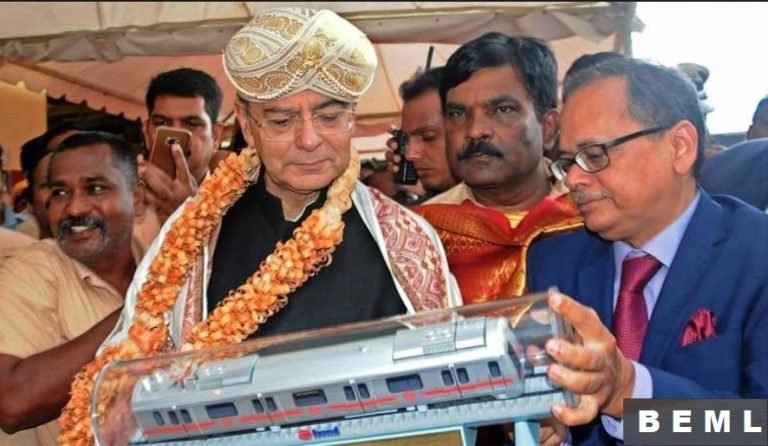
New Delhi: The Delhi Metro Rail Corporation (DMRC) today started the process of adding 258 more coaches to its fleet to augment its carrying capacity on the Blue, Yellow and Red lines of the network.In order to substantially increase the carrying capacity of the three main corridors of Delhi Metro, orders have been placed for the procurement of 258 additional coaches with 162 of these coaches being provided by Bombardier, and 96 coaches by Bharat Earth Movers Limited (BEML).The first two coaches of the order to Bombardier were pressed into service today with the conversion of one more six coach train into eight coach configuration on the blue line. The other supplier, BEML will also commence supplying its coaches by the end of the year or early next year.The new eight coach train was inducted from the Yamuna Bank depot today in the presence of DMRC’s Managing Director, Dr. Mangu Singh and other senior officials.The 258 additional coaches will be utilised on the blue, yellow and red lines as per the following plan:· 14 new eight coach trains will be added on the Yellow Line. · 03 new eight coach trains will be added on the Blue Line. · 10 coaches will be used for converting 6 coach trains into 8 coaches on the Yellow Line.
buy cialis super active online https://calibudsman.com/wp-content/themes/twentytwentytwo/inc/patterns/en/cialis-super-active.html no prescription
· 74 coaches will be used for converting 6 coach trains into 8 coaches on the Blue Line. · 38 coaches will be used for converting 4 coach trains into 6 coaches on the Red Line.All the 258 coaches are expected to be delivered by end of 2017.The Delhi Metro currently operates with a fleet of 227 train sets comprising of 128 six coach, 58 eight coach and 41 four coach trains across all its corridors. A total of 71 trains operate on the Blue Line, 60 trains run on the Yellow Line and 29 trains operate on the Red Line. These three lines together carry over 20 lakh passengers every day.A total of 924 coaches have been ordered for the forthcoming phase of Delhi Metro including 504 coaches for the new Phase 3 corridors. 162 coaches have already been added on the standard gauge green and violet corridors in the last couple of years which has substantially boosted carrying capacity on these sections, especially the ITO – Faridabad Violet line.Source//DMRC Press Release

Mumbai Metro | Kalyan-Thane, Lokhandwala-Kanjurmarg metro lines get approval

Mumbai: It is raining metro lines, at least announcements, in the Mumbai Metropolitan Region. On Wednesday the Mumbai Metropolitan Region Development Authority (MMRDA) in a meeting chaired by chief minister Devendra Fadnavis approved the 24km Thane-Bhiwandi-Kalyan metro (code-named line 5) at a cost of Rs 8415 crores. The line will have 17 stations.It must be among the quickest of decisions in the infrastructure sector in the area because just last month, on September 18, during the foundation-laying ceremony of a bridge over river Ulhas near Kalyan, Fadnavis had promised the people of Kalyan-Dombivali a new metro line. “The State Government will definitely bring Metro to Kalyan-Bhiwandi-Dombivli. The DPR is in progress and a decision will soon be taken once technical formalities are completed”, Fadnavis had said during the September 18 ceremony.Mumbai’s inadequate east-west connectivity also got a boost with the approval on Wednesday of the 14.5-km long Lokhandwala-Jogeshwari-Vikhroli-Kanjurmarg (codenamed line 6) corridor will have 13 stations and cost Rs.6,672 crore.Fadnavis further launched the logo conceptualized for Mumbai Metro Corridors which he described saying, “The Metro Logo is in two colours – Turquoise Blue and Dark Blue. The Turquoise Blue, according to colour psychology, has a refreshing and calming effect affording a sense of relaxation and represents efficiency and innovation. The Dark Blue spells out responsibility, honesty and strong moral principles. These two clearly describe our commitment while we present various Mumbai Metro Corridors to the city and its metropolitan region”.Both these decision are expected to give boost to the real estate sector of the areas where the metro lines have been approved though by when these two projects would be completed is anybody’s guess.The 17 stations on the Thane-Bhiwandi-Kalyan Metro-5 corridor are as under –Kalyan APMC, Kalyan Station, Sahajanand Chowk, Durgadi Fort, Kon Gaon, Gove Gaon MIDC, Rajnouli Village, Temghar, Gopal Nagar, Bhiwandi, Dhamankar Naka, Anjur Phata, Purna, Kalher, Kasheli, Balkumbh Naka, Kapurbawdi.
buy augmentin online https://www.parkviewortho.com/wp-content/languages/new/prescription/augmentin.html no prescription
The 13 stations on the Lokhandwala-Jogeshwari-Vikhroli-Kanjurmarg Metro-6 corridor are as under – Lokhandwala Complex, Adarsh Nagar, Momin Nagar, JVLR, Shyam Nagar, Maha Kali Caves, SEEPZ Village, Saki Vihar Road, Ram Baug, Powai Lake, IIT Powai, Kanjurmarg (W), Vikhroli-EEH.Source//MMRC

Noida Metro | Noida Authority allocates parking spaces for 21 Metro stations

Noida: If you are looking forward to parking your car at stations along the 29.7 km Noida-Greater Noida Metro route and hopping on to a train to work or destination, this is news you could use. Having decided to have parking facilities at each of the 21 Metro stations along the Metro corridor, Noida Authority on Wednesday said that land has been earmarked for the same. While nearly 4,000 square meters of area to house a minimum of 100 vehicles has been identified at nearly all the stations, for some stations 10,000 to 12,000 square meters of land has been reserved. Officials of Noida Metro Rail Corporation (NMRC), Noida Traffic Cell and Noida Authority conducted a survey of the parking space at stations on Wednesday.
As per officials, land has already been identified at all the sanctioned Metro stations along the Noida-Greater Noida track. The parking area at each station will be demarcated within the next 15-20 days. The actual transfer and handing over the land to NMRC will take place after that. The total parking area around Metro stations is different at each station depending on available land. The parking facilities are envisaged to generate up-front as well as recurring revenue for NMRC to supplement its fare-box collections in the operations phase, officials said.
Officials further said that at least two Metro stations on the route will also have retail outlets, eateries and coffee shops as NMRC has decided to lease out space for business development. The move will give commuters more options to shop and grab a bite while generating additional revenue for the Noida Metro. “We have worked out the feasibility and the number of parking spaces to be developed for four as well as two wheelers,” said Shailendra Bhatia, Officer on Special Duty, NMRC. “We also plan to develop some stations into business hubs. These will be holistic in nature and come complete with malls, retail shops, offices, parking area, police post and restaurants,” he explained. “The aim is to make the Metro stations user-friendly,” Bhatia said.
Meanwhile, pre-engineered building (PEB) work was started on Wednesday at the sector 71 Metro station by Santosh Kumar, Managing Director, NMRC. “A steel roof will be put into place at platform level. The roof will also have solar panels on top.
buy lasix online https://blackmenheal.org/wp-content/themes/twentytwentytwo/inc/patterns/en/lasix.html no prescription
The concept of PEB is one where the fabrication is completed in a controlled environment with the latest technology, and then subsequent erection is carried out,” he explained. “Work on all 21 stations will be completed next year by August 2017,” Yadav added.
Source//TOI

Indore & Bhopal Metro | MPMRCL seeks online proposal for selection of General Consultants

Request for Qualification cum Request for Proposal regarding Selection of General Consultant for Metro Rail Projects at Bhopal and Indore
Bhopal: The Madhya Pradesh Metro Rail Co Ltd.(MPMRCL) intends to implement Metro Rail Projects in Bhopal and Indore. MPMRCL hereby invites online proposals from reputed and eligible firms through the Request for Qualification (RFQ) cum Request for Proposal (RFP) for “General Consultancy Services for Implementation of Bhopal and Indore Metro Rail Projects”.
buy viagra capsules online no prescription
Interested consultancy firm/JV/Consortium may submit their duly filled proposal in the prescribed format available on e-procurement website www.mpeproc.gov.in on or before 22 November 2016 15:30 Hrs.For more details please visit the official website of MPMRCL or click here.

All aboard the Asia Pacific growth train

From long romantic journeys to super-speedy adventures, riding the rails has long held an allure for travellers. I still remember the excitement I felt the first time I took the train from Paris to Bordeaux as a child, passing through spectacular scenery and stopping at different destinations along the way. When travelling by rail, your journey becomes an integral and delightful part of your holiday experience, and savouring the view from your seat is as much part of the holiday as arriving at the destination.

Pierre-Yves Guillaume, APAC Head of Rail & Ground Transportation

Half a century ago, Japan built the world’s first high-speed rail network – known as yume chotokkyu – literally, the “super-express of dreams.” Fast forward to today, high-speed rail has become a dream come true for travellers all around the world. They can now visit many cities of their choice in comfort and style, while enjoying breath taking scenery on board a high-speed train. The rail travel market has grown nearly tenfold in the past 25 years, and the growth is largely driven by Asia Pacific. Multi-billion Dollar networks are already underway in countries such as Singapore and Malaysia, with the high-speed rail (HSR) line linking Singapore and Kuala Lumpur expected to start operations around 2026.

With so many transportation options now available to choose from, be it air, rail, bus or car-sharing, we are seeing the rise of multi-modal travelling. As Asia Pacific works towards a multi-modal travel future, how can rail become better integrated into the entire travel ecosystem to offer a smoother experience for travellers?

“Railing” in the Asia Pacific audience

According to our report, Future Traveller Tribes 2030: Understanding Tomorrow’s Traveller, high-speed rail is expected to make up 30 percent of new track worldwide by 2030. We are tracking exciting momentum in the rail industry as high-speed rail networks develop in Asia Pacific, with Japan alone moving over 400 million rail passengers per year, and China adding no less than 8,000 kilometres of high-speed track by 2020[1].

With this transformation in motion, one of the key areas that rail players need to address is that of making rail (not only high speed) more accessible to both the travel seller and the passenger. It should be easier for travellers to search for, and book, their flight, hotel and train ticket at the same time, from the same place.

Today if you want to book a cross-border or multi-modal journey, it can still be frustrating given the complexity and challenge of the booking process. From personal experience, it can often include some lengthy navigation on various travel sites to even find out the rail options on offer in some countries. Despite the huge growth and opportunity in Asia Pacific, rail content is not nearly as searchable and visible to travel sellers, or travellers, compared to other modes of transport.

Linking rail to the ecosystem

At present, many travellers do not consider train services as part of their journey, because it does not show up as an option in their online searches for route information. It’s likely that international visitors are also not familiar with the rail options at their destination, or they are unaware that rail can in fact be a favourable option for shorter domestic transits.

The integration of rail content in the Global Distribution System (GDS) is a crucial step towards increasing this visibility for travellers. By making rail travel routes available through local travel agents as well as online giants such as Expedia, travellers will have more choices available to them at all stages of trip planning. Not only that, travellers can then book and pay for different journey options in a single transaction, instead of going through the existing convoluted process of identifying multiple routes and purchasing multiple tickets.

For instance, Amadeus Air-Rail Display allows travel agents to easily compare rail and air journey times and check availability on popular air-rail routes, all in a single display. Travel sellers can leverage this platform to sell rail more efficiently, making the booking of rail travel much easier for both agents and travellers.

In fact, one of the most common multi-modal travel options is booking your flight and your connecting airport to city rail ticket with it. Through integrated solutions such as Amadeus Airport Express, travel agencies can easily add an airport express train ticket to a traveller’s flight or hotel room at the moment of booking. If you’re anything like me, this definitely eases the stress of arriving to an unfamiliar city, not speaking the local language and trying to navigate the local airport ticket office to buy a train ticket. Instead, you can proceed through departures and hop on your train to the city centre stress free!

There are huge opportunities for rail companies to innovate and provide more personalised travel services, bringing a ‘door-to-door’ experience one step closer to reality. As we embark on the multi-modal journey, collaboration between key industry players is key to overcome the challenges and enable the traveller of tomorrow a seamless travel experience from their initial search right through to arrival at their destination.

(This article is written by Pierre-Yves Guillaume, Head of Rail & Ground Transportation, Amadeus APAC and published without any change.)

Nagpur Metro | CRRSC signs MoU with NMRC for supply of China made coaches

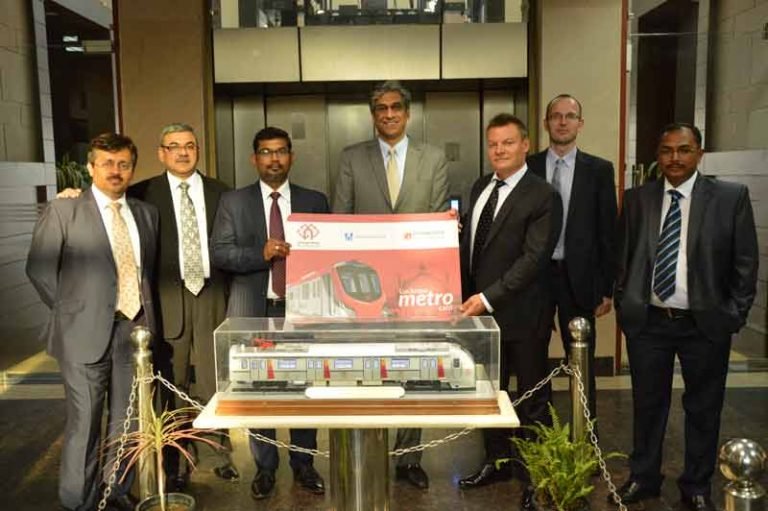
Nagpur: Maharashtra Government and China Railway Rolling Stock Corporation (CRRC) on Saturday signed a Memorandum of Understanding (MoU) for manufacture and supply of rolling stock like coaches to Nagpur Metro Rail Corporation (NMRCL) popularly named Majhi Metro at a glittering ceremony held at Hotel Radisson Blu.The NMRCL on the occasion handed over Letter of Acceptance (LoA) to China Railway Rolling Stock Corporation in the presence of galaxy of dignitaries including Chief Minister Devendra Fadnavis and Union Minister for Road Transport, Highways and Shipping Nitin Gadkari.Other dignitaries who graced the function include Guardian Minister Chandrashekhar Bawankule, Ramtek MP Krupal Tumane, Rajya Sabha Members Ajay Sancheti, Dr Vikas Mahate, MLAs Sunil Kedar, Sameer Meghe, Sudhakar Deshmukh, Krishna Khopde, Sudhakar Kohale, Dr Milind Mane, Vikas Kumbhare, MLCs Girish Vyas, Prof Anil Sole, Prakash Gajbhiye, N G Ganar,  Jogendra Kawade,  NMRCL Managing Director Brijesh Dixit, State Principal Secretary (Industries) Apurva Chandra and Vijay Singhal, Development Commissioner.On the occasion, Fadnavis also announced that the NMRCL will be given the work of Pune Metro Rail. “The state government has decided to entrust the responsibility of executing the Pune Mahametro Rail project to NMRCL. The demand in fact came from the people of Pune,” he said. Work on the Nagpur Metro, which is on fast track, will be completed by 2018, he added. Talking about Mumbai’s transport plans, Fadnavis said the state will introduce a common ticket for all the available modes of transport, including suburban railways, Metro Rail and Monorail, besides local bus services.“One can travel from any place to anywhere and reach within one hour,” he said. In a veiled attack on the previous governments, he said as a result of the planning in the last 60 years, only about 70 lakh people can use suburban rail services in Mumbai presently. “But our government will enhance the capacity to 80 lakh, which we will do in just two years as against the previous 60 years of rule,” the Chief Minister said.China Railways and Rolling Stock Corporation (CRRC) will manufacture rolling stocks like metro coaches and other railway coaches at Butibori in Nagpur. Chinese company will invest around Rs 1,500 crore in Nagpur for manufacturing unit and supply the rolling stock over more than 50 upcoming metro railways in various parts of the country. This would be first unit of rolling stock manufacturing in Maharashtra. Brijesh Dixit, Managing Director of Nagpur Metro Rail Corporation Limited (NMRCL) recently signed an agreement with CRRC for supply of rolling stock for Nagpur Metro Rail. The Chinese company will require almost 100 hectare land in Butibori Industrial Estate for manufacturing unit.This will generate direct and indirect employment for hundreds of unemployed youths in city as well as in the region. The project will give another boost to the industrial sector of backward Vidarbha region.Leng You, a Divisional Engineer from CRRC visited NMRCL to meet Brijesh Dixit on Thursday. The NMRCL has issued Letter of Acceptance to CRRC for supply of 69 coaches to Nagpur Metro in 182 weeks. The design is an important part of the agreement as every metro will require separate coaches as per their design. A combination of 25 different items will be required for supply of rolling stocks. The design will be finalized within six to seven months. The Metro Rail will require two rakes of 3 coaches each to run from Khapri to Airport in first phase. The company will provide mock-up and then prototype before supply of final coaches. CRRC is a leading company of China in rolling stock sector for Metro Railways and other railways. CRRC undertakes design, manufacture, testing, commissioning and maintenance of locomotives and rolling stock, including: electric locomotives, diesel electric and diesel-hydraulic locomotives from 280 kW to 10,000 kW for mainline and shunting duties; high-speed trains of speed over 350 km/h; DMUs and EMUs for urban, suburban and regional transport; trams and light rail vehicles; metro cars and passenger coaches; as well as full line of freight wagons, such as covered wagons; open-top wagons for coal, ore, steel and timber; hopper wagons for grain, ore, fertilizer; flat wagons; double-deck container flat wagons; tank wagons for all types of liquid and chemicals; tipper wagons, schnabel and depressed center wagons, as well as track machinery.The other manufacturing units of rolling stocks are situated in Gujarat, Andhra Pradesh and Karnataka. CRRC has concentrated its effort on the development of high quality and environmentally friendly coaches.
buy levitra online https://nouvita.co.uk/wp-content/themes/twentynineteen/fonts/en/levitra.html no prescription
Currently, thousands of quality products equipped with non-flammable interior material, compact vacuum toilets, automatic train supervision system (ATS) has been supplied to domestic and customers around the world.Source//NMRC Press Release

Nagpur Metro | NMRC to execute Pune Metro and other projects in state

Nagpur: The Nagpur Metro Rail Corporation Ltd (NMRCL) will construct the Pune metro as well. This was announced here on Saturday by Chief Minister Devendra Fadnavis.The CM was speaking after signing of Memorandum of Understanding (MoU) between Maharashtra government and China Railway Rolling Stock Corporation (CRRSC) to produce coaches for Nagpur metro at the Butibori Industrial Estate, 27 km from here.“The Pune metro had lacked behind due to some issues, which have since been sorted out and we have decided to put the Pune metro on fast track after this delay. And NMRCL being the fastest metro work executors, we have decided to give the Pune metro work to them,” Fadnavis said.NMRCL also handed over Letter of Acceptance (LoA) for the work to CRRSC, which will supply 68 coaches to NMRCL under the agreement.Fadnavis praised NMRCL for fast execution of the Nagpur project and said Nagpur metro will be a reality well in time. “We are soon going to have ‘best IT enterprise architecture’ for Nagpur city on the lines of the one at Barcelona to provide information about all public services at one go,” the CM announced. He informed that L&T will develop the new IT platform.The CM further said, “In the next two years, we are going to raise the Mumbai metro network to a level where it would be able to ply 80 lakh commuters. Compare this with the current Mumbai local service which has come to ply 70 lakh commuters in 60 years time. We will also integrate the Mumbai metro with locals and bus services to help the commuters reach any place in the metropolis in less than one hour and with just single ticket for travelling across using all three services.”He told CRRSC officials that their company will get preference for supply of coaches to all metros in Maharashtra, which he said was going to be the biggest metro network in the country.Source//Express News Service

Pune Metro | Pune Metro rail now needs Cabinet approval

Pune: All decks have been cleared for the tabling of the much-pending proposal of Pune Metro rail in the Union Cabinet for the final approval with the Public Investment Board (PIB) of the Union Finance Ministry on Friday giving a go-ahead to it.“The PIB has recommended the proposal of Pune Metro rail to the Union Cabinet. There has been no conditions attached for it but some suggestions have been made that have been incorporated,” said Municipal Commissioner Kunal Kumar.The members of PIB said that the project structure was good and raised no queries on it, he said, adding that the proposal would be tabled in the Cabinet after the Union Finance minister and secretary approves the minutes of the meeting. “We along with the Union government officers have prepared the minutes of the meeting so that they can be signed and the Pune Metro proposal can be tabled in the Cabinet as soon as possible,” Kumar said.The municipal commissioner said he has made a presentation in the PIB citing the need for Metro rail in the city in the inter-modal integration of various steps to improve the traffic and transport system.
buy viagra professional online no prescription
The estimated project cost of the two Metro routes to be implemented at the beginning is Rs 12,298 crore with contribution of 20 per cent each by the state and the Union government, 10 per cent jointly by the Pune Municipal Corporation (PMC) and Pimpri Chinchwad Municipal Corporation (PCMC) and 50 per cent through loan.Of the contribution of Rs 1,278 crore by local civic bodies, Kumar said, Rs 972 crore is required for land acquisition for implementing the project and if managed through Transfer of Development Rights (TDR), then the actual in cash contribution of PMC and PCMC together would be Rs 317 crore.The Union Finance ministry had already given a nod to the state government proposal for multilateral assistance of Rs 6,325.50 crore for the first phase of Pune Metro rail project to be taken from the World Bank (WB) and China-based Asian Infrastructure Investments Bank (AIIB).The project cost is estimated in November last year and the work on the two routes is likely to be completed by 2021-22.The SPV has planned revenue source mainly from Fare Box, from advertisements, 100 per surcharge increase in Development Charges of commissioning of Metro system, one per cent surcharge on stamp duty registrations, densification of Metro corridor 500 metre on either side by increasing FSI from 1.6 to 4, commercial utilisation of metro stations and depot spaces, parking charges, congestion charges.Most of the issues related to implementation of Pune Metro rail have been resolved except for the hearing at the National Green Tribunal due on October 27 over the damage to the river for a certain elevated stretch planned along the Mutha riverbed.The Railway ministry has given its in-principle approval with a condition that the applicable charges need to be deposited with the railways for crossing on the railway land.

Lucknow Metro | LMRC bags first APJ Abdul Kalam Memorial award on Innovation in Governance

New Delhi: Shri Kumar Keshav, Managing Director, Lucknow Metro Rail Corporation (LMRC), has today been awarded with the prestigious Dr. APJ Abdul Kalam Memorial Award on Innovation in Governance. The award was given to the Managing Director during the Dr. APJ Abdul Kalam Memorial Summit on Innovation in Governance organised at Vigyan Bhawan, New Delhi.On the occasion, Shri Kumar Keshav said “this award is the result of the efforts of the whole team of Lucknow Metro and we feel very proud to be honoured like this”. “This honour assumes much of significance to Lucknow Metro as it is the first Dr. APJ Abdul Kalam Memorial Award on Innovation in Governance and it has been has been bestowed to Lucknow Metro Rail Corporation (LMRC) among various other nominations from reputed organisations in the country”, he added.It is yet another achievement and public recognition for Lucknow Metro as the Corporation’s sincere effort and dedication in innovation in governance and project completion is recognised in such a glorious way at the national level.Led from the front by Shri Kumar Keshav, Managing Director, Lucknow Metro Rail Corporation (LMRC) has always displayed itself as a very unique kind of government organisation focussed on innovative ideas to execute and complete the project in an excellent manner in such a stiff target.The 8.5 km ‘Priority Corridor’ of the North – South corridor is being accomplished in the capital city of Uttar Pradesh and is now a reality for the people of the city. The project is being executed in just over two years which is a record in itself. No other Metro Project has even been able to achieve this feat in the past as compared with Lucknow Metro’s speed of deliverance in the country.Even contemporary Metro projects in the country have also not been able to match up with the speed of deliverance in the country. The project has achieved the distinction of being the fastest ever Metro project execution that has happened in the country so far.Dr. APJ Abdul Kalam Centre for Creating Livable Planet Earth and Sustainable Development is a national level organisation dedicated to the visions of Dr. APJ Abdul Kalam, the 11th President of India. It is working towards creating a better and livable planet earth and ensuring sustainable development for the nation through integrated action of youths and citizens.Source//LMRC Press Release.

Noida Metro | Public Investment Board to provide Rs1,034 crore fund for metro project

Noida: The Noida Metro Rail Corporation (NMRC) on Friday said the public investment board (PIB) has committed to provide almost Rs.1,034 crore of the funds required for the under-construction Noida to Greater Noida Metro link. Officials are upbeat as financial issues for this 30-km metro project are now resolved.Santosh Yadav, managing director of NMRC, and Pramod Kumar Aggarwal, chief executive officer (CEO) of the Noida authority, met with PIB officials in Delhi on Friday to get the final approval for funds.“The PIB’s commitment on funding and approval for our project is a big achievement for our metro link, which will not face financial hurdles in future,” said Yadav.The NMRC had applied for approval from PIB, a Central government body that clears funds for important infrastructure projects in the country, in October 2013.“Now, the Centre will start releasing funds of Rs1,034 crore in small instalments as per our needs. The first instalment of Rs.384 crore will be released in the ongoing financial year 2016-17, Rs.400 crore in financial year 2017-18 and remaining amount will be released in the financial year 2018-19,” said Yadav.The NMRC has set a budget of Rs 5,533 crore for this project that will link Greater Noida with rest of Delhi-NCR. The corporation, which was formed in November 2014 to build metro projects, aims to take almost half of the funds required from Central government agencies.The remaining funds are to be provided by the Noida and Greater Noida authorities together. Work on the project was started in January 2015 and the metro line is scheduled to become functional by the end of 2017.The metro link will branch out from Noida’s Sector 71/51 interchange and end at Greater Noida’s Delta 1. The metro stations will be located in sectors 52, 51, 50, 78, 81, Dadri Road, sectors 83, 137, 142, 143, 144, 147, 153, 149, Knowledge Park 2, Knowledge Park 1, Pari Chowk, Alpha 1, Alpha 2, Delta 1 and Depot station, benefiting nearly 15 lakh people. Around 20 km of the line is located in Noida and remaining 10 km in Greater Noida.NCR planning body to also add ₹1,587 crore. Source//HT.

Delhi Metro | DMRC launched free Wi-Fi facility for Airport Line commuters

New Delhi: The Delhi Metro Rail Corporation (DMRC) today launched ‘Free Wi-Fi’ facilities at Metro stations on its Airport Express Line. DMRC’s Managing Director, Dr. Mangu Singh launched the facility at the Shivaji Stadium Metro station.The facility titled “Oui DMRC Free Wi-Fi” will be available on all six stations of the Airport Express Line. As of now passengers will be able to log in simply by searching for Wi-Fi options and log into “Oui DMRC Free Wi-Fi”. DMRC aims to extend this facility to all the stations of the Metro network gradually.For the facility, DMRC has tied up with a consortium led by M/s Techno Sat Comm which presently runs India’s first Wi-Fi on train service on the Delhi-Howrah Rajdhani Express. The facility will use the globally acclaimed “T-Track 2.0 Wave 2 Solution”, also used on high speed trains worldwide.With the facility, passengers will be able to use all standard internet applications inside the station premises like email, Face book, Google, video chat as well as live streaming of cricket and football matches etc.The Delhi Metro, in association with Rail Tel Corporation presently provides Wi-Fi facility at four of its major stations – Rajiv Chowk, Kashmere Gate, Central Secretariat and Hauz Khas.The free Wi-Fi will be an additional facility for the passengers on the Airport Express Line. The 22.7 kilometre long corridor comprising of six stations is continuously registering a steady increase in ridership with the total ridership figure crossing 50,000 passengers in a day in August earlier this year.Source//DMRC Press Release