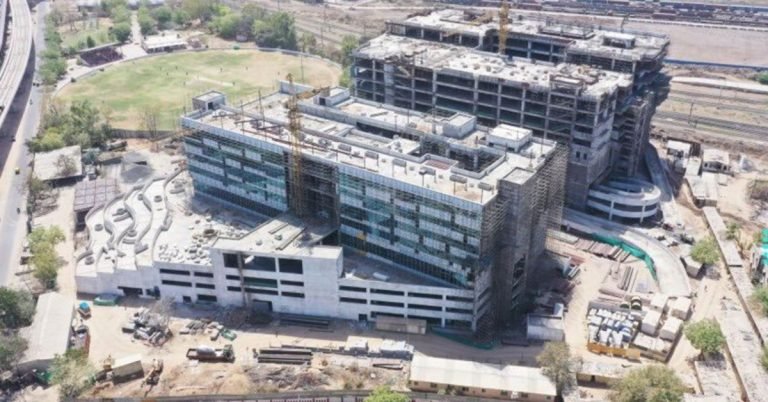
Ahmedabad Metro: 10 bidders submit bids for last section of Phase-2

AHMEDABAD (Metro Rail News): 10 companies have come forward with their bids for constructing the last section of Phase-2 of Ahmedabad Metro which will be built at an estimated cost of Rs 600 crore.

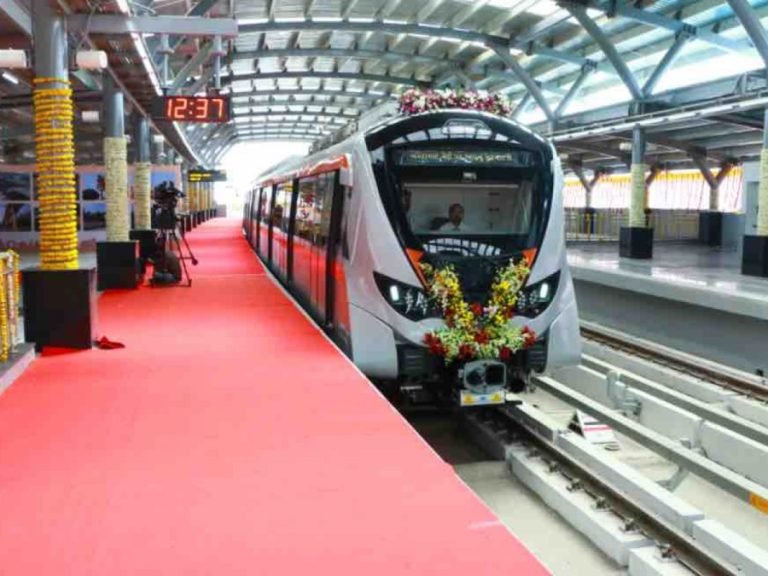
This final section of Phase-2 is a 7.5 km stretch and will help extend the North-South Corridor of Ahmedabad Metro from Narendra Modi Stadium at Motera to Mahatma Mandir in Gandhinagar city. It will have seven stations and will connect Sachivalaya, Akhardharm, Old Sachivalaya between Sector 1 and Mahtma Mandir.

Afcons Infrastructure, Ranjit Buildcon, Dilip Buildcon, GR Infraprojects, JMC Projects, URC Constructions, the joint ventures of M/s YFC Projects Pvt Ltd and Montecarlo Ltd, M/s Kalthia Engineering and Construction and Ashoka Buildcon Ltd, M/s RVNL and Dinesh Chandra R Agarwal and a consortium of M/s KEC and CVCC are the bidders for the project.

Phase-2 of Ahmedabad Metro which is already under construction is 22.8 km long. The section between Narendra Modi stadium and GNLU metro station and from GNLU to GIFT City is being constructed by Afcons Infrastructure whereas the section between GNLU and Gandhinagar Sector-1 has been awarded to Ranjit Buildcon.

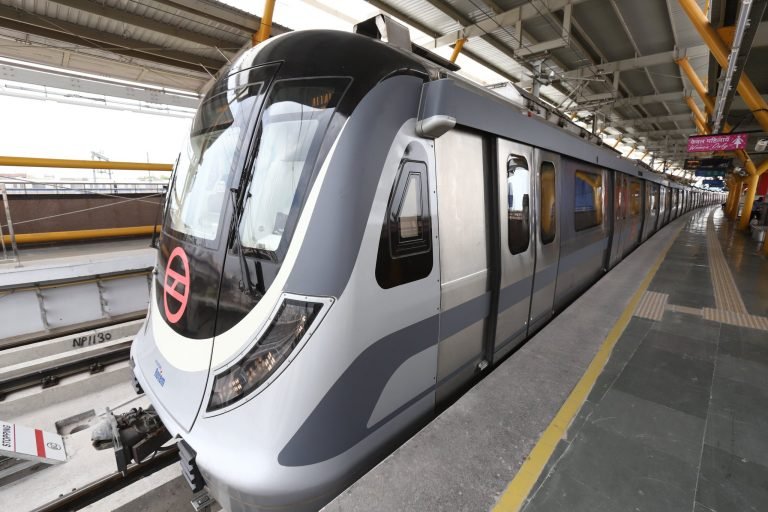
GMRC is currently conducting test runs on both the North South corridor — that stretches from Vasna APMC to Narendra Modi stadium in Motera — and on East-West Corridor from Apparel Park to Thaltej.

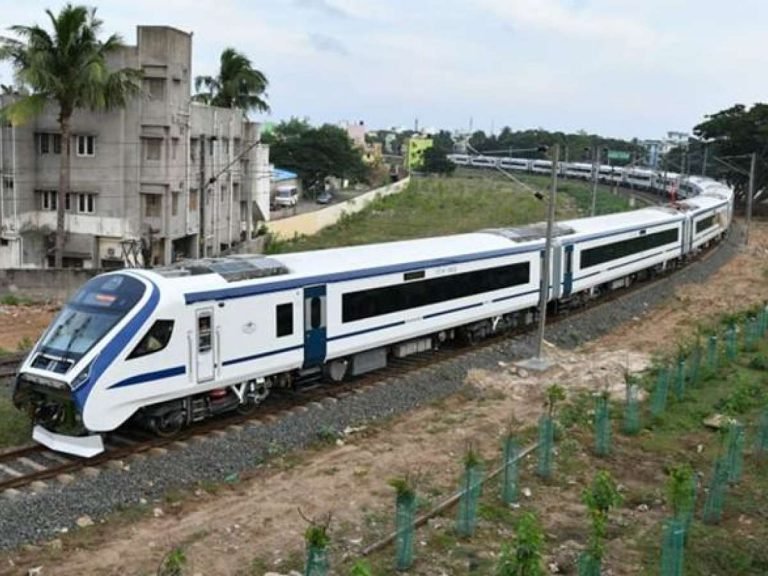
Mumbai to maintain next generation Vande Bharat trains

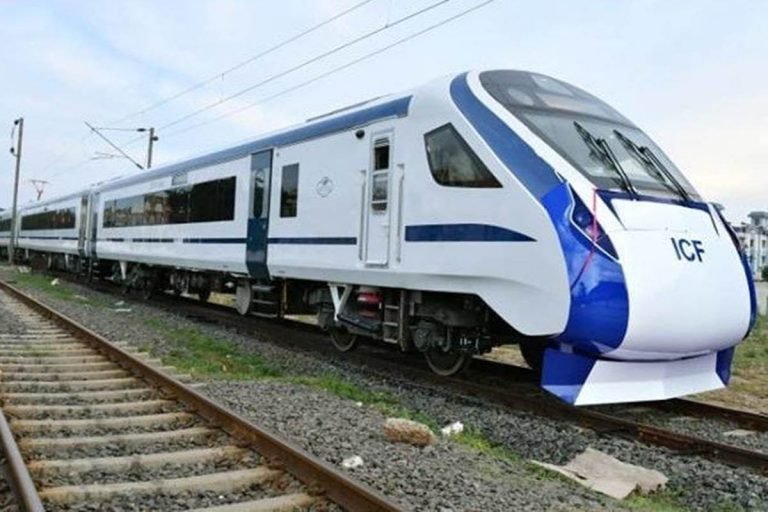
MUMBAI (Metro Rail News): The Railway Board has chosen Wadi Bunder on the Central line and Mumbai Central on the Western line for the maintenance of next-generation Vande Bharat Trains. These trains will be manufactured at the newly opened Marathwada Rail Coach Factory, Latur and Integral Coach Factory, Chennai. The trains will run at a speed of 160 kmph, but they would be tested at 180 kmph.

The Railway board has sent a detailed letter to seven railway zones, including Central Railway and Western Railway on May 13, a senior railway official said. The trains will have AC sleeper facilities therefore they are going to cost around Rs 26000 crore. As Mumbai will be the hub for the maintenance of these trains it is likely that the trains will operate from Mumbai as well.

According to the letter which is written to different general managers across Indian Railways (IR), the board issued a tender for manufacturing-cum-maintenance of 200 energy efficient Vande Bharat Trains. The technology partner or contractor is expected to maintain the trains for of 35 years after which IR has to provide space and facilities at train depots.

“The board officials have already visited the proposed locations, including that on CR and WR. The Wadibunder Coaching Complex and Dankuni Coaching Terminal have been found suitable for now. However, alternative locations need to be explored on Western, South Central and South Western Railways. On WR, they identified Mumbai Central Terminus for now,” said a senior railway official.

The sources in the Railway said that on the WR, Jogeshwari siding could be better suited for the proposed depot instead of Mumbai Central. The letter also stated that the zonal railways are advised to examine these locations in detail and plan accordingly.

The new trains would also get separate washing lines. Each of it will have at least two washing lines nominated for 10 trains. In Mumbai, washing lines will be provided at CSMT, Mumbai Central and Bandra. At the depot sites, the government will provide basic civil structures such as electrical fittings, cranes, track, OHE and signalling, etc. Whereas the technology partner or contractor who will be selected in future for the project is required to maintain the trains for 35 years.

According to the sources the contractor will get paid around Rs 35 crore for upgrading each trainset Depot. The scheduled maintenance in the Depot shall be required on the 31st day from the preceding maintenance date or travel of 40000 kms whichever is earlier. Periodic overhauling shall not be required before 6 months of train’s introduction. It will be described as a failure if there is a detention of train for 15 minutes on account of a malfunction, or its inability to achieve at least 75 per cent of maximum speed.


Southern Railway approves MRTS merger with Chennai Metro

CHENNAI (Metro Rail News): Southern Railway has given their approval for handing over MRTS to CMRL, a government officials has informed. The decision was taken during a meeting which was chaired by Chief Secretary Irai Anbu on May 11.

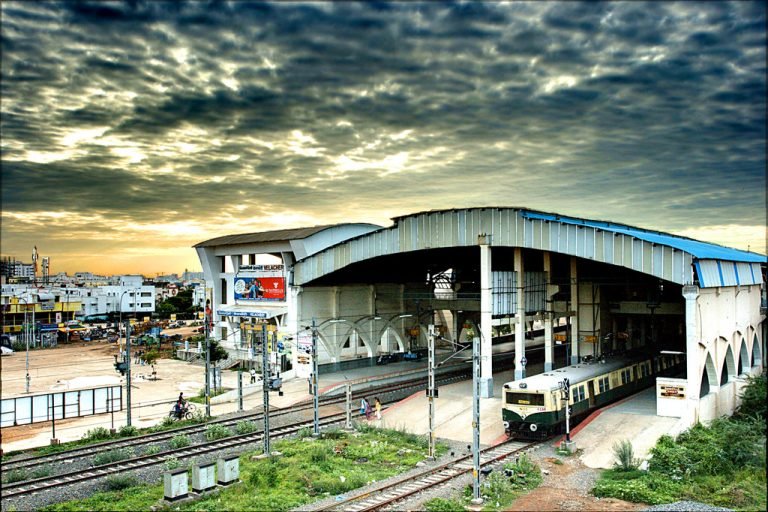
Connecting the central business area of old Madras with the IT corridor, the MRTS has a potential capacity of 4,25,000 passengers a day. The 15-km alignment covers several significant landmarks in the city and has 18 stations. After the completion of the Phase-II extension which is a 5-km stretch, three more stations which will link the Metro corridors with MRTS and suburban rail networks will be added.

“The decision to integrate MRTS with CMRL will help the city to work on multi-modal planning better. These stations are in high potential locations and the government should ensure improving station accessibility from the neighbourhood level,” says Sivasubramaniam Jayaraman, national lead-electric mobility and transport systems and senior programme manager of the Institute for Transportation and Development Policy (ITDP).

A government official said that now Chennai Metro could take the non-tariff revenue from stations into consideration. “A blueprint was prepared nearly 12 years ago to develop 190,000 sq m of commercial space in the nine stations, but the plan was never implemented,” said Krishna Kumar, former Chennai Unified Metropolitan Transport Authority (CUMTA) member. 

“The merger was a long-pending issue and the government should conduct a feasibility report on ensuring the same system of track and signalling can be implemented in the MRTS stretch,” said Former CMRL chief general manager Somasundaram.

Construction of Agra metro depot is up and running

AGRA (Metro Rail News): The work on building a world-class metro rail depot in Agra which is being built on 15th Battalion PAC premises for smooth metro operations is accelerated. Uttar Pradesh Metro Rail Corporation (UPMRC) is working on the Agra Metro Project and aims to have seven high technology machines which will be installed in the depot. The machines will enhance the maintenance and upkeep of the trains.

“During the operations, the metro train stops at frequent intervals at multiple stations in the entire day of its run. This causes friction in the wheels of the trains, causing wear and tear. Pit Wheel Lathe is a machine designed for the upkeep of the vehicles of the metro trains. It looks after the shape and size of the vehicles, whether there is any change in it and if at all any fault is found, it is rectified with the help of the machine,” UPMRC stated in a release, Hindustan Times reported.

“After Pit Wheel Lathe, the remaining machines will also be installed on the depot premises. These include fully Automatic CNC Under Floor Pit Wheel Lathe Machine (for rail wheel turning), fully Automatic Synchronized Pit Jack Machine (for lifting and lowering of coaches for maintenance),” stated the press statement.

“Other machines include fully Automatic Synchronized Mobile Jack (Having the same function as of Pit Jack Machine but can be moved from one place to another), Bogie Turn Table (for shifting bogies from one track to the other track), Automatic Train Washing Plant, Electric Bogie Shunter (for shunting of Metro trains from one track to another), Re-railing & Rescue Vehicle (In case of Metro coach derails on mainline or in the depot,” stated the press statement.

According to UPMRC’s press statement, the casting for the first curved U-girder has already begun in Bamrauli Katara situated casting yard.

As per the officials, there will be two corridors in Agra Metro Rail Projects. The first corridor is from Taj East Gate to Sikandara, whereas the second corridor runs from Agra Cantt to Kalindi Vihar.

Significant surge in users of Metro Smart Card: DMRC

NEW DELHI (Metro Rail News): The Smart Card usage among Delhi Metro commuters for their daily travel has witnessed a significant surge in the year 2022 so far, the Delhi Metro Rail Corporation said in a statement. Since January 2022, around 78% of the Metro commuters are using the Smart Cards for Metro travel on regular basis which used to be around 70% in the Pre-Covid days. Currently, about 2.5 crore Metro smart cards are in circulation.

In 2002, Delhi Metro became the first Metro rail in the world to introduce Contactless Smart Tokens (CST) and Contactless Smart Cards (CSC) in place of paper tickets to travel in the Metro. Earlier, these smart cards had to be procured from foreign vendors but now these are completely manufactured in India as a major initiative towards the Government of India’s ‘AatmNirbhar Bharat’ mission.

Around 10-12 thousand Metro Smart cards are being sold each day from the Metro stations and DMRC is also providing dedicated exit gates for Smart Card users only at most of its stations. In addition, a flat 10% discount is provided on each journey and additional 10% discount is also provided if the journey is performed by entering the Metro system during defined off-peak hours.

DMRC in the recent past has also launched various initiatives to facilitate easy top-up of smart cards to avoid queues and save time at stations. This includes the option of Smart Card Top up through TVMs, the launch of Metro Combo cards with various banks, Credit/Debit card transaction facility at stations, net banking using dmrcsmartcard.com, mobile wallets etc.

DMRC intends to increase this figure substantially to a level similar to that of the other Metro systems like Singapore and Hong Kong where almost 100% of Metro users are relying on Smart Cards for their smooth and comfortable daily journey.

Jindal Stainless to supply 2000 MTs of stainless steel to Alstom for RRTS Project

NEW DELHI (Metro Rail News): Jindal Stainless said in a statement on Wednesday,11 May said that they will supply 2,000 metric tonnes of stainless steel to Alstom which is going to be used for the development of the first regional rapid transit system’s (RRTS) train sets. Alstom will be developing 210 train sets for NCRTC under this project.

”Jindal Stainless is supplying stainless steel to Alstom for developing technologically-advanced and state-of-the-art train sets for this project,” the company said in a statement.

Several components, including sidewall skins, brackets, end walls, solebars, cantrails, roofs, and under-frames are being developed using stainless steel as it provides light weight and high crash resistance to these trains.

Jindal Stainless said that its products have been approved by major metro coach manufacturers like Alstom, Bombardier and BEML. The company is also supplying stainless steel for Uttar Pradesh Metro Rail Corporation’s (UPMRC) Kanpur Metro Project.

SYSTRA to prepare DPR for new metro projects in Vadodara, Rajkot, Bhavnagar and Jamnagar

GUJARAT (Metro Rail News): SYSTRA is going to prepare a Detailed Project Report (DPR) for the construction of mass rapid transit systems (MRTS) in 4 cities of Gujarat that are Vadodara, Rajkot, Bhavnagar and Jamnagar which is expected to get ready by end of this year.

According to the officials, the feasibility studies are being conducted for the construction of either Metro Neo or Metro Lite projects in these four cities which will be cheaper in comparison to the conventional metro-rail projects.

SYSTRA will identify the feasible corridors for operating the metros and will conduct a traffic demand analysis and identify growth centres in each of these cities along with preparing the DPR.

The plan to run Metro Neo and Metro Lite in these cities is being implemented because these types of metros will fit in medium or small cities and therefore are more efficient. Whereas conventional metros have high capacities and incur huge costs because of which they are not feasible for small cities.
According to the officials, GMRC has been entrusted with implementing these projects.

As per the official of GMRC, these new projects will have metros with two or three coaches instead of six like in Ahmedabad Metro. So when the length of the train reduces as well as the width of stations reduces the costs of the entire project comes down as a result. Therefore, the Metro Lite will cost approximately Rs 150 crore in comparison to Rs 300 cr which was spent on building one kilometre of phase-1 of Ahmedabad metro.

Gujarat Metro Rail Corporation (GMRC) is a 50:50 joint venture between the Gujarat government and the Government of India and is already implementing the metro projects in Ahmedabad and Surat.

Cracks appeared in buildings of Bowbazar due to movement of TBM

KOLKATA (Metro Rail News): Cracks have appeared in some buildings of Bowbazar in Kolkata on Wednesday, 11 May due to the movement of Tunnel Boring Machine (TBM) underneath the soil. Currently, the work on the line of Kolkata Metro is ongoing in the area and during the construction, the incident happened.

People from around five houses were evacuated late on Wednesday after major cracks appeared on the walls which are most probably due to metro rail construction in the area. Some people have refused to leave their houses while some will be staying with their neighbours.

A large team of Kolkata Police’s disaster management team accompanied by senior police officers and metro rail officials visited the spot at Durga Pithuri Lane and accessed the situation.

Letter

Adhir Ranjan Chowdhary, MP, Lok Sabha has addressed a letter to Ashwini Vaishnaw, Minister of Railways and has asked him to look into the matter.

The 16.6-km-long East-West corridor is under construction in the congested area and has many old and dilapidated structures.

1st batch of wheels for Vande Bharat Trains airlifted to India

NEW DELHI (Metro Rail News): The first batch of 42 wheels out of 128 wheels of Vande Bharat train wheels has been airlifted to India from Romania, according to the sources. The trial run of the train has been delayed due to the wheels that were stuck in war stricken Ukraine and it will now be conducted in August.

128 Wheels of Vande Bharat trains which were manufactured in Ukraine but were stuck there due to the war were transported to Romania and are now being airlifted to India. The wheels will reach Chennai airport in three consignments. The first batch of 42 wheels, arrived on Wednesday and the other two batches will reach Chennai on May 13 and May 14, as per the sources.

To complete its target of launching 75 semi-high speed trains on prominent routes across the country by the end of this year, India has now placed orders for wheels with Czech Republic, Poland and US. The sources also said that India may consider China too as the country supplies wheels.

The 128 wheels which are currently being airlifted from Romania are required for the trial of two Vande Bharat trains. These wheels were sent to Romania by road from the wheel factory in Dniepropetrovsk, Ukraine, whereas the axles needed for the wheels have been manufactured at the Railway Wheel Factory in Bengaluru.

Delegation from JICA arrives in Patna to review metro projects

PATNA (Metro Rail News): Japan International Cooperation Agency (JICA) delegation has arrived in Patna on Thursday, 12 May to review the Patna Metro Rail Project. JICA is expected to provide financial assistance to the Patna Metro rail project.

According to the officials of the State Urban Development and Housing Department (UDHD), the JICA delegation has come for a week and will inspect the construction of the priority corridor and other initial works on networks and metro stations on the ground from today. The team will also review the DPR of the project.

JICA is expected to give Rs 5520.9 crore to the Bihar government for this project according to the loan agreement. The total cost of the Metro rail project is Rs 13,365.77 crore, of which the central government has to give Rs 1840.31 crore. Out of this, the centre has released Rs 262.50 crore while the state government share is Rs 5,908.17 crore, out of which 1070.59 crore has been released. Until now Rs 615.72 crore has been spent on the construction work on the priority corridor between Malahi Pakri and Patliputra Bus Terminal, which is a part of the 14.5 km-long Corridor II.

DMRC plans to convert 10 more metro stations into Multi-Modal Integration Hubs

NEW DELHI (Metro Rail News): The Delhi Metro Rail Corporation (DMRC) is planning to develop a Multi-Modal Integration Hub (MMI) at 10 metro stations of Phase-1 and Phase-2 corridors.

DMRC aims to improve the walking space as well as ensure seamless integration of Metro stations with all the public transport within a 300m distance from the Metro station, to introduce pick-up and drop-off facilities, pedestrian pathways/plazas and separate lanes for cycle tracks for safe and easy movement of people.

Charging points will also be available at every station and footpaths will be widened by 2 metres and will be disabled-friendly.

The 10 stations that will become MMI Hubs are Janakpuri East, Uttam Nagar West, Dwarka More, Nehru Place, Nawada, Shahdara, Shastri Park, Shastri Nagar, Jahangirpuri and Karol bagh Metro station. The estimated cost for the development of multi-modal integration at these 10 Metro stations is Rs 24.28 crore.

According to the officials presently 96 Metro stations of Delhi Metro are to be developed for MMI whereas the work has been completed at 61 stations, out of which 59 are Phase-3 stations while the other two are Kashmere Gate and Chhatarpur.

IIT Madras’ Avishkar Hyperloop team receives investments from L&T Technology Services

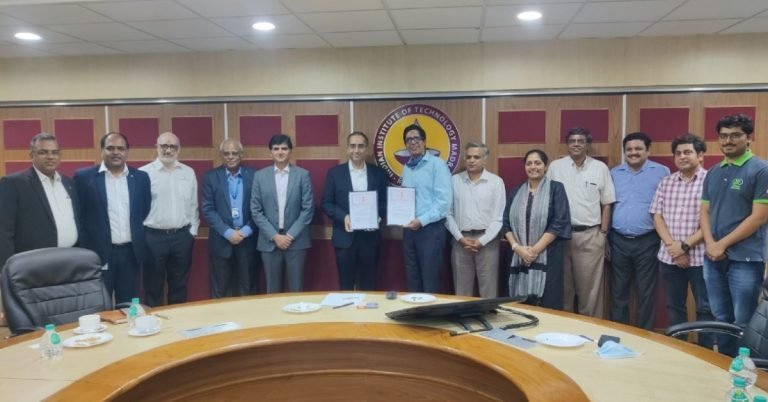
CHENNAI (Metro Rail News): Indian Institute of Technology (IIT) Madras Students’ Team Avishkar Hyperloop has received investment from L&T Technology Services Limited (LTTS) to develop innovations in the Hyperloop landscape. LTTS will provide funding and technical support to Team Avishkar on their Hyperloop project.

LTTS will enable Team Avishkar to further gain traction on its breakthrough disruptions in the emerging domain of Hyperloop-based transportation as stated in a tweet by IIT Madras.

The Hyperloop model proposed by Avishkar team can achieve a top speed of over 1,200 kilometres per hour. The team is spearheading Hyperloop Tube research in India and has already patented a novel and cost-effective tube design.

Team Avishkar

Avishkar Hyperloop is a student team from the Centre for Innovation, IIT Madras, that focuses on revolutionizing transportation with Hyperloop technologies.

MAHSR: Design of multimodal Sabarmati Passenger Hub inspired from Dandi March

GUJARAT (Metro Rail News): The Multimodal Transit Hub named The Sabarmati Passenger Hub which is constructed on the upcoming Mumbai – Ahmedabad Rail Corridor is designed taking inspiration from the Dandi March. According to a tweet by Railway Ministry, it will provide seamless connectivity as well as transportation to inter and intra-city networks.

The cost of developing this station is around Rs 250 crore. The station area will have 3-level parking that can put up with around 1,500 vehicles. The levels will cater to different types of vehicles such as one level will be for cars, one for buses and the last one for autos. While people from two metro stations as well as stations on the Indian Railway network can arrive at Sabarmati passenger terminal hub, they can move to Sabarmati Station by a foot over bridge (FOB), linking the two buildings, which are 400 metres away from each other, and board the Mumbai – Ahmedabad bullet train from there.

50 tonne concrete slab falls off crane at RRTS project site

GHAZIABAD (Metro Rail News): A 50-tonne concrete slab which was being lifted into place using a high-capacity crane, fell off the under-construction Modinagar site of the Regional Rapid Transit System (RRTS) project on the Delhi-Meerut Road in Ghaziabad on May 10 Tuesday. Nobody was injured in the incident, the officials informed.

According to the NCRTC officials, who are associated with the project, an inquiry will be initiated to know the cause of this accident.

The incident happened on the day when UP chief minister Yogi Adityanath visited Meerut and inspected the project site at Bhainsali along with Shri Vinay Kumar Singh, MD, NCRTC and other officials. As per the sources, the accident happened because of a cable that snapped during the load testing but no damage happened as it was inside a barricaded area.

The 82km long RRTS project construction is going on at full speed and it is expected to be completed in March 2025.