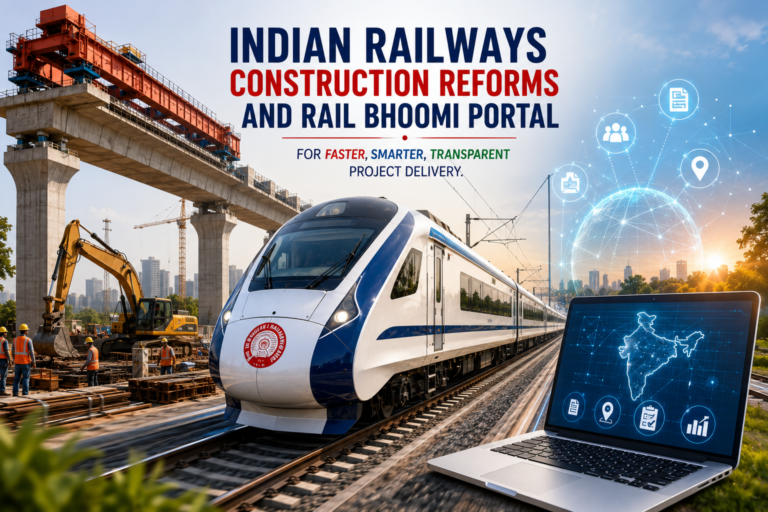
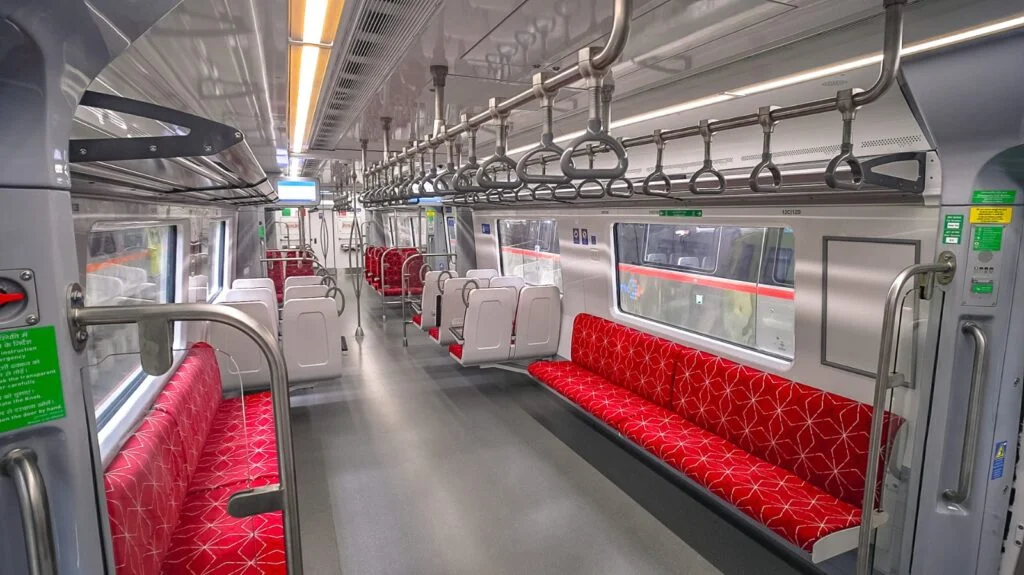
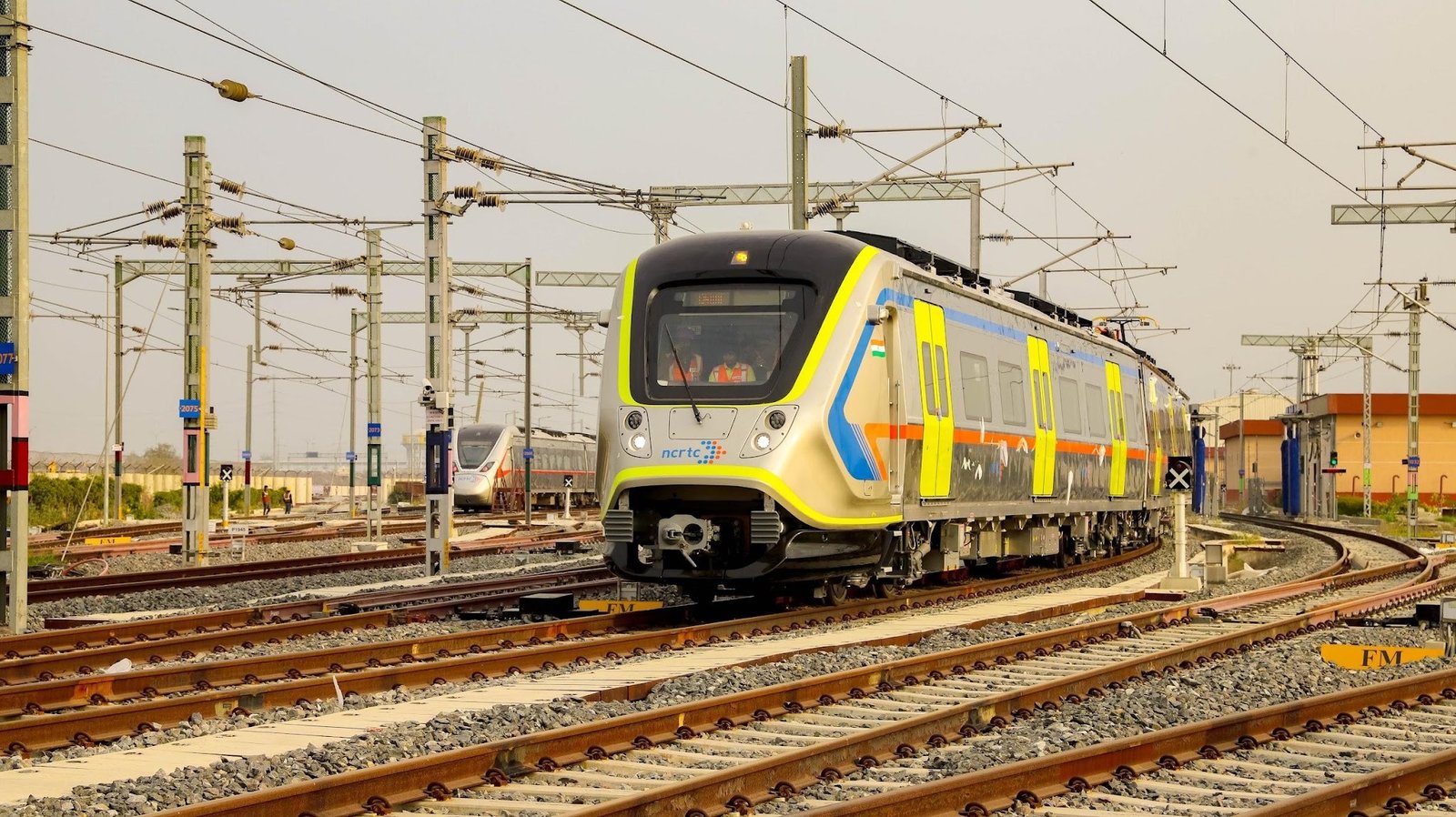
DELHI (Metro Rail News): Today (14 July), Railway Minister Ashwini Vaishnaw announced a series of construction reforms to help Indian Railways complete infrastructure projects faster and better. During his live session, he also launched the new Rail Bhoomi portal to make land acquisition digital and easier to manage. The Railway Ministry has also introduced a digital system to replace the manual process used for land acquisition.
New rules for construction contracts
The Railway Ministry has changed several contract conditions to make project execution more efficient. Under the new system –
Contractors will provide 10% performance security at the beginning of the contract.
Indian Railways will not deduct money from running bills after that.
Contractors must meet stricter eligibility conditions, with pending litigation limited to 50% of their net worth.
Every contractor must have a Contractor’s All Risk Insurance Policy and a Professional Indemnity Insurance Policy.
Indian Railways will hand over land in planned phases so construction can move forward without unnecessary interruptions.
Rail Bhoomi Portal
During this live session, Ashwini Vaishnaw also announces the launch of Rail Bhoomi Portal. It is a web-based platform developed by the Centre for Railway Information Systems (CRIS). Until now, Indian Railways handled land acquisition through manual, paper-based processes. But now, this Rail Bhoomi portal will bring the entire process online. The portal connects with railway systems such as IRPSM, IPAS and HRMS, allowing departments to share information more easily. It will also help officials monitor progress of land acquisition, pending cases, compensation status, government notifications and statutory timelines. The portal includes dashboards and MIS reports that will help authorities track projects and speed up decision-making.
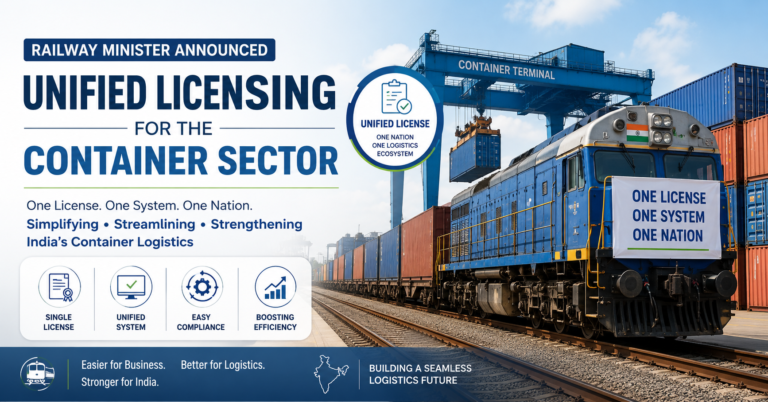
DELHI(Metro Rail News): Union Railway Minister Ashwini Vaishnaw made several announcements about the railway sector today (July 14). Speaking about the Reform in the Container Sector, he said that the Container Train Operator (CTO) licence categories will be unified into one group.
Previously, the CTO licensing was executed in four categories (I,II,III,IV). There was also a non-refundable registration fee of ₹50 Crore for Category I and ₹10 Crore for each other category. Validity of permission was 20 years from the date of operation. A renewable fee of ₹25 Crore for Category I and ₹5 Crore for the rest of the categories was implied beyond 20 years.
Unified Licencing to encourage agencies
The minister announced a single Unified all India Container Train Operator (CTO) License to run container trains on all routes of Indian Railway. Further, a uniform non-refundable registration fee of ₹25 Crore will be implied for all routes. The renewable fee for extension after 20 years is also eliminated.
Benefits of the Reform
The reform will foster ease of doing business by eliminating the complicated licensing system. It is projected to increase investment in the sector. Moreover, the reform will strengthen the freight network across the country by encouraging more agencies to join the sector. Furthermore, this will increase the container freight.
DELHI (Metro Rail News): The journey which began with the “Made in India” initiative has now transformed to “Make for World”. The prime example of this is India’s railway ecosystem which was earlier dependent heavily on other countries for railway technology and components has now entered the overseas market as an exporter of the same.
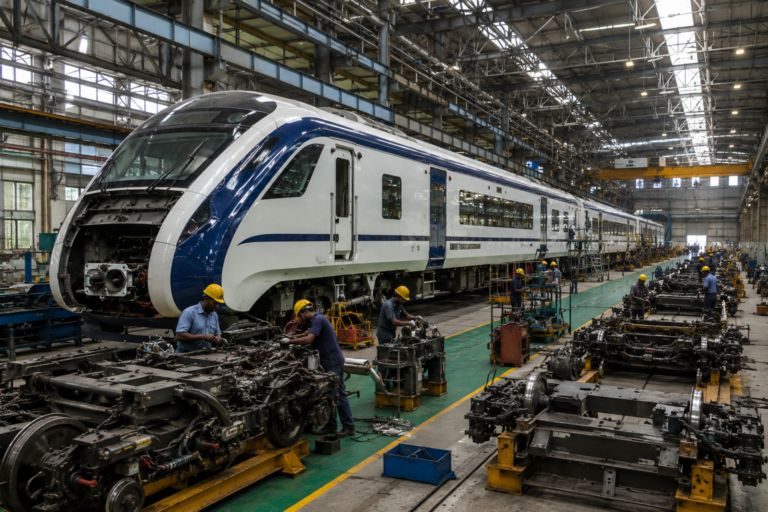
Ashwini Vaishnaw, the Union Minister for Railways, said that India is becoming a major manufacturer and exporter of railway products. Vaishnaw made this remark on Sunday (July 11), during his visit to Medha Bogies Factory in Hyderabad with Union Minister for Coals and Mines G. Kishan Reddy.
He said that India is manufacturing many of the railway products domestically. Above all, the complicated electronic and propulsion system, which are the most important equipment of any railway system, are now designed indigenously in India. These are then exported to countries such as France, Germany, Switzerland, Italy, Poland, the United States and now even Japan.
The minister called it a great achievement for the country and praised the quality of the components for being world-class. Further, he noted that it is the only way to establish our country in the global market.
Speaking about the working of the industry, he said that we are working by making sure that the focus is on design and quality, and the alignment of the supply chain should be according to the quality goals. He referred to the world-class quality of the domestic products, emphasising that we can orient our high quality produce towards the developed country’s markets.
In recent years, the Indian manufacturing industry has done commendable work. They are working on various projects related to railway technology and making indigenous manufacturing units. They are exploring areas such as high speed rail and even hyperloop projects, giving way to faster and advanced mobility.
UTTARAKHAND (Metro Rail News): Rail Vikas Nigam Limited (RVNL), under the Ministry of Railways has awarded ₹263 crore contract to Siemens for the overhead rail electrification work of the 102 km Rishikesh-Karnaprayag rail line in Uttarakhand. This was announced on Monday, 13 July 2026 via an official press release by Siemens. The Rishikesh-Karnaprayag line is a new broad-gauge railway totaling 125 km, with extensive tunneling (over 100 km of tunnels) through the Himalayas. It is expected to significantly reduce travel time and improve access to Uttarakhand’s religious and tourist destinations.
#PressRelease | Powering progress in rail. Siemens is enabling the 102 km Rishikesh–Karnaprayag corridor with advanced electrification for reliable, future-ready mobility.
The scope of work includes supply and installation of Rigid Overhead Catenary Systems (ROCS) and Flexible Overhead Catenary Systems (FOCS) across tunnels, bridges, yards, and open routes. Also includes powering a corridor with 90% tunnels and one nearly 10 km long. The purpose of the electrification is part of the Char Dham Railway Project to provide all-weather connectivity to major pilgrimage sites (Kedarnath, Badrinath, etc.) and boost tourism and economic development in the region.
Mr Rajeev Joisar, CEO – Mobility Business, Siemens Limited, expressed their happiness to partner with RVNL for this prestigious project, which is a significant step towards enhancing sustainable and reliable connectivity in one of the most challenging terrains in India. He further stated that this order further reinforces Siemens’ leadership in advanced rail electrification technologies.
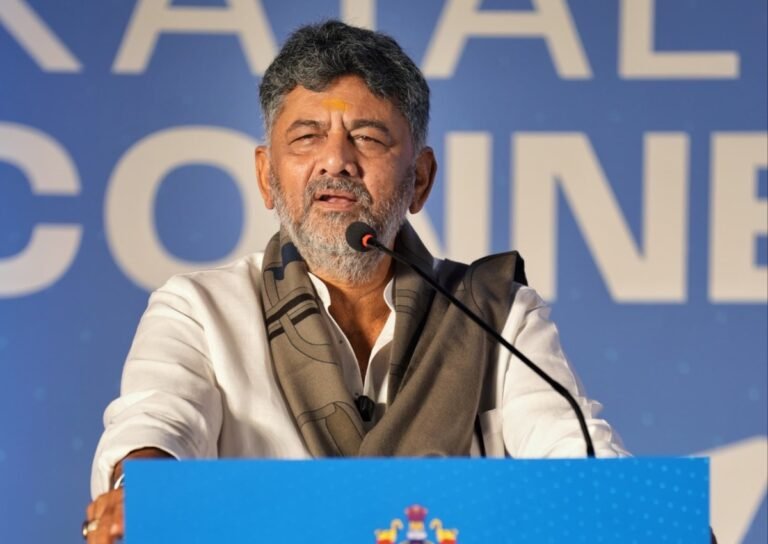
BENGALURU (Metro Rail News): A massive 500-kilometer expansion of Bengaluru Metro is set to anchor the Karnataka government’s newly announced ₹1.5 lakh crore mega-budget for Bengaluru’s urban development. Unveiled at the ‘KATALYST CONNECT’ summit on July 8, 2026, this massive transit push aims to support the state’s aggressive goal of drawing 500 new Global Capability Centres (GCCs), creating 3.5 lakh high-quality jobs by 2029. While the mega budget also funds the Bengaluru Business Corridor, new tunnels, and relaxed vertical building limits (FAR), the expanded metro network takes center stage to guarantee seamless urban mobility for the state’s rapidly growing tech workforce.
Bengaluru Metro: The 500-KM Roadmap to Power Karnataka’s Tech Future
The Karnataka government has positioned the expansion of ‘Namma Metro’ as one of the core pillars of its urban growth strategy. Framed alongside the state’s “Beyond Bengaluru” initiative, these transit projects aim to handle heavy city traffic while building the necessary infrastructure to support massive investments from Global Capability Centres (GCCs).
The Immediate Target: 175 KM by December 2027
Chief Minister Shri DK Shivakumar announced that the state is aggressively pushing to double its currently operational 96 km network. The target is to have 175 kilometers of active metro lines fully operational by December 2027.
Looking further ahead, the government has conceptualized a massive 500-kilometer long-term expansion plan consisting of new elevated routes and interconnected underground tunnel corridors. This mega transit footprint is backed by a comprehensive ₹1.5 lakh crore city infrastructure budget designed to tackle urban congestion.
Ongoing Expansions & High-Priority Lines
Work is progressing rapidly on Phase 2 corridors to connect major business and IT hubs.
The Pink Line (Kalena Agrahara to Nagawara): The elevated portion of this crucial line is scheduled to open first by August 2026, with the entire corridor—including its complex underground sections—targeted for a full launch by March 2027.
The Blue Line (ORR & Airport Extension): Construction is moving forward along the Outer Ring Road (ORR) segments, heading toward a dedicated direct connection to Kempegowda International Airport, which is scheduled to scale up operations through mid-to-late 2027.This is a Rs.15000 Crore project covering 58 kms.
Phase 3: India’s Longest Double-Decker Corridor
Approved by the Union Cabinet, Phase 3 focuses entirely on fixing traffic bottlenecks across Western Bengaluru. This section will feature India’s longest double-decker metro corridor, stacking elevated metro tracks directly above multi-lane vehicular flyovers to optimize limited road space.
‘‘Our Government is committed to creating an ecosystem where innovation thrives, businesses invest with confidence, and every young Kannadiga has access to world-class opportunities. Together, we will shape the future of AI, technology, and high-value employment from Karnataka to the world’’ Stated Shri DK Shivakumar, Chief Minister of Karnataka.
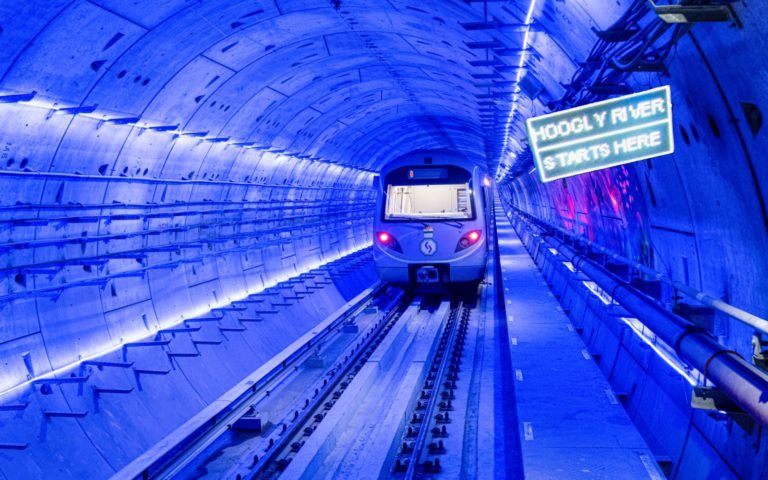
KOLKATA (Metro Rail News): Taking a significant step towards introducing driverless operations, the Commissioner of Railway Safety (CRS), Northeast Frontier Circle Sumeet Singhal conducted an inspection on the East–West corridor (Green Line) from the Howrah Maidan station terminal to Salt Lake Sector V, which includes India’s first underground metro tunnel spanning 520 metres under the river, allowing the trains to cross the river in 45 seconds.
The CRS wanted to ensure that all necessary arrangements were taken care of to handle any emergency occurrences during the driverless operations under the river. The services on this route began at 4:30 pm on 12th July, instead of 9 am for the inspections.
CRS Inspector Sumeet Singhal also visited the Central Park maintenance-cum depot to inspect the OCC, which serves as the brain of Communications-Based Train Control (CBTC). The train halted at all 6 elevated and 6 underground green line stations. The train was frequently stopped between stations to check how the system would act in emergency situations.
Following the inspection, once the official permissions from CRS are granted, the Kolkata Metro Rail Corporation can begin driverless passenger operations on the 16.6 km corridor.
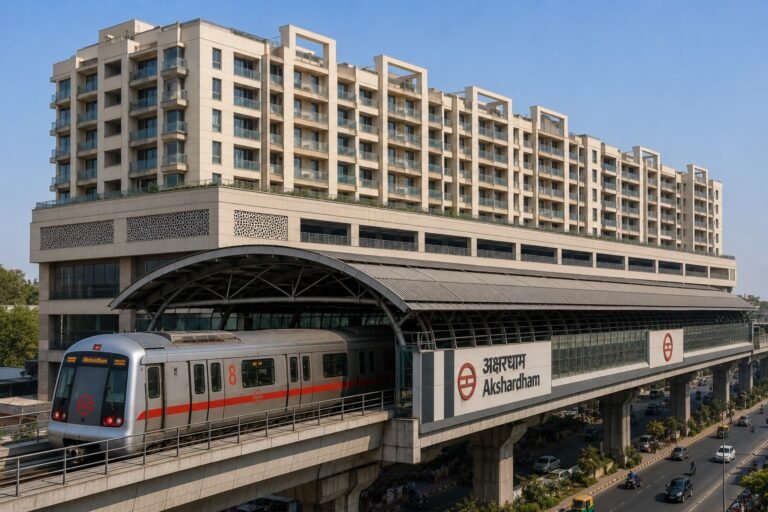
NEW DELHI (Metro Rail News): In an announcement on Sunday (July 12), the Union Minister of Housing and Urban Affairs, ML Khattar proposed that air spaces above Delhi Metro should be utilized for residential buildings. The announcement was made during the minister’s speech at the Central Public Works Department (CPWD)’s 172nd foundation day.
The minister said that “The use of air spaces for housing purposes is a new thing that many countries are implementing”. He referred to a hotel in Gandhinagar which is developed above a metro station as an example for the proposal. He said that a similar project is being thought about for Delhi.
Khattar further said that he has sought Delhi Development Authority (DDA) to find ways to implement the project. Moreover, he also encouraged CPWD to work on the project and find ways to utilize linear projects for air spaces.
The Benefits of the Proposal
The minister said that if we use the air spaces by developing pillars on the sides, then the project could be implemented at a low cost. He said that people will get affordable housing and the metro will also be benefited with this proposal.
It can become a major source of non-fare revenue for the metro system. The step can boost the revenue of Delhi Metro and bring the possibilities of attaining financial sustainability through the proposed property model. The project can also be impactful in the housing and congestion issues in the region. A global counterpart of Delhi Metro, the Hong Kong Metro system has shown remarkable growth through its property model.
Hong Kong MTR’s “Rail+Property” model
The Hong Kong Mass Transit Railway (MTR)’s “Rail+Property” model is well-known for its financial sustainability. The metro stays in profit and a major reason behind that is the proportion of revenue it generates from real estate. MTR manages several properties above their metro stations and depots.
DELHI (Metro Rail News): In a major relief for rail passengers in North and West Delhi, the Ministry of Railways has approved stoppages for the Delhi–Kalka Express (Train No. 14331) and the Delhi–Daulatpur Chowk Himachal Express (Train No. 14053) at the Adarsh Nagar railway station. The Delhi Chief Minister’s Office (CMO) issued the official public announcement on Sunday 12 July 2026 through their official social media and statements.
This initiative will provide easier and faster connectivity to major tourist and religious sites across Himachal Pradesh, Chandigarh, Kurukshetra, Fatehgarh Sahib, and Anandpur Sahib.
The new stoppages were approved following a formal request from Delhi Chief Minister Smt. Rekha Gupta to Union Railway Minister Shri Ashwini Vaishnaw.
Smt. Rekha Gupta stated that the Delhi government is prioritizing citizens’ daily needs with this new halt, which will save time for residents of North and West Delhi by eliminating the need to travel to the New Delhi or Old Delhi railway stations. She further expressed her gratitude to Union Railway Minister Shri Ashwini Vaishnaw and PM Shri Narendra Modi for their efforts in making this public welfare decision.
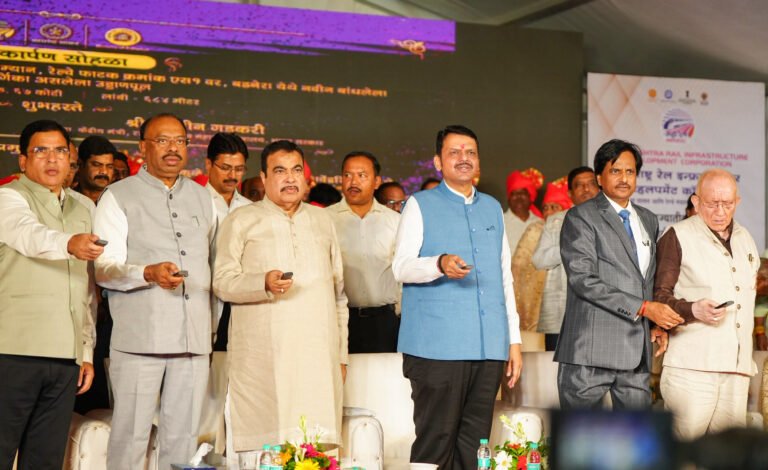
MAHARASHTRA (Metro Rail News): MahaRail (Maharashtra Rail Infrastructure Development Corporation Limited) officially unveiled 9 key infrastructure projects across six districts of Maharashtra on Sunday, July 12, 2026. These projects represented a combined investment of approximately ₹484 crore.
🔸Inauguration of 4 Road Over Bridges (ROBs), 4 Underpasses (Subway) and 1 Road Under Bridge (RUB) across Maharashtra jointly developed by Maharashtra Rail Infrastructure Development Corporation (MahaRail), the Government of Maharashtra and the Ministry of Railways, at the hands… pic.twitter.com/Hn2FnyCCAS
The inaugural ceremony was planned and executed as a dual-format event, combining physical attendance with a state-wide virtual broadcast at the newly constructed Deepti Signal Road Over Bridge (ROB) in Nagpur. The Chief Guest of the ceremony was Nitin Gadkari (Union Minister for Road Transport and Highways), while the Presiding Guest was Devendra Fadnavis (Chief Minister of Maharashtra).
The projects included the Deepti Signal ROB-the main 1,320-meter flagship bridge built at Railway Crossing No. 73 in Nagpur-and eight other projects located across the Satara, Nashik, Sangli, Amravati, and Chandrapur districts of Maharashtra.
The Indian Railways played a core role in these projects, acting as both a structural partner and an operational regulator. Because the infrastructure involved crossing active train tracks, the entire initiative was built on a foundation of federal cooperation.
In total, the infrastructure consisted of four road over bridges (ROBs), four subways, and one road under bridge (RUB), combining for a total cost of around ₹484 crore. Out of these nine projects, seven were unveiled under a 50:50 co-financial agreement between the Ministry of Railways and the Government of Maharashtra.
These projects were expected to result in much safer, faster, and more efficient transportation across the state.
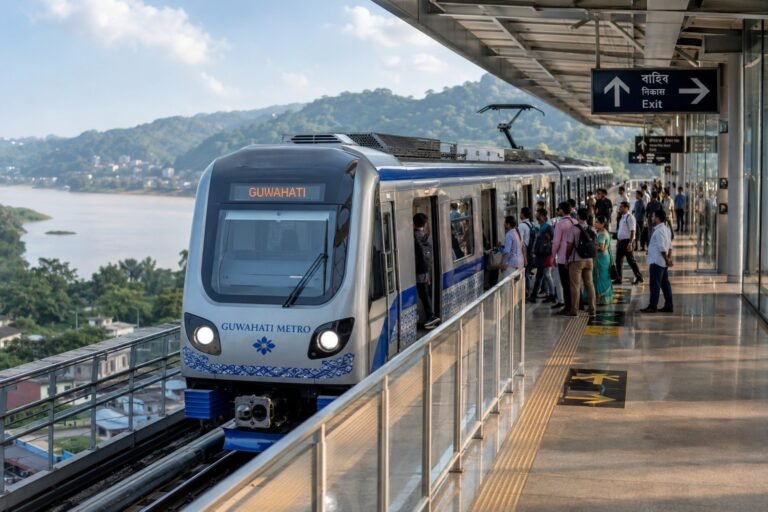
GUWAHATI (Metro Rail News): The Assam government announced a feasibility study for a metro rail system along the upcoming Guwahati Ring Road during the presentation of the 2026–2027 State Budget on July 10, 2026. Chief Minister Himanta Biswa Sarma explicitly confirmed that the Assam government plans to officially engage the DMRC to prepare the Detailed Project Report (DPR) and structural feasibility framework for the new 121-km Guwahati Ring Road Metro. This project marks a significant shift toward regional connectivity rather than a conventional intra-city network.
These infrastructure initiatives were officially announced by Assam Finance Minister Shri Jayanta Malla Baruah on the floor of the Assam Legislative Assembly. Following the announcement, Assam Chief Minister Himanta Biswa Sarma stated that Prime Minister Narendra Modi had advised the state government to plan a metro network across the four corners of the proposed Guwahati Ring Road.
The Chief Minister further emphasized that the primary purpose of this study is regional connectivity linking surrounding satellite towns (such as Nalbari, Baihata Chariali, and Sipajhar) and peripheral regions to reduce traffic gridlock on core city roads and central downtown areas. Consequently, this will not be a conventional metro system within Guwahati city lines.
The proposed metro system will run over or alongside the planned 121-km Guwahati Ring Road. Ultimately, the project will focus on allowing commuters to travel quickly from outlying areas like Baihata Chariali, Sipajhar, and the Guwahati Airport to different parts of the city. This will be the first metro rail project in Northeast India.
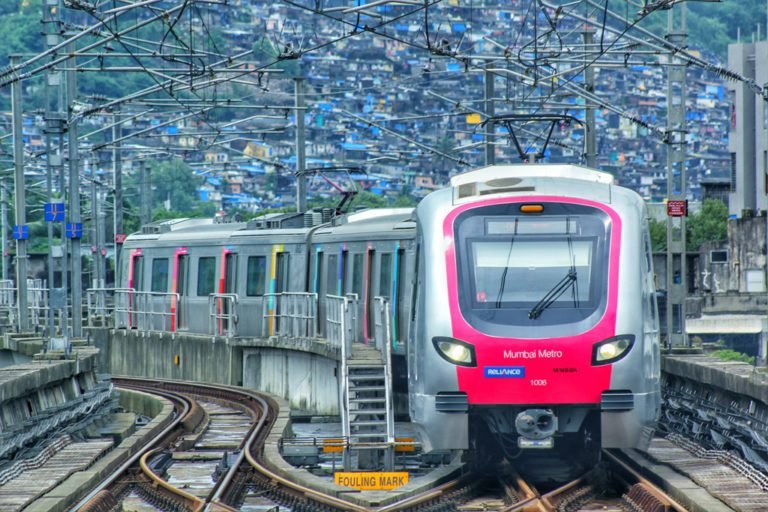
MUMBAI (Metro Rail News): Mumbai Metro One Private Limited (MMOPL) entered a debt reconstruction agreement with National Asset Reconstruction Company Limited (NARCL). This agreement reduced the company’s debt by ₹1,100 Crore and provided relief to the company on the insolvency proceeding that is looming over the company for the last few years.
The company’s outstanding debt of ₹2,771.32 Crore has been reconstructed under this agreement. After the reconstruction, this amount has been revised to approximately ₹1,600 Crore that the company will repay to NARCL.
Now, NARCL will take over the debt from all the lenders including SBI, IDBI Bank, Indian Bank and Canara Bank, and MMOPL will have to repay the said amount to NARCL. Further, the NARCL will appoint a director to the board of MMOPL. A monitoring committee, with members from both parties, has been formed to oversee the reconstruction.
MMOPL is a collaborative venture of Reliance Infrastructure and Mumbai Metropolitan Region Development Authority (MMRDA). It operates the Line 1 (Blue Line) of the Mumbai Metro. The line has a daily ridership of around five lakh commuters.
Company’s long loan repayment defaults
MMOPL has been defaulting the repayments of loans from 2018, after which it was declared as a Non-Performing Assets (NPA). During the construction stage of Line 1, the estimated budget of ₹2,356 Crore increased to over ₹4,000 Crore.
SBI and IDBI Bank, who were among the lending institutes for the project, proceeded to the National Company Law Tribunal (NCLT) for insolvency. However, the Maharashtra government offered to settle the dispute and buy Reliance’s stakes in the project. But, the settlement offer could not go through.
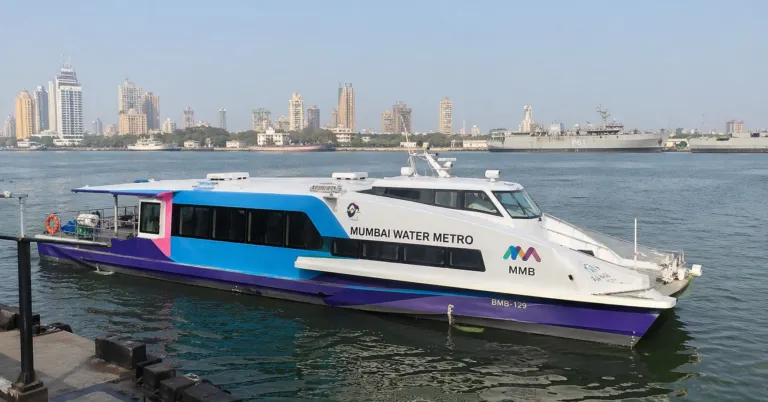
MUMBAI (Metro Rail News): Progressing towards making water transport an important part of Mumbai’s transport system, Maharashtra CM Shri Devendra Fadnavis said, “Mumbai Water Metro will be the largest water transport network of any city in the world.”
The estimated cost of the project is Rs. 6,066 Crore which will include 44 terminals and 33 water routes, covering a total length of 340 km. The government plans to obtain 203 environment-friendly electric and hybrid vessels for this project.
The Maharashtra Maritime Board and M. Zoya Marine Services Pvt. Ltd have signed a Memorandum of Understanding (MoU) for the development of a shipbuilding facility in Sindhudurg and supply of water metro vessels for the Mumbai Water Metro Project.
According to the MoU, M. Zoya Marine Services Pvt. Ltd will provide modern, environmentally sustainable Water Metro vessels for the Mumbai Water Metro Project. The agreement also includes establishment of a state-of-the-art electric boat manufacturing facility over 22 acres with an estimated investment of Rs. 150 crore at Talawane in Sawantwadi Taluka, Maharashtra.
Chief Minister Shri Devendra Fadnavis stated that the project is expected to be completed by 2031 and will serve around 7.5 crore passengers annually. Once this metro route is operational, it will provide Mumbaikars with an alternative mode of transportation other than road and railways. The Mumbai Water Metro Project is a significant step taken by the Maharashtra Government to enhance connectivity across the city and reduce congestion on roads.
NEW DELHI (Metro Rail News): Indian Railways has approved the provision of Kavach Version 4.0 on 680 route kilometers of the Rewari-Delhi and Shakurbasti-Bathinda sections (including feeder branch lines) of the Delhi Division, Northern Railway. The project was approved at a cost of ₹260 crore by the Ministry of Railways on Friday, 10 July 2026.
The Ministry of Railways stated that the project is part of the nationwide rollout of Kavach, aimed at enhancing indigenous safety on key high-density routes.
The Tech Enhancements Behind Kavach 4.0
Kavach 4.0 is the definitive, finalized blueprint for India’s nationwide railway safety net. The earlier variant, Kavach 3.2, served as the “Beta testing phase,” which was deployed across 1,465 route kilometers on the South Central Railway. It successfully proved that an indigenous automatic braking system could work to prevent collisions and display signals inside the cockpit. However, the specific technical limitations of Kavach 3.2 forced the development of version 4.0. Kavach 4.0 features a direct interface to modern Electronic Interlocking (EI) platforms, a station-to-station interface using hardwired Optical Fibre Cables (OFC), and the ability to manage aggressive braking curves dynamically. This allows semi-high-speed networks like the Vande Bharat and rapid freight routes to run safely up to 160 km/h.
The Ministry of Railways emphasized that implementing Kavach Version 4.0 on key Indian Railway routes will boost safety, optimize operations, increase the reliability of train services, and facilitate quicker, tech-enhanced transport for both passengers and freight.
Meerut has always been a city with a strong past. Walk through it, and you will find reminders everywhere. Old markets, colonial era buildings and landmarks like the Augarnath Temple are closely linked to the uprising of 1857. The city played a crucial role in the Indian Rebellion of 1857, and that legacy still shapes its identity. But while history gave Meerut recognition, it did not guarantee growth.
Over the years, the city expanded rapidly. By 2026, the city’s population will stand at around 1,964,000, while the larger urban region population is around 2,139,000. In 2026, Meerut ranked as the 34th most populous city in India. It also became the second-largest city in the National Capital Region, right after Delhi. This kind of growth brings opportunity.
Now, Meerut has grown in size and ambition. New residential areas came up, population increased, and business activity grew, especially in sectors like sports goods, metal work and agricultural-based trade. At the same time, Meerut remained closely tied to Delhi. Thousands of people travelled daily between the two cities for work, education and business. And that’s where the problem began. The city’s infrastructure struggled to keep up. Roads became overcrowded, public transport remained limited, and long travel hours became part of daily life. Within the city, moving from one area to another often meant dealing with traffic congestion and delays. The growing gap between expansion and infrastructure created a clear need. Meerut needed a faster, more reliable, and structured transport system. At the same time, planners saw an opportunity. With its strategic location near the National Capital Region, Meerut could become more than just a neighbouring city. It could become an active economic extension of Delhi. But for that connectivity had to improve. This idea gave rise to the Meerut Metro, integrated with the Namo Bharat Corridor.
On 26 February 2026, when Prime Minister Narendra Modi inaugurated the project, it marked a turning point. The city that once depended on slow, crowded roads suddenly gained access to high-speed modern transit.
This article explores the journey of the Meerut Metro in detail. It explains the metro’s current network and future expansion plans. It also studies its impact on business and the city. It also examines financial and operational challenges. Because the real question is simple. Can this metro truly change Meerut’s future?
Meerut Metro: The journey from plan to reality
The Meerut Metro did not appear overnight. It took years of planning, studies, and coordination before the first train could run. The idea started in the early 2010s. At that time both the center government and Uttar Pradesh government began to look at better transport options for cities near Delhi. Meerut stood out because of its growing population and strong daily connection with the capital. Officials wanted a system that could solve two problems at once. They wanted to improve travel within the city. They also wanted faster connectivity with Delhi and outer NCR areas. This thinking led to a combined vision. The Meerut Metro would work along with the Namo Bharat corridor instead of running as a completely separate project. The next step involves technical studies.
In 2015, RITES did a feasibility study. The study examined whether the metro would work in Meerut. It looked at expected passenger demand, costs, routes, and long-term benefits. After that in June 2016, the agency prepared the Detailed Project Report (DPR). The DPR acted as the blueprint for the project. It defined the route, station locations, cost estimates, and construction plan. Once the DPR was ready, the project moved into the approval stage.
In 2017, the Uttar Pradesh Metro Rail Corporation took on a key role. It worked as a coordinator between different agencies. Large infrastructure projects require multiple stakeholders, including state authorities, central ministries, and technical teams. UPMRC helped bring them together.
A major milestone came on 8 March 2019. On this day Prime Minister Narendra Modi laid the foundation stone for both the Meerut Metro and the regional rapid rail project. This marked the official start of the construction. Work began soon after in July 2019. Construction did not move easily. Like most large projects, it also faced challenges. Teams had to deal with land acquisition, traffic management, and complex engineering work. Building Underground stations in busy areas like Begumpul and Meerut Central required careful planning and execution. At the same time engineers worked on integrating the metro with the Namo Bharat system. This step made the project unique. Instead of building separate tracks, both systems would share the same infrastructure in the Meerut section.
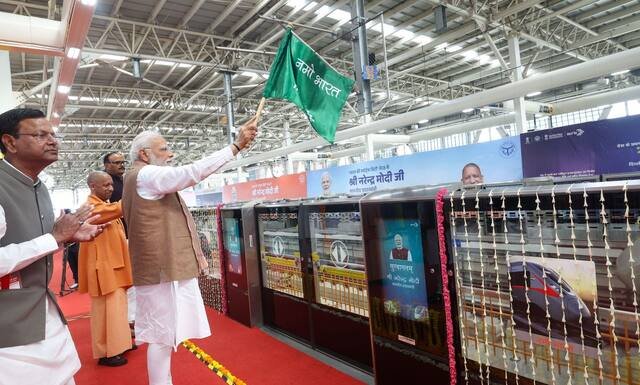
Over the next few years, the project moved steadily forward. Trial runs began in early 2025. Finally on 22 February 2026, the Prime Minister flagged off the Metro for the public.
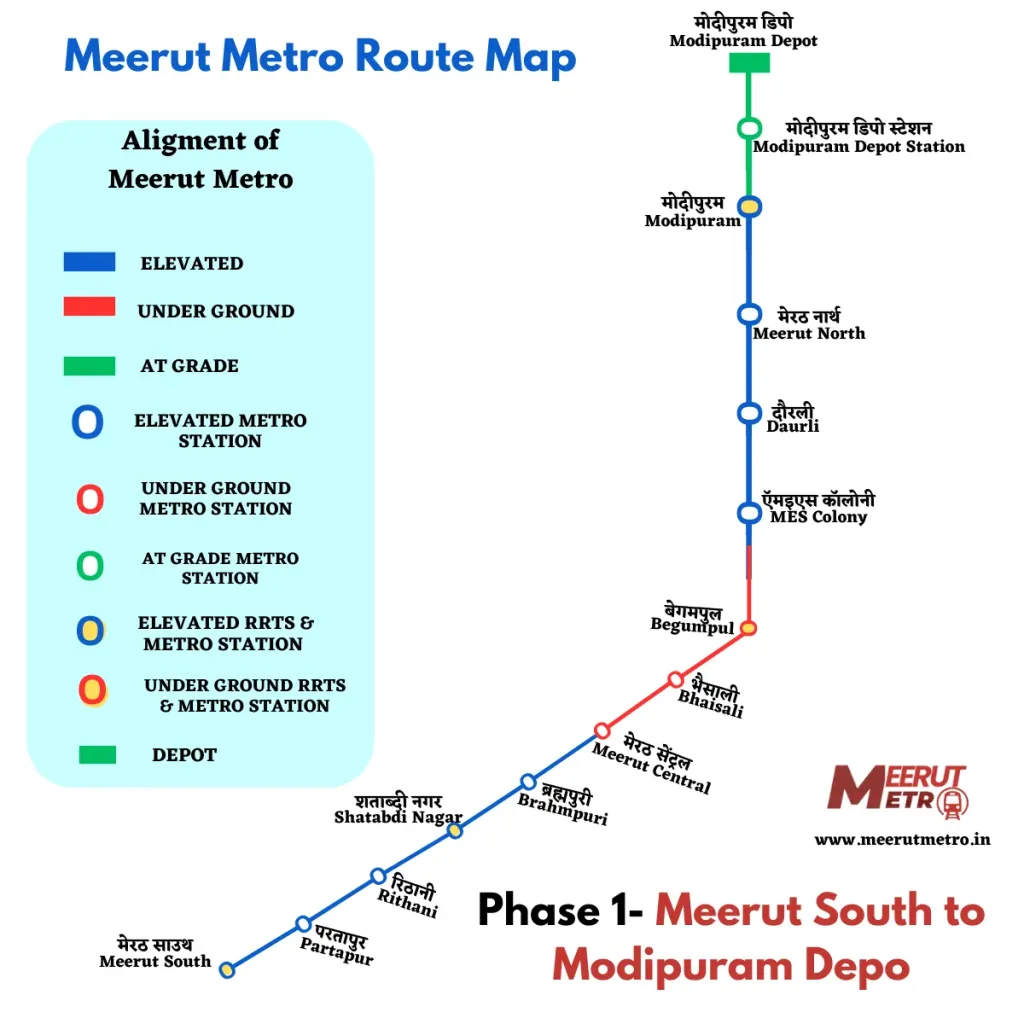
The current Meerut Metro Corridor runs from Meerut South to Modipuram. It covers around 23 km and connects important parts of the city. This route includes both elevated and underground sections. The elevated track covers about 16 km, while the underground tunnels stretch for around 7 km through dense urban areas. The system includes 13 stations in total.
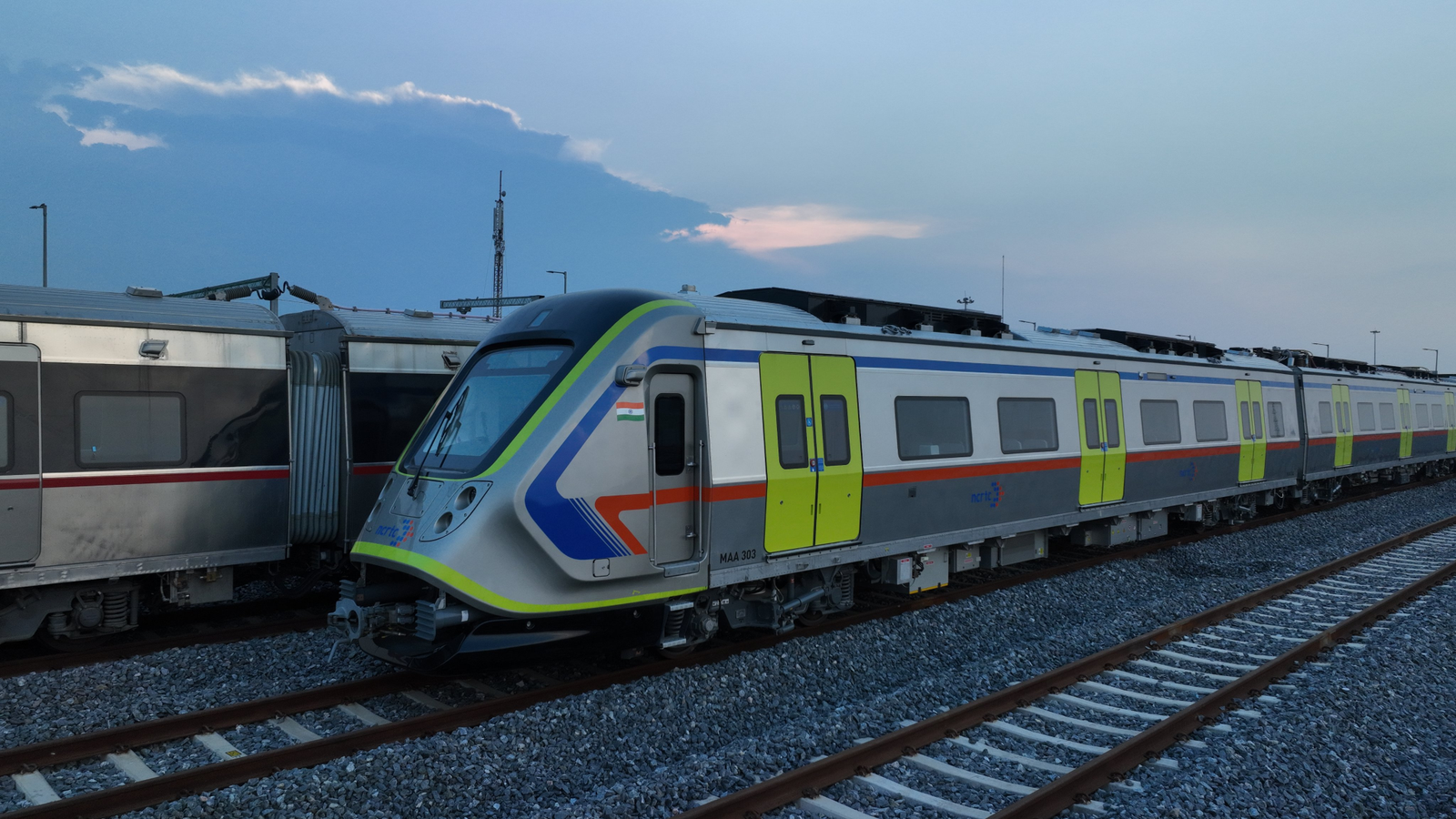
One of the most important features of the Meerut Metro is its integration with the Namo Bharat. The metro shares tracks and infrastructure with the semi high-speed regional rail. The setup allows passengers to move between local and intercity travel without switching stations. A commuter can travel within Meerut and continue towards Delhi using the same network. Meerut Metro also stands out for its speed. With an operational speed of up to 120 kmph, it is currently considered India’s fastest metro system. It can cover the city corridor in about 30 minutes. During the peak hours, trains arrive every 5 to 10 minutes, which supports daily commuting.
Future expansions
The current Meerut Metro provides a strong base, but it does not cover the entire city. Authorities have proposed additional corridors to improve network reach and maybe a more effective system. One of the key proposals is Line-2, which will connect Shradhapuri Phase 2 to Jagriti Vihar. This corridor aims to link several dense residential and commercial areas, improving accessibility across important parts of the city.
Proposed Line 2: Shradhapuri Phase 2 to Jagriti Vihar
Details
Information
Length
15 km
Type
10.7 km elevated and 4.3 km underground
Number of stations
13
status
proposed
Proposed stations
Shradhapruri Phase 2, Kanker Khera, Meerut cantt, Railway station, Rajban Nagar, Begumpul, Baccha Park, Shahpeer gate, Hapur Adda Chauraha, Gandhi Ashram, Mangal Pandey Nagar, Taj Grahi, Medical College, Jagruti Extension
Implementing agency
Uttar Pradesh Metro Rail Corporation (UPMRL)
Line 2 is expected to strengthen connectivity within Meerut by linking areas that currently depend heavily on road transport. It will also improve access to major transit points like Meerut Cantt, Railway Station, making multimodal travel more convenient. In addition, this corridor can support future urban expansion. It can guide planned growth and reduce unstructured development by connecting developing areas such as Mangal Pandey Nagar and Jagriti Vihar
If implemented effectively, Line 2 will not only increase the metro’s coverage but also improve its usability for a larger section of the population. It can play a key role in boosting ridership and making the metro a more practical option for daily commuting.
Business and economic impact
The Meerut Metro influences the economy beyond transportation. It supports urban development, business growth, and environmental improvement.
Real Estate and urban developement
Metro connectivity often increases the value of nearby properties. Meerut has started to experience this trend. Areas around metro stations have become more attractive for residential and commercial development. Locations such as Begumpul, Modipuram, and Shatabdi Nagar are witnessing increased demand. Property values near metro stations have risen from Rs 8,000 to 12,000 per square yard to Rs 12,000 to 20,000 per square yard over time. Improved connectivity encourages people to invest in these areas.
Transit Oriented Development (TOD) will further support this growth. Planned development around stations, can lead to organised urban expansion. This approach can reduce unplanned growth and improve infrastructure planning.
Employment and commercial activity
The metro project has created employment at multiple levels. Construction work generated direct jobs. Operations and maintenance continue to support employment. Beyond the project itself, the metro creates opportunities for businesses.
Commercial activity is expected to grow around metro stations. Offices, retails spaces, and small business centers are likely to come up near these locations. These areas will offer easy access for daily commuters. It will make them attractive for companies and employees. As a result, station zones may develop into active business hubs. This can also create new job opportunities and support local economic activity around the metro network.
Environmental sustainability
The Meerut Metro is also playing an important role in improving the city’s environmental conditions. Urban trans[ortation remains one of the main contributors to pollution in cities like Meerut. Increasing use of private vehicles has led to higher emissions, traffic congestion, and declining air quality. In this context, the metro offers a cleaner and more efficient alternative. Electric trains produce significantly lower emissions compared to petrol and diesel vehicles. As more people shift to rail based transport, the overall pressure on roads can reduce. This shift is expected to take nearly 1 lakh private vehicles off the roads over time. As a result, It could see a reduction of around 2.5 lakh tonnes of carbon emissions annually. The impact goes beyond numbers. Fewer vehicles on the road means less congestion, smoother traffic flow, and better urban air quality. At a broader level, projects like the Meerut Metro reflect a shift in how cities approach development. They show a growing focus on cleaner mobility and planned urban growth.
Challenges: A Closer Look at Ground Reality
Despite its advantages, the Meerut Metro faces several challenges. These challenges may affect its long term performances.
Ridership and revenue gap
A metro system depends on regular passenger use. Meerut currently lacks the high commuter density seen in larger metro cities. Many people prefer cheaper and flexible transport options such as auto-rishkaws and buses. These options provide door-to-door connectivity. If ridership remains low, revenue from ticket sales will not meet operational costs. This gap can affect financial stability.
Financial Stability
Metro projects required large investment. Costs include construction, maintenance and daily operations. If revenue remains limited, the system may remain on government support. This can create financial pressure over time. Long-term sustainability requires:
Increasing ridership
Expanding commercial revenue
Efficient cost management
Infrastructure projects often deliver benefits over a long period, but financial challenges appear early.
Competition and limited resources
Meerut already has an established informal transport system. Autos and shared vehicles provide flexible travel options. The metro cannot replace these services completely. Instead, it must work alongside them. Limited network coverage also affects usage. If the metro does not connect key areas like Ganga Nagar, Shastri Nagar, Pallavpuram and peripheral zones like Ved Vyas Puri, commuters may choose other options.
Strong last-mile connectivity is essential. Feeder services must support the metro network to improve accessibility.
Conclusion
The Meerut Metro has given the city a new direction. For a place that relied heavily on roads, this shift matters. Daily travel no longer depends only on traffic conditions and long delays. For many people, the metro has already started to make movement easier and more predictable. With its link to the Namo Bharat, the distance between Meerut and Delhi feels shorter in Practical terms. The changes are gradual but noticeable. Areas around stations are becoming more active. Small shops, service providers, and local businesses are seeing more Movement. At the same time, the system is still in its early stages. Its long-term success will depend on how people respond to it. Convenience will play a major role. If reaching the station is easy and the service remains reliable, more people will choose the metro over other options.
There are also practical concerns. The network is still limited in coverage. Many areas remain outside its reach. Local transport, such as auto and e-rickshaws, will need to support the system better. Without strong last-mile connectivity, the metro can not serve its full purpose. Financial stability is another factor. Running a metro system requires steady usage. If passenger numbers remain low, it will take longer to recover costs. That is why expansion and consistent ridership will matter in the coming year. Even with these challenges, the metro has created a strong base. It has introduced a faster way to travel and opened up new possibilities for growth. It has also shown how better infrastructure can change the pace of a city. Meerut now has an opportunity. If the system grows in the right direction and people begin to rely on it, the metro can become a central part of daily life.