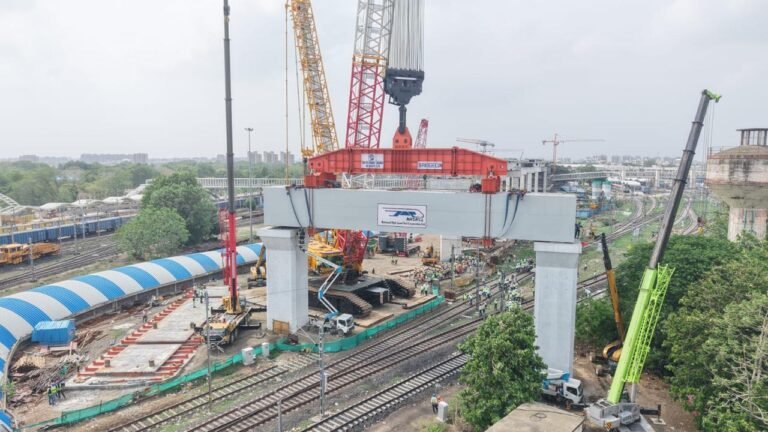
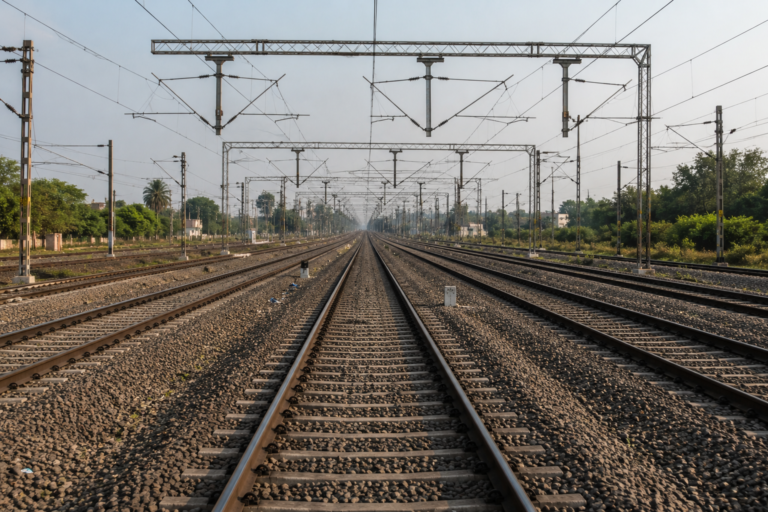
AHMEDABAD (Metro Rail News): The Mumbai-Ahmedabad Bullet Train Project has reached a significant construction milestone with the successful installation of all 13 heavy portal beams in Ahmedabad. The last and heaviest beam was placed at Sabarmati, finishing a crucial part of the viaduct construction over existing railway lines.
According to the NHSRCL Press Release, The project team completed the launch of the final portal beam on Friday. This beam weighs about 1,640 metric tonnes, making it the heaviest precast concrete portal beam among all 13 installed in Ahmedabad. The 18-km-long bullet train viaduct in Ahmedabad crosses some of the city’s busiest railway routes at an elevated level. Engineers designed and installed these portal beams to safely support the high-speed rail viaduct over the existing railway tracks.
13 portals beams installed at key locations
NHSRCL has launched a total of 13 heavy portal beams at different sites in Ahmedabad:
Five portal beams over the Mumbai, Ahmedabad main railway line at Maninagar
Seven portal beams over the Mumbai, Ahmedabad main railway line at Vatva
One portal beam over the Ahmedabad, Delhi main railway line at Sabarmati
After the installation of this beam at Sabarmati, all planned heavy portal beam launches in Ahmedabad are now complete.
Heaviest beam installed in 3 hours
The final portal beam measures 34.5 metres in length and has a cross-section of 5.5 metres × 4.5 metres. It is one of the largest precast portal beams used in the project. The construction team completed the entire launching operation in around three hours. To lift and place the beam, engineers used a 2,200-metric-tonne crawler crane. They carried out the operation in a restricted work area while following strict safety measures. The team also worked closely with Indian Railways to ensure train services continued safely during the lifting process.
NAGPUR (Metro Rail News): Nagpur Metro is all set to expand its branches across the city with four new proposed Phase-3 corridors. Rail India Technical and Economic Service (RITES) has been awarded the contract of Rs. 3.12 crore to prepare a Detailed Project Report (DPR) and Alternate Analysis Report (AAR) for the proposed 55 km metro alignment. The ground work of this project is expected to begin in the coming two weeks.
The four Proposed Corridors are:
Corridors
Length
Mankapur Chowk–Rachana Junction (Inner Ring Road)
25 km
Sitabuldi–Koradi
11.5 km
MIDC ESR–CEAT Ltd (Butibori Extension)
3 km
Khapri–New Nagpur
15 km
The completion period for the DPR is 270 days. RITES will also conduct feasibility studies for the introduction of the first driverless trains for the Phase-3 of Nagpur metro, and also confirm if an underground corridor can be constructed for the Phase-3. These four new corridors connect major industrial areas, growing residential ones and the proposed New Nagpur township along with circular connectivity through Ring Road. Officials said the DPR will act as a roadmap for the largest expansion of the Nagpur Metro to date. The addition of 55 km to the existing Phase 1 and 2 would expand Nagpur metro’s network to 139 km.
The Sitabuldi–Koradi corridor is a key focus area, as existing flyovers, dense urban development, and limited availability of land could make an elevated construction difficult. The final route, technology, and construction method will be decided after detailed engineering and feasibility assessments.
RITES will perform traffic and ridership surveys, peak hour peak direction traffic surveys, peak hour peak direction traffic analysis, geotechnical investigations, topographical surveys, utility mapping, alignment planning, station location studies and financial modelling. The finalised DPR will also decide the final cost for each corridor and recommend the implementation plans.
Officials confirmed that MahaMetro will be participating at every stage of the DPR preparation. They also stated that the construction of this project will highly depend on funding and statutory approvals granted by the Maharashtra Government and Union Ministry of Housing and Urban Affairs (MoHUA). Once the DPR is prepared and approved by the government Nagpur city will move a step closer to an ever more advanced, efficient, and well-connected public transportation system.
Bringing metro systems to Tier 2 cities has long been debated, primarily due to concerns around financial sustainability, especially when even larger networks in Tier 1 cities struggle to meet operational costs and projected ridership. Against this backdrop, Lucknow, the capital of Uttar Pradesh, stands out as an exception, having outperformed several other Tier 2 metro systems in terms of ridership, operational efficiency, and overall viability.
When Prime Minister Narendra Modi inaugurated Lucknow Metro’s Priority Corridor on September 5, 2017, it became more than a milestone; it was a statement of what India’s tier-II cities could achieve when institutional support, engineering talent, and adequate funding are provided. The 8.5-kilometre stretch from Transport Nagar to Charbagh had been built in less than three years, a record, at the time, for metro construction speed in India. Lucknow became a city with a metro before many larger cities had moved beyond the planning stage.
Eight years on, the Lucknow Metro has expanded into a 22.88-kilometre network, carrying approximately 67,000 passengers daily, modest by the standards of Delhi or Mumbai, but steady and growing.
Yet, the Lucknow Metro’s story is not simply one of linear progress. It is also a story of the tensions that define urban rail in India’s growing cities between the ambition of a world-class network and the reality of a ridership base that is still developing; between the speed of construction and the pace of urban behavioural change; between the financial model that built the system and the financial sustainability that must now sustain it.
A Closer Look at Lucknow’s Demographics & Transport Landscape
Planning Concerns Around Metro Alignment
There has been criticism that the metro network in Lucknow was not aligned with the city’s highest-demand corridors in its initial phase. As a result, some key residential and commercial areas remain underserved, affecting overall ridership and network efficiency.
Increasing Population
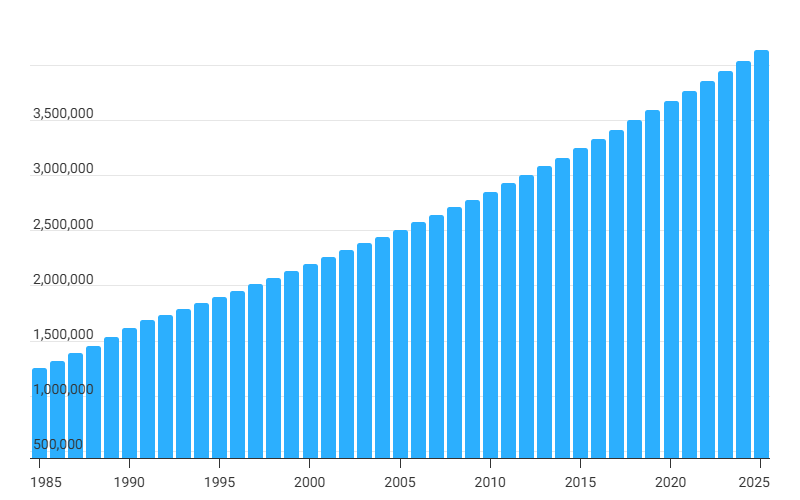
The current metro area population of Lucknow in 2026 is 4,229,000, a 2.32% increase from 2025. The population of Lucknow is increasing at a rate of over 2% every year. This influx has created intense pressure on the the city’s transport infrastructure, making it inadequate to meet the commuters expectations.
Rapid Growth in Vehicle Population
Lucknow’s mobility landscape is dominated by a sharp rise in private vehicles. As per VAHAN data, the city has over 3.17 million registered vehicles. Two-wheelers (around 2.16 million) and four-wheelers (about 0.78 million) form the majority, indicating a strong dependence on personal transport. In addition, there are over 107,000 three-wheelers, along with freight vehicles, tractors, ambulances, and other categories.
Rise of E-Rickshaws and Informal Transport
Public transport growth has remained limited, but intermediate public transport, especially e-rickshaws and e-autos, has expanded rapidly. These modes are increasingly filling first- and last-mile connectivity gaps, often operating in areas not covered effectively by formal systems like buses or metro.
Uttar Pradesh Leading in EV Adoption
Uttar Pradesh has the highest number of electric vehicles in India, with over 414,000 EVs, ahead of Delhi and Maharashtra. This growth is reflected in Lucknow as well, where electric three-wheelers and small EVs are becoming a common part of daily commuting.
Infrastructure Growth vs Vehicle Growth
The number of vehicles in Lucknow is increasing at an estimated rate of 10-12% annually, which is faster than the expansion of transport infrastructure. Municipal road length has increased from about 520 km to over 1,545 km, while Public Works Department roads have grown from around 6,200 km in 2021 to 8,700 km in 2024. Despite this, infrastructure development is still lagging behind the pace of motorisation.
Severe Parking Deficit
One of the most critical gaps is parking infrastructure. With more than 3.1 million vehicles in the city, the available parking capacity is less than 3,900 spaces. This mismatch highlights significant challenges in urban planning, congestion management, and land use
Project at a Glance
Lucknow Metro at a Glance
22.88 km
Operational Network
23
Stations
₹383 Cr
FY2025 Revenue
1.30 Lakh
Peak Daily Ridership
Operator
Uttar Pradesh Metro Rail Corporation (UPMRC)
Ownership
50:50 Joint Venture — Government of India & Government of Uttar Pradesh
Operational Line
Red Line (CCS Airport – Munshipulia)
Infrastructure
19 Elevated • 4 Underground Stations
Commercial Operations
Priority Corridor: 5 Sept 2017 Entire Red Line: 8 Mar 2019
Construction Record
Priority Corridor completed in 2 years 9 months
Blue Line (Phase 1B)
11.165 km • 12 Stations
Approved: August 2025
Phase 1B Investment
₹5,801 crore
Target Completion: June 2027
Financial Performance
₹383 Cr
FY2025 Revenue
40%
Fare Revenue
60%
Non-Fare Revenue
0.67 Lakh
Average Daily Ridership (Apr 2025)
Routes of Lucknow Metro
Lucknow Metro Operational Line (Phase 1A)
Line-1: CCS Airport – Munshi Pulia (22.878 km)
Length: 22.878 km
Type: Elevated (19.438 km with 19 stations) and Underground (4 km with 4 stations)
Line-2: Lucknow Railway Station (Charbagh) – Vasant Kunj
Length: 11.098 km
Status: Approved by India’s Central Government in August 2025
Estimated Daily Ridership: 60,000/day
Elevated: 4.548 km with 5 stations (GB Marg – Thakurganj)
Underground: 6.55 km with 7 stations (Thakurganj – Vasant Kunj)
Number of Stations: 12
Station Names: Gautam Buddha Marg, Aminabad, Pandeyganj, City Railway Station, Medical College Chauraha, Nawazganj, Thakurganj, Balaganj, Sarfrazganj, Musabagh, Vasant Kunj
Note: Phase 1B entered the tendering stage in February 2026, when AYESA Ingenieria Arquitectura SAU and AYESA India Pvt Ltd entered into a joint venture to carry out the Detailed Design Consultancy work of the project
Lucknow Metro Phase 2 Routes (Proposed)
This phase, designed by DMRC & UPMRCL, includes 3 corridors and involves the construction of 1 new line and 2 line extensions.
Extn of Line-1: Munshi Pulia – Jankipuram
Extn of Line-2: Charbagh – SGPGI (Sanjay Gandhi Postgraduate Institute of Medical Sciences)
New Line-3: IIM Lucknow – Rajajipuram
Built at Record Speed: The Construction Achievement
The Lucknow Metro’s most appreciated achievement is not its technology or its ridership; it is the speed at which it was built. The Priority Corridor from Transport Nagar to Charbagh, spanning 8.5 kilometres, was completed and made operational in 2 years and 9 months from the date of construction commencement in September 2014. This was the fastest metro construction timeline in India at that point, and it earned the Lucknow Metro Rail Corporation the Dun & Bradstreet Infra Award in 2017 in the Metro Rail category.
The engineering challenge of building underground metro infrastructure in Lucknow’s high water table and culturally sensitive urban fabric was critical, and its completion without major disruption was a genuine operational achievement.
UPMRC, the joint venture between the Government of India and the Government of Uttar Pradesh, drew on its institutional learning from this project to subsequently take on the Kanpur Metro and Agra Metro, both of which are now in advanced stages of construction.
Urban Impact: What the Metro Has Changed
Improvement in Travel Time and Connectivity
The Lucknow Metro’s impact on the city’s urban fabric is measurable across several dimensions. The most immediate is mobility: a commute from the airport to Charbagh railway station that once took 45-60 minutes by road, depending on traffic, can now be completed in under 35 minutes by metro, at a fraction of the cost of a cab or auto-rickshaw. The Red Line connects the city’s two major transport terminals, the airport and the railway station, with its commercial core at Hazratganj and key residential and institutional nodes along the north-south axis.
Surge in Commercial Activity
The metro has also stimulated commercial activity along its corridor. Station areas, particularly Hazratganj, Charbagh, and Gomti Nagar, have seen increased retail footfall and a rise in commercial property interest. The presence of metro connectivity has become a standard parameter in residential real estate marketing in Lucknow. This transit-oriented development effect, while not yet as pronounced as in Delhi or Bengaluru, is real and growing.
Improved Safety and Mobility for Women
From a gender and safety perspective, the metro has meaningfully expanded mobility options for women in a city where the safety of public transport has historically been a concern. Dedicated women’s coaches, well-lit and CCTV-monitored stations, and predictable timings have made the metro a preferred choice for female commuters, a demographic that private vehicles and informal transport modes frequently fail to serve.
Environmental Benefits and Energy Efficiency: Annually Reducing 6,700 tonnes of CO₂
Lucknow Metro has built a measurable case around energy efficiency and emissions reduction through the use of regenerative braking and solar power. For every 100 units of electricity consumed in operations, around 45 units are recovered and fed back into the system for reuse. This lowers overall energy demand and contributes to a reduction in the system’s carbon footprint.
On a typical day, the metro runs about 190 trips. Each trip requires roughly 250 units of electricity, taking the total daily energy consumption to nearly 47,000 units. Through regenerative braking, about 45% of these, around 20,000 units, are recovered and reused. This translates into a daily reduction of approximately 18.4 tonnes of CO₂ emissions, or about 6,700 tonnes annually. Over six years, this has helped prevent roughly 32,000 tonnes of CO₂ emissions.
In cumulative terms, regenerative braking alone has enabled savings of around 4.3 crore units of electricity over six years. In addition, solar power generation has contributed another 80 lakh units during the same period. These measures together have resulted in annual cost savings of about ₹5 crore, while total carbon emission reductions have crossed 40,000 tonnes.
Only about 40 % of Lucknow Metro’s total income comes from fares; the remaining 60 % is generated through advertising, commercial activities, and other services, offering a model for financial diversification that other cities are studying.
The Revenue Model: A Diversified but Pressured Balance Sheet
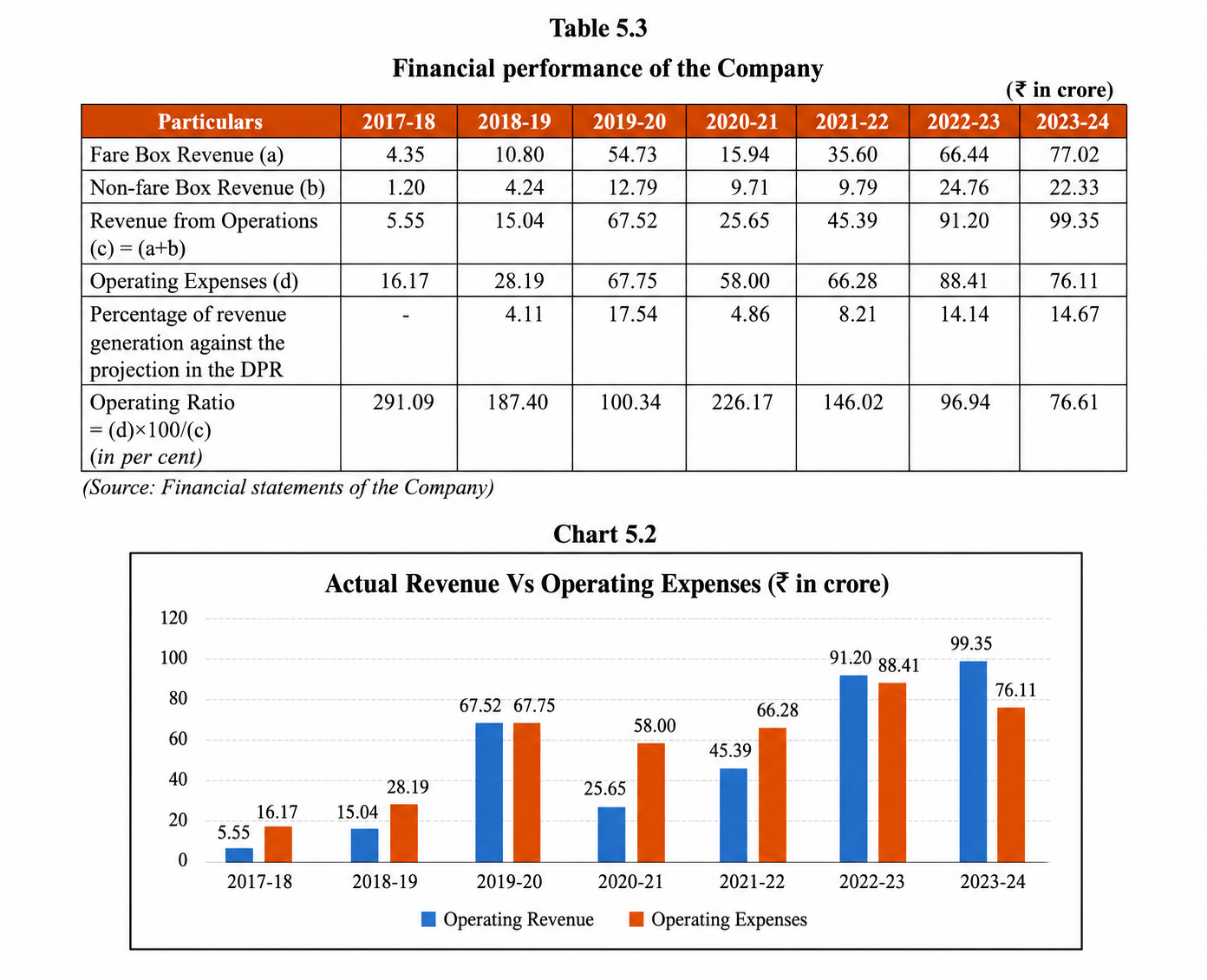
Lucknow Metro’s financial architecture offers one of the more instructive case studies in how Indian metro systems can attempt to build sustainability beyond the fare box. As per a report of First India, approximately 40 % of UPMRC’s total income is derived from passenger fares, while the remaining 60% comes from advertising revenues, commercial space leasing at stations, cultural events, exhibitions, and other non-fare services. UPMRC’s total revenue for FY2025 stood at Rs 383 crore, reflecting a compounded annual growth rate of 23 %, indicating that the revenue base, while not yet sufficient to cover total costs, is growing at a healthy pace.
Source: Comptroller and Auditor General of India
This diversified model is a departure from the fare-centric approach that has left many Indian metro systems financially exposed. By treating stations as commercial assets rather than merely transit nodes, UPMRC has developed revenue streams that are not entirely dependent on passenger volumes. Advertising panels, retail concessions, and cultural programming generate income even on days when ridership is below projections.
However, the broader financial picture is more challenging. UPMRC reported a net loss of Rs 17 billion for FY2023, a figure that reflects the structural reality common to most Indian metro projects: the gap between capital costs, interest burdens on project debt, and operational revenues is large and persistent.
This challenge is not unique to Lucknow. A Parliamentary Standing Committee report in 2022 found that virtually all metro networks in India are running at an operational loss, with fare revenues insufficient to cover even day-to-day operational expenses in many cases.
Shortcomings of Lucknow Metro: Where the Gaps Remain
Ridership Below Potential
Source: Comptroller and Auditor General of India
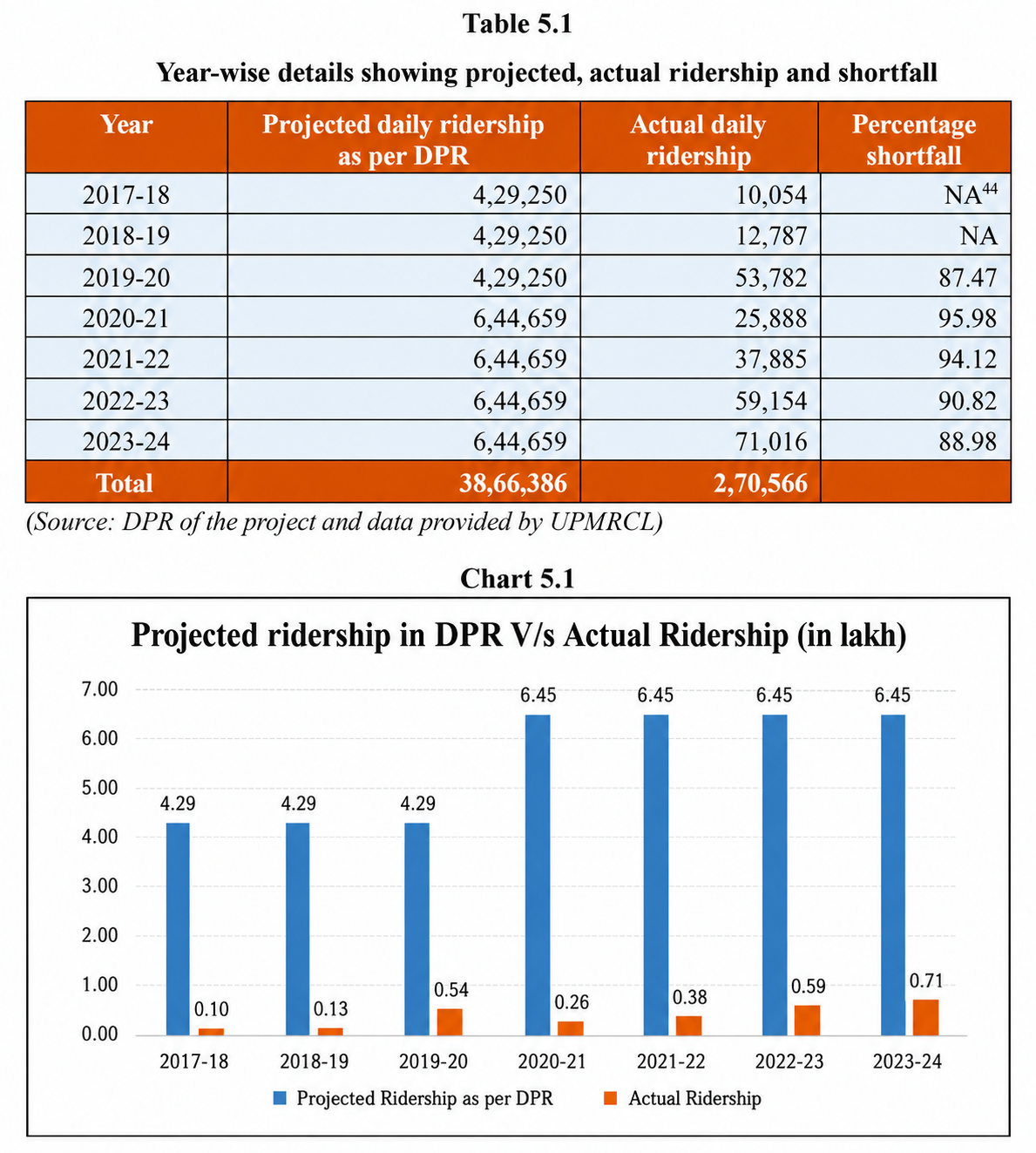
At approximately 78,000-80,000 passengers per day, Lucknow Metro’s average ridership remains below the projections made in its Detailed Project Report and below the threshold typically considered necessary for operational cost recovery. The city’s population of approximately 35 lakh, combined with an urban structure that is less dense and more auto-dependent than metro-friendly cities like Delhi or Mumbai, limits the natural catchment for each station. The Red Line’s north-south orientation serves the city’s main commercial and institutional spine well, but large residential areas to the east and west remain unconnected, limiting the metro’s reach into the bulk of the city’s commuter base.
Last-Mile Connectivity
The single most frequently cited barrier to higher ridership is the absence of reliable last-mile connectivity. Lucknow’s auto-rickshaw and e-rickshaw network around metro stations is informal, unregulated, and inconsistent in availability and pricing. Feeder bus services, while planned, have not been implemented at the scale or reliability required to convert potential metro users into actual ones. Until a commuter can reliably get from their home to a metro station and from a metro station to their destination without uncertainty about cost, availability, or safety, the metro will continue to serve a narrower segment of the population than its infrastructure is capable of serving.
Single Line Dependency
As of now, the Red Line is only operational; the Lucknow Metro functions as a single corridor rather than a network. The value of a metro system increases non-linearly as coverage expands. A two-line network with an interchange is more useful than two single lines in isolation. Until Phase 1B opens and the Blue Line creates a genuine interchange at Charbagh, Lucknow Metro will continue to serve a limited set of origin-destination pairs rather than the city as a whole.
Debt and Financial Overhang
The Rs. 17 billion loss reported in FY2023 reflects the structural financial overhang that comes with a capital-intensive project funded largely through debt. Unless ridership grows substantially or Phase 2 expansion creates the network density needed to drive much higher daily passenger volumes, UPMRC will continue to rely on government equity infusions to remain solvent. This is not an immediate crisis, but it is a long-term sustainability risk that the organisation must address through both revenue growth and cost discipline.
The Sustainability Question: Can Lucknow Metro Build a Viable Future?
Financial sustainability for urban metro systems in India is not achieved through fare revenue alone and it is arguably never achieved through fare revenue alone anywhere in the world. The question for Lucknow Metro is whether it can build the combination of ridership scale, non-fare revenue, transit-oriented development, and network density that makes long-term viability possible.
The Hong Kong MTR model, the global benchmark for financially sustainable metro operations, combines fare revenues with a Rail plus Property development model, where the metro operator develops commercial and residential real estate above and around its stations. The property development revenues fund the gap between operational costs and fare income, creating a self-sustaining financial cycle. UPMRC has not yet adopted this model in a meaningful way; station-adjacent commercial development remains limited relative to the potential that high-footfall metro stations in a growing city like Lucknow represent.
The transit-oriented development policy in Uttar Pradesh is still nascent. While the Lucknow Development Authority has acknowledged the metro’s role in shaping the city’s growth, the regulatory and financial frameworks needed to capture land value uplift along metro corridors through value capture financing, TOD zoning, and developer contribution mechanisms have not been implemented at the scale that would make a material difference to UPMRC’s balance sheet.
Energy efficiency is one area where Lucknow Metro is already delivering tangible financial benefits. The 40 % energy recovery through regenerative braking translates directly into lower power bills, which are among the largest operational cost items for any metro system.
Ultimately, the sustainability of Lucknow Metro depends on the same thing that determines the sustainability of every mid-size city metro in India: whether the city grows into its metro, or whether the metro is forced to wait indefinitely for the city to catch up. Lucknow is growing, its population is increasing, its economy is expanding, and its real estate market is active. The conditions for a self-reinforcing cycle of metro growth exist. Whether UPMRC can execute Phase 1B on time, build the last-mile connectivity ecosystem that converts potential riders into daily commuters, and develop the commercial assets along its corridors with the discipline of a property developer rather than a public sector utility these are the variables that will determine whether Lucknow Metro becomes a model for sustainable urban rail in India’s growing state capitals, or remains a well-built but financially stressed infrastructure asset waiting for the city to arrive.
Conclusion
Lucknow Metro is, by almost any measure of construction achievement and operational quality, a success. The metro is built faster than any comparable metro in India’s history, serving a city of 4 million people with reliable, safe, and clean rapid transit.
The harder question is whether success in construction and operations can be translated into financial sustainability and transformative urban impact. Lucknow Metro is serving a fraction of its potential ridership. It is consuming public resources at a scale that requires justification through consistent, growing social and economic returns. Phase 1B, when it opens, will be the most important test of the system’s potential adding the network density, the interchange connectivity, and the coverage that could meaningfully accelerate ridership growth.
The Lucknow Metro’s story is still being written. The infrastructure is in place. The revenue model, more diversified than most Indian peers, is a foundation to build on. What it needs now is the scale that comes with network expansion, the last-mile ecosystem that converts proximity into usage, and the urban policy environment that allows the metro to become not just a transport service but a driver of the city’s economic and spatial future.
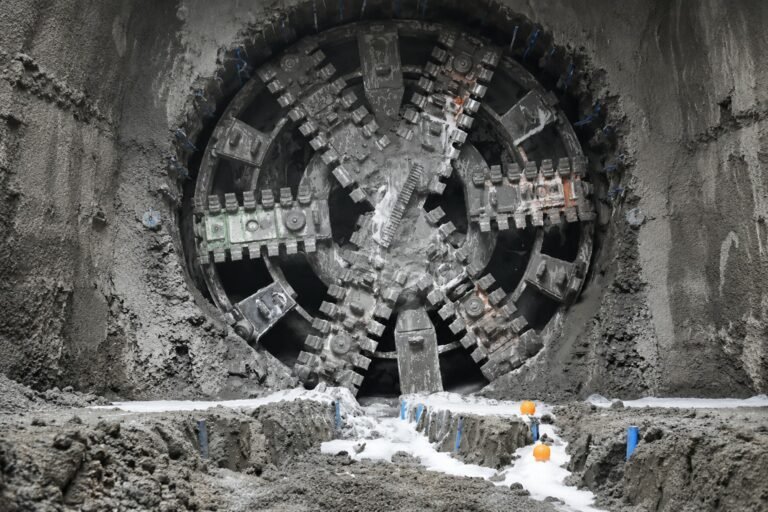
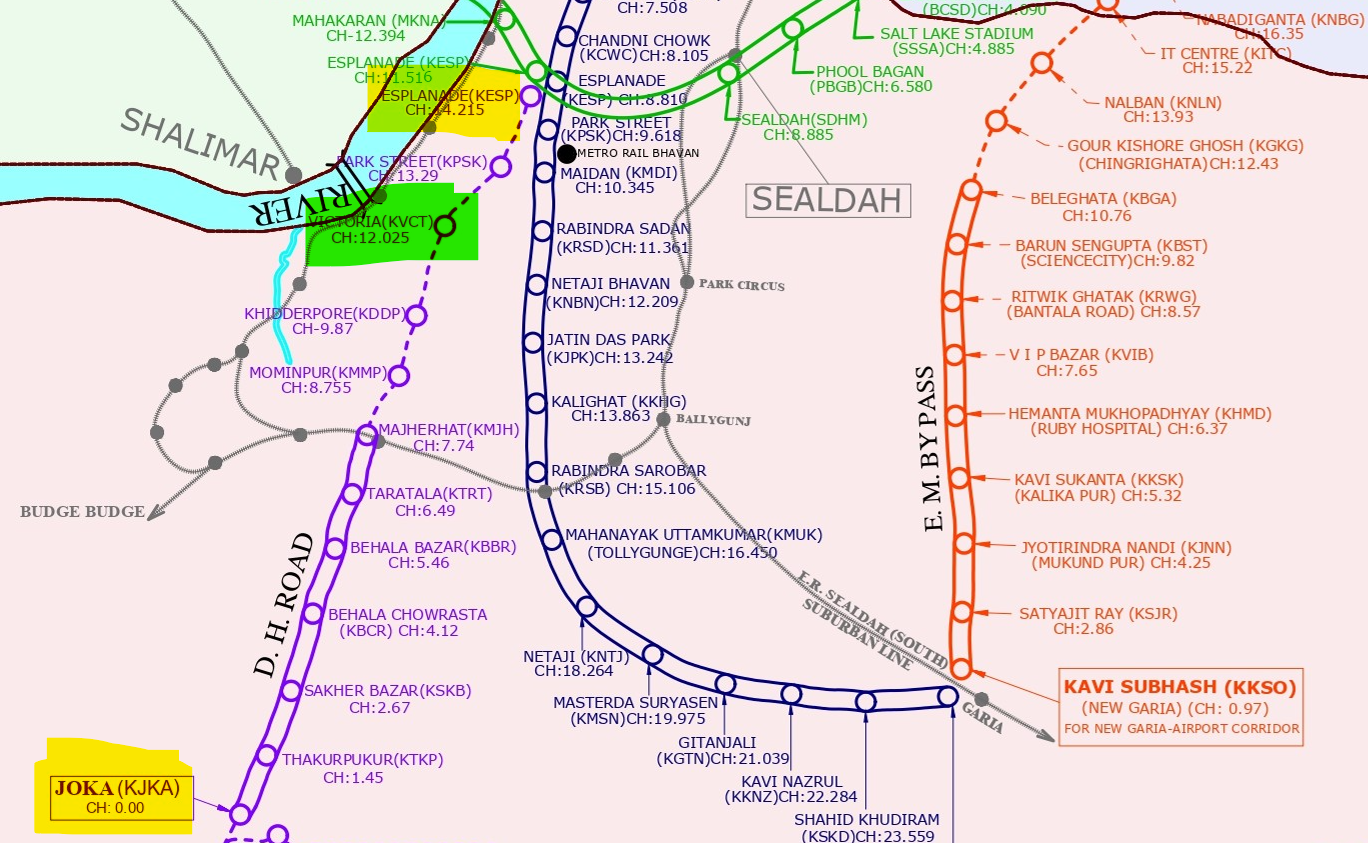
KOLKATA (Metro rail News): Kolkata Metro displayed a major engineering excellence as Tunnel Boarding Machine (TBM) ‘Durga’ achieved breakthrough by constructing an underground tunnel from Kidderpore to Victoria Station on the Purple Line.
On 10 July the TBM Durga reached Victoria Metro Station at 10:30 AM tunneling through a complex underground route.
The video of the tunnel breakthrough was posted on X (formerly Twitter) by Union Railway Minister Ashwini Vaishnaw:
Engineering excellence beneath the city. 🇮🇳 TBM Durga achieves breakthrough at purple line of Kolkata Metro. Congratulations to the team! pic.twitter.com/V8ITtyqS7n
The 18.84 Km-long Purple Line corridor connects Joka with Esplanade. Currently, the purple line is partially operational with an approximately 7.74 km long fully elevated stretch connecting Joka and Majerhat. The work is under progress in the Majerhat to Esplanade section, while another project was proposed connecting Joka and Diamond Park.
The construction for the underground tunnel from Kidderpore to Victoria Station began exactly a year ago on 10th June, 2025. Once completed, the corridor is expected to improve connectivity between south and central Kolkata.
Mr Prem Sagar Gupta, the General Manager of Metro Railway, Kolkata praised the work of project personnel for ensuring safe, methodical and efficient construction without interrupting the surface traffic mobility.
SOLAPUR (Metro Rail News): The Solapur division of Central Railway has commissioned the indigenous standard KAVACH system for the first time. It has been deployed across the 149.476-kilometre Solapur–Wadi section. Kavach is India’s indigenous Automatic Train Protection (ATP) system that prevents collisions and controls overspeeding through real-time monitoring, enabling faster train operations.
KAVACH uses RFID-based track identification and continuous communication between locomotives and infrastructure.1,234 RFID tags were installed and programmed in Solapur across all route sections to enable precise train location tracking. KAVACH was commissioned at Solapur division on 9 July 2026 by the Signal & Telecommunication (S&T) team. This was the first standard Kavach commissioning in Solapur division.
How KAVACH works: Mechanics of India’s indigenous protection system
KAVACH continuously tracks train movements using RFID tags on tracks, radio communication between locomotives, stations, and control centers, and by analysing real-time data on signals, speed, and track occupancy. Additionally, it reduces human error. Kavach also has an SOS system that allows immediate emergency communication in case of any danger. Further, it is indigenous and cost-effective too.
This will be a major boost to railway safety and operational excellence in Solapur division. This development highlights the Government of India’s vision for a safer, smarter, and self-reliant railway network under the Atmanirbhar Bharat initiative through modernisation and technological innovation.
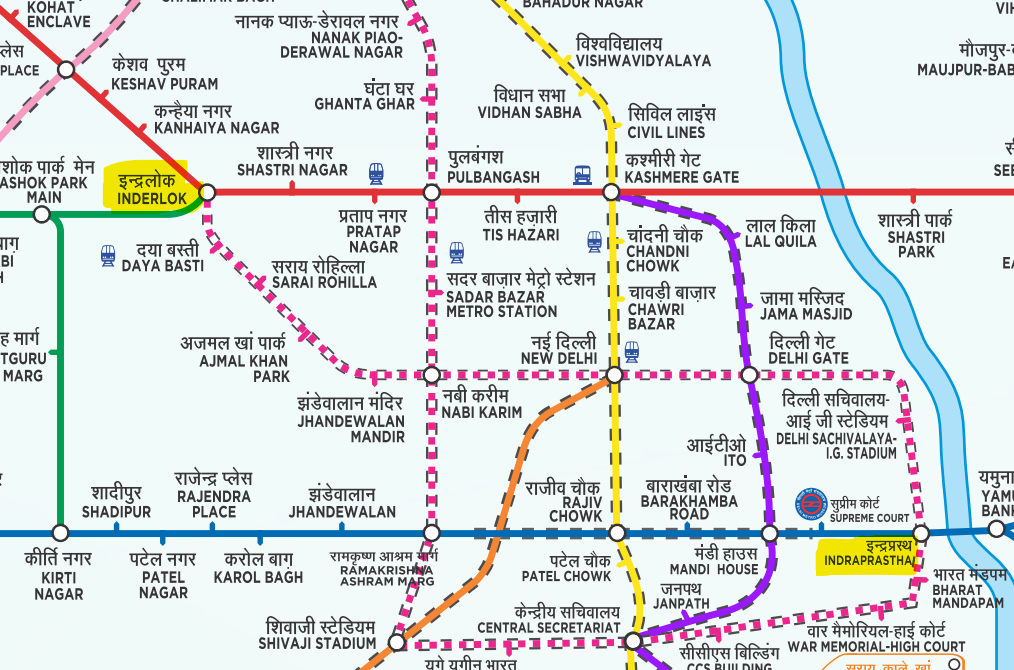
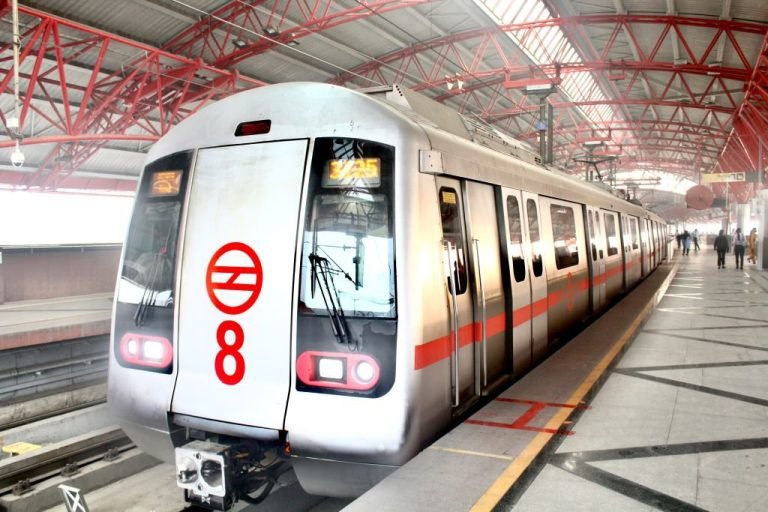
NEW DELHI (Metro Rail News): Delhi Metro began work on the Inderlok-Indraprastha corridor of the Magenta Line extension. The work commenced with the construction of the Diaphragm Wall at the Sarai Rohilla Metro Station site on Thursday (July 10). The Inderlok-Indraprastha corridor will be a 12.377 km long fully underground extension of the Magenta Line (Line 8).
DMRC COMMENCES WORK ON INDERLOK–INDRAPRASTHA CORRIDOR
The Delhi Metro Rail Corporation has commenced construction work on the Inderlok–Indraprastha Corridor of the Delhi Metro project today with the commencement of Diaphragm Wall construction at the Sarai Rohilla Metro Station… pic.twitter.com/naBCHccCxA
— Delhi Metro Rail Corporation (@OfficialDMRC) July 9, 2026
The proposed Sarai Rohilla metro station is a major station located at the center of Delhi improving connectivity with education institutes, markets and other commercial places in the area. Mrs Rekha Gupta, Delhi’s Chief Minister was present at the Sarai Rohilla metro station for the commencement of the work.
Mapping for Interconnectivity
The corridor will have 10 underground stations. These stations will foster interchange across seven other lines of the Delhi Metro. The following stations are planned in this corridor:
Inderlok (providing interchange with Red Line and Green Line)
Daya Basti
Sarai Rohilla
Ajmal Khan Park
Jhandewalan Mandir
Nabi Karim (providing interchange with Magenta Line’s branch line)
New Delhi (providing interchange with Yellow Line and Orange Line)
Delhi Gate (providing interchange with Violet Line)
Delhi Sachivalya I.G. Stadium
Indraprastha (providing interchange with Blue Line)
Magenta Line to become Delhi Metro’s Longest Line
Magenta Line is projected to become the longest line in the Delhi Metro with a length of approximately 89 km after the implementation of the proposed extension. Moreover, it will feature 21 interchange stations, the highest number of interchange stations across the network. Currently, it is lagging behind the Pink Line (71.55 km) with 49.12 km length. The construction work on Magenta Line’s Central Vistas corridor and Janakpuri West-R.K Ashram Marg is in progress.
NEW DELHI (Metro Rail News): Noida International Airport will soon be connected to Ghaziabad, as the Ghaziabad-Jewar RRTS corridor has entered the Detailed Project Report stage. With an operating speed of 180 kmph, this Namo Bharat corridor is expected to cut travel time from Ghaziabad to Jewar to approximately 40-50 minutes. NCRTC Managing Director Shalabh Goel confirmed that DPR’s are being prepared for the Ghaziabad-Jewar and Noida-Faridabad-Gurgaon corridors.
Proposed Ghaziabad-Jewar RRTS corridor stations:
Ghaziabad
Ghaziabad South
Greater Noida West-Sector IV
Greater Noida West-Sector II
Knowledge Park V
Surajpur
Pari Chowk
Ecotech VI
Dankaur
YEIDA North-Sector 18
YEIDA Central-Sector 21
Jewar Airport
The project is planned to meet rising passenger demands and improve connectivity between Delhi NCR cities and Noida airport, linking important residential areas and commercial hubs. This line will have 12 stations and two depots, one at the northern end and one at the southern end.
Shalabh Goel also mentioned that the government is expected to approve two major RRTS corridors soon, the Delhi–Panipat–Karnal and Delhi–SNB–Alwar RRTS Corridors. He added that preparatory work such as geotechnical studies, utility mapping, and shifting or modifying infrastructure like Extra High Tension (EHT) lines and water pipelines is already underway for these projects. These steps will be taken once all necessary approvals are obtained, preventing delays and allowing the projects to proceed smoothly. He also noted that other states are looking into planning their own RRTS corridors to keep up with rapid urban growth and rising transportation needs.
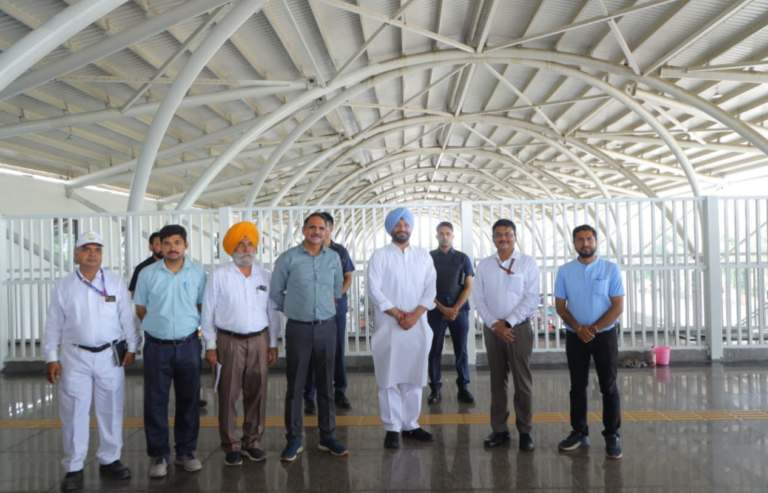
JALANDHAR (Metro Rail News): Union MoS for Railways & FPI Shri Ravneet Singh Bittu visited the Jalandhar cantt Railway Station under the Ferozepur Division on Wednesday, July 8, 2026, to review preparations for Prime Minister Narendra Modi’s upcoming visit on July 17.
A new landmark in passenger convenience and modern railway infrastructure!
The transformed Jalandhar Cantt Railway Station features a vast 8,720 sq. m. steel-structured concourse with a 40-metre-wide roof spanning 200 metres over the platforms, providing commuters with a… pic.twitter.com/nKjtQpecHw
— Ravneet Singh Bittu (@RavneetBittu) July 8, 2026
During his inspection, Minister Shri Bittu spoke extensively about the project’s significance and its upcoming inauguration. He expressed his gratitude to Prime Minister Modi and Railway Minister Ashwini Vaishnaw for the modernization initiative, describing it as a landmark development for Punjab.
The revamped Jalandhar Cantt Railway station boasts an expansive steel-concourse of 8,720 sq.m.,topped with a 40-meter-wide roof that extends 200 meters across the platforms, offering travelers a spacious, weather protected experenience. Enhancing its splendor is a 36-meter-wide air concourse that spans 1,770 sq.m., effortlessly linking both sides of the city and enhancing accessibility for countless passengers each. In addition to officially dedicating the ₹125-crore Jalandhar Cantt station upgrade to the public, the Prime Minister is expected to use the venue to virtually inaugurate approximately 75 other completed Amrit Bharat Stations across the country.
Addressing the media after the review session, Minister Shri Bittu highlighted that the 110-year-old station has been transformed into a world-class facility under the Amrit Bharat Station Scheme. He emphasized that the revamped station stands as a major architectural landmark for Punjab, celebrating the region’s cultural ethos while providing highly efficient, congestion-free transit for the more than 7,500 passengers who use the facility daily.
According to reports from the Ministry of Railways, construction has entered its final phase. The inspection primarily focused on rectifying minor initial deficiencies and ensuring the highest standards of safety, security, and last-mile connectivity ahead of the Prime Minister’s high-profile visit.
PATNA (Metro Rail News): Patna, the capital of Bihar, will get a semi-high speed rail network or Regional Rapid Transit System (RRTS) connectivity with the neighbouring cities of Muzaffarpur, Begusarai, Arrah and Gaya. Bihar’s Chief Minister Samrat Choudhary approved ₹31.59 Crore for the Alternative Analysis Report (AAR) and Detailed Project Report (DPR) preparation of the State’s RRTS project in a meeting held on Wednesday (July 8).
National Capital Region Transport Corporation (NCRTC) has been nominated for preparing the DPR and the AAR for the construction of these RRTS corridors. It will assess the feasibility of the project and prepare a comprehensive report for future approvals.
The Chief Minister called this decision as “an important step towards the development of a fast, safe and modern public transport network, strengthening regional connectivity and boosting the urban development and economic growth in the state.”
बिहार मंत्रिपरिषद की बैठक में आधुनिक एवं तीव्र सार्वजनिक परिवहन व्यवस्था के विकास की दिशा में एक महत्वपूर्ण पहल की गई है।
राज्य के चार प्रमुख कॉरिडोर में रीजनल रैपिड ट्रांजिट सिस्टम (RRTS) के निर्माण हेतु अल्टरनेटिव एनालिसिस रिपोर्ट (AAR) एवं विस्तृत परियोजना प्रतिवेदन (DPR)…
The Namo Bharat Corridor in the Delhi NCR will serve as a model for this project. India’s first semi-high speed rail corridor with a speed up to 180 kmph, the Delhi-Meerut RRTS project has significantly reduced the travel time between these cities. This corridor is expected to reduce Delhi’s congestion and improve the regional connectivity between Delhi and its nearby cities.
Significance of the Route
Patna has emerged as Bihar’s most developed city in all the socio-economic aspects. In addition to serving as the administrative capital, it is also the busiest city in the state attracting people from nearby cities for work, education, industries and commercial activities.
The proposed RRTS will boost the regional connectivity in Bihar by providing semi high-speed rail network in the following corridors:
Patna-Muzaffarpur
Patna-Begusarai
Patna-Arrah
Patna-Gaya
These four proposed corridors connect Patna in all directions with Muzaffarpur in North, Begusarai in East, Arrah in West and Gaya in South. The four corridors are projected to significantly reduce the travel time between Patna and its neighbouring districts.
NEW DELHI (Metro Rail News): Indian Railways is rapidly expanding its global footprint by exporting metro coaches, locomotives, and specialized railway engineering services. This export boom is heavily supported by a significant increase in private sector participation within the domestic rail ecosystem, alongside newly signed Free Trade Agreements (FTAs) with key partner nations.
Under the proactive “Make in India, Make for the World” initiative, the sector has aggressively transitioned from being a technology importer to a global exporter. This shift reflects India’s vision to grow into an international manufacturing hub, expanding its railway infrastructure footprint to over 16 countries.
While the primary target markets initially included neighboring countries like Nepal, Bangladesh, and Sri Lanka, India’s railway consulting and export arm, RITES, is now actively pursuing opportunities in South American markets, including Chile, Brazil, and Argentina.
The Cost-Competitiveness Edge
A major catalyst driving India’s fast-paced expansion into the global railway market is its extreme cost-efficiency. For instance, a standard 16-coach Vande Bharat trainset is roughly 40% cheaper than similar semi-high-speed trainsets manufactured by European conglomerates like Alstom or Siemens. This makes Indian rolling stock an incredibly attractive option for budget-conscious nations seeking modern transit solutions.
Impact of New-Generation FTAs
Speaking on the sidelines of a FICCI seminar on July 8 2026 about Investment Economics in India, Surendra Ahirwar, Executive Director of Traffic Commercial (Rates) at the Railway Board, highlighted the expanding reach of the Indian railway ecosystem as reported by ANI.
Mr.Ahirwar emphasized the positive impact of new-age FTAs, noting that these agreements are designed to do more than just facilitate basic trade. They act as powerful tools for economic integration, paving the way for foreign direct investment (FDI) and integrating Indian manufacturing seamlessly into global supply chains.
Major Project Milestones
In June 2026 itself India successfully flagged off its first major locomotive export to the Republic of Guinea from the advanced Marhowra manufacturing plant in Bihar. This forms part of a massive deal to supply 150 heavy-haul evolution-series locomotives to the African nation. Simultaneously, RITES signed a strategic Memorandum of Understanding (MoU) with a major Middle Eastern rail operator, expanding India’s reach into high-value engineering consultancy and network management in foreign markets.
BENGALURU (Metro Rail News): The South Western Railway (SWR) has begun the land acquisition process for Bengaluru’s Vande Bharat sleeper trains maintenance depot project in Thanisandra, Karnataka.
Regular and heavy maintenance of Vande Bharat sleeper trains cannot be done at ordinary stations because of their complex systems. The sleeper versions are longer and heavier, requiring more space, longer stabling lines, and larger maintenance facilities. Because these sleeper rakes are being manufactured by ICF (Chennai) and BEML (Bengaluru), a dedicated depot in Bengaluru makes logistical sense. The Thanisandra depot will feature specialized workshops, pits, cranes, and equipment to carry out scheduled maintenance efficiently in the future, acting as the home base for Vande Bharat sleeper trains in South India.
The depot is being built on the Channasandra–Yelahanka railway section near the existing Thanisandra railway station, which is very close to Manyata Tech Park. Another major advantage is its proximity to BEML (Bharat Earth Movers Limited), where many Vande Bharat coaches are manufactured. Additionally, Thanisandra will benefit from the upcoming Heelalige–Rajankunte Corridor of the Bengaluru Suburban Rail Project.
SWR has officially notified plans to acquire 13.95 hectares (approximately 34.48 acres) of land for the depot. While some land around the existing Thanisandra railway station and tracks already belongs to Indian Railways, the project requires additional land from private owners. Consequently, the railways have started the formal acquisition process for 14 private land parcels.
Union Railway Minister Ashwini Vaishnaw highlighted the ₹270 crore allocation for the Thanisandra Vande Bharat Sleeper maintenance depot during the flag off ceremony of Bengaluru–Mumbai Vande Bharat Sleeper service in May 2026.
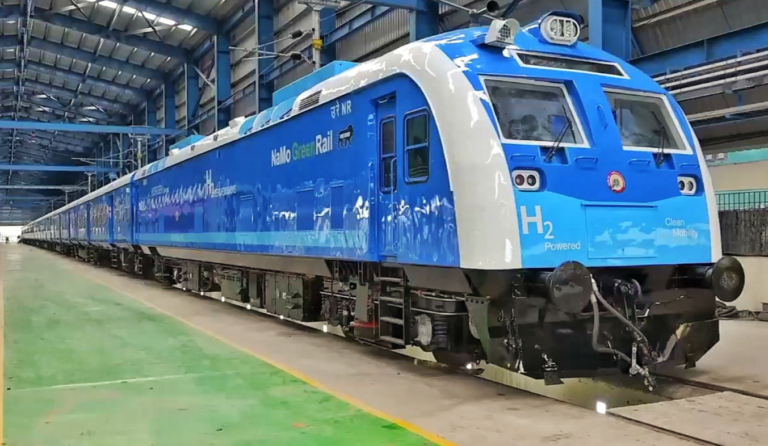
NEW DELHI (Metro Rail News): Taking a major step towards a sustainable and green mode of transportation, Indian Railways is all set to launch its first indigenously built hydrogen train on 17th July. Prime Minister Shri Narendra Modi will flag-off the train in Haryana from Jind Railway Station. A senior Railway officer said that they’ve received the confirmation from the Prime Minister’s Office that the first Hydrogen Train will be flagged off by the Prime Minister on 17th July from Jind.
After the launch, the train will start its commercial operations, covering 356 km every day and making two 89 km circular trips between Jind and Sonipat. The maintenance depot is situated at Shakurbasti in Delhi. TUV SUD, an independent international testing and certification organisation, carried out the safety and design inspections.
As per the security protocols, the hydrogen power system will be turned off bringing the train to a “dead” condition, from there a diesel locomotive will shift it to the maintenance facility. The train is equipped with eight passenger coaches consisting of 682 seats and will facilitate around 2,600 passengers.The designed maximum speed of the train is 110 kmph but the operations will be carried out at 75 kmph on the Jind-Sonipat route.
This train features two Driving Power Cars (DPC) positioned at either end of the 10-coach trainset (one at the front and one at the back). The eight passenger coaches are located in the middle. The total traction capacity stands at 2,400 kW (approximately 3,200 hp), as each DPC can generate 1,200 kilowatts (kW) of power (1,600 hp) which will be enough for the train to operate smoothly. At peak capacity the train is expected to use around 300 kg of hydrogen each day.
The train will be powered by hydrogen fuel cells that convert compressed hydrogen into electricity. This train is designed to store 440 kg of compressed hydrogen. Being highly sustainable and environmentally friendly it only emits water as a byproduct. The commencement of the first hydrogen train will mark a monumental milestone in India’s transition toward zero-emission transportation.
DELHI (Metro Rail News): The Delhi Metro Rail Corporation (DMRC) has created a fully-owned subsidiary, Delhi Metro International Limited (DMIL), to broaden its global transit consultancy and operations business. The subsidiary was renamed to accommodate a major expansion of its scope and objectives.
DMRC issued a fresh statement highlighting the full activation and global ambitions of DMIL on July 7, 2026. DMIL is now ready to execute projects globally, leveraging DMRC’s proven excellence. This formation allows DMIL to build upon DMRC’s over 20 years of experience managing one of the world’s most esteemed metro systems. It will execute consultancy, project execution, operations and maintenance (O&M), and advisory services for metro, railway, and urban transit projects across India and abroad.
Delhi Metro currently operates a network of more than 416 km with over 300 stations, serving over 6.5 million passengers on a daily basis. It also manages operations and maintenance for metro systems in several other Indian cities, such as Mumbai Metro Line 3, Chennai Metro Phase 2, Patna Metro, Noida-Greater Noida Metro, and Rapid Metro Gurugram. Furthermore, it successfully operates seamless driverless metro operations on Magenta & Pink Lines of the Delhi Metro network, predictive maintenance, and multimodal integration. The launch of this new subsidiary is a strategic move to monetize DMRC’s proven capabilities on a global scale.
This renaming reflects the desire of Indian infrastructure firms to export their engineering and project management skills to global markets, especially in urban transport, where many countries are pouring resources into metro and mass transit projects.
“Building on over two decades of expertise in developing and operating one of the world’s most respected metro systems, Delhi Metro Rail Corporation (DMRC) has established Delhi Metro International Limited (DMIL),” the company mentioned in its press release.
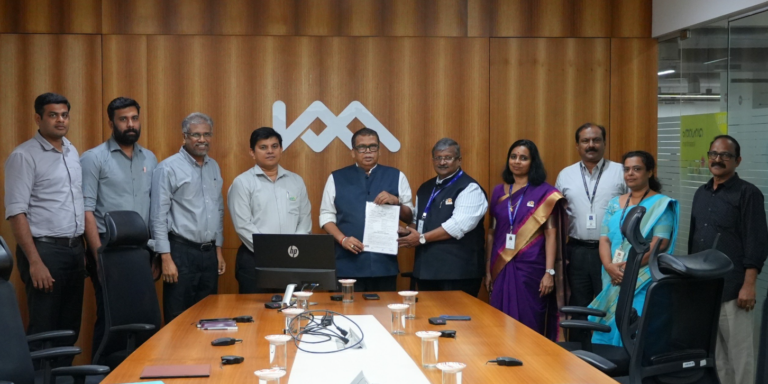
KOCHI (Metro Rail News): Kochi Metro Rail Limited (KMRL) is planning to expand the water metro network from Aluva Metro Station to Cochin International Airport (CIAL) through the Periyar River. They have signed a Memorandum of Understanding (MoU) with the SCMS Water Institute to assess the feasibility of the proposed metro extension.
Under the MoU, the institute will serve as a collaborator for the project , providing research and technical support on the feasibility assessment of the project. The institute will conduct various scientific analysis and assessments to test the feasibility of the project.
In a significant step towards expanding Kerala's sustainable urban mobility network, KMRL has signed a MoU with the SCMS Water Institute to collaborate on the feasibility study for the proposed Water Metro extension connecting Aluva Metro Station to CIAL through the Periyar River pic.twitter.com/1xp3dCbXHj
Earlier, KMRL issued a tender to conduct a comprehensive topographical assessment of the 4 km route from Aluva to CIAL.
Significance of the Project
According to KMRL, the project will be a major step towards expanding Kerala’s sustainable urban mobility network. The approximately 4-km water route will cover major locations before reaching the airport. It is expected to link Aswathy Nagar, Naduvannoor, Pattoorkunnu, and Kalady before reaching the airport.
Upon completion, the project will become a major link providing seamless connectivity to the airport via the water metro system.
About Kochi Water Metro
Kochi Water Metro is India’s first water metro system. It envisions the development of 15 identified routes which will connect 10 islands along a 78 km network. The metro involves a fleet of 78 fast, electrically propelled ferries to provide seamless connectivity between the route. This project intends to enhance connectivity with environment friendly and energy efficient technology.