



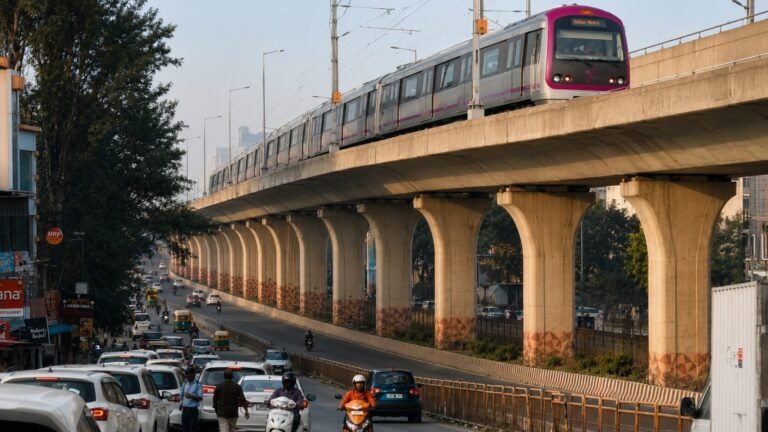
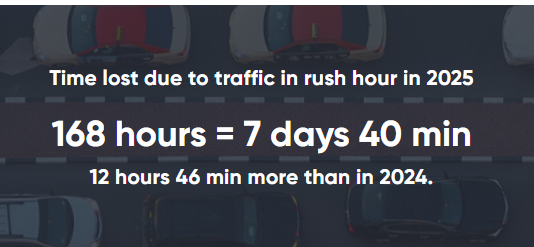
BENGALURU (Metro Rail News): On the 20th October 2026, Bengaluru metro will complete 15 years of operation. Despite this, the massive traffic congestion problem of India’s IT capital has not seen much improvement. The first stretch of Bengaluru’s Namma metro was inaugurated on 20th October 2011 yet almost one and half decade later, an average person living in Bengaluru spends around 168 hours in traffic every year. The city’s metro had faced constant delays in implementation.
At present, the Bengaluru metro has a length of around 96 km. Delhi metro, for comparison, had a length of 194 km (more than double of the present length of Bengaluru Metro) in its first 12 years of operation. After continuous delays, the pink link of Bengaluru Metro’s Phase II project was projected to start operations from 15th August yet for another time the project got delayed.
Moreover, there has been a significant cost escalation in Bengaluru Metro due to these delays. They are hit by inflation and depreciation, amounting to rising general price level and constant wear and tear of capital goods and raw material, increasing the cost. The initial budget sanction for the first phase of Bengaluru Metro was around ₹6395 crores in 2005 which was revised to almost ₹14,133 crores escalating the cost by 121%. The Phase II is still under implementation and its overall cost has spiked by 52.1% from the initial ₹26,405 crores to an estimated ₹40,425 crores.
Delays in Bengaluru Metro
Bengaluru metro has faced constant delays since the announcement of the project. The foundation stone for the project was laid in 2006. Since then, in the last two decades the project has faced several roadblocks. The land acquisition problem, leadership inconsistency, land acquisition hurdles and technical challenges have slowed the progress of the project.
Get the Daily Metro & Rail Brief
Join 125,000+ metro and rail professionals. Project updates, new tenders and contract awards from across India, in your inbox every day.
Land Acquisition
The metro project is a large infrastructural project which requires a significant amount of land. Bengaluru has observed a saturated use of land over the last few decades. Thus, land acquisition has turned out to be a major reason behind delays in the Bengaluru Metro project. The metro project requires deforestation, displacement of local population, resolving legal disputes over land for acquiring them for the project, altering routes from heritage buildings. All these factors delay the project and sometimes they take months to resolve.
Inefficient Central-State Govt. Coordination & Inconsistent Leadership
The central and state governments have shown inefficient coordination at various stages of the Bengaluru Metro project. The conflicts of interest in some crucial decisions such as routes, funding, fare prices, integration of the metro with other public transport systems and several other resolutions have observed an inefficient coordination between the central and state government. Furthermore, there has been a constant change in the leadership of the Bengaluru metro project. The project had 11 different managing directors in just 22 years.
Technical Challenges
While working on the underground stretch of the Bengaluru Metro, engineers stated that they have faced technical challenges due to the hard Deccan rocks. The Tunnel Breaking Machine (TBM) had to cut through hard rocks, cavities and boulders. This was cited as a major reason for the delay in the underground section of the first phase. Further, technical challenges in roads alignment, construction of double decker roads and geological problems have led to delay in the project implementation.
Bengaluru’s urban mobility issue
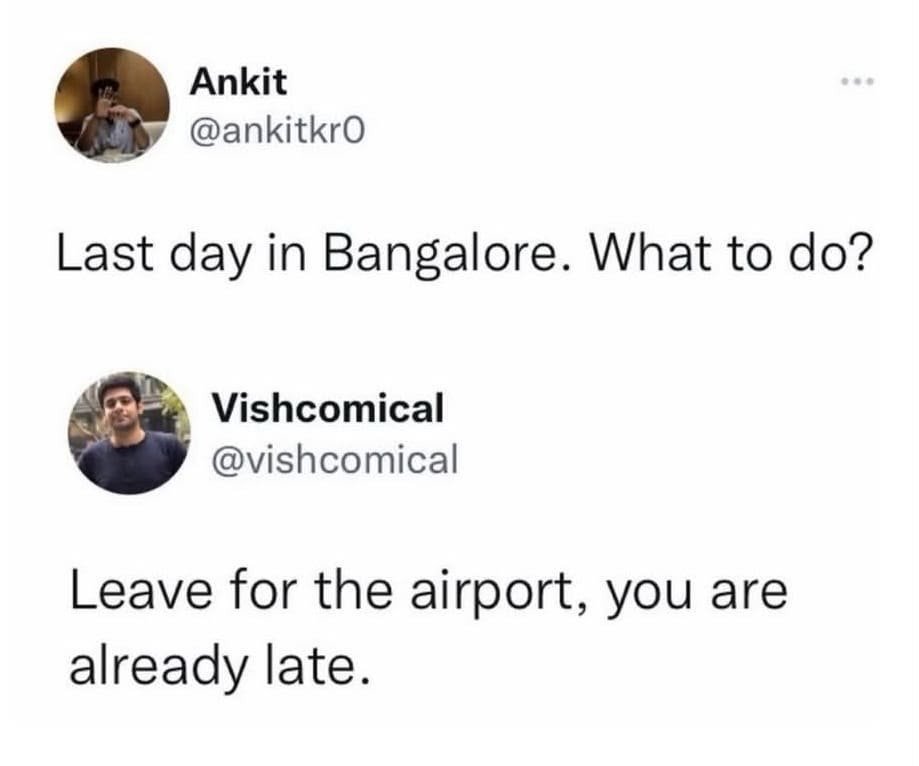
Bengaluru has one of the worst traffic congestion issues in the world. During rush hours, the mobility is almost stagnant. The urban mobility problem in Bengaluru is a serious issue which needs to be addressed. The metro connectivity can bring much relief to the people yet the metro alone can not solve the problem. The suburban rail and a Regional Rapid Transit System (RRTS) can complement the public transport and improve connectivity. The number of vehicles is still increasing in the city, the traffic issue therefore needs immediate attention.
Also Read: India on the Move: Revisiting the milestones in Railway, Metro & RRTS on the 80th Independence Day
Project Overview
The answer to Bengaluru traffic problem, pollution, and insane hours to travel to work out school etc is and only is “Proper, Frequent & Well connected Public transport”
Are all metro stations really that easy to use? Is public transport from metro stations to places around connected?
This is not rocket science it’s common sense.
We as a people who care about others need to wake up, keep our ego/pride/ red tape aside and collaborate with all involved parties. Otherwise it means we don’t want to fix this problem. As simple as that.
168 hours per day? Week? Month? Year? Was trying to find an explanation but couldn’t… Maybe I’m blind!
168 hours in year 2025
Metro moves you fast. But to reach Metro
Bangalore traffic management has only one solution to traffic jam. Make the road One Way so that the police Cops can relax and surf their mobile , and double the delay.
I bet, bangalore traffic cannot be regulated even by 2035.