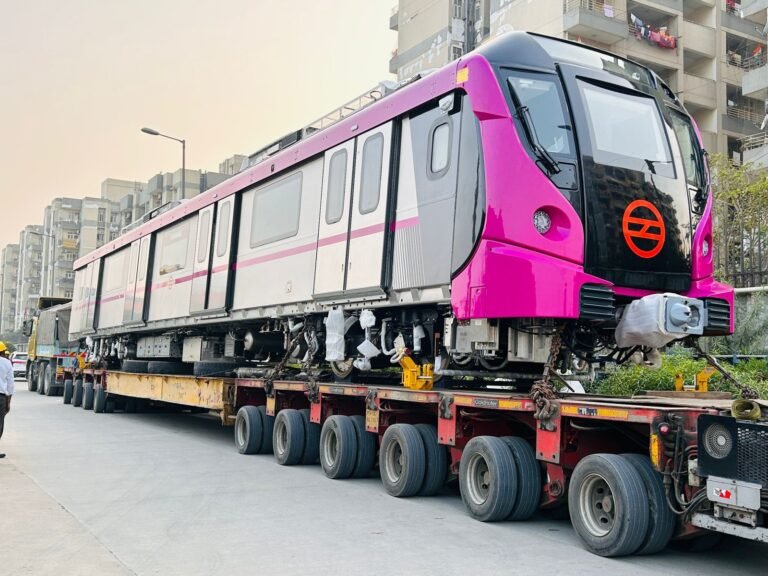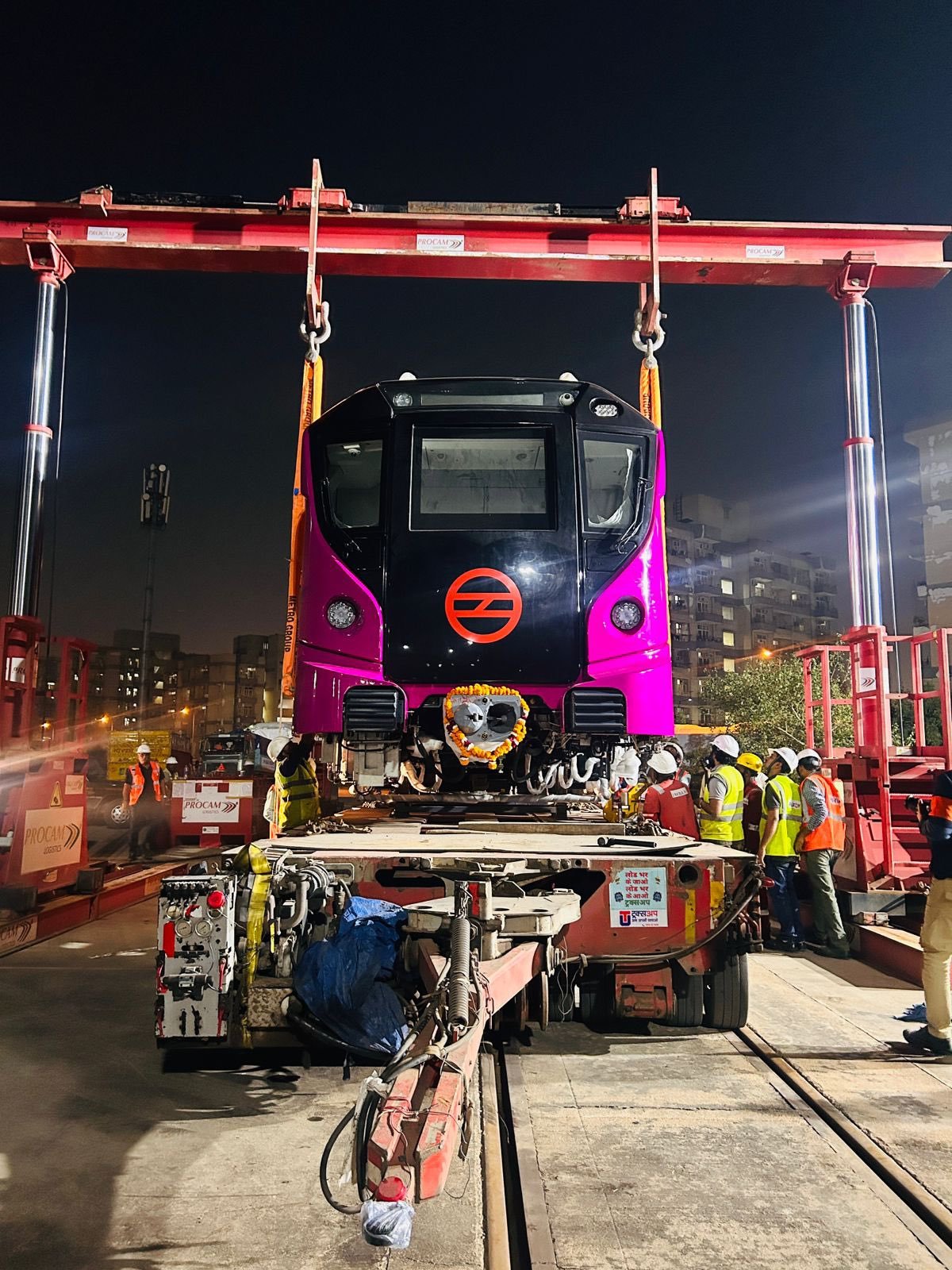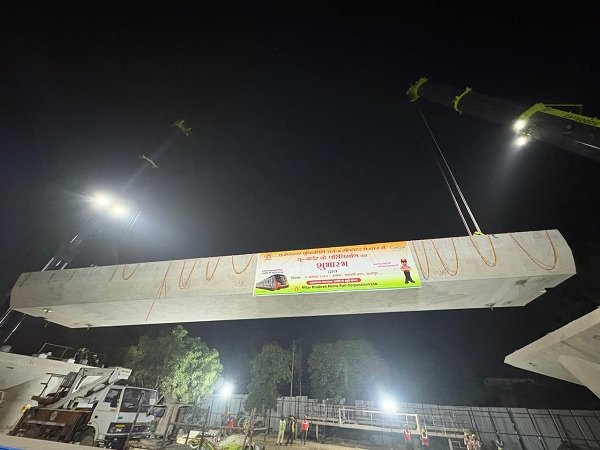
Shri Kuldip Narayan Assumes Additional Charge as MD of NCRTC

DELHI (Metro Rail News): Shri Kuldip Narayan, IAS, Joint Secretary of the Ministry of Housing and Urban Affairs (MoHUA), Government of India, has assumed additional charge as Managing Director of the National Capital Region Transport Corporation (NCRTC). Shri Narayan has been associated with NCRTC as a Government Nominee Director since December 2022.

At MoHUA, he oversees its flagship program, Housing for All / Pradhan Mantri Awas Yojana (Urban). He also serves as a nominee official director at the National Housing Bank (NHB) and Housing & Urban Development Corporation (HUDCO). Previously, he served as the District Magistrate of Gopalganj, Chhapra, Munger, and Madhubani districts in Bihar. Shri Narayan also held the position of Chairman of the Bihar State Bridge Corporation, MD of the Bihar State Milk Co-Operative Federation Ltd, MD of the Bihar State Water Board, and Patna Municipal Commissioner.

Shri Narayan is a 2005 batch IAS officer from the Bihar cadre who holds a degree in Mechanical Engineering from IIT Kanpur. In 2015, IIT Kanpur conferred the Satyendra Dubey Memorial Award upon him for his efforts to promote probity and transparency in public service and for his exemplary dedication to maintaining the highest professional integrity in upholding human values.

NCRTC

NCRTC – a joint venture company of the Government of India and the States of NCT of Delhi, Haryana, Rajasthan, and Uttar Pradesh, under the administrative control of the Ministry of Housing and Urban Affairs, GOI, is mandated to implement the Regional Rapid Transit System (RRTS) project across the National Capital Region, ensuring balanced and sustainable urban development through better connectivity and access.

Presently, a 34-km section between Sahibabad and Modi Nagar North, which has eight stations of India’s first RRTS corridor between Delhi-Ghaziabad-Meerut, is operational. Construction is advancing swiftly on the remaining sections, and the entire 82-km long corridor is scheduled to be operational by June 2025.


Discover the endless possibilities of our city’s Metro at InnoMetro, our flagship Expo and Conference. Be an active participant in shaping its future towards a more sustainable tomorrow. Stay informed and join us to take a step towards a brighter future.

Mumbai Metro: Rubal Agarwal Appointed as MD of MMMOCL

MUMBAI (Metro Rail News): The Maha Mumbai Metro Operation Corporation Ltd. (MMMOCL) announced in a tweet that the Hon’ble Mrs. Rubal Prakhar Agarwal, IAS, will be the new Managing Director on April 8. Previously, the senior bureaucrat Rubal Agarwal served as the Additional Municipal Commissioner in the Pune Municipal Corporation (PMC) from January 1, 2019. During her tenure at PMC, Agarwal played a crucial role in various initiatives, notably in managing the COVID-19 crisis in Pune, garnering acclaim for her efforts.


Responsibilities as MD

As the Managing Director of MCL, Mrs Agarwal will oversee the operation and maintenance (O&M) of all metro lines within the Mumbai Metropolitan Region. Her leadership is expected to steer MMMOCL through its ongoing expansion efforts and infrastructure projects, ensuring efficient and reliable metro services for passengers.

MMMOCL’s Expectations from the New MD


Agarwal’s appointment comes at a crucial phase for MMMOCL, which is working hard to enhance its services and infrastructure to meet the growing demands of Mumbai’s population. Under her leadership, the corporation is assured and aims to achieve new heights in its mission to provide sustainable and accessible transportation solutions for the city.


Discover the endless possibilities of our city’s Metro at InnoMetro, our flagship Expo and Conference. Be an active participant in shaping its future towards a more sustainable tomorrow. Stay informed and join us to take a step towards a brighter future.

Chennai Metro’s TBM ‘Kaveri’ Nears Adyar Junction Milestone

CHENNAI (Metro Rail News): Three months after the deployment of the Tunnel Boring Machine (TBM) ‘Kaveri’, employed by the Chennai Metro Rail Limited (CMRL) for tunnelling beneath the Adyar River. It has successfully crossed the riverbed and is very close to arriving at the Adyar Junction Metro station. TBM ‘Kaveri’ started its journey from Greenways Road and is slated to drill a distance of 1.2 km to reach the Adyar junction. 

In the coming years, this tunnel will serve as a vital link for commuters travelling between Adyar and various other parts of the city via the Metro Rail system. As an integral part of corridor 3 of the Phase II Project, spanning from Madhavaram to SIPCOT, the tunnel represents a significant pace towards enhancing connectivity in Chennai.

The CMRL Phase II Project spans 116 kilometres and features stops at over 100 locations across the city. ‘Kaveri’ spearheads the initiative as the pioneering TBM to tunnel beneath a river. Nevertheless, this achievement isn’t unprecedented for CMRL, which has previously laid tunnels under the Cooum between Government Estate and Chennai Central Metro stations in the Phase I Project.

CMRL officials have emphasised the formidable challenges encountered during the tunnelling process, particularly beneath the Adyar River. The TBMs navigated through a combination of sandy and clayey soil conditions, showcasing the intricacies of the engineering efforts. In the stretch between Greenways Road and Adyar junction, CMRL intends to lay the track at a depth of approximately 18 meters, ensuring the structural integrity and safety of the infrastructure.

Simultaneously, the Adyar Junction Metro station’s construction activities are underway and expected to be completed within the next two years, facilitating seamless integration with the metro network.

Chennai Metro’s Phase II Corridor-3

The Chennai Metro’s Phase II Corridor-3 spans 45.4 km, connecting Madhavaram to SIPCOT. It comprises two sections: an underground line from Madhavaram to Taramani and an elevated stretch to SIPCOT. Construction progresses swiftly with 49 stations, including 20 elevated and 29 underground. 

The 20 km stretch from Nehru Nagar to SIPCOT in Siruseri will likely be operational by 2027, easing commuting challenges and enhancing Chennai’s transport network.


Discover the endless possibilities of our city’s Metro at InnoMetro, our flagship Expo and Conference. Be an active participant in shaping its future towards a more sustainable tomorrow. Stay informed and join us to take a step towards a brighter future.

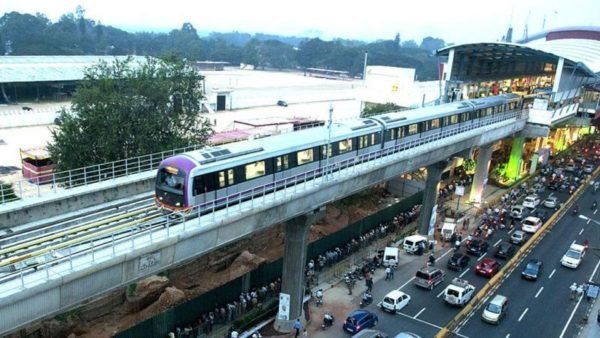
Namma Metro Phase 3: BMRCL Faces Hurdles in Land Acquisition

BANGALORE (Metro Rail News): As the Bangalore Metro Rail Corporation Limited (BMRCL) moves forward with land acquisition efforts, some property owners are raising concerns. Despite BMRCL offering compensation equivalent to 200% of the market value and careful planning, a fresh issue arises about the potential consequences of partial land acquisition.

BMRCL has identified 713 properties to acquire 106 acres to facilitate Metro BMRCL’s Phase 3 project. These properties are crucial for the successful implementation of the project, yet not all landowners are willing to part with their holdings.

Corridors and Stations Overview

Phase 3 of the Metro project encompasses two elevated corridors. Corridor 1 stretches 32.5 km from JP Nagar IVth Phase to Kempapura via Outer Ring Road. Corridor 2 extends 12.5 km from Hosahalli to Kadabagere on Magadi Road.

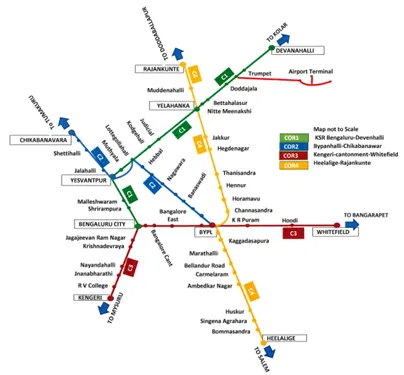
Metro Map 2025 Bengaluru City.pdf
Bengaluru City’s Metro Map (BMRCL)

Government Approval Status

While the Karnataka Cabinet has approved the project, clearance from the Centre is pending, causing delays. Approval is expected after the formation of a new government. M S Channappa Goudar, General Manager of the Land Acquisitions Cell at BMRCL, spoke about the current progress.

Challenges Faced in Land Acquisition

Despite offering compensation equivalent to 200% of the market value, BMRCL encounters resistance from some landowners. Three families have lodged protests against the acquisition of their properties. M S Channappa Goudar explains the concerns regarding partial acquisition and its impact on the value of the remaining land.

Specifics of Protested Properties

The disputed properties encompass a total area of 165.65 sqm, comprising three distinct plots of land: 78.18 sqm, 40.14 sqm, and 47.33 sqm. Landowners express concerns about the potential decrease in the value of their remaining land due to the partial acquisition. These parcels are integral to the Vinayaka Layout Metro Station.

The BMRCL officials are evaluating the situation to devise an appropriate course of action. The corporation aims to address the concerns raised while ensuring the smooth progression of Metro Phase 3. Various challenges persist in the acquisition process, but BMRCL remains committed to advancing the Metro Phase 3 project to benefit Bangalore’s residents.


Discover the endless possibilities of our city’s Metro at InnoMetro, our flagship Expo and Conference. Be an active participant in shaping its future towards a more sustainable tomorrow. Stay informed and join us to take a step towards a brighter future.

Delhi Metro Extension: Texmaco Rail Begins Track Deployment for Magenta Line

DELHI (Metro Rail News): On April 2nd, Texmaco Rail & Engineering initiated the deployment of standard Gauge tracks to extend Delhi Metro’s Magenta Line (Line-8). The project falls under contract DT-08, which comprises Janakpuri West & R.K. Ashram (28.92 km), Elevated (21.18 km), and Underground (7.74 km). Texmaco Rail & Engineering was awarded Rs. 117.08 crore by the Delhi Metro Rail Corporation (DMRC) in January 2024 for Package DT-08 after emerging as the lowest bidder among four contenders in December 2023.

1712089634630 1.jpeg
Pic. Credit: Rahul Varshney

The company is installing standard gauge rails (1435 mm) from Package DT-08 of the Delhi Metro Phase 4 project. This installation will occur on the viaducts of elevated packages:

  • DC-01A (Keshopur – Mangolpuri)
  • DC-01 (Mangolpuri – Haiderpur-Badli Mor)
  • DC-03R (Haiderpur-Badli Mor – Derawal Nagar)
  • DC-05 (Derawal Nagar – RK Ashram).
1712089633795.jpeg 1
1712089633119 1.jpeg

Inauguration ceremony of Texmaco Rail’s local site office – Pic. Credit: Rahul Varshney

Contract DT-08

  • Scope: Installation, Testing and Commissioning of Ballastless Track, including supply of MSS & Buffer stop for Line-8 Extension. Comprising (Keshopur- Majlis Park- R.K. Ashram) stretch.
  • Completion period of the Work: Thirty Six (36) months.

In September, Paras Railtech initiated track-work activities for the underground Package DC-06, spanning 2.03 km and connecting Janakpuri West to Krishna Park Extension. This section falls outside the scope of DT-08, which encompasses approximately 92% of the Magenta Line’s extension.

Delhi Metro Phase 4: Magenta Line Expansion

The Magenta Line, part of Delhi Metro’s Phase 4, extends from Janakpuri West to Botanical Garden, spanning 37.46 kilometres with 25 stations. Notable features include India’s tallest escalator at Janakpuri West and the deepest metro station at Hauz Khas. Interchanges with other lines enhance connectivity.

Expansion to Ramakrishna Ashram Marg

An extension from Janakpuri West to Ramakrishna Ashram Marg is underway, offering interchanges with multiple lines. The 28.92 km extension includes both elevated and underground sections, passing through various neighbourhoods.

Engineering Challenges and Innovations

Construction challenges include passing under 17 pairs of active railway tracks, requiring careful execution to avoid disrupting train movement. State-of-the-art monitoring equipment ensures safety and minimal disruption.

The extension promises reduced commuting time and better connectivity, impacting property demand positively in surrounding areas.


Discover the endless possibilities of our city’s Metro at InnoMetro, our flagship Expo and Conference. Be an active participant in shaping its future towards a more sustainable tomorrow. Stay informed and join us to take a step towards a brighter future.

Chairperson Railways Jaya Varma Sinha Inspects Progress of Sivok-Rangpo Rail Project

WEST BENGAL (Metro Rail News): The inspection drive for the ongoing Sivok-Rangpo Rail Project (SRRP) was carried out by Jaya Varma Sinha, Chairperson and Chief Executive Officer, Railway Board, on April 6th. Progress of the project was reviewed meticulously by Sinha in the presence of Satish Kumar Pandey, General Manager/N. F. Railway/Construction, and Chetan Kumar Shrivastava, General Manager of Northeast Frontier Railway, along with other senior officials of railway and construction.

The Sivok—Rangpo New Rail Line Project is a continuing national endeavour in India with the objective of linking Sikkim’s current reliance on road connectivity to the country’s railway network.

GKdPDmmXYAAt8H6.jpeg 1

Sabyasachi De, Chief Public Relations Officer (CPRO) of Northeast Frontier Railway, underscored the transformative potential of the project. He emphasised that the Chairperson Railway Board and CEO evaluated the progress of the work, inspecting the lining of Tunnel No. T-1 & T-8. They also inspected Tunnel No. T-7. Notably, the first underground Railway Station within the Indian Railways network, Teesta Bazar Station, falls under this tunnel, marking a pioneering step in advancing Railway infrastructure in the country.

He further highlighted that the officials assessed the construction progress of Teesta Bridge & Sivok Station. Subsequently, they engaged in a brief discussion with the officials of the Indian Railway Construction Organization (IRCON) regarding all aspects of the Sivok-Rangpo New Rail Project.

GKdPDg6WgAABzNp.jpeg

Salient Features of the Sivok-Rangpo Rail Project

  • Total length: 44.98 km 
  • States Covered: 

(i) West Bengal = 41.548 km 

(ii) Sikkim = 3.432 km 

  • Total Number of Stations (including Sivok): 05 (Riyang, Tista Bazar, Melli, Rangpo) 
  • Total Number of bridges: 22
  • Important bridges: 03 
  • Major bridges: 13 
  • Road-Over-Bridges: 02 
  • Number of Tunnels: 14 
  • Total Length of Tunnel: 38.552 km 
  • Length of longest Tunnel: 5270 m 
  • Length of shortest Tunnel: 538 m 
  • Max. Distance between crossing: 17.323 km (Melli – Rangpo)
0 0 21112122612171Systemmap

More about the Project

The Sivok-Rangpo New Rail Line Project branches out from the New Jalpaiguri-Alipurduar-Samuktala Road line at Sivok railway station and runs through villages and towns of Kalimpong district of West Bengal and Pakyong District of Sikkim. The line passes through Mahananda Wildlife Sanctuary, River Teesta, and River Rangpo and is expected to provide overall development for the state of Sikkim. The line is expected to provide a major boost to connectivity for the land-locked state of Sikkim.

The Sivok-Rangpo railway line project, linking the Indian states of West Bengal and Sikkim, commenced in 2009. The foundation stone was laid in Sivok, West Bengal, by the Minister of Railways and in Rangpo, Sikkim, by the Vice President of India on October 30, 2009.

The project was first awarded in May 2010 for Rs 4,084.69 crore to IRCON International, and the original deadline was May 2015. However, due to various reasons, such as delays in forest land division falling in West Bengal, permission for conducting a survey in Mahananda Wildlife Sanctuary, a process involving diversion of forest land, and COVID-19, the project has been delayed. The revised date for the completion of the Sivok-Rangpo rail project is December 2024, with a revised cost, including escalation, of Rs 12,474.07 crore.


Discover the endless possibilities of our city’s Metro at InnoMetro, our flagship Expo and Conference. Be an active participant in shaping its future towards a more sustainable tomorrow. Stay informed and join us to take a step towards a brighter future.

Amber Enterprises and Yujin Machinery Enter JV: Advancing India’s Railway Infrastructure

NEW DELHI (Metro Rail News): Amber Enterprises India Limited announces a joint venture between AT Railway Sub Systems Private Limited (AT Railway) and South Korea’s Yujin Machinery Ltd. (Yujin). This collaboration aims to design, manufacture, and develop Driving Gears, Couplers, and Pantographs for rolling stock, including high-speed and metro trains, regional rapid transit systems, Vande Bharat trains, wagons, trams, and other Indian Railway products. AT Railway will have a majority stake in the joint venture.

A key element of this joint venture is that it will pave the way for acquiring the necessary technical know-how for the manufacturing of driving gears, couplers, and pantographs in India. This is in line with Amber Group’s consistent strategy of increasing the wallet share per coach.

Sidwal, a 100% holding company of AT Railway, is one of the leading companies in the manufacturing of HVAC, Pantry, Doors, and Gangways for Rolling Stock. With the addition of driving gears, couplers, and pantographs, the Amber Group will further enhance its wallet share in each coach, which is in line with Amber Group’s strategy. 

This is a significant development not just for Sidwal and the Amber Group but for the entire Indian Rolling Stock infrastructure space. In a field currently dominated by MNCs, today’s development will help advance the ‘Make in India’ and ‘Atmanirbhar Bharat’ economic philosophy espoused by the Government of India in this crucial railway infrastructure space and will bolster domestic design and manufacturing capacity.

A Spokesperson from Amber Enterprises India Ltd.

Speaking on this latest joint venture, the spokesperson said, “We are thrilled to join forces with Yujin through this joint venture, combining our strengths to become a leading manufacturer of critical rolling stock components like driving gears, couplers, and pantographs for India’s rapidly expanding railway ecosystem. This strategic partnership aligns perfectly with our vision of contributing to the Atmanirbhar Bharat and Make in India initiatives. With substantial investments planned and access to cutting-edge technology from our Korean partners, we are well positioned to capture a significant share of the lucrative railway rolling stock market while fostering an ecosystem for indigenous manufacturing, job creation, and skill development.”

Railway Infrastructure Boost

The government’s emphasis on upgrading railway infrastructure is evident in the recent interim budget, which allocated a record Rs 2.55 lakh crore to Indian Railways for fiscal 2024-25, marking a 5.8% increase from the previous year. This underscores the government’s focus on the railway industry. Against this backdrop, the addressable market for railway sub-systems in India is estimated to be around NR 75,000 – 80,000 crores over the next 5-6 years.

Yujin Machinery Ltd. & AT Railway

YUJIN Machinery Ltd. founded in 1972 and headquartered in South Korea is world-class company equipped with top-level technology and quality for manufacturing of Brake Systems (Brake Operating Unit, Air Supply Unit, and Bogie Brake), Couplers, Driving Gears, Pantographs and Door control systems for Rolling stock.

Meanwhile, AT Railway Sub Systems Private Limited, a subsidiary of Sidwal Refrigeration Industries Private Limited and wholly owned by Amber Enterprises India Limited, focuses on developing and manufacturing railway components and sub-systems.


Discover the endless possibilities of our city’s Metro at InnoMetro, our flagship Expo and Conference. Be an active participant in shaping its future towards a more sustainable tomorrow. Stay informed and join us to take a step towards a brighter future.

MMRDA Seeks Additional Land for Mumbai Metro Line 6 Depot

MUMBAI (Metro Rail News): Mumbai Metropolitan Region Development Authority (MMRDA) has formally requested the state government for an additional 7 hectares of land in Kanjurmarg to facilitate the construction of a depot for the Metro rail Line 6 (Swami Samarth Nagar-Vikhroli). Currently, the authority has 15 hectares of land earmarked for this purpose. Building a metro depot on 15 hectares of land will encapsulate the area with severe congestion. 

MMRDA believes that acquiring additional land will help appropriately organize the layout of the depot.

The depot infrastructure initially accommodates one train set consisting of eight cars. However, it includes provisions for future expansion, with plans to accommodate up to 13 trains by 2031.

Tender & Scope

The executive committee of MMRDA had given the green light for the appointment of Sam India Buildwell to undertake the construction of the depot at Kanjurmarg for Line 6 at an estimated cost of Rs 509 crore.

Construction activities at the depot include building the boundary wall, earthwork filling, workshop construction, inspection bay, stabling lines, automatic washing plant, and Operations and Control Centre.

Mumbai Metro Line 6 (Pink Line)

Mumbai Metro Line 6 is a 14.7km elevated metro line under construction linking Swami Samarth Nagar to Vikhroli. With Metros running at a top speed of 80 kmph and an average speed of 34 kmph, the line will employ standard gauge electrification and communication-based train control (CBTC) signaling. 

It will encompass 13 stations spanning from Swami Samarth Nagar to Vikhroli EEH. The line has interchanges at Kanjurmarg (With line 4), Seepz (With line 3), and Adarsh Nagar (With line 2A).

mumbai metro depot

This corridor will have train operations using 18 train rakes, each comprising six cars.

The line is anticipated to commence operations by the end of 2026, featuring multiple interchanges with other metro lines, buses, and suburban rail services along its route.


Discover the endless possibilities of our city’s Metro at InnoMetro, our flagship Expo and Conference. Be an active participant in shaping its future towards a more sustainable tomorrow. Stay informed and join us to take a step towards a brighter future.

NMRC Plans to Boost Revenue: MD Directs Several Improvements

NOIDA (Metro Rail News): The Noida Metro Rail Corporation (NMRC) plans to boost its non-fare box revenue to leverage its resources for increased financial sustainability. Shri Lokesh M., Managing Director (MD), was apprised of several initiatives to capitalise on commercial opportunities on the Noida metro’s Aqua Line.

NMRC Executives Spotlight Revenue Generation Avenues

  • Installation of kiosks within staircase structures at metro stations
  • The utilisation of available space at Sector-83 Metro Station for offices, fitness centres, or other recreational activities
  • Outdoor advertising at pier and median locations
  • Property development at key sectors such as Sector 94 and Sector 71
  • Inside Advertisement at Metro Stations 

Following the presentation, Shri Lokesh M., Managing Director, Noida Metro Rail Corporation Ltd., inspected the metro network from Sector 51 to NSEZ. During the inspection, he issued several directives aimed at improving passenger experience and operational efficiency.

Screenshot 53
NMRC’s Aqua Line

MD’s Directives

Structural Modifications – Mr. Lokesh suggested minor adjustments at the concourse level to facilitate smoother passenger movement. He further boarded the escalator and suggested the need for servicing of the escalator for smooth operations.

Technical Maintenance – Noticing malfunctioning video screens on PSDs, Mr Lokesh instructed immediate rectification of the issue. He also recommended replacing defaced stickers with aqua-coloured ones for improved visibility.

Station Upkeep – Expressing dissatisfaction with the maintenance of station premises, Mr Lokesh directed authorities to enhance cleanliness and overall upkeep of platforms and platform screen doors (PSDs).

Vendor Compliance – Observing discrepancies in the maintenance of stations by vendors under co-branding schemes, Mr Lokesh directed authorities to issue notices for non-compliance with contract specifications.

Ticketing Services – In order to improve passenger convenience, Mr Lokesh instructed the increase in the number of ticket vending machines (TVMs) across stations.

Train Maintenance – Mr Lokesh emphasised the importance of maintaining clean windshields on trains to ensure passenger safety and comfort.

These initiatives by the NMRC highlight its commitment to optimise revenue streams while prioritising passenger satisfaction and operational excellence. With these measures in place, NMRC aims to solidify further its position as a leading provider of metro services in the region.


Discover the endless possibilities of our city’s Metro at InnoMetro, our flagship Expo and Conference. Be an active participant in shaping its future towards a more sustainable tomorrow. Stay informed and join us to take a step towards a brighter future.

BEML and Bharat Electronics Ltd. Sign MoU to Develop i-TCMS

BANGALORE (Metro Rail News): BEML Limited (formerly Bharat Earth Movers Limited) and Bharat Electronics Limited (BEL) signed a Memorandum of Understanding (MoU) on Thursday to jointly develop an indigenous Train Control Management System (i-TCMS). 

The MoU was exchanged at BEML headquarters, attended by esteemed dignitaries, including Shri Shantanu Roy, Chairman and Managing Director of BEML, and Shri Manoj Jain, Director (R&D) representing BEL, alongside other senior officials from both organisations. 

Shri Shantanu Roy, CMD of BEML, said, “We are happy to sign this initiative with India’s leading professional electronics player, BEL Ltd that will be aimed towards reducing India’s import dependency for train communication technology and enhancing the nation’s indigenization capacity. Our joint endeavour aligns perfectly with India’s “Aatmanirbhar Bharat” ambition, aiming to achieve the world-class products for rail industry”.

Picture4

In line with the “Make in India” initiative, the collaboration aims to develop TCMS indigenously to meet the future needs of rail projects in the country.

Train Control Management System

TCMS facilitates seamless data communication interfaces with other train-borne and wayside systems, ensuring efficient and reliable rail operations. Through this strategic alliance, BEML and BEL are poised to revolutionise the landscape of rail transportation in India, ushering in a new era of technological advancement, operational efficiency, and national self-reliance.

TCMS is also known as the “brain of the train,” and it aims to play a pivotal role in coordinating control and monitoring across various systems. It encompasses a distributed control system comprising:

  • Computer devices, software, human-machine interfaces, digital and analogue input/output capabilities, and secure data networks. 
Picture5

A Step Forward

Currently, Train Control Management Systems (TCMS) are predominantly supplied by propulsion suppliers, leading to a dependency on imported technology.

This momentous occasion signifies a significant step forward in aligning with the ‘Make in India’ initiative championed by the Government of India. The primary objective of this partnership is to identify potential areas of cooperation between BEML and BEL, with a focus on exploring the joint development of high-value products and solutions tailored to the requirements of Indian Railways and Metro systems.

Picture2

BEML & BEL

Bharat Electronics Limited (BEL) and BEML Limited are two leading PSUs under the Ministry of Defence, Government of India, playing a pivotal role in serving the nation’s core sectors. BEL is a Navratna PSU, known for its leading-edge technology and contributions to India’s defence and electronics sectors, while BEML is a multi-technology ‘Schedule A’ company, serving India’s core sectors like Defence, Rail, Power, Mining, and Construction.


Discover the endless possibilities of our city’s Metro at InnoMetro, our flagship Expo and Conference. Be an active participant in shaping its future towards a more sustainable tomorrow. Stay informed and join us to take a step towards a brighter future.

Bengaluru Sub-Urban Railway Project: SWR Allocates Land For Corridor-4

BENGALURU (Metro Rail News): The South Western Railway (SWR) took a step forward on Tuesday by allocating 114.472 acres of land for the Bengaluru Sub-Urban Railway Project (BSRP), specifically for the construction of Corridor-4. This corridor spans 46.25 km from Heelalige to Rajanukunte in Bengaluru.

The South Western Railway transferred the land to the Rail Infrastructure Development Company-Karnataka Limited (K-RIDE), the executing agency responsible for overseeing the BSRP. K-RIDE is a joint venture between the Government of Karnataka and the Ministry of Railways.

Additionally, a lease agreement for revised Railway land was signed, reducing the area for Corridor-2, also known as the Mallige Line, from 157.07 acres to 85.707 acres.

This land transfer was crucial for completing the Bengaluru Suburban Railway Project (BSRP), valued at ₹15,677 crore, spans 148.17 km, and is expected to be completed by December 2027.

Bengaluru Suburban Rail Route

Bengaluru Suburban Railway Project Corridor – 2 and 4 Overview

CorridorCorridor – 2Corridor – 4
RouteBaiyyappanahalli Terminal – ChikkabanavaraHeelalige – Rajankunte
Length25.01 km46.24 km
TypeElevated (12.905 km) & At-Grade (12.105 km)Elevated (13.29 km) & At-Grade (32.95 km)
DepotJalahalli DepotSilkboard Depot
No. of Stations1419

Calls for Expediting

Union Minister for Railways Ashwini Vaishnaw urged the Karnataka government to expedite the project in a statement in mid-March. Vaishnaw emphasized the importance of bringing in technical expertise to streamline project execution.

“The state government needs to understand that railway is a technical subject and bring technical people in K-RIDE. It doesn’t have people with high technical expertise. I request the Karnataka government to engage such experts so that the project work can be expedited,” Vaishnaw stated.

Project Timeline Adjustment

This call for expedited work comes after the Karnataka government postponed the project completion date from December 2025 to December 2027. The delay prompted concerns regarding the project’s progress and the need for efficient management to ensure timely completion.


Discover the endless possibilities of our city’s Metro at InnoMetro, our flagship Expo and Conference. Be an active participant in shaping its future towards a more sustainable tomorrow. Stay informed and join us to take a step towards a brighter future.

Chennai Metro Phase II: Arrival of Driverless Trains Expected in August

CHENNAI (Metro Rail News): Chennai Metro Rail Corporation Limited (CMRL) is expected to receive its first delivery of a three-car driverless trainset in August. The trainset will operate on Corridor-4 of the Chennai Metro Phase II, connecting the eastern and western parts of the city from Lighthouse to Poonamallee Bypass.

CMRL’s initial plan includes opening the elevated stretch from Kodambakkam Suburban to Poonamallee Bypass on Corridor-4 by 2025. Trains will be parked and maintained at Poonamallee depot, which is under construction and expected to be completed by next year.

A senior official from CMRL disclosed that one trainset is scheduled to arrive in August, followed by six additional trainsets in the subsequent two months. However, the laying of ballastless tracks on the elevated line within the corridor must be completed before the first train’s arrival. The laying of ballastless tracks is targeted for July.

Driverless Trains Unique Features 

In February, CMRL unveiled the first look of its driverless trains, showcasing unique features such as standing perch seats, CCTV surveillance both inside and outside the compartments, charging points for electronic devices, differently coloured grab handles at accessible heights for female passengers, designated areas, and extended waiting buttons for wheelchair users, as well as LCD screens displaying real-time route maps and entertainment content.

WhatsApp Image 2024 04 04 at 13.38.24 074f24d4 1
Representational image of upcoming driverless trains for the Chennai Metro Phase 2 project.

Each of these three-car trains can accommodate approximately 1,000 commuters, with a design speed of 90km/hr and an operational speed of 80km/hr. Equipped with obstacle detection sensors, anti-derailment mechanisms, and regenerative braking systems to conserve electricity, CMRL requires 138 three-car trainsets to provide hassle-free service for the upcoming 116.1km phase-2, expected to open in separate phases from 2025 to 2028.

Chennai Metro Rail Project Phase II – Corridor 4

Corridor 4 of the Chennai Metro Rail Project Phase II extends from Lighthouse in the east to Poonamallee Bypass in the west, covering a distance of 26.8 km. This stretch comprises 16.5 km of elevated tracks and 10.3 km underground, featuring 18 elevated stations and 12 underground stations. Operations on this route are expected to be started by the end of 2027.

Chennai Metro Phase 2map page 0001
Chennai Metro’s Route Map.

Funding for the project is provided jointly by the Asian Infrastructure Investment Bank (AIIB), Asian Development Bank (ADB), and New Development Bank (NDB).


Discover the endless possibilities of our city’s Metro at InnoMetro, our flagship Expo and Conference. Be an active participant in shaping its future towards a more sustainable tomorrow. Stay informed and join us to take a step towards a brighter future.

Kanpur Metro Corridor-2: Excavation Begins at Rawatpur UG Metro Station

KANPUR (Metro Rail News): The Uttar Pradesh Metro Rail Corporation Ltd. (UPMRC) has announced the initiation of excavation work at Rawatpur Underground Station for the Lowering of the First Diaphragm Wall (D-Wall) as part of the construction of the Kanpur Metro Corridor-2.

The 4.10 km long Rawatpur-Double Pulia underground section, a significant portion of Corridor-2, witnessed the commencement of ground excavation on 1 April 2024. The inaugural ceremony was held in presence of Senior officials from UPMRC and contracting agencies.

WhatsApp Image 2024 04 02 at 13.59.51 57145d5c

The pre-construction stage activities, including soil testing, barricading, and utility shifting, had been underway since December 2023, after the tender was awarded. With the initiation of the excavation process for the D-Wall, the construction work on this section has now progressed to the next stage.

Rawatpur Underground Station has an interchange station connecting Corridor 1 and Corridor 2 of the Kanpur Metro. It ensures that commuters will seamlessly transition between the two corridors at this station, enhancing connectivity across the city.

Construction method

The D-Wall, serving as the boundary of the underground metro station, will be constructed with small rectangular panels. A total of 65 such panels of varying sizes will be utilized for the Rawatpur Metro Station, each approximately 5-6 meters in width and 0.8 meters in thickness. The wall will extend to a depth of approximately 19 meters, necessitating excavation up to about 21 meters below ground level.

WhatsApp Image 2024 04 02 at 13.59.51 facb26d9

The construction of underground metro stations in Corridor 2 will follow the Top-Down Method, wherein the stations will be built from top to bottom. This method aims to minimize disruptions to traffic flow by initially preparing the roof slab and subsequently constructing the concourse platform levels.

Greetings

Mr. Sushil Kumar, Managing Director of UPMRC, extended congratulations to the entire team on the commencement of construction at Rawatpur Metro Station. He emphasized the significance of this milestone in advancing the underground construction of Corridor-2 and reiterated the commitment to enhancing commuting convenience for residents.

Kanpur Metro

Presently, commuter services are operational on the 9 km-long Priority Section of Corridor-1 (IIT-Motijheel). Alongside the progress in Corridor-2, construction is also underway in the Balance sections of Corridor-1, further augmenting the city’s metro infrastructure.

Bhubaneswar Metro Project Kicks Off with Depot’s Boundary Wall Construction

Bhubaneswar (Metro Rail News): The long-awaited Bhubaneswar Metro Phase I project has finally gained momentum with the start of construction on the metro depot at Phulapokhari near Barang in Cuttack. This marks a momentous step forward for the project.

The contractor began the work by initiating the construction of the depot’s boundary wall, which is expected to be completed within 12 months at a cost of approximately Rs 9 crore. The entire depot will sprawl over 16 hectares of land and is estimated to cost Rs 104.74 crore.

Following the completion of the boundary wall, construction will commence on the main depot facilities.

DMRC Oversees the Project

The Delhi Metro Rail Corporation (DMRC) is serving as the Turnkey Consultant for the Bhubaneswar Metro Phase I Project, providing crucial expertise throughout the construction process. Recently, DMRC successfully floated three civil work contracts for the Phase I project.
Bhubaneswar Metro Phase I Project

The project envisions a 26.024 km elevated line connecting Trisulia Square with Biju Patnaik Airport through 20 stations. The total project cost is estimated at Rs.5926.38 crore. The entire Phase I project is anticipated to be completed within four years.