RITES to deliver 200 passenger coaches to Bangladesh Railways

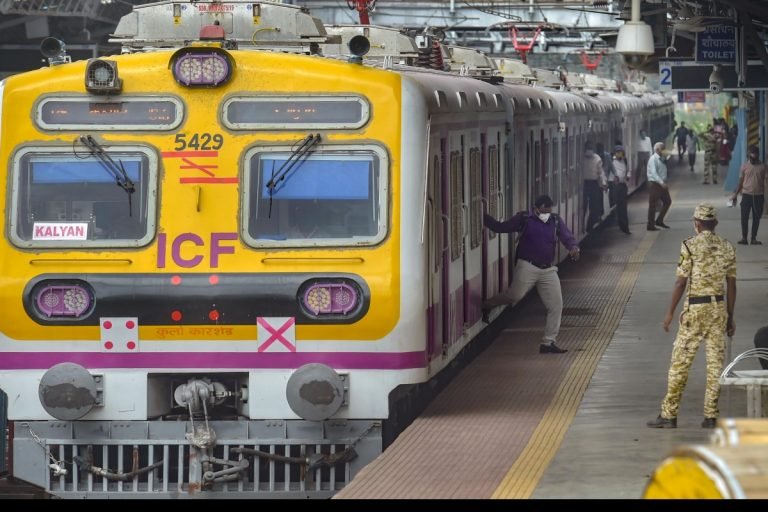
New Delhi (Metro Rail News): In a major boost to India’s “Make in India” initiative, RITES Ltd. (formerly Rail India Technical and Economic Service Limited) has inked a pact with Bangladesh Railways. Under this pact, RITES will be responsible for supplying 200 broad gauge passenger coaches to Bangladesh at Rs 915 crore.

Additionally, RITES will also provide prowess in design, spare parts support and training for the same. The contract is slated to be executed in 36 months followed by a 24-month warranty.

Funding of project

European Investment Bank will facilitate the funding of this project through a global competitive bidding process.

RITES’ collaborations with Bangladesh Railways

This contract aligns with the “Make In India” initiative of the Government of India as it encourages the export of indigenously made rolling stock. Previously RITES had delivered 120 broad gauge passenger carriages, 36 broad gauge locomotives and 10-meter gauge locomotives to Bangladesh Railways.

Previous Developments

On November 1st, 2023, Prime Ministers Narendra Modi of India and Sheikh Hasina of Bangladesh took a crucial step forward in regional connectivity by inaugurating three key infrastructure projects. The three projects were:

  • Akhaura – Agartala Cross-Border Rail Link
  • Khulna – Mongla Port Rail Line and
  • Unit – II of the Maitree Super Thermal Power Plant.

The centrepiece of the inauguration was the Akhaura-Agartala Cross-Border Rail Link. This 12.24-kilometer rail line, built with a grant of ₹392.52 crore from the Indian government, establishes the first direct and shortest rail connection between India’s northeastern state of Tripura and Bangladesh.

Wabtec Inaugurates New Manufacturing Campus in Rohtak India

On May 20, 2024, Wabtec Corporation (NYSE: WAB) inaugurated its new manufacturing campus in Rohtak, India. The new plant represents a $18 million (Rs. 150 crore) investment and will initially manufacture transit rail components and subsystems followed by other Wabtec product lines in the coming years.

Several Wabtec executives were on hand for the grand opening including Pascal Schweitzer, President – Transit Business, Sujatha Narayan, Senior Vice President and India Regional Leader, and Ajay Mani, Managing Director – Transit India.

“India is an important growth market for Wabtec, especially for the transit business,” said Schweitzer. “The new site will further improve Wabtec’s ability to deliver enhanced value through our diverse product offerings for both Indian and global customers.”

The factory, set on 10,000 square meters will start off producing axle-mounted disc brake systems, distributor valves, brake calipers, and actuators, as well as friction material for freight cars, metro coaches, and locomotives for Indian Railways and metros. This campus is expected to host many products in the coming months and years that serve the rail, mining, and industrial segments, a testament to Wabtec’s commitment to the Indian market and the “Make in India” initiative. 

“We intend to grow this site with plans to invest an additional $10 million (Rs. 80 crores) over the next few years,” said Narayan. “We currently employ 300 people and as the business grows, we do intend to add another 200 employees with a keen focus on diversity hires.”

Wabtec’s Transit business in India offers diverse solutions through its manufacturing sites in Hosur and Rohtak, which includes brake systems, couplers, pantographs, relays, air-conditioning systems, passenger access doors, and friction solutions. The company’s large engineering presence in Hosur and Bengaluru also provides engineering and service support for Wabtec operations around the world.

Wabtec is one of the largest rail equipment manufacturers in India, having supplied more than 600 locomotives to Indian Railways and with an installed base of subsystems in over 18,000 LHB (Linke Hofmann Busch) coaches and locomotives. The company currently employs 3,000 people in India.

About Wabtec


Wabtec Corporation (NYSE: WAB) is revolutionizing the way the world moves for future generations. The company is a leading global provider of equipment, systems, digital solutions and value-added services for the freight and transit rail industries, as well as the mining, marine and industrial markets. Wabtec has been a leader in the rail industry for over 150 years and is the worldwide leader in the decarbonization of freight rail

MAHSR Corridor: The Casting of Tunnel Lining Segments Begins in Thane

Thane (Metro Rail News): The work on the 508 km long Mumbai-Ahmedabad High-Speed Rail (MAHSR) Corridor is advancing at a rapid pace. Currently, construction is underway for a 21-kilometre tunnel between the Bandra Kurla Complex and Shilphata for the Mumbai-Ahmedabad Bullet Train Project. A total of three TBMs will carry out the construction of the 16 km section of the tunnel, while the remaining 5 kilometres will be built using the New Austrian Tunnelling Method (NATM).

Casting yard 1

For the 16-kilometer section with TBMs, 76,940 segments will be cast to form 7,441 rings. These ring segments are specially designed for the tunnel lining, with each ring comprising nine curved segments and one key segment. Each segment is 2 meters wide and 0.5 meters thick.

Image 4 2

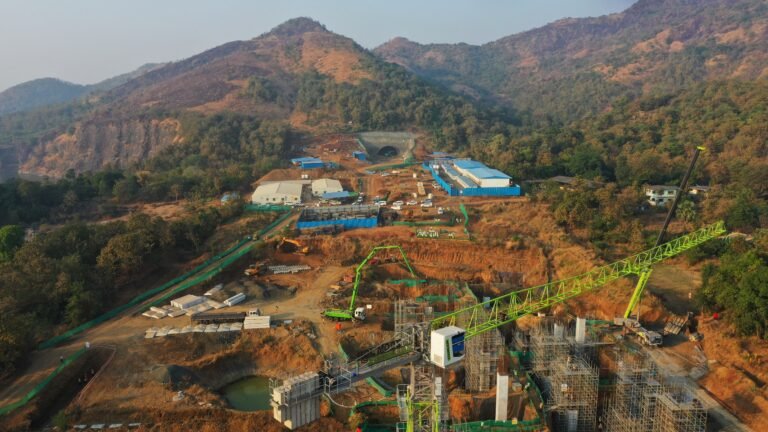
To ensure structural integrity and durability NHSRCL is utilising M70 grade concrete for this work. NHSRCL has already started setting up a casting and stacking yard, covering an area of 98,898 square meters (9.9 hectares) in Mahape, Thane district, Maharashtra. The yard will have nine sets of moulds, each with ten pieces, with four sets already being installed on-site.

The yard is equipped with cranes, gantries, and machines to automate and streamline the casting operations, ensuring quality control during the casting and stacking of the segments. The facility will also feature casting sheds, a stacking area, a batching plant, and a steam curing area.

MAHSR Corridor

The Bullet trains or High speed trains on Mumbai-Ahmedabad High Speed Rail Corridor will run at a speed of 320 Km/hr covering a distance 508 Km and 12 Stations. There will be 35 trains per day/one direction, with a frequency of 20 mins in peak hours and 30 mins in non-peak hours. 

The entire journey will take about 2 hours 7 minutes, including limited stops (at Surat, Vadodara and Ahmedabad) and all stops service will take 2 hours 58 minutes. The Operations Control Centre for the MAHSR corridor will come up at Sabarmati.

Bhubaneswar Metro: 22 Firms Submit Bid For Phulapokhari Depot’s Construction

Bhubaneswar (Metro Rail News): In April, the Delhi Metro Rail Corporation (DMRC) opened the technical bids for the civil construction work of the Phulapokhari Depot & Workshop, which is a part of the Bhubaneswar Metro Phase 1 project. A total of twenty-two firms submitted bids for this development.

route map Bhubaneswar Metro
Bhubaneswar Metro Phase I Route

Phulapokhari Depot will be developed on a 16-hectare site in Phulapokhari as part of Package BBC-02. This facility will serve 3-coach metro trains, supporting operations for the 26 km Line-1, which spans from Trisulia Square to Biju Patnaik Airport and includes 20 elevated stations.

Bidders for Package BBC-02:

  • Ahluwalia Contracts India Ltd..
  • Amara Raja Infra Pvt. Ltd.
  • Bridge and Roof Co India Ltd.
  • Dineshchandra R. Agrawal Infracon Pvt. Ltd.
  • Diversified Energy Solutions Pvt. Ltd.
  • Himcon Engineers India Pvt. Ltd.
  • ISGEC Heavy Engineering Ltd.
  • Lisha Engineers Pvt. Ltd.
  • Metcon India Realty and Infrastructure Pvt. Ltd.
  • MIA Construction Pvt. Ltd.
  • Pragati Construction Consultants
  • PREMCO Rail Engineers Ltd.
  • Quality Buildcon Pvt. Ltd.
  • Ranjit Buildcon Ltd.
  • Shree Balaji Engicons Ltd.
  • S K Construction
  • SPD Constructions Ltd Ltd.
  • UDRA Construction Pvt. Ltd.
  • URC Construction (P) Ltd.
  • Varindera Constructions Ltd.
  • Vishal Builders
  • YFC Projects Pvt. Ltd.

Scope of work

Under this package, the contractor will undertake the design and construction of the Bhubaneswar Metro Depot Cum Workshop, OCC Buildings, including plumbing, drainage, external development works, and road works for the Bhubaneswar MRTS Phase-I Project.

In January 2024, the Delhi Metro Rail Corporation (DMRC) floated the tender for the construction work of the Phulapokhari Depot at an estimated cost of Rs. 104.74 crore with a 36-month deadline.

In January 2024, the Delhi Metro Rail Corporation (DMRC) floated the tender for the construction work of the Phulapokhari Depot at an estimated cost of Rs. 104.74 crore with a 36-month deadline.

Currently, the bids are under evaluation, which can take a couple of months to complete. Once the evaluation is completed, the financial bids of the technically qualified bidders will be opened to identify the lowest bidder..

Bhubaneswar Metro Phase I Project

Phase I of the Bhubaneswar Metro extends over 26.024 km, featuring a single corridor linking Trisulia Square to Bhubaneswar’s Biju Patnaik Airport through 20 elevated stations. Phase 1 was approved in November 2023 at an estimated cost of Rs. 5926.38 crore. Odisha CM Shri Naveen Patnaik laid the foundation stone of this project on 1 January 2024.

Successful Kavach Trial of Vande Bharat Train between Palwal and Vrindavan

NEW DELHI (Metro Rail News): Railway Board Chairperson and CEO Jaya Verma Sinha, accompanied by senior officials from North Central and Northern Railways, inspected a Kavach trial of the Vande Bharat train between Palwal and Vrindavan on 14 May. The trial, overseen by Kush Gupta, Deputy Chief Signal and Telecommunication Engineer, showcased the effectiveness of the Kavach system in ensuring the train stopped at red signals automatically.

Jaya Vera Sinha travelled in the eight-car Vande Bharat train, which operated at speeds of up to 160 kmph, gaining first-hand experience of the Kavach system at various operational points, including red signals, loop lines, and speed restriction zones.

The trial highlighted the Kavach system’s ability to follow speed restrictions without the loco pilot’s interference. For example, the train precisely slowed down to 30 kmph to enter the loop line near Chhata station on the Palwal-Vrindavan route. Officials highlighted that Sinha was highly impressed with Kavach’s efficiency.

Detailed Inspection

Sinha boarded the Vande Bharat at 9:15 AM from Palwal station with other senior railway officials, including the General Managers of North Central and Northern Railways, the Principal Chief Signal and Telecom Engineer of the NCR Zone, the Principal Executive Director of the Railway Board, and the Divisional Railway Manager of Agra. The train reached Sholaka station at 9:38 AM, where it successfully stopped just 9 meters before a red signal at Hodal, using the Kavach system’s automatic braking.

After reaching Vrindavan at 10:45 AM, Sinha inspected the Kavach system installed at the station. The return journey started at 11:10 AM, with the train arriving back in Palwal by 12:30 PM. 

Extensive Kavach Network

All Vande Bharat trains are equipped with the Kavach system, which is designed to automatically apply brakes in emergencies. Before Sinha’s inspection, under Kush Gupta’s supervision, the Agra division conducted three successful Kavach trials at 140 kmph and 160 kmph for various trains, including mail, express, and Vande Bharat services. 

Technological Advancements

The Agra division has established an extensive Kavach network spanning an 80-kilometre stretch from Mathura (excluding the station) to Palwal. This involves placing RFID tags on tracks, installing stationary Kavach units at stations, and setting up towers and antennas along the tracks. Developed by the Research Designs and Standards Organisation (RDSO), the Kavach system ensures trains can apply brakes automatically during emergencies when drivers fail to act promptly.

High-Speed Capabilities

According to RDSO officials, the 125-km stretch between Delhi and Agra is the only section of the Indian rail network where trains can run at a maximum speed of 160 kmph. Other sections across India have a maximum speed limit of 130 kmph. This high-speed track was initially laid for India’s first semi-high-speed train, the Gatimaan Express, which was launched in April 2016.


Discover the endless possibilities of our city’s Metro at InnoMetro, our flagship Expo and Conference. Be an active participant in shaping its future towards a more sustainable tomorrow. Stay informed and join us to take a step towards a brighter future.

Namma Yatri and BMRCL to Pilot Auto-Rickshaw Services for Metro Stations

BANGALORE (Metro Rail News): India’s first open network mobility app, Namma Yatri, is set to sign a Memorandum of Understanding (MoU) with the Bengaluru Metro Rail Corporation Limited (BMRCL) to address the last-mile connectivity gap to and from metro stations in Bengaluru. The pilot project aims to streamline auto-rickshaw services for metro commuters, enhancing convenience and safety.

Namma Yatri (Moving Tech Innovations Private Limited) has proposed to BMRCL to establish kiosks and commence services on a pilot basis at the Indiranagar Metro Station by the end of May. The digital solution will enable NY drivers to select destinations from metro stations based on a ‘queue’ system. If no rides are available in the queue, requests will be directed to a normal ride-hailing mode.

BMRCL explains their collaboration with Bangalore Traffic Police and Namma Yatri. The aim is to provide a safe, affordable, and reliable last-mile connectivity option for metro commuters. The pilot project’s success at the Indiranagar Metro Station will determine the potential expansion to other metro stations.

Namma Yatri’s Perspective

According to reports, prepaid auto stands at metro stations were ineffective and contributed to the last-mile connectivity gap. The digital solution by Namma Yatri allows drivers to choose their destination as part of a queue system, offering flexibility and convenience for both drivers and passengers.

In September of the previous year, the Auto Rickshaw Drivers Union, led by Rudramurthy, launched Metro Mitra, another last-mile connectivity solution. Despite being based on meter charges and an additional Rs 10 pick-up fee, the service faced operational challenges and did not succeed. Namma Yatri emphasized that their service is distinct from Metro Mitra.

Addressing Long-Standing Connectivity Issues

Last-mile connectivity has been a persistent issue for Bengaluru metro commuters. Transport Minister Ramalinga Reddy, during the Winter Session in December 2023, shared that only 76,000 passengers use 134 metro feeder buses daily, a low number compared to the nearly 40 lakh daily metro passengers. Commuters often face harassment from auto-rickshaw drivers who charge exorbitant prices for short distances.

The pilot project at Indiranagar Metro Station will be closely monitored. Its success could pave the way for a city-wide implementation, offering commuters a reliable and efficient transportation solution.


Discover the endless possibilities of our city’s Metro at InnoMetro, our flagship Expo and Conference. Be an active participant in shaping its future towards a more sustainable tomorrow. Stay informed and join us to take a step towards a brighter future.

DMRC Advisor Daljit Singh Pushes Monsoon Prep for Patna Metro

PATNA (Metro Rail News): Daljit Singh, Advisor (Special Works) for the Delhi Metro Rail Corporation (DMRC), has stressed the commitment to minimizing public inconvenience while ensuring quality and safety in metro construction works. During his inspection of the Patna Metro Rail Project, he provided key directives to expedite the construction process while maintaining high safety standards.

Singh visited various construction sites, including ISBT Depot, Saguna More, Danapur, and Patliputra. He reviewed the ongoing civil, electrical, and track-related works and assessed the progress and safety measures in place.

WhatsApp Image 2024 05 16 at 18.40.15 0cd6d114
Daljeet Singh, Advisor (Special Works) at DMRC, inspects construction sites for the Patna Metro Rail Project.

Monsoon Preparatory Measures

In anticipation of the monsoon season, Singh instructed DMRC officials to initiate preparatory measures at construction sites to prevent any disruptions. Specific directives included:

  • Completing piling and pile cap works at Patliputra Nallah/Drain area urgently.
  • Ensuring meticulous planning and 24/7 monitoring of drain diversions.
  • Repairing and maintaining drainage systems to ensure smooth water flow around construction sites.

Environmental and Safety Compliance

At the Saguna More to Danapur viaduct, Singh emphasized the importance of maintaining a clean construction site and addressing environmental concerns. He directed DMRC officials to ensure contractor compliance with these standards, particularly focusing on the functionality of drainage systems.

Untitled design 2024 05 17T104824.004
Daljeet Singh, Advisor (Special Works) at DMRC, inspects construction sites for the Patna Metro Rail Project.

ISBT Depot Site Instructions

During his visit to the ISBT Depot site, Singh outlined the following tasks to be completed before the monsoon season:

  • Peripheral drainage to prevent waterlogging inside the depot.
  • Regular monitoring of soil filling and roadwork.

Progress Updates

Daljit Singh was briefed on the progress of key infrastructure projects within the Patna Metro Rail Project, including the Admin Building, ETU & RGM Shed, Workshop Office Building, and Inspection Bay Shed. He emphasized the importance of maintaining the pace of work to meet the project’s deadline.

Untitled design 2024 05 17T103345.210
Daljeet Singh, Advisor (Special Works) at DMRC, inspects construction sites for the Patna Metro Rail Project.

His directives aim to streamline construction efforts and enhance the efficiency of metro project completion, especially in light of the upcoming monsoon season.


Discover the endless possibilities of our city’s Metro at InnoMetro, our flagship Expo and Conference. Be an active participant in shaping its future towards a more sustainable tomorrow. Stay informed and join us to take a step towards a brighter future.

Chennai Metro: Construction Commences on OMR IT Corridor

CHENNAI (Metro Rail News): Chennai’s metro expansion is underway. Construction has begun for 10 elevated metro stations along the OMR IT corridor between Taramani and Sholinganallur. This development is part of Phase 2 of the Chennai Metro Rail project, covering a 10-kilometer stretch.

Workers have begun building the pillars for these stations, which will be situated below the viaduct where the tracks will be laid. The elevated metro line is being constructed along the centre of the road at a height of 13 meters to 24 meters. 

Progress of the Project

According to a CMRL official, 191 out of the 449 pillars have been built. These pillars are essential for supporting the elevated structure that will house the metro stations and tracks.

In addition to the pillars, 65 out of the 450 ‘U’ girders required for the project have been installed. These girders will support the tracks and ensure the stability of the elevated line.

Land acquisition is currently underway to facilitate station entry and exit point construction. This process is crucial for ensuring easy access to the metro stations once they are operational.

Future Plans

The stretch from Taramani Metro to Sholinganallur Metro is expected to be ready by next year. It is part of the larger 45.4-kilometer Corridor-3, which extends from Madhavaram Milk Colony to Siruseri Sipcot.

Construction on the metro stations is anticipated to begin in June, before the start of the southwest monsoon. The CMRL official also mentioned that the casting of 136 of the 450 ‘U’ girders required for the stretch has been completed.


Discover the endless possibilities of our city’s Metro at InnoMetro, our flagship Expo and Conference. Be an active participant in shaping its future towards a more sustainable tomorrow. Stay informed and join us to take a step towards a brighter future.

TBM Shivaji Breakthrough at RBS College for Agra Metro Phase 1

AGRA (Metro Rail News): Afcons Infrastructure—Sam India Consortium celebrated as tunnel boring machine (TBM) S-718C, known as Shivaji, achieved a breakthrough at RBS College Station for the Agra Metro Phase 1 project. This breakthrough is crucial for the 14.25 km Line-1 connecting Sikandra to Taj East Gate.

TBM Shivaji’s recent breakthrough is its third, contributing to the overall 10th breakthrough for Agra Metro Phase 1’s 7.93 km Package AGCC-02. This package connects the RBS Ramp to the Taj Mahal Ramp. The machine is a 06.63m diameter Herrenknecht earth pressure balance (EPB) TBM, renowned for its efficiency in tunnel construction.

Prior to this, TBM Shivaji successfully completed 228m twin tunnels between the Taj Mahal Station and the Taj Mahal Ramp on Fatehabad Road, achieving breakthroughs in October and December 2023.

Current Achievement

In its third drive, which concluded earlier this month, Shivaji excavated and constructed a tunnel spanning approximately 734 meters for the down-line from RBS Ramp to RBS College Station.

TBM Shivaji
Image credit: Sajan Verma

Contract and Project Details

The Uttar Pradesh Metro Rail Corporation (UPMRC) awarded the civil construction contract for the underground Package AGCC-02 to the Afcons—Sam India Consortium in March 2022. Valued at Rs. 1819.79 crore, the contract has a 48-month deadline.

Project Scope

The contracted section spans chainage 3630.000 to 11564.485 and includes the construction of twin tunnels connecting seven stations: Taj Mahal, Agra Fort, Jama Masjid, SN Medical College, Agra College, Raja Ki Mandi, and RBS College.

TBM Shivaji
TBM S-718C (Shivaji)

TBM Shivaji will now be moved through RBS College’s station box and recommissioned towards Raja Ki Mandi Station. This next phase involves covering a distance of roughly 640 meters.


Discover the endless possibilities of our city’s Metro at InnoMetro, our flagship Expo and Conference. Be an active participant in shaping its future towards a more sustainable tomorrow. Stay informed and join us to take a step towards a brighter future.

Jaipur Metro: Afcon Begins Underground Expansion of Phase 1C

JAIPUR (Metro Rail News): Afcons Infrastructure has commenced underground construction work on Package UG-03 of Jaipur Metro’s new Phase 1C. This phase will extend the existing 11.98 km Pink Line (Mansaravor—Badi Chaupar) eastward by 3.41 km to Transport Nagar.

The project includes a 2.65 km underground stretch with twin tunnels passing through the old city, featuring a new station at Ramganj Chaupar. Additionally, 0.76 km will be elevated, culminating in a new station at Transport Nagar. This development marks a significant expansion of the Jaipur Metro, enhancing connectivity in the city.

Jaipur metro UG work
Image Courtesy: Yash Chaturvedi

Over the weekend, Afcons deployed a trench cutter machine near Galta Gate to initiate trenching works for constructing the diaphragm wall (D-wall) for the tunnel boring machine (TBM) launch shaft. This crucial site on NH-248 will consist of a cut-and-cover tunnel, a TBM launch shaft, and a ramp leading to the elevated Transport Nagar Station.

1715408410477
Image Courtesy: Yash Chaturvedi

Contract and Scope

Jaipur Metro Rail Corporation (JMRC) awarded Afcons Infrastructure the Rs. 630.45 crore contract for Phase 1C in September 2023. The scope of Afcons’ work includes the construction of twin tunnels, the underground station at Ramganj Chaupar, a cut-and-cover tunnel box, and an underground ramp extending from Badi Chaupar Station (Ch: 10387.860) to the end of the ramp (Ch: 13040).

This expansion is expected to alleviate traffic congestion and provide a more efficient transit option for Jaipur’s residents and visitors. The project signifies a major development step in the city’s infrastructure, promising enhanced urban mobility and economic growth.


Discover the endless possibilities of our city’s Metro at InnoMetro, our flagship Expo and Conference. Be an active participant in shaping its future towards a more sustainable tomorrow. Stay informed and join us to take a step towards a brighter future.

Patna Metro: L&T Achieves Second Tunnel Breakthrough for Phase 1

PATNA (Metro Rail News): Larsen & Toubro (L&T) celebrated its second tunnel breakthrough by TBM2 at Patna University on Tuesday for the 30.91 km Patna Metro Phase 1 project’s 8 km underground Package PC-03. This package, connecting Rajendra Nagar and Patna Junction Railway Station, marks a crucial advancement in the city’s metro infrastructure.

The breakthrough milestone of TBM2 was successfully achieved under the leadership and guidance of Shri Daljit Singh, Advisor (Special Works), Delhi Metro Rail Corporation (DMRC). Director (Finance) Shri Ajit Sharma was also present on this important achievement.

Officials of Patna metro and DMRC celebrating breakthrough.
Officials celebrate TBM2’s first breakthrough.

Despite facing numerous obstacles along the tunnel alignment, including approximately 900 buildings and 100 bore wells, the project persevered, overcoming the challenges posed by the densely populated area.

Breakthrough on Line-2

The breakthrough on Patna Metro’s 14.05 km Line-2 (Patna Junction Railway Station – New ISBT) was achieved by TBM Buddha (DZ1091) – a 6.65m diameter Earth Pressure Balance (EPB) machine manufactured by China Railway Construction Heavy Industry Co. Ltd. (CRCHI).

TBM Buddha was assembled and lowered into its launch shaft at Moin-ul-Haq Station in April 2023 and commissioned in May 2023. It completed its first tunnelling assignment by constructing a 1480m section of the up-line tunnel towards Patna University.

Patna Metro, TBM breakthrough wide angle view.
Wide view of the Breakthrough site.

Contract and Project Details of Patna metro

The Delhi Metro Rail Corporation (DMRC) awarded L&T the Rs. 1989 crore contract for Patna Metro Phase 1 Package PC-03 in December 2021, with a 42-month deadline.

Package PC-03 is set to link a ramp near Rajendra Nagar to Patna Junction Railway Station through twin tunnels bored by Tunnel Boring Machines (TBMs). This package will feature six underground stations at Akashvani (formerly Dak Bungalow), Gandhi Maidan, PMCH, Patna University, Moin Ul Haq Stadium, and Rajendra Nagar.

Future Plans and Progress

This breakthrough marks the second of an estimated twelve planned for Package PC-03. TBM Mahavir (DZ1090), working on the parallel down-line tunnel, arrived at Patna University Station in March 2024. Part of its backup gantry can still be seen inside the tunnel.

Both TBMs will be dragged through Patna University’s station box and recommissioned towards PMCH Station for their second assignment, covering a distance of roughly 1.15 km.

Bidding Underway for Line 1

Bidding has been underway since December 2023 for the 16.86 km Line-1’s 8 km underground section, which will be constructed via packages PC-05 and PC-06. The original submission deadline of February 13 has been extended to May 31, and technical bids are scheduled to open on June 3.


Discover the endless possibilities of our city’s Metro at InnoMetro, our flagship Expo and Conference. Be an active participant in shaping its future towards a more sustainable tomorrow. Stay informed and join us to take a step towards a brighter future.

Indian Railways Awards Besco Limited ₹485 Crore Contract for 1200 BOXNS Wagons

NEW DELHI (Metro Rail News): The Indian Railways has awarded Besco Limited a contract to manufacture and supply 1200 BOXNS wagons. The contract, worth approximately ₹485 crore (inclusive of GST), was finalised on December 28, 2023, following a successful bid on e-tender No. 2023RS19547TC.

The BOXNS wagons, which are bogie open wagons, are vital for transporting bulk commodities such as coal, iron ore, and other minerals across India’s extensive railway network. These wagons are designed according to the WD-02BOXNHL-2011 specification and the WD-05086-S-01 Design-F (U/F) index drawing, ensuring they meet the highest standards of durability and efficiency.

Delivery Schedule and Quality Assurance

The contract outlines a phased delivery schedule for the next two years. The initial tranche of 113 wagons will commence delivery on July 1, 2024, and be completed by December 31, 2024. Subsequent tranches will follow biannually until all 1,200 wagons are delivered by December 2025.

To maintain the highest quality standards, Besco Limited will appoint a third-party quality control agency of international repute selected from the standing panel of the Quality Council of India (QCI). This agency will ensure rigorous quality checks are performed at every stage of the manufacturing process. Additionally, the Research Design and Standards Organization (RDSO) will conduct inspections and issue necessary certificates, including the ‘FIT TO RUN’ certificate, before the wagons are dispatched.

Material and Cost Specifications

The contract specifies the use of high-grade materials for critical components. Stainless steel conforming to ASTM-A312 Schedule 40S Gr. TP 304 will be used for the brake, feed, and branch pipes, ensuring longevity and reliability. The total contract value includes GST at 18%, and the firm has provided a guarantee to pass on any additional set-offs/input tax credits to the purchaser.

The wagons’ pricing is subject to variation based on the escalation/de-escalation formula provided in Annexure-A of the contract. This formula accounts for changes in the wholesale price index for castings, mild steel flat, industrial worker CPI, and the transfer price of wheelsets from the Rail Wheel Factory, Bangalore.

Payment Terms and Security Deposit

Besco Limited will receive 90% of the payment upon submission of a bill supported by the RDSO inspection certificate and proof of delivery. The remaining 10% will be paid after the receiving railway authority certifies that the wagons have been received in complete and good working condition. 

To secure the contract, Besco Limited has submitted a security deposit of ₹29.10 crore through bank guarantees issued by ICICI Bank, valid until 2027.

Besco Limited is responsible for procuring critical components such as CTRBs, steel items, and wheelsets from RDSO-approved sources. The executive director (QA) of RDSO will oversee the final inspection and quality control, ensuring all wagons meet Indian Railways’ stringent requirements.


Discover the endless possibilities of our city’s Metro at InnoMetro, our flagship Expo and Conference. Be an active participant in shaping its future towards a more sustainable tomorrow. Stay informed and join us to take a step towards a brighter future.

Indian Railways Awards Rs 818 Crore Wagon Contract to SAIL-RITES Joint Venture

The Indian Railways has awarded a significant wagon manufacturing contract valued at Rs 817.74 crore to the joint venture of Steel Authority of India Limited (SAIL) and Rail India Technical and Economic Service (RITES). The joint venture, SAIL-RITES Bengal Wagon Industry Pvt. Ltd. (SRBWIPL), secured the tender for 2000 Bogie Open Wagons (BOXNHL) in the last week of April 2024.

Joint Venture Details

SAIL-RITES Bengal Wagon Industry Private Limited (SRBWIPL) is a Joint Venture Company (JVC) of SAIL and RITES, each holding an equal equity stake of 50%. SAIL, a Maharatna PSU, operates under the Ministry of Steel, while RITES, a Navratna PSU, is overseen by the Ministry of Railways.

SRBWIPL has received a Letter of Acceptance (LoA) from Indian Railways for the manufacturing and supply of 2000 BOXNHL Wagons. The total contract value is approximately Rs 817.74 crore, and the project is scheduled to be completed by June 30, 2026.

Contractor’s Responsibilities

The contractor, SRBWIPL, has a series of responsibilities to ensure the successful manufacturing and deployment of the wagons:

  1. Inspection and Dispatch: Upon satisfactory inspection of the wagons, RDSO will issue a Dispatch Memo to the manufacturer authorizing their dispatch.
  2. ‘FIT TO RUN’ Certificate: The manufacturer will approach the nominated Train Examination Supervisor to obtain a ‘FIT TO RUN’ certificate.
  3. Wagon Examination: The Train Examination Supervisor will examine the wagons and issue the necessary certificate for movement to the nearest station.
  4. Station Master Coordination: The manufacturer will coordinate with the Station Master to draw the wagons from the siding.
  5. Brake Power Check: The Station Master will offer the wagons to Train Examination Staff for a Brake Power check and issue the Brake Power Certificate (BPC).
  6. Acceptance and System Integration: The Station Master will inform the Division Railway Manager (Mech) and other relevant parties of the wagons’ acceptance and integration into the system.
  7. Notification to Owning Railway: The DRM (Mech) will notify the owning Railway and all concerned parties of the wagons’ acceptance based on the Dispatch Memo and BPC.

The SAIL-RITES contract marks the first wagon procurement tender awarded by Indian Railways for the financial year 2024-25. The interim budget for this fiscal year has earmarked Rs 41,086.09 crore for the acquisition of rolling stock, including engines, wagons, and coaches. This is an increase from the revised estimate of Rs 40,395.87 crore for the fiscal year 2023-24.

This substantial investment in rolling stock is expected to boost the efficiency and capacity of Indian Railways, particularly in transporting essential commodities like coal and iron ore.


Discover the endless possibilities of our city’s Metro at InnoMetro, our flagship Expo and Conference. Be an active participant in shaping its future towards a more sustainable tomorrow. Stay informed and join us to take a step towards a brighter future.

Light Tram: A Transformative Approach to Urban Transit in Kerala

KERALA (Metro Rail News): Kochi Metro Rail Limited (KMRL) has announced plans to implement the Light Tram in Thiruvananthapuram and Kozhikode. This innovative transit solution, similar to traditional metro systems but more cost-effective and sustainable, marks a major shift in Kerala’s approach to urban transportation.

KMRL Managing Director Loknath Behera announced that Urban Mass Transit Company Limited (UMTC) will conduct a feasibility study on the proposed routes in both cities. The Light Tram, which has already proven successful in cities like Brisbane, Australia, can operate at road level, elevated, or underground. This versatility helps reduce both financial and logistical challenges.

Reason for Light Tram Alternative

Reports show that given Kerala’s current financial constraints, the Light Tram presents a viable alternative to conventional metro systems, which are more expensive. Traditional metro construction averages Rs 250 crore per kilometre, whereas Light Tram implementations are far more economical, making them an attractive option for Kerala’s infrastructure needs.

Extension of Light Tram

KMRL’s Light Tram ambitions extend beyond Thiruvananthapuram and Kozhikode. Plans are underway to introduce this system in Kochi, targeting areas where conventional metro infrastructure is impractical.

Swiss-based HESS Green Mobility, renowned for its Light Tram services globally, has submitted a feasibility report for the MG Road-Thevara-Marine Drive loop in Kochi. Further studies are planned for Mattancherry, Fort Kochi, and the elevated bypass at Edapally-Aroor.

A KMRL official highlighted the additional benefits of the Light Tram, including seamless boarding from ground level and eliminating the need for time-consuming platform ascents. Although navigating Kochi’s complex junctions poses challenges, advanced intelligent transport signalling systems are expected to mitigate these issues.

Despite the enthusiasm, some scepticism remains. Renowned Metroman E Sreedharan voiced concerns over the practicality of Light Trams on Kerala’s narrow roads and the potentially higher operating costs.

As KMRL continues its feasibility studies and planning, the Light Tram system promises to be a transformative step towards more sustainable and cost-effective urban transportation in Kerala.


Discover the endless possibilities of our city’s Metro at InnoMetro, our flagship Expo and Conference. Be an active participant in shaping its future towards a more sustainable tomorrow. Stay informed and join us to take a step towards a brighter future.