Home Blog Page 802

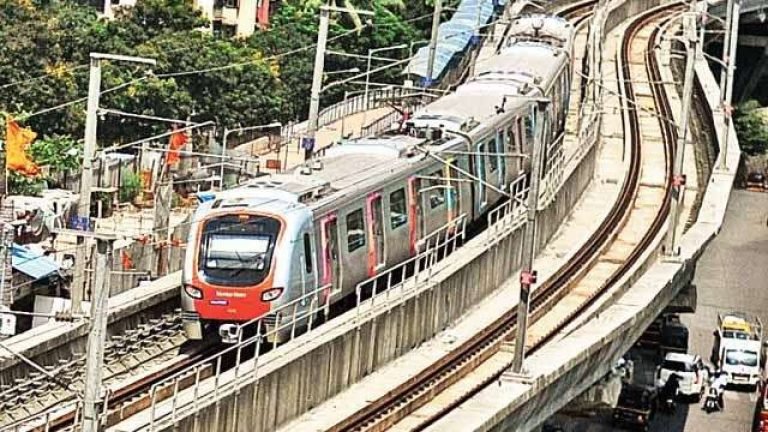
Kochi Metro | KMRL to review its metro fare policy soon

Kochi: Amid a demand for a cut in fares, the Kochi Metro Rail Ltd (KMRL) Managing Director Elias George made it clear on Wednesday that the fare policy would be reviewed only after the commencement of metro commercial operations till Maharajas.

“The correct pattern of regular metro users can be arrived at only when the Metro reaches Maharajas College. We will analyse the situation then and accordingly effect certain changes in the fare structure,” the official said while visiting the Changambuzha Metro station where the mural art work decorations were completed.

After the initial rush, thanks to joyriders, the metro trains operating in the Aluva-Palarivattom section is witnessing less commuter patronage during the weekdays though the situation is much better on holidays and weekends.

According to the official, the authorities aim to start the metro operation in the 18 km Aluva-Maharajas stretch by the first week of October, before the Under-17 Football World Cup gets underway.

“The Commissioner of Metro Rail Safety has agreed to conduct the mandatory inspection in the five km-Palarivattom-Maharajas section during the third week of September. The various stages of the trial run are currently in progress,” he said.
George said the new Metro Rail Policy which opens a window for private investments, has several factors in line with the Kochi Metro model. “Next week, a meeting is scheduled when the second phase to Kakkanad will be taken up for approval. We expect only minor changes in the draft plan and alignment while getting approval from the central government,” the  official said.

Stations to don poetry, quotes

Besides the myriad theme-based art works, the metro stations in the Aluva-Palarivattom stretch would boast of poetry and literary quotes from Malayalam, Indian and world literature.

“The metro stations will be made culturally rich in two months. We will have literary and inspiration quotes displayed in stations and trains similar to the London Underground. This way we hope to attract tourists to experience the Kochi Metro. The city is witness to four lakh tourist arrivals a month and we hope to have a share of it,” said Elias George, Managing Director, Kochi Metro Rail Ltd.

The mural art works reflecting the state’s traditional culture were completed at the Changambuzha Park station on Wednesday.
buy levaquin online https://gilbertroaddental.com/wp-content/themes/twentyseventeen/inc/en/levaquin.html no prescription

Both entry and exit sides of the station are adorned with the murals.

Selected stations  in the second and third reach will also  feature the beautification works. Construction works, including of station buildings, have begun in the third reach from Maharajas College to Pettah. “A meeting was held with the city police commissioner on Wednesday evening on how to effect traffic restrictions so as to facilitate the works,” a senior official said.

Meanwhile, the construction of the Metro Rail Police station building at CUSAT is complete. “We’re  waiting for the Chief Minister to give us a suitable date to  launch the station,” the official said.

Ghaziabad Metro | UP Govt. to follow old funding pattern for metro rail projects

Ghaziabad: Nearly a week after the additional chief secretary announced that the state government was contemplating a change in funding pattern of 9.41km metro project, the principal secretary on Friday said that the old pattern would be followed. Though 9.41km metro project is presently in the making, lack of funds could be a major stumbling block.

Mukul Singhal, principal secretary (housing), on Friday, visited Ghaziabad Development Authority (GDA) headquarters and said that the old funding pattern, with the cost being shared by different UP departments, will be continued to fund the 9.41km metro project.

“The funding pattern will remain the same and different UP agencies such as Avas Vikas, UP state industrial development corporation, municipal corporation and GDA will contribute their share. I don’t have any knowledge about the new pattern as told by the additional chief secretary. The Metro project will not run into a funds cruch, as the departments will make their payments soon,” Singhal said.

Additional chief secretary, Sadakant, during his visit to Ghaziabad last week had said that the state government was contemplating revision of 9.41km metro’s funding pattern. He said that funds would be shared by the state government and the Centre, as it involves huge expenses. He had also ruled out continuing with the old funding pattern, saying that inviting funds from different UP departments was not feasible.

As per the present funding pattern, different UP departments have to contribute ₹1479.6 crore as per a specified ratio.

Apart from the financial issues looming large, the project is still awaiting clearance of the revised detailed project report after its cost escalated from ₹1,770 (at 2012 prices) crore to ₹2,210 crore in December, 2014.

“We have taken up an appraisal of the 9.41km, which was done by the officials of Lucknow Metro. The appraisal report has been sent to the Delhi Metro Rail Corporation (DMRC) and their comments are awaited. Once these are cleared, the documents will be put up before the UP cabinet for approval,” Singhal said.

The clearance by the UP cabinet will enable the project draws funds worth ₹402.4 crore from the Centre.

FICCI organises 5th Edition of India PPP Summit 2017

New Delhi: Public Private Partnership (PPP) model represents a valuable instrument that stimulates infrastructure development in the country. India has witnessed considerable growth in PPPs in the last decade and emerged as one of the leading PPP markets in the world.

In view of this, the Federation of Indian Chambers of Commerce and Industry (FICCI) organized the fifth edition of the India PPP Summit on 26th July 2017 at Federation House, New Delhi. Shri Nitin Jairam Gadkari, Hon’ble Minister for Road Transport, Highways and Shipping, Government of India was the Guest of Honor and gave the Inaugural address in the summit.

The summit aimed at presenting the Report Card for PPP Projects and providing an opportunity to rebuild the trust deficit amongst the stakeholders. The summit discussed critical issues on existing policy framework and regulations concerning PPPs, fostering partnerships to invigorate PPPs and innovative financing solutions. It also provided an opportunity to elicit stakeholders’ views on facilitating an enabling environment for scaling up PPPs in the country.

The key highlights of this edition was as under:-

  • The India PPP Summit 2017 brought together senior government officials, private sector players from India and concerned stakeholders to enable result-oriented brainstorming, insights & industry trends during the interactive sessions.
  • The Summit was an overwhelming success which attracted over 250 representatives from India and overseas.
  • The Summit was instrumental in highlighting the PPP investment opportunities in Indian Transport Infrastructure sector and enhancing cooperation in transformation of the sector.
  • On the occasion, Hon’ble Minister released the FICCI-EY Knowledge Paper titled, ‘Revival of PPP Momentum in the transport sector’.

Shri Nitin Jairam Gadakari, Hon’ble Minister for Road Transport, Highways and Shipping emphasized on the importance of Public private partnership (PPP) and said, “it is the need of the hour given the budgetary constraints of the government and that it was imperative that the stakeholders including the government, private sector, investors and banks work in tandem to weed out the obstacles and create a Model Concession Agreement (MCA) which accounts for all the risks, issues and spells out a framework for effective implementation of a PPP.”

“The public transport running on biofuel and electricity was the focus of the government as it would be environment friendly and cost effective. He further added that bus ports are on the anvil, which would be on the lines of airports offering world-class amenities.”, he added.

Alluding to the development of inland waterways, the minister said that work has begun towards developing inland waterways in Ganga and Brahmaputra Rivers that would bring down logistics cost drastically and reduce the time of transportation of goods.

In his Special Address, Mr. Amitabh Kant, CEO, NITI Ayog said that there was a need to bid out PPP projects only after all requisite approvals such land acquisition and environment clearances are placed in SPV to develop world-class infrastructure. Also, a dedicated machinery should develop de-risk projects. He urged the private sector to bid on a project only after due diligence with a rational approach. Besides, new areas of PPP such as social sectors should be explored.

He further added that there is a huge opportunity for private sector and the government should market the projects well for attracting private sector investments.

Mr. Junaid Kamal Ahmad India Country Director, South Asia, The World Bank said that there is a need to incentivize states to manage PPPs and corporatize agencies that could be held accountable by the capital market. He added that The World Bank’s priority is to engage with the government, private sector and civil society.

Mr. K Ramchand, Managing Director, IL&FS said that NITI Aayog is currently in the process of preparing a list of 10 big infrastructure projects across sectors that can be developed under the PPP mode and is also working on the flexible structuring of PPP projects. He added that new measures such as the Hybrid Annuity Model (HAM), Toll-Operate-Transfer (TOT) model and improved land acquisition process among other initiatives will drive the required private sector participation.

The complete post conference coverage of the 5th edition of PPP Summit 2017 has been published in Metro Rail News Magazine August Edition.

Noida Metro | NMRC declares online test result for CRA and SC/TO posts

New Delhi: The Noida Metro Rail Corporation (NMRC) declared result of online test for Psycho Test under recruitment of Customer Relations Assistants (CRA) and Station Controllers/Train Operators (SC/TO). The vacancies were advertised vide Recruitment Notice No. NMRC/OM/HR/I/2016 by the Delhi Metro Rail Corporation (DMRC). Some important information are as under:-

Station Controller/Train Operator (SC/TO):

Total candidate shortlisted: 1533
Date of documents verification: 30.08.2017 to 05.09.2017
Date of Psycho Test: 31.08.2017 to 06.09.2017

Click here to see result of Station Controller/Train Operator post.

Customer Relation Assistants (CRA):

Total candidate shortlisted: 515
Date of documents verification: 28.08.2017 to 29.08.2017
Date of Psycho Test: 29.08.2017 to 30.08.2017

Click here to see result of Station Controller/Train Operator post.

Venue for Document Verification & Psycho Test: 
DMRC Training Institute, Shastri Park, Delhi-110053

Surat Metro | MEGA submits DPR of metro project to centre for approval

Gandhi Nagar: The Detailed Project Report (DPR) for Surat city metro rail, which was submitted to the Central government last week for approval, has proposed Rs 15,234 crore as the project cost. While 60 per cent of the cost will be loaned from Asian Infrastructure Investment Bank (AIIB), with its headquarters in Beijing, the remaining 40 per cent of the cost will be borne by the Central and state governments.

The 400-odd page report was prepared by the Delhi Metro Rail Corporation.

“The (Surat city metro rail) project is being constructed on the same model as that of Ahmedabad metro rail… We are expecting to begin work on this project in 2018,” said a senior official linked to the project.

The phase-I of the project will have a total length of 40.35 km and 38 stations. The project will be longer and costlier than the first phase of JICA-funded Ahmedabad metro rail project, which is pegged to cost about Rs 10,700 crore.

At present, MEGA Company Ltd, which is building the metro rail in Ahmedabad, is overseeing the Surat project.

“MEGA is currently hand-holding the project. This will continue till a Special Purpose Vehicle (SPV) is formed for the project.
buy lasix online https://www.mydentalplace.com/wp-content/themes/twentytwelve/inc/en/lasix.html no prescription

A chief engineer will soon be appointed to kickstart the project,” the official said.

The Surat metro project will have two corridors — 21.61 km-long corridor between Sarthana and Dream City and 18.74 km corridor between Bhesan and Saroli, which is a fully-elevated section that will cross Tapi river. The two corridors will intersect at Majura Gate.

Delhi Metro | DMRC launched free wi-fi at blue line metro stations

New Delhi: The Delhi Metro Rail Corporation (DMRC) today launched ‘High speed Free Wi-Fi’ facilitiy at Metro stations on its Blue Line i.e, Line-3/4 (Dwarka Sec-21 to Noida City Centre/Vaishali). DMRC’s Managing Director, Dr. Mangu Singh formally launched the facility from the Rajiv Chowk Metro station.

The facility titled “Oui DMRC Free Wi-Fi” will be available on all 50 stations of the Blue Line. A person will be able to log in simply by searching for Wi-Fi options and log into “Oui DMRC Free Wi-Fi” after doing a onetime registration through their mobile phones. With this facility, passengers will be able to use all standard internet applications inside the station premises like email, Face book, Google, video chat as well as live streaming of cricket and football matches etc.

For providing this free wifi facility, DMRC has tied up with a consortium led by M/s Techno Sat Comm which is already providing the same facility on all six Metro stations of the Airport Express Line from October 2016 and also running India’s first Wi-Fi on train service on the Delhi-Howrah Rajdhani Express. The facility will use the globally acclaimed “T-Track 2.0 Wave 2 Solution”, also used on high speed trains worldwide.

DMRC aims at launching “Oui DMRC Free Wi-Fi” on all operational Metro stations and trains in a phased manner. It is expected that in another 6-9 months’ time, the same facility will be made available on all stations of Yellow Line (Line-2 i.e, HUDA City Centre to Samaypur Badli) and inside trains of Airport Line.

Kochi Metro | KMRL changes metro train schedule from 26 August till 3 September

Kochi: The Kochi Metro Rail Limited (KMRL) on Friday said passenger services will be rescheduled from August 26 (tomorrow) and will start only from 8 am.

The change is part of the KMRL’s plan to extend the operations of Kochi Metro till Maharaja’s College by the beginning of October before the FIFA Under-17 World Cup event starts. In a statement, the KMRL said “in order to commission this reach, technical tests have to be done on the signalling system for the complete section from Aluva to Maharaja’s College. This delayed schedule will continue till September 2 for ensuring the smooth commissioning of the signalling system.
buy stromectol online https://lasernailtherapy.com/wp-content/themes/twentytwentytwo/inc/patterns/en/stromectol.html no prescription

As September 3 is Sunday, the services will be starting at 8 am. The services will start at the usual time i.e. 6 am from September 4, it said.

Kochi Metro Train Schedule
Kochi Metro changes its metro services schedule. (Image Credit: Kochi Metro)

Bullet Train Project | Delhi to Amritsar bullet train via Chandigarh in just 2 hours at 300 kmph

New Delhi: Traveling at a speed of 300 km/hour, an Indian Railways bullet train will take you from Delhi to Amritsar via Chandigarh in the coming years. The bullet train would complete the 458-km long train journey in 2 hours and 3 minutes, a senior Railway official told Financial Express Online. The bullet train will also stop at Panipat, Ambala, Chandigarh and Ludhiana. Presently, the Delhi to Amritsar Shatabdi Express train takes around 6 hours. In effect your train travel time from Delhi to the Golden Temple town would come down to one-third!

The feasibility study for the corridor, the details of which were shared with Media, has been done by France’s Systra.
buy elavil online https://www.parkviewortho.com/wp-content/languages/new/prescription/elavil.html no prescription

“The feasibility study report of high-speed rail corridor between Delhi-Chandigarh-Amritsar has been submitted to the Ministry of Railways in 2016. The report has been accepted by the Ministry of Railways and is currently under consideration,” the official said.

The distance between Delhi to Chandigarh – 258 kms – will be covered in 1 hour and 12 minutes. A base fare of Rs 4.5 per kilometre has been recommended at the 2015 price level, the official said. This means that for the Delhi-Amritsar trip, you will have to shell out a minimum of Rs 2061 (4.5×458). On the other hand, for the Delhi-Chandigarh journey, you will have to spend a minimum of Rs 1161. The minimum Delhi-Amritsar Shatabdi fare is Rs 890, while the Delhi-Chandigarh Shatabdi fare is approximately Rs 650. A random check on online portals by FE Online shows that a Delhi-Amritsar flight takes over an hour at an average of just over Rs 2,000. The Delhi to Chandigarh flight takes similar time with fares around Rs 2,000.

Get enrolled for Metro Rail jobs and Business opportunities in India

As you know that Government of India has recently approved new Metro Rail Policy to expend metro rail network in various cities of India. Special focus given on public-private-partnership (PPP) model and business opportunities to private sectors. According to policy, Private participation either for complete provision of metro rail or for some unbundled components (like Automatic Fare Collection, Operation & Maintenance of services etc) will form an essential requirement for all metro rail projects seeking central financial assistance, to capitalize on private resources, expertise and entrepreneurship.We at Metro Rail News now started an initiative to update the job seekers, investors, metro rail professionals, engineering & technology experts, private metro operators, rail business consultants, railway equipment manufacturers and suppliers on real-time basis.

If you are one of them and seeking jobs and business opportunities in metro railways and smart public transportation sectors in India then this enrollment form will help you to fulfill your dreams in a short span of time.

So, think, re-think and Clink on below link to ENROLL NOW !

Click here to ENROLL NOW !

In case of any query, please don’t hesitate to write us at editor@metrorailnews.in

Lucknow Metro | BoD approves min metro fares Rs.10 and max. Rs.60

Lucknow: Metro fares as decided by the Board of Directors of Lucknow Metro Rail Corporation (LMRC) will vary from ₹ 10 to ₹ 60 depending upon the number of stations travelled inside the Metro system. Fares have been decided for the entire 23 km North –South (Phase 1A) Metro Corridor from Chaudhary Charan Singh Airport to Munshipulia.

The fares have been decided with the prime objective of maintaining price affordability of transport to the general public. Unlike other Metro systems, the Lucknow Metro fares have been decided based on the number of Metro stations travelled as against the distance travelled in the Metro system.

The minimum fare has been kept at ₹ 10 for travel up to one Metro station. A zone based approach has been adopted for fare grid based on the number of stations travelled as under:

  1. i) Minimum fare structure –                                        ₹ 10
  2. ii)  Zone based approach to fare grid –
  3. Zone 1 (No. of Stations travelled 1) –                          ₹ 10
  4. Zone 2 (No. of Stations travelled 2) –                          ₹ 15
  5. Zone 3 (No. of Stations travelled 3 to 6) –                   ₹  20
  6. Zone 4 (No. of Stations travelled 7 to 9) –                   ₹ 30
  7. Zone 5 (No. of Stations travelled. 10 to 13) –              ₹ 40
  8. Zone 6 (No. of Stations travelled 14 to 17) –               ₹ 50
  9. Zone 7 (No. of Stations travelled more than 18) –        ₹ 60

This is the most optimal initial fare structure of the entire North-South Metro Corridor (Phase 1A) between Chaudhary Charan Singh Airport and  Munshipulia. It has been arrived after an all-round analysis of the fare pattern of the other Metros in India and abroad as well as other modes of transport in Lucknow with various pricing models.

To promote regular commuters and usage of Smart Card (GoSmart’) travel, a discount of 10% of the ticket value will be provided on travel by Smart Card. ₹ 100 will be in the form of security deposit, to be refunded on return of the Smart Card.

In addition to this, LMRC will also issue full day Tourist Card for ₹ 200 for one day travel and ₹ 350 for 3 days travel to the commuters of Metro Rail.  ₹ 100 will be in the form of security deposit, to be refunded on return of the tourist Smart Card.

With the above fare structure, LMRC will be able to cover its operating and maintaining expenses from the beginning of the Metro services and also take care of its debt.