Home Blog Page 35

PM Modi to launch India’s First Hydrogen Train tomorrow: All about the Jind-Sonipat Project

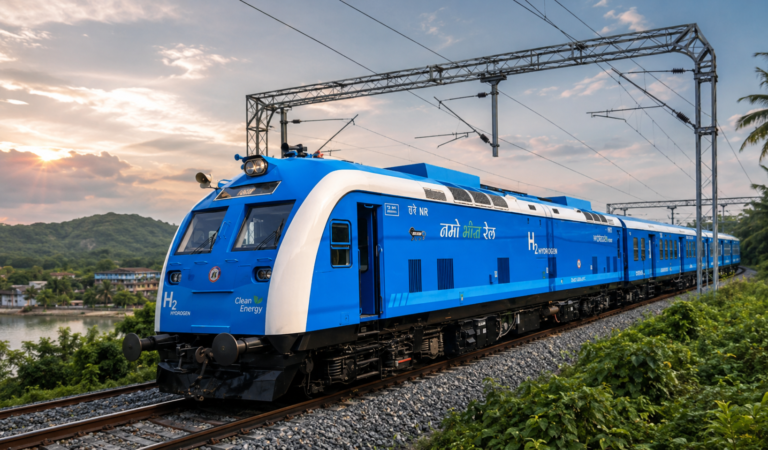
HARYANA (Metro Rail news): India’s first Hydrogen Train will hit the tracks for its official launch by Prime Minister Narendra Modi on 17th July. This will be the first time in the history of Indian Railways that a train will run on hydrogen fuel. This development marks a crucial milestone in green rail mobility.

The Prime Minister will flag off hydrogen train from Jind Railway Station in Haryana. The train will run through Jind Junction, Gohana Junction, and Sonipat. This project directly supports the National Green Hydrogen Mission and advances the nation’s net-zero carbon emission goals. 

The ten-car, hydrogen-fuel-cell-based trainset is built to handle heavy commuter traffic. It can carry up to 2,600 passengers per trip and has a designed top speed of 110 kmph, though it will operate at a maximum service speed of 75 kmph. The Hydrogen train has been developed by RDSO (Research Design & Standards Organisation)

To connect local communities along the corridor, the train is scheduled to stop at 12 proposed halts: 

  • Jind City
  • Pandu Pindara Junction
  • Lalit Khera Halt
  • Bhambhewa
  • Isapur Kheri Halt
  • Butane Halt
  • Khandrai Halt
  • Rabrah Halt
  • Lath Halt
  • Mohana
  • Barwasni Halt
  • Sonipat New

To support Hydrogen powered train operations, India’s largest railway hydrogen storage and refueling facility has been set up at Jind, Haryana. This specialized facility is capable of storing up to 3,000 kg of hydrogen at a time to keep the train fueled and running efficiently.

Also Read: DMRC floats electrical tender for Rithala-Kundli Corridor (Phase IV)

DMRC floats electrical tender for Rithala-Kundli Corridor (Phase IV)

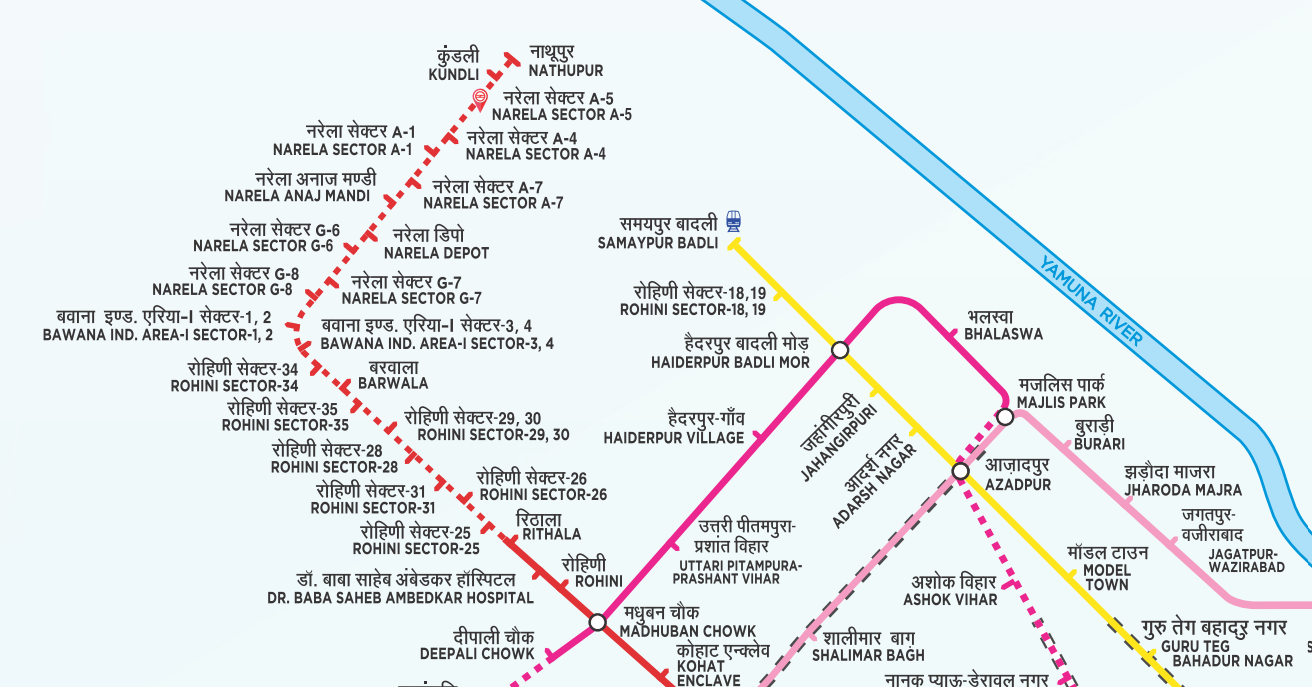
DELHI (Metro Rail News): Delhi Metro Rail Corporation (DMRC) has invited bids for electrical tender for the Delhi Metro Phase IV extension of the Red Line from Rithala to Kundli (Nathupur). The approximate cost of the work is ₹18.97 Crore and the time period for the completion of work is 18 months.

Tender Information

InformationDetails
Tender No.D2EUD-05
Approximate Cost of Work18.97 Cr.
Completion Period18 Months
Pre-Bid Meeting July 28, 2026 (11:00 hrs.)
Bid Submission OpeningAugust 11, 2026 (09:00 hrs.)
Bid Submission DeadlineAugust 17, 2026 (15:00 hrs.)

Scope of Work

The scope of work of the contract includes the supply, installation, testing & commissioning for shifting / raising the height of 400KV D/C Transmission Lines of PGCIL (NR-1) & DTL infringing near MCD’s WtE Bawana Plant in Rithala – Kundli (Nathupur) Corridor of Delhi Metro Phase-IV Project.

About Rithala – Kundli (Nathupur) Corridor

image 10

The Red Line (Line 1) extension from Rithala to Kundli (Nathupur) is a part of the Delhi Metro Phase IV project. The proposed extension has a length of 26.463 km, with 21 stations. The Red Line was the first operational line of the Delhi Metro and with the proposed extension, it will surpass the length of 60 kilometers.

Also Read: Delhi Metro: DMRC to carry out feasibility study for Keshav Puram to Rohini Double-Decker Corridor

Delhi Metro: DMRC to carry out feasibility study for Keshav Puram to Rohini Double-Decker Corridor

DELHI (Metro Rail News): The Delhi Metro Rail Corporation (DMRC) plans to conduct a feasibility study for a proposed double-decker Metro and flyover corridor between Keshav Puram and Rohini Sector 34. The study will explore if the combined project can enhance connectivity while better utilizing limited urban space.

This proposed corridor is part of Delhi metro Phase-5B and will cover a distance of 16.5 km. DMRC estimates that this is going to cost around Rs 2.08 cr and it is expected to complete within 6 months. 

Project at a glace 

DetailsInformation
ProjectDouble-Decker Metro and Flyover Corridor
Metro Phase Phase-5B
Route Keshav Puram to Rohini Sector 34
Length16.5 km
Estimated Cost Rs 2.08 cr

The proposed design features an elevated Metro line on the upper level and a flyover or elevated road on the lower level. The goal is to use the available space more effectively and decrease traffic congestion along the route. The consultant will look into various aspects of the project, including:

  • Alignment options  
  • Structural feasibility  
  • Construction methods  
  • Traffic demand  
  • Utility shifting requirements  
  • Commercial viability  

The study will also assess the need for supporting road infrastructure such as entry and exit ramps, loops, cloverleaf interchanges, directional ramps and other traffic management structures at important junctions.  

Route passes through densely populated areas

According to DMRC, the proposed alignment crosses through busy and heavily developed areas, including Keshav Puram and several sectors of Rohini. The study will examine the existing Metro infrastructure, flyovers, underground utilities, land availability, and heavy traffic before recommending the best alignment.

Traffic surveys and transport modeling to begin soon

The selected consultant will conduct detailed traffic and transport surveys as part of the study. These will include:

  • Traffic volume counts  
  • Turning movement counts  
  • Origin-destination surveys  
  • Public transport surveys  
  • Road inventory surveys  
  • Speed and delay studies  

The consultant will also perform limited topographical checks at critical locations as needed. Using this information, the consultant will prepare a transport model to estimate current and future traffic demand and create an initial design to integrate the Metro corridor with the proposed road infrastructure.

Cost, environmental impact, and final recommendation

The study will also include a concept-level structural assessment, construction feasibility analysis, and preliminary land requirement estimates. Additionally, the consultant will prepare indicative project cost estimates, conceptual bills of quantities, comparison of different structural options, cost-benefit analysis and environmental impact assessment. Based on the findings, the final report will recommend the best alignment and assess whether the proposed double-decker Metro and flyover corridor is technically and commercially feasible. 

Also Read: Noida International Airport to get direct Namo Bharat RRTS and Bullet Train connectivity

Noida International Airport to get direct Namo Bharat RRTS and Bullet Train connectivity

NOIDA (Metro Rail News): Plans are underway to transform Noida International Airport in Jewar, India’s newest aviation hub, which became operational on June 15, 2026, into a major multi-modal transport center where passengers can seamlessly switch between flights, trains, and metros. The first major corridor Ghaziabad-Jewar Namo Bharat (RRTS) corridor, has entered the Detailed Project Report (DPR) stage. Meanwhile, the airport railway station is currently under construction, while the Delhi-Varanasi Bullet train corridor and its further extension to Siliguri are still in the planning phase.

The Ghaziabad-Jewar Namo Bharat corridor is expected to cut travel time to 40-50 minutes and Bullet train infrastructure projects aim to connect the airport to the National Capital Region (NCR), Uttar Pradesh, and Eastern India.

The fourth Nammo Bharat regional rapid corridor cost around Rs. 20,640 Cr. 

The Ghaziabad-Jewar RRTS corridor has reached the DPR phase, promising to reduce travel time between Ghaziabad and Jewar to around 40-50 minutes at a speed of 180 kmph and is estimated to cost around Rs 20,640 crore. The stations proposed along the corridor are:

  • Ghaziabad
  • Ghaziabad South
  • Greater Noida West-Sector IV
  • Greater Noida West-Sector II
  • Knowledge Park V
  • Surajpur
  • Pari Chowk
  • Ecotech VI
  • Dankaur
  • YEIDA North-Sector 18
  • YEIDA Central-Sector 21
  • Jewar Airport

India’s second major Bullet Train Route integrates with Jewar 

The 813-km long proposed Delhi–Varanasi bullet train corridor will connect Delhi and Varanasi through 13 stations. According to the proposal the train will connect  Noida Airport, Mathura, Agra, Lucknow, Prayagraj, and Varanasi.

The proposed Delhi-Varanasi train project is expected to reduce the time between Jewar and Lucknow to 40 minutes and Delhi to Lucknow in two hours. The project was announced by Finance Minister Nirmala Sitharaman in the Union Budget for 2026-2027.

There was an extension plan of Delhi-Varanasi corridor extending to Siliguri. If it happens it will be a major connecting window of the Northern and Eastern part of the country to the Capital city.

This development will not only boost accessibility and reduce road congestion but also accelerate economic growth, attract investments, and enhance the quality of life for residents across the NCR. By positioning Noida at the forefront of India’s modern mobility revolution, these projects mark a significant leap towards a faster, smarter, and more connected future.

Also Read: North Central Railway invites bids for Rs 227.40 crore Consultancy Contract in Prayagraj

North Central Railway invites bids for Rs 227.40 crore Consultancy Contract in Prayagraj

PRAYAGRAJ (Metro Rail News):  North Central Railway has invited bids for providing Project General Management Services (PGMS) for the Chief Administrative Officer (Construction), Prayagraj. The consultancy contract aims to support the planning, execution and monitoring of railway infrastructure projects being implemented under CAO/Construction, North Central Railway. The estimated cost of the project is Rs 227.40 crore.

Tender details

Details Information 
Tender Number CEN-HQ-2026-27-01 
Estimated CostRs 227.40 crore
Earnest Money Deposit (EMD)Rs 4.55 crore
Completion Period60 months
Pre-Bid Meeting17 July 2026, 11:00 am
Bid Submission Deadline10 August 2026 up to 3:00 PM

Scope of work

Request for Proposal for Providing Project General Management Services for CAO/CON/ North Central Railway, Prayagraj. 

About Prayagraj Junction

Prayagraj Junction, earlier known as Allahabad Junction, opened in 1859. It is one of the oldest railway stations in northern India. The station became an important rail hub because it connects northern and eastern India. Today, it is one of the busiest railway stations in the region. During Mahakumbh 2025, Indian Railways operated more than 17,000 trains, highlighting the station’s key role in handling one of the world’s largest gatherings.

Also Read: Southern Railway invited bids for Re-development of Ernakulam Town Station

Bhopal Metro gains traction as Afcons erected Blue Line’s first segment

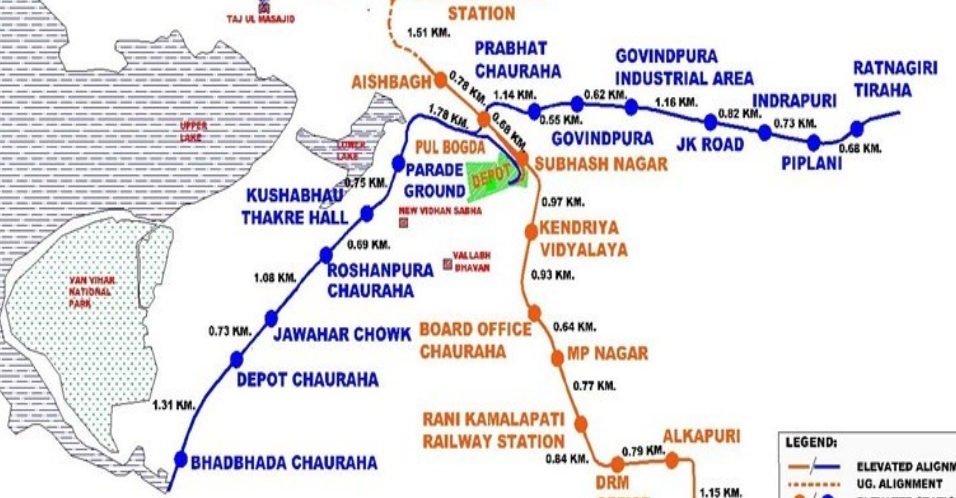
BHOPAL (Metro Rail News): The construction work of Bhopal Metro’s Blue line picked pace with the launching of the first segment of elevated section at the Piplani Chauraha. The entire Blue Line will be an elevated corridor connecting Bhadbhada with Ratnagiri, covering a 12.9 km route. The launching of the segment was undertaken by Afcons Infrastructure Ltd. 

image 9

The engineering team of Afcons used a launching girder, or launching gantry for the commissioning of the first segment at the Piplani Chauraha. The launching girder is a massive mechanical crane which places the pre-cast concrete for the fast construction of the metro viaduct. During the launch of the segment, S. Nakkiran, the Project Director at Afcons, MPMRCL Director works and other officials were present. 

The Madhya Pradesh Metro Rail Corporation Ltd (MPMRCL) awarded the project contract for the construction of the elevated stations along the Blue line to Afcons Infrastructure in December 2024, at a cost of 1006.74 Crore. The company is constructing the Corridor as an Engineering, Procurement and Construction (EPC) contractor. 

About Bhopal Metro

Bhopal Metro is a mass rapid transit system projected to serve as an urban mobility solution for the city of Bhopal, the capital of Madhya Pradesh. The project is under construction with two lines proposed. A common depot for these lines has been developed at Subhash Nagar. The metro is currently operating at a priority stretch covering AIIMS to Subhash Nagar in the Orange Line.

Also Read: RITES awarded Patna Metro’s consultancy contract 

RITES awarded Patna Metro’s consultancy contract 

PATNA (Metro Rail News): Rail India Technical and Economic Services (RITES) has bagged a ₹79.22 Crore consultancy contract from the Patna Metro Rail Corporation (PMRC). The contract involves the consultancy for the execution of the construction projects of the Patna Metro. 

The scope of the work includes providing consultancy services for the implementation of the Patna Metro construction project. The time period for the execution of the project is 68 months. 

InformationDetails
ContractorRITES
Contract Value₹79.22 Cr.
Completion Period68 Months

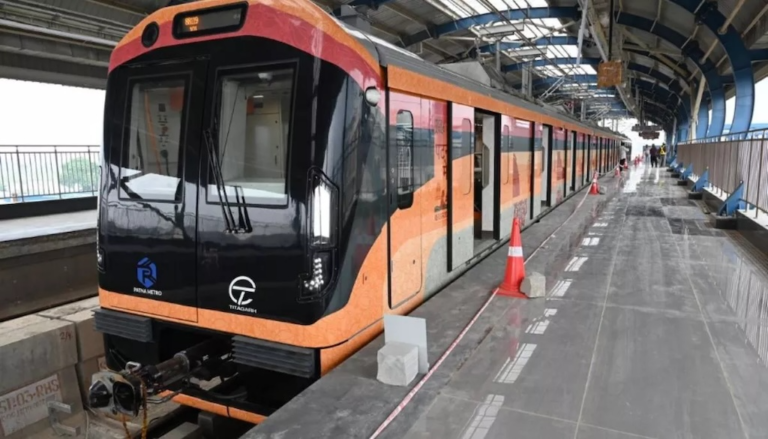
The consultancy project is projected to support the development of the Patna Metro system. The project has been delayed for a long duration and it is operating on a priority corridor consisting of five metro stations. This month on 4th July, two new stations were inaugurated by the Chief Minister Samrat Choudhary extending the network to Malahipakri.

About Patna Metro

Patna Metro Rail Project is a mass rapid transit system projected to connect the city of Patna. The project is under construction with a priority corridor serving as the operational route. The underground section of the project is currently under construction and work on the elevated section is taking place simultaneously. The complete proposed stretch is projected to expand the metro network to 32.5 km, with 24 stations.

Also Read: Southern Railway invited bids for Re-development of Ernakulam Town Station

Southern Railway invited bids for Re-development of Ernakulam Town Station

ERNAKULAM (Metro Rail News): Southern Railway has invited open e-tender on an EPC (Engineering, Procurement, and Construction) basis, for Re-development of Ernakulam Town Station(Balance work),carrying an estimated project cost of ₹156.43 Crore. 

Tender Information

InformationDetails
Tender Number  CE-CN-ERS-SD-01-2026-EPC 
Estimated Cost  1564262007.39 (₹156.43 Crore)
Tender Validity 120 days
Pre-Bid Meeting  22/07/2026 15:00
Tender Submission Deadline 12/08/2026 up to15:00 Hrs
Completion Period 20 Months

Scope of work

Re-Development of Ernakulam Town Railway Station’s balance work on EPC (Engineering, Procurement, and Construction)mode.

About the Project

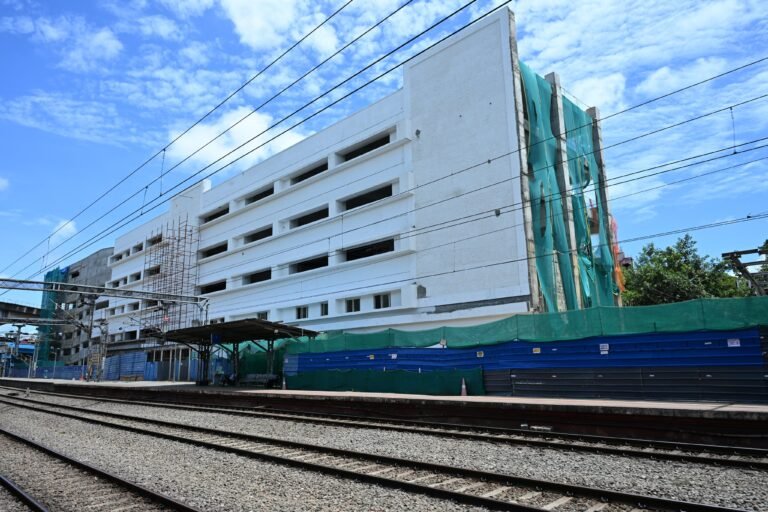
The project aimed at transforming the  Ernakulam Town Railway Station into a world-class, airport-like facility. Upgrading the Ernakulam Town Railway station will absorb a significant portion of Kochi’s rail traffic, reducing the burden on the heavily congested Ernakulam Junction (South) station.The modernized hub will create a vibrant commercial zone, generating new retail jobs and boosting local business growth in the Kaloor and Kacheripady areas.The new station is designed to connect different modes of transport. It features a direct skywalk to the nearest Kochi Metro station, as well as easy connections to local bus stops and auto-taxi stands. This is one of the most important ongoing projects for Southern Railway.

Also Read: Telangana’s new ₹5.63-Crore Komuravelli Railway station is all set for inauguration

Telangana’s new ₹5.63-Crore Komuravelli Railway station is all set for inauguration

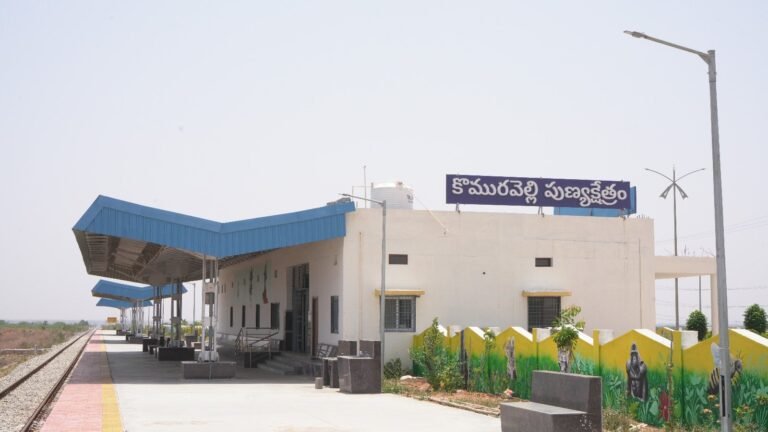
TELANGANA (Metro Rail News): The newly constructed Komuravelli Punyakshetram (KIPK) railway halt station, located in the Siddipet district of Telangana, is all set for its official inauguration. Built at a total project cost of approximately ₹5.63 crore, the station marks a major milestone in regional connectivity. Union Minister For Coal and Mines Mr.G Kishan Reddy shared his happiness through his X post. He  further thanked PM Shri. Narendra Modi’s Visionary actions to strengthen regional connectivity , improve passenger convenience, and provide a major boost to religious tourism and local economic development in Telangana.

The new station will provide direct rail access for millions of devotees visiting the revered Komuravelli Mallanna Swamy Temple. Historically, pilgrims relied entirely on road transport, often facing heavy traffic during festive seasons. This direct connection is expected to significantly boost local tourism, religious pilgrimages, and economic activity across the region. To guarantee a smooth journey from train to temple, the station is strategically integrated with the Rajiv Rahadari (State Highway 1), ensuring seamless, hassle-free last-mile connectivity. 

The primary features of the station are a high-level passenger platform (450m × 10m) and a station building with an entrance portico. The station also features five platform shelters equipped with three-seater benches. Other key amenities include a spacious waiting hall with mural paintings depicting the local deity, flora, and fauna, as well as parking facilities, drinking water stations, and separate toilet facilities for ladies, gents, and divyangjan.

Also Read: PM to inaugurate revamped Panki Dham Station under Amrit Bharat Station scheme

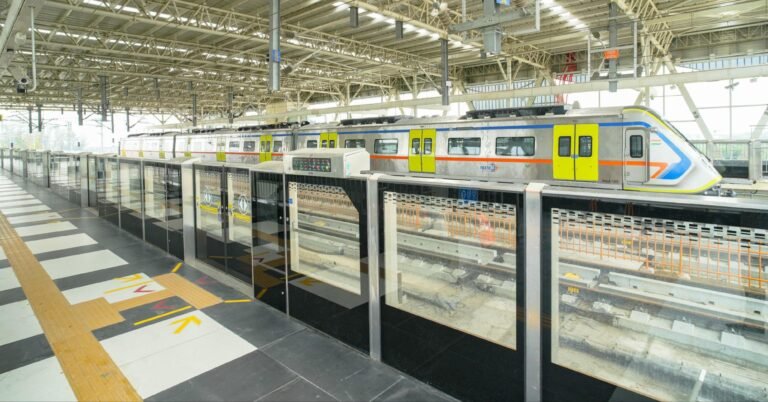
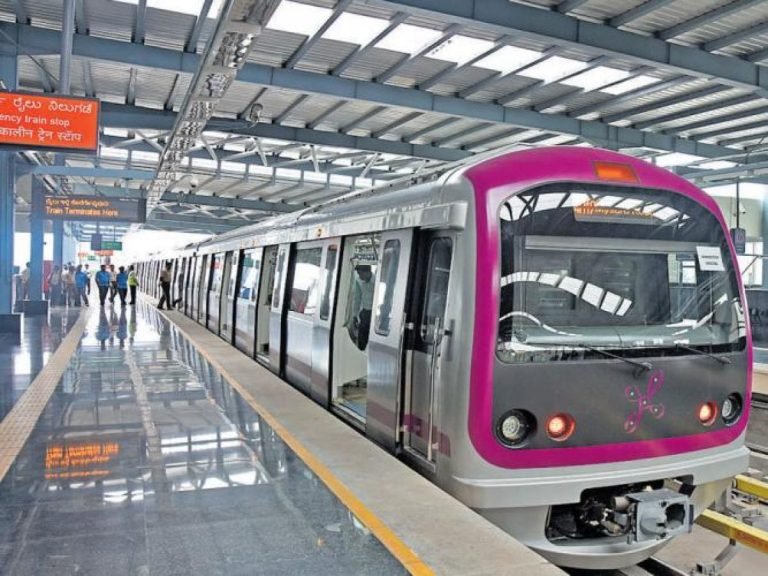
Bangalore Metro’s ₹1,274-crore safety push to install Platform Screen Doors at all stations 

BANGALORE (Metro Rail News): Given the growing passenger safety concern, Bangalore Metro Rail Corporation Limited (BMRCL) has taken a step ahead towards strengthening the safety of passengers by installing Platform Screen Doors PSDs at Bangalore Metro stations. This initiative will add an additional layer of protection for the commuters. BMRCL plans to equip all 191 stations with PSDs at a cost of ₹ 1,274 crore. However, 14 stations, including 12 underground stations on the Pink Line and 2 on the Blue Airport Line, already have provisions built into their budgets. The remaining 177 stations will undergo retrofitting throughout Phases 1, 2, 2A, 2B, 3, and 3A.

The massive ₹1,274-crore proposal to install Platform Screen Doors (PSDs) at rest 177 stations across its entire existing and upcoming network. The proposal was part of Detailed Project Report (DPR) for Phase-3A (Hebbal-Sarjapur), which was submitted to the Karnataka state government during the current state legislative assembly session. Moreover the doors are technically mandatory for driverless trains planned for upcoming corridors.half-height platform screen doors will be in elevated stations and underground stations will receive full-height platform screen doors, which also help reduce wind, noise, and optimize underground air conditioning efficiency. 

Why Bangalore Metro is getting a Platform Screen Door upgrade 

Over-Crowded platforms and High-Voltage risks 

With daily ridership crossing 10 lakh (1 million) passengers, overcrowding has spiked safety risks in the Bangalore Metro. BMRCL highlighted alarming data from the past two years that triggered this urgency. 

In 2024, 8 cases of unauthorized track access, 7 suicide deaths, 2 suicide attempts, and 2 accidental falls were reported. In comparison, 5 cases of unauthorized track access, 5 suicide deaths, 2 suicide attempts, 2 accidental falls, and 1 tragic electrocution incident were reported in the year 2025, which increases the urgency for platform screen doors in Bangalore Metro.

Mandatory for corridors, designed for GoA4  (driverless train operations)             

Beyond immediate physical safety, these screen doors are technically mandatory for GoA4 (Unattended Train Operation), the fully automated, driverless train system planned for upcoming corridors. 

Grade of Automation 4 (GoA4) is the highest level of railway automation, where trains operate without any onboard staff or drivers. Starting, stopping, door operations, and emergency responses are fully managed by computerized signaling systems and central control rooms. Without physical platform doors for preventing track falls, driverless operations cannot legally or safely commence.

Smart doors, Smart revenue 

To offset some of the massive capital costs, BMRCL plans to use the glass doors as premium advertising spaces for digital media displays to generate non-fare revenue. By equipping the glass doors with digital media displays, the metro aims to aggressively generate non-fare revenue, effectively turning a vital safety upgrade into a self-sustaining financial asset. 

BMRCL has started technical talks with Bharat Electronics Limited (BEL) to build the screen doors locally, to support ‘‘Make in India’’ goals. BEL has already developed indigenous platform gate systems in partnership with India’s regional rapid transit networks (NCRTC).

Also Read: Chennai-Bengaluru Bullet Train Project gains momentum: NHSRCL begins tendering