Home Blog Page 34

Thiruvananthapuram Metro Phase 1 Alignment Gets Kerala CM’s Approval

0
Metro
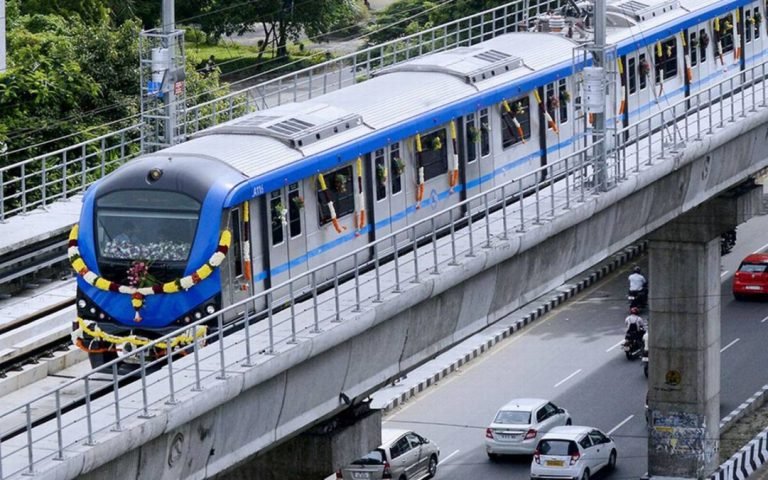
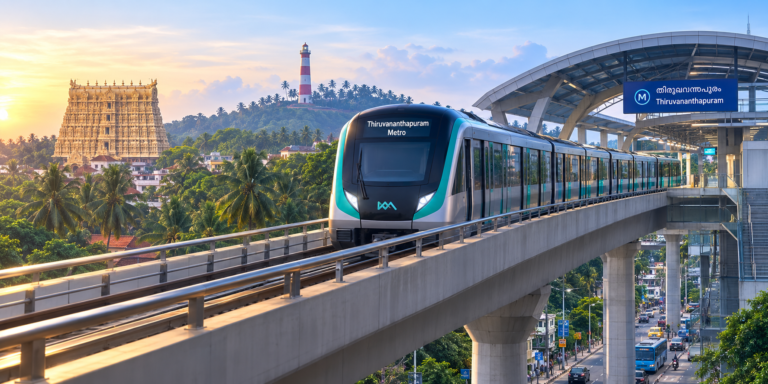
For Representational Purpose Only

THIRUVANANTHAPURAM (Metro Rail News): Kerala Chief Minister Pinarayi Vijayan has approved the first-phase alignment of the Thiruvananthapuram Metro Rail project. 

The 31-km phase 1 alignment of the Thiruvananthapuram Metro rail project will be implemented by Kochi Metro Rail Limited (KMRL). The phase 1 alignment will cover 27 stations. 

Stations: Pappanamcode (Terminal station), Kaimanam, Karamana, Thampanoor, Secretariat, Palayam, Plamoodu, Pattom, Murinjapalam, Medical College, Ulloor, Pongumoodu, Sreekaryam, Pangappara, Gurumandiram, Karyavattom, Technopark Phase 1, Technopark Phase 3, Kulathoor, Technopark Phase 2, Akkulam Lake, Kochuveli, Venpalavattom, Chaakka, Airport, Eanchakkal (Terminal station). The project will feature three interchange stations — Kazhakoottam, Technopark Phase 1 and Karyavattom.

The proposed alignment will link key IT, administrative, transport, and healthcare hubs across the city. 

Officials said As part of preparatory works for the Thiruvananthapuram Metro, KMRL has been entrusted with the construction of flyovers at Sreekaryam, Ulloor, and Pattom to ease traffic congestion along key stretches. Of these, the construction of the Sreekaryam flyover is progressing rapidly. As reported by India Today. 

Once operational, the Thiruvananthapuram Metro will provide efficient, sustainable, and modern mobility to commuters, transforming the city’s transport landscape.


To get real-time updates on metro and railway tenders, join our WhatsApp  Community:https://chat.whatsapp.com/GP8MIGQ7fP6Eapgbm3d8og?mode=ems_copy_c

Explore how AI-integrated systems are improving comfort, connectivity, and accessibility for passengers across metro and rail networks at the 6th edition of InnoMetro, India’s leading expo for the Metro & Railway industry.

Date: 21-22 May 2026

Venue: Bharat Mandapam, New Delhi

Register now: https://innometro.com/visitor-registration/

Advertisement1
InnoMetro_2026

Scaling New Heights and Settings Benchmarks: CLW’S Journey In Locomotive Manufacturing

0

Metro Rail News conducted an exclusive interview with Shri Vijay Kumar, General Manager of Chittaranjan Locomotive Works (CLW). During the discussion, Shri Kumar outlined CLW’s role in supplying locomotives for Indian Railways and supporting the country’s transport infrastructure. He highlighted key milestones achieved by CLW in his leadership, including setting a record in locomotive production, and shared the organisation’s target of manufacturing 777 locomotives for FY25-26. Shri Kumar also discussed advanced technologies implemented at CLW, such as the DPWCS (Distributed Power Wireless Control System) and the IP-based Video Surveillance System (VSS), as well as projects in development, including the Drive Gear System and Remote Monitoring System. Additionally, he touched upon CLW’s initiatives to enhance sustainability . Here are the edited excerpts.

1.Could you please elaborate on your Professional journey? What are the milestones CLW has achieved under your leadership?

When I joined CLW on 10thDecember 2024, CLW, including its Dankuni Unit, had manufactured 431 WAG-9 Locomotives and converted 12 WAP-5 locomotives for Amrit Bharat Trains. In the remaining timeframe of the financial year 2023-24, a total of 269 new locomotives and 28 conversion locomotives were required to be manufactured to achieve the target fixed by the Railway Board. CLW was struggling to achieve the target as there were major constraints in the supplies of important items such as Transformers, Locomotive Shell and Propulsion System, etc . The major achievements till 31st March, 2025, are as follows:

  • CLW and its Dankuni Unit achieved the target of production of 700 new locomotives in the financial year 2024-25. In this, the Chittaranjan Unit produced 544 locomotives and the Dankuni Unit produced 156 locomotives. These are the best ever annual figures for both the Units since their inception. 
  • Earlier, the best-ever figure of locomotive production in a month was 65 locomotives achieved by CLW in the month of July 2023 in the FY 2023-24. This record was continuously surpassed in the month of January’25, February’25 and March’25 by producing 66, 69 and 75 locomotives respectively.
  • In addition to meeting the target of manufacturing new locomotives, CLW also achieved the Railway Board’s target of converting 40 WAP-5 locomotives.
  • Considering the above performance, the Railway Board enhanced the target of production of new locomotives to 777 and conversion of WAP-5 locomotives to 64 locomotives in the financial year 2025-26. Till the end of August 2025, CLW has already manufactured 347 new locomotives and converted 30 WAP-5 conversion locomotives. In new locomotives, 267 have been manufactured in Chittaranjan and 87 locomotives in Dankuni. The trend clearly shows that this year, the Chittaranjan and Dankuni units of CLW are likely to surpass their best-ever targets achieved in the financial year 2024-25. Moreover, the conversion target of 64 WAP-5 locomotives will also be adhered to.
  • On the technology implementation front, Waterless Units were installed in WAG-9 locomotives in May 2025, following their earlier installation in WAG-9 EF12K Twin locomotives in October 2024.
  • The 360-degree driver seat was installed in the driver’s cab in May 2025, and subsequently, the Inspector seat in August 2025.

This has been possible only due to the sheer hard work, team spirit, and total dedication and devotion of each and every employee of Chittaranjan and Dankuni, be it staff, supervisors or officers.

2.CLW created history by producing 700 locomotives in FY 2024-25, which is the highest number of locomotives produced by any production unit in India. What factors contributed to this increased capacity?

It was a proud moment for this country as well as Chittaranjan Locomotive Works (CLW) to achieve a production capacity of 700 electric locomotives, which was approximately 21% higher than FY 2023-24. Chittaranjan Locomotive Works (CLW) has been strongly determined to cater to increased demand due to a strong push for railway electrification across India. There were many factors such as timely and adequate availability of all the materials required for loco production, redistribution of available manpower to achieve the production targets, ensuring availability of required machines and infrastructure, enhancing the moral of staff and supervisors by ensuring their timely promotions and redressal of their grievances, close monitoring of various critical activities to avoid any disruption, enforcing the habit of doing first time right and ensuring availability of better tooling and measuring gadgets for enhancing the efficiency.  

3. As Indian Railways moves toward complete electrification, what is the roadmap for CLW to further scale up its production capacity to meet the growing demand for electric locomotives?

Electrification of railway tracks reduces dependency on fossil fuels and decreases diesel consumption, resulting in lower carbon emissions. The demand for locomotives has also increased due to projects such as the Dedicated Freight Corridor and Multi-Modal Cargo Terminals. It is evident that CLW has ramped up its production. For instance, the Dankuni unit contributed 156 locomotives in FY 2024–25, and its expansion is in the pipeline to further boost capacity. State-of-the-art new infrastructure facilities, such as CNC machining, Coordinate Measuring Machine, etc. are being created to increase production and improve reliability of the loco. 

We are aware that Railways are carrying out electrification at a rate of 3,000 RKM or more every year, and 99% of the broad-gauge track has already been electrified, requiring more electric locomotives. This year, it is targeted to produce 777 locomotives, out of which 347 WAG-9 locomotives and 30 Amrit Bharat locomotives have been produced till August 2025, and we are committed to achieving the production target given by the Railway Board. We are also expanding the vendor base rapidly, especially for critical components like IGBT-based propulsion systems, blowers and motors, transformers, etc., to ensure availability of materials.

4.What new locomotive models or variants has CLW introduced recently? How do they address the specific needs of modern Indian Railways?

In recent times, Indian Railways has undergone a huge transformation. Keeping with the key objective of the National Rail Plan to provide high-haulage locomotives for the Dedicated Freight Corridor and high-speed locomotives for passenger transport, CLW has produced 57 nos. of 9,000 HP WAG-9 locomotives and 125 EF12K twin locomotives of 12,000 HP, which are suitable to haul higher tonnage loads. Also, CLW has developed DPWCS (Distributed Power Wireless Control System), which enables five locomotives to work in unison with a single set of loco pilots in the front locomotive and only one loco pilot in the last locomotive. In this way, five goods trains can be joined together and hauled in certain sections, such as the Dedicated Freight Corridor, which increases the throughput of the line with less manpower. A “Super Anaconda,” consisting of three rakes with 177 loaded wagons amounting to 15,000 tons, was run successfully from Lajkura to Rourkela. “Sheshnag,” consisting of 251 wagons and five rakes, was run in the Nagpur Division.

5.CLW has played a key role in developing locomotives for the Amrit Bharat Express, particularly the WAP-5 model. Could you elaborate on the unique features and capabilities of these locomotives?

CLW has developed the WAP-5 push-pull aerodynamic locomotive for the Amrit Bharat Express, which is a state-of-the-art locomotive developed to meet the current requirements of modern Indian Railways. The configuration of Amrit Bharat trains has one locomotive at the front and one at the back of the train, but the traction and braking of both locomotives are controlled by the front locomotive, resulting in better acceleration and deceleration with reduced turnaround time. The locomotive is equipped with a redesigned driver desk, provision of air conditioning, and a comfortable seat, enabling loco pilots and assistant loco pilots to work in a comfortable environment. The aerodynamic cab, with an impact-resistant windshield, improves energy efficiency and safety. A Remote Monitoring System (RMS) has also been installed, which provides real-time parameters of the locomotive, helping in assessing its health, which can further be used for predictive maintenance and thus reduce downtime. There is a HOG (Head-on Generation) unit inside the locomotive, which powers onboard systems in the train and eliminates the need for a separate power car, saving fuel and space. 

6.What new technologies are being integrated into the latest locomotives being manufactured at CLW?

With the advent of new technologies, Indian Railways has also adopted them across different verticals to increase operational efficiency and provide passengers with higher standards of comfort and safety. CLW has introduced many new technologies in recent times. A few important ones are as follows:

  • Push-pull compliant locomotives have been developed based on the FSK methodology for the Amrit Bharat locomotive. This gives better acceleration and higher speed to the train.
  • A Remote Monitoring System has been provided in the locomotive, which monitors the health of locomotive components and aids in predictive maintenance of equipment, thereby reducing online failures of the locomotive.
  • In Head-on Generation, the capacity is being increased to 600 KVA to facilitate passengers by introducing more charging points, light points, etc. Two extra coaches can be added to the train, which will increase the berthing capacity. 
  • For goods trains, DPWCS (Distributed Power Wireless Control System) is being installed in locomotives, which has the advantage of hauling multiple rakes and enhances the throughput of the section with fewer loco pilots..
  • An IP-based Video Surveillance System (VSS) is another technological advancement, which monitors crew behaviour and later helps in taking corrective action
  • Ergonomically designed seats for the crew, air conditioning, and a waterless urinal (WLU) have been provided for the comfort of loco pilots.

7.As a major manufacturing unit, how is CLW using automation to optimise its production processes, improve quality control, and enhance supply chain management?

CLW is planning to introduce robotic welding, automatic torqueing devices, and coordinate measuring machines to achieve a better-quality product. CLW is already an IRIS-certified organisation, and well-established check sheets and processes are being followed. IMMS and UDM modules are being utilized to monitor the supply of components and take preventive action in advance for the smooth supply of materials. To maintain a regular supply of material, we are developing new vendors for critical components who are having good quality standards in manufacturing. For quality control at vendor premises, STRs have been defined, and test protocols have been provided in the specifications themselves. Also, reviews of the manufacturing processes at vendor premises are being conducted from time to time by CLW.

8.How is CLW preparing to upgrade its locomotives? What research and development initiatives are currently being undertaken to support this effort?

At present, CLW is working on some new projects like the development of the Drive Gear System, which will increase the speed of the locomotive, and the Remote Monitoring System, which will help in improving the reliability of locomotives and predicting failures beforehand. Another project is the development of the Smart TM Bearing Monitoring System, which will predict the failure of traction motors beforehand so that locomotives can be attended to in time, reducing failures on the Line. CLW has given a project to IIT Kanpur for AI-based health monitoring and predictive maintenance of locomotives, for which a dedicated server setup has been finalized and will be set-up at CLW. CLW is also doing a developmental project with CDAC and MeITY for the development of a new propulsion system with the latest technology, with very high availability and reliability. 

9.What initiatives is CLW taking to make the manufacturing process more sustainable? Can you provide details on your efforts in areas like renewable energy, waste management, and reducing the carbon footprint of your operations?

CLW has already installed solar rooftop units with a capacity of 6.5MW and is planning to add 1.5MW. CLW will be providing a battery storage system of 5MWh capacity, which will store energy during the daytime for use in night hours. This will reduce the maximum demand during the daytime, which will save energy bills. CLW has also provided 4,000 BLDC energy-efficient fans and is planning to add a further 8,000 to reduce energy consumption. A 5S management system is in place, and contracts have been awarded for proper segregation and regular disposal of waste. CLW has banned the use of single-use plastic in the CLW township as a commitment to save nature.

10.Are there any plans for CLW to tap into international markets and expand its footprint?

CLW is actively exploring international market entry by participating in global tenders through RITES, the export arm of Indian Railways. It is seen that there is a demand for electric cape-gauge and standard-gauge locomotives in the African continent. This is not a regular product of CLW, as Indian Railways works on broad gauge only. However, we are now planning to develop electric cape-gauge as well as standard-gauge locomotives in coordination with RITES to explore the international market.

11.What message would you like to convey to the readers of Metro Rail News?

CLW is well aware of the requirements and expectations of our travellers and is continuously striving to produce locomotives with higher hauling capacity and higher speed with improved reliability. We will produce locomotives which will meet the growing demand of Indian Railways

Advertisement1
InnoMetro_2026

Public-Private Partnerships in Rail Transit Development: A Feasible Model for India?

0

Introduction

India’s urban landscape is undergoing a steady transition. The rapid expansion of cities is leading to challenges such as higher population density, traffic congestion, and rising demand for efficient mobility. These pressures are stretching existing transport networks to their limits and outlining the need for sustainable, high-capacity transit systems that can meet the mobility needs of a growing urban population. While the Government of India and state authorities have played a critical role in the expansion of metro rail, suburban rail, and high-speed corridors, the sheer scale of investment required far exceeds the fiscal capacity of the public sector. According to estimates, India’s urban transport sector will require trillions of rupees in funding over the coming decades to keep pace with demand. 

Against this backdrop, Public-Private Partnerships (PPPs) have emerged as a potential solution to bridge the financing and operational gaps. A PPP in rail transit allows the government to use  private capital, technical expertise, and efficiency while retaining oversight of strategic public assets. If we take Global examples, cities such as Hong Kong, London, and Dubai have demonstrated how private sector participation, when structured effectively, can accelerate infrastructure delivery, improve service standards, and unlock innovative financing models such as land value capture and transit-oriented development.

In India, however, PPPs in rail-based transit have witnessed mixed results. The Hyderabad Metro Rail and Delhi Airport Metro Express are successful examples of the PPP model. However, cost overruns, contractual disputes, ridership uncertainties, and regulatory complexities have often hindered their sustainability. This raises a critical question: Is PPP a feasible and scalable model for India’s rail transit development, or should public investment remain the dominant driver?

This article explores the dynamics of PPPs in India’s rail sector and examines their opportunities, limitations, and future potential. By evaluating global best practices alongside domestic experiences, the discussion seeks to highlight whether PPPs can provide a balanced pathway for India’s transit expansion or whether a hybrid, India-specific approach is more viable.

Areas for PPP Implementation in Rail Transit Projects

The rail transit sector presents diverse opportunities for Public–Private Partnership (PPP) models, provided responsibilities and risks are appropriately allocated. While large-scale civil works such as viaducts and tunnels usually require public financing due to their high capital intensity and long gestation, several critical components of rail systems are well-suited for private participation.

1. Rolling Stock Procurement and Maintenance
PPP models are particularly effective in rolling stock supply and lifecycle maintenance. Under such arrangements, the private sector can manufacture, finance, and maintain metro coaches or trainsets. This process can ease the financial burden on public agencies. An effective example is the Mumbai Metro Line 1, where rolling stock was supplied and maintained by CSR Nanjing Puzhen (China) under the PPP concessionaire Reliance Infrastructure.

2. Station Development
Stations are the primary component of railway projects. They require extensive upfront capital. This makes them particularly suitable for PPP participation, as they offer potential for non-fare revenue generation through commercial development. The Indian Railways Station Redevelopment Programme, under which stations like Habibganj (Bhopal) and Gandhinagar Capital were redeveloped, showcases how private entities can integrate retail, hospitality, and office spaces with transport facilities. On the metro front, Hyderabad Metro Rail, developed under a PPP with L&T Metro Rail Hyderabad Ltd., heavily relies on the commercial exploitation of station space to make the project viable. Globally, Hong Kong MTR’s “Rail + Property” model is a classic success story of integrating station development with real estate to sustain rail finances.

3. Operation and Maintenance (O&M) Contracts
Private participation in operations and maintenance helps improve service delivery and efficiency. The Hyderabad Metro, India’s largest PPP metro project, is a prime case where L&T Metro Rail Hyderabad operates the network along with commercial components for 35 years under a concession agreement. 

4. Logistics and Freight Terminals
PPP models can be extended to freight infrastructure such as multimodal logistics parks, terminals, and associated warehousing functions. For example, the Multi-Modal Logistics Park (MMLP) Nagpur at Sindi is being developed under the PPP (DBFOT) model at an estimated cost of Rs 673 crore with a 45-year concession. It includes facilities such as warehouses, cold storage, cargo handling, and value-added services

Why PPPs in Railways are Failing in India?

PPPs hold potential to effectively support the expansion and modernisation of India’s rail transit sector; however, their implementation in India’s rail sector has been constrained by multiple challenges. 

1. Revenue and Ridership Uncertainty

Rail transit projects, especially metro and suburban systems, face unpredictable ridership levels due to factors like competition from road transport, low fare affordability, and changing travel patterns. Since fares in India are usually regulated by authorities to keep them socially acceptable, private players cannot freely adjust tariffs to recover costs. For example, the Delhi Airport Express Metro was initially developed as a public-private partnership between DMRC and Reliance Infra’s subsidiary, DAMEPL. However, the project became financially unviable when passenger traffic fell far short of projections, leading to disputes and the eventual takeover of operations by DMRC. This case highlights how demand risk remains the single largest deterrent for private investment in rail transit projects.

2. High Capital Intensity and Long Gestation

Rail infrastructure requires huge upfront capital expenditure in land, tunnels, viaducts, and rolling stock, with returns spread over decades. Unlike toll roads or airports, rail projects have longer payback periods and relatively lower financial returns. This discourages private players who prefer quicker, visible returns on investment. Moreover, financing costs in India are relatively high.

3. Policy and Regulatory Risks

The frequent changes in project scope, approval delays, or shifting policy priorities create uncertainty. Lack of a uniform national PPP framework for metro and railways means contracts are often customised, which increases negotiation time and legal complexity. For instance, land acquisition delays have frequently stalled station redevelopment projects and directly impacted private investors’ timelines and returns. The delay in the execution of projects increases the overall cost of the project. The absence of strong dispute resolution mechanisms adds to the perception of regulatory risk.

4. Contractual and Risk-Sharing Imbalances

PPP projects often suffer from poorly structured concession agreements that place disproportionate risks on private entities while limiting their flexibility in revenue generation. For instance, if land monetisation rights or commercial space development are delayed by public agencies, private players still bear the financial losses. In many cases, the government retained control over key decisions (like fare revision), but did not share risks equally, leading to litigation and early contract termination.

  • Delhi Airport Express Metro (DAMEPL – Reliance Infra and DMRC): In the case of the Delhi Airport Express Metro, fare revision was under the jurisdiction of the Fare Fixation Committee (FFC) and not within the control of the private concessionaire, DAMEPL (Reliance Infra). The fares were kept low to maintain affordability, but the ridership revenues were insufficient to cover costs. At the same time, DAMEPL had to bear the operational and financial risks. The mismatch in risk allocation led to financial losses, disputes, and eventual takeover by DMRC in 2013.
  • Mumbai Metro Line 1 (Reliance Infra and MMRDA): Reliance Infra (Mumbai Metro One Pvt Ltd) sought to increase fares, and the reason behind this was higher operational costs and lower ridership. However, fare regulation remained with MMRDA and the Fare Fixation Committee. This led to prolonged legal disputes over fare-setting powers, undermining the financial sustainability of the project
  • Hyderabad Metro Rail (L&T Metro Rail Hyderabad Ltd.): The Hyderabad Metro Rail, often cited as the world’s largest PPP in urban transit, is also facing similar challenges. The project has been incurring sustained financial losses, with revenues falling far short of projections, particularly after the pandemic. Larsen & Toubro, which holds a majority stake through L&T Metro Rail (Hyderabad) Ltd., has expressed interest in reducing its exposure by divesting up to 90% of its equity stake, either to the Government of Telangana or to the Government of India through an SPV mechanism. This situation highlights the difficulties private players face in recovering investments and discourages further PPP participation in large-scale railway projects.

5. Institutional Capacity Constraints

Many public agencies lack the technical and legal expertise to design, negotiate, and monitor complex PPP contracts. This results in ambiguities in project agreements, weak enforcement of performance standards, and inadequate mechanisms for mid-course corrections. International investors, in particular, are wary of Indian projects because of these governance gaps.

  • A primary example of this is the Indian Railways’ Station Redevelopment Programme. Several high-profile stations, including New Delhi, Chandigarh, and Pune, initially faced limited interest from developers due to unclear risk allocation, unrealistic revenue assumptions, and regulatory uncertainties. By the time the Request for Qualification (RFQ) bids opened in February 2021, the list of contenders had narrowed to nine firms both domestic and international including Adani Railways Transport, Anchorage Infrastructure Investments Holdings, Arabian Construction Company, BIF IV India Infrastructure Holding (DIFC), Elpis Ventures, GMR Highways, ISQ Asia Infrastructure Investments, Kalpataru Power Transmission, and Omaxe. The limited participation highlights how insufficient institutional readiness and complex contractual frameworks can deter even experienced investors from engaging in large-scale urban transport PPPs.

6. Limited Non-Fare Revenue Opportunities

Globally, successful PPP rail projects rely heavily on non-fare revenue streams such as real estate development, advertising, and retail. In India, regulatory hurdles, land acquisition challenges, and bureaucratic approvals often restrict the commercial exploitation of station areas. Hyderabad Metro attempted to use real estate as a financial lever, but delays in approvals and market conditions limited returns, putting additional pressure on farebox recovery.

7. Macroeconomic and Financing Risks

Private players also face risks from currency fluctuations, inflation, and rising interest rates, which affect project financing. Since many components (signalling, rolling stock parts) are imported, exchange rate volatility increases costs. Additionally, Indian banks remain cautious in funding large PPP metro projects due to past cases of stress and defaults. This limits access to affordable financing for private concessionaires.

8. Reputation and Political Risks

Public transport is politically sensitive. Any attempt by private operators to raise fares or cut services for financial viability often faces resistance from governments and the public. This reputational and political risk discourages private firms from making long-term commitments in passenger-centric projects, unlike freight or logistics PPPs, which are relatively less sensitive.

Global Examples in Rail PPPs

Public-Private Partnerships in rail transit have been implemented successfully in several countries, which can offer valuable lessons for India. Globally, the key to successful PPPs lies in clear risk allocation, diversified revenue streams, strong institutional oversight, and innovative financing mechanisms.

  1. Hong Kong’s Rail + Property Model: A Global Benchmark
image 16

Hong Kong’s Mass Transit Railway (MTR) is often referred to as the gold standard for rail Public-Private Partnerships (PPPs) due to its innovative Rail + Property (R+P) model. The MTR Corporation (MTRC) integrates rail operations with property development around stations, creating a self-sustaining revenue model that reduces reliance on government subsidies.

Under this development-based Land Value Capture mechanism, MTRC is granted exclusive development rights for master planning, construction, and management of residential, commercial, and mixed-use projects around its stations. Through this approach, MTRC generates substantial revenues from real estate sales, property leasing, station retail, and consultancy services, in addition to farebox income. This model demonstrates how strategic integration of transit infrastructure with property development can enhance financial sustainability, attract private participation, and enable continuous investment in service quality and network expansion.

Positive profit performance: As of mid-2025, MTR Corporation has a substantial property development portfolio, amounting to around 13 million square meters of floor area across half of its 87 stations, which ensures a steady revenue stream to finance both operations and network expansion. In 2024, MTR reported revenues of HK$60 billion (approx. USD 7.6 billion) and a net profit of HK$15.8 billion. MTR reported HK$5.5 billion in profit from property development in the first half of 2025, a substantial increase over the same period in 2024.

Funding the Future: This property income remains a key part of MTR’s strategy for funding future railway development in Hong Kong. In mid-2025, MTR announced major new investments, including the Northern Link, worth a projected HK$140 billion

This case illustrates how the integration of transit development with land and property management can ensure long-term financial sustainability, attract private capital, and deliver continuous improvements in service quality.

Bangkok BTS Skytrain: A Pioneering Yet Evolving PPP Model

The Bangkok BTS Skytrain, launched in 1999, stands as a pioneering example of a large-scale urban rail public-private partnership (PPP) in Southeast Asia. It was among the first major metro projects in the world to be entirely financed by the private sector under a Build-Operate-Transfer (BOT) model. The Thai government awarded a 30-year concession to the Bangkok Mass Transit System Public Company Limited (BTSC), which was responsible for financing, constructing, and operating the system.

At its inception, the project was considered successful, with BTSC raising capital through a mix of domestic and international loans, private equity, and bond issues. Unlike many global metro systems, the BTS Skytrain was launched without direct government subsidies for construction.

However, the project also exposed key risks in PPP ventures. In its early years, passenger ridership fell well below projections, which had put financial strain on BTSC and forced a debt restructuring process in the mid-2000s. To address this, the Thai government and Bangkok Metropolitan Administration (BMA) later took a more active role in system expansion and integration, while BTSC retained rights to operate the core system and benefit from non-fare revenues such as advertising, retail concessions, and real estate ventures.

Today, after more than two decades, the BTS Skytrain has become the backbone of Bangkok’s urban mobility. It carries more than 750,000 passengers daily (pre-pandemic levels). Its financial model has evolved into a hybrid approach, with the state now co-financing expansions while BTSC continues to manage operations. The long-term concession, extended to 2042, gives BTSC operational stability and the ability to generate revenues from farebox and non-farebox sources. 

The BTS Skytrain case demonstrates both the promise and pitfalls of private-led PPPs in urban transit. The BTS Skytrain cannot be labelled a full success or a failure it is a mixed case. On one hand, it demonstrated that large-scale rail systems could be delivered by the private sector without upfront government funding. On the other hand, it highlighted the risks of over-optimistic demand forecasts, limited fare flexibility, and weak multimodal integration. 

The eventual shift to a hybrid PPP approach reflects the reality that urban transport requires sustained government involvement to ensure long-term financial and social viability. Importantly, the BTS model is still evolving, with ongoing renegotiations of contracts, network expansions supported by the state, and adjustments in its business model to balance financial performance with public accessibility.

From Expectations to Reality: PPP Performance in India’s Metro and Rail Projects

India’s implementation of Public-Private Partnerships (PPPs) in the Metro and Railway sectors presents a mixed picture. The Indian government has taken multiple initiatives to promote PPPs in India’s rail transit sector.

Active PPPs in Metro Rail

  1. Policy push: India’s Metro Rail Policy of 2017 strongly encourages private participation for metro projects to be eligible for central government assistance. This includes various models like those leveraging Viability Gap Funding (VGF) from the central government, equity sharing (50:50), and full private funding models. 
  2. Potential areas for PPP: Despite the issues, opportunities exist for private players in areas like operations and maintenance (O&M), development of Automated Fare Collection (AFC) systems, and creating infrastructure for last-mile connectivity.

1. Hyderabad Metro

image 17

The Hyderabad Metro is the world’s largest metro project developed as a Public-Private Partnership (PPP), based on a Design-Build-Finance-Operate-Transfer (DBFOT) model. L&T Metro Rail (Hyderabad) Limited (L&TMRHL), a subsidiary of L&T, was established to implement the project. The company signed a concession agreement with the government in 2010 to finance, build, operate, and maintain the metro for a 35-year concession period (five years for construction and 30 years for operation).

Operations and Maintenance (O&M): L&TMRHL outsourced the day-to-day O&M to the French transport operator Keolis.

Financial distress: L&T has incurred massive financial losses, which reached ₹625.88 crore in FY 2024–25. In September 2025, L&T announced its intention to exit the project.

The model’s reliance on projected ridership and commercial revenues proved unsustainable for the private partner. This has led to a major shift in India, where metro projects are now moving toward hybrid or gross-cost O&M contracts that better share risk and avoid the financial burdens seen in comprehensive PPPs.

2. Pune Metro Line 3 

image 15

The 23.3-kilometre Pune Metro Line 3 is being implemented through a Public-Private Partnership (PPP), but unlike the comprehensive Hyderabad Metro model, it has a more balanced and unbundled structure. The project is led by the Pune Metropolitan Region Development Authority (PMRDA) in a partnership with a consortium of the Tata Group and Siemens.

  • Concessionaire: A special-purpose vehicle (SPV) named Pune IT City Metro Rail (PITCMRL) was set up by a consortium of TRIL Urban Transport Private Limited (a Tata Group company) and Siemens Project Ventures GmbH. The concession agreement is for 35 years.
  • Funding: The project is estimated to cost over ₹8,100 crore, and it uses Viability Gap Funding (VGF) to mitigate risk. The central government will contribute up to 20% of the initial project cost, with the Maharashtra state government providing the rest of the VGF. 
  • Operational partnership (O&M): The concessionaire, PITCMRL, has awarded a separate 10-year Operations and Maintenance (O&M) contract to the French multinational transport operator Keolis.

The Pune Metro Line 3 model is designed to deliver a high-quality public service while minimising the risk of financial distress for the private partner. Unlike Hyderabad Metro, where the private player L&T had to bear significant demand and revenue risks, Pune’s model includes VGF from the government. This financial support reduces the long-term demand risk for the private partner.

PPP in Indian Railways

The Indian railway sector is actively exploring Public-Private Partnerships (PPPs) as a key strategy to bridge funding gaps, modernise infrastructure, and enhance operational efficiency. 

Station Redevelopment Programme

The Government of India launched the station redevelopment programme. This programme aims to turn the railway stations into  modern, world-class transport hubs that offer a superior travel experience. The programme is implemented mainly under the Amrit Bharat Station Scheme (ABSS). As of March 2025, the Ministry of Railways has identified 15 stations, out of a total of 1,337, for redevelopment through the public-private partnership (PPP) model under the ABSS.

Performance of PPP in Station Redevelopment

image 19

Rani Kamalapati Station (Bhopal) is considered the most successful station redevelopment project completed under the PPP model. However, the model has not proven to be sustainable in all cases. For instance, projects at New Delhi Railway Station and Chhatrapati Shivaji Maharaj Terminus (CSMT, Mumbai) were initially planned as PPPs, but high bid prices and limited interest from private investors led to these projects being reverted to the EPC (Engineering, Procurement, and Construction) model.

Opportunities for EPC Contractors

According to a report by ICRA published on 23 December 2024, engineering, procurement, and construction (EPC) companies are expected to see business opportunities worth approximately ₹30,000 crore over the next two years in railway station redevelopment projects.

New PPP Policy Framework for Railways to Make the Model Sustainable

Indian Railways has formulated a new Public-Private Partnership (PPP) policy, which is expected to receive Union Cabinet approval soon. It will replace the Participative Policy for Rail Connectivity and Capacity Augmentation Projects, 2012. The updated PPP framework plans to bring approximately 50 railway projects under private sector participation, compared to 17 projects under the previous policy. The policy will focus on commercially viable corridors, which include port connections and mineral transport routes, which are expected to generate strong returns and attract further private investment.

  • Working of the New PPP Framework: The revised PPP framework allows private investors to recoup their expenditures by imposing tariffs on freight operations along the infrastructure they develop. Indian Railways will, in parallel, receive a fixed payment and a portion of the revenue generated

This initiative follows the suggestions of a recent Standing Committee on Railways, which recommended:

  • Encouraging the use of modern technologies in coach manufacturing through private sector participation.
  • Expanding the production of train coaches, wagons, and containers using the PPP model.
  • Copying successful PPP station projects, like Rani Kamalpati Station, at other stations across India.

Over the past three years, Indian Railways has earned only modest profits, mainly due to lower passenger revenue and heavy dependence on freight. The government aims to fill funding gaps, improve efficiency, and reduce the financial load on the public sector by bringing in private investment and expertise.

Conclusion

India’s rail transit sector is undergoing major changes and needs ongoing investment to expand infrastructure and improve efficiency for both passenger and freight services. The Public-Private Partnership (PPP) model can support this process by allowing private companies to bring in capital, technical expertise, and operational efficiency, which can reduce the financial burden on the government.

Global examples, like Hong Kong’s Mass Transit Railway, show that PPPs can help generate stable revenues and maintain high service standards. In India, however, PPPs in railway and metro projects have had limited success due to gaps in institutional capacity and uneven sharing of risks between public and private partners.

To make PPPs work on a larger scale in India, there is a need for a clear framework that provides regulatory support, financial mechanisms, and fair risk-sharing, allowing private companies to participate effectively in large infrastructure projects.

Advertisement1
InnoMetro_2026

PM Modi Flags Off 4 New Vande Bharat Express Trains

0
PM Modi flags off 4 new Vande Bharat Trains

Prime Minister Narendra Modi flagged off four new Vande Bharat Express trains from Banaras railway station, expanding the semi-high-speed train network to new regions across the country. 

https://twitter.com/AshwiniVaishnaw/status/1987025995074015322?s=20

Uttar Pradesh Chief Minister Yogi Adityanath, Union Railway Minister Ashwini Vaishnaw, Kerala Governor Rajendra Arlekar, and several senior ministers, including UP Deputy Chief Minister Brajesh Pathak also attended the ceremony.

The new Vande Bharat Express trains will operate on the following routes: 

  • Banaras-Khajuraho
  • Lucknow-Saharanpur
  • Firozpur-Delhi
  • Ernakulam-Bengaluru 

Prime Minister Narendra Modi flagged off the Varanasi–Khajuraho Vande Bharat Express train and virtually flagged off the Delhi–Firozpur, Lucknow–Saharanpur, and Ernakulam–Bengaluru trains. 

PM Modi said that over 160 Vande Bharat trains are now operational nationwide. These trains symbolise India’s engineering capability and self-reliance. As reported by The Indian Express. 

According to officials, the newly launched Banaras–Khajuraho Vande Bharat Express will enhance connectivity between major cultural and religious destinations such as Varanasi, Prayagraj, and Chitrakoot.


To get real-time updates on metro and railway tenders, join our WhatsApp  Community:https://chat.whatsapp.com/GP8MIGQ7fP6Eapgbm3d8og?mode=ems_copy_c

Advertisement1
InnoMetro_2026

Ashoka Buildcon Bags Rs 539.35 Cr Electrification Contract from North Western Railway

0

Ashoka Buildcon Limited has announced that it has received a Letter of Acceptance (LoA) from the North Western Railway, Ajmer, for a major railway electrification project. 

G5NFUZUaQAAUMb4

Contract Value: Rs 539.35 Crore

Contract Duration: 24 calendar months from LoA issuance

Contract Scope of Work: The contract involves upgrading 660.81 Route Kilometers from 1x25kV to 2x25kV electric traction system and modifying existing Overhead Equipment for 160 kmph speed in the Ajmer Division. The project, to be completed in 24 months, covers AII-COR, COR-UDZ, MD-BWA & BWA-PNU Sections.

G5NFW3TbIAAZIys 1

This comprehensive electrification upgrade is part of Indian Railways’ broader modernization drive aimed at enhancing traction efficiency, achieving higher train speeds, and improving overall operational performance across key routes.


To get real-time updates on metro and railway tenders, join our WhatsApp  Community:https://chat.whatsapp.com/GP8MIGQ7fP6Eapgbm3d8og?mode=ems_copy_c

Advertisement1
InnoMetro_2026

Hitachi Rail Bags ₹76 Crore AFC Contract for Bangalore Metro 

0
Bangalore Metro
Bangalore Metro (Representational; Image)

BANGALORE (Metro Rail News): Hitachi Rail Gts India Private Limited has received a Letter of Acceptance (LoA) from Bangalore Metro Rail Corporation Limited (BMRCL) for a ₹76 Cr contract which involves the supply of Automatic Fare Collection System for the Bangalore Metro Phase 2A and 2B. 

LetterofAcceptance@4x

BMRCL invited bids for the contract with a completion deadline of 441 days. Technical bids were opened on 28 May 2025, revealing that five firms had submitted their proposals. The technical evaluation was conducted on 22 September 2025, during which bids from three firms were rejected. 

Subsequently, financial bids were opened on 24 September 2025, and the financial evaluation of the technically qualified bidders took place on 7 November 2025. During the evaluation process, one more bid was disqualified, and Hitachi Rail GTS India emerged as the lowest bidder. The same day, the firm was issued the Letter of Acceptance (LoA) for the contract.

Financial Bid Values 

Firm Bid Value 
Hitachi Rail Gts India Private Limited₹ 76 Cr 
TVM Signalling and Transportation Systems Pvt Ltd₹ 99.2 Cr 

Contract Scope of Work: Design, Manufacture, Supply, Installation, Testing and Commissioning of Automatic Fare Collection System (SLE, SC & CCS) for Phase2A & 2B and Integration with Existing AFC System. 


To get real-time updates on metro and railway tenders, join our WhatsApp  Community:https://chat.whatsapp.com/GP8MIGQ7fP6Eapgbm3d8og?mode=ems_copy_c

Advertisement1
InnoMetro_2026

Kanpur Metro: Efkon India Receives LoA for E&M Works Contract of Line 2 

0
Kanpur Metro Rail
Kanpur Metro Rail

KANPUR (Metro Rail News): Efkon India Private Limited has received a Letter of Acceptance (LoA) from Uttar Pradesh Metro Rail Corporation Limited (UPMRCL) for the electrical and mechanical system works contract of Line 2 of Kanpur Metro which spans 8.38 km connecting Agriculture University-Barra-8. 

Screenshot 2025 11 08 115004

UPMRC issued a tender for this contract. Technical bids were opened on 29 April 2025 revealing that 5 firms have submitted bids for the contract. On 24 September 2025, technical evaluation of the submitted bids occurred and during the evaluation round one firm’s bid was disqualified. 

On 3 October 2025, financial bids were opened and financial evaluation of the technically qualified bids took place on 24 October 2025. During the financial evaluation round, 3 firm’s bid was rejected revealing that Efkon India is the lowest bidder for the contract. On 7 Nov 2025, the firm received LoA from UPMRC for the contract. 

Financial Bid Values 

Firm Bid Value 
Efkon India Private Limited₹ 164 Cr
Blue Star Limited₹ 175.9 Cr 
Kalpataru Projects International Limited₹ 178.1 Cr
Universal Mep Projects & Engineering Services Limited₹ 231.4 Cr

Contract Scope of Work: Design Verification, Detail Engineering, Supply, Installation, Testing & Commissioning of Electrical and Mechanical System, DG Sets, Environment Control System, Tunnel Ventilation System and Building Management System for three underground metro stations (viz. Double Pulia, Kakadeo and Rawatpur Railway Station) of Corridor-2 of Kanpur MRTS Project at Kanpur, Uttar Pradesh. 


To get real-time updates on metro and railway tenders, join our WhatsApp  Community:https://chat.whatsapp.com/GP8MIGQ7fP6Eapgbm3d8og?mode=ems_copy_c

Advertisement1
InnoMetro_2026

ICF Chennai: From Vande Bharat to Hydrogen Train – Leading India’s Journey Towards Indigenous Rail Manufacturing

1
Shri U. Subba Rao, General Manager, ICF

Metro Rail News had the privilege of conducting an exclusive interview with Shri U. Subba Rao, General Manager, Integral Coach Factory (ICF), Chennai. During the conversation, Shri Rao highlighted ICF’s expanding role in the Indian railway sector. He discussed ICF’s contribution to the Make in India initiative through the production of Vande Bharat trains, which are 90% indigenous. Shri Rao also outlined ICF’s work on India’s first hydrogen-powered train and its potential impact in the coming years. He emphasised ICF’s efforts to make the production unit environmentally sustainable, including initiatives such as providing free EV charging for the public. Additionally, Shri Rao shared ICF’s long-term vision of entering the international rail market and expanding into the metro segment within India. He concluded the interview by encouraging industry stakeholders to participate in the Make in India initiative to strengthen India’s self-reliance in rail technologies. Here are the edited excerpts from the interview:

image 1

Could you share insights into your professional journey within Indian Railways? How does this experience enable you to make strategic and impactful decisions in your current role at ICF? What milestones has ICF achieved under your leadership? 

    I belong to the IRSME cadre (Indian Railway Service of Mechanical Engineers), so I am basically a mechanical engineer. I joined the Railways in 1989, which makes it nearly 36 years of association. I began my career in rolling stock maintenance, primarily with diesel locomotives. Over the years, I worked in several key areas, including coach manufacturing and the Rail Wheel Factory at Bangalore.

    As Chief Workshop Engineer at the Wheel Shop, we achieved a record production of 200,000 wheels in a single year, a record which was not broken for more than a decade. Later, I served as Divisional Railway Manager (DRM) of Salem Division, and then as Chief Workshop Engineer at Mysore, South Western Railway. 

    Mysore Workshop became the first in southern India to carry out major overhauling of LHB coaches. Although ICF-designed conventional coaches were dominant earlier, LHB coaches were introduced in India about two decades ago due to safety considerations. I can proudly say that Mysore was a pioneer in the south for handling LHB coaches, which were primarily based in Bangalore for periodic overhauling.

    As mentioned earlier, I worked as Chief Workshop Engineer at the Rail Wheel Factory in Bangalore, where we produced cast wheels. During that time, I was also associated with the design of cast wheels for EMU trains and later with the design development and validation process. For this, I visited the USA, where a full-load dynamometer was available for testing. Only a few places in the world have a dynamometer capable of testing wheels at full load, and one such facility is TTCI in Pueblo, Colorado, USA. I stayed there for almost two weeks to validate EMU wheels. The EMU wheels used in Trailer Coaches all over India are to this design these days. 

    Later, I served as Chief Mechanical Engineer (Planning) at South Central Railway, Principal Chief Mechanical Engineer (PCME) at South Western Railway, and Additional General Manager (AGM) at South Western Railway, Hubli, before taking over as General Manager (GM) of ICF. This long exposure to both technical and operational aspects of rolling stock design, development, maintenance, and passenger requirements helps me understand the pain points of common travellers. That experience is what I bring to my role at ICF.

    As for ICF’s milestones, the organisation had already embarked on a new journey in 2018 with the Train 18 project, which later became the Vande Bharat Express. After the prototypes, there was a pause for design improvements. We then started production of Version 2, initially with 16-car rakes, followed by 8-car rakes.

    By the time I joined ICF, production of Vande Bharat 2.0  had already started. Initially, trains were produced as 16-car rakes, followed by 8-car rakes. However, the demand soon shifted toward longer trains. We had to work with existing vendors, using the original scope of supply, to configure and produce 20-car rakes. This required some innovative negotiations with suppliers to meet the new requirements without going through lengthy tendering processes. 

    Today, these 20-car Vande Bharat trains are very popular, and the Railway Board has mandated that all such trains will have 20 cars. So far, ICF has produced more than 18 of these 20-car rakes, and six more are scheduled for production this year. For the Vande Bharat chair car version, the total order is 97 rakes, of which 91 have already been produced, with 6 remaining.

    Could you please outline the current manufacturing capacity of ICF? How is ICF evolving to meet the growing demands of the rail transport industry? 

      Whenever there is a new demand or challenge in the rail sector, ICF usually becomes the fallback for executing projects. We are generally assigned such projects. For example, one such project is the Amrit Bharat train. The first version of the Amrit Bharat train was produced before I joined ICF, and it was completed with not many changes to the existing LHB coaches.

      image 13

      We have been assigned a project to produce 50 Amrit Bharat trains. At the same time, another 50 trains are now being produced at RCF (Rail Coach Factory), but the design for all trains comes from ICF. On the Amrit Bharat trains, we have made changes in the interiors of the non-AC coaches. The layout has been modified so that passengers experience the same seating and space arrangement as in an AC coach, even though air-conditioning is not provided. We have also made improvements to the toilets and enhanced the overall ergonomics of the coaches. These changes were implemented efficiently, and the rakes were introduced within a record time of one year. The couplers have been completely redesigned with state of the art jerk free and anti-climbing features.

      Regarding manufacturing capacity, it is always a challenge. Production must align with demand, so we continuously look for innovative ways to optimise workflows and improve output. Since its inception in 1955, ICF initially manufactured almost every component in-house, from bolts to complete coaches, including processing raw materials like steel sheets. Over time, the factory shifted from this fully in-house model and began outsourcing many large sub-assemblies. ICF’s core activities, such as integration of major components and interior furnishing, are still performed within the campus, as integration requires specialised skills and ensures quality control.

      To increase manufacturing capacity, we made several upgrades to the facility. The workshop layout was optimised, new machinery and robots were introduced, and automation was integrated across production processes. Additional cranes were also installed to handle larger components efficiently.

      Last year, ICF produced 3,007 coaches. This year, the target has been set at 4,000 coaches. While there may be minor deviations, we are confident of achieving this target. The target for the following year is also set at 4,000 coaches.

      Collectively, the three production units produce approximately 10,000 coaches each year. These include both replacements for ICF coaches being phased out, as well as new production for EMU, MEMU, and Vande Bharat trains to meet additional demand for new trains being introduced regularly. 

      The Vande Bharat Express has been a flagship “Make in India” initiative. Could you elaborate on ICF’s role in its development and current production? Beyond Vande Bharat, what other projects are being executed by ICF currently?

        image 14

        Let me give some background on Vande Bharat and how it is manufactured. Over the years, the approach to producing trains has evolved. Earlier, when ICF started producing coaches in 1955, it was based on the transfer of technology (TOT). Similarly, the production of LHB coaches also involved technology transfer from the original developers.

        We also produced ALCO locomotives, which were also based on TOT. However, when it came to producing the Vande Bharat train, ICF adopted a different approach rather than relying solely on technology transfer.

        For Vande Bharat, instead of relying on full transfer of technology from a single partner, we adopted a modular sourcing approach. Since ICF already had expertise in train production, we began sourcing sub-assemblies from specialised suppliers. The brake systems, doors, propulsion systems, HVAC systems, and couplers were procured from the most suitable suppliers. The bogies were developed collaboratively by ICF’s design team along with an external design agency. This approach ensures that the technology and design ownership remains with ICF. This makes Vande Bharat a distinctly Indian train brand.

        Under the Vande Bharat brand, we are developing new variants, including a sleeper version. An order for 10 rakes was placed with BEML, but the complete design was developed by ICF. Only key sub-assemblies, such as propulsion systems, doors, and HVAC units, were procured externally, while BEML manufactured the car bodies. The bogies were also designed to suit the sleeper version and later integrated during assembly.

        image 12

        The first Vande Bharat sleeper rake has already completed oscillation trials successfully. The second rake is expected next month, and all 10 rakes are scheduled to be received by ICF by the end of the current financial year in March.

        The Railway Board has also assigned ICF to produce 50 Vande Bharat sleeper trains, which will differ from the BEML version. While the BEML trains have 16 coaches, ICF’s version will be 24 coaches long and will include a separate pantry car to support longer-distance travel. To improve passenger comfort, the pantry area within each coach has been slightly reduced, and each coach will feature four toilets. Many other upgrades are also being included as compared to the rakes produced by BEML 

        Even small changes require major design work. The layouts have now been finalised, and tendering for sub-assemblies has begun. The first prototype is expected to be rolled out between November and December 2026. Following the prototype rollout, production of the Vande Bharat sleeper version is planned at a rate of two rakes per month.

        In addition to the sleeper version, ICF is developing Vande Bharat-type freight trains. Initially, 2 freight rakes have been ordered, which are specifically designed for a 20-ton axle load, which is comparatively higher than that of standard passenger trains. This necessitates modifications to the bogies and traction motors compared to the passenger version, which results in additional development and testing time. The first freight rake is expected to roll out soon. 

        All the required materials for the Vande Bharat freight trains are now in place, and production has reached the final stages. Once manufacturing is complete, the trains will undergo market trials to assess their operational efficiency and commercial viability. These freight trains are intended to run on timetable-based schedules, targeting the transport of fast-moving goods for e-commerce players such as Amazon and Flipkart. They can also be deployed for long-distance freight services.

        This is an experimental project assigned by the Railway Board. It aims to evaluate the performance of freight-specific Vande Bharat trains. The first rake is expected to be ready by November, with the next rake scheduled for delivery in the first week of December.

        Honourable Railway Minister, Shri Ashwini Vaishnaw, recently announced that ICF Chennai will develop electronics technology for the Hyperloop project. Could you tell us more about this initiative and ICF’s capabilities in this area?

          The Hyperloop project is being developed in partnership between IIT Madras and a startup, TuTr Hyperloop. As a start-up, they required support in several areas, including sourcing vendors and developing propulsion systems. ICF is providing technical guidance and assistance wherever possible, offering expertise to help them develop a high-quality product.

          As highlighted by the Honourable Minister, ICF’s role is supportive rather than directive. The start-up will be responsible for producing the final train, while ICF ensures they have access to the knowledge, vendor connections, and technical advice needed to overcome challenges during the development process.

          How is ICF adopting new technologies like automation and advanced welding systems to enhance its manufacturing processes and efficiency?

            At ICF, we are using robotic welding in many areas, but there are still some parts where it can be added. This is a continuous process. One of our main goals is to reduce the total number of welding joints in a coach. Fewer weld joints mean less heat is applied during manufacturing, which improves the overall strength of the coach. We are also working on introducing laser welding for some parts of the coach where it is more suitable.

            In wheel manufacturing, earlier the process was mostly manual, where wheels and axles had to be moved from one machine to another by workers. About 3–4 years back, we set up a fully automated wheel manufacturing line. Now, wheels and axles are fed at one end, and the line takes them through 8–9 machines automatically, with each machine having one operator. Most of the work is robotic, which saves time and gives uniform quality.

            In the future, we will be looking at laser welding, unlike the conventional welding methods currently being used in some areas of the coach. The choice of welding method depends on the location and requirement, so each option has to be carefully evaluated.

            How does ICF envision its role in advancing the objectives of the ‘Make in India’ and ‘Atmanirbhar Bharat’ initiatives?

              The Vande Bharat train is about 90% indigenous. There is nothing in it that is not made in India. Most of the suppliers are Indian, and even in cases where some suppliers are foreign, the manufacturing is carried out in India. As per our tender documents, unless vendors meet the “Make in India” criteria, we do not consider them for procurement.

              As I mentioned earlier, the Vande Bharat was developed in-house without any Transfer of Technology (ToT). This shows our capacity to design and develop advanced rolling stock independently.

              I would also like to mention that the first metro trains in India, for Kolkata Metro, were also manufactured by ICF. Even today, Kolkata Metro trains continue to be built at ICF. The reason is that when the Kolkata Metro was first developed, its design and dimensions were very different from the international standards that are now followed in other metro systems such as Delhi Metro, Chennai Metro, Bengaluru Metro, and Hyderabad Metro. Since those systems follow standard international dimensions, their rolling stock is procured differently. But for Kolkata, because of its unique specifications, ICF has taken responsibility for designing and manufacturing its metro trains within our own capacity.

              Currently, ICF has a strong order book because of the replacement of old ICF coaches with LHB coaches. Once this transition is mostly completed, the demand for new production will reduce, and only additional trains and replacements will continue. When the order book becomes stable in the next few years, ICF will focus on entering the international market. Our design teams are already working on this so that we have ready designs and solutions, and whenever there is a requirement, we can respond quickly.

              How does ICF employ sustainable practices in its manufacturing process to minimise its environmental impact?

                Power Production and Carbon Neutrality
                ICF is already a 100% carbon-neutral production unit. We have invested in seven windmills, and the power we generate is supplied to the Tamil Nadu grid. In return, the grid supplies power to ICF, and the surplus generated goes back to the state grid. In addition, ICF has installed rooftop solar panels, which generate more energy than we consume. The extra power is supplied to the Southern Railway. We are also exploring the possibility of directly feeding solar power into the traction grid once the technical issues are resolved.

                Water Conservation

                The second aspect is water consumption. ICF is actively working to reduce freshwater usage and has set a target for a 20% reduction. Recycled water is already used extensively, and we are working to expand this further.

                To support these objectives, ICF is conducting water audits, identifying leaks, and implementing measures for recycling water. Rainwater harvesting systems are also being utilised for the same purpose. A detailed study of all water inlets has been carried out, and multiple water meters have been installed to monitor consumption and manage water use systematically. These steps are part of ongoing efforts to reduce overall water usage across the facility.

                Waste Management
                ICF has a dedicated garbage management system and a recycling plant within its premises. All waste generated is collected and segregated into biodegradable and non-biodegradable categories. Biodegradable waste is processed into manure. The process ensures that biodegradable waste is not disposed of improperly.

                Non-biodegradable waste, including metal and non-metal scrap, is handled according to the Government of India and state regulations. A proper system is in place for the disposal of all such scrap. This helps ICF to ensure compliance with regulatory requirements and maintain environmental safety.

                Free EV Charging Initiative
                ICF has started a program to provide free power for electric vehicle (EV) scooters, with the purpose of encouraging the adoption of electric mobility and minimising environmental impact. It is a first-of-its-kind initiative within Indian Railways. Rooftop solar panels installed at ICF premises generate the electricity, which is used for charging, and no external power is purchased for this purpose. During the daytime, the solar power is directly supplied to the EV chargers on site.

                The charging system is established using smart meters and operates through a QR code-based registration process. Once registered, the users can charge their scooters without incurring any cost. This initiative is part of ICF’s broader effort to promote sustainable practices, and ICF plans to expand it to multiple locations by setting up additional charging points.

                What role is ICF playing in the development of India’s first hydrogen-powered train project? How is the adoption of hydrogen-powered trains expected to influence the future of rail transportation in India?

                  image

                  ICF has played a key role in the development of India’s first hydrogen-powered train. For this project, ICF utilised trailer coaches from an existing DEMU and produced new power cars in-house with support from a private company. This first hydrogen train has already been dispatched to Northern Railway and is expected to operate between Jind and Sonipat, where a hydrogen production plant is being set up.

                  The train is a full-fledged DEMU in which the conventional diesel engine is replaced with a hydrogen-powered fuel cell. The train’s normal operating speed will be 105 km/h, with no compromise on service quality. At this stage, the train functions primarily as a technology demonstrator. The purpose is to develop confidence in producing and operating hydrogen-powered trains and to study their feasibility across different routes and applications.

                  Hydrogen-powered traction technology is still evolving. Globally, there are two main approaches: one uses hydrogen fuel cells to generate electricity, which then powers the traction motors, and the other employs hydrogen in an internal combustion engine (ICE), similar to petrol or diesel engines, where hydrogen is combusted directly to produce power. Both approaches are being explored internationally. 

                  These are the two main hydrogen technologies being developed globally. As I mentioned, the train currently serves as a technology demonstrator. At this stage, evaluating project costs or operational expenses is not the priority. In the next 3-4 years, it is expected that hydrogen-powered vehicles, including cars and buses, will become more common in India

                  The primary focus is on successful production and operation, which will allow scaling up in the future and eventually reduce costs. We need to study key aspects, which include hydrogen production, storage, and the associated logistics, and this is only possible when we run the train in real conditions. It is difficult to assess all operational parameters without deploying the train.

                  What is ICF’s long-term vision, and what are the key strategic objectives it aims to achieve over the next 5 to 10 years?

                    ICF’s long-term vision focuses on expanding its presence in both domestic and international rail markets. Domestically, the organisation aims to actively participate in the metro segment, as there is high demand for metro trains across India. ICF possesses the technology and expertise required to design and manufacture metro rolling stock.

                    In parallel, ICF is involved in the development and production of high-speed trains in collaboration with BEML. The designs for the initial set of high-speed trains have already been completed. High-speed trains are expected to become an integral part of India’s rail network in the coming years, and as high-speed corridors are sanctioned, several related projects are likely to follow.

                    Over the next 5 to 10 years, ICF plans to continue its core manufacturing of EMUs and MEMUs while gradually entering metro and high-speed train production. In addition, there is a segment for intermediate-speed corridors, which ranges from 160 km/h to 250 km/h. In this reference, certain routes may require trains which are capable of operating around 220 km/h, which presents additional opportunities for ICF. 

                    This strategy allows ICF to serve India’s evolving rail infrastructure needs comprehensively, including high-speed, metro, and conventional rail projects, while also preparing to explore opportunities in international markets.

                    What message would you like to convey to the readers of Metro Rail News? 

                      India has considerable potential in manufacturing and technology development, particularly in the rail sector. The “Make in India” and “Make for World” initiatives by the Government of India set practical objectives, and ICF has demonstrated that it is possible to design and produce trains entirely within the country, while upholding high standards of quality and safety.

                      Beyond trains, there are multiple areas within the rail industry where local production and innovation can be expanded. India’s large domestic market provides both demand and opportunity for scaling up production of rail vehicles, components, and associated technologies. ICF’s capabilities and achievements serve as a testimony of how these opportunities can be effectively used for the betterment of the nation.

                      Advertisement1
                      InnoMetro_2026

                      Chennai Metro: A Strategic Approach to Strengthening Public Transport and Urban Development

                      0
                      Chennai Metro

                      Introduction 

                      Chennai, formerly known as Madras until 1996, is the capital and largest city of Tamil Nadu, the southernmost state of India. Chennai is recognised as the cultural capital of South India. The city is renowned for its rich cultural heritage, including Bharatanatyam, Carnatic music, ancient temples, and vibrant festivals such as the annual Madras Music Season. With a population of approximately 7 million, Chennai ranks as the fourth-largest city in India. 

                      The city is situated on the Coromandel Coast of the Bay of Bengal. Chennai is one of India’s largest metropolitan areas and serves as a major cultural, industrial, and economic hub. Chennai is often called the “Detroit of India” for housing a major portion of the country’s automobile industry. Chennai is also recognised as the nation’s “health capital” due to its prominence in medical tourism. 

                      Why is a Metro System Essential for Chennai’s Growth? 

                      Chennai has witnessed rapid growth and urban expansion over the past few decades. This surge in urbanisation has brought with it several challenges that have placed immense pressure on the city’s existing transport infrastructure. Some of the key issues faced by the city are highlighted below: 

                      image 6

                                                                   Chennai’s Total Population By Year

                      Rapid Urbanisation: Chennai has witnessed a steady and sharp rise in its population, increasing from under 1 million in 1950 to more than 11 million by 2025. This rapid urbanisation increased the pressure on the city’s urban infrastructure, especially its transportation network. The establishment of the metro system emerged as the most viable option to tackle Chennai’s rising transport challenges.

                      Traffic Congestion: Chennai has experienced severe traffic congestion due to its increasing population, which has led to a rise in the number of private vehicles. The graph illustrates the worsening traffic congestion in Chennai, with commute times and congestion levels steadily rising since 2017. This situation underscored the critical necessity for sustainable transportation solutions, such as the implementation of a metro system in Chennai. 

                      image 7

                      Chennai Metro: A Step Towards Smarter Urban Transit

                      Overview 

                      Chennai Metro is an urban Mass Rapid Transit System (MRTS) developed to serve Chennai, the capital of Tamil Nadu. The project is being executed by Chennai Metro Rail Limited (CMRL). Phase I of the network is already operational, while Phase II is currently under construction. The Government of India approved the Chennai Metro Rail project on 15th June, 2016.

                      To implement this ambitious project, the Government of Tamil Nadu established a Special Purpose Vehicle (SPV) named Chennai Metro Rail Limited on December 3, 2007, under the Companies Act. The entity has since evolved into a Joint Venture between the Government of India and the Government of Tamil Nadu, with both holding equal equity.

                      image 10
                      Phase 1 
                      Line Route Length Total No. of Stations 
                      Line 1 (Blue Line) Chennai Airport – Washermanpet23.10 km17 Stations 
                      Line 2 (Green Line) Chennai Central – St. Thomas Mount 22 km17 Stations 
                      Phase 1 Extension 
                      Line 1 (Blue Line) Washermanpet – Wimco Nagar9.051 km9 Stations 
                      Phase 2 
                      Line 3 ( Purple Line) Madhavaram – SIPCOT 245.4 km49 Stations 
                      Line 4 (Orange Line) Light House – Poonamallee Bus Depot26.09 km28 Stations 
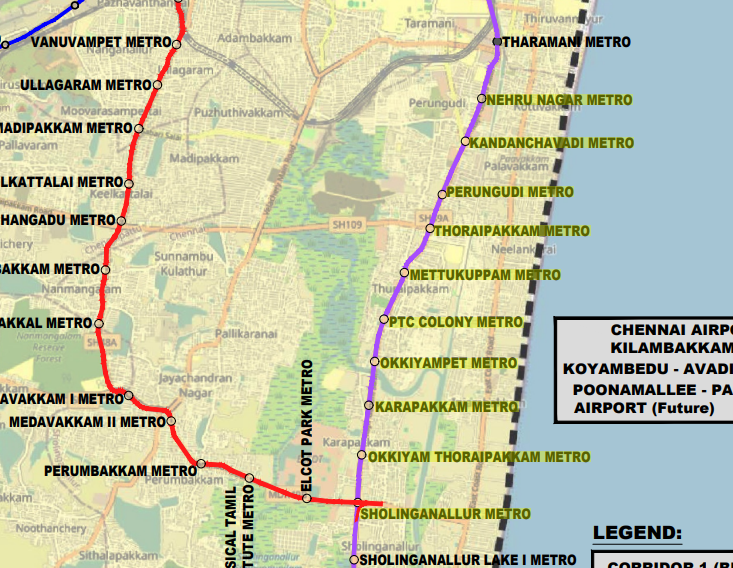
                      Line 5 (Red Line) Madhavaram – Sholinganallur44.6 km 48 Stations 

                      Key Specification 

                      Authorized Authority Chennai Metro Rail Limited (CMRL)
                      Speed and Track Top Speed: 80 kmph
                      Average Speed: 33 kmph
                      Track Gauge: Standard Gauge – 1435 mm
                      Electrification 25 kV, 50 Hz AC overhead catenary (OHE)
                      SignallingCommunications-Based Train Control (CBTC)

                      Phase 1 of Chennai Metro 

                      Overview 

                      Phase I of the Chennai Metro Rail project encompasses a total network length of 45.046 km and comprises two operational metro corridors. Approximately 55% of the corridors within Phase I are constructed underground, while the remaining segments are elevated. Construction for Chennai Metro Phase I commenced in April 2009.

                      Route Details 

                      Line-1 (Blue Line): Chennai Airport – Washermanpet (23.10 km)

                      • Status: Operational
                      • Type: Elevated & Underground
                      • Depot: Koyambedu (shared with Green Line)
                      • Number of Stations: 17
                      • Station Names: Chennai International Airport, Meenambakkam, Nanganallur Road (OTA), Alandur, Guindy, Little Mount, Saidapet, Nandanam, Teynampet, AG-DMS, Thousand Lights, LIC, Government Estate, Chennai Central, High Court, Mannadi, Washermanpet

                      Timeline of Blue Line 

                      Operational Date Section Length 
                      21 Sept 2016Airport –  Little Mount 8.6 km
                      25 May 2017Little Mount – AG-DMS4.8 km
                      10 Feb 2019AG-DMS – Washermenpet9.8 km

                      Line-2 (Green Line): Chennai Central – St. Thomas Mount (22 km)

                      • Status: Operational
                      • Type: Elevated & Underground
                      • Depot: Koyambedu (shared with Blue Line)
                      • Number of Stations: 17
                      • Station Names: St. Thomas Mount, Alandur, Ekkattuthangal, Ashok Nagar, Vadapalani, Arumbakkam, CMBT, Koyambedu, Thirumangalam, Anna Nagar Tower, Anna Nagar East, Shenoy Nagar, Pachaiyappa’s College, Kilpauk Medical College, Nehru Park, Egmore, Chennai Central

                      Timeline of Green Line  

                      Operational Date Section Length 
                      29 Jun 2015Koyambedu – Alandur 10 km
                      15 Oct 2016Alandur – St. Thomas Mount 1.3 km
                      14 May 2017Koyambedu – Nehru Park 8 km
                      25 May 2018Nehru Park – Central2.6 km

                      Phase 1 Extension 

                      Overview

                      Chennai Metro’s Phase 1 Extension project consists of a 9.051 km extension of the already operational Blue Line. The Phase 1 extension project was approved by Tamil Nadu’s state cabinet in December 2015 and by India’s Central Government in June 2016 with an estimated cost of Rs. 3770 crore. 

                      Route Details 

                      Line-1 (Blue Line): Washermanpet – Wimco Nagar

                      • Length: 9.051 km
                      • Status: Operational 
                      • Type: Underground (2.379 km) & Elevated (6.672 km)
                      • Depot: Wimco Nagar (for trains on the entire Blue Line)
                      • Number of Stations: 9
                      • Station Names: Sir Thiyagaraya College (underground), Tondiarpet (underground), New Washermenpet (formerly Tondiarpet), Tollgate Metro, Kaladipet Metro (formerly Thangal), Thiruvottriyur Theradi (formerly Gowri Ashram), Thiruvottriyur Metro, Wimco Nagar Metro, Wimco Nagar Depot Station
                      image 11

                      Chennai Metro Phase 2

                      Overview 

                      Phase 2 of the Chennai Metro, covering a total length of 118.9 km, consists of three new metro corridors. The project’s Detailed Project Report (DPR) was prepared by RITES and finalised in December 2018. In October 2024, the Union Cabinet approved the project with a total estimated cost of Rs. 63,246 crore.

                      Line Route Elevated Length Underground Length Total Length 
                      Line 3 ( Purple Line) Madhavaram – SIPCOT 219.1 km 26.7 km 45.8 km 
                      Line 4 (Orange Line) Light House – Poonamallee Bus Depot16 km 10.1 km 26.1 km 
                      Line 5 (Red Line) Madhavaram – Sholinganallur41.2 km 5.8 km 47 km 

                      Phase 2 Route Details 

                      Line-3 (Purple Line): Madhavaram – SIPCOT 2

                      • Length: 45.4 km (19 km elevated & 26.4 km underground)
                      • Depot: Madhavaram & SIPCOT
                      • Number of Stations: 49 (20 elevated & 29 underground)
                      • Station Names: Madhavaram Milk Colony, Thapalpetti, Murari Hospital, Moolakadai, Sembiyam, Permabur Market, Perambur Metro, Ayanavaram Otteri, Pattalam, Perambur Barracks Road, Doveton Junction (canceled), Purasawalkam High Road, Kellys, KMC, Chetpet Metro, Sterling Road Junction, Nungambakkam, Gemini, Thousand Lights, Royapettah Govt Hospital, Radhakrishnan Salai Jn, Thirumayilai Metro (interchange with Line-4), Mandaiveli, Greenways Road Metro, Adyar Jn, Adyar Depot, Indira Nagar, Thiruvanmiyur Metro, Taramani Road Junction, Nehru Nagar, Kandanchavadi, Perungudi, Thoraipakkam, Mettukuppam, PTC Colony, Okkiyampet, Karapakkam, Okkiyam Thoraipakkam, Sholinganallur (interchange with Line-5), Sholinganallur Lake, Ponniamman Temple, Sathyabama University, St Joseph College, Semmancheri, Gandhi Nagar, Navallur, Siruseri, SIPCOT 1 and SIPCOT 2. 
                      Recent Development on Line 3 
                      1.  TBM Breakthrough 
                      In May 2025, Tata Projects Ltd’s TBM Kalvarayan achieved a breakthrough at Perambur station of Line 3. The TBM Kalvarayan started its tunnel drive from Ayanavaram Station to Perambur Station and constructed a 867 m up-line tunnel, achieving a breakthrough at  Perambur South Shaft. In 2021, Tata Projects Limited bagged Contract TU-01 from Chennai Metro Rail Limited ( CMRL) with a 42-month deadline. 
                      70a528e9 708a 4705 8ffd fa9dc4986f16

                      Line-4 (Orange Line): Light House – Poonamallee Bus Depot

                      • Length: 26.09 km (16.02 km elevated & 10.07 km underground)
                      • Depot: Poonamallee
                      • Number of Stations: 28 (18 elevated & 10 underground)
                      • Station Names: Light House, Kutchery Road, Thirumayilai Metro, Alwarpet, Bharathidasan Road, Adyar Gate Junction, Nandanam, Panagal Park, Kodambakkam Sub Urban, Kodambakkam Power House, Vadapalani, Saligramam, Avichi School, Alwarthirunagar, Valasaravakkam, Karambakkam, Alapakkam, Porur Junction, Chennai Bypass Crossing, Ramachandra Hospital, Iyyapanthangal Bus Depot, Kattupakkam, Kumananchavadi, Karayanchavadi, Mullai Thottam, Poonamalle Bus Terminus, Poonamallee Bypass, Poonamallee Bus Depot
                      Progress Update on Line 4 
                      1. TBM Breakthrough 
                      In July 2025, ITD Cementation’s  TBM Peacock achieved a Breakthrough at Line 4’s Kodambakkam Ramp Retrieval shaft near Meenakshi College. This development was recorded under Package C4-UG02. In January 2022,  ITD Cementation bagged Package C4-UG02 of Chennai Metro Phase 2 from Chennai Metro Rail Corporation (CMRL) at Rs 1846.86 crore.  
                      e03772ea 840f 4cfd 89d8 0dcf98696dfc
                      2. Trial Runs 
                      In June 2025, CMRL initiated testing and trial runs on Line 4. The trials were conducted for the 10 km Downline stretch of Line 4, which connects Porur Junction Metro Station to Poonamalle Bypass Metro Station through 10 stations.
                      b91a3056 f9dc 4059 9a33 f29a20e0c72a

                      Line-5 (Red Line): Madhavaram – Sholinganallur

                      • Length: 44.6 km (38.77 km elevated & 5.83 km underground)
                      • Depot: Madhavaram
                      • Number of Stations: 48 (41 elevated, 1 at-grade & 6 underground)
                      • Station Names: Madhavaram Milk Colony (interchange with Line-3), Venugopal Nagar, Assissi Nagar, Manjambakkam, Velmurugan Nagar, MMBT, Shastri Nagar, Reteeri Junction, Kolathur Junction, Srinivasa Nagar, Villivakkam Metro, Villivakka, Bus Terminus, Nadhamuni, Anna Nagar Depot, Thirumangalam, Kendriya Vidyalaya, Grain Market, Sai Nagar Bus Stop, Elango Nagar Bus Stop, Alwartiru Nagar, Valasaravakkam, Karabakkam, Alapakkam, Porur Junction, Mugalivakkam, DLF IT SEZ, Sathya Nagar, CTC, Butt Road, Alandur (interchange with Line-1 and Line-2), St Thomas Mount (interchange with Line-2), Adambakkam, Vanuvampet, Puzhuthivakkam, Madipakkam, Kilkattalai, Echangadu, Kovilabakkam, Vellakkal, Medavakkam Koot Road, Kamraj Garden Street, Medavakkam Junction, Perumbakkam, Global Hospital, Elcot, Sholinganallur
                      Latest Updates on Line 5 
                      TBM Breakthrough 
                      In August 2025, TBM Kurinji achieved a breakthrough at the North Shaft of Kolathur Station under Package C5-UG06. For its first assignment, TBM Kurinji started its tunnel drive on 20 February 2025, from Kolathur Ramp towards Kolathur Station, covering a bored tunnel length of 246 m. In 2023, Tata Projects secured the Package C5-UG06 from CMRL at an estimated cost of Rs. 1817.54 Cr. 
                      2267a9ce 4087 4608 8059 5f07baf6162f

                      Rolling Stock for Chennai Metro Phase 2

                      Alstom Transport will be supplying 32 driverless 3-car (UTO) trains consisting of 96 cars for Phase 2 of Chennai Metro. In June 2025, Alstom Transport India & CMRL signed a Contract Agreement for the rolling stock Contract ARE04A of Chennai Metro Phase 2.

                      Update: Recently, Research Designs and Standards Organisation (RDSO)  completed safety certification trials of the Rolling Stock of Phase 2. The trials were conducted between the  Poonamallee Bypass Metro Station and Porur Junction Metro Station. 

                      Latest Update on Chennai Metro Phase 2

                      • In July 2025,  Delhi Metro Rail Corporation (DMRC) and CMRL formalised an agreement for the Operation and Maintenance services for Chennai Metro Phase 2’s three corridors. The agreement also includes the  Maintenance Depots located at Madhavaram, Poonamallee, and Semmancheri. Under the terms of this agreement, DMRC will provide operation and maintenance services for a duration of approximately 15 years

                      Expansion of Chennai Metro Network

                      • Extension of Corridor 4 – Lighthouse to High Court

                      To increase metro connectivity, the Chennai Metro Rail Limited (CMRL) is planning to extend Corridor 4 (Orange Line) of Chennai Metro Phase 2, which is currently under construction. This proposed extension, spanning approximately 7 km, aims to improve metro connectivity from Lighthouse to the High Court. 

                      • New Corridor: Tambaram–Guindy–Velachery 

                      The CMRL is planning a new metro corridor that will span 21 km, connecting Tambaram, Guindy, and Velachery. This corridor aims to integrate the suburbs of Tambaram, Medavakkam, Pallikaranai, and Velachery with the Guindy Metro station, part of Corridor 1 of the CMRL. 

                      Update: In August 2025, Systra MVA Consulting bagged the consultancy contracts for the preparation of Detailed Project Reports (DPRs) for both projects. 

                      Ridership Trend in Chennai Metro 

                      PHOTO 2025 11 07 15 12 34

                      The ridership level of Chennai has increased over the years. For the first time since the start of Chennai Metro Rail services, the trains recorded the transportation of 1.03 crore passengers in July 2025. This figure represents an increase of 1.15 million passengers compared to June, reflecting a 12.5% rise in ridership. A decade after the commencement of Metro Rail operations, the network recorded an average of 330,000 passengers per day in July 2025, showcasing a remarkable surge compared to preceding months. The highest ridership for the month occurred on July 4, with 374,948 passengers utilizing the service. Additionally, the average daily passenger traffic increased from 287,000 in May to 307,000 in June 2025.

                      Conclusion

                      The Chennai Metro Project is a large-scale and capital-intensive development that will not only improve connectivity but also support the overall growth of the city. With the addition of 118.9 km routes under Phase 2, the total network will expand to 172.95 km. Since its launch six years ago, the project has seen changes in both cost and scope, with the final budget fixed at ₹63,846 crore. Ridership on the operational corridors has shown steady growth, which is a positive sign for the long-term sustainability of the system. At the same time, depending only on farebox revenue will not ensure financial stability. The authorities need to put in place clear strategies to make better use of the infrastructure for generating non-fare revenue. Further, the success of Phase 2 will also depend on the availability of reliable last-mile connectivity from the stations, which will play a key role in attracting more passengers. The timely execution of Phase 2, along with effective integration of last-mile connectivity and revenue diversification, will determine how well the Chennai Metro serves the city’s transport needs in the coming years.
                      Advertisement1
                      InnoMetro_2026

                      Mitsui & Co.,Ltd. Bags ₹79.4 Cr Contract of Supplying Rail for Mumbai Metro

                      0
                      Mumbai Metro
                      Representational Image

                      MUMBAI (Metro Rail News): Mitsui & Co., Ltd. has received a Letter of Acceptance (LoA) from Mumbai Metropolitan Region Development Authority (MMRDA) for the supply of 6900 MT UIC 60E1 1080 Grade Head Hardened HH Rails for the Mumbai Metro Rail Project.

                      CA 272@4x

                      MMRDA invited bids for this contract with a completion period of 240 days. The technical bids were opened on February 4, 2025, revealing that two firms had submitted their proposals. Technical evaluation was conducted on February 6, 2025, during which one firm’s bid was disqualified.

                      The financial bids were then opened on the same day, and the financial evaluation of the technically qualified bidder occurred on 6 November 2025 announcing Mitsui & Co., Ltd. as the lowest bidder. On the same day, Mitsui & Co., Ltd received LoA for the contract. 

                      Financial Bid Values 

                      Firm Bid Value 
                      Mitsui & Co., Ltd.₹ 79.4 Cr 
                      Jindal Steel₹ 91.1 Cr

                      Contract Duration: 240 Days

                      Contract’s  Scope of Work: Supply of 6900 MT UIC 60E1 1080 Grade Head Hardened HH Rails as Per IRS T 12 2009 with latest amendments For Mumbai Metro Rail Project of MMRDA Mumbai.


                      To get real-time updates on metro and railway tenders, join our WhatsApp  Community:https://chat.whatsapp.com/GP8MIGQ7fP6Eapgbm3d8og?mode=ems_copy_c

                      Advertisement1
                      InnoMetro_2026