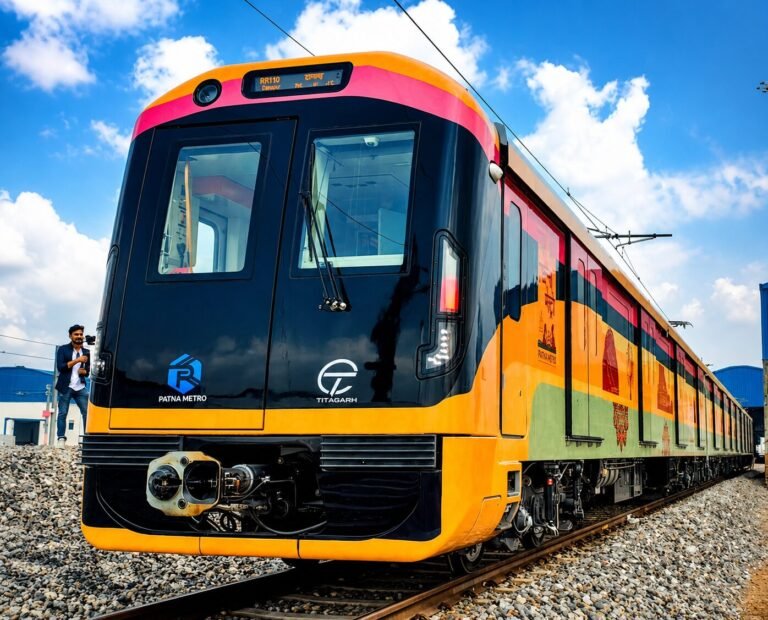
PATNA(Metro Rail News): The Patna Metro project encountered a minor tweak in the route alignment. The existing underground route of the Patna Metro passes beneath the Zoo Area, which would require a lengthy procedure to obtain approvals and NOC from the organisations concerned. Bringing this issue to the centre, Sandeep Kumar R
Pudkalkatti, Managing Director, Patna Metro Rail Corporation, had a discussion with officials on the design and construction of the underground route near the zoo area, as reported by ETInfra.
To materialise this move, the Delhi Metro Rail Corporation, which is serving as the nodal agency of the Patna Metro project, has been tasked with incorporating the revised changes in the construction plan.
The decision was taken to avoid delays in project implementation. The revised alignment will be designed in a way that the zoo boundary remains untouched by the metro alignment. Four Tunnel Boring Machines are expected to start the excavation in the aforesaid area by November. The two TBMs will move toward Patna Junction; meanwhile, the remaining two will be moved toward Rukanpura Station.
Patna Metro Network
As of now, 2 corridors are planned to connect all the major regions of Patna city. One of the two corridors will run 17.93km via both elevated and underground sections. The first underground stretch will connect Patna Junction and Rukanpura.
Line 2 will span 14.55 km and feature a 7.8 km underground section. As of now, commercial operations are underway between ISBT and Malahi Pakri.The underground section is currently under construction, and it will cover Rajendra Nagar, Moin-ul-Haq Stadium, Patna University, PMCH, Gandhi Maidan, Akashvani and Patna Junction.
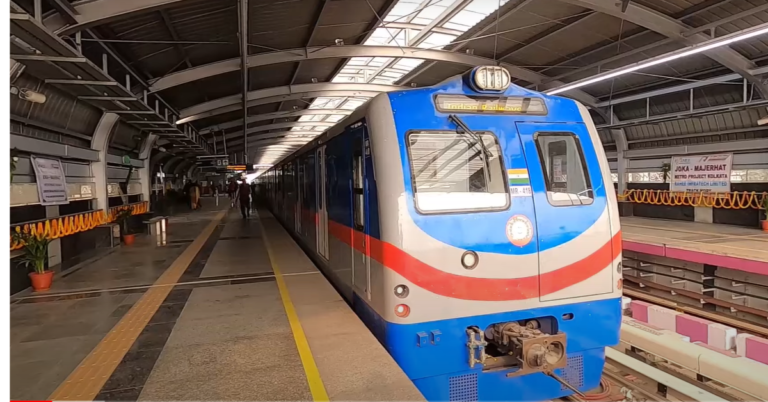
KOLKATA (Metro Rail News): The West Bengal government’s committee examining proposals to rename roads, bridges and other public places is now planning to examine Kolkata Metro stations as well.
Netaji Bhavan Metro Station is one of the stations being considered. Netaji Bhavan has not been officially renamed. The station’s name is only under consideration by the committee at this stage. They are also considering the renaming of Mahanayak Uttam Kumar Station.
Both stations are located on the Blue Line of Kolkata Metro and are located in the Bhawanipore area (Netaji Bhavan) and Tollygunge ( Mahanayak Uttam Kumar Station).
Netaji Bhavan, originally known as Bhawanipore, was later renamed ‘‘Netaji Bhavan’’, reflecting its proximity to Netaji Subhas Chandra Bose’s ancestral home and memorial.
Tollygunge is closely associated with Bengali cinema and is home to several film studios. The station was renamed Mahanayak Uttam Kumar in honour of the legendary Bengali actor Shri Uttam Kumar, who is widely known as the ‘Mahanayak’ of Bengali cinema.
According to the report of Times of India, Senior BJP functionary and member of the panel Shri Tathagata Roy said, ” He would propose that metro stations named after famous persons be renamed based on their locations to avoid confusion among commuters. He wants Netaji Bhavan and Mahanayak UttaKumar stations to be reverted to their original names, Bhowanipore and Tollygunge, respectively.
Shri.Roy argued that Netaji Bhavan station is not located close to Netaji Subhas Chandra Bose’s ancestral residence on Elgin Road and that using the locality name Bhowanipore could make the station easier for commuters to identify.
He also proposed the renaming of Hemanta Mukhopadhyay (Ruby Crossing),Jyotirindra Nandy(Mukundapur Crossing),Swapno Bhor(New Town). All three are on the Kolkata Metro Orange Line, which is planned to connect New Garia with the airport once the line is completed.
Shri. Roy also raised an issue with the name of Beleghata Metro Station on the Orange Line. He said that Beleghata station is actually located around Metropolitan on EM Bypass, away from the main Beleghata area.
Renaming Committee Chairperson Shri Swami Pradiptananda mentioned that the proposed changes were intended to address commuter difficulties, not for political reasons.
These are proposals by a member of the renaming panel, not approved station-name changes. The 10-member committee is expected to begin its formal work after Durga Puja, with road renaming proposals reportedly being taken up first.
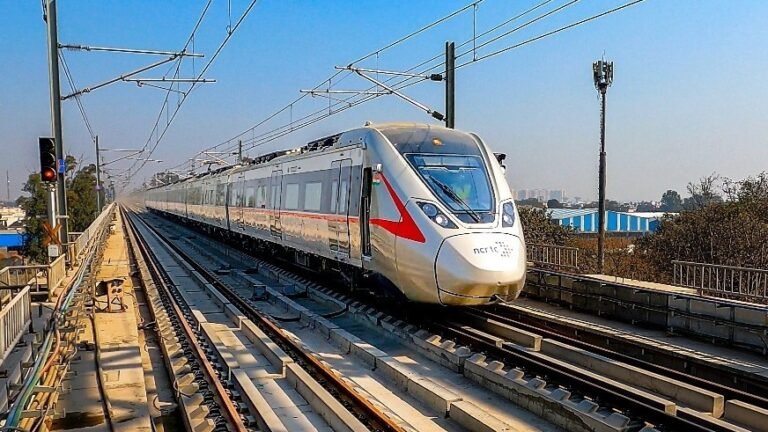
NEW DELHI (Metro Rail News): Two new Namo Bharat corridors connecting Delhi with Panipat-Karnal and Gurugram-Bawal are moving closer to approval. The Union Cabinet could clear the projects soon. The proposed corridors could reduce travel time from Delhi to Karnal to around 90 minutes and from Delhi to Bawal to about 67 minutes.
The National Capital Region Transport Corporation (NCRTC) has already started preparatory work on both corridors while waiting for the Centre’s approval.
Delhi-Karnal Namo Bharat Corridor: Travel Time Could Reduce by Half
The proposed Delhi-Panipat-Karnal Namo Bharat corridor is expected to bring the journey between Delhi and Karnal down to around 90 minutes. At present, the journey can take nearly three hours.
NCRTC Managing Director Shalabh Goel told Financial Express Digital that the corridor is expected to reduce the travel time by about half. The route will connect several major urban, industrial and educational locations, including:
Education City at Kundli in Sonipat
Barhi Industrial Area
Panipat
IOCL refinery
Karnal
The corridor could therefore serve a mix of students, industrial workers and daily commuters travelling between these centres and Delhi.
Delhi-Bawal Namo Bharat Corridor: Journey Targeted at 67 Minutes
The second proposed corridor, Delhi-Gurugram-Bawal, is expected to cut travel time between Delhi and Bawal from around 180 minutes to approximately 67 minutes. The route will connect major employment and industrial centres such as:
Gurugram
Manesar
Manesar-Bawal Investment Region (MBIR)
Bawal
The corridor is also expected to connect with the Namo Bharat network serving Delhi Airport, improving access between the airport, Gurugram and the industrial belt towards Bawal.
Cabinet approval awaited
Both corridors are at an advanced stage of the approval process, according to NCRTC. While the Centre’s Cabinet approval is awaited, NCRTC has started preparatory activities at proposed project locations. These include:
Geotechnical investigations
Utility mapping
Identification and shifting of utilities
Modification of extra-high-tension (EHT) power lines
Shifting or modification of water pipelines
Starting these activities before the final approval could help reduce the time needed to begin major construction once the projects receive the go-ahead.
Proposed Namo Bharat corridors
Corridors
Key Connections
Proposed Travel Time
Delhi-Panipat-Karnal
Delhi-Karnal
90 minutes
Delhi-Gurugram-Bawal
Delhi-Bawal
60 minutes
The projects are being planned as part of regional NCR’s wider regional rapid transit network. The first Namo Bharat corridor between Delhi, Ghaziabad and Meerut has already established the model for faster regional journeys.
Focus on regional growth
NCRTC sees the proposed corridors as more than faster transport links. The organisation expects improved regional connectivity to spread economic activity beyond Delhi and support the growth of emerging urban centres.
Transit-Oriented Development (TOD) around Namo Bharat stations could also encourage mixed-use development close to transit nodes. This could bring housing, offices, commercial activity and other services closer to stations. The projects are also expected to generate employment during construction and later during operations and maintenance.
NEW DELHI (Metro rail News): South Western Railway (SWR) has invited bids for Project General Management Services (PGMS) for its Construction Organisation. The estimated cost of the contract is around ₹426.22 crore.
South Western Railway has set a 48-month period for the project and will follow a two-packet bidding system for the tender.
Tender Details
Information
Details
Tender Number
PGMS-CN-SWR
Estimated Cost
₹426.22 crore
Earnest Money Deposit (EMD)
₹8.52 crore
Completion period
48 months
Pre-bid conference
12 October 2026, 11:00 AM
Bid Submission Deadline
8 January 2027, 3:00 PM
Scope of Work
The work includes Request for Proposal (RFP) for Providing Project General Management Services for construction organization, South Western Railway.
About South Western Railway
South Western Railway is one of the 19 operational zones of Indian Railways. It has its headquarters at Rail Soudha in Hubballi, Karnataka. The zone covers mainly Karnataka, which makes up around 84% of its network. Its network also extends into parts of Goa, Andhra Pradesh, Tamil Nadu and Maharashtra. South Western Railway plays an important role in connecting Karnataka with neighbouring regions. It manages passenger and freight routes and also works on several infrastructure development projects.
South Western Railway has been working to increase track capacity and expand the use of green energy. The zone has commissioned more than 83 km of new double and extended tracks to improve network capacity. It has also increased its renewable-energy capacity to 8.4 MWp through solar power projects. South Western Railway has also reported zero consequential train accidents, showing its focus on safety along with infrastructure development.
CHENNAI (Metro Rail News): Southern Railway has proposed increasing the number of tracks at Tambaram Railway Station from 10 to 15 to handle more long-distance trains. The expansion could strengthen Tambaram’s role as Chennai’s third railway terminal and help reduce pressure on Chennai Egmore. Track and platform extension works are already underway and are expected to be completed by March 2027 .
Why does Tambaram Railway Station need more tracks and a ₹19 cr upgrade ?
Tambaram handles more than 3.5 crore passengers every year and is expected to take on a larger role in long-distance train operations. The additional tracks would provide more space to operate trains towards southern Tamil Nadu and northern parts of the country, while giving Southern Railway greater flexibility in managing services.
Further, Egmore is undergoing redevelopment Shifting or expanding some train operations at Tambaram could provide Southern Railway with greater flexibility in allocating trains and platforms. Egmore handles a large number of long-distance services, particularly towards southern Tamil Nadu.
Along with the track expansion, passenger facilities are being improved at a cost of around ₹19 crore. A new Foot Over Bridge (FOB) is being built on the northern side, with a waiting hall and elevated ticketing facility. The station will also get 9 lifts and 10 escalators, connecting the platforms and making movement easier for senior citizens and passengers carrying luggage.
Many long-distance trains use Platforms 7 and 8, which are relatively narrow. This can make it difficult for passengers, especially senior citizens and those carrying heavy luggage, to reach the platforms. The new FOB, lifts and escalators are intended to provide easier and more convenient access without relying mainly on stairs.
NEW DELHI (Metro Rail News): Indian Railways recorded a 5.4% year-on-year increase in freight loading in August 2026. The railway loaded 137.9 million tonnes of freight during the month, up from 130.9 million tonnes in August 2025. Freight revenue also rose 6.27% in August. The growth shows that Indian Railways continues to expand its freight business.
The increase came alongside the commissioning of five new Gati Shakti Cargo Terminals (GCTs), taking the total number of operational terminals to 149 as of August 31.
Indian Railways strengthens passenger connectivity and freight capacity.
Indian Railways freight loading crosses 137 million tonnes
Indian Railways loaded 137.9 million tonnes of freight in August 2026, up from 130.9 million tonnes in August 2025. The growth was supported by higher movement of several major commodities:
Commodity
Growth in loading
Iron ore
12.1%
Clinker
10.4%
Domestic containers
9.2%
Coal
6.0%
Finished steel
4.9%
Mineral oil
3.1%
Fertilizers
1.6%
Other goods
8.2%
Iron ore recorded the highest growth among the listed commodities at 12.1%, while coal loading rose 6%. Container traffic also grew 9.2%, which indicates higher movement of a wider range of goods through the rail network.
Freight revenue rises 6.27%
Freight revenue increased 6.27% year-on-year in August. The rise in both loading and revenue comes as railways continue to handle large volumes of industrial raw materials and finished products. Coal, iron ore, steel and fertilisers remain important components of the freight basket.
Higher rail movement also supports supply chains by moving bulk commodities between production centres, industrial clusters and consumption markets.
Indian Railways opened 5 new Gati Shakti Cargo Terminals
Indian Railways commissioned five Gati Shakti Cargo Terminals during August. This took the cumulative number of commissioned GCTs to 149 by August 31, 2026. The new terminals are located at:
Shivlakha, Gujarat
Nalli, Tamil Nadu
Shaktinagar, Uttar Pradesh
Deoragram, Madhya Pradesh
Brajrajnagar, Odisha
The GCT network is intended to bring dedicated freight-handling infrastructure closer to industrial and commercial centres. By providing additional loading and unloading points, these terminals can reduce the need for longer road-based first- and last-mile movements. They can also help speed up freight evacuation from production and consumption locations.
The August figures show that growth was not limited to traditional bulk freight. Domestic container loading increased 9.2%, while other goods registered an 8.2% rise. This wider commodity mix is important for Indian Railways as it seeks to increase its share of the country’s overall freight market. Better terminal connectivity can make railway a more practical option for industries that move smaller or more diverse consignments.
The expansion of GCTs is also aimed at linking rail freight more closely with the country’s broader logistics network.
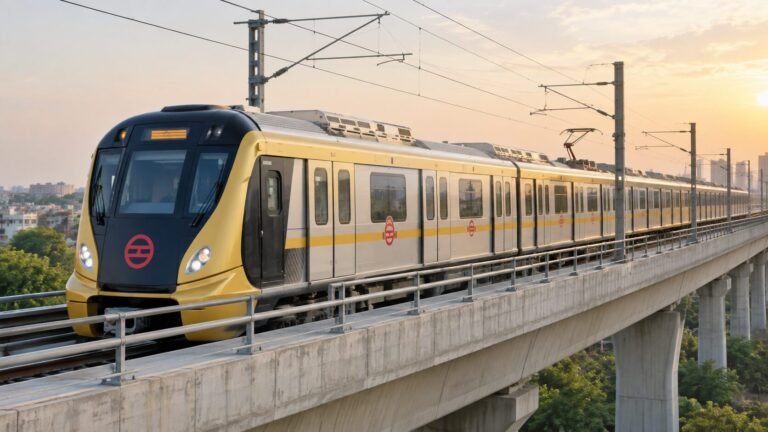
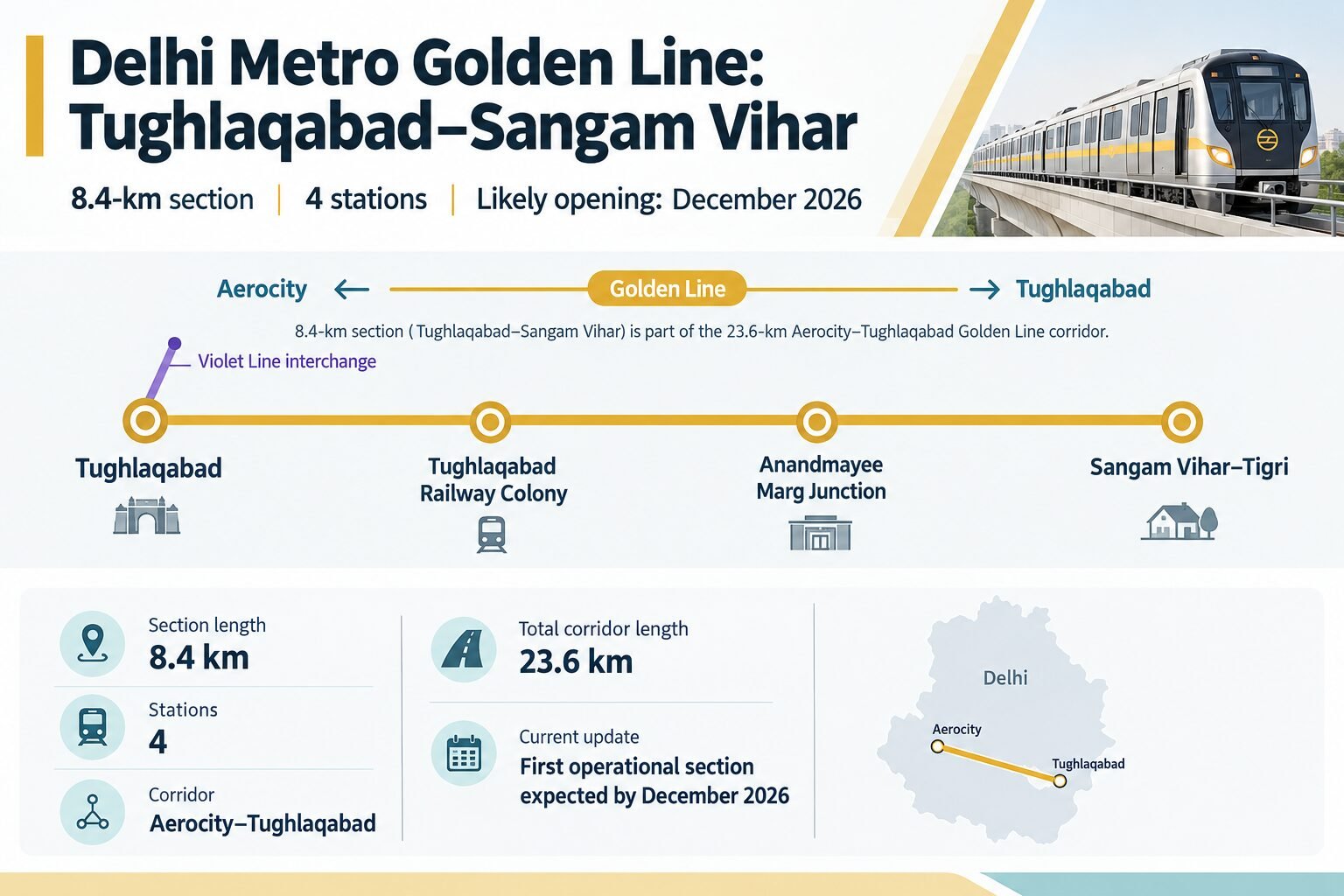
NEW DELHI (Metro Rail News): Delhi Metro’s Golden Line could see its first trains running between Tughlaqabad and Sangam Vihar by December 2026. The 8.4-km stretch is expected to become the first operational section of the 23.6-km Aerocity-Tughlaqabad corridor.
More than 83% of the civil work on the Golden Line has been completed, according to the Delhi Metro Rail Corporation (DMRC). The Tughlaqabad-Sangam Vihar section is being targeted for completion by December, with the remaining corridor planned to open in phases.
Four stations set to open on Delhi Metro’s Golden Line stretch
The 8.4-km section will have four stations:
Tughlaqabad
Tughlaqabad Railway Colony
Anandmayee Marg Junction
Sangam Vihar
Three stations – Tughlaqabad, Tughlaqabad Railway Colony and Anandmayee Marg Junction – will be underground. Sangam Vihar will be an elevated station. Tughlaqabad will also provide an interchange with the existing Violet Line, giving passengers a direct connection to the wider Delhi Metro network.
Anuj Dayal, Principal Executive Director, Corporate Communications, DMRC, said the section is expected to open by December, while the remaining parts of the corridor will become operational in subsequent phases.
Delhi Metro’s Golden Line to connect Aerocity with Tughlaqabad
The main Golden Line corridor will run 23.6 km between Aerocity and Tughlaqabad, with 15 stations. One of its more distinctive structures is a 2.4-km double-decker section between Sangam Vihar and Ambedkar Nagar. Metro trains will run on the upper deck, while road traffic will use the lower level.
The corridor is being developed as part of Delhi Metro’s Phase IV expansion. Once fully operational, it will strengthen east-west connectivity across south Delhi and provide another metro link towards the airport.
Three extensions will expand Golden Line to 38.2 km
DMRC is also developing three extensions that will take the Golden Line network beyond the Aerocity-Tughlaqabad corridor. With these projects, the combined Golden Line network is planned to reach 38.2 km.
Extension
Length
Phase
Lajpat Nagar-Saket G Block
8.3 km
Phase 4
Aerocity-IGI Terminal 1
2.2 km
Phase 5(A)
Kalindi Kun-Tughlaqabad|
3.9 km
Phase 5(A)
The Lajpat Nagar-Saket G Block extension will have a different operating approach. DMRC plans to run three-coach trains on the corridor, which will be India’s first metro corridor specifically planned around three-coach train operations. The shorter trains are intended for relatively short urban trips and will connect residential and commercial areas in south Delhi.
Airport connectivity gets another boost
The proposed Aerocity-IGI Terminal 1 extension will add another interchange at Terminal 1. The Terminal 1 station will connect with the Magenta Line, allowing passengers to transfer between the two corridors without relying on shuttle buses for movement between different parts of the airport. Aerocity will also emerge as a larger interchange point, linking the Airport Express Line, Golden Line and the proposed Delhi-SNB-Alwar RRTS corridor.
Kalindi Kunj-Tughlaqabad to link three cities
The 3.9-km Kalindi Kunj-Tughlaqabad extension will provide a direct connection between the Magenta and Violet lines. The link is expected to improve connectivity between Noida, Delhi and Faridabad, particularly for passengers travelling across the southern edge of the National Capital Region.
The immediate priority is the Tughlaqabad-Sangam Vihar section. With civil work on the overall Golden Line crossing 83%, DMRC is now working towards bringing the first stretch into service by December. The rest of the Aerocity-Tughlaqabad corridor will follow in phases, subject to completion of construction, systems work and mandatory safety clearances.
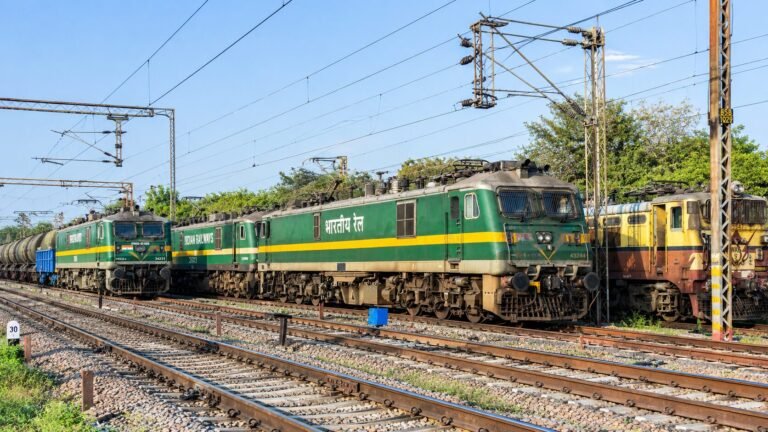
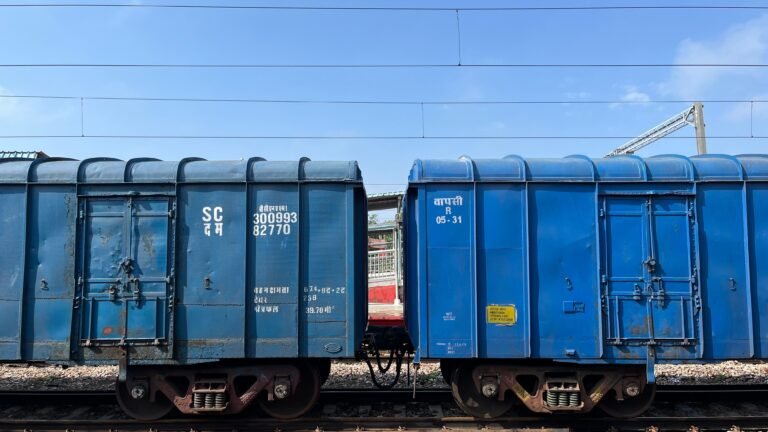
NEW DELHI (Metro Rail News): Texmaco Rail & Engineering Limited has secured a ₹27.82 crore order from Hindalco Industries Limited for the supply of one BTAP rake and one brake van for the Aditya Expansion Project. The domestic order is expected to be executed within eight months from the date of the purchase order (PO).
As per the company’s disclosure under Regulation 30 of the SEBI (Listing Obligations and Disclosure Requirements) Regulations, 2015, Hindalco Industries has awarded the order to Texmaco Rail.
Order Details
Information
Details
Awarding Authority
Hindalco Industries Limited
Supplier
Texmaco Rail & Engineering Limited
Order value
₹27.82 crore, including taxes
Scope
Supply of 1 BTAP rake and 1 brake van
Project
Aditya Expansion Project
Execution period
Within 8 months from the date of PO
The order covers the supply of one BTAP rake along with one brake van for Hindalco’s Aditya Expansion Project. The company has not disclosed further technical specifications or the detailed delivery schedule in the order disclosure.
Boost for Texmaco Rail’s Freight Rolling Stock Business
The order adds to Texmaco Rail‘s portfolio of freight rolling stock supplies for industrial customers. The company manufactures and supplies railway freight wagons and related rolling stock for various applications.
For Hindalco, the supply will support the requirements of its Aditya Expansion Project, while for Texmaco Rail, the order strengthens its order book in the industrial freight segment. The latest order highlights continued demand for specialised freight rolling stock from large industrial customers.
NEW DELHI (Metro Rail News): Delhi Metro Rail Corporation (DMRC) has invited bids for a ₹78.65 crore signalling package for the Lajpat Nagar-Saket G Block corridor of Delhi Metro Phase-4. The contract will cover the design, installation, testing and commissioning of an interoperable signalling system for the new corridor.
Tender Details
Information
Details
Tender Number
D2S06
Estimated Cost
₹78.65 crore
Tender Security
₹39.32 lakh
Completion Period
30 months from NTP
Pre-bid Meeting
17 September 2026, 11:00 hrs
Bid Submission Deadline
12 October 2026, (11:00 am) to 19 October 2026, (03:00 pm)
Scope of work
The contract includes design, supply, installation, testing & commissioning of Interoperable Signalling System for Lajpat Nagar – Saket GBlock Corridor (Line-11) of Delhi Metro Phase-4 MRTS.
About Delhi Metro Phase-4
The 8.385-km Lajpat Nagar-Saket G Block corridor is part of Delhi Metro Phase-4. The elevated corridor will have eight stations:
Lajpat Nagar
Andrews Ganj
GK-1
Chirag Delhi
Pushpa Bhawan
Saket District Centre
Pushp Vihar
Saket G Block
The corridor is planned as part of the Golden Line, which will strengthen metro connectivity across South Delhi. The corridor will provide interchange opportunities with existing Delhi Metro lines at key locations.
At Chirag Delhi, the new corridor will connect with the Magenta Line, while Lajpat Nagar will provide interchange with the Violet and Pink Lines. This will strengthen Lajpat Nagar’s role as a major interchange point, allowing passengers to transfer between three metro corridors.
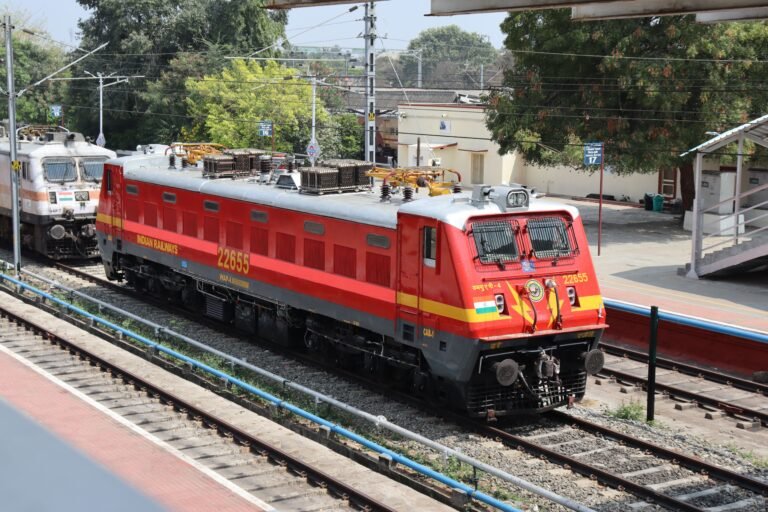
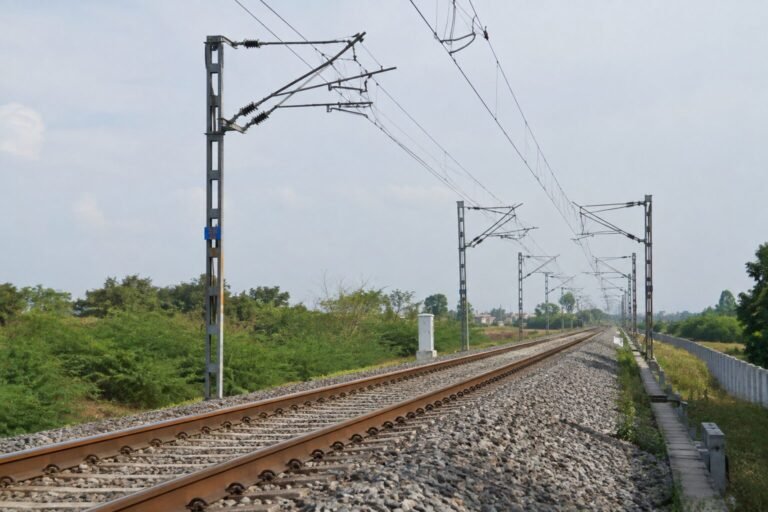
NEW DELHI (Metro Rail News): Southern Railway has achieved 100% electrification of its entire 5,068 route-kilometre Broad Gauge (BG) network.The milestone was achieved after electrification of the final 71-km Pattukkottai–Karaikkudi section in Tamil Nadu. The statutory inspection of this final section was completed on September 9, 2026, by Southern Railway Principal Chief Electrical Engineer Shri.Ganesh.
Southern Railway’s electric-traction journey dates back to May 11, 1931, when electric traction was introduced in the Madras region. Over the decades, the railway steadily expanded electrification across its network, marking a major shift from conventional diesel traction towards cleaner and more efficient electric operations.After a 95-year journey, Southern Railway has now achieved 100% electrification of its 5,068-km Broad Gauge network in 2026, marking a major milestone in its transition to complete electric traction.
Electrification helps trains operating across the zone can use electric traction without requiring a traction change within the electrified network. Complete electrification will enhance operational flexibility, improve locomotive utilisation and contribute to more reliable and efficient train services.
Why Is Railway Electrification Important for Train Operations?
Previously, where electrification was incomplete, trains could require a traction change when moving between electrified and non-electrified sections. For example an electric locomotive needs electricity from the overhead OHE (Overhead Equipment). If the next section does not have electrification, the electric locomotive cannot continue powering the train there. So the railway may have to replace it with a diesel locomotive.
A traction change takes additional operational time and requires crew coordination. Complete electric traction coverage across the network will reduce the dependence on fossil fuels. The 100% electrification milestone supports Southern Railway’s transition towards a cleaner and more sustainable railway system and forms part of the zone’s modernisation efforts.