Home Blog Page 10

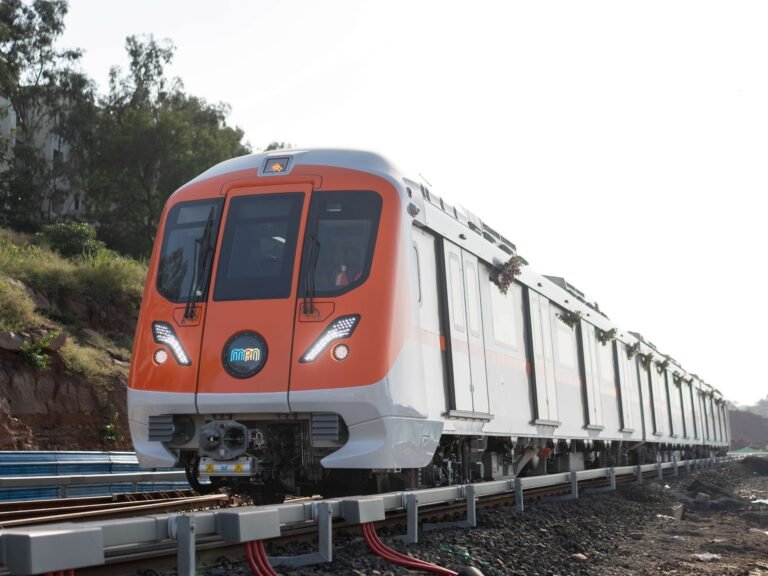
L&T Awards ₹23.74 Cr Contract to Univastu India for Mumbai Metro Line 4 & 4A 

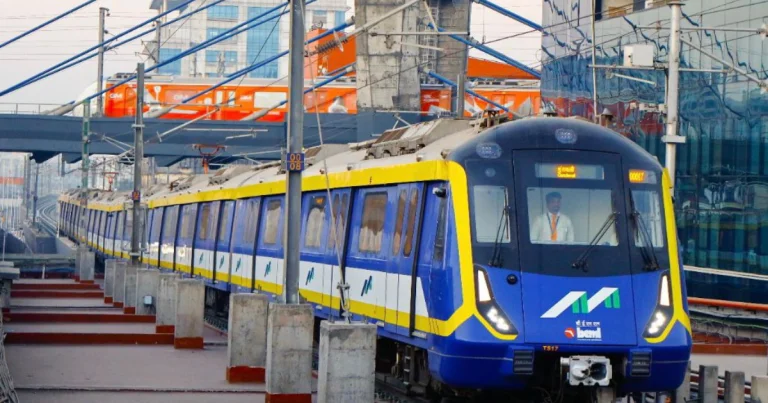
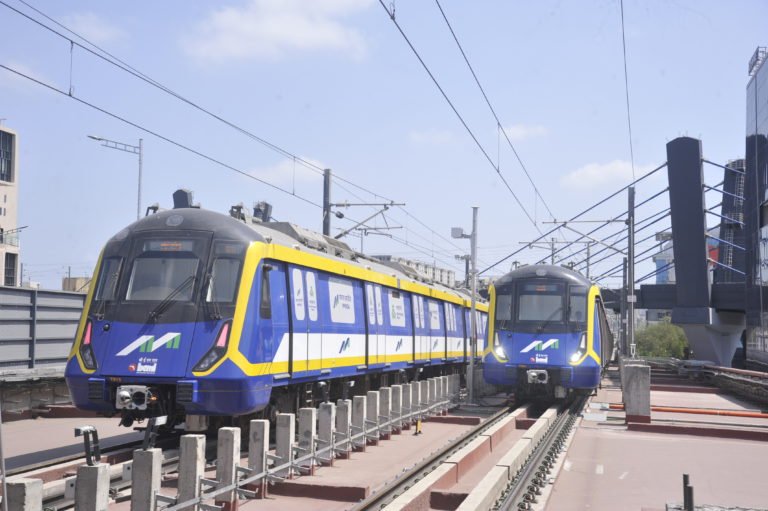
MUMBAI (Metro Rail News):  Larsen & Toubro (L&T) has awarded a ₹23.74 crore contract to Univastu India Limited for the CCTV system of Mumbai Metro Line 4 and Line 4A. The order covers the complete CCTV system lifecycle, from design and supply to installation, testing and commissioning, along with two years of defect liability maintenance and five years of comprehensive maintenance.

Contract details

InformationDetails 
CompanyUnivastu India Limited
Order awarded byLarsen & Toubro (L&T)
ProjectMumbai Metro Line 4 and Line 4A
Contact Value₹23.74 crore, including 18% GST
Design & Build period67 weeks
Defect Liability Maintenance Period2 years
Comprehensive Maintenance Period5 years

Scope of work

The scope of work includes design, manufacture, routine testing, quality assurance, supply, factory acceptance test, packing and forwarding, installation, interface, configuration, integration, testing and commissioning, spare parts, training at site, Defect Liability Maintenance Period (DLMP) -2 years and Comprehensive Maintenance Period (CMP) -5 years of CCTV system for CA-234 Mumbai Metro Line 4 & 4A (Wadala- Kasarvadvali – Gaimukh) Project.

About Mumbai Metro Line 4 & 4A

Mumbai Metro Line 4, also known as the Wadala-Kasarvadavali corridor, is a 32.32-km elevated metro corridor with 30 stations. Line 4A extends the corridor from Kasarvadavali to Gaimukh. The extension is 2.7 km long and has two stations. It connects with Line 4 at Kasarvadavali and extends the corridor towards Gaimukh.

Together, the two corridors are designed to strengthen east-west connectivity across the Mumbai Metropolitan Region and provide an alternative to road-based travel.

Also Read: 10-Day Morning Block on Mumbai Metro Line 2A, 7 & 9 Due to Integration of 3 New Stations

10-Day Morning Block on Mumbai Metro Line 2A, 7 & 9 Due to Integration of 3 New Stations

MUMBAI (Metro Rail News): Mumbai Metro Line 9 Phase 2 has entered an important testing stage. Signalling and system integration tests started on September 15. The test will integrate the three new stations to the existing Metro network and prepare the corridor for passenger services. 

Maha Mumbai Metro Operation Corporation Ltd (MMMOCL) have planned a special 10 days morning non-revenue block from September 15 to 25 to conduct the tests without affecting regular operations. During this period, passenger services on Metro Lines 2A, 7 and Line 9 Phase 1 will start at 6:30 am instead of the usual time.

Mumbai Metro Line 9 Phase 2 Moves Into System Testing 

The new Phase 2 section needs to work with the signalling systems already in use on the operational Mumbai Metro corridors. To make this possible, technical teams have started software migration, testing and validation through the Operations Control Centre (OCC) at Charkop Depot. 

The signalling software needed for speed trials on Line 9 Phase 2 is ready. Teams are now checking whether the software and other systems communicate correctly with the existing Metro network. The tests include:

  • Signalling software migration
  • System testing and validation
  • Integration with the existing Metro network
  • Speed trials on the new Phase 2 section
  • Checks through the Charkop Depot OCC

Why the morning block is needed

Mumbai Metro Lines 2A, 7 and Line 9 Phase 1 continue to carry passengers during normal operating hours. Testing the new section alongside these services requires a controlled period when trains are not carrying passengers. MMMOCL has therefore kept the testing window in the early morning. This gives technical teams uninterrupted access to the network while limiting the effect on daily commuters.

The revised timetable will remain in place until September 25. Commuters using Mumbai Metro  Lines 2A, 7 and Line 9 Phase 1 during this period will need to account for the later 6.30 am start.

Mumbai Metro Phase 2 moves closer to passenger operations

The signalling work is an important step before Line 9 Phase 2 can enter passenger service. Once integration and speed tests are completed, the project can move towards the remaining commissioning and safety checks.

The latest exercise does not mean that the three stations are ready to open immediately. Further testing and statutory approval will still be required before passenger services can begin. Mumbai Metro Line 9 Phase 2 is being added to an already operational network, making system integration a critical part of the commissioning process.

Also Read: Centre Approves Mumbai Metro Line 5 & 5A: Metro to Link Thane, Bhiwandi, Kalyan & Ulhasnagar

Chennai Metro Awards ₹143.60 Cr AMC Contract for Lifts and Escalators to Johnson Lifts

CHENNAI (Metro Rail News): Chennai Metro Rail Limited (CMRL) has awarded a ₹129.8 crore comprehensive Annual Maintenance Contract (AMC) to Johnson Lifts Pvt Ltd for lifts and escalators installed across Phase I and Phase I Extension stations.

The contract covers maintenance of equipment at both underground and elevated stations, along with the Koyambedu Administration and Operations Control Centre (OCC) building.

Contract Details

InformationDetails
Awarding AuthorityChennai Metro Rail Limited (CMRL)
ContractorJohnson Lifts Pvt Ltd
Contract value₹129.8 crore (Incl. GST)
Contract period180 days
Contract typeComprehensive AMC
LocationsChennai Metro Phase I and Phase I Extension stations, Koyambedu Admin/OCC Building

Scope of work

The AMC covers Lifts and Escalators installed in Chennai Metro Phase I and Phase-1 Extension Metro stations (Both Underground and Elevated) including Koyambedu Admin/OCC Building from the OEM or authorized service provider of M/s Johnson lifts and M/s SJEC . 

Chennai Metro Phase I network

Chennai Metro’s Phase I covers 45.046 km across two corridors:

  • Corridor I: Washermenpet-Airport, 23.085 km
  • Corridor II: Chennai Central-St Thomas Mount, 21.961 km

Around 55% of the Phase I network is underground, while the remaining portion is elevated. The project has 32 stations, including 13 elevated and 19 underground stations. The two corridors provide interchange facilities at Alandur, an elevated station, and Chennai Central, an underground station.

Chennai Metro Phase I Extension

The Phase I Extension covers 9.05 km between Washermenpet and Wimco Nagar. The extension has nine stations and an elevated depot.

Seven stations are elevated, while two are underground. Lifts and escalators help passengers move easily across these stations. Regular maintenance is important to keep these facilities working and ensure smooth passenger movement.

Also Read: Anna Salai Flyover Faces Design Change Over Chennai Metro Alignment Mismatch 

Revised Double Decker Plan Pushes Bangalore Metro Phase 3 to Retendering Phase

Bangalore (Metro Rail News): Bangalore Metro Rail Corporation (BMRCL) may invite fresh civil-work tenders for Bangalore Metro Phase 3 within the next 45 days. The move comes after BMRCL dropped its plan for an end-to-end double-decker corridor.

The decision follows growing criticism over the delay in starting ground work, even though the Centre approved the project more than two years ago. Under the revised plan, double-decker structures will cover around 11 km of the 44.65-km Phase 3 network. BMRCL will withdraw the tenders it issued earlier this year, revise the project cost and get the required approvals before inviting new tenders.

Bangalore Metro Phase 3 tenders to be floated again

The Bangalore Metro Rail Corporation Limited (BMRCL) invited civil-work tenders in January 2026 for around 18.5 km of the Orange Line. The work covered three packages. However, BMRCL will now recall these tenders because the project design has changed. A senior Urban Development Department official told Moneycontrol that the state government has given in-principle approval to keep double-decker structures on around 11 km of the corridor. Bangalore Metro will first revise the project cost and then invite fresh tenders.

The process could take around one month to 45 days. However, the timeline will also depend on the BMRCL board’s approval. The project has faced delays in starting construction work. The Centre approved the project in August 2024, and the government laid the foundation stone in August 2025. Despite these steps, BMRCL has not yet issued work orders.

What is changing in Bangalore Metro Phase 3?

The Centre approved Bangalore Metro Phase 3 in August 2024 with an estimated cost of ₹15,611 crore. The project covers 44.65 km and 31 stations across two corridors.

Corridor Route Length Stations 
Corridor 1JP Nagar 4th Phase-Kempapura32 km21
Corridor 2 Hosahalli-Kadabagere12.5 km10 
Total 44.65 km31

The first corridor will run along the western part of the Outer Ring Road, while the second will follow Magadi Road. The project is currently targeted for completion by 2029.

Double-decker plan cut from entire corridor to 11 km

The state government had been pushing for an end-to-end double-decker design for Bangalore Metro Phase 3. Under this model, road flyovers would run below the Metro viaduct, allowing both transport systems to use the same corridor. The idea was partly driven by Bangalore’s limited road space and high land-acquisition costs. Karnataka has also approved a separate 37-km double-decker road component, estimated to cost around ₹9,700 crore.

However, the Centre raised concerns about the financial and transport impact of building such structures across the entire Phase 3 alignment. MoHUA is examining whether long stretches of road flyovers could create parallel road infrastructure and encourage greater private-vehicle use. The effect on Metro ridership, along with safety, operational feasibility and economic returns, is also under review. The revised Phase 3 plan will therefore retain double-decker structures only at selected locations.

Around 11 km of double-decker sections

The sanctioned project already includes about 3 km of double-decker structures:

  • Kanakapura Road junction: 1.4 km
  • Kamakya Junction: 1.6 km

Another 8 km is proposed at major traffic bottlenecks. Goraguntepalya is among the locations being considered. At Goraguntepalya, BMRCL is examining a different arrangement in which the road could pass underground through a cut-and-cover section, while the Metro viaduct runs above it. This would allow the Bangalore Metro to cross the busy junction without requiring a large surface-level road structure.

Project has already missed several milestones

The delay in Bangalore Metro Phase 3 has become a major concern as Bangalore continues to face heavy traffic and growing demand for public transport. The Karnataka government approved the two Phase 3 corridors in November 2022. The Centre approved the project nearly two years later, in August 2024. Prime Minister Narendra Modi laid the foundation stone for the Orange Line on August 10, 2025.

However, more than a year after the foundation stone ceremony, BMRCL is still preparing to invite fresh civil-work tenders. BMRCL could not move ahead with the tenders it invited in January 2026 because the government changed the double-decker design. The state government now wants to prevent further delays. Officials said BMRCL dropped the end-to-end double-decker plan for Phase 3 because continuing the design discussions could increase the project cost and delay its completion.

Similar questions around Hebbal-Sarjapur Metro

The double-decker plan is not limited to Phase 3. BMRCL is also considering an end-to-end double-decker design for the proposed 37-km Hebbal-Sarjapur Metro corridor. BMRCL has asked IIT Roorkee to study the proposal. The revised cost of the corridor is estimated at around ₹25,999 crore.

The Centre’s concerns about the Bangalore Metro Phase 3 double-decker design could also affect how Bangalore plans double-decker structures for future Metro corridors.

Also read: Bangalore Metro to be equipped with Alstom’s AI-integrated CBTC system

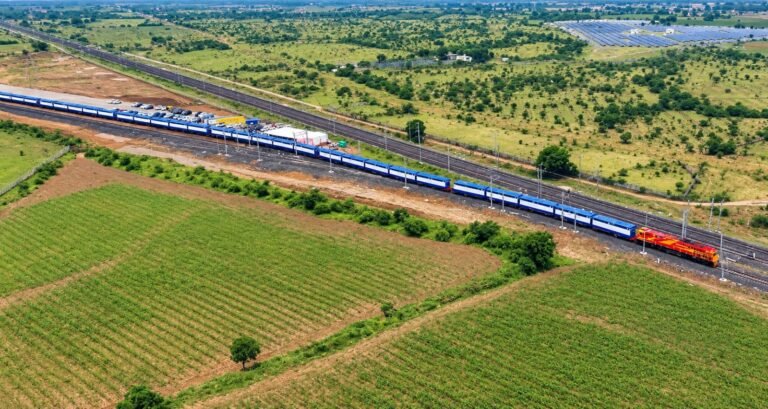
Railway Minister Flags Off Salt Train from Shivlakha, Boosts Gujarat’s Freight Network with 5 Gati Shakti Terminals

GUJARAT (Metro rail news): Railway Minister Ashwini Vaishnaw on Wednesday flagged off a salt-loaded freight train from Shivlakha Gati Shakti Cargo Terminal (GCT) in Kachchh to Mithapur. It is made of lightweight stainless steel containers designed to make salt transport easier.

The new containers aim to address some of the problems that come with moving salt in conventional railway wagons, including moisture and difficulties during loading and unloading.

Railway designed new stainless steel containers for salt transport

Salt is a major commodity in Gujarat, particularly in the Kachchh region. But moving it by railway has not always been straightforward. Vaishnaw said conventional wagons add significant weight to the overall load. Salt can also absorb moisture during transport, which can make the cargo wet and create problems during loading and unloading.

The new stainless steel containers aim to address these issues. The containers are lightweight and have separate arrangements for loading and unloading:

  • Salt can be loaded from the top.
  • It can be unloaded from the side.
  • The stainless steel design can help deal with moisture during transportation.
  • Their lower weight can allow more efficient use of the train’s carrying capacity.

The first salt-loaded freight train using the new system was flagged off from Shivlakha GCT to Mithapur.

Shivlakha Gati Shakti Terminal gets operational

The salt train flag-off came as Vaishnaw inaugurated the Shivlakha Gati Shakti Cargo Terminal in Kachchh. The terminal is expected to give salt producers and other businesses in the region a direct facility for handling cargo by rail. This can reduce the need to depend on road transport for moving goods to railway loading points. The location is also important because Kachchh has a large salt-producing industry and sits close to Gujarat’s major ports and industrial areas.

The event also marked the launch and expansion of five Gati Shakti Cargo Terminals across Gujarat. Vaishnaw inaugurated Shivlakha GCT, while three terminals were dedicated to the nation. These are:

  • Bhimasar GCT – Kachchh
  • Devaliya GCT – Morbi
  • Chandisar GCT – Banaskantha

The Railway Minister also laid the foundation stone for the Linch GCT in Mahesana. The terminals will add more locations for businesses to load and send goods by rail. They are also expected to improve links between Gujarat’s industrial centres, ports and markets in northern India.

Railway commissioned 150 Gati Shakti Cargo Terminals

Indian Railways has now commissioned 150 Gati Shakti Cargo Terminals across India, according to Vaishnaw. The GCT programme focuses on bringing freight facilities closer to industries and production centres. 

For businesses, the idea is simple- reduce the distance between where goods are produced and where they enter the railway network. The new terminals can also help reduce pressure at existing freight points and improve the movement of goods towards ports and the northern hinterland.

Kachchh railway network also expanding

The GCT push comes alongside a wider expansion of railway infrastructure in Kachchh. Vaishnaw said projects worth around ₹5,600 crore are currently under way in the region. Major works include capacity expansion and doubling on routes connecting:

Samakhiali – Bhachau – Gandhidham – Adipur – Bhuj

The Samakhiali-Bhachau section has already been expanded to four lines. The Gandhidham-Adipur section has also been expanded to four lines. The Adipur-Bhuj section is being doubled. The Railways has also completed the conversion of the Bhuj–Naliya route from metre gauge to broad gauge. A new broad-gauge line from Naliya to Jakhau Port has also been sanctioned. Further development is planned towards Vayor, Luna, Hajipur and Desalpar.

Why the freight push matters

Kachchh has a large industrial base, salt production and important port-linked activity. Better rail connectivity can help businesses move larger volumes of goods over longer distances. The region also has strategic importance because of its proximity to the international border. Improved railway infrastructure can support both industrial and defence requirements.

However, the success of the new GCTs will depend on how much cargo businesses actually shift to rail. Better terminals alone will not be enough. Local road links, regular train services and efficient loading and unloading will also matter.

DFCs to support freight movement

Vaishnaw also highlighted the role of Dedicated Freight Corridors in improving goods movement. The expanded freight network can allow goods trains to move more efficiently and reduce pressure on routes that also carry passenger trains. The Railways is also working to expand freight connectivity in the east-west direction.

Mumbai-Ahmedabad bullet train update

Vaishnaw also provided an update on the Mumbai-Ahmedabad High-Speed Rail project. Construction on the Vapi-Surat section is targeted for completion by December 2026. Testing and other related work will follow. He also said the first coach of India’s indigenous high-speed train has been prepared and is undergoing various tests.

Also Read: Assam Achieved 100% Railway Electrification on BG Network in Just 12 Years

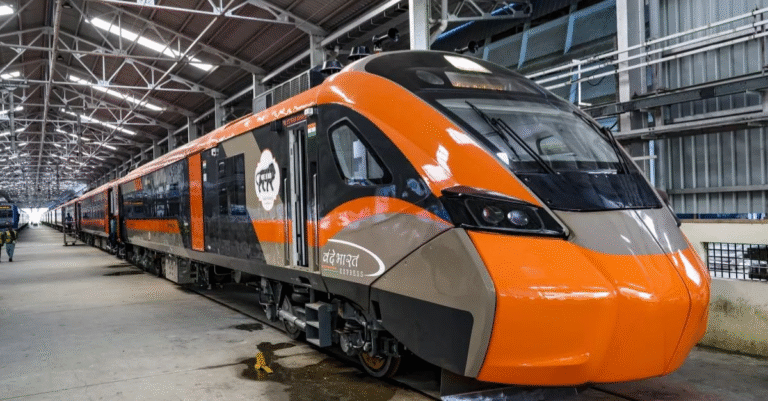
Titagarh Rail-BHEL JV Sign 35-Year Maintenance Contract for 80 Vande Bharat Sleeper Trains

NEW DELHI(Metro Rail News): The joint venture of Titagarh Rail Systems Limited (TRSL) and Bharat Heavy Electricals Limited (BHEL) has signed a 35-year long-term maintenance contract for Vande Bharat Sleeper trains with Indian Railways. Titagarh Rail & BHEL won the ₹24,000 crore contract to manufacture 80 Vande Bharat Sleeper trains in April 2023. For 35 years, the JV will handle the responsibility for the upkeep of 80 Vande Bharat Sleeper trains. 

BHEL and TRSL will each hold an equal 50% stake in the proposed joint venture, according to a regulatory filing. The partnership will be structured as a private limited company, with both entities holding an equal share in the ownership and, consequently, in the equity capital of the JV.

The joint venture will have an initial paid-up share capital of ₹50 lakh and will be established with its registered office in Delhi. The company will serve as the corporate structure through which BHEL and TRSL will jointly undertake activities envisaged under the partnership.

Under the proposed joint venture structure, BHEL and TRSL will each nominate two directors to the JV’s board, ensuring equal representation of both companies in its governance and decision-making process.

According to the regulatory filing, the joint venture will leverage the respective technical capabilities and expertise of BHEL and TRSL to support the operational readiness, safety and reliability of the train sets throughout their envisaged 35-year service life.

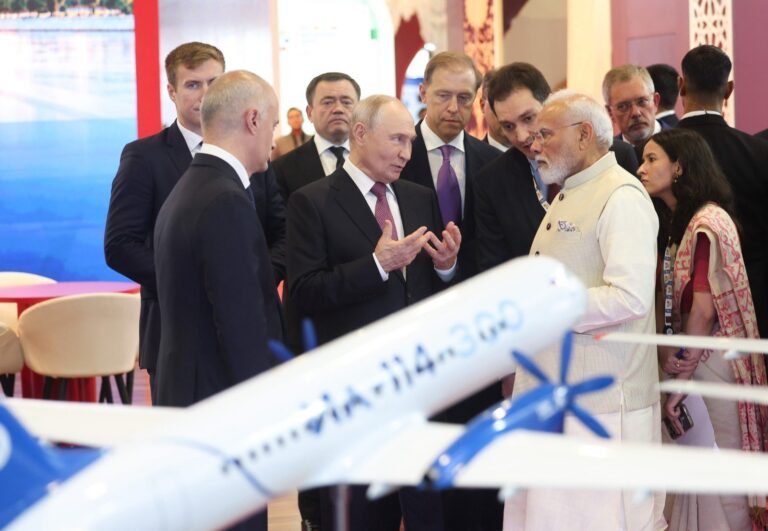
Modi, Putin Visit RVNL Stall, View Indo-Russian Vande Bharat Sleeper Model at INNOPROM

NEW DELHI (Metro Rail news): Prime Minister Narendra Modi and Russian President Vladimir Putin visited the RVNL stall at the INNOPROM Exhibition at Bharat Mandapam. They viewed a model of the Indo-Russian Vande Bharat Sleeper trainset.

The visit comes as the first prototype being developed by the Indo-Russian joint venture Kinet Railway Solutions faces a delay and is now expected to roll out by March 31, 2027.

Modi and Putin view Vande Bharat Sleeper model

The Vande Bharat Sleeper model was among the key railway exhibits at the RVNL stall during the three-day exhibition. RVNL CMD Saleem Ahmad welcomed Modi and Putin during their visit to the stall. Rail Vikas Nigam Limited (RVNL) and Russian rolling stock manufacturer Transmashholding (TMH) have joined hands to manufacture Vande Bharat Sleeper trainsets in India through Kinet Railway Solutions Ltd.

The joint venture will manufacture 120 Vande Bharat Sleeper trainsets, with each train comprising 16 coaches. The trains will be manufactured at Kinet’s facility in Marathwada, Maharashtra. RVNL said the project combines Indian manufacturing capabilities with Russian technology.

First Vande Bharat Sleeper prototype from Kinet delayed to March 2027

The first Vande Bharat Sleeper prototype from Kinet was originally expected in June 2026. However, RVNL announced a revised timeline a few weeks ago. The first prototype is now expected to roll out by March 31, 2027. After the prototype rolls out, the trainset will have to go through testing and trials before series production and passenger operations. The delay means Kinet’s trainsets will enter the wider Vande Bharat Sleeper programme later than originally planned.

120 Vande Bharat Sleeper trainsets planned under Kinet contract

Kinet Railway Solutions will manufacture 120 of the planned Vande Bharat Sleeper trainsets. The overall manufacturing programme covers 260 trainsets. The planned production is divided among different manufacturers and partnerships:

  • Kinet Railway Solutions: 120 trainsets
  • BHEL-Titagarh consortium: 80 trainsets
  • Integral Coach Factory, Chennai: 50 trainsets

The Railway Ministry plans to introduce the sleeper trainsets in phases. The rollout will depend on demand, testing and operational readiness.

Vande Bharat Sleeper programme moves into phased production

The sleeper version of Vande Bharat is being developed through a combination of prototype production, testing, trials and series manufacturing. BEML, Integral Coach Factory and technology partners are involved in the programme. The first pair of Vande Bharat Sleeper trains was flagged off by Prime Minister Narendra Modi on January 17, connecting Kamakhya and Howrah.

The sleeper trains are designed to take Vande Bharat beyond the current day-travel network and into longer-distance overnight services. However, the manufacturing programme will not move into full-scale passenger deployment at once. The Railway Ministry has planned a phased induction based on the readiness of each trainset and operating requirements.

RVNL showcases other major railway projects

The Vande Bharat Sleeper model was not the only railway project displayed at the RVNL stall. The company also showcased a model of the Tunnel Boring Machine (TBM) being used for tunnel construction on the Rishikesh-Karnaprayag Rail Link Project. The project involves railway construction through difficult Himalayan terrain, where tunnelling forms a major part of the work.

RVNL also displayed a model of the New Pamban Railway Sea Bridge, India’s first vertical-lift railway sea bridge. Prime Minister Narendra Modi inaugurated the bridge last year. These exhibits placed the Vande Bharat Sleeper project alongside RVNL’s work in railway construction, tunnelling and bridge engineering.

Indo-Russian partnership takes shape in train manufacturing

The Kinet project is one of the larger manufacturing programmes within the Vande Bharat Sleeper plan. It also brings a foreign technology partner into India’s growing train manufacturing ecosystem.

For Kinet, the next major milestone will be the rollout of its first prototype by March 2027. The train will then need to clear the required testing and trial stages before regular passenger service.

Also Read: Railways begins land acquisition for Vande Bharat Sleeper Depot in Bengaluru

As Bhopal Metro Work Advances, Traffic Pressure Mounts on Jawahar Chowk-New Market Road 

BHOPAL (Metro Rail news): Bhopal Metro’s Bhadbhada-New Market corridor is facing a difficult traffic situation as Blue Line’s metro construction moves ahead and the festive season brings more vehicles to the area.

The problem is not only the metro work. E-rickshaws, roadside parking and encroachments are also taking up valuable road space on a stretch that already sees heavy traffic.

Bhopal Metro stretch faces traffic pressure 

The traffic situation is particularly difficult between Jawahar Chowk and New Market. Private vehicles already create regular traffic jams on this road. The large number of e-rickshaws parked along the stretch is making things worse. At different points, nearly 100 e-rickshaws can be seen parked or waiting on the road.

When these vehicles stop along busy roads, they leave less space for other vehicles to move. During peak hours, even a small reduction in road space can slow traffic across the area. An urban development expert said the e-rickshaw issue needs to form part of the wider traffic plan for the Bhopal Metro work. The expert said the number of e-rickshaws is high enough to need proper planning. Their movement and roadside stopping can further slow traffic, the expert added.

Metro agency and traffic police have different roles

The question now is who should deal with the problem. MPMRCL officials said the metro contractor must take the required permissions before starting construction and follow the conditions attached to those permissions. However, traffic control is the responsibility of the traffic police, according to MPMRCL officials.

This creates a problem when several issues come together on the same road. Metro work reduces the space available for vehicles. E-rickshaws occupy more of that space. Encroachments reduce it further. Traffic police then have to manage the vehicles that remain on the road. For commuters, these are not separate problems. They all contribute to the same traffic jam.

E-rickshaw restrictions need stronger enforcement

The traffic police have recently banned e-rickshaw movement on 12 routes. The restricted routes include the Katju Hospital-Rangmahal route and Roshanpura. The move shows that the traffic police have identified e-rickshaws as a problem on busy roads. But simply announcing restrictions will not solve the issue.

Officials also need to ensure that e-rickshaws follow these rules on the ground. If drivers continue to enter restricted roads or park at busy points, the restrictions will have limited effect. Bhopal Metro’s Jawahar Chowk-New Market stretch will be an important test of how well these rules work during the festive rush.

Encroachments add another problem

Roadside encroachments are also taking away space from traffic. A BMC official said the civic body carries out removal drives from time to time. Last week, BMC removed some street vendors from Boulevard Street. But some vendors returned soon after the drive. This raises a simple question: what is the point of removing encroachments if the same problem returns within days?

The situation around the Rang Mahal intersection is also a concern, where no similar action has been clearly visible. The problem becomes more serious when road space is already limited because of metro construction.

Authorities need one traffic plan

The biggest weakness here is the lack of a visible joint approach. MPMRCL, the traffic police and BMC each have different responsibilities. But the road does not work in separate parts.

A metro barricade, an illegally parked e-rickshaw and a roadside stall all create the same problem for a driver, less space to move. That’s why authorities need to work from one common traffic plan.

What should be done?

The steps do not need to be complicated:

  • Keep metro work areas as small as possible: Contractors should use only the road space they actually need.
  • Create proper e-rickshaw stands: Drivers should have fixed places to pick up and drop off passengers.
  • Keep busy junctions clear: E-rickshaws, cars and vendors should not be allowed to occupy key turning points.
  • Increase traffic police presence: Officers should focus on the busiest points during morning and evening peak hours.
  • Stop encroachments from returning: BMC should monitor cleared areas instead of relying only on occasional drives.
  • Plan construction work around peak traffic: Activities that block more road space should happen during less busy hours wherever possible.
  • Give commuters clear information: Authorities should clearly mark diversions and changes in traffic movement.

This problem is common during metro construction

Bhopal is not the only city facing this issue. Metro projects across India often have to use existing roads while construction continues. This can reduce road space for several months or even years. The same pattern can be seen in many cities. Roads already face heavy traffic, metro work takes away some space, and then parking, e-rickshaws and roadside businesses use more of the remaining space.

This does not mean metro construction should stop. Cities need public transport and large projects will always cause some temporary disruption. But authorities need to plan for that disruption before construction begins. A proper traffic plan should come with every major metro project. Authorities should identify busy roads, alternate routes, parking areas, e-rickshaw stands and pedestrian paths before putting up barricades.

They should also review the plan regularly as construction moves from one section to another. Most importantly, the metro agency, traffic police and municipal body should not wait for traffic jams to become a daily problem before acting.

The festive season will be the real test

Bhopal Metro’s Bhadbhada-New Market stretch is now heading into a period when traffic will naturally increase. That makes the current situation more important. If authorities cannot control roadside parking, e-rickshaw movement and encroachments now, congestion could become much worse during the festive rush. Metro construction will continue, but the traffic problems around it do not have to become unmanageable.

Also Read: Bhopal Metro gains traction as Afcons erected Blue Line’s first segment

Pune Metro Line 3 Launch Delayed: Safety Clearance Required for Additional 5 Stations

PUNE (Metro rail News): The long-delayed Pune Metro Line 3 is now chasing a fresh deadline even after getting clearance from CMRS. The Hinjewadi-Shivajinagar Metro corridor was expected to enter service earlier this year, but the launch kept moving. 

PMRDA first worked towards a June-end opening for the initial 12 stations. That deadline passed. In August, officials indicated that Prime Minister Narendra Modi could inaugurate the first stretch in early September. That window has also passed without a confirmed launch date. 

The latest target is now September-end. Prime Minister Narendra Modi is expected to inaugurate the line virtually, but his schedule has also not been finalised yet. The inauguration date will therefore depend on both the completion of CMRS inspection and the availability of the Prime Minister.

Pune Metro Line 3 launch awaits clearances for 5 more stations

The Commissioner of Metro Railway Safety (CMRS) has already cleared the first 12 stations of the 23.23-km Hinjewadi-Shivajinagar corridor of Pune Metro Line 3. However, PMRDA now wants to start operations with 17 stations instead of the earlier plan for 12 stations. The additional five stations need to undergo the required safety inspection before they can be included in passenger operations. According to PMRDA Metropolitan Commissioner Abhijit Chaudhari, the CMRS is expected to inspect these stations next week.

PMRDA can start services only after it receives the necessary safety clearances from CMRS. Abhijit Chaudhari has indicated that the launch date of Pune Metro Line 3 could be confirmed within a couple of days, but the September-end timeline remains dependent on these approvals. This means the corridor is still not at the stage where a firm opening date can be announced.

Six stations will remain closed initially

Under the revised opening plan, passenger services will begin without six stations. These stations are:

  • Laxmi Nagar
  • Balewadi Phata
  • Baner Gaon
  • Baner
  • Reserve Bank of India
  • Shivajinagar

PMRDA can start metro services with 17 stations without waiting for the entire corridor to become ready. It will continue work and pursue safety clearances for the remaining stations separately. The first phase will cover only 17 of the 23 stations on Line 3. This means passengers will not get a full Hinjewadi-to-Shivajinagar journey when services will start. 

A 23.23-km link between Hinjewadi and central Pune

Pune Metro Line 3 is being developed as a 23.23-km corridor connecting Hinjewadi with Shivajinagar. The elevated line passes through key areas, which include Wakad, Balewadi and Baner before reaching central Pune. Its primary goal is to provide a mass-transit alternative to the heavily congested road network between Hinjewadi’s IT hub and central Pune. The corridor is expected to serve a large number of employees and residents who are travelling between Hinjewadi and areas such as Baner, Balewadi and Shivajinagar. 

Pune Metro Line 3 launch still hangs on clearances 

The repeated changes in the opening timeline have made the safety clearance the biggest hurdle for Line 3. The first 12 stations have already received CMRS clearance, but PMRDA’s decision to expand the initial operating stretch to 17 stations has created another clearance requirement before those additional stations can open.

That makes the next few weeks critical. If the five-station inspection proceeds as planned and the required approvals arrive on time, PMRDA could still start services by the end of September. If the process takes longer, the latest deadline could slip again.

As of now, Pune Metro Line 3 has a target, but not a confirmed launch date. The corridor’s first passenger service will depend on what happens with the remaining safety inspections and the final inauguration schedule.

Also Read: IT companies step in to build direct footbridges to Pune Metro Line 3 stations

Assam Achieved 100% Railway Electrification on BG Network in Just 12 Years

ASSAM (Metro Rail News): Assam has achieved 100% electrification of its entire Broad Gauge (BG) railway network, covering around 2,589 route km. The final major stretch to be electrified was the 169-km Lumding–Badarpur Hill section, completing Assam’s transition to an entirely electric BG railway network.

The railway projects in Assam come under the Northeast Frontier Railway (NFR) zone.This milestone was achieved in just 12 years, in a State where much of the railway network was not even Broad Gauge before 2014.

As per Ministry of Railways press release in July 2026,Indian Railways has achieved 99.6% electrification of its Broad Gauge network, placing India ahead of China, Japan and the UK in railway electrification. The progress has reduced diesel consumption by 185 crore litres, while the remaining sections are being electrified to achieve the 100% target.

Lumding–Badarpur Hill section in Assam was one of the most challenging sections to electrify because it passes through the hilly terrain of Assam. In June 2026, when a 132 kV transmission line connecting Haflong Grid Sub-Station to the New Haflong Traction Sub-Station was energised. This helped provide the traction-power infrastructure required for electric train operations on the hill section.

Electrification helps trains operating across the zone can use electric traction without requiring a traction change within the electrified network. Complete electrification will enhance operational flexibility, improve locomotive utilisation and contribute to more reliable and efficient train services. 

Complete electric traction coverage across the network will reduce the dependence on fossil fuels. The 100% electrification milestone supports Southern Railway’s transition towards a cleaner and more sustainable railway system and forms part of the zone’s modernisation efforts.

Assam is an important railway gateway to the Northeastern region,under Northeast Frontier Railway (NFR) .Completing electrification across its entire BG network creates a continuous electric-traction network within the state and strengthens railway operations in the region. 

Read more: Indian Railways leads network electrification list ahead of China, Japan & UK