Lucknow: Over 100 passengers were rescued from the Lucknow Metro this morning as the first day of the new service turned hellish.
The new 8.5-kilometre city train was inaugurated yesterday by Uttar Pradesh Chief Minister Yogi Adityanath and Home Minister Rajnath Singh in presence of Governor Ram Naik and other officials of Lucknow Metro and State Government.
Lucknow Metro Passenger rescued through Emergency Door
According to press release issued by LMRC, “Around 7.15 A.M. today, a Metro Train that was on way from Charbagh to Transport Nagar developed a technical snag. The Emergency Brakes (EB) were applied in the train when the train was travelling between Durgapuri and Mawaiya Metro stations.
All 101 passengers who were travelling inside the train were taken out through the emergency exit door of the train and were taken safely to Durgapuri Metro station. From Durgapuri Metro station, all 101 passengers were taken by a different train to the Transport Nagar Metro station. From the Transport Nagar Metro station all the passengers made in exit thereafter.
During this intervening time period, all passengers inside the train were taken proper care by the LMRC officials and were provided every care and support they needed. The Metro staff/officials at the Durgapuri Metro station ensured that the Metro commuters do not face any further inconvenience.”
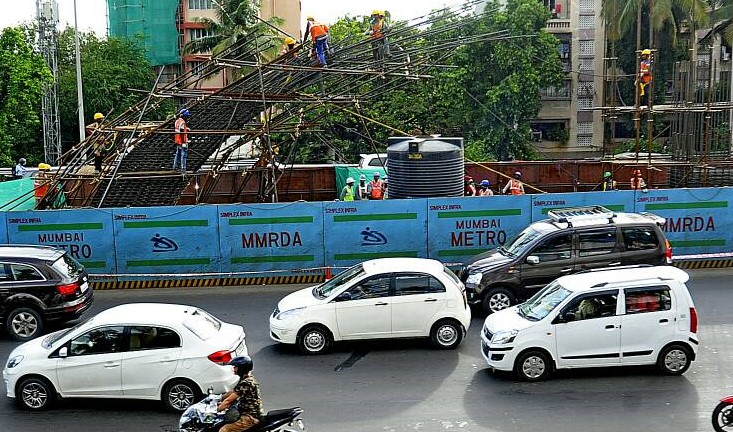
Mumbai: A Cuffe Parade resident has moved the Bombay High Court against the Mumbai Metro Rail Corporation (MMRC) in connection with the construction of the Colaba-Bandra-Seepz Metro-3 underground corridor. He has alleged that barricades installed by the MMRC for construction have occupied maximum space on the access road leading to his society and the nearby societies making it difficult for the fire brigade to enter during an emergency.
Residents from Colaba Woods Sports Complex Marg in Cuffe Parade have said that the MMRC is putting lives of residents in danger due to the Metro work barricades. The writ petition by Robin Jaisinghani prayed that directions be given to the MMRC to restore the road width of the Colaba Woods to at least 12 metres —minimum road width prescribed in Regulation 22 of the Development Control Regulations. According to the petitioner, the MMRC has barricaded the entire road.
Now, vehicles heading further north towards Taj Vivanta President Hotel use the footpath.
The petitioner has further said that when he approached the fire brigade, he was told that they can do very little because it is chief minister’s pet project.
“The petitioner contacted Divisional Fire Officer Bangar and brought to his notice that the contractors were proposing to block the entire Complex Marg to carry out construction work and to take preventive action,” the petition reads. Meanwhile, the MMRC said, “Vehicular access necessary for the movement of fire vehicles is made available along the service road in front of Venus, Jupiter and Dalamal buildings and Hotel Taj Vivanta” said MMRC spokesperson.
The project is supposed to be Delhi’s longest Metro line 58.6 Km long and connect the Mukundpur-Shiv Vihar corridor, but it will now operate in two segments because of the land acquisition issues.
Delhi Metro Rail Corporation (DMRC) has to rehabilitate over 108 residents but it is falling short of land. Only 66 families can be accommodated on the allotted plot. DMRC has requested the Delhi government for more land but the process will take time, this delays the construction of the metro line and will now be complete only in 2018.
DMRC chief Mangu Singh in relation to the problem said “In Trilokpuri ,we are not able to accommodate all these people on the piece of land the government has given to us .This is because the available land for the dwellings has reduced as the width of the road had to be increased . We have asked for additional land from the Delhi Urban Shelter improvement Board (DUSIB).”
DMRC hopes to open the rest of the line by March 2018 .The passengers from east Delhi areas such as Shiv Vihar , Welcome and Krishna Nagar will use Anand Vihar as an interchange to go to south Delhi or Gurgaon and Faridabad .Once the entire line is complete passengers can commute to Lajpat Nagar and INA directly without going to Rajiv Chowk .
The entire line was scheduled to be launched by December 2016.
The 33.5-km underground Metro is to be commissioned in two phases.
MMRC has reduced the length of the corridor under phase-1, which was originally planned between the Aarey Milk Colony car depot and Bandra-Kurla Complex. Now, the first phase will connect the car depot to the airport.
“The first phase, which is from the car depot to the airport, will be commissioned by March 2021. And the second phase, which is from the airport to Cuffe Parade, will be operational by December 2021,” said Ashwini Bhide, managing director, MMRC.
The project has faced numerous hurdles owing to opposition and petitions from environmental groups and citizens.
According to MMRC, the project has been facing delays after the Bombay high court’s order against the cutting of trees along the construction site earlier this year.
In addition, the recent stay by the high court disallowing construction work at night had slowed down the work, an official said.
“Our earlier deadline was in 2020, but we lost about six months due to a petition on cutting of trees and the high court stay. So obviously, we have now factored them in,” Bhide added.
MMRC has still not evaluated whether these delays will lead cost escalation.
“We haven’t calculated it because the project period is almost five years. So sometimes there are delays, sometimes we catch up,” Bhide said. The project cost is Rs23,136 crore.
The Metro-3 corridor chalked out by the state government will connect north to south and is expected to take load off the over-burdened suburban rail network.
MMRC claims that the line will reduce daily vehicle trips by 4.5 lakh or 35% and save 2.43 lakh litres of fuel daily in 2021.
Mumbai: The Mumbai Metro Rail Corporation (MMRC) has appointed GD Sambhare & RH Mahimatura Architects to provide Architectural, Design and PMC services for Kalbadevi-Girgaum in-situ rehabilitation scheme. The tender for appointment of the architect was invited in June 2017. The scope of contract includes Planning and Architectural designs, Structural design, Construction supervision and management (PMC) of buildings to be redeveloped.
Part of the lands of impacted buildings in Kalbadevi-Girgaum would be utilised by MMRC for construction of underground Metro stations, ancillary works, ventilation shafts, entry/exit structures and other related activities. The redevelopment of properties will be undertaken simultaneously in the remaining lands and after completion will be allotted to the project affected families by 2021.
“We are delighted to announce the appointment of Architects for the redevelopment of properties occupied by families affected by the proposed construction of Kalbadevi and Girgaum Metro stations. The rehabilitation plan has been finalized by keeping in mind the concerns raised by the project affected families. We, at MMRC, are committed to complete the rehabilitation of all families in a time-bound manner”, said Ms. Ashwini Bhide, Managing Director, MMRC.
As a part of the in-situ rehabilitation scheme under 33(7) DCR 1991, 19 buildings consisting of 293 Residential and 341 Commercial PAFs were identified. The PAFs will be rehabilitated within the same area by following the MCGM DCR 33(7) of 1991 Sanctioned DP and treating all affected plots as part of one integrated scheme.
French firm EGIS Rail SA (the lead firm) in joint venture with EGIS India Consulting Engineers Pvt Ltd and Feedback India Pvt Ltd will review the DPR of 24-km-long corridor.
On Monday, the agreement was signed between the firm and JMRC, which was chaired by the additional chief secretary, UDH, Mukesh Sharma. JMRC project director, Ashwani Saxena said, “The DPR will be reviewed by international experts. During the inception meeting official from Jaipur Development Authority, Jaipur Municipal Corporation (JMC), traffic department and smart city were also presented to extend their suggestions.”
It was said that firm has asked also for master plan-2025 and necessary traffic data of the route from these departments. As the BJP government was apprehensive to construct Rs 10,000 crore project, the appointed international firm after a survey will recommend methods to (JMRC) to revise the cost of the project. It will also update the alignment, technology and various other aspects in the existing DPR. “We have directed the firm to review the DPR considering state government priorities and Metro Policy 2017. The firm will recommend latest technology to bring the cost down.”
The estimated cost to review the DPR is Rs 6 crore and firm will submit its report in six months.
The JMRC prepared its first DPR in 2012 during the Congress led government’s tenure. The then government intended to link phase-II with the Sanganer airport and other important government buildings on the route after they were missed in the initial DPR.
Following this, the Delhi Metro Rail Corporation (DMRC) submitted its revised DPR in 2014 and proposed an underground Metro station at airport near terminal-2.
In the proposal, it was mentioned that the train will run underground till Jawahar Circle after which elevated tracks will be constructed till Sindhi Camp bus stand. The elevated tracks will cross the bus stand and underground corridor will be constructed after that till Panipech via Collectorate.
In the 2014 (DPR), the DMRC had proposed 10-km underground and 14-km elevated corridor.
This has increased the cost of the project as DMRC estimated nearly Rs 10,000 crore to construct nearly 24-km-long corridor.
Official sources said, the JMRC has proposed to reduce the cost of the project. In recent past, the corporation made several attempts to construct the Jaipur Metro phase II under public private partnership (PPP), however, despite giving lucrative offers, no company has shown positive response.
Lucknow: The first phase of the Lucknow Metro line from Transport Nagar to Charbagh was inaugurated today in the presence of UP Governor Ram Naik, CM Yogi Adityanath and Home Minister Rajnath Singh. One of Akhilesh Yadav’s dream projects, the Lucknow Metro Rail was also part of the budget speech for Samajwadi Party (SP) in the year 2013-14.
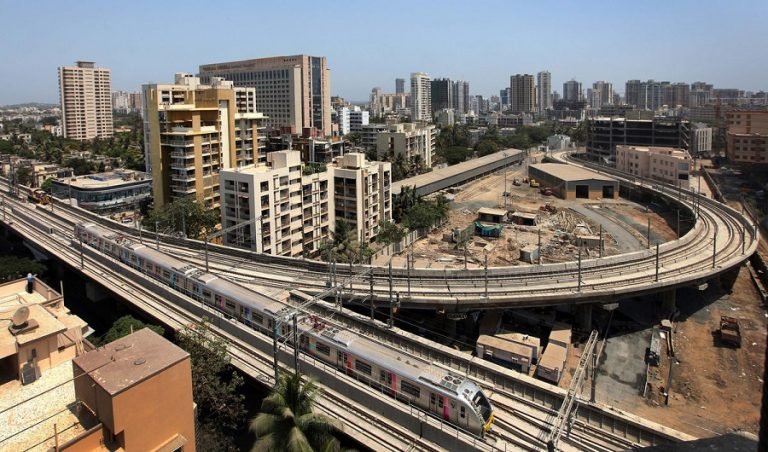
The Metro corridor measuring 8.5 kms, starting from Charbagh Station to Transport Nagar covering eight elevated stations, has been completed in a record 14 months time. It opens to the public on Wednesday promising a “cheaper, congestion-free and eco-friendly” ride.
Lucknow Metro flagged off for commercial run
While the trial run took place in December 2016, the Commissioner of Metro Railway Safety (CMRS) cleared the file on August 14, nearly nine months later. The foundation stone for phase-1 of the North-South Metro Rail Corridor project was laid by ex Chief Minister Akhilesh Yadav on March 4, 2014.
Union Home Minister Sh Raj Nath Singh and CM Sh Yogi Aditya Nath flagged off the first metro train for commercial run
Kumar Keshav, Managing Director, Lucknow Metro Rail Corporation (LMRC) said this corridor is part of a 23 km North-South Metro corridor which is being executed by LMRC from Chaudhary Charan Singh Airport to Munshipulia. “The second proposed corridor, which is 11 km-long is called the East- West corridor,” said Keshav, adding that the target is to finish it by April 2019.
The Lucknow Metro will also have the “most advanced signaling and train control system”, called Communication Based Train Control System (CBTC), which will enable trains to virtually operate on “driverless” mode. The Lucknow Metro trainsare designed in Bengaluru and manufactured at Sri City and Coimbatore, supporting the Government’s ‘Make in India’ campaign.
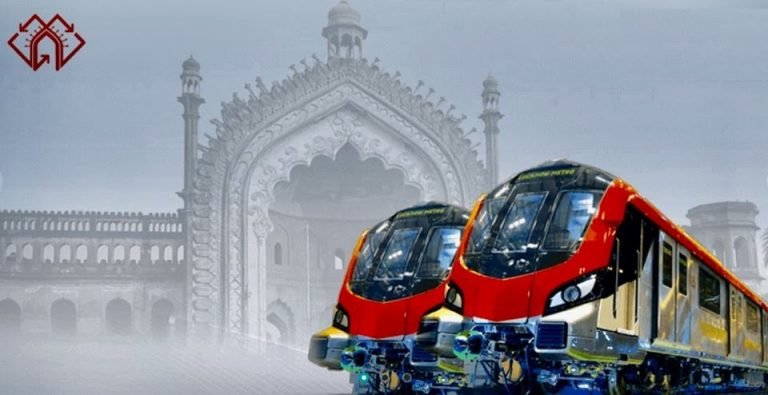
Alstom was awarded the €150 million contract in September 2015 by Lucknow Metro Rail Corporation (LMRC) to provide 20 metro trainsets, each of four cars. The Metropolis trainset for Lucknow has 186 seats arranged longitudinally, and includes two dedicated zones for passengers with reduced mobility. These trainsets will circulate on the city’s new metro line, which will be around 23 km long and will include 22 stations, of which 19 are elevated and 3 underground. The line is estimated to carry about 430,000 passengers per day at first, increasing to over 1 million by 2030.
The design of the train is a tribute to the city’s cultural richness, with the front end conceived in the spirit of the gates to some of the city’s most important monuments, including the Bara Imambara congregation hall, Asifi mosque and Rumi Darwaza gateway. The V-shape of the lower section of the front symbolises ‘dynamism and rapidity’, while the livery is both highly modern and very much inspired by the traditional cashmere craftsmanship of Lucknow.
The project also includes Alstom’s Urbalis Computer Based Train Control (CBTC), the second such signalling system installed by the company in India. It is jointly supplied by Alstom’s sites in Bangalore and Saint-Ouen in France. The first one was rolled out in Kochi in June 2017.
“Alstom welcomes the commencement of commercial operations of Lucknow metro. It is an honour for us to contribute towards Government’s ‘Make in India’ plans. The project is a testimony of our commitment to make India a world leader in urban mobility – both in terms of technology and flawless execution. We look forward to continued engagement with the state of Uttar Pradesh to meet their transport infrastructure needs in their growing cities”, Bharat Salhotra, Vice President – Sales & Business Development, Asia Pacific commented.
Currently, Alstom is executing metro projects in several Indian cities including Chennai, Kochi and Lucknow where it is supplying Rolling Stock manufactured out of its state of the art facility at SriCity in Andhra Pradesh. Additionally, urban signalling and infrastructure projects have been undertaken by Alstom in Kochi, Lucknow, Bengaluru, Chennai, Jaipur and Delhi.
With more than 5,000 Metropolis cars sold to over 24 cities, Alstom is one of the largest metro suppliers in the world. Designed to address the specific needs of each city, Metropolis offers a large range of options and configurations, a high level of passenger comfort and innovative features to optimize energy consumption and life cycle costs.
Nagpur: Mahametro has started the internal trial run for Metro operations on the 5.8 km at grade stretch from Mihan depot to south of airport. A team from Research Designs and Standards Organization (RDSO), Lucknow, will come to the city to review the preparations around September 10. A larger team will then reach here to conduct the trial run itself.
A source in Mahametro said that track laying on the at grade stretch had been completed. “Track testing will be started soon to meet RDSO’s norms. All the electrical masts for supplying power to the trains have been installed. Currently, testing of the power traction system is being done,” he added.
The source further said that Mahametro had sought seven approvals from RDSO. “We have received five of them—schedule of dimensions, design basis report (stations), design basis report (viaduct), track fastening system and signalling and telecommunication. The ones for track and traction are expected soon. In spite of being lengthy processes, the approvals were obtained very fast and now 75% of our documentation work is complete,” he added.
A formal function will be held here to mark the internal trial run. It will be attended by chief minister Devendra Fadnavis, union transport minister Nitin Gadkari and SBI chairperson-cum-managing director (CMD) Arundhati Bhattacharya. The common mobility card (CMC) of Mahametro will be released at the hands of these guests during the trial run function. Mahametro is trying to get a common date from the three.
The source further said that Mahametro managing director Brijesh Dixit had set a goal of starting commercial operations in November. “Total of 70% work of the stations is over. Work on signalling and telecommunications is progressing fast. After RDSO clears the Metro operations, we will apply to commissioner of Metro rail safety (CMRS) for approval for commercial operations. CMRS team will again check each and every thing and then clear the project,” he added.
Meanwhile, work on other stretches of the Metro is also going on at a rapid pace. The commercial operation of airport to Sitabuldi section is proposed in middle of next year. Work on construction of the viaduct is going on day and night. Once it is complete, Mahametro will begin track laying and installation of electrical masts and signalling equipment.
A separate trial run will be held for this section and only after it is cleared by RDSO and CMRS will Mahametro be able to start commercial operations.
Madhya Pradesh Metro Rail Co. Ltd. (MPMRCL) intend to recruit well qualified aspirants for the fulfillment of vacant position on Contract/Deputation basis for Indore and Bhopal Metro Rail Projects. Accordingly, applications are invited from eligible candidates for the following posts:-
General Manager (Planning) – 01 post
General Manager (Procurement) – 01 post
General Manager (Civil) – 01 post
General Manager (Legal) – 01 post
General Manager (Administration & HR) – 01 post
General Manager (Rolling Stock/O&M) – 01 post
General Manager (Quality Assurance & Quality Control) – 01 post
Deputy In-charge (Project Synchronization Unit) – 01 post
Project Coordinator & Liaisoning Officer – 01 post
IMPORTANT NOTE:-
1. Details may be seen in the detailed advertisement at aforementioned website of MPMRCL.
2. Applications shall only be submitted ONLINE using the links given below. Paper applications or submission through any other mode will NOT be accepted.
3. Opening date for submission of applications is 30 Aug, 2017.
4. Last date for submission of applications is 20 Sept, 2017.
According to sources, six places have been earmarked in Ghaziabad district to develop stations under the transit-oriented development (TOD) within a radius of 1.5 km around each railway stations. “The six places which have been earmarked are Sahibabad, Ghaziabad city, Guldhar, Duhai, Muradnagar and Modinagar. The remaining eight stations will come up in Delhi and Meerut,” said GDA vice-chairperson Kanchan Verma. “The work on this section will begin in March 2018. The cost of the project has been pegged around Rs 32,000 crore, out of which UP goverment will have to shell out nearly Rs 4,500 crore in ten years. The completion year has been set for 2024,” said Verma.
“The NCRTC intends to recover the project cost through various means by 2054. Friday’s meeting was held to discuss these finer points,” said Verma. “Five heads have been identified through which the project cost will be recovered and these include stamp duty, external development charge (EDC), floor area ratio, purchasable floor area ratio and developing the 1.5 km radius into a commercial hub,” said Verma. “We have made available to them a 10-year data of stamp duty and FAR of the area in and around six proposed rapid rail stations,” added Verma.
The project, which will begin work from March next year, will reduce the travel time from Delhi to Meerut via Ghaziabad by an hour with rapid trains running at an average speed of 100-km/hr against a Metro train whose average speed is around 30-km/hr.
The project, conceived more than 10 years ago, is a segment of a larger plan to connect important towns in the NCR region with Delhi through a high speed-based commuter transit system.
NCRTC is a joint venture of the Union government, Haryana, Delhi, Uttar Pradesh and Rajasthan and is executing the prioritized three RRTS corridors — Delhi-Alwar, Delhi-Meerut and Delhi-Panipat.
A consortium of Cherian Varkey Construction Company (CVCC) and Vijay Nirman Constructions (VNC) — which has been awarded the contract — has started the work near Jos Junction.
“They have started mobilising men and materials. Sub-contractors have been enlisted. Barricades have already been placed at the site near Jos Junction. The work will gain momentum once Onam holidays get over,” said a Kochi Metro official.
He also said that they have started work at Thykkoodam along Vyttila-Pettah stretch.
The Metro work on these stretches has been lagging ever since the Metro authority partially off loaded the work from the contractors who were earlier entrusted with the job. And it took considerable time for DMRC to invite fresh tenders and award the work to the new contractors. The consortium of CVCC and VNC has maintained that the work would be undertaken and executed as per schedule.
As the Kochi Metro Rail Ltd (KMRL) gears up to launch commercial operations of Metro services from Aluva to Maharaja’s College by the last week of September or first week of October, the DMRC has speeded up the ongoing works between Palarivattom and Maharaja’s College.
“Signal trials are progressing, and high-speed signal trials are also being conducted. The station works are also at an advanced state. Many of these are nearing completion,” said the official.
The process for granting ISA certification for advanced signalling will most probably take place by mid-September. After obtaining ISA certification, the commissioner of Metro rail safety (CMRS) will inspect the signalling system, tracks and platforms. The CMRS inspection is expected on September 22 or 23.
Metro officials said currently trial runs are being held between Palarivattom and Maharaja’s College stretch at night hours. Trial runs will be carried out during day time after obtaining CMRS clearance.
New Delhi: India will collaborate with Switzerland for developing trains which will tilt on approaching a bend, just like a motorbike on a winding road. A memorandum of understanding was signed on Thursday between the two countries in this regard.
Such trains are now operational in 11 countries — Italy, Portugal, Slovenia, Finland, Russia, the Czech Republic, the UK, Switzerland, China, Germany and Romania. Explaining how the tilting trains work, officials said that as a train rounds a curve at speed it cause objects to slide about.
“While it makes seated passengers feel squashed by the armrest, standing passengers tend to lose their balance. The design of the tilting trains counteract this,” an official said.
During a curve to the left, the train tilts to the left and vice versa, the official said.
The railway ministry signed two MoUs with the Federal Department of the Environment, Transport and Communications of the Swiss Confederation for technical cooperation in rail sector in the presence of Prime Minister Narendra Modi.
The first agreement is a follow up on bilateral cooperation in rail sector discussed in the meeting held between Railway Minister Suresh Prabhu and the Swiss Ambassador in July 2016.
The MoU aims at cooperation in the areas of traction rolling stock, electric multiple unit and train sets, traction propulsion equipments, freight and passenger cars, tilting trains, railway electrification equipments, tunnelling technology among other things.
The second MoU was signed between Konkan Railway Corporation Limited (KRCL) and Swiss Federal Institute of Technology which will help the former in establishing the George Fernandes Institute of Tunnel Technology (GFITT) at Goa especially for assimilation and dissemination of knowledge in the field of tunnelling, the officials said.
Alstom appointed Mr. Alain Spohr as the Managing Director for India & South Asia clusterbased in Bengaluru, India. Mr. Spohr joined Alstom from GE Energy India where he was the MD & CEO of the GE/Bharat Forge Join Venture and also the India Country Leader for Steam Power Systems. Mr Spohr brings with him over 35 years of experience in various roles in Country Business Leadership, Unit Management, Project Management, Engineering, Construction and Commissioning coupled with strong exposure to Industrial/factory operations. His rich career in India spans over 14 years which not only gives him a keen understanding on the country’s business environment but also its culture and growth trajectory.
“Strengthening our existing portfolio and timely execution of all our current contracts are of utmost importance to me. India stands at the cusp of modernisation in the mobility space, an exciting time for all the players in this field. I look forward to my tenure at Alstom.”, Spohr said.
Mr Bharat Salhotra, his predecessor, has been elevated to the office of Vice President Sales & Business Development, Asia Pacific region based in New Delhi. Mr Salhotra joined Alstom in October 2013. Under his aegis, the company not just established itself as a leader in the sustainable mobility space in India but also grew its footprint in the country. In his new role, Mr Salhotra will be responsible for further developing the commercials in the region and for pursuing new directions to continue growing Alstom in India.
“As the Government looks to modernise and develop the infrastructure in the public spaces, together with Alain, my focus will be to build a thriving partner ecosystem to accelerate this transformation and to unlock new opportunity with the best of innovation across our portfolio. Not just in and for India but also throughout South East Asia. Region Asia Pacific is seeing a lot of new investment in the transport sector and I am looking forward to the new challenges.”
Vijayawada: The Amarawati Metro Rail Corporation (AMRC) inviting expression of interest through a Germany based tender agent. The objective of this study is to prepare a detailed Feasibility Study (“Detailed Project Report”) for the city of Vijayawada through validating the MRTS-options and conclusions of the pre-feasibility assessment and assessing the different design options of a Light Metro/ LRT system for Vijayawada.
In a pre-feasibility assessment conducted in July 2017, Light Metro/Light Rail Transit was
identified as the most suitable mass transit system for Vijayawada. The system would
comprise of two corridors (26 km) initially identified for the metro, plus additional extensions as feasible (e.g. to Vijayawada Airport and another corridor of approx. 5 km).The broad indicative scope of services includes the following tasks:-
Validation of the mass transit system for Vijayawada based on the alternate analysis
provided in the existing pre-feasibility assessment.
Route alignments and assessment of land requirement for facilities like station areas,
electric substations, maintenance depot and construction depots
System requirements and technology selection
Identification of land requirement and the cost of acquisition (Govt. land and private land) for construction of the mass transit system and the stations and depot.
Estimate of requirement of rolling stock as per the above for different horizon years
Block cost estimates and broad arrangements for funding of the project including raising
debts, securing external assistance, etc.
Environment and social impact assessment
Financial and Economic viability of the project including estimation of FIRR and EIRR
Legal and institutional arrangements;
Implementation and Financing framework
This project will be financed from German Development Bank (KfW) and expected duration of completion of the above task is 4 months. The last date to submit the Expression of Interest (EOI) is September 28, 2017.