Indian Rly to use infrared camera system to check derailments on high-speed sections

New Delhi: Indian Railways for the first time has decided to use Rs 75 crore photographic inspection systems on tracks to check derailments on its ambitious Rs 18,000 crore project for increasing train speeds on the two busiest Delhi-Mumbai and Delhi-Howrah rail sections.

The two projects have been approved in Railway Budget and likely to cut down travel time between the three metro cities by 2019. The plan is to install photographic inspection systems at 10 locations each costing Rs 7.5 crore on the entire section to get photographic data of wheel profiles.

Several railways across the world use the photo diagnostic system and it will be used for the first on these two sections in Indian railways, said a senior official of railway ministry.

“The Railway Board is in process of finalising the stations on Delhi-Mumbai and Delhi-Howrah section where these units have to be put. We may have to acquire these units from companies abroad,” said the official.

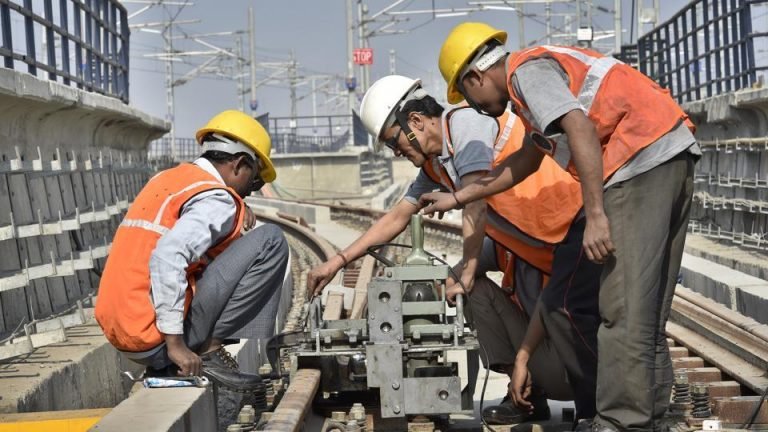
The system is designed to monitor axle, wheel, brake temperatures and to indicate any overheating which could lead to derailments and transmits this data to the traffic control and monitoring section.

The real time software possesses the intelligence to process the recorded data and produces the report with axle wise temperature information and transmits the data to control room.

“The system will have high definition infrared camera and will send live pictures of any wheel abnormalities to control room at the nearest station. Besides, it can also check if any extended material like doors of freight wagons hanging or any other material on the track and these can be corrected immediately,” the official said.

Recent derailments have concerned top officials at Railway Board and they want all precautions and technology interventions in place for a train running at 160 kmph. The project will see major infrastructure upgradation of the signalling system, fencing of tracks in certain areas, elimination of all level crossings and installing train protection warning system.

Pune Metro | PMRDA appoints Deloitte as transactional adviser for metro project

Pune: The Pune Metropolitan Region Development Authority (PMRDA) has appointed Deloitte as transactional adviser to ready its bid document and evaluate companies that have made a bid for the metro project.

The metro rail project from Hinjewadi to Shivajinagar will be implemented under the public private partnership (PPP) model and cost Rs 7,947 crore.

“We have a team of six people from the company who are experts in the field of traffic management, real estate, financial, railway engineering, taxation and law. They will evaluate the qualification of the bids and ready the agreement by September end,” stated PMRDA chief Kiran Gitte on the proposed 23.33 km Hinjewadi-Shivajinagar stretch.

The officials have been asked to ready the request for proposal and the draft of the concession agreement by September. PMRDA expects the officials to work with them till the bid is finalised. They will have to check everything from design, cost, the success of the project and transactions in the coming six months till the deal is finalised and after that too the officials will be retained till the work is completed, stated officials.

PMRDA chief said that the transaction advisery for the project will execute the lease and legal agreement and has been chosen after evaluating several proposals.

Three companies have evinced interest in executing the project and in the tendering process. While the bid will be readied by September the same will be finalised by end of 2017.

PMRDA will go for branding of the proposed 23 metro stations on this stretch and a letter has been sent to industry associations to develop these metro stations.

AIIB keen to invest $1.5 billion in infrastructure and metro rail projects in India

New Delhi: The Asian Infrastructure Investment Bank (AIIB) is mulling pumping in $1.5 billion (Rs 9,599 crore) in six new projects in India that includes Rs 1,279 crore in India’s National Investment and Infrastructure Fund (NIIF), a top AIIB official has said.

India has been trying to attract investments for NIIF from several international institutional investors. The Indian government has committed Rs 20,000 crore to the NIIF.

“The bank is considering contributing to NIIF in addition to other projects across India.

For the proposed investment into the NIIF, the estimated fund is $200 million. The bank is currently reviewing six projects in India. The projects are focused on improving transport, energy and urban infrastructure across the country,” Danny Alexander, Vice President and Corporate Secretary, AIIB, told IANS.

The $1.5 billion proposed investments by AIIB in the country, include Mumbai Metro Line 4 Project ($500 million), Bangalore Metro Rail Project Line R6 ($338 million), NIIF ($200 million), Amaravati Sustainable Capital City Development Project ($200 million), Madhya Pradesh Rural Connectivity Project ($141 million) and Transmission System Strengthening Project ($100 million).

“All projects have to be assessed in detail against the bank’s strict criteria and policies before a final decision is made,” Alexander said.

“Developing countries, including India, will be the primary recipients of financing from the bank. The bank will consider projects that are financially sound, environmentally sustainable, and will have a positive social impact. We expect to finance many more projects in India in future.”

As a founding member and the second-largest shareholder in the China-backed AIIB, the total investment in India as of now stands at $638 million. It has provided loans to two projects – the Gujarat Rural Roads project and the Andhra Pradesh 24×7 Power for All project – and has made an equity investment into the India Infrastructure Fund (IIF).

“Our equity investment into the private sector-run India Infrastructure Fund is an example of how our bank can assist with crowding in private investment. We are confident that our investment in the fund will attract additional funding from the private sector,” he said.

The IIF, sponsored by IDFC Limited, Citigroup Inc and India Infrastructure Finance Company Limited (IIFCL) as founder investors, is a SEBI-registered domestic venture capital fund focused on long-term equity investments in a diversified portfolio of infrastructure projects.

Emphasising upon the role of multilateral banks in infrastructure development, Alexander said that Asia is facing a significant infrastructure gap that cannot be solved by local governments, private companies or multilateral organisations working in isolation.

“Multilateral development banks are well positioned to help reduce investment risk and to facilitate the potential of private financial investment, which we believe India will benefit from greatly,” he said.

To date, AIIB has invested more than $2.83 billion in infrastructure projects across Asia.

AIIB, headquartered in Beijing, opened its doors for business on January 16, 2016, following a 15-month participatory process during which 57 founding members worked collaboratively.

India’s NIIF is considering investments in third party-managed funds focused on clean energy (Green Growth Fund), affordable housing and medium-sized infrastructure companies. Strong investment pipeline with investment opportunities in the roads, ports, aviation and power sectors are said to be under consideration by NIIF.

The Fund has a team of employees, including the CEO, with offices in Delhi and Mumbai.

Lucknow Metro | LMRC to sale ‘Go Smart Cards’ before inaugural ceremony

Lucknow: The Lucknow Metro Rail Corporation (LMRC) has decided to set up sale counters for selling “GOSMART CARDS” before inaugural ceremony on 1st & 4th September, 2017 for the convenience of the general public. People can purchase these GoSmart Cards between 10.00 AM to 5 PM from the following locations:-

  1. Lucknow Metro Office, Administrative Building, Vipin Khand Gomti Nagar, Lucknow
  2. Transport Nagar Metro Station, Near G to C lift at Ground Level,
  3. Charbagh Metro Station, Outside the shutter at Ground Level,
  4. HDFC Bank Ltd, Naka Hindola Branch, Hotel Dayal Building, 76/13 Gurudwara Road, PS Naka Hindola Lucknow,
  5. HDFC Bank Ltd, Ground Floor, 56 & 57 Chander Nagar, Alambagh, Lucknow

According to LMRC press release, only ‘GoSmart’ cards will be available at the above places. The Metro commuters can purchase token and tourist card from all Metro stations from the revenue operation date for public i.e. from 6th September, 2017 onwards.

The GoSmart card will be available for ₹200 which includes refundable security money of ₹100. The minimum fare for travelling in Metro train is ₹10 while the maximum fare will be ₹60 for travelling 18 or more than 18 Metro stations.

The commuters of Lucknow Metro can use ‘GoSmart’ cards for multiple journey and they don’t need to stand in queues for purchasing tokens. The passengers will also get 10% discount on their every journey in the Metro system.

Mumbai Metro | MMRDA appoints General Consultants for Metro-4 corridor

Mumbai: The Executive Committee of the Mumbai Metropolitan Region Development Authority (MMRDA), headed by Mr. Sumit Mullick, Chairman, Executive Committee, MMRDA and Chief Secretary, Government of Maharashtra on 28 August 2017, appointed General Consultants for the Wadala-Ghatkopar-Mulund-Thane-Kasarvadavali Metro-4 corridor and also approved road projects in BKC and MMR.

The Executive Committee appointed the consortium of M/s. DB Engineering & Consulting GmbH with Hill International Inc. and Louis Berger Consulting Co. Ltd. as General Consultants for the Wadala-Kasarvadavali Metro-4 corridor. The scope of work for the Consultants includes Design, assistance in procurement, construction management, supervision, system integration, interface management, testing and commissioning of the entire corridor among other various responsibilities.

The Committee appointed M/s. Niraj Cement Structurals Ltd. to construct the 2.2-km long elevated road from Bharat Diamond Bourse Co., BKC to Vakola Junction, which is expected to decongest BKC and SCLR junctions.

The Committee further appointed the consortium of M/s. Stup-Darashaw to prepare Detailed Project Report for the 35-km Marve-Bhayander-Godbunder Road (Thane) after concluding the economical and techno-economical feasibility surveys. This road is an extension of the Coastal Road proposed by the Municipal Corporation of Greater Mumbai.

Another road project that received Committee’s boost is the 33.8-km long Thane-Belapur road to National Highway-4. The Committee appointed M/s. SMC Infrastructure Pvt. Ltd. to construct the road and also appointed the consortium of M/s. PEMS Engineering Consultants Pvt. Ltd. and M/s. Aakar Abhinav Consultants Pvt. Ltd. as the Project Management Consultants. This road will help connect with Mumbai city from Thane, Kalyan Dombivli, Ambarnath, Badlapur etc. The road will also help disperse traffic from Virar-Alibaug multi-modal corridor.

“We are looking at holistic development. Today, the requirement of an MMR isn’t very different from BKC. Both hubs are attracting people with opportunities in various sectors.

This is the reason a Metro or a road project is as much necessary for MMR as it is for Mumbai. Of course, we will remain committed to the protection and improvement of environment while indulging in development”, said Mr. U.P.S. Madan, Metropolitan
Commissioner, MMRDA.

Lucknow Metro | IGBC awards platinum certificates to all eight LMRC stations

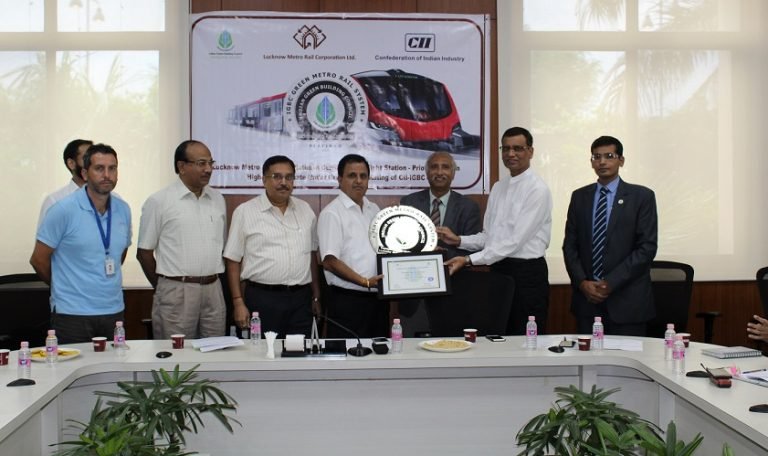
Lucknow: The Indian Green Building Council (IGBC) – one of the apex body in India to rate and certify a system as a ‘Green’ system – has certified LMRC a “Green Metro Rail System”, thereby, awarding platinum certificate to all its eight Metro stations on the ‘Priority Corridor’ from Transport Nagar to Charbagh which is due for public inauguration very soon.

Today, Platinum certificates and plaques for 8 stations of the priority corridor was handed over to Shri Kumar Keshav ,Managing Director by Mr. S. Raghupathy, Deputy Director General, CII- IGBC  at the LMRC  Administrative Office , Gomti Nagar.

This is highest green rating for any civil structure or building which has been awarded to LMRC. It is yet another major milestone that has been achieved by LMRC. It is worth mentioning here that Lucknow Metro has been certified a ‘Green Metro Rail’ much before the start of its commercial services.

Shri Kumar Keshav expressed his happiness and thanked the CII-IGBC team for platinum certification. He also said “ It will have a recurring effect on saving of energy consumed at the station. This platinum certification is an important step towards making Lucknow Metro a sustainable Metro”.

With this LMRC becomes the 1st government entity in Lucknow region and 1st one in Transport sector in U.P. to attain Indian green buildings council’s Platinum certificate.

Lucknow Metro Rail Corporation has always aspired to create world class infrastructure with modern amenities, focusing long term goal of sustainable development. To move in that direction Lucknow Metro registered it’s all 8 stations under “Green Mass Rapid Transport System (MRTS) Rating System” developed by Confederation of Indian Industry (CII) – Indian Green Building Council, at very beginning of the project itself.

The audit by external agency  continued for  two years  by continuous monitoring of project  by site visit and collecting  information during different stages of project. Different stakeholder were involved in planning, execution and implementation of green features. Even after freezing project items at initial stage, replacement with more efficient and eco-friendly items was made to meet global standard.

The broad purpose of getting this certificate is to achieve the twin goals of sustainable development and low carbon growth, minimizing threats of climate change. With benefits ranging from water conservation, energy efficiency, use of renewable energy, rain water harvesting, material conservation, commuter facilities – LMRC’s Platinum certified stations are set to provide world class experience to the people of Lucknow.

Key benefits for Green MRTS systems are as follows:

  • Less water usage,
  • Maximum rain water harvesting
  • Low electricity consumption,
  • Less dependency on fossil fuel,
  • Ease from traffic problem
  • Better connectivity between other modes of transport.
  • Less pollution
  • Greener environment

These certified stations will now pass on the following benefits to the society:

  • Clean, Green and Safe travel
  • Enhanced connectivity between railways, airport and bus station.
  • Universal access for physically challenged personals.

For achieving the highest rating LMRC has planted more than 5000 saplings at various location, has made arrangement to collect 100% rain water runoff during rains, generate about 2MW of solar energy, extensive use of LED lighting, maximum use of day lighting, effective waste management etc. Also, LMRC’s documents and sites were put to rigorous tests and inspections by the IGBC-CII team before awarding the Platinum certification.

To attain highest certificate – Platinum, use of new and advance technologies is must; without incorporating new ideas and technologies it will be hard to achieve Platinum rating. Green-MRTS Rating system covers registered project’s holistic approach towards sustainability. It asks for the information pertaining to site environment management, integration of MRTS with other modes of transport, indoor environment & comfort and resource efficiency.

Through all its green and environmental friendly initiatives, Lucknow Metro is taking forward the mission of “Cleaner and Greener Uttar Pradesh” in the area of Mass Rapid Public Transportation. LMRC has been implementing sustainable and environment friendly technologies right from the design stage of the project. Further, LMRC  is planning to register for the  upcoming stations under Green MRTS rating and to start implementing green practices to get them certified too.

USA Metro | Fluor-led JV begins construction on $5.6bn Purple Line project

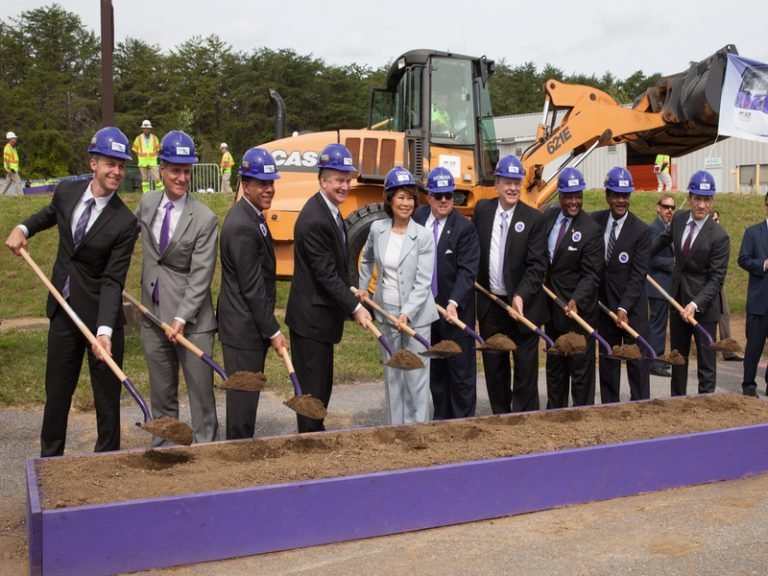
USA: A Fluor-led joint venture (JV) team has started construction of the $5.6bn Purple Line Light Rail project in Maryland, US.

The Purple Line Transit Partners JV team consists of Fluor, Meridiam Infrastructure Purple Line and Star America Purple Line.

The construction project is being carried out on behalf of the Maryland Department of Transportation (MDOT) and the Maryland Transit Administration (MTA), and began with a groundbreaking ceremony.

Fluor infrastructure business line president Hans Dekker said: “Fluor is honoured to break ground today on the second transit public-private partnership project in the US.

“We bring robust megaproject experience and industry-leading abilities to successfully design, build, finance and manage complex projects.”

The US Federal Transit Administration is granting $900m from its capital investment grant programme to facilitate the construction of the project.

The 16-mile line is situated within the Washington Metropolitan Region and will serve a total of 21 stations, extending from Bethesda to New Carrollton in Maryland.

It is expected to improve commuter access to major economic and job centres in the area, as well as connect multiple existing transit providers.

Commercial operations on the line are currently scheduled to begin in early 2022.

Fluor will serve as the managing partner of the design-build team, Purple Line Transit Constructors, which also includes The Lane Construction and Traylor Bros besides Fluor Enterprises.

A team consisting of Fluor Enterprises, Alternate Concepts and CAF USA known as Purple Line Transit Operators is expected to provide operations and maintenance services for a 30-year period following the line’s completion.

Delhi Metro | New signal system delays DMRC Phase-III Projects

New Delhi: An advanced signalling system which will run in sync with the platform screen doors and help reduce frequency and increase safety standards has delayed the opening of new lines on phase 3 of Delhi Metro.

Slated to open by March 2017, the Botanical Garden and Kalkaji Mandir section of the Botanical Garden-Janakpuri West line will now be launched ahead of Diwali on October 19, 2017.

Trial runs between Botanical Garden and Kalkaji Mandir had started on October 27, 2016 last year but testing of the new signalling system led to delay despite the construction work being completed by May.

Mangu Singh, chief of Delhi Metro Rail Corporation (DMRC), called the delay a ‘setback’ but he was confident of making the section operational by October.

“We really had a little setback as last year we started trial runs. We were anticipating it but the new signalling system has taken more time than anticipated. We were expecting this line to be operational by March, so there is a setback,” Singh said.

The new signalling system called Communication Based Train Control (CBTC) has been installed on the upcoming Pink (Mukundpur-Shiv Vihar) and Magenta (Botanical Garden-Janakpuri West) lines. It will run a total distance of 96 km.

The CBTC is an automated control system that ensures safe operation of trains using data communication between various control entities that make up the system and tracks.

“As signalling technology has developed, there have been many refinements to the old block signalling system and the emphasis has been to get away from fixed blocks as it imposes many restrictions,” said a DMRC spokesperson.

“The CBTC provides the flexibility of varying the distance between two trains according to their actual speed and their exact location.

Preceding trains may not have to run in full speed braking distance because the train moving ahead won’t stop dead immediately as it would know the exact location of the train ahead of it,” the spokesperson said.

In Kochi, DMRC has implemented the CBTC technology but in Delhi the signalling system has to be synched with platform screen doors that have been installed in the new lines.

“Currently, extensive trials covering all components of Metro operations are in progress and the section is expected to be opened by October. After implementation of a new technology, safety has to be proven beyond doubt. The system has to pass though stringent checks and multiple audits before the final inspection by Commissioner of Metro Rail Safety (CMRS),” the spokesperson said.

DMRC will soon apply for safety inspection, which usually takes a month.

With the opening of this section, residents of Noida will save at least 45 minutes of travelling time while going to south Delhi. The Botanical Garden Metro station will emerge as the first ever interchange metro station in the National Capital Region outside Delhi.

This station will provide interchange between the currently operational Line 3 (Noida City Centre – Dwarka Sector 21) and the upcoming Janakpuri West – Botanical Garden corridor. This Metro station will connect Noida directly with important locations of south Delhi such as Nehru Place, Kalkaji, Hauz Khas. The domestic airport will also get direct connectivity once the line is fully operational.

With the construction of this new interchange station, the travelling time between Noida and Gurgaon will come down by about half an hour to a total of 50 minutes with interchange at Hauz Khas. Presently, a journey from HUDA City Centre in Gurgaon to Botanical Garden in NOIDA takes about 1.5 hours with interchange at the busy Rajiv Chowk metro station.

Noida will also get directly connected with the domestic terminals of the Indira Gandhi International Airport for the first time. The journey from the Botanical Garden station to the domestic terminal will take about 40 minutes only.

PM Modi to lay foundation of Mumbai-Ahmedabad Bullet Train Project on September 14, 2017

Ahmadabad: The groundbreaking ceremony for the ambitious Mumbai-Ahmedabad High Speed Rail Project, commonly referred to as the bullet train project, will be performed in Ahmedabad on 14 September by Prime Minister Narendra Modi and his Japanese counterpart Shinzo Abe, officials said on Wednesday.

The groundbreaking ceremony (bhoomi-pujan) for the project, coming up at an estimated cost of Rs98,000 crore, will be held at a ground near the Sabarmati railway station in the city, said a senior government official. Both the leaders are expected to stay in Ahmedabad for three days, starting from 13 September.

“Japanese PM Shinzo Abe and our PM would arrive in Gujarat on 13 September afternoon. The next morning, they would attend the groundbreaking ceremony of the high speed rail project at the Sabarmati railway station. Both of them are expected to leave on 15 September morning,” the official said.

Apart from this project, various memorandums of understanding (MoUs) related to investments and tie-ups will also be signed in the presence of these leaders, the official said, adding that bilateral talks will also be held between the two.

The high speed railway line between Ahmedabad and Mumbai is expected to cover 508kms in about two hours with an operating speed of around 320kmph. It is expected to become operational by 2023. About 81% of the project cost will be in the form of a loan from Japan.

As per the detailed project report by the Japan International Cooperation Agency (JICA), while most part of the corridor is proposed to be on the elevated track, there will be a stretch after Thane creek towards Virar which will go under the sea.

Last year, when Modi visited Japan in November, it was announced through a joint statement that the construction will commence by the end of 2018, while the groundbreaking ceremony will be held in 2017.

YEIDA plans to revive proposed high-speed Metro project linking Jewar Airport Gr. Noida

Greater Noida: The Yamuna Expressway Industrial Development Authority (YEIDA) is planning to revive the proposed high-speed Metro project linking Greater Noida and the sanctioned international airport at Jewar. The proposal is likely to be approved by the YEIDA board in a meeting to be held on September 4.

YEIDA had first proposed the Metro corridor in February 2014, and again in June 2015. In June 2016, DMRC had told the civic body that it was too early to prepare a feasibility report for the proposed corridor, and had suggested that it be done after five years.
YEIDA officials, however, said the Authority has again decided to revive the project in order to provide connectivity to the urbanising area, and will ask DMRC to prepare a detailed project report for the project. “The proposed 39-km Metro track will be aligned at road level along the Yamuna expressway.

It will link the zero point of the Yamuna expressway in Greater Noida to the Jewar airport. This track will also be linked to the under-construction Metro corridor connecting Noida and Greater Noida,” YEIDA chief executive officer (CEO) Arunvir Singh told Media.Meanwhile, the YEIDA board will also put its stamp of approval on the funding plan for the airport in the upcoming meeting. YEIDA, which is the nodal agency for the airport project, has held preliminary talks with two central government agencies — National Capital Region Planning Board and the Housing and Urban Development Corporation Limited — on Tuesday to arrange a loan of Rs 3,000 crore. The boad will also discuss land use change of the land earmarked for the airport.

Uttrakhand Metro | DMRC starts survey between Haridwar and Dehradun

Haridwar: The Delhi Metro Rail Corporation (DMRC) has started surveying for the 70-km metro line between Haridwar and Dehradun on Tuesday. A team of engineers visited Haridwar and started work for geotechnical investigation and surveyed different sites in the city for the first phase of the project from Haridwar to Rishikesh (30 km).

The Memorandum of Understanding (MoU) was inked between the state Urban Housing Development Authority (UUHDA) and the DMRC during the previous Harish Rawat-led Congress government. UUHDA’s secretary Meenakshi Sundram and director (business production), DMRC, S D Sharma had signed the pact for the project in 2016.

The project is slated to be completed by 2021 and will cover around 70 km. The project will also connect Rishikesh and the state government is trying to complete the project before the ‘Mahakumbh’ mela in 2021.

“A team of DMRC engineers visited Haridwar last month for conducting survey and several points were marked by the team in the city. Now geotechnical investigation work has been started by the DMRC. Work is in progress at Arya Nagar and Jawalpur area. Soon work will be started at other points too,” said Sunaina Rana, Haridwar Tehsildar.

According to the district administration a metro station will be established in Jatwara bridge in Jawalapur. There is large scale encroachment in the area and the administration is trying to evacuate the people.

The metro line will be constructed in phases and the first phase will connect Dehradun and Rishikesh.

Sundram said that in the second phase, the metro lines will be laid on Dehradun-Haridwar route.

Lucknow Metro | LMRC to launch metro services on September 5, 2017

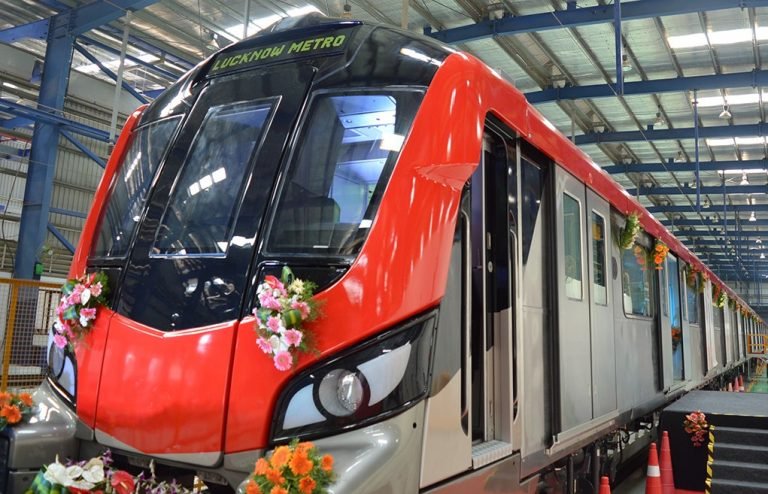
Lucknow: Lucknow Metro services will be inaugurated on 5th September, 2017 by Shri Rajnath Singh, Hon’ble Union Minister of Home Affairs, Government of India and Shri Yogi Adityanath, Hon’ble Chief Minister, Uttar Pradesh. The public services will, however, be started from 6th September, 2017.

The Metro train will be flagged-off on the day by the Hon’ble Minister of Home Affairs and the Hon’ble Chief Minister, Uttar Pradesh and now the dream of the people of Lucknow to have their own world Metro class is coming true.

The 8.5 km long ‘Priority Corridor’ from Transport Nagar to Charbagh will be made operational for the public from 6th September, 2017. The services will be available from 6 AM to 10 PM every day.

The day will be written in golden letters as Lucknow Metro will be the first Metro project to be executed and made operational for the public in just less than three years. No other Metro has ever been able to achieve this feat in such a short and stiff time-frame as compared with Lucknow Metro’s strength in project deliverance.

With this, Lucknow Metro has fulfilled the dream and aspirations of the people of Lucknow and the city will catapult itself in the league of ‘Metro’ cities in India. It is a great achievement for the people of Lucknow and the dedicated team of engineers led by Shri Kumar Keshav, Managing Director, LMRC, who have made this a reality.

Lucknow Metro | LMRC unveils its advanced website for General Public

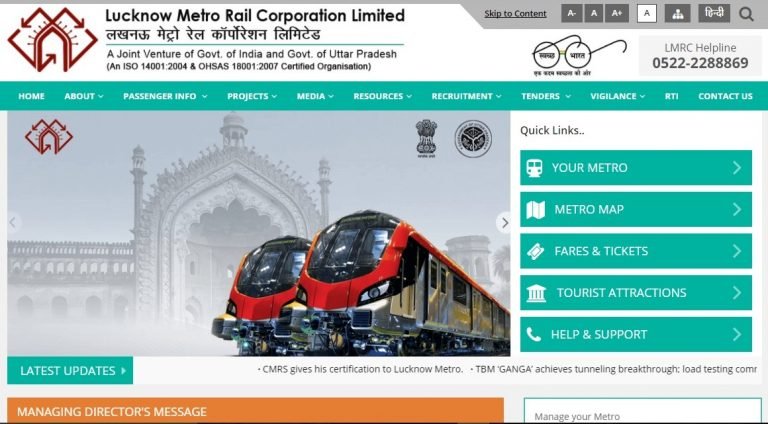
Lucknow: Lucknow Metro Rail Corporation (LMRC) launched its new website just ahead of its priority section to be made operational for the ‘Priority Corridor’ stretching from Transport Nagar to Charbagh. Kumar Keshav, Managing Director launched the website on August 28.

“The new website will serve as an efficient channel of interaction between LMRC and the citizens of Lucknow,” Kumar Keshav said while launching the website. “This will increasingly help in setting up a bond that will make Lucknow Metro people’s own Metro,” he added.

The new website will serve as an interface for citizens and likely commuters to be acquainted with the metro system and get requisite information related to travelling via metro. It will also provide the public with latest updates about metro service and information about LMRC as an organization.

It will also educate prospective commuters about hassle free metro travel; get aware with safety guidelines, security features and other useful information for commuters while travelling with metro. The website will also inform the citizens about features of the metro, facilities available at metro stations and how to use them. In addition, features and benefits of the GoSmart card are listed on the website, which is aimed to provide a hassle-free travel experience to the commuters.

Special focus has been laid on Prime Minister’s Swachh Bharat Mission appealing to citizens to keep the metro and station premises clean. Lucknow Metro has many notable awards and certifications to its name and the website has got it covered to make people aware of what makes Lucknow metro a step ahead of other metro networks in India.

A dedicated section titled “Your Metro” elucidates to citizens about why they should pick metro as mode of commute, facilities available for differently-abled and their responsibilities as an ideal citizen. It also informs the citizens about various systems deployed at metro stations along with safety instructions and the procedure to use them in case of emergencies.

The actual fare-structure has now been introduced on the website through a dynamic fare calculator that shows the fare between two selected stations and even displays the intermediate stations. Moreover, an interactive route map is available on the website that highlights major landmarks like railway stations, bus stops, markets, hospitals and educational institutions along metro route on the map. Other map indicators are also displayed to help citizens understand the current functional network, work under process and the proposed east-west corridor.

Citizens can recharge their metro travel GoSmart cards online through the website using credit card, debit card or net banking for top-up. Lucknow metro will offer free Wi-Fi access to GoSmart cardholders. Free Wi-Fi service can be activated by registering the card on website with their mobile number. To use free Wi-Fi, users will have to tap the card at the card reader available in the paid area of the metro stations upon which a password will be received on the registered mobile number which can be used to connect to the free Wi-Fi available across all metro stations.

Few of the main tourist attractions of Lucknow are also highlighted to provide brief historical information and tour guide for the travelers and tourists alike.

A dedicated section for lost and found items has been provided on the website, which will help commuters in reporting and enquiring about any lost or found item inside the metro trains and at station premises. List of found items will be displayed online to help commuters in reclaiming the lost items. Besides, the website includes important information related to the metro project, RTI and vigilance contacts of the LMRC along with a web form through which user can get in touch with Lucknow Metro.

A dedicated section is there to give all the information related to the tenders floated by Lucknow Metro. All the information related to recruitment also available in the section “Recruitment”.

The website uses a purely responsive web layout that makes it easily accessible across all internet-enabled mobile devices and computer systems irrespective of the browser and screen size.

Delhi Metro | After fare hike metro rail ridership falls

New Delhi: The Delhi Metro’s ridership saw a slump in June, a month after a steep fare hike came into effect, according to DMRC records. The average daily ridership of the metro in June was 25.7 lakh. The corresponding period last year, when newer sections were yet to be launched, had seen 27.2 lakh people using the network everyday, the Delhi Metro Rail Corporation said, replying to an RTI query. The slump in June was observed across all the corridors of the 218-km-long network. The total ridership came down by around 15 lakh and 21 lakh in the Yellow and Blue Lines in June, as compared to the same period the previous year.

In April, 27.5 lakh commuters took the metro on an average daily, while the figure came down to around 26.5 lakh in May, when schools are closed due to summer holidays.

April and May 2016 had logged an average daily ridership of 26.3 lakh and 26.2 lakh respectively.

Since May 10, the new minimum fare is Rs 10, up from Rs 8, while the maximum stands at Rs 50. It will turn Rs 60 from October. The new fare structure, Monday through Saturday, is: up to 2 kms — Rs 10, 2 to 5 kms — Rs 15, 5 to 12 kms — Rs 20, 12 to 21 kms — Rs 30, 21 to 32 kms — Rs 40, and for journeys of over 32 kms Rs 50. Smart card users get a 10 per cent discount, but that has not contributed towards any substantial rise in the number of cards issued post fare hike.

The total number of smart cards issued in March, April, May and June are 4.07 lakh, 3.7 lakh, 3.74 lakh and 3.81 lakh respectively, the metro said, responding to the RTI application filed by this reporter.

However, metro attributed the reduction in ridership, by up to 5 per cent, as “natural”. “This much variation is considered natural for any given months or period as a system spread over 218 km, a fluctuation in ridership is always bound to be seen which is dependent on multiple factors like seasons, vacations, strikes or agitations,” a Delhi Metro Rail Corporation spokesperson claimed.

The metro has been reluctant to divulge ridership data, which it shared with the media without any fuss till April, since the fare hike was effected. The reply to the RTI application came following a ‘first appeal’. Initially, the public information officer of DMRC had refused to share any data saying no such records are maintained in “material form”.

The spokesperson claimed that ridership may have fallen marginally, but metro registered an increase in terms of average distance travelled by commuters in the April to June quarter from 16.41 km to 16.59 km.