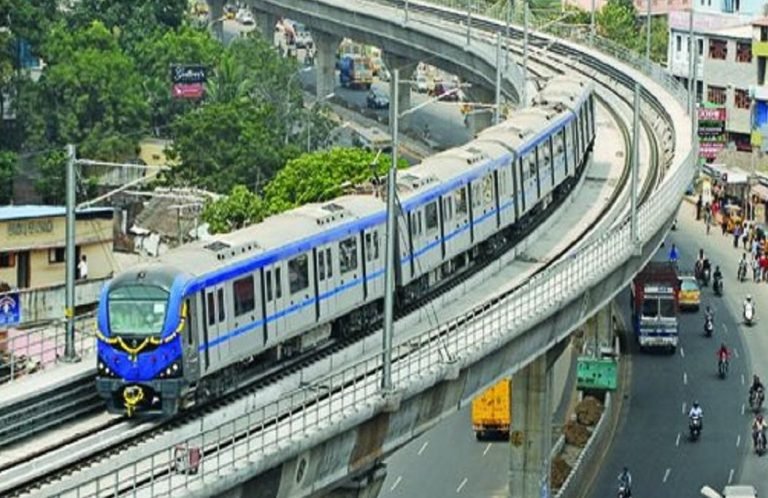
The latest decision is a marked deviation from JICA’s earlier stand, when the agency had raised serious doubt over the viability of the project that got mired in realignment knot. With multiple government agencies working together to remove the stumbling blocks, Jica then carried out a study to ascertain the viability of the new route. It was very satisfied with the cost-benefit analysis that promised a much higher ridership than that of earlier alignment.
According to the previous alignment, the corridor was supposed run through Bowbazar. But now, the alignment will move via Esplanade. The change in route, along with delay in implementation, has pushed up the project cost to 8,996 crore from Rs 4,874 crore.
When the project had kicked off, JICA’s share — 46% of the total cost — came to around Rs 2,253 crore. But now, the agency will shell out around Rs 4,138 crore for the project.
In 2015, the state government had engaged RITES to carry out a study on the realignment. The Railways had approved the new route in 2016. The project gained momentum thereafter, with the Railways allocating handsomely to East-West Metro in the Union Budget.
Meanwhile, Kolkata Metro Rail Corporation (KMRC) has awarded the Rs 484-crore contract to Afcons for constructing the 700metre stretch between Makakaran and Esplanade. The TBMs, which are currently moving below Brabourne Road, will now go upto the Esplanade shaft.
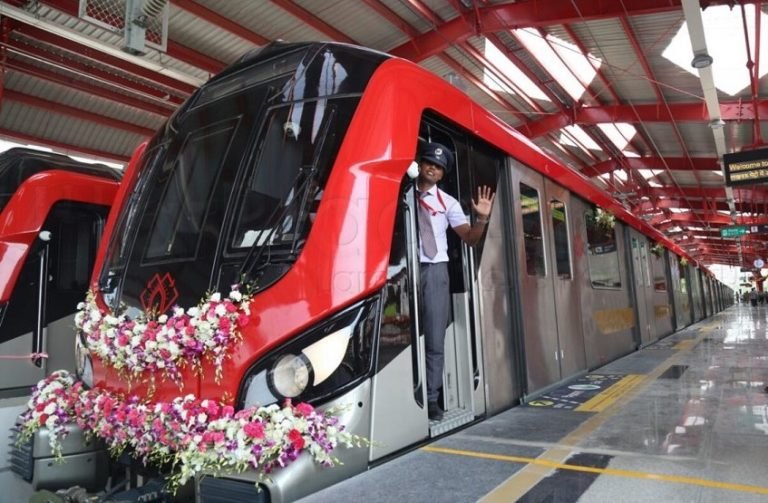
Kochi: With the integrated trial run of the Kochi Metro using the signalling and communication system in the second reach up to Maharaja’s being successfully completed, the Kochi Metro Rail Limited (KMRL) authorities are waiting for the inspection by the Commissioner of Metro Railway Safety (CMRS). The CMRS will inspect the stretch by the third of week of this month, it is expected.
“The testing of the signalling and communication system which began on August 26 has been successfully completed on September 7. The remaining finishing works of the station construction are progressing at a fast pace,” said a top official with KMRL. As the integrated trial run has been completed, the normal time schedule of the Metro service along the Aluva – Palarivattom route has been restored. The timings of the service was changed to facilitate the trial run.
KMRL had started the trial run along the second reach with a focus on coaches, tracks and the third rail traction in July which was followed by signalling and communication testing. The Metro authorities are planning to open the stretch for traffic before the FIFA Under-17 World Cup matches scheduled from October 6. KMRL expects a significant increase in the number of regular passengers once the stretch is opened and the Metro agency has plans to introduce special packages and revisions in ticket fares.
Los Angeles: In a press release Hyperloop Transportation Technologies announced that they have signed a Memorandum of Understanding (MoU) with the Andhra Pradesh Economic Development Board (APEDB) on 6th September 2017, to facilitate the development of HTT’s Hyperloop Transportation System.
The proposed route for the Hyperloop is between the city centers of Vijaywada and Amaravati, potentially turning a trip of more than one hour into a 6 minute ride. The project will use a Public Private Partnership (PPP) model with funding primarily from private investors.hra
“We are extremely delighted to have entered into a MoU with the Government of Andhra Pradesh to bring the HTT Hyperloop to India,” said Mr. Bibop Gresta, Chairman & Co-founder, Hyperloop Transportation Technologies. “In partnering with Andhra Pradesh, HTT will work with local stakeholders to build the regulatory standards necessary for safe and efficient operation.”
During Phase 1 of the project, HTT will conduct a six-month feasibility study commencing in October. Working with partners in the public and private sector, HTT will analyze the surrounding cityscapes to create the best route between the two cities while identifying all pertinent stakeholders in the region. After conducting the initial six-month feasibility study, Phase 2 of the project will construct and build HTT’s first Hyperloop in India.
Mr. Krishna Kishore, Chief Executive Officer, APEDB said, “Amaravati is a state-of-the-art city being developed in Andhra Pradesh as its de facto capital. In order to boost its image and emerge as the frontier city in future technology, Amaravati is looking forward to collaborating with Hyperloop Transportation Technologies. Hyperloop is a cutting-edge technological disruption in the transportation industry.”
Discussing the added benefits of establishing an ultra-high speed connection between the cities, Mr. Kishore added, “Like most of the world-changing technological advancements, HTT aims at collaborating with Government of Andhra Pradesh to foster research and development, in order to bring affordable and low-cost technologies for the masses. This will eventually lead to improved standards of living in the region. The EDB along with Government of Andhra Pradesh will assist Hyperloop Transportation Technologies Inc. (HTT) with all regulatory requirements to develop and implement Hyperloop.”
The State of Andhra Pradesh is the seventh largest in India with a population of over 50 million people. Connecting these emerging development regions with ultra-high speed transportation will establish this region as a leader in technological innovation and sustainable development.
What is the hyperloop?
Hyperloop Technology
Hyperloop is a radical, yet untested means of travel proposed by maverick entrepreneur Elon Musk. It involves travelling in pods through a sealed pipe at speeds that could touch 1,200km/hr, making it faster than a jet aircraft. These speeds will be possible due to a largely frictionless environment, minus any physical contact or air resistance.
Tests are already underway in several parts of the world. Musk claims he has an approval to build a New York City–Washington DC hyperloop that will cut a five-hour drive to just 29 minutes!
In India, Musk’s HTT isn’t the only startup in the fray. Earlier this year, another company called Hyperloop One identified five routes for its India debut. On its list are:
Bengaluru-to-Chennai: 334km in 20 minutes
Bengaluru-to-Thiruvananthapuram: 736km in 41 minutes
Delhi-to-Mumbai via Jaipur and Indore: 1,317km in 55 minutes
Mumbai-to-Chennai via Bengaluru: 1,102km 50 minutes
Lucknow: In order to provide a push to government’s ‘Digital India’ campaign, Lucknow Metro has started providing free Wi-Fi facility to its ‘GoSmart’ card users at all its operational Metro stations. The facility will be available for the GoSmart card holders who register their card on Lucknow Metro’s website.
This free Wi-Fi service can be availed upon registering the GoSmart card at www.lmrcl.com. The passenger will have to provide basic information like Name, Mobile Number, Occupation and E-mail ID while registering the card.
After registering the card, the commuters will have to tap the GoSmart card on the marked card readers in the paid area of the Station. Upon tapping the card at the card readers, the passenger will receive a One-Time-Password (OTP) on their registered mobile number. This OTP can be used to sign in to the free Wi-Fi network.
The free internet facility (free Wi-Fi) can be used in the paid area of the stations i.e. at the concourse level and at the platform level of the station. This free service will be available for 30 minutes session initially. Free Wi-Fi means free internet usage through mobile, laptop, tablet etc. and implies saving money to the common people. Those who need internet connectivity but can’t afford will be at advantage in the Metro system by using the free Wi-Fi.
Students and youth can benefit largely from Free Wi-Fi. They can refer to e-books and online learning methods while travelling. With advent of several online shopping sites and a surge in online booking of trains, flights, movie tickets etc., this advantage can be used at maximum by the Metro travellers.
For providing this facility to all ‘GoSmart’ users, Lucknow Metro Rail Corporation (LMRC) has tied up with M/s Sikka Broadband Pvt Ltd. Sikka Broadband Pvt Ltd.(formerly known as Gomti Cables Network) is a Government of India licensed ISP (Internet Service Provider) and is already providing a host of Internet services to the citizen of Uttar Pradesh.
Lucknow Metro “GoSmart” Card
Shri Kumar Keshav, Managing Director/LMRC said “GoSmart cards provide an excellent facility of free W-Fi at Metro stations in addition to 10% discount on each journey.” He, therefore, requested Metro commuters to purchase and use GoSmart cards more and more for saving their time and ease in commuting frequently.
Shri Tony Sikka, Managing Director, M/s Sikka Broadband Pvt Ltd. also expressed his happiness and said “We are delighted to be associated with Lucknow Metro Rail Corporation (LMRC) in this digital campaign of the government”.
Mentioning his personal invitation to Modi made earlier in June in New Delhi, the Chief Minister requested the PM to inaugurate the Hyderabad metro rail project (Phase-I) in November 2017.
In the letter addressed to the Prime Minister, the Chief Minister tweeted that the first phase of the project will be ready in November, and that during Modi’s visit to Hyderabad during the Global Entrepreneurship Summit as Chief Guest, the phase one could be inaugurated.
Project in progress
The Chief Minister informed that the 72-km, ₹15,000-crore Hyderabad metro rail project is the biggest public private partnership venture to date. The 13-km Miyapur-Ameerpet line and 17-km Ameerpet Nagole line have conducted trial runs and obtained safety permissions. Meanwhile, work on the metro rail has gathered pace with round-the-clock activity in some segments. While most of the major links have been completed, including rail over bridges, some interconnection points and stations are at advanced stages.
The rail project, undertaken by construction major L&T, is being developed across three corridors.
“Delhi will soon have a metro network that is longer than Tokyo,” said a senior official of the Japanese International Cooperation Agency. “It doesn’t make sense for us to keep funding metro projects in India.”
When Delhi Metro’s Phase-III is launched in stages over the next few months, the national capital region will have a metro network spanning over 330km. The combined length of Tokyo’s metro lines is 195km.
“We also need a very good reason to continue to support,” the JICA official said, who chose not to be named.
“When Delhi Metro began in the 1990s, the technology was nascent and support was required.
But Japan is no longer able to aggressively involve itself in metro projects. However, the extension of existing lines in Mumbai and Chennai are under active discussion.”
“We have an annual funding limit and the money should be spent on prioritised areas,” the official added.
India’s metro rail expansion over the last two decades has, for the most part, been financed through soft loans from Japan.
In the case of Delhi, the share of Japanese assistance as a percentage of the total project cost has come down from 60% in Phase-I to 48.5% in the ongoing Phase-III.
Delhi Metro spokesperson Anuj Dayal said that a final approval for 104-km long Phase-IV of the project is pending with the ministry of urban development. “Funding call will be taken after the approval,” he said.
With the union government recently releasing a metro rail policy, which puts heavy emphasis on city’s finding private funders of their own – if 50 Indian cities want a metro network, they may have to start figuring out how to pay for it.
“Apart from central government sources or cheap foreign loans, I don’t see money coming from other sources,” said M. Ramachandran, former secretary of the ministry of urban development. “If cities go to the market, loans would come at a steep interest rate. That would make the eventual fares too expensive and no one would use the system.”
Chennai: Coimbatore is getting ready to realise its Metro dream as Chennai Metro Rail is likely to take up the task to conduct a feasibility study and prepare a detailed project report on the mass transit system in the Manchester of South India.
It is learnt that the 10-month study which includes preparing a feasibility report and a detailed project report would cost around Rs13 crore. Sources told Express that German Funding Agency KfW has expressed interest in providing 12.5 million euros to conduct the study and the balance amount will be paid by the State government.
The move comes after Chief Minister Edapaddi K Palaniswami made an announcement in the Assembly to introduce the Metro Rail project in Coimbatore city. The need for a mass transit system in Coimbatore is stressed, taking into account the growing population of Coimbatore which is expected to grow up to 27.7 lakh by 2033.
It is learnt that 136 km of Mass Transit Network identified by Comprehensive Mobility Plan (CMP) for Coimbatore Planning Area – 2015 will also be scrutinised. The CMP has identified four corridors in these stretch based on the vehicular and pedestrian traffic on the Coimbatore Radial Roads particularly Avinashi Road, Tiruchy Road and Sathyamangalam Road.
They include Kanniyur to Ukkadam bus stand (24km) along Avinashi Road; Bilchi to Ukkadam (24 km) along Mettupalayam Road; Kannampettai to Thannerpanthal (42km) along Thadagam Road and from Ganeshpura to Karunyanagar (44km) along Sathyamangalam Road.
However, it was felt that the CMP is a broad-based macro level study report and further study is required in finalising the mass transit system. As such, Chennai Metro Rail will be coming out with a final option based on social, technical and commercial project feasibility.
It is learnt that Chennai Metro will also prepare a detailed project report regarding city bus improvement proposals and non-motorised plans for Coimbatore city. The Metro Rail will also conduct prelimnary environmental impact study along the alignment and propose environment management plan for construction and operation phase.
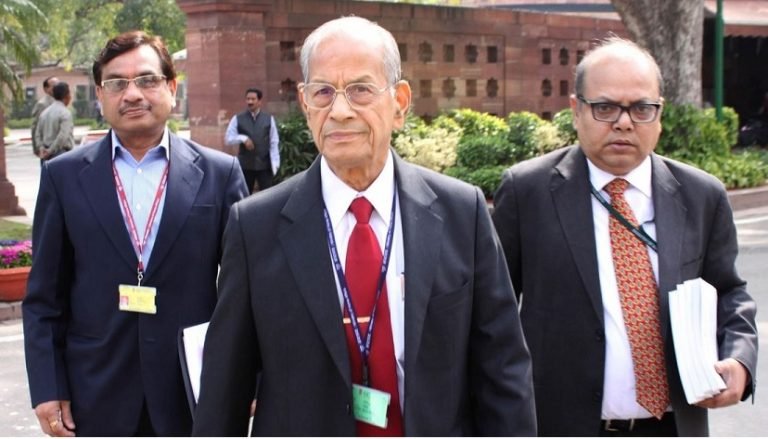
Amaravati: Metroman E. Sreedharan on Thursday reportedly suggested the State government to write to the Centre requesting exemption from new metro rail policy which was adopted by Union Cabinet in third week of July. He opines it will not be easy for the State govt to get Centre’s nod for light metro.
He also advised that it would be better to go for medium metro in lieu of light metro project to Vijayawada as it would be easy to get permission from the Central government as a detailed project report has already under consideration of Union Finance Ministry.
Sreedharan met Chief Minister N Chandrababu Naidu and Chief Secretary Dinesh Kumar at Secretariat on Thursday.
This is the first time Sreedharan came to meet the Chief Minister after he resigned to the post of advisor to State government. The Hans India brought the resignation issue into light first time in July.
According to sources, Sreedharan strongly advocated medium metro rail for Vijayawada city as the light metro will be grossly inadequate and will remain useless when metro sees the light of the day in the capital.
A senior official said that Sreedharan did not concur the argument of Municipal Administration department that there will be 25 per cent of cost difference between light metro and medium metro.
“It will take another one year to prepare detailed project report for light metro and technology is also not available in the country. Besides, the delay in construction will cause project cost escalation by 5 per cent and the difference will come down to 13 per cent” Sreedharan told the officials.
Sreedharan reportedly suggested Principal Secretary to Municipal Administration Karikal Valaven to write letter to Union government requesting exemption for state from new metro rail policy which mandated Private-Public-Partnership (PPP) compulsory along with some other tough conditions.
Reliable sources said that higher-ups of Municipal Administration department also suggested AMRC to take light suggestions of Sreedharan and write a formal letter to Centre for asking exemption.
New Delhi: The Institute of Metro & Rail Technology (IMRT) and Symbroj Media Pvt. Ltd. (SMPL – Sole publisher of Metro Rail News), the largest independent knowledge tank based in India, on Thursday signed a memorandum of understanding (MoU) to promote metro rail technology, research and academic exchanges.
The agreement was signed by IMRT Founder Director & Member Governing Council Sunil Srivastava and SMPL Director Ms. Mamta Shah.
Under the MoU, IMRT and SMPL agreed to collaborate on projects such as exchanges of academic resources, knowledge and faculty for research and development purposes. They also agreed to come up with jointly for promotion of their services and academic projects with the help of of digital, print, multimedia and social media tools.
Mr. Srivastava pointed out that, “since our objectives are common – promoting the rail industry and making it visible, I feel there is an opportunity for the two of our institutions to work closely together. IMRT has been conducting sessions in Engineering colleges and elsewhere showcasing the global opportunities available for young Indians in this industry and that is the reason we have set up the Institute, the first of it’s kind in the country.”
Metro Rail News Managing Editor, Ms. Mamta Shah said that “this was the first time Symbroj Media has signed an MoU with a specialized academic Institute, and said she looked forward to strengthening the academic and knowledge sharing ties between the two independent organisations.
Metro Rail News is an exclusive and leading news service portal which provides complete and up to date information like project updates, tender, industry events, job notices, passenger information, media interviews etc. from various mass rapid transit systems like metro railways, mono rail, high speed bullet trains, sub-ways, trams, metro coach factories and associated industries worldwide. Metro Rail News offers business, advertisement and media partnership opportunities to the individuals, business organizations, event planners, metro railways, OEMs and coach factories worldwide. Metro Rail News has a well maintained and comprehensive Business Directory (Metro Rail Directory) as well as well qualified and highly experienced professional in Editorial Board. Metro Rail News is being owned, managed and published by a renowned media firm Symbroj Media Pvt. Ltd., New Delhi.
The Institute of Metro and Rail Technology (IMRT) is a first-of-its-kind institution that aims to be a knowledge leader in Metro and Rail technology. IMRT was envisioned with the objective of producing next-generation ‘techno-managers’, capable of making crucial decisions using their skills and understanding of the sector. IMRT will groom a new breed of professional engineers for the rail and metro industry by designing, developing, and delivering high-impact learning programs through education and research. The institution’s strength lies in offering specialized training and education for engineering graduates as well as experienced professionals in the rail and metro space. IMRT is promoted by Balaji Railroad systems Limited (BARSYL), a consulting firm specializing in providing niche technical and management support to the railways of several countries.
– Metro Rail News Editorial Team
Press Contact: +91-9990454505
E-mail: editor@metrorailnews.in
AGRA: While Uttar Pradesh chief minister Yogi Adityanath and Union home minister Rajnath Singh, on Tuesday, jointly flagged off an 8.5 km stretch of the first Metro train in Lucknow, work on the much-awaited Agra Metro seems to be on a slow track. No groundwork has been done after a detailed project report (DRP) was submitted to the Agra Development Authority (ADA) last year by the engineering consultancy firm Rail India Technical and Economic Service (RITES). The DPR had subsequently underwent technical changes and approved by the state government.
The 30-km long Metro rail project, proposed during the Samajwadi Party (SP) regime, was to be developed in two phases. The former UP government had planned Metro infrastructure in Lucknow, Agra, Varanasi and Kanpur.
According to the DPR, three-coach trains will make 136 trips per day (in a single direction) on Corridor One, from Sikandra (Akbar’s tomb) to Taj Mahal via Agra Fort, and 160 trips on Corridor Two, Agra Cantt to Kalindi Vihar. Both corridors will have 15 stations each. The development of the first corridor was slated to be completed by June 2022. The report had also stated that altogether 210 acres of land would be required for building stations, depots and other facilities. Moreover, a total of 159 structures, mostly commercials, will be affected by the Metro construction.
According to an earlier statement given by the ADA, the project was estimated to be built at a cost of Rs 200 crore per kilometre for the elevated sections, and Rs 450 crore per kilometre for the underground stretch. Official sources said that an initial allocation of Rs 10 crore was made during the last budget but it is yet to be released.
Talking to Media, a senior ADA official said, “Budget allocated for Metro rail development project has not been released by the state government. We are ready with the DRP and can implement it once funds are given. The total cost of the project is estimated to be Rs 11,000 crore.”
Some of the major Metro stations of the first corridor are proposed to be built at the Taj Mahal East gate, Agra Fort, Jama Masjid, Heeng Ki Mandi, Raja Mandi, Guru Ka Taal and ISBT. The second corridor will be 16 km in length and will include stations in Sadar Bazaar, Pratapura, St John’s crossing, Subhas Park, Kamlanagar and Rambagh.
Guwahati: The Assam Government on Wednesday gave the green light for implementation of the state government’s ambitious Guwahati metro rail project.
Transport Minister Chandramohan Patowary said, “To ease the growing traffic congestion in Guwahati, the cabinet has approved the implementation of the metro rail project. The Detailed Project Report (DPR) prepared by the Guwahati Metropolitan Development Authority has been submitted.”
However, a group of activist opposed for expansion of metro rail project to Boko in Kamrup (rural) district). They raised slogans against the Guwahati metro expansion to Rabha Hasong area and also against State Transport Minister Chandra Mohan Patowary. Mantu Kumar Rabha, Kamrup district Rabha Students’ Union secretary took initiative of the rally. Kamrup district Rabha Students’ Union president Hiteswar Rabha, vice-president Ajit Rabha also took part in the protest rally.
The president of Kamrup district Rabha Students’ Union, Hiteswar Rabha said, “Minister Chandra Mohan Patowary wants to expand the Guwahati metro to Rabha Hasong area but we oppose this plan. Earlier on two occasions we had protested against the plan and today also we protest against the expansion plan. We will continue protesting till the plan is scraped.”
With the announcement of National Rail Plan, a lot of reforms are being undertaken by
the Indian Railways to improve the stability of the railway sector and retain the image of
being one of the premier organizations in the country. The focus of the ambitious plan
will be on upgrading the tracks, signaling, implementing safety parameters, station
modernization and electrification systems on the railway tracks to improve punctuality,
speed and safety of the trains. Also with a different mode of approach, the ministry is
trying to reduce its dependency on the budget and fare revenue, by introducing
innovative funding methods and emphasizing on Non-Fare Revenue along with the
development of new projects on Public Private Partnerships (PPP) model.
Working on the Railway Ministry’s National Rail Plan, Nispana is organizing the 2nd
Annual Future Rail India Summit on the 7th and 8th of December, 2017 in New Delhi,
which will bring together the key stake holders from the Indian Railways who are
focusing on business and technical fronts. Along with this, the conference also will
feature international experts to present best practices which has helped them develop
their railway sectors in their countries, and technology providers to feature the latest and
efficient technologies which will help Indian Railways make the next big leap.
2nd Annual Future Rail India Summit will provide the solution providers, policy makers
and decision makers an opportunity to come together to discuss, collaborate and
determine the best solution for the current challenges faced and pave paths for future
project engagements.
Event Highlights
Gain exclusive insights on investments from the Ministry of Railways through innovative funding policies
Analyze the paradigm shift towards sustainable energy
Identify the need for involvement of consulting firms areas such as operations and planning.
Understand the new railway FDI policy in setting up of production units for manufacturing rolling stocks
Ms. Akshima Tejas Ghate, Senior Fellow and Associate Director, Transport and Urban Governance Division, Sustainable Habitat Programme, The Energy and Resources Institute (TERI)
GK Gupta, Chief Mechanical Engineer, Indian Railways Institute of Alternative Fuel
Satish Kumar, ED Safety, Indian Railways
M.P. Singh, CEO, High Speed Corporation of India Ltd.
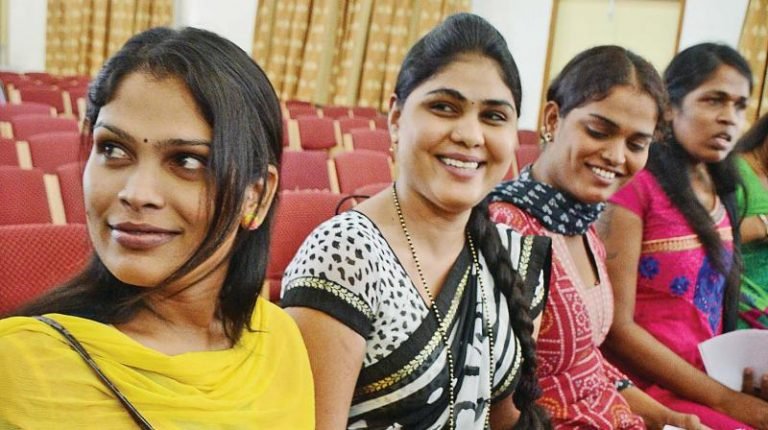
Kochi: Kerala made headlines when it appointed 23 transgenders to work for the Kochi Metro. But it is a no secret that the employees started quitting when most turned a blind eye to the possible miseries the sexual minority would face.
While some faced difficulty in finding alternate accommodation, some found the new lifestyle too expensive to adjust.
Kochi Metro Rail Limited (KMRL) is now taking steps to increase the strength of the transgender staff from an existing 14 to 60 and impart soft skills too.
When 23 transgenders employees were deployed in June, the criteria for recruitment included their educational qualifications. While Kudumbasree trained them with soft skills, the Metro agency upskilled them in managing ticket counters and housekeeping.
“We decided to recruit TG people, a first in any metro system in the country as a social experiment and to ensure social inclusion. This, in a way, resulted in their problems being highlighted at the national level.” a KMRL spokesperson told the Media.
Several reports emerged citing the reasons for the nine employees to quit the job was a wage hike. Justifying their stand the KMRL spokesperson said that the pay scale of the TG employees was on par with the regular workforce.
“We aim to increase the number of TG people in the metro to 60 when the Pettah extension is completed, around two years down the line,” the spokesperson said.
Chennai: For the thousands of techies in the city, commuting across busy stretches to reach the various IT parks could become easier. Chennai Metro Rail Limited will in Phase 2 link some of the major IT parks on Old Mahabalipuram Road and Manapakkam with the rest of the city through metro stations. The phase will cover a distance of 108.4km with 104 stations across three corridors. If everything goes as planned, construction for the phase will begin in 2018 and is expected to be ready in 10 years.
“The plan to build stations close to IT companies and parks is to encourage techies to use metro trains regularly. This will take many four-wheelers and two-wheelers off the roads and reduce the road traffic to a great extent,” a metro rail official said. “We are also planning to extend beyond Siruseri in the next phase.”
It will include 20km stretch of the IT corridor along Rajiv Gandhi Salai or Old Mahabalipuram Road, which will be connected through 22 elevated metro stations from Tidel Park all the way up to SIPCOT in Siruseri. The elevated line will be part of the 46.1-km corridor three of the phase which will connect the IT corridor with far-flung areas of North Chennai up to Madhavaram Milk Colony. The line is expected to be ready for operation in five years. There are close to 70 major IT parks in the city and many of them are located along OMR. Many other major IT/ITES companies, national research laboratories, technical and educational institutions are also located along the stretch.
In corridor 5, the underground stations at Sathya Nagar and Ramapuram bus stop are expected to connect the DLF IT Park that houses some of the biggest IT companies. The two stations are part of a 45.2-km-long corridor from Madhavaram Milk Colony to Sholinganallur. The stations will link several localities in the northwest of the city, including Kolathur, Anna Nagar, Maduravoyal and Valsarvakkam, and neighbourhoods such as Madipakkam, Kovilambakkam, Medavakkam and Perumbakkam in the southwest.
Metro rail officials said corridor 5 would be an orbital line, as it would connect all the arterial roads through phase 2 lines and the 45-km two-corridor Phase 1 through stations like Chennai Mofussil Bus Terminus (CMBT), Thirumangalam and St Thomas Mount, which is likely to be common to both the phases. Phase 1 of the project will link all major railway stations and bus terminuses in the city once it becomes fully operational.