
Delhi Metro | 25 metro stations of DMRC declared dangerous for metro commuters

Highlights:

  • Entry closed after 10 o’clock on two metro stations of Dwarka sub-city area
  • There will be big pair passenger service, at least two passers are required in public transport
  • High beam lights on exit gate, light on pillars and more lights on roads
  • CCTV Monitoring System on the roads leading to the surrounding Regional Areas
  • The deployment of the Verified personnel, the presence of the security guard and the lighting will be arranged properly

New Delhi: 25 metro stations of the Delhi Metro Rail Corporation (DMRC) were considered dangerous according to a report was issued about DMRC network in the past.. These included Dwarka Sector-11 and Dwarka Sector-12. After this, the police teams here conducted the survey between 9.30 am and 11.30 pm. Under this, the report has been prepared based on the conversation with the passenger and on the basis of its study. In order to make parking safes of the stations, only the details of the deployment of the vendee personnel, the presence of the security guard and the proper arrangement of lighting have been reported in the report.

Mayur Vihar Phase I Metro Station
Darkness at Mayur Vihar Phase I Metro Station

Metro passengers who arrive home after dark, will now get the facility of ‘Big Pair Passenger’ service at two stations of Dwarka i.e. no passenger alone can go alone in public transport and at least two passenger must be. Actually the Sector-11 and Sector-12 stations are considered dangerous, the police has made this plan.

Dwarka Sector 12 Metro Station
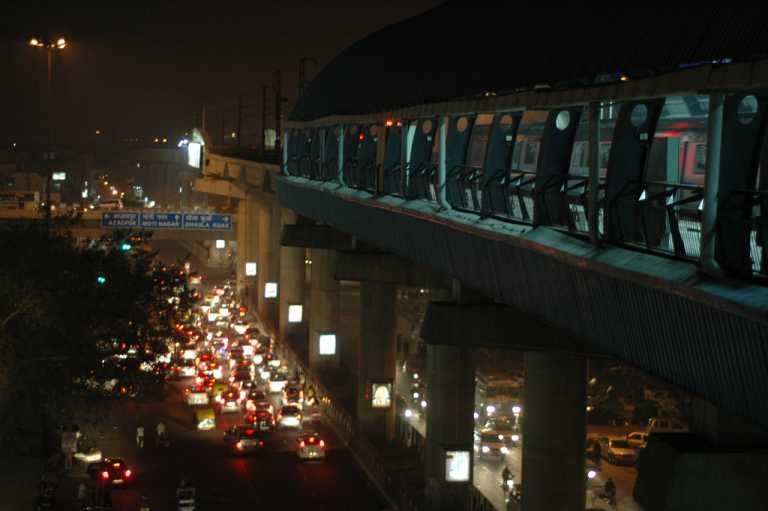
Night view of Dwarka Sector 12 Metro Station

There will be no entry of passenger and will be able to exit only after 10 pm on both stations. Police have claimed that after 10 pm, the number of passenger numbers is very low at these stations. In such a situation, passenger can enter from other stations instead of here. Initiatives to make auto fair booth are also being done at both stations. Especially at night, the passenger will be able to auto book with these booths. If the e-rickshaw is alcohol, then it will not be allowed to stand around the stations.

Kailash Colony Metro Station
Surrounding of Kailash Colony Metro Station at Night

Indian Railways keen to supply metro coaches for metro rail projects

New Delhi: Indian Railways is now showing interest to manufacture and supply metro rail coaches for Indian Metro Rail projects. The Prime Minister’s Office (PMO) has asked the Ministry of Housing & Urban Affairs (MoHUA) to buy coaches from the Railways for Metro projects that will be rolled out without external assistance.

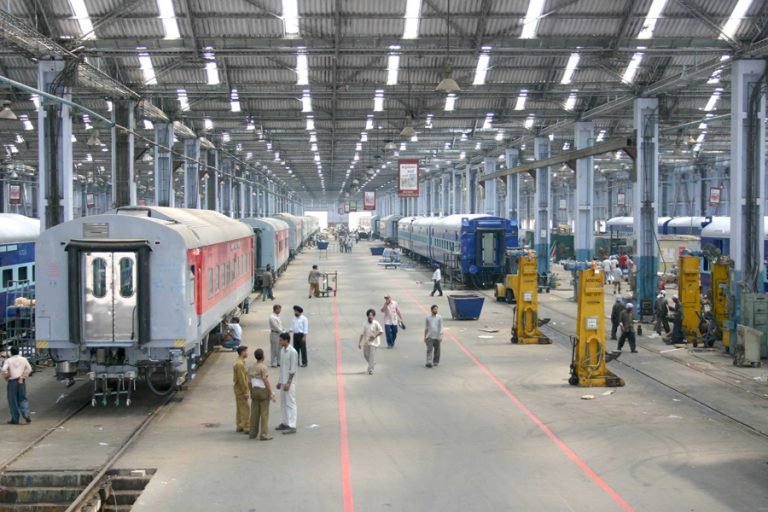
LMRC Coach


Ashwani Lohani, Railway Board Chairman had written to housing and urban affairs ministry in last October stating that the railways were keen to partner with the ministry to make the rolling stock (coaches) available for Metro railway projects. He had mooted setting up of a dedicated unit for Metro coaches manufacturing through a special purpose vehicle (SPV) with urban affairs ministry’s partnership with commitment to for 10-15 years.

Sources said the PMO at a meeting held last month had suggested the urban affairs ministry to expedite standardisation Metro signalling system and promote captive buying of coaches from the railways be rolled out without external financial assistance.

Till now only a few Metro rail projects such as the Noida-Greater Noida link have been taken up without external assistance. “In projects where we have got external financial assistance from agencies such as JICA or AFD, the bidding for rolling stock has to allow bidders from across the globe,” said a source.

Mumbai Metro | L&T wins contract for electrification work of Metro-3 project

Mumbai: The Larsen & Toubro Ltd (L&T) awarded contract for electrical system works pertaining to power supply for the Colaba-Bandra-Seepz Metro 3 project of Mumbai Metro Rail Corporation Limited (MMRC). MMRC signed a System Contract Agreement (SCA) with L&T Ltd. on Friday. The contract was signed by A. A. Bhatt, Director (Systems) of Mumbai Metro Rail Corporation and Puneet Arora on behalf of Larsen & Toubro Ltd.

This contract package covers work of design, installation, testing and commissioning of power supply works including receiving sub-stations, 110kV cabling works, traction sub-stations, switching stations, auxiliary main sub-stations, SCADA system and integration with other systems.

“Power supply works is a critical component of Metro 3 implementation. We aim to implement robust and technologically advanced power supply system for Metro-3 and complete the works in time so that the 3 project can be completed within stipulated timelines”, said Ashwini Bhide, MD, MMRC.

During interaction with Media, the metro authority said that they had also received good response from all pre-qualified bidders for procurement of standard gauge rolling stock for the Metro-3 corridor.

MMRCL will procure 31 trains having eight Metro coaches each.

Five companies has participated in bids which names are CAF S.A., Spain, a JV of Alstom Transport India Limited and Alstom Transport S.A., a JV of CRRC Nanjing Puzhen Co.Ltd.; CRRC International Corporation Ltd and CRRC Changchun Railway Vehicles Co. Ltd, Hitachi, Ltd. and a JV of Kawasaki Heavy Industries Ltd. and BHEL.

“We are pleased with the response from the bidders. To cater to the heavy passenger traffic and to improve frequency of trains, the rolling stock will be procured and equipped with features needed for driverless operation”, said Ms. Bhide.

Budgetary allocation for Nagpur, Pune Metro Substantially Hiked

MAHARASHTRA METRO RAIL CORPORATION LIMITED

PUNE:  The Union Government has substantially hiked budgetary allocation for the twin Metro projects i.e., Nagpur and Pune. While an amount of Rs. 1,507 crore has been allocated for the Nagpur Project. Pune Metro has got Rs. 1,322 crore. The total budgetary allocation for the two Metro projects of the state stands at Rs 2,829 crore as compared to Rs.1850 crore allocated during the FY 2017-18 i.e., an increased allocation by Rs.979 crore. The state government has also allocated Rs.310 crore for Nagpur Metro and Rs.130 crore for Pune Metro. The fund allocated for the FY 2017-18 was Rs.260 crore and Rs.110 crore respectively. Thus fund allocated for the FY 2018-19 is higher by Rs.70 crore as compared to FY 2017-18. Of the Rs 1,507 crore allocated by Government of India (GOI) for Nagpur project, Rs 279 crore is Equity, Rs. 185 crore as Subordinate Debt (SD) towards Central Taxes and Rs 1,043 as Pass Through Assistance (PTA) against KfW and AFD loan. The fund allocated by GOI for Nagpur Project for the FY 2017-18 was Rs. 1,350 crore. Thus for the FY 2018-19 Nagpur project got an additional allocation of Rs. 157 crore as compared to FY 2017-18 from GOI. Of the Rs. 1,322 crore allocated by GOI for Pune project, Equity is Rs. 250 crore, Subordinate Debt (SD) towards central taxes is Rs. 169 crore and PTA against Overseas Development Assistance (ODA) loan is Rs. 903 crore. The fund allocated for the FY 2017-18 was Rs. 500 crore. Thus budgetary allocation for Pune project during the FY 2018-19 is higher by Rs. 822 crore as compared to FY 2017-18 from GOI.

Delhi Metro | DMRC issues recruitment notice for General Managers for various projects

Delhi Metro Rail Corporation (DMRC) notified vacancies for recruitment of General Managers on deputation basis for its various projects in India and inviting applications from experienced railway professionals.

  1. General Manager (Rolling Stock) – 2 posts (for Delhi)
  2. General Manager (Signal & Telecom) – 3 posts (2 for Delhi & 1 for Mumbai)
  3. General Manager (HR) – 1 post (for Delhi)
  4. General Manager (Civil) – 6 posts (5 for Delhi & 1 for Mumbai)
  5. Manager (Civil/XEN) – 2 posts (for Mumbai)
  6. Assistant Manager (Civil/AEN) – 2 posts (for Mumbai)

Tenure of Deputation: 3 years

Last date to submit application:
04.05.2018 for Sr. No. 1 to 3 and 10.05.2018 for Sr. No. 4 to 6.

Selection Process:
The candidate will be screened by a Screening Committee consisting of three Directors of
Delhi Metro Rail Corporation (DMRC). The candidate’s suitability will be decided, keeping in view the job requirement. The selection process would comprise of judgment of different facets of knowledge, skills, comprehension, aptitude, physical fitness etc.

How to apply: Eligible and interested Railway Officers may apply in appropriate application format. The candidates must enclose all relevant proof/documents in support of qualification, experience & pay scales/gross salary.

The duly filled in application form should be sent in an envelope superscribing on the cover prominently- Name of the post, latest by the closing date i.e. 30 days from date of issue by speed post at the following address.

Chief General Manager (HR)
Delhi Metro Rail Corporation Ltd
Metro Bhawan, Fire Brigade Lane,
Barakhamba Road, New Delhi 110001

To know more about education, age limit and experience etc., please click on link given on positions (posts).

DC Meerut calls Stakeholders meeting on implementation of Delhi-Meerut RRTS project

Meeurt: The Divisional Commissioner, Meerut had called a Stakeholders meeting on Thursday to discuss issues related to implementation of Delhi-Meerut Regional Rapid Transit System (RRTS) Corridor.

The National Capital Regional Transport Corporation (NCRTC) made a presentation giving overview of RRTS in general and Delhi-Ghaziabad-Meerut Corridor of RRTS in particular. The scheme, plans, transformational benefits of project to citizens and role of project in balanced and sustainable economic development of the region were highlighted. RRTS, once implemented will be the fastest, safest and most comfortable backbone of transport with seamless, multimodal inter-connectivity across NCR leading to all around development of the region. The project will incentivize direct, indirect and induced employment. This would also open up new markets and new opportunities. The project will not only reduce the travel time between Delhi and Meerut to less than 60 minutes which is presently far more through other modes but would also be beneficial in reducing pollution and congestion effectively in the region.

The meeting was attended by public representatives, officials from various departments and authorities including Forest, Irrigation, GDA, MDA, PVVNL etc., media representatives and others.
While briefing about the ongoing developments of the project, Vinay Kumar Singh, MD/NCRTC apprised the stakeholders that pre-construction activities are almost completed, tender for utility diversions, road widening etc. are under finalization, bids for civil construction of the first phase (16.5 kms) had already been invited and NCRTC is fully geared up to start construction activities soon.

Rapid Rail
(Representative image)

Pre-construction activities are almost completed, tender for utility diversions, road widening etc. are under finalization, bids for civil construction of the first phase of16.5 kms had already been invited and NCRTC is fully geared up to start construction activities soon.
During the meeting, the scheme to merge Meerut Metro’s North-South Corridor (Partapur to Modipuram) in the RRTS corridor was explained in detail. The scheme will allow Metro Services to run between Modiouram and Partapur on RRTS network itself. The scheme will reduce interchanges, enhance commuter experience and save more than Rs 6,300 crore of the public money. It will be achieved by adding six additional stations on the RRTS corridor in Meerut, that are Partapur, Rithani, Bramhapuri, Bhaisali, MES Colony and Daurli.
Shri Dinesh Khatik, Hon’ble MLA, Hastinapur along with the other public representatives appreciated the effort of State Government as well as Central Government in bringing such a transformational project to Meerut and also urged the NCRTC officials to take action for ensuring timely implementation of the project.
“We have commitment to provide efficient mobility solution in the region. He assured that NCRTC professionals will adopt international best practices during construction phase to achieve highest standards of Safety and Technology ensuring minimum inconvenience to the public”, said Vinay Kumar Singh, MD/NCRTC.
After reviewing the progress of project, Divisional Commissioner has urged all the departments and authorities to expedite necessary clearances and approvals and remove all bottlenecks to support this priority project which will bring immense benefits to region.
The attendees welcomed the initiative and observed that through this, people of Meerut will be get a comprehensive mobility solution in next 4-5 years, like of which is still not available to people of London.

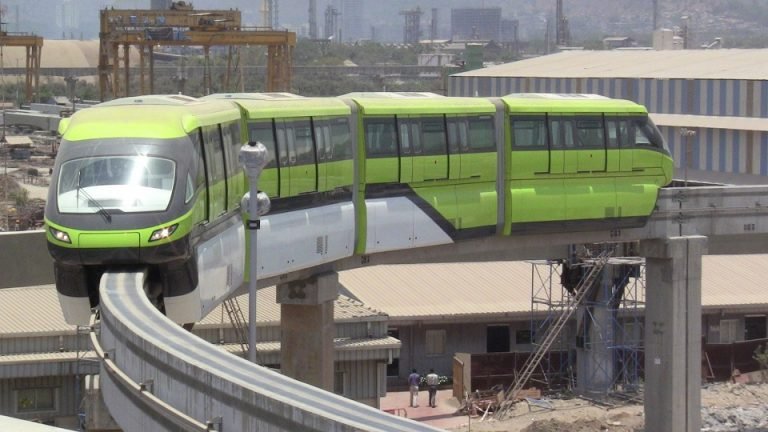
IL&FS Rail quotes lowest rate for contract of operation & maintenance of Mumbai Monorail

Mumbai: The Gurgaon RapidRail operator IL&FS Rail Limited is leading in the race to win the contract for operations and maintenance Mumbai Monorail. The company has quoted lowest rate for the bid invited by Mumbai Metropolitan Region Development Authority (MMRDA).

The earlier contract awarded to L&T and Scomi Engineering was expired in 2013 and the MMRDA has been seeking for a suitable replacement of operator since then. MMRDA is likely to start services on the entire Wadala-Jacob Circle corridor in a month.

After beginning of operation of entire stretch around 2 lakh commuters a day are expected to ride on monorail. The 8.8-km phase-I between Wadala and Chembur used to have a daily ridership of 15,000, till it was suspended, following a fire.

“IL&FS quoted Rs 2,000 crore while Reliance Infrastructure has bid Rs 6,408 crore for a 10-year contract”, MMRDA commissioner UPS Madan said.

According to sources the MMRDA had estimated the operations’ cost to be around Rs 1,000 crore.

“We will study the bids and take a final call. We may even negotiate with bidders to reduce the cost. A final decision will be taken by MMRDA’s executive committee”, said an official of MMRDA.

Amaravati Metro | Amaravati metro mulls PPP route for project

Vijayawada: The Amaravati metro is ready to be shot by its arm with international agencies that come to support the project.
Amaravati Metro Rail Corporation (AMRC) is exploring the Public Private Partnership (PPP) model to execute the project, something that became inevitable since the government of the Union in its Metro Rail Policy 2017 turned the PPP into a mandatory component to take advantage of the Financial assistance from the Center
AMRC was initially proposed as a medium-sized metro project in 2015 with the support of Delhi Metro Rail Corporation (DMRC). However, the project had to be carried out by the Union for financing, for which a new detailed project report (DPR) had to be made.
KFW Germany came forward to finance the DPR for the project. The government then signed a pact with SYSTRA to prepare the DPR. AMRC had intensified the work of DPR and is now looking for investors for the project in PPP mode.
“Soon we will invite tenders for the Metro Rail of Visakhapatnam in PPP mode and we will continue with Amaravati Metro, KFW has already agreed to finance the government to build a metro railway in Amaravati and the project will be less expensive. “said NP Ramakrishna Reddy, who sits on the board of Amaravati Metro Rail Corporation.
The revised metro policy has become a major obstacle for smaller cities in the pursuit of metropolitan railroad dreams and the PPP mode will be useful for you to seek central funds, added Ramakrishna Reddy.
“Extended subway corridors will pass through the Gannavaram airport and we can not approach the subway rail project there for the AAI guidelines, we are in proposals to build a 2 to 5 km underground line there,” Reddy said.


Project Profile

Route Details

DescriptionCorridor-1Corridor-2Total
From-ToPandit Nehru Bus Terminal to PenamaluruPandit Nehru Bus Terminal to Nidamanuru
Route Length
(in km)
Elevated12.7613.2726.03
Total12.7613.2726.03
StationsElevated121325
Total121325*
Includes one interchange station.

Route Map:
route map large


Corridor DetailsStations
Corridor-1 from Pandit Nehru Bus Stand to PenamaluruPandit Nehru Bus Stand
Victoria Jubliee Museum
Indira Gandhi Municipal Stadium
Tikkle Road
Benz Circle
Auto Nagar Gate
Ashok Nagar Center
Krishna Nagar- Kanuru
Kanuru Center
Tadigadapa
Poranki
Penamaluru
Corridor-2 from Pandit Nehru Bus Stand to NidamanuruPandit Nehru Bus Stand
Railway Station South
Railway Station East
Besant Road
Seetaramapuram Signal
Machavaram Down
Padavalarevu
Gunadala
Ramavarappadu Ring
Prasadampadu
MBT Center
Enikepadu
Nidamanuru

The technical specifications of Vijayawada Metro Rail:

Project FeaturesDetails
Track GaugeStandard Guage -1435 mm
Traction Power SupplyVoltage750 V DC (Third Rail)
SignalingCab signaling and continuous automatic train
control with Automatic Train Protection
(CBTC System)
TelecommunicationIntegrated System with Fibre Optic cable, SCADA, Train Radio, PA System etc.
Track TypeBallastless/ Ballasted Track in Depot
Fare CollectionAutomatic Fare collection system with POM
and Smart card etc.
Rolling Stock2.9 m wide coach with stainless steel body
Axle Load16 MT
SpeedMax Operating Speed80 Kmph
Scheduled Speed33 Kmph
Train crush capacity (3 Coach Train)764 passengers

Delhi metro | Remaining part of Magenta line to be operational soon

New Delhi: Chirag Dilli is set to become a major exchange center for Delhi metro travelers in South Delhi, as the long-awaited remaining 25.6 km section between Kalkaji Mandir and Janakpuri West is expected to open in mid-April. Near the busy intersection of Chirag Dilli is a Metro station that will serve areas such as Panchsheel Enclave, Masjid Moth, Sheikh Sarai, Villa Chirag Dilli, DDA Colony, Krishi Vihar, etc. In fact, the Chirag Delhi metro station is going to be an exchange station for Lajpat Nagar’s proposal for the Saket G-Block corridor of Phase IV of the Delhi Metro. Meanwhile, the proposed corridor would connect the Magenta line to the next pink line (Majlis Park-Shiv Vihar). Officials at the Delhi Metro Rail Corporation said that although the Delhi metro stations are generally located a kilometer away, the Chirag Delhi station is only 500 meters away from the next Greater Kailash Metro station. “The distance between the stations is unusually short, a station in Chirag Dilli was required considering the huge catchment area in its vicinity and for the many residential areas it would also provide connectivity,” the official added.

In addition, it has been considered that the number of passengers at the Chirag Delhi metro station would be around 20,000 per day and four lapses per day when the entire Magenta line becomes functional, an official said.

He added that six coaches of a train without a driver will run in the corridor of 38.22 km. “In addition to the residential areas, the station is also close to the forest of the city of JahanpanahAt present, the large green area is visited only by the locals, but when the Metro station is opened, it will be accessible to people of all the city, “said the official. additional. DMRC said it has also improved the road infrastructure and the geometry of the Chirag Dilli intersection. “The geometry of the road has been modified for better circulation of traffic, we have created islands of traffic at the intersection, as well as two new access roads,” said a DMRC official.

There would be a total of five entry and exit points to the station. While two entry and exit points are on the side of Chirag Dilli, each is on Panchsheel Enclave, Masjid Moth and the forest side of the city of Jahanpanah. “The station would be connected through the metro from these points of entry and exit and can also be used by those who want to cross the street as they fall in the unpaid area,” said the official. The longest of these meters is the one that connects the station with Masjid Moth, which is 120 meters long. “The construction of these meters was a big engineering challenge due to a large amount of services that had to be changed.” Another important challenge was the base of the Chirag Dilli overpass, which we had to avoid, “the spokesperson said. “We had to find gaps between the foundations of the pillars of the overpass, which required extensive coordination with the civic agencies,” he added. While most of the underground stations on this stretch of the Magenta line are at a depth of 18 meters, the Chirag Delhi Metro station is 21 meters below ground level. “We had to reduce the alignment since there was a drain right next to the station,” the official said.

BMRCL Recruitment 2018: 7 Manager/Assistant Manager Posts, Apply Before 10th April

Recruitment of BMRCL 2018 to fill 7 vacancies for the positions of Manager and Assistant Manager has started on the official website of Bangalore Metro Rail Corporation Limited (BMRCL) -english.bmrc.co.in.

BMRCL aims to recruit the right candidates for its Operations and IT departments. Interested and eligible candidates must submit their applications in the prescribed format on April 10, 2018 or sooner.

How to apply for BMRCL Recruitment 2018 for Manager/Assistant Manager?

Step 1 – Visit the official website – http://english.bmrc.co.in

Step 2: Download the application form

Step 3: Complete the application form and get a hard copy of it.

Step 4: Send the application form with the required documents, such as letters of qualification and experience, to the General Manager (HR), Bangalore Metro Rail Corporation Limited, III Floor, BMTC Complex, K.

H.Road, Shanthinagar, Bangalore 560027

BMRCL Recruitment 2018 – Details of the vacancy:

Manager (Operations / OCC) – 3

Manager (IT) – 2

Asst. Manager (IT) – 2

Eligibility criteria:

Manager (Operations / OCC) – The applicant must hold a degree in any discipline or Diploma of Engineering.

Manager (IT): the applicant must possess B.E. in Computer Science / Electronics and Telecommunications / Information Sciences / MCA.

Asst. Manager (IT): the applicant must possess B.E. in Information Technology / Electronics and Telecommunications / Information Sciences / MCA

For more information, applicants should read the official announcement to determine their eligibility as indicated below:

http://english.bmrc.co.in/FileUploads/d0f48a_CareerFiles.pdf

Kolkata Metro | Two towers to be sliced for Garia-Airport Metro link

New Town: Two residential towers in Mahisbathan of the New Town that stand in the way of the new Garia-Airport Metro link will have a small part, rail officials said Tuesday.

Officials at Rail Vikas Nigam Ltd, the 32km project implementation agency, said they would soon hire a consultant and an architecture firm to suggest how to cut a 3.2m-wide section of two Ramdhanu Apartment towers from the front.

The third tower in the urbanization will remain intact.

“The Ramdhanu complex is located between two proposed pillars of the viaduct in which the new Garia Airport link roads will be laid in. Unlike four other buildings in the vicinity, the residential towers do not need to be completely demolished. front of the two towers will infringe the viaduct, “said a railway official.

“A survey has indicated a 1.2 m violation, a safety clearance of 2 m must be taken into account, which means that a total of 3.2 m must be cut.”

This is the first engineering challenge facing any Metro project in Calcutta. “There are instances of cut buildings for infrastructure projects in other cities, but this has never happened in Calcutta … It’s a high-precision job, so we’re hiring consultants to find out how to do it.” said the officer.

Although only part of the two towers will be razed, all residents will have to be evacuated during the demolition.

“Once the railway authorities finalize their plan and inform us of their schedule, we will talk to the residents of the buildings about evacuation and compensation,” said Sabyasachi Dutta, the mayor of Bidhannagar Municipal Corporation.

Garia-Airport Metro link

The two towers, both six stories high, of the Ramdhanu complex are the only residential buildings that stand in the way of the new Garia-Airport subway project.

Of the other four buildings, one housed a government primary school and was evacuated a year ago.

One of the other buildings housed a hotel and another a chain of commercial establishments. The demolition of all these buildings is underway.

Also on the list is another hotel, in connection with which the West Bengal Land Reform and Leasing Court ordered the status quo to be maintained until June 6.

Mayor Dutta said that the owners of the three private buildings, which partially or totally occupy the government plots, will receive the structural cost as compensation.

No compensation for the land will be paid because the buildings arose after the railroads acquired the plots.

Officials from the North 24-Parganas district administration said the Ramdhanu complex was built before the land acquisition notice was issued. “Then, the compensation will have to be calculated after talking to the residents,” said one official.

The first three floors of the two towers have commercial establishments, while the first three are occupied by 36 families, residents said.

Mukul Khan, a resident of the compound, said Ramdhanu was on a list accompanying a demolition notice sent by the district magistrate of North 24-Parganas three months ago. The last notice, issued on March 21, does not mention the complex.

The residents had moved the high court after the first notice, but the reason has not yet been heard.

“No one from the civic body has visited us to tell us what to do,” Khan said.

Chennai metro | Central-Nehru Park metro rail service to kickstart this month

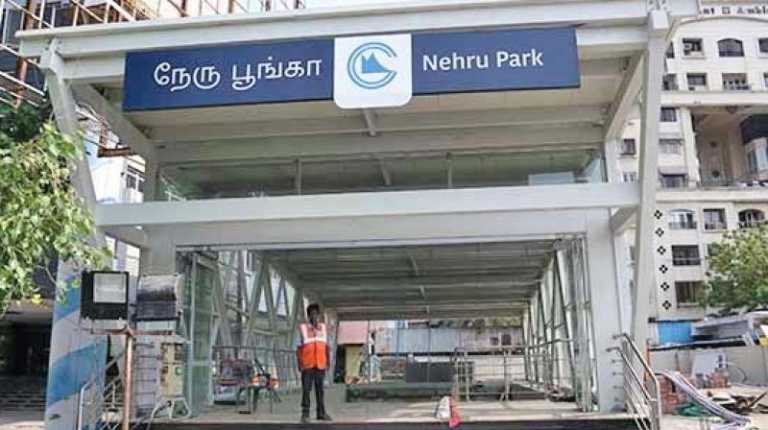
Chennai: Operations between Chennai Central and Nehru Park will begin this month, confirmed the railway officials of the Chennai Metro. While the construction of the Egmore station is in the final stage, Central Square is partially completed (enough to start operations in the underground section).

The Chennai metro, which currently witnesses patronage of 34,000 passengers daily, expects it to increase to one lakh once operations start from central Chennai. During peak hours, the frequency of trains between Central and the airport would be five minutes, a senior official said.
This would provide a great respite to Egmore travelers as trains from various parts of Tamil Nadu leave the station and also the Egmore bus terminal facilitates interstate commutation. The Egmore suburban train station attracts almost one lakh daily commuters.

“During peak hours, it’s a nightmare to travel on suburban trains with choking passengers,” Metro said, although more expensive, “would ensure a smooth trip, hopefully,” said P. Chaithanya, a regular Egmore traveler.

The Egmore metro station is spread over an area of 8,000 square meters with four entry/exit points: one each of the southern railway headquarters and the Poonamallee high road and two near the Egmore suburban train station.

It is a distance traveled between the suburban train station and the Metro, which makes it easier for passengers arriving from other states at the railway station to board the metro.

“The work is almost complete, we just have to finish the work on the escalators in the back door and the electrical works, the test runs in the underground section will continue until then,” said one official.

In addition, near the exit on the main road of Poonamalle, talks are underway to start a bus bay that facilitates intermodal transport.

The section Nehru Park to Chennai Central covers 2.7 km and covers three stations: Nehru Park, Chennai Egmore and Central Chennai. The extension of this section will open a direct link between the Chennai and Central airports.

Maharashtra Metro : Maharashtra Metro to start work on underground stretch by June

PUNE: Work in the underground section of the Pune Metro railroad is expected to begin in June. The Maharashtra Metro Rail Corporation (Maha Metro) will issue tenders in this regard in a week.
The underground section is 5 km long and is located below the Pimpri-Swargate metro corridor. At Rs500 crore per kilometer, the underground work is expected to cost 2,500 rupees.
“Once the bids are issued, bidders are allowed a period of 45 days to participate, followed by the process of opening tenders and issuing work orders and after that, field work begins,” said MahaMetro’s boss, Brijesh Dixit.
Dixit added that the bidding process will be open for both Indian and foreign companies. “There will be a good amount of competition since several companies have the necessary tunnel technology for the underground subway,” he said.
The total length of the Pimpri-Swargate corridor is 16.5km, of which the last 5km will be underground. In this section, nine of the 15 stations will be elevated and the rest underground.
According to the Maha Metro plan, most of the area where the underground work will be carried out is built or passed below the main roads. Therefore, vertical axes will be inserted into the college of agriculture and Swargate, and the tunnel boring machines (TBM) will be lowered through the axles to excavate an important part of the route.
Authorities said there are smaller sections in the underground part of the alignment where a “cut and cover” method is being considered.
“To begin with, work will be carried out in the wells,” said a senior MahaMetro official. “These axes, one in Swargate and the other in the university of agriculture, will be used to lower the TBM, Tunnel excavators will start operating in five or six months,” the official added.
The tunnel boring machines will excavate the tunnel at the sites where the Metro stations for Civil Court, Pune Municipal Corporation, Budhwar Peth and Mandai will be installed, while the cutting and coverage method will be used at the Shivajinagar and Swargate stations.

Stripped to the bone, the structure of the metro station is a concrete box about 20 m wide, 14.6 m high and 225 m long, with an intermediate slab. The sides of the box are made of reinforced cement 1.2m thick.

When asked about possible damages to public services, officials said that the guidelines in the detailed project report (DPR) will be followed to the letter. “All public services that fall within the excavation area must be diverted in advance to avoid damage during construction, but cross-profits must be supported,” said DPR.
A suggestion made by the consultants for the project indicates that the pressure water ducts crossing the proposed cutting zone must be provided with valves on both sides of the cut. This will serve to isolate the cutting and flooding area in case of damage to the pipeline while the work is being carried out.

Delhi Metro | DMRC to bring over 900 electric feeder buses

New Delhi: With a focus on the goal of last mile connectivity to nearby locations, Delhi Metro Rail Corporation will bring more than 900 electric feeder buses to the road. Commissioned by the government of Delhi, which completed 905 of those buses for the convenience of passenger lakhs using the Metro, the proposal was discussed during this year’s budget.

The new buses will circulate five kilometers from different metro stations, at a frequency of five minutes. Of the other outstanding features, these buses will not have any conductor and travelers will be able to take advantage of the services by using their Metro smart card. The DMRC has sent a proposal to the government of Delhi in this regard, proposing two types of buses in order to have seats that vary between 7 and 20.

The buses will operate on the cluster scheme lines as part of a separate subsidiary company that will be formed by the railway entity. This means that the government will compensate for any losses incurred by the DMRC in providing this service. According to senior officials at DMRC, they have already analyzed about 50 routes to operate these electric feeder buses. The civil employee shared that, although they have presented/displayed a proposal of buses to GNC and electrical, this last one has found the favor of the government, since it has made provisions for them in its last budget, that has to the green Delhi as its main pillar.

The DMRC has a fleet of more than 300 feeder buses that operate around 40 routes throughout Delhi. They work from 8 a.m. in the morning until 10 p.m. at night, which facilitates the mobility of travelers. With the introduction of a new fleet this year, the Metro authorities expect to add more than 500. Next, the number of routes in which these buses will be mobilized will increase.