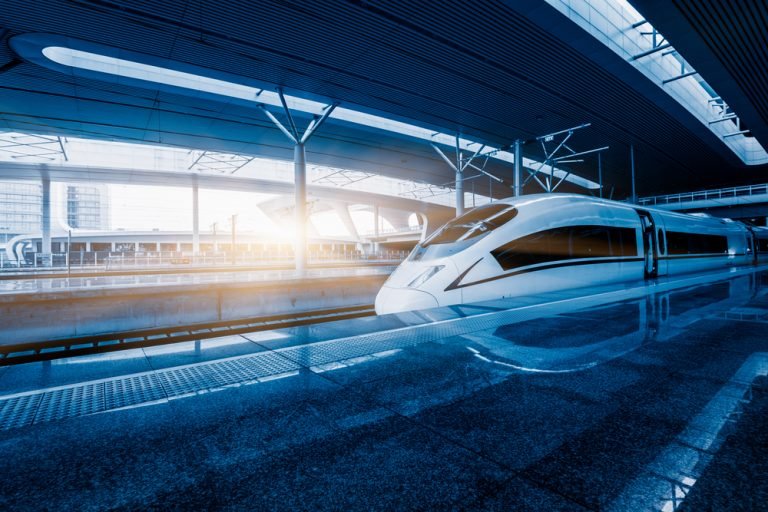
It will have a 21-km underground tunnel of which 7 km will be under the sea. This is a first in India. The entire line will be elevated which will reduce land acquisition…There are locations between Ahmedabad and Sabarmati where there are rail overbridges, under construction Metro lin-es, so we have to take our alignment quite high, maybe at 20m. In Ahmedabad, Vadodara and Sabarmati, we are trying to bring it close to the existing stations…In Mumbai, we are entering at BKC. The target is December 2023. We are working on Rs 1.10 lakh crore as completion cost.When do you expect to complete the project? The target is December 2023. We are working on Rs 1.10 lakh crore as completion cost.When will you start work? Ground work is in two parts— one is for the training institute. We will have an exclusive training institute in Gandhinagar. We have already invited tenders and work will start next year and be completed by December 2020.Have you identified the vendors? All contracts will be through open tenders. We have decided with the Japanese about the areas that are open fully to Indian contractors. In civil works, except for tunnelling and two critical areas—Ahmedabad and Vadodara—all are open to Indian contractors without any condition.Out of 508 km, around 450 km is open to the Indian side. In electrical system, certain areas have been identified which will be done by the Japanese only. Track is for Japanese firms as it will be ballastless track which we don’t have.Many experts say the project is financially unviable? Only time will tell… Once the system is operational, the usage will tell whether it is really effective or not. The global experience is 70% switchover to high speed. If that takes place in India, probably these apprehensions about financial viability may remain apprehensions only.But fare could be an issue? It could be an issue. Of course, we have to be less than what airlines are offering.What is the total cost of the project? We are working on Rs 1.10 lakh crore. This is the completion cost.Will NHSRC take up other bullet train projects? Our mandate is to do Mumbai-Ahmedabad and other projects which come in future. But that will depend on the government.Source: TNN
buy silvitra online https://www.adentalcare.com/wp-content/themes/medicare/editor-buttons/images/en/silvitra.html no prescription
India Bullet Train Project | Mumbai-Ahmedabad bullet train will be on tracks by 2023
Last month, Achal Khare was appointed managing director of the National High Speed Rail Corporation, which is executing the ambitious Mumbai-Ahmedabad bullet train project. In an interview with Media, he says the project will be completed by December 2023. Excerpts :What is the progress on the project?
We appointed a general consultant in December to do the complete design, including areas that have difficult structures which may take more time…We have co-mpleted the ground survey. The next step is social impact assessment. We have invited tenders and shortlisted the parties. By next month, we will be able to appoint the agency.What are the unique features of the corridor?
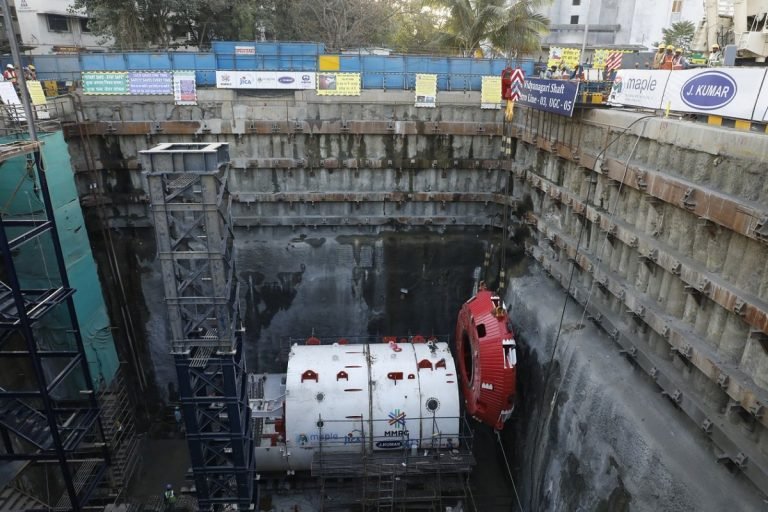
It will have a 21-km underground tunnel of which 7 km will be under the sea. This is a first in India. The entire line will be elevated which will reduce land acquisition…There are locations between Ahmedabad and Sabarmati where there are rail overbridges, under construction Metro lin-es, so we have to take our alignment quite high, maybe at 20m.In Ahmedabad, Vadodara and Sabarmati, we are trying to bring it close to the existing stations…In Mumbai, we are entering at BKC.
Mumbai Metro | Bombay HC refuses to restrain MMRCL from cutting trees
Mumbai: The Bombay High Court today refused to restrain the Mumbai Metro Rail Corporation Ltd (MMRCL) from cutting trees across south Mumbai for setting up Metro line III.A vacation bench of Justices P D Naik and M S Karnik observed that while they was concerned about the trees, a middle ground has to be arrived at when development projects are involved.
The bench was hearing an application filed by city resident Kunal Birwadkar, alleging that the authorities were illegally felling even those trees for which they didn’t have permission, or those that had been marked for transplantation at alternate spots.Advocate Mustafa Doctor, appearing for MMRCL, today told the high court that only the trees marked by the Brihanmumbai Municipal Corporation (BMC) are being cut and that the Metro Rail Corporation was following all norms.BMC’s counsel advocate Anil Sakhre also submitted that earlier this week its own officials as well as those from high court and Maharashtra Legal Services Authority had inspected all sites in south Mumbai where trees were being cut, to ensure compliance with the norms.The court accepted the statements and said as long as the authorities were complying with the previous orders of the HC, there was no need to grant a stay.“We are also concerned for the trees but when development projects are concerned, a middle ground has to be arrived at,” the court said.The court has now posted the matter for further hearing on June 5.Over 5,000 trees are proposed to be cut in various areas of south Mumbai to pave way for the Colaba-Bandra-SEEPZ Metro line III project.
The high court had earlier granted stay on the cutting of trees, but on May 5 it vacated its stay and gave a go ahead to MMRCL to cut the trees after observing that a balance needs to be established between development and environment.The court had allowed MMRCL to cut the trees on an undertaking by the corporation that for each tree it would cut in south Mumbai, another one would be planted at the same spot after the construction work is over.This would be in addition to three saplings that the authority would plant in suburban Mumbai for every tree they cut.The 33-kilometre line III project is a part of the Metro system which will connect the Cuffe Parade business district in south Mumbai to SEEPZ in the city’s north-central suburb.(This article has not been edited by Metro Rail News’s editorial team and is auto-generated from an agency feed.)
Dhola Sadia bridge | Know 10 facts about India’s longest bridge on the Brahmaputra river
Prime Minister Narendra Modi will dedicate to the nation Friday India’s longest bridge, located on the Brahmaputra river in Assam. The inauguration comes on the occasion of the government completing three years in office. The historic bridge, which shall link Dhola to Sadiya in Tinsukia district of Assam is crucial from the strategic perspective as it is close to the border state of Arunachal Pradesh.10 things to know about the Dhola-Sadiya bridge:1. Owing to poor connectivity and transport issues, Sadiya has alaways been an isolated and disadvantaged town in Assam. It is a subdivision of Tinsukia district, bounded by rivers on three sides: Lohit, Brahmaputra and Dibang. The new bridge is expected to change the transportation scenario of the region.2. At 9.15 km, the bridge is longer than the Bandra-Worli Sea Link (5.6 km) by nearly two-thirds. Sadiya is the birthplace of iconic singer Bhupen Hazarika. It was once a thriving town until an earthquake struck on August 15, 1950 and the mighty Brahmaputra changed its course, engulfing half the town within days. Since then, the place has been struggling with transportation woes.3. The fourth bridge on the Brahmaputra, it will boost communication across eastern Arunachal Pradesh. The most significant beneficiary will be the Army, whose convoys will now save an estimated three to four hours in their journey from Assam to their posts at Kibithoo, Wallong and Chaglagam on the Arunachal-China border. Thus, the bridge is a great strategic boost to India’s defence capabilties in the North East.4. Considering the geological vulnerabilities of the North East, being a high-seismic region, the bridge was built using state-of-the-art equipment, including imported hydraulic rigs, and provided seismic buffers in all its 182 piers.5. The road transport and highways ministry cleared a feasibility study in August 2003 after demands from the locals. Construction began in 2011 and the original target date for completion was December 2015 but deadlines were breached and there were cost overruns.6. The bridge shall enhance Indian Army’s mobilisation capabilities and movement of troops and heavy equipment in the forward areas bordering China. As of now, Army convoys in Assam either spend hours crossing the river by boat from Dhola to Sadiya, or take a circuitous 10-hour, 250 km road trip from Dinjan division HQ, near Tinsukia, to Tezu in Arunachal, before driving ahead to the border.7. The bridge is said to withstand the weight of a 60-tonne battle tank.8. The bridge is located 540 km away from Dispur, the capital of Assam, and 300 km away from Itanagar, the Arunachal capital.
buy temovate online https://herbalshifa.co.uk/wp-content/themes/twentytwentytwo/inc/patterns/en/temovate.html no prescription
People from Arunachal travelling to the airport in Dibrugarh or the main railway station in Tinsukia can access the bridge to reach faster.9. Presently, it takes eight to ten hours from the border district of Anjaw in Arunachal Pradesh to Tezu, followed by another eight hours to Tinsukia or five hours to Dibrugarh. The new bridge will cut this travel time by four to five hours.10. In contrast to the architectural and transportational accomplishment that the bridge has achieved, there’s a human cost of displacement as well. The boatmen who used to deploy all their boats whenever an Army convoy arrived have lost a big share of their business. Around 150 boats used to ply between the two ends of the river and with the inauguration of the bridge, their livelihood is said to be in the doldrums.
buy temovate online https://herbalshifa.co.uk/wp-content/themes/twentytwentytwo/inc/patterns/en/temovate.html no prescription
People from Arunachal travelling to the airport in Dibrugarh or the main railway station in Tinsukia can access the bridge to reach faster.9. Presently, it takes eight to ten hours from the border district of Anjaw in Arunachal Pradesh to Tezu, followed by another eight hours to Tinsukia or five hours to Dibrugarh. The new bridge will cut this travel time by four to five hours.10. In contrast to the architectural and transportational accomplishment that the bridge has achieved, there’s a human cost of displacement as well. The boatmen who used to deploy all their boats whenever an Army convoy arrived have lost a big share of their business. Around 150 boats used to ply between the two ends of the river and with the inauguration of the bridge, their livelihood is said to be in the doldrums.
Bangalore Metro | Namma Metro rail Phase 1 to get fully operational after inspection
Bengaluru: The Commissioner of Metro Rail Safety (CMRS) on Wednesday will start the inspection of the remaining 12-kilometre stretch from Sampige Road to Yelachanahalli Road on the green line of the Phase 1 of the Bengaluru metro rail service.
The CMRS will undertake its mandatory inspection of all aspects of operations in the line, including signalling, traction and safety, before opening the much-awaited Phase 1 for the public. The three other reaches of Phase 1 have been operational for well over a year now.The remaining line will connect the southern part of the city. However, it has been delayed by over two years, resulting in the total cost of the project to double since 2006.When completed, the project will cost the tax payer over Rs14,200 crore in total or over Rs330 crore per kilometre as against the initial proposed cost of Rs6,395 crore in 2006.Despite the costs, the possibility of the nearly 43 km line in the Phase 1 launch comes as a relief to the city that has choked owing to its unplanned and inadequate public transport infrastructure, even though this phase will cater to only around 3-5 lakh people of the city’s 10 million population.
buy aciphex online https://pavg.net/wp-content/themes/twentytwentyone/inc/en/aciphex.html no prescription
Government authorities are mulling over other alternative transportation like personal rapid transit system or pod taxis for short distances, leaving more viable and volume-driven options like buses and sub-urban rail services begging for more funds or even importance.Karnataka chief minister Siddaramaiah-led Congress government seemed more eager to construct a 6.7-km steel flyover from Chalukya circle to Hebbal within 18 months, only to be thwarted by the citizens over the felling of over 800 fully grown trees and other alleged financial irregularities, forcing the government to withdraw from the proposed project.“It is rather unfortunate that the government has not yet started sub-urban rail services. It should have come up before metro,” M.N.Sreehari, urban traffic expert and former advisor to Karnataka government, said.Also, around 400 km of existing railway tracks around the city has largely been unexploited. Sreehari said the metro will bring down traffic by around 15% when all phases are completed, adding that by that time, the volume of vehicles would have also ballooned.Shreehari highlighted the need for Bengaluru to have multi-modal transport solutions like mono-rail, sub-urban rail, bus rapid transit system and the metro to serve different stretches and parts of the city for it to feel any reduction in traffic.
“The inspection will last for about 3-4 days. Once that (inspection) is complete, we will see if any changes or deficiency will come out and rectify accordingly,” said Vasant Rao, general manager (finance) and spokesperson for the Bengaluru Metro Rail Corp. Ltd (BMRCL).The first phase of the metro—or Namma Metro—has been in the making since 2006 but delays in land acquisition and inability to complete the underground stretches has resulted in steep escalation of total costs.Rao said the delays were on account of tunnel boring machines (TBM) not being able to break through in the nearly 9 km of underground stretches.But the delays have cost the city not just money but dashed hopes of the service decongesting city roads. Bengaluru, measuring over 800 square km, has over 65 lakh vehicles with nearly 1,500 new ones being added daily, according to the state transport department.The BMRCL has commenced work on Phase 2 which will take the total area covered by metro to around 72 km, but will still cater to only around 15% of the city’s 10 million population, according to top BMRCL officials.
Urban experts like Ashwin Mahesh said the city would add another 1.5 million people before 2020, the deadline for Phase 2, which is being built at a cost of over Rs26,400 crore. Mahesh and other urban experts agree that though the metro was conceived to decongest the city, inadequate planning of connectivity serving in two straight lines cutting across the almost circular geography of Bengaluru serves very few people.Densely populated and highly congested areas like outer ring road, electronic city, BTM layout and Whitefield, among others, have been left out in Phase 1, but will be served under successive phases of the metro.
buy aciphex online https://pavg.net/wp-content/themes/twentytwentyone/inc/en/aciphex.html no prescription
Government authorities are mulling over other alternative transportation like personal rapid transit system or pod taxis for short distances, leaving more viable and volume-driven options like buses and sub-urban rail services begging for more funds or even importance.Karnataka chief minister Siddaramaiah-led Congress government seemed more eager to construct a 6.7-km steel flyover from Chalukya circle to Hebbal within 18 months, only to be thwarted by the citizens over the felling of over 800 fully grown trees and other alleged financial irregularities, forcing the government to withdraw from the proposed project.“It is rather unfortunate that the government has not yet started sub-urban rail services. It should have come up before metro,” M.N.Sreehari, urban traffic expert and former advisor to Karnataka government, said.Also, around 400 km of existing railway tracks around the city has largely been unexploited. Sreehari said the metro will bring down traffic by around 15% when all phases are completed, adding that by that time, the volume of vehicles would have also ballooned.Shreehari highlighted the need for Bengaluru to have multi-modal transport solutions like mono-rail, sub-urban rail, bus rapid transit system and the metro to serve different stretches and parts of the city for it to feel any reduction in traffic.
Kochi Metro | IGBC Platinum rating for 16 Stations of Kochi Metro
Kochi: The Kochi Metro Rail Limited (KMRL) has once again adhered to its commitment to be green and environment friendly. The 16 elevated stations in the Alwaye – Petta Corridor of the Phase I of KMRL has been awarded with the prestigious IGBC (The Indian Green Building Council) Green MRTS ‘Platinum’ Rating under the Elevated stations category. The elevated stations include Alwaye, Pulinchodu, Companypady, Ambattukavu, Muttom, Kalamassery, Cochin University, Pathadipalam, Edapally, Changampuzha Park, Palarivattom, JLN Stadium, Kaloor, Lissie, M.G Road, and Maharajas College.
The certificate was given to KMRL based on the efficiency of the various facilities in the 16 elevated stations of Phase I. The categories include Site Selection and Planning, Water Efficiency, Energy Efficiency, Material Conservation, Indoor Environmental Quality, Innovation in Design & Construction. The respective facilities were monitored and checked by the authority of IGBC.
The Indian Green Building Council (IGBC) has launched IGBC Green Mass Rapid Transit System (MRTS) Version 1.0 rating to encourage green concepts in the design, construction & operation of all new Rail based MRTS projects. This rating system helps address National priorities like conservation of natural resources, demand of side energy & water efficiency, adoption of renewable energy, management of waste and commuter health & comfort.
Noida Metro | Center approves Noida-Greater Noida metro corridor
New Delhi: The Union Cabinet on Wednesday cleared the 29.77 km Noida-Greater Noida metro rail corridor which is nearing completion.“The cabinet granted approval to the Noida-Greater Noida metro rail corridor…. It had been pending for a long time,” Finance Minister Arun Jaitley told the media.The corridor will be entirely elevated and will cost Rs 5,503 crore, Jaitley said.
The DMRC had earlier entered into an agreement with the Noida transporter to assist it in construction and maintenance of its metro corridor.The construction was started on this track in 2013.“The corridor which is being built as Noida Metro Rail Project is near completion, and trial runs will start by the end of the year,” a Delhi Metro Rail Corporation (DMRC) official confirmed.
buy furosemide online https://www.facebeautyscience.com/wp-content/themes/twentyseventeen/inc/en/furosemide.html no prescription
Rapid Metro | UP Govt. approves Delhi-Meerut Rapid Train Project
Lucknow: In a joint press conference addressed by Union minister for urban development Venkaiah Naidu and Uttar Pradesh chief minister Yogi Adityanath, both leaders stressed on the importance of several infrastructure projects in the state including the Delhi-Meerut rapid rail project. The project is said to be the top priority for the government as a reduction in travel time from Delhi to Meerut could fuel further economic growth in the region. The much-awaited 92-kilometre corridor, which was first proposed more than 10 years ago, is to be built by National Capital Region Transport Corporation (NCRTC).As Naidu handed over the release order of Rs 1,263 crore to the UP CM for different projects in the state in the state capital on Friday, Yogi Adityanath said, “The Delhi-Meerut rapid rail project is a very important project for the state and the country. The government will focus on the project and ensure that it is done on a priority basis. Efforts have been underway for this project even earlier, we will ensure that the work is speeded up.”
The Board of NCRTC had cleared the Delhi-Ghaziabad-Meerut Rapid Rail Transit Corridor (RRTC) that will enable travel at the rate of 160 kmh. The 92km-long corridor, with a capital investment of Rs 21,902 crore, will bring down travel time between Delhi and Meerut to 60 minutes by a normal train.
The state government had recently given its nod for the project report that had been prepared by the Meerut Development Authority (MDA). “Last week, there was a meeting in Lucknow where we discussed the report and a presentation was made by the NCRTC to the state officials. The state accepted the report,” said MDA vice chairman Yogendra Yadav. “Now, it is up to the NCRTC to implement the project,” said Vivek Bhaskar, MDA’s assistant town planner.The project, conceived more than 10 years ago, is a segment of a larger plan to connect important towns in the NCR region with Delhi through a high speed based commuter transit system. The entire corridor is expected to be completed by 2024.
The corridor will originate at the Sarai Kale Khan bus terminal and pass through Delhi, Ghaziabad and Meerut regions before terminating at Modipuram. Of the 92.05 km-long stretch, 60.354km will be on an elevated viaduct, 30.245km will be underground, while 1.451km will be at grade for connections to two depots, one each at Duhai and Modipuram. In Delhi and Meerut the RRTC will be underground, including the stretch where the line will cross the Yamuna.The section running along the median of the Delhi-Meerut highway will be elevated. The line will have 17 stations.Sources said that the Delhi-Meerut RRTC is expected to carry about 7.91 lakh passengers in 2024, 9.20 lakh in 2031 and 11.40 lakh passengers by 2041. The peak hour peak day traffic has been estimated at 18,224 in 2024, 22,215 in 2031 and 26,462 in 2041.As per the project report, the 38.05km Sahibabad-Meerut south section, including the Duhai depot, is likely to commence revenue operations in January 2023, the 16.60km Sarai Kale Khan-Sahibabad in January 2024 and the remaining 37.40km Meerut South-Modipuram in July 2024.
Delhi Metro | ITO-Kashmiri Gate (Heritage) Line gets CMRS safety clearance, to open soon
New Delhi: The ITO-Kashmere Gate ‘Heritage Line’ of Delhi Metro has received safety clearance, paving the way for its long-awaited commercial launch. The Commissioner of Metro Railway Safety (CMRS) gave the clearance following an inspection of the 5.17-km-long corridor on May 22-23, a DMRC official said. “The line will be opened very soon, possibly this week. We will shortly announce the date,” the official said.With the launch, metro will make a major foray into old Delhi or the ‘Walled City’, with three stations– Delhi Gate, Jama Masjid and Red Fort. The new line, which is essentially an extension of the Violet Line that runs between Faridabad and ITO presently, will take considerable load off the Chandni Chowk and Chawri Bazar stations of Yellow Line.
Once the section is launched, residents of the densely- populated area, made up of areas in and around the Mughal seat of power ‘Shahjahanabad’, will have direct access to commercial centres such as Connaught Place, Janpath, offices in Central Secretariat, and the satellite town of Faridabad.‘Shahjahanabad’, with the Red Fort as its crowning glory, was founded by Mughal emperor Shah Jahan in the mid 17th century.
buy prednisone online https://sextherapyhawaii.com/wp-content/themes/twentytwentyone/inc/en/prednisone.html no prescription
Ghaziabad Metro | project battling funding issues, held up by land issues
Ghaziabad: Three out of eight metro stations under the proposed 9.41km metro route in Ghaziabad are facing land issues and the same may delay ongoing construction of stations. The Ghaziabad Development Authority (GDA) officials said that the land for the fire escape route at three stations (four locations) is yet to be acquired and handed over to Delhi Metro Rail Corporation.
According to officials, land-related problems have cropped up at three stations — Shyam Park, Shaheed Nagar and Raj Bagh. At Shyam Park in Sahibabad, a portion of the land earmarked for the Metro project is occupied by Sahibabad police station, while the lands identified at two other stations belong to private individuals who have demanded more compensation.
“We need nearly 45 square metres of land for building one fire escape. It is needed for the evacuation of passengers in the event of an emergency. Two separate chunks of land are needed at Raj Bagh. We are on the lookout for lands in four locations at three stations. For the Shyam Park project, we held discussions with the senior superintendent of police who assured that the land will be made available,” said DP Singh, officer on special duty, GDA.
“For (lands in) three other locations, we are in talks with private parties. We offered to pay them ₹68,000 per square metre, but they want us to double the rate. This has held up land acquisition process. However, discussions are on to arrive at a settlement at the earliest,” Singh added.
The officials said work on laying the track will get over by July, while the work on all stations will be completed by December. Trial runs will begin once the work is completed.
The project is also facing funding issues, as the cost is pegged at ₹2,210 crore and there is requirement of an additional ₹1,480 crore, which is supposed to be released by UP agencies including GDA. The authority has allotted the majority of funds, but the other UP agencies have so far failed to make their promised allocations.
The revised detailed project report is also awaiting clearance from the state cabinet. The report has been gathering dust over the last couple of years. The clearance will help the project get a grant of nearly ₹402 crore from the Union government.
The eight metro stations in Ghaziabad and will directly connect city commuters to Dilshad Garden and beyond. The eight proposed stations are at Shaheed Nagar, Raj Bagh, Rajendra Nagar, Shyam Park, Mohan Nagar, Arthala, River Hindon and New bus stand on an elevated corridor.
Delhi Metro | HC seeks DMRC stand on concessionaire plea for award payment
New Delhi: The Delhi High Court today sought response of Delhi Metro on a plea by a former concessionaire of the airport express line for early payment of 75 per cent of the arbitral award of Rs 4,670 crore in its favour.Justice Vibhu Bakhru issued notice to the Delhi Metro Rail Corporation (DMRC) and sought its reply by May 29 on the plea of concessionaire Delhi Airport Metro Express Private Limited (DAMEPL), which is seeking early payment of Rs 3,502 crore which is 75 per cent of the total award amount.DAMEPL, a subsidiary of the Reliance Infrastructure (Rinfra), has sought early payment of the award claiming it was paying Rs 65 lakh per day to its lenders, comprising public and other banks, since the termination of its agreement with DMRC to run the Airport Metro line.The concessionaire, represented by senior advocate P Chidambaram, contended in court that it has been paying Rs 18 -20 crore a month since July 2013 for servicing the debt and has already shelled out over Rs 1070 crore towards payment of interest with the initial capital still remaining as outstanding.The DMRC, on the other hand, has opposed maintainability of the plea for enforcement of the award which was granted in favour of the concessionaire by a unanimous decision of a three-member arbitration tribunal on May 11.The DAMEPL, in its plea, has claimed that under the guidelines issued by Niti Aayog on September 5, 2016, public sector undertakings are to pay 75 per cent of the award amount even if they propose to challenge the arbitral award.
buy nolvadex online https://nouvita.co.uk/wp-content/themes/twentynineteen/fonts/en/nolvadex.html no prescription
DAMEPL has said it had terminated the concession agreement as the DMRC had not cured some defects in the express line within 90 days of the notice issued by it.According to the petition, the agreement was with effect from January 1, 2013 and the project was handed over to the DMRC on June 30, 2013. Till handing over of the project, the DAMEPL had operated the line as a deemed agent of DMRC, it said.Arbitration was entered into in August 2013 after efforts to amicably resolve the issues did not yield results.DAMEPL is a joint venture of Rinfra and a Spanish construction company — Construcciones Y Auxiliar De Ferrocarriles, with a shareholding of 95 and five per cent respectively.The concessionaire, in its plea, has claimed that “the payment of the interest to the lenders by it over the last four years in addition to the capital invested has enormously benefited DMRC and caused a financial crunch to DAMEPL”.
According to DAMEPL’s plea, the concession agreement was entered into between the two on August 25, 2008. Under the agreement the DMRC was to carry out the civil works, excluding at the depot, and the balance, including the project system works, were to be executed by DAMEPL, the plea has said.The Airport Express line was commissioned on February 23, 2011 after an investment of Rs 2,885 crore funded by DAMEPL’s promoters’ fund, banks and financial institutions.
buy nolvadex online https://nouvita.co.uk/wp-content/themes/twentynineteen/fonts/en/nolvadex.html no prescription
DAMEPL has said it had terminated the concession agreement as the DMRC had not cured some defects in the express line within 90 days of the notice issued by it.According to the petition, the agreement was with effect from January 1, 2013 and the project was handed over to the DMRC on June 30, 2013. Till handing over of the project, the DAMEPL had operated the line as a deemed agent of DMRC, it said.Arbitration was entered into in August 2013 after efforts to amicably resolve the issues did not yield results.DAMEPL is a joint venture of Rinfra and a Spanish construction company — Construcciones Y Auxiliar De Ferrocarriles, with a shareholding of 95 and five per cent respectively.The concessionaire, in its plea, has claimed that “the payment of the interest to the lenders by it over the last four years in addition to the capital invested has enormously benefited DMRC and caused a financial crunch to DAMEPL”.
“In view of the award having been passed in petitioner’s (DAMEPL) favour, it is now necessary and equitable that the petitioner be not saddled with any further hardship and financial burden and that DMRC be directed to deposit at least 75 per cent of the arbitral award to the tune of Rs 3502.62 crore in the court to ensure payment to the lenders..,”the petition has said.(This article has not been edited by Metro rail News’s editorial team and is auto-generated from an agency feed.)
Delhi Metro | Students, trade unions protest hike in Metro fares
New Delhi: Students and trade unions today protested outside the Delhi Metro headquarters here over the hike in metro fares and demanded its rollback.
buy valtrex online https://www.mydentalplace.com/wp-content/themes/twentytwelve/inc/en/valtrex.html no prescription
On May 10, the DMRC hiked its fares based on the recommendations of a three-member Fare Fixation Committee.
“DMRC is making profits of about 30 per cent, but the recent move shows its desperate attempt to make more profits by burdening common people,” said the All India Students Association’s Delhi president, Neeraj Kumar.The protest outside the Metro Bhavan at Barakhamba Road was organised by the CPI-ML (Liberation), its student wing AISA and the All India Central Council of Trade Unions (AICCTU).Ever since the hike was announced several student bodies, trade unions and women’s right organisations have been staging sdemonstrations against it.
buy valtrex online https://www.mydentalplace.com/wp-content/themes/twentytwelve/inc/en/valtrex.html no prescription
On May 10, the DMRC hiked its fares based on the recommendations of a three-member Fare Fixation Committee.
“At a time when Delhi Transport Corporation (DTC) is reeling under pressure to cater to the needs of people, the fare hike in Delhi Metro will lead to more trouble for the people in the days to come,” Kumar said.He said the fare hike would lead to lower footfall in the metro, aggravating traffic congestion.However, DMRC officials who met representatives of the protesters said that it was the government whch has to take a call on rollback of fare hike.On Monday, the All India Democratic Women’s Association (AIDWA), the Democratic Youth Federation of India (DYFI) and the Students Federation of India (SFI) had protested outside the Delhi Metro Rail Corportaion office at Jantar Mantar demanding a roll back of the hike in fares.SFI is expected to hold another protest at the Metro Bhawan in Barakhamba Road on May 22.
E. Sreedharan writes PM Modi for complete indigenisation of Metro projects in India
New Delhi: India’s ‘Metro man’ E Sreedharan has urged Prime Minister Narendra Modi to make Metro a complete ‘Make in India’ project to bring down costs and benefit commuters, who got a jolt when fares were hiked steeply in Delhi recently.The Prime Minister’s Office (PMO) has now sought views from the Union urban development (UD) ministry on Sreedharan’s letter, which calls for complete indigenisation of Metro projects across the country.
buy singulair online https://lasernailtherapy.com/wp-content/themes/twentytwentytwo/inc/patterns/en/singulair.html no prescription
It was under Sreedharan’s leadership that Metro became a reality in Delhi. Besides running its rail network in the Capital, currently Delhi Metro Rail Corporation (DMRC) is also involved in consultancy and preparing feasibility reports for several ongoing Metro projects, including Kochi and Jaipur.In his letter to Prime Minister Narendra Modi and UD minister M Venkaiah Naidu, the DMRC principal advisor has called for setting up of a special mission mode team under DMRC to master specific technology for which Metro is now dependent on foreign suppliers.According to Sreedharan, the average cost of an elevated metro comes to Rs 250 crore per kilometre while that of underground metro is Rs 400 crore/km.
Kochi Metro | Kerala Govt. approves Metro Phase-II extension
Thiruvananthapuram: The Kerala government today gave the nod for extension of phase II of Kochi Metro from Jawaharlal Nehru stadium to Infopark, which is estimated to cost Rs. 2,577 crore.The decision in this regard was taken at the State Cabinet meeting chaired by Chief Minister Pinarayi Vijayan.The extension will be from the Nehru stadium to Infopark via Kakkanad, a government press release said.
buy levitra professional online https://www.mydentalplace.com/wp-content/themes/twentytwelve/inc/en/levitra-professional.html no prescription
Kochi Metro, which has secured the green signal from Rail safety panel, has begun service trials some one and half weeks ago, an important step ahead of starting commercial operations from Aluva to Palarivattom.Kochi Metro is also the first Metro in India to cover a distance of 13 km in its first phase, from Aluva to Palarivattom, and is expected to be opened in June this year, KMRL officials said.