Chennai Metro | CMRL bags SKOCH award for Smart Governance

Chennai: Chennai Metro Rail has been lauded for its effort to develop mass transit system which is at par with international standards. The Chennai Metro Rail has been awarded the SKOCH Order of Merit for the metro project it has developed in the city.

SKOCH – Smart Governance Award – is an initiative to distinguish top performing government organisation as well as those working with government agencies and following best practices and models of governance.

CMRL bags SKOCH Award for Good Governance
Chennai Metro Rail (CMRL) bags SKOCH Award for Good Governance (Photo: CMRL)

The Chennai Metro Rail Limited (CMRL) had presented before a board of experts the different facilities and features it has built in the 45km phase-1 project that is on the verge of conclusion.


During the presentation the officials of CMRL had showed various technologies it employed to operate the services. This also included the energy saving system as well as several green initiatives it has taken to turn metro as sustainable mode of transport.

Officials said the award was also to appreciate  CMRL’s ability to become accustomed to future challenges and its efforts in transforming urban infrastructure through execution of its ambitious 107.55km phase-2 project.

As per the press release by CMRL, “Chennai Metro Rail project is conferred with SKOCH Order of Merit Gold.

The Chennai Metro Rail has added another feather to its cap with SKOCH Group conferring the SKOCH Order of Merit recognizing the organization’s vision and governance for creating world-class passenger amenities as part of the Chennai’s Metro Railway Phase I network.

CMRL presented before the expert jury panel on the unique features, energy saving technologies adopted, green initiatives and speedy decision implemented through efficient governance in the Phase I of CMRL Project.

This SKOCH Order of Merit Gold recognizes CMRL initiatives and governance practices that have ability to adapt to future challenges and transform the urban infrastructure as part of upcoming Phase II.”

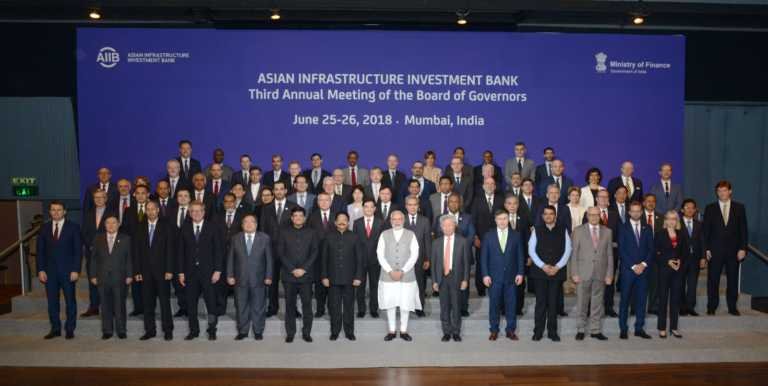
India hosts the Annual Summit of AIIB after China, South Korea

New Delhi: It is very auspicious achievement made by India  that it has secured 3rd rank after two developed countries viz. China and South Korea to host the series of the annual summit of Asia Infrastructure Investment Bank (AIIB). According to information received from AIIB press release, they have planned to invest a sum of total USD100 crore in the National Infrastructure Investment Fund (NIIF), a public-private initiative to finance infrastructure activities in India and investment of another USD100 million is under consideration. And the total investment of USD100 crore is already announced by the AIIB.

“I believe that India and AIIB are both strongly committed to making economic growth more inclusive and sustainable. In India, we are applying novel Public Private Partnership models, Infrastructure Debt Funds, and Infrastructure Investment Trusts to fund infrastructure”, said Prime Minister Narendra Modi

India became 3rd country to host the AIIB annual submit

Three years ago, India also decided to become 57 founding member countries of the AIIB. India’s equity stake in the bank is 8.7% (as against China’s 31%). Gradually, the list of country-members increased to 86. Now with Lebanon being included as a member last week after that 87 country has become members of AIIB.

The main reason behind the China and India to set up this bank was to create another lending body that would cater to the interests of Asian countries (though the bank does lend to non-Asian countries). In many ways, it has been leading itself along the lines of the World Bank in which the US has a 26% equity stake in the capital, but lending by the bank is quite independent for that country. However, AIIB has some uniqueness which is not found in any other International bank like World Bank and the International Monetary Fund where loans are advanced only to countries which are members of the IMF, while the AIIB is willing to lend to anyone – member or otherwise.

AIIB has given fund for six projects (mentioned below) aggregating USD 1.2 billion. But its requirement for funds is immense. India has also requested to the AIIB to help in financing several other projects. Most of them are for Andhra Pradesh:

  • Andhra Pradesh Rural Roads project
  • Andhra Pradesh Urban Water Supply & Septage Management Project
  • Amaravati Sustainable Capital City

Projects also include from another state

  • Mumbai Metro Line 4 Project
  • West Bengal Major Irrigation & Flood Management Project

On 24 June 2018, an approval has been given to enhance by another $100 million shortly. Recently its chief executive, Sujoy Bose, has also planned to launch a $2 billion long-term fund for financing various mega projects.

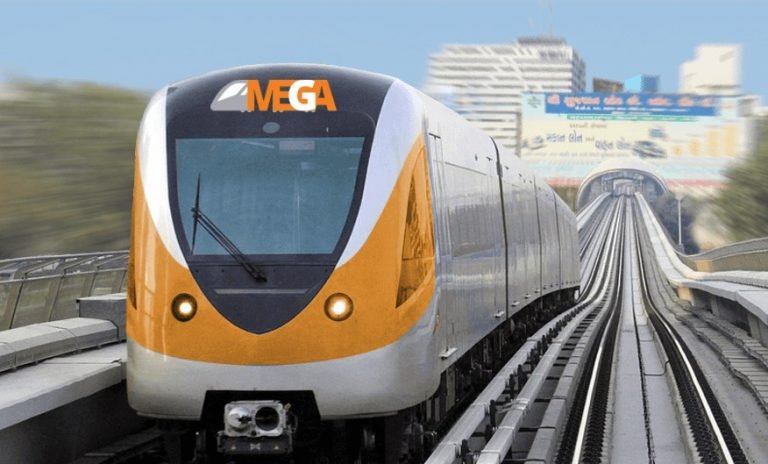
Ahmedabad Metro | MEGA Co. Ltd calls bids for E&M works for East-West corridor

Ahmedabad: The Metro Link Express for Gandhinagar and Ahmedabad (MEGA) Co. Limited (A Special Purpose Vehicle of Govt. of India & Govt. of Gujarat) has invited tender through International Competitive Bidding for Design, Manufacture, Supply, Installation, Testing and Commissioning of (A) Electrical and Mechanical (E&M) Including Hydraulics, Fire Safety Systems, UPS & DG Sets (B). Environmental Control System (ECS) and Building Management System – BMS (C). Tunnel Ventilation System (TVS) and TVS – SCADA Works, for Underground Stations, Intermediate Vent Shaft and Associated Tunnels of East – West Corridor of Ahmedabad Metro Rail Project Phase – I”

Important Point of Tender Notice No. MEGA/UG/E&M-01, dated: 18-04-2018

Tender Notice No. MEGA/UG/E&M-01: Design, Manufacture, Supply, Installation, Testing and Commissioning of (A).Electrical and Mechanical (E&M) Including Hydraulics, Fire Safety Systems, UPS & DG Sets (B). Environmental Control System (ECS) and Building Management System – BMS (C). Tunnel Ventilation System (TVS) and TVS – SCADA Works, for Underground Stations, Intermediate Vent Shaft and Associated Tunnels of East – West Corridor of Ahmedabad Metro Rail Project Phase – I.

Scope of work: Design, Manufacture, Supply, Installation, Testing and Commissioning of (A).Electrical and Mechanical (E&M) Including Hydraulics, Fire Safety Systems, UPS & DG Sets (B). Environmental Control System (ECS) and Building Management System – BMS (C). Tunnel Ventilation System (TVS) and TVS – SCADA Works, for Underground Stations, Intermediate Vent Shaft and Associated Tunnels of East – West Corridor of Ahmedabad Metro Rail Project Phase – I.

  • Estimated Cost of Project: INR 599.0 Crore
  • Last date for tender document submission: 18.07.2018 up to 15.00 hrs.
  • Tender Opening Date & Time: 18.07.2018 at 15:30:00 hrs.
  • Bidding process will be done in accordance with the applicable Guidelines for Procurement under Japanese ODA Loans, and is open to all Bidders from eligible source countries, as defined in the Loan Agreement.
  • The MEGA Company Limited, now invites sealed Bids from eligible Bidders for this tender /bid. International Competitive Bidding will be conducted in accordance with JICA’s “Single-Stage Three Envelope” Bidding Procedure, comprising of three envelopes, to be submitted simultaneously.
  • The tender document should be submitted in three separate envelops i,e First envelope, called “Initial Filter Cum Qualification Requirement Bid”, Second envelope, called “Technical Bid” and Third envelope, called “Price Bid”.
  • Interested eligible Bidders may obtain further information from the office of MEGA Co. Limited, Procurement Cell, Block No. 1, First Floor, Karmayogi Bhavan, Behind Nirman Bhavan, Sector 10/A, Gandhinagar, 382010.  Tel: +91-79-23248572 (Extn: 527), E-mail ID: snehal.shah@gujaratmetrorail.com
  • A complete set of the Bidding Documents may be purchased and inspected by interested Bidders on the submission of a written application to the address above and upon payment of a non-refundable fee of INR 50,000/ (Indian Rupees fifty thousand only) in the form of Demand Draft/Pay order/Banker’s Cheque drawn in favour of “Metro-Link Express for Gandhinagar and Ahmedabad (MEGA) Company Ltd.” payable at Gandhinagar (Gujarat) with effect from 24.04.2018.
  • Bid Security Amount: INR 59.00 Million.
  • The Japan International Cooperation Agency (JICA) is funding the loan for the above project being executed by the MEGA Co. Limited.

For more information connect with editor@metrorailnews.com

Indian envoys visit key construction sites of Mumbai Metro 3 and Lucknow Metro

Mumbai: A group of Indian Ambassadors and High Commissioners (Indian envoys) visited various key constrution sites of Lucknow Metro Rail Corporation (LMRC) and Mumbai Metro Rail Corporation (MMRC) on Wednesday and Thursday respectively.

In first visit they reached to Transport Nagar depot of Lucknow Metro Rail Corporation on Wednesday. MD LMRC, Kumar Keshav welcomed the all delegates and guided during their visit to depot sites.

“Today Lucknow Metro is a case study subject in various technical and non-technical institutions across the country and the world. It has set new benchmarks in Metro rail construction and operation in India and has ushered a revolution in bringing Mass Rapid Transit System (MRTS) in Uttar Pradesh”, said Kumar Keshav, MD/LMRC.

They also visited the Depot Control Centre (DCC), workshop-cum-inspection bay lines  and Operations Control Centre (OCC) of Lucknow Metro.

Today Lucknow Metro is a case study subject in various technical and non-technical institutions across the country and the world. It has set new benchmarks in Metro rail construction and operation in India and has ushered a revolution in bringing Mass Rapid Transit System (MRTS) in Uttar Pradesh, said Kumar Keshav, MD/LMRC.

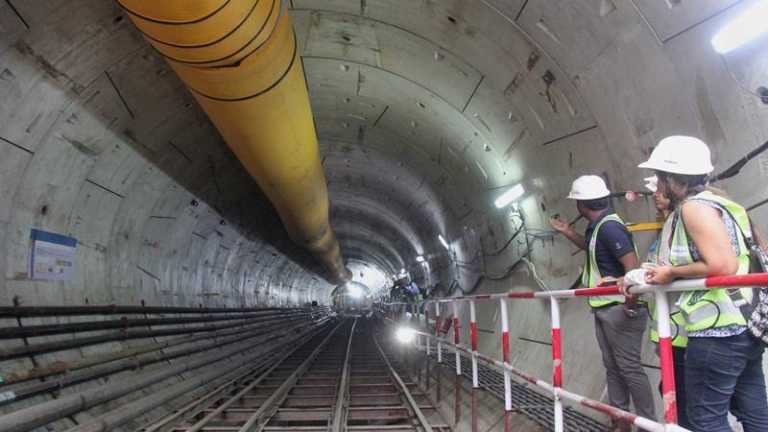
After visit to Lucknow Metro they visited the entire team of delegated visited ongoing construction site at Chhatrapati Shivaji Terminus of Mumbai Metro 3 on next day.  MMRC Managing Director Ashwini Bhide cooperated the team and briefed about the project during their visit.

“These envoys went to the Chhatrapati Shivaji Terminus Metro 3 station site at Azad Maidan for a first-hand experience of the world-class technology in use”, said Ashiwini Bhide.

These envoys went to the Chhatrapati Shivaji Terminus Metro 3 station site at Azad Maidan for a first-hand experience of the world-class technology in use.

The Colaba–Bandra-SEEPZ line, line 3 of the Mumbai Metro, is a part of the metro system of Mumbai. The 33.5-km long line is the first underground metro line in Mumbai. The metro line covers Cuffe Parade business area to SEEPZ in the north-central with 26 underground and one at  The metro line covers Cuffe Parade business area to SEEPZ in the north-central with 26 underground and one intersection where two or more transport axes cross at the same level. The cost of this corridor is estimated at ₹23,136 crore. This expected to reduce road congestion.

Envoys included India’s Ambassadors Ahmad Javed (Saudi Arabia), , Sangeeta Bahadur (Belarus), L. Prashant Pise (Tunisia), Atul M. Gotsurve (North Korea), Azar A.H. Khan (Turkmenistan), Ravi Bangar (Colombia) and Indian High Commissioners Ajay M. Gondane (Australia) and Vishvas Vidu Sapkal (Fiji).

“The MMRC briefed them on the project’s complexity and how it is being implemented, as part of the familiarisation visits of heads of Indian missions for the promotion of Indian states abroad,” she said.

This project was in controversies because the project will affect 5,012 trees, of which 1,331 will be cut and the remaining 3,681 will re-planted in other parts of the city. The Bombay High Court issued an interim order restricted the MMRDA from cutting trees for the project on 9 February 2017. As it may affect the nature.

The envoys showed interest in the project to know more about the project.

Kolkata Metro | Indian Rly gives ultimatum to West Bengal govt to remove lands

Kolkata: According to a communication issued by the Indian railways to West Bengal government needs to remove around 2,000 squatters of substantial land which was acquired for the Airport-Barasat metro of Kolkata Metro Rail Project to have any chance of completing it.

The administration had so far managed to remove close to 1,000 squatters from various Metro construction sites. But both the railways and the state government acknowledge that getting double the number of people to shift from just one stretch is a gargantuan challenge, said by a senior railway official of the state government.

Because of some technical hurdles on the construction of the 3.5 km stretch from the proposed airport metro hub till new Barrakpore the metro railway had already submitted an alternative plan to the railway board.

As now the rest of the route will be underground the encroachment would now be entailed and the expenditure will rise for about two and a half times. The estimated cost is Rs. 500-600 crore for each kilometer of underground tracks.

Earlier this entire route was being the elevated one till the airport authority of India cited technical restrictions, and they even forced the railways to make them alter their plan and make the tracks till new plan and make the tracks till new Barracpore underground.
Now, this stretch will have three stations- Birati, Michael Nagar, New Barrackpore.
A senior railway official said that “An army of 2,000 squatters between New Barrackpore and Barasat need to be shifted for the project to go ahead. Substantial land, both agricultural and residential, needs to be acquired as well. Construction can begin only after these impediments are removed”.

The railway minister Piyush Goyal was reported by metro earlier this month about the linking sanction of new projects to be ready for the availability of land in Bengal.
During a video conferencing from Delhi on June 11, Goyal said that “All projects will be taken up as and when we get the land for each project. The railways will focus on those projects and give enhanced capital to those for which land is available with the railways”.
The problems have been dogged from the starting on the Airport-Barasat project which was commissioned on January 2011.

By 2013, Larsen and Turbo won a contract of Rs. 280 crore to build a stretch of Rs. 2,397 crore project. The company on the railway-owned land between Madhyangram and Barasat wants to build overhead tracks and stations. But this work never started because 1,900 unauthorized structures were lined with stretch, which included 800 odd shops.

A senior state government official said that “Let the railways get sanction for the underground stretch first. We are ready to cooperate with them to complete the remaining portion till Barasat”.

Delhi Metro | Labour Commissioner calls conciliation proceedings to resolve ongoing dispute in DMRC

New Delhi: The dispute between Delhi Metro Rail Corporation (DMRC) and its Employees not yet resolved and the strike is continuing since last 10 days with an ultimatum to stop metro services on 30 June in entire Delhi and NCR. Despite resolving the long pending issue raised by Metro employees. The Delhi Metro Rail Corporation Management has approached the regional level commissioner to start conciliation proceedings on the issue.

In response to the communication made by DMRC and intimation ( 15 days advance notice) given by the Delhi Metro Rail Corporation Employees Union (DMRCEU), the Regional Labour Commissioner issued a notice to all parties i.e. the Managing Director of Delhi Metro Rail Corporation,  General Secretary of DMRC Employees Union and the Secretary of Staff Council and directed all the parties to join conciliation proceeding before the office of the Regional Labour Commissioner at 12.00 hours today. The meeting continues till 7 pm and no final outcome came out. The commissioner has directed to all the parties to resolve the dispute on tomorrow morning and come back by 2.30 pm and report the final conclusion at his office.

“In this connection, it is to inform DMRC management that the undersigned shall hold conciliation proceedings on 28.06.2018 in this office to resolve the dispute amicably. You are requested to make it convenient to attend the same in person or through duly authorized representatives with all relevant records/documents. This management is also requested to offer their comments on the representation of the union /council in five copies and also forward a copy of strike notice served by the union on or before the date of hearing. On 28 June Ministry of Labour to resolve an Industrial dispute between the management of Dmrc ltd. And DMRC staff council over notice of strike on 30.06.2018”, stated in the notice issued by Regional Labour Commissioner to all the parties.

IMG 20180628 WA0003

This step of Ministry of Labour was expected to give a new ray of hope to Delhi Metro  Employees, but after the conciliation proceedings result has disappointed employees. The Union/Council is requested not to resort to direct any action till the pendency of conciliation.

Background of dispute

  • In may 2015 a meeting was conducted between DMRC management and Staff Council to provide some pay hike to maintainer cadre employees as they were getting less salary since 1 January 2007 due to irregularities in pay fixation/pay revision by the DMRC. The DMRC accepted its mistake and issued their decision to upgrade the initial pay scale of maintainer from basic salary 8000 to 10170 and also agreed to merge two scales of its supervisory cadre. But no action was taken by the DMRC on its decision even after completion of two years.
  • Aggrieved with no action on their own decision of DMRC, the metro employees started their protest in mid of 2017. Despite resolving the issue the DMRC management taken an autocratic action and terminated an employee who was the best performer and was working on the post of RTI Supervisor in DMRC headquarters by alleging some baseless charges against him and even not given any reasonable opportunity to him. After the interaction with the terminated employee, it was revealed that the actual reason for his termination was that he has reported a complained to CVC against irregularities/corruption in recruitment by some HR officer of DMRC. Apart from this, the DMRC has issued major penalty charge sheet to two Staff Council members.
  • Aggrieved with the autocratic action taken by the DMRC management, about 11000 Metro Employees took a stand against DMRC and started strike with an ultimatum to shut down the metro services if the terminated employees are not taken back unconditionally and other pending issues not resolved.
  •  Taking seriousness of the issues raised by the employees a high-level meeting conducted on 22nd and 23rd July of 2017 after consultation with Ministry of Housing and Urban Affairs, Government of Delhi and the principal adviser Dr E. Sreedharan. The meeting was chaired by DMRC Managing Director Mangu Singh and most of the full-time functional directors of DMRC along with staff council member have participated. In the meeting total 14 points, Agenda discussed and the management given assurance to the employees to full fill the all demands within two months of time but nothing was done by the DMRC management and even though the terminated employee not taken back. However, the DMRC management had issued a misleading press statement to the media assuring that all pending issues have been resolved and the terminated employee is taken back.
  • On 8-06-2018, an email letter was written by Ravi Bhardwaz secretary Staff Council to the Managing Director of Delhi Metro Rail Corporation (DMRC) to resolve the issues raised in a meeting of 22nd and 23rd July of 2017 and mutually agreed by the DMRC management. As no positive response received by the Managing Director of DMRC, the all non-executive employees of DMRC have decided to go on strike.

After the conciliation proceedings, the DMRC employees have decided to continue their strike till their demand is fulfilled as they are dissatisfied with the action of Regional Labour Commissioner.

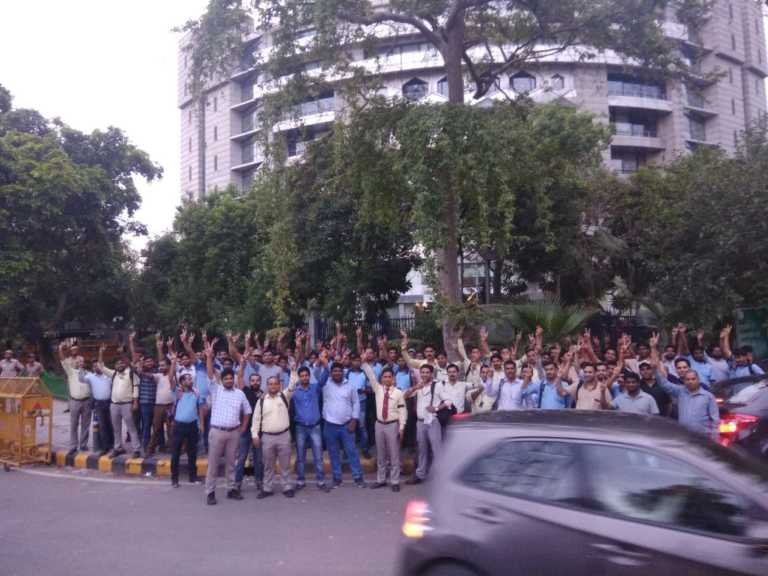
After the proceedings, they gather at Metro Bhawan (DMRC Headquarters)

“We will wait for tomorrow morning proceedings report if they do not fulfilled our demand. we will stop Metro services on 30 June”,  stated by DMRC Employees Union and the Staff Council jointly in a video statement.

“We will wait for tomorrow morning proceedings report if they do not fulfil our demands. we will stop Metro services on 30 June”,  stated by DMRC Employees Union and the Staff Council jointly in a video statement.

We hope that tomorrow proceedings will bring positive results so that over 32 lakh Delhi Metro commuters in Delhi and NCR will not get affected. And DMRC will not repeat their mistake as committed in past and decision will give permanent solutions to end the dispute.

Vijayawada Metro | DPR for the metro project to be ready in 3 months

Amaravati: Things are moving at good pace for Vijayawada Metro. As per press briefing by minister for Municipal Administration P Narayana, the detailed project report (DPR) will be ready within 3 months.  With DPR ready, process for metro work will begin post approval from authorities.

As per the minister, the DPR is being prepared for the metro corridors of 65 km stretch in the city. He also shared that the he reviewed the progress of metro rail with Amaravati Metro Rail Corporation MD N P Ramakrishna as well as the representatives of German government owned KfW Bank, SISTRA public transport consultants (France) at the Secretariat in the first half of the week.

As per the minister the initial DPR was made for two corridors for a stretch of 25km in the Vijayawada city. He added that this was later extended to Gannavaram airport and Amaravati.

Narayana shared that they are also planning to construct additional corridor to Jakkampudi location. The DPR for the new corridor will be prepared as per the new metro policy and the same will be submitted for review in 3 months time. He also informed that KFW Bank will be offering Rs 8 crore for the metro project.

Narayana shared that they are also planning to construct additional corridor to Jakkampudi location. The DPR for the new corridor will be prepared as per the new metro policy and the same will be submitted for review in 3 months time. He also informed that KFW Bank will be offering Rs 8 crore for the metro project.

Talking about the delay in the project, Narayana blamed the central government. He stated that the central government came out with new metro policy two years after they had submitted the DPR on building Vijayawada Metro. This change in policy caused unnecessary delay in metro project.

Not very happy with the response from the central government, Naryana said that the central has offered financial assistance. He added that they were assured for financial help for both Visakhapatnam metro rail and Vijayawada metro rail project as per the AP Reorganisation Act. But unfortunately, the central government has not done anything in last four years. The assurance has simply remained verbal, noting concrete has come so far.

Delhi Metro | DMRC Employees are on hunger strike, commuters face halt in metro services

New Delhi: Delhi Metro Rail Corporation Employees Union started hunger strike by 25 June and they will continue till their demand will fulfilled even they have decide to complete close of metro service by 30 June. Since 2015 dispute regarding salary hike and promotion is going,  employees of DMRC has been always consider as member of DMRC family but their problem has not yet resolved.

From 19 June nearly 13000 non-executive staff members, including train operators, maintenance staff and station controllers, have been protesting at various depots and control rooms of the Delhi Metro.

A letter in this regard written by the General Secretary Mahaveer Parsad of Delhi Metro Rail Corporation Employees Union (DMRCEU) on 14-06-2018 addressed to the Managing Director of DMRC and copy circulated to various other authorities /ministries departments.

Our history is best example that any movement at starting period is faster and it get slower in its middle period and the last of its stage it get more faster than rest of the stage, said DMRC Employees Union.

DMRC management has not given any response till now all. Delhi Metro Rail Corporation has achieved a lot even it has largest metro network of India. But without the cooperation of executive employees it could not be came successful. Now it’s time of DMRC to cooperate with employees and resolve two year ongoing disputes. Non- cooperative nature of DMRC has created suspense among people that DMRC is really working for welfare of Public. Huge loss of  Rs 4000 crore to DMRC due to irregularities in Delhi  Metro Airport express line project has brought new debate among the public, due to which employees has to suffer.

Indefinite strike has greatly influenced the life of Delhi people, approximate 32 lakh people of Delhi are directly or indirectly depend upon Metro services. This is surely going to get affected if their demand not fulfilled or strike continues. In such weather condition this ongoing strike has become additional problem for daily commuters.

Center plans another high-speed rail project in India: Piyush Goyal

New Delhi: While the buzz around India’s Bullet Train continues, central government has already started planning another high-speed rail project. As per Union railway minister, Piyush Goyal, the studies on social and environmental impact are almost near completion.

Goyal who was attending the Asian Infrastructure Investment Bank (AIIB) annual meeting shared with the media. He even stated the issue of land acquisition for Mumbai-Ahmedabad Bullet Train has been resolved. With this issue now resolved, the central government is mulling with the idea of starting on another high-speed rail project.

With this news, it is certain that many other regions will get the benefit of high-speed travel. The bullet train facility will not only be restricted to Mumbai-Ahmedabad. There will be other regions that will experience the joy of travelling in a fast moving train.

Goyal who is happy with the progress of environment and social studies, said that the outcome of the reports will be known soon. The studies are nearing completion.

When asked to name the region where the study is being conducted, Goyal remained tight-lipped. He did not name the corridor but it is likely that the financing will come from AIB for the next high speed rail project in the country.

Goyal also cleared the air surrounding land acquisition for infrastructure project. The union minister assured that the government was not facing any issues from landowners across the country for infrastructure projects.

He added that the compensation has been increased fourfold for other infrastructure projects and fivefold for the high-speed rail project.

Currently Japan International Cooperation Agency is annual funding for the first high-speed rail project. The international agency has also agreed to increase the funding from $3 billion to $5 billion.

During the three-day AID Meeting that was held by Union Minister of railway, several representatives of multilateral banks were present. Many banking firms have shown interest in funding upcoming bullet train projects.

In-principal approval by government for six new metro rail projects in India

New Delhi: Union housing and urban affairs secretary Durga Shankar Mishra quoted on Monday that under the New Metro Rail Policy,  six Metro rail projects in Delhi (phase-IV), Indore, Bhopal, Kanpur, Agra, and Meerut has received in-principle approval from the government.

The reporters were quoted by officers that similar approval has been obtained for the Delhi-Meerut stretch of Rapid Rail Transit System (RRTS).

“The process of getting financial approval for all the projects from the Public Investment Board (PIB) since these will require certain funding from the Central government. The ministry has already sent the proposal of Delhi-Meerut RRTS to the finance ministry for appraisal.” Said by Mishra.

“The Centre is committed to expand the Metro rail network in Delhi as the national capital cannot be left to lurch and some way has to be found for laying of phase-IV, due to Metro rail network in Delhi addition of at least six lakh vehicles have been averted indicating its huge impact on environment and city’s roads.” The secretary said

“All the Metro rail projects that have got in-principle approval have been found perfect as per the New Metro Policy,” Mishra said.

“All the Metro rail projects that have got in-principle approval have been found perfect as per the New Metro Policy,” Mishra said.

E Shreedharan the Metro-man the former of Delhi metro objected that the New Metro Policy mandates certain component of the project will be on public-private partnership.

The urban affairs ministry has informally standardized the rolling stock for all future Metro projects, which include the coach width and the configuration of trains with a set of three, six or nine coaches in every train.

Hardeep Singh Puri, Minister for Housing and Urban Affairs, had said that “the Centre would go ahead with the Delhi Metro Phase IV, even without cooperation from the State’s Aam Aadmi Party government, commuters interests could not suffer because of the Delhi government’s failure to approve projects,the project had been pending for more than two years.”

Hardeep Singh Puri, Minister for Housing and Urban Affairs, had said that “the Centre would go ahead with the Delhi Metro Phase IV, even without cooperation from the State’s Aam Aadmi Party government, commuters interests could not suffer because of the Delhi government’s failure to approve projects,the project had been pending for more than two years.”

The Centre has also sent an advisory to Metro Rail firms to procure from domestic players in its bid to push Make in India drive of Modi government.

Hyperloop | CM Maharashtra visits for virgin Hyperloop One’s test, Pune-Mumbai route

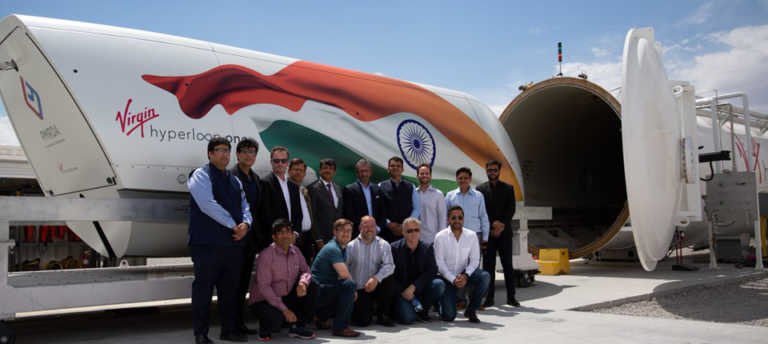
Maharashtra: Shri Devendra Fadnavis Hon’ble Chief Minister met with board members at Virgin Hyperloop One’s develop test tracks to view technology. The second half of feasibility studies advances for Pune to Mumbai Hyperloop project. Here are some photographs shared by the Chief Minister through his twitter handle.

On 18th June 2018 the Chief Minister Devendra Fadnavis and the representatives from the state government and the Pune Metropolitan Region Development Authority(PMRDA) visited the virgin hyperloop one in Nevada desert at their full scale hyperloop test site which is being built upon the historic agreement which was signed in February to built the first hyperloop in India.

Virgin hyperloop was also represented by Justin Fisher-Wolfson and Nick Fox as they are on the board of directors. The Pune-Mumbai hyperloop is expected to finish this summer as it has currently reached the mid-point of the in-depth feasibility study.


Shri Devendra Fadnavis said that “This was a very fruitful discussion and we should be able to start moving on this project very fast”.

Shri Devendra Fadnavis said that “This was a very fruitful discussion and we should be able to start moving on this project very fast”.

Virgin hyperloop one and the Pune metropolitan region development authority (PMRDA) signed the pre-feasibility study in November 2017 and on this basis they will build the findings route alignment including the economic and commercial aspects of the route environment impacts, the regulatory and safety framework and cost and funding strategies to deliver the project. All these things will be defined and analyzed by the virgin hyperloop one’s feasibility tram which consists of world-class experts from Systra Turner & Townsend and KPMG.

The virgin hyper loops one significant portion of the system components are to be expectedly manufactured locally, mainly in Maharashtra creating manufacturing and new high technology jobs.

The Hyperloop will connect 26 million and the route will link central Pune, Navi Mumbai International airport and Mumbai in 25 minutes.

The high capacity passenger and cargo hyperloop route will provide citizens social and economic mobility and greater opportunities as the route will eventually support 150 million passengers trips annually and will save more than 90 million hours of travel time.

The Hyperloop system will also have a pack transportation of light goods between the port of Mumbai and Pune which will create a powerful determination for on-demand deliveries, supply chains, and next-generation co-ordination.

Sir Richard Baron said that “I am incredibly excited to see this Pune-Mumbai hyperloop project go from a vision to reality as it starts detailed planning. The opportunity is enormous – to connect 26 million people with access to affordable infrastructure that will unlock significant economic and social value”. He also added that “It is an honor to work with the State of Maharashtra and its key stakeholders, sharing their vision to transform not only transportation but wider society.”

Sir Richard Baron said that “I am incredibly excited to see this Pune-Mumbai hyperloop project go from a vision to reality as it starts detailed planning. The opportunity is enormous – to connect 26 million people with access to affordable infrastructure that will unlock significant economic and social value”. He also added that “It is an honor to work with the State of Maharashtra and its key stakeholders, sharing their vision to transform not only transportation but wider society.”

According to an initial pre-feasibility study completed by virgin hyperloop one the Pune-Mumbai route could include in Rs 350,000 in benefit of socio-economic which will result in accident reduction, time-saving etc over 30 years of operation.

The Hyperloop system is 100% electrical which will be easy for the expressway congestion and will reduce up to 15,0000 tons annually of greenhouse gas emission.

Virgin hyperloop one’s CEO said that Traditionally, transportation has been very vertically integrated. With a wealth of talent and technological prowess right here in India, we’re looking for local partners to scale an integrated supply chain ecosystem. The State of Maharashtra is positioning itself at the epicenter of a new global supply chain.”

Chennai Metro | CMRL starts land acquisition for phase-2 metro projects

Chennai:  Phase-2 work of Chennai Metro gains momentum with land acquisition process initiated. As per Chennai Metro Rail Limited (CMRL) officials, the metro body will be scouting 86 acres of land. The second phase is around 55 km stretch which includes Corridor 3 and 5 respectively.

CMRL has already started acquisition for the phase -2 which will have 48 stations. The estimated cost of is around 85,000 crore wherein in out 107.55km, work will begin for 55 km. As part of the process notices have been sent to the residents and property owners whose property falls under the identified stretch. The project is currently waiting for centre’s nod.

To ensure the acquisition does not face any hurdle or controversy unlike what is happening in Maha metro, CMRL will acquire land under Tamil Nadu Acquisition of Land for Industrial Purposes Act 1997. The acquisition will not take place as per The Right to Fair Compensation and Transparency in Land Acquisition, Rehabilitation and Resettlement Act, 2013 (also Land Acquisition Act, 2013).

All residents will be paid compensation as per the The Right to Fair Compensation and Transparency in Land Acquisition, Rehabilitation and Resettlement Act, 2013.

Majority of the land for the project will be that of the government. CMRL on their part have already sent out notices to 410 owners for the construction of 19 stations. For additional 29 stations 400 notices will be sent out. Notices issued to properties that are on the Perumbur, Sterling Road, Madhavaram, near Gemini flyover in Nungambakkam, Sembium, Purusaiwalkam and Chepet stretch earmarked for corridor 3 and 5.

CMRL has also prepared a revised Detailed Project Report (DPR) and submitted to the authorities. In its report is has sought 80,000 crore for implementing the second phase of Chennai Metro which will have three corridors.

These include Madhavaram-Sholinganallur, Chennai Mofussil Bus Terminus (CMBT)-Lighthouse and Madhavaram-Siruseri. The project from Lighthouse near Marina Beach to Poonamallee that is in the outskirts is an station that will cost another  3,850 crore.

In another development CMRL has initiated the process of preparing Comprehensive Urban Mobility Plan subsequent to funds worth `2.12 crore sanctioned for the project in the starting of this month. The state has not yet come up with updated Comprehensive Urban Mobility under the National Transit Oriented Development Policy.

Gandhinagar | High-powered panel discusses terms and condition for MMTH tender

Surat: On 25 June Chief Secretary J N Singh with Gujarat Government chaired the meeting of a high-powered committee in Gandhinagar. The main aim of this meeting was to fix the terms and conditions of the tender for Multi Model Transport Hub (MMTH) which is to come up near Surat railway station.

In this meeting municipal commissioner M Thennarasan and officers of state government and Indian railways were also present.

About Multi Model Hub

A Multi Modal Transportation Hub (MMTH) is identified as a transport node, which integrates various modes of public transport systems as well as it is integrated with passenger transit based activities. The hub serves as a single system that enables seamless passenger transfers. The major advantages of MMTH are the shared resources and passenger facilities, which decrease the land use requirements while it increases overall capacity of the system. Developing a multimodal hub integrating the railway station, regional bus service, BRTS, IPT gives boost to the city’s public transport network and decreases its dependability on the private vehicles. Thus, it impacts by reducing city traffic congestion, pollution and increases safety on streets.

About Project Detail

Ministry of Railways (MOR) as part of its policy of redevelopment of railway stations across the country on Public Private Partnership (PPP) model has entrusted through Rail Land Development Authority (RLDA) to ‘Indian Railway Stations Development Corporation Limited’ (here in after referred to as IRSDC) the work of redevelopment of the Surat railway station as a Multi Modal Transportation Hub with modern passenger amenities with fund generated from commercial development on leasehold rights for 90 (ninety) years of the vacant railway land and air space at the railway station along with responsibility of management of the passenger facilities at the station including collection of revenues from shops, stalls and other activities on areas licensed at the station (Railway Station Development Project).

  • Surat Municipal Corporation (SMC) – 3%.
  • Indian Railway Stations Develop Corporation (IRSDC) – 63%
  • Gujarat State Road Transport Corporation (GSRTC) – 34%.

Following are the few photos of project site:-

With this objective IRSDC, GSRTC & SMC with the support and suggestion of Govt. of Gujarat adopted integrated approach and form project specific Joint Venture Special Purpose Vehicle (SPV) to develop the Railway and Bus terminals, BRTS, City Bus, Metro and other transportation modes as international standard multi-modal interchange facility and the entire area in the vicinity of railway station and regional bus terminal as a Multi Modal Transportation Hub (Multi Modal Transportation Hub project).

Total project land area for development of Multi-Modal Transport Hub at Surat Railway Station are:-

A. Railway Station Area23,175
B. East side Railway Colony Area61,776
C. Railway Yard Area70,681
D. GSRTC88,340
E. SMC6080
F. Private Land**4263

Aim of the project
On behalf of the proposed SPV, IRSDC intends to develop a Multi Modal Transportation Hub (MMTH) which shall integrate all public transport modes such as City Bus, Bus Rapid Transit System (BRTS), State regional bus service, Metro Rail, Railways and intermediate public transport modes such as auto rickshaw and taxis. As part of the above, IRSDC seeks the participation of private entities for the Development of Multi Modal Transport Hub at Surat Railway Station including inter-alia all works related to, or incidental to, or required to be undertaken upon the project site in accordance with the provisions of the Development Agreement, and Applicable Laws, including the commercial development, as required to be undertaken (the Project) on Design, Build, Finance, Operate and Transfer (the DBFOT) basis

About floor space Index
Out of the total permissible FSI for development of project, built up area to be reserve for Administrative Zone, Operational Zone, Passenger Facility Zone, Passenger Transfer/Transit Zone, and Infrastructure Zone that is minimum development obligation requirement shall be deducted and balance will be available for commercial infrastructure.

The meeting discussed on allocation of floor space index (FSI) to private developer of MMTH by Surat Municipal Corporation (SMC).They finally reached to the allotment of 3.6 FSI to private party.

An officer of SMC said that, “By granting 3.6 FSI, the private party would be able to come up with his own design and plan for the project. The private party, who constructs MMTH, also needs to recover the cost and that would be possible only if FSI of 3.6 is granted to him.”

On 27 June Prime Minister Narendra Modi will assess the progress of the MMTH in a meeting with officials concerned through a video conference.


Hyderabad Metro | Odourless Urinals to convert waste into Bio-Fertilizers!

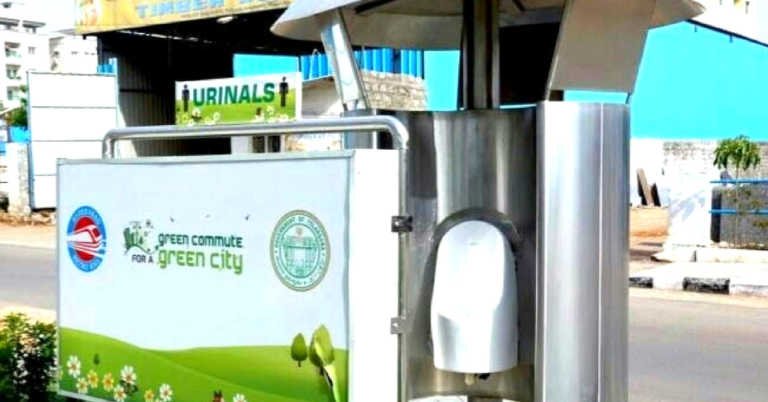
Hyderabad:  In move to turn metro station green zone, Hyderabad Metro has set up odourless urinals at Miyapur Metro Station. These toilets convert the urine into bio-fertiliser which can then be used at several farms and gardens. The metro authorities are planning to install similar urinals at other metro stations as well.

HMRL MD Mr. NVS Reddy explaining successful working of waterless urinals at Miyapur Metro Station with bio-filtration
HMRL MD Mr. NVS Reddy explaining successful working of waterless urinals at Miyapur Metro Station with bio-filtration (Source: HMRL)

With this move commuters will be able to travel is hygienic environment. Riders will no longer have to close their nose while passing through public toilets at Hyderabad Metro Station.

As per a report publishes in national daily New Indian Express, currently there are three toilets placed at the Miyapur Metro Station. This has been put as part of the experiment to see the feasibility and use of them in totality. The estimated total cost of placing three toilets is around Rs 3 lakh. Apart from Miyapur, other stations where these urinals are operational are Rasoolpura, Kukatpally and JNTU.

Looking at the response and use, the Hyderabad Metro Rail (HMRL) authorities, are planning to install this eco-friendly toilets at the other stations in the city.

How do these toilets work?

As per the system in place that and breaks down the ammonia and urea components of urine and separates water. The urine is filtered as safe water that is directed to a soak pit via a channel. This odourless water can then be used for watering plants or cleaning floors.

The urine is collected in an anaerobic digester, where, in the absence of air, anaerobic microbes debase the urine, decreases stickiness and liquefy the solids. The urine subsequently enters the activated carbon filter, followed by a biofilter.

Explaining the utility of the by-product processed HMRL Managing Director, NVS Reddy shared that the ammoniacal nitrogen in the system is broken by a microbial strain, in which ammonia and nitrogen are separated. The nitrogen can be used as a nutritional supplement for plants and ammonia is used by microbes.