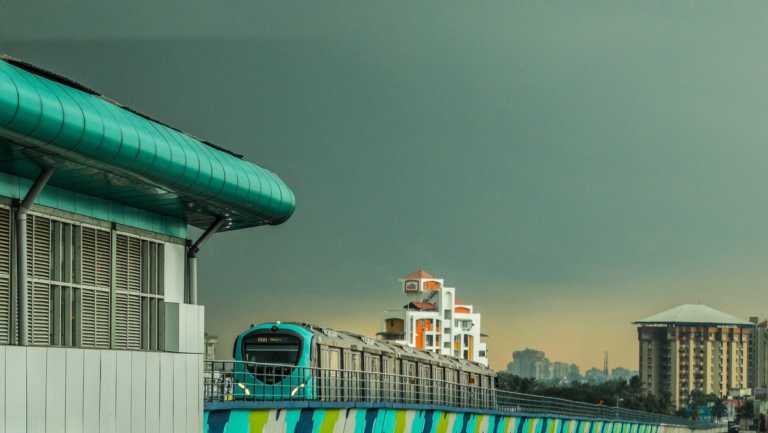
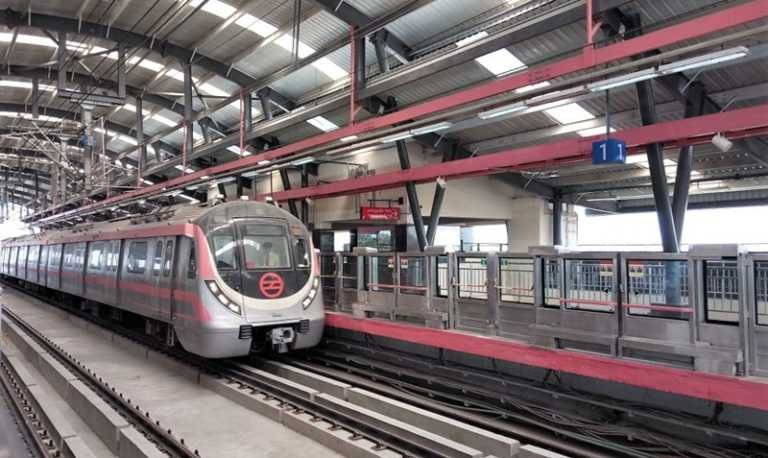
Kochi: Travelling in a metro calls for a certain discipline. Kochi Metro has started slew of social media posts to educate commuters on etiquette to be adopted while traveling in a metro train.
Here are some amazing social media creatives that not only makes you laugh but also educates you on how best one can commute via metro.
Priority areas for special need passengers and women are marked inside the train. Please consider them and spare your seat. #KochiMetropic.twitter.com/Ghic3EvhBx
Bengaluru: With Bangalore Metro Rail Corporation’s (BMRCL) missing several deadline with regards to completion of work for phase 2, state government feels they will meet the 2021 deadline. The target seems ambitious given the deadlines being missed by the JD(S)-Congress coalition government feels the deadline in achievable for Bangalore Metro.
There are doubts whether BMRCL will be able to meet deadline as work is not being carried out as per desired pace. In the second phase the Bangalore metro project will cover a stretch of 118 km. In the joint session of the Legislature Governor VR Vala shared a 19-page insight on the project’s progress. During the speech Vala highlighted the priorities as well gave broad perspective to the government.
Namma Metro Phase II, which consists of four extensions of Phase I and two new lines, furthermore covers the 19-km Outer Ring Road stretch from the Central Silk Board junction to KR Puram (Phase II-A) and the 30-km stretch from Nagawara to the Kempegowda international airport (Phase II-B). When concluded, Phase II is likely to have a regular ridership of 20 lakh people, the governor shared. The metro at present has a daily ridership of less than 4 lakh.
In a review done by BMRCL, the work on second phase is running behind the deadline. It is almost three years behind the schedule. Ironically it is the Mysuru Road and Kanakapura Road extensions will be up and running by 2021. In fact as per earlier estimate work on this stretch has to be completed by this year itself. Work on this stretch has slowed down. It was expected that after governor’s speech, state government will look to revise the deadline, but that has not happened yet.
Governor in his speech has stated that the current government will work towards improving civic infrastructure, housing, water management and traffic control systems. He also said that public will have access to free Wi-Fi along with installation of close circuit cameras offering security to one and all.
Bhopal: At Subhash Nagar the under construction rail-over-bridge (RoB) has brought big challenge for Madhya Pradesh Metro Rail Corporation (MPMRCL) to complete Bhopal metro Rail Project on targeted time. Rail- over-bridge (RoB) it is being built by Public Work department (PWD) now it has been directed by the urban development department to make some changes in the design so that Bhopal Metro Project work may not get affected.
About Bhopal Metro: Bhopal Metro project is based on Rapid Transit Light Metro (RTLM) system. The Bhopal city has become one of the education hubs for technical students Bhopal Metro will be wonderful transport facility for them and other city dwellers. The total length of Bhopal Metro 35 Km which consist 3 corridors and total project cost for this project is Rs 80 billion. The route of these projects will be on road, on bridges, and underground also. The three corridors of this project have been proposed by DMRC M.P.Nagar to Mandideep Suruchi Nagar to BHEL (9km, 9 stations) Bairagarh to Mandideep respectively.
Bhopal Metro Route
Urban development and Metro rail expert said that, “The strategic importance of the location cannot be understated, but the RoB is a major hindrance. Design changes in RoB are being considered so that the Stud Farms location remains a viable alternative for Metro rail depot.” Initial proposal for Metro rail had pitched for a depot near the international airport.
Some information has been also collected from official that tweaking the design of the under construction project means further delay in completion of the RoB. Many experts have in the past been critical of the development of the RoB. Objections regarding the construction of RoB were raised before the PWD when it undertook the task of expansion of Chetak Bridge in Bhopal.
Consultant for MPMRCL said that the site (Stud Farm, Arera Hills) is marked as the main depot for Bhopal Metro Rail. “The construction near the Metro rail depot site would call for deviation in plans. Track turning radius is limited to 100 metre for Metro in Bhopal.”
In Detail Project Report (DPR) gave complete information regarding Bhopal Metro Project. The total number of stations are 30 and it stretch to 27.87 km. The construction was also focused to decongestant traffic by constructing grid separators through which “In future any kind of bus system will also feed the Metro or act as complimentary to the Metro rail network.”
Patna: People in Patna can now dream of having a metro facility in their state. Deepak Kumar, state chief secretary has approved the revised Detailed Project Report (DPR) for Patna Metro Rail project. The DPR will now be put before the state cabinet.
The approval came on Tuesday with Kumar giving nod to the DPR submitted to him by the Rail India Technical and Economic Services (RITES). The revised DPR is made as per new metro rail policy framed by the central government.
Chaitanya Prasad, the urban development and housing department (UDHD)’s principal secretary shared that the revised estimated investment for the rail project is approximately 19,500 crore. This also comprises of land acquisition cost to construct the metro rail project.
RITES had earlier prepared a report which was later on revised based on new rail policy. The National Institute of Technology-Patna prepared the alternative analysis report as well as the comprehensive mobility plan for the Patna Metro rail project.
Suresh Kumar Sharma, UDHD minister communicated that once the DPR is tabled in state cabinet and gets the nod, it will then be submitted for approval to the central government. Sharma added that he is hoping that the work on Patna Metro begins by 2018-19 so that this service can be started on time for commuters.
As per the revision made in DPR, in the first phase work will start on the 14km north-south corridor stretch. This corridor will begin from Patna Junction to Ramachak inter-state bus terminus via Gandhi Maidan and Rajendra Nagar.
For the second phase’s east corridor, work is expected to start once the foundation stone for the north-south corridor is laid by the officials. The 17km east-west corridor will start from Mithapur bus stand to Danapur via Bailey Road and end at Patna Junction.
Sanjay Dayal , UDHD special secretary explaining the plan shared that the north-south corridor line would run on an elevated stretch. He added that while the plan was to make it partly underground from Rajendra Nagar to PMCH. The east-west corridor will be elevated from Danapur to RPS Mor and an underground line will be developed from Saguna Mor to Patna Junction shared Dayal.
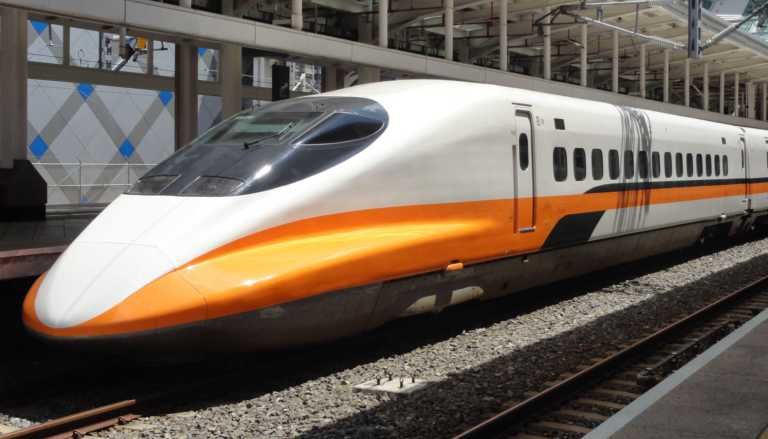
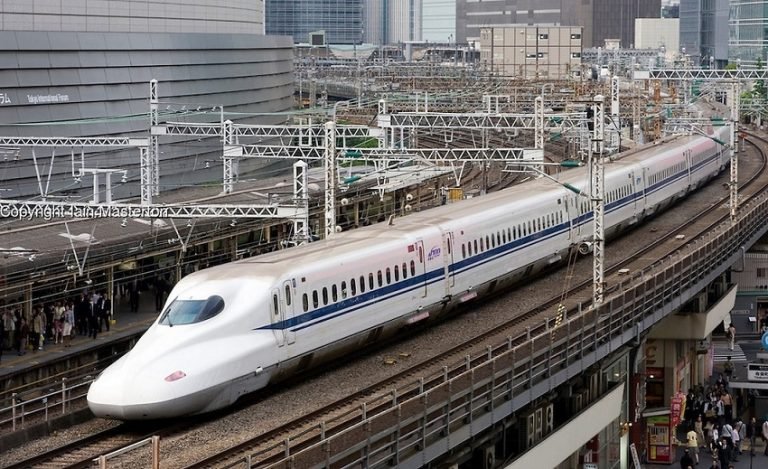
Taipei: The Taiwan High-Speed Rail Corp. (THSRC) said on Monday that they are expecting to see it’s 500 millionth passenger near the end of July and this will add a series of event which will be held to celebrate the occasion.
As the company said about 496 million tickets as be sold as of 1 July since the high-speed rail was in operation since 5 January 2007 and they estimated they will serve 500 million passengers by the end of the month, currently the train is running from Nangang to Zuoying in as little as 1:45 hours, reaching almost 90% of Taiwan’s population.
Ridership fell short of the estimate, but it grew from 40,000 passengers per day and in the first few months of operation to more than 1,29,000 passengers per day in June 2013. Daily passenger traffic reached 1,30,000 in 2014, well below the forecast of 2,40,000 daily passengers for 2008. The system carried it’s first 100 million passengers by August 2010 and over 200 million passengers had taken the system by December 2012, followed by 400 million passengers by December 2016.
Because of frequently natural disaster in Taiwan which includes earthquakes, heavy rainfall, floods and landslides, this is the reason that the primary focus of THSRC’s infrastructure design was based how the train responds to natural disasters such as earthquakes and how to ensure safety for all passengers and trains in an emergency situation.
To celebrate the milestone, THSRC said, it will award the 500 millionth passenger with a year of unlimited free rides.
To celebrate the milestone, THSRC said, it will award the 500 millionth passenger with a year of unlimited free rides.
The 499,900,998th and 499,900,999th passengers, as well as the 500,000,001st and 500,000,002nd passengers, will also win high-speed rail vacation packages of their choice, including free hotels and business class round-trip train tickets, the company said.
The high-speed rail transported an average of 173,000 passengers each day during the first six months of this year, up 5 percent year-on-year, the company said.
Chennai: Chennai metro rail limited (CMRL) has made a list of more than 800 property owners to whom the notice will be issued for the acquisition of the requirement of land to build 48 stations which are planned in the 107.55 km of phase 2 project.
Notice has been issued to around 410 owners who have properties along the alignment planned for 19 stations.
They have included the places like Gemini, Sterling Road, Sembium, Otlen Perumbur, Purasaiwalkam, Madhavaram, Chetpet, Nungambakkam because people live nearby to these places. The land in these areas will be used for building the stations and the maintenance yard at Madhavaram.
The officials say that CMRL would issue 400 more notices to property owners in the coming days. CMRL would issue 400 more notices to property owners in the coming days.
The officials say that CMRL would issue 400 more notices to property owners in the coming days. CMRL would issue 400 more notices to property owners in the coming days.
Phase 2 project is having three corridors.
Corridor 5 will connect Madhavaram to Sholinganallur through localities on the western part of the city.
Corridor-4, which will link the core areas of the city from Light House to CMBT, will be extended to Poonamallee.
Corridor 3 will link Madhavaram to Siruseri SIPCOT via the IT hub along the OMR
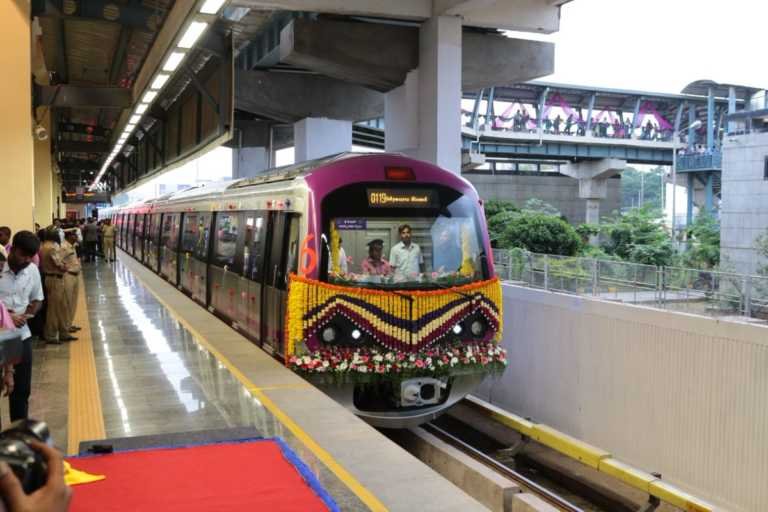
Bangalore: Namma Metro serves the city Bangalore. It is the first underground metro line in South India. It abides two color-coded lines, with a total length of 42.3 kilometers and serves 30 stations and has three to extendable six coaches.
Reserved Coach for Women in Delhi Metro
The women passengers of the Namma metro demands the signboard on the first coach of the metro but the BMRCL Stated that it is impossible to put a board on the first coach as the Namma Metro is not like an ordinary train as it is not possible to detach the engine and place it in front during every onward journey and it could affect the coach as well.
As the six coach is running up the board has become a necessity for the women commuters as it makes them feel safe and comfortable and the board will help the men’s that they are not allowed to that particular coach. The separate coach would help them in settling down rather than in a filled coach. Sometimes in a rush, the gents come into the women’s coach so as to get the train and in that case, the board will help that a lot and it is more secure for them.
The BMRCL says that commuters will soon use to the fact that the first coach is for ladies only as there will be a proper announcement on the train.
It’s impossible to board these trains during peak hours. A women-only compartment makes us feel safe and comfortable. But many male passengers to are entering the compartment, ”said S Revathi who commutes between Mysuru Road and Byappanahalli daily.
It’s impossible to board these trains during peak hours. A women-only compartment makes us feel safe and comfortable. But many male passengers to are entering the compartment, ”said S Revathi who commutes between Mysuru Road and Byappanahalli daily.
The Delhi metro imposes fine on the entry of others in the women’s department.AS Shankar, executive director of operations and maintenance, BMRCL, said there has been some confusion as the six-car train is new to passengers. “We are considering putting a band separating the ladies compartment from the rest. We will deploy additional staff at platforms where the first coach arrives to ensure discipline and, if required, also deploy women staff inside the ladies’ compartment,” he adds.
“We are considering putting a band separating the ladies compartment from the rest. We will deploy additional staff at platforms where the first coach arrives to ensure discipline and, if required, also deploy women staff inside the ladies’ compartment,” he added.
BMRCL is taking the matter more seriously for the safety and discipline in the metro.
Delhi:Delhi Metro Rail Corporation (DMRC) has finally taken a step to improve mobile connectivity for underground metro. This step has been taken after several passengers complained of poor to bad mobile connectivity while travelling in underground metro.
DMRC in order to improve travel experience has awarded a bid for bid for providing mobile network connectivity in all the underground stations of Magenta and Violet line. Commuters can now expect an improvement in mobile connectivity while they travel in underground Delhi Metro.
Mohit Kumar Gupta, consumer activity and advocate has complained to the authorities. Gupta has faced a lot of problem with regarded to mobile connectivity while commuting in underground metro. With no respite to the problem, Gupta filed a complaint at Chirag Dilli Metro station on June 16.
Gupta was disappointed after getting a reply to the complaint filed. DMRC gave an unexpected reply. The officials replied to Gupta that “Our network does not work here, what will happen with the complaints. You go network will come tomorrow” when he had gone to file a complaint.
Gupta did not stop his crusade to send across his complaint to various DMRC officials. He made several complaints to higher officials and eventually the officials did get contact him.
DMRC send a communiqué to Gupta which stated – “We would like to inform you that tender for providing mobile network connectivity in all the underground stations of Pink and Magenta line has been awarded and the work of laying infrastructure in tunnels to currently underway and will be completed soon.”
It is not just the underground Delhi Metro stations where people have mobile connectivity issue. They also face similar issue in in the heritage corridor (Violet line) from ITO to Kashemere Gate.
Commuters feel that DMRC should not only focus on improving mobile in underground metro. They should concentrate on other lines as well commuters are facing mobile connectivity issue.
The Magenta Line was inaugurated in May by Prime Minister Narendra Modi and is also known as knowledge corridor. This line connects Botanical Garden in Noida from Janakpuri west and consists of 25 stations. Pink line on the other hand connects Maljis Park to Durgabai Deshmukh South Campus and has 12 metro stations.
Seth succeeds Mahendra Jain who was the additional chief secretary of urban development department, who was holding the additional charge of BMRCL after Pradeep Singh Kharola moved to the Centre in December 2017. Seth will resume office soon but will continue to hold the charge of additional chief secretary – health and family welfare department.
Jain during his tenure as an MD of Bangalore Metro was known to introduce several initiatives. These include reserving the first two doors for women passengers and speeding up introduction of the first six-car train with one coach booked for women passenger.
Jain was also known for his role in starting Bangalore metro’s airport connectivity project. This project was earlier part of phase 3 but under Jain’s tenure it was taken up during phase 2 itself. As an MD he made sure that metro’s services do not get affected owing to constant threat of strikes by metro employees.
The tender for the Outer Ring Road stretch started from Central Silk Board Junction and KR Puram is likely to be issued shortly. BMRCL has lately floated tenders for the underground section connecting Cantonment railway station and Pottery Town and Vellara Junction and Shivajinagar as part of Reach 6 (Dairy Circle-Nagawara) of Phase 2. On the other hand, tenders for the remaining stretches — Dairy Circle-Langford Town and Tannery Road-Nagawara — of Reach 6 will be floated afterwards as BMRCL has decided on elevated trains on these corridors.
The other project reeling under hurdle is the extension of line to Kempegowda International Airport from Nagawara. This happened with the rejection from Airports Regulatory Authority of India (AERA) over proposal on collecting development fee from riders.
The new MD will have to take up a lot of these challenging tasks and ensure work picks up pace. Commuters want that work on stretches like Anjanapura Township, Kengeri, Mysuru Road and Yelachenahalli picks up speed.
Seth will also be expected to ensure the much-awaited Metro project is concluded with no further impediment, in the wake of increasing traffic clogging.
Hyderabad: In a bid to improve commuter’s experience, Hyderabad Metro will soon be offering trolley service akin to those available at airport. Riders will soon be able to travel hassle-free as they can pick up a trolley from metro station, carry to the railway station or bus depot.
With this service a metro commuter can pick a trolley, offload the luggage on it and reach railway or bus station. They can then leave the trolley at the platform itself after taking the luggage off it.
Managing director Hyderabad Metro Rail Limited (HMRL), NVS Reddy shared that work on the remaining Corridor One that is the Ameerpet to LB Nagar stretch will be completed by end of July. In August this stretch will be made operational and open to public.
Reddy explaining the trolley service facility said that commuters will get airport like ambience at metro stations. Quoting an examples Reddy added that rider commuting from Miyapur or Kukatpally to Secunderabad railway station can just carry on their luggage in their trolley and afterwards leave the trolleys at the platform only.
This facility will first be started at metro stations that are closer to public transport hubs. The stations include Begumpet, Secunderabad, Nampally and Malakpet.
Reddy added that once these services are rolled out, it will be the first such facility to be made accessible at any Metro station in the country.
And it’s not just trolley services that metro station will offer; very soon commuters will be able to buy essential goods and groceries from Hyderabad Metro stations. The authorities are planning to start ‘hubs of activity’
Reddy shared that they are making every attempt to turn metro stations public friendly places. Like they have made good footpaths along the stations along and installed safety railing for easy commute. There are street furniture is place along with greenery along the medians. As part of the plan 20% of the concourse area will be used for shops wherein commuters can shop essential items and groceries. The idea is to improve commuter’s experience when they travel in Hyderabad Metro.
Chennai: In what seem to be an embarrassment of sorts, commuters at Chennai Metro were surprised with card kiosks at metro stations rejecting new notes. The kiosks are installed for commuters to recharge smart cards to buy tokens for rail ticket.
The kiosks that are made to ensure commuters do not have to wait in long queues. But ironically they had to wait in long queues at ticket counters since the electronic recharge kiosks were rejecting new notes. The kiosk was also rejecting smaller denomination like Rs10, Rs 50 and Rs 200.
These machines are not compatible with the new dosh.
In fact these machines end up performing task other than what was asked for them – that is reducing waiting time for passengers. But these kiosks have ended up extending the waiting time further.
As per an employee working in the underground hub of Central Metro shared that these electronic kiosks are not programmed to accept new notes. That is why there is technical glitch.
The employee further added that one cannot transact with new Rs 500 notes, this being the case even before RBI issuing new currency notes. As per current set up, commuter can use kiosks to recharge for minimum Rs 100. For amount lower than this, they have to stand at the ticket counter to recharge their card.
Chennai Metro Rail Ltd (CMRL) has put up kiosks at all the metro stations based on the number of commuters on daily basis. Those stations where daily traffic is more, CMRL has installed more than two kiosks. Vadapalani, Koyambedu, Alandur, and airport stations have more than two kiosks. Chennai Metro stations that have less traffic have one or two kiosks each.
Interestingly, CMRL introduced smart card machine to improve travel experience of commuters. It also made its usage mandatory when it opened the first underground line between Nehru Park and Koyambedu in May 2017. Ironically, it later started issuing token to manage the traffic.
CMRL has assured that the kiosks will be tweaked and commuters will be able to use the machine within two weeks.
Patna: Urban Development and Housing Department on Friday bumped into controversies because after puzzling the public of Patna from over four years on the issue of Metro Rail in the state capital and now they are up with a delay for a year because of some technical snags the Detailed Project Report (DPR) of the metro rail will have to be drafted from scratch before being sent to the Center for its approval. On 14 September 2011, the Planning Commission of India (now NITI Aayog) gave approval for the Patna Metro.
Citing a host of issues that they failed to take into account in the past, officials said due to the four over-bridges under the Lohia Ringroad scheme on Bailey Road, including the ones near Lalit Bhawan, Punaichak intersection, Hartali Chowk, and the High Court, it was necessary to amend the previously-prepared DPR before making it the final version.
Urban Development and Housing Minister Suresh Sharma said “Our plan is to bring necessary amendments in the plan by 15th July so it could be sent to the cabinet for its approval after which it would be sent to the Center,”
Urban Development and Housing Minister Suresh Sharma said “Our plan is to bring necessary amendments in the plan by 15th July so it could be sent to the cabinet for its approval after which it would be sent to the Center,”
Once the Center approves the DPR, it would be sent to different departments for their evaluation. After these departments give their No Objection Certificates (NOC), which could take 2-3 months, the government will float a tender that could take another three to four months, groundbreaking ceremony will be completed and work will begin by the end of this year or the beginning of the next year, a department official said.
It will be really normal to say it is likely the plan will remain only on papers at least until the next state election, which is in 2020.
New Delhi: The civil engineer Elattuvapil Sreedharan, also known as the metro man of India stated that as compared to some advanced nations Indian railways is 20 years behind, he says that India needs a safe, clean, fast and modern railway systems. He also said that the high speed bullet trains that is soon to be launched in are for elite class. At present India needs a safe railway system.
Dr. E. Sreedharan, The Metroman
“Bullet trains will cater only to the elite community. It is highly expensive and beyond the reach of ordinary people. What India needs is a modern, clean, safe and fast rail system.” said Sreedharan in an interview to Hindustan Times.
“Bullet trains will cater only to the elite community. It is highly expensive and beyond the reach of ordinary people. What India needs is a modern, clean, safe and fast rail system.” said Sreedharan in an interview to Hindustan Times.
The modern rapid transit system that has helped in easy transportation that is still a burden in the national capital. The soft-spoken Sreedharan has become identified after hearing the word.
Sreedharan is credited with completing many Delhi metro projects in budget and ahead of schedule.
Sreedharan a Padma Shree awardee in 1997 take over the helms of Delhi metro rail corporation. Before that, he was working with India’s first metro rail project in Kolkata and with the development of Konkan railway.
About the deaths and the railway accidents, he said “Accident record has not improved. Many also die on tracks, at level-crossings, in suburban sections. Almost 20,000 lives are lost on tracks yearly. I feel Indian Railways is 20 years behind those of advanced nations.”
For all the metro rail systems across the country, the Sreedharan will now head a newly high-level constituted committee to lay down the primitive technical standard.
The Union Railway Minister Piyush Goyal says that India’s ambitious bullet train project is likely to be completed by 2022, a year ahead of its estimated deadline, which is December 2023. “The bullet train project is on track. In this country, every project has certain difficulties and issues that have to be addressed as you progress in the project. We are working for the acquisition of land in Maharashtra and Gujarat. There are some concerns with local people and a dialogue is going on. I am very confident very soon we will and I am very confident that very soon we will resolve it. We are trying our best to complete the work by 2022 before its deadline, 2023.”
The Union Railway Minister Piyush Goyal says that India’s ambitious bullet train project is likely to be completed by 2022, a year ahead of its estimated deadline, which is December 2023. “The bullet train project is on track. In this country, every project has certain difficulties and issues that have to be addressed as you progress in the project. We are working for the acquisition of land in Maharashtra and Gujarat. There are some concerns with local people and a dialogue is going on. I am very confident very soon we will and I am very confident that very soon we will resolve it. We are trying our best to complete the work by 2022 before its deadline, 2023.”
“The Indian Railways is working day and night to complete the much-awaited Bullet train project by 2022,”
The Ahmedabad-Mumbai bullet train and the Ahmedabad-Gandhinagar metro rail projects were inspected on 6th May by Japan’s parliamentary Vice-Minister, Alcimoto Masatoshi.
The bullet train which will be between Ahmedabad and Mumbai will have a 21 km undersea tunnel and the total length will be 508 km.
New Delhi:Delhi Metro Rail Corporation (DMRC) has brought good news for commuters to INA Sarojni Nagar, South Extension and Lajpat Nagar. Metro services of pink line are all set to start as earlier. Total length of Pink Line was planned to be opened in different stages its total length was kept 58.59 Km which include 39.479 Km elevated and 19.117 Km underground. There is total 38 number of station under which 26 stations are elevated and 12 are underground. Line was planned to be by September 2018 (except Trilokpuri to Mayur Vihar pkt-1 section because of land issue in Trilokpuri). 20.6 Km section of Majlis Park to Durgapuri South Campus was opened for public on14 March. And 8.1 Km section between Durgabai Deshmuk South Campus to Lajpat Nagar likely to open as earlier, and other section Lajpat Nagar –Mayur Vihar PKT-1 and Trilokpuri to Shiv Vihar is expected to be completed by July 2018, September 2018, and August 2018 respectively.
DMRC Spokesperson said, “The trial runs between Durgabhai Deshmukh South Campus and Lajpat Nagar are going on and the section is likely to be opened in July.”
He further stated that, “The necessary documentation for the inspection by Commissioner for Metro Rail Safety (CMRS) is being completed and some other mandatory prior approvals are being taken right now.”
He also said that, “The trial runs are in progress between Shiv Vihar and I P Extension, and will be extended upto Trilokpuri very shortly. This section is likely to be completed by August,” and “Section between Lajpat Nagar and Mayur Vihar Pocket 1 is expected to be completed by September.”
Pink Line of Delhi Metro has not only extended the network of Delhi Metro but has also facilitated the commuters in large scale. Pink Line is connected with almost all the Line of Delhi Metro which has save the time of commuters.
Now it will be very easy for commuters to interchange line as Pink Line interconnects almost all the line of Deli Metro. It is connects almost all the line of Metro at Azadpur for Yellow Line, Netaji Subhas Place for Red Line, Punjabi Bagh West for Green Line, Rajouri Garden for Blue Line, Lajpat Nagar for Violet Line, Mayur Vihar-1 for blue line and INA for Yellow Line.