Maharashtra to frame an attractive policy for establishing metro coach manufacturing units in state

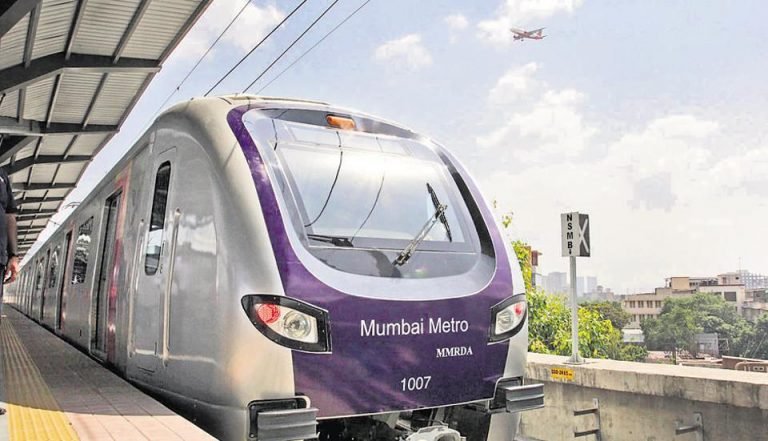
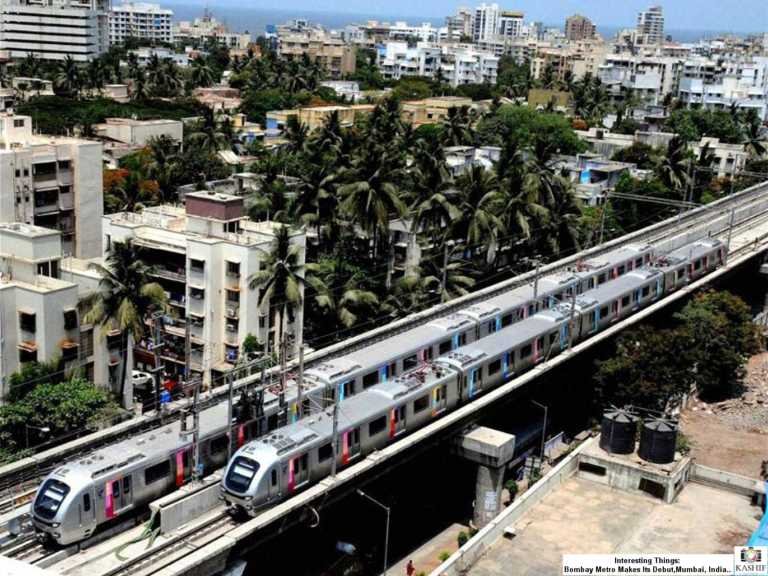
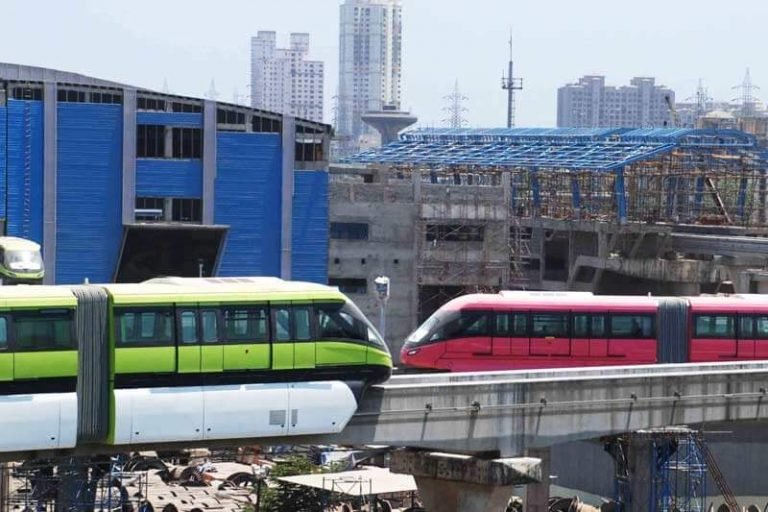
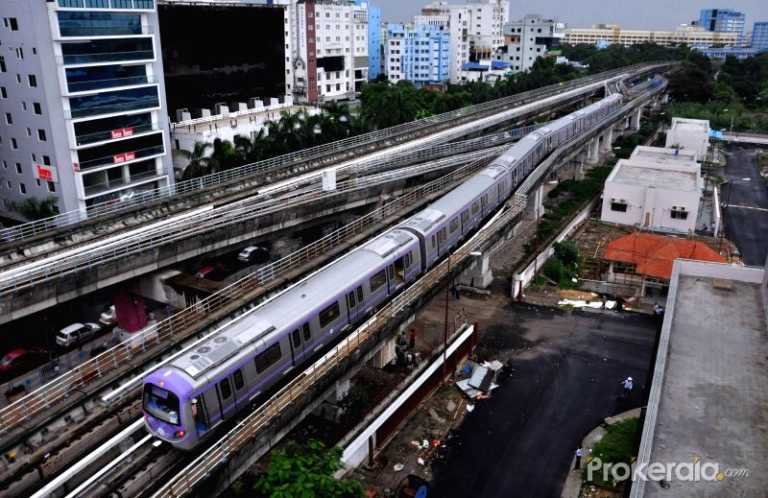
The chief minister, Devendra Fadnavis, has asked the officials of the department of industries of the state to develop a policy that offers incentives to the companies of manufacture of coaches so that they establish units in Maharashtra. Fadnavis, who heads the Development Authority of the Metropolitan Region of Mumbai (MMRDA), recently asked his officials to enter into a dialogue with the companies that manufacture Metro buses.Pravin Darade (Additional metropolitan commissioner of MMRDA): “The measure is part of the ‘Make in Maharashtra’ program, and CM has directed urban development departments and industries to formulate a package that offers incentives to companies that are willing. to carry out the manufacture of rolling stock in Maharashtra.”Darade, who was part of the meeting at which the decision was made, said: “Maharashtra, and Mumbai in particular, will get the maximum number of coaches, which will also lead to the generation of direct and indirect employment.”Currently, Maharashtra has eight metro projects underway in Mumbai, Pune and Nagpur, and requires around 600 trainers for runners. Apart from that, the MMRDA has planned several other corridors in Mumbai that will require additional coaches over the next few years.Currently, only three companies manufacture rakes in India: the Indian subsidiaries of Bombardier and Alstom, and the Indian PSU (public sector company) BEML.
buy amoxil online https://www.facebeautyscience.com/wp-content/themes/twentyseventeen/inc/en/amoxil.html no prescription
Meanwhile, the Chinese state company China Railway Rolling Stock Corporation (CRRC) has proposed to invest 1.5 crore crore to establish a rolling stock manufacturing unit at the Butibori MIDC Extension in Nagpur for the Nagpur Metro projects.However, according to a senior bureaucrat, getting companies to invest in Maharashtra will be a difficult task. He said that since there are several Metro railway projects that are being implemented throughout the country, it is likely that manufacturing companies will choose the state that offers the most lucrative incentives.

Petitioner raises strong exception on the impact of Metro construction in Pune

Pune: The main candidate in the Pune Metro Rail case before the National Green Tribunal (NGT) in Pune has raised a strong exception to the final report of a three-member expert committee on the impact of Metro construction on the bed of the Mutha river.The green court had formed the committee of the chief scientist of the National Institute of Environmental Engineering Ritesh Vijay with the chief scientist of the Board of Biodiversity of the State of Maharashtra A Benniamin and the joint director of the Board of Pollution Control of Maharashtra YB Sontakke as the other two members.The panel was mandated to carry out a study of the 1,7km stretch of a riverbed through which the railroad alignment of the metro will pass. He has opposed the applicants.
  1. In its final report submitted to the NGT, the committee concluded that the impact of the construction of proposed docks for the subway on the hydrology of the river “is negligible” and that it is likely that a total of 32 trees will be affected by the work of building. Of these, 23 trees will have to be scientifically transplanted on the site outside the project along the river bank,(the statement said by committee).
2.  In presenting a response to the committee’s final report on Monday, attorney Asim Sarode and lead candidate Sarang Yadvadkar have argued that the committee has not carried out the evaluation independently and impartially. The response indicated that the panel did not consider the Metro and fluvial road projects cumulatively and, therefore, the anticipated damages are only 6% of what would actually happen.”The critical data considered when reaching conclusions is not correct and real”. ( the statement said by Yadvadkar).The report, however, stated that the committee could not assess the actual location of the docks and their impact on the riverbed and recommended detailed engineering, micro planning and design of the proposed 100-foot-wide highway along with the report. Detailed Project (DPR).Not many relevant notifications, policies, studies and laws are considered, and the calculation of the increase in flood levels (inflow) is incorrect, since it is not based on the width of the river, he added. The matter was postponed until February 9.

Center approves separate post & office for Metro Railway Safety Commissioner

New Delhi: More than a decade after it was first contemplated in the Metro Railways (Operations and Maintenance) Act of 2002, the Ministry of Civil Aviation created a post for the Metro Railway Safety Commissioner under the Railway Safety Commission, as an official notification dated January 10. Last month, the Cabinet of Ministers approved the proposal to create an office of a circle of Metro Railway Safety Commissioner, along with all the officers and support staff to carry out the functions of the Metro Railway Safety Commission.The Railway Safety Commission, which operates under the administrative control of the Ministry of Civil Aviation, deals with matters related to the safety of train travel and the operation of the train. Originally, it was established as the Railways Inspectorate together with the Railways Board in 1905.Later, following the recommendations of various committees and to avoid the direct subordination of the body to the Railways Board, the inspection was placed under the administrative control of the Post and Air Department in May 1941 and then continuously under any ministry that had the portfolio of civilians. aviation. In 1961, the body of inspectors was redesigned as the Rail Safety Commission.In order to emphasize the safety of passengers and ensure uniformity in safety certification, the Ministry of Housing and Urban Affairs, when promulgating the “Metro Railways (Operations and Maintenance) Act of 2002” had foreseen similar functions to the Commissioner. of Metro Railway Safety (CMRS) with respect to the Metro Railways. According to a government statement, these functions are of a provincial, investigative and advisory nature.“The most important duty of the Commission is to ensure that any new railway line that is opened for passenger traffic conforms to the standard and specifications prescribed by the Ministry of Railways and the new line is safe in all aspects to transport traffic of passengers.This also applies to other works such as conversion of meters, duplication of lines and electrification of existing lines, etc. The Commission also conducts legal investigations on serious rail accidents and makes recommendations to improve railway safety in India, “the statement said.However, to date, the safety aspect of the existing rail subway projects was being overseen by the respective zonal commissioners: Delhi Metro Rail Corporation under the Northern Circle and Metro Kolkata under the North Eastern Circle. These, together with the other rail subway projects, will come under the jurisdiction of the Metro Railway Safety Commission. Currently there are several metro projects in the country, with several plans as well. These include Delhi Metro, Bangalore Metro, Chennai Metro, Chennai Extension, Kochi Metro, Lucknow Metro, Metro Ahmedabad, Nagpur Metro, Mumbai Metro, Hyderabad Metro, Noida-Greater Noida Metro, Metro Jaipur, etc.The government statement announcing the Cabinet’s decision last month also said: “The Ministry of Civil Aviation will assign the post of Railway Safety Commissioner Metro (IRSE,  IRSSE, RSME) and IRTS by the Ministry of Civil Aviation through of nomination of officers arranged by the Ministry of Railways in consultation with UPSC, initially in accordance with the Recruitment Rules for the Railway Safety Commissioner in the Railway Safety Commission.The process to fill the posts will begin within two months.
buy viagra online no prescription

Lucknow Metro | LMRC begins tunneling drive from Charbagh towards Hussainganj

Lucknow: The Lucknow Metro Rail Corporation (LMRC) today started the tunneling drive of its TBM ‘Gomti’ from Charbagh launching shaft (near Deen Dayal Park) towards Hussainganj. The TBM ‘Gomti’ started its drive work after the ceremonial ‘Puja’ performed by Shri Kumar Keshav, Managing Director, at the site.

IMG 1108
TBM ‘Gomti’ started its drive work after the ceremonial ‘Puja’ performed by Shri Kumar Keshav, MD

TBM ‘Gomti’ shall cover a tunnel length of 462 m for Up line from Charbagh (near Deen Dayal park) to Hussainganj underground Metro Station.

This will soon be followed by the launching of TBM ‘Ganga’ on down Line from the same launching shaft in front of Deen Dayal Park, Charbagh for undertaking its final drive of 446 metre between the Charbagh and Hussainganj.

IMG 1136 1
TBM Gomati started tunneling work from Charbagh towards Hussainganj

The tunneling between Charbagh & Hussainganj is the third and final leg of tunnel drives planned for the underground Metro construction between Charbagh and Hazratganj. Tunnel drives between Sachivalaya – Hazratganj and Sachivalaya – Hussainganj constituting 75% of the total tunneling length of 3717 metre have been completed successfully by the LMRC engineers.

Bangalore Metro | BMRCL seeks increasing more revenue from property and advertising

Bangaluru: Bangalore Metro Rail Corporation (BMRCL) has registered almost 20 million rupees in one year through advertisements at its stations and is now preparing to increase it in the next fiscal year. Now he is planning to open every available space in the 40 Phase-I stations for announcements soon.Experimentation in this regard has already started at the Kempe Gowda Interchange metro station. An unconventional type of advertising greets one here on the escalators. The handrails stand out in a striking pink with a product that is advertised.When asked about the selection of this very peculiar place,  we have received following statement UA Vasanth Rao, the General Manager (Finance) of Bangalore Metro Rail Corporation Ltd:1. The advertising company wanted to test it and we gave its consent. short term for three months.2. Similar announcements will be allowed at all Metro stations if companies are interested. “Of the 20 million rupees that we earn, almost 12 million rupees come from advertisements on pillars (docks outside the metro stations that carry the viaduct where the rails are placed.) The supports (a permanent exhibition that promotes a brand or a product) at Metro stations are now becoming popular and there is a high demand for them.3. We are receiving a lot of inquiries regarding the announcements in Metro stations. BMRCL waited for a while before opening its advertising stations in a big way so that the number of passengers would also increase, which translates into more eyes for the advertiser and It also offers good rates. It is up to the advertisers to put their notices on handrails, elevators, platforms or supports or any space within the station of their preference.4. Bids will be announced shortly, we are seeing two big agencies that take contracts, possibly one for the Purple Line and another for the Green Line. When asked about the advertisements inside the trains Rao said that the current focus will be more on the stations than on the trains. BMRCL’s daily income through rates ranges from `90 lakh to 1 crore.
buy lipitor online https://www.ecladent.co.uk/wp-content/themes/twentyseventeen/inc/en/lipitor.html no prescription
Its average passenger between 3.6 lakh and 3.7 lakh daily.“When we obtain a considerable income through our commercial companies, BMRCL expects to use it to pay their debts.”

Vijayawada Metro | State opts Light Metro Rail for Amaravati & Vijayawada cities

Vijayawada: Leaving behind its controversies and delays, as well as questions about its viability, the government of Andhra Pradesh has put the Vijayawada Metro project on the fast track, in accordance with its ambition to build Amaravati, its new capital, as a smart city – Vijayawada and Amaravati, 12 km away, are developing as twin cities. With the German development bank KfW chosen for its preparation, a detailed project report (DPR) is expected to be ready for the 46 km Light Rail (LRT) network proposed before the end of the year. For those who arrived late, the project has been a bone of contention between the state government on the one hand and the Delhi Metro Corporation (DMRC) and the government of the Union on the other. For the preparation of the DPR, Amaravati Metro Rail Corporation (AMRC), a special purpose vehicle (SPV) established by the state government for the project, had previously signed an MoU with the DMRC. According to the DPR prepared by the DMRC, the expected peak hourly traffic (PHPDT) for 2021-22 was only 6,366 and the Internal Rate of Return (IRR) of 3.47% was low, with the cost of a network of 26.03 km estimated at Rs 6,769 crore The differences with the DMRC over central government approvals that raised doubts about the viability of the project, given the inadequate population of Vijayawada, caused the MOU to be canceled.Not to be discouraged, the Cheif Minister of Andhra Pradesh, Nara Chandrababu Naidu, has found a way out of the quagmire, opting for Light Metro Rail (LRT) instead of the median meter prescribed by DMRC. “KfW has presented to prepare the DPR for Light Metro together with an international consulting company with special funds provided by the Federal Ministry of Economic Cooperation and Development,” says N P Ramakrishna Reddy, MD, AMRC. Explaining the completion of the MoU, Reddy says, “while the DMRC considered that Light Metro is suitable for Vijayawada according to the PHPDT and projected figures, it recommended a Medium Metro given that the city is planned as Capital city.” The guidelines set the passenger reference point for a Metro with 20,000 PHPDT and urban population with a minimum of 2 million people. The population of the city of Vijayawada is 10.48 lakh within the limits of the municipal corporation and 14.91 lakh as urban agglomeration, according to the 2011 census.For the issuance of a RFP for the DPR, KfW and AMRC preselected five international consortiums, including CPCS Telcom Ltd based in Canada, EGIS Rail SA Ltd based in France, GRE Gauff Railway Engineering based in Germany, Italy RNA Consulting Ltd and Systra based in France. “KfW evaluated the offers of four short-listed international parties, and found that the one made by Systra, made up of consultants from France, Germany and RITES from India, is the best, and in a week KfW will sign the agreement with Systra, ensuring that this I can finally start working in Vijayawada, “says Reddy.“It will take around six months to complete the DPR, the German government is financing the cost of DPR, which is around 10.98 euros lakh,” he adds. Only after the DPR is ready, the state government will decide the financing pattern that will be used for the project, as well as the deadlines for the start of the work and the execution of the project. Justifying the use of LRT for the Vijayawada Metro, AMRC has mentioned its greater flexibility than the average metro system, making it more viable in a city with limited population. With lower transport capacity per bus and lower axle load, the LRT can be used as a two-bus system, the number can increase to six in the case of a larger number of passengers, compared to a minimum of three buses for the average metro . The smaller scale reduces project costs by 15-20% compared to the average meter.

Pune Metro | Maha Metro proposes extension of Metro project to Nigdi & Katraj in first phase

Pune: The Maharashtra Metro Rail Corporation (Maha Metro) has proposed extending the Pimpri-Swargate Metro route to Nigdi and Katraj in the first phase. Work is underway to create a detailed project report (DPR) for the two extensions.Various social organizations and political parties have demanded that the route be extended. As a result, the Municipal Corporation of Pune (PMC) and the Municipal Corporation Pimpri Chinchwad (PCMC) wrote to MMRCL seeking a DPR.“Our consultants have already started working on the creation of the DPR, they will have to carry out a survey of the topographic, geotechnical and traffic conditions, as well as an environmental and social impact analysis. we have to study the signaling work and the rolling stock. Brijesh Dixit (Managing director of MMRCL).”Once the report is ready in about four months, it will be submitted to the state government for approval. The final approval of the project will come from the government of the union, the official added.Work on the Pimpri-Dapodi stretch began almost six months ago and an area between Kharalwadi and Nashik Phata chowk has been barricaded. Further on, there is construction work from Megamart to the College of Military Engineering (CME) in Dapodi. MMRCL has deployed traffic guards, as well as a rapid response team on the Pimpri-Dapodi stretch to reduce congestion on the road.“The construction of pillars and the placement of segments will be completed in the next year, but the work in the stations will continue until later.The barricades around the pillars can be removed after completing the work.” We will build barriers against the pillars to avoid any harm. “Dixit explained.Speaking about the status of the project, another official said: “The Foundation’s work on 66 pillars is done, and work on 28 pillars and nine pillars with caps is also complete.”

Kochi Metro | KMRL invites for meeting for the Petta-Tripunithura stretch alignment changes

Kochi: Kochi Metro Rail Ltd (KMRL) has convened a meeting with senior oil company officials on January 16 as part of the original for the Petta- after it was discovered that it was going “too close” of the company. underground gas pipelines there.
  1. “We will make changes in the alignment so that there is no threat to the pipelines, even while the construction activities are being carried out, such as stacking, a final decision will be made after taking the oil companies in confidence.” (according to statement of a senior Metro official).
2. According to the original alignment prepared by Rail India’s Technical and Economic Services (RITES) in the Petta-Tripunithura section of two kilometers, the subway pillars will be located in the center of the road and 13 meters of land will be available on both sides. sides. However, the underground pipelines are located to the right of the road in the SN junction direction of Petta.3. “We plan to take more land to the left side, approximately 1.5 to two meters of additional land, and rework the alignment, we are in close contact with the Revenue Department and we begin acquiring land in the stretch as soon as possible so that it does not occur no delay.”(according to statement of a senior official side).The DMRC wants the construction in Petta-SN Junction to be carried out together with the works in the Thykoodam-Petta section next year and wants the land acquisition and other processes to be completed before that.The DMRC also wants the contractor Cherian Varkey Constructions, who was entrusted with the work until Pettah, to also carry out construction work on the Petta-Tripunithura stretch. Otherwise, a separate tender must be called in a two-kilometer stretch, a difficult job since most contractors will be reluctant to take on the small job.

Nagpur Metro | CMRS ready to inspect Nagpur Metro Mihan Depot

Nagpur: The Commissioner of Metro Railway Safety (CMRS) is ready to inspect Nagpur Rolling Stocks and the MIHAN car depot. The team of Mumbai and Lucknow officials, led by CMRS, Central Circle, Mumbai, will arrive on January 16 for inspection. The CMRS inspection and its subsequent report would pave the way for greater approval of the approval and use of the Maha Metro Rail Board for the Maha Metro passenger service.According to the scheduled program, the team of senior officials will arrive for a one-day visit and initially, will inspect the rolling installations and maintenance facilities at the Metro Car station in MIHAN. Inspection is essential to ensure the safety and comfort of passengers traveling on the Metro train. The team will also travel on the Metro train from Airport South Station to MIHAN Car Depot to supervise all facilities.During this trip, the team will verify all relevant parameters for a smooth and safe operation of the train. The team will inspect the storage facilities, such as the mobile connector, the rescue equipment and the commutator, necessary for the maintenance of the train. The team will also inspect the traction substation used to power the 25 KW traction supply for the main line and the reservoir.It should be recalled that on September 30 last year a trial was conducted in the 5.1 km long section by the Chief Minister Devendra Fadanvis and Union Minister Nitin Gadkari. The Maha Metro Nagpur team is fully prepared for the proposed visit to the CMRS and also hopes to obtain the necessary approval for the start of the passenger race. 

Kolkata Metro | Railway GM Kolkata Metro meets Ex-Railway Minister for expediting projects

Kolkata: A senior official of the Metro Railway Kolkata met today with Trinamool Congress deputy in Lok Sabha Dinesh Trivedi urging him to streamline all outstanding railway subway projects and solve local problems through mutual discussion.The main objective of the meeting was to ensure that local problems and problems related to the railroad are mutually debated and resolved in a timely manner.”(statement of Mr. Ajay Vijayvargiya, General Manager of Metro Railway, after the meeting).”Discussions were held on various issues related to the elimination of impediments of several ongoing Metro Projects so that they are completed on time”.Mr. Dinesh Trivedi, a former Minister of Railways, was also interested in learning about the progress of the work with special reference to the Baranagar Barakpore Metro Project, which is the northern extension of the North-South subway line, and discussed how obstacles could be removed. Metro Railway senior officers were also present at the meeting.

Light Metro project cost in Kerala goes up by ₹700 crore

Kerala: The cost of placing the ambitious Light Metro along 35.12 km in Thiruvananthapuram and Kozhikode has increased by ₹ 700 crore from ₹ 6,728 crore with the addition of parameters such as the transport-oriented development plan, financing of value capture and public-private partnership (PPP) in the new policy of Metro Rail.railThe Internal Rate of Economic Return (EIRR) of 17.99% for the Thiruvananthapuram project and 17.39% for Kozhikode have also risen according to the elaborate Project Report (DPR) ‘prepared’ prepared by Delhi Metro Rail Corporation (DMRC) as Senior Advisor, DMRC, E. Sreedharan.The collection of automatic fares and the operation of elevators and escalators in light metro stations in the two cities were included in the PPP mode in the “DPR Supplement” submitted to the Chief Secretary K.M. Abraham, Principal Secretary, Department of Public Works, G. Kamalavardhana Rao, and Kerala Rail Transit Ltd (KRTL), the special purpose vehicle (SPV) established for the implementation and subsequent operation and maintenance.An additional surface area ratio (FAR) has also been suggested at a price along the corridor for financing the value capture together with the Unified Metropolitan Transportation Authority (UTMA). A Comprehensive Mobility Plan (CMP), the long-term vision for the movement of people and goods and the strategy to fulfill the vision, was prepared by Natpac before and presented to the Ministry shortly after the presentation of the DPR.The DPR prepared by the DMRC, which received the administrative approval of the Council of Ministers on September 8, 2016 and was awaiting the approval of the Center, was redesigned according to the evaluation guidelines of the metro rail project of the Ministry of Housing and Urban Affairs (MoHUA) issued in September.The light rail project was proposed by the DMRC with 20% equity each from the State and Center and the remaining 60% through external financing or national loans. The DPR went back to work as private participation, whether for the complete provisioning of the metro or for some unbundled components, became an essential component to seek central assistance in accordance with Metro Rail policy.The DPR supplement now needs Cabinet approval to be sent to MoHUA, official sources said. The Minister of the Union for Housing and Urban Affairs, Hardeep Singh Puri, has also requested the reworked DPR to expedite the authorization.

Mumbai Metro | Two crude bombs identifies at Mumbai Metro Rail construction site

Mumbai: Two crude bombs were unearthed during the excavation at a Metro construction site in Mumbai Central on Wednesday, which were then deactivated and sent for forensic evidence.An official from Mumbai Metro Rail Corporation Limited (MMRCL) informed a shift official about the explosives found during excavation work on the Metro Line just outside Mumbai’s central train station.The BCT Post staff with a squad of dogs arrived at the site and informed the Nagpada police about the matter.
buy lexapro online https://www.facebeautyscience.com/wp-content/themes/twentyseventeen/inc/en/lexapro.html no prescription
Chief Inspector Nilesh Shevale, along with his team and members of the Bomb Detection and Disposal Squad (BDDS) of the Maharashtra Police arrived at the site.They then deactivated the bombs and sent them to the Kalina forensic laboratory for an expert opinion.

Maha Metro | Nagpur Metro Rail looking for various engineering positions

Maharashtra Metro Rail Corporation Ltd. (MAHA-Metro) looking for following Engineering positions for Operations & Maintenance department-
  1. Sr. Section Engineer (SSE – Rolling Stock) – 01 post
  2. Sr. Section Engineer (SSE – Traction) – 03 posts
  3. Sr. Section Engineer (SSE – Telecommunications) – 02 posts
  4. Sr. Section Engineer (SSE – E&M) – 01 post
  5. Senior Section Engineer (SSE – Track) – 01 post
  6. Sr. Station Controller/Sr. Train Operator/Traffic Controller – 01 post
  7. Sr. Technician (Rolling Stock) – 02 posts
  8. Sr. Technician (Traction) – 04 posts
  9. Sr. Technician (Signal) – 03 posts
  10. Sr. Technician (Telecommunications) – 01 post
  11. Sr. Technician (E&M) – 02 posts
  12. Sr. Technician (Track) – 01 post
Last date of application: 25th January 2018.Click here to read complete notification.

Delhi Metro | Commuters get stuck in Yellow line during peak hours

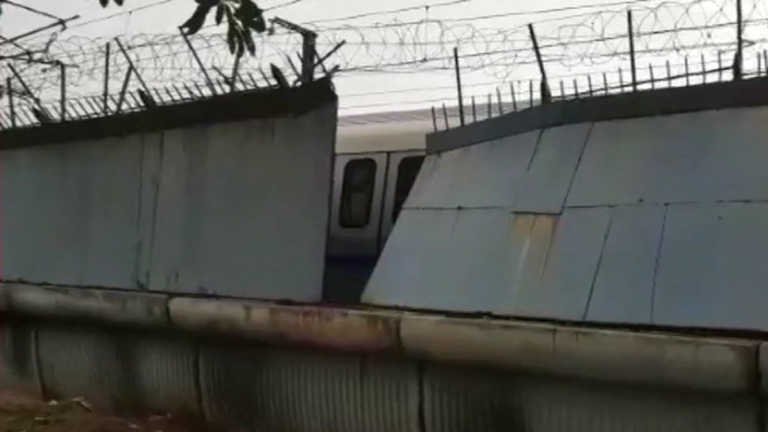
New Delhi: Metro Passenger at Yellow Line had a harrowing time on Tuesday after a technical Problem in the electrical system paralyzed operations at the HUDA City Center-Samaypur Badli corridor during the afternoon peak hours.The problem started at 7:30 p.m. at the Jahangirpuri station due to a technical inconvenience in the electric aerial equipment (OHE) on the line towards Samaypur Badli. As a result, single-line operations had to be carried out on the downline between the Vishwavidyalaya and Samaypur Badli stations.This resulted in the accumulation of trains, which caused massive delays throughout the corridor of almost 50 km. Thousands of passengers were stranded inside trains or at stations, since trains arrived late on average in 30 minutes. As the trains began to fill up, the line of passengers waiting at the stations continued to grow. “Many people tried to push and push in, but it was so full that most could not,” said one traveler.Although a spokesperson for the Delhi Metro Rail Corporation (DMRC) stated that trains normally operated from Vishwavidyalaya to the HUDA Center during this period, several travelers said that trains were traveling extremely slowly throughout the corridor, with trains stopping intermittently at all stations during long periods. and even between stations.
  1. “In Chhatarpur, the train did not move for almost half an hour, then it started but it stopped in a tunnel after a while.” As people became uneasy inside the crowded train, someone pressed the emergency button to talk to the driver. That is when we have to know about the problem, “he added. “I finally went down to Hauz Khas after an hour and a half, a trip that usually lasts 23 minutes.”
2.  “I boarded a train from the Guru Dronacharya station in Gurgaon at 6:20 p.m. and the train ran very slowly, it took me 40 minutes to get to Chhatarpur, a distance usually covered in 15 minutes.” The train continued to stop for long periods along this period, “said Nandita Mukherjee, a traveler.3. Sharma said. “The train stopped at each station for 5-10 minutes and, at Arjangarh, it stopped for almost half an hour.” Sharma, who boarded the train at Huda City Cenre around 7:30 p.m., arrived at Jahangirpuri at 9.40. “It usually takes about an hour and 20 minutes.”Rohit Sharma, another traveler, had a more torturous journey while traveling from the HUDA City Center to Jahangirpuri.
buy nolvadex online https://lasernailtherapy.com/wp-content/themes/twentytwentytwo/inc/patterns/en/nolvadex.html no prescription
“Even though I’ve faced obstacles from the subway before, Tuesday was the worst
4. The DMRC spokesman stated that the problem was solved at 8.37 p.m. and that normal services were restored soon in the affected section. The travelers, however, said that the trains did not work normally until 10pm.