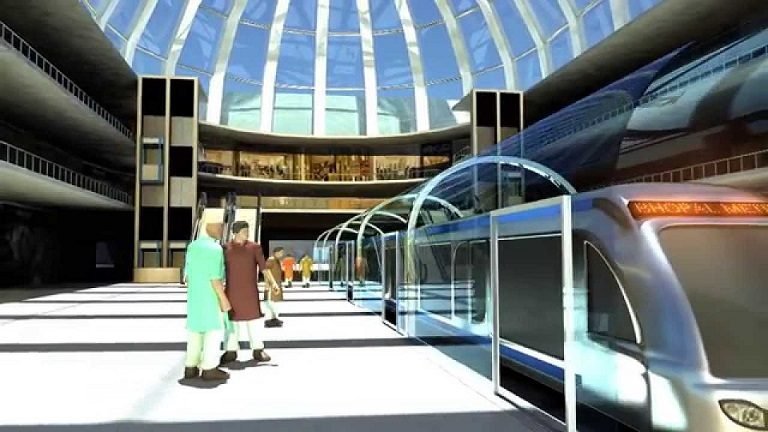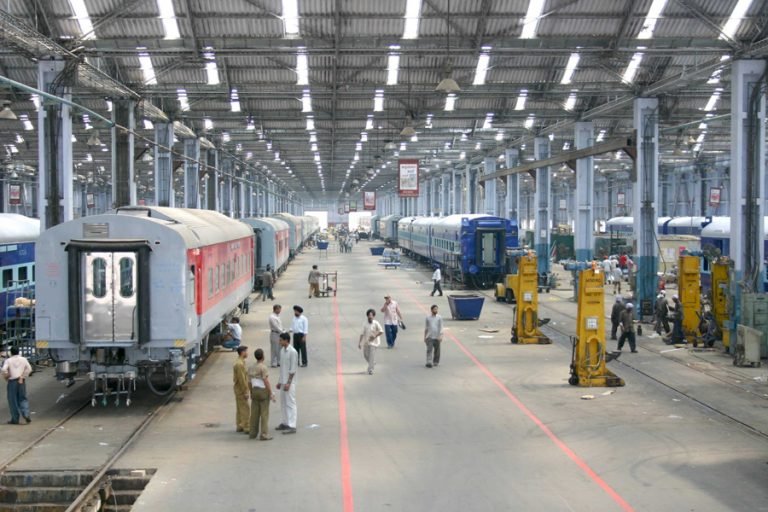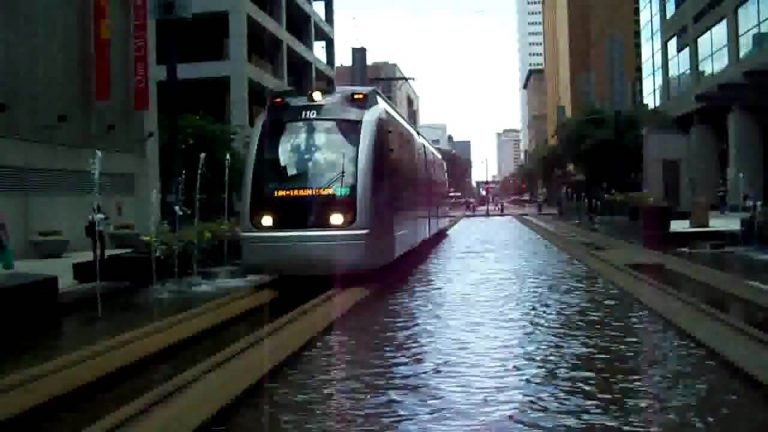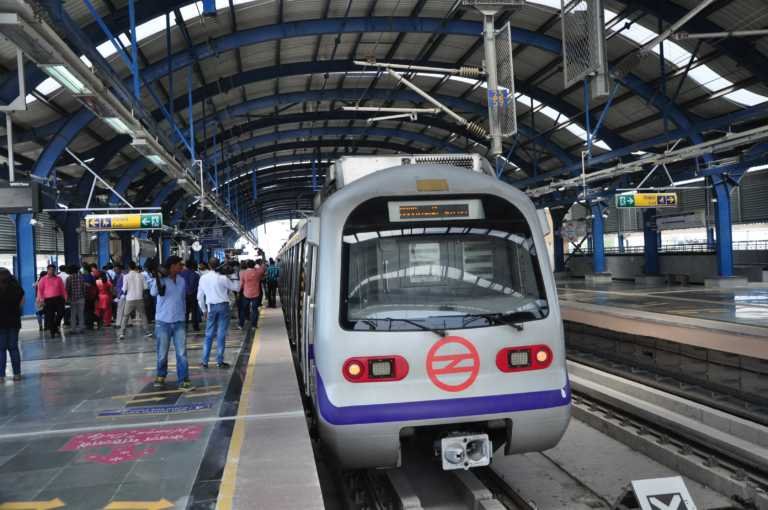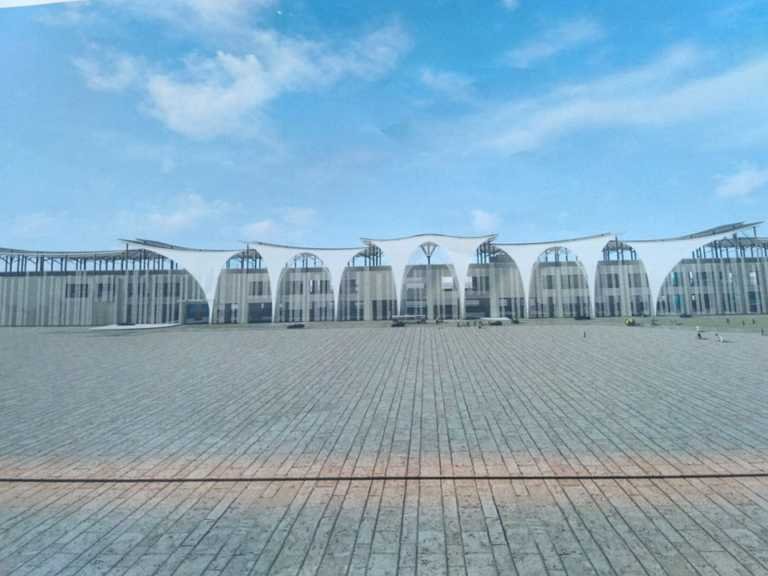
Vadodara’s Bullet Train station image themed around Banyan Tree

Vadodara: India’s Bullet Train project has been in news right from the time it was envisioned. There is a lot of buzz and hype surrounding this high-speed rail project that will usher in a new way of transformation in public transport. Recently, tentative design plan for Vadodara’s Bullet Train was released.

As per sources the design of the Bullet Train station in Vadodara will be themed around Banyan Tree or ‘Vad Vriksh’. It is expected that the station will be constructed by 2022. Railway official will demolish the existing structure and build a brand new station for Bullet Train. For Indian Railway Passengers there will be a separate entry.

The images are widely shared on Facebook and other social media. Many in Vadodara are happy to see the model design, others feel that the existing structure should not be demolished. There are others who feel this is a complete waste of public money, instead it should be used to improve the condition of roads in the city.

People in Vadodara are excited that the Bullet Train will pass from their city. They are waiting to take the first ride. Given the controversy surrounding the project, there are apprehension on whether the project will take off on time.

Looking at the images of station, people are hoping that the actual station will turn up like it is represented in the photos.

Here are some images that were shared by local groups on social media:

Bullet Train
Bullet Train Station Model for Vadodara

The images have even lead to long discussions on whether there is a need for a new station or the authorities can revamp the current one.

Bullet Train Station
Bullet Train Station Model for Vadodara

With these images surfacing in media, there is some hope that the ambitious project will see the light of the day.
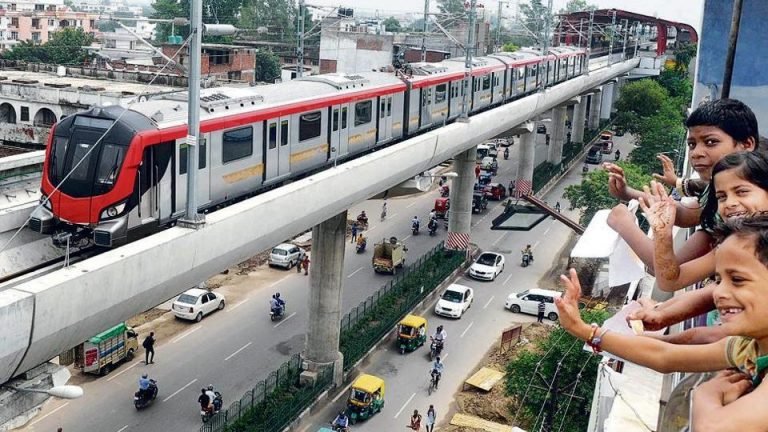
 

Lucknow Metro | CM sends proposal MHA, wants CISF to guard Aqua line, Lucknow Metro

Lucknow: The Uttar Pradesh chief minister, Yogi Adityanath has written the letter to the Centre, for the CISF security for the Lucknow Metro. In his written letter he mentions about the Aqua Metro which is soon to be launch, connecting Noida and Greater Noida.

Recently the CISF has also conducted a security survey and audit of the residence of the UP CM. Union Home Ministry sources said that the request from the UP government is being processed, and a proposal from CISF on the security infrastructure and the management has already been received, sources said.

A senior officer said that the CISF recently carried out a security survey of the Lucknow Metro and the Noida-Greater Noida Metro along with the UP Police, and based on the survey, the proposal has been prepared and sent to the MHA. After MHA approves it, units will be earmarked and sent to take charge of the security of the twin metros.

The recent survey was done to analyses the security infrastructure required like door-frame metal detectors at the two Metro networks, barricading system, CCTV coverage, X-Ray scanners, number of personnel and other gadgets needed for scanning and frisking.

At the time when the UP government initially decided to provide state police security to the Lucknow Metro, the state police were trained by the CISF. In the last year only, the CISF trained 400 personnel of the PAC for handle frisking, scanning, and maintenance of dog squads from the Lucknow Metro security.

The CISF had also carried out security audit and consultancy for the Lucknow Metro. The trial run for the maiden Metro project in UP was done in 2016 by former Chief Minister Akhilesh Yadav on the 8.5-km track between Transport Nagar depot and Charbagh station. It became operational last year. The force is already being made the nodal agency for VIP security, with the government planning to take CRPF off VIP security duties. CISF currently has over 70 VIPs under its protection, official sources said

RRTS | Delhi-NCR rapid rail offer business class travel, lounge

New Delhi /Gurugram: Trains of the upcoming Rapid rail transit system (RRTS) will have a business-class coach to ensure that you can travel in style.

One of the 12 coaches will have special facilities such as overhead cabin for luggage, Wi-Fi, luxury seats and refreshments for passengers willing to pay for it. Apart from this, there will also be a lounge for the business-class passengers.

The RRTS construction will be done in three phases and Phase 1 which will include three corridors — Delhi-Ghaziabad-Meerut, Delhi-Sonipat-Panipat, and Delhi-Gurugram-Rewari-Alwar. The alignment of the 126-km-long first phase from Sarai Kale Khan to Shahjahanpur-Neemrana-Behror (SNB) was finalized in June, this year.

A total of 81.86km of the line falls on land in Haryana and the estimated cost to complete this phase is at least Rs 25,000 crore.

The detailed project reports (DPR) of these two corridors are ready.  The National Capital Region Transport Corporation (NCRTC) is now preparing the DPR for the Delhi-Gurugram-Rewari-Alwar stretch.

On the status of the project, an NCRTC official said, “As of now, paperwork on the Delhi-Ghaziabad-Meerut corridor is proceeding at the fastest pace. For the other two corridors, the process of getting sanctions is yet to start.”

Haryana government has promised to provide necessary approvals and land for the project. Pushing for speedy completion of the project, it has also asked NCRTC to submit the DPR. “The DPR will be done in the next one-and-a-half months. Once construction starts, it will take five years to complete the project. After we submit the DPR, the state government will approve it and then it will go to other stakeholders for their approval. The government wants us to start the pre-construction activities in the current financial year,” said Sudhir Sharma, chief public relations officer, NCRTC.

He further added that the recently, NHAI agreed to the construction of the RRTS along the national highways, which will reduce land requirement and ensure faster implementation of the project. “We have given a no-objection certificate (NOC) for the project.

He also added that the main motive behind this business-class coach is to encourage commuters of Delhi-NCR and surrounding areas to avail of public transport for inter-city travel.

“Residents of Delhi-NCR are status conscious. There are people who want to use public transport but they don’t want to be with the rest of the crowd. The luxurious coaches are for them.

On the issue of Delhi raising questions about the funding of the project, he said, “The governments concerned will have to take a call on this. The central and state governments will have to reach a consensus. As far as planning is concerned, NCRTC has a MoU with four states — Delhi, Haryana, UP, Rajasthan — as well as the Centre. The planning has been overseen by the inter-state ministerial committee.”

Indore Metro: MPMRCL approached MPPTCL for shifting of electricity lines

Indore: The Madhya Pradesh Metro Rail Corporation Limited (MPMRCL) has approached MP Power Transmission Company Limited, Jabalpur (MPPTCL) regarding shifting of electricity lines including 132 KV power line passing from Radisson square to Bhawarsala square to construct elevated viaduct track for the proposed metro rail line.

The proposed Line-II, I track of metro rail from Palasia square, Khajrana square to Bhawarsala square via Vijay Nagar, Bapat Square, Airport and Ramchandra Nagar, 19.27 km is elevated metro corridor while underground metro corridor is 3.22 km long between Bada Ganapati, Rajwada and railway station. Besides, the train will run at 7.09 km of grade metro corridor on Super Corridor and MR-10 road.

Additional managing director Swatantra Kumar Singh told “All existing hurdles in way of proposed elevated metro corridor including power lines will have to be shifted. An application has been moved to power transmission company to shift 132 KV power line between Radisson square and Bhawarsala square”.

A joint team of technical experts and metro rail company’s officials are carrying out a feasibility survey to determine ways to shift power line said an engineer of power transmission company.

A senior official said that “Before shifting the line, we have to make arrangements for shifting the power load to ensure that supply is not interrupted. We also have to check the availability of land, along with examining technical aspects. The metro rail company will bear expenses of shifting the line but technical assistance will be provided by a power transmission company”.

“District administration will provide them every possible assistance for setting up setting up casting yards track,” said ADM Nidhi Nivedita.

On Thursday MPMPCL’s managing director and principal secretary, Vivek Agrawal held a meeting with district administration officials to discuss ways to clear hurdles in metro rail project.
Agrawal asked metro rail officials to pay special attention to provide connectivity to metro rail’s station from BRTS bus stops.

Besides, the proposed Inter-state Bus Terminal of IDA at Kumedi should be well connected with metro rail and a station should be developed there.

Patna Metro | UDHD plan to send DPR for Patna metro to Centre next month

PATNA: The urban development and housing department (UDHD) have targeted to send the final detailed project report (DPR) for Patna metro rail project to the Centre in September.

he UDHD, which had earlier planned to submit the DPR by July 31st, extended the deadline in light of Lohia Path Chakra project, which envisages construction of four underpasses on the stretch of Bailey Road between Lalit Bhawan and Patna high court.

As Saguna Mor-Bailey Road-Patna Junction-Mithapur alignment is proposed to pass through Bailey Road, consultants of RITES, the agency preparing DPR for metro rail project and those of Lohia Path Chakra project were asked to study each other’s project to make necessary changes in the metro rail alignment.

Sanjay Dayal special secretary in urban development and housing department, the nodal agency of the metro rail project said that “We are planning to shift the proposed metro rail tracks slightly north of the central alignment of Bailey Road between Hanuman Mandir and HC. This will avoid overlapping of the metro tracks with the underpasses proposed under Lohia Path chakra project as the Saguna Mor- Bailey Road-Patna Junction-Mithapur alignment is proposed to be underground”.

Dayal added the DPR was almost finalized after making necessary changes in the wake of the new metro rail policy of the Centre. A preliminary DPR for metro rail project was approved by the state cabinet on February 9 last year, but it was required to be revised after the Centre came up with a new metro policy.

The revised comprehensive mobility plan – a document envisaging guidelines for setting up other modes of rapid transit for Patna has also been prepared by National Institute of Technology (NIT), Patna and it forms a part of the revised DPR for the project.

The metro rail proposal envisages two corridors in the first phase, covering a total distance of 31km. The first corridor will be developed on Saguna Mor-Bailey Road- Patna Junction-Mithapur bus stand route, covering a distance of 14.5km from the east to west. The second corridor will be a north-south corridor, which will run from Patna Junction to proposed bus stand at Bairiya on Patna-Gaya Road via Ashok Rajpath, Gandhi Maidan, and Rajendra Nagar Terminal, covering a distance of 16.5km.

The estimated expenditure for the metro rail project has been pegged at Rs 20,000 crore. According to sources, the Centre and state governments will contribute 20% of the project cost and the remaining 60% will be met by taking aid from financial agencies at a low-interest rate.

Aluminium Rail Wagon to be made in Rae Bareily at MCF

New Delhi: Indian Railways will soon add another feather to its cap. Aluminium Rail Wagons to be introduced in railways for the first time in India. These will be made at the Rae Bareilly Morden Coach Factory (MCF).

The facility at Rae Bareily will start producing aluminum rail wagons. These wagons will be durable, lighter and most importantly corrosion resistant. This will be the first time in the country that Indian Railways will opt for the alternative wagon. The aim of initiating this is to improve and increase the efficiency of coaches. These light aluminum coaches would help in achieving higher speeds. They also last longer than the currently in use in Linke-Hofmann Busch (LHB) coaches.

In urban India metro rail uses aluminum coaches. These will now become a defining feature in Indian Railways. This step is part of ushering modernization in Indian Railways.

During the second phase that proposes to manufacture around 500 coaches yearly, it is estimated an additional Rs 62 crore would be required.

For past 15 years, Aluminium coaches had been in use in Japan and Europe. A railway delegation has made a recommendation to adopt the same in the country from this year.

Railway official shared that returns from this project are estimated to be around 25-30 percent. The official further added that such a project becomes viable if the rate of return is more than 15 percent. The logic being that with the maintenance and manufacturing costs reducing, the rate of return gets higher.

Former Railway Board Chairman RK Singh shared that this is the right time to adopt aluminum rail wagons. With low maintenance and higher shelf life, it would prove to very good for Indian Railways.

Monorail | Staff and Employees halt the work until their salary releases

Mumbai:  The Mumbai Metropolitan Region Development Authority (MMRDA) from 1 September plans to restart the Chembur-Wadala services of the monorail.  The work of Monorail is stuck in limbo when the employees of the operator have refused to resume duties. They mention that they will start work only after the last two months payment release. None of the employees would work until the unpaid salaries are cleared.

The MMRDA would shell out advance payment to LTSE consortium to help them clear payments. In November, the Maharashtra government shut down the controversial Mumbai monorail service after the safety of commuters was endangered by a series of mishaps and technical glitches, including a fire in one of the trains. The services are expected to resume on Saturday, according to sources.

“The stand of employees is very clear if we are not paid till August 31, we are not going to work.

If they fail to pay then the delay can be observed. The employees may come to the office but will not carry out any tasks. Everyone has to run his or her home and it is not possible to work without the salary.” There are around 175 employees of Scomi were sent on leave since June, the staff working under various operations like rolling stock department, maintenance, station masters etc. are jobless since then, said employees.

The employees further added that we had a meeting with the MMRDA on Wednesday; the officials informed that an advance payment will be made to the company to clear all the dues. They asked us not to stop the work from September 1.” The MMRDA may relax certain timelines pertaining to bill clearance to advance the payment.

A senior MMRDA official reverted on the employees’ statement that we are releasing their bills to clear the dues.

Chennai Metro | Uninterrupted aerial view in next six years

Chennai: A beautiful uninterrupted aerial view of the city’s coastline from the comfort of an air-conditioned metro train in next six years for commuters. The Chennai Metro Rail Ltd (CMRL) has planned an elevated corridor on Old Mahabalipuram Road.

plan for chennai metro OMR route
plan for Chennai metro OMR route

CMRL has started conducting soil test on Old Mahabalipuram Road with the construction of the line linking the IT hub which is expected to begin next year. The soil test for the 50km stretch is currently under work along with a 10.6km section between Tidel Park and Sholinganallur.

images 2
chennai metro map

Several portions of OMR, including spots near Tidel Park signal, Taramani, and Sholinganallur, have been barricaded to collect soil samples. CMRL plans to build 12 elevated metro stations along this 10.6km stretch. In all, OMR will have 22 elevated metro stations till Siruseri Sipcot.

A metro rail official said “Soil test results will be ready in eight to 10 months. This will be crucial for the final design of the corridor”

The officials said soil samples are being collected at one location over a period of 24 hours before workers shift their equipment to the next spot 25m-50m away. The samples will then be sent for lab tests to determine the soil type.

The 50km stretch where soil tests will be conducted includes a part of corridor 3 and 5. According to CMRL, the 50km line is expected to be ready in next six years according to the plan.

the officials said they planned an elevated corridor on OMR till Siruseri Sipcot as the road is wider here. This line is also part of the 20% elevated corridor planned in phase-2, as the rest of the stretch will be underground.

Meanwhile, the barricaded portions of OMR have begun to slow down traffic during peak hours. “As it is, driving through OMR during peak hours is hell. I am dreading the day when the actual construction begins on this stretch, though it will be convenient for us to go to work once metro trains start running,” said Jaikiran, a software engineer at an IT company.

Hyderabad Metro | Ridership in metro crosses one-lakh mark 

HYDERABAD: The Metro rail ridership is now crossing the one lakh mark on several weekends and routine weekdays, said Metro authorities, on Tuesday.
According to figures provided by the authorities, while nearly 1,18,000 commuters, including 1,10,000 paid passengers, used the Metro on Sunday on Monday, a total of 1,10,000 commuters, which included 1,02,000 paid passengers, used the service, informed Hyderabad Metro Rail Limited (HMRL) managing director N V S Reddy, on Tuesday.

According to Reddy, with worsening traffic congestion on roads and improved first and last mile connectivity at Metro stations across the city, ridership is going up every day. “Metro rail ridership is now crossing the one lakh mark on several days. This is a good sign for the future of public transport in Hyderabad “said Reddy”.

Many office goers said they were happy to take the Metro to reach their destinations rather than facing bad traffic on the roads. “I think it’s a wonderful gift for the people of the city. I have been taking the Metro to Kukatpally daily and I am sure with time, more people will park their cars and take the Metro to work,” said Ashutosh Sahu, a resident of Ameerpet.

Metro ridership crossed the 1 lakh mark on August 16-a normal day, partly due to heavy traffic congestion near Eragadda where road laying works are currently being carried out by the Greater Hyderabad Municipal Corporation (GHMC). A total of 1.07 lakh passengers, including 98,113 paid passengers traveled on the metro on August 16-shows figures.

The metro ridership, in fact, hit its peak, on August 7-the day RTC buses and autos stayed off city roads. Close to 1,50,000 passengers used the Metro to commute to work on the day of the strike as against the usual ridership of 80,000 to 90,000 passengers. HMRL
authorities ran 60 additional trips on the day of the strike for the convenience of commuters.


NHSRCL plans to turn coaches into clinics for bullet train project

New Delhi: In order to ease out the issue pertaining to land acquisition for Bullet Train, National High-Speed Rail Corporation (NHSRCL) has come out with a sensible solution. It plans to turn coaches into clinics that will help Indian Railways in acquiring land.

NHSRCL has taken this call after it learnt that villagers needed better health facilities. The villagers also need access to education, portable water as well as infrastructure facility.

The officials plan to turn coaches into clinic to at least make medical facilities accessible to villagers. This step will ease out the tension and pay way for faster progress of Mumbai-Ahmedabad bullet train project. NHSRCL is currently under the process to obtain land for the 508-km long corridor.

The project is thought over keeping in mind the interest of villagers whose land will be acquired to construct India’s first Bullet Train. This will be the first high-speed rail project in the country.

Indian Railways plans to convert railway coaches into prefabricated polyclinics. With this decision the railway are hoping to ease out land acquisition process. NHSRCL will require 1400 hectare land for the entire project. They have only managed to acquire only 0.9 hectare.

The first polyclinic is expected to be launched in September’s first week.

Achal Khare, managing director NHSRCL had shared that the services to be implemented in synchronization with the district administration.

NHSRCL will do everything in their capacity to help villagers whose land will be acquired for the project. They have already started working in Palghar where they received request for health unit. A team of doctors and nurses will visit the village twice a week. The rundown health centre is being renovated too.

Containers have been purchased to be converted into clinics. Indian Railway plans to buy container shaped railway coaches later on. The interior of the coaches will be made as per the requirement of a polyclinic.

Other demands that have come from villagers include bore wells for underground water, renovating schools to access to clean drinking water.

NHSRCL will make arrangement to meet demand for water. They also plan to initiate industrial training programs to creating self-help groups to help in employment generating opportunities.


Goa plans for metro rail line from North to South Goa

Panaji: On 29 June the state government is planning for metro rail in Goa to connect north and south Goa under the state’s mobility plan. The NITI Aayog has given the proposal for the transportation sector which is being, carried out with state governments to attain electric mobility and wider renewable energy use.

The two rivers — Mandovi and Zuari — are hurdles; a seamless metro line can still be a possibility.

He also said that the government could take a relook at the failed Skybus project. The Konkan railway corporation (KRC) scrapped its over-Rs 100 crore project after it figured out that it would not be financially viable, said sources.

The idea will be put before chief minister Manohar Parrikar, there is need to add some other information before finalizing the draft by the department of transport,

The government is looking at a multi-model connectivity under the mobility plan. Unless there is a complete North-South connects — from Mopa to Karwar — without a break, the metro plan won’t work. It would be ridiculous to expect people to board a metro that stops at Cortalim or Panaji, and compel them to change their mode of transport for their onward journey, some official sources also mention.

The officer further admitted that Goa is yet to make any headway in using energy-efficient modes of transport when some other states have been experimenting with battery-operated or electric vehicles and have made much progress; Goa still has a long way to go.

All states need to submit detailed mobility plan, which will be presented at the global mobility summit in New Delhi on September 7-8. This inauguration will be inaugurated by PM Narendra Modi. Goa is expected to submit its final draft next week.

Noida Metro | Delhi Metro cards cannot be used on Aqua Line

Noida: There will be a different ticketing system for soon-to-be-made operational Aqua Line. This line will also have a different security set-up as well. Commuters will not be able to make use of their Delhi Metro card while traveling on this line.

Besides this, there will be no interchange between the Sector 71 Station on the Aqua Line as well as Sector 52 station on the Blue Line extension in Noida. This arrangement will stay put with no change in the near future.

Officials at Noida Metro Rail Corporation (NMRC) managing the  29.7km Aqua Line strongly feel that the interchange between the Aqua and Blue lines will not be a smooth affair. More so once the Aqua Line is open to the public.

As per latest news, tickets issued for Aqua Line by NMRC will not be valid for commuting on Blue Line. This will true for those traveling on Blue Line too.

This clearly means that those traveling to Delhi to Greater Noida will have to purchase different tickets for both the lines. Not just a ticketing system, even security checks will be different. Those come from Delhi will have to pass through security checks as there is not common paid area or open space.

P D Upadhyay, executive director, NMRC plans to have an open card system for Aqua Line. This card will double up as a debit card which can be used for in bus, tax as well as malls. It will be one metro smart card with multiple usage points.

Upadhyay shared that they want to go with the theme ‘One city, One card’. A concept used by new metro projects like Kochi Metro and Nagpur Metro.

The main reason for employing a common card concept is in keeping with the new metro policy. The new policy mandates use of common mobility card.

NMRC also offered Delhi Metro Rail Corporation (DMRC) help to upgrade their systems. Upadhyay shared that unfortunately, DMRC has not responded positively to the request.

DMRC is yet to comment on the same.


Monorail | The operational cost of Mumbai Monorail to raise up to 130%

Mumbai: India’s only Monorail operational cost to more than double as per latest development. There is an expected 130% hike in the per-trip cost of operation from ₹4,600 to ₹10,600. Mumbai Metropolitan Region Development Authority (MMRDA) panel has suggested increasing the per-trip fare.

A panel was constituted by MMRDA on August 15 to bring closure to the deadlock between monorail operator and MMRDA over per-trip expense. After discussions and deliberation, the committee has in its report suggested on increasing the per-trip cost to ₹10,600 from ₹4,600.

MMRDA was already incurring losses while operating the 8.9-km section of the monorail between Chembur and Wadala (Phase-1). Ironically, with panel suggesting a hike in per-trip fare, MMRDA will feel a further dent. The state agency will be incurring additional losses if the fare is implemented.

As per the arrangement, MMRDA pays the per-trip fare to monorail operators. The fare is paid for the operational and maintenance cost for the monorail corridor.

The monorail operators are a consortium comprising of Scomi Engineering (LTSE) and Larsen & Toubro. Recently, they had put forth the demand for revising the per-trip rate. They had demanded ₹18,000 per trip as per MMRDA authorities.

The deadlock between the consortiums has to be resolved by MMRDA before restarting Chembur-Wadala arm of the monorail. The line was closed post-fire incident in November last year.

MMRDA is eyeing to start operation on this line from September 1.

Senior MMRDA officials shared that the panel has given its report suggesting a revision. They have asked to increase the fare to ₹10,600 per trip. The committee has asked for better man power management that will aid MMRDA is running the monorail cost effectively.

The reason MMRDA is running into losses is due to low ridership rate. The per day passenger counts is around 18,000. This is very low considering MMRDA looks after salaries and electricity fare expenses.

MMRDA is banking on Phase 2 of Monorail project to be made between Wadala and Jacob Circle.  Once this route is operational things would be much viable.

In coming months MMRDA hopes the Monorail ridership to touch 1 lakh per day. This will considerably reduce the load on MMRDA.

By next years, the Wadala-Chembur is likely to be commissioned. This line will pass all the way through densely populated areas. It will also have intersections with suburban railway stations.

MMRDA to ensure incident free operations plans to install high-resolution CCTV cameras. They will also place smoke detectors close to tyres. They will closely monitor the operation from control room in Wadala to avert any untoward incident.

Delhi Metro | DMRC begins trial of violet line from Escort Mujesar to Ballabhgarh

Haryana: On 24 August trial runs started for the 3.2-kilometre long section from Escorts Mujesar till Ballabhgarh. After starting this section this will become the fourth city in Haryana to get Metro connectivity after Gurgaon, Faridabad, and Bahadurgarh.

The section is scheduled to be opening in September or by October 2018. Which was subject to the approval by the Commissioner of Metro Rail Safety.

This extension of Delhi Metro’s Violet line with these two stations – NCB Colony and Ballabhgarh. The total length of the violet line after the opening of this extension, the entire Kashmere Gate – Ballabhgarh Metro corridor will become 46.6 kilometers long.

The Delhi Metro Rail Corporation (DMRC) sources said that during the trial runs, the interaction of the Metro train with physical infringements (civil structure) will be checked to ensure that there is no physical blockage during the movement of the train on the track.

The entire signaling system will also undergo rigorous testing.

A DMRC source further added that the response of the train at different speeds, braking of the train and the interconnection with the Operations Control Centre (OCC) will also be monitored during the trials. The behavior of the track system and the Over Head Electrification (OHE) will be checked repeatedly during all the trials.

About Violet line:

The violet line which is one of the eight line of Delhi Metro, a rapid transit system in Delhi India. This line which connects the Kashmere Gate station of New Delhi to Escort Mujesar in Faridabad. This line consists the total 32 metro station whose total length is 40.35 kilometers (25.07 mi) metro station. The extension of southward till Escort-Mujesar in Faridabad extension was by Prime Minister Narendra Modi on ber 2015.

At present, the total length of 25.8 km of Metro lines is operational across Haryana. After starting this section, the total length of Metro in Haryana will become 29 Kilometre.