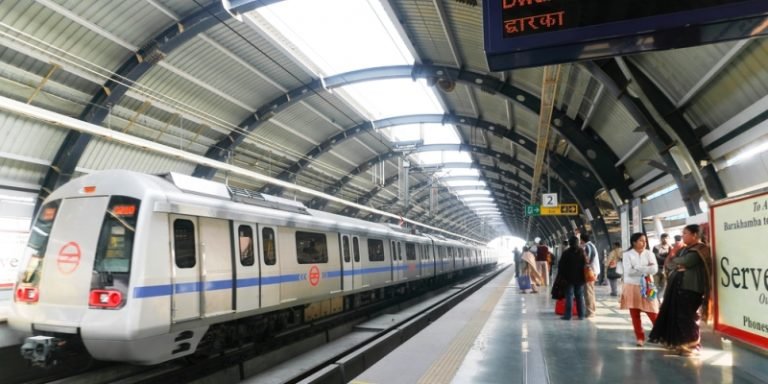
Delhi Metro Rail Corporation to take action against contractor of Kochi metro

KOCHI: On Tuesday, the Delhi Metro Rail Corporation (DMRC) issued a statement that agency will take action against the contractors-Cheriyan Varkey Constructions- following the incident in which an iron rod fell on a moving car. “The incident of an iron rod falling on a moving car and damaging the windscreen at MG Road Metro construction site on Monday has caused concern for DMRC.

After a detailed discussion on the incident, DMRC has taken this issue very seriously and action is being taken against the contractor for the serious safety lapse as per the contract conditions,” according to the statement.

After a detailed discussion on the incident, DMRC has taken this issue very seriously and action is being taken against the contractor for the serious safety lapse as per the contract conditions,” according to the statement.


On Monday evening a four-meter-long iron rod fell on the car driven by Fort Kochi ASI Sukumaran. Though the car suffered major damages, the family inside the car had a miraculous escape. Following the incident, criticism was raised by many against the lack of safety measures by the contractors. Also last month, a cement block fell upon an autorickshaw near the Lissie Station.

Controversy over DMRC’s role:

In December 2011, Kerala Minister V.K. Ebrahim Kunju announced that the work would be offered by global tender. And the Delhi Metro Rail Corporation (DMRC)  former Managing Director E.Sreedharan said that he would not be interested in participating unless the DMRC was involved. And the citing the examples of metros in Bangalore and Chennai, he also said that they decided to take up the work on their own but had to depend on the DMRC for many things.

Some government ministers and IAS official alleged that Central Vigilance Commission (CVC) norms do not allow the awarding of a contract to an agency which did the consultancy for a project. Even though the DMRC principal adviser E. Sreedharan has stated that the CVC norms would not apply in this case, as the contract is between two government agencies. Apart from this, there is some another issue for the metro was that DMRC had to obtain the permission of its director’s board to undertake projects outside Delhi.

On 8 January 2013, after  a high level meeting attended by Oommen Chandy (then Chief Minister), Minister of Overseas Indian Affairs Vayalar Ravi, Union Minister K.V. Thomas, DMRC Principal Advisor E. Sreedharan, Union Urban Development Secretary Sudheer Krishna, Chief Secretary Jose Syriac, KMRL MD Elias George, DMRC MD Mangu Singh, Union Minister for Urban Development Kamal Nath officially confirmed that DMRC would undertake the work of Kochi Metro.

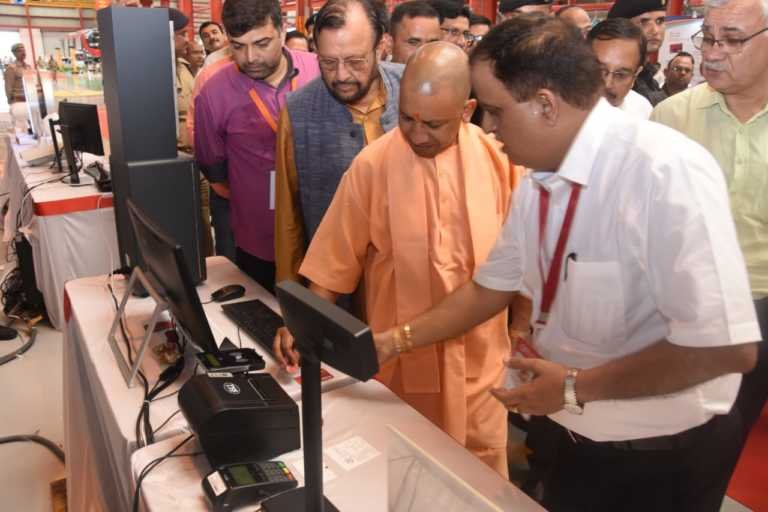
Lucknow Metro | Uttar Pradesh inaugurates an exhibition on the occasion of Lucknow Metro Diwas

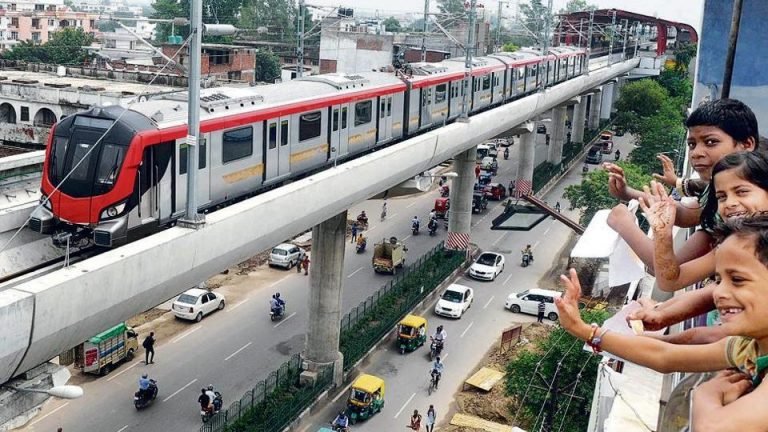
Lucknow Metro: On 5th September Shri Yogi Adityanath, Hon’ble Chief Minister, ’, 2018 at the Transport Nagar Metro Depot to commemorate the completion of one year of Metro operations. He also unveiled Lucknow Metro ‘Mascot’ and the Lucknow Metro ‘Mobile App’ on the occasion and lauded the efforts of Shri Kumar Keshav, Managing Director and Lucknow Metro Rail Corporation (LMRC) for providing an excellent and quality public transport to the people of Lucknow.

The Chief Minister aspired that such a quality public transport should be made available for other cities in Uttar Pradesh for the comfort of the public. Shri Suresh Khanna, Hon’ble Parliamentary Affairs Minister, Urban Development, Government of Uttar Pradesh also emphasized the need for developing and starting Metro in other cities of Uttar Pradesh on the occasion. According to him, Metro is perceived to be an engine of infrastructural and economic development of the city/town wherever it comes up.

IMG 20180905 WA0009
Lucknow Metro

Shri Durga Shankar Mishra, Chairman/LMRC and Secretary, Ministry of Urban and Housing Affairs (MoUHA), Government of India also commended the stupendous efforts of LMRC for implementing Metro in Lucknow in such a short span of just three years and for being awarded many international and national awards for its achievement in. He said that the Government of India (GoI) is committed to implementing Metro in other cities throughout the Country and the coming time will see building and commissioning of more ‘Metro’ with a much faster pace.

The occasion turned out to be memorable for LMRC as the Hon’ble Chief Minister, Uttar Pradesh unveiled Lucknow Metro’s ‘Mascot’ in the newly built auditorium at the Transport Nagar Metro Depot. He also inaugurated ‘Lucknow Metro App’ for the online convenience of the Metro passengers who will now find it easy locating Metro station, calculating fare, getting the train timings.

The Hon’ble Chief Minister also gave away MD’s Gold Medal award to LMRC employees namely Mr. Arjun Shrivastava, Assistant Manager (Civil) and Ms. Neetu Gupta, Station Controller/Train Operator for displaying outstanding performance in the Projects and Operations department during the year 2017 – 2018. He also awarded MD’s Silver Medal award to Mr.

Gaurav Sharma, Junior Engineer (Rolling Stock) and Mr. Amit Kumar, Junior Engineer (Electrical) for showing exemplary performance in the rolling stock and electrical work for the company during the year 2017 – 2018. The Charbagh Metro Station was adjudged the ‘Best Kept Station’ by the Hon’ble Chief Minister on the occasion for its overall performance throughout the last year of Metro operations

Delhi Metro | DMRC unreadable metro cards to be turned into smart cards

New Delhi: In a bid to improve customer service, Delhi Metro Rail Corporation (DMRC) has simplified the process of reclaiming unreadable cards. These cards end up becoming unreadable due to technical issues when presented at the entry point at the automatic fare collection gates.

These cards were earlier deposited at the metro station and later collected by users. The physical cards had to be reclaimed after five days. Now DMRC plans to turn these physical cards into brand new smart cards for commuters.

Riders have to collect the smart cards from the customer care desk at Delhi Metro station. This service is offered free of cost to commuters as per metro officials.

These new cards can be recharged as per the requirement of the customers. Alternatively, they can use the card or token made available on the station. The idea is to offer seamless travel to patrons of the metro.

DMRC had to take this step to reduce customer grievance. As per the current situation, if the card becomes unreadable owing to technical faults, customers had to wait for five or more days to reclaim it.

They had to deposit the card at customer care desk and then come after five days or more to collect. There were instances when a rider had to come to wait for longer days before the technical issue was sorted for their card.

DMRC feels that with this new system customers will no longer have to wait or waste time to reclaim the card. For unreadable cards, customers will have to hand over the card at metro counters and get a brand new smart card. This will reduce customer inconvenience and facilitate hassle-free travel.

The smart card can be used after five days from the date it has been issued. This card will have the balance amount which can be used for paying the metro fare at any of the stations.

Hyderabad Metro | HMRL registers an overwhelming 20 million patronage

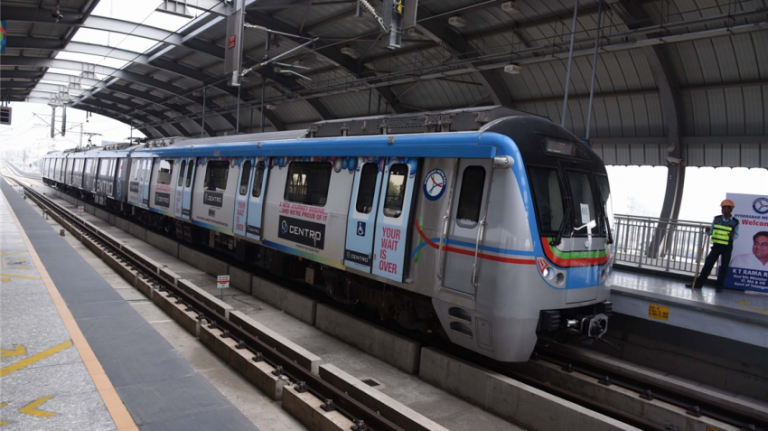
Hyderabad: Metro rail is soon becoming a preferred mode of public transport in Hyderabad.  The L&T Metro Rail (Hyderabad) Limited shared that Hyderabad Metro patronage has touched to a whopping 20 million. The metro rail officials are ecstatic over the overwhelming support received from the people of Hyderabad.

This figures come as good news and hint at the positive attitude of people towards metro travel. The Hyderabad Metro official shared the figures on Tuesday and thanked the people of the city for making metro service popular.

KVB Reddy, managing director and chief executive officer of LTMRHL in his statement “thanked the Hyderabadis for welcoming and embracing Hyderabad Metro Rail services in an “overwhelming” manner”.

His statement also added, “We have touched this number earlier than expected with only the Nagole-Ameerpet-Miyapur operational stretch, and we are sure that these numbers will increase manifold with the inauguration of Ameerpet-LB Nagar stretch.”

It was November last year that Prime Minister Narendra Modi had launched the 30 km stretch between Miyapur-Ameerpet-Nagole out of the 72-km long elevated Hyderabad metro project.

As per the floor plan, there are 24 metro stations in the 30 km stretch that is made operational. It is the consortium of L&T Metro Rail (Hyderabad) Limited that is constructing the Hyderabad Metro Rail Limited (HMRL) project diagonally all the three metro corridors.

As per the MD, the reason for such a wonderful response is the last and first-mile connectivity features. This has significantly improved the ridership rate with passengers have multiple options to travel to reach metro station.

Reddy stressed they will take all necessary initiative to improve customer service and ensure stress-free travel. Metro officials have also offered free water and restroom facilities for commuters at all the metro stations.

Reddy says that they are planning to several other facilities soon. The focus to consistently improve and upgrade services offered to metro commuters.

Chennai Metro | CMRL may not carry work on proposed airport tunnel

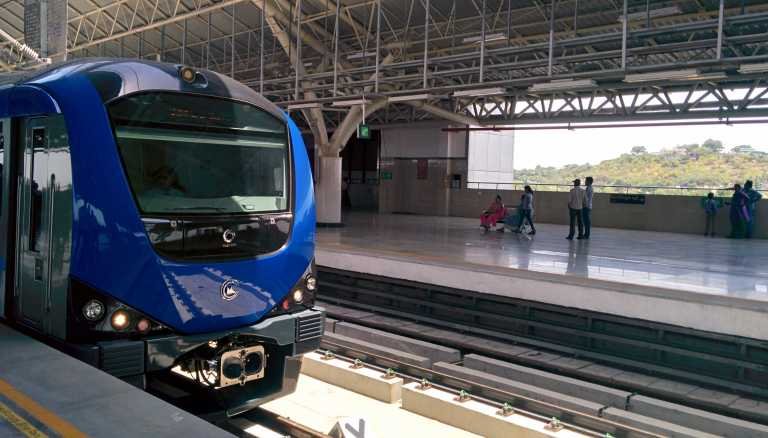
Chennai: The airport tunnel work that will connect new satellite terminal with current terminal will now be carried via tendering process by Airport authorities. Earlier Chennai Metro Rail Limited (CMRL) was going to build it.

As per recent development, CMRL will not be constructing the terminal. The Airport Authority of India (AAI) will now invite tender for the same. The AAI also stated that CMRL can participate in the tendering process.

The airport tunnel work is designed to connect new satellite terminal with the existing one at the Chennai airport.

AAI will now float a tender to finalize the contractor to take up the construction work. The winning bidder will then construct the tunnel and both the terminals.

In the beginning, it was planned that CMRL would take up the tunnel work. But now there is a change of plan, the reasons for which is not clear.

AAI official informs that CMRL can participate in the tendering process. In case, they win all the work will be done by them once they get selected.

The official also shares that they want the work to begin at the earliest.

The CMRL officials, on the other hand, shared that they are not aware of the recent development.

The AAI wants to build a tunnel and a satellite terminal as the current one is reaching a saturation point and largely remains congested.

As per the plan, the tunnel will link the current domestic terminal with the international terminal of the airport via satellite terminal. This will be positioned between the main and secondary runway and also nearer to the remote bays (supplementary bays in the apron for aircraft).

Along with this project, Chennai airport has planned various infrastructure development works. This includes building an integrated terminal along with various runway related works.

CMRL official shared that they are not aware of the new development with regards to terminal work.

Bullet Train | Is the ambitious Bullet Train Project is financially viable in India?

Vadodara: Environmental activists from Gujarat Rohit Prajapati and Krishnakant have shared Railway Committee report (2014-15) that stated Bullet Train not financially viable project.
They shared the findings of the report with Metro Rail News. Here is the copy of the article shared by them.
Farmers, families, villagers, and many others rightfully protest land acquisition for and raise some valid questions about the proposed Mumbai Ahmedabad Bullet Train Project. Interestingly, earlier, the Indian government’s committee too had raised some questions and deemed the project financially unviable. In simple terms, it is a very costly and a loss-making proposition. The committees instead stated that the funds being earmarked for this “unviable” project should be used judiciously for long pending railway projects.
The Dinesh Trivedi, the Chairperson, Standing Committee on Railways (2014 – 2015), of Ministry of Railways (RAILWAY BOARD) of 16th Lok Sabha, on 17 December 2014 clearly states in the report “HIGH-SPEED TRAINS 17. The Committee learned that the Railways have proposed to introduce bullet train on the already identified Mumbai – Ahmedabad sector, … The Ministry has justified this project even though it is financially unviable stating that as compared to other big railway projects, bullet train project has additional unique feature contributing to improved economic rate of return in terms of value of time saved of passengers, environmental benefits, appreciation in real estate value and residual value of infrastructure, besides enhancing the country’s prestige internationally.
The committee is not fully convinced with the above justifications given by the Ministry. The Committee feels that if the amount equivalent to that proposed to expanded for bullet train is used for execution of the long-pending railway projects, the benefits to the general public would be much more.
The Committee, therefore, desire that before going ahead with the bullet train project, the Ministry should conduct a cost-benefit analysis for the project vis-à-vis other pending railway projects so that the scarce resource of the Railways are utilized optimally and judiciously.”
Incidentally, this very report, for reasons best known to them, also contradicts itself: “However, the proposal for introduction of the high-speed train on the Mumbai-Ahmedabad sector is laudable.”
It is apparent that the government chose to focus on only some of the positive points of the report and not on its drawbacks that outweigh the assumed benefits. Who demanded the bullet train in the first place? What are the government compulsions to continue to opt for and insist on an unviable project? The Indian citizen and taxpayer deserve immediate and complete clarification.
We strongly feel that the statements of the committee for Bullet Train Project though it is financially unviable. The Committee feels that if the amount equivalent to that proposed to expanded for bullet train is used for execution of the long-pending railway projects, the benefits to the general public would be much more… the scarce resource of the Railways are utilized optimally and judiciously.” need full explanations and disclosure from the Government of India.
The people have a right to know the reasons why the government undermines the clearly spelled out observation of a committee it set up. Does the taxpayer assume that this all-party committee was either “browbeaten” or “convinced” to pitch in a few positive points to contradict its own observations?
The Bullet Train Project, in its very conception, ignores the crucial issues like financial viability and prudence, judicious prioritizing of India’s resources, and democratic consensus for a public project.
Are we suffering from a misplaced inferiority complex, and is that why the Government wants to show off to the world that we do have a Bullet Train? Does the Bullet Train represent the symbol of ideal Development? What type of Development and accompanying false sense of pride or ego does it satisfy? At what and whose cost? For whom?
If this project satisfies the sense of pride or ego, why not nurture it with more positive international examples that adapt better technological and scientific advances and also promote regenerative models of development?
It is the time that we all raise pertinent questions and work towards wiser and viable alternatives for public transportation and all kinds of so-called “development” projects in India.

Delhi Metro | Recent CSE study says, Delhi Metro is second most unaffordable in the world

New Delhi: A recent study by the center for science and environment (CSE) which is based on USB report on pricing and Earning, 2018 has revealed the truth of Delhi Metro. At present Delhi, Metro is second most unaffordable among metro system in the world that charges less than a half a US dollar for per trip.

The study also finds that after last year’s tariff hike for which the average commuters spend 14% of household income on metro travel, In Hanoi only spends 25% of household income. For 30% of Delhi’s riders, the total percentage of income spent on daily commuters was as high as 19.5%.

The Delhi Metro Rail Corporation (DMRC) official said that the report was done on the basis of selective networks.

The fare hike had led to a 46% drop in ridership if one compares the projection of 39.5 lakh made two years ago for 2018 with the actual figure of 27 lakh at present.

The CSE Anumita Rao Chowdhary said that the shocking increase in Delhi Metro fares, carried out in two phases in 2017, had stirred a larger policy debate.

She also added that should metros seek to meet their future costs of loan repayment and other fixed (depreciation etc.) from fares? Or should they take at other financing methods and non-fare revenue? This is not just about Delhi Metro but about a cohesive policy for all metros.

The DMRC’S fare revenues were enough to meet the operating expenditure up to 2016-2017 but the fourth fare fixation committee had taken into accounts forecasts of revenue and expenses to justify the fare hike. While forecasting the gap between earnings and operating expenses in the future, it had not accounted for all of its non-fare revenue (Consultancy projects etc.).

While interacting at the Conclave Delhi’s transport commissioner Varsha Joshi, Justified the fare revision. If you don’t increase the fares, the quality falls. Giving the example of the metro feeder buses, which should have been an extension of extra metro the entire metro experience, the most people don’t feel like using them due to their dilapidated condition fares of feeder buses have not been increased in tandem with Delhi Metro fare hike. The feeder buses should be as comfortable as the metro.

Lucknow Metro | LMRC celebrates Lucknow metro diwas, 2018 on 5th September

Lucknow: The Lucknow Metro Rail Corporation (LMRC), a joint venture of the Government of India and the Government of Uttar Pradesh, which has set a new example of excellence in the Mass Rapid Transit System of India, will celebrate its first anniversary on 5th September 2018. The LMRC shall be organizing this occasion as ‘Lucknow Metro Diwas’ dedicating this day to the Lucknowites. The Chief Guest of this event will be state’s Chief Minister Honorable Shri Yogi Adityanath. Many other dignitaries from Central and State Government will also be present on the occasion. In addition, Dr. E. Sreedharan, Principal Advisor, LMRC will also extend the dignity of the celebration with his presence. On this occasion, various programs will be organized on behalf of Lucknow Metro, through which the people of Lucknow will be made aware of the unprecedented and successful journey of Lucknow Metro.

The celebration will start in Metro depot located at the Transport Nagar with the welcome of Honorable Chief Minister on 5th September 2018. After the reception, the Hon’ble Chief Minister will visit the Metro exhibition. The ‘Lucknow Metro Diwas’ will be inaugurated in the newly constructed auditorium located inside the Center of Excellence for Training building by the Hon’ble Chief Minister with Shri Kumar Keshav, Managing Director, Lucknow Metro delivering the inaugural speech.

Prizes will also be distributed for best performances in various fields. MD’s Gold Medal and MD’s Silver Medal will be awarded to the best employees associated with Metro Projects and Metro Operations. In addition, the best-maintained metro station will also be awarded the ‘Best Kept Metro Station’ award by the Managing Director. After this, the ‘Mascot’ of Lucknow Metro will be inaugurated by the Hon’ble Chief Minister followed by the launching of ‘Metro App’ by him.

The LMRC will also showcase an exhibition for the public at the Charbagh Metro station where Lucknowites will become familiar with the Lucknow Metro’s journey and achievements so far. To mark the occasion, students from the prestigious schools and colleges of the city will showcase their art through rangoli and various cultural performances. The Lucknow Metro’s in-house Musical Band will also give its first special performance on this special day.

One year in pursuit of Excellence: 

In the first year of its operations, the Lucknow Metro has added 34.5 lakh passengers with its journey.  Significantly, this figure is more than the total population of Lucknow. During this year, Lucknow Metro has successfully achieved the objective of ‘Zero Accident’, says Shri Kumar Keshav, Managing Director/LMRC.

The Metro trains have traveled 6.8 lakh kilometers, which is equal to the distance of 17 rounds around the earth. The Transport Nagar Metro Depot spread over 42 acres, is the fastest constructed Metro depot in India which has been completed in a record time of just of 15 months. LMRC is the first metro in the world to have a camera at the roof for continuous pantograph and overhead wire monitoring. The CCTV images of the moving metro train interior are continuously streamed from the centralized control room in Depot.

The long list of National and International Awards:

The Lucknow Metro’s ‘Priority Section’ (from Transport Nagar to Charbagh Metro station) has been completed and commissioned for public services in just less than three years. It is, therefore, the fastest metro project which has ever been implemented in the country. In addition to completing the work in record time, LMRC has also set up an ideal record for quality of construction work and safety. There is a long list of exceptional achievements in this regard for LMRC. The Lucknow Metro has been awarded the International British ‘Royal Society for the Prevention of Accidents (RoSPA)’ Award 2018, ‘Technology Sabha Award’ (2018), ‘Best Urban Mass Transit Special Award’ (2017), ‘International European Society for Quality Research (ESQR) Choice Prize’ ( 2016), ‘International Quality Summit Award’ (2016), Best Metro Project for ‘Excellence in Innovative Designs’ (2016), ‘Dr. APJ Abdul Kalam Memorial Award’ (2016), and many other prestigious national & international awards. Lucknow Metro is ISO 14001: 2015 and OHSAS 18001: 2007 certified organization.

Setting the ideals of Social Responsibility:

Whenever the need arises, Lucknow Metro has always performed its duty for the welfare of society. Lucknow Metro organizes special camps in collaboration with NGOs. LMRC also organizes health camps for the school children of the economically weak section. Recently, in collaboration with NGO GOONJ, LMRC recorded its participation in the Kerala flood relief campaign and organized a three-day relief collection camp.

Special focus on the welfare of Women and Physically Handicapped:

The “Lucknow Metro has been organizing various programme from time to time with an aim of empowering women and children in society. Along with organizing programs like ‘Raat ka Ujala’ (Tribute to Nirbhaya) and Power Angels-1090, Lucknow Metro also organized a special visit programme for the members of the Para-Sports Players”, says Shri Kumar Keshav, Managing Director/LMRC. 50% of the trains of Lucknow Metro is operated by women train operators. Braille stickers have been installed at Metro Station for physically handicapped commuters. Long stop push special buttons have also been arranged for longer stoppage of a train near the wheelchair space in Metro train.

Commitment for environmental protection:

“Lucknow Metro has so far relocated 410 trees and a total of 537 trees have been saved through changes in design. LED Lights are used in all stations and trains of LMRC. 1.0 MWp capacity solar-roof plant has been installed in the Transport Nagar Depot. Along with it, a Waste Composting Machine has been installed in the depot”, says Shri Kumar Keshav, Managing Director.

Human life and valuables: Both are safe in Metro:

“Travelers often forget their valuables in the metro station or around it, but due to alert metro staff, passengers get their luggage back safely. In the last one year, a cash amount of about Rs 47,000 has been returned to the Metro passengers. On an average, one laptop is returned by LMRC to its rightful owner every month while one mobile is returned to Metro commuters every week and one purse or bag is returned to the passengers every third day. On the humanitarian front, three persons are helped/assisted on medical grounds every month on an average by LMRC personnel or security personnel”, says the Managing Director.


NHSRC official says land acquisition for Bullet Train in Maharashtra by 2018 end

Mumbai: Finally some headway in the Bullet Train land acquisition. As per National High Speed Rail Corporation Limited (NHSRCL) the land acquisition process for Bullet Train project in Maharashtra to be completed by end of 2018. This also includes procuring land in Palgarh district.

This news was shared by top official from NHSRCL on September 1. The official also shared that a service road will be constructed along with corridor of high speed project. Some section will be kept for general public.

Managing director of NHSRCL Achal Khare assured that they have managed to clear misconceptions in people’s mind.

The officials have won trust of people whose land would be acquired for the project. NHSRCL is hoping to complete the land acquisition process by December.

Khare shared this while addressing a press conference at Virathan Khurd village in Palghar. It is one of the 73 project affected villages.

Winning trust of people from Palghar is a major relief. Villagers here continued agitation and declined to part with their lands for the Bullet Train project. There was intense agitation with regards to land acquisition.

The project execution agency has communicated that 45 villages out of 73 in the district have agreed to be part of the land acquisition drive.

Khare share that people thought they would have to part with 200 feet of land; this, when the requirement is only for 60 feet for the project. Khare also informed that they are engaging Marathi speaking ground workers to connect with villagers and land owners. The idea is to address their concerns and clear misunderstandings with regards to land acquisition.

As per the requirement, around 110 km of the 508 km train corridor passes all the way through Palghar. For the Bullet Train project, the officials require around 300 hectares across 73 villages. This acquisition will affect over 3,000 people whose land is there on this stretch.

It is in Palghar that land acquisition is bitterly opposed by fruit growers and tribals.

Khare has assured that once project rolls out, alternate jobs will be generated. But offering jobs as demanded by many may not be feasible.

NHSRCL plans to offer skills that will help villagers gain self employment.

Khare also said that they have completely disconnected middle men from the land acquisition process. This will hopefully help in sorting out land issues with villagers.

The Bullet Train which is a 508-km high-speed corridor will link Ahmedabad with Mumbai. The high speed rail is estimated to touch a peak of 320 kmph, making travel easier and faster between two junctions.

Metro Rail gets parameters from the center for ‘Make in India Initiative’

New Delhi: In order to strengthen Metro Rail Systems contribution to ‘Make in India initiative’, the central government has issued parameters to follow. This is to achieve uniformity and fostering standardised procurement and indigenisation.

The central government has given a list of ‘mandatory parameters’ to be followed for electrical components. These comprise of components used in metro rail systems like – tunnel ventilation, lifts, environmental control system, traction system, escalators, power systems to other electrical components. This will also be for the electrical and mechanical system (underground and elevated). The primary purpose is to accomplish indigenisation and standardisation in procurement.

The intention is to attain consistency among technical specification of electrical items used by different metro rail systems.

As per the officials from the Housing and Urban Affairs ministry stated that if state government request financial assistance from the center, these parameters have to be followed. This will be for funded sought for executing metro rail projects in their state.

Post this announcement, all state governments looking for financial assistance from the center will have to follow the parameters. Following them will be mandatory if the state government wants to execute metro rail projects in their respective states.

The central government officials asserted that these specifications have been issued as part of ‘Make in India initiative.

The parameters also state:

  • As per the parameters laid down by the ministry, a variety of lights depending on the site of installation should be installed at underground metro stations. As per the directives, these lights have to be LED or its variant ensuring energy efficiency.
  • Distribution of the Lighting shall be such that up to 50 percent of the lighting is fed by UPS System with a back-up of not less than 30 mins in case of power supply failure.
  • For lifts in the metro rail system, the parameter states that at least 13 passengers (1000 Kg) capacity should be favored
  • The procurement shall be governed by making sure that minimum 50 percent local content in compliance with public procurement (Preference to Make in India).

The notification by the government also said that environment control system (ECS) constitutes the air-conditioning system. This includes the station smoke management and ventilation system ensuring fresh air supply for the physiological needs of passengers as well as authority staff under standardised specifications.

Delhi Metro | Funding shortage derails DMRC plans to add more coaches

Delhi: Japan International Cooperation Agency (JICA) refusing to lend money for purchasing new coaches, derails Delhi Metro Rail Corporation (DMRC) plans.

JICA has already three phases of DMRC to some extent. But its refusal to lend further funds has stalled the plan to add more coaches. DMRC wants to add more coaches to bring down overcrowding in metro.

With no funding coming from JICA, it would be tough for DMRC to implement its plant as reported by well-know daily Hindustan Times.

As per the plant DMRC want to add more coaches in various

  • Blue Line metro that connects Dwarka with Vaishali/Noida
  • Red Line, connecting Rithala with Dilshad Garden
  • Yellow Line, linking HUDA City centre with Samaypur Badli

The report in HT states that procuring new 156 coaches is approximately to be Rs 1,958 crore, together with taxes and duties.

DMRC’s Executive Director, Corporate Communication, Anuj Dayal shared that the additional coaches will help in increasing present capacity. This will also help in taking care of the extension of Airport Metro Line.

The Delhi Metro is also seeking funds from the National Capital Region Planning Board (NCRPB) to the tune of Rs 2,000 crore.

DMRC took this route after JICA refused to lend additional money for more coaches. The international funding agency has already funded three phases of metro project.

With non-availability of funds, the project has been delayed for more than two years now. Thankfully, NCPRB has given its go-ahead to DMRC and asked them to invite an open tender for fresh procurement.

As per the report if the NCRPB gives a funding model for Delhi Metro, the file will then head to Delhi government which is an equity partner for the loan.

It is already known that the Delhi government and central government have 50 per cent stake in DMRC.

Mumbai Metro | DP to permit taller buildings around metro rail corridor

Mumbai: There is a plan to permit taller buildings and allow additional buildable space to construction firms developing properties around Mumbai’s metro corridors has been put on hold for now.

Government sources revealed that the contentious proposal won’t be a part of Mumbai’s new development control regulations for now. The new rules will kick in from September 1.

The Mumbai municipality drafted the city’s new Development Plan (DP) which was rejected to the idea of providing higher floor space index (FSI) around transit corridors. The Maharashtra government had been pushing it in order to raise resources for Metro rail routes. This development plan will helpful for commuters safety and also traffic decongestion.

The BMC Commissioner Ajoy Mehta said that from the longtime CM-led Mumbai Metropolitan Region Development Authority (MMRDA) has been demanding to allow developments to construct up to four times the plot size or FSI 4 within 500 meters of the existing and proposed Metro rail corridors, contending that 50 percent of the premiums collected from the additional FSI can be used for funding Metro rail projects.

The Mumbai municipality had red-flagged the plan, drafting Mumbai’s new DP. In these DP report, which government has approved it in May. The idea was flawed in many ways, as it would make the already congested station areas more congested, the government stated.

The state government had plans to incorporate it in the new regulations before they are implemented.

But the “transit-oriented development (TOD)” approach for permitted higher construction densities was not considered at the time of designing the planning standards for the new D.

In September the government gave share his intention for such an idea. The Cabinet had granted an in-principal approval to providing additional floor space index for the development of properties within 500 meters of the proposed Metro rail corridors.

Chennai Metro | Delay in supplying signal software delay the Phase 1 work period

Chennai:  The Chennai Metro Rail Limited (CMRL) officials are worried over the completion of Phase 1. This also includes the Anna Salai Line which is part of Phase 1. The delay in supplying signal software that will facilitate metro rail functioning, may hold up completion work of the first phase of metro.

CMRL is all set to conduct trial runs by September end on the 11km Washermenpet-AG-DMS stretch. This is to get the stretch ready by December for operations.

Unfortunately, a German-based company given the contract for developing software is yet to hand over the technology. CMRL’s managing director Pankaj Kumar Bansal shared that the company is not responding to their request.

Bansal added that all the tasks related to metro work are done. It is only the software that is remaining now. He also added that the firm remains noncommittal and is pushing the things even further. This is just to negotiate further. This company is not concerned that the software is needed owing to its usage for the public utility said, Kumar.

Signal system plays a critical role in the metro project. It is the key to controlling the speed of the train, communication within the train and stoppage at stations.

CMRL will carry out trial runs before and after installing signaling systems prior to RDSO and CMRS inspections are carried out.

Bansal also informed that the German company is arm-twisting them. The company had committed to offering the software by 2019 March. The signaling software being a copyright issue, so the metro officials have to be careful.

The German company is trying to charge CMRL for expediting work faster. MD is firm on his stand and their target is December 15 and this company can meet this deadline. Talks are going on between CMRL in order to resolve the crisis.

Bansal also shared that they have finalized all the tenders with their current contractors. This includes lifts, rolling stock, ventilation, escalators, except that of signaling order. The German company has not given commercial proposal yet.

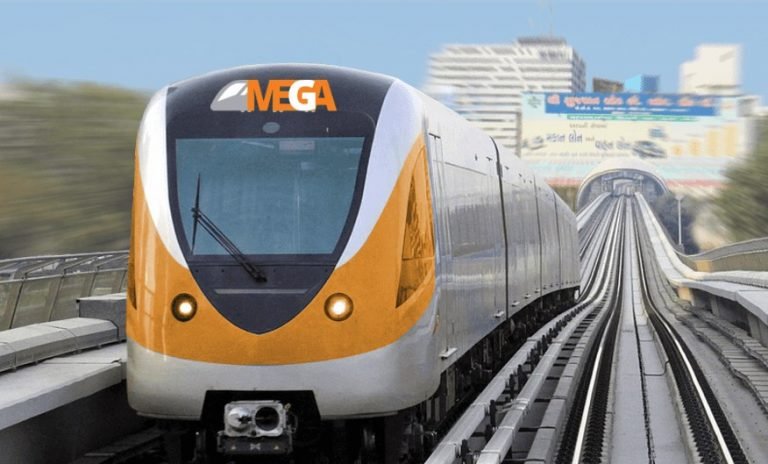
Ahmedabad Metro | MEGA, application for General Manager, Joint Manager etc.

Ahmedabad: Those who wish to join the metro project in Ahmedabad can check out the new vacancy list rolled out by the metro body. There are several positions for which applications are invited for.

The Metro Link Express for Gandhinagar and Ahmedabad (MEGA) has started inviting applications. These are for General Manager, Joint Manager, and Asst CS Posts. Those interested can apply for the position before September 15. The applications for various posts to be filled on contract basis for a period of minimum 3 to 5 years.

The information is available on the website to recruit professionals for key posts in MEGA. Candidates can check the official website to get more information – www.gujaratmetrorail.com.

Those interested can log in to the website to read out the eligibility criteria and instructions.

The vacancy information is as follows:

  • General Manager (Civil / Planning & Construction) ( 2)
  • Joint General Manager (Civil/Construction) ( 2)
  • Joint General Manager (Underground Construction) ( 1)
  • Joint General Manager / Sr. Deputy General Manager (Architecture)
  • ( 1)
  • Manager (Finance & Accounts) ( 2)
  • Manager – (Public Relation) ( 1)
  • Assistant Company Secretary (ACS equivalent to Manager Level) (1)
  • Assistant Manager (Asset Management) (1)

Interested candidates can visit the website now and click on career tab to get all the information.

The application can apply for positions online itself by filling up the application forms. One will have to pay the application fee and in order to complete the application process.

Take print out for the confirmation required for further reference.

While applying for the positions, please check the selection criteria, a number of experience required and age limit. Pay scale information is also available.

MEGA would appreciate that interested candidates refer to online advertisements before applying.

Call letters for interview will be issued to shortlisted applicants indicating Time, Date and Venue of the Interview. Original Documents in support of qualification and relevant experience shall be shown and photocopies of the same to be submitted along with the resume at the time of interview. Non-submission of documents along with the Resume will lead to rejection of candidature at any stage during the process of recruitment.

For more information check the direct link: http://www.gujaratmetrorail.com/apply-online/

For further details alternatively get in touch with editor@metrorailnews.com