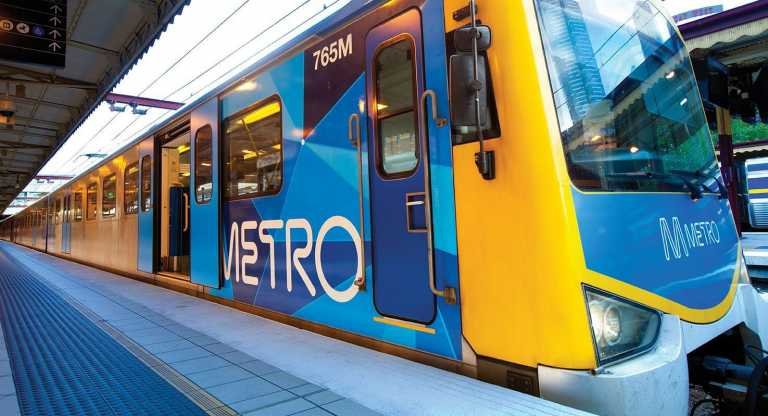
Kolkata Metro | Police nabs 2 Bangladeshis for metro site theft

Kolkata: In what is seen a cross-border criminal robbery at Kolkata metro site, police has finally managed to nab 2 Bangladeshis among 8 held for. As per reports, Kolkata Police has arrested eight people for their involvement in loot and extortion at biggest infrastructure project on Saturday. It so turned out that two of the arrested are Bangladeshi.

Police also is not ruling out the possibility that the other six can be from the neighbouring country too. The police officials feel that the remaining six might be residing in Kolkata on forged documents.

The arrest in the weekend comes less than a week subsequent to the first four arrests for the dacoity at the New Town site of the New Garia-Airport Metro project- the longest of the three in progress Metro projects in Kolkata.

Construction work on this route had hindered earlier as well. This is owing to the same issue of dacoity.  Thankfully, is the first time that the police have established direct connection of cross-border criminals in such a significant infrastructure project being executed by government agencies in the city.

Senior HR Manager of IL&FS Alak Kumar Pan shared that involvement of Bangladeshi in the issue has added a new dimension to the problem. IL&FS is the agency who is in charge of the construction work at the metro site.

Pan who is shocked at the development shared that it is surprising to know that such a big gang is involved in the robbery. He also said that it is now easier to connect the small thefts that took place on site. Pan also shared that they were threatened last night before the incident took place.

The Saturday arrest took place after police received tip off from the criminals it nabbed in connection with robbery at the same metro site. The arrested Bangladeshi nationals are Al-Amin Ahmed (22) and Shaheen Biswas (19) from Khulna and Satkhira, correspondingly.


Monorail | MMRDA spends more then it generate RTI report reveal

Mumbai: The Mumbai Metropolitan Region Development Authority (MMRDA) has to pay a higher trip rate for operating the country’s monorail corridor. When next month its services resume, MMRDA will also have to bear with another huge expenditure so that they can provide security for the 8.9-km corridor.

The Right to Information Act, 2005, informs that MMRDA had to shell out more money on the corridor’s security than the revenue it rakes in from the service. In the first six months of the 2017-18 fiscal, when the monorail was operational, the revenue generated was a mere 62% of the expenditure borne by MMRDA for security.

A senior official said that between 2014 and 2016, the MSSC had deployed 331 security personnel at stations and the depot. The deployment was reduced to 243 personnel from July 2016. It was done to reduce the expenses incurred on security. We did not need so many people and we saved around Rs 2 crore.

The official also said that apart from MSSC, the MMRDA is also paying a private agency for maintaining a dog squad, which reportedly generates a bill of at least Rs 24 lakh per annum. “We have been paying the agency Rs 24 lakh since 2014 and are still paying them even when the services have been suspended.

Some other MMRDA official said that the monorail corridor is provided with heavy security as it is considered vulnerable to threats. The Intelligence Bureau had conducted a security audit of the entire corridor earlier this year.

The former general manager of Central Railway, Subodh Jain in his recent report has recommended that security personnel should be deployed in two shifts instead of the existing three to cut costs.

He further added that instead of having three eight-hour shifts, we can have two 12-hour shifts and pay the staff for overtime. Also, there is a need to cap the maximum staff, including security, at any station to 50 personnel.

MMRDA is finding it’s hard to cope because the expenses incurred for the operation and maintenance (O&M) of the monorail have gradually increased since its launch. In 2014-2015 MMRDA was able to cover 38 percent of its expenses with its total income; it could only able to pay for 30 percent of its expenses in 2016-2017. The O&M payments increased to Rs 13.8 crore in 2016-17 from Rs 10.8 crore in 2014-15 whereas the revenue decreased to Rs 4.12 crore from Rs 4.18 crore in the corresponding period.

Delhi Metro | Commuters no need to carry token or card, can pay fare by smart phone

New Delhi: From the end of August the Commuters traveling to the metro airport line will not require a token or smart card. Smart mobile phones are only applicable for this not the feature phone. The Delhi Metro Rail Corporation (DMRC) in Airport line is going to start the facility for rent payment by scanning the QR code on all six stations of the Metro Line.

According to DMRC, this facility will be available by the end of August. Two AFC (Automatic Fare Collection) Gates and two Gates have been earmarked for the purpose of scanning the QR code at each station. After scanning the QR code, the trial will go for more than two months for the rent payment.

The airport line starts from New Delhi Metro station and goes to Dwarka Sector 21. There are total six stations viz. New Delhi, Shivaji Stadium, Dhaula Kuan, Delhi Arrow City, Airport and Dwarka Sector-21 Metro Stations. More than 50 thousand people travel daily on this. It connects the international airport directly. This is on the first line, where the entire section will get the facility to pay rent from the QR code.

Things must have to pay rent by scanning the QR codes are as follow:

  • First to download the app by the name of RDLR from play store.
  • After clicking on the DMRC, click on the QR ticket. After this, all six stations will be named on the mobile screen.
  • Choose the Source and destination point.
  • After selecting the station, the estimated rent will be seen on the mobile screen.
  • After this, payment mode which will link the debit or credit card information.
  • After saving the card, the rental money will be automatically deducted from the account.
  • After this, a ticket with a QR code will be generated, on the screen of the mobile.
  • That QR code needs to show at the newly opened AFC gate during entry and exit.


This facility is also applicable at Lalkila-Jama Masjid station:

DMRC facilitated payment of Metro fares with QR code at two stations falling between the Heritage Line (Mandi House from Kashmiri Gate) and Mandla House started from Lal Qila and Jama Masjid. However, this experiment was not very successful at these two stations. People did not get information because its promotion was low. There are very few passengers traveling between the two stations.

Ghaziabad Metro | Full trail runs started on the Red Line extension

Delhi: The Red Line extension would soon become operational for commuters. The Delhi Metro Rail Corporation (DMRC) has already conducted a preliminary trial run on the 9.4 Km Garden-New Bus Stand metro corridor to check for any infringement on the track. On Monday DMRC has started full signaling trial on the route.

The first trail run was attended by District magistrate and vice-chairperson of GDA, Ritu Maheshwari. The trail run will now go on for 15 days.

DMRC during its trial run on Saturday to ensure appropriate contact with overhead electric poles. The Metro officials, conversely, said a full-fledged trial in which signaling system will also be checked, to begin Monday onward. On Tuesday DMRC as planned have started full signaling trails on the route.

The eight stations on this corridor are will have following stations — Shaheed Nagar, Raj Bagh, Rajendra Nagar, Shyam Park, Mohan Nagar, Arthala, River Hindon and New Bus Stand.

Red Line extension’s trail run began from Dilshad Garden metro station with six coaches, including the driver’s cabin on Monday evening. The metro train reached the New Bus Stand in Ghaziabad at late evening covering a distance of 9.41 km.

The trail runs will be conducted for around two months. After this, DMRC will ask for clearance from the commissioner of metro rail safety. Once the clearance is received, the project will be commissioned. As per news, by December the project is likely to be commissioned.

For Dilshad Garden-New Bus Stand metro line the MoU was signed between DMRC and GDA in the year 2014. The project was estimated to be wrapped up in three year’s time but got delayed by a year in the beginning.

The ballpark cost of the metro project comes to around Rs 2,210 crore. This cost will be jointly borne by the Centre, UP Housing Board, GDA, and UPSIDC. Though, due to the incapability of some agencies to shell out its share, the project got postponed.

The executive director (corporate communication), Anuj Dayal said that in the trail runs the interaction of the metro train with the physical infringements (civil structure) will be examined. This is to make sure that there is no physical obstruction throughout the movement of the train on the track. The complete signaling system will also go through meticulous testing.


Bhopal Metro | Bhopal travallers wait for metro project to kick off

Bhopal: For last eight years the Bhopal Metro Rail project is biting the dust. The project largely remains on paper till date with general public waiting to board the metro.

With a population of over 20 lakh people, Bhopal fits the metro bill. But unfortunately, nothing concrete has been done to initiate work on metro rail. Bhopalis now wait for the authorities to work towards turning the proposed metro rail into reality.

Bhopal too wants to want to find its name in the metro map. The mass transit system just wants the city wants. Many feel it is the complete package that will make traveling easier and better.

The general public feels that if the metro project is launched in the city, it will lead to the creation of jobs directly as well as indirectly. It will also give the much-needed impetus to the real estate market.

Residents who live along the proposed metro route are waiting for metro rail to roll in. Currently, people use private means of transport to travel within Bhopal. This leads to traffic congestion and also increases pollution levels.

If metro rail comes, residents will have a reliable, economical and comfortable means of public transport.

This will automatically reduce reliance on private vehicles, reduce traffic chaos and to some extent bring down pollution levels.

There are several developing pockets like Kolar that are not well connected to the main city. With metro coming in, the lot of developing areas will get connected to other parts of the city too.

The local public is now getting restless and wants the authorities to initiate some plan to implement the proposed metro project.

The government of Madhya Pradesh has already taken a call to implement Metro Rail Projects in the cities of Bhopal and Indore. M.P. Metro Rail Company is also constituted to implement the metro rail projects

As per the plan it is proposed to have a rapid transit light metro system for Bhopal Metro. There will be a total of 89 stations in 3 corridors covering a distance of 35 kilometers. The estimated cost of this project comes to around ₹80 billion (US$1.2 billion) approximately. The Bhopal metro will have a three-way system involving road, underground and bridges as part of the plan. The expected ridership is pegged at around 2, 20,000 riders per day.

Three corridors have been proposed by Delhi Metro Rail Corporation

  • M.P.Nagar to Mandideep
  • Suruchi Nagar to BHEL (9km, 9 stations)
  • Bairagarh to Mandideep.

Bharat Exhibitions, the 4th edition of National Summit on 100 Smart Cities

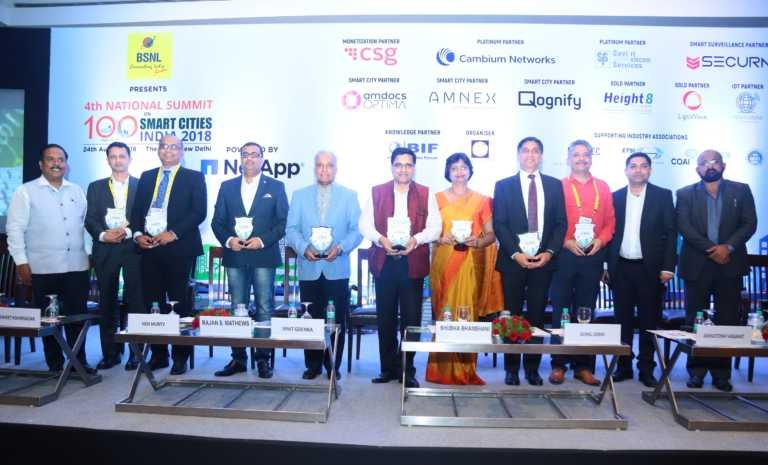
New Delhi: On August 24, 2018, Bharat Exhibitions organized the 4th edition of National Summit on 100 Smart Cities India 2018 and the theme of this event was ‘Roadmap for Innovations, Sustainability, Surveillance and Development for smart Cities’. The main objective of the forum was to explore various aspects of infrastructure that needs to be planned, designed, built and operated in order to provide the ‘Smart’ attribute to a city development. There were also conversations about the key challenges that are being faced in the implementation of smart cities.

The Indian government has chalked out an ambitious $7.3 billion smart city mission for implementing smart solutions to improve infrastructure and service delivery across Indian cities. The underlying objective is to make sure that urbanization is not seen as a challenge but as an opportunity. When Prime Minister Narendra Modi had laid the roadmap for the smart city program, he had said that “Cities in the past were built on riverbanks. They are now built along highways. But in the future, they will be built based on available optical fiber networks and next-generation infrastructure.”

Mr. Chetan Hebbalae, Senior Director of Product Management, Cambium Networks said, Traffic control, public Wi-Fi, increased public safety through video surveillance, and increased efficiency for municipal services are the cornerstones of any smart city initiative. Each of these requires reliable connectivity to reach control systems, access points, cameras and sensors in dense urban environments. Wireless broadband is a proven cost-effective solution that can be rapidly deployed to provide an affordable infrastructure to enable these applications.

Smt. Shubha N. Bhambani, PGM (C&M), Bharat Sanchar Nigam Limited said, “Smart city initiatives provide a catalyst for urban communities to become more resilient and sustainable. BSNL has a strong focus towards smart cities and is constantly developing new cost-efficient and indigenous smart solutions”.

While we keep talking about what will be the enablers for Smart City and the challenges we are facing, Mr. NSN Murty, Partner & Leader (Smart Cities), PwC brought the attention to the fact that it is actually the citizens that have voted for it and asked for it. “It is the first, world’s largest competitive exercise by means of which these cities have been selected”. He also touched upon how the to intend has now moved from the center to state. “It is always a central government initiative but now there is an increased interest at the city level”.

Shri Rajan S. Mathews, Director General, Cellular Operators Association of India agreed that the intent was there and said, “To realize the vision of Smart Cities the government and the industry have to come together along with all of its subsidiaries to put forth a cohesive effort”.

While the intent is certainly there, the adoption may not be happening at a similar pace. To elaborate the same Mr. Vineet Kshirsagar, Director for Government Business, NetApp Marketing & Services Pvt. Ltd., spoke on how the digital transactions were still very low. He added, “The role is ICT is very critical in this sphere. When it comes to ICT, data is extremely critical. We are participating in many smart cities and going forward we know that there will be a lot of data that will be generated. So there is clearly a need to make a data fabric for smart cities”.

During the course of the conference, Mr. Sunil Joshi, President, Business Operations, GIFT City gave the delegates a glimpse of the kind of work that has been happening in this sphere in GIFT City. He mentioned, “GIFT provides a business platform and it is the first operational Smart City and IFSC, which is generating a large number of employment opportunities in the region”.

Taking the conversation to the next level, Shri Ashutosh Vasant, Director (POM), RailTel Corporation of India Ltd. said, talked about making smart cities sustainable. “Every business makes sense only till the time it is sustainable and every penny of the taxpayers’ money that is being spent should be accounted for.”

Shri Vinit Goenka, Member of Governing Council and CRIS, Ministry of Railways and Member Taskforce IT, Ministry of Road, Transport & Highways and Shipping, Govt of India, said, “While answering why do we need smart cities, we should address the three Es. Whether it is Ethical? Are we being Environment-friendly and lastly if it is economical? It has to have some economic gain”.

Apart from sustainability, there were other challenges such as data protection, surveillance etc were also touched upon in the forum. National Summit on 100 Smart Cities India 2018 was sponsored by Bharat Sanchar Nigam Limited, NetApp, CSG, Cambium Networks, Savitri Telecom Services, Secura, Amdocs Optima, AMNEX, Qognify, Height8 Technologies, LigoWave, and Sensors. The event was supported by CEN, CENELEC, ETSI, COAI, TAIPA and WiFi SPFI and the Knowledge Partner was Broadband India Forum.


NITI Aayog to review standardisation progress of Metro rail systems

New Delhi: NITI Aayog to be engaged in reviewing progress of indigenisation and standardisation of metro rail systems. This decision has been taken by the Ministry of Housing and Urban Affairs.

This step is taken to monitor the progress of various metro rail projects being implemented across the country. As per the ministry this initiative is taken in order to promote central government’s ‘Make-in India’ initiative while implementing Metro rail projects in various states.

An official while interacting with media shared that the ministry has standardised specifications of rolling stock, signalling and telecom systems for Metro rails projects undertaken in the country.

The officials while speaking with Economic Times said, “It has been decided that NITI Aayog’s Member (Science) will review the progress of standardisation and indigenisation of Metro rail systems by the Housing and Urban Affairs ministry to ensure time- bound progress”.

It was in June when Prime Minister Narendra Modi gave his nod for formation of a committee to lay down standards for metro rail projects in India. This committee will be headed by none other than  Metro Man Sreedharan.

The official also added that this will pay way for indigenisation of many metro rail projects currently being executed.

As per the data on hand with the Ministry of Housing and Urban, there are around 22 ongoing and under-construction Metro rail projects in Kolkata, Delhi, Noida-Greater Noida, Lucknow, Ahmedabad,Bangalore, Jaipur Mumbai, Chennai, Nagpur, Pune, Kochi, Hyderabad and Gurugram.

The ministry informed that Phase-IV of Delhi Metro is likely to conclude by December, 2020. On the other hand Phase-II of Bangalore Metro (72 km length) is expected to be wrapped by March 2021. In addition, proposed length of 23 km metro project in Lucknow is most likely to be finished by March 2019.

Even the Nagpur Metro project, which was approved in March this year, will be concluded in December 2019.


Chennai Metro | By end of 2018, rail track laying to begin in North Chennai

Chennai: Construction of 9Km metro rail corridor is going on a breath neck speed in North Chennai. To keep the momentum of work going, Chennai Metro Rail Limited (CMRL) is going ahead with preliminary work to lay ballastless tracks. These will be a requisite for the functioning of metro trains.

Looking at the progress of the work, the 9km Phase 1 extension line between Washermenpet and Wimco Nagar is likely to be constructed by March 2020.

As per senior metro official, they have already invited tenders for both track work and MEP (mechanical, electrical and plumbing). The official shared that they are optimistic on beginning track work by end of this year.

In North Chennai the extension line comprises of — a 2km underground section connected by two stations and a 7km elevated stretch linked all the way through six stations.

When this line will be constructed, North Chennai commuters will seamlessly be able to commute to several localities in the city that are connected by metro rail network.

It was in 2016 that work on extending the North Chennai metro rail network began. By the end of 2017, construction of two tunnels the length of a 2km stretch from Washermenpet to Korukkupet was concluded. After this, work was initiated for building elevated corridors. This construction is under progress and going on a steady pace.

An elevated maintenance deport is also under construction at Wimco Nagar. CMRL has also invited tender off late to identify a company that will aid in supplying, installing and commissioning electrical and mechanical systems at the depot. Metro rail is optimistic on getting all these systems in place in about 18 months.

Work is going as per the schedule and looking at the progress rate, officials are hoping to wrap up work on time.

Hyderabad Metro | Old city area soon to have metro rail network

Hyderabad: Old city area of Hyderabad will soon usher in metro connectivity. As per reports, work on building the metro network in the old city to begin soon. In the next few days work will be initiated with the alignment issue between MGBS and Falaknuma finally headed towards revolvement.

Five years ago several other metro projects began in three corridors. Some stretches have already begun operations. It was the metro project in the old city area that got stalled. The main reason was the alignment issues between MGBS and Falaknuma.

In the second Corridor II design plan, Old City Metro rail is part of it (JBS to Falaknuma). At the moment, work is progressing till MGBS and is likely to be completed by March 2019.

As informed by Hyderabad Metro Rail Limited (HMRL) authorities, work on Old City Metro rail network will begin soon.  The Metro officials will first carry out a detailed survey. This will be followed by peg marking of the tentative station locations on the ground and metro pillar position.

Metro officials while speaking to the media said that marking on affected structures would also be completed as per the Road Development Plan (RDP). This is prepared by Greater Hyderabad Municipal Corporation (GHMC) for widening the road to 100 feet.

As per reports as many as 1,000 properties will be displaced at some level while setting up 5.5 km metro rail stretch.

HMRL’s managing director, NVS Reddy authorities will take over six months to prepare the plan and groundwork for initiating metro work. They will have to fine tune the RDP, carry out soil testing, acquire land and conduct an actual survey of properties located on the stretch.

HMRL’s MD along with MIM floor leader Akbaruddin Owaisi along with MLAs from Old city inspected the planned Old City Metro route. The stretch will start from MGBS (Dar-ul-Shifa Junction) to Falaknuma.

Lucknow Metro | LMRC in association with GOONJ organize collection Camp

Lucknow: On 27, August to 29 August the Lucknow Metro Rail Corporation (LMRC) in association with ‘GOONJ’ – a voluntary organization that channelizes cloth and other material like utensils, footwear, school material, office equipment etc. from cities as a powerful development resource in the most far-flung villages of India – shall be organizing a Collection Camp at the Alambagh Bus Stand Metro Station.

The southern state of India, Kerala is currently struggling with the catastrophic floods and concerning the situation, LMRC has also extended its support by participating in the relief mission in association with ‘GOONJ’.

This collection camp will be organized at the Alambagh Bus Stand Metro station from August 27, 2018, to August 29, 2018. The Lucknow Metro Rail Corporation (LMRC) has come forward to provide Alambagh Bus Stand Metro Station area as the venue for the collection camp and has also committed storage, manpower and logistics support for the camp. This will go a long way to generate awareness and participation in the cause from the people of Lucknow.

People can give their contributions at Gate No. 1 & 2 of the Alambagh Bus Stand Metro Station from 12 PM to 6 PM during the defined period. They can contribute clothes, mosquito nets, footwear, umbrellas, sanitary napkins, medicines, food materials and other required miscellaneous items like candles, gloves, face mask, raincoat, water purifier tablets, sleeping mat etc. The dirty, soiled or substandard material should not be contributed to the camp.

LMRC has also encouraged its staff and officers to participate in this relief mission. It has always taken initiatives for bringing a positive change in society. In the recent past, ‘GOONJ’, had organized similar collection camp in collaboration with LMRC at the Krishna Nagar Metro Station. Persons who are interested in donating may contact the GOONJ volunteers namely:

  • Meetika Srivastava (9807562174)
  • Raveesh Srivastava (8604627365).

This is such a good initiative by LMRC, if all other metros take forward step for such contribution, then such contribution can help victims people of Kerala.

NITI Aayog to review the progress of Metro rail systems

New Delhi: To review the progress of standardization and indigenization of Metro rail systems across the country. The Ministry of Housing and Urban Affairs will engage NITI Aayog.

As per the ministry, the main motives remain to promote the government’s ‘Make in India’ initiative for executing Metro rail projects in states. The number of construction and manufacturing Industries also promoting their work under the Make in India program.

The ministry has standardized specifications of rolling stock, signaling and telecom systems for Metro rails across the country, the official said.

An official also mentions that it has been decided that NITI Aayog’s Member (Science) will review the progress of standardization and indigenization of Metro rail systems by the Housing and Urban Affairs ministry to ensure time-bound progress.

In June this year, Prime Minister Narendra Modi had also approved the proposal to set up a committee which will be headed by Metro Man Sreedharan to lay down standards for Metro rail systems in the country.

Indigenisation will be ensured in several Metro rail systems being implemented across the country, the official said.

Some ongoing Metro work:

  • The Metro project of proposed length of 23 km in Uttar Pradesh’s capital Lucknow which is expected to be completed by March 2019.

The Nagpur Metro project, which is already sanctioned in March 2018, will be completed in December 2019

Hyderabad Metro | HMDA Calls tenders for green lungs soon

Hyderabad: Chief Secretary SK Joshi on Friday asked the officials concerned to complete the green lungs tender process in one month to develop 59 urban forest parks under Hyderabad Metropolitan Development Authority (HMDA) limits.

At a review meeting at the Secretariat here with officials on urban forest parks spread in seven districts, he said: “the related works had to be completed by next March.” The Chief Secretary said, “59 sites had been identified in HMDA limits which could be developed as forest parks.”

He directed different departments including the Forest Department to take up the works and to develop 15 parks. HMDA should develop 17 parks, TSIIC 11, Tourism 7, Forest Corporation 4, GHMC 3 and Metro Rail 2 and complete the fencing and tender process works as per schedule, he said.

Joshi also asked to conduct a baseline survey through EPTRI and assess the underground waters, air quality and other factors to be involved. The officials were directed to frequently check the works by conducting inspections to ensure the quality of works.

All the parks, he said, should be developed for the benefit of the people in a pro-environment manner.

Principal Secretary of Forest Ajay Mishra, Principal Secretary to Industries Jayesh Ranjan, Secretary to Tourism B Venkatesham, HMDA Commissioner Chiranjeevulu, Metro Rail MD NVS Reddy, EPTRI DG B Kalyana Chakravarthy and other officials were present.

Mumbai Metro III | Bombay High Court allows night-time construction

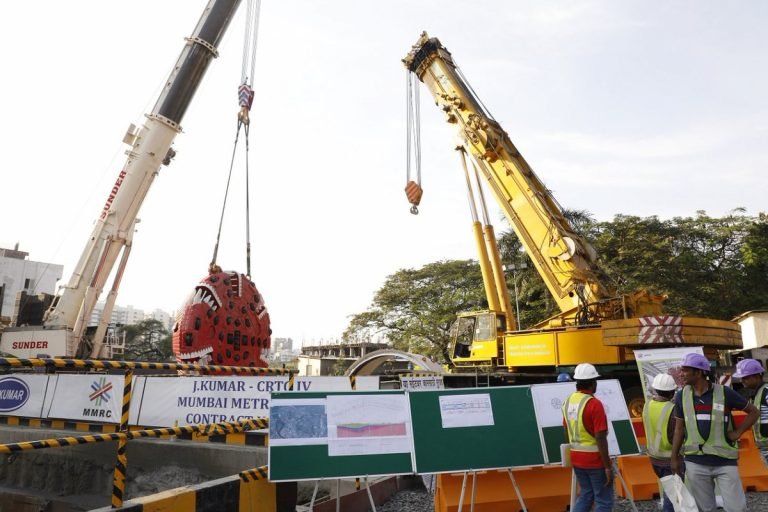
Mumbai: The Bombay High Court has said the construction work of Mumbai Metro III can be done at night. Mumbai Metro III project’s construction that was stayed by the court for almost a year is finally set to resume. The year-long stay had cost the Mumbai Metro Rail Corporation Limited (MMRCL) an estimate of Rs 6,100 crore.

After hearing the petition, Chief Justice Naresh Patil said, “We allow the MMRCL to carry out work even during the night hours, i.e. from 10 pm to 6 am.”

After hearing the petition, Chief Justice Naresh Patil said, “We allow the MMRCL to carry out work even during the night hours, i.e. from 10 pm to 6 am.”

The stay on metro construction at South Mumbai during the night was implemented because residents had complained of high noise pollution. Metro authorities can work easy now as the stay has been lifted and they are now allowed to work at midnight. The authorities will have to implement the National Environmental Engineering Institute (NEERI) recommendations to curtail noise levels. The state will also have to initiate a facility that the residents can approach to complain about grievances regarding noise levels.

noise pollution at construction site of mumbai metro 3
noise pollution at the construction site of Mumbai Metro III

While preparing its report NEERI founds out that the MMRCL had not taken some measures to keep the noise levels under control. Some of the measures that were flouted by the authorities included putting noise barriers around sites, using sound mufflers, erecting acoustic enclosures around noise-making equipment and machines.

Mumbai Metro Line 3 map
Mumbai Metro III map

Once completed, the 33-km underground Colaba-Bandra SEEPZ Mumbai Metro III project will connect Cuffe Parade in South Mumbai to the SEEPZ economic zone and the international airport in Andheri. The metro line is likely to benefit many commuters once the project is completed.

Surat Metro | Metro rail work in Diamond city to be launched in 2019

Surat: The diamond city of Gujarat will soon add another diamond to its crown. As per recent development, metro rail project in Surat is likely to be launched in 2019. There is news that the Detailed Project Report (DPR) for Surat Metro Rail will be approved by the state government. In couple of days the nod is likely to be given and this will set the ball rolling for the ambitious metro project in the city.

Surat will then become the second city in Gujarat to launch metro rail network after Ahmedabad. The estimated project value of metro project is around Rs 21,600 crores. The project will be launched in the first quarter of 2019 and work for the same might be wrapped up in four years. As per the tentative plan four elevated stations will be constructed under public-private partnership (PPP) model.

M Thennarasan, municipal commissioner of Surat while interacting with media said that amendments were made to include private player in the project.

He informed that the DPR is with Government of Gujarat’s finance department. Post approval, a decision will be taken whether the project should be undertaken by MEGA (Metro-Link Express for Gandhinagar and Ahmedabad) or a new company to be formed to implement the Surat Metro project, added M Thennarasan.

As per the revised DPR there will be a total of 38 stations constructed on 40km long two metro corridors. There will be four elevated ones and built at a cost of Rs111.88 crore on PPP system.

The elevated Surat Metro stations will come up at Rupali canal and Althan tenement on metro corridor number 1. On metro corridor 2,  aquarium and Athwa Chowpaty stations will be constructed. Corridor one will start from Sarthana up to Dream City.  While corridor number 2 will begin from Saroli up and extend up to Bhesan.

Surat Municipal Corporation also plans give close by commercial plots to developers.