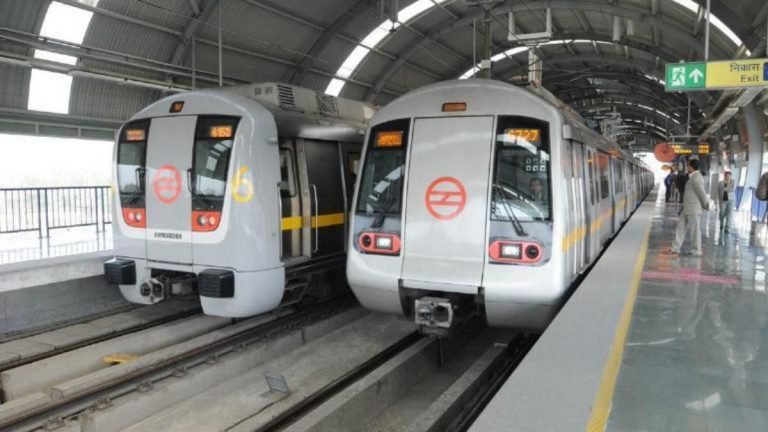
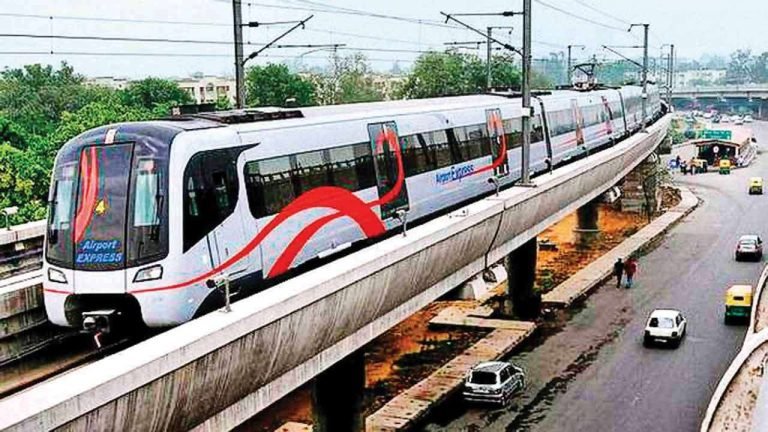
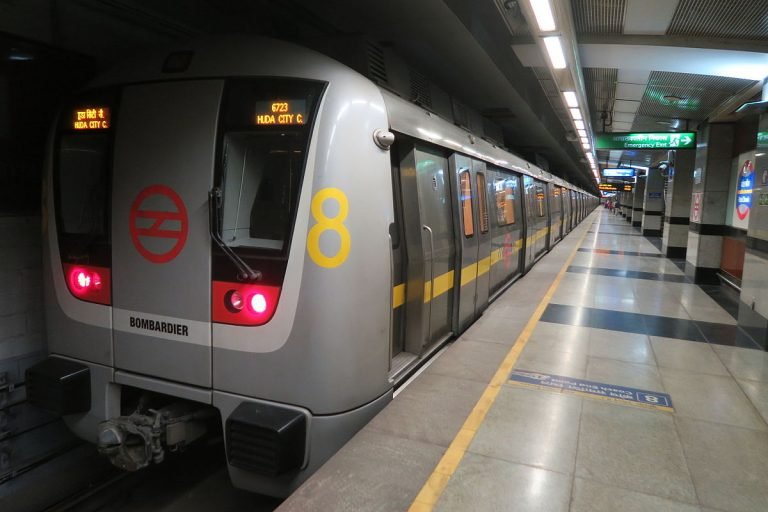
New Delhi: Prime Minister Narendra Modi has flagged-off the Delhi-Faridabad Metro Line that would allow hassle free travel for around two lakh daily commuters between the national capital and the industrial hub in Haryana.The extension of the Delhi Metro connects Badarpur to Escorts Mujesar in Faridabad.The total cost of the project from Badarpur to Escorts Mujesar is nearly Rs. 2,500 crore. Out of this, Rs. 1,557 crore was borne by the Haryana Government, the Centre contributed Rs. 537 crore, while the Delhi Metro provided Rs. 400 crore.The nine stations in this section include, Sarai, NHPC Chowk, Mewala Maharajpur, Sector 28, Badkal Mor, Old Faridabad, Neelam Chowk Ajronda, Bata Chowk and Escorts Mujesar. buy kamagra polo online https://lasernailtherapy.com/wp-content/themes/twentytwentytwo/inc/patterns/en/kamagra-polo.html no prescription
All these are elevated and located on either side of the Delhi-Mathura Road (NH-2).“The nine-station metro corridor which was 95 per cent indigenously built will provide people a safe, affordable, quick, comfortable, reliable, environment-friendly and sustainable transport facility,” a Haryana government spokesperson said.Haryana Chief Minister ML Khattar, addressing a press conference on Saturday, had thanked the Prime Minister for “gifting” the Metro service which would take the city to “another level of progress” with better connectivity with other NCR towns.He had also said that the Prime Minister would be announcing the go-ahead for connecting Gurgaon with Faridabad by Metro.
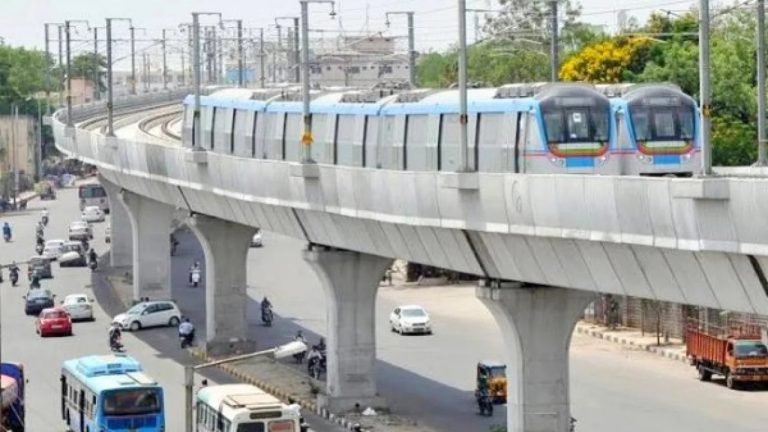
L&T Metro Rail Hyderabad Ltd, the concessionaire implementing the 72-km-long metro rail project in Hyderabad, is set to commission the much-awaited link to Hitec City. Trial runs have been under way for the past few weeks.
Inspections of rolling stocks
The Chief Electrical Inspector for Hyderabad metro, DVS Raju, today conducted the statutory inspection of rolling stocks (train sets) in the metro depot. The train sets have been procured from Hyundai Rotem Company of South Korea.
Safety features Checked
Following the inspection, “ This inspection will facilitate the commissioning of the stretch between Ameerpet and Hitec City line of the Corridor 3. We have checked all safety features of the rolling stock, including emergency evacuation process.” said DVS Raju.
The commissioning of this line will enable L&T management to fully operate two lines of the three corridors it has taken up for development.
While the main stretch up to the Central Bus Stand on the Musi river will be commissioned later this year, the line which terminates at Falaknuma is likely to take more time as there have been some right of way issues. This is being negotiated by the State.
The commissioning of the link up to Hitec City is likely to ease the traffic congestion on the busy line up to the IT hub where lakhs of people commute for work daily.
Patna, Metro Rail News: In a major boost to public transport in Patna, Narendra Modi government has Approves Patna Metro Rail Project comprising of two corridors on February 13, 2019. Patna Metro will be Bihar’s first metro and the mass rapid transit will surely become the major mode of communication in Patna. A Cabinet meeting chaired by PM Shri Narendra Modi has taken the decision. The cost of the project is estimated at Rs 13411.24 crore. The project is scheduled to be completed in 5 years.
Proposed Patna Metro Network
Patna Metro rail project will have two corridors – Danapur to Mithapur and Patna Railway Station to New ISBT. It will cover a vast area of around 42 km. Danapur to Mithapur corridor will cover 26.94 km stretch, Patna Railway Station to New ISBT corridor will pass through 14.45 km stretch.
Patna Metro Rail Project: All you need to know
The Danapur Cantt-Mithapur corridor will cover the areas located in the heart of Patna. The people residing in densely populated areas will have access to Patna Metro. Patna Metro stations will come up at Raza Bazar, the Secretariat, the High Court and the Law University Railway Station.
The second corridor from the Patna Railway Station to ISBT corridor will pass through key locations such as iconic Gandhi Maidan, PMCH, Patna University, Rajendra Nagar, Mahatma Gandhi Setu, Transport Nagar and ISBT.
Providing details regarding the Patna Metro rail project, the central government said the Danapur-Mithapur corridor will be mostly underground and partly elevated. The Danapur-Mithapur section of Patna Metro will have 11 stations. Out of these 11 stations, three will be elevated and 8 would be underground.
The 14.45 km-stretch of Patna station to New ISBT corridor will see an elevated stretch of 9.9 km and partly underground 4.55 km. This section Patna Metro will have 12 stations. Out of these 12 stations, 9 will be elevated and 3 will be underground.
Patna Metro will provide an alternative mode of communication to a population of 26.23 lakh. They are likely to be benefitted by the Patna Metro Rail Project directly and indirectly. The central government said that people residing in these areas will be able to travel on metro trains from one spot to different areas of the city conveniently.
The approved corridors will have multi-modal integration with railway stations and ISBT station and will have feeder network of bus, Intermediate Public Transport (IPT) and Non Motorised Transport (NMT).
Patna Metro will also focus on the last-mile connectivity as there will be multi-modal integration with railway stations and ISBT. Patna Metro will also run feeder network of bus, Non-Motorised Transport (NMT) and Intermediate Public Transport (IPT).
The central government has stated that the Patna Metro rail project will have non-fare box revenue from rental and advertisement. Apart from these, there will be Value Capture Financing (VCF) through mechanism of Transit Oriented Development (TOD) and Transfer of Development Rights (TDK).
Our February issue has focused on Hyperloop technology and cover story of Mumbai & Navi Mumbai Metro along with monthly specials such as exclusive interview, new development in Metro Project, technology update, pre-event coverage, opinion, industry leaders, industry watch, live tender, upcoming event, and current jobs opening.
The highlight of Metro Rail News January 2019
S. No.
Index
Page no
1
Editor Note
6
2
Round Up
10
3
Editor Choice
13
4
Cover Story: Hyperloop Technology
18
6
Interview with Mrs. Ashwini Bhide, IAS, MD at MMRC
22
7
Interview with Mr. S.K. Chaudhary, Chairman and
MD, Ircon International Limited
24
8
New Development: Aqua Line Metro open for public
26
9
Project of the Month: Mumbai Metro
28
10
Featured Project: Navi Mumbai Metro
33
11
Opinion: A – Failure of Mumbai Monorail holds lessons for Urban planner Planners. B– Urban Mobility Challenges in India
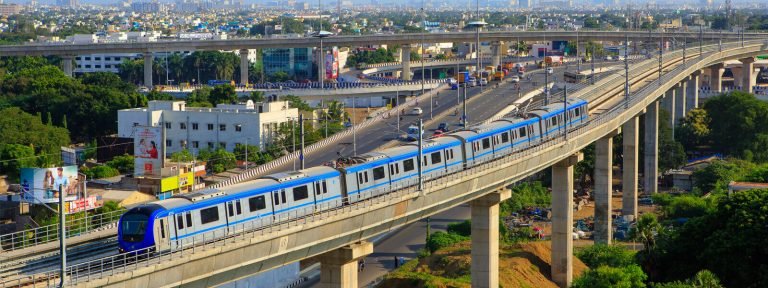
Chennai, Metro Rail News: Prime Minister Shri Narendra Modi inaugurated the last stretch of the first phase of 45-km Chennai Metro rail network through video-conferencing from Tiruppur in Tamil Nadu.
The Last stretch of the Chennai Metro Rail Project from AG-DMS to Washermenpet of 10 kms has been completed and was inaugurated by the Hon’ble Prime Minister of India, Shri. Narendra Modi and the Hon’ble Chief Minister of Tamil Nadu, Shri. Edappadi K Palaniswami via video conferencing at Thiruppur, Tamil Nadu on 10.02.019 in the august presence of the Governor of Tamil Nadu, Thiru Banwarilal Purohit, Deputy Chief Minister of Tamil Nadu, Shri. O.Panneerselvam and other dignitaries participated at the event.
At Chennai Central Metro Station, Hon’ble Union Minister (Independent Incharge), Thiru Hardeep Singh Puri, Ministry of Housing and Urban Affairs, Hon’ble Minister for Fisheries, Personnel and Administrative Reforms, Thiru. D.Jayakumar, Minister for Social Welfare, Dr. V. Saroja, Hon’ble Minister for Industries, Thiru. M.C.Sampath. participated in the video conference function and undertook a metro ride post inauguration from Chennai Central to AG-DMS via Washermenpet.
In this function and the metro ride, Consul General of Japan Thiru Kojiro Uchiyama , Chief Representative ,JICA India Thiru Katsuo Matsumoto, Members of Parliament Thiru S.R. Vijayakumar, Thiru T.G.Venkatesh Babu, Dr. J. Jayavardhan and Additional Chief Secretary to Government, Special Initiatives Department, Dr.T.V.Somanathan, I.A.S, OSD(UT), Ex.Officio Jt. Secretary MOHUA, Thiru Mukund Kumar Sinha, Director (Systems & Operations), Thiru L. Narasim Prasad, Director (Finance), Tmt. Sujatha Jayaraj, Director (Projects). Thiru Rajeev Narayan Dwivedi also participated.
The Metro cross through some of the densely populated areas in the city and with the inauguration of the new line, one can travel from Chennai Central to Airport in about 30 minutes.
The metro will also connect the northern part of the city, considered undeveloped, with other parts of the city through Metro Rail enabling thousands of people from the area to enjoy a comfortable ride.
The project was executed by the Govt of India and Tamil Nadu Government with assistance from the Japan International Cooperation Agency (JICA). With the Phase-I over, the focus has now shifted to Phase-II which expect to connect another 100-km through the new age transport system. The Phase-II is expected to connect the IT corridor, residential areas of the city and suburbs like Poonnamalle and Tambaram.
Glimpse of Chennai Metro Rail’s final leg Inauguration
PM Shri Narendra Modi Arrival Greeting
Pic 1- Chennai Metro Rail’s final leg Inauguration
PIc 2 -Chennai Metro Rail’s final leg Inauguration
PIC 3- Chennai Metro Rail’s final leg Inauguration
Mumbai, Metro Rail News: The Consortium led by of Datamatics Global Services Limited (DGSL) and AEP Ticketing solutions S.R.L, Italy (AEP), have been issued the letter of acceptance (LOA) for implementing Automatic Fare Collection (AFC) system for 52 stations of Mumbai Metro Line 2A (Dahisar to DN Nagar Metro), 2B (DN Nagar to Mankhurd Metro) and 7 (Andheri (E) to Dahisar) of the Mumbai Metro Rail project. The LOA was issued by Mumbai Metropolitan Region Development Authority (MMRDA) to the Consortium for approximately Rs. 160 crores.
The LOA between the Consortium and MMRDA was signed in the presence of Shri. R. A. Rajeev, IAS, Metropolitan Commissioner, MMRDA; Shri. Sanjay Waghmare Director(Systems), Metro PIU, MMRDA, Mr. O.P.Nebhnani, Officer on Special Duty(S&T), Metro PIU MMRDA, Dr. Lalit Kanodia , Chairman , DGSL , Shri Rahul Kanodia, Vice Chairman & CEO – DGSL; Shri Sanjeev Subhedar, EVP and Global Head Engineering Services and other top officials from MMRDA and DGSL.
On the occasion, Shri. R. A. Rajeev,
IAS, Metropolitan Commissioner, MMRDA said “The ticketing system for the Mumbai Metro
should be implemented taking into consideration ease of use for the commuters
of the city of Mumbai. At the same time it should be state of art supporting
future of the growing metro network and supporting upcoming fare media technologies.”
Commenting on the occasion, Dr. Lalit S. Kanodia, Chairman, Datamatics, said “Over the years,Datamaticshas invested and built expertise in Automated Fare Collection technology and has been a part of large global AFC mandates. We are headquartered in Mumbai and therefore winning Mumbai Metro project is special and a very proud moment for us.”
Automated Fare Collection (AFC) has been a focus area for Datamatics and over the last 25 years, the company has been instrumental in successfully executing over 25 marquee projects in the tier 1 metropolitan cities across the globe including Sydney, Hong Kong, London, Chicago, Melbourne, etc.
Rahul L. Kanodia, Vice Chairman &
Chief Executive Officer, Datamatics, said “Datamatics is the only Indian company to have AFC
solution. We have put in our best efforts for making the Lucknow Metro a
successful project and we are delighted to be a part of prestigious Mumbai
Metro Line 2 and 7 projects.”
In India, Datamatics is also implementing AFC
system for Lucknow Metro Project which includes design, supply, installation and
end-to-end testing of the ticketing, gates, servers, hardware networks and
software components. The first phase of this project has already gone live with
8 stations. This is the fastest rolled-out AFC system in India till date.
Sanjeev
Subhedar, EVP & Head – Engineering Solutions, Datamatics, said “Datamatics is committed to Indian customers to
provide most advanced AFC solution suitable for Indian conditions within
project timelines. Datamatics assures its customer of continued upgrades and
long term support to protect the investment made by our customers.”
Lucknow, Metro Rail News: The Uttar Pradesh budget presented today by state Finance Minister Rajesh Agarwal gave Regional Rail project a major boost with the allocation of 400 crores to National Capital Regional Transport Corporation (NCRTC) for RRTS project. Earlier in the Union Budget, Central Government has allocated a sum of Rs. 1000 crores to this project.
Delhi – Ghaziabad – Meerut RRTS Corridor is 82 km long and will have 22 stations. The DPR of the project has already been approved by UP Government, while In-principal approval of Delhi Government has been received recently. Pre-construction activities such as Geotechnical Survey, Road widening work, Utility diversion work, Initial Pile Load Testing etc are in full swing for construction of this corridor.
The high-speed rail will cover the distance from Meerut to New Delhi in less than 60 minutes. It is a new, dedicated, high speed, high capacity, comfortable commuter service connecting regional nodes of NCR to Delhi.
The NCRTC has already established its field offices in Ghaziabad, Meerut, and Delhi and posted officers and mobilized resources. This corridor is expected to be completed by the year 2025.
NCRTC is a joint venture of the Union government, Haryana, Delhi, Uttar Pradesh, and Rajasthan and is executing three prioritized RRTS corridors — Delhi-Alwar, Delhi-Meerut, and Delhi-Panipat in the first phase. Eight such corridors have been identified under the Integrated Transportation Plan 2032 prepared by the National Capital Region Planning Board (NCRPB).
The European Commission (EC) has announced today its decision to prohibit the proposed merger of the Siemens and Alstom mobility businesses. As a result of this prohibition, the merger will not proceed.
Alstom regrets that the remedies offered, including recent improvements, have been considered insufficient by the Commission. The remedies were extensive in scope and addressed all the concerns raised by the Commission in respect of Signaling or Very High Speed trains. In addition, a number of credible and well-established European players expressed strong interest for the remedy package, thereby fully confirming its viability.
This is a clear set-back for Industry in Europe. Alstom, together with Siemens, is convinced that the transaction would have created substantial value for the global mobility sector, the European railway industry, customers, travelers and commuters, without harming European competition. It would also have allowed the creation of a European player having the ability to cope with the growing competition from non-EU companies.
The Board of Directors has unanimously thanked Alstom’s team for its outstanding management of this project and has highlighted the company’s very strong performance during this period.
Looking ahead, Alstom will focus on pursuing its growth path as a global leader in the mobility sector supported by excellent business fundamentals: a global footprint, a record €40 billion backlog, sales constantly outperforming market growth, and a very solid balance sheet. With a successful 2020 Strategy that delivered results ahead of target, Alstom remains today uniquely placed to offer customers and ultimately passengers, competitive, clean, and innovative mobility solutions. Alstom will now project itself into a new future and define a strategic roadmap including appropriate capital allocation.
New Delhi, Metro Rail News: The Commissioner of Metro Rail Safety has granted the mandatory approval for commencement of operations on the Dilshad Garden – New Bus Adda section. Sources said the new corridor is likely to be inaugurated soon.
Delhi Metro’s Dilshad Garden-New Bus Adda corridor map
This entirely elevated 9.41 kms long section comprises of 08 stations namely; Shahid Nagar, Raj Bagh, Rajendra Nagar, Shyam Park, Mohan Nagar, Arthala, Hindon River Station and New Bus Adda. This section will be an extension of the Rithala – Dilshad Garden Red Line.
“Commissioner for Metro Rail Safety S K Pathak inspected the Dilshad Garden-New Bus Adda section of metro on February 5 and has granted the approval,” a senior official said.
This section will immensely benefit the people of Ghaziabad and connect the satellite city with the national capital. Passenger services on the section will be started soon after meeting all necessary compliances and formalities, he said.
This section will be an extension of the 25.09-km Rithala-Dilshad Garden corridor or Red Line, which has 21 stations.
After the opening of this section, the Delhi Metro network will span 336.5 km with 244 metro stations.
The Delhi Metro’s current operational span is 327 km with 236 stations.
entley Systems announces the availability of OpenUtilities™DER Planning & Design Assessment Solutions, the latest of Bentley’s electric utility software offerings that provide decision support and cost-based models and simulations for Distributed Energy Resources (DER) integration. In partnership with Siemens’ Digital Grid business unit, OpenUtilities Solutions for DER empowers electric utilities, electricity suppliers, and distribution network operators (DSO) with software applications to analyze, design, and evaluate DER interconnection requests through desktop and cloud-based services, while supporting the reliability and resilience of network operations. OpenUtilities Solutions for DER create automatic network analysis models for Siemens’ PSS®SINCAL with the integration of GIS-based network data (including ESRI, GE, and Smallworld).
OpenUtilities DER Optioneering provides an initial screening and hosting capacity analysis (HCA) to improve customer response time and integrate DER into grid planning, operations and long-term investment decisions.
The solutions generate an electrical digital twin for utilities – a GIS digital twin that enables owner/operators to more efficiently model the grid for decentralized energy without compromising safety and reliability. Some of the major challenges utilities encounter with DER integration are system complexity, increased regulatory requirements, high customer demand, and cost management. Digital twins can provide huge efficiencies in grid operations by streamlining DER interconnection applications with optimized workflows to better assess operational impacts, long-term strategic scenarios and investment decisions.
With the increasing penetration of DER into the grid, utilities need digital applications to handle the increasing demand for DER interconnections and collaborate across work groups. OpenUtilities DER Optioneering offers a cloud-based decision support initial screening and supplemental screening mechanism to evaluate DER interconnection requests using validation checkpoints and hosting capacity analysis. Utilities can benefit from this fast-track interconnection procedure to readily approve DER applications or to defer them to power systems planners to conduct further studies and impact analysis. The application provides a practical and cost-effective method to streamline and automate the DER approval process without always having to involve costly engineering resources and expedite the interconnection request process. It enables non-engineering staff and managers alike to effectively manage DER interconnection applications while adhering to complex regulatory requirements for DER permits.
The OpenUtilities Analysis framework enables power systems planning engineers to more efficiently perform simulations to study the potential impacts of increased DER penetration.
In cases where more detailed system impact studies are needed before an interconnection request can be approved, OpenUtilities Analysis gives power system engineers a mechanism to reduce the amount of manual work required at each step of an impact analysis study. This means accurate forecasting, state-of-the-art models and the ability to efficiently study many power flow scenarios within the network. It enables power system planners to better forecast and model the grid for decentralized energy without disrupting current operations.
OpenUtilities Design Optioneering advances OpenUtilities Analysis one step further with cost-based decision support for planning and designing complex utility networks with DER. The application provides the ability to analyze both planned and existing infrastructure, optimize equipment sizing, and estimate materials and labor costs for DER projects. This helps utilities minimize design construction costs associated with DER and streamline the DER interconnection process with detailed cost estimation included with the impact analysis studies.
OpenUtilities Solutions for DER empowers electric utilities to actively manage the increased demand for distributed energy resources (DER) in the evolving energy mix while maintaining grid reliability, resilience, and safety.
Bentley’s OpenUtilities solutions all leverage an open Connected Data Environment (CDE), a source of information used to collect, manage, and share all information about assets. By enabling an open CDE, utilities can better manage and access consistent, trusted, and accurate information. Utilities can share the benefits of an open, integrated, and connected framework to enable collaboration, improve decision making, and optimize the value of high penetrations of DER.
Vonnie Smith, vice president of energy infrastructure for Bentley Systems, said, “We are excited to provide new value to power utilities and industrial power customers with our strategic partnership with Siemens. Through an open Connected Data Environment, these new applications will help utility owners and operators share critical information to realize the potential of their network models for continuous benefit throughout the day-to-day running of their organizations.”
According to Michael Schneider, general manager and global head of Siemens Power Technologies International, “Electric utilities today have a growing need for planning and analysis solutions that tackle the fluctuations of decentralized renewable generation. That means good forecasting, state-of-the-art models and the ability to study many scenarios per year. Enabling these outcomes requires a highly dynamic mode of analysis where network models are continuously up-to-date. It also helps utilities and industrial owner-operators address the challenges of planning, designing and operating networks with integrated DER in a highly efficient manner.”
Bentley’s OpenUtilities helps electric utilities plan, design, construct, and operate utility infrastructure to meet ever-changing industry requirements, reduce costs, and deliver sustainable, safe, timely, and reliable service. The software provides applications for planning and design including mapping and geospatial analysis, site analysis and design, substation design, network design and management, transmission tower design, and DER solutions for grid modernization.
About Siemens
Siemens AG (Berlin and Munich) is a global technology powerhouse that has stood for engineering excellence, innovation, quality, reliability and internationality for more than 170 years. The company is active around the globe, focusing on the areas of electrification, automation and digitalization. One of the largest producers of energy-efficient, resource-saving technologies, Siemens is a leading supplier of efficient power generation and power transmission solutions and a pioneer in infrastructure solutions as well as automation, drive and software solutions for industry. With its publicly listed subsidiary Siemens Healthineers AG, the company is also a leading provider of medical imaging equipment – such as computed tomography and magnetic resonance imaging systems – and a leader in laboratory diagnostics as well as clinical IT. In fiscal 2018, which ended on September 30, 2018, Siemens generated revenue of €83.0 billion and net income of €6.1 billion. At the end of September 2018, the company had around 379,000 employees worldwide. Further information is available on the Internet atwww.siemens.com.
Matrix, a leading manufacturer and pioneer in Telecom and
Security solutions, is participating at Exporail, held at Pragati Maidan
Exhibition Centre, New Delhi, India from 8th-9th Feb 2019. We will be
exhibiting our other Video Surveillance, People Mobility Management and Telecom
Solutions at the event.
Matrix will be showcasing
an enterprise-grade Video Management Solution designed, engineered and built
specifically for growing multi-location organizations. The entire solution
focuses on automating processes and enhancing efficiency of organizations. We will also be showcasing a new range of Audio compatible and
compact Professional Series IP Cameras powered by SONY STARVIS series sensors
with EXMOR technology. This gives the Cameras an edge over others in terms of
exceptional low light performance, consistent image quality during varying
light conditions (True WDR), better bandwidth optimization and many other
features. Furthermore, we will be showcasing our new Extreme series of Network
Video Recorder (NVRX) at the event. These NVRs are equipped with 4K decoding
capacity and characteristics like Cascading (up to 20 NVRs), Camera-wise
Recording Retention and Database Level Integration. Moreover, these latest NVRs
are also backed with an intelligent software that helps detect threats and send
instant notifications for Real-time Security.
In the
event, Matrix will showcase its futuristic technologies from the security
domain. The Matrix Access Control and Time-Attendance domain will showcase its newly
launched Aadhaar Enabled Biometric Device. This device is the first embedded
Linux based Aadhaar enabled biometric device registered on AEBAS Server. This
device offers unique advantages in terms of connectivity, technology, usage
environment and ease of use. This device supports fingerprint as well as Mifare
smart card as credential. This technology enables fingerprint plus Aadhaar
number authentication with precise and accurate authentication. Talking about face
recognition technology, Matrix will showcase its futuristic Mobile/Tablet/IP
Cameras based face recognition solution, whereby system ensures
contactless authentication and identifies user’s face in < 1 Sec.
Here, at this event, Matrix will exhibit its
range of Gateways. Based on SIP (Session Initiation Protocol), these Gateways
allow easy integration with most of IP-PBX, TDM PBX, Softswitch and Hosted
solutions. Award winning series of Matrix Gateways are perfect for enterprise
and carrier-class solutions. Starting from a single port VoIP adaptor to high
density VoIP-GSM-PRI-FXO/FXS Gateways, Matrix has one stop solution for every
business need. Preloaded with superior voice quality and state-of-the-art routing
features, Matrix Gateways are ideal for multi-site connectivity, remote
survivability and SIP trunking.
As a major highlight in IP-PBX domain, Matrix
will showcase its Multi-location Collaboration solution, PRASAR that sets a new
benchmark by offering enhancing Productivity and Collaboration.
We welcome
you to visit us at Stand Number B36, Hall 7 Pragati Maidan Exhibition Centre,
New Delhi.
About Matrix:
Established in 1991,
Matrix is a leader in Security and Telecom solutions for modern businesses and
enterprises. As an innovative, technology driven and customer focused
organization, the company is committed to keeping pace with the revolutions in
the Security and Telecom industries. With around 40% of its human resources
dedicated to the development of new products, Matrix has launched cutting-edge
products like Video Surveillance Systems – Video Management System, Network
Video Recorder and IP Camera, Access Control and Time-Attendance Systems as
well as Telecom Solutions such as Unified Communications, IP-PBX, Universal
Gateways, VoIP and GSM Gateways and Communication Endpoints. These solutions
are feature-rich, reliable and conform to international standards. Having
global footprints in Asia, Europe, North America, South America, and Africa through
an extensive network of more than 2,500 channel partners, Matrix ensures that
the products serve the needs of its customers faster and longer. Matrix has
gained trust and admiration of customers representing the entire spectrum of
industries. Matrix has won many international awards for its innovative
products.www.MatrixComSec.com
New Delhi, Metro Rail News: The Public Investment Board (PIB) has approved metro rail projects in Agra, Kanpur, Ahmedabad, and Patna. Along with this, the Board has given a green signal to the Delhi-Ghaziabad-Meerut Rapid Rail Transit corridor. The Central Government is planning to initiate the development of the proposed projects worth Rs 56,000 crore before the Lok Sabha elections.
officials have shared that the financial implications of the proposed metro rail projects have been approved. The reports have been tabled to the Central Government for the final approval.
The proposed metro rail of Kanpur city will cover IIT, Rawatpur, Bada Chauraha, Motimahal, Kanpur Central, ISBT Jhakarkatti and Naubasta. The Agra Metro project will cost Rs 8,262 crore. The Ahmedabad Metro phase II project will cost Rs 7,500 crore. The government is set to put its final stamp on five metro rail projects across the country- two in UP, one each in Gujarat and Bihar and the first phase of Rapid Rail Transit System (RRTS) in NCR – before the poll code of conduct kicks in. buy viagra oral jelly online no prescription
The government is also keen to lay the foundation stone for the metro projects involving an investment of approximately Rs 56,000 crore.
One of the major stumbling block in the RRTS project is Delhi government’s stand of not to pay its share. The UT government has claimed it is facing fund crunch. Sources said the Centre is working on a strategy how to overcome this issue including by utilising a portion of the green tax that is collected in the city from heavy and commercial vehicles for entering Delhi .
Patna, Metro Rail News: Prime Minister Narendar Modi is likely to lay the foundation of the much-awaited Patna Metro Rail next month.
“While it is not confirmed by the PMO yet, Modiji is likely to lay the foundation of Patna Metro Rail on March 3,” Bihar Urban Development Minister Suresh Sharma told the media here on Tuesday.
Sharma, a senior BJP leader, said that Modi will address an NDA rally here on March 3 and lay the foundation of the Patna Metro Rail project.
Last year, the Bihar cabinet approved a fresh detailed project report (DPR) for the Patna Metro Rail and sanctioned Rs 17,887.56 crore for the same.
The Union government approved the DPR in November.
According to the DPR, in the first phase, a 33.1-km-long track having two corridors — east-west and north-south — will be set up in Patna.
The west-east corridor would run between Danapur and Patna railway station via Dakbungalow Square while the south-north corridor would run between the Inter-State Bus Terminal and Gandhi Maidan via Rajendra Nagar and Ashok Rajpath.
The project is expected to be completed in five years from the date of its commencement.
Mumbai, Metro Rail News: Mumbai Metro Rail Corporation (MMRC) awards Heavy Duty Escalator works contract of 16 Metro stations from Aarey – Dadar to Consortium of Yuanda – Royal on basis of competitive bidding.
The scope of work involves design, manufacture, supply, installation, testing & other associated work for 176 HDE across 13 stations
The Heavy Duty Escalators to be installed will have compact size having Variable Voltage Variable Frequency (VVVF) Regenerative Drives for power saving, RFID based system for real time web-based monitoring and maintenance with the latest technology in the field of Escalator system
Speaking on the occasion Ms Ashwini Bhide, MD, MMRC said “Heavy Duty Escalator works is an important component for Passenger comfort & safety We aim to implement robust and technologically advanced Heavy-Duty Escalator system for Mumbai Metro 3 so as to complete the project within stipulated timeline”
Metro Rail News, Dhaka: Bangladesh will get its first underground Metro railway by 2026, with the construction work starting in July 2019. Funds for the Bangladesh Metro project is coming from Japan.
As estimated to carry 1. 4 lakh people per day, the 31.24-km MRT Line-1 connecting capital Dhaka’s airport and Kamalapur will also have an elevated part between Purbachal with Notun Bazar, The Daily Star reported.
3.65km would be for transition from underground to elevated and vice versa of its total length,
Quoting an Economic Relations Division (ERD) official, the report said the estimated project cost was Tk 50,000 crore but the actual amount would be known once the design was finalised.
The final agreement on the amount of loan Japan will extend is expected in June.
The Dhaka Mass Transit Company Ltd will be implementing the project.
“We will begin the construction in July and people will be able to use the service by 2026,” MAN Siddique, managing director of Dhaka Mass Transit Company Ltd, told The Daily Star.
The country is currently constructing a 20.1-km elevated Metro rail (MRT Line-6) between Uttara and Motijheel in Dhaka. Japan is funding this project too, and the line will be ready by 2020.
The Bangladesh government plans to build one elevated, one underground, and three underground plus elevated Metro lines in Dhaka and its adjoining areas by 2030, according to the news report. The plan aims to ease traffic and reduce pollution.