Dwarka-Najafgarh corridor launch this Friday

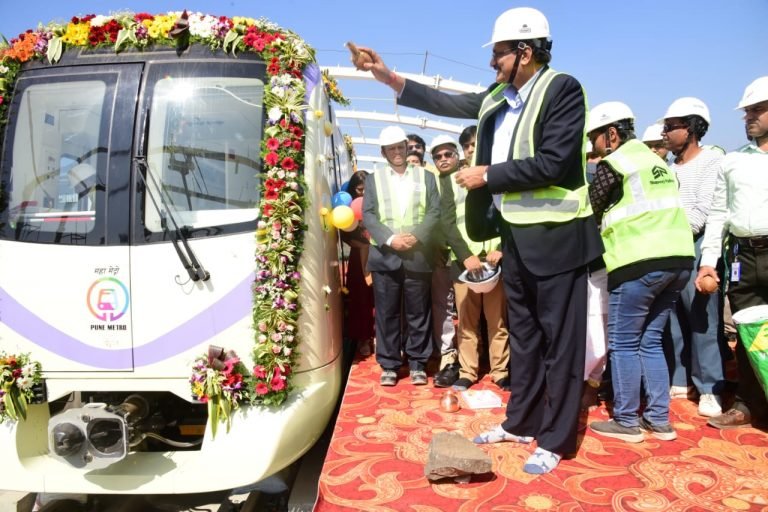
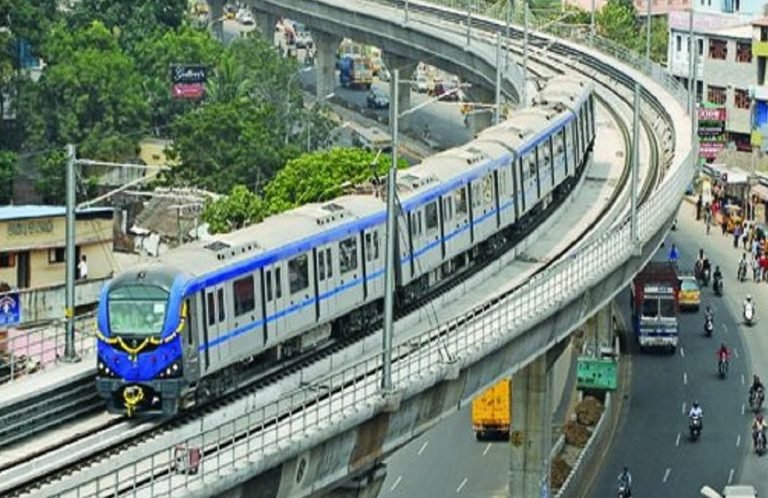
NEW DELHI (Metro Rail News): Delhi Metro Rail Corporation’s (DMRC) Dwarka-Najafgarh corridor is all set to open soon. The over 4.2 km-long Grey Line of the Delhi Metro will connect urban village area of Najafgarh to the rapid transit network.

The grey line will connect Dwarka sub-city with the locality of Najafgarh through Nangli, reducing the congestion in this locality. The Dwarka – Najafgarh corridor of Delhi Metro will be formally flagged off on 4th October 2019 according to release by DMRC.

The flagging off ceremony will take place at Metro Bhawan at 12:15 PM and passenger services on the section shall commence from 5 pm on the same day. The corridor consists of three stations—Dwarka (interchange with Blue Line), Nangli and Najafgarh.

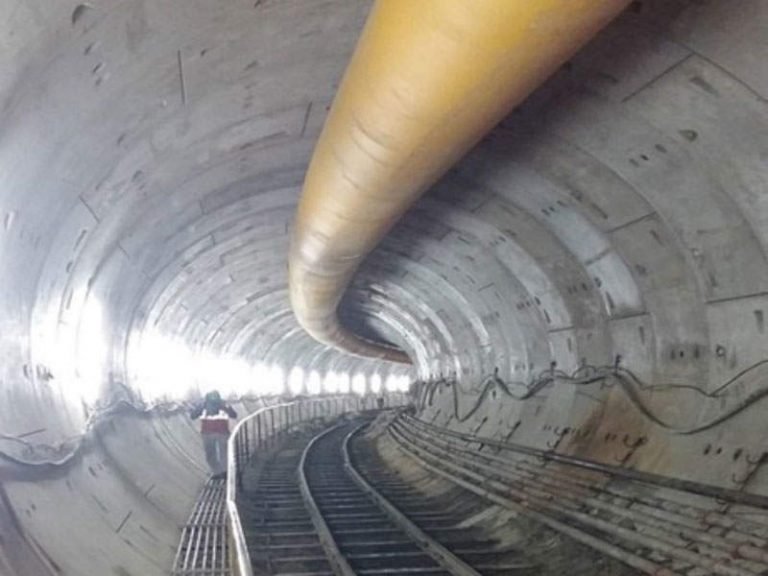
“This corridor called Grey Line is a standard-gauge section and out of the 4.295 km, 2.57 km is elevated and 1.5 km underground. With the opening of this section, the Dwarka metro station is all set to emerge as an interchange facility that will connect the sub-city with the locality of Najafgarh” said by Anuj Dayal, executive director, corporate communications, DMRC.

With the opening of this section, the Delhi Metro network will expand to 377 km and 274 stations. Delhi Metro’s gray line corridor does not have platform screen doors (PSD) facility and the reason for that is a low volume of traffic assessed for the corridor, according to a report.

Delhi Transport Minister Kailash Gahlot meanwhile tweeted appreciating the efforts put in by the DMRC to make it operational despite many challenges.

Commissioner of Metro Rail Safety (CMRS) Janak Kumar Garg had accorded the mandatory approval for starting passenger operations after inspecting the corridor for safety on Wednesday.

An 80-meter passageway connects the old Dwarka station of the Dwarka Sector 21 to Noida Electronic City/ Vaishali corridor or the Blue Line with the new station on the Grey Line, which has come up as part of the extension to Najafgarh. After the Dwarka Sector 21 station, now Dwarka will become the second interchange facility in the Dwarka sub-city.

Grey Metro Line: Number of metro stations

  • Dwarka
  • Nangli
  • Najafgarh

The Dwarka section will be the interchange with Blue Line.

Delhi metro grey line: Other information

  • The peak hour frequency, as per the information, will of 7 minutes and 30 seconds. The total travel time on these three stations will be of 6 minutes and 20 seconds
  • There will be a total of 3 metros on this line and the fourth one will be planned
  • As per the information available, the line will be the Delhi Metro Rail Corporation will extend the by another 1.18 km till Dhansa Stand, which is slated for completion by December 2020.
  • The new corridor does not have platform screen doors (PSD) facility and the reason for that is a low volume of traffic assessed for the over 4.2-km corridor
  • On all the three metro stations, solar panels will be installed.

Bookings open for Delhi-Katra Vande Bharat Express

NEW DELHI (Metro Rail News): Bringing cheer to people planning to visit the Vaishno Devi shrine near Jammu, Indian Railways have opened bookings for the high-speed Vande Bharat Express that will ply between Delhi and Katra from the coming October 5.

Bookings have opened on the IRCTC website www.irctc.co. for the indigenously built Train 18, which has been rechristened as Vande Bharat Express. It will be flagged off by Home Minister Amit Shah on October 3 and will be available for regular passengers from October 5.

The railways have not applied the dynamic pricing principle for its fares on the new train. The minimum fare for traveling between New Delhi to Sri Mata Vaishno Devi Katra station in the chair car is Rs 1,630, while the fare for the executive chair car is priced at Rs 3,015.

The Vande Bharat Express will run on all days of the week except Tuesday and will cut the travel time between Delhi and Katra to just 8 hours, as compared to 12-14 hours required earlier to cover the distance of 655 km.

The train will depart from the New Delhi Railway Station at 6 a.m. and will reach Katra at 2 p.m. It will commence its return journey on the same day from Katra at 3 p.m. and reach New Delhi at 11 p.m.

Railway officials here pointed out that the train would be run at a maximum speed of 130 kmph on the Delhi-Katra route with three stops – Ambala, Ludhiana, and Jammu Tawi -before reaching Katra.

According to them, the decision to run the indigenously built high-speed train between Delhi and Katra, the base for the trip to Vaishno Devi, was taken following the success of the Vande Bharat Express currently plying between New Delhi and Varanasi.

Prime Minister Narendra Modi had flagged off the first Vande Bharat Express on February 15 this year. The official said the route was identified by the Railway Board in order to capitalize on the high traffic volume on account of the Vaishno Devi temple pilgrims.

The Train 18 manufactures, Integral Coach Factory (ICF), have made changes to the existing design of the train. “To avoid damage due to stray cattle, the train has been equipped with a sturdy aluminum-clad nose cover.

And to guard the window shields against stone-pelting, a special film on windows has been provided,” a railway official said. More space has been provided to store meals for passengers.

Besides the changes in the exterior and interior designs, the ICF has added a slew of modern features like adjustable seats, improved washbasins, automatic doors, WiFi and infotainment system, among others.

For Noida Metro Commuters NMRC to Introduce e-Cycles, e-Bikes

NOIDA (Metro Rail News): After Delhi Metro Rail Corporation (DMRC)’s decision to equip the metro stations with e-cycles, the Noida Metro Rail Corporation (NMRC) has also decided to follow the league. In a bid to improve last-mile connectivity, the NMRC is planning to explore various multimodal options at the Aqua metro line.

A senior NMRC official said the board said that it will soon introduce e-bikes and cycles for the public. In addition, they will also have identified spots for parking lots near metro station and housing societies.

We have identified spots for parking of electric bikes and cycles at the stations and other locations in the city. We are tying up with housing societies and colleges in Noida for providing such parking spaces and the Noida Authority will soon come out with bids for them. We will also improve the shuttle and feeder bus network soon, said by Ritu Maheshwari, chairman of the NMRC in an official statement.

The decision was passed in a board meeting on Tuesday, September 24. While parking lots near nine metro stations have been identified, NMRC has also chosen about 50 locations around housing societies for parking. For the e-cycle sharing system, NMRC has signed an agreement with a private company.

This company will be providing 10 cycles at eight metro stations, including sectors 51, 50, 76, 148, Pari Chowk, Knowledge Park 2, Alpha 1 and Delta 1. More cycles might be added later.

The cycles would be fitted with GPS so that they are not stolen. They will be two proposed rates for hiring the cycles. It is Rs 5 for five minutes or Rs 15 for half an hour, whereas Re 1 will be charged for every additional minute in both cases. For e-bikes, NMRC has identified five stations, including sectors 51, 76, 142, Alpha 1 and Delta 1. NMRC is still in the process of finalizing a private company to run this system.

NMRC plans ‘Metrolite’ in Noida to reach interior areas

NOIDA (Metro Rail News): Considering the increasing cost of construction, Noida Metro has decided that all future development of the metro rail network in the city will be metrolite. This is because metrolite a light urban rail transit system with smaller coaches is nearly 50% cheaper as compared to the normal metro network, officials said.

According to Noida Metro officials, the metrolite will be more useful as the demand will be optimized by increasing its frequency during peak hours and reducing it during non-peak hours.

Moreover, its tracks are narrower than the standard gauge used in most of the existing normal metro lines and there is no overhead extension for wiring, making it safer. And metrolite can be built on the surface as well as elevated track.

“The Centre had proposed that we go for a metrolite system as it’s less cost-intensive. A metrolite system is economically more viable as the overall cost of the entire system is almost half of the normal metro network,” PD Upadhyaya, executive director of NMRC.

Currently, the cost of constructing the metro is around Rs 200 crore per km, while the metrolite system is expected to cost around Rs 60-100 crore, depending upon the infrastructure requirement.

Though the carrying capacity of a metrolite coach is anywhere between 70 and 300 which is much less as compared to the current metro coach that can carry 1,034 people at a time, Upadhyay said, “it can be managed by increasing frequency during peak hours and reducing headway during non-peak hours”.

“It would be better for us often we need to operate a metro even if it’s going empty. In such cases, the cost of operating the metrolite will be much less than operating a normal metro,” he said. According to Upadhyay, the metro network may also be at grade at some places in Noida as the metrolite can be made at the ground level as well be elevated. The metro system has been either elevated or underground so far.

“Noida has wide road space where we can use the green belt and wayside for the metrolite track, unlike smaller cities with narrow roads. We just need to create a crossing like a small bridge or an underpass near intersections to avoid mixing with usual traffic.

The surface system will be very convenient for people as it will be easily accessible. There will be no need for an extensive platform and security checks,” the NMRC executive director said.

The metrolite network will need entirely separate infrastructure, including a separate track network, rolling stock (coaches), electrical and civil work, and separate platforms. The problem, however, is that an interchange station will have to be made to connect the existing metro lines with the new metrolite lines.

The NMRC has also suggested that the proposed metro lines from Pari Chowk to Jewar also be converted to a metrolite system, which will also mean another interchange requirement at Pari Chowk station.

Hyderabad Metro line extension to Raidurg gaining pace

HYDERABAD (Metro Rail News): The extension of Hyderabad Metro Rail services till Raidurg (Mindspace) is gaining pace with the Chief Electrical Inspector for Hyderabad Metro Rail (HMR) project DVS Raju inspecting the 33V/415V Raidurg indoor substation here on Friday.

He also inspected balance works of Overhead Electric Traction (OHE) of HMR project from Hitec City to Raidurg. The Auxiliary Substation (ASS) and Overhead Electric Traction are a part of Corridor – III (Nagole to Raidurg) of the HMR project.

The inspection was conducted for according sanction for energization of ASS and OHE, which will facilitate the testing and commissioning activities of rail systems such as signaling, telecommunication, trial run and automatic fare collection etc on the sector.

After the inspection, DVS Raju said commissioning of the ASS and OHE would boost the progress and hasten the completion of rail system related works between Nagole and Raidurg of Corridor III.

L&T MRHL MD and CEO KVB Reddy said, “This is an important development for Corridor III. With the commissioning of Raidurg station and OHE between Hitec City and Raidurg will complete energization of the entire Corridor III,”.

BMRCL to finalize 2 firms for Red Line underground section

BENGALURU (Metro Rail News): Decks are likely to be cleared to take up work on the city’s longest underground Metro corridor between Dairy Circle and Nagawara (14km), with the Bangalore Metro Rail Corporation Ltd (BMRCL) set to finalize two underground packages along the Red Line (Gottigere-Nagawara) in a few weeks. On the Red Line, the Gottigere-Swagath Road Crosssection is elevated, while the Dairy Circle-Nagawara stretch runs underground.

Sources said ITD Cementation India Ltd has emerged as the lowest bidder for construction of the 4.59km underground section with four stations: Tannery Road, Venkateshpura, Arabic College and Nagawara.

The firm reportedly quoted Rs 1,771.3 crore in the tender. Other firms — Afcons Infrastructure Ltd and L&T Construction — quoted Rs 1,783.8 crore and Rs 1,790.1 crore. Similarly, Afcons Infrastructure emerged as the lowest bidder for the 3.7km underground section with three stations: Dairy Circle, MICO Industries and Langford Town.

While Afcons Infrastructure quoted Rs 1,526.3 crore, L&T Construction and ITD Cementation India quoted 1,624.5 crore and Rs 1,684.4 crore. BMRCL sources said a formal letter of acceptance (LoA) will be issued to the two firms after evaluation of financial bids. When contacted, BMRCL managing director Ajay Seth said: “We have not finalized the tender yet. NOC from EIB and approval of project management committee will be obtained”.

In February, Larsen & Toubro was awarded the bids for two other underground sections along the corridor: Vellara Junction-Shivajinagar (2.7km) and Shivajinagar-Pottery Town (2.8km). It had quoted Rs 1,329.1 crore and Rs 1,299.2 crore, respectively, for the two sections.

The firm will build five stations, including Vellara Junction, MG Road, Shivajinagar, Cantonment and Pottery Town. In June, BMRCL and Asian Infrastructure Investment Bank (AIIB) signed an agreement for financial assistance of $335 million (about Rs 2,359 crore) for this underground section.

BMRCL has set 2024 as the deadline to commission the section. Metro staff allege irregularities in roof work at stations The Bangalore Metro Rail Employees Union (BMREU) alleged irregularities in the installation of rainwater flashing sheets at several stations on the Green Line.

With many stations leaking during the rainy season, BMRCL is installing these sheets to seal building joints from water seepage and prevent leaks due to expansion and contraction of materials. The union, however, alleged that work is being executed without following tender procedures.

“BMRCL is installing rainwater flashing sheets in stations like Rajajinagar, Yeshwantpur, Peenya and Sandal Soap Factory for Rs 2 crore. They are engaging contractors in piece work (less than Rs 5 lakh), with each costing between Rs 4.5-4.9 lakh. This is to evade tender procedures, which are mandatory for all work above Rs 5 lakh,” said BMREU vice-president Suryanarayana Murthy.

He alleged that some of the contracts were awarded to relatives of some employees. BMRCL managing director Ajay Seth said they will look into the matter.

MMRCL says, save as many trees as possible

MUMBAI (Metro Rail News): On Thursday, A judicial committee set up by the Bombay High Court to look into felling of trees to make way for the Metro 3 line, told the Mumbai Metro Rail Corporation Limited (MMRCL) that while constructing the underground Colaba-Bandra-SEEPZ corridor, it has to save as many trees as possible and also ensure that the transplanted trees live on.

In June 2017, the HC had appointed Justice Indrajit Mahanty and Justice A A Sayed to look into the grievance related to the felling of trees as part of Metro construction. In the absence of Justice Mahanty, Justice Sayed on Thursday addressed the issue.

On the submission of assistant government pleader G W Mattos, appearing for MMRCL, that some trees need pruning and some will have to be felled for the construction of the Metro line, Justice Sayed said that “as much as possible trees should be saved”.

The committee was informed that from May 2017 to November 2018, 1,453 trees were transplanted, of which, 659 are alive, 161 are under observation and 633 are dead.

Activist Zoru Bhathena, a petitioner against the felling of trees, said that the survival rate of trees is 50 percent and is likely to decrease in future. Mattos, however, said that the MMRCL consults an expert in this connection as an when it requires and that he has visited Mumbai several times.

Justice Sayed told the MMRCL that if the expert visits Mumbai quite often, a hearing can be arranged on the day of such a visit so that he can share his knowledge on transplantation of trees.

“Someone who loves trees will come anyway. There is an increase (in a number of trees dying), all the more reason for him to come,” Justice Sayed said.

Stating that there is a need for an expert agency to give its opinion on saving the trees, he added, “We are all interested in the survival of trees. We are all concerned about the next generation.”

Adjourning the hearing, Justice Sayed asked the Mumbai civic body to appoint an expert to draft guidelines on transplantation of trees.

UP govt will fund Phase 3 of Metro

GHAZIABAD (Metro Rail News): During his visit to Ghaziabad on Friday Uttar Pradesh finance minister Suresh Khanna, assured officials that he will look into issues of funding for Phase 3 of Metro in Ghaziabad. Khanna is also the minister in charge of the infrastructure and development activities of the district.

The issues pertaining to Phase 3 of Metro, proposed to link Sector 62 in Noida to Mohan Nagar in Ghaziabad, have been the pending resolution for the past several months. The project is pegged at ₹1,866 crores, as per January 2019 estimates, and the Delhi Metro Road Corporation (DMRC) has already submitted a revised detailed project report to the authority. The GDA has sought a further revision to bring the station in Sahibabad closer to the alignment of the Regional Rapid Transit System project.

The GDA has written to the state government to provide funds as the present cost of Phase 3 will be borne 80% by the state government and 20% by the Centre. The GDA officials said the DMRC will not be paying for the rolling stock. Hence, the share will have to borne by the UP agencies such as the GDA.

On Thursday, the residents in Indirapuram also discussed the issue of Metro funding with Sahibabad MLA Sunil Sharma and asked him to expedite funds from the state government.

“During the meeting, a number of residents demanded to expedite the Metro project to link Noida and Ghaziabad. We have told the MLA that GDA has collected external development charges and we are ready to even a Metro cess. But the state government should help with funds so that the project takes off,” Alok Kumar, founder member of the federation of association of apartment owners, said.

On Friday, MLA Sharma was also present at the meeting called by minister Khanna on Friday.

Recently, the UP government gave clearance for the formation of UP Metro Rail Corporation (UPMRC) which will provide state funding to different Metro projects in the state. But Ghaziabad Metro projects have not been included under the UPMRC.
buy caverta online https://lasernailtherapy.com/wp-content/themes/twentytwentytwo/inc/patterns/en/caverta.html no prescription

Sharma said, “We have discussed the issue with residents and we will speak to the state government officials so that the project gets the required funds”.

Launch date announced for Vande Bharat Express Delhi to Katra

NEW DELHI (Metro Rail News): Vande Bharat Express Katra launch date announced. Railway Minister Piyush Goyal has announced the launch date of the Delhi-Katra Vande Bharat Express on his social media handles. The all-new engine-less Vande Bharat Express or Train 18 will be flagged off by Home Minister Amit Shah during Navratras on October 3.

The new Vande Bharat Express will cut down the travel time between New Delhi and Katra to just 8 hours, from the current 12 hours. The train will come as a big boon for Mata Vaishno Devi pilgrims, ensuring smoother and more luxurious travel and also eliminating the need for an overnight journey.

The new Vande Bharat Express will depart from New Delhi railway station in the morning at 6:00 AM to reach Katra at 2:00 PM while stopping at Ludhiana, Ambala Cantt and Jammu Tawi are en route.
buy elavil online https://www.parkviewortho.com/wp-content/languages/new/prescription/elavil.html no prescription

On the same day, the Vande Bharat train will leave from Katra at 3:00 PM to reach the New Delhi Railway station at 11:00 PM. It will stop at the same stations on the return journey.

IRCTC is planning to offer combo meals at par with the Delhi-Varanasi Vande Bharat Express, but with more vegetarian options. The all-new AC chair car service has automatic doors with sliding footsteps, fully sealed gangways, a pantry bigger than Shatabdi Express, modular bio-toilets, on-board infotainment screens, European-style seats, and aircraft-like LED lighting for passengers’ comfort.

Indian Railways is planning to manufacture 40 more Vande Bharat Express-style train set by March 2022. The new trainsets will consume less electricity compared to the first two Vande Bharat Express trains. According to railway officials, the new trainsets will also be manufactured with Rajdhani Express-style sleeper classes for overnight journeys.

Dwarka-Najafgarh Metro in Delhi gets Safety nod

NEW DELHI (Metro Rail News): The Dwarka-Najafgarh Metro project is well and truly on track, with Commissioner of Metro Rail Safety (CMRS) Janak Kumar Garg giving his nod on Thursday after reviewing the safety parameters.

Anuj Dayal, Executive Director, Corporate Communication, Delhi Metro Rail Corporation said, “The CMRS has accorded the mandatory approval for the commencement of passenger operations on the 4.295 km long Dwarka – Najafgarh section of Delhi Metro”.

This section, color-coded as the Grey Line, will comprise three stations — Dwarka, Nangli and Najafgarh. 

Dayal said, “The exact date for the commencement of operations on the Grey Line would be communicated soon”.

Work is already on to further extend the Dwarka-Najafgarh section by another 1.18 kilometers, till Dhansa stand, and it is scheduled to be completed by December 2020. When the Greyline opens, Dwarka metro station on the Blue Line would be converted into an interchange station, affording connectivity to Najafgarh, further south-west to the city.

From Oct 2 Kanpur Metro project gets going with pillar construction

KANPUR (Metro Rail News): Shiv Om Johri, assistant engineer, Lucknow Metro Rail Corporation (LMRC) said that the Kanpur Metro Rail project is finally set to start from October 2 with the construction of pillars for laying the metro track near the Indian Institute of Technology (IIT-K).

He said Afcons Infrastructure Limited has bagged the contract for laying the metro track and setting up of nine stations. But the problem is that one of the key stakeholders, the Kanpur Development Authority (KDA), has expressed its inability in providing its share of Rs 100 crore for the project.

Meanwhile, SP Singh, secretary, KDA, said the financial health of the authority was bad after it built houses under the Prime Minister Housing Scheme. The authority had the responsibility of providing 40,000 houses to the people.

Efforts, he said, were being made to improve its fiscal strength with the sale of houses.
buy soft pack online https://nouvita.co.uk/wp-content/themes/twentynineteen/fonts/en/soft-pack.html no prescription
“We have communicated to the state government about our financial issues,” he said.

As per the decision at the meeting held under the principal secretary, housing, Deepak Kumar, it was decided that the key stakeholders would contribute Rs 350 crore to the project. The total cost of the project was Rs 16,975 crore.

The Avas Vikas Parishad was asked to contribute Rs 200 crore, the KDA Rs 100 crore and UPSIDC Rs 50 crore.

Recently, LMRC managing director Kumar Keshav had said that three hostel buildings at Government Polytechnic would be demolished for the construction of the Metro Yard. The LMRC would bear the cost of the hostels’ demolition and shifting the students to a private hostel.

Meanwhile, people of the city have expressed enthusiasm as well as apprehension about the metro project.

Pankaj Bajpai, who runs a publishing house, said that since Kanpur is growing bigger and roads becoming clogged, the metro could help in decongestion. But he seeks a parallel public transport system.

Ram Sahaya, a student, Geet Shukla, a housewife, and several other people said with the metro, people would have cheaper and faster local transport service.

However, Raguraj Saran, leader of the retail shopkeepers union, Kalyanpur, felt the metro project would make a large number of people homeless as their ancestral houses, at prime locations near GT Road, would be demolished for laying the railway track.

Several small and medium commercial establishment owners would also lose their source of earning as their establishments would also be removed from the area of the proposed metro track, Saran said.

Audit Metro lines in Gurugram by ILFS entities

NEW DELHI (Metro Rail News): The Punjab and Haryana High Court has issued a direction to the Comptroller and Auditor General of India (CAG) to appoint a team of auditors to ascertain the debt in the two ILFS entities developing the Metro rail links from Delhi to Gurugram.

According to an order passed by Justice Rakesh Kumar Jain and Justice Arun Kumar Tyagi on September 20, as far as “debt due” as defined under the concession contract between Haryana Shehri Vikas Pradhikaran (HSVP), formerly called HUDA, is concerned, CAG auditors will carry out a financial audit of the “debt due”.

The CAG will complete the audit within a period of 30 days. The court also directed that an amount of 80 per cent of the debt due, determined in terms of the audit report of the CAG, shall be deposited by the HSVP in the escrow account which shall be subject to any order passed by the NCLAT or any other competent statutory authority, within a period of 30 days after the receipt of the audit report.

The concession agreements were entered into between HSVP and Rapid MetroRail Gurgaon Ltd (RMGL] and Rapid MetroRail Gurgaon South Ltd (RMGSL), respectively, for the development of Metro rail link from Sikanderpur Station on M.G. Road to NH-8 and from Sikanderpur Station on M.G. Road to Sector 56, Gurugram.

Both the contracts were terminated by RMGL and RMGSL on June 7, 2019, to take effect from September 8, 2019, after the expiry of 90 days, whereas, HSVP terminated both the contracts on August 26.

RMGL and RMGSL are the subsidiary companies of Infrastructure Leasing and Finance Limited (ILFS) which is before the National Company Law Appellate Tribunal (NCLAT).

Extension of Doha Metro operations to increase ridership

DOHA (Metro Rail News): The decision to extend the services of Doha Metro Red Line South to Friday and Saturday will help it to set a new ridership record. For commuters, it was a long pending wish which has now been fulfilled as it will give them much-awaited chance to enjoy Doha Metro journey with their family on weekends. 

On Tuesday, The Ministry of Transport and Communications (MOTC), had announced that the Doha Metro Red Line South would now be open for the public during weekends from tomorrow. 

“It is a welcome move which will benefit all sections of the society. It will further reduce congestion on roads. The total number of commuters for Doha Metro Red Line South will increase significantly after this announcement,” a senior official of a transport consultancy firm told The Peninsula. “Many people do not want to drive a car for family outings on their weekly-off days and such people will like to use Doha Metro train on Friday and Saturday,” he added.

Since starting preview service for the first part of the Doha Metro’s Red Line in May this year, the train service has become hugely popular among residents. More than 86,000 people used the trains in the first two days after the launch of its preview service. On, May 8 around 37,450 people used the metro, while on next day 49,096 people were on board, reflecting the huge popularity of Doha Metro. 

The Doha Metro carried around 1,082,100 passengers during the months of July and August, Qatar Rail said on Saturday. A total of 518,535 people used the metro in July, while 563,577 people used it in August, according to the data shared by Qatar Rail on its twitter account.

Bihar government inks MoU with DMRC for Patna Metro Rail Project

PATNA (Metro Rail News): The Nitish Kumar government in Bihar on Wednesday signed a Memorandum of Understanding (MoU) with the Delhi Metro Rail Corporation (DMRC) for the construction of the first phase of the Patna Metro Rail Project.

The MoU was signed in the presence of Chief Minister Nitish Kumar and his deputy Sushil Kumar Modi. Chaitanya Prasad, Chief Secretary, Urban Development, was among the other dignitaries who were present on the occasion.

The signing of MoU took place nearly three weeks after the Bihar Cabinet approved the allotment of Patna Metro Rail Project work to the DMRC.

Earlier this month, the Bihar Cabinet had allotted the Patna Metro work to DMRC on nomination basis which will complete the work on “Deposit Work Method” at a project cost of Rs 482.87 crore.

“It is expected that the construction work of Patna Metro will begin by the end of this year by completing the tendering process,” Sanjay Kumar, Cabinet Secretariat Department’s Principal Secretary, had told reporters.

He said, Kumar further said that the Patna metro rail envisages two corridors in the first phase. The entire metro project in the first phase will be completed within five years.

Prime Minister Narendra Modi had on February 17, 2019, laid the foundation stone for the Patna Metro Rail Project.

Of the two corridors in the first phase, the first corridor will be between Saguna Mor-Bailey Road-Patna Junction-Mithapur bus stand while the second corridor will be from Patna junction to proposed bus stand at Bairiya on Patna-Gaya road.