70% tunneling work for Colaba-Seepz Metro done

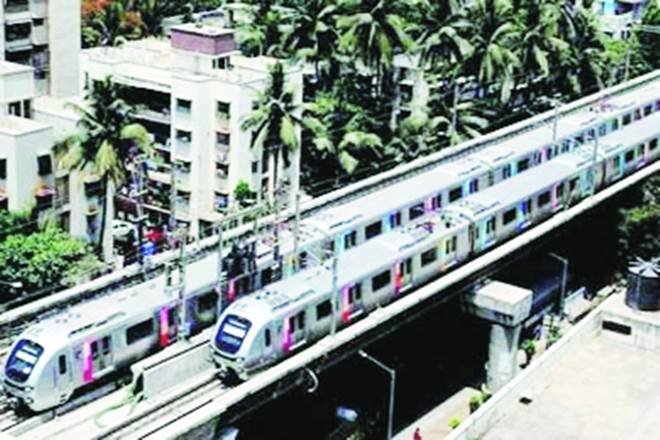
MUMBAI (Metro Rail News): The metro rail body, Mumbai Metro Rail Corporation, has achieved 70% of tunneling work that is required for the Colaba-Bandra-Seepz Metro-3 corridor. The Colaba-Bandra-Seepz Metro-3 corridor is the first and only fully underground corridor for Mumbai.

Bhide said that a team of about 16,000 people has been working day and night to create this “gigantic engineering marvel” underneath.
buy temovate online https://pridedentaloffice.com/wp-content/themes/twentytwentyone/inc/en/temovate.html no prescription
Once complete, this corridor is scheduled to carry 17 lakh passengers by reducing 6.5 lakh vehicle trips each day and will thereby reduce 2.61 lakh MT pollutant gases every year, she claimed.

Of the overall tunneling across Metro line-3, the maximum progress that is 97% has been achieved on the stretch from Marol Naka to Aarey, which is tagged as ‘package 7’ and is expected to completed by December 12.

The metro rail body’s director (projects) S K Gupta said that of the total length of 55 km, a total of 23 stretches of tunneling across 38.25 km has been completed in 24 months. The metro rail line will have 27 stations of which 26 will be underground.

NMRC to introduce theme-based markets in open parking areas

NOIDA (Metro Rail News): To fully utilize open parking areas under metro stations that see less footfall, the Noida Metro Rail Corporation (NMRC) plans to start theme-based markets, such as winter carnivals, children’s fairs, women’s fairs, and tribal arts and handicrafts shows, in these spaces. Officials said the markets will be organized at several metro stations.

P D Upadhyay, executive director, NMRC said that “There are some stations where parking lots remain vacant most of the time. We had allotted them to a vendor but there weren’t enough vehicles using them. We will soon start theme-based markets on the lines of Raahgiri for non-fare box revenue”.

Meanwhile, to increase the sense of safety among women commuters, who form a large part of the metro ridership, NMRC is developing Pari Chowk and Sector 76, two of the most crowded Aqua-Line stations, as pink stations, officials said.

They are expected to be ready in a month, they added. The station buildings will be color-coded in pink. There will also be selfie points and rooms for baby feeding and makeup. There will be eight to 10 employees at every station, including the station controller, ticket counter staff and customer relations assistant. Barring security officials, the staff at these stations will be comprised of women.
buy advair online blackmenheal.org/wp-content/languages/new/advair.html no prescription

“Apart from other facilities, we will have kiosks that will help in creating awareness regarding government schemes for women, like Janani Suraksha and Ujjwala,” said Upadhyay. NMRC has a high female workforce, including train operators. Of the 175 train operators who run the Aqua Line metro, 42, or about 25%, are women. Meanwhile, of the total 527 station staff, 121, or 23%, are women.

Last week, the NMRC set up cycle stands at three of its stations on the Aqua Line. These stands will have electric cycles or bikes that can be used by commuters against a fee for last-mile connectivity. The e-cycle stands have been set up at sectors 50, 51 and 76 stations. Such stands will be set up in eight stations in total, including sectors 148, Delta, Alpha, Knowledge Park, and Pari Chowk. The Authority will demarcate areas to park the cycles.

The trial run begins of Hyderabad Metro Rail’s Green Corridor

HYDERABAD (Metro Rail News): On Monday, Trial runs for the first phase of the Hyderabad Metro Rail project Corridor II or the Green Corridor from Jubilee Bus Station to Mahatma Gandhi Bus Station (MGBS, Imliban) commenced with top officials, including HMR Managing Director N.V.S. Reddy, L&T Metro Rail Hyderabad (L&TMRH) MD and CEO K.V.B. Reddy travelling on the first trip.

Accompanied by a team of technical experts and engineers, the top officials observed the various technical and safety parameters and performance of the train during the trial run. With a length of 11 km, the corridor has nine stations JBS-Parade Grounds, Secunderabad West, Gandhi Hospital, Musheerabad, RTC X Road, Chikkadpally, Narayanaguda, Sultan Bazar and MGBS.

Mr. N.V.S. Reddy said, “It would take 16 minutes to cover this corridor from JBS to MGBS, as against 45 minutes by road”.

He further explained that In the next few weeks, engineers would be checking for any technical specifications, performance criteria and safety standards under the different categories like signalling tests and safe train separation tests, brake test by signalling and train control system, overhead electric rolling stock or metro coaches, passenger information announcements and display tests, dummy passenger evacuation tests and degraded mode operation tests, among others.

Data and other inputs in these tests would be sent online to Thales for signaling and train control software to be fine-tuned for the safe operation of metro trains in automatic mode with CBTC technology. After receipt of satisfactory performance and safety certification from Thales, Internal Safety Assessor (ISA) M/s. Halcrow and other related Indian and international organizations, the Commissioner of Metro Rail Safety (CMRS) would be invited for final safety clearance of the corridor.

He added, “After CMRS safety certification, the corridor will be thrown open for passenger operations” he added. Both the MDs complimented the dedicated teams of engineers from L&TMR, HMR, and other organizations who worked relentlessly and made the corridor ready for trial runs.

L&TMRHL project director M.P.Naidu, chief operating officer A.K.Saini, HMR chief signaling & telecommunications engineer S.K.Das, chief project manager B.Anand Mohan, SE M.Vishnu Vardhan Reddy, GM (works) B.N.Rajeswar, GM (security) A.Balakrishna and others participated in the trial run and inspection.

ITD Cementation bags Rs 3,400 crore contract from Metro and Railway

Mumbai (Metro Rail News): ITD Cementation India, a leading construction company has announced through BSE filing on Monday that the company has bagged five contracts worth over Rs 3,400 crores from the major infrastructure projects in India.

According to information shared by the company, it has received a total of 5 letters of acceptance (LoAs) from three major projects.

The big contract worth Rs 1,771 crore has been singed with Bangalore Metro Rail Corporation Limited (BMRCL) for the Design & Construction of Underground Structures (Tunnels & 4 Stations) of length 4.591 Km (approx.) from South of Tannery Road Station to North Ramp including Allied works in Reach-6 Line of Bangalore Metro Rail Project, Phase-2.

Apart from this, the company has received three LOAs from IRCON International Limited for Tunnelling works on Sivok (West Bengal) to Rangpo (Sikkim) New Single Broad Gauge Railway Line Project comprising of Construction of 6 Tunnels.

One LOA received from Municipal Corporation of Greater Mumbai – Construction of Sewer Tunnel and allied works along S.V. Road by Segmental Tunnelling Method.

Watch movies, songs on Chennai metros soon

CHENNAI (Metro Rail News): A trip by a metro rail train is about to get a lot more fun and interesting than just a view of the city. Come December, commuters can hop onto a metro train and watch their favorite movie, song or TV show on the go for free at the click of a button.

Chennai Metro Rail Limited (CMRL) will launch an onboard entertainment system in December wherein commuters can log on to a smartphone app and choose from a wide range of content available in five languages free of cost. Installation and testing of the routers procured from France and servers are underway, officials said.

“The WiFi speed will be such that passengers can download a movie in about five seconds. The systems will be similar to in-flight entertainment but here you can download content,” an official said. “We will perhaps be the first metro service in the country to have such a facility.” However, the WiFi network can’t be used for browsing the internet or making calls.

The new system will have servers with entertainment content installed in all stations, trains and the depot. To view the content, commuters have to download and install an app developed specifically for the purpose. Once they enter a metro train, they can connect to the station WiFi and start viewing the content. They can also download the content and view it offline within a specific period. Officials said entertainment content will be available in English, Tamil, Kannada, Malayalam, and Telugu.

Only a few mobile networks have now extended their connectivity in underground stations while many commuters travel without any mobile service in underground stations even after more than two years since the first underground line opened between Nehru Park and Thirumangalam. “A trip between Washermenpet to Airport could take an hour and if there is no phone reception, commuters could get bored.

Our new system would help keep them entertained,” an official said. Officials said new content will be available every day, as the servers in the trains will be synced to those in the depots, which will be updated regularly. “If the train is not brought to the depot, the content will get updated when the trains stop in stations, where we will have servers,” an official said.

From November 29th Hitec City Raidurg stretch of Hyderabad to be open for commuters

HYDERABAD (Metro Rail News): The stretch of the Hyderabad Metro Rail between Hitec City and Raidurg is all set to be thrown open to commuters, as authorities have finished conducting all test runs and are ready for safety clearance.

Taking to Twitter, Hyderabad Metro Rail Limited (HMRL) Managing Director NVS Reddy said, “Hitec city-Raidurg metro stretch (1.5 km) is ready and Commission of Railway Safety (CMRS) inspection will be done soon. After this safety clearance, the stretch will be inaugurated by Minister for Municipal Administration & Urban Development (MA&UD) KT Rama Rao and Transport Minister P Ajay Kumar on the morning of November 29.”

“Inauguration of Hitec city- Raidurg metro stretch will give major relief to a large number of employees working in this dense Information Technology (IT) and Information Technology Enabled Services (ITES) area,” he added.

The stretch covers a crucial part in the heart of the city’s IT corridor, where several multinational corporations (MNCs) are located.

In March this year, the much-awaited metro service on the Ameerpet-Hitec City route was inaugurated, to cater to thousands of techies who travel to the IT cluster.    

The inauguration also completed the 27 km Nagole-Hitec City corridor, one of three in the project. The 16-km Ameerpet-LB Nagar line was inaugurated in September last year, while the 30-km stretch between Uppal and Miyapur has been operational since November 2017.

Earlier this week, the metro authorities said that they would soon begin trial runs on Corridor II on the 10-km stretch between Jubilee Bus Station (JBS) to Mahatma Gandhi Bus Station (MGBS) via Parade Grounds. Once completed, the entire metro project would be thrown open to the public.

Billed as the largest metro project in the world in the Public-Private Partnership (PPP) model, the Rs 14,132 crore project is being built by infrastructure giant L&T.

DMRC says Patna metro needs to be improved

PATNA (Metro Rail News): The Delhi Metro Rail Corporation (DMRC) has proposed several changes in the detailed project report (DPR) of Patna Metro Rail Corporation (PMRC) prepared by Rail India Technical and Economic Services (RITES).

They have proposed linking of the two corridors by constructing a 3km-long viaduct with interchange station at Khemni Chak to increase passengers’ mobility. DMRC has also proposed underground metro stations on the two corridors at Patna Junction to provide easy interchange. The changes have been proposed through a letter written by the DMRC project director to the PMRC managing director on November 11.

DMRC is the executing agency of the Patna metro project. As per the new alignment proposed by DMRC, Mithapur station in the east-west corridor (1) and Khemni Chak station in the north-south corridor (II) will have a distance of only 3 kilometers. The two stations will be connected by a viaduct with an additional two stations and an interchange at Khemni Chak. In the present DPR, there was no such connecting facility between the two corridors. In the corridor-1, to start from Danapur cantonment up to Mithapur, the DMRC has proposed an elevated Pataliputra metro station, instead of an underground one planned earlier.
buy eriacta online https://www.mydentalplace.com/wp-content/themes/twentytwelve/inc/en/eriacta.html no prescription

In another section of the same corridor between Rukanpura and Raja Bazar, the DPR suggested the demolition of 44 private structures. The DMRC has now suggested to PMRC to look for some other option as the demolition of private structures may cause problems. They have also proposed to remove the Golf Club metro station, as the next station near Patna Zoo is only 670 meters away. In the corridor-II starting from Patna Junction to New ISBT, the DMRC has suggested avoiding Kumhrar area as it is archaeologically important.

As per the DPR, the alignment between ISBT and Rajendra Nagar station was supposed to pass through Zero Mile-Gandhi Setu-Kumhrar-NMCH. But DMRC has suggested ISBT-Zero Mile-Bhootnath Road-Khemni Chak-Malahi Pakri-Rajendra Nagar Terminal route. In the same corridor, Akashwani and Patna Junction have now been proposed to be kept underground.

This will sort out the problem of land acquisition as the alignment passes through the Akashwani plot and a judge’s bungalow. Also, another metro station of corridor-1 near Patna Junction had been kept underground. If metro stations of both the corridors become underground, it will help in seamless interchange.

GDA Approves Vaishali to Mohan Nagar Metro Extension

Ghaziabad (Metro Rail News): The Ghaziabad Development Authority (GDA) approved the proposal of Vaishali to Mohan Nagar Metro route extension after the 20 months of submission of the project detailed project reports (DPRs) by Delhi Metro Rail Corporation on November 21, 2019. Now The DMRC will now finalise the DPR for Vaishali to Mohan Nagar Metro Extension.

The meeting among the government, DMRC and GDA officials held in Lucknow on November 15 during the Urban Mobility India Conference and Expo 2019. The UP principal secretary has directed the GDA’s vice-chairperson to take a note on the route and send a final DPR to the state government.

The Vaishali to Mohan Nagar link will be an extension of DMRC’s Blue Line which will provide Ghaziabad commuters with a direct connection to central Delhi. Commuters from the city and Sahibabad can also take the Blue Line at the Mohan Nagar interchange.

The GDA held a meeting with DMRC and NCR Transport Corporation (NCRTC) and held discussions over the two proposed extensions on Thursday.

“We found that extending the already-operational Anand Vihar to Vaishali route to Mohan Nagar will be cost-effective and also advantageous in terms of ridership it will attract. Besides, it will be constructed on the median of the Link Road (Mohan Nagar to Anand Vihar) and we may not have to acquire private land,” said Kanchan Verma, GDA vice-chairperson.

“We have asked the DMRC to prepare the final DPR for Vaishali to Mohan Nagar extension along with the funding pattern. Earlier, they had refused to contribute towards the rolling stock but we are still not ruling out the possibility of them contributing. In the DPR, we have suggested a provision of a station along with a shed so that Sector 63 Metro extension can terminate at Sahibabad easily,” she said.

Officials concerned said that the NCRTC has already finalised and awarded tenders for the construction of RRTS project in Ghaziabad and may not allow a change in the alignment.

The DMRC officials declined to comment over the development. The NCRTC has proposed an RRTS station at Sahibabad, which will be near the Metro station proposed under the extension.

“The two stations will be close and can be connected by an open bridge or skywalk for commuters to interchange between the two systems.
buy light pack online https://pridedentaloffice.com/wp-content/themes/twentytwentyone/inc/en/light-pack.html no prescription
All the pros and cons of the two extensions were discussed and the DMRC will now submit the final DPR for Vaishali to Mohan Nagar extension within 10-15 days, at the most,” Verma said.

The GDA has already apprised UP officials about the need for state funding earlier, in writing, and also in the November 15, as the GDA will not be able to fund the high-cost project.

Prior to the November 15 meeting held at Lucknow, the DMRC had written to the UP officials that they need final approval of the DPR from GDA and also requested payment of Rs 150.98 crore, due for the Dilshad Garden to Shaheed Sthal (New Bus Adda) extension and about Rs 63.27 crore, for the Shiv Vihar Metro line (in Loni).

In the meeting, the UP officials had told DMRC that the payment of Rs 150.98 crore will be expedited. The GDA said that for the Shiv Vihar line, they have not entered into an agreement with the DMRC and hence, the payment will be made by the state government.

The process for the two new extensions in Ghaziabad started in February 2018, when DMRC submitted DPRs for extending Vaishali to Mohan Nagar and sector 63 Electronic City, Noida to Sahibabad.

Later, revisions were sought but till November 15, the GDA was ready to go ahead with the Sector 63 route, while extending it up to Mohan Nagar. The DMRC, in February 2018, had pegged the cost for Vaishali extension at about Rs 1,785 crore while the other Sector 63 extension was pegged at Rs 1,926 crore.

Alstom to supply driverless trains and digital signalling system for Sydney Metro extension to City and Southwest

The Government of New South Wales reached agreement with Northwest Rapid Transit (NRT) consortium today to extend the Sydney Metro trains, systems, operations and maintenance public-private partnership (PPP) contract.

Alstom has signed a contract with NRT to supply the rolling stock and signalling system for the next stage of Sydney Metro, Sydney Metro – City and Southwest. The project is an extension of the Metro North West Line which successfully opened to customers in May 2019.

Under the contract, valued at approx. €350 million, Alstom will be responsible for the project management, design, supply, manufacturing, testing and commissioning of 23 six-car fully-automated Metropolis trains and the Urbalis 400 Communication Based Train Control (CBTC) signalling system. The trains will be manufactured in Alstom’s manufacturing centre in Sri City, India which successfully delivered 22 Metropolis trains for the Metro North West Line.  The contract also includes an option to purchase further trains if required.

Sydney Metro has been a game changer for the traveling public of Sydney and Alstom is delighted to continue to be a part of this iconic projectIt strengthens Alstom’s position as the market leader for the supply of railway technologies in Australia.” said Ling Fang, Senior Vice President of Alstom Asia-Pacific

As an extension of the existing Metro North West Line, the new Trains Systems Operations and Maintenance (TSOM) PPP will provide a fully integrated turn-up and go service along a dedicated 66-kilometre metro network with a total of 31 stations from Rouse Hill through the City and to Bankstown. Sydney Metro Northwest operator, Metro Trains Sydney, will be responsible for the operations and maintenance of the entire line.

The City and Southwest extension includes a 15km greenfield line with 10 new stations plus the conversion of the existing suburban rail line to metro rail standards, covering a further 13km of track and 11 existing stations. The project also includes expansion of current Sydney Metro Trains Facility at Rouse Hill and new trains facility at Sydenham. Construction of the new line is currently underway with revenue service expected to start in 2024.

The Metropolis trains and digital signalling systems for the City & Southwest project will include the same design and features as the North West line, designed to meet the specific needs of Sydney. According to the specifications, the new trains will meet strict sustainability criteria; a robust lightweight structure, low energy consumption, high levels of recoverability and recyclability, technical reliability and ease of maintenance. The trains will also be equipped with remote sensors for optimal maintenance planning.

Alstom has put sustainability and the passenger at the heart of its design process. The trains for Sydney will be built with the safety and comfort of passengers in mind, offering accessibility, wide doors and spaces to facilitate passenger flow, acoustic comfort, vibration mitigation and passenger information in real time.

Alstom’s metro trains are a world-leading, proven, safe and reliable train that serve many of the world’s great cities, including Paris, London, Amsterdam, Barcelona and Singapore. Alstom has more than 65 years’ experience in the production of metros, having sold over 17,000 metro cars that operate in 55 cities around the world and carry 30 million passengers every day.

Inspection of third Hyderabad metro line underway

HYDERABAD (Metro Rail News): L&T Metro Rail (Hyderabad) Limited (L&TMRHL) is in the advanced stage of preparation for trial runs and commissioning of the third metro line, Corridor-II of three elevated metro lines.

DVS Raju, Chief Electrical Inspector (CEIG) to Government of India, for Hyderabad Metro Rail Project, conducted the statutory inspection of the Overhead Electric Traction System (OETS) between JBS- Parade Grounds to MGBS in Corridor-II.

The OETS of this 10 km corridor is fed from the 132kV/33kV/25kV Receiving Substation (RSS) of the Hyderabad Metro Rail at MGBS. Various electrical systems for the metro line have already been commissioned.

After conducting the inspection, DVS Raju said, “Energisation of the OETS in this section will facilitate the movement of trains for trial runs from JBS-Parade Grounds to MGBS. L&T Metro Rail is moving ahead to complete all statutory requirements in this Corridor at the earliest to make the system ready for commissioning.”

KVB Reddy, MD & CEO, L&TMRHL, stated, “This is one more step closer to start commercial operations of Corridor II from JBS-Parade Grounds to MGBS. Inspection of Corridor II by DVS Raju will enable us to test other systems of the metro rail, and thereby start trial run as per our commitment to complete all statutory requirements.”

GHMC teams remove Metro Rail posters

HYDERABAD (Metro Rail News): GHMC’s enforcement wing, which started a special drive to remove flexes, banners, and posters, has on Wednesday, tore down the posters displaying parking fares near the Metro Rail stations too.

The yellow-colored posters displaying parking fees for two-wheelers near Metro Rail stations between Dilsukhnagar and L.B.Nagar were removed by the Enforcement teams along with other posters and flexes. The posters were tied to the trees planted on the footpaths. Though the pavements were laid by HMRL, the municipal corporation is well within its right to determine the commercial or other use of them.

When enquired, the Director, Enforcement, Vigilance and Disaster Management, Viswajit Kampati responded by saying, that he was not aware of the removal, and said he will get it checked.

Meanwhile, GHMC has removed a total of 20,234 illegal posters, banners, and flexes during the drive-by Wednesday afternoon. Posters on walls and bus shelters to have been removed, a statement from GHMC said.
buy cialis super active online https://herbalshifa.co.uk/wp-content/themes/twentytwentytwo/inc/patterns/en/cialis-super-active.html no prescription

Twenty-four teams have been carrying out the drive across the city. On Wednesday, areas including Raj Bhavan Road, GVK Mall, Assembly, Attapur, Malakpet, Uppal, Gandhi Hospital, Shilparamam, OU Campus, Gachibowli, L.B.Nagar, Punjagutta, and Habsiguda were covered.

Bengaluru suburban rail to offer Metro-like facilities launch only by 2026

BENGALURU (Metro Rail News): If all goes according to plan, Bengaluru will probably become the first city in the country to get a modern suburban rail system. The proposed suburban stations will have a different look and feel than traditional railway stations. In fact, they may have a better design and aesthetics than existing Metro stations in the city.

The long-awaited 148-km dedicated city-suburban rail project, with four corridors, will have advanced facilities to Namma Metro and is likely to be operational by 2026.

Sources said 53 air-conditioned suburban trains with automated double-leaf sliding doors will be deployed in the first phase. Automated fare collection (AFC) gates at stations will enable smart card-based cashless travel for suburban rail users. “All suburban trains will be air-conditioned. In addition to sliding doors in trains, we also thinking of platform screen doors at stations to prevent overcrowding and accidents,” said Amit Garg, managing director at Karnataka Rail Infrastructure Development Enterprises (K- RIDE), an SPV that is implementing the project.

The suburban trains will have LED lights, an LED-based coach identification system, a passenger information display system, CCTV cameras, and cushioned seats. Suburban train stations will have amenities like passenger information kiosks, automatic ticket vending machines, escalators and lifts, public toilets, adequate circulation space for queuing and passenger flow.

“The major difference will be the track. While Metro trains run on standard gauge, the suburban train will be on broad gauge,” another railway official said. “The concourse will contain an automatic fare-collection system in a manner that divides the concourse into distinct areas.

The ‘unpaid area’ is where passengers gain access to the system, obtain travel information and purchase tickets. On passing through the ticket gates, passengers enter the ‘paid area’, which includes access to platforms,” said an official.

Suburban trains will be operated from 5 am to midnight with a station dwell time of 30 seconds. The trains will run at a scheduled speed of 30kmph to 90kmph at a frequency of 12-20 minutes. The stations will be designed for 14-car trains, considering the growth in traffic. Non-fare box revenue will be generated through commercial development and advertisements at station buildings, leasing of parking rights at stations, advertisements on trains and tickets, co-branding rights to corporate, film shootings and events on rail premises.

Passengers on Hyderabad metro train forced to evacuate after technical snag

HYDERABAD (Metro Rail News): Dozens of passengers of the Hyderabad Metro Rail (HMR) had to deboard the train and walk on the tracks to the Ameerpet station after a technical snag halted the vehicle on Tuesday evening.

The HMR said that the pantograph of the train, which draws power from the overhead electrical traction system, got entangled with another overhead electrical line. Those who were on board said that the train stopped with a sudden jerk.

The incident took place between the Begumpet and Ameerpet stations, which forced authorities to evacuate the passengers through the emergency exit.

“Trains are being run on the other line in single line method carefully in restricted mode and rectification works of the affected line are going on,” HMR had said in a statement shortly after the incident.

By around 8 pm, the HMR said that it had started its services, but with a lesser frequency, and regretted the inconvenience caused to passengers.

Despite this, several stations witnessed a huge rush and long delays well past 9 pm. Passengers lamented that the ongoing strike by employees of the Telangana State Road Transport Corporation (TSRTC) only made things worse. 

Many also took to Twitter to complain about the rush and the delay. Just last month, service was interrupted on the blue line of the Metro for over an hour, due to a technical glitch, as a train developed a technical difficulty shortly after crossing Parade grounds.

At the time, authorities had to dispatch another train to the location to push the halted train to Paradise station where the metro passengers were made to disembark the faulty train, and continue their commute on another train. 

Overhead power line snag hits metro rail operations

HYDERABAD (Metro Rail News): During peak hours on Tuesday evening an overhead power line breaks off between Ameerpet and Begumpet metro stations led to a major breakdown of Hyderabad Metro Rail (HMR) services.

Several passengers on board a train moving from Nagole to Ameerpet had harrowing time when they were stranded inside the train for close to half an hour before metro rail engineers brought them out and escorted them towards the Ameerpet station.

“The train halted all of a sudden with a sudden jerk and noise. We did not know what had happened and it was a while before we were taken out,” said a shaken passenger. While L&T metro rail engineers rushed to take up restoration work on the line, train operations were halted on Corridor Three while Corridor One trains between L.B. Nagar and Miyapur were affected too.

“The pantograph or the apparatus which draws power from the overhead electrical traction system got entangled with an overhead electrical line on the up-line. Trains were run on the other line in a single line method carefully in restricted mode leading to cascading effect. Rectification works of the affected line are going on,” explained HMR managing director N.V.S. Reddy.

The breakdown led to huge crowds converging on the stations with no train in sight. After some time, the metro trains were operated on the second line at a slow pace. With terminal stations especially the Hi-Tec City getting more passengers, metro rail authorities decided to give priority to moving them to their respective destinations first.

“Shuttle metro services were being run from Nagole to Prakashnagar and again between Ameerpet and Hi-Tec City avoiding the snag section between Begumpet and Ameerpet. There are pocket lines available at Ameerpet and Prakashnagar enabling L&T metro rail to run the trains between these two sections,” said Mr. Reddy.

The engineers were expected to complete the restoration work within a couple of hours and complete all the checks once the train operations are closed for the night to ensure normal operations from Wednesday morning, he added.