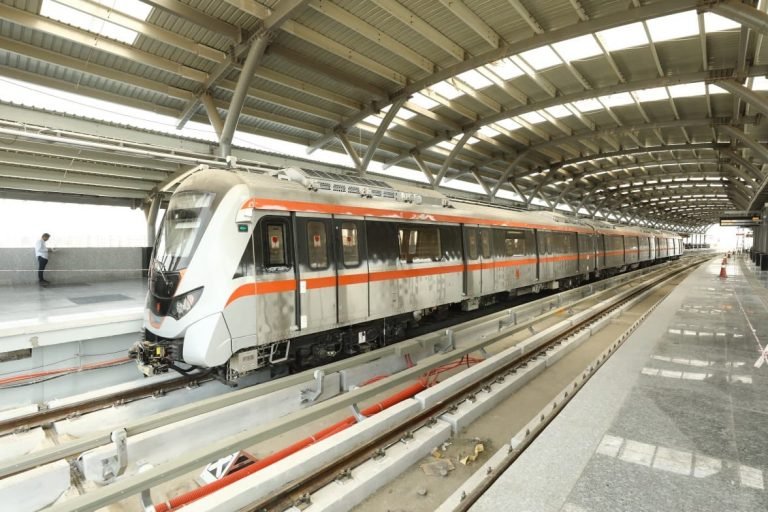
CMRL receives ten more trains

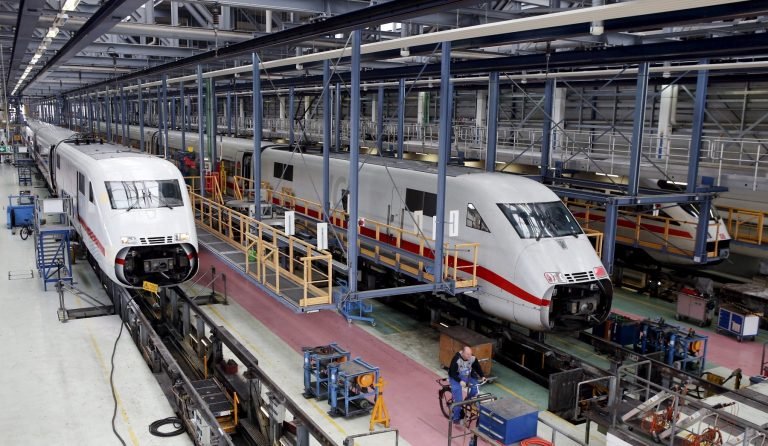
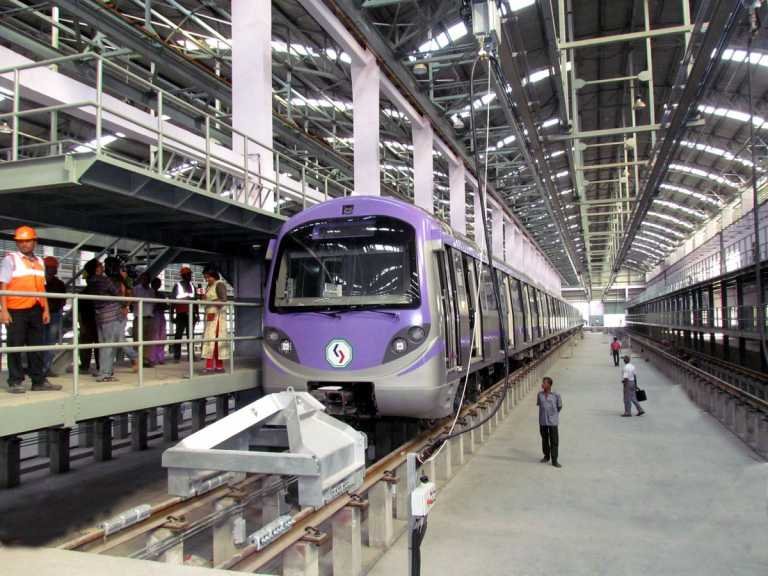
CHENNAI (Metro Rail News): The ten new train sets for the line reached Chennai Metro Rail depot at Koyembedu in the early morning of Thursday. Even as the nine-kilometre metro corridor in North Chennai is preparing for a June 2020 opening. In a release, Chennai Metro Rail Limited released the new trainsets will now a series of tests as speed (slow and high) routine tests at the depot and the mainline before they are deployed for commuters services.

The trains would be run on the nine km long phase-1 extension line between Washermenpet-Wimco Nagar. The trainsets were being manufactured at Alstom’s factory in Sri City, Andhra Pradesh. The expense of the supply is around Rs 200 cr with loan assistance from JICA.
buy propecia online gaetzpharmacy.com/propecia.html no prescription

The manufacturing of the trainsets had started in Feb 2019. Trains have gone through many tests and inspections like car body dimensional checks, static routine traction, water tightness check and brake tests. that was witnessed and confirmed by CMRL. The 1st metro train was given on 19 October 2019.

The phase-1 of CMRL Project comprising a distance of 45 km has been fully operational by Feb 10, 2019. The Phase-1 Extension project from Washermenpet-Thiruvottriyur/Wimco Nagar is being implemented at an evaluated completion expense of Rs 3,770 cr, declared the release.

CMRL awarded the contract in March 2018 to a consortium of Alstom Transport, France and Alstom Transport India Ltd for the supply of ten trainsets for the phase-1 extension project.

Bengaluru suburban rail project gets Rs 500 crore

BENGALURU (Metro Rail News): On Thursday Karnataka CM BS Yediyurappa declared an initial allocation of Rs 500 cr for the suburban rail project as a part of efforts to ease traffic flow in Bengaluru. This follows Nirmala Sitharaman, the Union finance minister announcement of full support to the project at a current media interaction in Bengaluru where she told the finance ministry would help with funds as committed as the paperwork moves onward.

The project is expected to cost Rs 18,600 cr. Of this, the Centre and the state govt would give 20% each as equity. The Centre will also facilitate debt from multilateral lending agencies through providing a sovereign guarantee. The 148 km long suburban rail project with 55 stations would provide railway connection to fields like Outer Ring Road and Electronic City where a huge number of IT companies are established.

Citizens’ groups have been searching for implementation of the project without any further delay. Yediyurappa also told the state govt would bear half the project cost for doubling the Baiyappanahalli-Hosur and Yeshwanthpur-Channasandra railway tracks that he said, will help more suburban trains on these areas.

The budget also extended support to the struggling Bangalore Metropolitan Transport Corporation to increase its fleet of buses. Yediyurappa told BMTC is in the process of purchasing 1,500 diesel buses at a cost of Rs 600 cr and the govt will also support the utility with a loan-subsidy by issuing Rs 100 cr per year over the next 7-years.

The govt has decided to get diesel buses in a phased manner. The BMTC had slowed down on expanding its fleet shortly as the National Green Tribunal had stayed the corporation’s decision to buy diesel buses rather than those run on clean energy.

The government has earmarked Rs 100 cr for buy 500 ordinary electric buses that yediyurappa told was in line with the plan to get 300 AC electric buses under the central govt’s ‘Faster Adoption and Manufacturing of Electric’ vehicles scheme.

Metro corporations begin clean up the train to prevent from Corona Virus

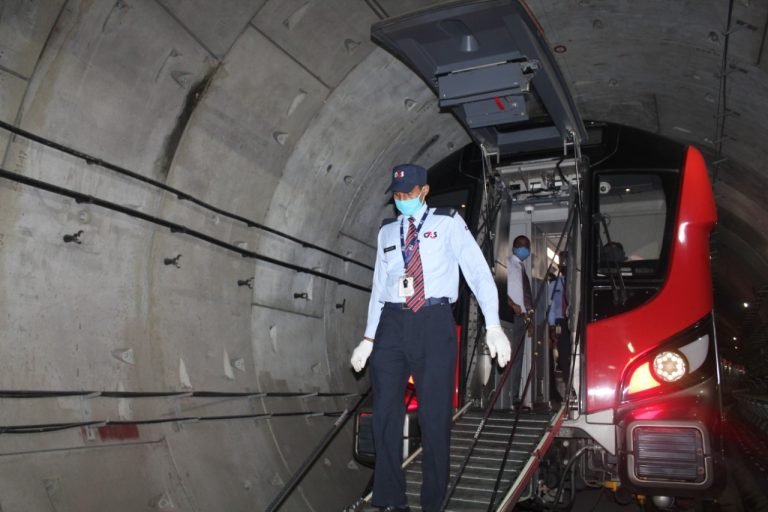
NEW DELHI (Metro rail News): All the Metro corporations have decided to undertake so many measures campaign to promote cleanliness in Metro Rail including Metro stations, Coaches etc to prevent the spread of the novel coronavirus infection.

Recently the Delhi Metro Rail Corporation announced it would increase the frequency of cleaning on its premises in sense of the coronavirus outbreak, on Wednesday.
buy zithromax online https://blackmenheal.org/wp-content/themes/twentytwentytwo/inc/patterns/en/zithromax.html no prescription

Delhi Metro has also declared Do’s and Dont’s in both languages English and Hindi concerning the virus infection. “Displays at few other major stations transmit across the network will also be made with informative messages to generate awareness amongst its commuters on the basic protective measures in this regard,” it stated.

As well as the Hyderabad Metro Rail Limited has started several protective measures to prevent the spread of the virus infection. It added Metro employees have all been made aware of preventive actions to be taken including hand hygiene and reporting sickness, Metro stations, trains and touch surface ranges, escalators and handrails will be washed with soap or detergents after operational times. 

BMRCL to Construct two Metrolite corridors via PPP mode

BENGALURU (Metro Rail News): Karnataka Chief Minister BS Yediyurappa declared in his budget speech that the Outer Ring Road-West Metro and Magadi Road-Metrolite corridor will be developed by a public-private partnership (PPP). The Outer Ring Road Metro project would connect Hebbal and JP Nagar it will help to ease traffic congestion on Outer Ring Road (ORR).

The public-private model has been proposed the first time for a Metro rail project in the city. Till now, Bangalore Metro Rail Corporation Ltd has handled the works through connecting contractors. Following the proposed model an eligible private company can develop and run Metro systems.

The Delhi airport Metro line and segments of HyderabadMumbai Metro were built following this model. “The preparation of the DPR for ORR-West Metro and Magadi Road Metrolite will be taken up; it is proposed to be implemented by a public-private partnership,” Yediyurappa stated during unveiling his budget proposals.

As per BMRCL officials, the project report for the 30-kilometre ORR-West line and 14 kilometre Magadi Road Metrolite would be drawn up in some months. Metro rail projects are usually funded by central and state govt. with loans from financial institutions. “Whether private firms will entirely build, operate and maintain Metro systems would be decided based on a project’s financial viability and ridership estimation,” said a BMRCL official.

Just like a monorail, the Metrolite is a transit system with smaller coaches. It is more affordable than the regular Metro. “The construction work of the 56km long line from Central Silk Board to Kempegowda International Airport through KR Puram and Hebbal at an expected cost of Rs 14,500 cr will begin in 2020-21,” stated Yediyurappa.

The CM added that Mysuru Road-Kengeri and Yelechenahalli-Anjanapura township corridors will be commissioned this year. Road cross-over conveniences for non-Metro passengers would be presented at 24 metro stations.

In the budget, there was an important focus on public transport.“Public transport systems require to be strengthened and extended in terms of reducing traffic density in Bengaluru,” said Yediyurappa. He declared that Rs 500 cr will be earmarked for the long-pending Bengaluru suburban rail project in 2020-21.

However, the project is awaited to cost Rs 18,000 cr, is still waiting to be confirmed by the central cabinet committee on economic affairs. “This project will be a major step in the way of developing a public transport system in Bengaluru,” he added.

The state govt has also chosen to shoulder 50% of the project expense for the doubling of Byappanahalli-Hosur and Yeshwantpur-Channasandra rail tracks. It had insisted first on 20:20 model with the railways, stating the left 60% of the funding requirement should be filled by loans.

The govt will provide Rs 100 cr per year for a 7-year period in the terms of loan subsidy to bus operator BMTC so that it can purchase 1,500 diesel buses at a cost of Rs 600 cr. In addition to this, a reward of Rs 100 cr has been allowed for the addition of 500 ordinary electric buses for BMTC’s fleet.

To reduce the traffic congestion there are also various steps will also be taken in Hebbal, Silk Board and KR Puram junctions. “Infrastructure facilities, transit-based development and essential regulatory measures will ensure that the utilisation of public transport increases from 48%-73%,” he replied.

Women Empowerment through Public Transport

India is a country which is known for its cultural heritage, traditions and rituals since ancient times. Where no doubt, women faced a lot to get equal rights in society. They have gone through an arduous struggle to put community out of their ways of judging of male and female. However, women’s have faced a lot through the years they have treated almost non- existence. So, it is needed to empower women to make them sturdy and capable of deciding for themselves. 
Women empowerment is necessary for the betterment for the country’s growth as women are playing a vital role in the country’s improvement as well as her house and its specific example is our Finance Minister Smt. Nirmala Sitharaman, who’s leading the post tremendously. 

Most of the narrow-minded people feel sad when a baby girl is born and also oppose women education. They do not even get that equal respect & importance as the men in our society of, getting. Despite that they are playing a vital role of various characters in our life, sometimes mother, sometimes wife, sister and daughter.
Swami Vivekanand once said, “It is impossible to think about the welfare of the world unless the condition of women is improved. A bird can’t fly on only one wing.”People need to understand that what is the real Place and value of women in society. To improve this, Delhi’s Chief Minister, Arvind Kejriwal has announced a plan recently that women can take free rides in the Metro and buses. So that woman can come out from home and go for work and achieve all the possible levels of life.

The purpose of free public transport is there are still many families who choose to stop girls from going out for job or education because travel is costly and distant from home.  Now Women’s don’t need to think about the expenses on travel fares as Delhi starts steps towards empowering women by offering free rides in buses. It will help in the various direction so that women can fulfil their dreams, and it will also open many creative paths to them.

20190808182846 ePlataheroimage2000x1333

Further Delhi Metro Rail Corporation (DMRC) reserved the first coach in the moving direction along with 2-4 seat is reserved in rest of the coaches for women’s. It enables them to go out and live their life independently, without worrying about wearing a sleeveless shirt or having a loud talk, space is hers, and they feel safe and comfortable inside. Now Metro has become women’s favourite mode of transportation just because it has one of its reserved coach for women. 
Being a woman, I feel safe while travelling in metro women’s coach because I don’t have to worry about being groped or stared by any creepy men and that’s why somehow our parents are also relaxed. Even I prefer Metro instead of a cab to travel in Metro Cities.
Apart from that Noida Metro is taking beautiful steps towards women safety and security on the International Women’s Day from 8th March, all the 21 metro stations of the Noida-greater Noida Metro stations will have sanitary pads available for free of cost. Along with that, they also provide the facility for women like baby-feeding room, diaper-changing facilities and a vanity cum changing room facility. I think all the Metro Rail operators can initiate in terms of empowering women in the country.

BiIOn5wCcAA8d7n

Besides, all the Noida Metro is also intending at having women entirely staff on these both metro stations. Except for the security personnel, a job outsourced to a private firm all other staff would be female on both metro stations. This is also very appreciating at least now women would not think of the safety in night outs as well.
Delhi Transport Corporation (DTC) is also free for women and Buses are also the safest and secure for travel options as there is a lady constable present in every bus; also it encourages women to use public transport. This free public transport for women, for at least buses, are surely allowing so many women to access opportunities which they couldn’t before. 

According to research, the most powerful and winning symbolism of women leaders in the hope that they would make a significant change.  For further changes to empowering Women, banks can also reserve some percentage of a seat in the banking field for women. This may help in the growing financial state of our country. 

Funding agencies like JICA, KFW, AIIB and ADB can mandate the involve more no of women employee to implementing agency of Infrastructure project with the help of MoHUA, and this will also help in women empowerment. Apart from this, let’s treat our kids on an equal scale, whether they are boys or girls at home. When parents teach their kids from their childhood that boys and girls are the same, it will help them to understand that inequality reduces in the country and When they become the part of society and act accordingly. It will also help in the country’s growth.

img 20200205 wa0028 1580903906

There are also several government schemes for women empowerment which are: 

  1. Beti Bachao Beti Padhao – In this social campaign, the govt intended at the end of female foeticide and raise awareness on safety services aimed for young Indian girls.
  2. One-Stop Centre Scheme – It is widely known as ‘Shakti’. It was implemented for providing shelter, Police desk, legal, medical and counselling services to the sufferer of violence over the roof integrated with 24 hr helpline.
  3. Working Women Hostels – This scheme aims to encourage the availability of secure and conveniently located house for working women along with the day-care facility to their kids.
  4. Mahila E-Haat – In this scheme govt will help women to make financial and economic choices that will allow them to be a part of ‘Make in India’ or ‘Stand Up India’ initiatives.
  5. Support to Training and Employment Programme for Women (STEP) – As the Support to Training and Employment Programme for women, this scheme targeted to provide skills which allow women to become self-employed or entrepreneurs.
  6. Nari Shakti Puruskars – The Nari Shakti Puruskars is the National level awards for recognizing the works done by women and the institutions in rendering notable services for the cause of women’s in the society.

This is how the Indian government has acknowledged women issues and their contribution to the country’s economy. The government and the public as well, need to play some significant roles to allow their welfare in various sector, to ensure that the women are empowered. It may be either providing free gas for cooking, schemes related to education or enable women to leverage technology etc. Also, the time has come to an end to discrimination opposed women in the name of religion, custom or personal laws like in the case of triple talaq in our country.

The condition of women is gently improved in the last decades and started recognizing her potential. She has commenced breaking the barrier and gained a respected position in the world. As you can, in example P.V. Sindhu, Neeta Ambani, Saina Nehwal and Mamata Banerjee. There is not any single field left, which remains unconquered by Indian women, whether it is in the field of sports, entertainment, technology or politics.

Hyderabad Metro to allows ticket through Paytm now

HYDERABAD (Metro Rail News):  On Thursday, HMRL Managing Director NVS Reddy launched Paytm QR-code built metro-ticketing system at here for a trouble-free ride to the commuters. The Hyderabad Metro Rail has also chalked out plans to launch QR-code built ticketing passes in several days.

On a system launch, the HMRL has taken a step ahead towards creating urban mobility solutions which are future-ready. “We believe that by offering these tech-powered solutions, we would serve the transit needs of commuters more efficiently and seamlessly,” said Reddy.

This service would give passengers a new right to travel seamlessly and avoid large queues to get tokens at metro stations. They can now purchase a QR-code ticket on their existing Paytm app, which can be displayed at the automatic fare selection gates to proceed for the journey. The progress is pointed at reducing cash transactions and to encourage digital transactions. The HMRL will soon induct 2 more trains between Ameerpet-Raidurgam route, he stated.

L&T Metro Rail Hyderabad Limited MD K V B Reddy told the launch of mobile QR ticketing in partnership with Paytm will help people to book digital ticket very easily. This feature will help over 14 lakh smart cardholders using metro service to book single, return, store value and trip pass ticket using Paytm app. The tickets can be pre-booked and come with a validity of 1 day.

The company moreover planned to stretch this service to metro-feeder buses to assure last-minute connectivity in the city, he replied.

Paytm senior VP Abhay Sharma stated QR-code ticket booking feature will help in reducing overcrowding at the ticket counters.

TBM reaches Shivajinagar station site of Pune Metro

PUNE (Metro Rail News): The 1st tunnel boring machine lowered from the Agriculture College in mid-December reached the Shivajinagar site underground Metro station after digging about 1km tunnel around 20m below the ground-level on 1st March, almost 3 months before the schedule.

The Maharashtra Metro Rail Corporation Limited was requiring regular progress of about 8m. But the uniform strata served to push up the everyday tunnelling work around 12-14m and even more than on some days. The 2nd TBM lowered in the 1st week of January has also reached near the Shivajinagar station location and is supposed to progress up to the station in several days.

Shivajinagar would be the 1st underground Metro station on the Pimpri Chinchwad-Swargate route. It has started work. The Maha-Metro official said, “The progress of the tunnel work has been very better than the expectation. We were anticipating that the tunnelling work will reach up to Shivajinagar around June. But the work progressed at a faster pace mainly because of the uniform rock all along the tunnel’s alignment,” the official stated.

MahaMetro is now working on a plan for additional progress of TBMs towards Civil Court the following station on the route. The MahaMetro said by the Shivajinagar station’s work was still unfinished, it will not hamper the tunnelling work.

Many technical options were under review to ensure that the tunnelling work progressed towards Civil Court around 1km from Shivajinagar station. The underground Metro stretch by Agriculture College to Swargate is nearly distance with 5km.

Luxembourg becomes the first country to make public transport free

Luxembourg (Metro Rail News): Luxembourg has reportedly become the first country in the world to completely abolish fares from all the public transport including trains, trams and buses nationwide. The government has said it is tactic to handle road congestion and pollution, as well as supporting low earners

All standard-class journeys on public transport in the European country are now free of charge, compared to an annual pass worth 440 euros ($485) before. Travellers can still, however, pay for first-class, at a cost of €660 euros a year.

“For the people with low incomes or the minimum wage, for them, it’s substantial,” Said Transport Minister, Francois Bausch. “The main aim is to have a better quality of mobility, and another reason is an environmental problem.”

Luxembourg has just over 600,000 citizens, but 214,000 people reportedly travel into the country comes for work every day from Germany, Belgium and France, which often causes major congestion. As the majority of workers travel by car and more than half of Luxembourg’s greenhouse gas emissions come from transportation. 

To handle many travellers, Luxembourg plans to invest 3.9 billion euros in railways from 2018-28, upgrade the bus network and add more park-and-ride sites on the border. 

 Despite these investments, the government has stated that it expects 65 per cent of commuters to get still to work by car in 2025 (down from 73 per cent in 2017).

Luxembourg is the first country to roll out free transport, but some cities, including Estonian capital Tallinn, have also experimented with the idea. 

How Delhi can learn from Luxembourg

Luxembourg, a country double the size of Delhi, has made all forms of public transport free from March 2020.

The 2nd -smallest country in the European Union, has issued similar to NCT Delhi, India. Due to expensive housing, around 214,000 people commute every day from a neighbouring country like France, Belgium and Germany for work. Due to this, Luxembourg has the highest car density in the European Union.

In 2017, Luxembourg had 670 cars per 1,000 people, as per the European Commission statistical wing Eurostat. 

Luxembourg capital is the 53rd most congested city in the world, stated from the 2020 traffic index via navigation company TomTom. People driving in city lost 163 hours into traffic, up from 149 hours in 2018, the index added.

This initiative is “an important social measure”, pointing that improving the environment or traffic congestion which is not the main concern said François Bausch, deputy prime minister and mobility minister of Luxembourg.

“The loss of the revenue has been taken in account in the national budget and will be financed by taxes,” said Frank.

This statement is backed with steady planning and investment that has improved the overall public transport infrastructure in-country. 

In the year 2018, the govt brought in free transport for everyone who is under the age of twenty.

A bit later, it launched an elaborate sustainable mobility plan, Modu 2.0, which aims to reduce rush-hour congestion and boost the number of people using public transport by 20% from 2017 to 2025. And now it has abolished all tickets, except for first-class travel on trains.

Where Delhi falters

The government of Delhi started a similar initiative last October when it announced free rides of the bus for women. The national capital, that the TomTom survey ranks the 8th-most congested city in the world has had a mixed experience so far.

During the scheme is growing women ridership, it is financially draining the Delhi Transport Corporation. “Women constituted 30 % of the total DTC ridership at the commence of the scheme (0.5 million women commuters daily). Their share has not increased to 45% (0.8 million),” stated Ravinder S Minhas, spokesperson, DTC.

The Delhi govt pays the bus operators Rs ten for every woman rider. The amount is surprisingly the same for all AC and non-AC buses and is free of the distance travelled. The govt has plans of extending the scheme to the students and senior citizens in the future. This can backfire as the loss-making state transport corporation has a shortage of buses. DTC in Feb for the 1st time had its biggest bus fleet at 6,233. In 2001, the Supreme Court had assessed that the city needed 10,000 buses.

As per the Delhi Master Plan 2021, fleet size should be 15,000. Another problem is that 15 per cent of all bus trips in a day is cancelled because of poor maintenance, showed Central government’s Review of the Performance of State Road Transport Undertakings for April 2015-March, 2016. Meanwhile, the DMRC remains expensive for most. “Our studies have shown that given the income profile at least 34 per cent of Delhiites cannot afford the minimum bus fare concerning how much of their income they can spend on transport. 

Therefore, the public transport will have to be modernised and yet kept affordable for all,” said Anumita Roychowdhury, head of the air pollution and clean transportation programme at Delhi-based non-profit Centre for Science and Environment.

In Delhi, it is cheaper to travel by 2-wheelers than Metro rail if the distance is up to 32-km. Even cars are more economical than Metro if the range is around 7-km.

“Delhi has ambitious targets under the 2021 Master Plan. What it needs is a steady investment to overhaul the public transport system,” added Roychowdhury. And in this respect, Delhi can learn a thing or two from Luxembourg.

Free sanitary pads on all 21 Noida metro stations, from International Women’s Day

NOIDA, India (Metro Rail News): Noida Metro is taking wonderful steps towards women safety. From 8th March i.e. International Women’s Day, all the 21 metro stations of the Noida-Greater Noida Metro stations will have sanitary pads available for free of cost, said officials on Thursday.

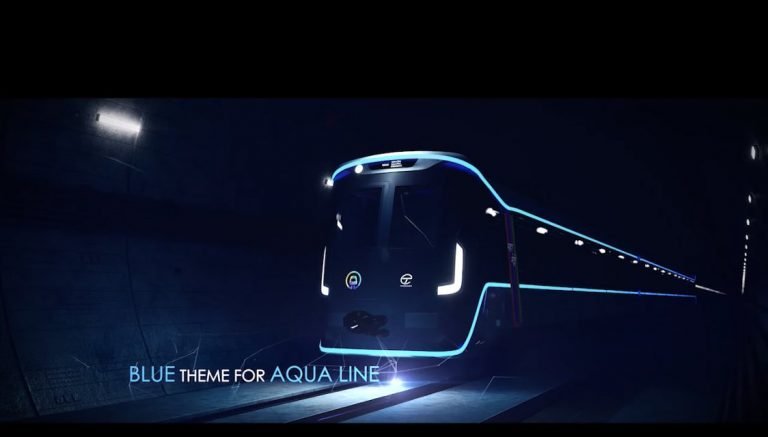
NMRC, that manages and operates the Aqua Line, will also designate 2 Metro stations that are Sector 76 in Noida and Pari Chowk in Greater Noida as the ‘pink stations‘. “Apart from the cosmetic changes, these pink stations would have facilities for women like baby-feeding room, diaper-changing facilities and a vanity-cum-changing room,” an NMRC official stated.

The Noida Metro is also intending at having entirely women staff on these both metro stations. Except for the security personnel, a job outsourced to a private firm all other staff would be female on both metro stations, the official added.

The Metro operator will have vending machines for sanitary pads as well installed at every one of its 21 stations. “Any passenger will have to get a token at the Metro station which could be used at the vending machine to get a sanitary pad completely free of cost,” said an official.

Managing Director of NMRC, Ritu Maheshwari is may inaugurate the 2 pink stations and the vending machine service on 8th March on Women’s Day– as per the official.

The initiative to encourage menstrual hygiene is maintained by real estate group Ace. “Ace Studio, the part of Ace group, would bear the expenses of sanitary pads for 1 year,” a company spokesperson stated.

Govt to prepare DPR for six bullet train corridors

NEW DELHI (Metro Rail News): Railway Ministry is conducting a detailed study for 6 high-speed Rail corridors or for running bullet trains with a complete length of 4,109 kilometres, on Wednesday Piyush Goyal informed Lok Sabha.

In a written answer, the minister told the 9 corridors are Delhi–Varanasi by Noida, Agra and Kanpur, Delhi-Ahmedabad by Jaipur and Udaipur, Mumbai-Nagpur through Nasik, Mumbai-Hyderabad by Pune, Chennai-Mysore through Bangalore and Delhi-Amritsar by Chandigarh, Ludhiana, Jalandhar and Amritsar.

On Feb 23 in 2019 had initially reported about ten proposed bullet train corridors including these 6.
buy amoxicillin UK www.calmandgentledentalcare.co.uk/wp-content/languages/new/uk/amoxicillin.html no prescription
The railways expected around Rs 10 lakh cr investment in these projects. He stated the responsibility to prepare DPR has been given to the National High-Speed Rail Corporation, that is implementing the Ahmedabad-Mumbai bullet train project.

The minister stated, “The railways is undertaking measures for improving the speed of both passenger and freight trains. Improvement in the average speed of trains is a continuous exercise for railways…At present, Mumbai-Ahmedabad High-Speed Rail corridor is the only High-Speed Rail project which is sanctioned and the same is under execution with the technical and financial cooperation from the Government of Japan.”

Chennai Metro lights up elevators, entrances at 2-metro stations

CHENNAI (Metro Rail News): Getting inspiration from the iconic structures like the India Gate and Rashtrapati Bhavan, Chennai Metro Rail has lighted up glass elevators and entrances in Central and Govt both Estate metro stations. CMRL stated in a release that it had installed a façade wall washer light which switches colour every second inside the twelve glass elevators at Central Metro that takes commuters from the street to the platform level at 30-meter depth. 6 entry points at the undercover transit hub have also been lit up.

“Chennai Central Metro station is one of the interconnecting hubs and thousands of passengers walk around at the street level to reach metro, suburban, mainline and MTC to reach their destination daily. CMRL decided to turn this location iconic,” the release stated. It more said the lighting was an inspiration from some popular landmarks like Canton Tower, China, Seoul Tower and Howrah Bridge.

Chennai Metro Rail is also creating other facilities at the street level near Central like seating area, lawns, fountains and walkways as section of Central Square project.

There are 2 open type glass entry positions at Govt Estate Metro station have also been lit up. “The lights have been programmed to a particular colour at the same,” stated an official.

Kerala semi-high speed rail to get Japanese coaches for the project

THIRUVANANTHAPURAM (Metro Rail News): The Japan companies have moved here to review on the Kerala semi-high speed rail project with Thiruvananthapuram-Kasaragod. This kind of companies which develop coaches and signals for bullet trains and will make talks with the Railway Development Corporation to manufacture coaches and signals for the determined project.

The coaches would cost Rs 4000cr where Ro-Ro service coaches that transfer goods truck would cost Rs 1000 cr. The telecom and signal systems would cost Rs 3000 cr. The entire estimated cost for this semi-high speed rail is around Rs 66,405 cr but it will most probably cost approximately Rs 70,000 cr once the project finishes in 2024.

The govt would have to avail of foreign loans of Rs 35,000 cr. JICA has initiated forward offers. The interest rates will be within 0.2% to 0.5%. This can be up to 6% because of the variations in dollar rates. The payback time is 20-30 yrs and the moratorium time is 10 yrs. The last alignment of the high-speed rail would be made this week.

The Railway Development Corporation would get the details of land which needs to be acquired. The rail for the project requires to be formed parallel to the existing rails. The railway has two hundred hectares of land and will need to acquire a more 1226 hectares.

Earlier finished a journey in the semi high-speed rail from the capital to Kasaragod will take only four hours. The rail coaches could travel at a speed of 200 kilometres per hour. The coaches would be air-conditioned. The advanced telecom system will be effective in any climate. Stations and yards will be of the world-class level.

Chennai Metro partnered with SugarBox, offers free WiFi in Metro

CHENNAI (Metro Rail News): The passengers using Chennai Metro are in, for a treat as Chennai Metro Rail Limited (CMRL) has partnered with SugarBox Networks to provide trains with a technology which enables users to access apps. SugarBox Zones have been set up in many Metro trains over the city where the passengers can sign in to SugarBox and enjoy their favourite movies or listen to music at a button click.

The SugarBox is a local Wi-Fi network that eliminates the users’ dependence on mobile data and gives them continuous access of apps. Currently, there are no data charges or usage limits over apps on SugarBox. Users could access content on the SugarBox app on both iOS and Android devices. As per a press release, Rohit Paranjpe SugarBox Networks CEO stated, “It is a matter of great honour to have been taken by Chennai Metro.

We would install SugarBox servers in all Chennai Metro Rails. Users would be able to run movies and TV shows through their commute. In the long run, the SugarBox platform would also support e-commerce, gaming, music streaming, last-mile transport booking, food ordering and many other relevant value-added services. This enables users to continue using their desired apps in places without internet connectivity as well as without any data cost.” 

Process of SugarBox work on Chennai Metro

  • Firstly, find the ‘SugarBox’ in your WiFi settings, and connect that
  • Open SugarBox app, register by putting your mobile number
  • Stream and download movies without any buffer or data charges

21 residents shifted from Kolkata Metro cave-in zone

KOLKATA (Metro Rail News): As tunnel-boring machine Urvi went into the cave-in zone on Tuesday, a total of 21 residents from Gour De Lane off Bowbazar were evacuated. The range of subsidence that found out the buildings fall like a pack of cards begins here. KMRC, the agency executing the Kolkata East-West Metro project, had commenced evacuation on Sunday by shifting twelve residents.

Kolkata Metro Rail is extremely cautious this time. Nobody wants a repeat of 31 August when the TBM digging the westbound tunnel of the Kolkata Metro project hit an aquifer and water flooded the tunnel, bringing with it sand and soil. Several buildings had fallen and many others were damaged in the subsidence that could be arrested only after twelve days. “On that time, our house was destroyed even though the TBM was digging at a distance. This time, the tunnelling will be carried out right below our building. We all are extremely worried,” stated Suneet Sarkar of 4B, Gour De Lane.

The Durga Pithuri Lane and Shyakrapara Lane were the worst-hit.
buy valtrex online https://www.facebeautyscience.com/wp-content/themes/twentyseventeen/inc/en/valtrex.html no prescription
Buildings of Gour De Lane nearby Shykrapara Lane were also affected. “The last time we had to wait in a hotel for around 28 days. When we got back, found some cracks in the walls of the house,” the 68-year-old told. “The Kolkata Metro Rail Co. notice tells we can return on Sunday but so many people haven’t been able to return on the scheduled date. The tunnelling we were said, is slow and hence the delay,” Sarkar said.

Although 5 homes can be evacuated Somnath Banerjee of 2B Gour De Lane denied to leave his house. “I shall not move until my nephew gets the Rs five lakh compensation. He denies to pay the electric bills and house tax because I got the money and he didn’t,” said Banerjee.

Urvi’s twin Chundee which hit the aquifer is presently lying defunct below Durga Pithuri Lane. It was building the westbound tunnel. Urvi was building the east-bound tunnel also had dug till the Nirmal Chunder Street-Chaitan Sen Lane crossing at the same time of the tunnelling fiasco and had been stuck ever since.

As per a Calcutta high-court order to continue tunnelling works, it continued digging on Feb 18. It has made around 1,100 rings till now. As the TBM burrows an industrial robot places segments of a 1.2meter extended pre-cast concrete ring. And thus a 12meter stretch of the tunnel gets built regularly. But thanks to Urvi’s slow progress, only around 100meter has been covered in the last fortnight.