HMRL beats Hong Kong metro in terms of lowest manpower

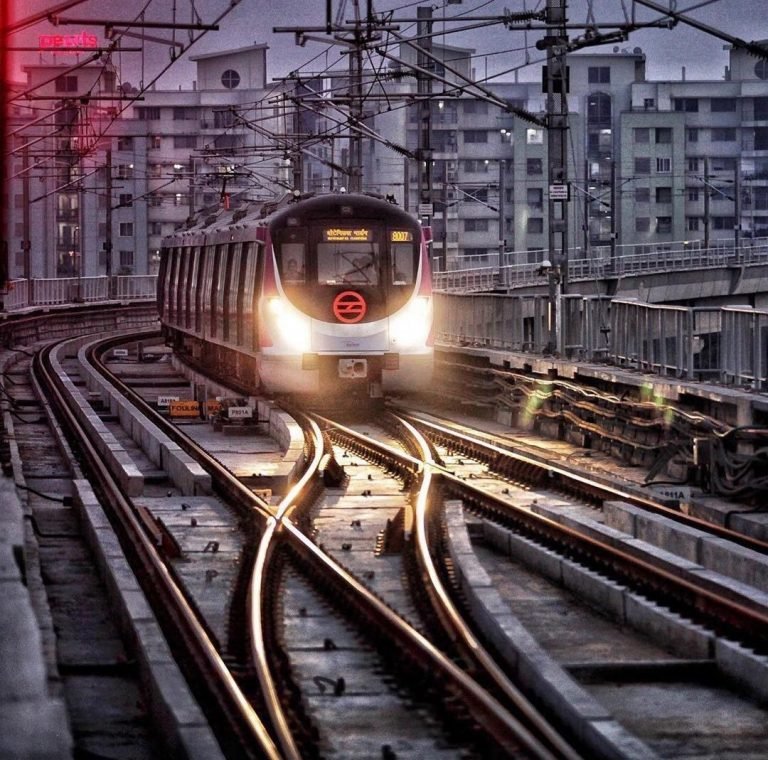
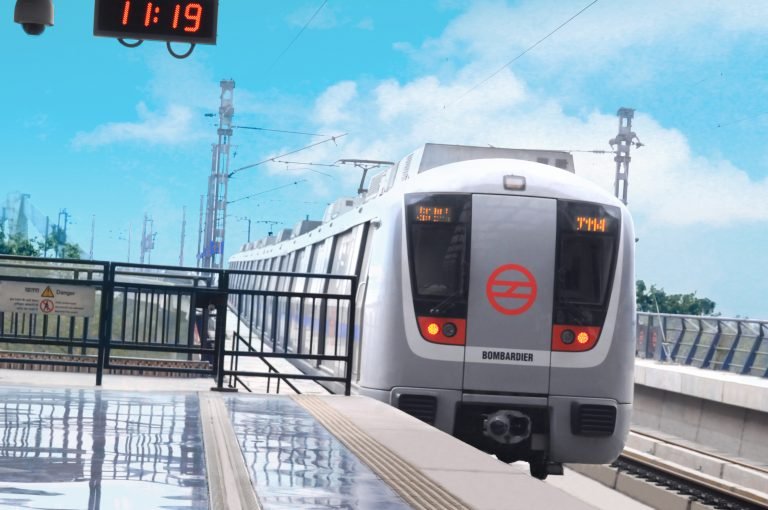
HYDERABAD (Metro Rail News): Hyderabad Metro which is the 2nd largest metro project in the country after Delhi metro has now created its mark globally by attaining lowest manpower in terms of its services.

As per the Hyderabad Metro Rail Ltd managing director NVS Reddy, Hyderabad metro has beaten Hong Kong metro in lowest manpower. “While the Hong Kong metro has 25 personnel per km for its operations HMRL has eighteen personnel for each kilometre,” stated Reddy adding that the achievement shows the efficiency of Hyderabad metro.

The Hyderabad metro rail ltd is termed as the largest metro rail network carried out in Public-Private Partnership model. “More of the services will be implemented soon for the convenience of the passengers,” declared NVS Reddy.
buy suhagra online https://pavg.net/wp-content/themes/twentytwentyone/inc/en/suhagra.html no prescription

The HMRL has now moved its focus on the phase-2 after the launch of services between Jubilee Bus Station (JBS) and Mahatma Gandhi Bus Station (MGBS). Phase-2 of the metro is may have 3 corridors out of that 2 lead to the Rajiv Gandhi International Airport (RGIA).

Bullet train project has been acquired only 40% of the land

GUJARAT, INDIA (Metro Rail News): In Gujarat state assembly released information that only around 40% of the land has been required for the bullet train project between Ahmedabad-Mumbai. The state govt tabled the third annual report 2018-19 of the central government’s flagship project. info@indomedtrip.com

On Monday, Gujarat Deputy CM Nitin Patel tabled the 2018-19 annual report of the ‘National High-Speed Rail Corporation Limited’. As per the report, only about 40% of the land requirement for the PM Narendra Modi dream project bullet train between Ahmedabad-Mumbai, is acquired. The acquisition is based upon the joint measurement survey. The total land needed for the complete project is 1,380 hectares, where 939.69 hectare comes in Gujarat, 431.2 hectare comes in Maharashtra along with 8.70 hectares in Dadra and Nagar Haveli.

The NHSRCL has envisaged integration of commuter terminals of the bullet train with the Railways and Metro at Sabarmati and Ahmedabad. For this integration, many Railway facilities will be needed to be shifted. Also, electrical overhead lines and civic utilities such as water and Drainage pipes, roads, telecom cables and infrastructure would also be needed to be shifted to accommodate the bullet train network.

NHSRCL company has obtained many environmental clearances like the CRZ clearance across Narmada river in Bharuch district, the wildlife clearance for Thane Creek Flamingo wildlife sanctuary and the Sanjay Gandhi National Park and Tungareshwar Wildlife Sanctuary. NHSRCL has also carried out tree transplantation at many areas in Ahmedabad. About 3,000 trees would be axed for the project in Ahmedabad as per the project.

UPMRC erects the first Pier-Cap of Kanpur Metro Line-1

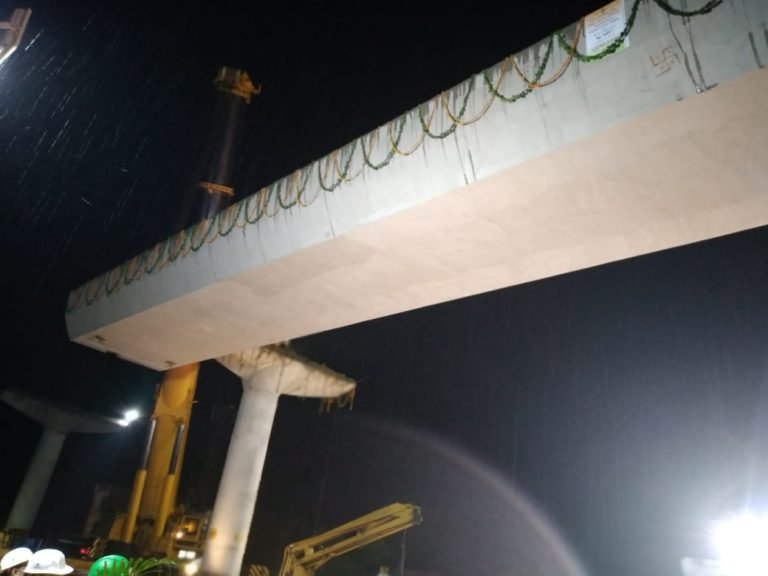
KANPUR (Metro Rail News): Kanpur Metro project is being implemented in the city by Uttar Pradesh Metro Rail Co. On Monday the Afcons workers erected the 9.6-m first wide pier cap for the 8.728-km elevated priority corridor of Kanpur Metro. UP Chief Minister Shri Yogi Adityanath inaugurated the civil construction of Kanpur Metro’s Priority Corridor on 15th November 2019.

KM 3 1

Within just around 3 and a half months, the Metro team has successfully erected the 1st Pier-Cap of the corridor on Monday around 6.30 am. Managing Director of UPMRC Shri Kumar Keshav done rituals at the construction site and the 1st Pier Cap was erected with a Crane after the Pooja Ceremony. This Pier-Cap has been erected at the Piller No. 19, i.e. among the IIT Kanpur & National Sugar Institute.

UPMRC has accomplished this achievement around three months before as compared along with the Metro Project of Lucknow. Lucknow Metro is being accredited with the name Fastest Constructed Metro in India and the construction work of Kanpur Metro Project is faster as compared to Lucknow. It shows a constant approach of UPMRC engineers to upgrade themselves and give a more innovative and refined MRTS to the Public.

KM 1

On the event, Shir Keshav reiterated the commitment of the whole team of UPMRC in undertaking this prestigious project in record time to give the city a world-class Metro system in the least possible time.

KM 4 1

About Pier-Cap 

A base that is created to place the U-Girder on the top of a Pillar is termed as Pier-Cap. The U-Girder is the particular unit of Metro’s civil structure, on which the Metro track is laid and the structure that is in between the Pillar. Pier-Caps are 2-m in height, 9.3-m long and 2.8 meters wide, having a weight of about 70 tons.

KM 5 1

Update of Construction Work

As the inception of the construction work, the civil construction work speed of Kanpur metro project has become a matter of discussion thanks to the skilful leadership of UPMRC MD Mr. Kumar Keshav and the exceptional efficiency of Metro engineers. Within about 3 and a half months, above 600 piles and 42 Piers have previously been completed under the ‘Priority Corridor’. Simultaneously the casting of U-girders and Pier-caps is growing rapidly in the Metro’s Casting Yard and the casting work of 24 U-Girders and ten Pier-caps has also been developed.

MMRDA invites stakeholders to a workshop for Metro Line 2A & 7

MUMBAI (Metro Rail News): The Mumbai Metropolitan Region Development Authority has called stakeholders to a workshop on last-mile connectivity for Metro Line 2A & 7. The Authority would hold the workshop on 3rd March 2020.

As per the MMRDA press release, the workshop would be prepared to obtain feedback and suggestions on giving connectivity and also decide on the design, construction, O & M arrangement, terms & conditions, and other modalities. Metro Line 2A & 7 are in the advanced stage of end and both these lines are supposed to be commissioned by the end of 2020.

The Metro corridors pass by heavily urbanised areas and the Metro stations are generally located in close proximity to residential and commercial development areas, there is an opportunity to give last-mile connectivity from Metro stations to nearby areas that would help decongest roads and increase pedestrian safety.

The Mumbai Metro Master Plan is developed to improve the traffic and transportation in Mumbai Metropolitan Region also to provide a metro system within a 1-km reach. MMRDA has planned a metro network of 14 lines of more than 337 kilometres long with more than 225 stations. A significant length of the network will be operational in the next 3-4 years.

Maharashtra CM & Minister Aaditya Review Mumbai Metro 3 Project Work

MAHARASTRA, INDIA (Metro Rail News): Maharashtra CM Uddhav Thackeray and minister Aditya reviewed the ongoing construction work of the Mumbai Metro 3 from Colaba-Bandra-Seepz corridor on Saturday. Chief Minister Uddhav Thackeray dressed in casuals throughout his visit and also visited the Sahar metro station and investigated the work there. Maharashtra Tourism Minister Aaditya Thackeray was also present while inspection.

CM also investigated the work details from Metro employees working at the project. The total growth of the construction in the Mumbai Metro 3 project currently stands at 59% and the progress of tunnelling stands at 63%. At the same time, the development of Sahar Metro station has been 48%.
buy levitra soft online https://www.adentalcare.com/wp-content/themes/medicare/editor-buttons/images/en/levitra-soft.html no prescription

MMRC which is implementing the Colaba-Bandra-Seepz corridor last year had declared that 100% tunnelling work of the project would be finished by September next year. Besides this, the Corporation hopes to complete 70% of civil work and get the first rolling stock by December 2020, MMRC stated in a statement.

CM Uddhav Thackeray back in December had put a stay on the metro car shed proposed at Aarey colony, touted as the lungs of the city. The almost Rs 30,000-cr project will connect Cuffe Parade business district in the extreme south of the town to PZ in the north-central with 26 underground and one at-grade station.

MMRDA plans mobile app, card to access all lines

MUMBAI (Metro Rail News): The MMRDA is working on a mobile app which allows users to book Metro tickets. The authority launched Metro travel card dummy on Friday which will provide users to access all lines in the Metro network. The card would be available to commuters by December when 2 more Metro lines – Metro 7 and Metro 2A– would be operational.

MMRDA is working on the construction of 14 lines with a total distance covering over 350 km. Currently, in Mumbai only Versova-Ghatokopar line is operational. The features of the application are as follows – to book tickets, check train timings & schedule, purchase season passes and figure out interchangeable metro stations. The app would map the Metro stations and the Metro network. “It is in a nascent stage and details are being discussed,” stated an MMRDA official.

MMRDA showcased the dummy common metro card for all metro rail lines under the integrated ticketing system, which would be available in 2 designs. The new card will have a chip containing all the essential information embedded in it and looks similar to a debit/credit card. “We have shortlisted the designs of these two cards after scrutinizing over twenty different designs. This ‘single card’ for all metro lines will be available for people by December when the two Metro lines of metro-7 and metro-2A will be ready,” stated RA Rajeev, MMRDA commissioner.

Officials told Mirror that the card could also be integrated to gain access to other modes of transport as well as the suburban local trains, BEST buses, taxis and Autos. Subsequently, it may even be connected to bank accounts and people can use it to shop also. However, this card has been a bone of contention among the Indian Railways and MMRDA due to technical differences over the last 3 years.

The MMRDA has finalised the designs that how the Metro stations on these 2 lines would look. The Metro-7 on Dahisar (E)-Andheri (E) line would be called ‘Redline’ where the Metro-2A in Dahisar (W)-DN Nagar would be called ‘Yellow line’.The background of all the signages would be in black. The other indicators including station names would be in red or yellow, as per the metro line.

Chennai Metro inter-modal connectivity at Egmore

CHENNAI (Metro Rail News): Chennai Metro plans to remove the fencing between Egmore Metro station and the suburban platform so that passengers can quickly walk across while changing their mode of transport. As per the officials of CMRL, now if people exit the station, then they have to cross the parking lot climb the foot over-bridge and then get to the suburban platform of Egmore Railway station.

“If we remove the iron fencing, they can reach the suburban platform immediately. We didn’t earlier foresee that passengers would have to take a circuitous route to reach that platform. The idea of providing inter-modal connectivity is that passengers should never feel the strain of switching from 1 mode of transport to another. In the coming weeks, we will remove the fencing and put up signage as well,” said an official.

Presently CMRL has also inter-linked the concourse level of Egmore Metro station to the foot over-bridge that would take passengers to the suburban platform of Egmore Railway station. The pathway from the concourse level that would lead passengers to the lift and it would take them to the foot over-bridge said, officials. They have installed signage at many places to supervise passengers as well.

Egmore Metro station is an important station as thousands of passengers go to the railway station to catch outbound trains from Chennai. Sources told that there should also be signage at the Egmore Railway station at some important areas, telling commuters the way to the Egmore Metro station and they should also put up Metro Rail timings.

Kochi Metro comes up with Bookstall, soon

KOCHI (Metro Rail News): Commuters taking the Kochi Metro usually spend minutes at the station and on the train. Mostly choose to use the phone is an option to pass the time. For them, Kochi Metro has come up with the plan to open bookstalls at some major stations. The aim of this idea is to allow people to purchase books and help them make better use of the time while waiting to reach their destinations.

KMRL will grant licences for running bookstalls at the Aluva, Edappally, M G Road and Maharaja’s College metro stations. It has also invited ‘Request for Proposal’ from interested parties for licensing bookstall spaces inside the selected metro stations. The licence would be allotted for a 7-year period.“The primary responsibility of the bidder would be developing a bookstall with a state-of-the-art facility in the available space,” stated a Kochi Metro officer.

After getting inputs from passengers on their preferences Kochi Metro decided to float tenders to start bookshops.“During an interactive session, several commuters pointed out the lack of entertainment throughout their journey. We also realised that there were many commuters who did not want to be stuck to their mobile phones to pass time while travelling.

Interestingly most of them recommended books as a solution,” declared a KMRL officer. He said that a Thykoodam-bound commuter who enter the train from Aluva metro station spend 40 minutes inside the metro train. “Hence, we are not looking for a big book shop that offers commuters the space to sit and read.

The concept is to start a state-of-art bookstall with a good collection of books. We know there are few good airport reads (books to read while waiting at the airport). We hope to grow a similar culture with our commuters and nurture the readers in them,” told the officer. He added KMRL was expecting some leading publishing houses to show interest in setting up the facility inside the metro stations. The bidder can also quote for one or more locations.

Kolkata East-West Metro tunnel work got fresh cracks, work stalled

KOLKATA (Metro Rail News): On Friday, Kolkata East-West Metro tunnel-boring work was stopped after some hours when fresh cracks were spotted on some buildings in Chaitan Sen Lane in Bowbazar. The lane is nearby Gour De Lane where several buildings had caught cracks or subsided after a tunnel-boring machine had hit an aquifer in August. The accident led to the suspension of East-West work for almost 6 months.

Sources declared the tunnel-boring machine will remain closed till Saturday. The engineers will investigate the buildings in the lane to figure out whether the cracks were growing. “If the cracks do not grow and fresh cracks do not appear the tunnel-boring machine will resume work on Sunday,” stated an official of KMRC, the implementing agency of the project.

The total distance of 16.5 kilometre East-West Metro will connect Salt Lake Sector V and Howrah Maidan through a stretch under the ideal Hooghly river. A group of Kolkata Metro engineers visited Chaitan Sen Lane and talked to residents on Friday, trying to help in their fears. Crack-meters have been installed and residents were convinced that the new cracks will not affect the buildings.

“The cracks are very thin and they won’t cause the buildings to collapse,” an engineer stated while talking to the residents of the lane in the afternoon. “Some of the cracks have developed after the tunnel-boring machine crossed this part of the lane.”

Kolkata Metro Rail Corporation had evicted some families from Chaitan Sen Lane before the machine continued work a few days ago. Engineers told there was no need for further evacuation.

MMRDA unveiled colours for Metro 7 & 2A signages

MUMBAI (Metro Rail News): The MMRDA released a document on Friday to set design guidelines and assign official line colours to the Mumbai metro line 7 and 2A in their extensions which are in a different stage of execution.

The Metropolitan Commissioner of MMRDA, R.A. Rajeev stated that having colours is necessary as this makes it language agnostic and hence more convenient to people. “We have chosen to have a black background across the stations for signages.
We have picked black as it is the colour of fashion and Bollywood, and Mumbai is the fashion capital.”

Systra created the signage designs and is based on the designs incorporated at 4 stations which are Metro de Paris, French National Railway Station SCNF, Metro De Marseille, and Algier Metro.

The signage has incorporated various colours for entry and exits and will have many colours at stations where 2 or more lines converge. “The work on putting up news signs will start at Bandongri station on Metro Line 7 in 2-3 weeks,” said Mr Rajeev.

The Metro Line seven being built between Dahisar and Andheri and the Metro Line 2A being constructed between Dahisar and D.N. Nagar are supposed to be operational by December. The MMRDA has also planned to have a unique colour for all its upcoming and under-construction metro lines in the capital.

The Mumbai Metropolitan Region Development Authority also unveiled the design of the common mobility card that will be available for Monorail and Metro at first. Mr Rajeev stated that work on creating the framework for the card was underway and will be available by the time the Metro corridors were commissioned.

CMRL forms Panel to acquire land for Phase-2 project

CHENNAI (Metro Rail News): Rather than fighting lengthy legal battles, Chennai Metro Rail has started acquiring land for Phase-2 project by talking with the property owners through a private negotiation committee to accelerate the process. Good Shepherd School in Nungambakkam has given the land for building Sterling Road Junction metro after a delay.

An official told that they have acquired several properties by the private negotiation committee. “Recently we cleared five cases including those for Kellys, Chetpet, Adyar Gate junction stations,” the official stated. “Private talk is mutually beneficial instead of long legal battles as we make people understand they can give us the land for more than the market price which they may not get by fighting a case,” said an official.

For the project, CMRL needs 117.12-hectare land to build the 118.9km phase-2. Private negotiations along with property owners come after Chennai Metro faced challenges in acquiring land for the construction work of the 45km phase-1. This time, Chennai Metro is making changes to the design and area of stations wherever possible to cut down on the amount of acquired land.

For instance, An official stated they have taken over 17,495 sqft rather than 0.88 acres, as was already planned from Good Shepherd school a major part of this is the school’s playground.

On Friday, CMRL has given a cheque to the school authorities for providing the land. “We are not taking the playground. We have taken over a portion of land from a corner of the school campus where there is a school block. We will rent out the building to the school for a year till they get a new block ready,” said an official.

Hyderabad gets 2 New Metro Train

HYDERABAD (Metro Rail News): L&T Metro Rail Hyderabad which has established and runs the Hyderabad Metro Rail has been making ₹40 cr per month including ₹30 cr from passenger ticket charges and ₹10 cr from property development that enables it to ‘break-even’ in terms of running operations and maintenance currently.

However, having funded ₹12,674 cr in the project including around ₹12,000 cr loan from SBI led a consortium of banks, L&TMRH has to pay ₹1,300 cr profit annually. So, it could take anywhere from 7-8 years for the project to break even, said HMR MD N.V.S. Reddy on Tuesday.

In communication with presspersons at the Metro Rail Bhavan, he confessed that even the Centre had disbursed ₹1,200 cr from the ₹1,458 cr Viability Gap Funding made open for the Public-Private Partnership project; the rest of the money is yet to be sanctioned even though the Law Ministry has given permission.

“Unlike other metro projects across the country built with Centre-State government funds with low-interest loans from agencies like JICA – Japanese International Cooperation Agency of 1.5%, HMR was built with commercial bank loans taken at 11% interest and even now vested interests have been lobbying against the project preventing further funds infusion,” he accused.

The overall project cost is ₹21,000 cr since ₹14,132 cr is meant only for metro works, ₹2,500 cr was spent by State govt for properties acquisition, utilities shift and L&TMRH sunk in ₹3,500 cr inequity and ₹2,243 cr for business development but it could spend ₹900 cr latter having used the rest for other activities, stated Mr Reddy.

AECOM awarded DDC contract for Patna Metro corridors 1 & 2

PATNA (Metro Rail News): The Joint Venture of AECOM Singapore Pte Ltd and AECOM India Pvt. Ltd emerged as the lowest bidder (L1) for the Detail Design Consultant (DDC) contract for Patna Metro Rail project corridor 1 & 2.

Delhi Metro Rail Corporation Limited (DMRC) issued Letter of Acceptance (LoA) of the DDC contract worth Rs 17.27 cr to the consortium of AECOM Singapore Pte Ltd and AECOM India Pvt. Ltd issued by on 18th Feb 2020.

This contract includes providing detail design consultancy (DDC) services for civil, architectural and building services including electrical and mechanical (E&M) works for Patna Metro Rail Phase I Corridor 1 & 2. AECOM need to complete the work in four years.

Total of four bidders participated, a consortium of AECOM Singapore-AECOM India emerged the lowest bidder (L1). 

Participates and bidding amount for Patna Metro Corridor 1

Participates bidding amountRank
AECOM Singapore-AECOM India JV Rs 16.870 croreL1
EGIS Rail-Intercontinental JV Rs 17.550 croreL2
Ayesa India-Fountainhead Rs 18.649 croreL3
ENIA–Amberg–STUP JV Rs 21.970 croreL4
Systra MVA Rs 23.770 croreL5

Participates and bidding amount for Patna Metro Corridor

Participatebidding amountRank
AECOM Singapore-AECOM India JV Rs 17.273 croreL1
Ayesa India Rs 17.929 croreL2
EGIS Rail Rs 23.00 croreL3
Systra MVA Rs 24.435 croreL4
ENIA JV Rs 24.583 croreL5

In Nov 2019, DMRC invited tender for detailed design consultant contract (DDC). In which Rs 29.30 crore estimated corridor 1 and Rs 27.50 crore estimated for corridor 2 of Patna Metro metro rail project.

About Patna Metro Project Corridors

  • Corridor 1: Danapur – Mithapur Bus Stand (14.89 km, 11 stations)
  • Corridor 2: Patna Railway Station – New ISBT (17.64 km, 14 stations)

Currently, CEG Group, a Jaipur based firm is executing the soil testing work at 10 locations on the Patna Metro corridor.

Delhi Metro Rail Corporation (DMRC) appointed as General Consultant for the Patna Metro Rail project and given the responsibility to execute the  Patna Metro phase I project.

Maha Metro begins Construction on Gaddigodam Multi-Layer Transport System

NAGPUR (Metro Rail News): Maha Metro has begun the construction work on one of the most ambitious segments of Maha-Metro project which includes the development of Flyover and Metro route over the existing road and railway line at Kamptee Road. The structure one of its own kind will create 4 layers transportation mechanism at Gaddigodam, Kamptee Road. 

Central Railway recently approved to begin construction over Railway Land at Gaddigodam. Piling work has accordingly been commenced. The proposed double-decker construction crosses Railway Line at Gaddigodam near Gurudwara on Kamptee Road. This is a most complex and challenging project work to be taken out ever, mainly over the ever-busy Railway line and the narrow road at Gaddigodam Railway-under-Bridge.

The structure at Gaddigodam crossing has 4 tier transportation system. The primary level is the surface road level under the current-carrying road traffic; the 2nd level is Railway Track. After the construction is over, the 3rd and 4th levels will be flyover and Metro Rail level respectively. The four-layer structure is the need of the hour considering every busy road and the traffic blockage there.

The way has multiple academic institutions, commercial establishments, banks, govt offices lined up on each side of the road. It also serves a link among northern and southern areas of the city. RBI, Kasturchand Park, Sitabuldi Fort are some of the historic and prominent institutions on the road. The Reach-II section of Nagpur Metro Rail Project, which includes the 4-levels transit system, stretches from Sitabuldi Interchange to Automotive Square Metro Station and is 7.30 kilometre. It consists of 7 stations viz., Zero Mile, Kasturchand Park, Gaddigodam Square, Kadvi Chowk, Indora Chowk, Nari Road and finally Automotive Square station. The double-decker structure on Reach-II section stretches to 5.3 kilometres. The flyover at the third level has four lanes for flyover traffic with every path having a width of 7.50 meters.

Technically, a steel composite truss girder of 1400 MT is to be launched over the Railway tracks by suitable launching method. The steel weight composite truss girder of the 80-meter span is around 1400 MT. The RoB structure consists of pile foundations, piers and portal beams and superstructure is steel composite truss girder of the 80-meter span. The RoB structure height is around 25 meter from road level.

Few of the prominent features of the project are as follows:

  • The proposed flyover and the metro route share `Right of Way’ – the two structures to be built on a single pillar, thus saving cost and also reducing the usage of road space.
  • The fly-over structure would commence from LIC Square and culminate at Automotive Square, both placed on the busy Kamptee Road.
  • The 4 levels are i. Kamptee Road, ii. Nagpur-Bhopal Railway Line, iii. Fly-over iv. Metro via-duct.
  • The Metro via-duct maximum height would be at Gurdwara at Gaddigodam, where the rail line moves over the road.
  • Maximum height of fly-over across the stretch would be at Gaddigodam, where the railway line crosses the road – 14.9 mts.
  • In the same way, the max height of via-duct across the stretch will be at the same area – Gaddigodam, where the railway line crosses the road – 24.8 mts.