The Third Rail System Gets Power in Kolkata’s Dakshineswar Metro

KOLKATA (METRO RAIL NEWS): For the first time, electricity was charged along the third rail of Metro’s 4-km Dakshineswar extension on Sunday. The third rails supply power to the rakes through the third rail current collector (TRCC). The power connectivity to the third rail has been going on for the last week. “But the charging was done for the first time today. This is being done for trial, to check whether the system is functioning well,” an official of implementing agency Rail Vikas Nigam Limited (RVNL) was quoted by a news agency.

The power connection is a prelude to trials for the Dakshineswar Metro, which is veering towards commissioning. The 4-km extension of the city’s existing north-south stretch to the temple town of Dakshineswar may be launched in end-December, Metro Railway general manager Manoj Joshi had said when he inspected the stretch on a trolley on November 10.
The tracks and the two stations — Dakshineswar and Baranagar — dotting the 4-km extension of India’s oldest Metro, which currently operates along 27km from Kavi Subhas station in New Garia, are ready. “But the entire system must be in place before the 4km new line gets off the block and the Commissioner of Railway Safety (CRS) comes for his inspection,” a senior RVNL official said.

The CRS, under the ministry of aviation, gives the safety nod to any new Metro project across India. The crucial Train Protection Warning System (TPWS) equipment, sophisticated software that prevents accidents, arrived from Germany’s Siemens in November and is now being tested. Had the TPWS not run into lockdown restrictions, Dakshineswar Metro would have been launched in July.

Smart Trains and Connected Urban Rail with Improved Public Transport and Inclusive Mobility

The major problem which our developing cities are suffering from today is the lack of efficient and effective public transport system. The modern cities in India are not modern in planning in any sense. The planning lacks everywhere and can be seen in every aspect of the urban planning, designing and development. There are many problems which a new or existing city experiences today in developing nations like ours.

Enhancement of the Urban Transport System will surely result in easy access to transportation to cater to the growing needs of the residents of these cities. There are a lot more factors which may play crucial roles in the development of progressive cities for a developed India which We all have been aspiring for!

The industrial “internet of things” has had a major impact on the transportation industry, with the advent of autonomous vehicles and improved cargo management. One area that has seen less coverage is the connected railway. 
“The fact that trains operate at such high speeds through tunnels and extreme weather conditions presents real challenges when it comes to deploying IoT systems. But advances in networking have made smart trains a possibility, and one that could provide significant benefits when transporting goods, providing comfort for passengers and increasing operators’ return on investments”, says one expert.

As we see today, infrastructure is gradually being replaced by train management systems in which trains become interconnected, which may be called communication hubs. They are then so interconnected that it is easy for them to transmit data among themselves, which further helps them to manage network control centres effectively, and receiving instructions from control centres. Technology and Artificial intelligence are today playing crucial roles in the enhancement of Urban Transport Systems.

As we progress further in future, we will see a whole system being developed not only in the developed nations but also in the developing countries mainly of Asia and Africa. One of the problems which Indian Railways regularly faces is delayed arrival of trains. The derailment of trains is another big issue pertaining to the safety and security of commuters. Systems have been developed today by Engineers that can display train velocity for drivers and report speeds back to central control systems. These may reduce the chances of train accidents, and it will further lead to a sharp decline in the number of average rail accidents in any country. 

Furthermore, on-board monitoring systems are interconnected with outdoor signalling systems that can regulate train speeds or even remotely command trains to stop based on track conditions, the positions of switches, the presence of other trains on the track and other factors. This may help in protecting the trains from crashes and derailments once these technologies are brought into use.

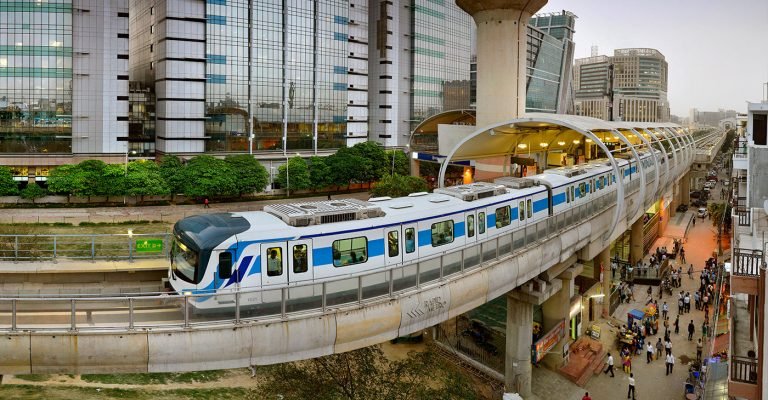
The Technologies are being developed which will not only help in the vision of running Smart Trains, but these will also provide the efficient, effective and best way of transportation to the cities. The governments are trying to bring more infrastructural projects for providing an efficient mode of the public transport system in the cities. India is also introducing the RRTS System. RRTS is a new, dedicated, high speed, high capacity, comfortable commuter service connecting regional nodes in NCR. According to the NCRTC which is the nodal agency for the development of Delhi -Meerut- Ghaziabad RRTS project, “RRTS is different from conventional Railway as it will provide reliable, high frequency, point to point regional travel at high speed along dedicated pathway”.

Delhi- Ghaziabad – Meerut Regional Rapid Transit System is an 82.15 km long, under-construction, semi-high speed rail corridor connecting Delhi-Ghaziabad-Meerut. RRTS is different from the metro as it caters to passengers looking to travel a relatively long distance with fewer stops and at higher speed and this will further help in the better travel facilities to the people of Urban Centres of Trade and Commerce.

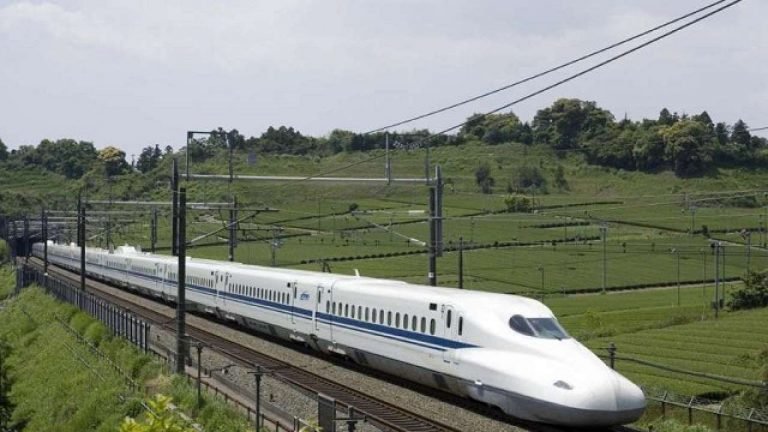
The future indeed seems to be very bright for the urban transport system. Many more Metro Projects are coming up. The concept of Bullet Train is now not unknown to India. High-speed rail (HSR) is a type of rail transport that runs significantly faster than traditional rail traffic, using an integrated system of specialized rolling stock and dedicated tracks. While there is no single standard that applies worldwide, new lines in excess of 250 kilometres per hour (160 mph) and existing lines in excess of 200 kilometres per hour (120 mph) are widely considered to be high-speed.

In India, the upcoming Ahmedabad-Mumbai Bullet Train corridor will be 508 km long high-speed train corridor and will be India’s first Bullet Train corridor. It will be based on Japan’s E5 Shinkansen technology. The ambitious railway project will boast speeds of over 300 km per hour. This is the first of its kind in Indian Subcontinent. What I want to say here is that things are changing today in each and every perspective. The RRTS and High-Speed Rails are two different projects which show the progress of our country towards modernization of Urban Transport Systems.

As compared to the traditional Rail Systems, the Smart Trains are going to be of great help and use. When we compare the signalling systems, then we find that a lot more things are changing with the advancement in technologies. Signalling systems control the movement of a train by remotely adjusting train speed and braking.

More traditional signalling systems are based on radio-frequency identification along the train track, but wireless train to ground signalling is getting more and more common in both railroad and metro systems as of the trends now. The new European high-speed railroads are today equipped with European Train Control System Level 2, a signalling standard that requires constant radio communication between the train and the group.

These all changes are going to bring a lot of changes in the Public Transport Systems which will not only improve the things but will also help in inclusive mobility and economic growth. The time is set to change and we will see a new dawn of hopes and dreams when these all systems get fully developed and implemented in the Indian Transit System. The hopes will always be there as science is never at rest nor the scientific advancements. 

I am hopeful that the Indian government work for this cause and the Ministry of Railways bring rapid transformations in the Railway Sector. Although Metro Networks are using many modern technologies, it’s a time of upgrading some existing old and traditional practices. I hope we get Smart Trains and adopt these new technologies very soon in the next couple of years.

Congress asks State Election Commission to Remove TRS Ads from Metro Rail Pillars in Hyderabad

HYDERABAD (Metro Rail News): Telangana Pradesh Congress Committee (TPCC) President & MP N. Uttam Kumar Reddy on Saturday demanded that the State Election Commission remove the advertisements of TRS party from the pillars of Hyderabad Metro Rail and other public places.“The TRS party has put up advertisements on all pillars of L&T metro rail in the ongoing GHMC elections.

L&T Metro rail is a public-private partnership firm and state and central governments funding. There is government shareholding in L&T metro rail company. The Government of India has also given viability gap funding of over Rs.2,000 crores. The State government has given precious land for L&T metro rail. Also, TRS party has put up advertisements on RTC bus shelters, public toilets etc.,” Uttam Kumar Reddy said in his complaint lodged with State Election Commissioner C. Parthasarthy.
Speaking to media persons later Uttam Kumar Reddy said that there was an established norm that no advertisements of political parties should be put up on govt or semi-govt properties during the election campaigning period. “We request that the SEC issues an order for removal of TRS party advertisements on L&T metro rail pillars, RTC bus shelters, public toilets etc., This is a clear breach of code of conduct. We demanded that the SEC take action against the TRS party,” he demanded.

Ahmedabad-Mumbai Bullet Train: NHSRCL Chief Urges Industries to Develop Alternatives for Chinese Machines

NEW DELHI (Metro Rail News): As the National High-Speed Rail Corporation Limited (NHSRCL) is building the country’s first high-speed rail corridor connecting Ahmedabad and Mumbai, Indian industry has been urged to come up with an alternative to the high-tech machines that are needed to build viaducts at the desired pace, which at present are only made in China. India’s trade with the neighbouring nation, China has been affected by the border tension in eastern Ladakh. According to an IE report, the mega carrier as well as launcher machines are ubiquitous in large-scale connectivity projects of China.

Typically, under this technology, a vehicle carrying a full girder travels on a girder that is already launched to place the next girder. According to the report, the speed is nearly seven times that of the girder launching mechanism that is often used in India. While one-and-a-half girders are set up in a week’s time with this, the machines developed in China enable two girders a day.

According to Achal Khare, MD NHSRL, each machine costs nearly Rs 70-80 crore and the Ahmedabad-Mumbai Bullet Train project will need up to 30 such machines. He further said to build 237 km in four years, there is no other way other than to use this technique. Khare said these carrier-and-launcher machines are produced in China. So this is one of the challenges which the corporation has posed to the industry, including L&T and the academicians, that why can’t these machines be developed rather than imported from China.

According to NHSRL MD, the machines are “no joke” as they are capable of carrying loads of 1000 tonnes-plus. At present, girders are carried in little segments by road. He further said even Japan, which is helping India with the high-speed rail corridor project, had not designed such machines. While China came up with them over its development of 25,000 km of high-speed rail, Khare said.

Civil Construction Gets a Boost for Delhi-Meerut RRTS

NEW DELHI (Metro Rail News): Larsen & Toubro has started the construction works for the 33 km Duhai – Modi Nagar North – Shatabdi Nagar section of the Delhi – Meerut RRTS and the work is gaining a rapid pace with time.
According to an official, L&T has been carrying out piling works, tying up rebar on-site for piers and they have already been casted 12 of them between Shatabdi Nagar and Partapur on NH-34.
The firm was awarded Package 3 worth Rs 1797 crores in March this year after it emerged as the lowest bidder.

Package 3 – Lot 1: Elevated viaduct from Duhai (EPE) to start of Modi Nagar North and 2 elevated stations viz. Murad Nagar & Modi Nagar South
Package 3 – Lot 2: Elevated viaduct from the start of Modi Nagar North Station to Shatabdi Nagar Station and 5 elevated stations viz. Modi Nagar North, Meerut South, Partapur, Rithani & Shatabdi Nagar.

L&T has a deadline of 910 days for the project and it has already begun piling works for the viaduct’s foundation at two different locations. The RRTS is supposed to get operational by the year 2023 which will make travel in the entire NCR area much better and smoother.

Chennai Metro phase I Extension Project to Get a 25 KV Power Boost

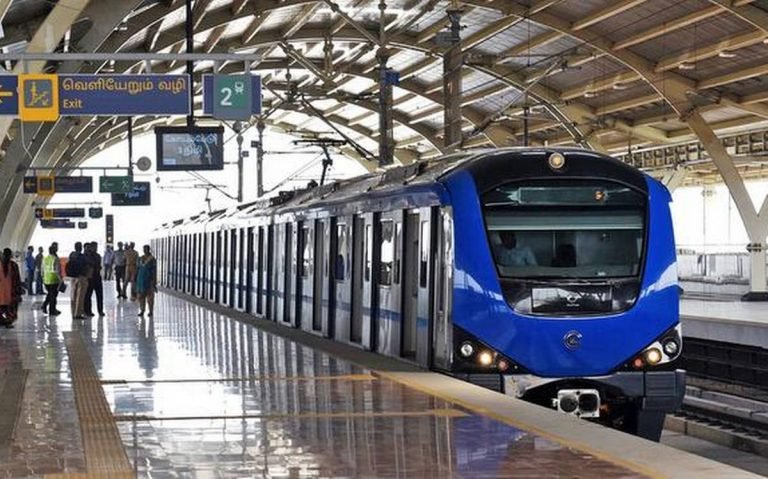
CHENNAI (Metro Rail News): Chennai Metro Rail Limited plans to start the 25kv power supply in the phase I extension project in north Chennai between Washermenpet and Wimco Nagar this week.
“While one track will be energised on Monday, the other will be done on Saturday.
They are planning to conduct a trial run in two weeks as well”, a news agency reported.
According to CMRL officials, they will monitor and check the line for any issues that emerge during this phase and resolve them in the next two months. Since CMRL plans to complete this 9 km stretch by the end of January 2021, it has to install and check the functioning of all important systems in the next month.“We want to carry out the trial run first by operating a locomotive engine by mid-December. Then, in a few weeks, we will operate a train as well,” an official was stated saying.
The construction of stations and installation of telecom and signalling system has been underway now, and officials hope to finish it by mid-January. “Installation of platform screen doors in the underground stations has commenced and may be finished in a month,” a source added.

Lowering of Country’s Largest TBM Begins in Mumbai

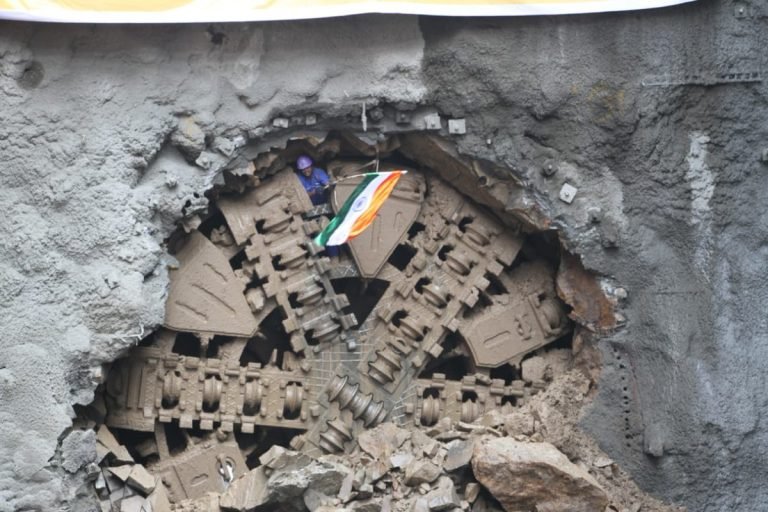
MUMBAI (Metro Rail News): Larsen & Toubro and Freight Wings on Friday transported the largest tunnel boring machine (TBM), which has been used ever in India, over to its launch site for building twin 1,920m tunnels of Mumbai’s 29.2 km Coastal Road (Western Freeway) project.
“The TBM with a diameter of 12.19m was manufactured by China Railway Construction Heavy Industry Co. Ltd. (CRCHI) and arrived in Mumbai’s Priyadarshini Park neighbourhood in April 2020″, sources said.
Larsen & Toubro will deploy the machine on the project’s 3.93 km Package-4 for constructing 12m wide twin tunnels under Malabar Hill (75m deep) and Girgaum Chowpatty (25m deep) between Priyadarshini Park and Marine Drive in South Mumbai. On Friday, Freight Wings transported the TBM’s assembled shields weighing about 1500MT using a 200 wheel self-propelled modular transporter from the assembly area to the launch ramp.
“The TBM will be lowered by Freight Wings into the shaft using a 2500MT capacity customized Strand Jack system for this project. This system is similar, but way larger, than the one deployed by them to retrieve and lower Dogus-Soma JV’s TBMs 1238 and 1239 for Mumbai Metro’s Line-3″, according to a news report.

Nagpur Metro Appeals to People for Using Metro for a Cleaner City

NAGPUR (Metro Rail News): “Maha Metro is executing one of the greenest projects in Nagpur. The various aspects of the green project have been very well taken care of. Extensive use of solar energy, planting different kind of trees, creating a vertical garden are a few steps aimed at making a difference in the lives of the citizens. Thus Maha Metro is serving as Green Lung of the city”, it said in a statement.
A Metro ride also makes a significant contribution to maintaining one’s health. Use of metro as a means of transportation reduces the carbon footprint as it also prevents toxic emissions from vehicles using petroleum products. The green energy used by Metro also plays an important role in preventing pollution. Maha Metro thus plays a multi-purpose role in keeping citizens in a healthy frame of mind and body.


Toxic fumes affect human body: Noted doctors and medical specialists from the city agree that Metro plays a vital role in providing a healthy life. “A journey by Metro train ensures that one travels in an environment-friendly zone. One is not exposed to the toxic emissions from two, three and four-wheelers. The fumes from such vehicles could damage one’s body,’’ said Dr Meena Mishra, Professor, Department of Microbiology, All India Institute of Medical Sciences (AIIMS), Nagpur.
Studies have shown that major pollutants emitted by motor vehicles including Carbon-mono-Oxide (CO), Nitrous Oxide (NOx), Sulphur Oxide (SO), Lead (Pb) and Suspended Particulate Matter (SPM) have exhibited damaging effects on both human health and ecology.


Emission could be Reduced: As per the detailed project report prepared by Maha Metro, emission amounting to as much as 68.47 thousand tons of Carbon-di-Oxide (CO2) could be reduced by 2022 by using Metro train as a mode of transport.
Similarly, the quantity of other toxic gases expected to be reduced by the same time is 2.62 thousand tons.  Added noted cardiologist Dr Shantanu Sengupta, emissions as those by vehicles cause respiratory problems.

Thus, the lesser the number of vehicles running on petrol and diesel on city roads, the better it would be for the Nagpurians. This can be achieved by avoiding personal vehicles and using Metro train instead, he said. Maha Metro serves as city’s Green Lung, he said and urged Nagpurians to use Metro.
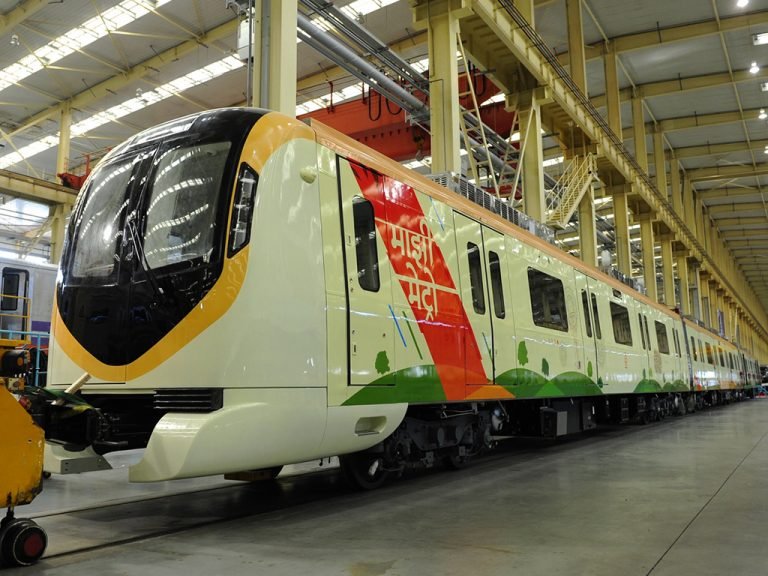
“Maha Metro is providing passenger services on Orange and Aqua Lines. Maha Metro has always urged citizens to use Metro as a mode of transport. The city doctors have also exhorted citizens to use Metro, not just to keep the city clean and green, but also to ensure that one stays healthy”, the statement further added.

Skeleton of elephant, an unidentified animal found near Metro construction site in Pune

PUNE (Metro Rail News): The skeleton of an elephant estimated to be around 200-300 years old and an unidentified animal has been found at the Metro construction site near Mandai in Pune. The Maharashtra Metro Rail Corporation (Maha-Metro) is carrying out the construction work for a Metro station near Mahatma Phule Mandai. While digging for the Metro station work, the labourers found the skeletons of the animals on Wednesday.

Maharashtra Metro Rail public relations officer Hemant Sonawane said, “We have requested the archaeology department and Deccan College officials to visit the site. We have even given in-principle approval to take these skeletons for further study.”
A researcher from the archaeology department of Deccan College, Pune, was stated saying, “I visited the spot on Thursday afternoon. Earlier, we were briefed that the skeletons were found at a depth of 10 metres, but it was around three metres deep. So, it might be around 200-300 years old. The fossil had not formed yet which means that they are around 300 years old and might be from the Peshwa era.”
He further added, “Hatti Mahal is located near Subhansa Durga which is very close to this place. Elephants use to stay there. One skeleton is of an elephant. We have requested the Metro authority to handover these skeletons to Deccan College for further study and they have given their approval for it.”
“One of our senior scientists said that fifty years ago, the skeleton of an elephant was found near Aryaneshwar. The Deccan College was invited to study the skeletons that time as well,” the researcher said.

In a conversation with Mr. Steve Cockerell and Mr. Dan Vogen of Bently Systems

Our Managing Editor Mr. Narendra Shah held a conversation with Mr. Steve Cockerell and Mr, Dan Vogen, both of whom are associated with Bentley Systems.

Mr. Cockerell is industry marketing director of rail and transit at Bentley Systems while Mr. Vogen is vice president of road and rail asset management at Bentley Systems.

Here are some edited excerpts from the Interview:-

Narendra Shah – Bentley Systems is a very fast-growing company with a worldwide presence. How do you feel today after contributing more than two decades to the organisation?

Steve Cockerell – I am excited, I am proud, ready for a good few more years, and stand ready to help our users realize the full potential of digital twins in rail.

Dan Vogen – I am really excited and proud of what we have accomplished. And, I am looking forward to the future. With the power of digital twins, we have more capabilities, meaning we can do things now that we could only dream of doing only a few years ago. Given the funding constraints that our users are constantly facing, I am confident that our software capabilities will help them achieve high-quality project delivery on time and under budget.

Narendra Shah – What is Bentley doing to help project owners and other stakeholders during the pandemic, especially to combat various project challenges?

Dan Vogen – Early in the pandemic we initiated a campaign called ‘Bentley Has Your Back’, and as part of this we have done a lot to make our software accessible to anyone, anywhere, and in the case of our cloud-based collaboration offering ProjectWise 365, have even waived subscription fees for a period of time. In this way, we are helping organisations to remain productive throughout the pandemic. We have worked hard to further increase our support levels, and increase the accessibility of our teams working with those users on project implementations, licensing, and deployment timeframes. We really have tried to be very flexible throughout the whole process.

Steve Cockerell – In addition to the ProjectWise 365 offering that Dan mentions, we also introduced a similar option in relation to pedestrian simulation in stations. Whereas ProjectWise 365 is really aimed at helping organisations to carry on doing what they need to do on projects, OpenBuildings Station Designer, which includes LEGION Model Builder and its pedestrian simulation capabilities, targets helping rail and transit owners return their networks, and in particular their stations, safely back into operation.

There are of course other examples, including here in the UK, with Network Rail’s innovation throughout the lockdown we experienced in the first part of 2020. They used a combination of applications including ContextCapture, MicroStation, and OpenRail Designer, to pull together data from multiple sources and in the space of only a few days, create digital twins of Exeter and London’s Paddington stations. This really did help to ensure their work of delivering a safe and reliable railway could continue without interruption. With the help of our technology, they remained agile enough to deliver services above and beyond what was required and expected by their client and stakeholders.

Narendra Shah – The station redevelopment plan of Indian Railways is gaining rapidly. How can Bentley solutions help in this project?

Steve Cockerell – This is a really interesting question as it is not just in India that we are seeing either the expansion or redevelopment of stations, in line with – if we put COVID-19 to one side for a moment – the growing demand for rail and transit. I would like to answer the question in two parts if I may.

Firstly, in the middle of 2019 Bentley announced the general availability of OpenBuildings Station Designer, which provides our users with a multidiscipline application for the design, analysis, simulation, and visualization of rail, metro, or other transit stations. We developed the application to help owner-operators and their supply chains streamline the design and necessary collaboration between the different disciplines involved – particularly architects and engineers – when delivering new and/or upgraded stations and related facilities.

A key element of the OpenBuildings Station Designer release was the inclusion of LEGION Model Builder’s industry-leading pedestrian movement modeling and simulation capabilities, which Bentley acquired in October 2018. I’d urge your readers to take a closer look at this application, which has all the capabilities of OpenBuildings Designer, plus a station-specific work set that includes functional space definitions, design components such as furniture, fixtures, and equipment, and several computational design templates.

The combination of BIM advancements OpenBuildings Station Designer delivers are, in my opinion, unrivalled in the industry. No other single solution offers a design environment capable of modeling the simplest to the most complex of stations, together with the ability to analyze their real-world performance in terms of pedestrian movement, annual energy consumption, carbon emissions, and fuel costs. The capabilities it provides means owner-operators can ensure their stations are fit for purpose not just on day one, but throughout their operational life.

Part two of my answer relates to how other open and integrated applications in Bentley’s portfolio support the redevelopment of stations in the wider context. To highlight this I would like to draw your attention to an incredible project currently under construction in Jakarta, Indonesia.

Jakarta is expected to become the world’s largest city by 2030, and its Manggarai Station will replace Gambir Station as the terminus for long-distance trains serving the city in late 2021. In a joint venture with PT. Pijar Utama, PT. WASKITA Karya (Persero) Tbk was appointed as a contractor for phase II of the railway facility from Manggarai to Jatinegara. WASKITA’s work on the project includes constructing a new bridge connecting the second floor of the station’s main building with the existing mainline at grade, together with new track panels above and below the bridge, as part of its revitalization.

WASKITA faced many challenges on the project. In addition to construction, their client required them to take on the design review of the existing contract drawings due to discrepancies with current standards and existing conditions.
As a result of the high amount of train traffic in Manggarai Station, the team also faced constraints on the method of construction they could use, meaning they ran the risk of incurring additional time on their contract.

The project’s success hinged on three main objectives: quality compliance, cost, and time efficiency. So, to ensure every decision made throughout the 720-day contract period was both timely and accurate, WASKITA decided to adopt BIM workflows and a digital twins approach using Bentley technology. WASKITA combined design information for track, civils, bridges, and structures, with a 3D reality mesh of the existing ground, in a BIM coordination model that helped team members and other stakeholders on the project make better, more informed decisions. Their BIM coordination model also allows them to clearly visualize different alternatives in terms of project scope and cost, and is proving to be a critical part of their ongoing work and negotiations with the client for project amendments.

The team’s use of Bentley’s OpenBridge Designer, OpenRail Designer, and ContextCapture for clash detection and resolution has meant that WASKITA has avoided issues that might not have been discovered until construction commenced. As a result of identifying potential problems earlier, WASKITA avoided additional time and cost overheads of approximately 0.3% per month. WASKITA’s use of geometry control functionality in OpenBridge Designer has also helped mitigate risks and avoided any unnecessary cost and delays associated with incorrectly cast bridge spans.

Finally, in response to demands for more clarity on construction sequences, WASKITA’s use of SYNCHRO has helped shorten the construction schedule by optimizing the resources available. Adoption of this digital workflow enabled right-first-time construction, as well as provided valuable insight for WASKITA and other stakeholders on the project.

Narendra Shah – Can you share some of the latest solutions for rail offered by Bentley? Can you share some of the rail or metro projects in India that are using OpenRail solutions?

Steve Cockerell – For me two submissions in our Year in Infrastructure Awards this year standout as examples of how our rail solution is delivering different and improved outcomes on rail and metro projects in India.

The first is Sarvada Engineering and Project Management Private Limited (SEPM) and the work it is doing on the Ahmedabad – Rajkot Semi High Speed Rail Project. The elevated, 200-kilometer-per-hour railway will connect Gujarat’s economic capital of Ahmedabad with one of its quickest growing cities, Rajkot, reducing transportation time by two-and-half hours.

SEPM was hired to deliver multiple design alternatives and price approximations, and produce cinematic quality videos of the project to expedite government approval. In particular, SEPM used OpenRail ConceptStation and OpenRail Designer to help them understand the terrain and structures along the proposed route, produce alignment alternatives and 3D models, saving them time and increasing accuracy.

The second is LKT Engineering Consultants work for Delhi Metro Rail Corporation (DMRC) who wanted to build a walkway interchange connecting the Green and Pink lines of the capital territory’s metro system. To fix this connectivity issue, DMRC proposed adding platforms next to the Green Line for boarding and disembarking and attaching a 230-meter pedestrian footbridge to the Pink Line’s Punjabi Bagh West station, and engaged LKT Engineering Consultants to design this unique interchange facility.

LKT Engineering decided Bentley’s BIM solution offered the speed and flexibility it needed during design to produce alternative scenarios. In this project they used a combination of OpenBridge Designer (formerly RM Bridge) and STAAD, to generate 3D models, drawings, and simulations, saving significant time by creating and comparing multiple design options of the footbridge and viaduct platform next to the Green Line. Of note to me was the fact that LKT used the software to improve the structural arrangement, lowering costs and shortening the construction schedule.

Dan Vogen – My focus is in the operation and maintenance of road and rail. And, here, the focus is on big data engineering. There have been large advancements in how we understand track geometry changes and their implications. Typically, owner-operators make three to four data collections every year. Now, we have users that collect data every month, every week, and they are moving toward a daily update. The increasing frequency of data updates allows us to provide much better insight into what is happening on the user’s system.

Artificial intelligence and machine learning helps our users make real-time decisions through data analytics. We are working with data sciences, both textual and visual, that might help, for example, in a larger processing scenario, to bring enhancements in the field of transportation. We had a number of fairly large users deploying these kinds of solutions in the past, and we are working to make them accessible to small and midsized owner-operators. One of the finalists in the Year in Infrastructure Awards, which we mentioned in our press briefing, was SMRT of Singapore. They have made great advancements in the reliability of their network with the help of our analytics solutions.

Narendra Shah – The RRTS and bullet train are the two major projects the Indian government is focusing on today. Is there any plan for Bentley to participate in these projects? How can your existing products help engineers when it comes to the development and construction of the bullet train project?

Steve Cockerell – I hope my answers to other questions have demonstrated our ability, through a range of open and integrated applications in our OpenRail solution, to help the organisations who will be engaged on these and other projects across the country. A major advantage of our OpenRail solution is that it covers everything from concept through completion and onwards to operations and maintenance of the railway.

Dan Vogen – We hope to participate in everything like that. We want to be the software solution that engineering design and construction firms use for their ongoing analytics. Whether contracting directly with the owner, or through a third-party operator that is involved in the project as a consultant to the owner, we can offer them the software they require for that part of the lifecycle.

Narendra Shah – Bentley offers a product called OpenRail Designer. What are its key features? How can it help in the development of metro networks and semi-high-speed rail corridors?

Steve Cockerell – OpenRail Designer is a comprehensive modeling environment for streamlined project delivery of rail assets for all types of rail networks. It is suitable for everything from rapid transit, through metros, to standard commuter lines, freight, and high-speed rail.

The application unifies the disciplines and phases involved in the design, construction, commissioning, and completion of assets within the railway corridor including track, civils, drainage, and underground utilities, overhead line, bridges, and related infrastructure.

Largely recognised as the industry standard for track design to different international and sector specific design standards, OpenRail Designer delivers the high performance, immersive, 3D modeling environment that engineers and designers need today to plan, design, and enable right-first-time construction of new and upgraded railways.

Narendra Shah – You already have the technology for the design of overhead lines. What are the key features of this? Is there any possibility of bringing any system for designing the third rail system as it gains popularity?

Steve Cockerell – OpenRail Overhead Line Designer is, in fact, a new Bentley offering developed jointly with Siemens Mobility. The combination of our OpenRail Designer technology with Siemens Sicat Master functionality solves a key challenge faced by engineers and designers – namely, ensuring that both disciplines can efficiently and effectively share the data they need.

With OpenRail Overhead Line Designer, the local standards and geometry of the underlying track can be used directly in the same modeling environment to make span calculations, locate foundation locations, and calculate height and stagger values for wire runs.

The software’s parametric design capabilities enable OLE engineers to model cantilever sets, masts, portals, and wires, as well as produce schematics and 3D models of all assets within the rail corridor. Advancing traditional 2D plan-based workflows to this 3D world of digital workflows not only reduces the time and effort needed to create the required construction deliverables, it further enables downstream activities like signal sighting, stakeholder engagement, project approvals, and driver route learning.

Whether you are building brand new electrification projects or upgrading your existing networks, as we move toward a time in which digital twins in rail are commonplace, these types of digital workflows will be relied upon not just in project delivery, but through handover/handback of assets, and onwards in the operational life of railways to increase the reliability and performance of critical network assets.

Narendra Shah – What is the main rail-segment business that you intend to focus on in the next decade? Where do you see Bentley’s rail business in India going?

Dan Vogen – We have shown the breadth of our solutions that we can now offer. We want to work in design, simulation, construction, and operations. We have to focus on the safe design of metro and rail station with a focus on social distancing. Bentley and its innovative software applications will play an important role in building our urban transport system infrastructure.

Narendra Shah – How does Bentley’s solutions in rail asset management help owner-operators improve collaboration and project delivery? Can you share some examples?

Steve Cockerell – Rail and transit owner-operators need to manage data and information from multiple sources, often in many formats, and be able to combine it in a way that is easy to understand, visualize, and analyze. Then, with the insight gained from that information, make faster and more informed decisions.

Bentley’s AssetWise Digital Twin Services does just that, providing the immersive visibility and analytical capabilities needed to ensure timely decisions about where, when, and how they should target maintenance activities to ensure the safe, reliable, and compliant operation of their networks.

A great example of an organization benefiting from the use of AssetWise Digital Twin Services is SMRT Trains Limited in Singapore, a finalist in our Year in Infrastructure Awards for road and rail asset performance this year.

To meet its 1 million-kilometers-between-failures (MKBF) target – the equivalent of travelling over the entire network more than 7,000 times between five-minute delays – SMRT has initiated numerous initiatives including the deployment of what it calls its Predictive Decision Support System (PDSS) based on Bentley’s AssetWise Digital Twin Services Linear Analytics capabilities.

PDSS supports SMRT’s engineers by bringing together all relevant data, analyzing it to find the optimal decision, and presenting it to the user intuitively. Simply put, AssetWise Digital Twin Services is enabling SMRT to find features in their data relating to track conditions, pinpointing where they need to act, and determining what maintenance activity is needed. Through PDSS and other SMRT reliability initiatives, this summer saw SMRT raise its MKBF figure beyond the 1 million target to reach 1.6 million MKBF, a huge increase in the reliability of their network.

Clearly, SMRT, and many other large owner-operators, are benefitting substantially from the power of AssetWise Digital Twin Services Linear Analytics. Historically though, a key challenge with the deployment of a system of this type has been the time and cost involved, due to the extensive involvement of subject matter experts, and a significant amount of configuration required.

Since we believe this type of analytics capability can benefit owner-operators with systems of all sizes and complexity, we recently announced the introduction of a pre-configured, rapidly deployable, out-of-the-box solution for linear analytics. The solution means that in a very short amount of time, any organization, including smaller metros, light rail and mass transit systems, will be able to get up to speed and recognize many of the benefits that, to date, have only been within reach of Bentley’s larger rail and transit owners.


NMRC Starts Vendor Registration Process To Empanel Vendors For Various Technical Works

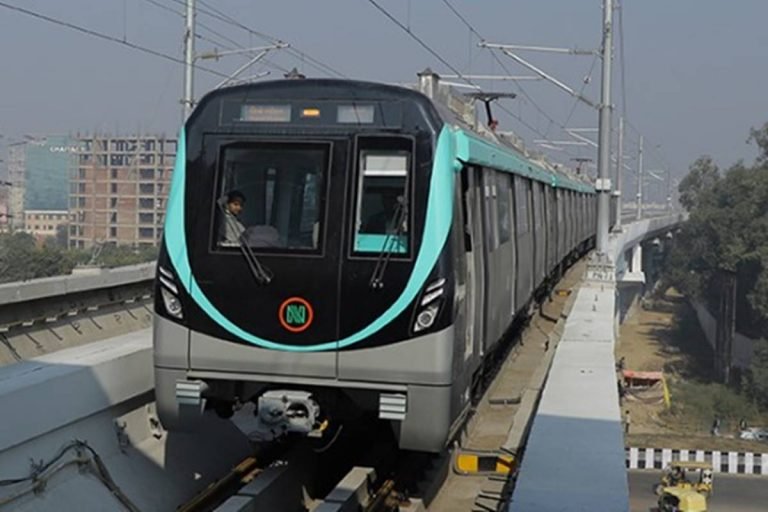
NOIDA (Metro Rail News): With an objective to have a broad panel of technically capable, financially sound and reliable vendors for various types of technical works, Noida Metro Rail Corporation (NMRC) Ltd. has started the registration of vendors from 18.11.2020. 

“The Vendor Registration Form has been uploaded on the NMRC’s official website www.nmrcnoida.com from where interested parties can get themselves registered for different kinds of technical works under various categories like Rolling Stock, Electrical, Signalling & Telecommunications and Civil Construction Materials. The detailed table of the various technical works under which vendors can get themselves registered is available on the website. Interested vendors can download the application form from the website and submit their details after attaching the necessary documents at the NMRC Headquarters in Sector 29, Noida”, the NMRC said through a statement.

The process of vendor registration is valid only for a limited period of 03 months till 17.02.2020.  All the necessary information regarding eligibility criteria, documents required and other details required for applying for vendor registration with NMRC are available on the website.

“The eligibility criteria include a minimum of two years’ experience with Government Organisations, preferably Metro Rail /Railways / Highways. Through this process, NMRC aims to bring on board reputed companies/brands dealing in manufacturing technical works and equipment supply so that their quality and expertise may be used by NMRC in its existing network and for future projects”, the statement added.

NHSRCL and L&T Sign Contract for the Package C4 of The Bullet Train Project

NEW DELHI (Metro Rail News): The National High-Speed Rail Corporation (NHSRCL) and Larsen & Toubro on Thursday signed a formal contract valued at Rs 24,985 crore to build the 237.1 km Package C4 of the 508.17 km Mumbai – Ahmedabad High-Speed Rail project.

The project is aimed at connecting the cities of Mumbai and Ahmadabad which will have 12 stations on the network. Satoshi Suzuki, the Ambassador of Japan to India was also present during the program. 

This package includes design and construction of 237 km length of the viaduct between Vapi (Zaroli Village at Maharashtra- Gujarat Border) and Vadodara in the state of Gujarat for 508 km of Mumbai-Ahmedabad High-Speed Rail corridor.
It also includes the construction of the Surat Depot, 14 river crossings, 42 road crossings, 6 railway crossings and one 350 meter tunnel through a hill.

Technical bids for this tender were opened on September 23 and in less than one month, the financial bids were opened after evaluation of the technical bids, it said. The duration for completion of the works is four years from the date of commencement of the contract.

“During the construction phase of this section, the areas around the alignment will witness social and economic development. There will be employment generation not only for the professionals like engineers, technicians, designers, architects etc but also for the skilled and semi-skilled workforce and construction workers,” according to an official.

UPMRC MD Kumar Keshav Felicitates Best Performing Security Guard, TOM Operator & House Keeping Staff For Commendable Works

LUCKNOW (Metro Rail News): “Shri Kumar Keshav, MD, UPMRC today felicitated the best performing security guards & housekeeping staff for their commendable work while performing their duty. An award ceremony was organized at the Administrative Office, Gomti Nagar in which the Managing Director presented a ‘Certificate of Appreciation’ to the awardees in the presence of other senior officials of UPMRC in recognition of their honest attitude, sincerity, commitment & work ethics in the regular routine”, the UPMRC said in a statement.
On 1st October 2020, Ms Gauri Pathak, a female security guard, G4S, on duty at Charbagh Metro station, found an unclaimed watch inside women’s toilet, in spite of knowing that the toilet had no CCTV surveillance, the female guard showed her honesty and integrity and handed over the watch to the station controller who later passed it on to its rightful owner. 
A similar incident occurred on 20 October 2020 when Shri Hari Darshan Singh, on-duty TOM operator, found a gold ring lying at Gate no. 2 of CCS Airport Metro station. Showing his honesty, integrity and dedication towards work, he took the ring and submitted it to the on-duty station controller who later handed it over to its rightful owner. On other hand, Mrs Ratna from housekeeping staff was awarded for her contribution for keeping the Metro premises safe, clean & hygienic during the Covid-19 pandemic.
“While appreciating their outstanding work and invaluable contribution during duty hours, Kumar Keshav, MD, UPMRC also expressed his gratitude for the sincere efforts made by the security, housekeeping and outsourcing staff to maintain the highest standards of work ethics in performing their respective duties with utmost dedication, commitment & perseverance. Even at the time of this global crisis; they have been providing their services to the organization & rendering all kinds of humanitarian support just for the sake of convenience of the public. He also encouraged them to carry on their efforts with the same kind of attitude, promptness & efficiency in providing best passenger service to the people of the city”, the statement added.

Kochi Metro to permit cycles from all stations, Ridership Crosses 15000 Mark

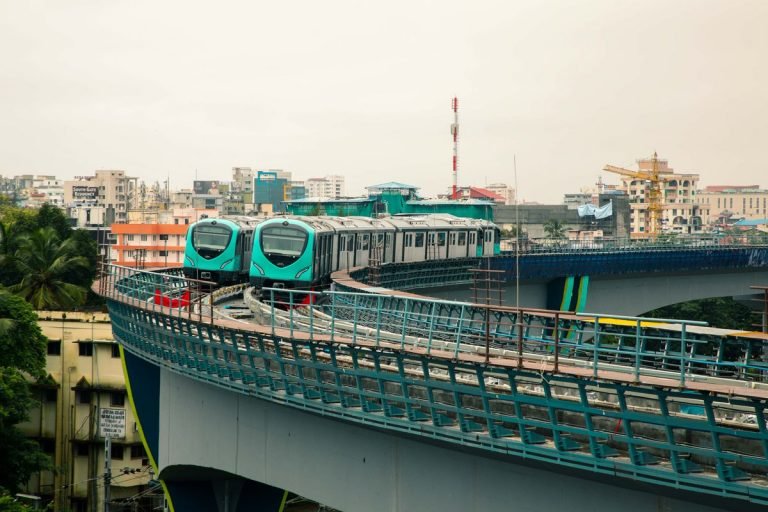
KOCHI (Metro Rail News): Considering the requests of the public and cyclists in general, Kochi Metro has decided to permit commutters to carry their cycles along for the ride from all the metro stations.
On a pilot basis, Kochi Metro had permitted entry of cycles from six stations. On Sunday (November 22) 67 cyclists enjoyed a metro ride. The average ridership of Kochi Metro is 15,000 now.
“The response from the public was overwhelming. We are equipped to serve the people from all the metro stations. The entry will be available from Sunday 29 November, 2020.” said Additional Chief Secretary Alkesh Kumar Sharma IAS, MD KMRL.
Kochi Metro meanwhile has created a guideline for the entry of cycles. At present four cycles will be permitted in one train. Bicycles must be free of debris and excess grease, dirt and sharp objects. Motor-powered recreational vehicles of any kind, tandem bicycles, tricycles and bicycles with training wheels are not permitted.
Bicycles that are folded or disassembled and enclosed in carrying bags are deemed “luggage” items. Cyclists are prohibited from riding bicycles in the station premises, corridors, Link bridge & on platforms or in any covered areas.